Posted on

Beyond the refresh: Your cyber strategy must include AI PCs

It’s easy to view PC refreshes as simply cosmetic. Businesses get new designs, faster processors and maybe a thinner chassis. But while these enhancements are certainly welcome, the real significance of a device refresh strategy runs much deeper.

By investing into modern AI-powered PCs, businesses are building a more secure, productive, and resilient future. As we mark Cybersecurity Awareness Month and Microsoft Windows 10 reaches end of support, now is the perfect time to explore how a modern PC strategy plays an important role in securing organisations.

While the shift to hybrid work has seen employees enjoy greater flexibility, IT teams are also facing an expanded attack surface. Endpoints are no longer safely behind the corporate firewall. Instead, they connect from home networks, public Wi-Fi and everywhere in between, making them prime targets for cyber criminals. As businesses adjust and advance remote working policies, ensuring the security of all devices is paramount.

From phishing to fraudulent websites, cyber crime is more prevalent than ever, with the latest UK government cyber security breaches survey revealing 43% of businesses have experienced a cyber security breach or attack in the last 12 months.

Our recent UK research with Intel found that for nearly half (46%) of IT decision-makers, news of high-profile cyber breaches is the primary motivator to refresh their PC fleet – more so than an operating system deadline itself. As threats grow more sophisticated and costly, organisations must rethink all IT decisions through a security-first lens. This is where a strategic approach to the PC lifecycle comes into play, transforming a routine refresh into a critical security update.

The hidden risks of an ageing fleet

Holding onto older devices for too long might seem like a cost-saving measure, but it often creates hidden risks. It potentially leaves millions exposed to significant cyber threats, as they will no longer receive crucial security updates, making them vulnerable to new viruses and cyber attacks.

Crucially, these outdated devices don’t have integrated neural processing units (NPUs) to run AI workloads securely and efficiently on the device itself. By processing sensitive data locally, AI PCs shrink the attack surface, improve data control in line with regulations like GDPR and build resilience against threats that target cloud-based applications.

Furthermore, Windows 11 has been designed with a security-first mindset, requiring hardware with features like a Trusted Platform Module (TPM) 2.0. This chip provides hardware-based security functions, such as creating and storing cryptographic keys, that are far more secure than software-only solutions. Attempting to run modern software on legacy hardware not only hampers performance but also leaves critical security gaps. Without the underlying hardware support, organisations can’t fully use the advanced protections that new operating systems offer, leaving them vulnerable to cyber attacks.

The rise of on-device AI and small language models

The conversation around AI is rapidly shifting from massive, cloud-exclusive models to a more decentralised approach. The rise of small language models (SLMs) trained for specific tasks makes it possible to run powerful AI directly on an endpoint. This allows organisations to deploy AI for sensitive operations like financial analysis, code development, or reviewing confidential documents without that data ever leaving the device.

This move toward on-device AI is not a distant future – it is happening now. However, it is entirely dependent on having the right hardware. AI PCs with dedicated NPUs are purpose-built to handle these SLMs, supporting a new class of secure, private and low-latency AI applications. For businesses, this means the PC refresh is no longer just about keeping up – it’s about preparing for a fundamental change in how enterprise AI will be deployed.

How modern PCs help build a secure foundation

Threat actors are persistent, but a modern AI PC provides a crucial line of defence in a zero-trust world. The security of on-device AI processing is built upon a foundation of hardware and firmware-level security features that operate below the operating system. This provides a more resilient defense against attacks that aim to compromise software protection.

In day-to-day use, features like BIOS and firmware verification ensure the device is tamper-free, while secure storage for credentials protects against identity attacks – one of the biggest challenges for organisations today. Before even reaching an employee, modern PCs from trusted vendors can include optional supply chain security measures. For example, a digital certificate created in the factory that allows organisations to verify component integrity and safeguard against tampering. This hardware-level trust is what makes on-device AI a viable and secure strategy.

A refresh strategy for a resilient future

Viewing PC refresh as part of an organisation’s security strategy helps build a more resilient and productive enterprise. It’s an opportunity to move beyond a tactical upgrade and adopt a security-first hardware strategy that works in the AI era. This approach delivers tangible benefits – it reduces the burden on IT teams, improves employee experience, and most importantly, strengthens an organisation’s overall security posture against an ever-evolving threat landscape. Our research shows that refreshing to modern devices running Windows 11 can result in up to 62% fewer security incidents, a testament to the power of an integrated, security-first hardware strategy.

Now is the time business leaders should look at their PC fleet through a new lens. In an age where AI is reshaping every industry, your employees are the first line of defence and equipping them with the right tools is imperative. An AI PC fleet is not just a collection of faster devices; it is a foundational component of a robust, future-proof security strategy.

Louise Quennell is UK senior director of the Client Solutions Group at Dell Technologies

Source

Posted on

Report Casts Doubt On OpenAI And Jony Ive’s Ambitious AI

OpenAI and Jony Ive have ambitious plans for an all-new AI device. While this non-smartphone product looks more and more like the series of AI pals we’ve seen in the past few years, including Humane’s AI Pin and that Friend necklace, it seems Sam Altman and Ive are having issues perfecting the device.

According to the latest Financial Times report, the San Francisco-based startup still struggles with the device’s software and the infrastructure needed to power it. With that, the teams face privacy issues, the necessary budget for the computing power to run OpenAI’s models on this consumer device, and its personality.

A person familiar with the matter said that “Amazon has the compute for an Alexa, so does Google, but OpenAI is struggling to get enough compute for ChatGPT, let alone an AI device.” Still, this AI device, which is designed to sit on a desk or table, could be delayed to late 2026 or even 2027.

OpenAI’s always-on device aims to be like Siri but better

José Adorno/BGR

Another person familiar with the matter said, “The concept is that you should have a friend who’s a computer who isn’t your weird AI girlfriend… like Siri but better.” With that, the company is still struggling with the right personality for this device, as “it can’t be too sycophantic, not too direct, helpful, but doesn’t keep talking in a feedback loop.”

If OpenAI and Jony Ive are able to crack these problems, we could be just a few months before an iPhone-like revolution, as we’d have a device that works like a true companion, taking action, explaining things around us, and saving time with daily tasks.

OpenAI, which has recently been valued at $500 billion, wants to justify its new price tag with a push into hardware. While the company promised this future non-smartphone will be the first of many hardware products expected with Ive’s partnership, we still have to see what they will be able to do together.

Source

Posted on

The importance of upgrading to the latest Windows operating system

Windows 10 was launched in July 2015. It was supposed to be the last major operating system (OS) upgrade, but Microsoft released Windows 11 in October 2021, and now Windows 10 has reached end of life, which means it will no longer be updated.

Consumers who register for extended support and back up their PCs in the Microsoft cloud will be able to get free security updates until October 2026. Corporate PCs and devices connected to Active Directory will only receive Windows 10 security updates if they are covered by an Extended Security Updates (ESU) subscription.  

In July, the National Cyber Security Centre (NCSC) warned that the security risks of not upgrading are significant. As the NCSC notes in a blog post on its website, in addition to the difficulties associated with being out of support, an out-of-date operating system is a prime target for cyber criminals.

“We saw this when a vulnerability in Internet Explorer 6-11 was exploited after Windows XP support ended on 8 April 2014, and before it was patched on 1 May 2014. And again in 2017, a vulnerability in unpatched versions of XP was exploited extensively by the WannaCry ransomware – an attack which resulted in huge costs and damage globally,” says the NCSC in the post.

Analyst Forrester’s Say goodbye to Windows 10 to reduce your cyber risk report points out that Windows 11 now has significant security features that are not available in Windows 10. These include administrator protection that Forrester says helps enable least privileged access. There is a feature called Smart App Control, which is used to validate the applications before they are run. In the report, Forrester notes that the latest version of Credential Guard extends account protection to machine account passwords, which is a new feature in Windows 11.

“Much has been made about Microsoft’s plans to better control the security of the kernel after CrowdStrike’s 2024 issue. Their goal isn’t to completely lock out vendors, but to ensure incidents like this don’t reoccur; if features and functions can be moved out of the kernel and into the user space, they should be,” write Forrester analysts Paddy Harrington, Merritt Maxim, Sophia Barrett and Christine Turley in the report.

But the improvements in Windows security also make it more difficult to move older hardware onto Windows 11. One of the difficulties holding organisations back is the hardware requirements of Windows 11, which introduced a need for PCs to have the Trusted Platform Module (TPM 2.0), UEFI and support for Secure Boot. “If your devices lack even one of these features, you’ll be unable to upgrade easily,” says the NCSC. 

System requirements for Windows 10 and 11

Following an analysis of its customers’ PCs, Nexthink estimates there has been a 33% decrease in Windows 10 devices between 19 May and 1 August. Assuming a further 33% reduction by 14 October – the date on which support officially ends – this leaves around 121 million Windows 10 PCs still running the operating system at the end of support deadline.

Discussing the challenge of migration, Tim Flower, DEX strategist at Nexthink, says: “Windows 11 brings powerful new capabilities, but only if devices and employees are ready to take advantage of them.”

Why Windows 10 wasn’t the last major OS update

Microsoft releases two major updates of its Windows operating system each year. Windows 10 was supposed to be the largest refresh before it moved to bi-annual updates, as Gartner research director Ranjit Atwal recalls.

“When Windows 10 came out after Windows 7, Microsoft, I’m sure, said it was going to be the last big operating system upgrade,” he says. “Effectively, Microsoft was saying there would be no Windows 11 after Windows 10, and we took that for gospel to mean that it would be the last upgrade.”

However, in a Computer Weekly YouTube video, Atwal points out that the success of the Windows operating system actually hinders progress.

“So much legacy software and peripherals are supported through the operating system. At some point, that’s just become too much in terms of the code and managing the updates,” he says.

What this implies is that, at some point, updates to device driver software will no longer be available. If a PC continues to run outdated device drivers, there is a risk that the old driver software could have a known vulnerability that is being exploited. Clearly, Microsoft is unwilling to coordinate the effort required to support device drivers indefinitely, which means that perfectly good peripherals will lose support eventually; they may still run using the older (legacy) device driver, but there will not be any newer versions (see box: MacOS end-of-life).

To discourage people from trying to continue using these device drivers, Windows 11 uses a feature called Secure Boot, which enforces signed device drivers. This means only software that has a current digital signature can be installed. But like many features in Windows, there are workarounds, and unless an IT department runs a fully locked-down PC environment, savvy end users can workaround the Secure Boot feature.

Moving to Windows 11

The NCSC says Windows 11 introduces a secure-by-default setup, which includes BitLocker, virtualisation-based security (VBS) and support for native passkey management. While some of these features were available in Windows 10, they are now switched on by default. “Devices that don’t meet Windows 11 hardware requirements – and are therefore unable to use the features that are needed to secure Windows – remain fundamentally vulnerable to attack,” the NCSC warns.

Among the benefits of migrating is the built-in artificial intelligence (AI) that Microsoft is promoting, which is available in Copilot+ PCs. AI PCs will represent 31% of the total PC market globally by the end of 2025, according to Gartner. The analyst firm’s latest forecast projects that worldwide shipments of AI PCs will total 77.8 million units in 2025.

By the end of 2026, Gartner expects 40% of software providers to prioritise investments in AI capabilities directly on PCs, up from 2% in 2024. In the same year, multiple small language models (SLMs) will run locally on PCs, up from zero in 2023.

Unlike five years ago, there is growing interest in using ARM-based hardware to support AI inference workloads on Windows 11. According to Microsoft, ARM-based PCs offer all-day battery life.

Gartner’s forecast shows that ARM-based laptops will gain a larger share of the consumer market than the business market, as application compatibility challenges are overcome. Its research found that business users prefer x86 PCs to run Windows. According to Gartner, the x86 PC market is expected to make up 71% of the AI business laptop market in 2025, with ARM making up 24%.

Discussing the forecast, Atwal says: “Businesses are evaluating ARM-based PCs to understand if it is a viable platform. The issue is that not all of the applications they need run on ARM at the moment, although the large majority of applications are ARM-compatible.”

Microsoft says applications need to be rebuilt to run natively on Windows ARM-based PCs. Applications that have not been rebuilt can be run using the Prism emulation that was shipped with Windows 11, version 24H2.

Atwal expects more native ARM applications to become available over the next 12 months. In particular, he sees an opportunity to use small language models directly on AI PCs, offering faster response times, lower energy consumption and reduced reliance on cloud services.

As Atwal notes, SLMs provide task-specific intelligence. “Since the AI runs directly on devices, SLMs help keep user and business data secure,” he adds.

Over time, the partnership between Qualcomm and Microsoft to deliver ARM-based Copilot+ PCs is likely to result in an enterprise alternative to x86-based Windows hardware.

“That partnership is driving ARM onto mainstream PCs, which is different to where we were maybe five years ago or 10 years ago when ARM hardware was around the edges,” says Atwal.

However, the support for new hardware and constant development of new and improved PC peripherals mean Microsoft will continue to be challenged with how much legacy software the Windows OS can support. From an IT management perspective, this means support for older hardware will continue to drop and IT leaders will continue to plan PC and operating system refreshes to ensure their PC estate remains current.

Microsoft Windows Timeline

Source

Posted on

UAE AI minister: ‘We’ll have 10,000 AI companies in five

The United Arab Emirates (UAE) will have 10,000 artificial intelligence (AI) companies in five years’ time, up from 1,500 currently. At the same time, it intends to incentivise traditional industry sectors to use AI where they can to gain and retain market share.

Backing this plan to become an AI superpower are government schemes and an intent that saw the Gulf emirate become the world’s first to appoint a minister for AI in 2017, HE Omar Sultan Al Olama. He spoke at this week’s Expand North Star event in Dubai, where he outlined the UAE government’s frameworks aimed at encouraging AI-oriented organisations.

“We’re trying to have a balanced approach where we understand what the end game is, and we’re doing it with very active steps,” said Al Olama. “We’re doing a lot to try to attract the best brains and the best companies here. We have over 1,500 companies that are pure AI companies, and that’s the highest in the region. We believe this is a starting point, and our goal is to reach 10,000 in the next five years.

“To try to create that, we need to create an environment where the rest of the brightest people can come aboard the UAE.”

While the private sector forms the vast bulk of UAE economic activity, the public sector is a vital cog in its economy and society. The emirate’s plans in AI have a broad government planning backdrop in its UAE Centennial 2071 initiative.

This will mark the country’s 100 years of independence from Britain, and sees AI plans to boost public and private sector performance at all levels and make the country a world leader in the field – an aim that will help its successful diversification away from over-dependence on oil and gas revenues.

Core to its AI-centric schemes is an AI certification and ranking programme, where companies are rated according to their level of competency and embeddedness in the UAE economy. Companies that apply for certification are ranked from simply being an AI company, through to those that have a full presence in the country and it’s where they build their models and have developed products for in-country use.

Al Olama said: “If you are just an AI company, you will get a D. If you have a representation here, the rank will go up to a C. If you do some R&D here, the rank will be a B. It’s almost like a health check for restaurants.

“And then, if you have your headquarters here, you actually build your models here, your team is here, and your AI is modelled for the UAE, then you get an S-ranking,” added Al Olama.

“So, as a government agency, if someone comes to pitch, if there are two players that are exactly the same, one has an S-ranking and the other has a C-ranking, the government agency is required to go with the S-ranking company.”

The AI minister said the plan is to extend that beyond startups and tech firms, so that all UAE companies can benefit from the competitive edge that using AI can bring.

“There are companies that have been here for decades – companies that are not startups, which have to prove their AI worth to you,” said Al Olama. They will want the ranking, so they will be incentivised to come and talk to us.

“If you think about the UAE’s position, we are in the logistics space, the tourism space, the airline space, and so on,” he added. “The market share we have captured in the past five decades is there because we’ve invested in new ways of doing business. So we want to make sure all of our industries use AI.”

A core belief of the minister and the UAE’s AI programmes is that the technology must be put to useful applications.

“Success to me is AI that improves the quality of life. It should help make your life better,” said Al Olama. “Failure would be you come to a show and you see a robot dog and people using things that are gimmicks to tell you that they are AI.”

Source

Posted on

UK police to upgrade illicit asset recovery system

UK police are building a new system to help fight economic crime and improve the tracking, management and recovery of criminal assets, the Police Digital Service (PDS) has announced.

Set to replace the legacy Joint Asset Recovery Database (JARD) that has been used since 2003 to locate and seize illicit assets – including cash, property, vehicles and high-value goods – the Asset Recovery IT (ARIT) project aims to streamline the way criminal assets are tracked and shared, help disparate teams work more effectively together, and improve the evidence provided to courts.

It will also aim to prevent criminal money from funding further illegal activity, with PDS committing to working closely with police officers, financial investigators, prosecutors and local authorities to build a cloud-based system that meets their individual needs.

The system is also expected to support international and cryptocurrency recovery capabilities, helping more than 3,500 users to manage the recovery of assets held abroad or in digital currencies. All of this will take place within a single, streamlined system.

The ARIT announcement follows the Home Office’s conclusion that JARD’s technology was outdated, expensive to maintain, and lacked the flexibility needed for more complex investigations. 

The need to replace JARD has been known for some time, with the Home Office initially publishing a contract notice – worth an estimated £25m – for the “Replacement of the Joint Asset Recovery Database (JARD) IT Systems” in August 2020.

“JARD is an aging system that has been modified and updated on a number of occasions over its 15-year plus lifecycle,” reads the notice. “It is now, however, reaching the end of its useful life as it is not conducive to modern expectations of electronic data capture and subsequent analytical filtering and manipulation.”

Now contracted to NEC Software Solutions – the Japanese software supplier behind the facial recognition algorithms used by the Metropolitan Police and South Wales Police – for an estimated £14.4m, PDS said it is aiming to have a “minimum viable product” in place by September 2026.

At this point, JARD will be decommissioned, with the more than 180 government and law enforcement agencies using it – including HM Revenue & Customs – being transitioned over to the national ARIT system by the end of that year.

Computer Weekly contacted the Home Office about what happened with the earlier contract notice – as PDS was only formally commissioned to work on JARD in April 2024 – and why it has taken five years to find a supplier to develop a replacement for a system that was deemed out of date in August 2020. However, the Home Office had not responded by the time of publication.

“ARIT represents a bold step forward in our mission to equip UK law enforcement with the digital tools needed to tackle the evolving threat of economic crime,” said Tony Estaugh, PDS CEO and the former biometrics commissioner of England and Wales.

“This project is a testament to the impact of collaboration and innovation in public service, and I’m proud of the role PDS is playing in delivering a solution that helps safeguard communities and ensure that crime doesn’t pay.”

Marco Fiorentino, the executive director at NEC, added: “The new system will make it easier to protect the public and stop criminals from profiting from illegal activity. With ARIT, whether it’s a police officer seizing a suspect’s luxury car, a financial investigator tracking laundered cryptocurrency, or a council officer handling illicit cash, they’ll be able to log and track evidence quickly and simply.  

“This will lead to quicker action, clearer evidence, and improved results in court.”

PDS said the project falls under the Anti-Money Laundering and Asset Recovery (AMLAR) Programme, which is led by the Home Office’s Economic Crime Division, and forms a “key” plank of the department’s wider Economic Crime Plan.

According to the plan, the UK’s National Crime Agency (NCA) – one of the law enforcement bodies that will be using ARIT – estimated in 2021 that, while exact amounts are unknown, it is a “realistic possibility” that over £100bn is laundered through the UK or UK corporate structures every year.

In May 2024, the UK’s then-deputy foreign secretary, Conservative MP Andrew Mitchell, said that nearly 40% of the entire world’s “dirty money” is going through the City of London and other crown dependencies.

The latest Home Office statistics on illicit asset seizure show that £284.5m worth of assets were recovered from confiscation, forfeiture and civil recovery orders in the financial year ending March 2025. This represents an increase of 15% on the previous financial year.

Source

Posted on

Court dismisses Apple’s appeal against Home Office backdoor

The Investigatory Powers Tribunal (IPT) has dismissed Apple’s legal appeal against a government order requiring it to provide intelligence services and law enforcement with the capability to access encrypted data of Apple users worldwide.

The tribunal ruled that the case would no longer proceed following a “change in circumstances”, according to court documents obtained by Computer Weekly.

It comes days after disclosures that the Home Office has issued a new order against Apple to restrict UK government access to encrypted data and messages stored on Apple’s iCloud service only for British users.

The decision effectively brings Apple’s legal action against the Home Office to a halt, unless Apple decides to appeal against the new order. A separate legal claim brought by campaign groups Privacy International and Liberty is expected to continue.

The move by the Home Office to modify its order against Apple ended a growing diplomatic row between the UK and the Trump administration over fears that the UK could use the order to access the communications of US citizens.

Claim dismissed

According to a court order obtained by Computer Weekly, Apple and the Home Office have agreed that Apple’s appeal should no longer go ahead.  

“This claim is dismissed on the basis of a change in circumstances which, the tribunal has decided, means the claim should no longer proceed,” the order on 6 October stated.

We are gravely disappointed that the protections provided by ADP are not available to our customers in the UK, given the continuing rise of data breaches and other threats to customer privacy Apple spokesperson

Apple did not comment on the withdrawal of its legal case and declined to say whether it would issue a new legal challenge against the Home Office’s revised order.

However, a company spokesperson confirmed that Apple would still not be able to offer its Advanced Data Protection (ADP) service, which it withdrew from the UK rather than comply with the Home Office’s order – to its UK customers.

“We are gravely disappointed that the protections provided by ADP are not available to our customers in the UK, given the continuing rise of data breaches and other threats to customer privacy,” the spokesperson added.

Backdoor order

The row between Apple and the Home Office came after the government issued a secret technical capability notice (TCN) to Apple in January, requiring it to provide warranted backdoor access to messages and data stored by Apple users worldwide.

The notice extended the ability of UK law enforcement to access encrypted data stored by users on Apple’s iCloud to include users of its secure ADP service, which is fully end-to-end encrypted.

The government argued that it needed to be able to obtain warrants to access individuals’ private encrypted data on Apple’s iCloud service, including data protected by ADP, in the interests of national security and tackling crime.

Apple has opposed the order on the grounds that it needs to offer its users the “highest levels of security” for their personal data to protect their privacy and secure them against data breaches and hacking.

The Home Office’s actions sparked a diplomatic row with the US, after the existence of the secret TCN order was leaked to the Washington Post.

US director of national intelligence Tulsi Gabbard publicly raised concerns that the UK’s order against Apple could “undermine Americans’ privacy and civil liberties”. President Donald Trump described the move as “something that you hear about with China”.

Legal action by NGOs expected to continue

A separate case brought against the Home Office by Privacy International, Liberty and two individuals, which challenges the lawfulness of the technical capability notice, is expected to continue.

The IPT has refused an application by the campaign groups to disclose the terms of any revised TCN issued by the government in the light of agreements reached with the US, according to documents obtained by Computer Weekly.

The IPT ruled that although public notices issued by President Trump, the vice-president and the US director of national security implied that the Home Office had served a new TCN on Apple, neither Apple nor the Home Office had publicly confirmed or denied that this was the case.

The IPT is due to hear the case on the basis of “assumed facts” – which allow the case to be heard in open court – in January 2026.

According to the court documents, the TCN allows the interception of communications and multiple categories of data stored in Apple’s iCloud backup service.

It requires Apple to remove electronic protection applied to the data where it is “reasonably practicable” and to provide access to data stored on Apple’s Advanced Data Protection and iCloud services under a warrant.

The Investigatory Powers Tribunal rejected government demands for complete secrecy over Apple’s legal challenge against a Home Office order, following applications by 10 media organisations, including Computer Weekly.

Apple decided it ‘was unlikely to win’

Bernard Keenan, a lecturer in law at UCL and a specialist in the Investigatory Powers Act, said that the withdrawal of Apple’s appeal by mutual consent, suggested that Apple and the UK government may have come to an arrangement acceptable for both sides.

“If reports that the TCN has been limited to UK users are accurate, then the government will have maintained the capability to intercept communications sent or stored via encrypted Apple services in the UK, while Apple may have decided that they are unlikely to win an appeal against an order in those terms in court,” he added.

He said that if Apple filed an appeal the Home Office is likely to argue for the next round of the case to be heard in a closed court.

Apple did not comment on the decision to discontinue its case.

An Apple spokesperson said it was “gravely disappointed” not to be able to offer Apple customers its secure ADP service in the UK.

“Enhancing the security of cloud storage with end-to-end encryption is more urgent than ever before. Apple remains committed to offering our users the highest level of security for their personal data and are hopeful that we will be able to do so in the future in the United Kingdom,” the spokesperson said.

“As we have said many times before, we have never built a backdoor or master key to any of our products or services, and we never will,” the spokesperson added.

ADP protects iCloud data with end-to-end encryption, which means the data can only be decrypted by the user who owns the data on their own trusted devices. Apple, which does not have access to ADP encryption keys, is unable to read messages stored on the service.

A Home Office spokesperson said, “we do not comment on operational matters, including for example confirming or denying the existence of any such notices.”

Source

Posted on

Microsoft and the UAE: Driving AI from strategy to real

The United Arab Emirates’ (UAE) ambition to become a global leader in artificial intelligence (AI) was one of the most discussed points at the Gitex 2025 conference in Dubai.

Across government agencies and enterprise boardrooms, AI is now a key part of strategy, operations, and public services. Microsoft says it is playing a central role in this journey, helping organisations move from experimenting with AI to achieving real, measurable results.

“For the past three years, AI has been in experimentation,” says Rima Seeman, director of AI and enterprise solutions at Microsoft. “Now we’re moving into what I call the era of the AI frontier company with organisations that are AI-powered and human-led.”

Microsoft is guiding organisations through a threefold approach – providing AI assistants for repetitive tasks; creating co-employee AI agents to enhance workflows; and deploying AI co-strategists that support leaders in decision-making.

“These agents aren’t just demos. They help employees and executives act on insights in real time, which is critical to adoption at scale,” adds Seeman.

Supporting CIOs and the AI journey

Adopting AI at scale is about more than technology, it requires infrastructure, skills, and governance: “First, you need a modern cloud environment,” Seeman says.

Microsoft has invested heavily in datacentres across the UAE, giving organisations the scale needed for AI workloads while ensuring data residency and compliance.

Equally important is talent development. “Last year alone, we trained 100,000 government employees, and our goal is one million learners by 2027,” she says.

These programmes equip CIOs, IT leaders, and staff with the knowledge needed to adopt AI responsibly and effectively. Through partnerships with initiatives such as G42’s Responsible AI Centre in Abu Dhabi, Microsoft aims to ensure that AI systems are safe, secure, and compliant.

“It’s about mutual accountability, our frameworks are open so organisations can adopt AI safely and confidently,” says Seeman.

A national AI vision

The UAE has taken a unique approach to AI governance. “The UAE appointed the first minister of AI, and now every ministry has chief AI officers and advisors embedded in operational workflows,” Seeman explains.

“Other countries are watching because the UAE is not waiting for AI to evolve around them, they are building infrastructure, regulation, and talent simultaneously.”

This strategy is producing results. Microsoft partners with government agencies and enterprises to implement AI in practical, high-impact ways.

“With [the Department of Government Enablement in Abu Dhabi], for example, we’ve enhanced citizen engagement through AI-driven services. Rakbank has automated KYC (know your customer) processes to improve financial workflows.

Microsoft’s work in the UAE goes beyond technology delivery. The company collaborates with local talent, enterprises, and global tech partners to create a comprehensive AI ecosystem.

“It’s about building a talent hub, attracting local and international experts, and exporting successful use cases to the world,” she says. The company also works closely with CIOs in the region, helping integrate AI into their organisations’ operations and strategic plans.

“By investing in people and infrastructure, the UAE is creating an environment where AI can flourish. It’s a privilege to be part of this journey. We’re helping organisations move from experimentation to impact, from strategy to action, and from isolated solutions to a national AI ecosystem that delivers both economic and social value.”

Source

Posted on

Interview: Shaping the future of AI in the UAE

Chiara Marcati’s move from consulting to AI71 was motivated by a desire to see technology create tangible, human-centred impact. “After years in consulting, I realised I wanted to combine my technical skills with the ability to make a direct difference for people and organisations,” she says.

“AI71 offered the perfect balance between innovation, business transformation and seeing the outcomes of our work in real time.”

At AI71, the artificial intelligence (AI) company created by Abu Dhabi’s Advanced Technology Research Council, Marcati works on projects that go beyond coding or algorithms. “My role is to help organisations integrate AI into the way they operate, to ensure that technology adoption is meaningful and creates real value,” she says.

For her, the excitement comes from tackling complex business problems and transforming processes in ways that improve efficiency, decision-making and everyday work.

AI ecosystem emerging in Abu Dhabi

Unlike traditional tech ventures that evolve in isolation, AI71 sits within a government-orchestrated ecosystem built to accelerate AI adoption across every layer of industry and public administration. Abu Dhabi is not just investing in AI talent or infrastructure separately, it is orchestrating research centres, sovereign compute capabilities, global partnerships and new AI governance roles into a single strategic framework.

The UAE was among the first countries in the world to appoint a minister of artificial intelligence, signalling early on that AI was a national economic and social priority. Today, ministries and major institutions across the UAE are appointing chief AI officers and AI advisors to ensure that the AI strategy is embedded into operational workflows rather than treated as an isolated innovation track.

“It’s a bold strategy,” says Marcati. “Other countries are watching because the UAE is not waiting for AI to evolve around them, they are building the infrastructure, the regulation and the talent pipeline at the same time. That’s what makes it unique.”

AI71’s role: Turning vision into scalable solutions

Within this national strategy, AI71 plays a critical role by building scalable AI products tailored for government and complex industries, with a focus on measurable outcomes rather than experimentation.

In Abu Dhabi’s healthcare ecosystem, the company is deploying AI to automate complex administrative cycles such as hospital billing and compliance documentation, dramatically reducing manual processing time and allowing staff to focus on frontline care.

“My role is to help organisations integrate AI into the way they operate, to ensure that technology adoption is meaningful and creates real value”

Chiara Marcati, AI71

Meanwhile, in the construction sector – one of the UAE’s most strategic industries – AI71 is working with government entities to accelerate permit approvals, automate regulatory compliance checks and optimise project workflows, helping developers and authorities move faster without compromising standards.

In construction, AI71 works on compliance automation and workflow optimisation, reducing manual processing and accelerating approval cycles, which is a major priority in rapidly expanding urban development projects.

“These are not experimental pilots,” says Marcati. “They are full-scale deployments, and that changes the culture of AI adoption.”

She underscores that the company is not positioned as a traditional supplier but as part of a national AI enablement effort, designed to bring global talent into Abu Dhabi, build sovereign capability, and reduce dependency on external technology ecosystems.

Source

Posted on

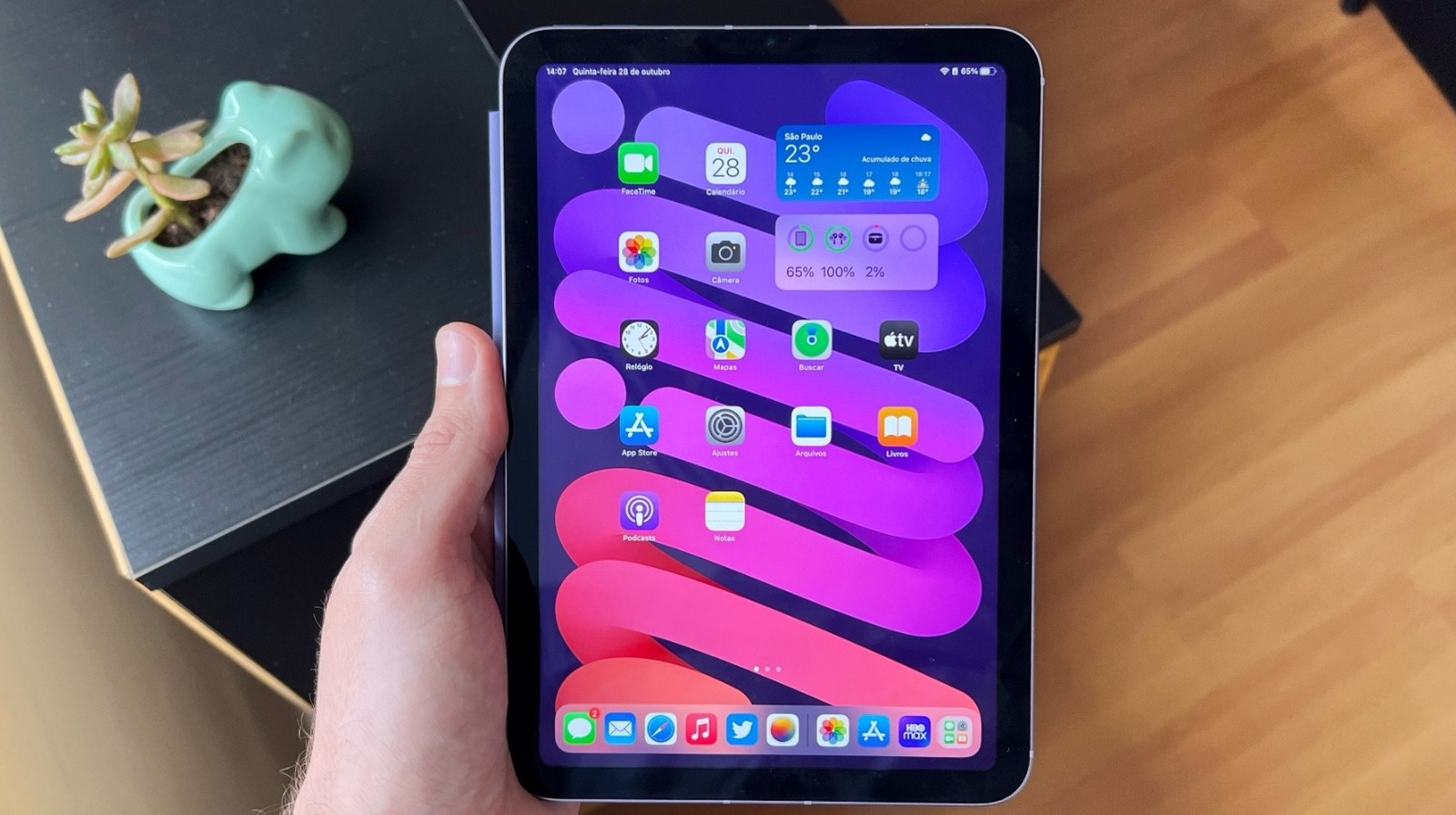
A New iPad Mini Is Coming, But Apple May Have

José Adorno/BGR

Last October, Apple released the iPad mini 7 with the A17 Pro chip. It was the first major update to the compact tablet since the sixth generation from 2021. Apple upgraded the seventh-gen model with a more capable chip, 8 GB of RAM, and Apple Intelligence capabilities. In addition to that, the multitasking features on iPadOS 26 made it even more useful — not just as a content machine, but also as a portable on-the-go computer.

However, as enticing as the iPad mini is, Apple is struggling with the growth of its iPad business. In the last quarter, the company attained a revenue of $6.6 billion, down from $7.2 billion over the same period last year. The most affected business is the iPad lineup, which shows that people are finding it hard to justify the price of the company’s tablets. Apple might have an even harder time justifying a new iPad mini, especially due to its price point.

Apple’s iPad mini no longer fits into the company’s tablet portfolio

José Adorno/BGR

In his Power On newsletter, Bloomberg’s Mark Gurman says there’s “absolutely” a new iPad mini on the way. While the journalist doesn’t add a timeframe for this release, he questions whether customers are “clamoring for it,” especially due to its $500 price point. While the iPad mini has been considered a great option for a portable tablet, it seems like the small form factor is working against it, especially with rumors of an iPhone Fold launching next year. With that, the journalist suggests that a cheaper alternative might make more sense for Apple instead of a premium one, especially with its rival products costing a lot less.

I’ve had a few iPad mini models through the years, and while the form factor was interesting at first, it was never a good Amazon Kindle replacement; it was too small for video streaming on planes, and using split view wasn’t very enjoyable due to the cramped screen. I prefer having a bigger iPad Pro with accessories than a device I can’t fully take advantage of.

Source

Posted on

iPhone 17 Pro Max Can’t Beat The Galaxy S25 Ultra

The iPhone 17 Pro and iPhone 17 Pro Max feature Apple’s A19 Pro chip paired with 12GB of RAM and at least 256GB of storage. The new Pros also feature vapor chamber cooling, a first for the iPhone, to help maintain stable performance for longer periods. The A19 Pro is Apple’s newest flagship chip, and the iPhone 17 Pro Max benchmarks show the processor is ahead of the competition. But benchmark performance does not guarantee the iPhone’s supremacy in real-life speed tests.

The Galaxy S25 Ultra crushed the iPhone 16 Pro Max in such a comparison back in February, when Samsung launched the Galaxy S25 series. The result was surprising, considering that newest iPhone usually outperform the newest Galaxy S flagship. Fast-forward to late September, and YouTube channel PhoneBuff put the iPhone 17 Pro Max and Galaxy S25 Ultra through the same speed test, wondering whether the new iPhone would beat its main rival. After all, the iPhone 17 Pro Max features an even better chip, the A19 Pro.

The speed test, seen in the video below, reached a similar conclusion, which might surprise some people. The Galaxy S25 Ultra was faster than the iPhone 17 Pro Max, and that’s an exciting development for two reasons. First, the Galaxy S26 Ultra will feature Qualcomm’s Snapdragon 8 Elite Gen 5, which should outperform the Galaxy S25 Ultra. Second, the pressure is on Apple to deliver next-generation A-series chips that can beat Qualcomm chips in speed tests.

What is a real-life speed test, and how accurate is it?

Plenty of creators might release comparison videos like the ones above. They aim to replicate real-time smartphone use by opening the same set of apps on each device during the first lap, which measures how long each handset takes to load web apps, photo and video editing apps, and games. The second lap involves opening the same apps from the phone’s memory and measuring how long the process takes.

Put differently, the test aims to recreate regular smartphone use. We open and reopen apps regularly on our devices, flipping through them for various purposes. We use light web apps and more resource-intensive ones. We play games, and we take and edit photos. The Galaxy S25 Ultra finished the first lap about 13 seconds ahead. The iPhone 17 Pro Max was two seconds faster in the second lap, but not enough to win the test.

The difference between other speed tests and PhoneBuff’s lies in the methodology. PhoneBuff uses a robot to open the same set of apps on the iPhone 17 Pro Max and Galaxy S25 Ultra. To ensure the test is as objective as possible, the YouTuber has the two phones running in similar conditions, including screen brightness, room temperature, and proximity to the Wi-Fi point. Therefore, PhoneBuff’s tests might be more objective than similar clips found on social media.

While the Galaxy S25 Ultra is the clear winner in this test, iPhone 17 Pro and iPhone 17 Pro Max users should not worry about performance issues. The new iPhones are fast and reliable. They’ll offer great performance, and the extra cooling should maintain stable performance for longer. The only way to observe the speed differences in the video above is to use both phones.

Source