Posted on

How the UK can seize the robotics opportunity

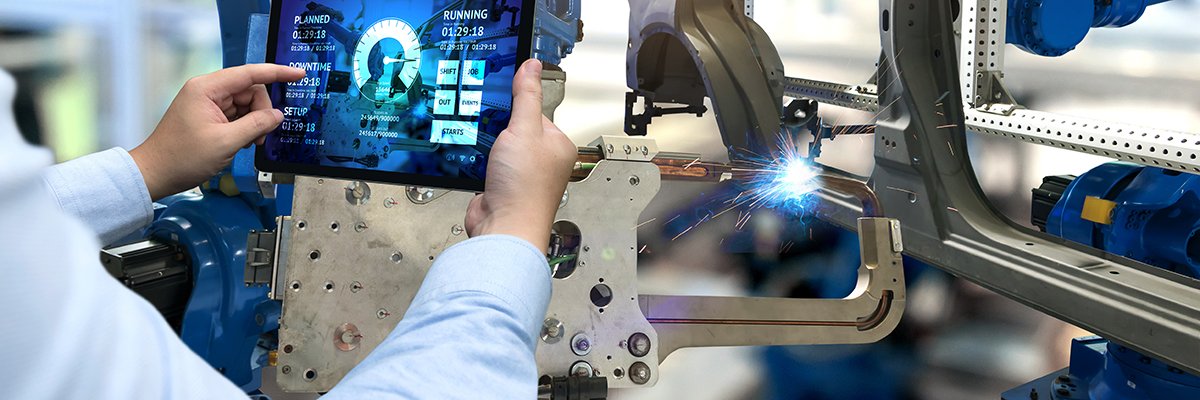
Few fields are currently as fertile and fast moving as robotics. Across the globe, companies are developing a new generation of robots that are more intelligent, connected, and advanced than ever before. Powered by significant advances in artificial intelligence (AI), sensing, connectivity and advanced materials, these robots are poised to transform industries as diverse as health and social care, defence, logistics, and agriculture.

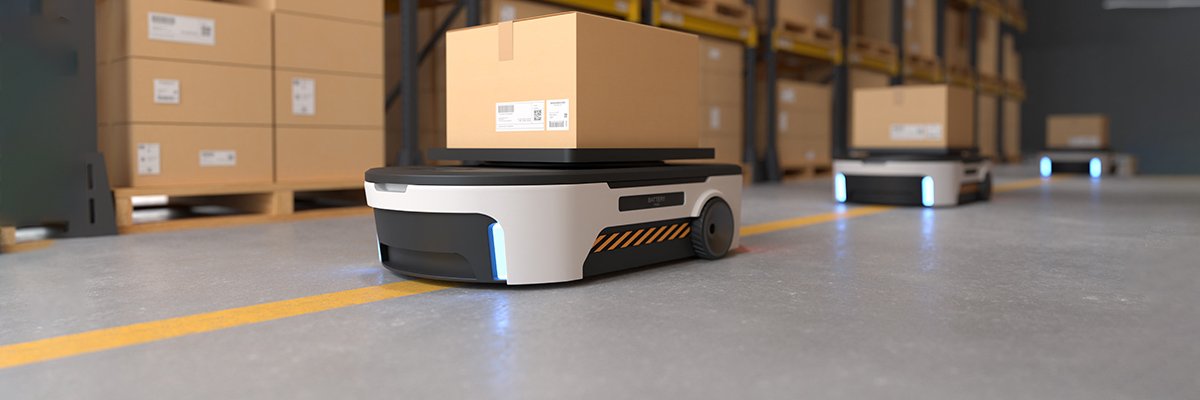
Examples include robotic arms that assist surgeons by performing intricate medical procedures or sorting robots that fulfil customer orders by autonomously picking and moving goods.

The question is not whether such applications are technically possible or currently being deployed – they very much are – but if the UK can seize the immense opportunity they present.

The good news is that the UK possesses world-class strengths in robotics research and development. Some of our universities, from UCL to Heriot-Watt, are recognised as global leaders in robotics and AI, and our tech ecosystem is producing fast-growing scaleups that are pushing boundaries in areas such as humanoids, computer vision, and collaborative robots.

In addition, large companies in the aerospace, energy, manufacturing and healthcare sectors are already deploying robotics to boost efficiency, improve safety, and address skills shortages.

Emerging technologies

At the heart of this transformation is the combination and convergence of emerging technologies. Most notably, the UK’s AI expertise, arguably the strongest in Europe, is converging with robotics to unlock new frontiers.

Examples include autonomous systems – robots acting independently of humans; dexterous manipulation, where robots skilfully handle complex objects; unsupervised learning, which involves robots learning patterns without guidance; and human-robot collaboration.

Despite this immense potential, the UK still struggles to adopt robotics, both across certain sectors such as healthcare and agriculture, and at a scale that drives down costs and produces widespread benefits.

Other countries, notably China, Japan, the US, South Korea, and Germany, have already recognised the transformative opportunity this technology provides and are investing heavily in robotics as a strategic capability. This includes building national infrastructure and facilities, prioritising robotics in their industrial strategies, and accelerating adoption across key sectors.

While strongly welcomed by industry, the UK’s recent commitment to launch a £40m network of robotics adoption hubs must be one investment of many if we are to drive adoption across key sectors at sufficient pace and scale.

Securing global leadership

This is what inspired TechUK to launch a new robotics programme. As the convener between government and the tech sector, we recognise the opportunity – or, more accurately, the need – to bring together government, industry, and academia to accelerate robotics adoption, drive productivity, and secure the UK’s global leadership in this fast-growing field.

This will include the creation of a cross-sector Robotics Working Group featuring key stakeholders from across the UK’s robotics ecosystem to share best practice, identify promising opportunities for UK leadership, and drive action.

With the right conditions, we can ensure robotics delivers real-world benefits across the economy, helping small businesses scale, boosting competitiveness, supporting public services, and creating high-value jobs.

The economic prize is clear. According to research from Make UK and Sage, enabling UK small and medium-sized businesses to adopt automation and AI, including robotics, could deliver a £150bn boost to the economy over the next decade. At a time in which the UK is grappling with sluggish productivity and acute labour shortages, this is not just an opportunity, it is a necessity.

Bold action

But to capture it, we need bold action. This means the Government Office for Science conducting a cross-government assessment of the UK’s key robotics strengths and capabilities; recognising robotics as the seventh frontier technology within government’s Digital and Technologies Sector Plan; strengthening the robotics team in the Department for Science, Innovation and Technology to begin to lay the foundations for a national robotics strategy; and prioritising robotics and embodied intelligence within the Regulatory Innovation Office.

These actions must be pursued with a sense of urgency and ambition that matches the scale of the opportunity in front of us.

If we get this right, the UK can become a global leader in developing, deploying, and exporting the next wave of robotics technologies. After all, we have much of the research, the talent, and the companies to ensure future success. Now we need the national vision, investment and coordinated effort to match.


Source

Posted on

Apple Teases Homegrown Modems For Future iPhones, iPads, Macs, And

José Adorno/BGR

Earlier this year, Apple released the iPhone 16e with its new C1 5G modem. While tests revealed that it wasn’t quite as capable as Qualcomm’s counterpart for the iPhone 16 and iPhone 16 Pro models, it was an important step forward for Apple as the company continues to build its own components and improve the integration between its hardware and software.

With the iPhone 17 release, the company decided to upgrade this modem with a C1X variant, specifically for the iPhone Air. Apple says the C1X modem is up to 2x faster than C1, and can be faster than the modem in the iPhone 16 Pro while using the same cellular technologies. More importantly, the company claims that it’s the most power efficient 5G modem on an iPhone.

However, while these technologies are key to preserving battery life on the iPhone Air, the company still chose to use Qualcomm’s latest 5G modem on the iPhone 17 Pro and iPhone 17 Pro Max. In an interview with CNBC, Apple VP of Software Technologies and Ecosystems Arun Mathias addressed the absence of its homegrown modem on the higher-end iPhone 17 models.

“Well, we were really focused on what we needed for iPhone Air,” Mathias said in response to questions about the modem missing in the other models. “We have great products with iPhone 17 and iPhone 17 Pro as well. And over time, we will see Apple cellular solutions in more products.”

Apple hints at the future of its 5G modems

José Adorno/BGR

According to Mathias, Apple plans to offer modems in more of its products in the years to come. While this is a vague hint at an iPhone and other products with the company’s 5G modems, there are already rumors pointing to the iPhone 18 Pro featuring an improved custom 5G chip.

In March, analyst Jeff Pu said Apple is developing a C2 chip with mmWave technology while also making the experience more reliable with better power efficiency. The analyst also expects Apple to continue to improve its Wi-Fi, Bluetooth, and Thread chip, which we now know as the N1.

Alongside Pu’s note, Bloomberg’s Mark Gurman said Apple was already working on a new modem to power the iPhone 18 models with download speeds of 6 gigabits per second, six-carrier aggregation when using Sub-6 5G, and eight-carrier aggregation when using mmWave. That said, all signs now point to next year’s iPhone 18 models featuring the company’s C2 chip instead of Qualcomm’s technologies.

Source

Posted on

French court ruling may lead to legal challenges over state

The French supreme court has turned to the European Court of Justice to decide whether EU citizens have the right to challenge the legality of evidence obtained by French law enforcement by hacking the Sky ECC cryptophone network.

The Cour de Cassation has asked the European Court of Justice to rule whether French law is in line with European law. It comes after the French courts refused the right of a German citizen to appeal against the lawfulness of the French hacking operation in the French courts.

The decision will have “significant consequences” for legal proceedings in the European Union against individuals who are charged with criminal offences based on evidence obtained by French police from hacking the Sky ECC and EncroChat encrypted phone networks.

French, Belgian and Dutch police infiltrated servers belonging to Sky ECC, the world’s largest cryptophone network, and decrypted millions of messages between June 2019 and March 2021, leading to the arrest of drug gangs across Europe.

French and Dutch police also harvested messages from tens of thousands of EncroChat cryptophone users after police infiltrated the network’s servers in a novel hacking operation in 2020. A three-year investigation led to 6,500 arrests of organised crime and drug groups worldwide and the seizure of nearly €900m in cash and assets.

France ‘breached European law’

A coalition of defence lawyers, known as the Joint Defence Team, are challenging the legality of the French hacking operation. They argue that France breached European law by obtaining millions of encrypted messages from Sky ECC and EncroChat without grounds for suspicion against the individuals targeted.

They also argue that the French failed to notify other EU states in advance about when they intercepted messages from phones outside of French territory, denying other EU member states the right to object to the operation.

The defence lawyers say that their argument gained extra weight after the French supreme court ruling in June 2025. The court stated that EU states engaged in cross-border digital investigations must formally notify other EU states when intercepting data in their jurisdiction – an obligation defence lawyers say has been ignored in the Sky ECC operation.

No legal recourse

Individuals facing prosecution have been denied the right to challenge the lawfulness of the French hacking operations before judges in their own country, because the “mutual recognition” principle requires EU member states to accept evidence provided by other member states under European Investigation Orders (EIOs).

At the same time, people have been denied the right to challenge evidence in the French courts, leaving people charged with offences based on intercepted Sky ECC or EncroChat messages without legal recourse to appeal.

German lawyer Christian Lödden and French lawyer Guillaume Martine filed an appeal on behalf of a man accused of crimes based partly on evidence from Sky ECC intercepts in Germany, in the Paris Court of Appeal in June 2024, seeking to challenge the lawfulness of the Sky ECC data. The court ruled that the man was not entitled to be heard by the French Court.

Lödden, working with a network of European defence lawyers, appealed the decision in  the French supreme court in February last year.

Decision will have ‘significant consequences’

The supreme court found that under French law, it was not possible for people accused of crimes in other countries to bring an appeal in France to challenge the lawfulness of the evidence, when it had been shared with another country under an EIO.

But the court also recognised the right of defendants to seek legal redress, and in a ruling on 16 September, the French supreme court asked the Court of Justice of the European Union to determine if there is a conflict between French and European law.

“The interpretation requested is likely to have significant consequences…in proceedings currently underway in various member states of the EU, where prosecutions rely on evidence similar to that contested here, all originating from the Sky ECC procedure,” the court said in its ruling. 

‘Fishing with dynamite’

Lödden told Computer Weekly that the French operation to hack Sky ECC, amounted to a mass surveillance operation against 170,000 devices across the world, without concrete grounds for suspicion against individual phone users required under European law. “It was like fishing with dynamite,” he said.

Under current law, it was not possible to have a court review the lawfulness of the interception operations against Sky ECC and EncroChat, he said, adding: “That is totalitarianism, not the rule of law.”

Justus Reisinger, a Dutch defence lawyer, said that the French supreme court decision “created a possibility of having a real effective remedy” against Sky ECC.

No judge has so far decided on the lawfulness of evidence obtained by French police by hacking encrypted phones in other countries without notifying those countries in advance and giving them a chance to object, he said.

“The Court of Justice of the European Union and the French Cour de Cassation agree that interception is unlawful if there is no notification, and there has been no notification. If this case is found admissible, then the outcome is almost certainly they will declare [the Sky ECC evidence] unlawful,” he added.

France, which carried out the Sky ECC hacking operation, obtained the data on the premise that it would bring prosecutions against individuals involved in running the Sky ECC network, including its founder Jean-Francois Eap and distributor Thomas Herdman.

French police went further and gathered data from Sky ECC phones worldwide, which it provided to law enforcement agencies in other countries investigating organised crime groups who were using the encrypted phones.

The Court of Justice of the European Union is expected to take up to a year and a half to respond to the French supreme court.

Source

Posted on

YouTube Will Finally Let You Hide The Recommendations At The

Mijansk786/Shutterstock

Some YouTube creators are using end screens to promote additional content from the channel. It’s a practice many YouTube users are familiar with, as those end screen recommendations show up at the end of many clips on the streaming service. Sometimes, they cover most of the screen, as creators can place up to four recommendations on the screen. But since those end screens can appear anywhere in the last 20 seconds of the clip, they can sometimes cover key details you may want to see. Until now, there was no way to remove the recommendation screens, but YouTube is finally allowing users to hide those end screens when they get in the way.

The end screen recommendations will not disappear, as creators can still promote their content at the end of videos. YouTube isn’t giving users a setting that will permanently remove those end screens. You can only hide the recommendations on the video you’re watching. You’ll have to repeat the process for every clip that has recommendations blocking relevant content.

Not all YouTube changes are beneficial. A few weeks ago, users and creators noticed YouTube using AI to enhance videos without the permission of creators. Previously, YouTube also hid the Skip button so users would watch more (and sometimes even longer) ads. But this time YouTube appears to be doing the right thing.

How to remove the end screen recommendations

Algi Febri Sugita/Shutterstock

YouTube announced the new “Hide” button via a support document on Wednesday. The Hide button will appear in the top right corner of the video player. Click the button, and the end screens will disappear. If you want to see the recommendations again, you’ll have to tap the “Show” button that appears once the end screens are hidden. YouTube says it’s implementing the change following feedback from its users. YouTube will also remove the “Subscribe” button that appears when you hover the cursor over a video’s watermark.

YouTube explained that the updates to the playback experience followed internal tests that measured the impact on these proposed changes. YouTube found that giving users the option to hide end screens caused a drop in views of less than 1.5%. Similarly, fewer than 0.05% of channel subscriptions come from the hover-to-subscribe functionality associated with the watermark. While YouTube is making these changes to the video player user interface, creators will still be able to use end screen recommendations and watermarks.

The support document doesn’t explain when the changes will be available to users, but it’s probably only a matter of time until you start seeing the Hide button on videos that have recommendations at the end. YouTube tested the button globally between March and July, a detail that suggests the software changes are ready for a wider rollout.

Source

Posted on

Fortnite patch spurs record broadband traffic spike for Openreach

Nearly two years ago, BT warned of the need to discuss with media owners the scheduling of the broadcast and game downloads to avoid unnecessary extra strain on infrastructures. Now, it has revealed that an update to the video game Fortnite is fuelling a surge in UK broadband demand and helping to break nationwide usage records.

The UK’s leading telco released data from its Openreach wholesale broadband network division showing that data usage on its new full-fibre network alone is up more than 35% between January and June 2025, compared with the same period in 2024.

The data showed that overall traffic on the BT national broadband network increased by 5% in the same timeframe. In addition, the study found that peak usage across Openreach’s network typically occurs between 20:00 and 22:00 when households are streaming, gaming and connecting multiple devices.

First introduced in 2017 by Epic Games, Fortnite is described by its developers as “a world of many games and other experiences”, made by different creators. The family includes Fortnite Battle Royale, which covers multiple experiences such as Battle Royale, Zero Build – Battle Royale, Reload, and Fortnite OG; Fortnite Ballistic; Lego Fortnite Odyssey; Lego Fortnite Brick Life; Rocket Racing; Fortnite Festival, including Festival Main Stage, Festival Jam Stage and Festival Battle Stage; and Fortnite Save the World.

BT said that Fortnite had become a consistent driver of peaks in demand, with major updates during 2025 coinciding with record-breaking spikes. On 21 February 2025, a large Fortnite patch pushed UK broadband traffic to 372 Petabytes (PB) – 372 million gigabytes – creating the busiest day of the year so far for its network. BT noted that this was the equivalent of streaming HD Netflix for more than 1.5 million years, nonstop; downloading more than 90 million 4K movies; or sending every person in the UK more than 5,000 high-res photos in a single day.

In addition, Patch 36.00 on 7 June 2025 saw usage hit 351PB, followed by 349PB on 8 June. Other high-traffic days included 5 January (357PB) and New Year’s Day (346PB), showing how digital demand continues to rise, even without major events.

Openreach’s data also revealed the UK’s general evolving digital habits. The top five busiest days for broadband usage in the 2025 include 21 February – Fortnite patch release (372PB); 5 January – high weekend usage (357PB); 7 June – Fortnite patch 36.00 (351PB); 8 June – continued Fortnite traffic (349PB); and 1 January – New Year’s Day (346PB).

Commenting on the data and the trends in terms of network consumption revealed by the survey, Openreach deputy chief executive Katie Milligan said: “Our usage data shows how faster, more reliable connections are reshaping the UK’s digital habits. We’ve always been a data-hungry nation, but wider access to full-fibre is enabling families and businesses to do more online – and do it faster, with fewer interruptions.

“More than 7.5 million customers are already benefiting from this upgrade – using it to work from home, access education and healthcare, and enjoy seamless entertainment and gaming. But upgrades aren’t automatic, so that still leaves over 12 million homes missing out on a future-proof connection that’s available now with freedom to choose from the widest range of providers.”

Source

Posted on

AI investments threatened by ‘fundamentally unreliable’ IoT connectivity

A study from Eseye is warning that billions in artificial intelligence (AI) investment is being threatened by what it calls “fundamentally unreliable” internet of things (IoT) connectivity.

Now in its fifth year, the 2025 edition of the State of IoT report from the global IoT firm surveyed 1,200 senior IoT decision-makers and implementers of IoT strategy who had undertaken at least one IoT project in the past 12 months, with IoT devices deployed across at least three countries and connecting through cellular networks. The data was collected between 28 May and 3 June 2025.

The research stressed that among the key elements of strategic IoT were device reliability, global connectivity, security and, now more than ever, sustainability. Yet it also warned that unreliable data streams were putting corporate AI strategies at risk, with findings showing only 2% of firms had achieved the high levels of connectivity required. In addition, poor connectivity from IoT devices was seen to be hindering the adoption of AI in a third of businesses (34%).

Moreover, the study highlighted that this so-called performance gap existed despite the majority of business leaders stating that high-connectivity performance is essential for device uptime. The research found that 74% agreed with the statement that “achieving near-100% global connectivity is crucial to my business case”.

It also warned that such unreliability has direct operational consequences. More than a third of businesses cited an “inability to gather timely and accurate data due to device downtime, leading to poor business decisions” (36%) and damage to their company’s reputation (36%) as key risks. A similar number pointed to a “loss of operational efficiency and increased costs due to unreliable connections” (35%).

“We all hear about the incredible promise of AI to help us solve major global challenges, from creating smarter healthcare and more sustainable cities, to managing our energy and water resources,” said Eseye co-founder and chief customer officer Paul Marshall. “But what’s often missed is that these revolutionary AI models are completely dependent on a constant stream of real-world data from a vast network of IoT sensors.

“Our research reveals a critical flaw in this foundation. We found that only 2% of these IoT deployments are achieving the near-100% connectivity they need. This means we may be building our transformative AI ambitions on a network that isn’t yet consistently dependable. This isn’t just a risk to business ROI, it’s a risk to the evolution of AI applications.”

Marshall also stressed just how important this could be in real-world applications, adding that in mission-critical IoT scenarios, failure isn’t just inconvenient, it’s potentially life-threatening.

“Imagine a life-saving medical sensor detecting a dangerous drop in a patient’s oxygen levels,” he said. “If that data point can’t be transmitted and then analysed by AI applications due to a failed connection, the alert never reaches clinicians in time. The result? A missed opportunity to intervene, and potentially a preventable fatality. To make the promise of AI a reality for everyone, we must first solve this foundational IoT connectivity challenge.”

Source

Posted on

Huawei unveils interconnects to address large-scale AI infrastructure bottlenecks

Opening its Connect 2025 conference, Huawei stressed that computing power is and will continue to be key to the continued roll-out of artificial intelligence (AI) across distributed business infrastructures – especially in China – and used the event to launch a range of computer pods and clusters, as well as interconnect technology to address potential data bottlenecks for large-scale AI computing infrastructure.

In his conference keynote, Groundbreaking SuperPoD Interconnect: Leading a new paradigm for AI infrastructure, Eric Xu, the deputy chairman of the board and rotating chairman of the IT and networking giant, stressed that Huawei’s goal was to sustainably meet long-term computing demand by building SuperPoDs – defined as a single logical machine, made up of multiple physical machines that can learn, think and reason as one – and SuperClusters, with the semiconductor manufacturing process nodes that he said were “practically” available to the Chinese mainland.

During the keynote, Xu unveiled the company’s newest SuperPoD products: the Atlas 950 SuperPoD, with 8,192 Ascend neural processing units (NPUs), and the Atlas 960 SuperPoD, with 15,488 Ascend NPUs.

These two SuperPoDs are claimed to deliver “industry-leading performance” across multiple key metrics, including the number of NPUs, total computing power, memory capacity and interconnect bandwidth. In addition, the company states that based on publicly announced product roadmaps from peers in the industry, Huawei insisted that its SuperPoDs were currently the most powerful in the world, and that they would remain so “for years to come”.

Xu also announced the Atlas 950 SuperCluster (with over 500,000 Ascend NPUs) and Atlas 960 SuperCluster (with over one million Ascend NPUs), which are large-scale computing clusters comprised of multiple Huawei SuperPoDs. These are also poised to outperform all other computing clusters on the market.

With the world’s most powerful SuperPoDs and SuperClusters, Xu asserted that Huawei has what it takes to provide abundant computing power for ongoing, rapid advancements in AI, both now and in the future.

Xu went on to introduce the TaiShan 950 SuperPoD, what the tech developer described as the world’s first general-purpose computing SuperPoD. The platform, combined with Huawei’s distributed GaussDB, is designed to serve as a viable alternative to mainframes and mid-range computers, and also Exadata database servers.

Yet even with the most powerful SuperPoD, there exist a number of networking challenges in high-computing environments, namely the physical limitations of existing cable technology – both optical and copper – to link up massive numbers of chips and SuperPoDs over long distances while maintaining a reliable, high-speed and low-latency connection. This could present a major bottleneck for large-scale AI computing infrastructure.

To address these challenges, Huawei said it had honed its connectivity expertise over the past three decades, and Xu announced UnifiedBus, a “groundbreaking” interconnect protocol for SuperPoDs.

“SuperPoDs and SuperClusters powered by UnifiedBus are our answer to surging demand for computing, both today and tomorrow,” he said. “Our goal is to keep pushing advancements in AI to create greater value.”

Xu also released the technical specifications for UnifiedBus 2.0, in the hope that industry partners will adopt this protocol to develop more UnifiedBus-based products and components, and jointly create an open UnifiedBus ecosystem.

Source

Posted on

UK needs better defences to protect undersea internet cables from

The government has been urged to step up defences to sabotage threats from Russia against undersea cables that provide critical internet connections for financial services, datacentres and military communications.

A cross-party group of MPs and peers has warned the UK has “been too timid” in defending the undersea internet cable network from potential attacks by Russia and other hostile nation states.

Parliament’s Joint Committee on the National Security Strategy warned in a report that Russian aggression can escalate much faster than UK resilience measures could be upgraded.

“We can no longer rule out the possibility of UK infrastructure being targeted in a crisis,” the committee said.

“We are also not confident that the UK could prevent such attacks or recover within an acceptable time period.”

Nato’s general secretary, Mark Rutter, warned in June that Russia would be “ready to use military force against Nato within five years”.

UK is dependent on subsea internet cables

The UK is a global hub for internet traffic, and almost entirely reliant on subsea cables to exchange data with other countries.

The UK has about 62 subsea cables, roughly 50 of which are thought to be active, to connect it with the rest of the world and to provide resilience if some are deliberately or accidentally damaged. Additional cables run through the Channel Tunnel.

MPs and peers warn in their report that a simultaneous attack on multiple cables, particularly during times of heightened tension or conflict, could cause significant disruption.

There is growing concern about malicious reconnaissance and sabotage of the UK’s underwater infrastructure, they say.

Parliament concerned over Russian threats

Experts told the committee that Russia operates titanium-hulled vessels that can target cables at extreme depths and is willing to recruit freelance shipping operators to damage undersea cables by dragging their anchors.

In January, Russian spy ship Yantar was challenged in British waters after being observed “gathering intelligence and mapping the UK’s critical underwater infrastructure”.

MPs and peers say the UK’s outlying islands, military cables and cables used by the financial sector are vulnerable. While sabotaging these links may not cause national disruption, it would be “costly, provocative and hard to prevent”.

Their report says that onshore landing stations, such as Lowestoft, which houses five cables, and Bude, which houses nine cables, could also be at risk, and that some sites could be “rendered inoperable” by sabotage.

Risk of ‘catastrophic disruption’

The committee said coordinated attacks could cause catastrophic disruption, including failures in payment systems and supply chains, degraded communications, overstretched emergency responses, and unexpected cascading issues as online authentication applications are disrupted.

When a fishing vessel accidentally severed cables to the Shetland Islands in 2020, residents reported widespread card payment failures, and disruption to mobile phones and landlines.

Damage to a cable connecting Orkney and Banf in 2025 disrupted business internet connections and led to the closure of a hospital switchboard.

The financial sector relies on subsea cables for high-frequency trading, with over $1.5tn in cross-border trade travelling through undersea cables each day.

The loss of key low-latency connections combined with damage to backup routes could cause “significant disruption”, the committee said.

UK needs better preparation

The parliamentarians call for more robust resilience plans, particularly in the financial sector, and updated contingency planning to account for damage to onshore landing stations.

Their report recommends that the government acquires a cable repair ship by 2030, to address the lack of a sovereign repair capacity.

It also calls on the Royal Navy to establish a cadre of reservists and serving personnel to learn cable repair skills, to ensure cables could be repaired in the event of a conflict.

Other recommendations include scaling up cable monitoring schemes, rapid data sharing with law enforcement, legal sanctions, and a greater focus on “direct physical interdiction and prosecution” of suspicious vessels and crew.

Matt Western, chair of the Joint Committee on the National Security Strategy, said the undersea cables form the backbone of the internet, and carry financial transactions worth billions of pounds. “The scale of the UK’s strategic reliance needs to be taken more seriously,” he added.

“We must prepare for the possibility that our cables can be threatened in the event of a security crisis,” said Western. “Putin has shown every sign of wanting to test the soft underbelly of the Nato alliance. Our cables are sufficiently vulnerable to make them a target.

“We need stronger physical protections, better options to impose genuine costs for malicious activity and more comprehensive recovery plans,” he added. “It is conceivable that the UK’s national resilience will be tested in the coming years. We need to be ready.”

Source

Posted on

iPhone 17 Pro And iPhone Air Benchmarks Start To Appear

The newest flagship devices from Apple will feature a new, higher-performing chip than the iPhone 16 lineup did. While Apple has made claims about what kind of performance you can expect to see when upgrading from an older iPhone to an iPhone Air or iPhone 17 Pro, benchmarks can often give us an even more detailed look at how a phone performs.

Thankfully, new benchmarks for the iPhone 17 Pro and iPhone Air – both of which sport the upgraded A19 Pro chip — have started to appear online. This could give us a decent glimpse of what to expect from the newer iPhones when they start hitting people’s hands next week.

As always, real world use may vary compared to benchmarks. It’s also important to note that these benchmarks are currently “unconfirmed,” which means we can’t say for sure that they are taken from an iPhone 17 Pro or iPhone Air specifically. That said, prospective buyers might at least get a better idea of what to expect from Apple’s most powerful smartphones to date.

Apple’s claims are nebulous as always

Natalyaburova/Getty Images

Apple’s claims about the performance we should expect from the iPhone 17 Pro and iPhone 17 Pro Max aren’t as clear as they could be. In a press release detailing the new devices, Apple writes: “A19 Pro enables iPhone 17 Pro and iPhone 17 Pro Max to deliver up to 40 percent better sustained performance than the previous generation — ideal for gaming, video editing, and running large local language models. The 6-core CPU is the fastest CPU in any smartphone, and the 6-core GPU architecture includes Neural Accelerators built into each GPU core, a larger cache, and more memory than A18 Pro.”

However, this doesn’t exactly say whether those performance claims are tied to the CPU, GPU, or both components combined. This isn’t especially surprising, given that Apple also doesn’t list the amount of RAM in any of its new iPhones anywhere. That said, there are multiple unconfirmed benchmarks based on both the CPU and the GPU, which paint a bit of a clearer picture.

What the unconfirmed iPhone 17 Pro benchmarks show

According to the CPU benchmarks shared on Geekbench, the A19 Pro appears to perform just 13 to 15% faster than the A18 Pro chip found in the iPhone 16 Pro lineup. That’s a far cry from the 40% improvement that Apple notes in its press release. However, the Metal scores — which are Geekbench scores based around GPU performance in a device — show that the iPhone 17 Pro chip performs up to 40% better than the iPhone 16 Pro’s chip did. That seems to point toward Apple’s claims being focused on the GPU.

Digging deeper, MacRumors says that it spotted another comparison on the iPhone 17 Pro product page, which notes that the A19 Pro chip offers up to 20% faster CPU performance compared to the A17 Pro chip that was found in the iPhone 15 Pro. That would line up nicely with the CPU benchmarks seen on Geekbench, even if they are currently unconfirmed.

What this ultimately means is that Apple device owners upgrading to the iPhone 17 Pro or iPhone Air from the 16 Pro lineup will likely see less of a performance leap than those who are running older devices like the iPhone 15 Pro. Fairly obvious, but worth knowing nonetheless. Even if you are a fan of the new design, if you just upgraded to the iPhone 16 Pro, it might not be a bad idea to wait for the iPhone 18 next year if performance is important to you.

Source

Posted on

iOS 26 Includes A Surprise Feature That Lets You Color

oasisamuel/Shutterstock

Apple added the option to customize your home screen icons back in iOS 18, allowing you to make them darker or even tint them based on a color in your wallpaper. Now, though, the company looks to be taking things a step further with even more in-depth icon customization in iOS 26. One way Apple is accomplishing this is by giving users the ability to match the color of their icons to their phone case. But only with certain cases.

For this new feature to work, you’ll need to have a MagSafe case that your iPhone can automatically recognize. The exact technology behind this is a bit unclear, but based on reports from MacRumors, it looks like the feature already appears in the iOS 26 release candidate and is based on how your phone communicates with MagSafe certified accessories. This is essentially an early look at the upcoming operating system, which should be available on September 15, ahead of the iPhone 17 and iPhone Air.

How to use the new case-match icon tint

Hadrian/Shutterstock

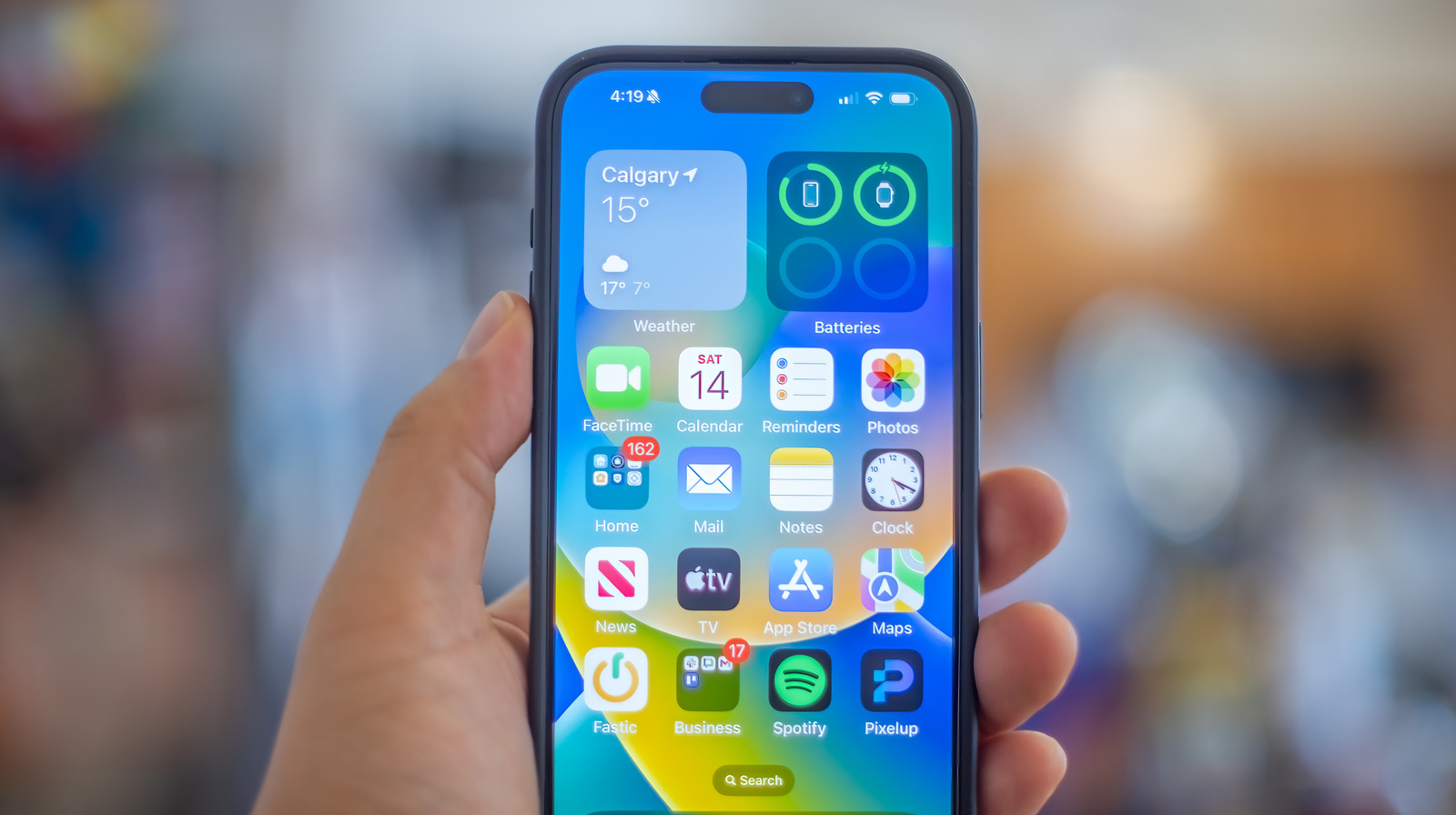
To make use of the new case-match tint, you’ll want to follow the standard steps to customize your home screen. Once you’ve selected Customize and pulled up the icon customization screen, you should be able to select from an assortment of options, including Default, Dark, Clear, and Tinted options.

Near the bottom of this menu, you will also be able to select a button that looks like the back of a phone case, which will automatically check your phone’s case color. If the phone can recognize the case, it will change the tint colors to match it.

Not all MagSafe phone cases will support this functionality. While there are plenty of “MagSafe Compatible” cases out there, but users will likely need a MagSafe certified case to make use of this functionality. This most likely means you’ll need to use a first-party Apple case, though any case that has the Made for MagSafe badge should work, as these are cases that trigger the MagSafe animation, work with full wireless charging speeds on MagSafe chargers, and should include the official MagSafe magnet array. They’re also designed to meet Apple’s MFi (Made for iPhone) standards.

Source