Cyber criminals are exploiting Home Office branding in a newly identified phishing campaign that targets holders of UK immigrant sponsor licence holders participating in the government’s Sponsorship Management System (SMS).
The SMS is designed for employers sponsoring visas in the Worker and Temporary Worker categories, and institutions sponsoring visas in the Student and Child categories. It is used primarily to manage the creation and assignment of sponsorship certificates for prospective employees or students, and to report changes of circumstances for sponsored immigrants.
The unidentified actors behind the campaign, which was identified by Samantha Clarke, Hiwot Mendahun and Ankit Gupta of the Threat Research Team at email security specialist Mimecast, seem primarily to be seeking to compromise credentials for downstream financial exploitation and data theft.
“This campaign represents a significant threat to the UK immigration system, with attackers seeking to compromise access to the Sponsorship Management System for extensive financial and data exploitation,” the team said.
“The threat actors deploy fraudulent emails impersonating official Home Office communications, typically sent to general organisational email addresses with urgent warnings about compliance issues or account suspension. These messages contain malicious links that redirect recipients to convincing fake SMS login pages designed to harvest User IDs and passwords.”
The systematic campaign starts with phishing emails that at first glance will appear to the target to closely mimic a genuine Home Office notification. These messages present as urgent notifications or system alerts requiring prompt attention, but in reality, direct users to fake login pages to capture the victims’ SMS credentials.
A deeper technical analysis by the Mimecast team found the perpetrators are using captcha-gated URLs as an initial filtering mechanism, followed by redirection to the attacker-controlled phishing pages, a direct clone of the genuine article – complete with pilfered HTML, links to official UK government assets and minimal albeit critical changes to the form submission process.
“The threat actors demonstrate advanced understanding of government communication patterns and user expectations within the UK immigration system,” said the team.
What is the goal of the phishing attack?
The goal of the phishing attack appears to be twofold, targeting both organisations legitimately sponsoring immigrants to the UK, and the immigrants themselves.
Once they have compromised their primary victims’ SMS credentials, the attackers pursue multiple different monetisation objectives, said the Mimecast team. Chief among these appears to be the sale of access to compromised accounts on dark web forums to facilitate the issuance of fake Certificates of Sponsorship (CoS), and to conduct extortion attacks on the organisations themselves.
However, a murkier – and potentially more lucrative – avenue for exploitation involves the creation of fake job offers and visa sponsorship schemes.
Computer Weekly understands that some downstream victims seeking to move to the UK have been defrauded of up to £20,000 by the cyber criminals for seemingly legitimate visas and job offers that never materialise.
Next steps
For Mimecast customers that may be at risk from this phishing campaign, the firm has already implemented comprehensive detection capabilities enabling its email security platform to detect and block incoming emails associated with it, and is continuing to monitor for any developments.
In general, organisations using the SMS service should consider taking the following steps:
Deploy email security capabilities to detect government impersonation and suspicious URL patterns, and implement URL rewriting and sandboxing to analyse links prior to user interaction.
Establish and enforce multifactor authentication (MFA) on SMS access, rotate these credentials frequently and monitor SMS accounts for strange access patterns or login locations that don’t add up.
Engage those with access on genuine Home Office communications and official email domains, emphasising the importance of verifying urgent notifications before taking action, coupled with general phishing-awareness training and simulations.
Set up verification procedures for SMS-related communications, incorporate SMS compromise into incident response protocols and, where possible, segregate SMS duties to ward off single-point-of-failure scenarios.
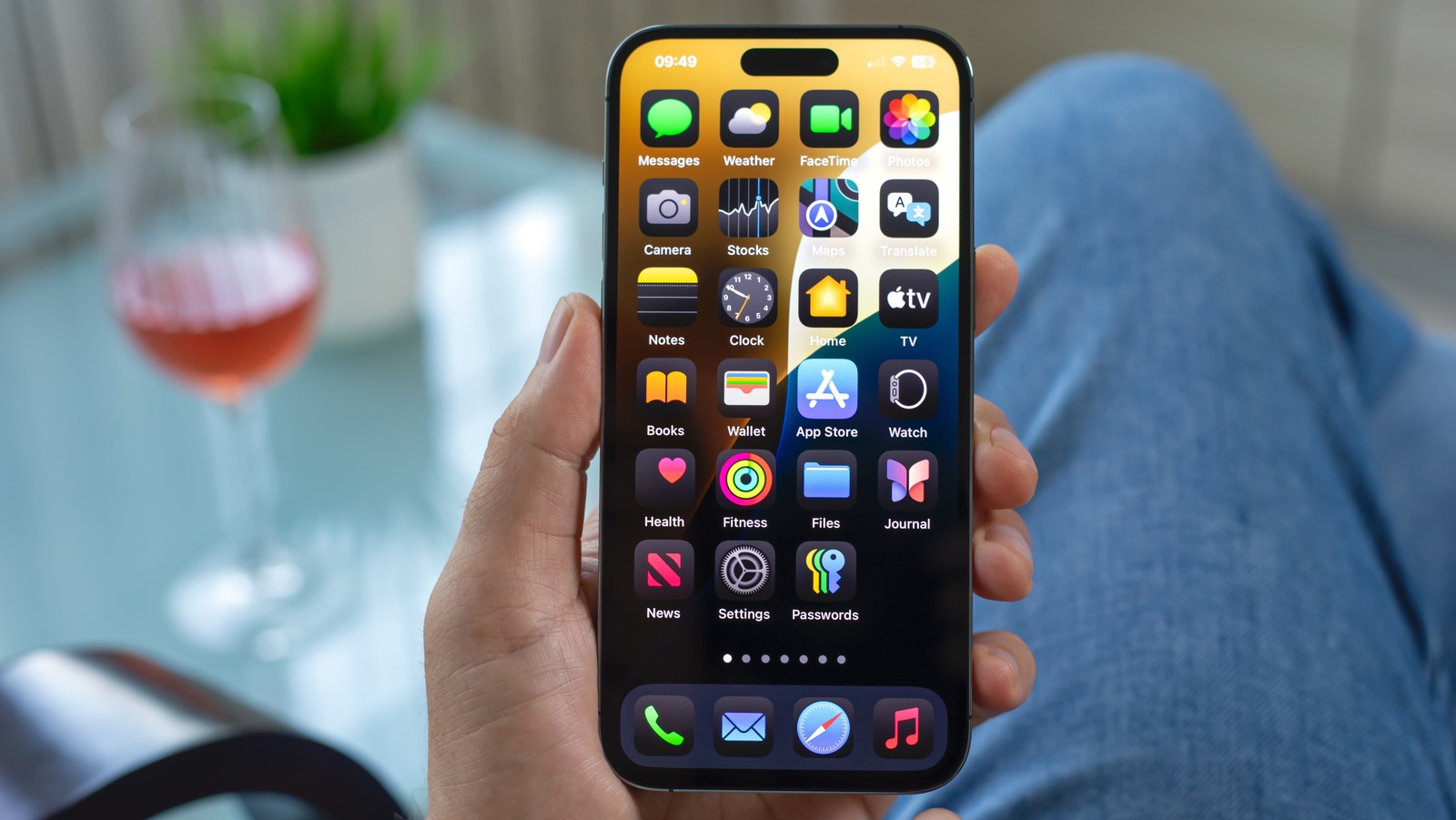
Your iPhone’s status bar is a helpful dashboard that provides a glance at the vital signs of your smartphone. You’re probably used to seeing the Wi-Fi and cellular data icons in this indicator field, along with your iPhone’s battery status. But there may come a day when you see something a bit less familiar. Specifically, we’re referring to signs like “SOS Only,” “No Service,” or “Searching.”
When your iPhone is in SOS Only mode, it means the device isn’t connected to a cellular network. As a result, you won’t be able to make regular phone calls or send text messages, but you may be able to reach out to emergency services like police, fire, coast guard, and other life-saving teams if you’re in the U.S., Canada, or Australia. “No Service” or “Searching” indicates your iPhone or iPad (Wi-Fi + Cellular) has zero carrier connection, so you won’t even be able to reach out to emergency services.
How to get your iPhone out of SOS mode
Fiordaliso/Getty Images
Let’s say your iPhone entered SOS mode on a day trip to the mountains. Once you return home — where you know your carrier has got you covered — your phone still shows the SOS icon. One of the first things you can try doing is an attempted reconnect to your carrier. To do so, head to Settings and turn on Airplane Mode. Wait for 15 seconds, then turn it back off. You can also turn Airplane Mode on or off via your phone’s Control Center.
If you’re still seeing the “SOS” message in the status bar, go ahead and restart your iPhone or iPad. When your device boots back up, there’s a good chance it won’t be in SOS mode anymore. It’s also not a bad idea to make sure your iPhone is running the latest version of iOS.
Should you still see “SOS” in the status bar, your carrier may actually be experiencing some type of outage. Whether it’s a localized issue or some kind of nationwide disruption, your carrier’s official site and third-party services like Downdetector.com might give you the scoop on what’s happening. You may also want to check your carrier’s social media platforms or use another phone to contact customer support.
You could also be stuck in SOS if you’re traveling outside the country and you didn’t turn on data roaming. To turn this feature on, head to Settings > Cellular Data > Cellular Data Options, then toggle Data Roaming on. Additionally, if your iPhone is a dual-SIM model, one of your carrier lines could be inactive. To review, tap Settings > Cellular, then select the line you want to investigate. If the line is toggled off, simply turn it back on.
How to use Emergency SOS
Hadrian/Shutterstock
When in SOS mode, your phone is outside of your carrier’s coverage net and is technically “borrowing” data from a rival network temporarily. Apple also introduced a feature called Emergency SOS via Satellite with the iPhone 14 and later, which automatically activates when your phone isn’t connected to a carrier. You’ll be prompted to send an emergency text via satellite, at which point, your iPhone will direct you on where to go and what to do.
Your iPhone can also make an Emergency SOS call manually. For all countries except India, you can make an Emergency SOS call by pressing and holding the side button and either volume button simultaneously. After an Emergency SOS call is finished, any emergency contacts you’ve set up will receive a text message, unless you choose to ignore this option. Your iPhone will even share your location if it’s able to.
You can also make changes to your Emergency SOS settings by tapping Settings > Emergency SOS on your iPhone. From here, you’ll be able to enable or disable the activation settings for Emergency SOS, as well as manage your emergency contacts.
Even online, it’s nice to find some privacy, although accomplishing this seems to be getting more difficult with each passing day. However, Instagram’s Vanish Mode can be useful for keeping secrets. It brings a Snapchat element to the platform, as messages you send in this mode will automatically disappear. From planning a friend’s surprise party to hiding your late-night arguments about what’s inside the moon, sometimes it’s good to not leave a trail. (Now, if Instagram is going to copy Snapchat, maybe it will finally release the iPad app it’s supposedly working on?)
Enabling Vanish Mode on iPhone or Android is easy. It simply involves swiping up from the bottom of any individual chat window. This makes it a super convenient way to bounce back and forth between a casual conversation and something that needs to be confidential. However, there are also some things you should know about it, as Vanish Mode isn’t an impenetrable fortress. While it’s going to be good for keeping a conversation between friends more personal, there are some things to bear in mind if you think it’s going to keep anything and everything private. First, though, let’s talk more about how to use Vanish Mode.
How to use Vanish Mode on Instagram
PixieMe/Shutterstock
Whether you’re using iOS or Android, all it takes to enter Vanish Mode is opening Instagram, selecting Messages in the top-right corner of your feed, selecting a chat with someone, and then swiping up from the bottom within the chat. It will say Vanish Mode at the top of the screen if successful, and swiping up again will disable it. Anything sent while in this mode will erase once you leave the chat or disable the feature.
The big things to remember with Vanish Mode are that it needs to be enabled for each individual chat, and it’s not going to work with group messages. If you have notifications enabled, you’ll still receive one should someone send you a message while using this feature. Tapping the notification will enter you into the Vanish Mode chat with them. You’ll also receive a notification if they send messages outside this mode, as you would typically expect.
Switching back and forth between Vanish Mode and a regular Instagram conversation is pretty easy, as the feature is unobtrusive. Your Vanish Mode conversation starts as soon as you enable it, so messages that were there before enabling it will still be present. Once you exit this mode, your conversations will once again be saved within the chat until the feature is turned on again.
Protecting your privacy with Vanish Mode
Farknot Architect/Shutterstock
One of the largest reasons to enable this feature is for a state of privacy. Since messages evaporate once you leave the chat, Vanish Mode can be great for sending anything you don’t want to be permanent. When using this feature, users will be unable to forward, save, or copy any messages that disappear, and you can only use Vanish Mode while chatting with other Instagram accounts. Meta also notes that certain professional accounts cannot use this feature.
While privacy is the goal, the system isn’t perfect, and it still requires a level of trust. Even though messages vanish, users are able to take screenshots or recordings of the chat window before they do. Instagram will provide a notification should a user do this, but it’s also possible for someone to use a physical camera to record the conversation, which Instagram likely won’t detect.
If someone invades your privacy, it’s important to remember you can report messages sent in Vanish mode for up to fourteen days after they’re sent. If you think a message violates Meta’s Community Standards, simply enter the chat with the offending message, select the user’s icon, tap Options (three dots), and then select Report. It works on both Android and iOS, but doesn’t work with group chats, and knowing how to report messages can be just as important as knowing about the controversial Instagram feature that may be sharing your location.
The ShinyHunters hacking collective responsible for a wave of cyber attacks orchestrated via Salesforce products is likely collaborating with the Scattered Spider gang that brought down systems at Marks & Spencer earlier this year, according to research.
In a report published 12 August, ReliaQuest researchers Kimberley Bromley and Ivan Righi argue that there is now plenty of evidence – albeit some of it highly circumstantial – suggesting a deliberate partnership between the two operations, both of which have previously been linked to the wider cyber crime network known as The Com.
They described a dramatic shift in ShinyHunters’ tactics that move the group well beyond its previous modus operandi, which centred largely on credential theft and database exploitation, to include “hallmark” Scattered Spider techniques.
These include the adoption of highly-targeted voice phishing, or vishing, campaigns that impersonate IT support staff to get victims to connect malicious apps – Salesforce Data Loader in the current campaign – that enable them to steal data, the use of Okta-themed phishing pages to trick their victims into entering their credentials, and the use of the legitimate Mullvad virtual private network (VPN) service to perform data exfiltration.
“These tactics align closely with Scattered Spider’s trademark methods and those of the broader collective, The Com, fueling speculation about active collaboration between the groups,” wrote Bromley and Righi.
Evidence adds up
The ReliaQuest team offered up more evidence of a link, saying that the two groups also appear to be targeting similar verticals – retail, insurance and aviation – during the same rough timeline, and they seem to be taking a similar approach in the naming conventions they used when registering their domains. Bromley and Righi warned that based on their analysis of domains registered that match the naming pattern convention favoured by ShinyHunters and Scattered Spider, it is likely that financial services companies should now be on high alert.
More evidence has recently emerged of the existence of an individual persona associated with ShinyHunters, known as Sp1d3rhunters. This account, which first popped up on the BreachForums data leak service in 2024, when it was linked to ShinyHunters’ breach of Ticketmaster, has allegedly claimed that ShinyHunters and Scattered Spider are the same, and moreover always have been.
“If these connections are legitimate, they suggest that collaboration or overlap between ShinyHunters and Scattered Spider may have been ongoing for more than a year,” said the researchers.
Broader significance
Conceding that it would be possible to spend months dissecting the clues that suggest ShinyHunters and Scattered Spider are working together, Bromley and Righi said it was important for defenders not to lose sight of the broader significance of the ongoing attacks – that they are successful not because of who orchestrated them, but because of how they were executed.
“Threat actors constantly rotate infrastructure, change names, and adapt their TTPs to evade detection and maximise impact,” they said. “As a result, tracking the behavioral patterns and evolving TTPs behind these campaigns is far more valuable than focusing solely on indicators of compromise (IOCs) or attribution.
“For security leaders, understanding this fluid and persistent threat landscape is critical to anticipating future attacks and making informed decisions about security strategy and resource allocation.”
They warned that the cyber attack campaigns were likely to continue regardless of whether the two groups are working together, or are one and the same, adding that others may also attempt to emulate the success of the high-profile attacks by adopting similar tactics.
“These recent campaigns showcase the effectiveness of a new wave of English-speaking threat actors highly skilled in social engineering,” they said.
No fewer than eight critical flaws that could allow a threat actor to achieve remote code execution (RCE) on a targeted system are listed in Microsoft’s August Patch Tuesday update, which once again tops out at over 100 common vulnerabilities and exposures (CVEs).
Alongside the critical RCE bugs – which occur in a variety of Microsoft products and services, including DirectX Graphics Kernel, GDI+, Hyper-V, Message Queuing, Office and Word – are a solitary elevation of privilege (EoP) flaw in Windows NTLM, two information disclosure vulnerabilities in Hyper-V and Azure Stack Hub, and a spoofing vulnerability in Hyper-V.
The latest monthly drop contains no full zero-day exploits, bar one EoP vulnerability in Windows Kerberos, CVE-2025-53779, which by itself does not quite meet all the criteria because while exploit code has been made public, there is no evidence any threat actor has yet taken advantage of it.
This stems from a path traversal flaw in which Kerberos improperly validates path inputs when handling the relatively new delegated Managed Service Account (dMSA) feature in Windows Server 2025. This, in turn, enables an attacker to create improper delegation relationships, impersonate privileged accounts, escalate to domain admin privileges and potentially gain control of the Active Directory domain.
However, to do so, the attacker would need to have already elevated access to certain attributes of the dMSA, so exploitation is supposedly less likely, according to Microsoft.
This said, Mike Walters, president and co-founder of Action1, said the danger from CVE-2025-53779 grows when combined with other techniques, and as such, large organisations with complex Active Directory environments, those that lean into dMSAs for service account management, and high-risk targets like banks, government agencies or hospitals, should take heed.
“The combination of a path traversal issue in a core authentication component like Kerberos and its potential high impact is concerning,” said Walters.
The [SharePoint CVE-2025-49712 vulnerability] is not yet exploited in the wild, but history shows these evolve fast. Exposed SharePoint instances are prime footholds for lateral movement. Prioritise and patch all SharePoint updates, rotate keys and eliminate internet exposure Saeed Abbasi, Qualys Threat Unit
“The need for high privileges may create a false sense of security, as accounts with these rights are common in decentralised IT environments. Once compromised, they can quickly lead to full domain takeover.
“The presence of functional exploit code means attackers may pursue this flaw despite Microsoft’s assessment. Vulnerabilities in core authentication mechanisms are attractive additions to advanced attack chains, especially in targeting high-value environments,” he warned.
SharePoint flaws should be addressed
Although less immediately dangerous in their scope, defenders may also wish to pay attention to a pair of vulnerabilities in SharePoint: CVE-2025-53760, which enables EoP; and CVE-2025-49712, which enables RCE.
These come hot on the heels of the so-called ToolShell vulnerabilities in SharePoint, which were so serious they received an out-of-synch patch in July, and were exploited in short order by China-linked threat actors against government targets.
Saeed Abbasi, senior manager for security research at the Qualys Threat Unit, said CVE-2025-49712 in particular warranted some concern.
“This RCE demands authentication but pairs dangerously with known auth bypasses,” explained Abbasi. “Attackers chaining this with prior flaws could achieve full server compromise and data exfiltration. It’s not yet exploited in the wild, but history shows these evolve fast. Exposed SharePoint instances are prime footholds for lateral movement.
“Prioritise and patch all SharePoint updates, rotate keys and eliminate internet exposure. Delaying invites regulatory scrutiny and breaches since SharePoint’s exploit streak isn’t over,” added Abbasi.
It’s great coming home after a hot day outside to discover your house is at the absolute perfect temperature. Or, even better, spending all day in the cold and arriving home to a snug 78-degree abode can be a wonderful feeling. While accomplishing this without wreaking havoc on your energy bill can be tricky, Apple may soon have a solution.
Discovered by writer and developer Steve Moser, who shared his findings on X, the app formerly known as Twitter, code within the iOS 26 beta Home app has revealed a potential new “Adaptive Temperature” feature that will track when you come and go from your house and adjust the temperature inside accordingly. The new code also reveals the potential for Home to make certain adjustments based on energy cleanliness and rates.
There’s no guarantee that this feature will arrive in iOS 26, if at all. However, just like Moser finding two new Apple Maps features, there’s still plenty of time between now and the likely fall release of iOS 26 for Apple to unveil some surprises.
Apple code may help you save on energy bills
Maryna Terletska/Getty Images
According to Steve Moser’s post on X, new code within the Home app in the iOS 26 beta will automatically adjust your thermostat based on your schedule, lowering or raising the temperature based on when you are home. The coder notes that this may work similarly to the way Maps now learns your daily routes, meaning this feature will likely be sensitive to your privacy thanks to end-to-end encryption. Additionally, the code also reveals users would be able to set preferences should they be gone for an extended period of time, along with options for adjusting night time preferences.
Another small detail found by Moser notes an “Optimize for Clean Energy” option, which aims to adjust a thermostat by “small amounts” in an effort to reduce energy usage should the source be unclean or the cost of electricity suddenly spikes. This is similar to the already available Clean Energy Charging from iOS 16, which stirred controversy online after Apple enabled it automatically. While you can disable Clean Energy Charging on iPhone, time will tell with Home’s potential new temperature feature.
There’s plenty packed into iOS 26, and some big changes are coming soon. While it’s still up in the air whether or not users will see “Adaptive Temperature” anytime soon, the possibility of saving money on an energy bill should be enough to get anyone excited.
In 1945, science fiction writer Arthur C. Clarke proposed something ridiculous: satellites orbiting Earth at exactly the right altitude to stay fixed above one spot, beaming radio signals across continents. His idea was so specific that when geostationary satellites became a reality decades later, that orbital zone became known as the Clarke Belt in his honor.
Science fiction writers aren’t fortune tellers, but they might as well be. They dream up impossible technologies, not to predict the future, but to tell better stories. Yet, somehow, their wildest inventions keep materializing in the real world. This genre of entertainment serves as humanity’s unofficial research and development department, exploring possibilities without the constraints of current technology or budgets.
There’s something almost magical about watching fiction become fact. Technologies that once required suspension of disbelief now sit in our pockets, operate in our hospitals, and dictate entire industries. From holograms to smartwatches, the most revolutionary inventions often began as someone’s wild imagination — and these twelve examples prove just how thin the line between fantasy and reality can be.
Holograms bring Star Wars and sci-fi visions to life
frank60/Shutterstock
When Princess Leia appeared as a blue hologram in “Star Wars: A New Hope,” asking Obi-Wan Kenobi for help, audiences were captivated by the idea of 3D messages suspended in mid-air. That iconic scene planted seeds in the minds of countless engineers and inventors who grew up wondering if such technology could ever exist.
Fast-forward to today, and holograms have become a powerful tool across multiple industries. In entertainment, 3D holograms power concert performances by long gone legends. Medical students can now examine 3D anatomical models that seem to hover before them, while architects present building designs that clients can walk around and inspect from every angle. But that’s not all: companies are developing 3D holograms you can touch and interact with, getting us closer to that iconic scene in “Iron Man 2.”
We’re still working on the floating, mid-air aspect that made Star Wars holograms so magical, but the gap is fast closing. The very idea of creating and interacting with light-based simulations was sparked by sci-fi, and it continues to push researchers to break boundaries.
Tablets took a page from 2001: A Space Odyssey
DC Studio/Shutterstock
Long before Apple announced the iPad, Stanley Kubrick’s “2001: A Space Odyssey” showed astronauts casually using thin, flat, rectangular screens to watch videos and read news aboard their spacecraft. These sleek devices, called Newspads in the script, looked nothing like the bulky computers of 1968, when the film was released. Instead, they predicted a future where computing power could be condensed into something portable.
When the first iPad launched in 2010, many observers immediately noted the striking resemblance. The interface, form factor, and utility mirrored what Kubrick envisioned decades earlier. In fact, during Apple’s legal fight with Samsung over design patents, Samsung referenced “2001” as proof that Apple’s tablets had been depicted in popular culture long before any company could claim to have invented the concept.
The HAL 9000 computer interface in the film also predicted voice command interactions, that are familiar to anyone who owns a smartphone or smart speaker.
Self-driving cars echo Knight Rider’s KITT
DELBO ANDREA/Shutterstock
“Knight Rider” introduced viewers to KITT, an intelligent, self-aware car that could navigate traffic, make decisions, and hold full conversations with its driver. This show aired in the 1980s, when cars were still largely mechanical and the idea of a computer-controlled vehicle seemed like fantasy. Yet today, companies like Tesla, Waymo, and Mercedes are bringing that fantasy to life.
Modern autonomous vehicles are following this blueprint and come equipped with AI-powered navigation, obstacle detection, and voice assistants. While they’re not quite sentient like KITT, self-driving cars can handle highway driving, parallel parking, and even navigate complex urban environments with increasing sophistication. What once looked like science fiction now powers real-world innovation in transportation, logistics, and safety.
Much more than just a cool car, KITT was a concept that sparked the imagination of future engineers. Today’s driverless vehicles are the direct descendants of that inspiration, with software updates like Tesla’s Actually Smart Summon bringing them closer to the conversational, decision-making partner that “Knight Rider” imagined.
The taser was inspired by sci-fi ray guns
Seanfboggs/Getty Images
Jack Cover, a NASA scientist and inventor of the taser, openly credited the ray guns he saw in science fiction publications as his inspiration. In fact, the acronym “TASER” literally comes from a favorite childhood story, a 1911 sci-fi novel titled “Tom Swift and His Electric Rifle.” That futuristic weapon which could incapacitate enemies without killing them remained stuck to the book’s pages until Cover figured out how to make the idea work in real life.
By 1974, Cover had built a working model, with further iterations developing and becoming commercially successful by the 1990s. The device works by firing electrically charged darts capable of stopping a person without causing lasting harm. This electrical current disrupts muscle control, effectively creating a stunning effect that immobilizes the target. It was a turning point in law enforcement and personal defense, introducing a sci-fi concept to real-world policing.
Today, tasers are standard equipment for police forces around the world. Their origin story shows just how powerful fiction can be — not just in entertaining us, but in offering new standards for technology that serves real societal needs.
Credit cards were predicted in Edward Bellamy’s 1888 novel
BongkarnGraphic/Shutterstock
In his utopian novel “Looking Backward,” Edward Bellamy imagined citizens using credit cards linked to a central bank to make instant cashless purchases. Writing in 1888, when most transactions involved physical currency or trade-by-barter, Bellamy’s vision of electronic payments seemed impossibly futuristic.
At the time, the idea was revolutionary. There were no sufficient electronic networks, no global banks, and certainly no plastic cards. A system where people could access their funds instantly without carrying physical money would have seemed magical to readers of that era. Yet Bellamy’s vision prophesied everything from debit cards to Apple Pay. When the first charge card, Diners Club, launched in the 1950s, it brought his fictional concept into existence.
Today, credit and debit cards are everywhere, and the move toward digital wallets and cryptocurrency continues that trend. Bellamy didn’t just predict a financial tool, he also anticipated the social and economic changes that would come with cashless transactions, from reduced crime to more efficient commerce. His prescient vision helped lay the conceptual foundations for our modern financial system.
The Metaverse mirrors Neal Stephenson’s Snow Crash
Luis Alvarez/Getty Images
Neal Stephenson’s 1992 book “Snow Crash,” a dystopian cyberpunk novel, is widely regarded as the direct inspiration for the Metaverse, even coining the term that tech companies use today. It described a fully immersive virtual world where people interacted through digital avatars, owned virtual real estate, engaged in combat, and participated in complex digital economies.
Modern platforms like Meta Horizon, Roblox, and VR Chat feel eerily similar to that fictional world. Users can now attend virtual concerts, purchase accessories for their photorealistic avatars, and buy virtual assets that have real monetary value. Even the language and architecture of these platforms echoes Stephenson’s vision. The social dynamics he imagined are playing out in real time across multiple platforms.
While we’re still working towards the seamless, fully immersive experience that “Snow Crash” depicted, the fundamental concepts are already here. The novel served as both the inspiration and roadmap for an entire generation of developers building the virtual worlds we’re rapidly populating.
Video calls were everyday life in The Jetsons
Morsa Images/Getty Images
By the time “The Jetsons” aired in the early 1960s, video calling wasn’t entirely a new concept — AT&T had already demonstrated it decades earlier, even offering a subscription service in the mid 1960s. The service never took off, but the show took the concept and ran with it. Instead of presenting video calls as a rare, high-tech event, “The Jetsons” treated them as casually as a phone conversation, showing George chatting with his boss or family as part of daily life.
Today, that vision feels spot-on. Zoom, FaceTime, and Google Meet are commonplace in both work and home routines, especially after the COVID-19 pandemic made video calling indispensable for millions of people. What was once a novelty reserved for corporate demos has become a basic smartphone feature, available to anyone with an internet connection.
“The Jetsons” didn’t stop at video calls. The same episodes that showed face-to-face conversations also imagined smart home devices, robot assistants, and moving walkways — technologies we now take for granted. The cartoon didn’t just depict future tools; it also helped popularize the idea that advanced tech could be woven seamlessly into everyday life.
The smartwatch has Dick Tracy written all over it
Sitthiphong/Getty Images
In the 1940s, comic book detective Dick Tracy used a two-way wrist radio to fight crime, communicating with headquarters and receiving important information directly on his wrist. Later versions upgraded it to a full-fledged TV and communication device. Comic strip creator Chester Gould gave his character this device decades before miniaturized electronics could make such a thing possible.
Fast-forward 80 years, and smartwatches do all that and more. Apple Watches, Samsung Galaxy Watches, and other wearables allow users to make calls, monitor their heart rate, get directions, and even chat with AI assistants, far exceeding what Dick Tracy’s radio could accomplish. Furthermore, their form factor almost exactly matches what Dick Tracy flaunted in his panels.
The comic was remarkably prophetic about both the technology and its practical applications. Dick Tracy used his wrist radio for law enforcement communication, while today’s smart watches serve similar functions for emergency services, fitness enthusiasts, and anyone who needs hands-free connectivity.
Tractor beams are no longer just Star Wars fantasy
John Lund/Getty Images
The idea of moving objects remotely using invisible beams was limited to space operas and science fiction adventures. “Star Wars” made tractor beams famous, showing massive starships pulling smaller vessels into their cargo bays using mysterious energy fields that could manipulate matter from a distance.
Today, scientists have discovered how to make tractor beams in real life using light beams, static electricity, and even sound waves. We’re still far from pulling spaceships into orbit, but today’s tractor beams can manipulate microscopic particles, small objects, and are even on their way to being able to separate cells within the human body. This once-futuristic technology is surprisingly applicable in medical science, where tractor beams could help doctors perform minimally-invasive biopsies.
While not at the level of the Death Star, the foundational principle of manipulating matter without contact is alive and well. Each breakthrough brings us closer to the large-scale tractor beams that once seemed impossible, proving again that fiction lights the spark and science follows with fire.
Exosuits take cues from Iron Man and Alien
Gorodenkoff/Shutterstock
First appearing in “Tales of Suspense #39” (1963), before making its way to the big screen in “Iron Man” (2008), the Iron Man’s powered exosuit has long been a staple of science fiction. Other movies like “Alien,” “Elysium,” and “Edge of Tomorrow,” have also depicted fictional suits that turn ordinary people into superhumans capable of great feats of strength and agility.
Real-life exosuits are used in warehouses to reduce worker fatigue, in hospitals to aid mobility for people with spinal injuries, and in the military to improve load-bearing capacity for soldiers. While they don’t provide flight or repulsor rays, companies like SUITX and Verve Motion have developed wearable robotics that augment human movement without limiting mobility. Meanwhile, real jetpacks are being tested at Gravity Industries if you want flight capabilities.
These suits aren’t as flashy as Iron Man’s, but their function aligns with the same goal: giving humans mechanical advantage. The technology continues advancing, with newer models becoming lighter, more powerful, and more intuitive to use. Soon, we might achieve that seamless human-machine integration that sci-fi has promised for decades.
Language translators resemble Star Trek’s Universal Translator
SuPatMaN/Shutterstock
In “Star Trek”, galactic diplomacy and exploration of new worlds were made possible with the help of a universal translator — a device that could instantly interpret any language. The translator worked so perfectly that crew members could communicate with alien civilizations as easily as talking with their shipmates, breaking language barriers across the universe.
Now, real-time translation is here. Devices like Pocketalk, Timekettle, and apps like Google Translate offer voice-to-voice interpretation in dozens of languages. Powered by AI and machine learning, these tools can break language barriers in real time, enabling smoother travel, international business, and cross-cultural friendships. Throw specialized earbuds into the mix and you get live translation during face-to-face conversations.
We haven’t achieved the perfect instantaneous translation that “Star Trek” depicted, but we’re pretty close. Modern translation technology continues improving, AI is getting smarter and faster, and it’s only a matter of time until we exactly match Star Trek’s vision.
Invisibility tech Is creeping out of Harry Potter and sci-fi
The ability to turn invisible has long been a favorite trope in both fantasy and sci-fi — from cloaking devices in “Star Trek” to Harry Potter’s magical invisibility cloak. And while we’re not yet vanishing into thin air, science is making progress.
Researchers are developing metamaterials that can bend light around objects, effectively rendering them almost invisible to the human eye, or at least to certain sensors. Some labs have created cloaking devices that work in narrow bandwidths of the electromagnetic spectrum or specific environments, like underwater or in thermal imaging. These materials can make small objects appear to vanish by redirecting certain waves around them, essentially creating a blind spot where the object exists but cannot be seen.
Military and academic labs continue pushing this technology closer to practical use. And while this tech is still in its infancy, it holds enormous potential for military camouflage and privacy applications.
When fiction becomes function
Many of our greatest inventions began not in labs or workshops, but as imaginative what ifs in books, comics, or on screen; fictional worlds where creativity was unrestricted. The technologies that once existed solely in stories — tablets, video calls, smartwatches — are now integral to daily life. As tech catches up with fantasy, it’s clear that today’s fiction often serves as tomorrow’s blueprint.
We’re already seeing clues. Shows like “Black Mirror” explore brain-computer interfaces, memory replay, and AI companions, technologies that are actively being researched by Neuralink and Meta. The sprawling space habitats in “The Expanse” inspire real NASA and Space X concepts for Mars colonization. Meanwhile, the AI companion in “Her” seems increasingly plausible as chatbots become more sophisticated.
Science fiction continues serving as more than entertainment. It provides a testing ground for ideas, allowing writers and readers to explore possibilities before technology catches up. Somewhere in a screenplay or sci-fi novel being written right now, the next ground-breaking invention may already exist, waiting for someone to build it.
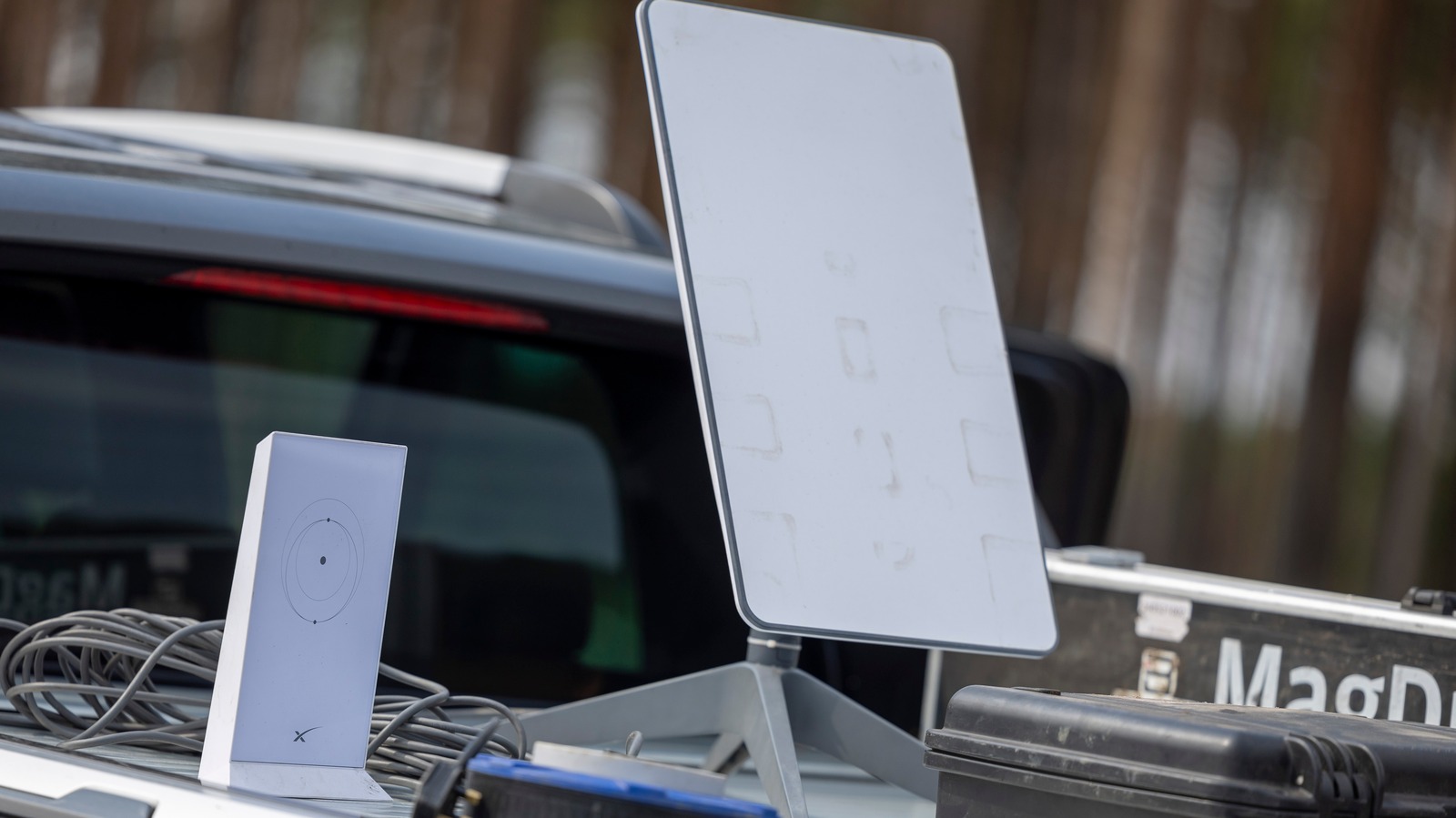
In areas where traditional broadband is unreliable or nonexistent, satellite internet like Starlink becomes a lifeline for reliable internet. The service has grown rapidly – Starlink started with half a million users and now has over 6 million subscribers worldwide, meaning more people then ever before have access to reliable satellite internet.
While one of the appeals of Starlink is its relatively simple set up, power users can improve performance by using setting such as bypass mode. This option turns off Starlink’s built-in router and Wi-Fi and connects a third-party router directly, meaning that Starlink just delivers the internet and your router handles all the network management. That can unlock faster speeds, better range, advanced features like VPNs, and stronger performance for large homes or mesh systems.
Starlink bypass mode also helps solve the issue of double NAT (network address translation), a problem that can disrupt gaming, video calls, and VPNs when two routers try to manage the connection. By default, the stock router handles NAT, and your own router may do the same. Bypass Mode lets your router handle all NAT functions directly. In addition, bypass mode keeps your network stable during Starlink firmware updates, which means that there won’t be any surprise reboots cutting you off mid-meeting. Best of all, enabling it is quick — here’s how to do it.
How to enable Starlink bypass mode and what to watch for
Hadrian/Shutterstock
Turning bypass mode on and off is simple. First, connect a third-party router directly to Starlink — Gen 2 Starlink systems will need an Ethernet adapter, while Gen 3 devices have built-in Ethernet ports that you can use to connect your router. Once everything is hooked up, open the Starlink app, go to Settings, and switch on Bypass Mode. You can also enable it through your account’s web portal by selecting Manage and activating Bypass in the Wi-Fi settings.
To reverse this process, factory reset the Starlink router by cycling the power six times on Gen 2 models or pressing the reset button for 10 seconds on Gen 3 units. If the Starlink network does not appear, look for interference or other networks with similar names. Scan and connect with the Starlink app.
Bypass mode is great for people who want more control over their network for a home office, gaming setup, or just for general internet access. This setting is also available for satellite internet accessed through the Starlink Mini, so you can boost your range while still taking advantage of the flexibility of a custom network. Once it’s on, your devices connect through your router’s Wi-Fi, and Starlink becomes a pure internet feed.
Cyber attacks are no longer confined to the realm of IT – they are a systemic risk to economies, governments, and public trust. Nowhere is this more evident than in the UK’s newly formalised approach to cyber security. With the government now advancing a ban on ransom payments by public sector entities and introducing mandatory incident reporting, the country is drawing a firmer line in the sand. These moves signal a decisive shift in the nation’s cyber security posture: one aimed at undermining the profitability of ransomware and driving greater transparency in its aftermath.
But bold action brings consequences. Will banning ransom payments truly deter attackers or merely change their tactics? And how will this policy resonate across Europe’s increasingly fragmented regulatory landscape?
What’s unfolding in the UK could well be a defining inflexion point in Europe’s broader response to ransomware.
A shifting threat with rising stakes
Ransomware has evolved into a highly professionalised criminal enterprise. Threat actors now are better funded, more patient, and extremely strategic. In the past, many organisations opted to pay ransoms quietly, weighing the ethical discomfort against operational paralysis or reputational fallout. But this calculus is shifting. Governments and regulators are growing wary of a cycle that appears to reward criminal behaviour.
The UK’s public sector ransom ban aims to change that. The intent is clear. By removing the financial incentive, public organisations become less attractive targets, and the volume of attacks will fall. But there’s a catch: ransomware groups are adaptable. If encryption doesn’t work, they’ll pivot. In fact, they already have towards data exfiltration, double extortion, and the threat of public leaks, often targeting the very data that underpins citizen trust and institutional credibility.
Walking the ethical tightrope
The ethical argument for banning ransom payments is strong – starve the attackers of funding, and you weaken the ecosystem. But translating principles into policy is rarely straightforward. Public sector organisations like hospitals, local councils, and transportation networks manage critical services where downtime has life-and-death implications.
These entities are often underfunded and overexposed. If hit with a ransomware attack and legally barred from paying, their recovery relies entirely on the strength of their backups, the clarity of their incident response plans, and the resilience of their operations. Balancing a principled cybersecurity stance with the pragmatic need to ensure operational continuity is a complex challenge that demands careful consideration.
Hospitals, councils, and other essential services can’t afford prolonged downtime. For the policy to work, public sector organisations will have to prioritise recovery above all else as part of a complete cyber-resilient strategy
Success hinges on their ability to shift from reactive defence to proactive resilience. That means stronger backups, clearer governance, and well-rehearsed response plans. The policy’s success depends on how well these organisations can maintain service continuity during disruption.
The knock-on effect for the private sector
The UK’s approach raises another pressing question: if public entities are off-limits, will ransomware groups simply shift focus to the private sector? The ransomware ban doesn’t apply to private businesses – yet. But the writing is on the wall. With public entities shielded, attackers are likely to pivot toward private organisations, especially in sectors like finance, logistics, and manufacturing. They should also be watching closely as new norms emerge. Even if ransom bans are not imposed on them directly, they could face greater regulatory scrutiny, especially around reporting obligations, breach disclosure, and customer communication.
There’s also the challenge of divergence. As different European nations explore their own approaches, the regulatory landscape is set to fragment. Multinational organisations will face a complex web of obligations, with varying timelines for breach reporting and different liabilities depending on jurisdiction. Amid this complexity, paying a ransom may seem like a quick fix, but it is never the answer. Such actions not only embolden attackers but can also expose businesses to further regulatory and reputational risks. Instead, the ability to coordinate a consistent and compliant response across borders will soon become the true marker of operational maturity.
Rethinking resilience: From technical to strategic
Regardless of whether a ransom ban directly affects them, organisations – public and private – should see the UK’s move as a moment to revisit their approach. The environment is shifting, and resilience is no longer optional. Here’s what should be top of mind:
Resilience must go beyond IT: Cyber resilience is not just a technical problem; it’s a business survival issue. Organisations need clear governance structures that define how ransom decisions are made, who is informed, and how stakeholders are engaged. This includes executives, compliance teams, crisis communicators, and even insurers. Preparing for cyber threats starts in the boardroom, not the datacentre.
Recovery readiness is key: Immutable backups, isolated environments, and rapid failover systems are critical, but often neglected until it’s too late. These systems need to be regularly tested – not just in theory, but in full simulations that involve leadership and frontline teams.
Threat actors will pivot: Expect increased focus on data theft and reputational sabotage. This means that organisations must improve their ability to detect early-stage intrusions, lateral movement, and anomalous data flows. Proactive threat hunting and internal monitoring should become routine.
Regulatory fragmentation is coming: Anticipate more granular and disjointed rules on breach reporting, ransom policy, and supply chain risk. Coordinated governance, policy flexibility, and jurisdictional awareness will separate the reactive from the resilient.
The opportunity: A more secure and transparent ecosystem
While the short-term outlook may feel turbulent, there is a long-term opportunity to create a stronger, more transparent cyber security ecosystem. The UK’s stance will serve as a case study – both in how governments can attempt to reset the economics of ransomware, and in how public institutions can (or can’t) absorb the operational shock.
Transparency breeds learning. With mandatory incident reporting now in place, we’ll begin to better understand the true volume, cost, and impact of attacks. That data can drive smarter regulation, targeted investment, and more informed risk assessment across sectors.
Organisations don’t need to wait for policy to catch up. Forward-thinking leaders will seize this moment to engage closely with CISOs, clarify decision-making authority, and rigorously test incident response plans. By fostering collaboration between CISOs, CTOs, and CIOs, they can drive shared responsibility across the organisation, shaping the future of cyber resilience in Europe.
Gartner analysts will present the current and future state of cyber security at the Gartner Security & Risk Management Summit 2025 in London, from 22-24 September.
Fintan Quinn is senior director analyst at Gartner, specialising in backup, disaster recovery, and storage architecture and solutions.
Over a million dollars’ worth of cryptocurrency assets laundered by or on behalf of the notorious BlackSuit ransomware gang – previously known as Royal – were seized ahead of a multinational takedown operation in July, led by the US authorities with support from the UK’s National Crime Agency (NCA) and cyber cops from Canada, France, Germany, Ireland, Lithuania and Ukraine.
Operation Checkmate, which took place on 24 July, saw a coordinated action that took four servers and nine domains offline for good. The US Department of Justice (DoJ) has revealed that this week, a warrant for the seizure of crypto assets valued at $1.09m (£800,000) was unsealed by the US Attorney’s Offices for the Eastern District of Virginia and the District of Columbia. The seizure itself took place some months ago.
The funds in question were paid out on or around 4 April 2023 by a victim who handed over 49.31 bitcoin in exchange for the BlackSuit gang agreeing to decrypt their data. The payment was worth about $1.45m at the time. A portion of this total was repeatedly deposited and withdrawn into a virtual currency exchange account, before being frozen by the exchange in January 2024.
“Disrupting ransomware infrastructure is not only about taking down servers – it’s about dismantling the entire ecosystem that enables cyber criminals to operate with impunity,” said Michael Prado, deputy assistant director of the Cyber Crimes Center at Homeland Security Investigations (HSI), the investigative branch of the federal government Department of Homeland Security (DHS).
“This operation is the result of tireless international coordination and shows our collective resolve to hold ransomware actors accountable,” said Prado.
HSI Washington DC acting special agent in charge Christopher Heck added: “This investigation reflects the full reach of HSI’s cyber mission and our commitment to protecting victims – whether they’re small businesses, school systems, or hospitals. We will continue to target the infrastructure, finances and operators behind these ransomware groups to ensure they have nowhere left to hide.”
Deputy director Paul Foster, head of the NCA’s National Cyber Crime Unit, said: “Ransomware is the most damaging cyber crime threat globally and the BlackSuit strain has impacted victims in the UK and overseas.
“The NCA, alongside the North West Regional Organised Crime Unit worked closely with HSI and other international partners over the past year, sharing intelligence which contributed to the disruption of this criminal group.
“We continue to support UK-based victims of BlackSuit attacks and would encourage anyone who thinks they have been targeted to come forward and report it,” added Foster. “Further support and advice on protecting yourself from ransomware can be found at NCSC.gov.uk.”
This investigation reflects the full reach of HSI’s cyber mission and our commitment to protecting victims. We will continue to target the infrastructure, finances and operators behind these ransomware groups to ensure they have nowhere left to hide Christopher Heck, Homeland Security Investigations
A prolific ransomware actor, BlackSuit was likely comprised of individuals with historic links to the Conti gang. It first surfaced in early 2022, likely acting as an affiliate of other gangs, before emerging as Royal with its own encryptor that autumn. It went on to rebrand as BlackSuit following a major attack on the City of Dallas in Texas, but it then lay quiet until last summer, when it started to ramp up the tempo of its attacks again.
During its operational life, it is thought that BlackSuit attacked almost 500 victims in the US alone and extorted over $370m in payments.
Its targeting included victims in many critical infrastructure sectors, such as government bodies, healthcare and manufacturing. As noted, one of its most noteworthy victims was the City of Dallas, which was attacked in spring 2023.
In this infamous incident, the gang was able to gain access to the city government’s systems using a stolen account, and exfiltrated over a terabyte’s worth of files over a four-week period, before executing its ransomware payload.
While BlackSuit operated a fairly standard double encryption business model, it was somewhat noteworthy in its approach to encrypting its victims’ data, using a partial encryption approach that allowed its operators to choose how much data in a file to encrypt. This tactic meant the gang could work quicker and evade detection.
The outlook is still Chaos
Notwithstanding the success of the joint operation, ransomware actors are notoriously difficult to pin down and, when cornered, have a frustrating habit of melting into the shadows and re-emerging with a new identity further down the line.
In the case of BlackSuit, the gang’s next rebrand may already be in progress. In late July, researchers at Cisco Talos published intelligence linking an emergent ransomware-as-a-service (RaaS) operation dubbed Chaos to former BlackSuit operatives.
In their assessment, the Cisco Talos team said it was likely that based on similarities in tactics, techniques and procedures (TTPs) – including encryption commands, the broad theme and structure of its ransom note, and the use of similar tools in its attacks – Chaos was “either a rebranding of the BlackSuit ransomware or operated by some of its former members”.
This article was updated at 19:35 on 13 August to incorporate a quote from the UK’s National Crime Agency.