Posted on

3 game-changing features iPadOS 26 is still missing

Apple previewed iPadOS 26 during its WWDC 2025 keynote. Unlike previous years, the company outdid itself with the new features introduced in this software update. After all, it’s going to be easier than ever to use the iPad as a computer replacement.

Some of the new functions include:

  • Better windowing system: Apple is ditching Split View and Slide Over in favor of a new windowing system. You can open as many windows as you want and control them with a familiar menu bar and Mac-like controls.
  • Background Tasks: Apple finally lets tasks run in the background, including exporting a video, downloading large files, and more. A simple yet important functionality that finally lets users take advantage of up to 16GB of RAM on the iPad.
  • Preview app: Apple built a new app for iPad users to open, edit, and mark up PDFs and images with ease. Cupertino says Preview was designed with the Apple Pencil in mind, so users can sign documents and take notes faster than before.

That said, these aren’t the only features iPadOS 26 offers that make it a great computer replacement. There’s also a supercharged Files app and the ability to add folders to the Dock. I still think iPadOS 26 needs a few tweaks to become the only computer I want to use every day.

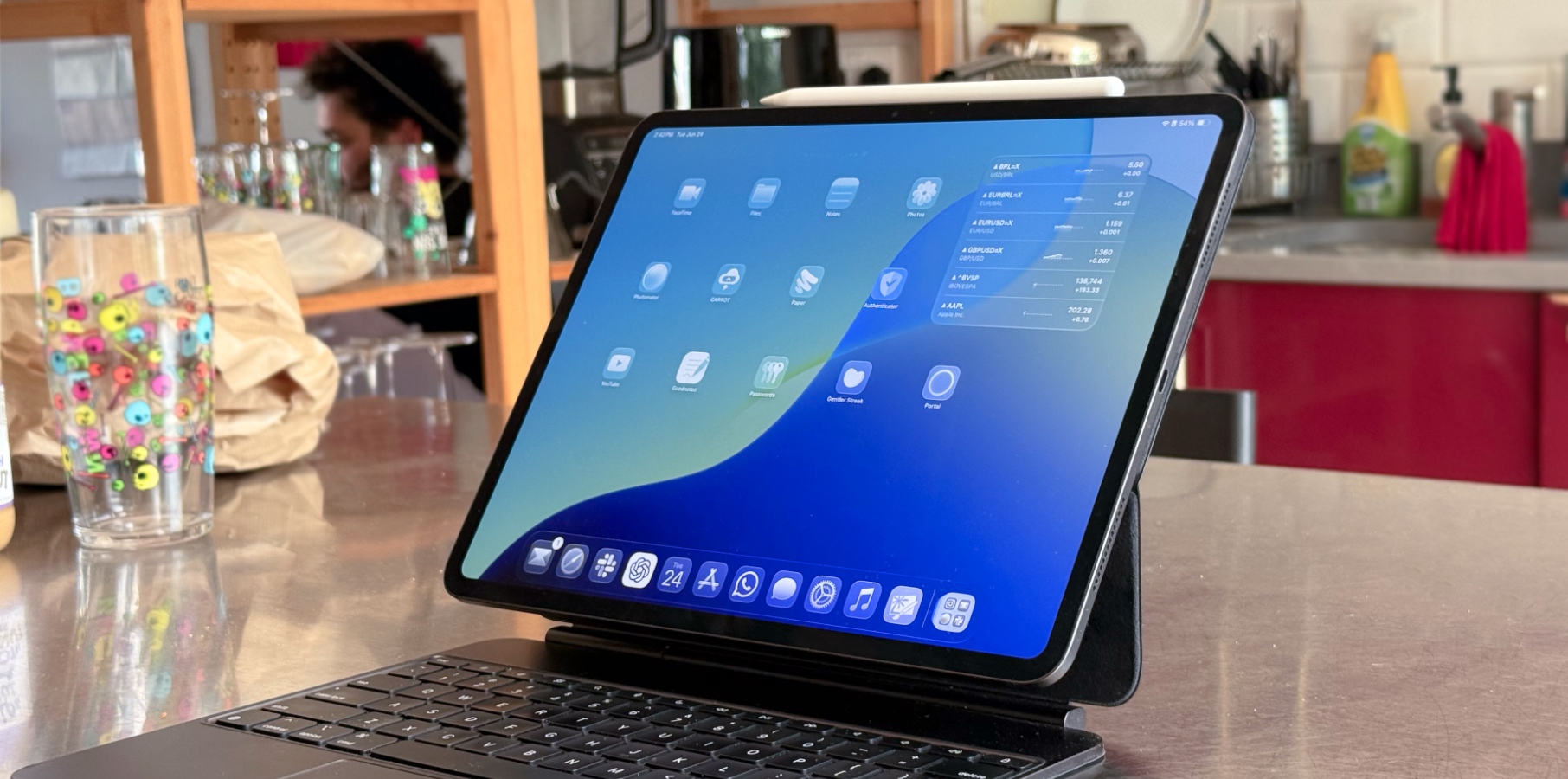
iPadOS 26 needs to work a bit more like the Mac

Image source: José Adorno for BGR

Apple says that even though it improved the multitasking functionality on the iPad, it continues to be a touch-first experience. I couldn’t agree more with the differences between the iPad and the Mac. That doesn’t mean Apple can’t make iPadOS 26 slightly better.

Tech. Entertainment. Science. Your inbox.

Sign up for the most interesting tech & entertainment news out there.

Here are some tweaks that could make iPadOS 26 truly perfect for iPad users:

Multiple desktops: Apple is not expected to greatly increase the display size of the iPad Pro (even though larger screens have been rumored). The best way to manage multiple open windows would be to offer different desktops. This would let users organize their workflows more effectively.

Always-visible dock: As personal as it might seem, I think having the dock visible at all times is the way to go. On macOS, you can’t overlay the dock with a window. I wish iPadOS 26 behaved the same way.

Files and photos on the Home Screen: To make the iPad work more like a Mac, let users save images and files on the Home Screen. Apple could make Stacks mandatory so documents don’t clutter the experience. This would make it easier to drag and drop files into apps, Safari, and so on.

Wrap up

Apple is still in the early days of the iPadOS 26 beta. While I don’t think the company is rushing to add these features, they would be great additions for Pro users.

BGR will keep bringing you the latest iPadOS 26 features as we learn more about them.

Source

Posted on

M5 iPad Pro is coming, and iPadOS 26 might be

We’re one step closer to Apple’s launch of the upcoming M5 iPad Pro. According to DigiTimes (via MacRumors), Samsung Display and LG Display have officially begun mass production of the OLED panels for this generation of Apple’s high-end tablet.

Bloomberg’s Mark Gurman previously said Apple is aiming for an October release. With that in mind, the DigiTimes report fits in perfectly with his timeline.

Unfortunately, we’ve yet to see any rumors about major features for this generation. Other than the new M5 chip, which is expected to use a better manufacturing process than the current 3nm model, there are no major improvements expected for this generation. For example, one reports says Apple might flip its logo to landscape orientation for this iPad.

Besides that, it seems the new M5 iPad Pro will be like the recently-released M3 iPad Air: A spec upgrade and nothing else. After all, Apple just redesigned the iPad Pro with an ultra-thin chassis, a beautiful OLED display, and the company’s latest chip.

Tech. Entertainment. Science. Your inbox.

Sign up for the most interesting tech & entertainment news out there.

Other rumored upgrades for the iPad Pro, such as thinner bezels and improved panel, are expected to land in a future hardware update.

iPadOS 26 is the greatest M5 iPad Pro feature, but your iPad can run it too

Image source: José Adorno for BGR

That being said, Apple will heavily rely on iPadOS 26 to promote the M5 iPad Pro. However, pretty much any iPad compatible with this upcoming software update will unlock the many benefits of iPadOS 26.

The new windowing system, Mac-like menu bars, supercharged Files app, the new Preview app, and more are all available on a range of iPad models. What makes this more interesting is that Stage Manager once required a tablet with an M1 or newer chip. Now, even older iPad models can run several windows at the same time.

That said, users looking to acquire the latest and greatest hardware should appreciate the new M5 chip combined with the new software features of iPadOS 26.

Source

Posted on

Inca warns of ‘unjustified’ Openreach prominence in comms review

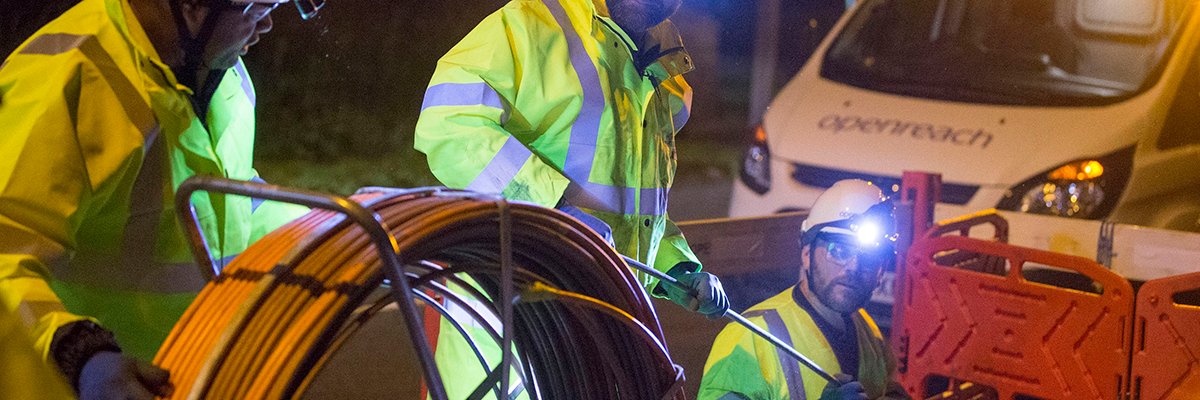
With the UK’s communications regulator ending the consultative phase of its telecoms access review (TAR), the Independent Networks Cooperative Association (Inca) has urged Ofcom to ensure the review secures the future of infrastructure investment, fosters regulatory consistency, and promotes a fair and competitive landscape across all fixed telecoms markets, but is warning that designating market leader Openreach as the default provider in areas where network competition is presumed to be unviable would be “unjustified” and “short-sighted”.

Ofcom’s Telecoms access review 2026 policy consultation for UK broadband sets out plans designed to help full-fibre gigabit broadband to reach almost all UK homes and businesses over the next two years.

The regulator believes full-fibre broadband is on course to become available to 96% of homes and businesses in the next two years, and that its proposal in the Telecoms access review 2026-31 will promote the necessary levels of competition and investment in full-fibre networks.

Ofcom believes it’s incentivising existing networks to invest while making it cheaper and easier for new entrants to the market to build using BT-owned Openreach’s ducts and telegraph poles. As a result, Ofcom claims, the UK has seen one of the fastest rates of roll-out of full-fibre broadband in Europe, with industry investment ranging between £3bn and £6bn each year.

The regulator was also adamant its regulation to bring near-universal, high-quality connections to businesses and communities across the UK will unlock the economic potential of remote communities, enable productivity gains and support public services as they become more digital.

With the consultation period for the TAR ending on 12 June, Inca revealed that as part of its role as the representative voice of the UK’s alternative broadband network (Altnet) sector, it has made a formal response to the consultation, urging Ofcom to adopt a forward-looking regulatory framework that unlocks long-term private investment, recognises the crucial role altnets are playing in driving full-fibre roll-out in rural and hard-to-reach communities, and ensure future regulation doesn’t further entrench the market power of the incumbent.

In its official submission, Inca made a number of specific recommendations for Ofcom, including: ensuring investment incentives are aligned across all markets served by the same physical networks; regulating consistently across residential and business markets to ensure a level playing field for atnets in competition with BT; requiring BT to transparently co-develop improvements to physical infrastructure access (PIA) with customers; and ensuring that PIA asset valuations are truly representative and “fair share” rules are applied to Openreach, as well as other users of PIA assets.

Other items included supporting emerging altnets through robust wholesale pricing safeguards and managing the ongoing the copper-to-fibre network transition in a way that supports – not undermines – altnet network deployments.

“The TAR will set the direction of travel for UK digital infrastructure, [and] altnets have proven they can deliver gigabit networks at scale – and what is now needed is a regulatory environment which supports sustainable competition and investment in every part of the market, from urban businesses to rural homes,” said Inca chief executive Paddy Paddison.

“There is no justification for limiting delivery in less competitive areas to a single provider,” he said. “Such a decision massively underestimates the scale and success of full fibre network deployment by altnets, whose coverage has increased by 27% year-on-year to reach 16.4 million premises by the end of 2024, delivering connectivity to a third of UK premises in harder-to-reach rural areas, and is at odds with government policy where Project Gigabit has provided public funding to altnets to build networks in precisely those locations.”

Source

Posted on

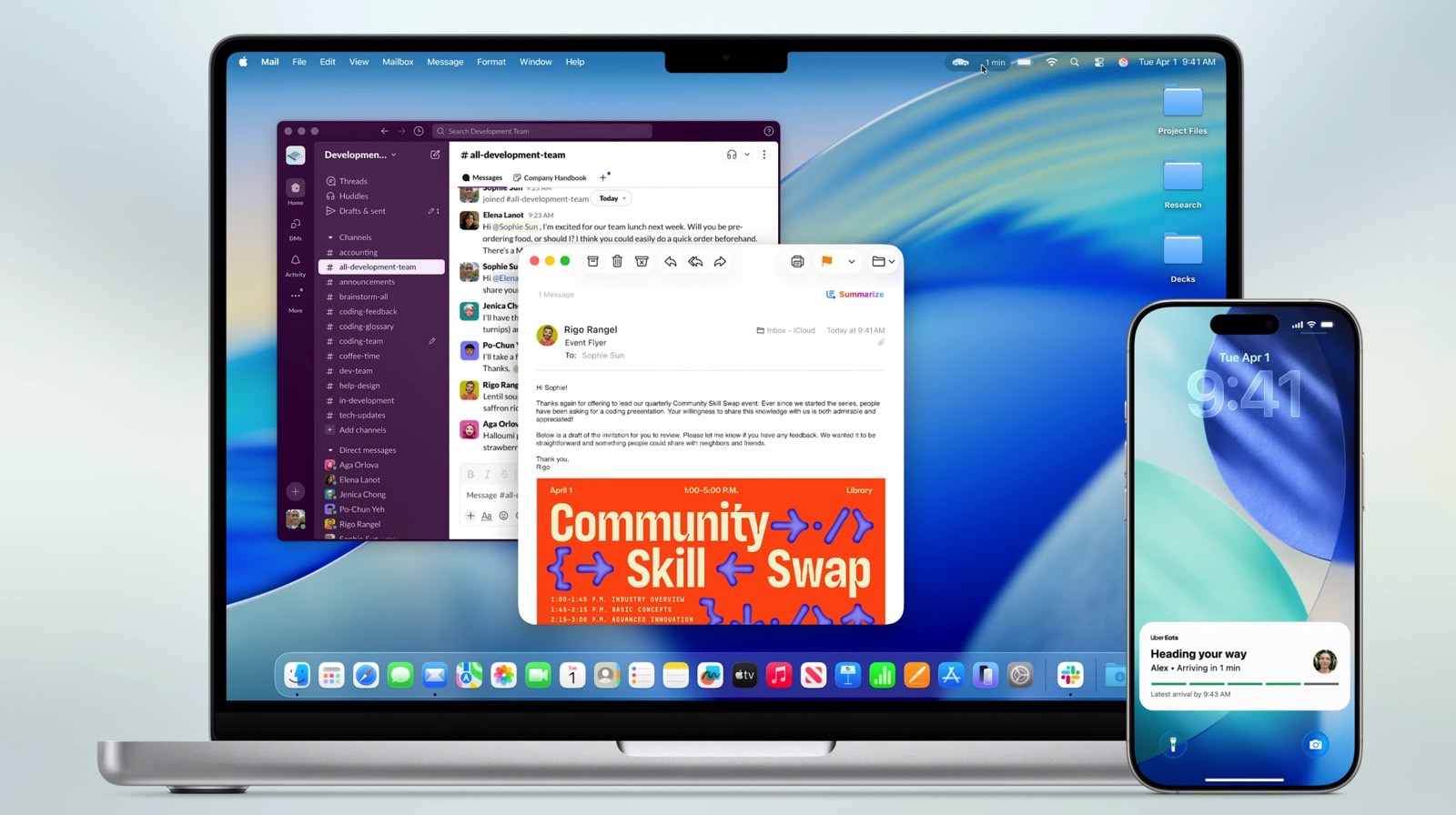
Latest macOS Tahoe beta fixes the Finder icon, but it’s

For a company as adept at design as Apple is, the company’s decision to completely revamp the Finder icon in macOS Tahoe 26 was bewildering. Whereas the icon historically featured a dark shade of blue on the left and a lighter shade on the right, Apple, for reasons that defy explanation, opted to reverse the color scheme with macOS Tahoe. In one fell swoop, Apple undid decades of tradition and left many Mac enthusiasts scratching their heads. Everything Apple does is purposeful, but this design decision seemed completely arbitrary and ill-conceived.

Thankfully, Apple heard the cries of the Mac faithful. The company earlier this week rolled out macOS Tahoe beta 2 and reverted the color scheme of the Finder icon back to its original state.

As a point of reference, here’s what the original incarnation of the Finder icon in macOS Tahoe looked like:

Image source: Apple

And here’s what the Finder icon has looked like for years:

Tech. Entertainment. Science. Your inbox.

Sign up for the most interesting tech & entertainment news out there.

Finder icon in macOS Sonoma Image source: Apple

And with the latest macOS beta, the Finder icon looks like this:

Updated Tahoe Finder icon Image source: Apple

Justice has been served.

Well, sort of.

There’s still something a bit off about the design. The problem, in my opinion, is that the light blue face on the right doesn’t stretch to fill the outer bounds of the icon itself. Whereas the original Finder icon gives equal weight to both hues, the new Finder icon prioritizes the dark blue face on the left, with the light blue face on the right almost seeming like an afterthought.

To this end, John Gruber recently opined:

The Tahoe beta 2 Finder icon is slightly better, but seeing it this way makes it obvious that the problem with the Tahoe Finder icon isn’t whether it’s dark/light or light/dark from left to right. It’s that with this Tahoe design it’s not 50/50. It’s the appliqué — the right side (the face in profile) looks like something stuck on top of a blue face tile. That’s not the Finder logo.

Again, it’s dumbfounding why Apple would make such a change. It’s simply different for the sake of being different, with no direction or purpose.

How Apple can improve the Finder icon design

So, what’s the solution?

Well, a few designers online have mocked up ways for Apple to restore the logo to its proper glory while keeping the Liquid Glass framework intact. The best one we’ve seen yet, and which we highlighted last week, remains Michael Flarup’s design:

The good news is that Apple, especially in the early days of new macOS and iOS releases, is very receptive to feedback. The company is open to making changes, and hopefully, we’ll see a vastly improved Finder icon by the time macOS Tahoe officially ships.

Source

Posted on

Nokia launches autonomous network fabric

The past few years have seen a steady increase in the number of companies moving towards implementing fully autonomous networks, yet many have been held back by legacy systems, siloed processes and fragmented data. Aiming to address the issue, Nokia has unveiled Autonomous Networks Fabric.

Additionally, Nokia announced an expanded collaboration with Google Cloud to enable customers to deploy the new platform as a SaaS application running on Google Cloud, on-premise with Google Distributed Cloud, and in hybrid cloud environments. 

Explaining the business environment that the Autonomous Network Fabric will work in, Andy Hicks, senior principal analyst at GlobalData, said that as networks become more autonomous, they will require different forms of AI – from classical algorithms to language-based systems and intelligent agents – to each contribute distinct capabilities.

“Nokia’s new tools can help operators to manage their infrastructure, services and cyber risks by applying AI that is trained on industry-specific data and enriched with real-time situational awareness,” he added.

At its heart, the new Autonomous Network Fabric is designed to enable automation at scale, reducing the complexity of automation while allowing network providers to improve reliability and operational cost savings by quickly testing new ideas and integrating those that deliver desired benefits.  

Autonomous Network Fabric is designed to be a unifying intelligence layer that weaves together observability, analytics, security and automation across every network domain, allowing a network to behave as one adaptive system, regardless of supplier, architecture or deployment model. It is described by its makers as the industry’s first suite of telco-trained AI models, integrated security and AI apps to accelerate network automation and enable the “easy” roll-out of new services.

Among the key features supported by the platform is Unified Data Management, whereby all relevant network data is collected, curated, correlated and published as data products leveraging a data mesh architecture. Data is virtually federated with the ability to design and construct new data products rapidly in a low-code/no-code environment. Operators can use logic or AI/ML to create cutting-edge data assets that can be used and reused to power automation. 

To offer 360-degree observability, the fabric federates the use and distribution of data and AI across an organisation, monitoring chain of custody from end to end and ensuring quality and consistency in automation. In addition, telco-trained LLMs support all automation through a knowledge engine designed to give reasoning for how data is interpreted, how issues are analysed and why certain actions are recommended.

Autonomous Networks Fabric will also work with Google Cloud’s generative AI, including Google Cloud’s Vertex AI and BigQuery, to deliver agentic-driven workflows for network operations. This includes real-time monitoring and visibility into network traffic patterns, improving subscriber experience, anomaly detection, zero-touch remediation of performance issues and support for elastic scale-out and disaster recovery to the cloud.

Nokia and Google Cloud are also collaborating to make it easier for telcos to run Nokia’s 5G core network on Google’s cloud infrastructure. They say that they are joining forces with a major European operator to build a smarter, more automated network. By combining Nokia’s telecom data and automation capabilities with Google’s AI tools, the two firms aim to create an environment where developers can innovate and rapidly scale network automation.

“In an era of increasingly complex and vulnerable networks, customers are eager for fully autonomous networks, which depend on good data,” said Kal De, senior vice-president of product and engineering, cloud and network services at Nokia, commenting on the launch.

“There is no good AI without good data. Nokia’s Autonomous Network Fabric lays the foundation and applies our deep network expertise and agentic AI-optimised workflows together with Google Cloud to accelerate customer outcomes.”

Source

Posted on

AR/VR headset market reaching ‘critical tipping point’

The augmented reality (AR) and virtual reality (VR) market has shown a sharp rebound in the first quarter of the year, with 18.1% annual growth that is setting up mixed reality (MR) and extended reality (ER) to drive long-term expansion, according to research from IDC.

The analyst’s Worldwide quarterly augmented and virtual reality headset tracker found that the market was shifting toward more immersive and versatile experiences. Despite a forecasted 12% decline in total shipments for 2025 due to delayed product launches, IDC expects a strong rebound in 2026 with 87% growth, surpassing the pandemic-era peak of 11.2 million units. From 2025 to 2029, the market is projected to grow at a compound annual growth rate (CAGR) of 38.6%.

The study revealed that the market resurgence was led by Meta, which captured a 50.8% share of business. While Meta continues to lead, IDC also noted that the rise of brands such as Viture and Xreal shows that innovation in form factor and user experience is resonating with consumers, and IDC predicted that the next wave of growth will be driven by mixed and extended reality, especially as AI and Android XR platforms mature.

Among the top five suppliers, Xreal secured the second position after Meta, driven by strong shipments of its One series. Viture stood out with what the analyst called “staggering” 268.4% year-on-year growth, while TCL also posted “impressive” gains at 91.6%.

Yet the study showed that the rising tide of the leaders was not floating all immersive technology boats. By stark contrast, the “others” category in the market study showed that firms experienced a sharp decline of 47.2%, underscoring a market shift toward both established and emerging leaders with focused product strategies.

IDC made particular note that Sony and Apple – typically strong players in the AR/VR space – were absent from the top rankings in the first quarter of 2025 as channels maintained healthy inventory of their products. The data also showed that this shift marked the first time that three of the top five suppliers – Xreal, Viture and TCL – specialised in optical-see-through (OST) glasses, collectively capturing a significant 22.5% share of the market.

Looking ahead, IDC forecasts a dynamic transformation in the AR/VR landscape where pure VR shipments are expected to decline sharply while at the same time mixed reality and extended reality are poised to dominate.

Despite the growth in MR, IDC expects the market category will largely remain as a means of gaming and content consumption for consumers. However, it also believes that smart glasses such as those found in the ER category will have broader appeal in both consumer and enterprise segments. MR shipments are projected to grow from 3.3 million units in 2025 to over 15.2 million units by 2029, a forecast slightly lowered by IDC due to changing priorities and shifts in supply brought about by the onset of tariffs in the US.

ER is expected to surge from 2.2 million to 8.6 million units over the same period and augmented reality will also see steady growth, reaching 457,000 units by 2029.

Assessing the prospects for future business, IDC research director Ramon T. Llamas said the worldwide AR/VR headset market was reaching a critical tipping point: “Pure VR was once the darling of the market with companies like Meta, HTC and Sony accounting for the vast majority of volumes. Now we have it on track to wind down in the next few years.

“Likewise, pure AR had strong promise with the help of Microsoft, but now we anticipate volumes to hold a small place in the overall market. Meanwhile, we anticipate MR to experience a strong reception with many of those VR companies pivoting there and gaining entrants like Apple. 

“ER headsets will continue to gain traction primarily among gamers. Not to be overlooked is the impact that Google’s Android XR can have across both MR and ER, and we look forward to seeing more vendors leverage the new platform in much the same way that numerous smartphone vendors embraced Android.”

Source

Posted on

Imagen 4 is Google’s latest text-to-image model, and the results

The ability of generative AI models like ChatGPT and Gemini to generate images with impressive quality continues to amaze me, even though I’ve seen countless examples of how good these image generation models are. These models can also edit real photos by following simple text prompts. And yes, these models can be abused to create misleading visuals that can go viral online.

The companies behind them continue to release upgraded text-to-image AI models, with Google being the latest. Google announced Imagen 4 at I/O 2025 last month, saying the new model is even faster and better than Imagen 3, which is already a high-end image generation service.

Google said at the time that Imagen 4 has “remarkable clarity in fine details like intricate fabrics, water droplets, and animal fur, and excels in both photorealistic and abstract styles.” Other improvements include 2K resolution support and improved spelling and typography.

Google also teased that a fast variant of Imagen 4 would be available soon, bringing a 10x speed improvement over Imagen 3.

Tech. Entertainment. Science. Your inbox.

Sign up for the most interesting tech & entertainment news out there.

Now, Google has announced that Imagen 4 and Imagen 4 Ultra are available to users, sharing a few mind-blowing examples of what the new models can do.

Cost and availability

On Tuesday, Google said in a blog post that Imagen 4 and Imagen 4 Ultra are now available to paid preview users in the Gemini API. For a limited time, Google AI Studio will also support Imagen 4 testing.

Imagen 4 will cost $0.04 per output image, one cent more than Imagen 3. Go for the Ultra version, and you’ll pay $0.06 per image. Additional tiers will be announced in the future. All Imagen 4 images will feature a non-visible SynthID watermark. However, a visible watermark won’t be present.

What is Imagen 4 Ultra?

Google describes Imagen 4 as its “best text-to-image model yet,” featuring “significantly improved text rendering” over previous models. So, what can the Ultra version do? Here’s how Google describes it:

When you need your images to precisely follow instructions, Imagen 4 Ultra is the model for you. It’s designed to produce outputs that are more highly aligned with your text prompts, achieving strong results compared to other leading image generation models.

Look at these Imagen 4 Ultra samples

Words alone aren’t enough to detail the capabilities of an advanced image generation model. Luckily for us, Google provided a few mind-blowing examples of what Imagen 4 Ultra can do.

Check out a few prompts followed by the images Imagen 4 Ultra produced below.

Prompt 1: A 3-panel cosmic epic comic. Panel 1: Tiny ‘Stardust’ in nebula; radar shows anomaly (text ‘ANOMALY DETECTED’), hull text ‘stardust’. Pilot whispers. Panel 2: Bioluminescent leviathan emerges; console red text ‘WARNING!. Panel 3: Leviathan chases ship through asteroids; console re text ‘SHIELD CRITICAL!’, screen text ‘EVADE!’. Pilot screams, SFX ‘CRUNCH!’, ‘ROOOOAAARR!’.

AI image created with Imagen 4 Ultra. Image source: Google

Prompt 2: Front of a vintage travel postcard for Kyoto: iconic pagoda under cherry blossoms, snow-capped mountains in distance, clear blue sky, vibrant colors.

AI image created with Imagen 4 Ultra. Image source: Google

Prompt 3: Photograph of an adventurous couple hiking on a mountain peak at sunrise, arms raised in triumph, epic panoramic view of valleys below, dramatic light.

AI image created with Imagen 4 Ultra. Image source: Google

Prompt 4: Avant-garde fashion editorial shot: a model in a voluminous, architectural gown standing on a shimmering, alien landscape under a binary sunset, surreal colors, high-concept, cinematic.

AI image created with Imagen 4 Ultra. Image source: Google

Source

Posted on

Pure CEO Charlie Giancarlo on data management, all-flash and tariffs

At Pure Storage’s Accelerate 2025 event this week in Las Vegas, the company launched its Enterprise Data Cloud, which knits together a common operating system across its storage products, plus monitoring and management capabilities from its Fusion control plane and as-a-service procurement options.

We caught up with CEO Charles Giancarlo to ask him about Pure’s foray into data management, and how it can do this where other storage suppliers might not.

We also asked about Pure’s much-vaunted promise to drive out spinning disk hard drives from the datacentre, a quest which has received a boost by undergoing proof-of-concept work with hyperscaler Meta on its Direct Flash Modules.

We also asked Giancarlo about the company’s exposure to tariff uncertainty, and found a company largely untouched, except perhaps for having to constantly plan for much-changing scenarios.

What’s different about Pure’s Enterprise Data Cloud? How does it differentiate you from other storage suppliers?

What’s really different is that we now have this intelligent control plane, which has never existed in data storage before.

If you think of the way a computer is designed, most computers have storage inside, right? And servers today have storage inside.

The concept of an array came about in the mid-90s, as datasets started getting really large. It couldn’t fit in the server anymore, so they put it as a separate device, and sometimes they’d want multiple servers to use the data.

So, they could connect it with a SAN, or a network of some type, and you could have a lot of data, and have computers run off it. But the concept was still that the data belonged to a server or a set of servers, still operating like a data store for a set of servers.

And that’s the way it’s been for the past 30 years. Now, the cloud has operated differently. They said, “OK, we’re going to need a lot of storage for a lot of companies and a lot of different applications.” So, they developed it as a horizontal layer.

Now, they might have multiple horizontal layers, everything from archive to high-performance, and maybe one or two in-between. But it’s not dedicated to any set of servers, not dedicated to any use case or any application. They have software that will allow a company to define how much storage they need and where they need it, right?

That’s not the way it’s done in the enterprise, but let me step back a minute.

It’s not the way you and I do it anymore. You and I, at one time, had an external hard drive. But if I wasn’t at home, I didn’t have access to that information. Also, if it filled up, I’d have to buy a new one and then I’d have to move all the data from the old one to the new one unless I wanted to have stacks of these things, which you never do. So, it’s kind of a pain.

And also, if I wanted to share information, I’d have to attach it to an email or something like that. It wasn’t a point and click to share it with somebody. So, the benefits of your data being part of, quote, a cloud is so much higher than it being part of a dedicated system that’s tied to an application stack.

Why hasn’t anyone done this before? Why hasn’t a storage supplier provided this kind of visibility into the data across their systems?

The fact of the matter is people have tried. We talk about storage, but of course there’s high performance, low price, there’s block file and object storage. There are large systems and there are small systems. And all of those in the past, because of the limitations of hard disk, were designed with different software, or because maybe the portfolio was assembled by acquisition, they have different software.

It’s a lot harder to do this if you have different software for different systems.

We have developed everything on Purity. And Purity in our first product was a block system, and then we added file and object. But even though it was a block system, we don’t view everything as a block. At the core of Purity is something called a key-value store, which is a very modern way of having very scalable metadata.

And so, whether it’s a block file or object, a large file, a small file, everything is just a key value that is done as a lookup. My point is, having a unified data plane made it easier for us.

And the fact that we’re on all-flash made it easier for us to be able to deliver for the first time a virtualised cloud of storage rather than individual arrays.

There are things called clusters that most of the vendors have, but a cluster is a few arrays. Not only do all of the arrays in our system on a global basis appear as part of the data cloud, but then you can create a set of rules around how data sets get managed.

You create a data storage class that represents your company’s policies, procedures and compliance rules around replication, around backup, around recovery times, and all of that. And then that becomes a data storage class. And every new application that needs to use data that fits that class, you just write to its API, and bingo, you get the same set of characteristics for that data class.

If you think about it from a compliance standpoint, when arrays are separate, then the way you put in the rules for how that array operates relative to, let’s say, cyber, is done manually. Well, it’s done manually everywhere around the enterprise, which means it could be done differently in one location than another, or one application than another. And so, your rules are really just on paper.

What someone actually did, there are a few records of, and it’s not consistent. Not only that, let’s say you’ve got hundreds of arrays, which a lot of large customers have, and you decide, OK, we’re going to update our compliance policy this year – and compliance policies are always being updated. All right, now you’ve got to go to 200 arrays and change them.

With Fusion, you change the policy, and the changes take place. You just change the policy.

In 2023, you said hard drives would be dead by 2028. How do you think that’s going? I would estimate at the moment that one win with a hyperscaler – Meta – for a relatively limited use case isn’t a great deal of progress. What’s your assessment?

I’ll quibble with you in terms of a limited use case. We’re being certified up and down their entire stack. They have multiple tiers of storage. So, we’re being certified for all of the tiers.

Now, yes, they will probably start at their most expensive and highest performance tier and go down. But we had to prove to them on a TCO basis before they would even start to use us that we were equal to their lowest non-archive, their lowest tier, lowest online tier of hard disk storage. And one of the benefits that we bring to them, which is really unique, is that the software they will be using from us is exactly the same for every tier.

Believe it or not, that’s not the way they operate today. Every disk, every type of disk, every vendor of disk, every type of SSD, every vendor of SSD is so different they have to change their kernel to be able to utilise it.

We don’t operate in kernel space. We operate in user space, so they will not have to change their kernels.

And the only difference will be whether they are using a 300TB [terabyte] drive, a 75TB drive, or eventually a 600TB drive. They’ll have different price performance levels for each one of those. That’s a huge benefit for them.

What it means is, without any change in their software, they’ll be able to leverage us, and it will only depend on relative pricing.

What is Pure’s exposure to any uncertainty around tariffs? And if there is any exposure, what are you doing about it?

Of course, we’re exposed to all of that, because we never know what the decision is going to be tomorrow, what pronouncement is going to be made tomorrow. It could be tariffs on everything going through South Dakota. Who knows? To say that it’s uncertain is, I think, somewhat generous.

Not only is it uncertain, but if you look behind the pronouncements as to what detail is behind it; oh, my God, no detail. So, you announce a 150% tariff on some producer or some country, and then you say, okay, well, what does that apply to? Does it apply to the value add that was placed there? Because remember, electronics in particular touches a lot of countries before it ends up as a product. Is it the value add that was placed there or is it the entire thing? Well, it’s not in the detail.

But that being said, what all of the repeated updates on what the tariffs has done is create a huge amount of activity around planning, but no action being taken because you don’t want to take action. The thing we can’t do, unlike some people in the government, is go back to our suppliers after making a decision and say, “Oh, just kidding”. We actually want to go back to the way it was before.

Our current view is, for our international customers, it doesn’t matter and it’s going to have minimal effect on our US customers.

We can manufacture a product without it ever touching the US. And it wouldn’t matter for export anyway.

We do our sub-assemblies largely in Vietnam. A final assembly is done in three locations right now: Juárez in Mexico; Houston in the US; and Czechia.

We can manufacture products for Europe without it ever going through the US. And we’ve got the US. MCA [United States-Mexico-Canada Agreement], which allows us to import from Juárez without tariffs. And we can obviously also satisfy our Asian customers outside the US. Actually, regardless of the tariff regime that was being identified, it would only affect US customers.

Source

Posted on

Restaurant fills DR gap with all-flash Pure and dodges higher

US restaurant chain Red Lobster opted to standardise on Pure Storage flash storage arrays as it tried to fill a gap in disaster recovery (DR) provision that would have left it severely exposed in case of an unplanned outage at its primary datacentre.

The move to fully on-premise mirrored datacentres also meant it dodged cloud operational expenditure (opex) costs that would have been six times the cost it has incurred on-site.

Red Lobster specialises in seafood, in more than 500 restaurants across the US and Canada, as well as take-out and delivery services.

It runs its IT from two Equinix datacentres, one in Ashburn, Virginia, the other in Dallas, Texas. Core IT revolves around point of sale, internal applications such as HR and finance, and procurement, all of which underpin the company’s primary operations – buying ingredients, hiring staff to cook and serve food and drinks, and taking payment.

When CIO Shawn Harrs came to Red Lobster, the most urgent task was to build out a gap in DR provision that meant the company’s primary datacentre did not replicate to the other.

In the process, the company also end-of-lifed storage infrastructure from four incumbent suppliers and standardised on Pure.

“When I joined the company two years ago, the primary datacentre in Ashburn did not have failover capability to Dallas. It had never been built out,” said Harrs.

“When I came into the company, I did an assessment across all the capabilities of the company,” said Harrs. “And as I dug into it, I realised the company had built a pretty strong infrastructure capability in Equinix datacentres, but it never completed the project. It stopped well short of providing a true business continuity capability.”

Harrs built his business case and presented it to the Red Lobster board.

“I needed to implement a capability where if everything running and live and being used fails, there has to be an equivalent exact copy of it readily available to run. There were different ways to accomplish that.”

When finance looks at the lost revenue of one day compared to the one-time cost … and a one-hour return to service, it is a very easy sell Shawn Harrs, Red Lobster

The options evaluated initially were all cloud and on-premise, which included the use of spinning disk. But the initial iteration of the latter option did not give a quick enough restore time, said Harrs.

“We looked at a cloud option, and we looked at an on-prem option that didn’t return the business to operational functionality within a time frame that was acceptable,” said Harrs. “Another option we looked at – which I called the Goldilocks option – was to supplement that second option with Pure Storage because of the speed at which we can replicate what’s happening in one datacentre to the next.

“From a cost perspective, the options were highest cost, lowest cost, and then [Pure] in the middle,” said Harrs. “It’s sort of the middle cost, but it gets us back up and running in an hour versus in a day. And so, when finance looks at the lost revenue of one day compared to the one-time cost, or one-time and the ongoing cost of a one-hour return to service, it is a very easy sell.”

So, Harrs’s team deployed Pure Storage FlashArray storage at both sites, with replication between them to allow for failover. Capacities run to petabyte scale.

Red Lobster opted for Pure’s Evergreen One storage as a service, which allowed the company to spread costs.

“I wanted to get a favourable mix of one-time capex [capital expenditure] and recurring opex investment,” said Harrs. “To invest a significant amount of capex in a one-time initiative and depreciate it over a five-year period would have made the project very heavy in that one fiscal year. With this option, I was able to take the total cost of the project and spread it out over a three-year period.”

Has Harrs been able to quantify the benefits of moving to Pure Storage infrastructure?

“Yes, in sleep. Because I can sleep at night. It’s the kind of investment that you never want to know about. If you’re a CEO or a CFO or an operator, you want to know that you’re going to be able to open your restaurant tomorrow and it’s going to be able to run. This can give them that certainty.”

Source

Posted on

OpenAI’s first AI device won’t succeed on Jony Ive’s name

This has been a busy week for OpenAI, Sam Altman, and Jony Ive. After all, the AI firm had to take down its page about io, Altman and Ive’s company that is currently developing a device that could mark the biggest product release in the industry since the iPhone in 2007.

While some people assumed that the partnership was already over, it was actually a trademark issue that forced OpenAI take down the page on its site:

This page is temporarily down due to a court order following a trademark complaint from iyO about our use of the name ‘io.’ We don’t agree with the complaint and are reviewing our options.

Then, a court filing from OpenAI revealed more details about this mysterious new product, which has previously been called a non-smartphone, and now a “non-wearable.” As detailed by my colleague Chris Smith, this device is “at least a year away” from being released, and it won’t be an in-ear device like the one iyO is taking preorders for.

OpenAI’s Sam Altman and Jony Ive announces io company Image source: OpenAI

It seems likely that analyst Ming-Chi Kuo was right. In May, he reported that the “current prototype is slightly larger than the AI Pin, with a form factor as compact and elegant as an iPod Shuffle. The design and specifications may change before mass production.”

Tech. Entertainment. Science. Your inbox.

Sign up for the most interesting tech & entertainment news out there.

Some suggest it could also be worn around the neck or placed on the desk in the office. Still, I don’t think the success of this product will rely on its form factor, and this is why I don’t think Jony Ive’s name alone will be enough to make OpenAI’s first hardware succeed. As a matter of fact, it’s the software that will make it thrive.

OpenAI can succeed where Humane failed

Every time a new report mentions the kind of product OpenAI is developing, I can’t help but think about Humane’s AI Pin. At the time, I was among those who didn’t believe in the technology and didn’t see a reason for the product to exist. A year later, I would say the main issue with it was that the technology wasn’t there yet.

This is why I think OpenAI has a great chance of succeeding. For the tasks this AI companion is expected to perform, it needs better LLMs, reasoning capability, and usability.

Humane AI Pin. Image source: Humane

Bear with me: We’ve seen AI usage grow exponentially. While Apple recently published a very interesting paper about AI models not being able to reason, it doesn’t mean they can’t be useful. From training for a marathon, understanding how to use a washing machine in a different language, or quickly recording, transcribing, and summarizing a meeting, AI can do a lot to make our lives easier.

I also really like how Google, OpenAI, and Opera have been approaching AI. The AI companion should do things alongside you, such as Google’s AI shopping mode, OpenAI’s onscreen awareness in iOS 26, and Opera’s Operator browser to help you complete tasks.

That said, even if OpenAI’s new AI product looks like a futuristic iPod shuffle or an AI Pin, it will still have more than a few key differentiators, including improved intelligence, more capable AI models, and the example of others who failed first.

Source