Posted on

Scattered Spider on the hook for M&S cyber attack

Scattered Spider – the teenage hacking collective that breached multiple organisations in 2023 in a series of social engineering attacks – has been linked to the ongoing cyber incident unfolding at Marks and Spencer (M&S) according to reports.

According to Bleeping Computer, which was first to report the new development citing unnamed sources close to the investigation, Scattered Spider is understood to have breached the retailer back in February 2025.

Supposedly, the Scattered Spider hackers were able to get their hands on an NTDS.dit file – an Active Directory Services database file containing password hashes for M&S Windows accounts. The gang was then able these passwords and use them to infiltrate M&S’ Windows domain.

The attackers then allegedly deployed a white-label ransomware called DragonForce on VMware ESXi hosts belonging to M&S on Thursday 24 April, three days after M&S first disclosed an incident.

M&S has declined to comment on the accuracy of these reports, so their veracity cannot be confirmed at this stage.

The incident first came to light after M&S experienced disruption to its contactless payment and click-and-collect service. It was later forced to suspend online shopping entirely and over a week later, its core e-commerce infrastructure remains offline, although its website is still accessible and can be browsed as normal. Its bricks-and-mortar stores are also open. It has also told agency warehouse staff to stay home rather than travel to its clothing and homeware depot.

M&S, which was founded in Leeds as a market stall 141 years ago by a Polish immigrant, the eponymous Michael Marks, has lost hundreds of millions of pounds of value as a result of the cyber attack, with lost sales mounting up across the country.

At the time of writing, M&S maintained that there was no need for its customers to take any action – for how much longer this will be the case remains to be seen.

Not your average gang

A stand-out among threat actors, Scattered Spider is unusual in that largely comprises English-speakers – although it has worked with Russian ransomware gangs before – and functions more as a loosely connected network, rather than an organised crew.

This means that despite some of its members being arrested and charged, including a British national named as Tyler Buchanan, who was indicted by the US Department of Justice (DoJ in November 2024, Scattered Spider has been able to keep operating.

Robert McArdle, director of forward threat research at Trend Micro, said: “[They] assemble together for individual attacks and resemble the structure of Hacktivist groups like past activity of Anonymous. Scattered Spider has routinely targeted retail providers … so targeting M&S would be ‘on-brand’.

“Scattered Spider has been active in various incarnations since 2022 until today but is very hard to categorise as their organisation is so loose. Many attacks coming from English-speaking actors can be tied back to the wider community of which Scattered Spider is just a small, ill-defined subset.”

A larger issue, said McArdle, is the growing threat emanating from Anglophone cyber criminals who, although they lack the businesslike organised crime structures favoured by old school Russian ransomware gangs, they make up for in aggression and brazenness.

In one attack documented by Microsoft, a Scattered Spider hacker threatened one victim’s family. ““If we don’t get your [redacted] login in the next 20 minutes were [sic] sending a shooter to your house,” they said. “Ur wife is gonna get shot if u don’t [sic] fold it [redacted].”


Source

Posted on

Government bags 200 bids from local authorities wanting AI growth

The government has received more than 200 responses from local authorities across the UK that want their areas to become artificial intelligence (AI) growth zones, it has been revealed.

Local councils were asked in February to express their interest in supporting the development of these zones, which will be used to house the datacentre infrastructure needed to help the UK government deliver on its AI ambitions.

The site of the UK’s first AI growth zone has already been confirmed as Culham in Oxfordshire, the home of the UK’s Atomic Energy Authority.

The government has previously confirmed that the Culham site will be used as a testing ground for research into sustainable energy options that could be used to support power-hungry AI datacentres.  

The AI growth zones initiative was announced in January 2025 as one of a series of measures, detailed in the government’s 50-point AI Opportunities Action Plan policy paper, to make AI technologies and services more pervasive across the UK.

To this end, the policy paper describes AI growth zones as designated areas of the UK that have “enhanced access to power and support for planning approvals” so planning permission for these developments can be fast-tracked.

In terms of the attributes it is looking for in other potential AI growth zone sites, the government said it is specifically looking to develop them in de-industrialised parts of the country that can be readily redeveloped.

Furthermore, the government has specified that sites must have access to power connections of at least 500MW, or local authorities must have a clear plan in place to demonstrate how they would generate that amount of power, to have their AI growth zone bids considered.

With hundreds of expressions of interest at its disposal, the government is now seeking to progress some of these bids by holding an event today, 30 April 2025, at TechUK in London.

The event will see local authorities invited to discuss their proposals in more detail with AI minister Feryal Clark and the prime minister Keir Starmer’s AI adviser Matt Clifford.

Investors and MPs will also be invited to attend, with the government expected to provide more information about bid timelines and qualifying criteria. Areas that successfully make the cut to become AI growth zones will be announced in the summer.

Just like coal and steam powered our past, AI is powering the future. Our AI growth zones will transform areas across the UK into engines of growth and opportunity Feryal Clark, AI minister

“Just like coal and steam powered our past, AI is powering the future. Our AI growth zones will transform areas across the UK into engines of growth and opportunity – unlocking new jobs and revitalising communities across the UK,” said Clark.

“This is our Plan for Change in action, ensuring the benefits of AI are felt in every region and securing the UK’s place as a world leader in this vital technology.”

Clifford said the UK has an “extraordinary opportunity” in AI, but time is of the essence when it comes to ensuring this potential is not squandered.

“Speed is everything,” he said. “Today’s launch sends a clear signal to investors and local communities that we’ve already moved into high gear.”

He added: “I’m looking forward to discussing these proposals in more detail today as we continue to work alongside investors and local authorities to deliver a once-in-a-generation opportunity.”

Source

Posted on

AI in national security raises proportionality and privacy concerns

A study published to coincide with the Centre for Emerging Technology and Security 2025 event has highlighted some of the concerns the public has with automated data processing for national security.

The UK public attitudes to national security data processing: Assessing human and machine intrusion research reports that the UK public’s awareness of national security agencies’ work is low.

During a panel discussion presenting the research, investigatory powers commissioner Brian Leveson, who chaired the panel, discussed the challenges posed by new technology. “We are facing new and growing challenges,” he said. “Rapid technological developments, especially in AI [artificial intelligence], are transforming our public authorities.”

Leveson noted that these technological developments are changing how information is gathered and processed in the intelligence world. “AI could soon underpin the investigatory cycle,” he said.

However, for Leveson, this shift carries risks. “AI could enable investigations to cover far more individuals than was ever previously possible, which raises concerns about privacy, proportionality and collateral intrusion,” he said.

The CETaS research, which was based on a Savanta poll of 3,554 adults together with a 33-person citizens’ panel commissioned through Hopkins Van Mil, found there is more support than opposition for a national security agency processing data, even for sensitive datasets such as identifiable medical data. The study reported that there is also generally high support for police uses of data, although support is slightly lower for regional police forces than for national security agencies.

However, while the public supports national security agencies’ processing of personal data for operational purposes, people are opposed to national security agencies sharing personal data with political parties or commercial organisations.

Marion Oswald, a co-author of the report and senior visiting fellow at CETaS, noted that data collection without consent will always be intrusive, even if the subsequent analysis is automated and no one sees the data.

She said the study shows the public is hesitant about national security agencies collecting data for predictive tools, with only one in 10 supporting the use of such tools. People also raised concerns over accuracy and fairness.

“Panel members, in particular, had concerns around accuracy and fairness, and wanted to see safeguards,” said Oswald, adding that there are expectations around technology oversight and regulation.

The study also found that despite national security agencies’ efforts to engage more directly with the public in recent years, there is still a significant gap in public understanding. The majority of people polled (61%) report that they understand the work of the agencies “slightly” or “not at all”, with just 7% feeling that they understand the national security agencies’ work “a lot”.

Fellow co-author Rosamund Powell, research associate at CETaS, said: “Previous studies have suggested that the public’s conceptions of national security are really influenced by some James Bond-style fictions.”

However, people are more concerned when made aware of what national security does, such as the collection of facial recognition data. “There’s more support for agencies analysing data in the public sphere like posts on social media compared to private data like messages or medical data,” she added.

Source

Posted on

The first rumored breakthrough feature of the iPhone 20 just

For the past few weeks, we’ve heard rumors about the 20th-anniversary iPhone, expected to be released in 2027. So far, the reports have only mentioned a breakthrough device, as Apple aims for another iPhone X moment.

But what could “an iPhone X moment” mean for the iPhone 20? The Information‘s Wayne Ma reveals one of the first major features expected to arrive with the iPhone 20.

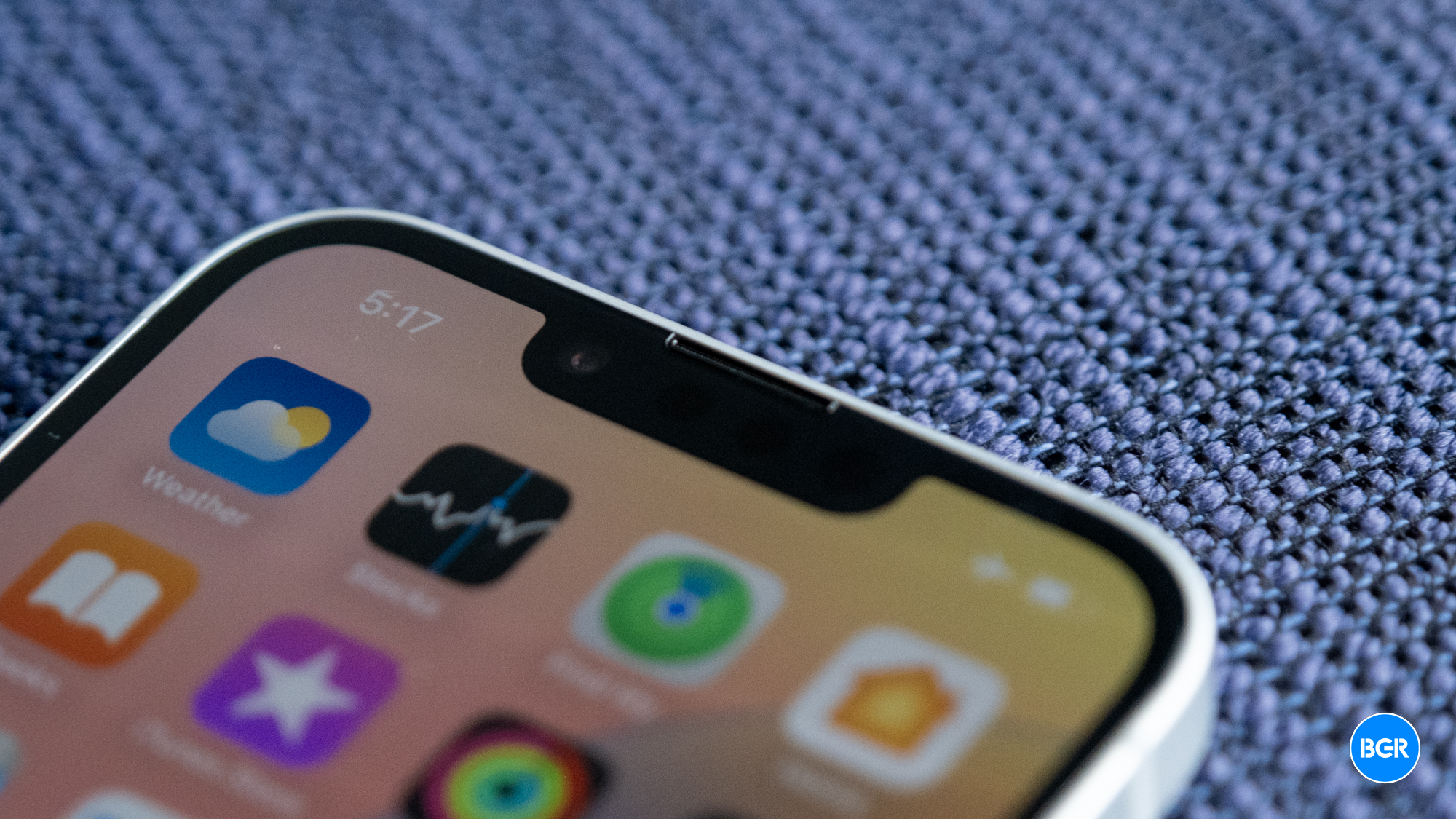
According to the journalist, Apple is finally expected to deliver an all-screen design for the device. With the iPhone 18 Pro rumored to include under-display Face ID technology, the company may be able to move all front-facing camera components under the screen just a year later.

These technologies have been rumored for years. If Apple can perfect them in the next couple of years, it would mark a major advancement. Other companies have tried under-display fingerprint scanners and cameras, but the cameras still don’t match the clarity of current visible ones.

Tech. Entertainment. Science. Your inbox.

Sign up for the most interesting tech & entertainment news out there.

By signing up, I agree to the Terms of Use and have reviewed the Privacy Notice.

Even with an all-screen design, it’s unclear what other features Apple is planning for the iPhone 20. It’s likely that Cupertino will add its own connectivity modem, a successor to the C1 chip, along with its first Wi-Fi modem. That modem is expected to debut later this year with the iPhone 17.

As always, Apple will continue enhancing the camera system, although it’s unclear what those updates will include. Still, the company regularly refines iPhone lenses, battery performance, and related features.

Meanwhile, Apple is also expected to introduce the iPhone Fold by the end of next year. With so many new models expected in the coming years, the iPhone lineup is likely to look very different. Apple is also set to continue updating the “iPhone e” line, the new iPhone Air, and eventually, the iPhone Fold.

Source

Posted on

Digital Catapult joins EU 6G innovation consortia

In what is being described as a landmark intervention facilitated by Horizon Europe, and following the UK re-joining the Horizon Europe Programme in 2024, UK innovation organisation Digital Catapult is to participate in a European Union (EU)-funded initiative aiming to advance the development and deployment of 6G technologies and deliver smarter, faster and more sustainable connectivity.

Digital Catapult describes itself as a deep tech company driving business value by accelerating the practical application of advanced technologies. Partnering with government, industry and academia, it takes on what it calls “significant” challenges and opportunities facing the UK’s economy and society, where technology can play a major role in providing solutions.

Its mission is to encourage UK businesses to make use of innovation in 5G technology, and among its key focus areas include the convergence of artificial intelligence (AI) and wireless communications, and the development of sustainable network technologies that could support the decarbonisation of telecommunications and accelerate the real-world application of deep tech innovations.

Digital Catapult regards its participation with the Horizon Europe Programme as testament to its commitment to driving the adoption of data-driven, open and interoperable future networks, having championed advanced connectivity innovation through accelerator programmes and eight interconnected, 5G-enabled testbeds across the UK.

The company will join a consortium of 18 industry and academic partners, including Samsung Electronics UK, Telefonica, Nokia UK and Accelleran.

The work includes European Commission-backed 6G project 6G Leader, designed to bring together innovators from across Europe, fostering knowledge-sharing, cross-border collaboration and the co-creation of next-generation services.

The European Commission’s investment in the programme, under the Smart Networks and Services Joint Undertaking (SNS JU), is designed to highlight the project’s strategic significance for Europe’s digital sovereignty and its influence in shaping future telecommunications standards.

Founded in 2021, the SNS JU is a public-private partnership that aims to facilitate and develop industrial leadership in Europe in 5G and 6G networks and services. The initiative has two main missions: fostering Europe’s technology sovereignty in 6G by implementing the related R&I programme, leading to the conception and standardisation around 2025; and boosting 5G deployment in Europe in view of developing digital lead markets, and enabling the digital and green transition of the economy and society.

The programme will last for 36 months, and is committed to achieving breakthroughs in future network innovation and wireless communication technology. 

In addition, Digital Catapult has committed to developing proof-of-concept demonstrations for open radio access networks (O-RANs); exploring AI-driven methods for network performance enhancements; and sharing insights on 6G RAN technologies and O-RAN architecture. This will build on work undertaken to date in advanced connectivity, including its participation in a cross-UK 6G research platform.

“We’re excited to be a key player in this 6G initiative,” said Digital Catapult chief technology officer Joe Butler. “Having participated in 17 Horizon projects to date, we’re now expanding our work in advanced connectivity with cutting-edge, AI-driven and sustainable solutions. Through our collaboration with global industry leaders, we’re advancing 6G technology, paving the way for smarter, more efficient networks that will fuel the next wave of digital innovation.”

Source

Posted on

iPhone Fold may change Apple’s iPhone release schedule forever

For years, Apple has been rumored to be working on foldable devices, including iPhones and iPad/MacBook models. Those rumors often contradicted each other, with some reports saying Apple was only “testing” foldable displays and others claiming development had been put on hold.

But something has changed in recent months. Now, all rumors are aligned. The first foldable iPhone, routinely dubbed the iPhone Fold, is expected to launch in 2026 alongside the iPhone 18 series. After that, Apple will reportedly release a foldable iPad/Mac device.

The major design updates rumored for iOS 19, iPadOS 19, and macOS 16 further support the idea that Apple is preparing for a lineup that includes foldable computers.

It turns out those aren’t the only changes Apple is planning for the upcoming foldable era. Two reports from trusted sources suggest the iPhone release schedule will undergo its biggest shift since Apple moved iPhone launches to September.

Tech. Entertainment. Science. Your inbox.

Sign up for the most interesting tech & entertainment news out there.

By signing up, I agree to the Terms of Use and have reviewed the Privacy Notice.

The earliest iPhone models were announced at the start of the year. The original iPhone launched in early 2007, and Apple later moved the event to June, during WWDC.

Starting with the iPhone 4s, Apple began holding a separate iPhone-focused launch event in mid-September. While the size of the iPhone lineup has grown in recent years, the September launch timeframe has remained consistent.

The iPhone 12 was an exception, delayed by the pandemic. Technically, the iPhone 4s launched in early October, making it the first model released in the second half of the year as Apple was still adjusting its schedule.

Separately, the iPhone SE models have typically launched in March. I’d group the upcoming iPhone 16e with these more affordable iPhones. The SE models have appeared every few years, but the arrival of the iPhone 16e might signal the start of an annual release schedule for the E series.

This brings us to The Information’s recent report, which claims the iPhone 18 series will introduce a major change to release timing.

According to the report, the premium iPhone 18 series models will arrive in September 2026. These include the iPhone 18 Air, 18 Pro, 18 Pro Max, and the iPhone Fold. The base iPhone 18 model and the iPhone 18e will launch in spring 2027.

This would mean Apple’s most affordable new iPhones will debut in March, starting with the iPhone 18 series, while the more expensive models will arrive in late September.

Well-known analyst Ming-Chi Kuo seemingly confirmed The Information’s story on Monday, sharing the following release timeline for the iPhone 18 and iPhone 19 series:

  • 2H25: iPhone 17 Pro Max, iPhone 17 Pro, iPhone 17 Slim, iPhone 17
  • 1H26: iPhone 17e
  • 2H26: iPhone Foldable, iPhone 18 Pro Max, iPhone 18 Pro, iPhone 18 Slim
  • 1H27: iPhone 18, iPhone 18e
  • 2H27: iPhone Foldable 2 (already in development), iPhone 19 Pro Max, iPhone 19 Pro, iPhone 19 Slim (featuring a larger display than the 18 Slim)

Kuo says Apple is changing the iPhone release cycle to better compete, especially in China. Android makers often release new phones in the first half of the year, and Apple wants a stronger presence during that timeframe. That’s why the cheaper models are moving to spring.

Kuo also noted that launching five or six iPhones in September would make marketing efforts less effective, as the Pro models would likely steal the spotlight from the lower-cost versions.

It’s worth remembering that earlier iPhone SE generations were popular with consumers due to their lower prices. The iPhone 16e also performed well during the March quarter, giving Apple a meaningful boost.

Meanwhile, Apple has consistently sold more iPhone Pro models than non-Pro ones. This helped raise the average selling price (ASP) even as competitors struggled with declining sales. Pairing the iPhone Fold with the Pro lineup for a September launch could further lift ASP during the holiday quarter, which is usually Apple’s strongest.

Source

Posted on

Government funds training to build UK chip skills

To tie in with funding for the UK’s semiconductor sector, Southampton has become home to an E-beam lithography facility, one of only two such sites capable of manufacturing semiconductors using this new fabrication technology.

In chip manufacturing, a process known as photolithography projects a beam of light onto photosensitive material to create the intricate components that make up an integrated circuit. Rather than light, E-beam lithography uses a focused beam of electrons to create patterns in materials.

The Department for Science, Innovation and Technology (DSIT) said the Southampton facility is the first cutting-edge semiconductor facility of its kind in Europe.

Technology such as E-beam lithography is regarded as an area the UK can build on to differentiate its chip sector from other countries. But as in other countries, there is a dire lack of skills to support a semiconductor sector.

A government report, the UK semiconductor workforce study, notes that the UK is not developing sufficient skills to enable the continued growth of its semiconductor sector. The report warns that nearly half of the semiconductor employers surveyed feel that current university courses – particularly undergraduate programmes – do not fully align with industry requirements. The report also highlights underutilised degree apprenticeships and vocational pathways, hindered by the lack of semiconductor-specific frameworks. 

Anecdotal evidence discussed in the report suggests UK semiconductor companies are struggling with recruitment and retention as they face intense competition for talent. The report authors said some strategically important companies have been running at approximately 10% below their required headcount.

The DSIT research shows the majority of semiconductor companies perceive a moderate or acute shortage of people to fill key technical roles, including research and development, manufacturing and process engineers, and integrated circuit design engineers.

By investing in infrastructure and talent, we’re giving our researchers and innovators the support they need to develop next-generation chips in the UK Patrick VallanceMinister of State for Science, Research and Innovation

Discussing the latest funding and the Southampton facility, science minister Patrick Vallance said: “Britain is home to some of the most exciting semiconductor research anywhere in the world – and Southampton’s new E-beam facility is a major boost to our national capabilities.

“By investing in both infrastructure and talent, we’re giving our researchers and innovators the support they need to develop next-generation chips right here in the UK.”

As part of its drive to bolster high-tech sectors, the government has announced £4.75m in funding to support Labour’s Plan for Change. Vallance said the funding would help more young people develop skills in high-value semiconductor careers.

The funding includes £3m for undergraduate bursaries, offering £5,000 each to 300 students starting electronics and electrical engineering degrees this year, alongside specialist semiconductor content to raise awareness of the field, with a focus on courses that include semiconductor design and manufacturing.

In addition to the bursaries, the government has committed £1.2m of funding for chip design training, with new courses to teach practical chip design skills to undergraduates, postgraduates and lecturers, as well as a feasibility study for new postgraduate conversion courses.

The funding also includes a £550,000 school outreach programme, which DSIT said provides 7,000 students aged 15 to 18 and 450 teachers with hands-on semiconductor experience in partnership with local employers.

The programme will be focused on existing UK semiconductor clusters, such as Newport, Cambridge and Glasgow.

Source

Posted on

Leakers can’t agree on whether Apple plans to release an

Right after Apple released the iPhone 16e, a report by CIRP revealed Cupertino already had plans to release an iPhone 17e in early 2026. Other reports have made similar claims. However, in a detailed article, The Information shared the expected release schedule for several iPhone models over the next few years. There was no mention of the iPhone 17e:

The iPhone 18 series will include updated versions of Apple’s thin iPhone, Pro, and Pro Max, along with the new foldable device. In spring 2027, Apple plans to release the standard iPhone 18 and a successor to the more budget-friendly iPhone 16e, the people said.

While it seemed like Apple might change the release schedule of its “e” lineup, analyst Ming-Chi Kuo still expects an early 2026 launch for the iPhone 17e. Here’s his newest prediction:

  • 2H25: iPhone 17 Pro Max, iPhone 17 Pro, iPhone 17 Slim, iPhone 17
  • 1H26: iPhone 17e
  • 2H26: iPhone Foldable, iPhone 18 Pro Max, iPhone 18 Pro, iPhone 18 Slim
  • 1H27: iPhone 18, iPhone 18e
  • 2H27: iPhone Foldable 2 (already in development), iPhone 19 Pro Max, iPhone 19 Pro, iPhone 19 Slim (with a larger display compared to the 18 Slim)

We’ll need to wait a bit longer to see whether Apple plans to release an “iPhone e” model every year or shift to a longer cycle. Although the company has historically taken more time to update the iPhone SE lineup, it could be shifting strategies for two key reasons. According to Kuo, the main driver behind a bi-annual iPhone release schedule is increased competition, especially in the Chinese market.

The analyst writes, “Competitors typically release new models in 1H. By launching new iPhones in 1H, Apple could close the marketing gap.” He adds, “Apple needs to offer more iPhone models due to intense competition. Launching them all in 2H risks diluting marketing efforts. For instance, the growing shipment ratio of the Pro series is overshadowing budget models.”

Tech. Entertainment. Science. Your inbox.

Sign up for the most interesting tech & entertainment news out there.

By signing up, I agree to the Terms of Use and have reviewed the Privacy Notice.

Source

Posted on

How AI can attack corporate decision-making

Given that the goal of developing a generative artificial intelligence (GenAI) model is to take human instructions and provide a helpful app, what happens if those human instructions are malicious? That was the question raised during a demonstration of AI vulnerabilities presented at the Centre for Emerging Technology and Security (CETaS) Showcase 2025 event in London.

“A language model is designed to summarise large amounts of information,” said Matthew Sutton, solution architect at Advai. “The aim is to give it as much test information as possible and let it handle that data.”

Sutton raised the question of what would happen if someone using a large language model (LLM) asked it to produce disinformation or harmful content, or reveal sensitive information. “What happens if you ask the model to produce malicious code, then go and execute it, or attempt to steal somebody’s data?” he said.

During the demo, Sutton discussed the inherent risk of using retrieval augmented generation (RAG) that has access to a corpus of corporate data. The general idea behind using a RAG system is to provide context that is then combined with external inference from an AI model.

“If you go to ChatGPT and ask it to summarise your emails, for example, it will have no idea what you’re talking about,” he said. “A RAG system takes external context as information, whether that be documents, external websites or your emails.”

According to Sutton, an attacker could use the fact that the AI system reads email messages and documents stored internally to place malicious instructions in an email message, document or website. He said these instructions are then picked up by the AI model, which enables the harmful instruction to be executed. 

“Large language models give you this ability to interact with things through natural language,” said Sutton. “It’s designed to be as easy as possible, and so from an adversary point of view, this means that it is easier and has a lower entry barrier to create logic instructions.”

This, according to Sutton, means anybody who wants to disrupt a corporate IT system could look at how they could use an indirect prompt injection attack to insert instructions hidden in normal business correspondence.

If an employee is interacting directly with the model and the harmful instructions have found their way into the corporate AI system, then the model may present harmful or misleading content to that person.

For example, he said people who submit bids for new project work could provide instructions hidden in their bid, knowing that large language model will be used to summarise the text of their submission, which could be used to influence their bid more positively than rival bids, or instruct the LLM to ignore other bids.

For Sutton, this means there is quite a broad range of people that have the means to influence an organisation’s tender process. “You don’t need to be a high-level programmer to put in things like that,” he said.

From an IT security perspective, Sutton said an indirect prompt injection attack means people need to be cognisant as to the information being provided to the AI system, since this data is not always reliable.

Generally, the output from an LLM is an answer to a query followed by additional contextual information, that shows the users how the information is referenced to output the answer. Sutton pointed out that people should question the reliability of this contextual information, but noted that it would be unrealistic and undermine the usefulness of an LLM if people had to check the context every single time it generated a response.

Source

Posted on

We now know Apple’s major iPhone 20 redesign won’t just

While both the iPhone Fold and the iPhone 20 have been rumored for some time, it’s now clear that these are separate products. Initially, it seemed possible that the foldable iPhone could be the major redesign expected for the 20th anniversary of Apple’s iPhone. After all, what better way for Apple to deliver a repeat of Apple’s “iPhone X moment” than with a groundbreaking foldable device? But it appears Cupertino has a different plan. The iPhone Fold and the iPhone 20 will be separate products, if a report from one of the most prolific and accurate Apple analysts is to be believed.

According to analyst Ming-Chi Kuo (and several other analysts), Apple aims to launch its first iPhone Fold in the second half of 2026. A year later, the company plans to release the iPhone Fold 2. Kuo was the first to report on this device.

Still, the analyst suggests that the iPhone 20 will be something else entirely. Or at the very least, it won’t be a foldable. Here’s his timeline for the next two years:

  • 2H25: iPhone 17 Pro Max, iPhone 17 Pro, iPhone 17 Slim, iPhone 17
  • 1H26: iPhone 17e
  • 2H26: iPhone Foldable, iPhone 18 Pro Max, iPhone 18 Pro, iPhone 18 Slim
  • 1H27: iPhone 18, iPhone 18e
  • 2H27: iPhone Foldable 2 (already in development), iPhone 19 Pro Max, iPhone 19 Pro, iPhone 19 Slim (with a larger display than the 18 Slim)

Note that “Slim” is Kuo’s name for what we’ve all been referring to as the new “Air” series.

Tech. Entertainment. Science. Your inbox.

Sign up for the most interesting tech & entertainment news out there.

By signing up, I agree to the Terms of Use and have reviewed the Privacy Notice.

In addition to Kuo, The Information‘s Wayne Ma recently revealed the first rumored feature of the iPhone 20, which is a true all-screen design. According to Ma, Apple will be able to hide both the Face ID and front-facing camera sensors. For the iPhone 18 Pro, only the Face ID sensors will be hidden, but for the iPhone 20, everything will be concealed.

Interestingly, the first foldable iPhone might drop Face ID in favor of Touch ID, as Apple may not be able to integrate the facial recognition sensor into a folding display.

In short, Apple is gearing up to offer a wide range of iPhones in the coming years: an Air model, a budget-friendly “e” variant, a foldable phone, and a brand-new device to mark the iPhone’s 20th anniversary.

Source