Posted on

Technology innovation drives accountancy job changes

Services provided by accountants can help small business owners manage cash flow better, a study commission by Intuit QuickBooks has reported, but the role of accounting is changing as more technologies such as artificial intelligence (AI) are embedded into accounting software packages.

The study, conducted by Chris Brauer, director of innovation in the Institute of Management Studies (IMS) at Goldsmiths, University of London, Symmetry Research and the Association of Chartered Certified Accountants (ACCA), noted that there is a substantial opportunity for both SMEs and accountants to drive meaningful economic impact.

Based on a survey of 4,000 small and mid-sized businesses, the study reported that 71% of the businesses polled agree that professional accounting services improve cash flow management, which makes both current and future business decision-making run more smoothly. In addition, 73.1% said that using professional accounting services has strengthened their financial reporting, and this alone has offered increasing opportunities to get bank loans or government grants.

Around 80% of SME leaders who have used an accountant said it has had either a moderate, significant or transformational effect on their financial literacy. Accountants can also serve an integral role as strategic financial advisors, counselling on business planning, tax compliance and financial management. Among the challenges facing the accounting profession is that the trajectory AI is taking may well remove much of the work they need to do in terms of how small business owners manage their finances. 

Marianna Tessel, executive vice-president at Intuit, believes the way AI changes business is just getting started, adding: “We’re just at the beginning, at the first few innings of what will be possible with AI and how people use AI.”

According to Tessel, AI is an accelerant in everybody’s work: “We were talking to a lot of small businesses about how they use AI for all sorts of elements of their work. It’s an accelerant, but also it’s a disruptor.”

Tessel believes conversational AI powered by a custom large model changes human computer interaction and this is something Intuit has begun doing, with a custom LLM based on open source technology, which, she said, can handle queries extremely cost effectively. This potentially has an impact on the role of an accountant.

Aaron Patrick, head of accounts at the UK-based cloud accountancy firm Boffix, said: “If we’re really honest, accountants and bookkeepers are starting to become less relevant.” However, for Patrick, there is now an opportunity for accountants and book keepers to become business advisers and start helping clients by showing value to their clients.

“Niche expertise is becoming a game changer for accountants. By specialising in specific sectors [such as] e-commerce, we can offer tailored advice that directly impacts a client’s success. Coupled with proactive communication, we’re not just checking boxes anymore – we’re building long-term relationships where we actively help SMEs make strategic decisions, thrive, and grow.”

For Intuit customers, this opportunity is made possible through its $12bn acquisition of MailChimp in 2021. The developer of QuickBooks used the acquisition as an opportunity to re-engineer its applications as a new platform.

In October, Intuit launched Intuit Accountant Suite, an AI-native platform, which the company claims provides accounting firms with the tools they need to scale and manage their clients, firms and teams, all in one place.

Discussing how the technology that is built into the new Intuit platform changes the role of an accountant, Patrick said: “We now have an opportunity to understand why sales has gone up or why expenses has gone down.”

According to Patrick, the new Intuit platform provides access to data silos: “As accountants, we’re going to have the opportunity not only to be able to tell the story based on the numbers, but understand what’s happened with the CRM system, such as assess how a company’s marketing is going.”

Source

Posted on

Portal Systems Is Planning To Use Sunlight To Move Spacecraft

buradaki/Shutterstock

Mobility in space continually cements itself as important in this modern era of space exploration, with satellites like Starlink, Amazon’s upcoming Project Kuiper, the International Space Station, and more in orbit. Moving spacecraft and maintaining things in the various orbits around Earth is an increasingly complex and busy field. Now, a young startup called Portal Systems looks to disrupt that industry by offering an alternative power source: sunlight.

Portal Systems was founded in 2021 by Jeff Thornburg, an Air Force vet who’s worked for Amazon, SpaceX, and NASA. It boasts that its spacecraft, called Supernova, will be highly maneuverable, able to deliver payloads, and rapidly respond to changing needs. It also will be able to perform maintenance and remove debris. Driving all of this is a solar propulsion system.

Supernova will use mirrors to concentrate sunlight onto a thermal battery. That thermal energy can then be harnessed by a proprietary 3D-printed integrated heat exchanger and thruster (Portal Systems calls it a HEX thruster). Ammonia then passes through the HEX thruster, expanding from the absorbed heat, and being used to maneuver the satellite. Portal Systems believes this process will make Supernova an innovative game changer in inter-orbit mobility. There are plans for a 2026 launch, and while this isn’t the first time sunlight has been considered as a power source for spacecraft, not everyone agrees that this is the future for space.

The ambitious plans of Portal Systems

Adventtr/Getty Images

Portal Systems sees itself as meeting three distinct needs in space. First, it will work with commercial operators for orbital maintenance and servicing. Second, it will further scientific endeavors through delivering payloads and repositioning craft in orbit. Third, it will contribute to national security efforts by monitoring orbits for potential threats and responding to them quickly. This might become increasingly important in the future since, even though Russia’s rocket engine development is struggling, the country has plans to create its own international space station and separate itself from space collaboration.

Portal Systems believes its technology and business plan puts it in an ideal place to accomplish these goals. It has an 8,000 square foot research and development site in Washington state. It has $20 million in venture capital funding to support its mission. It’s partnered with leaders in the industry including the United States Space Command, the Aerospace Industry Association, the United States Space Force, and more. It also has plans to complete a 50,000 square foot manufacturing by the end of 2026, enabling Portal Systems to produce one spacecraft per month. That’s quite the lofty goal. 

Portal’s new HEX thruster is potentially better than traditional spacecraft engines because it uses solar heat instead of combustion to create powerful, efficient thrust. Thus, it can move between orbits quicker than chemical or electric systems. By heating a simple, storable propellant inside a 3D-printed heat exchanger, it can undertake long missions without running out of fuel. 

Opinions about solar technology for spacecraft

Naratrip Boonroung/Getty Images

Thornburg believes this technology is the future for space. Some agree, citing this move by Portal Systems offers a variety of benefits including better deep space exploration due to ongoing propulsion energy from the sun, easier transportability of craft to far locations like the moon or Mars, and lower risk of in-space collisions due to the high maneuverability goals of Supernova.

Others aren’t so sure. Solar thermal propulsion would just be another type of propulsion system used in space, and not necessarily something that disrupts the way the industry functions. There is also the problem of this deviating from the standard. Space exploration is an extremely expensive endeavor. If something goes wrong, the company can lose massive amounts of money. Though some loss is just considered part of the risk, like Starlink satellites falling from the sky before making it to orbit, this type of propulsion might still worry those that are more risk-averse.

Portal Systems certainly has a lot to prove. Though the company is young, its rapid timeline for an operational satellite puts the spotlight on it. Come 2026, we’ll see if this solar thermal propulsion system can do everything it’s claimed it will be able to. If so, the next era of space mobility will be an exciting one.

Source

Posted on

Tech scaleups and startups lack women at the top

The UK’s fastest growing technology startups and scaleups lack of women in top positions, according to research.

Consultancy Think & Grow’s recent study, Breaking and remaking the next generation of high-impact boards, found that only 12% of the fastest growing startups in the UK have a female CEO, chair or founder, and 36% have no women on their boards.

But those at the top of these organisations know it is important to have diversity on boards and in the C-suite, with 94% of board members and those at the top of UK tech companies saying diversity on a board is integral to a company’s success.

Jonathan Jeffries, CEO and co-founder of Think & Grow, said: “Most senior decision-makers at UK tech companies recognise the importance of board-level diversity, but many scale-up companies are failing to leverage the opportunities this brings.

“Successful companies need to think about diversity in corporate governance from day one, the founders who prioritise inclusion early can build boards that see around corners, solve problems faster and understand a broader range of markets and people.”

The lack of women not only in the technology sector in general, but in decision-making positions in tech, is an ongoing concern, with now defunct Tech Talent Charter finding that women made up only 21% of senior tech leaders in the UK within its signatories in 2024, and Frank Recruitment Group finding that women only made up a quarter of CIO positions in FTSE 100 companies last year.

Think & Grow’s research found that women make up only 18% of board roles within UK technology scaleups, though diversity at board level gets better depending on company size and revenue. Scaleups with revenue exceeding £50m, or scaleups founded in the past five years, have more women at board level. In FTSE 350 technology firms, women make up 41% of board directors.

It is an FCA requirement that boards in larger listed organisations must have a minimum of 40% representation, but the same cannot be said of C-suite representation, with only 12% of FTSE 350 companies having either a female CEO or chair – the same as in the UK’s fastest growing scaleups.

There are women in other roles in FTSE 350 technology firms that indicate diversity is improving – women hold senior roles such as chief operating officer, chief financial officer or senior independent director in 72% of these companies, and 80% have at least one woman in a senior leadership position.

But women only make up 28% of these roles overall, despite approximately a third of senior leadership acknowledging diversity at the top of companies contributes towards better customer representation, problem solving and positive company culture.

While the recent Lovelace report found that 60% of its respondents claimed they were struggling to find their way into leadership, Think & Grow’s research found that 93% of senior leaders and board members believe progress has been made in this area in the past five years.

As well as encouraging startups to think about diversity at their beginnings before they grow larger, Jeffries stated that not doing so can stand in the way of future success: “There is a clear correlation between diverse boards and strong corporate performance, yet many UK tech companies are failing to appoint board members with diverse backgrounds and expertise, which risks curbing growth.”

Source

Posted on

NTT Docomo claims successful outdoor 6G AI-driven interface trial

Just a year after NTT Docomo concluded a test with radio waves in the 4.8GHz wireless band, which found that indoor 6G communication speeds can be improved up to 18% compared with conventional methods, the firm has “successfully conducted the world’s first” outdoor demonstration using real-time transceiver systems with AI-powered wireless technology for 6G.

The operator has already been at the forefront of a string of developments moving towards the era of 6G, and the latest move saw NTT work with Nokia Bell Labs and SK Telecom in field trials taking place at three locations in the city of Yokosuka in Kanagawa prefecture.

NTT said that in wireless communications, fluctuations in the radio propagation environment can cause unstable connection quality. To address this issue, the three parties have been developing and testing “AI-AI technology”, which applies artificial intelligence to both the transmitting and receiving sides of the wireless interface to optimise modulation and demodulation schemes according to radio conditions, enabling stable communication across diverse use cases.

The effectiveness of this technology is said to have been proved in the indoor tests undertaken a year ago.

The latest field trials aimed to verify whether this new technology can maintain stable performance in outdoor environments, where radio conditions vary greatly due to temperature, weather and obstacles. The trials are said to have confirmed that the use of AI improved throughput (transmission speed) by up to 100% compared with conventional non-AI-based methods under the same environmental conditions, effectively doubling the communication speed.

In the field trials, Docomo and partners evaluated the AI-AI technology under three outdoor environments with varying radio propagation conditions, such as the presence of obstacles and whether the terminal was stationary or in motion. Namely Course 1, which consisted of a public road with gentle curves where the test vehicle travelled at speeds of up to 40 km/h; Course 2, an environment with partial obstacles; and Course 3, a road with few obstacles where the test vehicle travelled at speeds of up to 60 km/h.

The evaluations were conducted using devices equipped with the technology to compare throughput performance with and without its application.The results were claimed to have confirmed that applying the AI-AI technology improved communication speed by compensating for signal degradation across all test environments.

In particular, NTT noted that under the most complex propagation conditions in Course 1, the technology achieved an average throughput improvement of 18% and a maximum of 100% compared with conventional methods. This improvement it stressed would enable users to transmit larger volumes of data at higher speeds, while also allowing network operators to enhance spectrum efficiency and deliver higher-quality communication services.

Docomo also believes that the findings demonstrated that the AI-AI technology is effective not only indoors but also in complex outdoor environments, marking a significant step toward practical 6G systems that combine high wireless transmission efficiency with low power consumption.

The company said that it will continue to refine the new technology under diverse conditions and accelerate R&D toward 6G realisation, while also collaborating with global partners to advance 6G standardisation and implementation.

Source

Posted on

Your Roku TV Streaming Stick Might Be Spying On You

Erman Gunes/Shutterstock

We may receive a commission on purchases made from links.

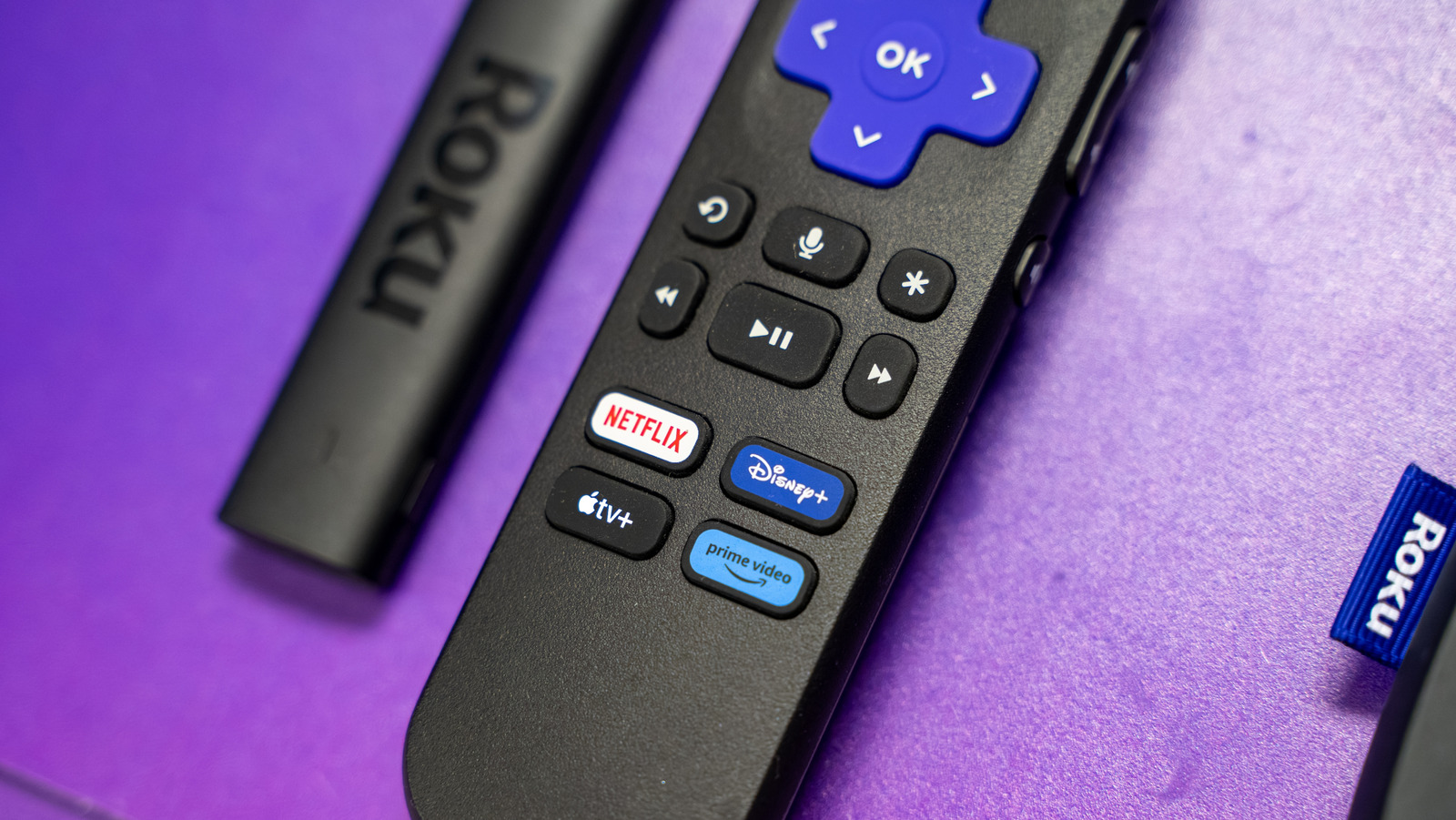
As the saying goes, if something is free, you are the product. While Roku streaming sticks aren’t exactly free, they’re incredibly affordable for what they are. During sales, you can buy one for just a little more than the price of lunch at your local chain restaurant. They unlock a world of streaming content through essential Roku apps and provide an intuitive interface. While they can turn any old TV with an HDMI port into a smart one, many people choose to plug a Roku streaming stick into an already smart TV.

They prefer the interface and enjoy access to additional content, like Roku Channels. But this convenience and money-savings comes at a cost if you don’t disable certain features. When you use a Roku streaming stick — even some affordable smart TV brands – your usage is being tracked.

This includes the way you interact with apps, what you might buy right from the TV ( in this case, a streaming stick), and what kind of content you watch or engage with. From there, the information, though anonymous, is sold to third-party companies for a variety of reasons, from marketing to research. But there’s a way to disable this to ensure a safer, more private experience.

What a Roku streaming stick does in the background

As you engage with content, the streaming stick learns about your habits and those of your family. It tracks how much you watch TV, when you watch, and the type of content you engage with. It can even discern demographics, interests — like if you’re a crime nut — and recognize if you have young children. It will log what items you purchase, what streaming services you use most often, and even which commercials you skip or, conversely, watch.

Roku’s own privacy policy indicates that it collects your search history and results, voice commands, channels you access, including at what times and for how long you watch, how you interact with content and ads, and even what settings and preferences you use. The data it collects is often sold by data brokers to third-party companies that use this information in many ways. Most notably, it’s to conduct research and market to you, albeit as an anonymous consumer.

So, while Roku offers its best streaming stick devices for a steal, the information that’s gathered about you is invaluable. On the hand, you might appreciate the personalization of ads. On the other hand, however, you might find this invasive.

How to disable this

Charles-McClintock Wilson/Shutterstock

Thankfully, there is a way you can disable this tracking to ensure a more private browsing and streaming experience. When it comes to streaming sticks from all brands, including Amazon Fire TV Sticks and Chromecast devices, you can regain control. With Roku devices, check the privacy settings of the device by:

  1. Go to Settings.
  2. Click on Privacy.
  3. From here, select Advertising and Limit Ad Tracking.

To prevent the voice remote from recording your commands:

  1. Go to Settings.
  2. Click on Microphone.
  3. Then click Channel Microphone Access.
  4. Finally, select Never Allow.

There’s also something called Automatic Content Recognition (ACR), which is how the streaming stick collects demographic data about you. Look under Smart TV Experience and turn this off. Consider also using a VPN to mask your IP address and thus your actual location. This doesn’t make it impossible for a device like a streaming stick to track you, but it does make it more challenging.

Keep in mind that many companies, including other brands of streaming sticks and affordable smart TVs, collect such information on you. But by following these simple steps and running through your settings, you can minimize what they learn about you and how they use it.

Source

Posted on

WhatsApp For iOS Finally Rolls Out Multi-Account Support For Testers

Nantonov/Getty Images

For years, WhatsApp has been working on multiple account support. While the company took a long time to start implementing it for users, earlier this year a report revealed that WhatsApp was internally testing this feature on iOS. Now, WABetaInfo says this feature is finally rolling out for iPhone testers in the latest TestFlight build.

According to the publication, WhatsApp for iOS 25.19.10.74 lets beta testers add different WhatsApp accounts directly from the settings page without logging out or restarting the app. More interestingly, each account retains its own chat history, notification tones, preferences, and other settings.

That said, multiple account support on WhatsApp seems to be working just like switching accounts on Instagram or Facebook. Still, users shouldn’t get their hopes up for an immediate release, as WABetaInfo says this rollout is limited to a few beta testers. Here is everything you need to know about this long-awaited feature.

Adding a new WhatsApp account on iOS

José Adorno/BGR

WABetaInfo says those with access to the new multi-account feature will see a new Account List section in the settings menu or a dedicated button placed next to the QR code icon.

According to the publication, at this moment, users can add up to two accounts on the same WhatsApp application. The account can be new or previously associated with WhatsApp, such as a number you’ve been using on WhatsApp Business or on another phone. Once you connect the new number, the app will start syncing messages and settings.

Alongside specific settings for each account, WABetaInfo says WhatsApp also creates separate backups, so users can easily manage them. By pressing and holding the Settings tab, users can quickly switch between accounts. Besides that, users can take advantage of everything previously available, such as Chat Lock, Face ID on the app, and more. BGR will let you know once WhatsApp reveals its plans for when it will release this much-anticipated feature.

Source

Posted on

CCS under fire over ‘anti-SME’ supplier requirements for G-Cloud 15

The Crown Commercial Service (CCS) stands accused of making parts of its flagship cloud computing framework, G-Cloud, inaccessible to small and medium-sized enterprises (SMEs) and the hyperscalers, having set out a series of enhanced participation requirements for its cloud hosting lots.

Government procurement chiefs began the invitation to tender (ITT) part of the procurement process for the 15th iteration of G-Cloud last month, which is set to replace both G-Cloud 14 and CCS’s under-performing Cloud Compute Framework in September 2026.

As stated in the G-Cloud 15 tender document, G-Cloud is the “largest framework of its kind in the public sector”, and CCS said it wants to “leverage” its popularity by merging it with the Cloud Compute Framework.

“G-Cloud spend for FY23/24 was £3.1bn and Cloud Compute was £0.5m,” the document added.

And with G-Cloud 15 now covering the work of two purchasing agreements, the framework’s lot structure looks significantly different to G-Cloud 14.

For example, Cloud Hosting is now spread across two lots (dubbed Lot 1a and Lot 1b) rather than one.

Lot 1a is for suppliers specialising in the provision of “core” infrastructure-as-a-service (IaaS) and platform-as-a-service (PaaS) subscription services, while Lot 1b covers the same types of services when used to host information that is classified as being above the “official” government data security classification level.

The framework’s Cloud Software Lot has also been similarly split into Lot 2a, covering the provision of infrastructure software as a service (ISaaS), and Lot 2b, which covers software-as-a-service (SaaS) offerings.

Lot 3, covering Cloud Support services, remains intact, but Lot 4, which was run as a standalone framework to G-Cloud 14 for public sector IT buyers that wanted to run their own competitive processes for more complex cloud support contracts, is being axed.  

“G-Cloud 15 is the proposed replacement for G-Cloud 14, G-Cloud 14 Lot 4 and Cloud Compute 2 … removing the need for Cloud Compute 3,” confirmed CCS in the G-Cloud 15 tender document.

As well as a rework of the G-Cloud 15 Lot structures, tender documents shared with Computer Weekly by potential framework participants confirm CCS is considering introducing enhanced applicant vetting procedures for Lot 1a and Lot 1b participants.

And these changes could, according to several potential G-Cloud 15 applicants, who spoke to Computer Weekly on condition of anonymity, render these lots inaccessible to SMEs, and trickier for even some hyperscalers – which have come to dominate G-Cloud in recent years – to participate in them.

“Only Google really has a capability amongst the hyperscalers to go for Lot 1b,” said a member of the G-Cloud supplier community. “Meanwhile, I know of at least half a dozen or so SMEs – and maybe the same number again in bigger supplies like Vodafone – who could do Lot 1b easily enough [who will be affected] by these changes.”

What’s changed?

The tender documents shared with Computer Weekly show that Lot 1a and Lot 1b applicants will need to:

  • Undergo more rigorous financial vetting than required under the previous iteration of the framework.
  • Possess an expanded number of mandatory ISO accreditations than before, or provide proof that work to acquire them is underway by the time the application deadline for G-Cloud 15 closes in January 2026.
  • Where Lot 1b applicants are concerned, possess insurance cover in excess of £75m to secure deals through G-Cloud 15.

“The requirements for these cloud hosting lots make it very clear that smaller and SME cloud providers are not welcome to host public sector data, despite their clear capabilities,” said another G-Cloud supplier source.

“This will do nothing to diversify or strengthen the over-concentrated [UK cloud hosting market] market that the Competition and Markets Authority (CMA) has already identified.”

Potential suppliers have until 12 December 2025 to query these requirements by submitting “clarification questions” to CCS, ahead of the deadline for applications to participate in the framework closing on 30 January 2026.

The requirements for these cloud hosting lots make it very clear that smaller and SME cloud providers are not welcome to host public sector data, despite their clear capabilities Anonymous source at a G-Cloud supplier

Computer Weekly has seen a copy of the most recent set of submitted clarification questions, as well as CCS’s responses to them, from which it seems the insurance changes, in particular, have not landed well with the G-Cloud supplier community.

“In regards to the Lot 1b insurance requirements … [£75m] is extremely high and if the objective is for Lot 1b to be comparable with Lot 4 of Cloud Compute 2, then as far as we’re aware, the professional indemnity limit for that was only £1m,” one supplier wrote. “This represents a significant increase in the insurance requirement.”

Another question also sees CCS field a request to consider lowering the required insurance cover needed, as it did in response to supplier pushback on a similar move to increase insurance requirements during the tender process for G-Cloud 14.

“CCS appears to have lost the plot,” said another potential G-Cloud 15 supplier, who spoke to Computer Weekly on condition of anonymity. “There is no limitation on the number of suppliers who can take part in G-Cloud 15, but the bar is so high for the hosting lots, specifically, that it will be a very limited field indeed.”

Enhanced financial check for cloud hosting providers

As confirmed during a recent G-Cloud 15 supplier event, hosted by UK tech trade association TechUK, participants in the framework’s cloud hosting lots will need to participate in a more in-depth Gold Standard Financial Viability Readiness Assessment (FVRA).

This process typically involves suppliers having to participate in a detailed assessment of their financial affairs, involving the supply of extensive information about their businesses, which will be subject to tight scrutiny by CCS.

Under the previous iteration of the framework, all suppliers – regardless of lot – were subject to less onerous checks that would only involve them having to participate in a full FVRA if they did not meet an initial credit score screening test. This system remains in place for Lot 2a, Lot 2b and Lot 3 providers under G-Cloud 15.

The additional administrative burden involved with having to attain a Gold FVRA could end up being a potential barrier to entry to SMEs, specifically, that want to be in the running for cloud hosting deals under G-Cloud 15, it is feared.

Mandatory accreditations and heightened insurance requirements

The CCS-issued bid pack for G-Cloud 15 confirms that it is now mandatory for suppliers wishing to participate in its Cloud Hosting Lots to possess a Cyber Essentials Plus accreditation, as well as the ISO 9001, ISO 20000-1, ISO 27001 and ISO 27018 certifications.

CCS initially stated in its tender documents that suppliers would need to be in possession of these mandatory accreditations by the time the application deadline for G-Cloud 15 closes in January 2026.

“G-Cloud 15 requires a supplier to state that they have ISO 27017 certification,” said another supplier, in the clarification questions document. “This wasn’t a requirement under G Cloud 14, but has become a mandatory requirement for Lot 1a [now].”

They continued: “Three months is insufficient time to get accredited to ISO 27017.”

However, it appears, in response to supplier pushback, that CCS’s stance on this matter has now softened.

“Following a review of requirements and the current capability and capacity issues that exist within the market, CCS has decided to amend its position concerning ISO accreditation,” CCS confirmed in its response.

“The ISO standards listed are still mandatory … to operate in Lots 1a and 1b. However, the requirements on bidders will now be that if they do not currently hold the required ISO certification, they must evidence to CCS, before the application deadline of 30 January 2026, that they have begun the process of certification …. This should take the form of an authorised third-party confirmation from an ISO accreditation body.”

Uptick in insurance requirements

Details of G-Cloud 15’s reworked insurance requirements are laid out in a “Joint Schedule 3” document, shared with Computer Weekly by another prospective framework supplier.

It stipulates that suppliers wanting to secure contracts under framework Lot 1a, Lot 2a, Lot 2b and Lot 3 “shall hold” separate private indemnity, public liability insurance and employers’ liability insurance with cover that totals at least £7m.

As such, suppliers must have separate professional indemnity insurance and public liability insurance of at least £1m each, as well as at least £5m in employers’ liability insurance. Incidentally, these levels of insurance are the same as those required of suppliers on G-Cloud 14.

However, suppliers vying for contracts awarded under Lot 1b, which covers IaaS and PaaS services used to host data that is above the “official” security grading, must have in place separate private indemnity, public liability and employers’ liability insurance that totals at least £75m, the document states.

“It is good in principle to see CCS recognising that there is a market above “official” that cannot be readily serviced by hyperscale public cloud, [but] it is concerning that they have associated that with an automatically higher insurance requirement,” Owen Sayers, an independent security architect and data protection specialist with a long history of working in the public sector, told Computer Weekly.

Services above ‘official’ are one of the last existing preserves of UK SMEs … Cutting them out of that market through restrictive barriers to entry is the last thing the government should be doing Owen Sayers, independent security architect and data protection specialist

“After all, the Ministry of Defence breach of Afghan data may have had a serious, life-threatening impact, but attracted no real financial penalties.”

He also agreed with the members of the supplier community quoted in this article that mandating such high insurance requirements would disproportionately disadvantage UK SMEs operating in the cloud hosting space.

“Services above ‘official’ are also one of the last existing preserves of UK SMEs, who are unique in their capabilities to specialise in these types of solution,” he said.

“Cutting them out of that market through restrictive barriers to entry is the last thing the government should be doing. If anything, they should underwrite and support UK SMEs here. After all, they have little left in the remainder of government they can realistically hope to compete for.”

Computer Weekly contacted CCS to notify it of the suppliers’ comments and to get a response to their concerns about the heightened insurance, financial and accreditation requirements for G-Cloud 15.

In response, Computer Weekly received the following from a CCS spokesperson: “G-Cloud 15 is a live procurement. Suppliers should submit questions about the procurement directly through the official clarification process, where they will be reviewed and addressed appropriately.”

Source

Posted on

Apple Issues Rare Firmware Update For Magic Keyboard, Magic Trackpad,

José Adorno/BGR

As Apple prepares to release iOS 26.2 in mid-December, the company has updated the firmware of several of its accessories. According to Macrumors, Apple released firmware updates for the 140W USB-C Power Adapter, USB-C Magic Keyboard, USB-C Magic Trackpad, and Magic Trackpad 2. This is the first update for these accessories since launch. As always, Apple hasn’t elaborated on what changes the update brings — whether it’s just improved connectivity, better battery life, or a patch for a possible issue.

Still, if you have one of these devices, it’s better to update it as soon as possible. The new firmware number for the 140W USB-C Power Adapter is now 1.4.84 (up from 1.4.73), the USB-C Magic Keyboard and USB-C Magic Trackpad are now on version 3.1.9 (up from 3.1.4 and 3.1.3, respectively), and the Magic Trackpad 2 is now on version 3.1.8 (up from 3.1.1). Since these devices don’t have their own interface, updating them can be tricky.

Here’s how to update these accessories

José Adorno/BGR

Thankfully, updating the firmware of these Apple accessories is easier than downloading AirPods firmware updates. The firmware should get downloaded and installed automatically when the accessory is actively paired with an Apple device. If you want to be sure, you can plug the accessories into a charger while they’re connected to your Mac to ensure they receive the latest firmware. That said, you can never tell for certain when your devices will get updated.

Besides that, Apple also released a new test version of a future AirPods firmware, which should be released alongside iOS 26.2. As of now, it’s unclear what Apple is testing with the new AirPods firmware build, but the company could be tweaking the Live Translation functionality or improving ANC algorithms. For years, users have complained about Apple not being clear about the changes introduced by its software and firmware updates, and so far, it doesn’t seem that the company is changing that. Having said that, we’ll let you know if we find something new with Apple’s updates.

Source

Posted on

Global on-device AI market tops $10bn in 2024

As the internet of things (IoT) evolves and expands, among the most recent developments is the integration of artificial intelligence (AI) capabilities directly onto IoT devices to unlock a new generation of applications. Now, a study from IoT analysts at Berg Insight has found that the on-device AI market having risen by 22% from 2023-2024.

Over the course of the lpst few years, leading technology providers have demonstrated how on-device AI is driving a number of use cases – in particular, automotive and industry 4.0 applications – with embedded AI platforms, as well as micro-power Wi-Fi silicon on chip (SoC), enabling intelligent computing.

In its study, The on-device AI market for IoT applications, Berg Insight said that it has identified 40 key companies that shape the on-device AI landscape, and it believes that the market can broadly be divided into two layers. The first encompasses hardware categories such as AI SoCs or system-on-modules (SoMs), AI accelerators and AI microcontroller units (MCUs), each optimised for different levels of performance, power efficiency and integration.

The analyst said AI SoCs typically integrate components such as general-purpose and specialised AI compute cores, on-chip memory and connectivity on a single chip, while SoMs extend this design by including external system memory, storage and interface components on a larger board, targeting more advanced use cases. AI accelerators are those designed to enhance AI inference efficiency in existing systems, typically working alongside a separate host processor in embedded applications.

AI MCUs serve lower-power devices by bringing neural network capabilities to sensors, wearables and IoT endpoints where energy efficiency and cost are most critical. The second layer consists of on-device AI platforms that combine hardware, software and developer tools to simplify model deployment and optimisation.

In all, Berg calculates that the on-device AI market reached US$ 10.1bn 2024 in a market including AI SoCs/SoMs, AI accelerators, AI MCUs and specialised on-device AI software and platforms. The analyst expects the market to grow to US$ 30.6bn in 2029, representing a compound annual growth rate (CAGR) of 25%. The figures excluded revenues generated by non-IoT applications such as smartphones, tablets and personal computers.

Berg noted that the market for on-device AI solutions is characterised by a high degree of heterogeneity in both technologies and applications, in contrast to cloud-based AI where the hardware is typically designed around predefined use cases and centralised infrastructure. It added that embedded AI processing can be architected in numerous ways depending on the end use case, and it can be integrated into an almost limitless range of devices across consumer, industrial and automotive domains.

The analyst said this leads to a differentiated market landscape, with unique design constraints, performance requirements and optimisation strategies. However, it cautioned that the overarching objective is typically the same for all suppliers, which is to achieve the highest possible performance per watt for the intended use case.

“Over the past decade, the on-device AI market has been driven primarily by traditional machine learning use cases such as computer vision and anomaly detection, which have seen steady annual growth of around the 10 percent range,” said Berg Insight IoT analyst Melvin Sorum.

“In recent years, the market has reached an inflexion point as emerging technologies and applications in generative AI, robotics and autonomous driving have opened up new dimensions of growth. These developments are expected to accelerate market growth and give rise to entirely new use cases and product categories.”

Source

Posted on

How To Remove Dust From Any Electronic In Your Home

enesdigital/Shutterstock

We may receive a commission on purchases made from links.

Dust is the mortal enemy of any clean household, and not just in the form of dust bunnies gathering under your couch. Dust can accumulate on and within your many electronic devices, whether you use them consistently or leave them sitting for long stretches of time. In the name of both general cleanliness and safe operation, it’s on you to tackle this accumulated dust with tools like microfiber cleaning cloths and compressed air sprayers.

Dust can cover your flat screen TVs and computer monitors, as well as accumulate inside your PCs, game consoles, and other such devices. Besides just looking generally unpleasant, dust coatings are more concerning for electronic devices than regular decorations and furniture, as large quantities of dust can lead to poor ventilation and greater heat retention. You can’t just slap the dust away with a generic rag or spray water on everything, though, as both of those choices could cause irreversible damage to the insides and outsides of your devices. With a steady hand and the right tools, you can safely remove that built-up dust, preserving your devices’ functionality and appearance.

A microfiber cloth will clean the outside of your devices

Anmbph/Getty Images

Traditional home care logic would have you tackle accumulated dust on flat, external surfaces with a rag and a spray bottle full of water. However, trying to clean the outsides of your electronic devices like that, especially those with flat screens like televisions, smart displays, or PC monitors, would be asking for trouble. Regular cleaning cloths are thick and abrasive, and could scuff a device’s plastic casing or mar its screen. Water, in particular, should not be used in the same way you would use it to clean a window, as even a little bit of water seeping into a device’s entry ports could end up frying its circuitry. You also shouldn’t use glass cleaner on a screen, as cleaning chemicals are corrosive to sensitive displays. 

To properly clean the outside of any electronic device, your best friend will be a microfiber cleaning cloth. To clarify, we’re specifically referring to the small screen-safe cleaning cloths. There are microfiber cleaning towels, but these are still too abrasive. Electronics-safe cleaning cloths, which you can buy in bulk on Amazon, can safely remove dust from any delicate surface without pilling up or attracting lint, staying smooth and safe. These cloths are also perfect for removing stubborn smudges on device screens, dampened with a very small amount of water if you need a little extra cleaning power.

For insides and ports, use compressed air

Douglas Cliff/Getty Images

In addition to cases and screens, dust can also accumulate on and within the inner workings of your devices, whether it’s in the surface-level USB ports or deep within the internal circuitry. Larger devices like PCs need to be periodically opened up to clean out the gathered dust so they don’t get clogged ventilation ports. It’s vital that you do not touch any of these surfaces directly, either with your bare hands or any kind of cleaning cloth, even a screen-safe microfiber cloth. A device’s internal circuitry is very delicate, and a nudge or smudge in the wrong place could adversely affect its functionality.

If you can’t touch the internals directly to remove dust, then do it indirectly with a can of compressed air. These spray cans are readily available at most electronic stores, and can be used to safely blow away caked-on dust. Be careful not to inhale the can’s contents as they can be a health hazard. If you’re concerned about that, or are going through a large quantity of cans on a regular basis, you can also purchase a dedicated electronic dusting device on Amazon. These handheld devices, powered either by an outlet or battery, will never run out of air, which could save you some money down the line.

Source