Posted on

Is history repeating itself with the government’s push to open

The UK government is on a mission to loosen the grip that legacy IT suppliers have on public sector IT budgets, amid concerns about how police forces, NHS trusts and local councils are wedded to suppliers whose offerings are not good value for money.

Technology secretary Peter Kyle outlined the government’s ambitions on this front during his appearance at the Google Cloud London Summit in July 2025, where he talked about the need to rid the public sector of the “ball and chain” of legacy tech and migrate more of their applications and workloads to the cloud. He said it is the Department for Science, Innovation and Technology’s (DSIT’s) intention to “drag” public sector IT into the 21st century by forging closer ties with cloud giants, such as Google.

“My message to big tech companies is clear: bring us your best ideas, bring us your best tech, and bring it at the best price, and – in return – you’ll get access to the biggest client in the country [the public sector], one that will be increasingly intelligent and increasingly digital,” he said.

But it is not just the tech offered by the hyperscale cloud giants that government wants public sector organisations to escape to, Kyle continued. He is also keen for UK-based tech suppliers of all sizes to win their fair share of public sector contracts through their participation in the National Digital Exchange (NDX) marketplace.

Announced in June 2025, the NDX platform is expected to provide public sector organisations with access to pre-approved technology deals at nationally negotiated prices, while also allowing buyers to rate and review the services they procure through it.

Pitched as an app store for public sector organisations, the government said NDX will play a key role in supporting its goal of boosting small business involvement in government contracts by 40% within three years. DSIT claims the platform will unlock £1.2bn a year in savings and modernise how public sector spends £26m a year on technology.

“The National Digital Exchange will make sure more and more UK tech companies can get their slice of [public sector IT spend],” said Kyle. “That means more money for companies operating here in the UK, [including] workers and founders.

“It will help us achieve the economic growth upon which Britain’s future prosperity lies, and it will improve the public services on which British systems depend.”

History repeating

In summary, the government wants public sector buyers to save money by ditching legacy providers and moving to the cloud, while offering them access to an online marketplace where they can easily procure the products and services they need from both hyperscale, overseas tech firms and homegrown providers.

For those who have followed the public sector IT market for the past 15 years or so, some of what the government is proposing may sound familiar, as the founding aims of NDX are very similar to those of the G-Cloud framework.

The latter purchasing agreement made its debut in 2012, pitched as a procurement vehicle that would increase the diversity of IT providers serving public sector organisations and would boost the number of small and medium-sized IT suppliers winning business with them.

At the time, the IT supplier landscape was dominated by a handful of systems integrators and large, legacy tech providers that stood accused of locking public sector organisations into lengthy and expensive contracts.

G-Cloud was hailed as the remedy to that in much the same way that NDX is being spoken about today, except G-Cloud introduced a new way for public sector organisations to procure IT services – and there was no other framework like it out there.

The services listed on it, for example, were pre-approved and transparently priced to ensure all public sector users were charged the same. Contract lengths were initially capped at 12 months to guard against supplier lock-in and to encourage competition.

Over the years, the terms and conditions that G-Cloud operates under have markedly changed from when it was originally introduced, and the government is currently in the throes of preparing to launch the framework’s 15th iteration in spring 2026.

In light of all that, the question is whether the government is risking duplicating effort by simultaneously working on the roll-out of NDX at the same time, given both procurement vehicles appear – at least on paper – to be intent on achieving the same thing.

Nicky Stewart, senior adviser to Open Cloud Coalition (OCC), which is an advocacy body calling for the creation of a diverse and competitive European cloud market, said DSIT’s vision for NDX does sound promising.

“The OCC welcomes any initiative that aims to open up the government digital market to new players – whether they are SMEs, homegrown suppliers or challenger providers,” she told Computer Weekly. “A diverse market is a healthy and resilient market. We urge all providers with an interest to get behind this important initiative to help DSIT realise its ambitions.”

However, Owen Sayers, an independent security architect and data protection specialist with a long history of working in the public sector, has some reservations about what it is the government is trying to achieve with NDX.

Before floating the idea that DSIT could be lining up NDX to eventually replace G-Cloud, Sayers said that he cannot see how running both frameworks side-by-side will be commercially viable long term.

“If both frameworks run, the civil servants will default to what they know, and what they know is G-Cloud, and NDX will be doomed to failure,” he said.

While this might sound like scaremongering, it is worth bearing in mind the roll-out of the first iteration of the hyperscale-focused Cloud Compute framework in 2021. This was introduced as an alternative procurement vehicle for public sector IT buyers that had large-scale cloud projects to deliver that had previously been pushed through the more SME-focused G-Cloud framework.

A Computer Weekly investigation later revealed that just £750,000 of business had seemingly been put through the first iteration of the Cloud Compute framework, with sources claiming this was due to the fact public sector buyers found G-Cloud more familiar and easier to use. 

“If NDX is the ‘new thing’, the government will need to tender it – with terms suitable for that type of competitive feedback-driven marketplace – and, having done so, will presumably retire G-Cloud,” said Sayers.

If this sequence of events does come to pass, it could take several years before the financial benefits generated by NDX are realised, given that contracts called-off under G-Cloud can be up to 48 months in length, he added.

“Many government agencies will have forward-committed spend contracts under G-Cloud, and they won’t want or be able to change them,” he said. “Cancelling live G-Cloud contracts will incur huge costs – certainly enough to wipe out a £1.2bn saving – and so they will persist for their full contract term.

“It will take two-to-four years for NDX to replace G-Cloud and gain traction, and we are unlikely to see any benefit of this type of change in the lifetime of this parliament [given the G-Cloud contract lengths] and nor are the government likely to see many of those projected savings.”

Computer Weekly put Sayers’ concerns to DSIT, and a spokesperson responded with the following statement: “The National Digital Exchange builds on G-Cloud’s success while introducing AI-powered supplier matching, real-time user reviews and pre-negotiated deals that slash procurement time from months to hours – delivering £1.2bn annual savings.

“G-Cloud remains an important procurement route alongside NDX, with transparent pricing and capability-based matching ensuring SMEs can compete on innovation rather than administrative complexity. The platform is designed to open the market to more UK tech firms, with a target to boost small business involvement in government contracts by 40% within three years.”

No checks or balances

Even so, Sayers has some misgivings about the approach DSIT is taking with NDX: “Principally, it looks like they are trying to streamline decisions that already suffer from far too little diligence, and the trade-off of centrally negotiated general deals is that the NDX will undoubtedly be made up of generic commodity products.”

With its emphasis on offering public sector buyers access to pre-approved technology deals, there is also a fear that the government might be taking a “one-size-fits-all” approach with NDX, which rarely works in the public sector, he continued.

“There seems to continue to be a lack of appreciation in central government that each department is different, each vertical part of government is different, and each nation in the UK is different in terms of their applicable legislation, regulation, needs and forms of delivery,” said Sayers.

Mark Boost, CEO of London-based cloud services provider Civo, told Computer Weekly that he is broadly supportive of what the government is trying to do with NDX, particularly its pledge to champion homegrown IT providers through the initiative.

However, given how much business the UK government already puts the way of big tech providers, such as Amazon Web Services (AWS), Microsoft and Google, he has reservations about how DSIT will ensure a level playing field for all suppliers who participate in NDX.

“Any initiative explicitly aiming to make it easier for UK tech suppliers of all sizes to win government contracts is worth celebrating,” he said. “If the policy truly manages to develop and maintain appropriate safeguards to ensure a level playing field for British tech, then we can expect a huge boost to our homegrown tech ecosystem. That said, DSIT’s apparent enthusiasm for ‘big tech’ will give many UK IT leaders pause.”

Particularly in light of how entrenched the cloud technologies of AWS and Microsoft, specifically, have become within the public sector since both parties opened their UK datacentre regions in late 2016. At the time, the UK was home to a thriving ecosystem of homegrown SME cloud providers, many of whom were successfully selling their wares through the G-Cloud framework to the public sector.

However, over the months and years, the number of these SMEs in operation began to dwindle – as some went out of business or merged with others – as more of the public sector deals they previously secured went to AWS and Microsoft instead. So much so, AWS is now the top seller of cloud services to the public sector through the SME-focused G-Cloud framework, with the government’s own Digital Marketplace figures putting its total spend through the framework at more than £1bn.  

And having so much of the UK’s public sector IT infrastructure hosted in the clouds of US-based cloud providers is a risk, said Boost, adding: “Relying on a handful of overseas providers for our digital infrastructure presents a substantial risk, especially when changes in the geopolitical winds can result in sudden software sanctions and shutdowns.

“On top of this, the US Cloud Act remains in force, and any large US provider involved in public sector IT might, at any time, be compelled to hand over British citizens’ sensitive information to US law enforcement. Proper consideration for the UK’s thriving cloud and AI ecosystems will help to rectify this – and I hope the NDX will live up to its promises.”


Source

Posted on

Sizewell C deploys VodafoneThree dedicated 5G

VodafoneThree has signed an agreement to become a tier one contractor for the under-construction Sizewell C nuclear power station to provide secure and reliable communications, eliminating coverage gaps and enhancing operational efficiency.

One of the biggest clean energy projects in Britain, the 3.2GW facility on the Suffolk coast is designed to generate 7% of the UK’s electricity needs, providing low-carbon electricity to six million homes for at least 60 years and saving nine million tonnes of carbon dioxide from entering the atmosphere annually.

Majority-owned by the UK government, Sizewell C is intended to play an important role in achieving clean power by 2030, and in supporting the UK’s long-term energy independence. The project will support thousands of jobs across the UK, creating 1,500 apprenticeships, and will deliver 70% of its construction value to British suppliers. Sizewell C has already delivered £4bn in contracts to over 300 UK suppliers, and has so far spent £330m with 77 regional suppliers, including 41 in Suffolk alone.

The connectivity project, which began in November 2024, promises to help support construction site safety, security and efficiency, and strengthen mobile connectivity across the site. The improved mobile coverage is also designed to provide more reliable connectivity for both residents and businesses in the surrounding area, facilitating access to digital services and supporting the growth of the local economy.

Partnering with local specialist Fern Communications, in the first phase of the project, VodafoneThree is building two masts on site to provide 5G mobile coverage for the Suffolk site and the surrounding community. Fern Communications, now part of OEG, will provide radio coverage to eliminate potential communication black spots throughout the Sizewell C construction site.

VodafoneThree says the 5G coverage and radio will bring a whole host of benefits to Sizewell C’s operations, including enhanced communication among workers, enabling co-ordination across teams working on a large-scale construction site. Additionally, it assured that better mobile infrastructure will support the swift exchange of data and updates, improving the overall efficiency and productivity of the construction process.

The operator will also deploy fibre to the site, so that the entirety of the construction project will able to use Wi-Fi to connect to local area networks and wide area networks. This will complement the 5G coverage, enhancing operational efficiency.

Commenting on the deployment, Sizewell C site delivery director Damian Leydon said: “Connectivity is vital for this project. High-quality, reliable connection helps us to operate at the highest standards of safety and efficiency. So, it’s an important step to be working with VodafoneThree and Fern Communications to provide what we need on-site. And it has the added benefit of providing 5G for the local area, too: another great example of how benefits to the project can go hand-in-hand with benefits for the local community.”

VodafoneThree business director Nick Gliddon added: “We are delighted to be the connectivity partner for Sizewell C. Alongside our contractors, we will deliver robust, secure and resilient communications infrastructure that is essential to the success of one of the UK’s most significant energy projects and to support the UK’s transition to cleaner energy.

“This partnership underscores our commitment to enhancing connectivity across the country, ensuring that communities and businesses in Suffolk and beyond can benefit from the advancements in technology and infrastructure that Sizewell C will bring.”

VodafoneThree is also the connectivity partner at Sizewell’s sister project, Hinkley Point C in Somerset, where more than 10,000 people are now working on its construction.

Source

Posted on

DWP accused of shielding AI deployments from public scrutiny

Civil rights groups have highlighted a “worrying lack of transparency” in how the Department for Work and Pensions (DWP) is embedding artificial intelligence (AI) in the UK’s social security system.

According to separate reports from Amnesty International and Big Brother Watch, both published in early July 2025, the opaque use of AI systems by the department to determine people’s eligibility for social security schemes like Universal Credit (UC) or Personal Independence Payment (PIP) is having “serious consequences” for benefit claimants.

Both organisations highlighted clear risks of bias associated with the use of AI in this context, and how the technology can exacerbate pre-existing discriminatory outcomes in the UK’s benefits system.

They also detailed how such systems undermine benefit claimants’ data and privacy rights, and treat them as automatically suspicious by design.

However, despite such risks, they say the DWP has created a “wall of secrecy” around how its AI systems operate, leaving people in the dark about how it has made important decisions that affect their day-to-day lives.   

“Internal DWP documents obtained by Big Brother Watch show that the Universal Credit Advances model, used to risk score almost a million Advances claims each year, displays consistent, statistically significant bias,” said the privacy campaign group.

“Fairness analyses of the Advances model and a string of other pilot tools show that algorithmic disparities have been found for age, nationality, relationship status and reported illnesses – even more concerning as these characteristics are also used as proxies for ethnicity, marital status and disability.”

Refusal to publish information openly

Big Brother Watch added that the operation of the DWP’s “suspicion machine” has been shielded from public scrutiny because of its refusal to publish information openly.

Similar points were made by Amnesty, which added that the DWP is justifying its opacity on the basis that disclosing information could enable individuals to exploit the benefit system. “This fundamentally misunderstands how these systems are frequently discriminatory and demonstrates the adoption of a punitive approach,” it said.

“These systems often rely on identity characteristics to establish profiles or risk scores, which for ‘race’ or ‘disability’ are fixed and therefore cannot be changed by an individual to cheat the system. This results in a system that is optimised for fraud detection, rather than being optimised to serve the majority of applications which are legitimate while still being able to detect outlying cases of fraud.”

Both organisations are therefore calling for greater transparency from the UK government about how it is using these high-risk data tools, so that DWP can be held to account for the negative impacts of its systems, and people can challenge wrong decisions made about them.

“The DWP’s ongoing roll-out of high-tech algorithmic tools, which its own assessments have found to be riddled with bias, is alarming,” said Jake Hurfurt, head of research and investigations at Big Brother Watch. “This becomes even more concerning when the DWP is hiding behind a wall of secrecy and refuses to disclose key information that would allow affected individuals and the public to understand how automation is used to affect their lives, and the risks of bias and to privacy involved.

“Instead of pressing forward, the DWP should take a step back and pause the use of any model containing unexplained disparities, and it must become more transparent about how it uses high-tech tools. It is wrong to subject millions of innocent people to shadowy automated or algorithmic decisions, and refuse to explain how these work.”

Amnesty said in its report that while the “real-world impacts” of the DWP’s AI systems are apparent from people’s experiences of interacting with them and what’s been uncovered by civil society groups, the full impacts cannot be truly known without greater transparency. “Without transparency over the use of technology, there can be no meaningful evaluation of whether these systems are operating efficiently or lawfully, and whether or not discrimination is occurring,” it said.

Big Brother Watch similarly highlighted how documents such as data protection impact assessments containing vital details about the systems – including the types of personal data they process and how these are ultimately used by the models, as well as how they meet legal tests around proportionality and necessity – are either not disclosed, or are otherwise redacted heavily if they are published.

“The DWP uses the threat of welfare fraud as a get-out-of-jail-free card to operate in secret, but with machine learning tools allowing for human-light profiling on a large scale, more scrutiny and transparency is clearly needed – not less,” it said.

Imogen-Richmond Bishop, a researcher on technology, economic, social and cultural rights at Amnesty International, added that the DWP’s mission to reduce cost is at the heart of its over-reliance on these problematic technologies. “People are struggling to make ends meet and put food on the table due to cuts in social security, and yet the DWP is more concerned about experimental technologies to surveil claimants,” she said.

“The tech-enabled system to claim and manage welfare benefits is resulting in relentless dehumanisation and strain for people who are already wrestling to access their basic needs in a broken system.” 

Amnesty also highlighted in its report that despite the DWP’s stated goal of “cost-saving”, it doubts whether these professed savings will ever actually materialise.

“The UK’s National Audit Office has expressed doubts that these savings will ever materialise,” it said. “As of 2024, the DWP estimates that, since 2010, it has cost £2.9bn to implement UC. These growing costs and continually delayed completion dates bring into question whether it is even possible for the digitalisation process to introduce the efficiency and cost savings which were used to justify its introduction.”

DWP comment

Computer Weekly contacted the DWP about both reports and the claims made about its use of AI throughout the social security system.

“We want to improve the experience for everyone who needs to access and use our services, and technology plays an important part in that,” said a spokesperson.

“We ensure the appropriate safeguards are in place to guarantee the lawful, proportionate and ethical use of data and technology. All decisions regarding benefit entitlement or payment are made by DWP staff, who look at all available evidence.”

Source

Posted on

CISPE criticised over securing preferential cloud pricing on Microsoft products

A European trade body is facing criticism for striking a deal with Microsoft that allows its members to host and resell the software giant’s cloud offerings with preferential pricing terms.  

The Cloud Infrastructure Services Providers In Europe (CISPE) trade body has reached an agreement with Microsoft that will see its members offered revised pricing terms for running the supplier’s software – namely Windows Server and SQL Server – on their infrastructure.

Specifically, CISPE members will be able to offer customers access to Microsoft’s cloud offerings on a pay-as-you-go basis via the company’s CSP-Hoster programme, with pricing described as “comparable” to that offered by Microsoft Azure.

The agreement – which is open to existing and prospective CISPE members – also features an assurance that CISPE members will not have to share details with Microsoft about the customers they are selling the setup to.

Microsoft has also committed to reviewing the initiative’s effectiveness within 12 months, and said it may expand the programme in future.

What’s significant about the CISPE deal is that Microsoft has previously, and repeatedly, come under fire from trade bodies and regulators across the world for its practice of charging more to users who choose to run its software in competing cloud environments.

On that point, CISPE previously filed a complaint against Microsoft in November 2022 with the European Commission’s Directorate-General for Competition (DG Comp), where it urged the organisation to open an investigation into the firm’s behaviour.

However, in February 2024, news emerged that Microsoft and CISPE had entered into a discussion about how to resolve its members’ concerns over the company’s alleged anti-competitive behaviour.

This, in turn, led to the controversial news several months later that CISPE had signed a $22m deal with Microsoft to withdraw its complaint in exchange for the company’s commitment to revising its cloud licensing terms.

As reported by Computer Weekly at the time, news of the agreement between the two parties prompted concerns from cloud market watchers who claimed the deal was exclusionary.

In a statement, CISPE secretary general Francisco Mingorance described the development as a “significant breakthrough” in its efforts to “ensure a level playing field” for cloud providers across Europe.

“For enterprise customers, the new programmes directly address previous concerns of CISPE members and empower European enterprises to choose among a wide range of cloud solutions that meet their sovereignty, compliance and economic needs,” Mingorance added.

However, outside of CISPE, the response to the news of its latest agreement with Microsoft to tackle its licensing practices has not been so warmly welcomed.

Ryan Triplette, executive director of the Coalition for Fair Software Licensing, which campaigns for fair and transparent licensing terms for cloud users, said this is another case of Microsoft offering “weak concessions” to dodge regulatory scrutiny.

“Every stalling tactic has just bought Microsoft more time to lock in customers with restrictive and anti-competitive licensing practices,” said Triplette.

“This is more smoke and mirrors from Microsoft: offer weak concessions in an attempt to avoid regulatory scrutiny and disingenuously pretend these actions promote European competition. Meanwhile, Microsoft continues to line its pockets at the expense of customer choice around the world.”

Meanwhile, Nicky Stewart, senior advisor to pro-competition advocacy group The Open Cloud Coalition, said the deal will do nothing to help users and providers who are not within the CISPE fold.

“This bilateral deal between Microsoft and a subset of European providers leaves the vast majority of UK and EU customers facing the same high costs and restrictions,” she said.  

“It does nothing to fix the underlying issue: Microsoft’s licensing practices that distort competition. Opaque side deals cannot deliver a level playing field. Only market-wide antitrust remedies will deliver real choice and fair pricing.”

The concessions apply only to CISPE members, with no clarity on whether other cloud providers across Europe will benefit. Is this a private deal for a select few? Who decides who gets access, Microsoft or regulators? Mark Boost, Civo

Mark Boost, CEO of London-based cloud provider Civo, said the agreement “raises serious questions about fairness and transparency” and it is difficult to see how the wider market will benefit from it.

“The concessions apply only to CISPE members, with no clarity on whether other cloud providers across Europe will benefit. Is this a private deal for a select few? Who decides who gets access, Microsoft or regulators?” he said.

“Without these answers, it is easy to arrive at the assumption that this is a workaround that protects market power instead of challenging it.” 

In response to the criticism directed its way in the wake of news of the agreement being made public, a CISPE spokesperson said the agreement has the potential to benefit all European cloud providers – not just CISPE members.

“Clearly, we negotiated on behalf of CISPE and have won significant benefits for our European members when action by the commission seemed unlikely. That said, the agreement is open not only to current CISPE members, but eligible European cloud providers who join CISPE in the coming months,” the CISPE spokesperson said.  

“Moreover, Microsoft has committed to reviewing the programme’s effectiveness in its first year, with the potential to expand access thereafter. CISPE is in effect piloting a solution that, if effective, could benefit all European cloud infrastructure service providers in the near future.”

Computer Weekly also contacted Microsoft for comment on the agreement, with the firm’s general manager of business planning, Lars Johnson, describing it as a show of the company’s commitment to opening up new opportunities for its partners.

“We remain steadfast in our commitment to empower our partners and customers with greater choice and control over their data,” said Johnson.

“By working closely with CISPE and our European partner community, we strive to innovate our products, business models, and strengthen our opportunities together.”

Source

Posted on

Adobe Firefly adds three major upgrades to its AI video

Today, Adobe is taking Adobe Firefly a step further with powerful new tools and expanded access to partner AI models for its AI video generator. The company says this update brings more “control, precision, and flexibility to create and edit content that connects and stands out.”

The first major feature is the ability to generate sound effects. Currently in beta, this function lets creators make custom sound effects using either a text prompt or their voice. Adobe explains what’s included:

  • Impact sounds: Add impact sounds and layer ambient tracks into final video outputs to capture tone, nature sounds, and dramatic weight.
  • Atmospheric tracks: Layer ambient tracks to establish location context for your video generations, or upload your own video.

Adobe Firefly is also integrating image and video models from more partners: Moonvalley’s Marey, Google’s Veo 3 with audio, Pika’s 2.2, Luma AI’s Ray2, and Topaz Labs’ image and video upscaling tools. These join existing models from Google, OpenAI, Luma AI, Ideogram, Pika, Black Forest Labs, and others.

Image source: Adobe

With more flexibility to choose between models, Adobe says its products still don’t use users’ data to train generative AI models. Customers also get access to all of the modes with a single Adobe sign-in and plan, so there’s no need to manage separate accounts or subscriptions.

Tech. Entertainment. Science. Your inbox.

Sign up for the most interesting tech & entertainment news out there.

Adobe Firefly video creation now brings more creative control in three key ways:

  • Composition Reference: Use a still image or visual sample to guide framing and layout.
  • Keyframe Cropping: Refine composition frame by frame when creating content for social media or cinematic formats.
  • Style Presets: Apply a consistent visual style across multiple outputs with this new option.

Adobe Firefly starts at $9.99 per month, though a higher-cost plan may be needed depending on your usage.

Source

Posted on

Soracom unveils Connectivity Hypervisor to expand IoT flexibility 

Advanced internet of things (IoT) connectivity systems provider Soracom has unveiled Connectivity Hypervisor, a platform capability designed to boost IoT deployments’ flexibility and control over cellular connectivity.

The company said that Connectivity Hypervisor came about due to the widening and increasingly complex scope and form of IoT devices and deployments, as well as the arrival of new technology standards creating the need to prepare for global scale and regulatory compliance.

Soracom said that in an increasingly connected world, where devices from vehicles and industrial equipment to consumer electronics and payment terminals are expected to work across borders and networks, it intends to act as a hypervisor for IoT connectivity. By unifying profile management across operators, Soracom believes that it can support a more open, flexible and resilient global IoT ecosystem.

“For globally deployed products, the ability to dynamically control connectivity is no longer a luxury, it’s a strategic necessity,” said Kenta Yasukawa, CTO and co-founder of Soracom. “Connectivity Hypervisor marks an evolution in Soracom’s role, from simply providing connections to enabling intelligent connectivity management that adapts to each customer’s unique operational needs.”

The Connectivity Hypervisor platform feature is designed to enable orchestration of multiple connectivity profiles, including third-party profiles, on a single IoT subscriber identity module (SIM). This capability, said the company, should allow dynamic remote management and switching of multiple connectivity profiles on a single eSIM, including those issued by third-party mobile network operators.

From a functional basis, the Connectivity Hypervisor enables devices to automatically connect to the network using a pre-installed Soracom profile upon activation, then to switch to the most appropriate local or use-case-specific profile based on deployment region or application requirements.

This capability supports multi-profile orchestration, including Soracom and third-party MNO profiles; single-SKU global deployment, with reduced logistical complexity and cost; compliance with permanent roaming regulations via dynamic profile switching to local carriers; connectivity optimisation, including high-volume data or voice-enabled profiles; and built-in redundancy, with fallback to Soracom’s profile for uninterrupted service.

Showing how the system has been deployed in real-world collaboration, Soracom revealed that it has been working with Toyota Motor Corporation under the auspices of the Automotive Edge Computing Consortium (AECC) on a demonstration project called Irigate, which explores stable, flexible connectivity for connected vehicles.

AECC works across industries to drive the evolution of edge network architectures and computing infrastructures, aiming to enable high-volume data services to deliver smarter, more efficient connected vehicle services. The association has a mission statement whereby all connected vehicle services can deliver the full benefits of big data, enabling intelligent driving, improved safety, increased efficiency and greater reliability.

This initiative includes validation of dynamic profile provisioning using the Connectivity Hypervisor based on the SGP.32 standard. Soracom said that SGP.32 is rapidly becoming a requirement in automotive RFPs, and it is already conducting live testing in environments using embedded universal integrated circuit card (eUICC), eIM and SM-DP+ infrastructure. The platform is being positioned as a foundational technology for scalable, regulatory-compliant and operationally efficient IoT connectivity.

The Connectivity Hypervisor is planned for release by the end of Soracom’s 2025 fiscal year and will be compatible with Soracom’s eUICC-compliant IoT SIMs supporting GSMA SGP.32, the next-generation standard for remote SIM provisioning in IoT.

Source

Posted on

Google Search just got powerful new AI tools, but only

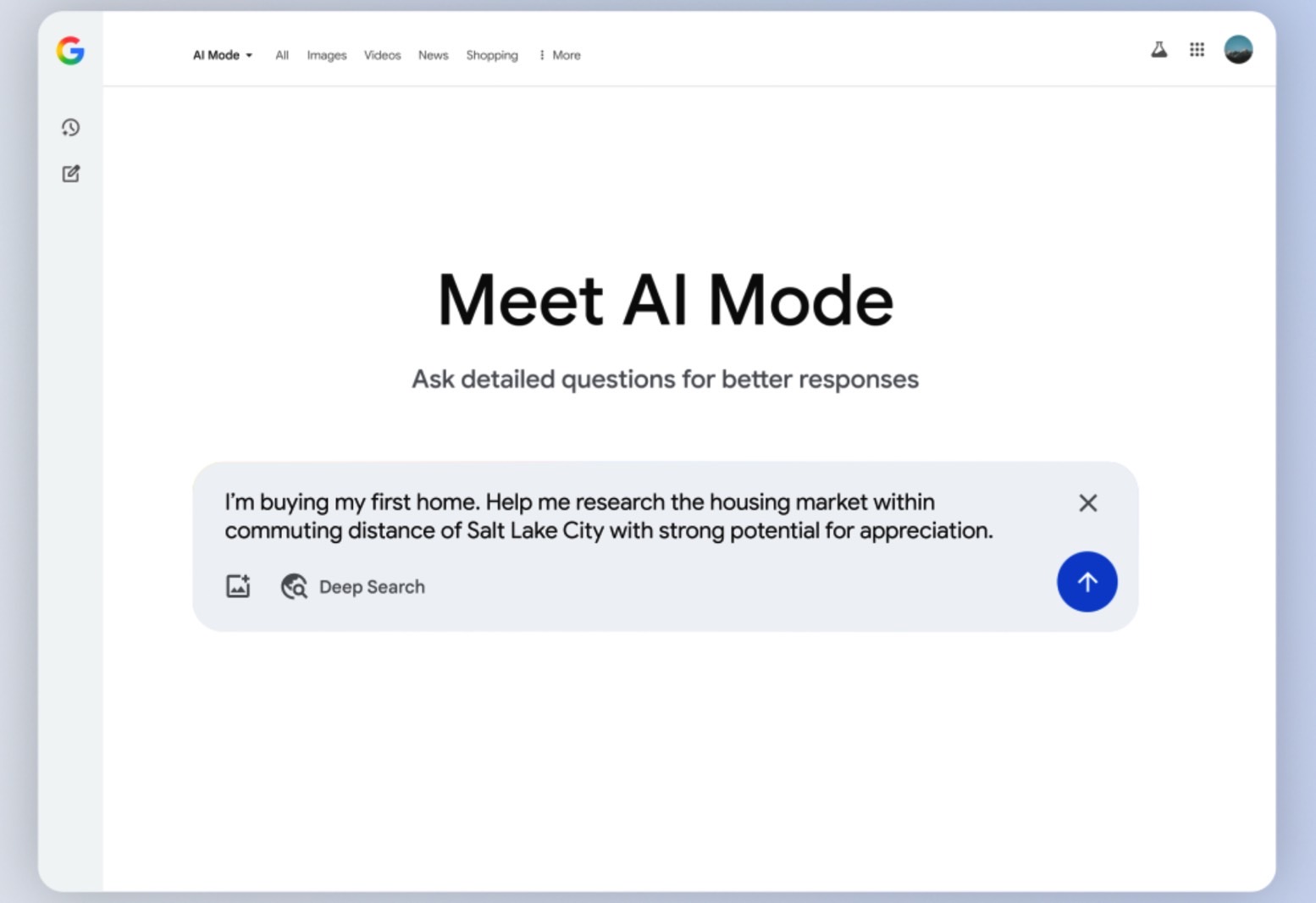
AI Mode was one of the highlights of Google I/O 2025, with Google showing off a few exciting AI capabilities coming to Google Search that are entirely optional. As a reminder, AI Mode is a separate tab in Google Search that you can choose to use, unlike the AI Overviews that appear at the top of Search whether you like it or not.

AI Mode is also a lot more sophisticated than AI Overviews, and probably more reliable. It’s the kind of AI experience in search some users might appreciate. Google showed off advanced Gemini support for AI Mode, a new Deep Search feature, and shopping-centric tools at I/O 2025.

Some of these features are starting to roll out to Google Search users in the US, but not all of them are free. It might sound strange to hear that you have to pay for certain Search functionality, but if you want the full AI Mode experience, you’ll need a premium Gemini subscription.

Gemini 2.5 Pro in AI Mode

Gemini 2.5 Pro is Google’s best AI model. You can use it in the standalone Gemini app for all kinds of tasks. Starting this week, it’s also available in AI Mode.

Tech. Entertainment. Science. Your inbox.

Sign up for the most interesting tech & entertainment news out there.

Tap the AI Mode tab in Google Search, and you’ll find a dropdown menu that lets you select Google’s top model. Gemini in Search can help with questions similar to those you might ask in the standalone app. That said, the app might still be better for advanced reasoning, math, and coding tasks.

Still, there may be complex questions you ask through Search that benefit from a better AI model.

Gemini AI Pro and Ultra subscribers can access Gemini 2.5 Pro in AI Mode, as long as they’ve opted into the AI Mode experiment in Labs.

Deep Search in AI Mode

We’re used to seeing deep research features in AI models like ChatGPT and Gemini, so Google is bringing a similar tool to AI Mode in Search. It’s called Deep Search, and it’s powered by Gemini 2.5 Pro.

With Deep Search, you can assign Google complex tasks, and the AI will respond after running hundreds of searches at once. It reasons through them to deliver a more detailed report than a typical search result would offer.

An example of a Deep Search analysis in Google Search. Image source: Google

Deep Search is also available to paying Gemini AI Pro and Ultra users.

Calling businesses with AI Mode

Even before the days of ChatGPT and Gemini, Google let Assistant call businesses for you. In the AI era, that kind of task feels even more fitting for tools with agent-like capabilities, including Google Search.

That means the AI can act on your behalf, like calling businesses to ask questions.

Google Search will call any business you want and ask questions for you, no phone call required. In its blog post, Google used a search for pet groomers as an example.

A summary of an AI call Google Search made for you. Image source: Google

The AI finds local businesses and offers a “Have AI check pricing” button. Tap it, and the AI will place a call. It then returns a summary and an email with everything you need to know.

It’s unclear whether businesses will enjoy talking to AI or if they’ll start using their own bots to handle a surge in calls. But Google gives businesses a way to opt out, so they aren’t overwhelmed by calls from Search (here’s the support document for that).

AI calling results will be emailed to you after the call. Image source: Google

The AI calling feature is rolling out now to Google Search users in the US. Unlike some of the other features, AI calling is free to use, though AI Pro and Ultra subscribers will get higher usage limits.

Source

Posted on

iPhone 17 Pro renders highlight stunning new orange color

A new report from Majin Bu provides us with our first credible look at the potential color options for Apple’s iPhone 17 Pro. Bu sourced his report from accessory manufacturers who, historically speaking, have a strong track record when it comes to relaying iPhone colorways. Because there’s a business advantage to launching accessories early, manufacturers typically make a concerted effort to obtain iPhone color and size details from Apple’s supply chain months in advance. Put simply, rumors from accessory manufacturers are, more often than not, reliable.

All that said, let’s dive in. According to the report, Apple’s iPhone 17 Pro will be available in four distinct colors: black, dark blue, silver, and a brand new orange color.

iPhone 17 Pro color options Image source: Majin Bu

Based on the mockup provided by Bu above, the shade of orange is loud and vibrant, and is somewhat reminiscent of the Action button on the Apple Watch Ultra. It’s worth noting that a separate report claims that we might see a titanium gray as a fifth iPhone 17 Pro color option.

Not surprisingly, the iPhone 17 Pro color options are bolder than what we’ll likely see on the entry-level iPhone 17 lineup. As we covered earlier this week, the entry-level iPhone 17 will be available in black, white, steel gray, green, purple, and blue. Note that the green, purple, and blue hues will likely be on the lighter side.

Tech. Entertainment. Science. Your inbox.

Sign up for the most interesting tech & entertainment news out there.

Incidentally, Apple historically uses its iPhone Pro lineup to introduce a completely unique color. With the iPhone 11 Pro, for example, Apple introduced a Midnight Green option which, in my personal opinion, would be nice to see Apple bring back. With the iPhone 17 Pro, that unique color is orange.

iPhone 17 Air colors

Of course, Apple’s iPhone lineup this year will be unique insofar as we’ll reportedly see a brand new model — the iPhone 17 Air. As we’ve reported over the past few weeks, the iPhone 17 Air is poised to be the thinnest iPhone to date, with a thickness of just 5.5mm. To give you a sense of how thin that is, note that the thinnest iPhone to date is the iPhone 6, which measured in at just 6.9mm thick. At the same time, it’s worth pointing out that the iPhone 17 Air will be thicker around the camera bump.

Weight aside, the iPhone 17 Air will naturally be impressively light as well. Rumor has it that it will weigh just 145 grams. To give you a sense of how light that is, the iPhone SE 2 weighs just 145 grams. All told, the iPhone 17 Air will be positioned as a device for users who want the processing power of an iPhone Pro without the heft or bulk. In a way, the iPhone 17 Air will fill a gap that’s been open ever since Apple opted to do away with its iPhone mini line.

Specs wise, the iPhone 17 Air will reportedly ship with Apple’s next-gen A19 processor, and will boast a 6.6-inch 120Hz ProMotion display with 12GB of RAM. As for the colors, we’re hearing Apple will offer black, white, light blue, and light gold colorways.

iPhone 17 release window

Apple hasn’t yet officially announced when it’s going to unveil its iPhone 17 lineup. Still, there’s a growing consensus that the company’s iPhone event will take place during the week of September 8. And seeing as how most iPhone keynotes are either on Tuesday or Wednesday, it’s a safe bet Apple will introduce its iPhone 17 lineup on either September 9 or 10.

From there, it’s somewhat trivial to figure out when the iPhone will arrive in stores. Historically, Apple announces its new iPhone lineup early in the week, with pre-sales opening up on the following Friday. The official release then typically happens one week after that. In other words, there’s a strong chance that Apple’s iPhone 17 lineup will hit stores on Friday, September 19.

Lastly, as a quick recap, Apple’s anticipated iPhone 17 lineup will reportedly feature four distinct models. You’ll have the regular iPhone 17, the aforementioned iPhone 17 Air, the iPhone 17 Pro, and the iPhone 17 Pro Max. The entry-level iPhone 17 and iPhone 17 Pro will reportedly both boast a display of 6.3 inches. The iPhone 17 Air will boast a 6.6-inch display while the gargantuan iPhone 17 Pro Max will feature a 6.9-inch display.

Source

Posted on

Meta used AI to make faster-curing, lower-carbon concrete

Using AI as a companion to browse the web or generate lifelike images and videos are a few of the features some people are starting to take for granted. Lately, I almost always search the web with AI chatbots like ChatGPT or Gemini in tow. I even use AI chatbots for information when watching certain shows or visiting museums.

But AI can do so much more than providing relatively reliable assistance (remember, AI can make mistakes); it can actually help make breakthrough discoveries.

We have seen plenty of examples over the past few months. Some researchers used AI to find a potential cure for blindness. Others used AI to develop rare-earth-free magnets that might be used in electric cars in the future.

The latest innovation in which AI played a major role concerns concrete. An AI model helped researchers create recipes for lower-carbon, faster-curing concrete, and they’ve actually started using it in a real-life project.

Tech. Entertainment. Science. Your inbox.

Sign up for the most interesting tech & entertainment news out there.

The best part is that the breakthrough doesn’t come from a construction company or a university studying, though such groups were also involved. It’s Meta, the giant social media company which is speeding towards AI superintelligence and throwing mountains of cash at AI researchers, that made the faster-curing, more eco-friendly concrete.

Components for concrete mixes. Image source: Meta

I wouldn’t blame you for not trusting Meta AI. The years of Facebook toxicity can’t be forgotten despite the name change. Trusting Meta with personal data in the age of AI is something I’m not ready for, and we’ve seen several examples of Meta AI mishaps already.

But Meta is marching forward with its AI plans, and that involves building massive data centers for Meta AI. It also means worrying about energy use and the carbon footprint associated with Meta AI and its social media apps. Taking Meta’s net-zero emissions for 2030 into account, along with the fact that concrete is responsible for about 8% of global CO2 emissions, and the idea of a software company working on lower-carbon, faster-curing concrete doesn’t sound quite as odd.

If anything, using AI to make faster-curing concrete that’s more friendly to the environment than traditional methods might be the best marketing tool for promoting Meta AI. And Meta isn’t keeping the AI tech to make lower-carbon, faster-curing concrete a secret. Anyone can use it to come up with similar recipes for other types of construction work.

The AI tech used to create faster-curing, lower-carbon concrete. Image source: Meta

Meta developed an open-source AI tool that uses multi-objective Bayesian optimization algorithms running on Meta’s BoTorch and Ax frameworks to create concrete recipes. The AI is capable of creating a recipe for a concrete mix and predicting its strength.

Lab tests then follow to see whether the cement mix cures as predicted. The AI uses the data to refine its recipe for concrete that should perform even better. Rinse and repeat, and you can obtain a new type of concrete that uses more low-carbon supplementary cementitious materials (SCMs) without impacting its strength.

A recipe for concrete. Image source: Meta

The use of AI speeds up the development process. Humans could always come up with similar recipes, but testing would take much longer. Meta worked with Amrize, one of the world’s largest cement manufacturers and concrete suppliers, on the project. Researchers from the University of Illinois Urbana-Champaign (U of I) were also involved.

Real-life applications

Concrete strength comparison for existing mixes and the AI recipes. Image source: Meta

After coming up with a recipe for lower-carbon, faster-curing concrete that met its needs, Meta went on to use it for the concrete slab in one of the data center buildings at Meta’s Rosemount, MN, data center project.

“Formal tests show that the team exceeded all the technical requirements while achieving good workability and finish performance required for the application,” Meta writes in the blog post, which is easily one of the most exciting things Meta has ever shared on its blog. The post also contains links to the open-source AI model used for developing sustainable concrete and more support literature. Check out the video about the project below:

Source

Posted on

NCSC exposes Fancy Bear’s Authentic Antics malware attacks

The UK’s National Cyber Security Centre (NCSC) has issued a formal notice attributing a series of hostile cyber attacks using a variety of malware dubbed Authentic Antics to Russian-state operated advanced persistent threat (APT) group Fancy Bear.

Authentic Antics is designed to steal login credentials and tokens for its victims email accounts, allowing Russian cyber spies to establish long-term access to their surveillance targets.

Fancy Bear, which goes by APT28 in some threat matrices, is operated as part of the 85th Main Special Service Centre, Military Unit 26165, and ultimately answers to the GRU, a successor intelligence agency to the KGB of Cold War legend.

“The use of Authentic Antics malware demonstrates the persistence and sophistication of the cyber threat posed by Russia’s GRU,” said NCSC operations director Paul Chichester.

“NCSC investigations of GRU activities over many years show that network defenders should not take this threat for granted and that monitoring and protective action is essential for defending systems. 

“We will continue to call out Russian malicious cyber activity and strongly encourage network defenders to follow advice available on the NCSC website,” said Chichester.

Working with NCC Group, which provided samples of Authentic Antics, the NCSC’s experts have conducted a lengthy analysis of the malware – this can be read in full here – which blends in with everyday, legitimate activity to enable Fancy Bear to maintain persistent endpoint access to Microsoft cloud accounts.

The malware has been widely used since about 2023, and runs within Microsoft Outlook processes where it displays malicious login prompts to its target in order to get them to enter their credentials, which are then intercepted along with OAuth 2.0 authentication tokens for various applications, likely including Exchange Online, SharePoint and OneDrive.

The NCSC said it had been cleverly designed to exploit growing familiarity among end-users with genuine Microsoft authentication prompts, including generating prompts from within Outlook processes, and ensuring they do not display too frequently.

Authentic Antics does not communicate with any command and control (C2) infrastructure and cannot receive additional tasking. It talks only to legitimate services, meaning that when it is active it is much harder to pick out – for example it exfiltrates its victims’ data by sending emails from the compromised account to an email address controlled by Fancy Bear – these sent emails do not show up in the victim’s sent items folder.

The agency said that “significant thought” had gone into Authentic Antics’ design to ensure it blends in with normal activity. Among other things, its presence on disk is limited, it stores data in Outlook-specific registry locations, and its codebase includes genuine Microsoft authentication library code as an obfuscation method.

“It is clear the intention of the malware is to gain persistent access to victim email accounts. This highlights the benefit of monitoring your tenant for suspicious logins,” said the NCSC’s analysts.

Sanctions

The attribution comes alongside the announcement of wider sanctions against three GRU Units – including Unit 26165 – and 18 officers and agents who allegedly run cyber and information interference operations in support of Russia’s geopolitical and military objectives.

Among those sanctioned are GRU military intelligence officers who targeted and surveilled the device of Yulia Skripal, daughter of double agent Sergei Skripal, prior to the infamously botched Novichok poisoning attempt against them in 2018 that claimed the life of a British national, Dawn Sturgess.

“GRU spies are running a campaign to destabilise Europe, undermine Ukraine’s sovereignty and threaten the safety of British citizens,” said foreign secretary David Lammy.

“The Kremlin should be in no doubt: we see what they are trying to do in the shadows and we won’t tolerate it. That’s why we’re taking decisive action with sanctions against Russian spies.

Speaking in support of the UK’s actions, a Nato spokesperson condemned Russia’s ongoing malicious cyber activities, noting other attributions made to Fancy Bear, which earlier this year was called out for targeting Western logistics and technology organisations involved in supporting the defence of Ukraine.

“We call on Russia to stop its destabilising cyber and hybrid activities. These activities demonstrate Russia’s disregard for the United Nations framework for responsible state behaviour in cyberspace, which Russia claims to uphold,” a spokesperson said.

“Russia’s actions will not deter Allies’ support to Ukraine, including cyber assistance through the Tallinn Mechanism and IT capability coalition. We will continue to use the lessons learned from the war against Ukraine in countering Russian malicious cyber activity.”

Source