Posted on

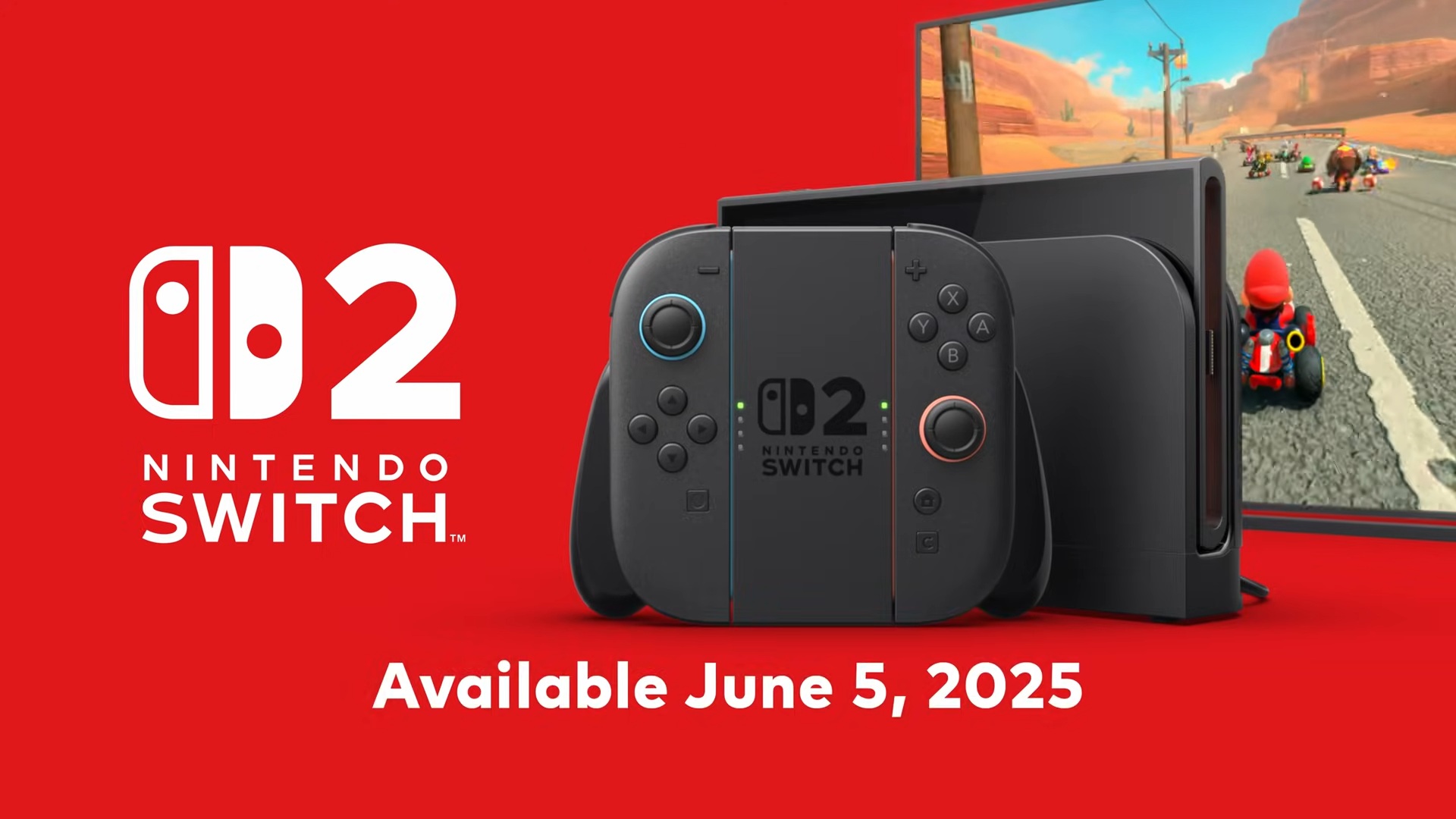
Nintendo Switch 2 preorders will now start April 24 for

We’ll always remember the Nintendo Switch 2 launch event because it coincided with Trump’s new tariffs announcements that would continue to escalate in the weeks following the Switch 2 event.

Just as Nintendo revealed the Switch 2 would start at $449.99 in the US, some $50 more expensive than expected, almost the entire world got hit with a round of tariffs that made American Switch 2 fans wonder how much the console would cost.

All the countries in Nintendo’s Switch 2 supply chain were hit with tariffs, with China being hit the hardest. China’s tariffs continued climbing in the weeks after the Switch 2 release and stayed in place a few days ago when Trump announced a 90-day pause on tariffs targeting all other markets.

Nintendo paused the Switch 2 preorders for the US and Canada soon after those first Trump tariffs were announced, and made no changes to the price.

Tech. Entertainment. Science. Your inbox.

Sign up for the most interesting tech & entertainment news out there.

By signing up, I agree to the Terms of Use and have reviewed the Privacy Notice.

Two weeks later, gamers looking to preorder the new handheld should be happy to hear that Nintendo decided to stick with the $449.99 starting price for the Switch 2. Nintendo also announced a new preorder date for the console on Friday, April 24th.

Nintendo revealed the new Switch 2 preorder details in a blog post, explaining that some of the prices it announced during the early April launch event will remain unchanged:

Retail pre-orders for Nintendo Switch 2 will begin on April 24, 2025. At launch, the price for Nintendo Switch 2 in the US will remain as announced on April 2 at $449.99, and the Nintendo Switch 2 + Mario Kart World bundle will remain as announced at $499.99. Pricing for both physical and digital versions of Mario Kart World ($79.99) and Donkey Kong Bananza ($69.99) will also remain unchanged at launch.

However, Nintendo will increase prices for Nintendo Switch 2 accessories compared to those announced on April 2nd, “due to changes in market conditions.” 

Other price hikes, which Nintendo cavalierly calls “adjustments,” might impact other products in the future:

Other adjustments to the price of any Nintendo product are also possible in the future depending on market conditions.

Nintendo also apologized for the Switch 2 preorder delay and said the console will ship on the date announced during the launch event: June 5th.

Finally, Nintendo listed the MSRP (as of April 18th, 2025) for the first round of Switch 2 products and accessories as follows. The list already includes price hikes of around $5 for some accessories:

  • Nintendo Switch 2 – $449.99
  • Nintendo Switch 2 + Mario Kart World Bundle – $499.99
  • Mario Kart World – $79.99
  • Donkey Kong Bananza – $69.99
  • Nintendo Switch 2 Pro Controller – $84.99
  • Joy-Con 2 Pair – $94.99
  • Joy-Con 2 Charging Grip – $39.99
  • Joy-Con 2 Strap – $13.99
  • Joy-Con 2 Wheel Set – $24.99
  • Nintendo Switch 2 Camera – $54.99
  • Nintendo Switch 2 Dock Set – $119.99
  • Nintendo Switch 2 Carrying Case & Screen Protector – $39.99
  • Nintendo Switch 2 All-In-One Carrying Case – $84.99
  • Nintendo Switch 2 AC Adapter – $34.99
  • Samsung microSD Express Card – 256GB for Nintendo Switch 2 – $59.99
Source

Posted on

Gemini 2.5 Flash is Google’s cheapest thinking AI: What you

After launching the Gemini 2.5 Pro model a few weeks ago, Google has a new AI product ready for testing. Gemini 2.5 Flash is supposed to bring more affordable AI reasoning to tasks that require more thinking.

Google lets users specify a budget and turn reasoning on and off depending on the task. Not everything you throw at the AI will require reasoning, so you don’t have to overspend by having the AI “think” when it doesn’t need to.

However, Gemini 2.5 Flash isn’t an AI product targeting regular users. Instead, Gemini 2.5 Flash is a new tool that developers and enterprise customers can use for work. Gemini 2.5 Flash is available in preview via the Gemini API in Google AI Studio and Vertex AI.

Google says Gemini 2.5 Flash is quite formidable. The AI is Google’s lowest latency and most cost-efficient thinking model. That means it’s faster and cheaper than other models.

Tech. Entertainment. Science. Your inbox.

Sign up for the most interesting tech & entertainment news out there.

By signing up, I agree to the Terms of Use and have reviewed the Privacy Notice.

Gemini 2.5 Flash delivers a “major upgrade in reasoning abilities,” Google said in a blog post. The new AI is Google’s “first fully hybrid reasoning model,” which is how Google describes AI models where developers can turn reasoning on or off.

Interestingly, developers can set up thinking budgets so the AI can perform thinking tasks when they’re required. However, the AI will not consume the entire budget during a single reasoning task if that task doesn’t need it. The model is trained to know how long to think for prompts, so it’ll decide beforehand how much reasoning is required based on the perceived complexity.

Google offers a few prompt examples that explain how much reasoning Gemini 2.5 Flash will perform. For example, asking it to translate a word into a different language requires little reasoning. The same goes for answering questions like “How many provinces does Canada have?”

But more complex math and physics problems will require medium to high reasoning. The AI will spend more time on a prompt, and you’ll pay more money to get your answers.

Developers can set a thinking budget from 0 to 24576 tokens in the API or use a slider in Google AI Studio and Vertex AI.

As for the cost, Google says Gemini 2.5 Flash costs $0.15 per million tokens (input) and $0.60 per million tokens (output). If reasoning is involved for the output, the price goes up sixfold, up to $3.50 per million tokens. These costs make Gemini 2.5 Flash incredibly competitive, as seen in the table at the end of this post.

With thinking turned off, the Gemini 2.5 Flash will be at least as fast as the Gemini 2.0 Flash model.

The speed and competitive pricing for reasoning tasks aren’t Gemini 2.5 Flash’s only advantages. The new model also does very well in benchmarks. According to Google, Gemini 2.5 Flash is second only to Gemini 2.5 Pro in Hard Prompts in LMArena.

In Humanity’s Last Exam, Gemini 2.5 Flash outscored all recent models except ChatGPT o4-mini, which was launched earlier this week. The image below shows more benchmark results.

Gemini 2.5 Flash price and benchmarks compared to other high-end AI models. Image source: Google

Source

Posted on

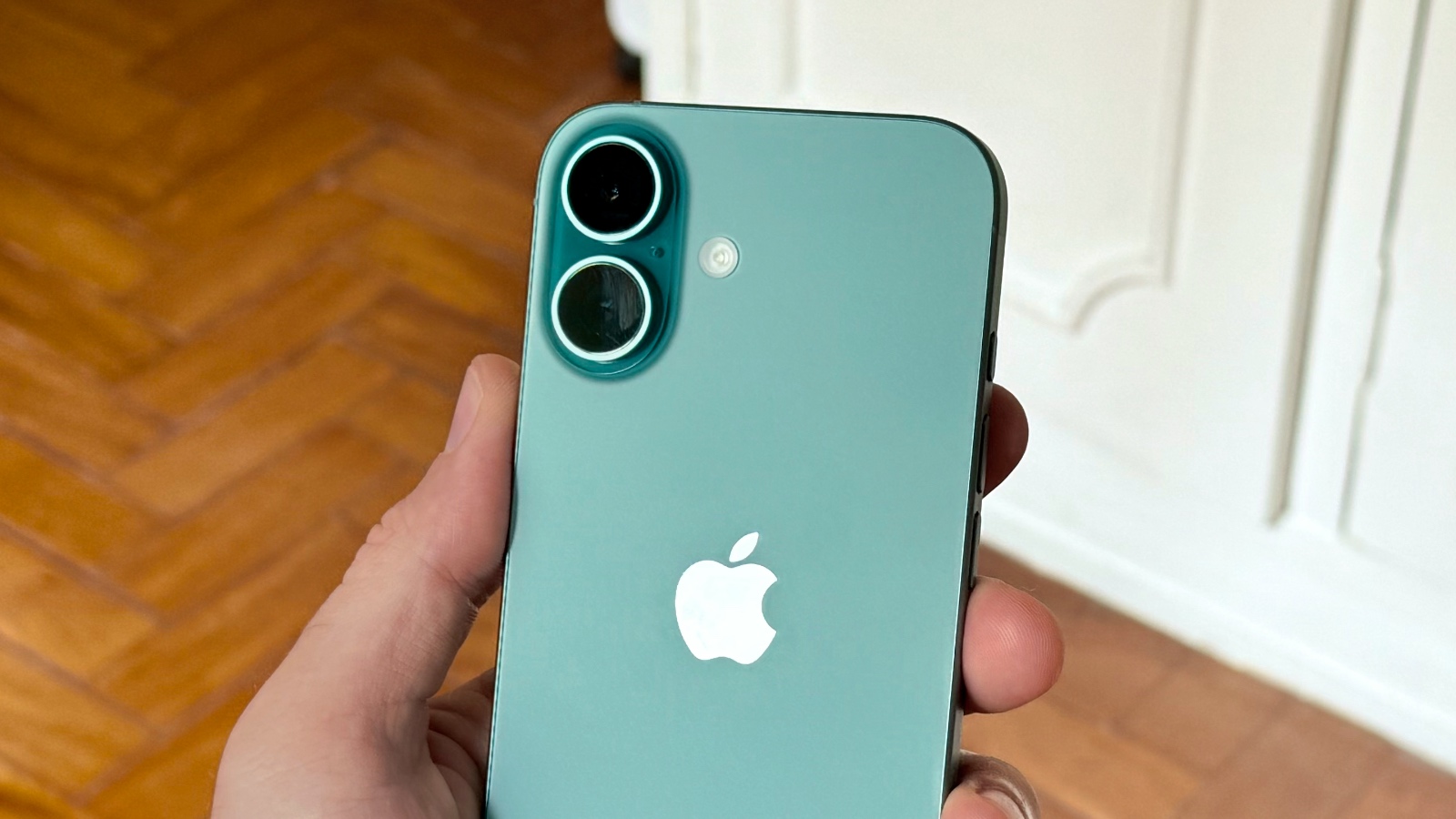
New Apple invention might finally stop lens flare in iPhone

One of the most common complaints among iPhone users is lens flare when taking photos. When the image features a bright light source like the Sun in the background, it’s likely that users will see some lens flare in their pictures.

Last year, leaker yeux1122 mentioned that Apple was testing a new camera lens coating to prevent iPhone lens flare. However, when the iPhone 16 Pro became available, we realized the issue wasn’t fixed, and Apple hadn’t included this miraculous fix.

Still, Patently Apple might offer some hope, as the US Patent Office recently published a patent application for Apple’s potential fix for its longtime lens flare problem.

According to the patent, Apple may use optically absorptive gratings in its camera modules. These gratings are ultra-thin layers with tiny shapes that absorb light.

Tech. Entertainment. Science. Your inbox.

Sign up for the most interesting tech & entertainment news out there.

By signing up, I agree to the Terms of Use and have reviewed the Privacy Notice.

The grating blocks the “bad” light, so your iPhone only captures the “good” light. This could allow you to capture a beautiful picture of the Moon without any lens flare. As the patent explains, the tiny shapes can be arranged in straight lines or in a zigzag pattern, all built on top of a thin base.

This could make the next iPhone camera smarter and sharper, with photos looking clearer and better even in tricky lighting.

However, it’s still unclear when this feature will arrive. So far, the camera upgrades expected for the iPhone 17 Pro focus on resolution and functions, but not on this specific fix.

For example, BGR reported that Apple is planning a 48MP telephoto camera with a smaller zoom in 48MP but a 7x 12MP zoom. There are also rumors that Apple will allow users to record in 8K for the first time, and the front-facing camera is expected to get a 24MP lens.

Source

Posted on

UK class action sets stage for Google showdown

UK based legal professor Or Brook has filed a class action against Google worth approximately £5bn in the UK Competition Appeal Tribunal (CAT). The class action, brought on behalf of hundreds of thousands of UK-based organisations that used Google’s search advertising services, accuses Google of abusing its near-total dominance in the general search market to drive up prices.

This latest class action follows on from one filed by Nikki Stopford, co-founder of Consumer Voice, and legal firm Hausfeld & Co LLP, and appears to focus on the Google’s anti-competitiveness.

Stopford’s case looks at the cost to consumers due to increased advertising costs businesses that use Google Search pay as a result of anti-competitive practices. In November last year, Google’s attempt to throw out Stopford’s case was dismissed, paving the way for the case to be heard at the CAT.

Along with Stopford’s case, in January,  the Competition and Markets Authority (CMA) began an investigation seeking to determine if Google has strategic market status in search and search advertising activities, and whether these services are delivering good outcomes for people and businesses in the UK.

The Brook case appears to be looking specifically at the cost to business arising from Google business practices that stipulate its Chrome browser and search engine are configured as the default options on Android devices and Google’s payments to Apple to ensure Google search is default on the Safari browser.

The class action also covers Google’s Search Engine Management Platform (SA360). Brook alleges that this offers better functionality and more features regarding Google’s own advertising offering than that of its competitors.

Damien Geradin, founding partner of Geradin Partners, the legal firm representing Brook, said: “This is the first claim of its kind in the UK that seeks redress for the harm caused specifically to businesses who have been forced to pay inflated prices for advertising space on Google pages.”

In the claim, Brook argues that Google has been shutting out competition in the general search and search advertising markets.

The claim argues that Google’s conduct has prevented competitors in the general search market from distributing their own search engines, which has enabled Google to maintain its dominance, leading to restricted competition in general search. Brook contests that Google has ensured that its own search platform is the only viable means of advertising to the vast majority of consumers, and ensured its dominance in search advertising.

She said: “Today, UK businesses and organisations, big or small, have almost no choice but to use Google ads to advertise their products and services. Regulators around the world have described Google as a monopoly and securing a spot on Google’s top pages is essential for visibility.

“Google has been leveraging its dominance in the general search and search advertising market to overcharge advertisers. This class action is about holding Google accountable for its unlawful practices and seeking compensation on behalf of UK advertisers who have been overcharged.”

On top of the class actions, Google is also being investigated by the CMA, which is looking at whether its Play Store requires app developers to sign up to unfair terms and conditions as a condition of distributing their apps.

Source

Posted on

Google just admitted how afraid it is of Apple’s iPhone

The iPhone 16e was just released in March, but this was apparently enough for Apple to become the world’s top smartphone vendor in the first quarter. The iPhone 16e is credited with the win for Apple, which means the affordable new iPhone 16 version is quite popular with buyers. 

I saw this coming a mile away. I told you how awesome the iPhone 16e would be all the way back when it was just a rumored device we all referred to as the iPhone SE 4. Sure, it’s more expensive than we thought, starting at $599, but it’s still a great deal. You get cutting-edge specs, tremendous battery life, an all-screen design, and Apple Intelligence. 

But you don’t have to listen to me or the quarterly smartphone sales comparisons. Google just told us how amazing the iPhone 16e is by doing something I didn’t see coming. Google posted a “Pixel 9a vs. iPhone 16e” comparison page on its website where it sells Pixel phones. 

Google is afraid. Very afraid.

Tech. Entertainment. Science. Your inbox.

Sign up for the most interesting tech & entertainment news out there.

By signing up, I agree to the Terms of Use and have reviewed the Privacy Notice.

If you’ve been following the iPhone and the Pixel for as long as I have, you know that Google has criticized Apple’s handsets plenty of times, only to then copy Apple’s lead. It happens over and over, and Pixel phones have gotten better and better as a result.

The Pixel 9a is no different. It’s a tremendous mid-range phone, and it’s cheaper than the iPhone 16e, starting at $499 for 128GB of storage. You get Pixel 9 specs, a good camera experience, great battery life, and lots of AI thanks to Google Gemini, which is miles ahead of Apple Intelligence.

Google’s Pixel 9a vs. iPhone 16e comparison page. Image source: Google

The last thing Google should do is draw attention to the iPhone 16e by publishing a Pixel 9a comparison on its site. If you’ve got the customer here, and they’re almost ready to buy new hardware, don’t show them the competition. What if they change their mind and go for the iPhone 16e instead?

Google’s comparison page wants to answer the question: Is the Pixel 9a “the best budget phone out there?”

The answer Google is going for is “yes, the Pixel 9a is the best budget phone,” though Google isn’t exactly impartial:

Obviously, we’re big Pixel fans. So let’s step away from the subjective stuff – like how the Pixel 9a color choices are way more fun and the design is cooler – and look at the facts.

Obviously, Google then puts up a specs comparison that will mostly benefit the Android phone. That’s how these specs comparisons have gone for years. Android vendors usually win them because they’ve been beefing up the specs at a much faster pace than Apple.

Obviously, the specs detail that matters the most, the chips that power the two phones, is absent. The iPhone 16e’s A18 chip will wipe the floor with Google’s Tensor G4.

Obviously, Google also uses the “7 years of security and OS updates with Pixel Drops” category to tell you the Pixel 9a is better. First of all, iPhones don’t get Pixel Drops. Second, that G4 chip will probably have a much tougher time dealing with those Android updates the further we go. Meanwhile, Apple’s iPhone 16e should have no problem running several iOS iterations.

Obviously, Apple’s AI sucks. There’s no question about it. This is Google’s main advantage, and something the comparison is correct to point out. Gemini is simply superior to Apple Intelligence, and I say that as a longtime iPhone owner disappointed in how Apple handled its first year of AI.

Obviously, as a longtime iPhone user, I’d recommend the iPhone 16e over the Pixel 9a time and again to anyone who isn’t loyal to a smartphone brand or mobile operating system. That’s not to say the Pixel 9a is a bad phone. I’d recommend it over other mid-range phones to Android users.

What I’m getting at is that this comparison page should not exist on Google’s page. Not unless Google puts up similar comparisons with other mid-range Android phones that compete against the Pixel 9a. Samsung has a few of those, as does Nothing and virtually every Android vendor under the sun. Otherwise, it just goes to show how afraid Google is of Apple when it shouldn’t be.

Pixel phones are good, mature devices. Google can sell them without comparing them to iPhones. Obviously.

Source

Posted on

Gemini 2.5 Pro, Google’s most powerful AI, is available to

Earlier this month, Anthropic announced a major new AI initiative targeting the education sector. The Claude for Education program includes an AI Learning Mode for students as well as AI tools that the entire faculty can use. Anthropic also announced partnerships with a few educational institutions.

Unsurprisingly, OpenAI didn’t wait long to respond with its own initiative, deciding to make ChatGPT Plus available to students for free for the next two months. Although OpenAI’s initiative is much more limited than Anthropic’s, it made a premium version of ChatGPT available to more students who qualify for AI-for-school deals.

It’s now Google’s turn to try to woo students with AI products, and it’s an offer students can’t and should not refuse, even if they don’t use Gemini as their primary AI companion.

Google is making Gemini Advanced available for free to students, and that includes access to the newly released Gemini 2.5 Pro model and 2TB of storage. The offer is much better than OpenAI’s as it extends through Spring 2026 as long as you subscribe by the end of June.

Tech. Entertainment. Science. Your inbox.

Sign up for the most interesting tech & entertainment news out there.

By signing up, I agree to the Terms of Use and have reviewed the Privacy Notice.

Gemini Advanced (well, Google One) is the equivalent of ChatGPT Plus. For $20/month, you get access to Google’s latest and best models with a big twist. It’s not just AI access that you’re buying; it’s also 2TB of cloud storage that you get each month.

Sign up until June 30th, 2025, and you’ll get free access to the following tools until Spring 2026:

  • Gemini 2.5 Pro – Google’s latest AI model
  • Gemini Live
  • Deep Research
  • Canvas
  • NotebookLM Plus with five times more Audio Overviews (podcasts)
  • Gemini support in Google Docs, Sheets, and Slides
  • Veo 2 (video generation AI)
  • Whisk (image generation AI)
  • 2TB of storage

All you need to do to take advantage of the offer is show your .edu email address during sign-up. That’s how you’ll verify the Gmail address that you’ll use for Gemini Advanced access.

If you already have a paid Gemini subscription (aka, you’re paying for Google One), you can switch to the free offer by canceling the current subscription and signing up for Google’s promo.

Act fast, and you’ll get up to 15 months of Gemini Advanced support for free, which would cost you up to $20/month or up to $300/month otherwise. The offer is incredible.

Again, even if you don’t use generative AI tools that often, or if you like ChatGPT more than Gemini, you still get 2TB of free storage for more than a year. That alone makes Google’s offer that much better than competing promotions.

On that note, you can and should sign up for OpenAI’s free deal, too, even if that only gives you a couple of months of free ChatGPT Plus access. Depending on where you study, you might also get Claude AI for free as part of Anthropic’s partnership with your college.

Source

Posted on

New iPhone 18 report details Apple’s upcoming 2nm A20 chip

Apple’s next iPhone 17 models are expected to be the last to feature a 3nm chip. This technology was first introduced with the iPhone 14 Pro, and Apple has been improving its manufacturing processes. However, it seems the company (and TSMC, of course) is almost ready to move on production to a more complex 2nm technology. Previously, BGR reported that analyst Ming-Chi Kuo predicted that some of the 2026 iPhones will move to TSMC’s 2nm chips, most likely the Pro models.

Prior to that, a Weibo leaker, Mobile Phone Chip Expert, said Apple would not only move to this new chip format but also utilize a new packaging method called Wafer-level Muti-Chip Module.

While these Weibo leakers are usually right half of the time, we were waiting for a proper source to reinforce this rumor. According to Jeff Pu’s note seen by BGR, Cupertino is indeed preparing to adopt the WMCM technology in the 2026 iPhones.

This new tech is responsible for three new enhancements: Increased flexibility, improved efficiency, and better performance. That said, WMCM packaging allows the combination of multiple chips in a package, reduces the chip’s overall size and power consumption, and even improves communication and performance.

Tech. Entertainment. Science. Your inbox.

Sign up for the most interesting tech & entertainment news out there.

By signing up, I agree to the Terms of Use and have reviewed the Privacy Notice.

Pu agrees, “This new packaging technology minimizes overall package height and shrinks overall packaging size volume, which helps expand iPhone battery capacity. To increase AI computing performance, we expect Apple to adopt WMCM packaging, using die bonding technology to bond CPU with DRAM and Wi-Fi at a side-by-side 2.5D layout.”

In addition, Apple is expected to start producing its Wi-Fi and 5G chips internally. The first 5G modem has been available with the iPhone 16e, and the first Wi-Fi chip will likely be available with the new iPhone 17 lineups.

By 2026, Apple will already have improved versions of these chips, making the iPhone even faster and with a better battery life thanks to the seamless integration between hardware and software.

Source

Posted on

London falling behind in 5G mobile experience

A study from connectivity intelligence provider Ookla has revealed the UK’s capital lags behind the country’s large cities across key 5G performance indicators – with the gap widening – and that mobile users in London spend more time in signal not-spots with no service than residents of other UK cities, reflecting lingering coverage gaps indoors and across key transport routes.

As it made its analysis – comparing how London’s 5G performance stood up to other UK cities, including Manchester, Glasgow, Cardiff and Belfast – Ookla emphasised the global importance of London as home to one of the world’s largest and most lucrative service hubs, supporting a “vast” network of finance and technology firms.

Furthermore, it stressed how beyond its strategic time zone and English-language advantage for accessing both American and Asian markets, London’s prosperity has been founded on the availability of world-class infrastructure that facilitates doing business.

Yet the study highlighted how the city’s reputation for international competitiveness has not been matched by the quality of its telecommunications infrastructure. In particular, it has shown how London’s mobile users are experiencing frequent issues using mobile devices indoors, underground and in busy areas.

Ookla regarded London’s underperformance at the lower percentiles of measures like download speeds as particularly notable, as it said this strongly reflected the experience of mobile users in more challenging conditions such as at the network edge, during peak hours or in congested areas. Additionally, the city’s lower consistency score and weaker download and upload speeds were seen as suggesting that Londoners are more likely to encounter poor mobile performance compared with residents of other major UK cities. These problems typically manifest as poor quality of experience in everyday tasks such as web browsing, video streaming and gaming.

Worryingly for the capital city, Ookla observed that what it called London’s “marked underperformance” makes the UK unique in Western European terms – not only are the disparities between its major cities wider, but it’s also unusual for the capital to be the primary laggard.

Specifically, the study found that in the first quarter of 2025, London trailed other UK cities in 5G network consistency – a key indicator of performance at the lower end of the user experience – as well as in median download and upload speeds. Mobile users in London and Belfast experienced the weakest outcomes among UK cities, with median 5G download speeds of approximately 115 Mbps in both cities, significantly behind Glasgow’s 185 Mbps.

The study discovered that the proportion of Londoners spending the majority of their time in locations with no service (0.7%) remained higher than in other UK cities in Q1 2025, but has improved significantly from 3.7% in Q1 2023. This progress, said Ookla, reflected operator investments in network densification through small cells and the ongoing roll-out of mobile coverage across the London Underground which have together enhanced overall network availability in the capital.

Time spent on 2G networks increased, however, across several UK cities over the past year, including Birmingham and Manchester, as the advancement of the 3G sunset in the UK contributed to greater propensity for 2G fallback.

In Q1 2024, Leeds led UK cities in 5G availability, with a 21 percentage-point gap above the national average. Yet the study showed that by Q1 2025, London had taken the lead in 5G availability among major UK cities, and that gap above the national average had narrowed to 13 percentage points. This trend, said the analyst, highlighted progress in 5G network expansion in smaller UK towns and rural areas in recent months, which has moved at a faster pace than coverage improvements in larger cities.

Overall, Ookla measurements showed median 5G download speeds fell by more than 7% on average across major UK cities between Q1 2024 and Q1 2025, likely reflecting the impact of shifting network load from older technologies onto 5G, which contributed to broader improvements in overall mobile network performance in most UK cities in the same period.

Source

Posted on

Collaboration is the best defence against nation-state threats

Businesses are under attack from all corners of the globe and while many organisations may think that nation-state threat actors would never target or be interested in them, the reality is that no-one is exempt from security threats.

Security leaders need to ensure they are staying up to speed on the latest threat intelligence, this can either be through an in-house capability or via third-party threat intel providers. Once they understand the tactics, techniques and procedures (TTPs) deployed by these threat actors, organisations can then ensure they have robust mechanisms in place to digest and act on this information to implement appropriate controls.

Organisational culture plays a key role in ensuring everyone is aware of the threats and risks posed to the business. It is vital that leaders educate users on what the most prevalent threats may look like and how to respond, this is a primary defence to protecting their business.

Social engineering remains one of the most widely used methods of attack and so implementing processes that are resistant to individual compromise is key. Using phishing resistant authentication methods, ensuring strict identity governance and control, and having a well-tested incident response capability are all crucial steps to preventing and mitigating these types of attacks.

Unfortunately, securing your own organisation is not enough and historically nation-state threat actors have taken advantage of weak third-party suppliers and supply chain governance. Having strong supply chain governance and assurance is now one of the top trends across industries and it’s critical businesses understand the dependencies and access that suppliers have.

If prevention fails, lateral movement post-compromise is one of the first actions threat actors will attempt and so endpoint detection and response, and zero-trust solutions that can prevent and detect unauthorised access are also vital.

In 2023, 1.9 billion session cookies were stolen from Fortune 1000 employees. With the session token, attackers are bypassing MFA and so it is much harder to detect and respond. Having solutions  in place as part of a zero-trust architecture to detect session token replay attempts can stop these attacks and alert to possible credential or endpoint compromise.

Ultimately, collaboration and partnership across organisations and industry will help organisations understand these threats, the risks posed by nation-state actors and more importantly allow them to work together to prevent them.

Stephen McDermid is EMEA CSO at Okta  

Source

Posted on

Tariff turmoil is making supply chain security riskier

Cyber security remained the most pressing challenge facing those in supply chain management roles during the first three months of 2025, but since the inauguration of Donald Trump in January, uncertainty over the president’s approach to tariffs has caused chaos for supply chains not just in the US, but around the world, and these two areas of risk are closely entwined.

This is according to a report from cyber and risk management consultancy West Monroe, which found that while security remains top of mind for 23% of respondents to a recent polling exercise, the impact of tariffs has surged to become the top issue for 20%, in a matter of weeks edging out factors such as geopolitical tension, material costs, the climate crisis and labour costs.

Although its fieldwork was conducted in March, prior to Trump’s so-called Liberation Day tariff announcement, West Monroe’s data shows that during Q1, a significant number of organisations in the US started making changes to their supply chains in advance.

A total of 58% said they altered their product, materials or sourcing mix, 56% altered their transportation mix, 45% altered their production schedule, 31% updated their pricing to pass increased costs to customers, and 28% altered their geographic presence. “I don’t think these are necessarily quick changes to make, but there is cyber risk if and when those changes are made,” said Christina Powers, cyber security partner at West Monroe.

Broadly, she said the need to move quickly to replace lost revenues, shifts in the supplier ecosystem and other impacts arising from the tariffs may create gaps in best practice when it comes to supply chain management.

“For example, if you’re starting to work with a different supplier – maybe they were already on your list but they weren’t a tier one supplier, you’re tapping into tier two suppliers – so maybe they went through less due diligence and less scrutiny when you were initially onboarding them,” said Powers.

“Or if you’re looking to change suppliers now, there could be a little more of a rushed diligence process being done to try to make that change more quickly,” she said. “There could be less visibility into what potential access these companies may have. From another angle, if you’re not working with a familiar contact, or not working with familiar processes, there’s a higher risk of things like impersonation attacks, whether or not that’s for financial gain or to get access to sensitive data.”

Finally, with goods potentially priced higher thanks to the tariffs, some organisations may also look to offset costs in rather more creative ways than simply passing them onto their customers. In some instances, however ill-advised this may be, this could see IT and cyber security budgets taking a hit.

“There is a risk around cyber security which is often viewed as a cost centre,” said Powers. “It is focused on value preservation and risk reduction, but it’s not necessarily value creation per se. So, there could be pushes to offset some of what organisations are having to deal with.”

But the story doesn’t end here, she said, for there are other ways in which cyber security and tariffs are coupled together.

“With a lot of the uncertainty that’s happening right now, there’s a very volatile market,” she said. “From a cyber security perspective, that could lead to incentives for individuals or groups or nation-states to look to exploit vulnerabilities or go after certain companies.

“You may see that nations that were historically friendly [to the US] have different feelings now, so there could be an increase in exploitation.

“On the data side, there could be an increase in potential espionage looking for trade secrets, intellectual property and things of that nature,” said Powers. “There are some Chinese manufacturers exploiting luxury brands and where their goods are being made, and what it takes to produce them.”

Takeaways for cyber leaders

If there’s a core message for security leaders to hold onto during this time of intense economic uncertainty and volatility, it would be not to allow the organisation to lose focus on the integrity of its supply chain arrangements.

“Now is the time to be more vigilant, not only to hold the line, but actually to increase supply chain scrutiny from a cyber perspective, because there is so much uncertainty, change, volatility and, I think, anger associated with this,” said Powers.

Source