Posted on

Hyundai Revealed Boston Dynamics’ Next-Gen Humanoid Robots

Artificial intelligence is one of the most important tech innovations of the decade, with most consumer electronics companies working on new AI features for their products, from chatbots to devices with built-in AI capabilities. These developments will lead to smarter AI models that power more advanced gadgets, including smart humanoid robots, many of which already exist as concepts or development prototypes. Several humanoid robots were shown at CES 2026, including Hyundai’s Boston Dynamics Atlas robot. Unlike less mature products that aren’t ready for a public roll-out, Atlas is already in production ahead of its planned deployment in Hyundai factories.

Boston Dynamics explained on stage at CES 2026 that the entire 2026 Atlas production capacity will serve Hyundai. A strategic partnership with Google DeepMind was also announced, to “accelerate technological development for next-generation humanoid robots”, per a Hyundai press release. Google’s DeepMind has been doing its own robotics AI research in recent years, including the mind-blowing Gemini Robotics models that should allow robots to more naturally interact with the world around them. Boston Dynamics says its own Orbit platform will allow the Atlas to share learned skills with other Atlas robots. 

Production of the Atlas robots is set to start at Boston Dynamics’ headquarters with plans in the works for Hyundai and Boston Dynamics to build a factory capable of turning out 30,000 humanoids annually. The commercial version of Atlas, which was shown on stage at CES, will be used for parts sequencing at the Hyundai Motor Group Metaplant America factory in Savannah, Georgia, beginning in 2028.

What the Atlas Robot can do

Hyundai’s subsidiary, Boston Dynamics, brought an Atlas prototype robot (white model) to the 2026 CES show to demo its features, as the commercial version (blue model) wasn’t functional during the announcement. However, the two humanoid robots look almost identical and can perform similar actions. Boston Dynamics explained the Atlas’s head features cameras on all sides for 360-degree vision.

Atlas’s body is also a technological breakthrough. It looks like a human, with a torso, hands, and feet, but has 56 degrees of freedom. This allows the robot to completely rotate its head, torso, hands, and fingers, which means it can interact with nearby objects more efficiently than a person. Atlas can also rise from a folded position, so it will take up less space when not working or performing an action.

Speaking of work, Atlas has a battery life of about four hours, thanks to dual battery packs stored in the torso. When the batteries run low, the robot will swap them autonomously. Also, Atlas is water resistant and can work in a variety of weather conditions. Boston Dynamics said the robot can operate between -4° and 104°Fahrenheit. By 2030, “Atlas will also take on tasks involving repetitive motions, heavy loads, and other complex operations,” according to Hyundai.

Atlas is close to commercial deployment

Atlas stands 6.2 feet tall and weighs 198 pounds. It has a reach of 7.5 feet, hands that feature tactile sensing in the fingers and palms for dexterity, and can lift objects weighing up to 110 pounds. That’s the instant lift capability, however, with sustained weight capacity listed at 66 pounds. And when Atlas is used for heavy lifting, the battery life will be cut in half, according to Boston Dynamics. Atlas can replace those batteries in three minutes, and the used packs can be recharged in an hour and a half. 

Put differently, Boston Dynamics’ Atlas is much closer to commercial deployment than alternatives, including Tesla’s Optimus, the general-purpose humanoid robot that Elon Musk showed off in 2024. That said, Atlas will not be available for general sale anytime soon. The robot will be used in manufacturing environments first, starting with Hyundai factories. Boston Dynamics has not yet announced a price for the robot, so don’t get your hopes up if you’re in the contingent who would happily buy a humanoid AI robot to do chores and help out with tedious or physically demanding tasks.

Source

Posted on

3 Rumored Features Exclusive To Gemini-Powered Siri That Android Desperately

Kenneth Cheung/Getty Images

After Apple’s announcement that Google’s Gemini will power the new Siri, The Information published a report with more in-depth details about this partnership, including some of the future capabilities of Apple’s personal assistant. According to the publication, Apple will be able to include even more features than what it promised at WWDC 2024.

The new Siri will finally stop the “I can’t help you with that” response, and will instead answer factual questions, tell stories, be useful as an agentic assistant, and even offer emotional support. Citing a person familiar with the matter, The Information says Siri will be able to help you book your next bit of travel. Later functionalities, which may be unveiled at the WWDC 2026 keynote, could include the ability to remember past conversations and suggest actions based on application data.

That said, what’s more interesting about these rumored features (as powered by Gemini) is that not even Android users have access to the same, given the current set of Google Gemini capabilities. This provokes a question regarding whether the new Siri expansion’s rumored functions are something Apple produced in-house — or if Google might announce some of them at its next I/O conference to even the score.

These are the rumored differences between Google Gemini and a Gemini-powered Siri

Primakov/Shutterstock

The Information claims Apple won’t use the Gemini brand to promote Siri. While more details about the partnership are unclear, Apple will likely continue to use its Private Cloud Compute to handle cloud features, while sticking with local processes for other tasks. Among the features unavailable to Android users: Google Gemini doesn’t offer emotional support, and The Information indicates that the new Siri might be more helpful on this score than it had been previously.

However, the two biggest rumored incoming features are the ability to remember past conversations, which is currently limited to paid users of Google Gemini, as well as the ability to take action based on app data. While Google is rolling out the ability to remember past conversations to free users on iOS and Android, the assistant still needs to be told to remember something specifically. Apple, on the other hand, will roll out this feature to every Apple Intelligence user.

Finally, the ability to take action based on the data available on an app — such as advising you to head to the airport to pick up a family member due to higher traffic volume than normal — might be a game-changer for Siri fans. This could potentially be based on the new App Intents API that Apple has been offering for the past year, combined with Gemini’s powerful model. That said, we still need to wait for Apple’s official unveiling to understand how a Gemini-powered Siri will differ from the strictly Android equivalent.

Source

Posted on

China And Japan Might Save Apple’s Rising Prices From The

LoveMetaverse/Shutterstock

The AI boom and resulting strained supply chain created by AI companies always needing more RAM and other components is already affecting the industry overall. However, RAM isn’t the only component manufacturers are struggling to get their hands on, as a major Japanese company behind a glass cloth fiber used in iPhone models and other popular devices can’t keep up with demand from Apple, Qualcomm, Nvidia, Google, Amazon, and others.

This glass cloth is made from fine glass fibers to reinforce layers in printed circuit boards(PCBs), and the most prevalent of these fibers are made by Japan’s Nitto Boseki (aka Nittobo). According to Nikkei Asia, Apple was an early adopter of Nittobo’s glass cloth. However, with AI companies requiring untold numbers of high-performance PCBs, this specific glass cloth has reportedly put Apple at risk of a supply shortage.

Nikkei Asia says that industry insiders are calling this strain “one of the biggest bottlenecks for the electronics-making and AI industry for 2026.” Apple has been closely monitoring the situation by not only sending its own staff to Japan to ensure it gets the material, but also reaching out to other companies that might be able to help the company avoid possible launch delays, product shortages, or price hikes.

Apple is battling supply chain constraints

José Adorno/BGR

While Apple under Tim Cook is known for its ability to get everything that it needs from the supply chain without issues (barring rare circumstances like iPhone 14 Pro production issues during the COVID-19 pandemic), the company is now pursuing other options. A person familiar with the situation told Nikkei that Nittobo will not catch up with demand until the second half of 2027.

As a result, Apple is focusing on small Chinese glass fiber makers, like Grace Fabric Technology, to ensure it can deliver a glass cloth of similar quality to Nittobo’s, so it won’t impact the release of new products, like future iPhone models. Nikkei says that Qualcomm is also targeting a similar strategy as Apple, but new supply chain companies are still struggling to develop this glass fiber, as the quality of Nittobo’s fiber gives major tech companies confidence that their products won’t be compromised.

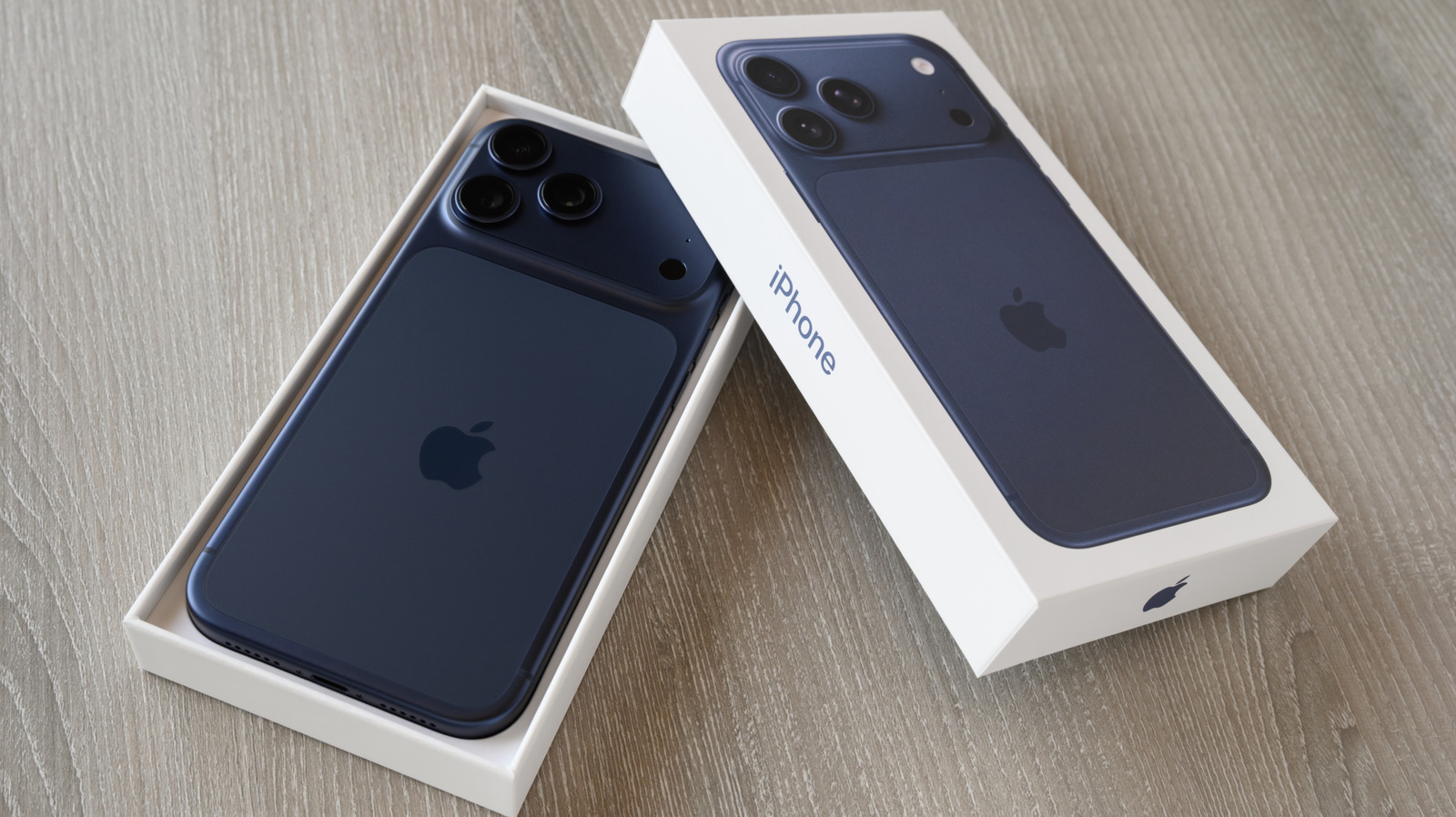
In 2026, Apple is expected to unveil the iPhone 17e in the first quarter of the year. The iPhone 18 Pro, iPhone 18 Pro Max, and the upcoming foldable iPhone are all likely to debut in the second half of 2026. Meanwhile, Apple is still producing millions of iPhone 17 models in the months ahead, so it’s clear that this could become a serious bottleneck in the near future if it’s not resolved.

Source

Posted on

Samsung claims virtualised RAN first, accelerating AI-native, 6G-ready nets

As the world’s mobile operators transition to software-driven, cloud-native architectures, single-server virtualised RAN (vRAN) deployments are becoming essential, and to allow the providers to meet these demands and prepare for future infrastructures, Samsung has completed what it claims is the industry’s first commercial call over vRAN.

The CE giant believes that as operators accelerate their transition to software-driven, flexible architectures while seeking more sustainable infrastructure, the ability to run RAN and AI workloads on fewer, more powerful servers becomes critical. In addition, Samsung sees vRAN as helping to reduce the physical space needed for equipment, improve energy efficiency and make networks more adaptable to changing, evolving needs.

In particular, a single-server deployment can reduce the total cost of ownership for the operator. With single-server vRAN, operators consolidate network elements that historically required multiple servers, allowing for simplified management of complex site configurations.

The vRAN is powered by new Intel Xeon 6 system on chip (SoC) 6700P-B processor series with up to 72 cores, running on a Tier 1 US operator’s live network. The move was completed just months after the first wave of the Intel Xeon 6 SoC becoming commercially available and builds upon Samsung’s previous achievement in 2024, when it completed the industry-first end-to-end call in a lab environment with Intel Xeon 6 SoC.

Samsung said that it has been working to push the boundaries of network virtualisation, offering operators “exceptional” performance and reliability. The new achievement is seen as validating vRAN as an optimal platform for next-generation networks, as well as reinforcing its “leadership in AI-native network technology”, unlocking an AI-driven, 6G future for higher network performance and enhanced efficiency.

In the demo, the cloud-native vRAN with Intel’s latest Xeon SoC ran on a single commercial off-the-shelf (COTS) server from Hewlett Packard Enterprise with a cloud platform from Wind River. The result, said Samsung, was that on a single server of Samsung’s AI-powered vRAN with enhanced processors, operators can consolidate software-driven network elements such as mobile core, radio access, transport and security, which traditionally required multiple servers.

It added that using this vRAN approach not only reduces network power consumption, capital expenditure (Capex) and operational expenditure (Opex), but also facilitates operators’ adoption of AI-RAN and AI services, accelerating their readiness for 6G through its flexibility and automation capability.

Assessing what the move can mean for the mobile industry, Daryl Schoolar, analyst and director at Recon Analytics, said: “This successful first call is an important milestone for the industry. By demonstrating multiple network functions running on next-generation processing technology, Samsung is showing what future networks look like – more cloud-native, more scalable and significantly more efficient.

“This achievement moves the industry beyond theoretical performance gains and into practical, deployable innovation that operators around the world can leverage to modernise their networks, accelerate automation and better support AI-driven use cases.”

June Moon, executive vice-president and head of R&D for networks business at Samsung Electronics, said: “This breakthrough represents a major leap forward in network virtualisation and efficiency. It confirms the real-world readiness of this latest technology under live network conditions, demonstrating that single-server vRAN deployments can [withstand] the stringent performance and reliability standards required by leading carriers.

“We are not only deploying more sustainable, cost-effective networks, but also laying the foundation to fully utilise AI capabilities more easily and prepare for 6G with our end-to-end software-driven network solutions.”

Cristina Rodriguez, vice-president and general manager of network and edge at Intel, added: “With Intel Xeon 6 SoC, featuring higher core counts and built-in acceleration for AI and vRAN, operators get the compute foundation for AI-native, future-ready networks. This collaborative achievement with Samsung, HPE and Wind River enables greater consolidation of RAN and AI workloads, lowering power and total cost while speeding innovation.”

Source

Posted on

‘Dual-channel’ attacks are the new face of BEC in 2026

So-called “dual-channel” attacks using multiple methods of communication either simultaneously or in sequence are becoming more prevalent as digital fraudsters seek out new ways to defeat cyber protections against business email compromise (BEC) scams, according to data from security services supplier LevelBlue.

BEC attacks – which spoof trusted entities, often C-suite executives, then use their identities to convince victims to transfer money into the attackers’ pockets – have long been a bugbear for enterprise defenders.

“[BEC] continues to be one of the costliest cyber attacks as reported by the FBI’s IC3, with over $2.7bn (£2bn) in adjusted losses in 2024 alone,” wrote LevelBlue researcher Katrina Udquin.

“BEC attacks are not slowing down, and fraudsters continue to evolve their scamming techniques and arsenal,” she said.

According to LevelBlue, last year, its systems observed a significant increase in BEC attacks in which the initial lure was a request for contact, seeking to establish the potential victim’s mobile number or personal email address. A total of 43% of lures that it saw took this form, compared with 31% which took the form of a more traditional request for a payroll transfer, and 10% which asked for invoice payments or wire transfers.

Such requests for contact lures are very often a precursor to a dual-channel attack seeking to move the conversation to an alternative platform.

LevelBlue’s systems tallied over 5,000 unique dual-channel attacks in 2025, and found that in 66% of them, the cyber fraudsters tried to move the conversation to traditional SMS messaging, in 32% of cases to messaging applications such as WhatsApp, and in 2% of cases to personal email addresses.

The rationale behind this tactic is a relatively simple one – external mobile networks, messaging applications and personal email addresses will in almost all circumstances fall well beyond the purview of any enterprise IT security department.

Done successfully, a dual-channel attack renders expensive email protection services basically useless, meaning all security teams can do is hope that the social engineering modules of their cyber training courses have been effective.

Related to this, LevelBlue said it also observed an increase in callback phishing, in which the criminals encourage their mark to reach out first by contacting a specified malicious phone number. This tactic more than doubled in popularity during 2025. Callback phishing is effective because it relies heavily on authority bias and a sense of urgency, exploiting people’s tendency to take messages or instructions from people in positions of authority seriously.

Emerging trends

According to LevelBlue’s data – gleaned largely from its proprietary MailMarshal defence service – 2025 saw a number of other notable trends developing in the BEC sphere.

Among these were the emergence of longer-form BEC emails. While BEC spam has traditionally been rather concise, longer, well-crafted messages are now increasingly being seen, likely a result of cyber fraudsters trying to make their emails more elaborate and more authentic. Often, said LevelBlue’s researchers, longer emails appear to be being generated with the “help” of generative artificial intelligence large language models.

The past 12 months also saw a spike in attacks using multiple-personas and crafted email threads, where the victim appears to be copied in on an ongoing email chain. This tactic has been well-used for the past four or five years by nation-state threat actors targeting individuals of interest, such as academics, activists, diplomats, journalists and politicians, but is now spreading among financially motivated groups, too.

In a criminal context, multiple-persona impersonation and email threads seem to be being used predominantly in invoice payment fraud, with the spoofed identities often including the victim’s third-party suppliers.

Preventing BEC: Back to basics

Although cyber criminal tactics around BEC are clearly evolving, defenders can take solace from the fact that the best ways to protect against it are tried and tested.

Naturally, it remains an absolute imperative that staff across the organisation are educated on how to identify potential BEC spam email indicators.

Beyond this, security teams should ensure that they work with compliance and financial colleagues to ensure the organisation performs rigorous identification and verification checks when making external payments.

Finally, limiting access controls to organisational systems, records and documentations, and protecting these with multi-factor authentication as standard, can inhibit the risk of data theft.

Source

Posted on

Microsoft patches 112 CVEs on first Patch Tuesday of 2026

Microsoft has pushed fixes for 112 common vulnerabilities and exposures (CVEs) on the first Patch Tuesday of 2026, among them a number of zero-day flaws that were either publicly disclosed or actively exploited prior to patching, and no fewer than eight critical bugs.

Although this is a sharp increase in comparison to recent Patch Tuesdays – December 2025 saw Microsoft patch just 56 flaws – it is important to note that the festive season is frequently a quieter time for patches, sometimes by design, and January often brings an uptick in disclosures. Nevertheless, observed Jack Bicer, director of vulnerability research at patch management firm Action1, the volume of fixes in the latest update underscores “growing pressure” on security teams.

“This comes against a broader trend: in 2025, reported vulnerabilities increased by 12% over 2024, continuing the upward trajectory of disclosed security flaws,” said Bicer.

Paramount among these flaws is CVE-2026-20805, an information disclosure vulnerability in Desktop Window Manager, discovered by Microsoft’s own Threat Intelligence and Security Response Centers.

Although it bears a relatively low Common Vulnerability Scoring System (CVSS) score of just 5.5, active exploitation of CVE-2026-20805 has been observed in the wild, Microsoft said.

“The flaw leaks a memory address from a remote ALPC [Asynchronous Local Procedure Call] port. This type of information disclosure vulnerability is often used to defeat Address Space Layout Randomisation [ASLR] – a security feature in modern operating systems designed to protect against buffer overflows and other exploits that rely on manipulating the memory of a running application,” said Immersive senior director of cyber threat research, Kev Breen.

“Once they know where code resides in memory, they can chain this with a separate code execution bug to turn a difficult exploit into a reliable one. Microsoft doesn’t provide any information on what other components that chain could involve – making it harder for defenders to threat hunt for potential exploitation attempts, meaning patching quickly is the only mitigation for now.”

Ivanti vice-president of security product management, Chris Goettl, agreed with this assessment: “The vulnerability affects all currently supported and extended security update supported versions of the Windows OS, [so] a risk-based prioritisation methodology warrants treating this vulnerability as a higher severity than the vendor rating or CVSS score assigned.” 

Next up is a security feature bypass (SFB) flaw in Secure Boot Certificate Expiration, tracked as CVE-2026-21265. It also carries a comparatively low CVSS score and Microsoft only rates it as Important. However, said Goettl, it has been publicly disclosed and security teams would be wise to look into it.

“The fix provides a warning regarding certificates that will be expiring in 2026 and details on actions that are required to up renew certificates prior to their expiration in addition to the update,” he said. “It is recommended to start investigating what actions your organisation may need to take to prevent potential serviceability and security as certificates expire.”

The remaining items on the zero-day list – again both publicly disclosed but not known to be exploited, date back three and four years respectively. Both are elevation of privilege (EoP) flaws affecting soft modem drivers that ship natively with supported Windows operating systems.

The older of the two, CVE-2023-31096, is to be found in Agere Soft Modem Driver, and the more recent one, CVE-2024-55414 in Windows Motorola Soft Modem Driver. Microsoft’s solution is to remove the affected drivers, agrsm64.sys and arsm.sys in the first instances and smserl64.sys and smserial.sys in the second, as part of the January cumulative update.

This means soft modem hardware that depends on them will now cease to work on Windows. Microsoft said admins should act quickly to remove any existing dependencies on the affected hardware.

Critical flaws

The critically rated flaws in the January 2026 Patch Tuesday drop comprise six remote code execution (RCE) issues and two EoP issues.

The RCE flaws affect Microsoft Excel, Microsoft Office and Windows Local Security Authority Subsystem Service (LSASS). They have been assigned designations CVE-2026-20854, CVE-2026-20944, CVE-2026-20952, CVE-2026-20953, CVE-2026-20955 and CVE-2026-20957.

The EoP flaws are CVE-2026-20822, which affects the Windows Graphics Component, and CVE-2026-20876, which affects Windows Virtualization-Based Security (VBS) Enclave.

Mike Walters, president and co-founder at Action1, said the VBS flaw was worth particular attention because “it breaks the security boundary designed to protect Windows itself, allowing attackers to climb into the one of the most trusted execution layers of the system”.

Walters warned of a serious risk to organisations that lean on VBS in order to protect credentials and other secrets, or sensitive workloads, because if exploited successfully, an attacker might be able to bypass security controls, achieve persistence, evade detection` and hit systems that security teams believe to be strongly isolated.

“Although exploitation requires high privileges, the impact is severe because it compromises virtualisation-based security itself. Attackers who already have a foothold could use this flaw to defeat advanced defences, making prompt patching essential to maintain trust in Windows security boundaries,” he said. “If the patch cannot be applied immediately, restrict administrative access, enforce strong privilege management and monitor for abnormal activity involving VBS or enclave-related processes.”

Source

Posted on

5 Cheap Audiophile Gadgets That Can Level Up Your Music

Lucas dos Santos Violante/Shutterstock

We may receive a commission on purchases made from links.

If you read our article about the FiiO Snowsky DAC/Amp, you know that a little money can go a long way toward making your phone’s audio sound great. We decided to double down on this idea to bring you a full roundup of cheap audio gadgets that’ll help you take your listening to the next level — covering everything from headphones and mobile accessories to in-home speakers and more.

The thing about high-end audio is that money doesn’t always equate to the best sound. Sure, spending more on the right audiophile headphones can pay dividends in quality, but that higher spend doesn’t necessarily deliver equivalent value. However, there are a few areas where people often cut corners. Whether you’re using mediocre headphones and need to breathe some life into them or you’ve got a speaker setup at home that could use a little boost, we’ve got some options to suit you.

1. Moondrop Echo-A Portable USB-C DAC/AMP

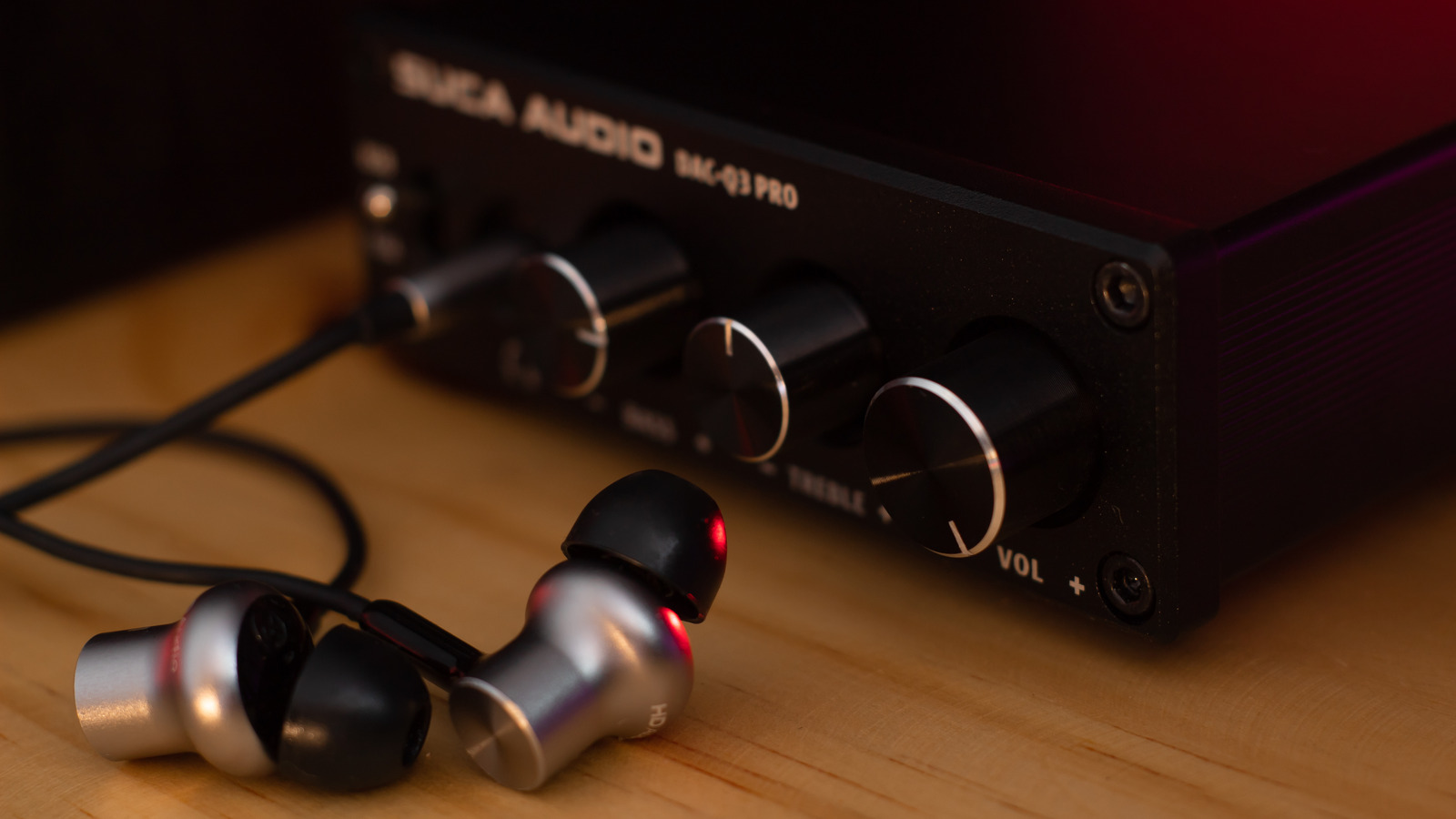
While the FiiO Snowsky option recommended above is still great, the Moondrop Echo-A is a slightly simpler plug-and-play option. FiiO offers in-line charging and extra app control, but you need to download the app to get the full functionality. If, on the other hand, you want high-quality 3.5-millimeter wired audio, then the Moondrop Echo-A is a no-brainer to throw into your travel bag. 

To start, Moondrop is an audiophile-approved brand that delivers some of the best in-ear-monitor-style earphones at its price point. The Echo-A may look like the same USB-C dongle you’ve seen bundled into the earliest headphone jack-free iPhones, but under the hood, it’s got a lot to love. Inside there’s an audio processing chip that delivers 32-bit, 384-kilohertz audio, ensuring whatever your phone, laptop, or other USB-C device is spitting out is high-resolution audio. For comparison, the audio resolution of the classic CD (widely considered the gold standard for most consumers) is 16-bit at 44.1 kilohertz. Because it’s a small, thin, flexible wire, it’ll slip into a bag easily, too — all for just over $20. Be aware that it doesn’t offer EQ control, and you’ll need headphones with a 3.5-millimeter jack to use it.

2. Fosi Audio Box X2 Phono Preamp

With vinyl records gaining market share in recent years, many listeners may wonder how to ensure their setup is getting the most out of their record collection. A phono preamp is the little tabletop box that amplifies the low-powered signal from a record player to the levels required for a powered speaker to fully reproduce the sound. The Fosi Audio Box X2 is a phono preamp with a rich, beautiful range to help your records sing.

The all-metal construction is solid and durable, and the satisfying rotary click switch that sets the preamp to different decibel levels is also built to last. What’s most notable about this preamp is its 6K4-style tubes, which deliver rich, warm audio between your turntable and speakers. If you’ve never used a tube amp before, this is a great way to try it for a good price, as it’s really hard to reproduce the rich warmth of tubes in any other way. There are some downsides, as the Box X2 is a budget-friendly phono preamp. There are only 3 gain stage settings, rather than continuous control, and though the circuit is low-noise, you’ll find slightly better performance in higher-end models. But with more than 3,000 Amazon reviews and a 4.6-star average rating, the quality is pretty compelling for under $70.

3. Anker Soundcore 2 Bluetooth speaker

Most people have a Bluetooth speaker kicking around these days, but if you somehow don’t, now’s a great time to consider one. The Anker Soundcore 2 was originally launched a number of years ago, but it still offers some of the best value for the money. For under $50, you have a solid, multi-driver speaker that delivers a surprisingly decent stereo spread for its size (in our anecdotal testing), plus a rugged IPX7 water resistance, making it great for the beach, camping, or other outdoor activities. It also sports an impressive 24 hours of battery life courtesy of its 5,200-milliamp-hour battery.

As with most of the things on this budget-friendly list, there are some trade-offs. While we are impressed by the sound quality and richness, a speaker of this size simply can’t deliver the high-quality bass with subwoofer support that larger speakers can. Some users also report intermittent connectivity issues. All of these considerations could be worth it to you if you’re looking for an unassuming and affordable little speaker to toss into your day bag, though.

4. CCA KZ AZ09 IEM Bluetooth Adapter

If you’re into audiophile gear, chances are you have a pair of in-ear monitors that you love. These high-end earphones sit tightly inside your ear and were originally intended for musicians to use on stage to hear themselves in the mix (hence the name “monitor”). These earphones don’t have the wireless Bluetooth convenience of AirPods or other true wireless options, though. Enter: the CCA KZ AZ09. This little adapter pair effectively turns your IEM into a pair of true wireless earbuds.

The set comes with dual adapters — one for each earphone, naturally — and a wireless charging case to juice up the batteries between uses. It provides Bluetooth 5.4 wireless connectivity for modern transmission, and thanks to its waterproof build, it should withstand sweat and some light rain. While the listing advertises compatibility with only select KZ IEMs, double-check the connector on yours, as these should work with many 2-pin style connectors. It’s also important to note that the case may not accommodate space for your IEM if they are large or oddly shaped. However, for under $30, these are great little adapters.

5. Dayton Audio Classic B65 Bookshelf Speakers

Rounding out the list is a solid pair of budget-friendly bookshelf speakers. After all, whether it’s your personal listening space or a media room, bookshelf speakers are an important part of the picture. To be fair, we’d recommend spending a little bit more on speakers, especially if you want one of the best wireless speakers. The Dayton Audio Classic BG65 speakers are surprisingly well-reviewed, with high Amazon ratings and plenty of community chatter about their quality. They deliver 75 watts of power and feature solid 6.5-inch woofers and 1-inch silk-dome tweeters for a well-rounded, well-supported sound. Their wood-tone enclosure and soft gray mesh grilles also look pretty nice.

Yes, again, there are some trade-offs. Some reviewers note quality assurance concerns, with one of their speakers not reaching the volume of the other. These are also passive bookshelf speakers, so there’s no amp or extra connectivity, meaning you’ll need to make sure you’ve got all the components necessary to run them. However, if you already have part of a surround system, or even a solid amp and music player setup, this is not a bad place to start.

How we chose devices on this list

KAY4YK/Shutterstock

As with anything, the word “cheap” can be a little subjective. When we started considering gadgets for this list, our first criterion was to keep everything below $100. To be fair, even $90-100 feels a little too expensive, so we reserved the pricier picks for the pricier categories (like speakers and table-top amplifiers). For the most part, items are kept as close to $50 as possible.

The other point here is that these gadgets are components within a setup. While we have done a roundup of at-home, cheap audiophile devices, this list is meant to help breathe new life into your music listening. So whether you want higher-quality listening on the go, a new way to pump some tunes at the beach, or a solid set of bookshelf speakers to fold into your listening room, we’ve got something covered here.

Source

Posted on

Verizon Just Made Unlocking Your iPhone Or Android Phone Way

Jonathan Weiss/Shutterstock

Some Verizon customers using iPhones or Android phones may not appreciate the Federal Communications Commission’s (FCC) decision on Monday, which granted the carrier’s request to lock handsets to its network for longer than the previous 60-day minimum. The waiver is already in effect as of Tuesday, which means Verizon only has to comply with the CTIA’s voluntary unlocking policy. The CTIA advises unlocking prepaid phones one year after activation. Postpaid devices can be unlocked after a contract ends. That may involve paying off a financing plan or an early termination fee.

Verizon’s win may make it harder for consumers to change carriers. Switching to a better offer from AT&T, T-Mobile, or a smaller competitor becomes more difficult if the handset is still locked to Verizon’s network. That’s assuming the subscriber wants to keep using the same phone and they have several months left in their carrier contract. The waiver’s new terms apply to all new phone activations a day after the FCC’s order, or January 13. This means iPhone and Android device buyers who purchased a phone before Verizon’s petition was granted will still benefit from the previous rule.

Groups including Consumer Reports, the Electronic Frontier Foundation, iFixit, and others opposed Verizon’s request, arguing that the 60-day unlock favored consumers and competition. Similarly, cable lobby group NCTA criticized the FCC’s decision, arguing that unlocked phones benefit smartphone buyers.

Why did Verizon change its mind?

Wongsakorn 2468/Shutterstock

As Ars Technica points out, Verizon’s automatic unlock that kicked in 60 days after activation wasn’t a perk the carrier offered to its subscribers. Verizon had to agree to this specific requirement in return for two specific regulatory approvals. In 2008, the wireless operator purchased licenses for 700 MHz spectrum. In 2021, it agreed to certain conditions for its purchase of TracFone. Other carriers were not subject to the same unlocking requirements.

Verizon used to sell unlocked iPhones and Android phones but in 2019 obtained a waiver that allowed the carrier to lock the handsets for 60 days, citing fraud deterrence. However, in March 2025, Verizon said that the 60-day period wasn’t long enough to catch fraud, petitioning the FCC to remove the limit. The FCC on Monday agreed with Verizon that the 60-day locking period isn’t enough to deter fraud, including smartphone theft. The FCC order also includes a rejection of a 180-day locking period that the NCTA and Console Enterprises proposed last year. 

“[The] FCC waived a 2007 rule that required one wireless carrier to unlock their handsets well earlier than standard industry practice, thus creating an incentive for bad actors to steal those handsets for purposes of carrying out fraud and other illegal acts,” the Commission said in a press release. Chairman Brendan Carr said in a statement that “sophisticated criminal networks” exploited Verizon’s 60-day unlocking period for various criminal acts, “including transnational handset trafficking schemes and facilitating broader criminal enterprises like drug running and human smuggling.” The waiver should “help stem the flow of handsets into the black market.”

Can stolen phones be resold on the black market?

umitc/Shutterstock

The FCC notes that Verizon’s phones have been stolen and resold on the black market for premium prices on the dark web. Countries including Russia, China, and Cuba are mentioned in the press release. The FCC also says that criminals are targeting Verizon and that the 60-day period is insufficient for detecting fraud. The FCC doesn’t offer any figures in its press release, but it cites statistics from Verizon in Monday’s order.

According to the carrier, nearly 785,000 devices were lost to fraud in 2023, including prepaid and postpaid devices, costing the carrier hundreds of millions of dollars. The order also cites a recent scheme that involved prepaid iPhones sold in New York. About 18,000 iPhone 12, 13, and SE3 models were activated on $30 plans with one month of service. They were not used, and they were later found on sale from other resellers.

It’s unclear how many stolen Verizon iPhone and Android devices are sold on the black market in the U.S. or internationally after being carrier-unlocked. Thieves would have to bypass security protections, including the Lock Screen password and Activation Lock on iPhone and other anti-theft systems on Android. Stolen devices that can’t be used because of anti-theft protection may still be sold for parts. In this scenario, the carrier lock wouldn’t matter. On the other hand, criminals continue to target smartphones, with reports last year detailing a massive iPhone theft operation in London.

Source

Posted on

HP’s New USB Gadget Fits An Entire Computer Inside A

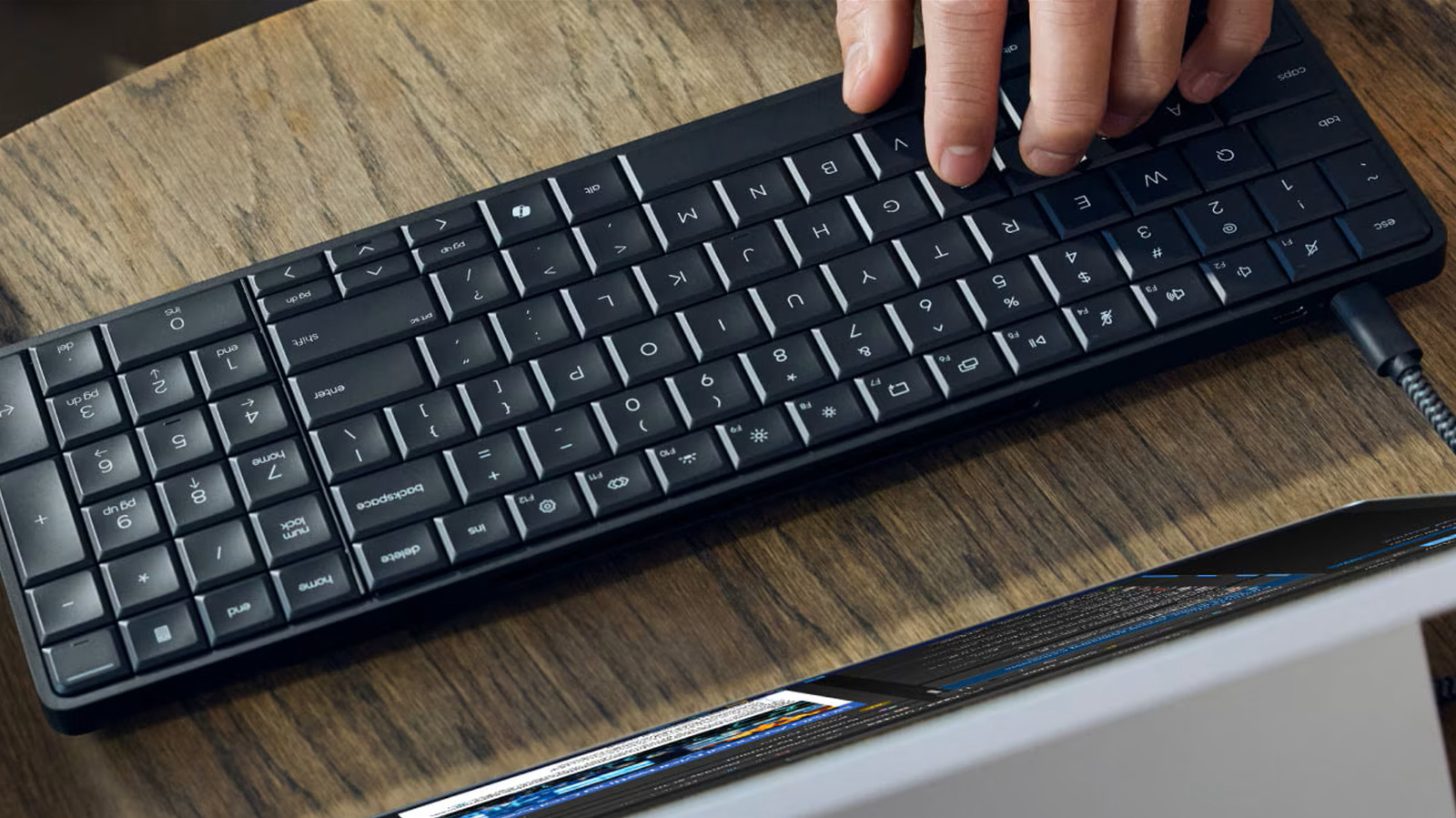
Busy professionals have a particular need for portability and functionality in their work computers. The obvious answer to this need is a laptop, but even a laptop can be somewhat unwieldy, especially if it’s loaded up with hefty hardware, like a gaming laptop from one of the big brands. For those who want to trim off everything but the most essential elements of a portable PC, major PC brand HP has developed the EliteBoard, an entire PC setup crammed into the confines of a keyboard.

An honoree of the 2026 Consumer Electronics Show Innovation Awards, the HP EliteBoard is a portable PC designed specifically for shared and dedicated workspaces, particularly those with a shared pool of available monitors. All you need to do is connect the EliteBoard to a display, and you can get right to work, with all of your files and functions hidden within the keyboard. At the time of writing, HP has not divulged the price or specific release date for this new gadget, though it is aiming for a release window sometime in March 2026.

The HP EliteBoard packs a full work PC into a slim, portable package

According to statistics cited in an HP press release, a large portion of working professionals feel a degree of dissatisfaction with the tech they use for their work, and with laptops on an uncertain curve for the near future, that dissatisfaction could worsen. The purpose of the HP EliteBoard is to provide a flexible, adaptable setup that can accommodate different work styles, whether you’re plugged in at the office or on the go. As long as you have a USB-CTM display nearby, the EliteBoard can be plugged in and used right away.

The HP EliteBoard is built to be user-ready right out of the box with minimal setup. It’s pre-loaded with Windows 11 and an AMD Ryzen AI 300 series processor, plus native Radeon 800M series native graphics. The entire device is only 12mm thick, and weighs less than half that of most laptops and notebook PCs at 750g (approx. 1.65 pounds). You can easily fit it in a backpack or briefcase while still leaving space for other devices, documents, or whatever else your job requires.

The HP EliteBoard is also designed to be more resilient against drops and spills, a vital factor since spilled coffee would otherwise damage much more than just your keyboard. The keyboard has an easy-clean surface for wiping away spills and debris, and is made up of 75% recycled plastic. Additionally, unlike some laptops, the EliteBoard is meant to be user-serviced; major components like the RAM, SSD, battery, and others can be easily removed without specialized tools for repair or replacement.

Source

Posted on

5 iPod Alternatives That Users Swear By

Matthieu Tuffet/Shutterstock

We may receive a commission on purchases made from links.

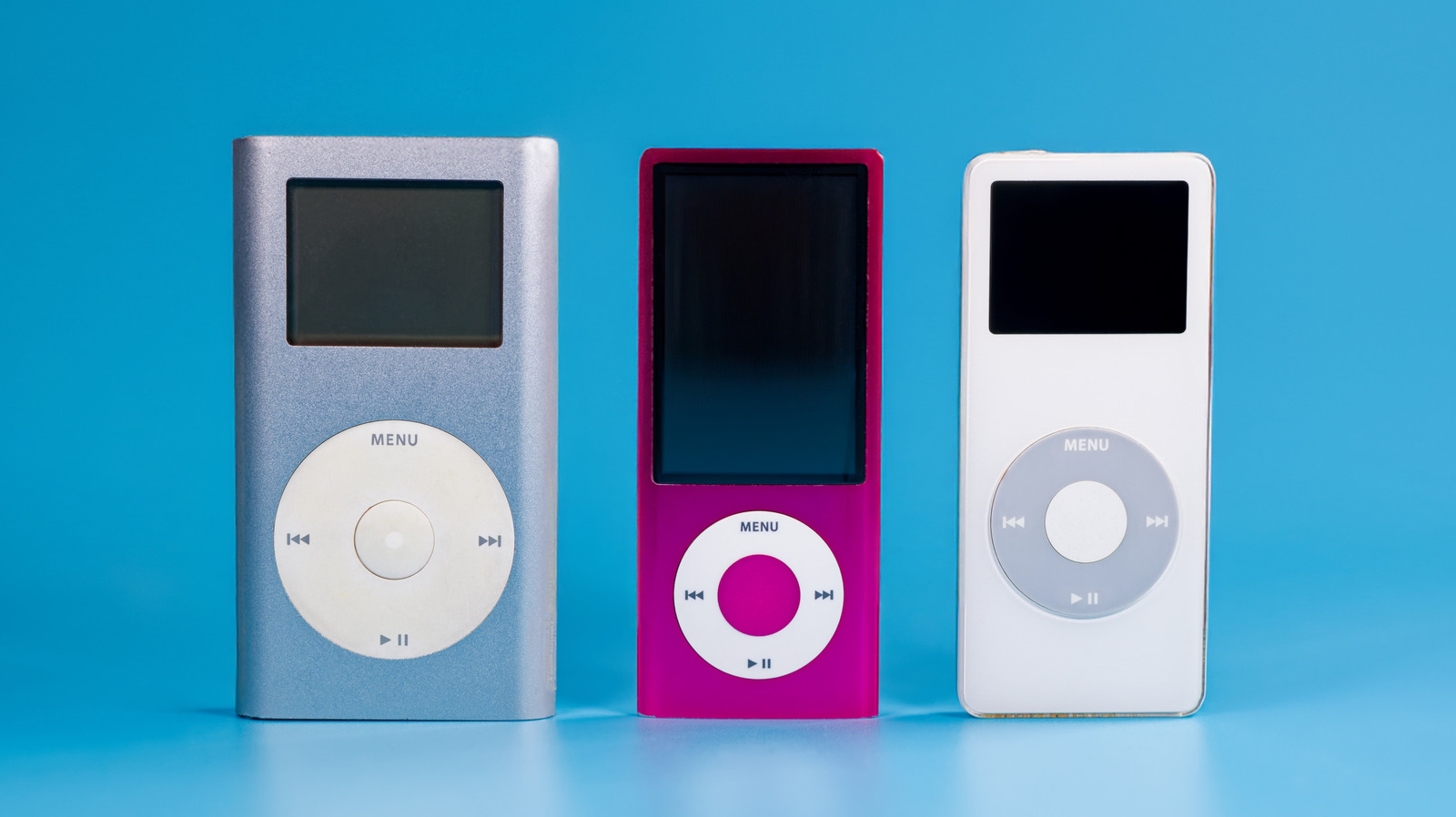
After launching it in 2001, Apple officially discontinued the iPod in 2022, although the last model was released in 2019. The discontinuation of the iPod lineup meant an end to dedicated music players from the company. Part of the reason why Apple discontinued the iPod after 20 years is that most people listen to music on their phones. Although the iPod is dead, it doesn’t mean that the market for dedicated music players is. There are companies that are still making and selling iPod alternatives that you can buy if you still crave having a dedicated device for listening to music. You’ll find a variety of options available, but it can be hard to separate the wheat from the chaff.

Before you regret your purchase, we’re here to help you make an informed decision by giving you the best iPod alternatives on the market that are loved by several users. Whether you’d like to upgrade from your old iPod or are looking for your first-ever dedicated music player to listen to music like in the old times, we’ve got you covered. All the products we’ve discussed have solid ratings and reviews from users online, and excel at the one core functionality they were intended for — listening to music.

AiMoonsa Music Player

The AiMoonsa MP3 Player has a variety of handy features that make it one of the best iPod alternatives. You can play different audio formats as it supports both lossy ones (like MP3 and WMA) and lossless formats such as APE, WAV, and FLAC. It comes with either a 64 GB or 128 GB microSD card, which allows you to store thousands of songs. But if you need more storage, you can get a microSD card with a larger capacity, up to 256 GB. You can listen to music wirelessly via Bluetooth, over the traditional 3.5mm headphone jack, or play directly via the device’s built-in speakers. The AiMoonsa Music Player is compact and portable as well, weighing just 70 grams with a 1.8-inch screen. While it’s mainly a device for playing music, it does come with other features such as a voice recorder, FM radio, and an alarm.

You can also read e-books on this device, although with such a small screen, you’re better off using a tablet or smartphone. It also has a built-in file explorer, which is really handy for managing your offline music library. The player has earned a 4.0 rating on Amazon with over 9,000 reviews. Some love it for its simplicity, portability, and functionality, and others for its great price. For the latter, one Amazon review notes how this player “does everything an expensive iPod does for a tiny fraction of the price.” It makes it easy to load your music from a PC, but the main caveat is that you can only have up to 5,000 songs per folder, and it doesn’t organize files properly. The 64 GB variant of the AiMoonsa Music Player costs just $29.99, while the 128 GB model is $38.99.

Agptek MP3 Player

Another iPod alternative you should consider is the Agptek 64 GB MP3 Player, which has earned a 4.2 rating with over 1,400 reviews on Amazon. It comes with 64 GB of built-in storage and, even better, has microSD card support up to 128 GB if you wish to store more tracks. There’s support for a variety of audio formats, including MP3, APE, FLAC, WMA, WAV, and AAC, and you can listen to music wirelessly via Bluetooth, a wired connection, or directly through the built-in speakers. This player has a sleek design with a 2.4-inch screen and handy buttons for navigation and control. It includes a 500mAh battery and uses a USB-C port for charging.

There are several extra features, such as an FM radio, photo viewer, voice recorder, and e-book reader. The 7th-generation iPod was considered lightweight and easy to hold, measuring 4.8 inches and weighing 3.10 ounces. Agptek’s MP3 Player is a bit smaller at 4.4 inches and lighter, weighing just 3.06 ounces.  Users say it’s “super lightweight,” pretty good, easy to set up, and durable. The only catch is that it doesn’t support user playlists and is prone to scratches. You can buy the Agptek 64 GB MP3 Player from Amazon starting at $30.99 in purple, pink, orange, green, black, blue, and black-red.

JadeAudio FiiO JM21

The JadeAudio FiiO JM21 is a hi-res music player that comes with two built-in digital-to-analog converters (DACs) and two amplifiers for the best sound quality. The internal storage is just 32 GB, but it has a dedicated microSD card slot. It supports a variety of hi-res formats, such as FLAC, DSD, WAV, and ALAC. Unlike the other options we’ve discussed previously, this model comes with a 4.7-inch touch screen display – slightly bigger than the 7th-generation iPod’s 4-inch screen. It runs a custom version of Android 13 and allows you to install any music streaming service of your choice, along with other Android apps. The FiiO JM21 is lightweight and portable, measuring just 0.5 inches thin and about 5.5 ounces in weight.

It promises up to 12.5 hours of battery life and supports a variety of Bluetooth codecs, including AAC, aptX, aptX HD, LHDC, LDAC, and SBC. One reviewer describes the FiiO JM21 as an affordable player with great sound that can rival pricey high-end players. Multiple users praise the sound quality of this device, and one user even says it has a better amplifier than the iPod. Another user says it’s one of the best players they’ve ever had and says it’s perfect for anyone who wants a “relatively cheap, high quality, intuitive, portable music machine.” However, several users feel the battery life could be better. Additionally, the included quick start guide isn’t that helpful, and the display isn’t the best. Overall, it has a 4.2 rating on Amazon with over 300 reviews, and retails for $179.99.

HiBy Digital M300 Android MP3 Player

The HiBy Digital M300 is another hi-res audio alternative to the iPod, thanks to the use of Cirrus Logic’s CS43131 – a 32-bit digital-to-analog converter (DAC) capable of delivering superior sound with low power use. It can play lossless audio and is compatible with a wide range of audio formats, including MP3, WAV, APE, FLAC, DSF, OGG, AAC, and OPUS. This player includes 3 GB RAM and 32 GB of storage and has a microSD card slot that supports up to 2TB of storage. There’s also a 4 GB RAM and 128 GB storage variant if you need more built-in storage. The screen measures 4 inches, and it runs Android 13. Being an Android device, you can install a variety of apps, including music streaming services. It charges via USB-C, and you can play music via the built-in speaker, over Bluetooth, or through your wired headphones using the 3.5mm headphone jack.

In terms of the footprint, the HiBy Digital M300 is lightweight as well, weighing about 4.8 ounces. A 2,000 mAh battery powers this device, and HiBy says it can last up to 29 hours per full charge. One Amazon reviewer says it’s a “great player,” while another narrates how it was the perfect replacement for their dead iPod Classic. Multiple users also love its sound quality. However, some users note it has poor battery life, and the screen isn’t bright enough for outdoor use. This player has an average rating of 4.1 with over 550 reviews on Amazon. The HiBy Digital M300 is available on Amazon for $159 for the 32 GB variant or $199 for the 128 GB option.

HiFi Walker H2 MP3 Player

Another iPod alternative that you should consider is the HiFi Walker H2 MP3 Player. It has a DAC capable of 32‑bit/384kHz decoding, which means it can play lossless audio. The HiFi Walker H2 supports a variety of audio formats, including lossless ones such as WAV, FLAC, APE, and AIFF. Besides Bluetooth, you can play music via the built-in speaker or via a wired pair of headphones by plugging a 3.5mm cable. It’s also a handy audiophile gadget you can depend on, as it can also function as an external DAC. The screen measures just 2 inches, and it promises up to 10 hours of playback. For storage, you can insert up to a 512 GB microSD card — it doesn’t have built-in storage.

The HiFi Walker H2 has earned a 4.1 rating on Amazon with over 430 ratings. Users love it for its high-quality sound both as a DAC and a music player, and one even describes it as an “audiophile’s secret weapon.” One user loves that it doesn’t run Android; it’s distraction-free with no Wi-Fi support, and it “checks all the boxes.” The build quality is also solid, and multiple users recommend this as the perfect replacement for the iPod. However, several users highlight issues with persistent Bluetooth connectivity. You can buy the HiFi Walker H2 from Amazon for $123.99 for the 64 GB variant or the 128 GB version for $139.99.

How we selected these music players

Mayam_studio/Shutterstock

All the iPod alternatives we’ve listed are from Amazon. We’ve scoured the site for audio players that are in stock and have solid ratings of at least 4.0, with at least 250 reviews. We also checked 5-star reviews for each product to ensure that the majority are not from Amazon Vine users. We considered the users’ sentiments about the product across a variety of factors, such as ease of use, value for money, sound quality, connection options, and storage. 

Another key consideration in our selection process was price. We made sure to include products across different price points so everyone has an option that fits their budget.

Source