Posted on

Cloudflare fixes second outage in a month

Cloudflare has successfully recovered its services after a second outage in the space of three weeks briefly took down Cloudflare Dashboard and related APIs, knocking out multiple online services.

The issues surfaced shortly after 9am GMT (4am EST) and left users unable to access sites such as Canva, Coinbase, LinkedIn, SubStack, X, Zoom, and once again, the DownDetector service relied on by many to monitor web outages.

At the time of writing, the issue was fully resolved and Cloudflare’s status page reported normal operations across its global network.

A spokesperson told Computer Weekly that a change to how Cloudflare’s web application firewall parses requests impacted the availability of its network for about 25 minutes.

“This was not an attack – the change was deployed by our team to help mitigate the industry-wide vulnerability disclosed this week in React Server Components,” they said.

The flaw in question was tracked as CVE-2025-55182 – although a duplicate identifier, CVE-2025-66478 has also been assigned to it. Referred to by some as React2Shell, it is a critical remote code execution (RCE) vulnerability that affects the React library used to build many web applications.

It affects all React applications that support React Server Components, and notably, according to Rapid7 researchers, server applications may also be vulnerable even if they do not explicitly implement any React Server Function endpoints but do support React Server Components.

Rapid7’s researchers added that many popular frameworks based on React, including Next.js, are affected by the issue.

Successfully exploited, an unauthenticated attacker could gain the ability to execute arbitrary code on an affected server. A weaponised proof-of-concept exploit is believed to have been shared.

“Organisations who use React or the affected downstream frameworks are urged to remediate this vulnerability on an urgent basis, outside of normal patch cycles and before broad exploitation begins,” said Rapid7’s team.

Responding to the Cloudflare outage, Mayur Upadhyaya, CEO of API monitoring and testing service APIContext, said: “When APIs and dashboards at this layer are impacted, the ripple effects are wide-reaching, not because of failure, but because of how much trust we place in these services to function smoothly behind the scenes. 

“This isn’t about blame – all services hiccup. It’s a reminder that resilience isn’t just about uptime – it’s about graceful degradation, clear observability, and understanding dependencies. As complexity grows, continuous testing and real-time signals become key to supporting both providers and customers through high-pressure moments like this.”

Opportunity for threat actors

While the latest hiccup to befall Cloudflare’s services was the result of a change designed to address a security vulnerability and protect its customers, rather than a cyber attack on its services, the incident should still have defenders on alert, said ESET global cyber security advisor Jake Moore.

“We have seen multiple errors like this in recent months which have led to catastrophic downtimes for thousands of websites,” said Moore. “It therefore potentially offers up new opportunities to threat actors wanting to cause mass disruption.”

Cloudflare’s previous outage, which unfolded on Tuesday 18 November 2025, forced the company’s worst period of downtime since 2019, when a change to the web traffic management firm’s bot management system caused a larger-than-expected file feature configuration file to be spread across its network, causing widespread crashes. Such was the scale of this incident that Cloudflare’s response teams initially believed they were dealing with a massive distributed denial of service (DDoS) attack.

Source

Posted on

Edinburgh Airport grounds flights due to IT issue affecting air

Flights to and from Edinburgh Airport are continuing to be beset by delays, after an undisclosed IT issue grounded passengers for around an hour on the morning of Friday 5 December 2025.

The airport issued a statement via its social media channels at around 9.30am, confirming that no flights were currently arriving or departing from the site due an “IT issue” affecting its air traffic control provider.

“Teams are working on the issue and will resolve as soon as possible,” the statement added.

Over the course of a series of messages, shared online with affected passengers, Edinburgh Airport confirmed the downtime was not caused by a “national issue”.

At around 10.40am, a follow-up statement was released by the airport, confirming that flights were resuming, with the unspecified IT issue seemingly resolved.

At the time of writing, no further details about the incident have been released by Edinburgh Airport.

Meanwhile, the airport’s live departures and arrivals information site confirms the incident appears to have had a knock-on impact for many of the flights that are scheduled to take off and arrive there for the rest of the day.

Computer Weekly understands that Edinburgh Airport’s air traffic control provider is a company called Air Navigation Solutions, with the latter company’s website talking about the “long-term partnership” that exists between the two entities.

It states that Air Navigation Solutions is responsible for providing air traffic control and air traffic engineering services to the airport.

Computer Weekly contacted the company to clarify its working relationship with Edinburgh Airport, and to see if it could shed any further light on the cause of today’s outage. At the time of publication, however, no response had been received.

IT issues are often cited as a factor in downtime incidents at airports, serving to underscore vulnerabilities in some sites’ legacy IT systems and datacentres, while highlighting the broader technological challenges site operators face.

Also, given how widespread and high-profile the disruption caused by an IT incident at an airport can be, these sites have also found themselves the targets of cyber attacks.

For example, London Heathrow Airport was among the targets of a wide-scale, aviation industry-focused, ransomware-based cyber attack that came to light in September 2025.

That incident could be traced back to a ransomware attack on the systems of commercial aviation services supplier Collins Aerospace, and caused flight cancellations and delays across Europe, with Berlin, Brandenburg, Brussels and Dublin airports all affected, along with London Heathrow.

Speaking about the incident at the time, ESET global cyber security advisor Jake Moore said the cyber attack served to highlight just how disruptive IT issues can be to the aviation industry as a whole.

“When the supply chain is attacked in the aviation industry, the disruption hits on a damaging global scale. Since the outage stems from a third-party provider for check-in and boarding systems, it shows how a single point of failure can ripple quickly across multiple countries, causing widespread problems,” said Moore.

Source

Posted on

Interview: Paul Neville, director of digital, data and technology, The

Paul Neville, director of digital, data and technology at The Pensions Regulator (TPR), is building strong IT foundations as part of a five-year strategy to help transform the organisation from a compliance-based to a risk-based regulator. He explains what that change will mean in practice over the next few years.

“As a regulator, we’ll obviously still have specific processes we expect people to follow, but we’ll be much more concerned about the outcome that we’re trying to achieve, and we’ll make decisions based on that demand,” he says.

“To make that shift, we need to understand our data. We need to have the right level of automation to explore information, measure outcomes, and deliver those outcomes with industry and other government bodies interested in pensions. We imagine a future world in which information flows between organisations.”

A historian by education, Neville entered the world of business as the internet boom gathered pace in the 1990s. Describing himself as a self-taught digital leader, he developed his skills in the commercial sector at blue-chip companies such as Sky and BT, and with startups and smaller businesses.

His transformation work in larger firms focused on delivering big technology-enabled change programmes, centred on boosting customer experiences. Mid-career, he decided to apply those skills for public benefit and worked as a consultant for two major charities, Marie Curie and Macmillan, helping those organisations to transform digitally.

Neville then turned to the public sector to apply his skills in another for-good area. He worked in digital leadership roles at the London Borough of Waltham Forest, UK Export Finance and Enfield Council, before joining TPR in October 2023. Neville reflects on this final move.

“It was the opportunity to take all of that experience and deliver on a national scale and impact everybody, because almost everyone has a pension, and the opportunity to make that process work for the citizens of this country, and make a difference for people in retirement, is a massive issue,” he says.

“Secondly, the chief executive, my boss, Nausicaa Delfas, was setting up an opportunity to change, not only TPR, but the pensions industry, so the role felt like a chance to be a central part of that journey, because not every CIO gets to sit on the board of an organisation.”

Transforming processes

Neville reflects on the transformation journey at TPR, saying it’s been an exciting ride: “Everyone on the executive board is aligned on the fact that digital, data and technology are the key enablers for helping us change as an organisation, and also helping the pensions industry transform.”

Late last year, Neville launched a digital, data and technology strategy, a set of missions over a five-year plan to renew TPR’s capabilities, embracing new ways of working, driving efficiency, automation and innovation. In March this year, he launched the data component of the strategy, which establishes a collaborative plan to drive adoption of new data technologies and standards.

“I am proud of that strategic work,” he says. “That effort includes strengthening our technology foundations, improving our capability in terms of automation, and making sure we have the skills in my team to develop the future. We’ve hired quite a lot of people and also consolidated similar skills across the organisation, and that’s enabled us to deliver more and save money on suppliers, because we’ve done a lot in-house.”

Neville says the projects his team has worked on include delivering artificial intelligence (AI) tools that help increase automation. They’ve also focused on improving cyber security and data governance to ensure safe and secure access to high-quality internal information.

The team also recently launched an innovation service to foster conversations with industry stakeholders. Neville says TPR is encouraging and enabling people and organisations to think differently about the services they deliver to their customers and the benefits they provide.

“That’s just a small selection of the things we’ve done so far,” he says. “We’ve got just under four years left of the plan. There’s a lot more we want to do, but we have built the confidence, both internally and externally, that we are a different TPR and we can deliver. That encourages everyone in our industry to think differently as well.”

Building foundations

Neville says the transformation work enabled through the strategy so far is focused on building the right technological foundations at TPR.

In addition to cyber security and data governance projects, his team has focused on service management initiatives that help TPR rationalise its application estate. The organisation has adopted an agile, product-based approach to deliver reusable capabilities for flexible services in key areas related to pensions governance within the organisation and externally.

TPR is also making progress on automation, including in case management. He inherited a situation where cases were often managed on spreadsheets or via one-off technology solutions. In short, nothing was joined up. Neville is using automation, via Microsoft Dynamics 365, to take a different approach.

“Everyone on the executive board is aligned on the fact that digital, data and technology are the key enablers for helping us change as an organisation, and also helping the pensions industry transform”

Paul Neville, The Pensions Regulator

“We’re delivering a single case management system,” he says. “We are working to make sure the process is streamlined, so we’re thinking about the business process first. By taking that approach, we can deliver in an agile and iterative way. Where we’ve already rolled that technology out, we’ve delivered productivity savings of around 60%.”

Neville expects the progress made through case management automation to be repeated in other areas. As automation takes hold in the organisation, he anticipates people will spend less time on paperwork and more time delivering better services.

Given the developments in the technology sector during the past few years, AI is playing a key role.

“We are deploying AI to specific use cases,” he says. “I’ve got a fantastic data science team, who are developing lots of very clever tools for us.”

Embracing AI

Neville says the next two years will be spent honing these technology initiatives and delivering tangible results.

Critical projects include implementing organisation-wide access to data via Dynamics 365 services and completing transformation projects in core areas, such as cyber security and data governance. It’s these foundations and the application of emerging technology that will help TPR transform from a compliance-based to a risk-based regulator.

Two years from now, Neville expects all foundational work, from case management to customer relationship management (CRM) systems, will be embedded within the organisation. On these foundations, employees will use AI-enabled tools to boost their working processes.

“That preparatory work will enable us in the future to create more customer-facing digital capabilities,” he says.

One example of where TPR is applying AI is analysing online news sites to scan for potential risks in pension schemes. Neville saw AI could provide a helping hand to what is currently a manually intensive process.

“That’s a great example, because many pension schemes don’t have the same name as the provider,” he says. “The technology does quite a lot of joining up behind the scenes to make that process work.”

Another example is using AI to analyse Task Force on Climate-Related Financial Disclosures (TCFD) statements, which organisations must submit to comply with legislation. Once again, generative technology – in the form of OpenAI and Microsoft Azure technology – is helping TPR staff summarise lengthy prose and create insights as a basis for intervention when required.

“Those are just two examples,” says Neville. “We’ve got other risk tools that we’re using. We are also rolling out Copilot internally, and we’re in the middle of our plan for that technology. We’re trialling GitHub Copilot for our developers, and they’re starting to write test scripts, which is fun. We’re still at the beginning of this work, as are lots of people, but these projects are a taster of what we want to achieve.”

Solving challenges

Neville says the result of this work will be that the future TPR will have an operating environment that differs greatly from its traditional, manually intensive processes. Today, the organisation maintains a digital portal, where people send, for example, pension scheme returns as part of a large, intensive data upload. Neville foresees a better approach.

We need to understand our data, and so does the industry. The firms need to provide better customer experiences for people, like you and me, who have pensions Paul Neville, The Pensions Regulator

“There won’t necessarily be a scheme return like you see today, because we will have the information we need, and organisations across the industry will be more digitally enabled, so they’re able to drive the kind of innovation and competition in the market that will benefit savers, people with pensions and employers that offer pensions,” he says.

This new level of digital interaction will make it easier for TPR and organisations in the pensions sector to tackle some of the thorny issues of the day. One of these issues is adequacy, or the extent to which people save enough money in pension schemes for their retirement.

“We need to understand our data, and so does the industry. The firms need to provide better customer experiences for people, like you and me, who have pensions. By driving a customer focus, we think the industry will perform better,” he says.

“We may even feel a bit like a fintech as an organisation, because we’ll be enabling innovation. Technology will produce the insights we need to work with the industry. So, we could be operating in a completely different world, which drives innovation and change for everyone.”

Neville continues to seek ways to push transformation forward. He recently helped launch the Pensions Data and Digital Working Group, which will help ensure TFP and the pension industry work together to embrace digital, data and technology and achieve the digitalisation and automation aims outlined in the five-year strategy.

“The working group has 15 members,” he says. “It represents a cross-section of people from different parts of industry, so trustees, actuaries, lawyers, but also people from more technical backgrounds as well. It’s about getting all kinds of people involved to help solve the problems and move to this new world.”

Source

Posted on

Cyber teams on alert as React2Shell exploitation spreads

A remote code execution (RCE) vulnerability in the React JavaScript library, which earlier today caused disruption across the internet as Cloudflare pushed mitigations live on its network, is now being exploited by multiple threat actors at scale, according to reports.

Maintained by Meta, React is an open source resource designed to enable developers to build user interfaces for both native and web applications.

The vulnerability in question, assigned CVE-2025-55182 and dubbed React2Shell by the cyber community, is a critically scored pre-authentication RCE flaw in versions 19.0.0, 19.1.0, 19.1.1 and 19.2.0 of React Server Components that exploits a flaw in how they decode payloads sent to React Function Endpoints.

This means that by crafting a malicious HTTP request to a Server Function endpoint, this means a threat actor could gain the ability to run arbitrary code on the target server.

It was added to the US’s Cybersecurity and Infrastructure Security Agency’s catalogue on Friday 5 December, and according to Amazon Web Services (AWS) chief information security officer and vice-president of security engineering, CJ Moses, the chief culprits behind the rapid exploitation are thought to be China-nexus threat actors.

Moses cautioned that China’s habit of running shared, large-scale anonymisation infrastructure for multiple state-backed threat actors made definitive attribution challenging, however, following disclosure on Wednesday 3 December, groups tracked as Earth Lamia and Jackpot Panda were observed taking advantage of React2Shell.

“China continues to be the most prolific source of state-sponsored cyber threat activity, with threat actors routinely operationalising public exploits within hours or days of disclosure,” he wrote. “Through monitoring in our AWS MadPot honeypot infrastructure, Amazon threat intelligence teams have identified both known groups and previously untracked threat clusters attempting to exploit CVE-2025-55182.”

Earth Lamia is well-known for exploiting web application vulnerabilities against organisations primarily located in Latin America, the Middle East and Southeast Asia, with a particular focus on educational institutions, financial services organisations, government bodies, IT companies, logistics firms and retailers.

Jackpot Panda, according to AWS, targets its activity at entities in East and Southeast Asia, with its operations aligning to China’s goals relating to corruption and domestic security.

Massive attack

With reports suggesting there may be over 950,000 servers running vulnerable frameworks such as React and Next.js, Radware threat researchers warned of a massive potential attack surface.

React and Next.js are both well-used thanks to their efficiency and flexibility, while robust ecosystems make them a default choice for many developers – and as such they are found under the bonnet everywhere, from mobile apps and consumer-facing websites to enterprise-grade platforms, said Radware.

“This widespread reliance means a single critical flaw can have cascading consequences for a significant portion of modern web infrastructure,” the Radware team said. “A substantial number of applications across public and private clouds are immediately exploitable, necessitating urgent and widespread action.”

Michael Bell, founder and CEO of Suzu Labs, a penetration testing and AI security specialist, said that hours from disclosure to active exploitation by nation-state actors was the new normal, and matters would likely get worse.

“China-nexus groups have industrialised their vulnerability response: they monitor disclosures, grab public PoCs – even broken ones – and spray them at scale before most organisations have finished reading the advisory,” he said.

“AWS’s report showing attackers debugging exploits in real-time against honeypots demonstrates this isn’t automated scanning; it’s hands-on-keyboard operators racing to establish persistence before patches roll out,” said Bell. “With AI tools increasingly capable of parsing vulnerability disclosures and generating exploit code, expect the window between disclosure and weaponisation to shrink from hours to minutes.”

He added that the earlier Cloudflare outage in service of an emergency patch “tells you everything about the severity calculus here”.

Source

Posted on

Forrester: The role of internal developer platforms in DevOps

DevOps adoption has been going on for a decade and shows no signs of slowing. In Forrester’s 2024 developer experience survey, 87% of developers indicated that their organisation had already adopted DevOps practices or planned to do so in the coming year.

But for many organisations, scaling their DevOps practice has been complicated, expensive and, in the end, insufficient in delivering the value leaders had expected. These organisations start with a grassroots approach to DevOps adoption, with each team self-selecting its toolchain, creating its best practices and infusing its institutional knowledge.

Forrester clients tell us this team-based approach breaks down at scale. It creates as many problems as it solves and does not deliver the results the C-suite was expecting.

For instance, bespoke toolchains create headaches. Organisations that took this approach are now saddled with too many unique toolchains, each requiring nurturing by the same developers who are supposed to be building customer-focused products. These toolchains also require unique automation, create trapped institutional knowledge, contribute to tool sprawl and limit any chance for volume DevOps tool pricing.

All these factors create headaches for IT leaders trying to reduce overheads while improving productivity and efficiency.

Many organisations now understand that improving the developer experience increases efficiency by removing impediments to the development process. High among those impediments is unnecessary context switching, which breaks the concentration of developers and decreases flow.

Disconnected automation tools, multiple systems of record and multiple platforms slow developers down by forcing them to play hopscotch with numerous tools. Without a common platform as the backbone, when developers change projects, they may go through entirely new onboarding procedures to get access to repositories and commit their first pull request.

The lack of standardised practices causes governance issues as well. Without a standard approach to software delivery, you end up with ad hoc governance implemented differently depending on the toolchain. This creates trust barriers between developers and enterprise governance teams, can add manual oversight and red tape that slows processes down, and works against efforts to improve productivity and efficiency at scale.

Another issue software developers face is that the traditional IT service catalogue is a heavyweight solution. Many organisations have had service portals for years, grounded in IT and enterprise service management practices and based on products such as ServiceNow, Atlassian’s Jira Service Management or BMC Helix.

These tools remain because they often serve non-technical users and may be leveraged by traditional infrastructure organisations for ticketed offerings. However, developers find ticket ops to be too slow and unresponsive, which is why a market emerged for dedicated internal developer platforms (IDPs).

A scaled platform for services

IDPs provide a framework for creating an IT platform where services can be defined, automated and exposed across the enterprise.

Examples of IT services that can be incorporated into an IDP include allocating a new piece of infrastructure, such as a new virtual machine, instantiating an automated continuous integration/continuous delivery (CI/CD) pipeline to build and deliver code, or creating the scaffolding for a new microservice project using organisational best practices.

Internal developer platforms provide a framework for creating an IT platform where services can be defined, automated and exposed across the enterprise Forrester

IDPs facilitate management and access to service automations by providing a framework to manage and expose automation at scale.

IDPs can provide visibility into tools and frameworks. One feature of IDPs is scorecards, which provide information about both the technical and business performance of technologies. This helps developers make the right choice when faced with multiple frameworks, and also gives leaders insight into adoption.

New tool adoption becomes apparent to leadership, as does abandonment of older technologies, enabling leaders to deprecate and remove older components when it makes sense for the business.

At a high level, IDPs can serve a similar role to traditional platform as a service (PaaS) by providing an abstraction layer to IT infrastructure services. However, whereas many PaaS implementations have opaque abstraction layers, IDPs offer a transparent layer via service definition files that enable developers and infrastructure engineers to view, reuse and improve upon the underlying abstraction mechanisms.

Platform builders need to understand these differences to determine which abstraction model will serve their needs best.

The role of Backstage

Backstage, the IDP that Spotify donated to the Cloud Native Computing Foundation (CNCF), was one of the most downloaded apps from the CNCF in 2024. The topic of Backstage adoption garnered a full day of presentations and user stories at KubeCon 2024.

There are several reasons for its adoption. Spotify has a reputation for transformational engineering processes. Many organisations have adopted the now-famous Spotify model, featuring squads, tribes and guilds. Having Backstage reside in the CNCF ensures governance and a healthy community of contributors and adopters. A growing number of commercial DevOps tool suppliers support Backstage plug-ins. And most importantly, because it’s open source, Backstage is free for developers to download and try, further accelerating interest in platforms in general.

Before committing to an IDP, IT leaders should build a compelling business case outlining which benefits the IDP will bring to the organisation and how it will measure these Forrester

Many teams had assumed, or hoped, that Backstage was a ready-to-use platform, but soon became overwhelmed by its complexity. This has created an opportunity for commercial software providers to differentiate their offerings from Backstage. These commercial tools providers claim their products are easier to get started with, have a lower learning curve and offer technological advantages to Backstage, such as providing a service orchestration layer.

Spotify also offers Backstage as a paid commercial subscription that includes product support, additional plugins and no-code capabilities to help companies get started faster with greater confidence. Users see these commercial add-ons, such as Soundcheck (a plug-in that helps teams visualise quality, security and reliability checks on services), as value-adds.

Before committing to an IDP, Forrester recommends IT leaders build a compelling business case outlining which benefits the IDP will bring to the organisation and how it will measure these. Developing a comprehensive business plan will ensure alignment between the stakeholders funding the platform initiative and those responsible for its creation.

Forrester has found that nearly every IDP company and end user who has successfully built an IDP started small by building a proof of concept (PoC). The first implementation can take several weeks to months.

Forrester recommends that IT leaders first identify a team that is collaborative and sees the benefit of an IDP approach. Then, build the PoC around a few of members’ crucial needs while engaging with them for additional suggestions and even their own contributions to improve the IDP. This approach can be built upon and used as a springboard for other teams to continue to grow the IDP in a sustainable way.

This article is based on an excerpt of Forrester’s “Originated by Spotify, Backstage sparks a platform revolution” report. Andrew Cornwall is a senior analyst at Forrester.

Source

Posted on

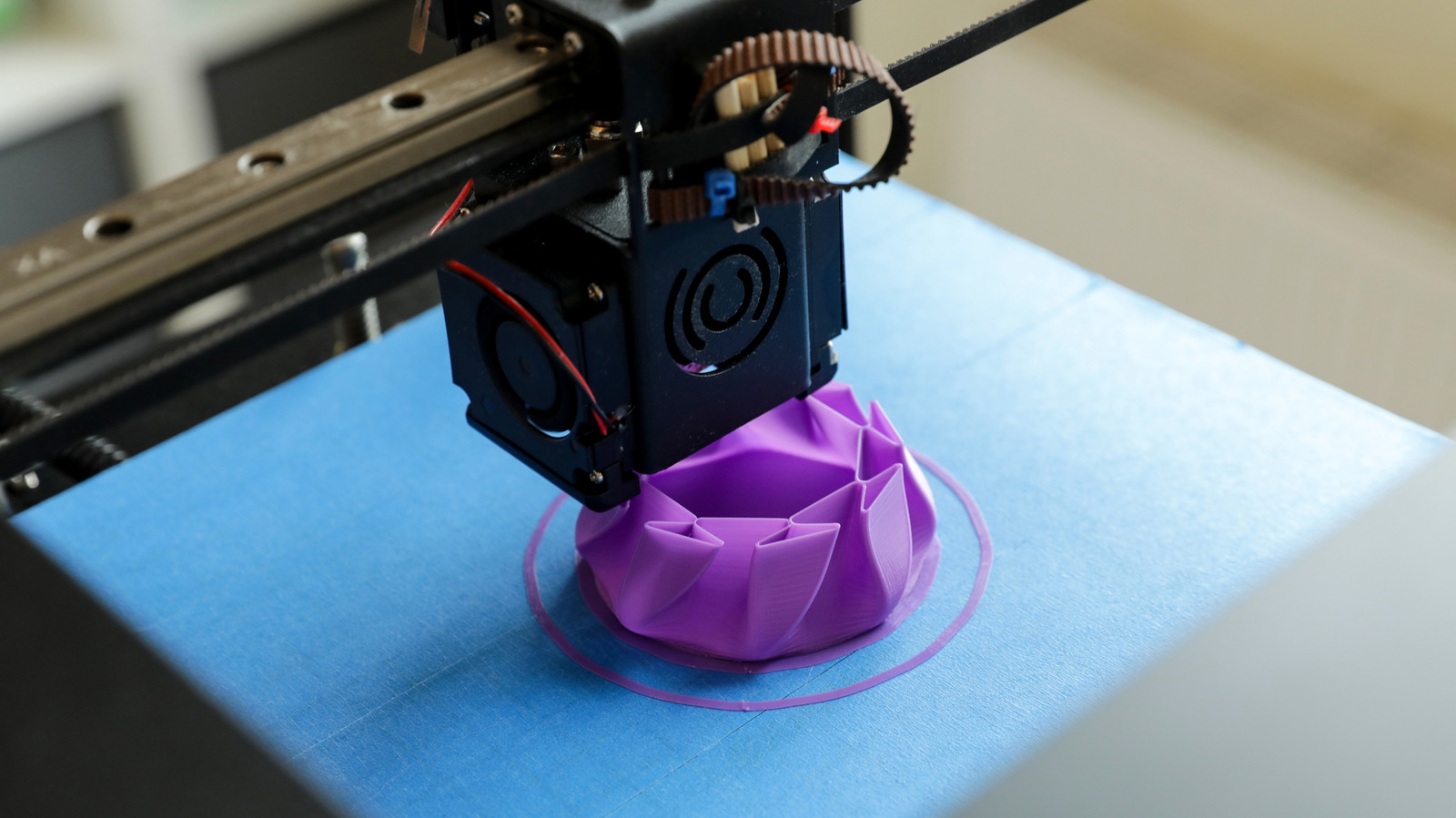
10 Best 3D Printing Projects For Beginners

AlexandrinaZ/Shutterstock

When you get a 3D printer, it can be overwhelming to figure out what you want to make. There are several designs you can discover online, and eventually, you can create your own using programs like SketchUp, CAD, or free apps like Blender, just to name a few. Creating these models is a much more advanced piece of 3D printing, and not everyone is ready to jump to this step immediately. You may also want to do some research to see what 3D printing accessories you can grab online. In the meantime, new printers should focus on finding simple projects and models that others have already created. All you have to do is upload the files to your printer to see the results. 

For those starting with a 3D printer who haven’t completed many projects, we’ve gathered some of the best starter projects you can do for your first time. They’re nowhere near as complicated as 3D printing your own laptop. These projects aren’t too complex, and they have plenty of uses throughout your home to test the final product and see how sturdy they are after you’ve put in the work. This list shares 10 of the best 3D printing projects for beginners, along with some alternatives if you want to try different designs or models.

Measuring cups

Measuring cups are a reliable tool you can find in nearly every kitchen. They come in various sizes, and sometimes they’re not the best quality. When you’re starting your 3D printing adventure, measuring cups can be a great place to start. These cups are simple, small designs that don’t use up too much filament, and there are multiple choices available to fit your cooking and baking needs. If you want a design with a large imprint showing the type of measuring cup you grabbed, check out the models created by OogiMe on Thingiverse. They have the measuring cup size raised in the middle, making it easy to spot which one you’ve grabbed. The measuring cups in this set range from 1/4 cup to one cup.

For anyone who wants to start smaller and is all set on measuring cups, there’s a set of spoons and scoops you can use from Ty10y. You won’t have to use as much filament for these models. It’s a stackable set that you break out when you need more, make smaller and precise measurements, like measuring flour for baking or adding oil before you begin cooking. These cups range from a teaspoon to 1/3 of a cup.

Tablet / smartphone stand

Using your smartphone or tablet at your desk and workstation is a good way to multitask, but it helps to have a reliable stand to keep your device in place. For a starting 3D printer project, creating a smartphone stand is a simple project, and one you can use just about anywhere you prefer your device to be hands-free. One elegant model created by Deltaprints features a simple base with a mount on the back and a lip at the front to keep your smartphone in place. It’s a sleek, elegant design that looks professional in any workplace and doesn’t take up too much space. It’s a small stand that gets the job done, and would fit right in on our list of some of the coolest gadgets you never knew you needed.

An alternative option for those who use a tablet or a smartphone on their desk is this model by alex_3dprint. It’s a slightly larger design with a base and a hook that extends. This stand suspends your tablet or smartphone slightly above your desk. It is compatible with nearly any model, and it incorporates cord management slots and a small storage space. There’s more freedom for the device you want to use with it. Both models are single molds that take a few hours to print, so you won’t have to leave your printer on overnight to see the final product. You can have it on in the background throughout the day.

Chess set

You might have lost a few crucial parts of a game over the years, or you want to make your own, customized models to use when you have guests over.  A 3D printer can let you print board game pieces for your favorite games. However, some of these pieces can be difficult to find proper models of online and even more challenging to create. For your first time making game pieces with your printer, go with something straightforward and intriguing, such as creating an entire chess set. These modern chess pieces made by Chris are familiar with an interesting twist. They are single molds that won’t take too long to print individually, as they are relatively simple models. Creating the entire set takes time, but making individual pieces should be quick compared to other projects. Though the whole project takes 16 hours, it’s a far cry from incredible projects like this 3D printed building being constructed in Europe.

There are several alternative models you could try. There’s a more complex design from ParasitKegel, with chess pieces that are much more complicated in design. These are still single molds, but expect a longer print time for the entire set. For those who want to make their guests laugh when they break out the chess game, there are these pieces that look like cows from the FlyingPurple Cow. To get the most from the cow chess pieces, expect to spend time painting afterward, for the full effect.

Coat hanger hooks

Coat hanger hooks are great tools to have hung up throughout your home, making it easy to keep your clothing or other small items from taking up countertop or closet space while keeping them off the ground. Rather than going out to buy some, you can 3D print coat hanger hooks. These won’t be as intricate as the larger coat hangers you have in your closet. Instead, these are small enough that you might hang them on a wall or hook them underneath an existing coat hanger, giving you even more closet space. The coat hanger hook by Anubis MK is a good choice, as it allows coat hangers to hang on each other, stacking up to four for expanded storage options in the same amount of space. These are exceptionally simple, with a minimalist design, making them great for any beginner 3D printer.

For those who enjoy woodworking, there’s the coat hanger from Itsme. These five coat hangers slip through a wooden plank that you can hang on a wall, creating a DIY coat rack. The overall design of these coat hangers for a 3D printer is simple, and they slip right into a wooden base that you can place anywhere inside your home. Alternatively, for those who want more fun, with a slightly more complicated 3D model, there’s the Coo Coat Hanger from Jim Killie, which isn’t just adorable, but also ideal for placing in a cubicle to hold your stuff during the workday.

Storage boxes

Storage container boxes are a reliable way to organize everything in a closet, a tool chest, or, if they’re small enough, on your desk. For those who wish to store boxes that stack on top of each other, the set created by Metikumi offers a wide range of choices. You’ll be able to find the box set that fits your preferences, and print it out to add to your desk or closet. They also have grid space for you to organize multiple items in a single container. You can also pick the model based on the rail grid type if you plan to put them inside a desk, but it’s entirely optional. Regardless of your choice, these boxes are a single print and come with a complete guide on the best printing practices if you want to learn more about your 3D printing hobby.

The stackable storage bins are a good place for any beginning 3D printer, but there are also the Gridfinity storage boxes from DatBuschi if you want to try something else. These are similarly simple designs, ideal for a desk, and capable of stacking on top of each other. There are multiple models to pick from, each with a different printing time. You can make as many as you want to hold your 3D-printed creations or to help keep a space organized.

Cable organizer

It’s easy for cables to get out of control at your desk, nightstand, or behind your televisions in a living room. Keeping them untangled can be a nightmare, and a good way to help manage it is with an organizer. These are simple devices you can attach to a wall or to your desk, depending on your setup. With your 3D printer, you can easily create one that fits the number of wires you want to manage and keeps them in a set place. TuTu designed a straightforward cable organizer that lets you slide your cables in and keep them in place. They have a model that allows you to screw it into a wall, or one that you don’t have to if you’d rather it rest on your desk.

If you’d prefer to have a storage unit, we were able to track down a cable organizer box created by i6o6. There’s an option to print them with or without a bottom, and another that stacks them, keeping them in a single place. These boxes are a single mold, making them straightforward to print on any 3D printer. They come in small, medium, and large sizes. The practical, basic design of these cable storage boxes makes them ideal for those testing out their 3D printers, with the added bonus of addressing a need most of us have run into.

Bag clips

Clips are small, simple 3D-printed options you can use for many things, from hanging laundry to organizing cords to keeping snack bags closed so they stay fresher longer. These are great items that you can use for your 3D printer, and they won’t take too long to complete. When you’re looking for a straightforward design for snack bags or baking ingredients, try the mini bag clip from Fifindr. These only take 13 minutes to print, so you can knock out several in a single day with your printer. You have two models to choose from: a standard one and a larger, stronger one. It’s not printing an entire house in under 80 hours, but its a fine and rewarding way to carry on your 3D printing journey. 

For a more traditional layout, there’s this chip bag clip from Butch Wise. These are slightly larger, with an extended handle at the end that you push on to open. There are three files you can choose from, all of which look the same. Finally, there’s a third bag clip option, which also comes from Fifindr. You’ll need to print out two different pieces. One piece slides into the other, pinching the bag top in between them. We recommend this model if you’ve tried the other two or are looking for a slightly more complicated 3D design to try out on your printer.

Funnel sets

A funnel is another helpful tool that you can use in your kitchen, laundry room, or garage. Having one or two of these simple devices somewhere in your home is always a good idea, and they are not too complicated for a 3D printer. You’ll find multiple funnel sets that you can download for your printer, and the screw-on funnel set from Fifindr is a reliable design, especially if you’d like to use it on plastic bottles. These funnels are a single mold, and the files come in three different sizes. Each has a bottle thread on the base, allowing you to secure them tightly and prevent any liquid from spilling. As a single mold, it should be straightforward for a 3D printer to develop, and it’ll take a few hours to finish.

Totalrepair made an alternative funnel design that you may want to consider. It comes with a single file and a small base, but it still features a screw thread, ideal for use on large containers. What makes it different is a small trench inside the funnel, which keeps the liquid inside and down a direct path. This model might be better suited for a garage, as it helps you avoid the risk of antifreeze, oil, or washer fluid getting on the ground or your clothing.

Pen holders

With 3D printing, desk organization can be a much more appealing concept as you’re able to create individual and unique bins for your workspace. It’s an effective way to save money, plus, many of the designs are relatively simple when you’re initially starting with a printer. There are several pen holder designs that you can track down, capable of holding your pens and other small tools that might clutter up your desk. There’s a large desk organization design from Meyui that comes with several inserts you can swap out, depending on what you need for your desk space. The complete set will take several hours to print, but you don’t have to print them all, as not every piece is required for the design to work.

For something with a smaller footprint, check out this pen holder model from dirk144347. They have a central tower with multiple storage spaces surrounding it for various items that you want to have on your desk. It’s a single design, but because of its size, expect it to take a little less than 24 hours. If you’d like an alternative and unique model, user Markury posted a small crab. It only holds one pen or pencil, but the adorable crab face will always be there to support you during your late-night projects.

Bottle opener

A bottle opener on your keychain or in your kitchen is a nice, simple tool you can use for many occasions, and it’s another straightforward design you can leave to your 3D printer. One option is to go with the small design with a keychain loop from DrLex. It has the traditional teeth out on the bottom of the front, giving you enough room on the handle to apply pressure and peel away the bottle cap. There’s also a small hole at the end of the handle where you slip a keychain loop, allowing you to carry it with your wallet or keys. You can expect this to take less than an hour to print.

If you’d like a slightly larger design that has more functionality, there’s the 3-in-1 Bottle Buddy from Minkas. You can use it on glass or plastic bottles, making it more versatile than the standard keychain. Although it is larger, don’t expect to wait too long before it’s done printing. It still only comes out as a single mold, making it easy to see if it works with the bottles you have in your house, or if you need to make any minor adjustments to the design’s size.

Methodology

Stenko Vlad/Shutterstock

When selecting the products we wanted to highlight for this list, we focused on ones that were not too complicated. Ideally, they were single molds that wouldn’t require too many fitting pieces, gluing, or additional construction after they came out of the 3D printer. We also wanted to ensure that many of the items would not take too long to print, and if they did take long, the finished design had to be simple. For example, the pen holder from Dirk144347 was a single, large design with multiple holes, and required almost a complete day, but was ready to use as soon as the printing process was complete.

With these requirements for printing items in mind, we also wanted to find practical projects and items that almost anyone could use. For those learning to use a 3D printer, getting use from it immediately is a great feeling. We wanted to make sure that those who are just starting out feel like it’s a hobby with tangible benefits. Everything on this list is not too complicated, and offers a way for someone brand new to get used to the process before they try out more difficult files and designs with their printer.

Source

Posted on

A Self-Driving Robot Snowblower Can Clear Your Driveway This Winter

We may receive a commission on purchases made from links.

If you are tired of shoveling snow off your driveway, there is a self-driving robot that can do that for you. Called the Yarbo Snow Blower, this robot has the ability to clear snow up to a height of 5 inches and can recharge itself, making your snow cleaning chores much easier.

The Yarbo Snow Blower costs a staggering $4,999. Unless you have that kind of money lying around, this product might not look appealing. Furthermore, anyone who lives in areas that don’t get a lot of snow or who has reliable residential snow plowing services likely won’t receive a big enough benefit to justify the cost. However, if you live where it snows heavily and frequently, and you often have to clean your own driveway and walkways, the Yarbo may be a great investment.

The Yarbo Snow Blower brings to mind similar yard-maintenance robots, such as watering tractors or the Ecovacs GOAT A3000 robotic lawn mower. Now you can have a robot to help you out in the wintertime, as well. While advertised performance and capabilities suggest you can rely on the Yarbo Snow Blower, and customer reviews back this up, given the price point, it’s worth fully understanding what you are getting and if it will be worth it.

How the snowblower works

As an autonomous device, the Yarbo Snow Blower offers self-driving snow-clearing capabilities. In light, 1-inch-deep snow, it’s capable of clearing out 6,000 square feet in a single charge. The robot blows the snow it drives over off to one side, easily removing it from driveways and walkways. While driverless cars may struggle in the snow, the Yarbo Snow Blower works on a variety of surfaces, including pavement, concrete, and gravel.

Each Yarbo Snow Blower revolves around a base module that weighs 77 pounds. Every purchase also includes a snow blower module with a 2-foot-wide intake, a battery, snow tracks, shovel, and a docking station. The module is designed to be versatile and work with other Yarbo products and accessories, including a snowplow blade and a lawnmower attachment.

The robot uses a lithium-ion battery and takes about an hour and a half to charge from 20% to 80% battery life. It’s capable of throwing the snow it clears up to a distance of 40 feet, ensuring you don’t have giant stacks of snow lining the edges of your driveway. Furthermore, the Yarbo’s camera helps it detect obstacles and avoid crashes, but the robot has protective bumpers just in case. While you can schedule the Yarbo to clear out the snow at certain times, the Yarbo app and weather forecasting capabilities let the robot choose when it thinks it’s best to clear the snow, streamlining the process.

What users say about the snowblower

The Yarbo Snow Blower Amazon product page boasts very positive reviews that sit at an average of 4.5 stars. Customers who enjoyed the product say it is “easy to assemble,” that its “autonomous operation is a true lifesaver,” and that it is “worth every penny.” Multiple reviews mention its sturdiness and durability. However, take these reviews with a grain of salt because only 27 customers reviewed the product, 24 of whom gave the device 5 stars.

A small number of reviews are downright negative, however. One customer thought the assembly was way too long and complicated, so they hired someone else to assemble it for them. Another said that the product did not arrive with its battery. The official Yarbo Snow Blower product page does say the device comes with a 30-day free return policy and 24/7 customer support, which could apply to and help fix these types of situations.

While the future of snow-clearing technology promises advancements such as phase-change concrete that can melt ice and snow, the Yarbo Snow Blower is available here and now. If you’re willing to spend some extra money, you can also add on varying levels of a protection plan, as well. With the Yarbo Snow Blower, you may never have to lift a snow shovel again.

Source

Posted on

This Amazon Best Seller Is The Weirdest Car Cleaner You’ve

We may receive a commission on purchases made from links.

Keeping the inside of a vehicle clean isn’t always easy. Without even factoring in children or pets, the interior of an automobile can have a multitude of areas for dust, dirt, and debris to hide. Keeping every nook and cranny clean can be rather cumbersome, but a quirky item available on Amazon might just do the trick, even if it does look peculiar.

Right now, Amazon has the PULIDIKI Car Cleaning Putty on sale for $6.62, netting you a 26% savings off the typical $8.99 price tag. Even if the putty itself seems like it’s two parts weird, one part amusing, it’s currently an Amazon best seller and has rave reviews from customers. The amorphous putty clings to objects without separating, meaning it can seep into cracks and collect debris without leaving any bits of itself behind.

Even if the cleaning putty may look like something that eats people in a cheesy old horror movie, it can be helpful in eliminating dust from hard-to-reach areas. Additionally, it has some nice uses outside of a vehicle as well, making it a worth addition to our list of accessories under $20 for office workers. With that in mind, this can be a solid choice for yourself or it can make a good stocking stuffer or Secret Santa gift.

Keep your car clean with the PULIDIKI Car Cleaning Putty

A good deal on something that’s actually handy can be hard to beat. Just like finding something useful for the office at Dollar Tree, it can be a nice feeling to find something that actually serves a purpose without overspending. Though it may look incredibly strange, the PULIDIKI Car Cleaning Putty fits the bill, and the deal currently going on over at Amazon is worth checking out.

The PULIDIKI Car Cleaning Putty is composed of an eco-friendly material, and it’s safe for vehicles, meaning it can grab dust and debris from air vents and corners without causing damage. It can also be used for cleaning a keyboard in an office, but the company notes not to use it on cellphone screens or computer monitors –- and there are safer ways to remove dust from certain electronics, anyway.

Currently a #1 Best Seller on Amazon in the Automotive category, over 100,000 have been sold in the past month, and the product also has a 4.1-star rating out of five with over 96,800 reviews. Folks appreciate the Car Cleaning Putty’s ease of use, longevity, and its effectiveness at cleaning the small corners of a vehicle. However, at least one user notes that the substance can leave a greasy feeling on your hands and recommends using a rag. Nonetheless, this can be a solid go-to for keeping in your car, but remember to store it in a cool, dry place.

Source

Posted on

SBB undertakes Europe’s first major railway with IMS, VoLTE comms

Looking to bridge and eventually transcend the world of traditional mobile networks with IP communications infrastructures ahead of the shutdown of 3G services in the country, leading Swiss national railway operator Schweizerische Bundesbahnen (SBB) has delivered what is claimed to be Europe’s first live integration of legacy railway communications system GSM-R with an advanced IP Multimedia Subsystem (IMS) platform with voice over LTE (VoLTE) service using Ericsson technology.

With the mission statement of connecting Switzerland, and with 35,500 employees, SBB transports over 1,410,000 people and 170,000 tonnes of freight to their destinations every day. It also operates the mobile network for all Swiss railways on the standard gauge network.

For years, voice roaming for Swiss rail communication relied on telco Swisscom’s public 3G network in areas where GSM-R coverage was not available. GSM-R is the current standard for secure, reliable railway communications, supporting essential voice and data for train control and operations.

With Swisscom’s decision to decommission its 3G services, Swiss railway operators faced an urgent need to modernise. Expanding the old GSM-R system was one option, but SBB engaged Ericsson to deliver a platform based on IMS and VoLTE, bridging GSM-R rail-specific functions with modern mobile and fixed telephony systems.

The infrastructure upgrade is intended to ensure uninterrupted, nationwide railway communication for Switzerland’s 3,100km rail network ahead of the planned decommissioning of Swisscom’s 3G services by the end of 2025. Furthermore, onboard 4G service upgrades have been implemented for about 1,000 trains, in a move that Ericsson says no less then redefines connectivity and reliability for SBB’s railway operations.

Said to offer resilience and innovation, the new system ensures continuous end-to-end rail communication, setting benchmarks for railway operators across Europe facing legacy telecom shutdowns.

In addition, the deployment strategy aimed to prioritise zero service interruptions and robust safety compliance. Key features of the IMS implementation included IMS-GSM-R interworking, GSM-R numbering adaptation and mandatory safety-critical functions such as emergency stop calls.

The IMS/VoLTE integration progressed through a number of key testing phases: platform deployment was initiated in June 2023; the first end-to-end VoLTE-to-GSM-R calls were successfully completed in early 2024; field tests across pilot trains, certified by Switzerland’s Federal Authority Office of Transport, took place in January 2025; and nationwide go-live of the system occurred in April 2025 ahead of schedule. The infrastructure is currently in operation with approximately 450 trains and 1,000 operational devices using VoLTE technology with zero downtime.

Ericsson says the live IMS/VoLTE platform guarantees high-performance rail communication with scalable, modernised dispatcher telephony, reducing risks and limitations of the legacy infrastructure. Key rail-specific functions – including EIRENE functional numbering (European Integrated Radio Enhanced Network), emergency stop calls, group calls  and onboard announcements – have been preserved.

By enabling 4G/5G, Switzerland’s railway network is attributed with avoiding service interruptions from the 3G shutdown while laying the groundwork for upcoming 5G-based Future Railway Mobile Communication System innovations. Migrations to date are said to have proceeded smoothly, supported by training provided to SBB’s operational teams.

While the full migration of train fleet communications and smartphone operations continues towards its December 2025 completion, the collaboration is said to have paved the way for future enhancements. Insights gained during this project will guide improvements in strategies for similar railway transformations globally.

Source

Posted on

UK altnet market ‘entering its most dangerous phase yet’

Even though the footprint of the UK’s alternative broadband providers (altnets) has doubled in less than two years, the sector is now moving from expansion to survival, with several operators facing commercial pressure that could trigger an expected consolidation wave, a study from Intelligens Consulting has found.

The State of the UK fibre market 2025 report revealed that the UK broadband market is on the brink of its biggest shakeout yet, as the industry shifts from rapid expansion to targeted, commercially grounded fibre investment.

Intelligens Consulting said the altnet sector had quietly doubled in under two years. Indeed, when it published its 2024 update, UK altnets had passed just over 8.6 million premises. By late 2025, that figure has grown to around 16 million, which the analyst described as “an extraordinary” increase delivered despite rising costs, slowing build rates and investor caution.

Altnets now account for around 57% of all UK fibre-to-the-premises (FTTP) deployments, according to the study, with three firms – CityFibre, Netomnia and nexfibre – anchoring the independent fibre sector and driving the majority of new coverage. In addition, several operators have moved significantly up or down the rankings over the past year, with Lightspeed, F&W Networks and G.Network dropping out of the top 10, replaced by nexfibre, FullFibre/Zzoomm, Trooli and Freedom Fibre (including VXFibre).

Yet even with the rapid growth in altnet footprint and sector investment surging to £21.3bn, defying predictions of a slowdown, the study flagged several signs that the roll-out momentum is slowing, with take-up rates varying from 4% to almost 50%. This sparked concerns over the long-term viability of several operators, according to Intelligens Consulting.

The study found that the UK now sits at an average 2.44 fibre networks per household, raising fresh questions about overbuild, competition and sustainability. The report showed UK broadband leader Openreach was now passing 1.1 million premises per quarter, with take-up exceeding 50% in older cohorts, further squeezing altnet competitiveness. At the same time, nexfibre’s rise from nowhere to become a top-three builder in just 12 months was said to have intensified competitive pressure and reshaped the national roll-out map.

The altnet market has never been bigger – or more fragile. 2026 will be a make-or-break year. Those who fail to differentiate, partner smartly, or rethink their commercial strategy will not survive Iqbal Singh Bedi, Intelligens Consulting

These changes are regarded in the study as reflecting the stronger capital positions, faster build momentum and more decisive strategies of the rising operators. And while predictions of a merger wave have persisted for years, outside a handful of transactions, such as CityFibre acquiring Connexin, the market remains fragmented. Most operators are still pursuing independent strategies, although several face growing financial pressure and are pursuing crowdfunding solutions instead. The analyst suggested that while decisions may finally be forced in 2026, for now, the sector remains unconsolidated.

Commenting on the report, Intelligens Consulting managing partner Iqbal Singh Bedi said the altnet industry had arrived at a “make-or-break moment” for the UK fibre industry as a whole.

“The market has never been bigger – or more fragile,” he said. “Some operators are winning with strong brands and 30-50% take-up. Others are stuck in single-digit traction. 2026 will be a make-or-break year. Those who fail to differentiate, partner smartly, or rethink their commercial strategy will not survive.”

Looking forward, the study noted that one of the most striking findings was the role local authorities will play in the next phase of growth. Indeed, local authorities were cited as being critical to survival for companies. “We’re now past the land-grab era,” said Bedi. “Sustainable growth will come from smarter, place-based partnerships. Councils and operators must collaborate to reduce build risk, accelerate take-up and align fibre with smart place ambitions.”

In conclusion, the research said altnet survival will now depend on take-up, operational efficiency and commercial discipline, and not sheer roll-out volume. The long-expected consolidation will likely begin with those whose take-up, funding or strategy lags the market’s direction of travel. The likely winners will be those that build where it matters, invest where returns can be realised and collaborate where value can be unlocked. 

Source