Posted on

What Is A USB-B Port (And Why Would You Use

We may receive a commission on purchases made from links.

The Universal Serial Bus (USB) connection has been around since the mid-’90s, introduced as a means of wiring a wide range of accessories to a desktop PC, including peripherals like mice, keyboards, and external storage devices. While the modern world deals mainly in USB-A and USB-C ports, the USB-B standard is still around, too — it’s just not as commonly used. 

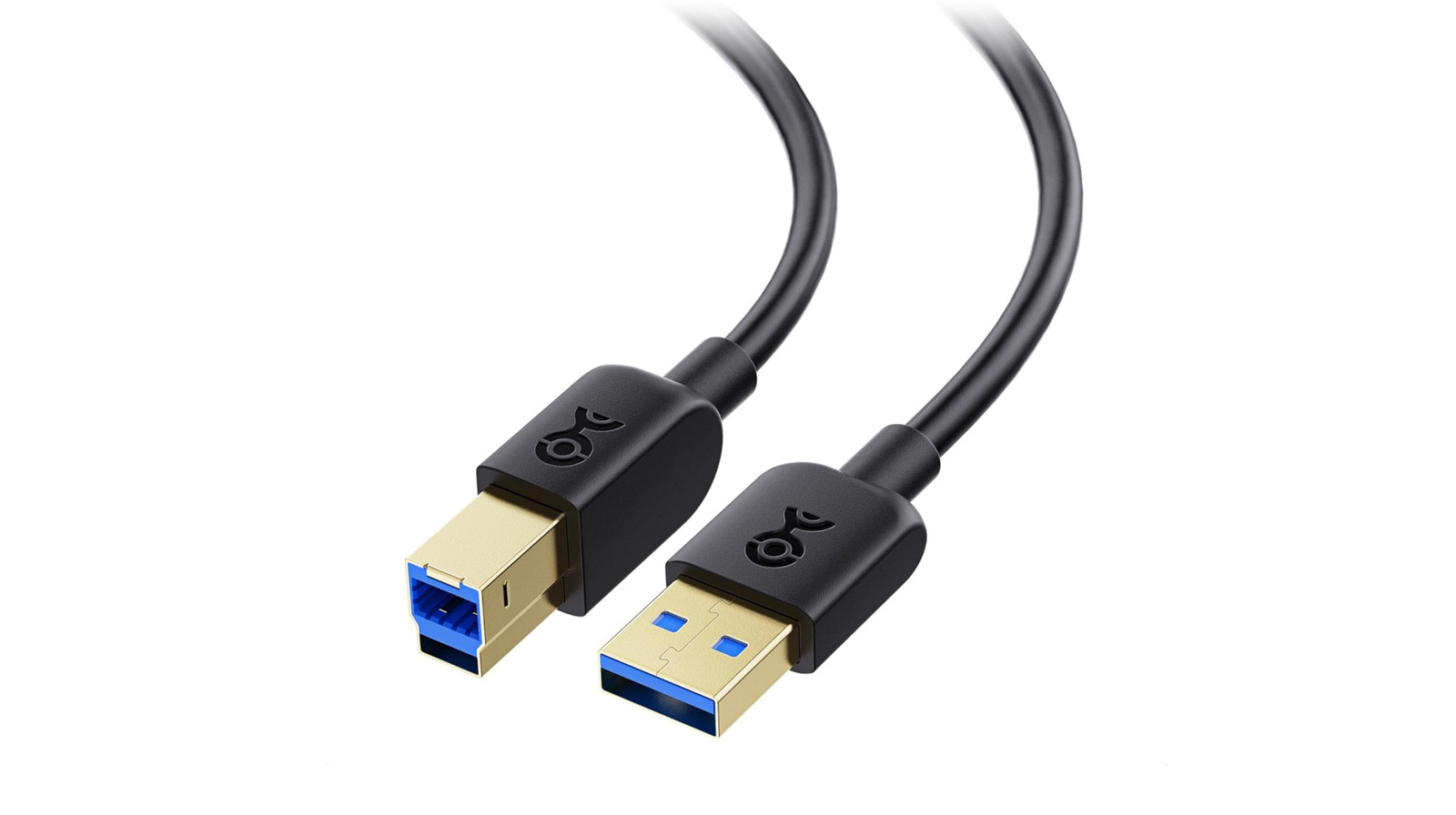
The USB-B connector is the largest of the three USB ports. The connection is a boxy shape with slanted top corners, and is primarily used to connect devices like printers and scanners. You’ll also find it on musical gear like MIDI keyboards and synthesizers, as well as various medical technologies. In many cases, you’ll only see a USB-B connector on one end of a USB cable, with the other end being a USB-A connector. 

As the USB standard has evolved over the years, USB-B has been through a couple of generational changes, too. The USB 1.1 and 2.0 generations use the same USB-B connector type, but USB 3.0 introduced a new design that utilized nine pins (instead of the older version’s four) for improved data transfer speeds. And depending on the hardware generation you’re working with, USB-B ports and connectors may also be one of several colors.

Why critical gear still relies on USB-B

Unlike USB-A and USB-C, the USB-B port’s boxier port style provides a more robust and physically secure connection. This isn’t to say that A and C ports aren’t reliable; USB-B was simply designed with extra stability in mind — to give you that extra-snug, wiggle-free hookup that won’t unplug if accidentally jostled.

This is especially important for hardware that requires a steady stream of data to operate, like medical scanners or on-stage peripherals for a live music setup. Should the unplanned nudge or rockstar antics disturb a USB-B cable, the port’s firm hold will likely keep the wire plugged in.

Thanks to the thicker port housing and stronger hold, USB-B connectors are often able to endure more plug-unplug cycles — usually up to 5,000 — than USB-A, which is 1,500 cycles or less. For devices that simply can’t part with a data-power stream for any amount of time, USB-B is often your best bet, and maybe the only USB connector you’ll be able to use.

Why USB-C is the port standard that actually makes life easier

While some of the best uses for your PC’s USB ports tend to involve USB-A and USB-C gadgetry (especially since most computers don’t use USB-B), that doesn’t mean you won’t come across the occasional USB-B-powered tech. There are also several Micro and Mini variations of both USB-B and USB-A you may encounter in the wild.

Generally speaking, USB-C is the connection that matters most as we head into the future of consumer tech and even professional-grade equipment — and it’s also far easier to work with than USB-B and USB-A. Why, you may be wondering? Neither of those port types is reversible, which means your USB cable or peripheral can only be connected one way.

This can prove particularly challenging when you’re fumbling around in a dimly lit space or fighting gravity at an awkward angle — like when you’re half-contorted behind a TV, blindly feeling for a port so you can plug in a flash drive. With USB-A or USB-B, you inevitably end up doing the classic “flip it, flip it back, try again” dance. USB-C eliminates the guesswork. If the connector fits in the space, it’s going to plug in.

Source

Posted on

4 Essential Apps For Photographers

Filippobacci/Getty Images

As a photographer, you need to have the best tools to do your job well. That includes appropriate hardware like a camera or smartphone. But hardware alone won’t meet all your needs. You also need to have certain apps to augment your work or fulfill other needs, such as photo storage. However, if you’ve tried to search for photography apps on the Google Play Store or App Store, you’ve certainly been bombarded with a plethora of options. The sheer volume of photography and photography-adjacent apps makes it tough to know what’s really important and what can be skipped.

But you don’t need most of them. In fact, you only need to get a few essential photography apps to meet your different needs as a photographer. You need an app for taking images with more freedom over the shooting process, another for editing to make your work look perfect, and another to store and share your work easily.

Photoshop Express

Mariakray/Shutterstock

While modern smartphones have solid camera hardware, you won’t always get a picture that is ready to share. You may need to adjust the tones, contrast, shadows, and whatnot. That’s where Adobe’s Photoshop Express app comes in handy. It’s an image editing app that is meant for quick photo editing, and unlike other Adobe photo-editing apps, Photoshop Express is beginner-friendly with an easy-to-use interface. 

It features templates that you can use to retouch your images for quickly sharing on social media. And if you prefer to manually adjust different aspects of your image, like saturation, contrast, and brightness, you can do it. The editor also has support for healing, cropping, background removal, overlays, and collages, among other features. You can even edit RAW images in Photoshop Express. 

Like other Adobe apps, the app has built-in AI-powered tools, including an AI text-to-image generator and Adobe’s Sensei for advanced editing, like selective editing without heavy lifting. The app automatically saves your work in Adobe’s Creative Cloud, so you can freely switch devices and pick up from where you left off. Photoshop Express is free to download from the Google Play Store and App Store. It has a free plan, but you’ll need to pay for Premium ($5.99/month or $59.99/year) for full capabilities.

VSCO

Sidney van den Boogaard/Shutterstock

Another essential app for photography is VSCO, available on iOS, Android, and desktop (Windows and macOS). As an editing app, the app includes all the essentials for adjusting different aspects of an image or video for perfect results, such as exposure, size, contrast, tone, saturation, white balance, HSL, blur, and clarity. But if you’re not yet comfortable manually adjusting these aspects, VSCO has over 200 presets that you can apply for one-click editing. 

For example, the app has dedicated film filters that make your photos look like they’re from old-school cameras from companies like Kodak and Fujifilm. It also includes an AI Lab feature (exclusive to iOS as of this writing) with AI-powered editing tools, such as object removal and image upscaling. VSCO stands out with its recipes feature, which allows you to create your own presets for batch editing.

VSCO offers a free plan with limited features, such as access to a handful of presets and one recipe. You’ll need to pay for one of its plans to access all its features without restrictions, including access to all available presets, cloud sync, and advanced editing features like HSL and Split Tone. The Plus plan costs $7.99/month (or $29.99/year paid annually), while the Pro plan costs $12.99/month (or $59.99/year billed annually). You can download VSCO for free from the Google Play Store and App Store.

Halide Mark II

Halide is a camera app that packs advanced features, giving you more control when taking images. When you install the app, it lets you choose whether you want your images to be processed by AI or not. You can choose to disable all processing for a RAW image without artificial enhancements, or select between your iPhone’s default or reduced processing. And when shooting images, you can pick between Halide’s automatic or manual mode if you need more control over the process. 

In manual mode, you can adjust the ISO, shutter speed, and white balance. You can also focus manually using built-in tools like Focus Loupe and Peaking. Aside from that, the app includes several convenience features for shooting stills, such as zebras, grid overlay, zoom, flash, white balance, and a timer. In Halide, you can take photos in different formats, including ProRAW, HEIC, and JPEG.

The app also has an Apple Watch companion app and Siri shortcuts for remote shooting, which can be handy in different scenarios, such as when taking pictures of the moon with your iPhone hooked to a phone holder. There’s also a special feature dubbed Neutral Macro that enables you to take macro shots on any iPhone. Halide is free to download from the App Store. However, you’ll need to pay to use the app. It costs $11.99/month (or $22.99/year) or $69.99 one-time if you prefer to buy the app instead.

500px

Klevo/Shutterstock

As a photographer, your job doesn’t end after shooting and editing images. You also need a way to store the images for future reference or share with a client (if it was a paid job). And that’s where 500px shines. 500px is an app built for photographers to store and share their images. The app has a vibrant community of photographers, so using it gives you a chance to showcase your work to potential clients and get inspiration from others. 

You can upload your hi-res photos to 500px for storage and share them with everyone if you’d like. The app includes image organization features, such as galleries and tags, that come in handy when searching for photos later. You can also license your work to 500px for royalties, which is great if you want to earn an income from your photography skills.

500px has a free plan that limits you to 21 hi-res photo uploads per week, and you can upgrade to the Awesome or Pro plan for $6.49 (or $47.90/year) and $12.99 (or $95.90/year), respectively, for more features. Both plans include features like unlimited storage, advanced analytics, no ads, and offline viewing. The Pro plan also lets you create a portfolio website on 500px to showcase your work. Download 500px for free from the Google Play Store and App Store.

Source

Posted on

Error-prone eVisa system a precursor of digital ID

Technical errors with the Home Office’s electronic visa (eVisa) system are causing “high levels of stress, fear and exhaustion” for migrants in the UK, who are being left to navigate the digitisation of their immigration status with minimal support, research has found.

The report, Exclusion by design: Digital identification and the hostile environment for migrants, said the error-prone eVisa system represents a precursor of what’s to come with mandatory digital ID, arguing that efforts to digitise the immigration system represent an opportunity to test such systems on a precarious section of the population before extending them out more broadly.  

On 31 December 2024, the physical immigration documents of millions of people living in the UK expired after being replaced with a real-time, online-only immigration status by the Home Office.

With paper documents having been completely phased out, people are now expected to use a UK Visas and Immigration (UKVI) digital account to generate “share codes”, which they are supposed to use to prove their immigration status when dealing with a range of third parties, including employers and letting agencies.

This means the eVisa system – which trawls more than 90 disparate government databases to generate and determine someone’s immigration status each time they log in – is the only means by which people can prove their lawful residence in the UK, as well as evidence their associated rights and entitlements.

‘Substantial barriers’ 

However, the research – published on 5 December 2025 by academics Derya Ozkul from the University of Warwick and Marie Godin from the University of Leicester, in collaboration with Migrant Voice and the Open Rights Group – has found that the mandatory eVisa system is deeply impacting the daily lives of migrants, including their ability to work, rent or buy, travel, study, and access vital public services.

“The transition to a fully digital immigration status system marks a significant shift in how migrants interact with the UK’s immigration infrastructure,” it said, noting that while digitisation is being presented as a modernisation effort aimed at improving efficiency and security, the research demonstrates that its current implementation has created substantial barriers for many migrants.

It also found that the “frequent technical problems” are being made worse by a lack of support from the Home Office, and that migrants’ sense of vulnerability is being heightened by the wider hostile environment in which this digitisation is taking place.

“Worries of being unable to prove legal status – within a hostile environment that emphasises enforcement, detention and deportation – were pervasive,” said the report, adding that research participants shared “a deep fear of losing their rights” if they made mistakes.

“Because the system requires migrants to regularly update their information, even minor or inadvertent errors were perceived as potentially jeopardising their status,” it said. “This created a persistent sense of vulnerability. Moreover, the burden of managing these risks and the anxiety associated with them falls entirely on migrants.”

It added that this was creating “a deep sense of mistrust” towards the Home Office among migrants with negative experiences of the system, which were particularly acute for those with limited digital literacy, language barriers, disabilities or caring responsibilities.

The findings echo many of the sentiments previously shared with Computer Weekly by people experiencing technical errors with the eVisa system, who spoke in June 2025 about the “anxiety-inducing” psychological toll of not being able to reliably prove their immigration status in the face of a hostile and unresponsive bureaucracy.

“Our report highlights the experiences of migrants across the UK – of different nationalities, legal statuses and family situations – who were forced to adapt to the new system with little time or support,” said Godin.

“Many described confusion and anxiety as they navigated a complex, glitch-prone platform, fearing that even small mistakes could cost them the right to work, rent or travel. The constant pressure to manage their digital status and fix technical issues left many exhausted, reinforcing migrants’ perceptions that the shift to digitalisation prioritised control over fairness, efficiency and accessibility.” 

Ozkul said she hopes the report can serve as a warning about “what can go wrong when systems are made compulsory and digital-only, without offering any alternatives”.

Highlighting how the proposed introduction of digital ID in the UK has been framed around the need to curb illegal immigration, the report said the online-only eVisa has effectively positioned migrants “as a testing ground” for its broader national digital ID ambitions.

“While migrants have served as ‘technological testing grounds’ in other contexts (Molnar 2020), such experiments have typically focused on managing external borders rather than governing populations within state borders,” it said.

“In this respect, the UK represents a distinctive and troubling case: it has piloted a digital identity system on migrants residing within its territory, effectively normalising experimental forms of digital identification on a specific, already precarious group before considering similar digital infrastructures for the general public.”

Policy recommendations

The report goes on to make a number of policy recommendations that can help alleviate the situation for migrants. In the short term, this includes providing non-digital alternatives for migrants, ensuring there is transparency over what data is stored and which government agencies it may be shared with, and creating accessible repeal and redress mechanisms.

In the longer term, it said the Home Office should establish meaningful two-way communication with civil society organisations supporting migrants; introduce clear legal safeguards to prevent individuals or organisations, such as shop staff or political activists, from demanding proof of digital immigration status without lawful authority; and stop the experimental use of technology on migrants.

“The Home Office can take immediate steps to reduce the anxiety that migrants are experiencing by giving them the safety of a physical or digital backup that will allow them to prove their status in any circumstances,” said Sara Alsherif, migrants digital justice programme manager at Open Rights Group, which collaborated with the authors on creating the report.

“However, root and branch reform of this system is also needed and lessons must be learnt, especially as the government intends to roll digital ID out to everyone in the UK.”

The report itself added that implementing the recommendations would significantly reduce the risks and inequities created by the current digital immigration system.

“By prioritising accessibility, transparency and accountability, the Home Office can ensure that the digitalisation of public services does not compromise migrants’ rights,” it said. “Failure to act will perpetuate systemic exclusion, deepen inequalities and erode trust in public authorities.”

Computer Weekly contacted the Home Office about the contents of the report, but received no response.

Source

Posted on

Intel Will Also Produce Non-Pro Apple iPhone Chips, Analyst Claims

José Adorno/BGR

Last Friday, Intel’s share price was up 10% due to the news of winning orders for Apple’s M-series chips in 2027. While these talks were already happening months ago — as BGR highlighted GFHK analyst Jeff Pu’s note on the matter – that same analyst now says Intel might get even more orders from Apple, this time for the company’s non-Pro iPhone chips.

According to a note seen by BGR, Intel could start manufacturing Apple’s A-series chips in 2028 using its new 14A process, a node that is also expected to attract major wins from Nvidia and AMD’s server divisions. Additionally, the analyst says this partnership will be key to Apple due to the “Made in America” trend. 

With that, Intel is expected to deliver Apple’s low-end M-series chips starting in 2027, with the company on track to enter its high-volume manufacturing stage later this year and debut the 18A technology during CES 2027. Pu says the yield rate reached 60-65% in November, and it’s targeting 70% by the end of 2025.

What this new partnership means for Apple

José Adorno/BGR

Apple currently only relies on TSMC to produce its most powerful A and M chips. If Intel is able to ensure quality, not only can Apple negotiate the price of future chips, but it can also promote some of its processors being manufactured in America.

According to Pu, Intel is getting its next-gen chip factories ready to begin production in 2026. While it might start with a small production to ensure everything works properly, it expects a big 2027, first with Mac chips, followed by non-Pro iPhone chips in 2028. That said, Intel might be responsible for Apple’s M7 and A21 chips, or the following generation, by using the 14A and 18A manufacturing processes.

What’s more interesting about the story is that Apple will phase out all Macs with Intel chips when it releases macOS 27, and one generation later, it will use the company’s expertise on chips to produce Apple Silicon, which was what pushed Apple away from Intel chips in the first place.

Source

Posted on

How To Master AirPods Pro 3 Features And Settings

José Adorno/BGR

Apple’s AirPods have been available for almost a decade now. With the latest iteration — the AirPods Pro 3 – users have more features than ever to enjoy the company’s best wireless earbuds. As Apple adds more functionality, though, some users may not be able to take full advantage of all the features, since activating them can involve several steps. This is why we decided to put together a list of all the AirPods Pro 3’s settings so you can discover what you can do with them.

Once you have your AirPods Pro 3 connected to your iPhone, you can go to Settings and tap on your AirPods. There, you can give your earbuds a different name than Apple’s default nomenclature. This screen allows you to switch between the different listening modes, i.e., Transparency, Adaptive, or Noise Cancellation, among other options. Here’s everything else you can do with your new earbuds.

Live Translation, Find My, head gestures, and heart rate measurements

Christian de Looper/BGR

With iOS 26, Apple added Live Translation capabilities to AirPods running on the H2 chip. Users can choose between a variety of languages to have real-time translation in their ears. That said, it’s important to download the languages before using this feature. Apple also offers head gestures for AirPods, which means you can move your head up and down to accept a call or reply to a message, or move side to side to decline calls. You can enable all of these features from the same Settings menu.

You can also find your lost AirPods with Apple’s Find My app. Thanks to the new U2 chip, it’s easier to find your AirPods case even if it’s a bit farther away using Precision Find. An exclusive feature introduced with the AirPods Pro 3 is the built-in heart rate sensor, which works during a workout and even calculates the calories burned based on your heart rate. If you use the Apple Watch with your AirPods, you get an extra channel for measuring your heart rate, making it more reliable.

Hearing health and other custom settings

Christian de Looper/BGR

Apple is taking hearing health rather seriously with the AirPods Pro 3. This is why users can set Hearing Protection or use Hearing Assistance to aid users with mild to moderate hearing loss by boosting voices and sounds around them. Besides that, the AirPods Pro 3 can make adjustments that improve the clarity of music, videos, and calls. Users can take a hearing test from the Health app or activate hearing assistance from the AirPods Settings page. Users can also customize the tap or stem-press actions.

These gestures can be used to invoke Siri, switch noise cancellation modes, play/pause music, etc. You can also tweak call controls, such as pressing once to mute/unmute a call, or twice to end it. What’s new with this generation is the ability to take photos with AirPods. By activating the Camera Remote feature, you can choose whether pressing the stem once or pressing and holding it can start a recording inside the Camera app.

Other good-to-know AirPods Pro 3 features

Christian de Looper/BGR

The AirPods Pro 3 has a new Battery settings menu, which not only optimizes charging patterns with usage but also delivers charging notifications when the battery is low or when the AirPods have been fully charged. There’s also an Accessibility page that can make it easier for you to adjust the speed required to press your AirPods stem for activation, use ANC with just one AirPod, turn on Loud Sound Reduction, and even adjust the volume of tones played by the AirPods.

One of our favorite AirPods features is turning on the “Off Listening Mode,” which shows how much your AirPods can protect you against loud noises. This feature is perfect for when you’re at a concert or passing by a construction site. Finally, at the end of the AirPods settings screen, you can check the model, serial number, and firmware version. Users can also check the Limited Warranty and add AppleCare coverage on the same page.

Source

Posted on

Can Magnets Actually Damage Your Electronics, Or Is It Just

Lee Charlie/Shutterstock

If you grew up around some of the earlier models of televisions and computers, you may have received at least one sternly-worded warning to never place a magnet near them. These warnings still persist into the modern day, with the notion of placing a magnet near any electronic device generally considered a bad idea because it could damage the electronics. In actuality, while magnets can be mildly hazardous for some devices, the lion’s share of concern is a myth rooted in outdated technology.

The primary worry regarding magnets and electronics is that placing a magnet near a device could shift its components around or erase vital data. This was certainly true at a time when electronics like TVs and hard drives used magnetized components, but in today’s world, such components are rarely used, if ever. The technology used in modern devices today is much more resistant to the mild magnetic fields you’d find on a typical consumer-grade magnet, so it’s not nearly as much of a concern. That’s not to say there’s no concern whatsoever, as an extremely powerful magnet could still damage modern electronics, but the odds of the average person owning or even encountering such a magnet are low.

Magnets used to be a bigger concern for CRT TVs and hard drives

Pressmaster/Shutterstock

In the olden days of cathode ray tube (CRT) television sets and traditional disc-based hard drives, magnets were certainly more of a valid concern. That’s because these types of electronics made use of magnetized components to store data and display pictures. A CRT TV, for example, uses a cathode ray to beam electrons onto a phospor-covered glass surface. The singular beam is moved rapidly via a process known as electromagnetic deflection, which uses internal magnets. The phosphor then glows to create a solid picture. Similarly, a hard drive also uses magnets to write and overwrite data on the metal platter hard disc drive (HDD).

Placing a magnet near either of these devices could, in theory, damage them, distorting the screen or corrupting the data, as placing one magnet near another magnet can mess with its magnetic field. Before you throw away all of your hard drives, though, it’s worth noting that you would need a particularly powerful magnet applied directly to the most vulnerable point to do damage. In general, you would need to place a very strong magnet magnet right on top of a cathode ray tube or a hard drive’s platter to permanently damage them. Just leaving a fridge magnet beside a modern TV or computer won’t have a significant affect on either device because such a low-grade magnetic field isn’t strong enough to alter an established electromagnetic current.

Modern tech is more resistant to magnets, though not completely

Sundry Photography/Shutterstock

Modern TVs and PCs, alongside similar electronic devices like phones, make far less use of those heavily magnetized components than they used to, if they even still use them at all. Flat screen TVs, for example, now use liquid-crystal displays (LCD) and LEDs, with no magnets or cathode rays involved. While hard disc drives still exist, today’s newest computers have more reliable solid-state drives (SSDs) that don’t use magnetic platters to write data. Without these magnetic components, there’s even less risk of an errant fridge magnet damaging your electronics when the odds were already low.

For the sake of being thorough, however, we should clarify that it is possible for certain kinds of magnets to still be hazardous to modern electronic devices. Specifically, we’re talking about scientific-grade neodymium magnets with a pulling force of at least 450 pounds. This kind of magnet could absolutely damage any kind of electronic device – even the flash chips in a solid-state drive wouldn’t be immune to that kind of powerful magnetic scrambling. Don’t panic, though, because the odds of a neodymium magnet ever coming near your electronics are extremely low. You’ll typically only find these kinds of magnets in professional-grade equipment, like MRI machines, magnetic cranes, or the massive superconductive magnets in a fusion reactor. Unless you happen to walk into a hospital’s MRI screening room, it’s probably not something you need to worry about.

Source

Posted on

Thinking About Buying A Mac Mini? 5 Things You Need

M21Perfect/Shutterstock

The Mac Mini is one of Apple’s most appealing computers, particularly for those who want the benefits of a desktop computer without the premium pricing of Apple’s more professionally minded Mac Studio. The Mac Mini is Apple’s smallest desktop option, after all, and with the latest models featuring the M4 or M4 Pro chip, it delivers plenty of performance for most people’s computing needs. Starting at $599 for the base model, the Mac Mini even costs significantly less than a new iMac.

But the Mac Mini is a little different than other Apple computers. In order to achieve that $599 price point, Apple has left some things out of the package that you would typically get when purchasing another Apple computer. The Mac Mini itself also requires a little knowledge in order to ensure you’re getting your money’s worth, and these are important considerations when making a purchase.

Understanding what comes in the box, what doesn’t, and which hardware configurations are best for your needs will be imperative as you go through the process of purchasing a Mac Mini. These considerations can be the difference between a great value purchase and an expensive mistake. So let’s explore some of the things you need to know before making the purchase a new Mac Mini.

You’ll need peripherals

Duckycards/Getty Images

Unlike many of Apple’s other computers, the purchase of a Mac Mini only includes a power cord and the Mac Mini. That means no keyboard, no mouse, and no display. This is important to know when making a purchase, as it will help you nail down the true cost of going with a Mac Mini as your desktop computer. Staying within Apple’s hardware ecosystem will set you back $79 for a Magic Mouse or $129 for a Magic Trackpad, as well as $99 for a Magic Keyboard. And getting an Apple-made display for the Mac Mini will add to its cost substantially, as the Apple Studio Display goes for $1,599.

Of course, if you’re switching from another desktop computer you likely already have all of the peripherals you’ll need to make the Mac Mini a true value play. It will work with non-proprietary Bluetooth accessories such as keyboards and mice, and it includes USB-C ports and an HDMI port for connecting a monitor. Brands such as Dell, BenQ, and LG make more affordable monitor options than Apple if you don’t already have a monitor you can pair with a Mac Mini. Third-party keyboards and mice will also be much more affordable than Apple’s offerings if you just need some entry-level equipment to get up and running with a new Mac Mini.

It has port limitations

Aytug Bayer/Shutterstock

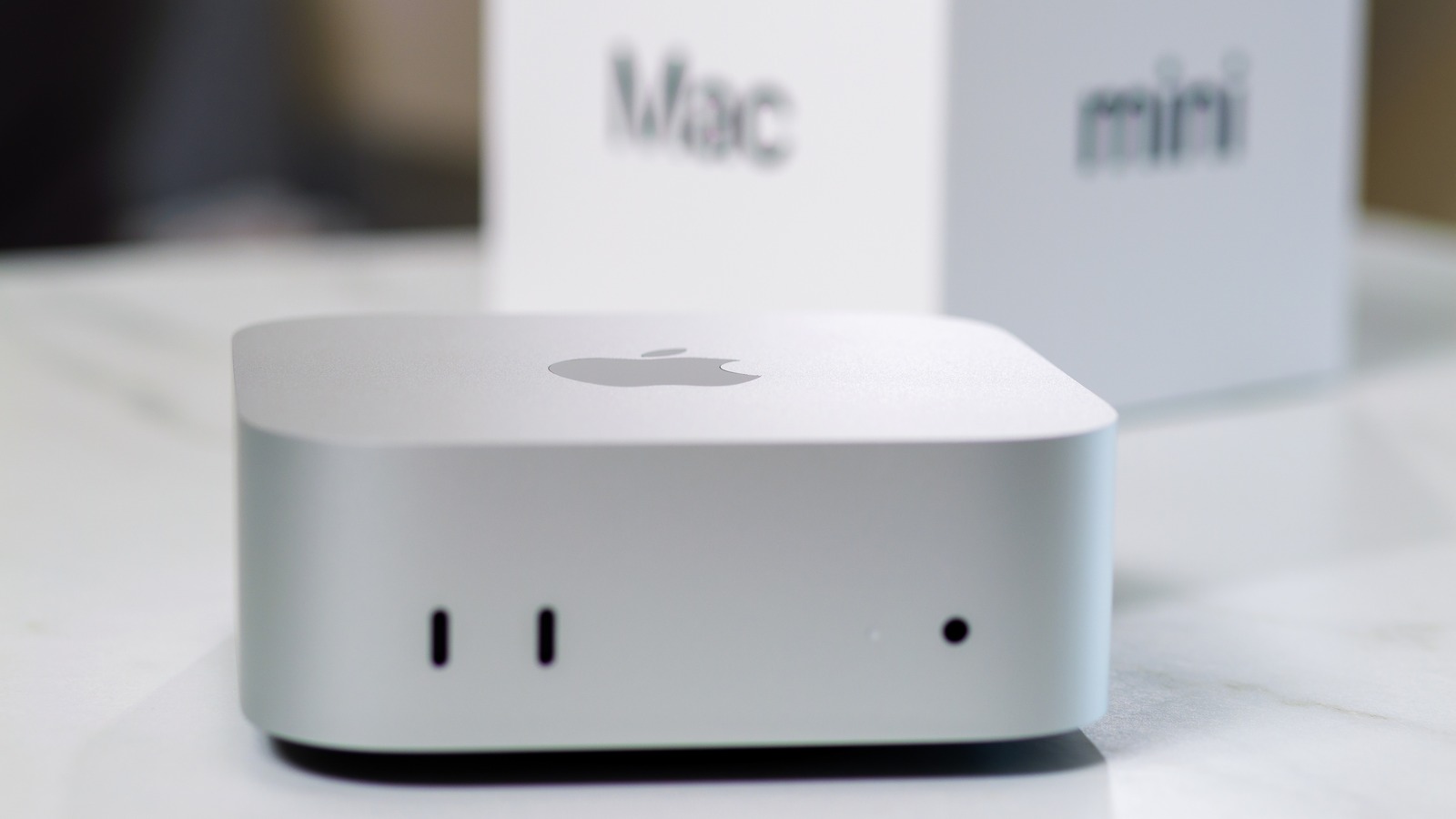
Apple has equipped the Mac Mini with some speedy connectivity options. On the back you’ll find three USB-C ports with Thunderbolt 4 support, each capable of transmitting data at high speeds. These are ideal for connecting hard drives, solid state drives, and card readers for the transfer of large media files. With the M4 chip onboard, the Mac Mini can even power up to three external displays using these ports. Also on the back of the Mac Mini are an HDMI port and an ethernet port, with the front side of the computer sporting two USB-C ports and a headphone jack.

But Apple’s all USB-C approach presents a limitation for some users. If you’re bringing older equipment from a previous desktop computer to your Mac Mini setup, you’ll be just fine if those happen to be wireless peripherals that connect via Bluetooth. But it’s important to recognize that the Mac Mini has no USB-A ports, which means any of your older equipment that utilizes a USB-A connection will need an adapter. The Mac Mini also lacks a built-in SD card reader, so if you do creative work that relies on media captured by external devices, you’ll need to track down an external USB-C card reader.

Pick the right processor

Koshiro K/Shutterstock

The base Mac Mini comes with Apple’s M4 chip. This is the same processor Apple uses across its Mac lineup, and it’s designed to be both powerful and power efficient. Power efficiency isn’t particularly important with a desktop computer, but ensuring you aren’t spending money on performance capabilities you don’t need is imperative. The M4 processor is going to offer plenty of power for users who only have basic computing needs, but it’s also capable of handling tasks such as photo editing, 4K video playback, and multitasking across software. The cheapest M4 Mac Mini is the only model most users will need, especially if your daily tasks are limited to emails, word processing, spreadsheets, and web browsing.

Apple does have professionals in mind with the Mac Mini, however. The M4 Pro chip is a significant upgrade over the base M4, and it’s available as an upgrade option in the Mac Mini. The M4 Pro’s GPU is nearly twice as powerful as the M4’s, and its Neural Engine contributes to speedy AI-based workflows. With the M4 Pro onboard a Mac Mini, professional video editors can take on multiple streams of 8K video, and coders can compile millions of lines of code at a time. The price of the Mac Mini jumps from $599 to $1,399 when upgrading to the M4 Pro chip, so be sure it’s something you can fully put to use before spending that extra money.

Nail down your RAM and storage

Ronstik/Getty Images

Older versions of the Mac Mini had a design that allowed you to access the hardware and make upgrades on your own, but that’s not the case with the current Mac Mini. Through its unified memory architecture, Apple has integrated the RAM directly with the M4 chip. This delivers faster performance and better power efficiency, but it means you have to get your Mac Mini’s RAM selection correct at checkout. Apple includes 16GB of RAM in its $599 base model, and for an additional $200 you can upgrade to 24GB. A Mac Mini with 32GB RAM will cost $999.

Nailing down the proper amount of internal storage for a Mac Mini isn’t as drastic getting the RAM right, because you can always connect an external SSD through one of the USB-C ports. But upgrading the internal SSD on a Mac Mini is not an easy process, and Apple doesn’t officially support such a move. Despite Apple’s markup on internal components, it will be easiest to simply upgrade the internal storage when purchasing a Mac Mini. The base model comes with 256GB of storage, which will be plenty for users who don’t plan to load the machine up with bulky applications or large media libraries.

There’s savings in buying refurbished

Barry Paterson/Shutterstock

If you’ve looked at MacBooks, iMacs, and Apple’s lineup of professional desktop Macs and you’ve decided on a Mac Mini purely for financial reasons, shopping refurbished Mac Minis is also an option. Apple often discounts the refurbished base model Mac Mini to $509, which is $90 less than purchasing it brand new. Upgraded Mac Minis are also available in Apple’s refurbished inventory, and they can come with even more savings. Apple doesn’t have a definitive price drop for its refurbished products, but often the price of a refurbished Mac Mini with upgraded hardware can amount to some of that hardware being free compared to a new model with the same specs.

The advantage of buying from Apple’s refurbished store rather than hunting for used Mac Minis on third-party marketplaces is that Apple backs refurbished products with the same one-year warranty it provides new models. They’re also eligible for AppleCare+ extended coverage, and Apple will package the refurbished Mac Mini in a new box with its included power cable. The biggest limitation of shopping Apple’s refurbished Macs is inventory. Refurbished Macs can sell quickly without any guarantee of which models are coming in next. If you find a refurbished Mac Mini that suits your needs, be sure to make a purchase while you know it’s in stock.

Source

Posted on

Amazon Is Selling A $200 Smartwatch For $120 That Is

We may receive a commission on purchases made from links.

A good deal is great, but a good deal that’s going to help you or a loved one stay active can be even better. It can be incredibly easy to overindulge around the holidays, so having a device that’s going to help you stay on track with your fitness goals can be extremely handy to have around. Fortunately, Amazon has an offer that’s right in time for the season.

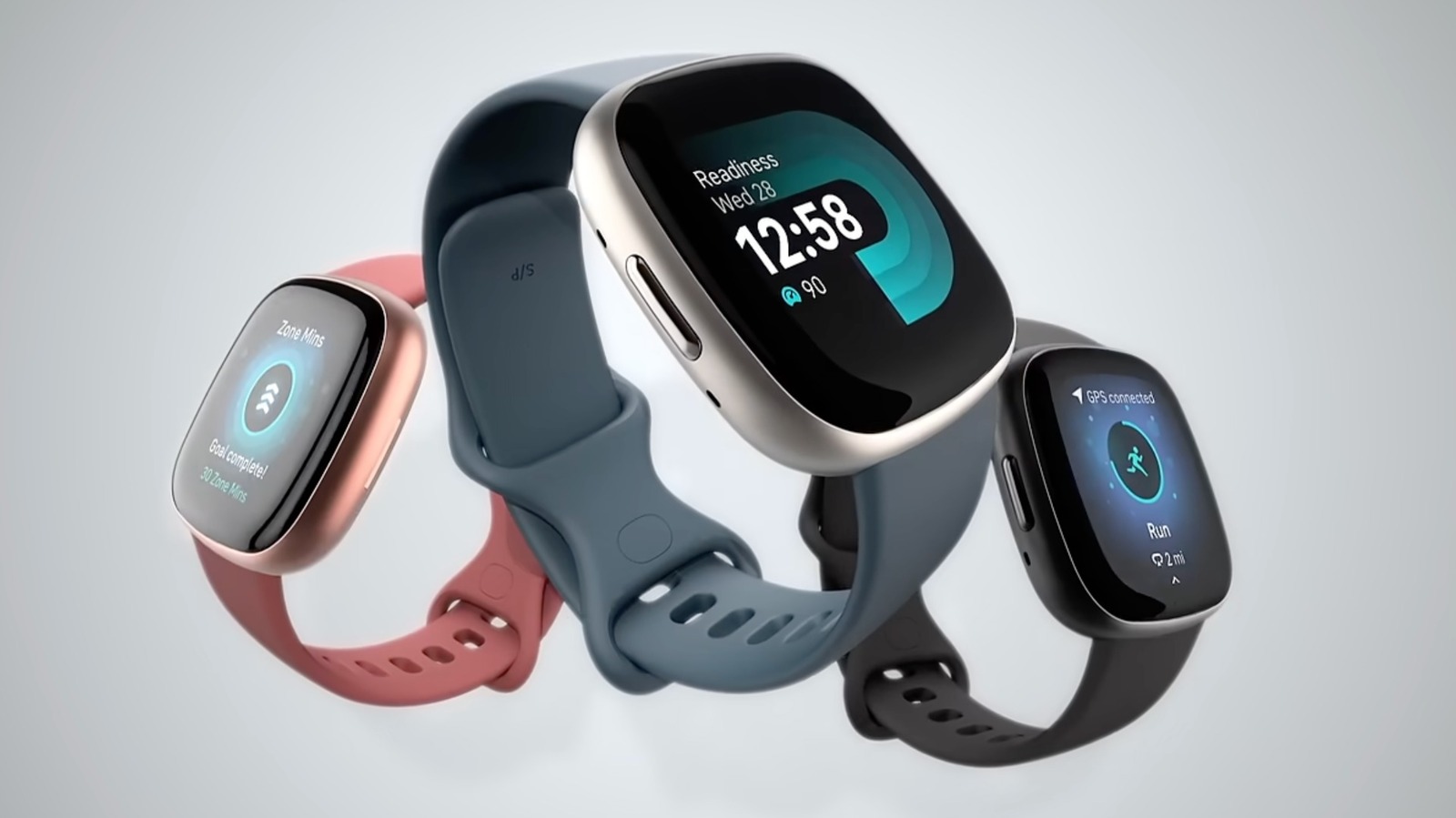
Currently, Amazon is offering the Fitbit Versa 4 smartwatch for $119.95, knocking a substantial 40% off the typical $199.95 price tag. There’s even a few different color options on this offer: Black/Graphite, Pink Sand/Copper Rose, and Waterfall Blue/Platinum. Additional bands are even included for those with larger or smaller wrists, making this an ideal gift for yourself or for anyone that likes to stay active.

Even if it often feels like time can slow down while you’re exercising, having a smartwatch with such an extensive focus on your fitness can really be a big influence. While there are plenty of cheap Android smartwatches that users swear by, the Fitbit Versa 4 is also going to be a solid choice for Apple users –- just make sure your iPhone is running iOS 16.4 or higher, whereas Android users will need Android 10 or higher.

Save 40% on the Fitbit Versa 4 Fitness Smartwatch

If you’re unsure whether the Fitbit Versa 4 or the Apple Watch is right for you, then Amazon’s current offerings may just sway you. Packed with features that will help you stay moving, the Fitbit Versa 4 has a lot to offer for those that wake up early just to get a run in, and it’s currently at a price that’s hard to beat.

Built for those that love to get a workout in every day, the Fitbit Versa 4 includes a Daily Readiness score, which factors your heart rate variability (HRV), resting heart rate (RHR), and your recent sleep to see how well you’re going to handle being active for the day. Additionally, the Versa 4 also features GPS, all-day exercise tracking, personalized Sleep Profiles, daily Stress Management, and more. You’ll also get a 6-month subscription to Fitbit’s premium features, which include more personalized insights and analytics. This is in addition to many of the features you would expect from a smartwatch, including Bluetooth calls and texts, built-in Amazon Alexa, and more.

With over 10,000 sales in just the past month on Amazon, the Fitbit Versa 4 has a 4.3-star rating and over 17,200 reviews. Customers give high marks to the smartwatch for its durability, excellent battery life, and impressive health tracking features. If you’re looking for a smartwatch with a 6-day average battery life, water resistance up to 50 meters, and support for iOS or Android, the Fitbit Versa 4 at this price is worth a look.

Source

Posted on

IT spending bonanza biggest in 30 years

Analyst IDC has reported that the IT market has grown by 14%, which represents the largest increase in almost 30 years.

According to IDC, the emergence of a massive artificial intelligence (AI) infrastructure investment wave is driving tech spending around the world, at a rate that has not been seen since the introduction of Windows 95 in 1995.

When Microsoft debuted the reworked operating system and graphical user interface in 1995, its availability aligned with the availability of affordable internet connectivity for the masses, resulting in a spike in demand for PCs at the time. With almost every organisation wanting to invest in AI, IDC forecasts that IT spending is set to reach $4.25tn this year, driven mainly by demand for IT infrastructure to support AI workloads. 

IDC’s monthly Worldwide black book shows that this year’s IT spending forecast was increased for a seventh consecutive month in November, which it said reflects continued over-performance and aggressive investments by service providers in AI infrastructure. This month, the forecast also showed strong enterprise software spending, with many organisations continuing with digital transformation and cloud migration projects. IDC expects software spending to increase by 14% this year, with AI deployments adding to investments in security, optimisation and analytics.

IDC’s forecast shows that service provider spending on datacentre infrastructure, which includes server, storage and network equipment, is set to increase by 86% in 2025, reaching almost half a trillion dollars this year.

“AI is the headline of IT market performance in 2025, but most of the actual AI investment this year is concentrated in service provider infrastructure,” said Stephen Minton, group vice-president at IDC.

“This AI investment is partly supported by enterprise spending on core IT products and services, which make up the strong revenue streams of the service providers investing heavily in AI deployment,” he added. “In turn, this AI investment is supporting economic growth and stability, which in turn is supporting the ability of businesses to maintain their investments in cloud services and enterprise software. As a result, we’re currently experiencing a virtuous cycle of tech-driven macroeconomic growth.”

Minton also warned of expected headwinds and downside risks in the 2026 outlook, due to an expected memory component shortage, which he said may drive up PC prices next year. But he was confident there would be no downturn in IT spending.

IDC noted that IT spending increased by 16% in the first quarter or 2025, partly due to the front-loading of PC shipments ahead of anticipated tariffs in Q2. While service providers were responsible for driving some of the IT market growth, IDC noted that enterprise IT spending increased by 11% in Q1 and 10% in Q2.

Discussing the impact of tariffs, Minton said: “Technology demand has been resilient this year in the face of uncertainty around tariffs and a sluggish global economy, but our baseline forecast calls for a stable economy, supported in part by ongoing AI investment. Even in a moderate recession, most IT spending would continue. The likelihood of a ‘perfect storm’ similar to the IT market crash of 2001 remains low.”

Source

Posted on

I Tested 5 AI-Powered Web Browsers And I Am Shook

Nadeem Sarwar / BGR

“/Paper dendrite solid state battery.” 

That was all the text that I entered in the search field of the Comet browser by Perplexity. Within three minutes, the program pulled a list of over two dozen research papers, in chronological order, that discussed the risks and solutions for the lithium plating. A task like that would ordinarily take me about half an hour or so, complete with the regular goose-chase on Google. With a “/combine” command, all the findings from the research papers opened across 20 tabs were collected, summarized, and served as a well-curated list for me in just about two minutes. Needless to say, I am never returning to Chrome, Safari, or any other non-AI browser for that matter.

It would sound out of character, but Safari — a mainstay on my Mac for years — now feels like a relic of the past. Safari’s spot has now been taken by Edge, and beyond that, an entirely new crop of “AI browsers.” One of the first names to dive deep into the AI-fication of browsers was Dia, and it was soon followed by the likes of Opera and Brave. Lately, the big guns have also entered the fray. OpenAI introduced ChatGPT; Perplexity made early waves with Comet; Microsoft put Copilot in Edge, and Google integrated Gemini within the Chrome browsing experience.

I have used at least five of these AI browsers extensively, and their impact on my productivity has been profound. Yet, at the same time, some of the stunts these browsers pull off in the name of automating and speeding up mundane tasks have spooked me. I’m not alone. Researchers have also warned that as AI browsers start acting more like agents, the risk vectors will go through the roof.

Skills and shortcuts

Nadeem Sarwar / BGR

Think of skills and shortcuts in AI browsers in the same vein as a custom Gem you create with Gemini or a custom GPT created using ChatGPT. You just need to train the AI to perform a specific task or a series of steps that would otherwise require a human user to perform way too many clicks and eat up minutes. And here’s the best part: You don’t need any technical knowledge to create these skills. All you need is the task at hand, and you just have to describe it.

Let’s think of shopping. I am on the hunt for distressed gray jeans by Levi’s. But the task of opening half a dozen websites, comparing prices, and filling in the size requirements and delivery priorities would be too time-consuming. What you can do is simply describe the task into existence. A natural language description of the purpose does the job, like this: When I give the URL, model name, or a model number of a product, look it up across all the online stores selling it in the US, and create a table comparing the prices and delivery estimates.

Nadeem Sarwar / BGR

That’s all it takes to create a “Skill” in Dia or a “Shortcut” in Perplexity’s Comet. You can give it any name of your choice. I preferred “shopping.” And this is how it works. You simply summon the Skill or Shortcut with the backlash operator and custom name in the universal search bar, followed by the name of the item. So, the whole flow should look something like this: “/skill Nike Dunk Low.” In the image above, you can see just how the shortcut provided the requisite results with the desired format.

Agent mode

Nadeem Sarwar / BGR

Agent mode is one of the most valuable capabilities that you will find in an AI browser. This feature is designed for repetitive tasks that requires a lot of clicking and typing. Think of tedious and time-consuming chores such as finding items across different websites, researching and finding booking availabilities for a stay, or researching through databases. Just a few days ago, I was looking for a homestay in a scenic hill station. When I went to a state tourism website, I saw a list of 130 options. I wanted to make the booking only in a specific area of the town.

Sifting through such a long list, saving the contact information of each owner, and messaging them with my specific query would have taken me hours of manual work. I simply launched ChatGPT Atlas, opened the WhatsApp tab, enabled “Agent Mode,” and gave the following command: Shortlist all the homestays in the Nungrah region, save their number with the same name as listed on this website (URL), and then message them, asking for a month-long stay for a solo traveler who needs kitchen access and a round-the-clock Wi-Fi network.

Nadeem Sarwar / BGR

In roughly 11 minutes, the AI agent in ChatGPT saved the contact details of each homestay owner, crafted a message with all my requirements, and then texted them all. I did not even have to touch my phone once. It was almost surreal to witness, and when I told my host that an AI agent had reached out to her, she simply wouldn’t believe it. Likewise, I often use the built-in agent in Perplexity’s Comet browser. In the image above, you can see just how easily it helped me find a government recall notice by simply describing it.

The mighty side panel

Nadeem Sarwar / BGR

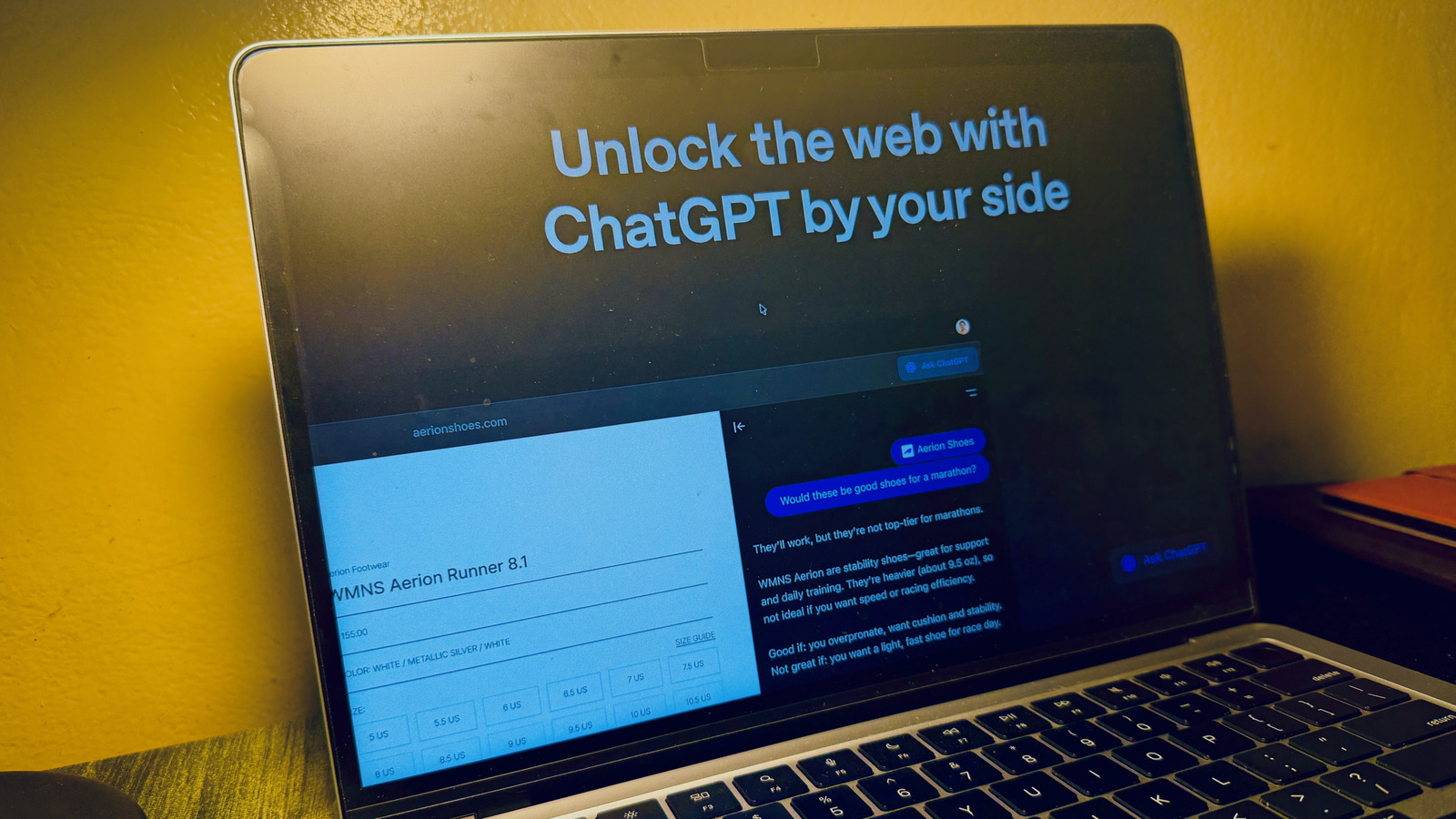
One of the biggest benefits of AI browsers is the integration of side panels for the built-in chatbot. With Atlas, you have access to ChatGPT; Edge browser puts Copilot in the collapsible side panel on the right edge, and you get a similar facility in Dia, Comet, and Opera Neon. This dedicated slot for an AI chatbot doesn’t sound like much until you start using it. The biggest use you can get out of the side panel is pushing it as a segment for background research. The core idea is you don’t have to open another tab to get work done.

As you can see in the image above, I was reading an article about the new Steam Machine and wanted to check how its internal hardware compares against an entry-level PC. All I had to do was write “compare the specs against an entry-level PC,” and ChatGPT handled the rest. It automatically included all the core system requirements, such as CPU, GPU, RAM, storage, connectivity, and port selection. I subsequently tasked ChatGPT with presenting all the information as a table with a natural language statement: “create a table with the comparison.” The AI chatbot obliged.  

The chatbot made a few small missteps, though. Instead of picking the latest Nvidia GPUs, it used the GeForce RTX 4000 series graphics cards for the comparison. On the positive side, if you specify your needs, the AI living in the side panel does a fine job. The best part is that the AI side panel is aware of page contents whenever you open it in the browser. This means whatever you enter in the text field is processed contextually. Additionally, the side panel always remembers the context of prior conversations, so whenever you return to the chat, you can simply go ahead with the follow-up question.

Tab Intelligence

Nadeem Sarwar/BGR

Tab intelligence is another superpower you can access in the likes of Dia and Comet. The whole concept behind tab intelligence is that the built-in AI can take collective action across them. Let’s say you have opened listings for a GaN charger across ten different tabs and websites, and now you want to create a clean table where you can compare the prices, specs, and delivery estimates for each one. With a regular browser, you would have to do it manually or feed each URL to an AI chatbot so it could extract all the information and compile it as a table. With tab intelligence, you avoid that time-consuming hassle.

With a simple “@” command in the browser side panel, you can type the title of any open tab (or pull it from the list that opens underneath the text field), and then input your task. So, for the scenario described above, you can use a command like “@amazon @walmart compare the power banks, create a specs sheet table with the price.” To get a better idea of how it looks and works, take a look at the image below:

Nadeem Sarwra / BGR

Tab intelligence comes in handy not just with shopping and booking-related tasks but also background research. I often use it for sifting through lengthy government notices, combing through multiple patent papers, and discovering useful data scattered across different tabs. And once the AI has finished the multi-tab action, all the information can be exported into the desired format without tedious back-and-forth clicks, and in one go. It’s like deploying an agent across multiple tabs and then talking with the pages to get the desired answers.

Personalized search with memory recall

Nadeem Sarwar / BGR

Recovering tabs that have been deleted from the browser memory or wiped from the history section is a hassle. And even if you have those tabs lingering in the history section, finding them can be a drag because the search function often requires an exact keyword match with the URL text or headline. This is where AI browsers come to the rescue. Compared to a regular web browser, next-gen alternatives such as Dia or ChatGPT Atlas work as an AI brain that saves your browsing history with context. Or in technical terms, as a memory. 

Let’s say I was recently reading an article about how top-tier Hollywood actors like Michael Caine are now lending their voices to AI companies. I couldn’t quite recall the website or the headline, so I could have searched on Google. Instead of going on that wild goose chase, I simply pulled up the universal Search bar in ChatGPT Atlas and typed my vague query without any specific names, which went something like: “I recently read an article about famous actors lending their voices to an AI company. Find the story.” 

Nadeem Sarwar / BGR

In a few seconds, ChatGPT pulled up the exact story I was looking for, complete with a brief summary and its coverage in a few other publications. Given the right context, ChatGPT can search for information across multiple tabs. Take, for instance, a broad command like: “show me the GaN chargers I was recently looking at.” After giving ChatGPT those instructions, the AI pulled up the names of over half a dozen chargers I recently checked out on Amazon and Walmart. And when I asked it to provide the URL of each charger, the AI didn’t fail me.

Convenience comes at a serious cost

Nadeem Sarwar / BGR

AI browsers and tools such as agent mode, Skills, custom GPTs, and Shortcuts have made it dramatically easier to get work done. Last night, I asked Perplexity’s Comet browser to order high-quality ingredients for chicken fajitas, and it got the job done in roughly four minutes. However, when I got the Amazon notification, I realized the AI had ordered the right items but only enough for one person. The Comet browser didn’t even ask about my brand preferences or the quantity. That’s a drawback of these AI browser tools, but it’s only the surface of the problem; it’s the security situation that worries me.

Remember that side-panel in AI browsers, where you can talk with ChatGPT or Copilot about the page contents or do background research without opening another tab? That’s an attack vector. A recent research paper published by Cornell University described how agentic browsers are vulnerable to prompt injection attacks. Based on the results obtained with this tool, the current crop of AI browsers that come with an agentic browsing mode are ripe for being exploited by bad actors. The paper also stated that “The ‘summarize page’ feature is ubiquitous in AI browsers and represents one of the most exploitable attack surfaces.”

Likewise, malicious actors can inject a webpage with hidden instructions (that are not visible to the human eye or the rendering engine in the browser) that can prompt an AI agent to spill sensitive information such as login details, personal data, or even banking information. Experts at MalwareBytes Labs noted, “What sets prompt injection apart from old-school hacking is that the weapon here is language, not code. Attackers don’t need to break into servers or look for traditional software bugs; they just need to be clever with words.”

Source