Posted on

Court dismisses Apple’s appeal against Home Office backdoor

The Investigatory Powers Tribunal (IPT) has dismissed Apple’s legal appeal against a government order requiring it to provide intelligence services and law enforcement with the capability to access encrypted data of Apple users worldwide.

The tribunal ruled that the case would no longer proceed following a “change in circumstances”, according to court documents obtained by Computer Weekly.

It comes days after disclosures that the Home Office has issued a new order against Apple to restrict UK government access to encrypted data and messages stored on Apple’s iCloud service only for British users.

The decision effectively brings Apple’s legal action against the Home Office to a halt, unless Apple decides to appeal against the new order. A separate legal claim brought by campaign groups Privacy International and Liberty is expected to continue.

The move by the Home Office to modify its order against Apple ended a growing diplomatic row between the UK and the Trump administration over fears that the UK could use the order to access the communications of US citizens.

Claim dismissed

According to a court order obtained by Computer Weekly, Apple and the Home Office have agreed that Apple’s appeal should no longer go ahead.  

“This claim is dismissed on the basis of a change in circumstances which, the tribunal has decided, means the claim should no longer proceed,” the order on 6 October stated.

We are gravely disappointed that the protections provided by ADP are not available to our customers in the UK, given the continuing rise of data breaches and other threats to customer privacy Apple spokesperson

Apple did not comment on the withdrawal of its legal case and declined to say whether it would issue a new legal challenge against the Home Office’s revised order.

However, a company spokesperson confirmed that Apple would still not be able to offer its Advanced Data Protection (ADP) service, which it withdrew from the UK rather than comply with the Home Office’s order – to its UK customers.

“We are gravely disappointed that the protections provided by ADP are not available to our customers in the UK, given the continuing rise of data breaches and other threats to customer privacy,” the spokesperson added.

Backdoor order

The row between Apple and the Home Office came after the government issued a secret technical capability notice (TCN) to Apple in January, requiring it to provide warranted backdoor access to messages and data stored by Apple users worldwide.

The notice extended the ability of UK law enforcement to access encrypted data stored by users on Apple’s iCloud to include users of its secure ADP service, which is fully end-to-end encrypted.

The government argued that it needed to be able to obtain warrants to access individuals’ private encrypted data on Apple’s iCloud service, including data protected by ADP, in the interests of national security and tackling crime.

Apple has opposed the order on the grounds that it needs to offer its users the “highest levels of security” for their personal data to protect their privacy and secure them against data breaches and hacking.

The Home Office’s actions sparked a diplomatic row with the US, after the existence of the secret TCN order was leaked to the Washington Post.

US director of national intelligence Tulsi Gabbard publicly raised concerns that the UK’s order against Apple could “undermine Americans’ privacy and civil liberties”. President Donald Trump described the move as “something that you hear about with China”.

Legal action by NGOs expected to continue

A separate case brought against the Home Office by Privacy International, Liberty and two individuals, which challenges the lawfulness of the technical capability notice, is expected to continue.

The IPT has refused an application by the campaign groups to disclose the terms of any revised TCN issued by the government in the light of agreements reached with the US, according to documents obtained by Computer Weekly.

The IPT ruled that although public notices issued by President Trump, the vice-president and the US director of national security implied that the Home Office had served a new TCN on Apple, neither Apple nor the Home Office had publicly confirmed or denied that this was the case.

The IPT is due to hear the case on the basis of “assumed facts” – which allow the case to be heard in open court – in January 2026.

According to the court documents, the TCN allows the interception of communications and multiple categories of data stored in Apple’s iCloud backup service.

It requires Apple to remove electronic protection applied to the data where it is “reasonably practicable” and to provide access to data stored on Apple’s Advanced Data Protection and iCloud services under a warrant.

The Investigatory Powers Tribunal rejected government demands for complete secrecy over Apple’s legal challenge against a Home Office order, following applications by 10 media organisations, including Computer Weekly.

Apple decided it ‘was unlikely to win’

Bernard Keenan, a lecturer in law at UCL and a specialist in the Investigatory Powers Act, said that the withdrawal of Apple’s appeal by mutual consent, suggested that Apple and the UK government may have come to an arrangement acceptable for both sides.

“If reports that the TCN has been limited to UK users are accurate, then the government will have maintained the capability to intercept communications sent or stored via encrypted Apple services in the UK, while Apple may have decided that they are unlikely to win an appeal against an order in those terms in court,” he added.

He said that if Apple filed an appeal the Home Office is likely to argue for the next round of the case to be heard in a closed court.

Apple did not comment on the decision to discontinue its case.

An Apple spokesperson said it was “gravely disappointed” not to be able to offer Apple customers its secure ADP service in the UK.

“Enhancing the security of cloud storage with end-to-end encryption is more urgent than ever before. Apple remains committed to offering our users the highest level of security for their personal data and are hopeful that we will be able to do so in the future in the United Kingdom,” the spokesperson said.

“As we have said many times before, we have never built a backdoor or master key to any of our products or services, and we never will,” the spokesperson added.

ADP protects iCloud data with end-to-end encryption, which means the data can only be decrypted by the user who owns the data on their own trusted devices. Apple, which does not have access to ADP encryption keys, is unable to read messages stored on the service.

A Home Office spokesperson said, “we do not comment on operational matters, including for example confirming or denying the existence of any such notices.”


Source

Posted on

Microsoft and the UAE: Driving AI from strategy to real

The United Arab Emirates’ (UAE) ambition to become a global leader in artificial intelligence (AI) was one of the most discussed points at the Gitex 2025 conference in Dubai.

Across government agencies and enterprise boardrooms, AI is now a key part of strategy, operations, and public services. Microsoft says it is playing a central role in this journey, helping organisations move from experimenting with AI to achieving real, measurable results.

“For the past three years, AI has been in experimentation,” says Rima Seeman, director of AI and enterprise solutions at Microsoft. “Now we’re moving into what I call the era of the AI frontier company with organisations that are AI-powered and human-led.”

Microsoft is guiding organisations through a threefold approach – providing AI assistants for repetitive tasks; creating co-employee AI agents to enhance workflows; and deploying AI co-strategists that support leaders in decision-making.

“These agents aren’t just demos. They help employees and executives act on insights in real time, which is critical to adoption at scale,” adds Seeman.

Supporting CIOs and the AI journey

Adopting AI at scale is about more than technology, it requires infrastructure, skills, and governance: “First, you need a modern cloud environment,” Seeman says.

Microsoft has invested heavily in datacentres across the UAE, giving organisations the scale needed for AI workloads while ensuring data residency and compliance.

Equally important is talent development. “Last year alone, we trained 100,000 government employees, and our goal is one million learners by 2027,” she says.

These programmes equip CIOs, IT leaders, and staff with the knowledge needed to adopt AI responsibly and effectively. Through partnerships with initiatives such as G42’s Responsible AI Centre in Abu Dhabi, Microsoft aims to ensure that AI systems are safe, secure, and compliant.

“It’s about mutual accountability, our frameworks are open so organisations can adopt AI safely and confidently,” says Seeman.

A national AI vision

The UAE has taken a unique approach to AI governance. “The UAE appointed the first minister of AI, and now every ministry has chief AI officers and advisors embedded in operational workflows,” Seeman explains.

“Other countries are watching because the UAE is not waiting for AI to evolve around them, they are building infrastructure, regulation, and talent simultaneously.”

This strategy is producing results. Microsoft partners with government agencies and enterprises to implement AI in practical, high-impact ways.

“With [the Department of Government Enablement in Abu Dhabi], for example, we’ve enhanced citizen engagement through AI-driven services. Rakbank has automated KYC (know your customer) processes to improve financial workflows.

Microsoft’s work in the UAE goes beyond technology delivery. The company collaborates with local talent, enterprises, and global tech partners to create a comprehensive AI ecosystem.

“It’s about building a talent hub, attracting local and international experts, and exporting successful use cases to the world,” she says. The company also works closely with CIOs in the region, helping integrate AI into their organisations’ operations and strategic plans.

“By investing in people and infrastructure, the UAE is creating an environment where AI can flourish. It’s a privilege to be part of this journey. We’re helping organisations move from experimentation to impact, from strategy to action, and from isolated solutions to a national AI ecosystem that delivers both economic and social value.”

Source

Posted on

Interview: Shaping the future of AI in the UAE

Chiara Marcati’s move from consulting to AI71 was motivated by a desire to see technology create tangible, human-centred impact. “After years in consulting, I realised I wanted to combine my technical skills with the ability to make a direct difference for people and organisations,” she says.

“AI71 offered the perfect balance between innovation, business transformation and seeing the outcomes of our work in real time.”

At AI71, the artificial intelligence (AI) company created by Abu Dhabi’s Advanced Technology Research Council, Marcati works on projects that go beyond coding or algorithms. “My role is to help organisations integrate AI into the way they operate, to ensure that technology adoption is meaningful and creates real value,” she says.

For her, the excitement comes from tackling complex business problems and transforming processes in ways that improve efficiency, decision-making and everyday work.

AI ecosystem emerging in Abu Dhabi

Unlike traditional tech ventures that evolve in isolation, AI71 sits within a government-orchestrated ecosystem built to accelerate AI adoption across every layer of industry and public administration. Abu Dhabi is not just investing in AI talent or infrastructure separately, it is orchestrating research centres, sovereign compute capabilities, global partnerships and new AI governance roles into a single strategic framework.

The UAE was among the first countries in the world to appoint a minister of artificial intelligence, signalling early on that AI was a national economic and social priority. Today, ministries and major institutions across the UAE are appointing chief AI officers and AI advisors to ensure that the AI strategy is embedded into operational workflows rather than treated as an isolated innovation track.

“It’s a bold strategy,” says Marcati. “Other countries are watching because the UAE is not waiting for AI to evolve around them, they are building the infrastructure, the regulation and the talent pipeline at the same time. That’s what makes it unique.”

AI71’s role: Turning vision into scalable solutions

Within this national strategy, AI71 plays a critical role by building scalable AI products tailored for government and complex industries, with a focus on measurable outcomes rather than experimentation.

In Abu Dhabi’s healthcare ecosystem, the company is deploying AI to automate complex administrative cycles such as hospital billing and compliance documentation, dramatically reducing manual processing time and allowing staff to focus on frontline care.

“My role is to help organisations integrate AI into the way they operate, to ensure that technology adoption is meaningful and creates real value”

Chiara Marcati, AI71

Meanwhile, in the construction sector – one of the UAE’s most strategic industries – AI71 is working with government entities to accelerate permit approvals, automate regulatory compliance checks and optimise project workflows, helping developers and authorities move faster without compromising standards.

In construction, AI71 works on compliance automation and workflow optimisation, reducing manual processing and accelerating approval cycles, which is a major priority in rapidly expanding urban development projects.

“These are not experimental pilots,” says Marcati. “They are full-scale deployments, and that changes the culture of AI adoption.”

She underscores that the company is not positioned as a traditional supplier but as part of a national AI enablement effort, designed to bring global talent into Abu Dhabi, build sovereign capability, and reduce dependency on external technology ecosystems.

Source

Posted on

A New iPad Mini Is Coming, But Apple May Have

José Adorno/BGR

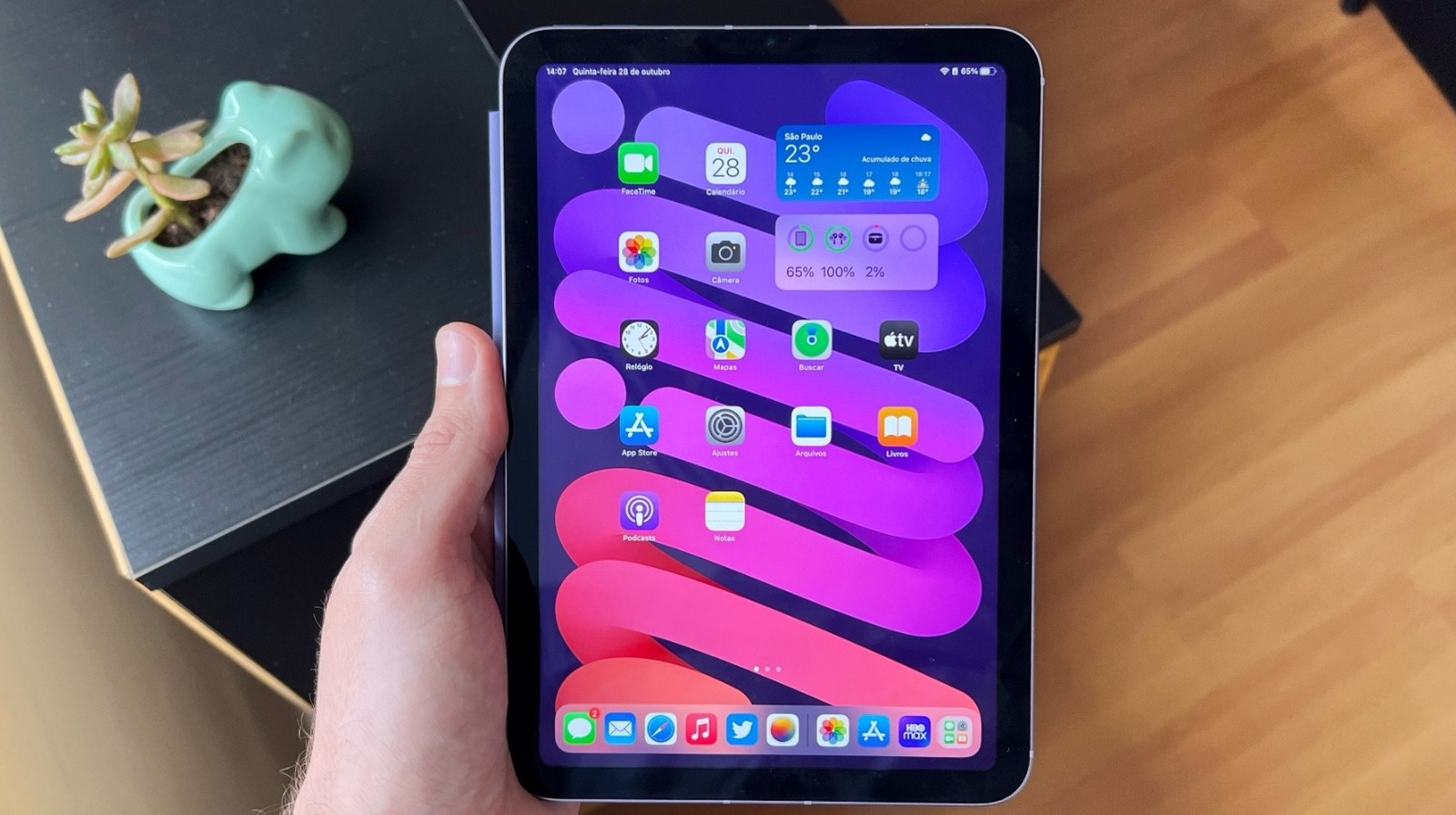
Last October, Apple released the iPad mini 7 with the A17 Pro chip. It was the first major update to the compact tablet since the sixth generation from 2021. Apple upgraded the seventh-gen model with a more capable chip, 8 GB of RAM, and Apple Intelligence capabilities. In addition to that, the multitasking features on iPadOS 26 made it even more useful — not just as a content machine, but also as a portable on-the-go computer.

However, as enticing as the iPad mini is, Apple is struggling with the growth of its iPad business. In the last quarter, the company attained a revenue of $6.6 billion, down from $7.2 billion over the same period last year. The most affected business is the iPad lineup, which shows that people are finding it hard to justify the price of the company’s tablets. Apple might have an even harder time justifying a new iPad mini, especially due to its price point.

Apple’s iPad mini no longer fits into the company’s tablet portfolio

José Adorno/BGR

In his Power On newsletter, Bloomberg’s Mark Gurman says there’s “absolutely” a new iPad mini on the way. While the journalist doesn’t add a timeframe for this release, he questions whether customers are “clamoring for it,” especially due to its $500 price point. While the iPad mini has been considered a great option for a portable tablet, it seems like the small form factor is working against it, especially with rumors of an iPhone Fold launching next year. With that, the journalist suggests that a cheaper alternative might make more sense for Apple instead of a premium one, especially with its rival products costing a lot less.

I’ve had a few iPad mini models through the years, and while the form factor was interesting at first, it was never a good Amazon Kindle replacement; it was too small for video streaming on planes, and using split view wasn’t very enjoyable due to the cramped screen. I prefer having a bigger iPad Pro with accessories than a device I can’t fully take advantage of.

Source

Posted on

iPhone 17 Pro Max Can’t Beat The Galaxy S25 Ultra

The iPhone 17 Pro and iPhone 17 Pro Max feature Apple’s A19 Pro chip paired with 12GB of RAM and at least 256GB of storage. The new Pros also feature vapor chamber cooling, a first for the iPhone, to help maintain stable performance for longer periods. The A19 Pro is Apple’s newest flagship chip, and the iPhone 17 Pro Max benchmarks show the processor is ahead of the competition. But benchmark performance does not guarantee the iPhone’s supremacy in real-life speed tests.

The Galaxy S25 Ultra crushed the iPhone 16 Pro Max in such a comparison back in February, when Samsung launched the Galaxy S25 series. The result was surprising, considering that newest iPhone usually outperform the newest Galaxy S flagship. Fast-forward to late September, and YouTube channel PhoneBuff put the iPhone 17 Pro Max and Galaxy S25 Ultra through the same speed test, wondering whether the new iPhone would beat its main rival. After all, the iPhone 17 Pro Max features an even better chip, the A19 Pro.

The speed test, seen in the video below, reached a similar conclusion, which might surprise some people. The Galaxy S25 Ultra was faster than the iPhone 17 Pro Max, and that’s an exciting development for two reasons. First, the Galaxy S26 Ultra will feature Qualcomm’s Snapdragon 8 Elite Gen 5, which should outperform the Galaxy S25 Ultra. Second, the pressure is on Apple to deliver next-generation A-series chips that can beat Qualcomm chips in speed tests.

What is a real-life speed test, and how accurate is it?

Plenty of creators might release comparison videos like the ones above. They aim to replicate real-time smartphone use by opening the same set of apps on each device during the first lap, which measures how long each handset takes to load web apps, photo and video editing apps, and games. The second lap involves opening the same apps from the phone’s memory and measuring how long the process takes.

Put differently, the test aims to recreate regular smartphone use. We open and reopen apps regularly on our devices, flipping through them for various purposes. We use light web apps and more resource-intensive ones. We play games, and we take and edit photos. The Galaxy S25 Ultra finished the first lap about 13 seconds ahead. The iPhone 17 Pro Max was two seconds faster in the second lap, but not enough to win the test.

The difference between other speed tests and PhoneBuff’s lies in the methodology. PhoneBuff uses a robot to open the same set of apps on the iPhone 17 Pro Max and Galaxy S25 Ultra. To ensure the test is as objective as possible, the YouTuber has the two phones running in similar conditions, including screen brightness, room temperature, and proximity to the Wi-Fi point. Therefore, PhoneBuff’s tests might be more objective than similar clips found on social media.

While the Galaxy S25 Ultra is the clear winner in this test, iPhone 17 Pro and iPhone 17 Pro Max users should not worry about performance issues. The new iPhones are fast and reliable. They’ll offer great performance, and the extra cooling should maintain stable performance for longer. The only way to observe the speed differences in the video above is to use both phones.

Source

Posted on

Khazna leads UAE’s global AI push with massive datacentre expansion

Khazna Data Centers has revealed it will add over 1GW of hyperscale capacity by 2030 across multiple countries. The hosting company’s roadmap includes more than 400MW of new capacity in international markets such as Saudi Arabia and Italy, alongside major domestic developments in Abu Dhabi, Dubai, and Ajman.

The announcement, at the Gitex Global 2025 conference in Dubai, underscores Khazna’s role as the United Arab Emirates’ (UAE’s) national digital infrastructure champion and a key enabler of AI-native nations.

“Our mission is to deliver resilient, sustainable, and sovereign-ready AI infrastructure,” said Tinboat Arslanouk, chief business officer – international. “We are not just building datacentres, we are providing the foundation for global innovation and national transformation.”

Khazna’s expansion comes at a time when AI adoption is accelerating across the UAE.

“The region’s growth in AI, and specifically in the UAE, comes from the leadership’s commitment to leapfrogging into the future and building intelligence locally to fuel economic development,” said Arslanouk.

“As an infrastructure provider, we are part of the ecosystem that gives AI a home. We host the servers, the neural networks, and the systems that generate the insights used across business and personal life.”

The company’s international push reflects the growing demand for hyperscale datacentres capable of supporting AI workloads.

“We started construction in Saudi Arabia and are actively working on projects in France and Italy, while also exploring opportunities in Turkey and Southeast Asia,” Arslanouk said.

“We take a macro view on the market to decide where to enter. AI accelerates demand dramatically and what a country previously needed in terms of data capacity may now be multiplied several times over.”

Sustainability is central to Khazna’s strategy, particularly as datacentres are energy intensive.

“We tackle sustainability on multiple layers,” Arslanouk said. “A substantial portion of our power comes from nuclear plants, with additional capacity from photovoltaic and CSP solar projects. Over 40% of the UAE’s electricity mix is already carbon-free, and that will continue to grow. Even our fossil fuel generation comes mainly from natural gas, the cleanest of the fossil fuels.”

Energy availability, local regulations, and infrastructure readiness are all critical factors in Khazna’s expansion decisions. “Even if a market is promising, limitations on energy or local regulations can prevent us from pursuing a project,” he added. “We need to calibrate these factors carefully to ensure our strategy works long-term.”

Khazna’s datacentres are designed for AI workloads, enabling CIOs and enterprises to deploy hybrid cloud environments while maintaining data sovereignty.

“Our proposition is to come to the country and build infrastructure locally. This ensures sovereignty and security, giving CIOs confidence that sensitive data remains protected,” he said.

The company’s expansion aligns with the UAE’s broader AI vision, which includes appointing the world’s first minister of artificial intelligence and chief AI officers across ministries. According to Arslanouk, “The UAE’s ambition on AI is phenomenal. Boardrooms around the world now look to the UAE for use cases and lessons on integrating AI into operational workflows.”

Through partnerships with global technology providers, including Microsoft, Khazna is supporting the government in developing AI use cases, training talent, and ensuring that AI deployments are secure and compliant.

“We are building infrastructure that allows both global innovation and national transformation. Our work ensures that the UAE remains a leader in AI while exporting use cases and expertise to the world.”

The company’s flagship project, the Stargate initiative, exemplifies this approach: “We began the Stargate project after the US President’s visit to the UAE, and we hope to deliver the first phase next summer,” Arslanouk said.

“Our ultimate goal is to reach five gigawatts of AI capacity, not just in the UAE but across the markets we enter.”

Source

Posted on

OpenAI’s New Agent Builder Tool Leaked Before DevDay: Here’s What

Bangla press/Shutterstock

OpenAI has had a few busy weeks after Sam Altman teased that more expensive AI products would become available to users. OpenAI released ChatGPT Pulse, the Sora 2 AI video generator, and the Sora social media app for AI videos. All that happened before Monday’s DevDay 2025 event where OpenAI is expected to launch new ChatGPT features for consumers and developers. A ChatGPT browser like Perplexity’s Comet would easily be a highlight, assuming OpenAI is ready to unveil the product at DevDay. The company should also introduce a few exciting new tools for developers, including one that appears to have leaked. Agent Builder is a new product that will allow developers to create AI agents with the help of an intuitive visual interface that will offer extensive customization options.

Seen in the clip above, shared by TestingCatalog on X, the Agent Builder tool is apparently available to users to try before the official announcement. Alexey Shabanov said in a blog post on TestingCatalog that the Agent Builder tool is “one of the smoothest agent builder canvases” he has used so far.

The video demo shows how easy it is to get started with Agent Builder. The user has access to a canvas where they can drag and drop the elements they need for the AI agent, and create a workflow for it. They can select templates for a specific type of agent from a menu, like a Q&A agent or an agent that can compare documents. The canvas also lets the user add additional capabilities, like allowing the AI access to data sources via connectors (MCP). The Agent Builder tool also offers guardrails to ensure the AI agent’s safety, including protections against jailbreaks and prompt injection.

What are AI agents good for?

The new Agent Builder feature that OpenAI is preparing to unveil will not necessarily be available to regular ChatGPT users. TestingCatalog’s report notes that “the most obvious beneficiaries will be developers, solution architects, and businesses already working with OpenAI APIs, as this system offers a more intuitive, visual alternative to manual code-based integrations.” However, end-users will profit indirectly once developers are ready to craft AI agents more easily than before. Those AI agents may soon be available in apps to perform specific tasks for the user.

AI agents are more advanced versions of chatbots like ChatGPT, as they can take complex tasks and perform them based on the user’s instructions. OpenAI already has an AI agent mode, ChatGPT Agent. You can use that mode for more complex tasks that involve multiple steps. For example, you might want ChatGPT Agent to find you the best possible prices for flights departing your city or state to a specific set of countries, during a specific period, and then find corresponding hotel stays that meet specific requirements, including arrival and departure days. You might also instruct ChatGPT Agent to make purchases on your behalf where available.

Other AI agents can become AI assistants, like the Comet AI in the Perplexity browser. Gemini offers similar functionality inside Chrome, and ChatGPT will likely become an AI assistant in the rumored OpenAI browser. Similarly, Google’s AI Mode might offer shopping-related agents that track prices for the user. AI agents can also work in various apps, where they can perform specific customer care duties that can benefit from automation and don’t need a human. More complex AI agents might be available in enterprise environments to help with data processing, coding, and other tasks that require specific types of automation.

Source

Posted on

NCSC calls for action after rise in ‘nationally significant’ cyber

Businesses have been urged to take action following a rise in the most serious category of cyber incidents over the past 12 months.

The number of nationally significant incidents reached over 200, more than double the number reported last year to the National Cyber Security Centre (NCSC).

Richard Horne, CEO of the NCSC, said that nationally significant incidents accounted for half of all incidents reported to the centre’s incident management team.

“On average, the NCSC has dealt with four nationally significant incidents a week,” he said. “That is a 50% increase on the previous year and a marked increase for the third consecutive year.”

As many as 18 incidents were classed as “highly significant” attacks that could have a serious impact on central government, essential services, a large proportion of the population or the economy.

Horne said that despite the headline attack figures, far more cyber attacks fail than succeed because organisations have built strong cyber defences. “We are also seeing more organisations able to continue in the fact of an attack that does break through because they were prepared,” he said.

However, Horne added that hackers were improving their ability to cause real impact and inflict pain on the organisations they have breached. “They don’t care who they hit or how they hurt them,” he said.

Ransomware 

Ransomware remains one of the most acute and pervasive cyber threats to UK organisations, according to the NCSC’s annual review, with attacks on Marks & Spencer, the Co-op and Jaguar Land Rover causing serious disruptions.

One reason for the increase in serious attacks this year is that a small number of cyber attackers are exploiting vulnerabilities at scale.

Three known security vulnerabilities in Microsoft Sharepoint products and other products accounted for 29 incidents managed by the NCSC.

China is targeting a wide range of sectors and institutions in the UK. A company linked to China was exposed last year for running a botnet of 260,000 computers used to launch cyber attacks.

Russia’s invasion of Ukraine and the Israel-Gaza war have inspired hacktivist groups seeking to target the UK and Europe.

According to the NCSC, the UK is also at risk from hacking groups linked to Iran that are known to have targeted US critical infrastructure.

UK firms are “almost certainly” being targeted by IT workers from North Korea posing as freelance IT staff from other countries. North Korea-linked hackers are also highly likely to be targeting UK crypto asset firms to steal funds.

Impact of cyber attacks

Horne said that cyber attacks are not just about computers and data, but they impact growth, prosperity, safety, national security, reputations and the bottom lines of companies.

He said that nothing can prepare an executive for receiving a call to hear their systems have been hacked, but it’s even worse to receive a call without having a plan in place.

“I have sat in too many rooms with individuals who had been deeply affected by cyber attacks against their organisations,” said Horne. “I know the impact the disruption has on their staff, suppliers and customers, the worry, the sleepless nights. And the impact it has on the teams who work round the clock for weeks and months trying to put the pieces back together.”

In an open letter, Shirine Khoury-Haq, CEO of The Co-op Group, echoed his statement that there exists no true preparation for the moment a cyber attack unfolds.

“The intensity, urgency and unpredictability of a live attack is unlike anything you can rehearse,” she said. “The attack has had a significant impact on me, my colleagues and on our members.”

However, Khoury-Haq added that cyber security drills are invaluable, build muscle memory, sharpen instincts and expose vulnerabilities in systems. 

Are businesses prepared?

Horne said that every leader must have a plan to defend against criminal cyber attacks and a plan to keep their business going if they are attacked.

“If your IT infrastructure was crippled tomorrow and all of your screens went blank, could you run your payroll systems, or keep your machinery working, or stock your shelves? If the answer is no, act now,” he added.

Horne’s comments came as the NCSC made a Cyber Action Toolkit available to small businesses and sole traders to improve their cyber security, which comes with free cyber insurance and a helpline.

The NCSC is also offering a Cyber Governance Training scheme for senior leaders and board members.

Source

Posted on

Sita unveils next-gen fibre-optic comms for data-intensive airports

Air transport industry technology provider Sita has launched a high-speed fibre-optic service that delivers “ultra-reliable”, scalable and secure connectivity that could soon bypass copper cables in complex airport environments.

The firm believes that to date, bandwidth limitations, high latency and costly maintenance have meant platforms deployed at airports have sometimes fallen short.

Technologically, the Sita passive optical network (PON)-enabled fibre infrastructure, optical network terminals and centralised network will collectively deliver “uninterrupted”, high-bandwidth connectivity across crowded airports. The offering is intended to serve airports and airlines, maintenance, repair and overhaul, ground handlers, and other travel industry customers.

Sita PON is engineered to extend beyond passenger terminal spaces, and the company sees offering long-distance coverage with its network as being able to transform telecommunications infrastructure across distant airport hangars, engineering facilities and storage areas, where extended distances and restricted environments make traditional cabling inefficient.

Explicitly, the company regards existing copper wiring as often requiring repeaters or boosters, adding cost and complexity. By contrast, the Sita PON single fibre offering works across distances up to 20km (12+ miles) without the need for active equipment in-between – making it effective for data-heavy applications like HD video surveillance, smart kiosks, internet of things (IoT) devices and cloud services.

The company’s updated local area PON solution is being delivered in partnership with global networking solutions provider Tellabs and supplier of PON technology. It is designed to provide next-generation fibre-based infrastructure tailored for airports, airlines and ground handlers, with what are claimed to be “future-proofed” network performance to support mission-critical systems, smart airport services and IoT deployments, all while reducing costs.

By delivering high-speed, fibre-based connectivity through a centralised, passive optical network, Sita said that its PON eliminates the need for complex cabling that degrades over time and multiple active components.

It added that the network can ensure local-area network customers can build modern, high-performance networks with smart, sustainable and secure connectivity that removes limitations on future growth and the high-maintenance costs associated with legacy networks.

Sita PON also accesses technology through the Sita Campus Network, including automation and industry, and sustainable expertise. This delivers round-the-clock monitoring and proactive maintenance, available worldwide, with support spanning over 145 countries.

“The increasing use of data-intensive applications in airports places a lot of pressure on existing platforms,” said Martin Smillie, senior vice-president for communications and data exchange at Sita. “They can struggle to deliver increasing capacity demands for operational needs across sprawling and complex airport infrastructure for mission-critical operations.

“Sita PON resolves capacity constraints for airports, airlines and ground handlers by delivering ultra-reliable, scalable and secure connectivity through high-speed fibre-optic infrastructure. Together with Tellabs … Sita PON meets the connectivity needs of today and the next generation of high-capacity systems that will be used across even the largest airports in the future.”

Tellabs president and CEO Rich Schroder added: “This partnership enhances the critical network infrastructure that airports rely on every day. Together with Sita, we’re delivering next-generation connectivity that is more seamless, secure and designed to meet the evolving demands of modern airports worldwide.” 

Source

Posted on

Vox pop: Digital transformation across the Arab world

The Middle East region is massively varied when it comes to readiness for digital transformation. Many states – notably those of the Gulf and Arabian Peninsula – are awash with government funds, investment programmes and incentives for digital businesses.

Meanwhile, current and recent conflict zones, such as Palestine and Syria, severely lack some of the fundamentals, such as the ability to carry out electronic transactions or an investment and market ecosystem into which startups can grow.

And then there are difficulties common to many countries across the region, where bureaucracy and slow infrastructure can be obstacles in terms of infrastructure.

We spoke to representatives from startup companies at the Expand North Star event in Dubai, United Arab Emirates (UAE), this week, to gauge perceptions of their countries readiness for tech startups and digital business in general.

The event was attended by startup exhibitors from all Arab countries, with huge representation from the host country – the UAE – as well as significant presence from states from Morocco in the west to Oman in the east.

We spoke to startup founders and representatives from Egypt, Oman, Palestine, Saudi Arabia, Syria, Qatar and the UAE to take the digital temperature across the region.

Egypt

“The main challenge is how to prove yourself to investors and to the customers that will buy your product. In Egypt, there are a lot of startups and a lot of entrepreneurships.

But also in Egypt, regarding the infrastructure, if you’re adding a new feature that is not traditional in Egypt, it can be a little bit of a challenge.”

Abdul Malik Mohammed, chief technology officer, Ducky Cars, Egypt

“In Egypt, the infrastructure is not digitised at all. So, for us to make things digitised, it’s super hard. It takes time, maybe months.

Egypt has a lot of skills when it comes to AI, but the infrastructure is a bit slow.”

Rokaya Ashraf, Agridawar, Egypt

Oman

“I think the infrastructure is OK in Oman. It can support the digital challenges. But there is bureaucracy. You have to do too many procedures. If you have a plan in your mind and you want to do it, it goes through too many procedures.”

Majeed Assaifi, chief operating officer, SafaQat Platform, Oman

Palestine

“There are a lot of obstacles. For startups, the problem is that everyone is working in theory. There is not an ecosystem where people can realise ideas. So, someone can know tech, can know marketing, but there’s no way to realise the idea.

The situation in Palestine also makes it a little bit risky for the investors and people, and so on. So, most startups die at the grants stage. You will get grants, but then what? It’s really, really hard to find the actual investor to invest in things.

The mentality with people who have money in Palestine is that they will invest in actual business, trading and so on. The mentality for investment in startups and so on is not there.”

Yazan Abassi, CEO of Plink Play, a mobile gaming discovery platform, Al Quds/Jerusalem

“First of all, it’s the market size in Palestine. It is very limited. The second thing is the situation – the socio-political and economic situation in Palestine. It changes a lot. So, people are not willing to invest in Palestinian companies or startups.

There is a lot of global competition. So, for Palestinian startups that are already at a disadvantage to actually go to the global level, there is a huge disconnect.”

Stephanie Polo, startup manager, B-Cite, the Al-Quds University incubator

“In Palestine, because we have a special situation with the conflict, it’s hard for us to get attention for our startup or to go to the market outside Palestine. Also, we don’t have access to all the technology we need. In a country like UAE or Saudi Arabia, things are more available online.”

Razan Ashhab, founder, Glycare, Al Quds/Jerusalem

Qatar

“From an infrastructure point of view, there are a few challenges. Here in the region, we rely a lot on providers. This is a data privacy challenge as well, because there is a lot of data stored outside, and that brings challenges to do with data sovereignty.

So, the challenge is to develop in-house datacentres and everything to comply with data privacy regulations.”

Almabrouk bin Umran, founder and CEO, Entreprenode, Qatar

Saudi Arabia

“In Saudi and the MENA region, it can be a bit challenging for deep tech [ie, hard science-based projects] ventures to find the right partners, especially in the VC [venture capital] space.

When it comes to deep tech, it requires certain skills, skillsets, which are currently missing in the region.

Finding regional talent is definitely a challenge because the universities, the research centres, are not at the level you would find in the western world. But things are changing with universities like Kaust in Saudi, Khalifa University in UAE, that are producing very good, high-quality research, which is suitable for deep tech ventures.”

Mohammad Karimi, CEO, Saher Flow Solutions, Saudi Arabia

“Saudi Arabia is investing in startups, but maybe the key challenge is awareness among people. They don’t know there is a huge amount of investment available.”

Bayan Al-Shahri, co-founder, Bio Fiber, Saudi Arabia

Syria

“The challenges we are facing are technical. For example, if someone wants to open a company in Syria, we pay mostly in cash. So, our challenge is to integrate Mastercard, Visa, so we can pay easily and make things work easily.”

Ahmad Abdul Jabbar, YallaGo, Syria

“The main issue is that if you want to create a startup, it’s going to be based on some sort of service, and you’ve got to receive money. The main thing is we cannot handle electronic payment yet in Syria.

It’s not about sanctions; it’s that we don’t have money in the bank. So, whatever payment is made, it is not going to be accepted by the service provider because it’s not going to be able to collect its money.

We need to find a good solution for that, and from my point of view, that is to print a new Syrian currency, which can resolve the issue, so people will trust it.”

Khalil Baza, chief technology officer, Mocion, Syria

“The main challenge is the infrastructure. They’re still working on it. But the Syrian government, with its new minister of telecommunication, is doing great.

Also, we need to bring everyone back, especially from abroad. There is a huge pool of talent among Syrian people, coming from Silicon Valley, from the UK, and in Saudi. They’re bringing everyone back with the hope of making it easier for startups. They’re investing a lot in people and ideas.”

Abdullah bin Sumaidiyah, AI director, aiIXplain-Trustangle, a low-code development platform, Syria

UAE

“I think the infrastructure here is geared up for it in terms of the intentions to help early-stage startups and the licensing support. But I feel maybe once people are in the ecosystem, at the very early stage, they’re kind of floundering their way. So, there’s a little gap between when they get traction, to get all the things you need to navigate between compliance regulation, software development, and so on.

There’s no challenge on the people side of things. We’ve been an early-stage startup, and we’ve managed to find amazing people to advise us.”

Lance Bohling, chief technology officer, Great People, UAE

“In the UAE, the cost of building a startup, of expansion, marketing and so on, is costly for those who are trying to figure out how to gain their first traction. But there is opportunity – more opportunities than any other country in the region.”

Bassam Tarek, CEO, Stacks, an AI powered drag-and-drop mobile app builder, UAE

“The UAE is amazing when it comes to startups. We have the ecosystem. We have government backing as well.

The struggle we see in the region, and not only in the UAE, is more on the investment side. Investors are very safe in what they want to push forward.

In the UAE, the money is here; it’s about where the money is being allocated. Investors don’t come in at the early stages of a startup. They want to come when the startup is already making money and is actually successful.

That limits creativity a lot because it forces smaller startups to pivot to where the money is, but then lose focus on their main mission.”

Yahya Kabara, marketing and strategy manager, MyGatePass, UAE

“In Dubai and the other emirates, it’s very vibrant and there’s a successful ecosystem to support startups. If you need a mentorship or something like that, they support us very well.

But there needs to be more women in business, and in that, we need a little bit more push. Especially in the AI business – it’s male-dominated, so there needs to be more support for women to come into the business.”

Nafiseh Gharavi, chief operating officer, Onkaru, an AI toy, UAE

Source