Posted on

Here’s How iPhone Air Battery Life Compares To iPhone 17

“Despite being much thinner and lighter, iPhone Air still gets amazing all-day battery life,” Apple’s senior vice president of Hardware Engineering, John Ternus, said during Apple’s iPhone 17 launch event on Tuesday. “This is incredible — all-day battery life in our thinnest iPhone ever.” Hilariously, seconds later, Ternus revealed the “low-profile” MagSafe Battery accessory for the iPhone Air. “When using them together, iPhone Air has up to 40 hours of video playback! That’s enough to binge on all 40 episodes of For All Mankind, making it a great accessory for long trips.”

Apple didn’t offer battery life estimates for the iPhone Air like it did for the iPhone 17 and the iPhone 17 Pros in the keynote’s other segments. For the iPhone 17, Apple said the base model will get up to eight more hours of video playback than the base iPhone 16. Apple also said the iPhone 17 Pro gets up to an “astonishing” 39 hours of video playback.

Anyone watching the live event would have spotted potential red flags in the way Apple chose to portray the iPhone Air’s battery life. After all, battery life was one of the main concerns over the past year, as rumors and leaks said the ultra-thin iPhone Air would feature an ultra-thin battery. However, Apple does offer battery estimates on its website, and they’re better than expected. The iPhone Air will offer battery life on par with last year’s iPhone 16 models without the MagSafe Battery.

iPhone Air battery life explained

Apple offers battery estimates on its iPhone product pages online, as well as comparisons to other iPhone versions. Here are the battery estimates for the iPhone Air battery life, according to Apple:

  • Video playback: Up to 27 hours
  • Video playback with iPhone Air MagSafe Battery: Up to 40 hours
  • Video playback (streamed): Up to 22 hours
  • Video playback (streamed) with iPhone Air MagSafe Battery: Up to 35 hours

Here are the battery estimates for the other three iPhone 17 models and the five iPhone 16 models:

Video playback:

  • iPhone 17 Pro Max – Up to 39 hours
  • iPhone 17 Pro – Up to 33 hours
  • iPhone 17 – Up to 30 hours
  • iPhone 16 Pro Max – Up to 33 hours
  • iPhone 16 Pro – Up to 27 hours
  • iPhone 16 Plus – Up to 27 hours
  • iPhone 16 – Up to 22 hours
  • iPhone 16e – Up to 26 hours

Video playback (streamed):

  • iPhone 17 Pro Max – Up to 35 hours
  • iPhone 17 Pro – Up to 30 hours
  • iPhone 17 – Up to 27 hours
  • iPhone 16 Pro Max – Up to 29 hours
  • iPhone 16 Pro – Up to 22 hours
  • iPhone 16 Plus – Up to 24 hours
  • iPhone 16 – Up to 18 hours
  • iPhone 16e – Up to 21 hours

The iPhone Air battery will last at least as long as the iPhone 16 Pro battery. As a reminder, last year’s iPhone 16 Pro got a significant battery boost over the iPhone 15 Pro.

iPhone Air battery capacity and endurance

In Europe, Apple has to list energy labels for every iPhone model sold in the region. The documentation includes details that Apple doesn’t offer on the product pages of the iPhone in the U.S. and other regions. For example, the energy labels mention battery endurance per charge cycle and battery capacity, information some buyers might appreciate.

Here are the battery capacities for the iPhone Air, iPhone 17, and iPhone 16 models:

  • iPhone 17 Pro Max – 5,088 mAh
  • iPhone 17 Pro – 4,252 mAh
  • iPhone Air – 3,149 mAh
  • iPhone 17 – 3,692 mAh
  • iPhone 16 Pro Max – 4,685 mAh
  • iPhone 16 Pro – 3,582 mAh
  • iPhone 16 Plus – 4,674 mAh
  • iPhone 16 – 3,561 mAh
  • iPhone 16e – 4,005 mAh

Here are the battery endurance estimates Apple offers in the same documentation for the same models:

  • iPhone 17 Pro Max – 53 hours 0 minutes
  • iPhone 17 Pro – 47 hours 0 minutes
  • iPhone Air – 40 hours 0 minutes
  • iPhone 17 – 41 hours 0 minutes
  • iPhone 16 Pro Max – 48 hours 0 minutes
  • iPhone 16 Pro – 37 hours 0 minutes
  • iPhone 16 Plus – 48 hours 0 minutes
  • iPhone 16 – 37 hours 0 minutes
  • iPhone 16e – 41 hours 0 minutes

According to Apple’s documents, the iPhone Air should offer comparable battery endurance to the iPhone 17 and iPhone 16e and exceed the iPhone 16 Pro despite featuring a significantly smaller battery.

Source

Posted on

Not Every iPad Is Compatible With iPadOS 26

S_kaisu/Getty Images

iPadOS 26 is one of the most significant software updates for the iPad that Apple has released in a long time. Users can look forward to a revamped user interface with gleaming Liquid Glass visuals, new ways to organize windows and files, Apple Intelligence refinements, and so much more. And while the vast majority of iPad models will be eligible for the iPadOS 26 update, there are several versions of the Apple tablet that didn’t make the cut.

Here’s a complete list of every iPad that is compatible with the iPadOS 26 update, courtesy of Apple:

  • iPad Pro (M4)
  • iPad Pro 12.9-inch (3rd generation and later)
  • iPad Pro 11-inch (1st generation and later)
  • iPad Air (M3)
  • iPad Air (M2)
  • iPad Air (3rd generation and later)
  • iPad (A16)
  • iPad (8th generation and later)
  • iPad mini (A17 Pro)
  • iPad mini (5th generation and later)

Apple is serious about rolling out iPadOS 26 to as many of its tablets as possible, and as you’ll learn in the next section, there was only one model capable of running iPadOS 18 that didn’t make the grade.

The one iPad model left behind

Framesira/Shutterstock

Cue all the sad songs. Yes, there’s a single iPad model supported by iPadOS 18 that won’t be eligible for the iPadOS 26 update, and that’s the iPad (7th generation). We’re also going to tell you the reason why: its processor isn’t cool enough.

Pausing our hyperbole, the component to blame is in fact the seventh-gen iPad’s A10 chip. iPadOS 26 can only be installed on iPads using an A12 chip or newer, because the A10 Fusion doesn’t support the Apple Neural Engine. Neither do any chips older than it. One can think of the Neural Engine as Apple’s AI suite, which uses machine-learning processes and language tools to power its AI features.

With AI continuing to dominate the tech world, the Apple Neural Engine is going to be an integral part of Apple hardware moving forward. And even if your iPad does feature Apple’s Neural Engine, it’s only a matter of time before iPadOS outgrows older AI accelerators, leaving even more iPad models in the dust.

How to update your iPad to iPadOS 26

Ahyan Stock Studios/Shutterstock

Should you happen to own a version of the iPad that’s eligible for the iPadOS 26 update — and your device isn’t set up to receive automatic updates — downloading and installing iPadOS 26 is relatively straightforward. That said, you’ll need to wait until September 15 for Apple to roll out the official update.

If you’re reading this article on or after September 15, and want to update to the new iPadOS, grab your iPad and launch the Settings app. Tap General > Software > Software Update, and iPadOS 26 should be featured as the latest build you can download. You can also set your iPad up to receive automatic updates from this menu.

For those reading this before September 15, you can still download the beta version of iPadOS 26. However, you’ll need to have your Apple ID enrolled in Apple’s Beta Software Program to install either the developer or public version of the software.

Source

Posted on

The iPhone 17 Pro’s Design Is Polarizing: Will We Ever

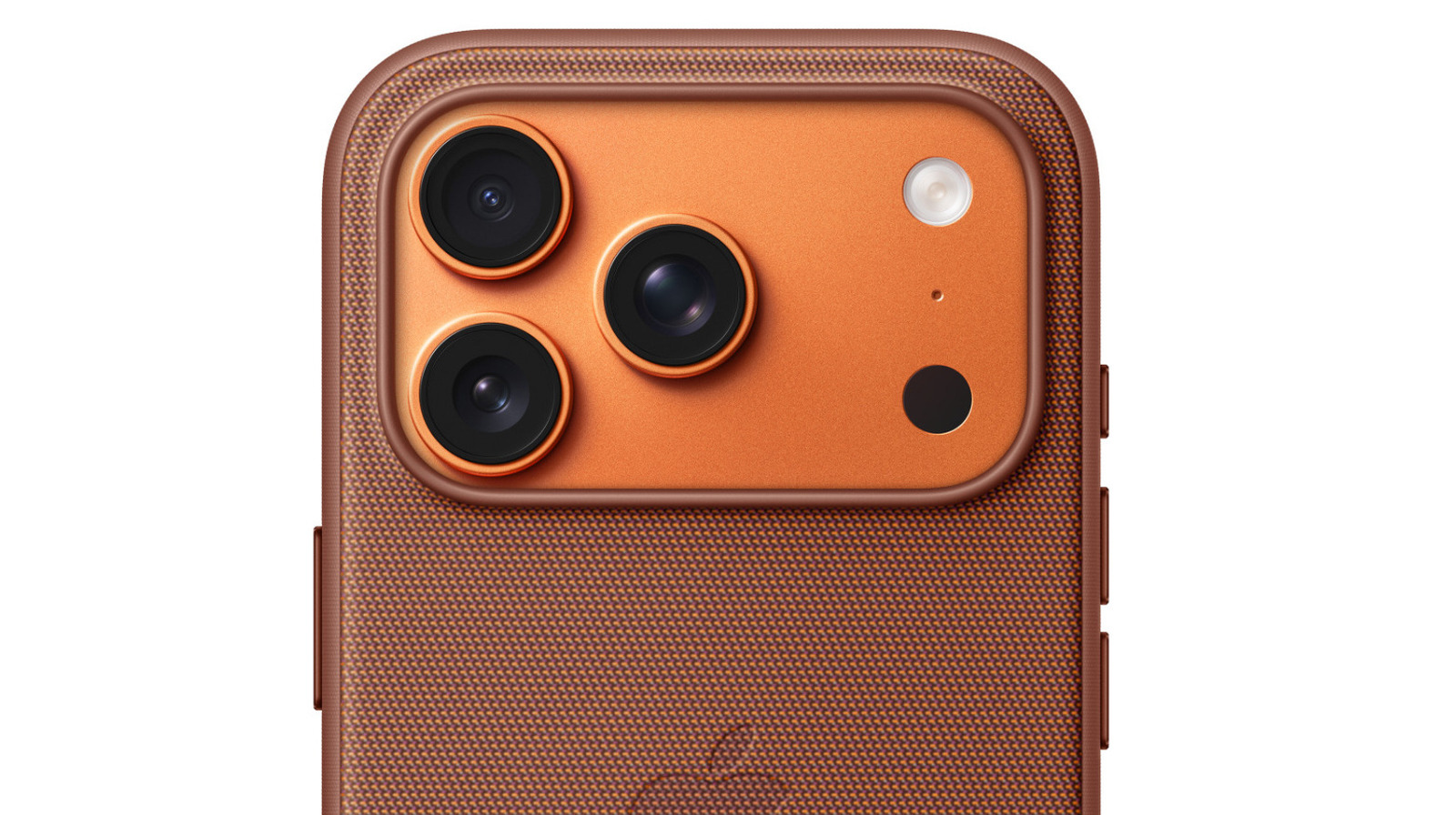
For the first time since the iPhone 11 Pro, Apple has drastically changed the design of the top-of-the-line iPhone. The iPhone 17 Pro has a brand new aluminum unibody design with a camera bar that the company calls a “plateau that creates additional space for internal components.” Similar to the iPhone 11 Pro — where customers quickly called the camera module a cooktop — this new design has split people’s opinions. While some dig the new orange, blue, and silver options, it’s safe to say that Apple’s new bold design language is surely polarizing.

Apple has always used glass at the back of the iPhone for MagSafe and wireless charging capabilities, right from the iPhone X. This year, though, the iPhone 17 Pro uses an aluminum chassis that also stretches all the way to the back, with a glass window at the center to enable wireless charging. Along with a change in design, it’s also surprising how Apple ditched safe colorways like Black and Gold, and decided to take an unconventional route. These drastic developments beg the question: Will we learn to love Apple’s new design?

Even if Apple’s new iPhone 17 Pro design looks controversial, it won’t be around for longer

Right now, I’m still not sold on the iPhone 17 Pro’s new design, even though it means getting a more powerful device with better heat dissipation. What I’ve liked the most about the Pro iPhone models over the years is that they always had sober color options, so it was always easy to pick my favorite version, even if it meant choosing the same black variant over and over again. With the iPhone 17 Pro, Apple has gone all-in with the Cosmic Orange colorway, which is a bit too much for my liking. This is coming from someone who has rocked several blue iPhones, a Rose Gold iPhone 6s, a purple iPhone 14 Pro Max, and more over the years.

The Silver option seems like the most elegant one to recommend for most people. What’s promising, though, is that the company is rumored to introduce a foldable iPhone next year, followed by a 20th anniversary celebration in 2027. This could potentially mean that the iPhone could see a redesign sooner than expected, so this plateau design from the iPhone 17 Pro may not last for a long time. That said, the iPhone 17 Pro enters pre-orders on September 12, 2025, with the official release a week later. We’ll hopefully have a better opinion about the design once we get our hands on the phone.

Source

Posted on

Government meets with car parts suppliers amid JLR cyber crisis

The Department for Business and Trade (DBT) is conducting high-level engagement with Jaguar Land Rover (JLR) and the wider British automotive industry as car production remains suspended at JLR’s facilities following a cyber attack.

DBT representatives today (Friday 19 September) held an extraordinary meeting with the Society of Motor Manufacturers and Traders (SMMT) Automotive Components Section amid the ongoing disruption to the wider supply chain in the UK.

During talks, officials heard about some of the challenges the sector is currently facing thanks to the sudden shutdown at JLR. The Tata-owned carmaker produced over 300,000 vehicles in 2024 and employs over 30,000 people, so is a cornerstone of the UK’s automotive industry.

The DBT send it was working to understand the impact to the supply chain, and that the meeting had allowed it to listen directly and understand the challenges and concerns JLR’s suppliers are facing.

Computer Weekly understands that many of these suppliers have had to shut down their own assembly lines since they cannot now send their finished products to JLR, and some are facing the prospect of lay-offs as a result.

“We know this is a worrying time for those affected, and although Jaguar Land Rover are taking the lead on support for their own supply chain, our cyber experts continue to support them to resolve the issue as quickly as possible,” said minister for industry Chris McDonald.

McDonald additionally met with West Midlands mayor Richard Parker on Thursday 18 September to discuss the impact of the JLR shutdown on the region.

On 17 September, trade union Unite urged the government to consider setting up a furlough scheme – similar to the nationwide scheme put in place for many sectors during the early days of the Covid-19 pandemic in 2020 – to preserve the jobs of an estimated 200,000 people.

“Workers in the JLR supply chain must not be made to pay the price for the cyber attack,” said Unite general secretary Sharon Graham. “It is the government’s responsibility to protect jobs and industries that are a vital part of the economy.”

Unite has advised some of the affected workers that they may be able to apply for Universal Credit.

JLR production is currently scheduled to resume on 24 September, but according to the BBC, Unite believes there is “zero chance” of this happening.

Ongoing incident

The JLR incident began at the end of August but first became public on 2 September when the Liverpool Echo revealed that workers at the firm’s Halewood plant in Merseyside had been told not to come into work.

The attack came just days after the new 75 batch of vehicle registration plates were made available, a regular six-monthly switchover that goes alongside a boost to car sales in the UK.

JLR subsequently revealed that data was exfiltrated from its systems during the attack, although the precise nature of this data has not been disclosed.

The attack was swiftly claimed by a hacking collective referring to itself as Scattered Lapsus$ Hunters – an apparent collaboration between three associated groups, Scattered Spider, Lapsus$ and ShinyHunters. It should be noted that attribution is a highly-imprecise science and so the veracity of these links has not been officially confirmed by law enforcement.

Source

Posted on

Initiative to address escalating US broadband infrastructure attacks

Warning that the US’s broadband infrastructure is under unprecedented criminal attack by increasing levels of vandalism – leaving critical emergency services offline, hospitals struggling to function, law enforcement and government services disrupted, and communities vulnerable – the US broadband industry has launched the Strategic Threat Response and Infrastructure Knowledge Exchange (Strike).

Co-led by CableLabs subsidiary SCTE, and NCTA – the Internet and Television Association, the initiative confronts what the industry says is increasingly recognised as a serious national security crisis, representing a first-of-its-kind executive-level coalition addressing the spike in criminal attacks on essential broadband infrastructure.

Strike notes that in the June to December 2024 time period, 5,770 criminal acts of theft and vandalism were reported, amounting to approximately 824 per month, affecting more than 1.5 million customers. Furthermore, Strike says many of these incidents go beyond mere acts of vandalism, including deliberate assaults that disrupt key facilities including US military bases, 911 services, fire and police departments, healthcare facilities, law enforcement, government services and agencies, as well as educational and financial institutions endangering public safety and interrupting economic activity.

The core mission is four-fold: spotlight broadband damage and destruction as a top-tier national security threat; facilitate intelligence sharing to quickly identify and mitigate emerging threats; integrate policy advocacy, technical standards and operational protocols into a cohesive national defence strategy; and establish clear, unified communication with government stakeholders.

The initiative will aim to develop work done by the likes of the telecom industry summit on protecting critical communications infrastructure. Various technical working groups continue to highlight broadband infrastructure damage and destruction as a national security issue, urging the industry to respond effectively and collectively, bringing together various US industry groups, legislators, and federal and local law enforcement agencies.

Strike will also aim to unite executive leadership to accelerate best-practice adoption and deliver a coordinated, national security-driven strategy.

NCTA says it has experience in addressing these criminal threats to broadband infrastructure through its expertise in public policy, and advocating for federal US legislation to ensure attacks on public and private networks are treated equally and carry appropriate penalties. NCTA stresses that it has also taken the lead in encouraging agencies such as the US Department of Homeland Security and the Federal Bureau of Investigation to increase intelligence sharing, treat these infrastructure attacks as domestic terrorism when the facts warrant it, and allocate more resources to high-incident regions.

Strike aims to complement NCTA’s ongoing work, building on its foundations to provide a unified voice to government stakeholders. Its executive forum is already drawing on senior executives from leading broadband operators such as Comcast, Charter, Altice USA, CableOne, Cox, GCI, Mediacom and Rogers. Comcast’s Elad Nafshi is serving as chair and Charter Communications’ Tom Monaghan as vice-chair,

Emphasising the urgency in finding a solution, NCTA chief technology officer and senior vice-president in the US internet and television association Rik Thakker said: “This isn’t simply an industry issue; it’s a nationwide emergency. Strike will mobilise our collective strength, aligning policy advocacy with strategic operations to strengthen our efforts to protect America’s critical communications infrastructure.”

Strike will also use SCTE’s operational expertise to surface cross-operator insights that strengthen broadband resilience. SCTE has worked to set industry standards that help providers assess business impacts, gain secure access to incident areas, coordinate effectively with federal agencies, evaluate location-specific risks, and maintain continuity and rapid recovery during crises.

“A threat to broadband infrastructure is a threat to our national security,” added Maria Popo, Strike president and SCTE CEO. “Strike ensures that executive-level visibility is directly connected to frontline realities. This coordinated approach is precisely what’s needed to tackle this emerging threat decisively.”

Source

Posted on

iPhone 17 Pro Camera Upgrades: What’s Changed This Year

It’s finally that time of the year — Apple has introduced the iPhone 17 Pro and 17 Pro Max devices with a new aluminum unibody design, improved resistance against drops and scratches, a better processor, and an all-new camera system. Whether you’re a creator, media personality, or just someone who really enjoys taking the best photos and videos, the iPhone 17 Pro brings several improvements compared to previous models.

If you’re planning to upgrade to these new iPhone devices or you’re just curious about all the improvements Apple introduced this year, you should note that the iPhone 17 Pro’s camera system brings the best lenses on an iPhone so far. In this article, we’ve gathered everything new with the iPhone cameras compared to the previous generation, highlighting the updated lenses, focal length differences, and higher-resolution sensors. If you’re a photography enthusiast, you’re surely going to appreciate the enhancements Apple introduced this year to the iPhone 17’s camera plateau.

6 new camera features you get with the iPhone 17 Pro

Better photo processing: The main and ultra-wide cameras on the iPhone 17 Pro are the same as last year. Still, Apple claims it has improved the photo processing compared to the iPhone 16 Pro, thanks to the new chip and algorithm tweaks.

All-new telephoto camera: Apple has replaced the older 12MP 5X telephoto lenses with an all-new 48MP 4X sensor. The larger sensor captures much better details and even offers better low-light performance, thanks to a wider aperture.

Better in-sensor crop: The new 48MP 4X camera allows Apple to crop into the sensor for an 8X output that’s almost lossless. When zooming in digitally, the max level is now 40X compared to 25X on the iPhone 16 Pro.

Dual Capture: Record with the main and selfie cameras at the same time. Apple says it’s possible to record up to 4K with Dolby Vision HDR at 30 fps.

ProRes RAW: This iPhone 17 Pro supports Apple’s video format that combines RAW image data with ProRes compression.

Genlock support: With Final Cut Camera 2 and proper gear, iPhone 17 Pro users can synchronize multiple video sources to a common reference signal, so frame timing can be perfectly aligned.

iPhone 17 Pro’s Center Stage camera bring an entire new experience

Apple has finally revamped the front-facing camera on the iPhone 17 Pro with a new Center Stage camera. With a square sensor, the iPhone 17 Pro now takes 18MP selfies, but that’s not even the best part. The primary advantage of a square sensor is that users don’t have to turn their iPhones into a landscape orientation when clicking group selfies with more people. The Center Stage feature uses AI to automatically expand the field of view and frame while the phone remains in the portrait orientation.

Apple also brings ultra-stabilized video in 4K HDR, which pairs nicely with the new Dual Capture feature. According to the company, it’s designed for moments when you want to speak directly to the camera while simultaneously capturing behind-the-scenes action. For FaceTime and video calls, the iPhone 17 Pro camera keeps users steady and centered in the frame. Altogether, these upgrades make the iPhone experience one of the most refined yet.

Source

Posted on

Some 87% of enterprises see private wireless, edge ROI in

Artificial intelligence (AI) and private networks have helped elevate industrial networking, yet research from Nokia has found that AI’s potential in industrial settings hinges on access to high-quality, real-time data, while on-premise edge and private wireless are key to unlocking AI’s potential in complex industrial environments.

Nokia’s 2025 Industrial digitalisation report drew on insights from 115 industrial enterprises in manufacturing, energy, logistics, mining and transportation in Australia, Germany, Japan, the UK and the US.

Among the key findings of the study was that as many as 87% of on-premise edge and private network adopters are seeing a return on investment in just one year while enabling AI-driven use cases. In addition, 81% of industrial enterprises found setup costs lower, with over half saving at least 11%. Ongoing costs also dropped for 86% of companies, with 60% reporting savings of at least 11%.

Virtually all industrial enterprises were found to have deployed on-premise edge technology alongside private wireless. This combination said Nokia was enabling secure, low-latency connectivity in complex environments and pervasive sensor coverage, even in hard-to-reach areas, supporting AI-driven use cases such as predictive maintenance, real-time monitoring and digital twins in 70% of surveyed enterprises.

The study also highlighted how operational performance improvements driven by private wireless networks are supporting sustainability goals. Some 94% of the surveyed industrial enterprises reported a reduction in carbon emissions, with 41% achieving decreases of more than 20%, and 89% seeing energy savings. These gains were being amplified by predictive maintenance, connected devices and drones that cut fuel-intensive travel and enable more accurate, real-time emissions tracking.

Beyond environmental impact, 71% of surveyed companies were found to be actively deploying connected worker tools such as automated alarms, AI-assisted monitoring and geofencing solutions to reduce accidents and strengthen worker safety.

Nokia suggested that connected devices streamline tasks by reducing the need to move for signal and simplifying access to information. They also cut paperwork and minimise human error, boosting efficiency on-site, and automation.

Not surprisingly, security remained a top priority, with 57% of respondents identifying cyber security as a driver to deploy an industrial edge platform powered by a private wireless network. Nokia noted that its private wireless solutions offer built-in encryption, physical network separation and compatibility with zero-trust frameworks, making them ideal for mission-critical infrastructure while maintaining business continuity and compliance.

The study was conducted by GlobalData. Assessing the trends revealed in the study, the company’s research director Gary Barton said: “Industrial enterprises are turning to private wireless and on-premise edge to drive innovation and industrial transformation.

“These deployments are delivering a clear return on investment and enabling use cases that would not otherwise have been possible. Private wireless and edge have helped enterprises to improve worker safety, support sustainability and create a delivery platform for AI-powered solutions such as process automation and predictive maintenance.”

David de Lancellotti, vice-president of enterprise campus edge sales at Nokia, added: “[Research] forecasts the global private wireless network market will nearly double to US$8bn by 2027. This reflects the growing demand as industries face mounting pressure to modernise in line with global sustainability and efficiency goals.

“[This] research helps leaders build strong business cases for digitalisation by showing how private wireless and on-premise edge not only reduce costs but also accelerate scalable transformation with measurable improvements in worker safety, productivity, security and environmental impact.”

The study also showed that how leading chemical company BASF has deployed Nokia private wireless at its Antwerp facility to advance its digitisation strategy and enable reliable, high-performance connectivity across its six km2 premises. The private network supports AI- and sensor-driven use cases such as real-time monitoring and predictive maintenance, enhances automation and efficiency, improves worker safety, and reduces environmental impact.

“Private 5G has been a game changer for BASF Antwerp. We’re unlocking automation, strengthening occupational safety, accelerating innovation and meeting ROI targets in just two years,” said Steven Werbrouck, expert network connectivity at BASF. “We have become a front-runner for the wider group with learnings that will deliver value at multiple BASF group locations.”

Source

Posted on

How To Restart Your Android Phone Without Using The Power

Claudio Divizia/Shutterstock

Rebooting your Android phone is often recommended as one of the ways to remove any temporary bottlenecks in the phone’s performance, as it clears the memory, closes any unused apps running in the background, and deletes temporary files. It’s also helpful in reinitializing a device’s radio modules and network stack if you’re experiencing connectivity problems.

For most of us, our Android phone’s power button is the instinctive way to shut down or restart the device. Depending on your smartphone model, the power menu is typically triggered by either pressing and holding the power button or by pressing the power and volume up/down buttons simultaneously. However, if your phone’s power or volume buttons are not working for some reason, it can feel like you’re out of options. Fortunately, just like an iPhone, Android offers multiple ways to reboot your phone. You don’t have to install any additional apps, as the process utilizes the built-in features of the OS.

How to reboot an Android phone using Quick Settings

eRHa Lens/Shutterstock

Many Android phones, including Google Pixel and Samsung devices, offer a convenient software-level method to access the power menu for a reboot. To do this, simply open your phone’s full Quick Settings panel by swiping down from the top twice. Once the Quick Settings panel is open, you’ll see the power icon (a circle with a vertical line) on the top-right corner or the bottom of the panel. A simple tap on it will open the power menu, providing you with the reboot and power off options.

Unfortunately, not every Android phone includes the power icon in the Quick Settings panel. For instance, most Motorola and newer OnePlus phones, such as the OnePlus 13 and the OnePlus 13R, don’t have this feature. On such phones, you have to rely on alternative methods, including using the Accessibility Menu Shortcut. Since every Android phone has Accessibility settings baked into it, the following method will work irrespective of your phone’s manufacturer.

How to restart an Android phone using the Accessibility Menu Shortcut

Android phones come with various accessibility features to support users with diverse needs, and one of these features is a special Accessibility Menu that offers quick access to phone controls and accessibility settings. You can think of it as another Quick Settings panel for your phone, but unlike the regular one, it has a power icon by default to reach the reboot option.

This special menu is available via the Accessibility Menu Shortcut, which is not enabled by default. However, you can easily turn it on by navigating to Settings > Accessibility > Accessibility Menu on your phone. You can choose to have the shortcut as a floating button on your phone’s home screen or in the navigation bar. Once the shortcut is enabled, you can simply tap on the icon to access the virtual power button, which you can then use to open the power menu to trigger a reboot or shut down your phone.

Source

Posted on

EE boosts City of London mobile coverage with added outdoor

Connectivity infrastructure-as-a-service provider Freshwave has brought nearly 50 outdoor small cell sites live for mobile operator (MNO) EE in the Square Mile of the City of London, expanding coverage, and improving 4G and 5G connectivity.

The small cells comprise miniature mobile masts that are designed to offer performance boosts in high-demand areas thanks to their size, which makes them easy to install on everyday street infrastructure. These include the UK’s iconic red phone kiosks and digital street hubs, as well as lamp posts and other furniture.

EE began its push into small cells as a response to what it said was the challenge of an ever-more competitive market where quality of service is a key differentiator. In March 2022, it deployed 200 4G small cells across its UK network to boost capacity in high-demand areas, and in the next stage of its strategy in August 2024, the BT Group-owned UK mobile provider revealed it had deployed over 1,000 small cells across the UK, marking 400 new deployments in a 12-month period, including its first 5G sites in Croydon, London.

As part of its deployment strategy, EE says it uses “advanced” network analytics to identify specific locations that would benefit from the performance boost enabled by a small cell. It then works with partners Nokia and Ericsson to deploy a service itself. The result is said to be reduced congestion, enabling customers to benefit from speeds of up to 300Mbps for 4G cells and 600Mbps for 5G.

EE claims to be unique in Europe in combining licensed 1800MHz and 2600Mhz spectrum with unlicensed 5GHz spectrum in its 4G small cells, which it insists helps to deliver “excellent” capacity and speeds. The 5G cells in Croydon are configured with licensed 1800MHz spectrum for 4G and 3.5GHz for 5G.

With the deployment, EE is said to be looking to continue to enhance mobile connectivity for its customers in the historic financial Square Mile, with the latest sites adding to Freshwave’s previous delivery of 35 sites for the operator and a further 34 in build. The network uses what Freshwave calls a first-of-its-kind design, made to accommodate all of the MNOs on 4G and 5G from day one, with no adjustments needed to the infrastructure.

Outdoor small cells have been installed at street level, which Freshwave says makes them ideal for adding much-needed capacity to high-footfall areas. In busy urban environments, demand on the outdoor mobile network can be substantial. Small cells help alleviate some of this demand, relieving the outdoor network and ensuring a better experience for mobile users.

Mobile signals will be boosted for EE customers outside iconic city landmarks, including St Paul’s Cathedral, the Old Bailey and Guildhall, extending to areas surrounding the Barbican as well as along Fleet Street. EE says it is already seeing an average of 125TB of data downloaded per week across all of its Freshwave-deployed London sites.

James Hope, director of mobile radio access networks at EE, said: “As demand for high-capacity, low-latency connectivity continues to grow, we’re proud to be expanding our mobile network in the heart of the City of London. These additional sites will further boost performance and resilience for residents and visitors alike, with robust mobile connectivity being key to supporting the City’s digital future.”

Tom Sleigh, chairman of the planning and transportation committee at the City of London Corporation, added: “The Square Mile is a globally recognised centre for commerce, culture and innovation, and world-class digital infrastructure is vital to maintaining that position and increasing the city’s appeal.

“As more people expect seamless connectivity wherever they go, enhancing coverage across the City of London is an essential step to becoming future-ready. We’re delighted to see this kind of collaborative deployment taking shape in the City, and look forward to continuing to work with EE and Freshwave on delivering this transformation.” 

As well as developments in outdoor mobile signal, the Square Mile is also seeing accelerated deployment of in-building connectivity. Freshwave says it has provided indoor connectivity deployments across more than 5,000,000 sq ft of commercial building space in the City of London.

Source

Posted on

UK sets out plans for AI assurance leadership

The government has unveiled its Trusted third parties AI assurance roadmap as it attempts to encourage investment in UK artificial intelligence (AI), covering professional certification and verification of AI quality processes.

Labour wants AI investors and regulators to go further and faster to deliver growth for the UK’s AI sector as part of the government’s modern industrial strategy.

In a speech at Mansion House, technology secretary Peter Kyle called on industry to step up and match the UK government’s ambition when it comes to AI. “Countries can only prosper if they get the big calls right, if they decide to go beyond the expected and embrace the future, to innovate not imitate – refusing to be constrained by the problems of today by taking up the challenges of tomorrow,” he said. “In these uncertain times, I am certain that’s what it takes to get a global competitive edge.

“We want you to keep investing here, keep building here – list here, scale here. If you invest in Britain, you’ll share in that competitive edge.”

In the policy paper, Feryal Clark, parliamentary under-secretary of state for AI and digital government, discussed the UK’s opportunity to become a leader in AI assurance.

To capitalise on the opportunities that AI presents and drive adoption, she said: “We must ensure it is developed and deployed responsibly, working as intended. As a means of demonstrating the trustworthiness of AI systems, AI assurance has a vital role to play in building confidence in AI systems, ensuring firms can confidently invest in new products and services, and helping to drive innovation and economic growth.

“We believe the UK has a unique opportunity to be a world leader in AI assurance services, building on its strengths in both the professional services and technology sectors.”

The roadmap lays out plans to set up an AI assurance consortium, which will be tasked with developing the building blocks to support future professionalisation, including developing a voluntary professional code of ethics for AI assurance.

It discusses some of the responsibilities of the consortium, including the development of a comprehensive skills and competencies framework for AI assurance.

The roadmap also recognises that new types of testing and evaluation methods, tools, and services will be required to assure AI systems, which will involve feedback from diverse experts, including AI developers.

In terms of professionalism and quality control, the policy document discusses the opportunity to offer government-backed professionalisation, which could give aspiring professionals confidence that associated qualifications and training programmes are high-quality and offer a meaningful path into the assurance profession.

Chancellor Rachel Reeves said: “This country has huge potential, but our economy has been stuck on pause for too long. By giving companies the right environment to innovate, grow and create jobs we are changing that, delivering economic growth to put more money in working people’s pockets.”

Source