Posted on

UK government recommits to Edinburgh supercomputer plan with £750m funding

Chancellor Rachel Reeves has committed up to £750m in funding to create the UK’s most powerful supercomputer at the University of Edinburgh, ten months after the government pulled the plug on a similar project backed by the previous administration.

Funding for the project is set to be confirmed by Reeves during the Spending Review later today, where she is expected to make a series of funding commitments to secure economic growth across the nation.

Taking action to ensure the use of artificial intelligence (AI) becomes more pervasive across the UK is a key part of the government’s plans to shake up the economy.

“We are investing in Scotland’s renewal so working people are better off,” said Reeves. “Strong investment in our science and technology sector is part of our plan for change to kickstart economic growth, and as the home of the UK’s largest supercomputer, Scotland will be an integral part of that journey.”

According to the government, the proposed supercomputer will provide scientists across the UK with the compute power they need to “unlock a decade of national renewal through AI” and the carrying out of research that could transform how various industries operate.

“The supercomputer will work alongside the AI research resource, a network of the UK’s most powerful supercomputers that were built to bolster scientific research,” said the Department for Science, Innovation and Technology (DSIT) in a statement.

It will also form part of the soon-to-be-created network of other high-performance computing facilities, known as the AI Research Resource, which DSIT said the government has committed to expand by at least 20 times by 2030.

No firm details have been shared so far about the capacity of the supercomputer, but DSIT said further information about the system will be revealed later this summer, with the publication of its Compute roadmap document.

In the meantime, Peter Mathieson, principal and vice-chancellor of the University of Edinburgh, said the supercomputer investment will have a transformative impact on the UK, and locally in Edinburgh, too.

“This significant investment will have a profoundly positive impact on the UK’s global standing, and we welcome the vast opportunities it will create for research and innovation,” he said.

“Building on the University of Edinburgh’s expertise and experience over decades, this powerful supercomputer will drive economic growth by supporting advancements in medicine, bolstering emerging industries and public services, and unlocking the full potential of AI,” added Mathieson. “We look forward to working alongside the UK government and other partners to deliver this critical national resource.”

News of the announcement may come as a surprise to some, given that 10 months ago, the government confirmed it was pulling the plug on an £800m exascale supercomputer project in Edinburgh previously announced by the Conservative government.

At the time, DSIT said the money for that project had been promised by the previous administration, but was never formally allocated for in its budget. This claim has been repeatedly contested by members of the Conservative Party.

It also comes several days after prime minister Keir Starmer opened London Tech Week 2025 by announcing a £1bn spending commitment to boost AI infrastructure in the UK.

Source

Posted on

Government using national security as ‘smokescreen’ in Apple encryption row

The government is using national security as a “smokescreen” to refuse to disclose how many technical capability notices (TCNs) it has issued to telecoms and internet companies to secretly gain access to users’ encrypted communications and data, and make other modifications to their networks, it was claimed last night.

Senior Conservative MP David Davis told Computer Weekly there was “no credible case” for the government to refuse to tell Parliament how many notices it issues each year to telecoms and internet companies.

“The government is being dishonest in its use of ‘national security’ as a smokescreen to avoid telling the public how often it has ordered tech companies to hand over data or undermine encryption,” he said.

Davis is pressing the government to disclose how many TCN orders it issues each year after attempts by the Home Office to issue a notice against Apple attracted criticism from leading cryptographers, civil society groups and US politicians, when the existence of the notice was leaked to the Wall Street Journal.

Rather than comply with the order, Apple withdrew its Advanced Data Protection (ADP) service from the UK in February, and is now challenging the order in the Investigatory Powers Tribunal. Civil society group Privacy International has issued a separate legal challenge.

In response to written questions from Davis (here and here), Labour’s minister of state for security, Dan Jarvis, claimed he could not disclose how many TCNs the Home Office issues each year to phone and internet companies, citing national security.

Jarvis said it has been a “long-standing position that the government does not confirm or deny compliance of operators given a notice”.

The government is being dishonest in its use of ‘national security’ as a smokescreen to avoid telling the public how often it has ordered tech companies to hand over data or undermine encryption David Davis, Conservative MP

“We also do not publish the number of technical capability notices issued or release identities of those subject to a technical capability notice. To do so may identify operational capabilities or harm the commercial interests of companies,” he added.

TCNs issued to major telcos

The Home Office is required to seek approval from a technical advisory board, made up of representatives from the telecommunications industry and the intelligence services, before issuing TCNs. It is unclear whether the advisory board has ever objected to a TCN.

The Home Office is understood to have issued TCNs to every major UK telecommunications company and internet service provider. TCNs must be renewed every two years or are deemed to have lapsed, according to the code of practice (13.33).

Before the Investigatory Powers Act 2016, the government issued similar notices under Section 94 of the Telecommunications Act 1984.

A court ruling last year raised questions over the blanket use of secret government orders to weaken the encryption of technology company users.

The European Court of Human Rights found Russia had acted unlawfully when it ordered messaging service Telegram to assist in the decryption of users’ encrypted communications by providing data relating to the encryption key.

Podchasov versus Russia

In the case of Podchasov v. Russia, judges found: “Weakening encryption by creating backdoors would apparently make it technically possible to perform routine, general and indiscriminate surveillance of personal electronic communications.”

They added: “Backdoors may also be exploited by criminal networks and would seriously compromise the security of all users’ electronic communications.”

Bernard Keenan, a lecturer in law at UCL and a specialist in surveillance law, said the case meant that any systemic undermining of an encrypted internet system was, by default, “disproportionate”, and if the UK intended to undermine end-to-end encryption, it should say so publicly.

“It seems to raise a really important point, which is to say that if you’re going to systemically weaken and create risks, that has to be foreseeable [under the law]. And that means you should at least say whether you are issuing these [TCNs],” he added.

Government response questioned

Pat Walshe, a data protection and privacy professional, said the government’s claim that disclosing the number of orders issued would damage national security was open to challenge.

“I think David Davis is correct to ask the questions and it’s neglectful of the government not to answer them. I would suggest respectfully to the government that disclosure of the numbers themselves would not compromise national security,” he said.

You cannot create a backdoor for the state without opening the same door to hostile states and cyber criminals. Once a vulnerability exists, it will be exploited David Davis, Conservative MP

“If they are saying it is, then I would respectfully ask the government to publish the impact assessment that proves the restriction on disclosure is necessary and proportionate to safeguard national security,” he added.

Davis told Computer Weekly that encryption safeguards everyone, including journalists, whistleblowers, businesses and the public.

“You cannot create a backdoor for the state without opening the same door to hostile states and cyber criminals. Once a vulnerability exists, it will be exploited,” he said.

Davis said the order issued against Apple is unlikely to be the first and only notice served, “yet we have no idea how many such notices have been issued, nor how often companies have resisted or complied”.

He added: “There is no credible national security case for withholding this information. The government’s refusal to publish even the number of these notices is not about security – it is about avoiding scrutiny.”

Need for warrants

Computer Weekly previously reported that, if the Home Office succeeds in securing the TCN against Apple, it would have to take many further legal and technical steps to obtain the cryptography keys to read messages and data from users of Apple’s Advanced Data Protection service.

This could include obtaining targeted warrants to monitor individual users of Apple, bulk warrants to target large numbers of users, or thematic warrants to target different classes of people using Apple’s services.

The Home Office would also have to serve “equipment interference warrants” to enable necessary “updates” and tampered apps to be sent to targeted Apple devices, according to forensic computer expert Duncan Campbell.

Davis said the government should focus on better-targeted intelligence and proper judicial oversight, rather than weakening the security of cloud services.

“Instead of strong-arming tech firms into weakening public protections, the government should focus on better-targeted intelligence, robust legal frameworks and proper judicial oversight. We do not defend British values by dismantling them,” he said.

It is widely believed that the Home Office has issued a similar TCN against Google, which develops the Android phone operating system.

Source

Posted on

Google AI Overviews strike again following the fatal Air India

Google said at I/O 2025 that AI Overviews are quite popular with users, but I’ve always found them to be the worst kind of AI product. Google is forcing AI results on as many Google Search queries as it can just because it can. It’s not because users want AI Overviews in search.

The separate AI Mode is generative AI in Google Search done the right way. It’s a separate tab or an intentional choice from the user to enhance their Search experience with a Gemini-powered chat.

The reason I don’t like the idea of AI Overviews being forced on users aggressively is their well-known problems with accuracy. We’ve learned the hard way that AI Overviews hallucinate badly. The glue-on-pizza incident won’t be forgotten anytime soon. While Google has improved AI Overviews, the AI-powered Search results still make mistakes.

The latest one concerns the fatal Air India crash from earlier this week. Some people who rushed to Google Search to find out what happened saw an AI Overview claiming that an Airbus operated by Air India crashed on Thursday, soon after takeoff.

Tech. Entertainment. Science. Your inbox.

Sign up for the most interesting tech & entertainment news out there.

By signing up, I agree to the Terms of Use and have reviewed the Privacy Notice.

Some AI Overviews even mentioned the type of plane, an Airbus A330-243. In reality, it was a Boeing 787.

I’ve said more than once that Google should abandon AI Overviews. The glue-on-pizza hallucinations were one thing. They were funny. Most people probably realized the AI made a mistake. But this week’s hallucination is different. It spreads incorrect information about a tragic event, and that can have serious consequences.

The last thing we want from genAI products is to be misled by fake news. AI Overviews do exactly that when they hallucinate. It doesn’t matter if these issues are rare. One mistake like the one involving the Air India crash is enough to cause harm.

This isn’t just about Google’s reputation. Airbus could be directly impacted. Imagine investors or travelers making decisions based on that search result. Sure, they could seek out real news sources. But not everyone will bother to verify the snippet at the top of the page.

Google’s disclaimer that “AI responses may include mistakes” isn’t enough. Not everyone notices, or even reads, that fine print.

At least Google corrected this hallucination and gave Ars Technica the following statement:

As with all Search features, we rigorously make improvements and use examples like this to update our systems. This response is no longer showing. We maintain a high quality bar with all Search features, and the accuracy rate for AI Overviews is on par with other features like Featured Snippets.

I’ll also point out that not all AI Overviews may have listed Airbus as the crashed plane. Results can vary depending on what you ask and how you phrase it. Some users might have gotten the correct answer on the first try. We don’t know how many times the Airbus detail appeared by mistake.

AI Overviews might make similar mistakes on topics beyond tragic news events. We have no way of knowing how often they hallucinate, no matter what Google says about accuracy.

If you’ve been following AI developments over the past few years, you probably have a sense of why these hallucinations happen. The AI doesn’t think like a human. It might combine details from reports that mention both Airbus and Boeing, then get the facts mixed up.

And it’s not just AI Overviews. We’ve seen other genAI tools hallucinate too. Research has even shown that the most advanced ChatGPT models hallucinate more than earlier ones. That’s why I always argue with ChatGPT when it fails to give me sources for its claims.

But here’s the big difference. You can’t opt out of AI Overviews. Google has pushed this AI search experience on everyone without first ensuring the AI doesn’t hallucinate. AI Mode, by contrast, is a much better use of AI in Search. It can genuinely improve the experience.

I’ll also add that instead of talking about AI Overviews and their hallucinations, I could be praising a different AI initiative from Google. DeepMind is using AI to predict hurricane forecasts, which could be incredibly helpful. But here we are, focusing on AI Overviews and their errors, because misleading users with AI is a serious problem. Hallucination remains an AI safety issue that nobody has solved yet.

Source

Posted on

Investor behaviour in the wake of cyber’s ‘black swan’ moment

A growing sense of uncertainty is taking hold as the UK faces two compounding pressures. On one hand, prolonged international trade negotiations are leaving many investors and business leaders feeling removed from decisions that impact their long-term strategies. On the other, a series of high-profile cyber attacks on UK  and global companies has cast doubt on the country’s resilience and readiness.

What we are witnessing in the spring of 2025 may be more than just a surge in cyber incidents; it could be the sector’s Black Swan moment. Black Swan events are rare, unpredictable incidents with severe consequences that only seem obvious after they happen. Originally coined by risk theorist Nassim Nicholas Taleb, they challenge assumptions about what we think we can forecast.

Other Black Swan events

  • The 2008 financial crash, triggered by unrecognised systemic risks;
  • The 9/11 terrorist attacks, which reshaped global security;
  • The rise of the internet, which transformed economies in unforeseen ways.

While individual breaches are neither rare nor unpredictable, the near-simultaneous compromise of multiple major UK retailers, exploiting similar vectors such as social engineering, help desk impersonation, and low-tech fraud, represents a convergence that few foresaw. It’s the combination, not the components, that marks this as a statistically rare and systemically disruptive event.

The so-called Cyber Spring was never modelled for, and yet with hindsight we may all find ourselves pointing to missed signals: lax internal protocols, weak password hygiene, help desk vulnerabilities long flagged by security professionals and a tense geopolitical climate. In classic Black Swan fashion, the explanations will now arrive quickly, but the cost of the oversight will be even faster.

The scale and visibility of these breaches have prompted an unprecedented response from the UK government, with the announcement of a £16m boost to national cyber security efforts, specifically aimed at bolstering business resilience in the retail and consumer sectors. Following the high-profile attacks on brands such as Harrods, Marks & Spencer, Adidas, the NHS and more, Chancellor of the Duchy of Lancaster, Pat McFadden, stated that cyber security is “not a luxury but an absolute necessity.”

This intervention signals a shift in tone from advisory to urgent, reinforcing what investors already suspect: cyber resilience is now a core part of operational integrity, brand value and national economic security.

Protecting your business as investors protect their portfolio

Black Swan events often expose the blind spots in even the most sophisticated forecasting models, and that’s exactly what investors are now facing. Many of the compromised firms were considered digitally mature on paper, yet still fell victim to old-fashioned manipulation. This signals a need to rethink how businesses, and those investing in them, quantify and prepare for cyber risk.

We’re seeing firsthand why cyber security should be a decisive factor for investors looking to secure value and reduce risks. The fallout from recent events will be felt across profits, portfolios and the people themselves. Whether that’s the teams working to understand the source and scale of the attack (over many months, if not years), the executives managing difficult conversations, the customers who are concerned about their data or the staff who are worried about their jobs, the impact is far reaching and the road back from the breach is a long one.

This moment is forcing a recalibration. Traditional risk models are being questioned, as they failed to anticipate that a wave of basic, human-led attack vectors could take down enterprises in such a tightly clustered timeframe.

Investors, who were already tightening their scrutiny of information security practices, will likely accelerate this action to safeguard their portfolios from similar exposure. As the frequency and severity of cyber incidents rise, investment decisions will be increasingly shaped by the robustness of a business’s cyber security credentials. This will take cyber security away from checkbox criterion, to one of the most decisive factors in determining a business’s resilience, value and future.

Build to withstand scrutiny

A clear and well-documented approach to cyber security is fundamental to business value and long-term viability. With threat actors adapting faster than ever, there’s an expectation that businesses will match that pace with proactive, standards-driven measures.

The lesson of 2025’s Cyber Spring is that resilience is not only about technology, but also about recognising the psychological and systemic biases, what Taleb would call the illusion of certainty, that leave businesses exposed.

As shown in this latest spate of attacks, no business can sit on its laurels when it comes to cyber security. Firms must assume that cyber attacks are a matter of when, not if.

As Taleb argues, the goal isn’t to predict Black Swans, but to build systems that are robust and even benefit from disruption. For businesses, that means developing not just technical defences, but also cultural awareness, simulation protocols, and internal resilience that can weather the psychological and financial aftershocks of a breach.

For investors, that makes pre-deal scrutiny of cyber controls a necessity, and for businesses, it makes certification, processes, and best practices non-negotiable.

Ed Bartlett is CEO of Hicomply, a compliance certification specialist.

Source

Posted on

Human vs digital therapy: AI falls short when IT pros

Over half of cyber security professionals lose sleep due to work-related stress, according to research by the Chartered Institute of Information Security (CIISec: 2022/23 State of the profession survey). They suffer from these and other symptoms similar to those we deal with in combat veterans at PTSD Resolution, the UK ex-Forces mental health charity.

Yet increasingly these stressed IT professionals are turning to AI chatbots for mental health support, largely because they are unable to access proper therapeutic help, or maybe it just seems easier.

To us, this is very concerning. We appear to be facing a mental health crisis in the IT sector, and instead of addressing root causes, we are handing people over to algorithms.

The AI therapy market reality

The numbers are alarming: more than 1.6 million people are on a mental health waiting list in England, and the NHS estimates that up to eight million with diagnosable conditions receive no treatment. Tech entrepreneurs have stepped in to fill this gap at least in part with AI-powered mental health and also companion platforms, which promise a sympathetic ear and even a ‘relationship’ with a chatbot.

We can understand the appeal. These systems are available 24/7, seemingly cost-effective, and for IT professionals working irregular hours under constant pressure, they may offer immediate relief.

But accessibility is not the only consideration when dealing with vulnerable people. In fact, PTSD Resolution successfully pioneered the delivery of therapy over the internet during the Covid-19 pandemic, and we continue to offer this service today, in addition to in-person sessions.

For IT workers, some of whom are ex-military personnel who’ve moved into cyber security, the stress patterns can mirror combat trauma. The constant vigilance, high-stakes decisions, and responsibility for protecting others. These aren’t simple problems that a response automated by an algorithm can solve.

The human advantage

The risks are evident, although specific cases of harm inflicted by therapy chatbots are harder to pin down. Many of these AI services claim to embed suicide-screening algorithms, automatic helpline sign-posting, and, in at least one case, human escalation.

But unlike human therapists bound by ethical codes and professional oversight, most consumer chatbots lack mandated clinical oversight and have only rudimentary crisis-escalation scripts.

From an evolutionary viewpoint, human distress has always required a human response. Our ancestors needed others who could read facial expressions, interpret vocal nuances, and understand contextual factors. This is how our brains are wired to process and heal from trauma.

AI chatbots lack these capabilities. They cannot observe body language during panic attacks, detect subtle voice changes indicating deception about mental state, or understand the complex interplay between work pressures and personal circumstances. Unlike AI, a human may notice that someone in distress, claiming to be ok, might be masking.

General chatbots may not have safety parameters and ways of identifying if the issue needs to be taken over by a therapist. For IT professionals dealing with moral injury such as being forced to implement surveillance systems against their values, or making decisions affecting thousands of users’ data security, this contextual understanding is crucial.

There is also automation bias. IT professionals may be particularly susceptible to trusting algorithmic advice over human judgment, creating a dangerous feedback loop where those most likely to use these systems are most vulnerable to their limitations.

Privacy and security concerns

IT professionals should be particularly alarmed by privacy implications. Human therapists operate under strict confidentiality rules, protected by laws and regulations. But ChatGPT acknowledges that engineers “may occasionally review conversations to improve the model.”

Consider the implications: your most private thoughts, shared during vulnerability, potentially reviewed by programmers optimising for user engagement rather than therapeutic outcomes, or even a state intelligence organisation or criminal gang hacking that data for their own nefarious purposes.

Human Givens Therapy

The human therapy alternative has been tested and proven effective. PTSD Resolution uses a therapy developed by the Human Givens Institute and all 200 therapists in the charity’s network are qualified members. HGI recognises that humans have innate emotional needs: security, autonomy, achievement, meaning, and others. When these needs aren’t met, psychological distress follows.

Tony Gauvain, an HGI therapist and retired army colonel who chairs PTSD Resolution, explains: “Executive burnout and military trauma share similar symptoms – depression, anger, insomnia. It’s about feeling overwhelmed and unable to cope, whether from a military incident or stressful encounters with management.”

HG therapy acknowledges the fundamentals of human psychology: we are pattern-matching creatures. Skilled therapists can identify metaphors in language, recognise processing patterns, and work with imagination to reframe traumatic experiences. Crucially, they adapt in real-time based on the client’s often very subtle responses – something no algorithm can replicate. At least not yet.

There is clear evidence for this approach. PTSD Resolution achieves a 68% reliable improvement rate with 80% treatment completion, typically delivered in around six sessions, according to a King’s College London study, published in Occupational Medicine in March 2025.

At £940 per treatment course – delivered free of charge to UK Forces’ veterans, reservists and their families – it is highly cost-effective compared to the long-term impacts of untreated trauma, and even to other person-to-person therapies. We are very lean in our operation, owning no assets and channeling donations to pay for the therapists’ time for each session.

Real-world success

We’ve seen this approach work with IT professionals experiencing constant fight-or-flight mode due to work pressures, but unable to take the natural action their stress response demands. Unlike our ancestors who could fight or flee threats, modern workers must sit at desks pretending everything’s fine while their nervous systems are in overdrive.

Through our Trauma Awareness Training for Employers (Tate) programme, the charity has worked with companies like Anglo American. Following training, 100% of delegates reported significantly increased confidence in identifying and supporting colleagues experiencing trauma.

The King’s College evaluation found that our therapy clients showed sustained improvement, despite often working with people who had complex post-traumatic stress disorder (PTSD) and had been failed by other services.

Most recently, we formed a strategic partnership with CiiSec, with services now available to their membership of more than 10,000 cyber security professionals. This collaboration provides both mental health support through trauma awareness training and access to professional therapy.

The bottom line

AI may have supplementary roles – perhaps for basic education or support between therapy sessions. But as a replacement for human therapists? No. No AI chatbot has UK or FDA approval in the USA to treat mental health conditions, and documented risks are too significant.

For IT professionals struggling with burnout, depression, or work-related trauma, the solution is not better algorithms – it’s better access to qualified human therapists who understand this industry’s unique pressures.

Ultimately, healing happens in a relationship. It occurs when one human truly understands another’s experience and guides them towards meeting fundamental emotional needs. No algorithm can replicate that.

The choice is not between convenience and inconvenience, not when a full HG therapy session is available over Zoom, often within days of a first exploratory contact call. The choice is in fact between genuine help and digital simulation of care.

Malcolm Hanson is clinical director at PTSD Revolution.

Source

Posted on

WhatsApp seeks to join Apple in legal challenge against Home

Encrypted messaging service WhatsApp is seeking to intervene to support Apple in its legal fight to challenge a secret Home Office order that critics say would undermine the privacy and security of its users.

WhatsApp’s CEO Will Cathcart has submitted evidence to the Investigatory Powers Tribunal today, raising concerns that the move by the UK government would undermine the security of people using encrypted communication and cloud services.

Cathcart argues that the secret notice, known as a technical capability notice (TCN), would set a “dangerous precedent for security technologies that protect users around the world”.

The head of WhatsApp also argues that the proceedings in the Investigatory Powers Tribunal, a court that frequently hears complaints over the misuse of surveillance powers behind closed doors, should be held in public because of the high public interest in the case. 

The technology company, which provides an encrypted messaging service that ensures messages can only be read by senders and recipients, is seeking to intervene in a case brought by Privacy International and Liberty, challenging the Home Office. The Investigatory Powers Tribunal will make a ruling on whether to accept WhatsApp’s application.

Apple is bringing its own case at the Investigatory Powers Tribunal, challenging the lawfulness of the Home Office’s TCN, which requires the company to provide UK law enforcement agencies with access to encrypted messages and data stored by Apple users who use its Advanced Data Protection (ADP) cloud service.

WhatsApp: Case sets dangerous precedent

WhatsApp warned that the case could undermine the security of people’s private communications and expose them to attacks from hackers and hostile nation states.

“We’ve applied to intervene in this case to protect people’s privacy globally. Liberal democracies should want the best security for their citizens. Instead, the UK is doing the opposite through a secret order,” said Cathcart.

“This case could set a dangerous precedent and embolden nations to try to break the encryption that protects people’s private communication,” he added.

WhatsApp’s intervention, if agreed by the tribunal, is likely to raise political tensions between the UK and the US, where the Home Office’s orders against Apple have attracted criticism from US President Donald Trump and Tulsi Gabbard, director of US National Intelligence.

Last week, US lawmakers on both sides of the political divide called on Congress to suspend US and UK law enforcement agencies’ data-sharing arrangements for 30 days unless the UK withdrew the order against Apple.

Security experts have criticised the UK

The UK’s move has also been criticised by leading cyber security experts and cryptographers, including Phil Zimmerman, inventor of email encryption software PGP; Ronald Rivest, one of the inventors of the RSA encryption algorithm; cyber security author Bruce Schneier; and David R Jefferson, former supercomputer scientist at the US Lawrence Livermore National Laboratory.

They argued in an open letter published in February – after the existence of the Home Office’s order against Apple was leaked to the Wall Street Journal – that the UK’s move would create a backdoor into personal data that would jeopardise the security and privacy of millions of people.

WhatsApp would challenge any law or government request that seeks to weaken the encryption of our services and will continue to stand up for people’s right to a private conversation online Will Cathcart, WhatsApp

Apple withdrew its Advanced Data Protection service from UK users, rather than comply with the Home Office’s order. “As we have said many times before, we have never built a backdoor or master key to any of our products or services, and we never will,” Apple said in a statement at the time.

WhatsApp CEO Cathcart said today that the company would stand up against any government attempts to weaken the encryption of WhatsApp’s messaging service.

“WhatsApp would challenge any law or government request that seeks to weaken the encryption of our services and will continue to stand up for people’s right to a private conversation online,” he said.

Caroline Wilson Palow, director and general counsel at Privacy International, said WhatsApp’s intervention in the legal action brought by Privacy International and Liberty would make it harder for the Home Office to ignore opposition to government moves to undermine encryption.

“It demonstrates the breadth of impact of these orders, which could potentially undermine services used by billions of people. And it is remarkable that such different companies and civil society are uniting in opposition. This rising tide of dissent cannot be ignored,” she told Computer Weekly.

Home Office: We can have privacy and security

The Home Office has not commented on WhatsApp’s move to intervene in the case. However, a spokesperson previously told Computer Weekly that “the suggestion that privacy and security are at odds is not correct – we can and must have both”.

“Privacy is only impacted on an exceptional basis, in relation to the most serious crimes, and only when it is necessary and proportionate to do so,” the spokesperson said.

The Home Office said it would not comment on “operational matters”, including confirming or denying the existence of TCNs.

Source

Posted on

AI vs creative industries

As the UK government ponders a consultation on artificial intelligence (AI), privacy and copyright, a Michelle Obama quote comes to mind: “There is simply no time for that kind of foolishness”.

Despite fierce opposition from cultural industries, the UK government seems to be following the US lead by bowing down to the broligarchy (again) when it comes to protecting the copyrights of artists and creatives.

This is a perilous and critical junction for the cultural sector that has been described as “the UK crown jewels,” generating £125bn, or 5.7%, to the UK economy in 2022.

Stateside, Donald Trump has already fired the director of the US Copyright Office following a report produced by her department which suggested, “Not everyone agrees that further increases in data and test performance will necessarily lead to continued real-world improvements in utility”. 

That statement works directly against the interests of the broligarchy and their insatiable appetite to take everything for themselves, for free, to train their AI models, including all the outputs from our creative industries. Let’s call this what it really is – it’s not “training,” it’s theft.

Why is this foolishness? Because it all comes down to economics and frankly the chance that the UK is going to be able to, as Keir Starmer has suggested, “win the global race” in technology and AI is a total fiction.

Chilling comments

While the government recently published its AI Opportunities Action plan – including the rather chilling comment that AI will be “mainlined into the veins of this enterprising nation” – trade body Tech UK has commented that the details are mixed “particularly around compute timelines”. It goes on to state there are “notable gaps including semiconductor supply planning which remains critical for large-scale AI”.

The exascale compute part of this is critical – only in the recent Spending Review did the government finally commit £750m towards building the UK’s most powerful supercomputer, in Edinburgh.

To put some comparative figures around that and to see where the UK really stands in competitive terms to the US, Karen Hao in her recent book Empires of AI: Inside the reckless race for total domination lays out the costs of competition: “Microsoft alone spent more than $55bn in the fiscal year 2024, nearly a quarter of its reported revenue, to build what SemiAnalysis described as ‘the largest infrastructure buildout that humanity has ever seen.’ Google, meanwhile, said in its third 2024 quarterly earnings call that it planned to crank up its datacentre expenditure to reach around $50bn for the fiscal year. Meta said it would likely round out the fiscal year with up to $40bn in datacentre and infrastructure expansion, which it estimated would rise the following year.”

We recently learned that Meta is in talks with Scale AI for a $15bn stake in the company while also offering individual salaries of as much as $75m, as suggested by Casey Newman in Platformer News and confirmed by the New York Times.

And it won’t end there in terms of costs, according to Dario Amodei, CEO of Anthropic, as told to the New York Times in relation to future financial requirements: “And so, today’s models cost in the order of $100m to train – plus or minus factor two or three. The models that are in training now and that will come out at various times later this year or early next year are closer in cost to $1bn. So that’s already happening. And then I think in 2025 and 2026, we’ll get more towards $5bn or $10bn.”

Amodei goes on to speak about governments and their ability to meaningfully play in this market: “I don’t know of too many governments doing it directly, though some, like the Saudis, are creating big funds to invest in the space. When we’re talking about the models are going to cost near to $1bn, then you imagine a year or two out from that, if you see the same increase, that would be $10-ish billion. Then is it going to be $100bn? I mean, very quickly, the financial artillery you need to create one of these is going to wall out anyone but the biggest players.”

Deep pockets

This is insanity. There is absolutely no way the UK can compete with such deep pockets despite all the rhetoric. Nor can UK universities hope to compete in the AI race given the exodus to industry among AI research facilities which, according to Hao, in the US “increased eightfold from 2004 to 2020”. And AI PhD graduates heading to corporations jumped from 21% to 70%, according to a 2023 study in science from MIT researchers. That’s almost a complete hollowing out of academia, shifting power again to Big Tech.

There is absolutely no way the UK can compete with such deep pockets despite all the rhetoric

In the US, the US House Committee is advancing a 10-year moratorium on state AI regulation, while in the UK the government is cosying up to Big Tech with unprecedented access to technology secretary Peter Kyle.

You can clearly hear the narrative of Big Tech in Keir Starmer’s statement in the AI Opportunities Action Plan: “The AI industry needs a government that is on their side, one that won’t sit back and let opportunities slip through its fingers. And in a world of fierce competition, we cannot stand by. We must move fast and take action to win the global race”.

It’s eerily familiar to the Facebook mantra of “move fast and break things”.

But it is equally true that the creative and cultural industries need a government that is on their side – although in this instance what the cultural sector needs is a government prepared to protect and preserve its opportunities in the face of what is likely a catastrophic impact on the future careers and livelihoods of actors, musicians, artists, film-makers and content creators.

This is recognised in the recently published BFI report AI, copyright and productivity in the creative industries, which concluded: “Without robust policy intervention, generative AI will worsen many of the structural economic challenges that the British creative industries already face. We contend that the way forward is through purposeful, responsible and informed regulation that protects our creative industries and encourages responsible AI uptake”.

Current attempts through the Data (Use and Access) Bill to protect the copyright of creatives are struggling, having suffered a fourth House of Lords defeat. At the time of writing, the bill is in ping-pong, back and forth between the Lords and the Commons with the government clearly favouring allowing tech companies to steal the work of the creative sector for fear of losing some mythical AI race it can never win anyway.

Artists in the US are similarly without government champions, while the tech bros are holding sway. Karen Hao gives an example of a lobbying event in the US contrasting the access and influence of Sam Altman, CEO of Open AI, and a group of artists: “Altman was attending an exclusive dinner with 60 House members at the Capitol, feasting on an expertly prepared buffet with roast chicken. At the same time, the artists were hosting an interactive cocktail hour and trying to attract as many staffers with the best their budget could buy – wine and Chick-fil-A. It was a small but darkly comedic illustration of who commanded power and influence in the AI policy conversation and who didn’t”.

On the brink

The chief executive of UK music, Tom Kiehl, told the BBC that the government is “on the brink” of offering up the country’s music industry “as a sacrificial lamb in its efforts to cosy up to American-based tech giants”.

That sentiment is echoed by Channel 4 CEO Alex Mahon: “The creative industries account for 6% of the UK’s GVA [gross value add] and is growing 1.5 times faster than other sectors,” she said. “If we continue in a world where large language models can scrape and use that data without paying for it properly, we are in a dangerous position for the industry.”

The government needs to act like a government and flex its muscles on behalf of the most vulnerable and those most under threat, not those who stand the most to gain from their theft. If they sell the family silver that is the UK’s great cultural industries to Silicon Valley, they can’t not know what they are doing because we have seen all this theft before – we know where it ends.

It begs the question – do they have any idea who they are dealing with? Do they even have a basic grasp of the economics of AI? The government is essentially colonising its own cultural industries.

According to the government’s assessment, “The current uncertainty around intellectual property is hindering innovation and undermining our broader ambitions for AI, as well as the growth of our creative industries.” This of course is a total tech wheeze. There is absolutely zero uncertainty.

The law is clear. UK copyright law does not allow text and data mining for commercial purposes without a licence. Is it too much to expect the government to enforce its own legislation, not break it in the vain hope of currying a little favour in Silicon Valley?


Source

Posted on

How to transform Apple Intelligence into a real AI chatbot

With WWDC 2025 now over, many Apple fans were disappointed by the lack of newer Apple Intelligence features. Even though Cupertino is bringing some new AI functionalities to the platform, the most anticipated one is still a mystery.

This is why Apple executives have addressed in a few interviews why the new Siri hasn’t shipped yet. While it was initially expected to arrive with iOS 18.4, Bloomberg’s Mark Gurman now reports that Apple aims for an iOS 26.4 release.

While this might be even more disappointing for users (especially since OpenAI and other competitors keep evolving their AI models faster than ever), there’s a possibility to take advantage of Apple Intelligence as a real AI chatbot (and I’m not talking about powering it with ChatGPT).

This is still only available as part of the new features coming with iOS 26 and macOS Tahoe, which are in the early days of beta testing.

Tech. Entertainment. Science. Your inbox.

Sign up for the most interesting tech & entertainment news out there.

By signing up, I agree to the Terms of Use and have reviewed the Privacy Notice.

There’s an Apple Intelligence chatbot hiding in iOS 26 and macOS Tahoe

As noted by my good friend and MacWorld reporter Filipe Espósito on Threads, it’s possible to run your own Apple Intelligence chatbot if you have the iOS 26 or macOS Tahoe beta installed on your devices.

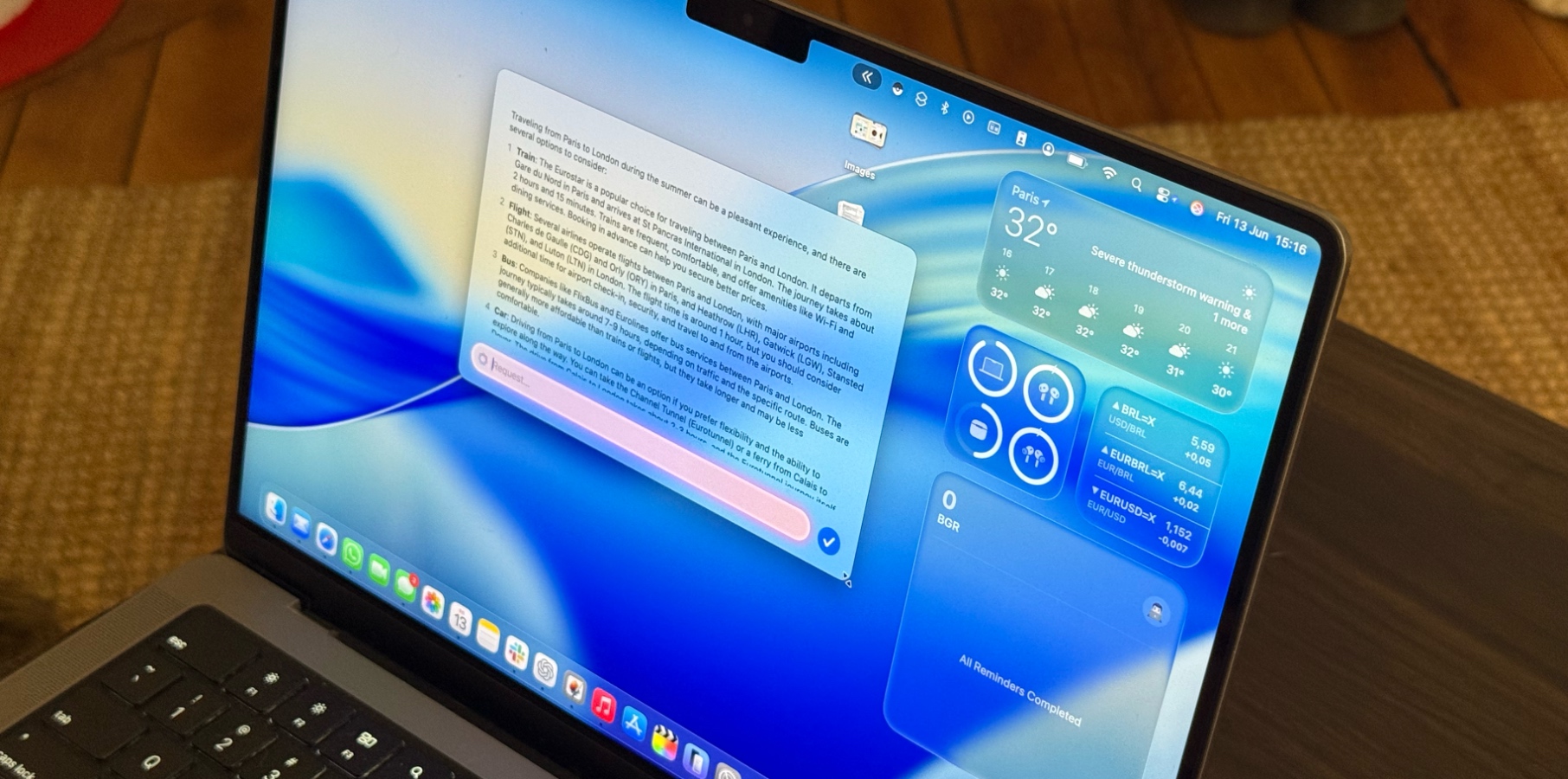
The Apple Intelligence chatbot can be powered by Apple’s AI features in the new Shortcuts app. As explained by Espósito, you can choose between the on-device model, which isn’t as powerful, or the Private Cloud Compute option, which runs online and works pretty well as a chatbot.

You can learn more in Espósito’s Threads post.

Here’s how I created mine:

  • With the Shortcuts app on iOS 26 or macOS Tahoe, choose the “Get text from Input” option.
  • Then select “Use Private Cloud Compute model” with Text.
  • Finally, Apple Intelligence needs to “Show Response.”

While Apple’s AI chatbot doesn’t have the same strong personality as other AI bots, it’s pretty good for information. I asked what the best way to get from Paris to London during the summer was, and what the best portable power bank I could get was, and I got decent responses.

When I asked how updated Apple’s models were, the company sent me a support page with its Intelligence features. Also, this shortcut doesn’t allow you to see past queries or even view the previous message if you interact with it again.

Wrap up

If you really want to see how an Apple Intelligence chatbot works right now, the new Shortcuts app gives you the best preview yet.

Source

Posted on

MPs to investigate potential for government digital identity scheme

MPs are to investigate the risks and opportunities of digital identity in the UK, as Labour influencers increasingly call for the introduction of a national scheme.

The House of Commons Home Affairs Committee has announced an inquiry into the issues surrounding the use of government-issued digital ID.

The move comes as the Department for Science, Innovation and Technology (DSIT) prepares to launch its Gov.uk Wallet, backed by a digital driving licence, which citizens will be able to use to help prove their identity and for purchasing age-limited products such as alcohol.

The committee will include other forms of digital identity in its investigation, such as the controversial introduction of eVisas to prove immigration status and the growing use of biometric identification such as fingerprints and facial recognition.

Committee chair Karen Bradley said the inquiry will examine the potential benefits as well as the likely risks.

“Introducing digital ID could help the Home Office achieve its ambitions to reduce crime and improve control over the immigration system,” she said. “But there are also fears that ID schemes could infringe on people’s privacy or be costly to implement effectively.

“The debate around digital ID is growing and we want to find the best evidence for how digital ID could be used by the Home Office to implement its priorities,” said Bradley. “We will be exploring the benefits and risks of digital ID systems as well as the practical challenges to their introduction.”

Written submissions

The committee is inviting written submissions to explore these issues, including whether any government-issued digital identification should be made mandatory.

In April, 42 Labour MPs wrote an open letter to the government calling for a comprehensive digital ID programme.

Earlier this month, think tank Labour Together proposed the introduction of a mandatory national digital identity, which the group labelled as “BritCard”, claiming it would “lay the foundations for a fully-functioning digital identity system that would in time deliver huge benefits in terms of great efficiency and better outcomes in public services”.

The calls from Labour influencers echo those of former prime minister Tony Blair, whose personal think tank, the Tony Blair Institute, has long been a proponent of a national digital identity scheme. When in power, Blair set up a national identity card scheme that was hugely unpopular and eventually scrapped by the coalition government in 2010.

The announcement of the Gov.uk Wallet caused huge concern among the growing number of private sector digital identity providers in the UK, who saw a potential government competitor that could reduce their market opportunity.

However, technology secretary Peter Kyle met with industry players last month and outlined a plan to work in partnership with suppliers, which has – so far – largely quelled those concerns.

The government already has a digital identity system used for access to a growing number of online public services, called Gov.uk One Login. The system, backed by over £330m of funding, has more than six million users, but has recently been dogged by security concerns.

Serious vulnerabilities

In May, Computer Weekly revealed that external security tests found serious vulnerabilities in One Login.

DSIT was also warned by the Cabinet Office in November 2022, and the National Cyber Security Centre in September 2023, that One Login had “serious data protection failings” and “significant shortcomings” in information security that could increase the risk of data breaches and identity theft.

The department said the concerns were “outdated” and arose “when the technology was in its infancy in 2023”.

Public opinion on digital identity is mixed. A YouGov poll suggested that 34% of the public supports the introduction of national identity cards, while 25% strongly support it. However, responses to a 2023 government consultation on data sharing for digital ID found the public expressed strong concerns around data privacy.

A report from Juniper Research into the UK digital ID market predicted a 267% annual growth in the number of people using digital identity apps, reaching 25 million by 2029. Juniper forecasted that more than 45% of UK adults will use the government app – whereas private sector providers will see just 9% growth over the same period.

The Data (Use and Access) Bill, which this week completed its progress through Parliament and awaits royal assent, includes legislation that will help to enable the widespread use of digital identity tools supported by government data.

Source

Posted on

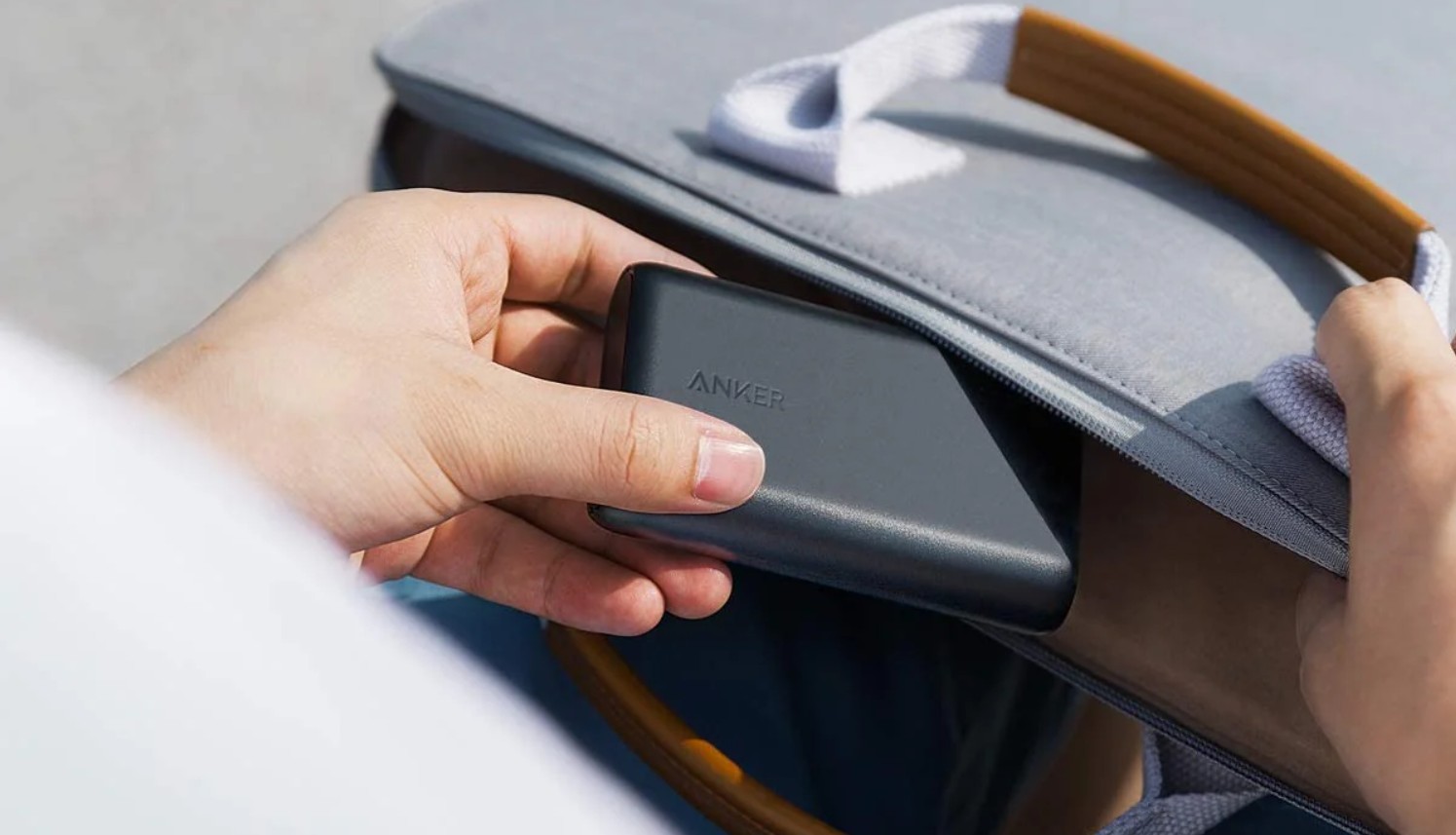
Anker recalls over 1 million power banks after reports of

This week, accessory maker Anker announced one of its most sweeping recalls to date. Due to a series of incidents resulting in fires, explosions, and minor burn injuries, Anker is recalling 1.1 million PowerCore 10000 power banks with model number A1263.

Anker recalls PowerCore 10000 power banks

Anker says affected models were manufactured between January 1st, 2016, and October 30th, 2019, and sold between June 1st, 2016, and December 31st, 2022. The company explains that there is a potential issue with the lithium-ion batteries in these power banks that causes them to overheat, leading to melting plastic, smoke, and fire hazards.

According to the U.S. Consumer Product Safety Commission, the recall was officially issued on June 12th, 2025, and affects around 1,158,000 units in all. Prior to the recall, Anker received 19 reports of fires and explosions caused by the power banks, resulting in two minor burn injuries and 11 instances of property damage totaling over $60,700.

The PowerCore 10000 recall comes just six months after Anker recalled thousands of Bluetooth speakers due similar concerns revolving around lithium-ion batteries.

Tech. Entertainment. Science. Your inbox.

Sign up for the most interesting tech & entertainment news out there.

By signing up, I agree to the Terms of Use and have reviewed the Privacy Notice.

What to do if you have a recalled power bank

If you own an Anker power bank, we’d recommend checking and make sure it isn’t an affected model. Once you have the PowerCore 10000 power bank in hand, find the product information on the side of the device. You’ll find a model number in the upper-left corner. If it says “A1263,” it’s part of the recall and needs to be properly disposed of.

How to find the model number on a PowerCore 10000. Image source: Anker

The next step is to fill out Anker’s recall form. You’ll need to provide proof of purchase, product details, and photos of the device. If Anker confirms your power bank is part of its recalled batch, you’ll be able to choose between a $30 Anker gift card or a new, free power bank from Anker to replace the fire hazard currently sitting in your home.

At this point, you’re free to dispose of your power bank. Here’s how to do so safely:

Do not throw this recalled lithium-ion battery in the trash, in the general recycling stream (e.g., street-level or curbside recycling bins), or in used battery recycling boxes found at various retail and home improvement stores. Recalled lithium-ion batteries must be disposed of differently than other batteries, because they present a greater risk of fire. Your municipal household hazardous waste (HHW) collection center may accept this recalled lithium-ion battery for disposal. Before taking your battery to a HHW collection center, contact it ahead of time and ask whether it accepts recalled lithium-ion batteries. If it does not, contact your municipality for further guidance.

Once again, if you think there might be an Anker power bank sitting in a drawer somewhere in your house, it’s probably worth checking to make sure it’s not this one.

Source