
Posted on

US politicians ponder Wimwig cyber intel sharing law

A long-awaited update to the US’s Cybersecurity Information Sharing Act (CISA) of 2015 – which lapses at the end of September amid gathering concerns over compliance gaps and increased risk to end-user organisations – is advancing through Congress in Washington DC.

The replacement legislation, now named the Widespread Information Management for the Welfare of Infrastructure and Government (Wimwig) Act – not least to avoid confusion with the CISA – passed the House Homeland Security Committee at the start of September.

“Stakeholders from across industry sectors have endorsed this legislation because it preserves the essential privacy and liability protections in the Cybersecurity Information Sharing Act of 2015, clarifies the law’s language to better address the evolving threat landscape, and ensures private-sector insight is properly captured,” said representative Andrew Garbarino, chairman of the House Homeland Security Committee.

“Failing to ensure the relevance and efficacy of one of the federal government’s most foundational cyber security tools for the next decade would threaten not only our networks, but also the security of the homeland,” he said.

“Today’s swift advancement of the Wimwig Act … underscores the House Homeland Security Committee’s bipartisan commitment to enhancing our nation’s cyber security posture,” added Garbarino.

“Congress must get both bills to President Trump’s desk without delay.”

What is CISA 2015?

CISA 2015 is a Barack Obama-era law that enacted legal protections and safeguards for organisations to share threat intelligence and other critical cyber security data with one another, and with the government.

Cynthia Kaiser, senior vice-president of the Ransomware Research Center at Halcyon Security, and until recently deputy assistant director for cyber policy, intelligence and research at the FBI’s cyber division, described CISA 2015 as the “backbone” of cyber defence, and said it had helped ward off innumerable cyber attacks in the past decade by providing timely intelligence to potential victims, as well as helping enable multinational law enforcement operations targeting cyber criminality.

Speaking to Computer Weekly this week, Kaiser said that when CISA 2015 was enacted, it was driven by a recognition that there needed to be protections in place to enable people to share cyber intelligence without fear of legal repercussions.

For example, with CISA 2015 in place, a hypothetical managed service provider that was compromised in a supply chain attack affecting its downstream customers is protected from being held liable for handing victim data over to the FBI or other agencies as part of the investigation.

“What I used to tell people at the FBI all the time is that we can’t protect you and we can’t protect others if we don’t hear from you,” said Kaiser.

“If a company is doing the right thing and coming to the federal government to provide information about a malicious cyber campaign that’s occurring, then they have certain protections in place that enable them to do that [and] that lowers the risk for them to be able to come to the government.

“There’s a second aspect where it also provides antitrust protection for industry-to-industry sharing,” she added. “Now I run the Halcyon Ransomware Research Center – we want different companies to come together and share cyber intelligence together, but if we do that there could be potential for someone to say, ‘if you all are getting together, it’s a monopoly’.”

Potential threat to global cyber collaboration

CISA 2015 was enacted with a 10-year sunset clause – which is not uncommon – to enable lawmakers to establish if it had been effective, and according to Kaiser, also partly due to concerns that the federal government could use it as a means to gather more private data.

In the first regard, she said, it has been an unequivocal success, and, thankfully, there is strong bipartisan support from both Democrats and Republicans for getting Wimwig over the finish line.

But absent the passage of Wimwig, the imminent expiration of CISA 2015 was beginning to raise significant concerns among cyber and national security experts in Washington.

“What we can’t have is these conversations still being arbitrated and then have it [CISA 2015] expire on 30 September, because even a month’s lapse would cause problems,” said Kaiser.

“I’ve spoken with lawyers who are outside breach counsels, and they’ve indicated that if this act lapses, they will likely have to change the advice they give to companies when considering whether they’re going to contact the federal government,” she said.

But beyond the US’s borders, if CISA 2015 was to lapse without continuity in place, the security sector could expect to see worldwide impacts, said Kaiser. Almost immediately, the timely threat information and updates coming out of federal agencies such as CISA would begin to ease off, and this would likely mean bulletins such as the late-August advisory on China’s Salt Typhoon – co-signed by the US and British authorities, and counterparts across Europe and in Australia, Canada and New Zealand – would either reduce in their cadence or cease altogether.

Furthermore, the ability of frontline cyber cops, such as those at the UK’s National Crime Agency to conduct effective operations against cyber criminals, would also be hit, while user organisations would also see less information coming from their own governments because they are in turn receiving less data from the US.

The second concern, she said, is that the frequency and quality of information sharing among cyber security suppliers and across industries would reduce based on antitrust and other compliance and liability concerns.

“We’re all competitors, but we’re also very collaborative, especially on cyber threat intelligence,” said Kaiser. “We’ve gotten so used to that over the last 10 years that it now just really underpins how we do business. Overall, I think information sharing globally would deteriorate if this isn’t reauthorised.”

Updates welcomed

The draft version of Wimwig contains much to be positive about, said Kaiser. Importantly, it clarifies some areas around liability protections that were left somewhat vague by CISA 2015.

“Some took a more sweeping, broad read of it, and some took more narrow reads of it,” she said. “The broad read is I think what we wanted people and companies to have, so clarifying those liability protections is a great edit moving forward.”

Wimwig also includes updated definitions to encompass emergent cyber attack tactics, techniques and procedures, like artificial intelligence (AI), which have advanced apace since 2015, and procedural updates to preserve protections for civil liberties and privacy.

The act additionally ensures private sector organisations – especially small to medium-sized enterprises – receive more information through mechanisms such as one-time read-ins for at-risk organisations such as critical infrastructure operators; directs federal bodies to provide technical assistance to the private sector on a voluntary basis; and encourages the use of secure AI.

It also enhances Congress’s oversight, and the effectiveness, of the Automated Indicator Sharing programme – a real-time data-sharing capability developed by the Department of Homeland Security.
Source

Posted on

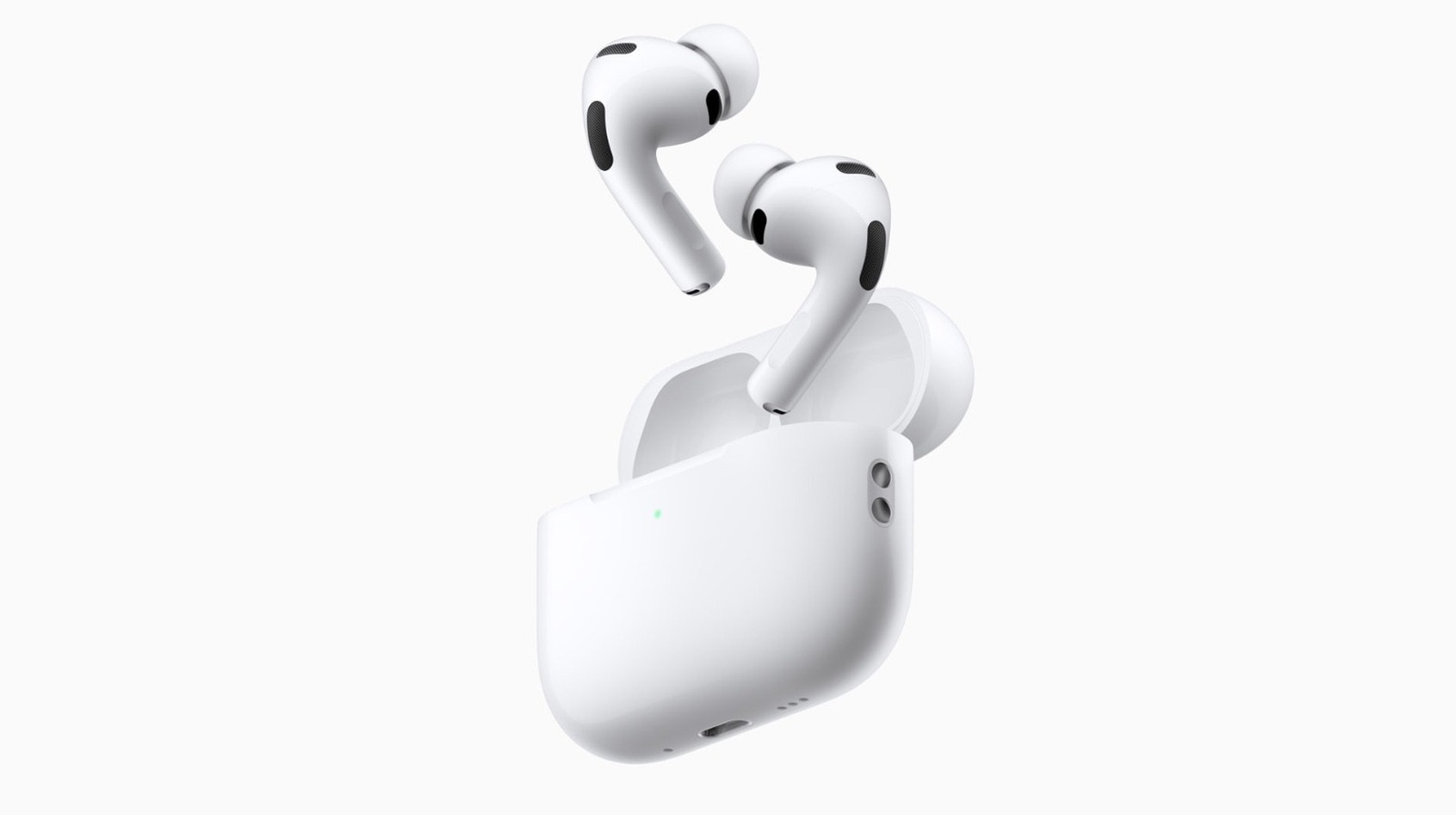
AirPods Pro 3 Raise The Bar, But Is Upgrading From

One of Apple’s most popular products just got an upgrade. This Monday, Apple introduced the all-new AirPods Pro 3. While there are some notable improvements from the previous generation, they aren’t quite as big an upgrade as the first to the second generation. That said, if you’re still rocking Lightning or USB-C AirPods Pro 2 with solid battery life, upgrading to these new ones might be tricky.

First of all, Apple’s not introducing a new audio chip. As such, the sound quality will remain the same. However, if you choose to upgrade to these new earbuds, Apple says the Active Noise Cancellation is twice as good as on the previous model. This is due to a reengineering of the earbuds, which made them smaller with a new foam tip that improves the fit in the ear canal.

It’s always tempting to upgrade to the latest and greatest version of a device, but this one isn’t quite a no-brainer. Below, we’ll go over some of the reasons you might want to consider upgrading to AirPods Pro 3 as well some reasons you can skip this generation.

Pros and cons of AirPods Pro 3

While the most innovative feature of AirPods Pro 3 is the new heart rate sensor and integration with the Apple Fitness app, this feature will only work for those exercising without an Apple Watch. That said, if you’re always wearing your Apple Watch, you’ll likely never utilize the AirPods Pro 3 heart rate monitor. That’s worth considering before you buy these earbuds.

Another perk of these earbuds, longer battery life while using ANC or Transparency Mode, also has a downside. While you can get up to 8 hours of battery with a single charge, these earbuds only get up to 24 hours of listening time with the charging case, while the previous generation offered 6 hours in a single charge, but up to 30 hours maximum with the case.

Finally, the new Live Translation feature, which is an incredibly exciting innovation, will be also available to AirPods Pro 2 and AirPods 4 owners once watchOS 26 rolls out. You don’t necessarily need to upgrade your hardware to access this feature.

Should you get AirPods Pro 3?

Rumors suggest that Apple is working on a more significant AirPods refresh for next year. While this could mean an entirely new AirPods series (Ultra, maybe?), the latest AirPods Pro generation does have a few feature you won’t find elsewhere. For example, the charging case features the second generation ultra-wide band chip, which Apple calls U2.

With that, this will be the first device from Apple aside from the iPhone and Apple Watch to have a higher range of discovery. Apple also improved the water resistance of these earbuds with an IP57 rating. Previously, they were only resistant to splashing water, but the AirPods Pro 3 can safely be submerged in a meter of water for up to 30 minutes.

Buyers will get all of that for the same $249 price tag as the AirPods Pro 2. AirPods Pro 3 features a better fit, improved ANC, bigger battery life, and an all-new heart rate monitor. However, they still has the same H2 chip, which means they will feel different but sound the same.

Source

Posted on

Q2 2025 strongest second quarter on record for smartphone trade-ins

After a first quarter that saw tech consumers receive $1.24bn from mobile trade-in and upgrade programmes, a 40% increase from the same quarter a year earlier, the US secondary device market has revealed even stronger growth over the past three months of the half-year, returning $1.34bn in value to consumers, according to the latest Assurant study of the market.

The Assurant Q2 2025 mobile trade-in and upgrade industry trends report says this growth represents a 60% year-on-year increase, highlighting the rising appeal and growing financial impact of trade-in programmes as consumers upgrade to newer devices – showing the strongest Q2 on record for trade-ins.

Yet at the same time, the study also finds a “compelling” trend in which, as trade-in value increases, consumers are holding onto their devices longer. The average age of devices returned through trade-in reached an all-time high of 3.88 years, compared with 3.7 years at the same time last year.

This shift, says Assurant, reflects improved device performance and reliability, along with expanded personalised protection plans and repair options that continue to enhance the usability and value of mobile devices for consumers.

As this market expands rapidly, Assurant says the environmental impact of holding onto devices longer cannot be ignored, maximising the usable lives of turned-in devices and offsetting global e-waste.

For the fourth consecutive quarter, the iPhone 13 and Galaxy S22 Ultra 5G continued to be the most frequently returned Apple and Android models through trade-in and upgrade programmes. This means the iPhone 13 continued its reign as the leader for the fourth consecutive quarter, while the Samsung handset has been the top Android device for the same period.

Such trends, says Assurant, signal the continued expansion of 5G into the secondary device ecosystem. It appears that 5G devices are being traded in for newer products with enhanced capabilities.

Assurant notes that consumers are getting smarter about when and how they upgrade, and with $1.34bn returned through trade-in programmes, it says it’s evident that mobile users are recognising there is value in their ageing devices and capitalising on opportunities to offset the cost of new ones.

Moreover, Assurant believes the behaviour indicated by the study reflects a more intentional upgrade cycle, where timing, value and incentives align to benefit both consumers and the industry. For carriers, original equipment manufacturers and retailers, it says, it’s a signal that well-timed promotions and robust trade-in programmes continue to be powerful tools for driving engagement and revenue.

“Historically, the second quarter has been a quieter period for trade-ins and upgrades, although this year, we are seeing strong market resilience,” said Biju Nair, president of global connected living and international at Assurant.

“Consumers are trading in older devices for new smartphones with functional AI [artificial intelligence] capabilities. Initially, many took a ‘wait and see’ approach to AI, but as it evolves from a feature to a more personalised capability tailored to the everyday needs of consumers, we anticipate device age to decline as more consumers see the value of upgrading to this new generation of devices.” 

Source

Posted on

Water efficiency of English datacentres scrutinised in TechUK report

A report into commercial datacentres’ water usage in England suggests the sector is more efficient and less water-intensive than previously thought, thanks to advances in cooling technologies.

The survey, carried out by UK tech trade body TechUK in collaboration with the Environment Agency, set out to assess the environmental resources consumed by the datacentre industry in England, with a particular focus on water use. 

TechUK gathered data from 73 sites across England, including more than 50 in the Water Resource South East region, and its findings showed that modern cooling systems are less reliant on potable water to keep servers from overheating than perhaps thought.

According to the results, 51% of surveyed sites use waterless cooling systems that require no additional water beyond the standard use of a commercial building. Out of those facilities that do use water, most employ hybrid systems combining air, water and refrigerant-based heat rejection, with only 5% relying entirely on water-based cooling.

These figures are significant because the datacentre industry has often been criticised for a lack of transparency around its environmental footprint. In fact, when compared with broader industrial consumption, datacentres account for only a small fraction of water use. The report notes that 64% of sites consumed levels of water similar to that of a Premier League football club over the course of a year.

One key conclusion is that datacentres have steadily become more water-efficient, largely due to technological innovation. Methods such as liquid cooling and direct-to-chip cooling are reducing or eliminating reliance on potable water. This trend is especially important as the UK government pushes for rapid expansion of datacentre capacity to meet the growing demands of AI-driven computing.

Luisa Cardani, head of the Datacentres Programme at TechUK, said further innovation in cooling is likely to continue. “A lot of the datacentre operators for newer facilities chose to move away from any water use where possible, and move to waterless cooling or hybrid systems,” she said. “That trend has continued because, as more and more data has become available around where there is water scarcity in England, they need to be efficient with their resources.”

The report also makes recommendations for government and industry, including the development of standardised but flexible cooling requirements for AI-ready servers. It calls for early coordination between datacentre developers, local authorities and water suppliers to ensure water demand is aligned with local supply capacity through clear connection agreements.

“Water companies would have this data. So, the question here is whether regulation is necessary,” Cardani added. “As our survey shows, a lot of these companies actually measure how much water they use, which itself is a very good thing, of course. As part of our recommendations, we call for all of the sector to do this.”

Richard Thompson, deputy director for water resources at the Environment Agency, said the report demonstrates that “UK datacentres are utilising a range of cooling technologies and becoming more water conscious”, adding: “It is vital the sector puts sustainability at its heart, and minimises water use in line with evolving standards. We are working with industry and other regulators to raise these to secure the best outcomes for our environment and our water supply for future generations.”

Despite its positive outlook, the report acknowledges its own limitations. The sample size of 73 sites represents only a fraction of the UK’s 477 datacentres, with all data provided voluntarily and without external validation. Most participating sites were located in Greater London and the South East, and the study focused only on large commercial facilities, excluding smaller operators.

According to Peter Judge, senior research analyst at Uptime Intelligence, this lack of transparency is no surprise. “Datacentre operators don’t really naturally give up information,” he said. “They’re operating in a world where they’re focused on their clients. Their clients expect a sort of level of privacy and so forth. Their default position is to not give information unless they absolutely have to. So, I think it will be forced upon them by legislation, rather than them doing it willingly.”

Judge argues that disclosure could ultimately benefit datacentre operators, particularly if they are classified as critical national infrastructure. “A lot of banking services and health services depend critically on datacentres, but you can’t say all datacentres are critical to the functioning of the country, some of them are simply storing personal videos.

“In other words, when legislation happens, it automatically has to demand information from the providers for there to be a benefit to being classified as critical national infrastructure, which might mean that you get exemptions from some of the energy efficiency or water usage demands.”

Uptime has previously criticised the sector for being overly secretive. “Datacentre operators have generally been too complacent, too secretive and when asked about environmental impact, they have been much too inclined to issue little lectures about how datacentres are really important, so we should all stop worrying,” Judge said.

He added that operators should engage more proactively with policymakers: “One of the things that Uptime is talking to operators about is the need to engage proactively with the people that are setting the legislation to try and make sure that the legislation is made with an actual understanding of how the sector works.”

Judge also warned that efficiency gains must be viewed in the context of rapid industry growth. “The industry likes to concentrate on efficiency rather than totals, but totals is how people set policies at the national level,” he said.

“If a big cloud provider improves the efficiency of its datacentres by 10%, but it has expanded the total capacity it’s using 10-fold in that time, it’s basically using 10 times the power, just with a little bit more efficiency.”

The government has already announced significant investment in expanding datacentre capacity across the UK by 2030.

Source

Posted on

AI without borders: Why the next advantage is in model

For the past five years, much of the enterprise conversation around artificial intelligence (AI) has revolved around access – with access to application programming interfaces (APIs) from hyperscalers, pre-trained models, and plug-and-play integrations promising productivity gains.

This phase made sense. Leaders wanted to move quickly, experimenting with AI without the cost of building models from scratch. “AI-as-a-service” lowered barriers and accelerated adoption.

But as the dust settles, a new reality is apparent – in the long run, access is not enough. The real advantage will come from ownership, treating models as core enterprise assets, not disposable services.

From tools to assets

Today’s AI stack often looks like a patchwork of third-party models. Marketing leans on generative copy tools. Developers use GitHub Copilot. Analysts query ChatGPT-like assistants.

This has enabled rapid experimentation but exposes three structural weaknesses.

The first is intellectual property (IP) risk. Outputs generated by external models can be legally ambiguous, which is a red flag in IP-intensive industries.

Second, feeding proprietary data into external models creates security and regulatory concerns.

And third, governance gaps – as regulations tighten, the lack of explainability or auditability increases compliance risks.

These risks are tolerable when AI is peripheral. But as AI becomes mission-critical – embedded in customer interactions, product design, and supply chains – the stakes rise. Forward-looking enterprises are no longer content to simply use AI. They want to own it.

What model ownership really means

Model ownership does not mean building a large language model (LLM) from scratch – an endeavour requiring billions of dollars. It means treating models as assets to be trained, customised, governed, and controlled in line with enterprise priorities.

This involves bespoke training on proprietary data sets; infrastructure control via secure, enterprise-run environments; governance frameworks embedding transparency, bias mitigation, and ethics; and lifecycle management with versioning, monitoring, updating, and retiring models as needed.

The difference is as much philosophical as technical: AI becomes part of intellectual capital, not an external service.

Lessons from history

The pattern is familiar. In the 1990s, many firms outsourced their web presence, only to bring it back in-house as marketplace conditions demanded. The same shift occurred with cloud – from shared infrastructure to hybrid and private models for control and resilience. AI is on the same curve. Early adoption is about consumption; maturity is about ownership.

Waiting too long risks three traps:

  • Vendor dependency – lock-in with little negotiating power.
  • Regulatory fragility – struggles to prove governance and compliance.
  • Strategic sameness – no differentiation if everyone uses the same tools.

Enterprises that invest in ownership will gain defensible IP that is protectable; data security within controlled environments; regulatory resilience aligned to evolving laws; and sustainable advantage tuned to unique strengths.

Why leaders need to act now

Having led global technology and operations at scale – from FTSE 100 firms to financial services worldwide, I’ve seen how ownership creates resilience.

In the global payments infrastructure, ownership of critical systems ensured not only speed but also compliance across jurisdictions.

In digital transformation, organisations that built and governed their own cloud layers avoided costly lock-in and responded faster to regulatory changes.

In financial services, where data protection and trust are existential, ownership of core digital assets often marks the difference between market leaders and laggards.

The lesson is consistent – leaders who invest in control, governance, and long-term capability consistently outperform those who outsource their core assets. AI is no different.

Organisations that will thrive in the next decade will be those that treat intelligence as a core enterprise asset, not a rented utility.

Building the roadmap

Ownership is a journey, not a switch. Leaders should:

  1. Audit the AI footprint – map where external models are embedded and assess risks.
  2. Prioritise critical workflows – focus ownership where it creates the most value.
  3. Develop internal capability – build MLOps, governance, and ethical AI expertise.
  4. Experiment with hybrid models – external APIs for non-core, proprietary models for strategic domains.
  5. Engage the board – elevate AI ownership as a strategic issue.

Beyond these technical steps, cultural readiness matters. Teams must learn to see models not just as utilities but as products requiring ongoing stewardship. Boards must shift from viewing AI spend as “IT cost” to recognising it as capital investment in intellectual property. And leaders should align incentives so that ownership of models, data and outcomes is embedded in decision-making at every level.

Beyond borders

AI promises to transcend borders, but reliance on third parties leaves enterprises bound by someone else’s roadmap. Owning models, not just outputs, unlock freedom – defining guardrails, harnessing unique data, and creating intelligence that reflects enterprise values.

For IT leaders such as CIOs and CTOs, this means shifting the conversation from tools to assets. Ask: “Which models should we own outright?”

For chief risk officers, define AI governance frameworks now, before regulators do it for you.

If you’re a CFO, view ownership as capital investment in defensible IP, not just operational expense.

And for boards and chairs – put AI ownership on the strategic agenda, alongside cyber security and digital infrastructure.

The next wave of AI strength will not be decided by who has access to the best API, but by who owns the intelligence at the heart of the enterprise.

For senior leaders, the choice is stark – build the foundation for ownership now, or risk being locked out of the next frontier.

As leaders, we have a once-in-a-generation opportunity. Just as the internet and cloud reshaped the enterprise landscape, AI will redraw boundaries. The question is not whether to use AI, that debate is over. The question is whether we will own the intelligence that shapes our future or leave it in the hands of others.

History suggests the answer will define the winners and losers of the decade ahead.

Source

Posted on

For The First Time, Every iPhone That Apple Sells Supports

Suikaart/Getty Images

Apple will open iPhone 17 preorders on Friday, but the four new devices aren’t the only iPhones being sold by Apple. As always, Apple discounted some of the previous-generation phones, which are available online and in Apple retail stores for the usual $100 discount compared to the original prices. The good news is that, unlike a year ago, all the iPhones Apple sells now support Apple Intelligence out of the box. Apple has fixed the Apple Intelligence fragmentation “problem” it created with the iOS 18 update, eliminating older iPhone models that can’t support Apple Intelligence from its inventory.

iPhone buyers who want a new iPhone, whether it’s one of the four iPhone 17 models or a cheaper iPhone 16, can buy one knowing that Apple Intelligence features will be available from the moment they set up the phone. While Apple Intelligence is still trailing ChatGPT and Google Gemini in terms of capabilities, Apple is working to catch up in the coming months and years. For now, Apple has ensured that all the iPhone hardware sold in its stores will support Apple Intelligence features available in iOS 26 and future updates.

Which iPhones did Apple discontinue?

Apple unveiled Apple Intelligence in iOS 18 in June 2024, revealing the hardware requirements for its proprietary suite of AI tools. Apple said Apple Intelligence would work on the iPhone 15 Pro and iPhone 15 Pro Max at a time when the iPhone 15 series was the latest iPhone generation available in stores. The iPhone 15 and iPhone 15 Plus would not support Apple Intelligence. The iPhone 14 models Apple still sold also couldn’t run Apple’s AI.

Apple unveiled the iPhone 16 series in September 2024, and all four models featured updated specs that ensured they would support Apple Intelligence out of the box. But even so, Apple’s fall 2024 iPhone lineup included select iPhone SE 3, iPhone 14, and iPhone 15 models that were unsuitable for the AI upgrade.

Apple removed the iPhone SE 3, iPhone 14, and iPhone 14 Plus phones from its lineup earlier this year when it unveiled the cheaper iPhone 16e. The iPhone 15 and iPhone 15 Plus stuck around as the only iPhones in Apple’s inventory that did not support Apple Intelligence.

Earlier this week, Apple removed the two iPhone 15 models from its fall 2025 iPhone lineup. This gives buyers a simpler iPhone lineup that features only iPhones that are compatible with Apple Intelligence: iPhone 16e, iPhone 16, iPhone 16 Plus, iPhone 17, iPhone Air, iPhone 17 Pro, and iPhone 17 Pro Max. Apple also discontinued the iPhone 16 Pro and iPhone 16 Pro Max this week, but Apple never sells previous-generation Pro models once it launches the newest iPhone series. Buyers looking for iPhone models Apple doesn’t sell online or in retail stores may still find limited inventory in electronics stores or from mobile carriers.

Source

Posted on

Platform engineering is about more than what’s going on Backstage

Puppet’s 2024 State of DevOps report was subtitled “the evolution of platform engineering”. Platform engineering, it said, can be a “barrier against the chaos of tools, tasks and information” assailing developers – a state of overload, which some would attribute to the lack of discipline in DevOps.  

Or, as Paula Kennedy, co-founder of platform consultancy Syntasso, says, it is the practice of taking “an intentional, focused” approach to curating the combination of infrastructure, services, capabilities and tooling needed to make software available. 

The aim, she adds, is to ensure “developers get a better experience, that software is delivered faster, safer, more securely, more reliably”. 

One key element is the IDP. Depending on who you listen to, that stands for “internal developer platform” or “internal developer portal”. 

But let’s stick with the latter. At its most basic, this is the central self-service platform developers use to access the tools, services and other resources, such as documentation, they need. Or which their organisation decides they need. 

Backstage, the open source platform developed by Spotify, is the flagship portal for platform engineering, and the undoubted market leader. But there are a number of alternative products offering platform engineering capabilities.

A survey of 180 companies by DX found that over two-thirds used Backstage. The State of platform engineering report cited 55% penetration, with Port garnering 8% of the market and Cortex gaining 5%.

Harness, the continuous integration and continuous delivery (CI/CD) platform, also plays into this space. Kennedy says there are also a few “platform-in-a-box” products, such as Red Hat’s Developer Hub, which is based on Backstage, and some of the big software development firms will have their own products. 

For developers who already use team collaboration in Atlassian, there’s Atlassian Compass. As Matt Saunders, vice-president of DevOps at solutions provider Adapavist, points out, it’s an Atlassian tool and the Australian company wants to own the whole stack. It does integrate with other tools, he says, “but the reality is that Compass integrates best with the Atlassian stack”.

More than the portal 

By contrast, Saunders says: “When you run Backstage, you have to do the manual work to get it to integrate with all your tools.”

He adds: “[The fact] there is competition in the IDP world is obviously an indicator that businesses are succeeding in doing IDP right … It’s a validation. These ideas are correct.” 

And a portal is not the be-all and end-all – or necessarily essential. Stack Overflow had a legacy monolithic system supporting its public-facing sites. Its newer software-as-a-service (SaaS) offering, Stack Overflow for Teams, has been cloud-native from the outset. It has recently consolidated all of this into the cloud. 

Right now, explains Stack Overflow’s chief product and technology officer, Jody Bailey, it’s managing things internally while deciding between Backstage and another open source project, Kratix.  

“They’re both open source tools, but kind of have different purposes,” he explains. “Kratix allows us to help with the actual orchestration and the work being done by platform teams, whereas Backstage is more about surfacing, making it visible and useful.” 

Bailey says committing to a specific portal also means “you have to dedicate somebody to managing it, keeping it up to date, connecting all the dots”. 

But the portal is just the start, adds Saunders. Getting the underlying tools in place is critical. “Setting up things like proper CI/CD, proper source code management, build environments in cloud providers, and, more importantly, putting the right sort of guardrails around that,” he says. 

Or as James Sturrock, director of systems engineering at Nutanix, puts it, ensuring “developers are liberated from infrastructure chores such as provisioning, cloud configuration, networking, or setting security policies, and they get to focus purely on code”. 

This becomes a bit of a Goldilocks job. Part of the rationale for platform engineering is to address the tool sprawl that DevOps unleashed.  

“The big problem we see is where people think that a platform is a feature factory and it should just add more and more and more stuff,” says Kennedy. 

At the same time, being over-prescriptive can be counter-productive, to the extent of encouraging developers to adopt shadow IT. And then we’re back in the early 2010s. 

“One of the challenges that we see often with platform engineers is that they are engineers,” says Kennedy. “So they think to themselves, ‘I don’t need to ask what the developers need, because I am an engineer, so I know what I’m going to build’.” 

Describing where he’s seen platform strategies fail in the past, Bailey says: “You have a team that’s focused on building out services for the platform, and say, ‘This is how you’re going to do things, you have to do this’.” 

That tends not to work with developers and technologists, he adds. “They want to do whatever is easiest, that golden path, to be successful.”  

Enter the agents 

Rather says Kennedy, the aim should be the right mix of tools – off-the-shelf and bespoke – together with the right balance of ease of use. In effect, a bespoke system for a given organisation. “That’s really the end goal – your platform should be a force enabler,” she says. 

This cannot be a one-off job and requires constant dialogue with the teams that will be using the platform. Which is also a reminder that, as Kennedy says, leaders have to think beyond the development team.  

“We try to think about it a bit more holistically, because you might have security folks who are using the platform. You might have legal teams going into the platform. Typically, yes, it’s developers, but your platform can be bigger than that,” 

This means ensuring there is a “modularity or composability” that allows direct inputs from security, compliance, finance, and anyone else who has responsibility for critical business requirements. 

Once that perfect platform is in place, Saunders continues, this can then be a wake-up call for an organisation, because it exposes what’s really going on. “How do our developers actually get stuff done? Is it meetings all the time, twiddling their thumbs, waiting for an opportunity to actually write some code? The answer in a lot of organisations is ‘yes’, and things like the IDP start to surface that.” 

And before long, it won’t just he human developers that platform teams need to worry about. 

“Your platform itself needs to be able to adopt and bring in new capabilities and new technologies like AI [artificial intelligence] quickly. Your platform can’t be brittle or static,” says Kennedy.

This affects platform engineering efforts in multiple ways, according to Jeffrey Sica, head of projects at the Cloud Native Computing Foundation (CNCF). 

“Backstage is a great example of the kind of work that’s going to be needed to make AI agents even more effective,” he says. 

After all, he adds, we are already creating all these integration points to create this single funnel for the developer, and agents are going to need the same thing.

It’s a truism that AI and agents will take over much of the grunt work of developing. Code generation is part of that. But Sica explains: “Imagine that through VS code, you can ask [Microsoft] Copilot to spin up a new development environment. Well, at that point, what’s happening is the Copilot agent can communicate with Backstage’s MCP [Model Context Protocol] server to spin that up for you.” 

Having the agent go to Backstage “creates this very, very solid way for developers to query and consume Backstage, but without necessarily using the front end”, he adds. 

Again, compliance and guardrails are necessary. Sica says these should already be in place up and down the stack. “You should not get access to the production cluster. You should not be able to ask, ‘Hey, Copilot, delete this prod instance of a database’.” 

Because, after all, you wouldn’t let a human developer do that. Would you?

Source

Posted on

Two Of The Best NotebookLM Features Just Vanished, But Google

Bangla press/Shutterstock

NotebookLM has seen plenty of changes since Google’s first wide release of the AI app back in 2023. Since then, the app has taken on less of a note-taking appearance and become a bit more of a catch-all for research, whether you’re a student, researcher, author, or just need to be able to access specific information in a large pool of data. Google has even released its own AI-generated notebooks so users can test how the system works before importing their own work.

Google has steadily been updating NotebookLM, adding new features like Video Overviews and more. The app has become one of my preferred tools for going through large swaths of content and some of its features have been key to its usability, including the ability to easily create FAQs and Timelines. With the latest update, though, some noticed that Google had made it slightly harder to create FAQs and Timelines, removing the original prompts that have been easily findable in the app for ages.

While it’s more difficult to start creating FAQs and Timelines now, it’s not impossible. Google has even gone out of its way to highlight just how easy it is in a new thread on X — including giving users the exact prompt they need to generate FAQs.

How to create FAQs and Timelines in NotebookLM

To create FAQs and Timelines using NotebookLM after the latest update, you’ll actually need to use the Create Report option. Once you’ve selected it, choose your language, and then copy and paste one of the following prompts from Google into the prompt box (without the quotations).

To create an FAQ, use this prompt:

  • “Create a comprehensive FAQ with detailed and thorough answers that best captures the main themes and ideas in the sources. It should have a helpful tone designed to address reader inquiries.”

Use this prompt to create a Timeline:

  • “Create a detailed timeline of the main events covered in these sources, followed by a cast of characters listing the principle people mentioned in the sources, with brief bios for each.”

Google says you can also “upgrade” these prompts with any “twists” that might help make them more impactful for your own usage. While it certainly is annoying that users can’t just hit the prompt suggestion anymore, the fact Google has gone out of its way to share a new prompt to offer similar results to older prompt suggestions is a nice touch. If you aren’t interested in using NotebookLM for your research, though, you can also use one of its best features in Google Docs.

Source

Posted on

IDTechEx: significant confusion surrounds SDV core meaning

For the past five years or so, there has been general consensus in the recognition of the emergence of the software-defined vehicle (SDV) as a trend that has no less than reshaped the automotive industry, yet a study from IDTechEx suggests that despite widespread use of the term, there remains significant confusion around its core meaning, structural elements and the real-world driving forces behind its current status.

The study, Software-defined vehicles, connected cars, and AI in cars 2026–2036: Markets, trends and forecasts, provides a systematic analysis of the deployment pathways of typical vehicle SDV architectures, along with market research findings on future architecture transition timelines, sales forecasts and key hardware market opportunities.

Attempting a core definition of the SDV, the analysis says it serves as a catch-all phrase encompassing various technological advancements, from the evolution of electrical/electronic (E/E) architectures and decoupling software layers to reconfiguring operating systems.

The analyst states that “simply put, if it involves flexible, software-driven deployment, it likely falls under the SDV umbrella”, and notes that the automotive industry attributes the rise of SDVs to increasing consumer expectations, such as smarter functions, personalised experiences and “seamless” digital integration.

Moreover, it warns that without proactive marketing or consumer education from automakers, most users still have limited awareness of the deeper value behind “software-defined” capabilities. In addition, it says consumer demand remains largely rooted in tangible comfort and convenience features, like voice commands, navigation or heated seats, rather than more complex digital services, such as artificial intelligence assistants or in-vehicle e-commerce.

Furthermore, consumer familiarity with over-the-air (OTA) updates are regarded as remaining “surprisingly low”, resulting in slow adoption of subscription-based features.

Looking from the perspective of the SDV industry, the report says the drive towards SDV is primarily motivated by internal imperatives such as cost reduction of wiring and validation, platform standardisation, and data control. For automakers, it adds, SDV represents more than a shift in user experience, and is more a fundamental overhaul of vehicle development and system architectures.

Against this backdrop, the report notes that the evolution of an E/E architecture has become a fundamental enabler, transitioning from distributed architectures with over 70 electronic control units, several kilometres of wiring, and thousands of components, to domain control, then to zonal architectures and centralised computing platforms.

By standardising hardware platforms across multiple vehicle models, IDTechEx says automakers can flexibly differentiate features using software, enhancing profitability and market agility. To that end, technologies such as firmware over-the-air and software over-the-air are becoming critical tools enabling long-term revenue generation through feature unlocks, subscription and service monetisation.

Indeed, the study observes that SDVs are a potentially rich market to tap, projecting that the global annual revenue from software related to connected and software-defined vehicles will exceed $700bn by 2034, with a forecasted CAGR of 34%.

Regarding architecture implementation, the IDTechEx research highlights an emerging preference for zonal controllers paired with centralised computing platforms. Zonal controllers can now manage localised sensor inputs and actuator outputs, while centralised processors can handle higher-order tasks like sensor fusion, strategic planning and system coordination.

The study cited BMW’s Neue Klasse architecture as exemplifying this model, integrating high-performance computing modules for ADAS, cabin management, vehicle dynamics and powertrain control, interconnected via gigabit Ethernet for task management. This setup is designed to enable flexible, service-oriented software deployment, simplifying updates and facilitating dynamic cross-domain interactions.

IDTechEx estimates that for a mid-to-high-end SDV, the hardware investment in centralised computing platforms and zonal controllers alone can exceed $2,000 per vehicle, with future architectural convergence expected to lower total wiring costs by $50–$200 per unit.

From a systems engineering standpoint, SDVs were also seen as driving a shift towards greater system cohesion. New SDVs are now built around centralised, coherent software platforms where functions are orchestrated and coordinated through unified software layers. This centralised model is regarded as significantly enhancing maintainability and scalability, supporting advanced capabilities like real-time AI decision-making and edge computing.

Source

Posted on

5 Surprisingly Useful iPhone USB-C Accessories

Viktollio/Shutterstock

We may receive a commission on purchases made from links.

So, you finally have an iPhone with a USB-C port. Now it’s time to try out all the fun accessories that transform your smartphone into something more. Not all USB-C gadgets are cables and chargers; in fact, some of the most surprisingly useful accessories are the ones you probably didn’t even know existed before using these ports. You can now turn your iPhone into a mini gaming console, for example, or store all your files and photos on an external SSD.

In 2022, the EU passed legislation requiring all smartphones sold in its member countries to adopt USB-C charging by the end of 2024. Apple had no choice but to comply and began releasing iPhones with this universal port. That also means that future iPhones will likely stick with USB-C, giving users even more accessory options. So, let’s round up some USB-C accessories that aren’t just cool gadgets — they’re genuinely practical and can enhance the way you use your iPhone every day.

Portable monitor

Looking to expand your new iPhone 15 or 16 beyond its handheld limits? Consider a USB-C display like this KYY 15.6-inch Portable Monitor, available for $69.99 on Amazon. This slim, travel-friendly screen connects to your iPhone with a single USB-C cable, no apps or adapters required. Just plug it in and convert your phone into a mini workstation, streaming center, or presentation tool. With a full HD display, wide viewing angles, and HDR support, you can use it to watch Netflix or edit your iPhone photos with even closer attention to detail.

Perfect for travelers, this monitor weighs less than 2 pounds and folds up neatly in its smart magnetic cover, which also doubles as a stand. Both power and video connections are supplied, and it even has two USB-C ports, so don’t worry if you need some flexibility and additional power. The built-in speakers offer a decent audio boost for casual use, but if you’re an audiophile, you can pair them with your favorite headphones.

External SSD

Back in 2022, we reviewed the best external hard drives of that year, but if you’re still looking for fast, high-capacity storage for your iPhone, the Samsung T7 Shield Portable SSD is also worth checking out. This SSD, available on Amazon for $279.99, uses a USB 3.2 Gen 2 port, delivering reading speeds up to 1,050 MB/s and writing speeds up to 1,000 MB/s. You can quickly store large files and even edit them directly from the drive — no transfer required. On top of that, this SSD is pretty tough and is perfect for when you’re on the move. It has an IP65 rating, meaning its rubber shell can resist dust, water splashes, and drops from up to 10 feet. It’s ideal for people who work on the go or simply enjoy outdoor adventures.

The Samsung T7 pairs well with the iPhone 15 or 16 via USB-C, and it’s instantly recognized for media transfer or even ProRes 4K recording at 60fps. The pre-formatted exFAT filesystem is compatible with iOS. If you’re capturing videos or backing up large files, or if you just hate running out of storage, the T7 is a great solution.

Clip-on microphone

If you want to upgrade your iPhone’s audio game, try the Sennheiser XS, available through several international retailers. You can use this little microphone to shoot interviews, podcasts, or even YouTube and TikTok videos to make your voice sound professional without using complicated audio setups. The omnidirectional pickup pattern captures your voice clearly while keeping background noise to a minimum. It’s great for modern content creators or professional journalists who need to stay mobile.

This device pairs well with the iPhone 15 and 16. Just connect it to your smartphone with the USB-C cable, and you’re good to go. The mic also pairs nicely with all popular recording and editing iPhone apps, so you can use it to walk and talk, or record in your home studio. The XS Lavalier USB-C is a plug-and-play mic that doesn’t require any technical know-how or audio fiddling to achieve the sound you need (much like the Rode XCM-50, which we reviewed in 2023).

USB-C Gaming Controller

Looking to level up your gaming experience on your iPhone 15 or 16? The Backbone One (2nd Gen USB-C), available for $99.99 through the brand’s website, will make a sleek and powerful companion, as we determined when we reviewed the Backbone One Xbox Edition in 2025. Just plug it into the USB-C port, and you’re instantly in console mode. There are no separate apps to install or Bluetooth pairings to set up. Your phone will fit in this controller snuggly with or without a case thanks to its magnetic adapters and refined build. Plus, you can charge your iPhone while gaming thanks to the passthrough USB-C port.

With this controller, you can choose between a PlayStation or Xbox-inspired look. The internal layout remains the same no matter what, but you can spring for either the white DualSense style or the classic green Xbox glow. The design isn’t just about looks, either. The Backbone One is made to be comfortable for multi-hour gaming sessions. It offers portability, seamless plug-and-play, and a mini command center right in your pocket.

USB-C Hub

Imagine turning your iPhone into an instant creative studio, media hub, or productivity powerhouse. This is now possible with the Anker 8-in-1 USB-C Hub, a sleek little gadget that’s available for $32.99 through Amazon. Just plug this device into your iPhone’s USB-C port, and you’ll have access to USB-A, HDMI, Ethernet, SD and microSD cards, and even passthrough charging. Yes, you can charge your iPhone using this Hub, even while you’re transferring files or watching a 4K video.

One of the reasons this hub helps you work smarter on the go is that it’s surprisingly lightweight. It’s only about 130 grams, and it’s compact enough to keep in a travel pouch or even your pocket. It delivers solid 10Gbps data transfer speeds, a smooth 4K HDMI output, and up to 85 watts of pass-through power. If you’re using your iPhone for more than making phone calls, this cool USB-C mini gadget lets you turn it into a mini computer, which you can expand to your liking by connecting other devices.

Source