Posted on

How Much Battery Life Does iOS 26’s Adaptive Power Feature

José Adorno for BGR

It won’t be long before iPhone users can download iOS 26. With iOS 26 beta 8 and IOS 26 public beta 5 now available to testers, Apple likely only has the Release Candidate (RC) version to ship before the final build launches in September.

That said, it’s very unlikely that Apple between now and September 15, which is when we expect iOS 26 to be officially released. While we have tested several of the new features coming in Apple’s new software updates, one that stood out and deserved a more thorough examination was Adaptive Power Mode, which rumors suggest could be a vital addition for the iPhone 17 Air.

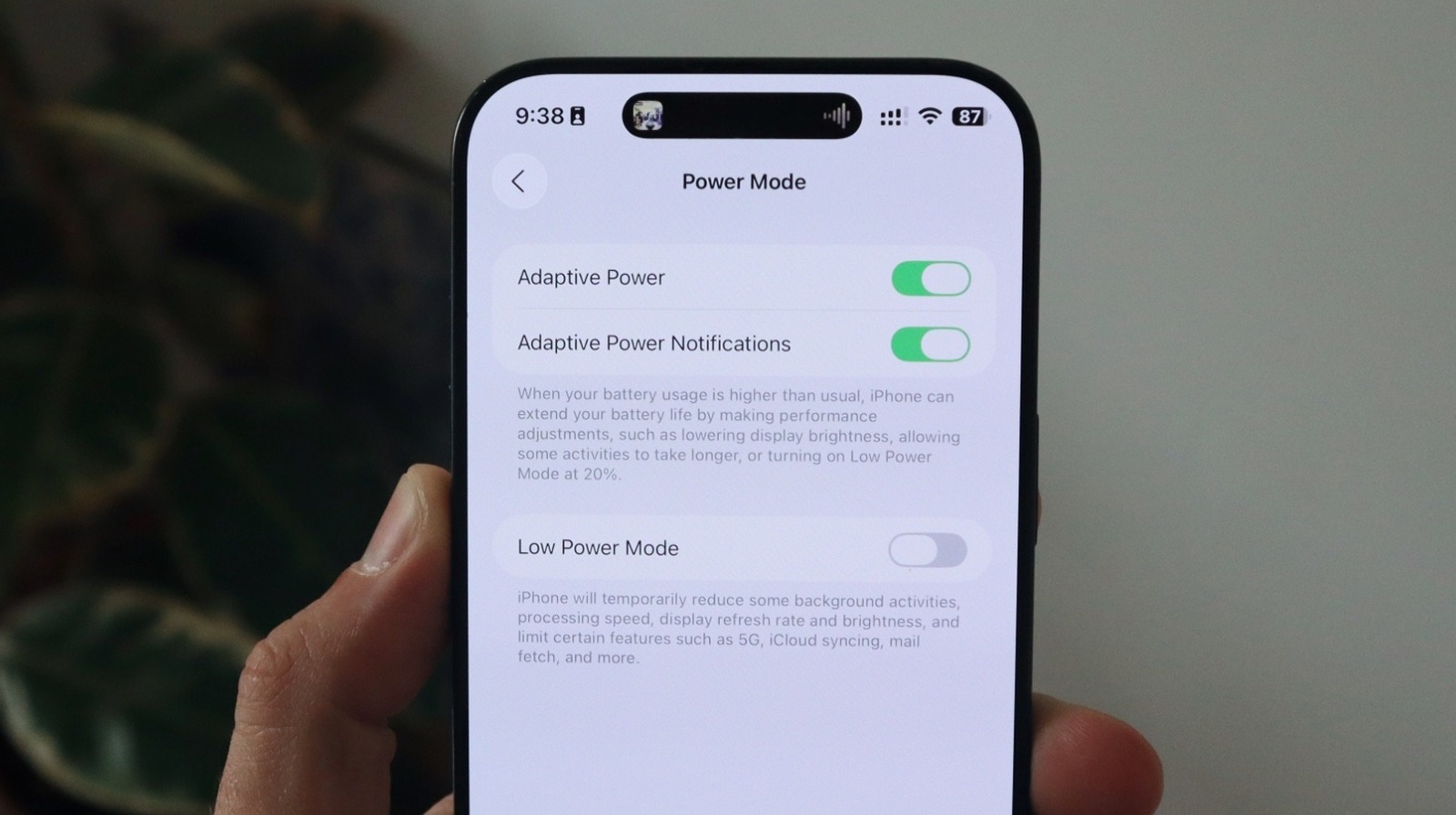
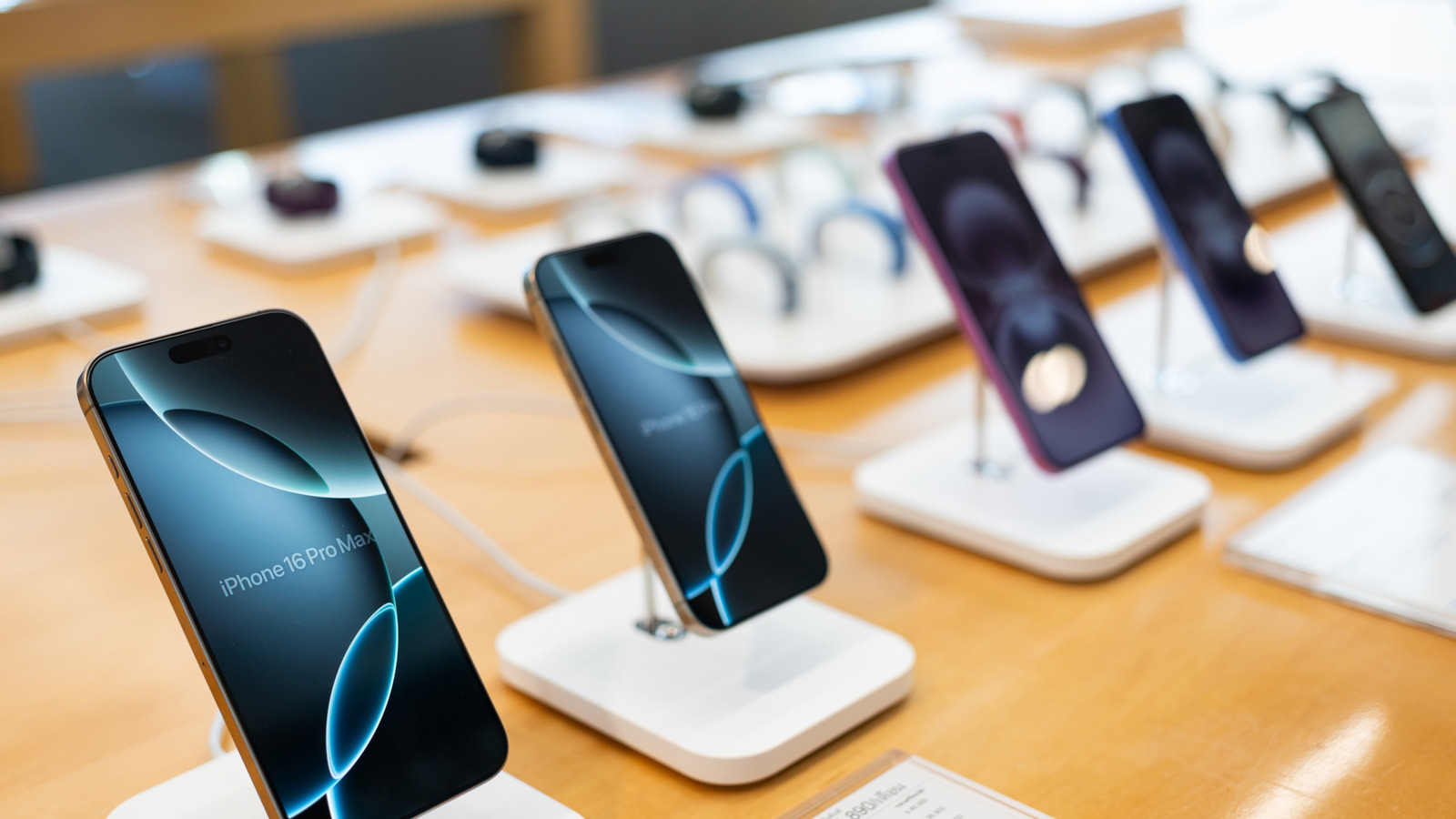
Apple says that with Adaptive Power Mode activated, the iPhone can extend battery life by making performance adjustments when the battery usage is higher than normal, such as lowering the display brightness, slowing down certain activities, or turning on Low Power Mode at 20%. However, after a few weeks of testing, Adaptive Power Mode made little to no difference on the battery life of an iPhone 16 Pro Max.

Will iOS 26’s Adaptive Power Mode make a difference on your iPhone?

José Adorno for BGR

The tricky thing about testing iOS 26’s Adaptive Power Mode is that the operating system is still in beta testing. While Apple has improved the overall experience significantly in recent beta releases, test builds are expected to have battery draining issues. As such, there’s always a chance that the feature will have a more noticeable impact in the final version of iOS 26.

While we can’t promise iOS 26 will deliver better battery life than iOS 18, there’s also no evidence so far that it has a negative impact on the battery. What we did notice, however, is that apart from the occasional notification confirming that Adaptive Power Mode was active, triggered by what was happening on the iPhone’s display, we still had to charge the device at least twice a day just to make it to bedtime.

In general, we’ve seen the display dimming in outdoor environments with a combination of Apple Maps usage, music streaming, and warm weather. However, this already happened whenever the iPhone started to overheat. Long story short, the only real benefit of the Adaptive Power Mode feature has been the automatic Low Power Mode activation at 20%.

There might be salvation to Apple’s newest battery feature

José Adorno for BGR

Adaptive Power Mode is likely to be a key feature for the ultra-thin iPhone 17 Air, which is rumored to feature a smaller battery than the other iPhone 17 models. That said, there are only two notable features beyond battery size that differentiate an iPhone 16 Pro Max from the upcoming iPhone 17 Air: A more efficient processor and Apple’s C1 5G modem.

Cellular connectivity is known to be one of the greatest causes of excessive battery life drain. With a more power efficient chip and better control of the 5G modem, the Adaptive Power Mode functionality might work better on an iPhone 17 Air than on the iPhone 16 Pro Max, which has a bigger battery but a third-party 5G modem and an older processor.

While we’ll have to wait until after the “Awe Dropping” event on September 9 to see how the iPhone 17 Air interacts with the final version of the feature, Adaptive Power Mode hasn’t made the greatest first impression on iOS 26 beta testers.

Source

Posted on

Splunk.conf: Splunk and Cisco showcase unified platform

Having spent the best part of a year and a half working to unify its products and tools with those of its new owners Cisco, Splunk is using its annual Splunk.conf event in Boston, Massachusetts, to showcase a number of future developments, beginning with the introduction of the new Cisco Data Fabric platform.

Following the closure of the multibillion dollar purchase in 2024, Splunk and Cisco moved quickly to start to integrate their technology offerings. By last September, as Computer Weekly reported at the time, the duo already had multiple tools, such as Splunk’s Observability Cloud, working well with Cisco AppDynamics, Talos Threat Intelligence and ThousandEyes, and were eyeing closer integration in other areas.

Speaking to reporters in advance of the show’s opening keynote on Monday 8 September, Splunk senior vice president and general manager for EMEA, Petra Jenner, reflected on a busy year and said there were a lot of positive aspects to the deal.

“While we still have our own identity we are working more closely together to achieve better customer experiences,” she said. “One of the key priorities for us is to ensure that customers are really supportive. They see that we are collaborating from a technical point of view.”

Jenner said that prior to Splunk’s acquisition by Cisco, while it had had a strong and growing presence in markets such as the UK, France and Germany, there had been a recognition that it needed to invest in growth.

Cisco’s money has been a catalyst for this investment, not only in the UK but also helping open up more business in countries such as Saudi Arabia and the United Arab Emirates (UAE), said Jenner.

“The impact the acquisition had for the Splunk EMEA team has been extremely good. We have joint customer engagements and there are core initiatives going on so that customers can really leverage the joint Splunk and Cisco, not only the product but also the overall convergence,” said Jenner.

“It also suits very well the technology trends [that are] happening,” she added. “In regard to AI the platform approach is getting more important.”

Jenner also reaffirmed Splunk’s commitment to its IT channel partners both in the security and observability fields, saying it has doubled the numbers on its books. She added that drawing on the strength of Cisco partners – with all the myriad possible networking certifications available – that may not have previously considered Splunk, may help make the platform concept an easier sell to customers looking to do more.

Data Fabric turns machine data into actionable intel

Splunk.conf kicked off on Monday evening with the launch of Cisco Data Fabric, which promises to “transform machine data into AI-ready actionable intelligence”.

On the basis that AI has led to a surge in machine data, but that said data is still largely siloed, fragmented, and hardly ever used, Splunk said Cisco Data Fabric to enable customers to make better decisions, reduce their operational risk, and innovate around AI, for example by helping train custom models, powering agentic workflows, or correlating various streams of machine and business data.

Among some of Data Fabric’s features are the Time Series Foundation Model, which will power pattern analysis and temporal reasoning on time series data to enable anomaly detection, forecasting and root cause analysis, driving proactive operations and easing incident response.

Meanwhile, Cisco AI Canvas, also integrating with Splunk Cloud Platform, will provide an AI agent to orchestrate analysis workflows and workspaces for team collaboration. Splunk described this as a “virtual war room experience” that will let teams glean more in-depth insight, work together in real-time, and make decisions better.

These capabilities will be coming on stream over the next few months, with a few slated for 2026.

Kamal Hathi, Splunk senior vice president and general manager of Splunk, said machine data was now the heartbeat of digital organisations and characterised Splunk as a “heart rate monitor”.

“Our goal is to give customers the fastest, most secure path from data to action,” said Hathi.

“By embedding AI across the platform and embracing open standards, we’re not just helping organisations analyze information faster – we’re enabling them to anticipate change, scale innovation without unnecessary complexity, and deliver digital services that are more resilient, adaptive, and responsive to the needs of their users.”

IDC senior research director of cloud data management, Archana Venkatraman, said Data Fabric addressed a critical pain point – the need to quickly and safely unify vast streams of machine data in the service of resilience.

“By enabling a federated approach that eliminates data movement, it provides a pragmatic solution for organisations operationalising AI at scale,” she said.

“Its focus on real-time search, coupled with a repository for AI-ready data, provides tangible value by reducing complexity and time to insights. This unified architecture is a strong step toward helping customers build more resilient and trustworthy AI systems.”

Searching for Snowflakes

Also on the docket is the launch of Splunk Federated Search for Snowflake, a new platform integration empowering users to connect, query and combine operational and business data across Splunk and Snowflake environments.

Some of its key capabilities include unlimited onboarding of Snowflake data in Splunk; federated queries whereby users can write SPL-like queries to search Snowflake data direct from Splunk; next-gen federation capabilities to combine datasets for more impactful context and insight; and more efficient querying, letting users leverage Snowflake analytics for partial queries before performing final data joins in Splunk.

These capabilities, and others, are slated for a July 2026 release.

Source

Posted on

iPhones Will Give A Boost To The Entire Smartphone Market

Wongsakorn 2468/Shutterstock

Apple’s iPhone lineup is about to do something fairly interesting this year: Carry the entire smartphone market on its shoulders. Worldwide smartphone shipments, according to new data from IDC, are expected to grow by something on the order of 1% in 2025 (which is practically flat), reaching 1.24 billion units overall. Obviously, that doesn’t sound like a lot, but here’s the kicker — based on IDC’s data, smartphone shipments this year would have actually declined worldwide were it not for a pickup in Apple’s iPhone shipments.

The entire market is forecast to end up in positive territory this year thanks to an estimated 3.9% rise in iOS sales, a reminder of how much importance continues to be attached to Apple and its iPhone line even in a tough global economy with uneven demand. Apple, for its part, is also no doubt pleased with these numbers, especially right now, just days before the company’s annual fall iPhone reveal event — with the iPhone 17 launch just around the corner.

The iPhone effect on the smartphone industry

Justin Sullivan/Getty Images

Overall, IDC’s forecast presents a rather mixed picture for the year. On one hand, the global market is being dragged down by weaker demand in China, where shipments are expected to decline by 1% as government subsidies roll away and consumers hold back on spending. At the same time, iPhone shipments remain a bright spot, with softness in some parts of the world offset by consumers’ interest in replacing their devices in markets like the U.S., Middle East, and Africa — this Apple-driven trend apparently being what’s lifting the smartphone market 1% in 2025 all by itself in an otherwise challenging period.

For Apple, this is welcome data to see ahead of its “Awe Dropping” event on September 9, at which time we’ll get our first look at the iPhone 17 family of devices — with the rumors about them pointing to what just might be Apple’s slimmest handset yet. Rumors indicate an ultra-thin iPhone 17 Air, for example, will feature updated design elements like a camera bar across the back panel.

Looking further ahead, IDC’s new report says smartphone makers are focusing less on unit growth and more on value, thanks to innovations like foldables and on-device generative AI. But in 2025, it’s Apple’s iPhone that’s doing the heavy lifting — and reminding us all once again why the September iPhone event remains one of if not the most important moments on the smartphone calendar.

Source

Posted on

UK equality watchdog: Met Police facial recognition unlawful

The Metropolitan Police’s use of live facial-recognition (LFR) technology is unlawful, according to UK equality watchdog, citing the need for deployments of the technology to be necessary, proportionate and respectful of human rights.

John Kirkpatrick, chief executive of the Equality and Human Rights Commission (EHRC), acknowledged that while the tech could be used help to combat serious crime and keep people safe, the force is currently failing meet key legal standards with its deployments.

“The law is clear: everyone has the right to privacy, to freedom of expression and to freedom of assembly. These rights are vital for any democratic society,” he said.

“As such, there must be clear rules which guarantee that live facial-recognition technology is used only where necessary, proportionate and constrained by appropriate safeguards. We believe that the Metropolitan Police’s current policy falls short of this standard.”

The EHRC added that the Met’s current approach to LFR is incompatible with the European Convention on Human Rights, specifically Articles 8 (right to privacy), 10 (freedom of expression) and 11 (freedom of assembly and association).

It further highlighted how, when used on a large scale, even low error rates can affect a significant number of people by brining unnecessary and unwanted police attention, and warned that its use at protests could have a “chilling effect” on people’s freedom of expression and assembly.

Senior police officers from both the Met and South Wales Police have previously argued that a major benefit of facial-recognition technology is its “deterrence effect.”

The EHRC added that the “high risk” nature of LFR means it should only be used when strictly necessary and subject to safeguards.

The regulators’ comments follow it being granted permission to intervene in an upcoming judicial review of the Met’s LFR use, which was launched by anti-knife crime campaigner Shaun Thompson after he was wrongly identified as a suspect by the Met’s system.

Thompson, who was returning home from a volunteer shift in Croydon with the Street Fathers youth outreach group when he was wrongly stopped in February 2025, previously described the system as “stop and search on steroids,” and said it felt like he was being treated as “guilty until proven innocent”.

The EHRC said that data shows that the number of Black men triggering an “alert” by the technology is higher than would be expected proportionally when compared with the population of London.

According to data gathered by Green Party London Assembly member Zoë Garbett, more than half of the Met’s 180 LFR deployments that took place during 2024 were in areas where the proportion of Black residents is higher than the city’s average, including Lewisham and Haringey.

While Black people comprise 13.5% of London’s total population, the proportion is much higher in the Met’s deployment areas, with Black people making up 36% of the Haringey population, 34% of the Lewisham population, and 40.1% of the Croydon population, where the Met is also planning to deploy permanent LFR cameras.

While the review will not take place until January 2026, the EHRC will now be able to submit evidence on the “intrusive ways” the force has been using the technology in recent years.

Responding to the EHRC’s claims, a Met Police spokesperson said: “The Met is committed to making London safer, using data and technology to locate offenders that pose the greatest risk to our communities. It helped us to take hundreds of dangerous offenders off London’s streets, including those wanted for rape and domestic abuse.

“We continue to engage with our communities to build understanding about how this technology works, providing reassurances that there are rigorous checks and balances in place to protect people’s rights and privacy.

“A judicial review hearing is scheduled for January 2026, and we are fully engaged in this process. We are confident that our use of live facial recognition is lawful and follows the policy which is published online.”

At the start of August 2025, the Met said it will more than double its number of LFR deployments to cover the loss of 1,400 officers and 300 staff, amid a £260m budget shortfall for the coming year.

The Met also said in July this year that since the start of 2024, more than 1,000 arrests have been made using LFR – 773 of which led to the individual being charged or cautioned.

In the same month, home secretary Yvette Cooper confirmed for the first time that the UK government will seek to regulate police facial recognition by creating “a proper, clear governance framework”, citing police reticence to deploy systems without adequate rules in place. However, she declined to say if any new framework will be statutory.

While there have been repeated calls from both Parliament and civil society over many years for the police’s use of the technology to be regulated, the Home Office has consistently maintained that there is already a “comprehensive” framework in place.

Such calls include three separate inquiries by the JHAC into shoplifting, police algorithms and police facial recognition; two of the UK’s former biometrics commissioners, Paul Wiles and Fraser Sampson; an independent legal review by Matthew Ryder QC; the UK’s Equalities and Human Rights Commission; and the House of Commons Science and Technology Committee, which called for a moratorium on LFR as far back as July 2019.

More recently, the Ada Lovelace Institute published a report in May that noted the UK’s patchwork approach to regulating biometric surveillance technologies is “inadequate”, placing fundamental rights at risk and ultimately undermining public trust.

Source

Posted on

YouTube Music Is Stealing A Much-Needed Design Change From Spotify

Leona Octavii/Shutterstock

YouTube looks to be gearing up for a major design change on Android — at least in its Spotify competitor, YouTube Music. The change is relatively minor, but it’s a nice quality-of-life feature that should be a welcome sight for most YouTube Music users.

Previously, YouTube Music required users to tap on a search icon — a little magnifying glass — located near the top of the app window in order to search for music. This wasn’t difficult by any means, but for such an important button, it was a bit out of the way, especially for users sporting a larger device, like the Galaxy S25 Ultra or the Pixel 10 Pro XL.

Now, though, 9to5Google reports that some users have discovered they are able to operate the app’s search functionality using a new Search icon right in the middle of the main toolbar at the bottom of the app. That’s basically the same spot you’ll find the Search tab in the Spotify app, but that isn’t a bad thing, as you should now be able to reach it while using your phone with one hand.

YouTube Music’s new search icon might not be permanent

Robert Way/Getty Images

This feature isn’t widely available yet, and there’s no official word from Google and YouTube about whether it intends to launch it wide or not. For now, it seems only some users have been given access to the design update, though based on what we’ve seen so far from the screenshots shared by 9to5Google, it does look like it could make searching for new music just a little easier.

Instead of requiring you to tap on the search icon at the top, the new design lets you search for new songs while also looking at the Explore page all in one go. The Explore icon, which looked like a compass, has now been replaced with a little magnifying glass, and when tapped on, it opens up the Explore page with a search bar at the top. Previously, these two pages were separated, which made it a bit more difficult to engage with the different content that YouTube was pushing while also letting you easily search for others artists and songs.

It’s unclear when or if this update will roll out to more users. YouTube Music hasn’t always been the most welcoming app, and back when it first released, it was hard to justify using it over something more established like Spotify or even Apple Music. Now, though, with YouTube Premium offering access to ad-free content, and YouTube Music now featuring podcasts, too, it’s come a long way.

Source

Posted on

‘Historic’ shift in broadband usage heralds expansion phase

At the end of 2024, OpenVault predicted ongoing monitoring and network adaptability would be crucial to maintain a high quality of experience amid rising demand. with upstream data usage now growing at more than twice the rate of downstream usage.

In its latest quarterly analysis of broadband consumption for the second quarter of 2025, the company has now said that the current acceleration marks a small yet historic shift in growth rates.

The Q2 2025 OVBI report analysed data from millions of broadband subscribers, aggregated through OpenVault’s data collection solutions, to uncover usage patterns that effect network performance, operator revenue and customer satisfaction. It detailed shifting consumption trends in the quarter, including distinct growth patterns within specific tiers of service, as well as the continued impact of growing upstream usage.

The Q2 2025 edition of the report introduced new network health metrics that quantify how proactive network management (PNM) and profile management application (PMA) technologies can support broadband providers’ technology and business objectives.

The key standout finding for the quarter was that after several years of post-pandemic uncertainty, broadband growth was showing strong signs of a comeback, with average per-subscriber data usage increased for the second consecutive quarter in 2025. Moreover, the year-on-year (YoY) growth rate in Q2 2025 was higher than any seen in a second quarter in the past three years.

Data collected by OpenVault’s software-as-a-service (SaaS) network management and monitoring solutions found a rise in average per-subscriber usage to 664.2 GB. While this represented a small increase of 1.0 GB over the 663.2 GB recorded in the previous quarter, OpenVault said that it also marked a significant metric given historical seasonal declines in average usage from the first quarter to the second.

The increase in average usage over Q2 2024’s 585.8 GB was 13.4%, which is the largest since a 14.0% rate of growth in 2021. OpenVault attributed the increase largely to what it called “vigorous” downstream traffic – up 13% YoY in Q2 to 615.3 GB – as well as by a rise in upstream usage of 17.9%. The upstream growth was the fastest second-quarter metric on record, with the exception of the pandemic-fuelled 55.8% increase in 2020.

Other key findings included the percentage of super power users – those consuming 2 TB of data or more per month – rose to 5% in Q2 2025, up from 3.7% at the end of 2024. Subscribers with speeds of 1Gbps or higher continued to close in on 1TB of data in Q2 2025, and their 955.0 GB average was up 14.4% over the 834.8 GB registered during the same period in 2024.

BY contrast, the relevance of lower speed tiers was seen to be fast eroding. Average monthly usage for those consumers on sub-50Mbps plans was only 117.4 GB, a YoY decline of 55.0%.

PMA technology was seen to be improving network resource optimisation and more efficient DOCSIS 3.1 utilisation. The percentage of total channels reporting more than half of their modems in partial-service mode was 3.4% after the implementation of PMA, compared with 11.6% prior to PMA deployment.

The report noted: “The unprecedented increase in usage from Q1 to Q2, the resurgence of downstream consumption and the continued growth of upstream traffic all signal that broadband is entering a new phase in expansion. In this evolving environment, agility is essential – providers must leverage detailed insights and advanced tools like PMA to build resilient networks capable of supporting rising and increasingly dynamic consumer usage.”

Source

Posted on

ICO investigates lawfulness of algorithms used in immigration enforcement

The Home Office could be banned from unlawfully using computer algorithms to recommend whether migrants should be deported.

Privacy International has filed a complaint to the Information Commissioner’s Office (ICO) over the Home Office’s collection and processing of information in immigration enforcement operations.

The move follows a successful complaint by the campaign group over the Home Office’s use of GPS tagging to monitor asylum seekers.

The complaint filed on 18 August focuses on two algorithmic tools used for processing migrants’ personal data, known as Identify and Prioritise Immigration Cases (IPIC) and Electronic Monitoring Review Tool (EMRT).

The campaign group claims in a 94-page legal submission that the Home Office is using the tools in a way that limits human involvement in decision-making, and that “design nudges” encourage case workers to accept the tool’s recommendations with little scrutiny.

The complaint comes as public sector organisations adopt more automated tools to assist or replace human decision-making. Although such tools have the potential to improve accuracy and reduce costs, they are being routinely developed and operated behind closed doors with minimum transparency and safeguards, said Privacy International.

It said the IPIC and EMRT tools are “highly intrusive” and could be used to process sensitive data provided to the Home Office relating to an individual’s health, family and other relationships, and potentially data obtained from GPS tracking. “Individuals are denied any meaningful information about how their data is used,” it said in the complaint.

According to Home Office figures, the EMRT tool was used to conduct more than 1,700 quarterly Electronic Monitoring (EM) reviews over an 80-day period in 2023. It is likely that both tools have been used to make recommendations on tens of thousands of data subjects, according to estimates by Privacy International.

“The potential harms arising from tools used across the immigration system at such scale include the potential for vulnerable individuals to be subjected to life-changing decisions. This may include detention or removal from the UK based on profiling and automated decision-making,” it said.

This means there is no way to verify the lawfulness and accuracy of processing or to challenge decisions, Privacy International claimed, arguing that the Home Office’s use of the algorithms breaches the UK General Data Protection Regulation and Data Protection Act 2018.

“Individuals lack any meaningful information about how their data is used, and where information is provided, it is inconsistent and contradictory,” Privacy International said in a statement.

“No coherent and comprehensive information is provided to migrants concerning what information the tools process and how it is used, including what consequences their deployment could have on decisions that may impact their lives,” it added.

Privacy International has asked the information commissioner to issue an enforcement notice to prevent the Home Office from collecting and processing personal data using the IPIC and EMRT tools in immigrant enforcement operations.

“These tools appear to have been deployed without sufficient safeguards to protect those subject to them, raising concerns as to whether the Home Office is adequately complying with laws regulating the processing of personal data in the UK,” it said.

A previous complaint by the group prompted the ICO to issue a formal warning to the Home Office over its use of GPS ankle tags to monitor the location and movement of asylum seekers who arrive in the UK on small boats and other unauthorised routes.

The ICO found the Home Office had failed to assess the intrusive impact of continuously collecting people’s location data and its potential impact on people who may be vulnerable because of their asylum status, their inability to speak English, or because they had faced difficult conditions travelling to the UK.

The Home Office has been approached for comment. 

Source

Posted on

Change This Setting As Soon As You Get Your Pixel

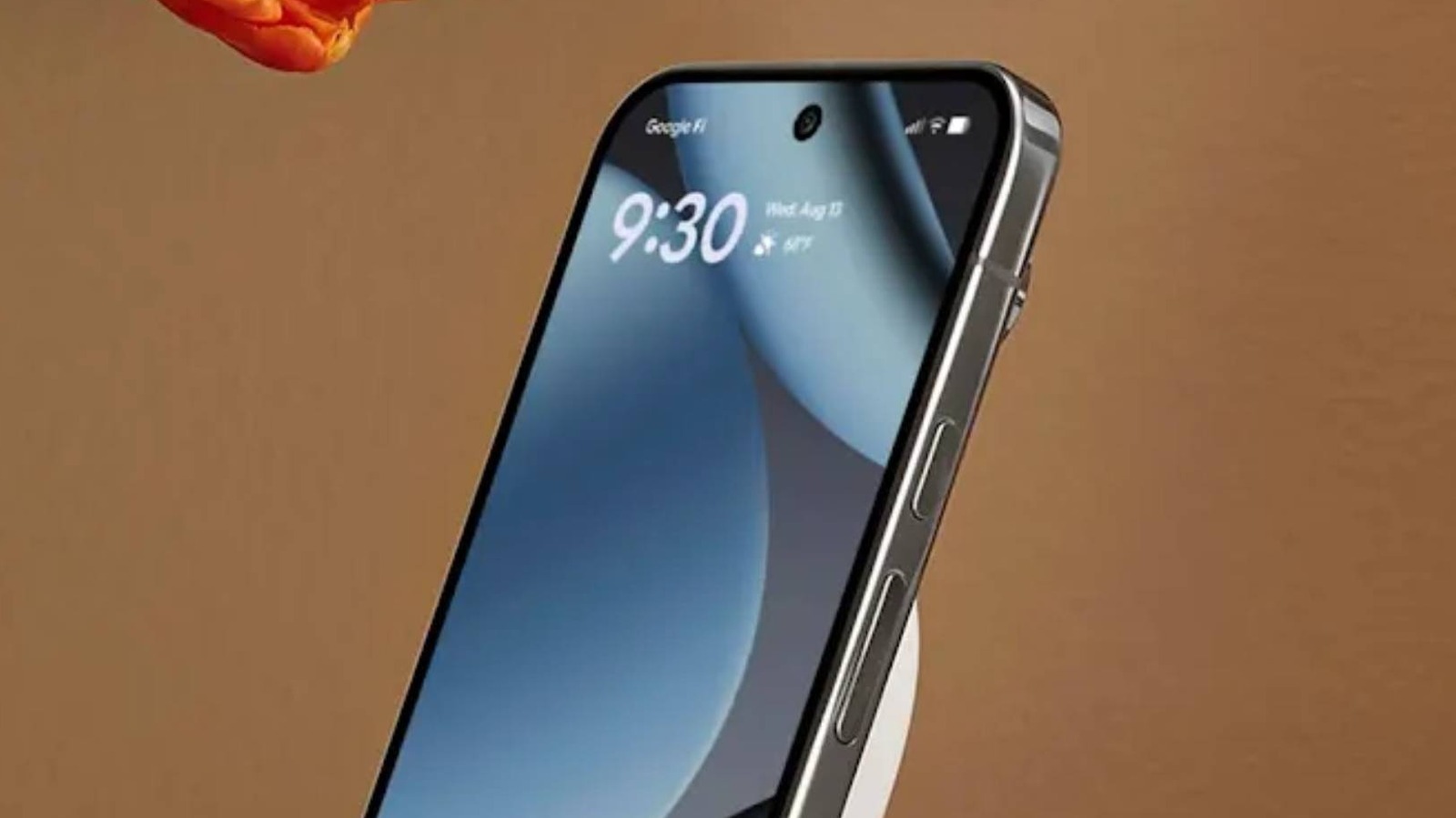
The Google Pixel 10 is finally here, bringing with it a slew of new AI-powered features to figuratively knock your socks off. Before you dive into all the AI goodies and technological upgrade that await you, there’s one setting you’ll want to change on your Pixel 10 to ensure you have the smoothest visual experience possible while using Google’s latest flagship.

Like previous Pixel devices, the OLED display on the Pixel 10 supports up to a 120Hz refresh rate. However, to save battery life, the device comes set at 60Hz out of the box, as Android Authority noticed. Now, there’s certainly an argument to be made about getting the most out of your Pixel’s battery, especially with Google throttling the Pixel 10’s battery after just a few hundred charging cycles. But if you’re buying a flagship device, you want flagship performance. As such, you will likely want to up the refresh rate to 120Hz, even if it takes a little extra juice to do so.

How to change the Pixel 10’s refresh rate

Christian de Looper for BGR

To increase the refresh rate on your Pixel 10, you’ll need to open your phone’s Settings and navigate to the Display & touch menu. There are several settings you can change here, including brightness and appearance (like light and dark mode). If you scroll down a little, you’ll see an option called Smooth display — it’s located under the Other display controls section.

This feature is toggled off by default, locking the phone’s refresh rate to 60Hz so it doesn’t use more battery than it needs to. If you’re not especially worried about battery life, turn on Smooth display. This will automatically increase the phone screen’s refresh rate to 120Hz for content that supports it. The phone will display smoother visuals in games and certain apps.

Unlike the Pixel 10 Pro models, the base Pixel 10 can only swap between 60Hz and 120Hz. While both are technically OLED displays, they’re different panel types. If you’re rocking one of the more expensive variants, you can take full advantage of scalable refresh rates, which means the phone can range from 120Hz to as low as 1Hz depending on what’s on the display. Jumping up to 120Hz will deplete your battery more quickly, but it’s also one easy way to ensure your brand new phone feels as snappy and responsive as possible.

Source

Posted on

Microsoft’s Copilot Shows Signs Of Reducing Its Reliance On OpenAI’s

PhotoGranary02/Shutterstock

Microsoft launched its first two homegrown AI models this week. The models are now available in various Copilot programs and could signal a move to start incorporating the company’s own models into the Windows-centric assistant instead of relying so heavily on OpenAI’s GPT models.

The new models, called MAI-Voice-1 and MAI-1-preview, debuted on Thursday, August 28. Microsoft shared details about the models in a blog post, where the company highlighted their capabilities. MAI-Voice-1 is now available in Copilot and Copilot Labs, and Microsoft says that it can be used to generate up to 60 seconds of audio in under one second, all while relying on a single GPU. Microsoft claims that this “lightning-fast” efficiency makes it “one of the most efficient speech systems available today.”

MAI-1-preview, on the other hand, is designed to provide consumer-level benefits by following instructions and “providing helpful responses to everyday queries.” It’s currently only being made available in LMArena, though Microsoft says it plans to eventually roll it out for specific text-based cases in Copilot as the weeks progress. For now, though, the company wants to look into improving it with user feedback.

A long way from replacing OpenAI

Nwz/Shutterstock

While Microsoft’s launch of its own in-house AI has major implications on the future of Copilot, we don’t expect Microsoft to ditch its partnership with OpenAI any time soon. There’s little doubt that having access to GPT’s latest models has helped Microsoft expand what Copilot can do exponentially without having to rely on building its own models from the ground up. It’s been a good tactic, as it has given the company tons of usage data with which to build its own models. Meanwhile, Microsoft has even added features to Copilot that ChatGPT doesn’t have yet.

This approach has given Microsoft’s AI division time to focus on specific models and improvements, and Microsoft even says that its in-house options aren’t designed for enterprise-level queries, something that it usually focuses heavily on for advertising Copilot’s productivity features. So, it would make sense for Microsoft to continue relying on GPT for that side of things, at least for now.

We’ll be curious to track these models in the months to come, as Microsoft has plenty of data to feed them already, and future input will only help the new models become even more capable. Since these models are focused on consumers, though, it’s possible we could eventually see these models make the leap to Copilot in Edge, too, as Microsoft tries to morph its Internet Explorer replacement into a proper AI browser.

Source

Posted on

Apple iOS update fixes new iPhone zero-day flaw

Apple has pushed another update to its mobile operating systems, iOS and iPadOS, to address a newly discovered zero-day that is already being exploited by threat actors in the wild to enable so-called zero-click attacks.

Tracked as CVE-2025-43300, the flaw is an out-of-bounds write issue in the ImageIO framework – which is used to enable applications to read and write the majority of image file formats. If successfully exploited, processing a maliciously crafted-image file results in memory corruption on the target device.

“Apple is aware of a report that this issue may have been exploited in an extremely sophisticated attack against specific targeted individuals,” Apple said in its customarily sparse advisory.

The update, which takes iOS and iPadOS to version 18.6.2, addresses this problem with improved bounds checking.

Adam Boynton, senior security strategy manager for EMEIA at Jamf, an Apple device management specialist, explained that the flaw could potentially be used by threat actors to compromise the device and enable the execution of malicious code.

In these zero-click attacks, malicious payloads are generally delivered via channels such as text message, email or messaging apps. These payloads contain data packets that are designed to trigger the vulnerability automatically, without any user interaction taking place – hence the term zero-click.

This stealthy methodology means zero-clicks are tricky for enterprise defenders to get to grips with, not least because they are hard to detect and can bypass end-user training, but also because they often leave very little in terms of forensic evidence and can operate without setting off any security alerts.

Zero-click attacks have also been proven to be highly effective against high-value targets within businesses, and additionally for certain categories of organisations and individuals at risk of targeted cyber-espionage, such as non-governmental organisations (NGOs), journalists and media, and activists and politicians.

“Apple has indicated that this vulnerability has been exploited in sophisticated, targeted attacks, which typically focus on individuals with highly valued access or contacts, such as journalists, lawyers, activists, and government officials,” said Boynton. “While Apple has not confirmed whether this specific flaw was linked to spyware, similar vulnerabilities in ImageIO and WebKit have previously been used in Pegasus campaigns.”

Mitigating zero-click attacks

Sylvain Cortes, vice president of strategy at Hackuity, a vulnerability management platform, said: “With the vulnerability being actively exploited, everyone should check their iPhones immediately. Organisations handling Apple devices need to be able to identify and update all affected devices immediately, especially if they operate in at-risk fields like the legal, media and public sectors.” 

When responding to zero-click vulnerabilities, security professionals can help turn the odds in their favour by aggressively patching against them; by keeping up-to-date on threat intelligence, deploying defence-in-depth strategies with layered security protections; and by introducing technologies such as micro-segmentation, endpoint detection and response (EDR) tools, as well as mobile device management (MDM) services.

Meanwhile, individual Apple users can check if their iPhones or iPads are running the updated version 18.6.2 by navigating to Settings, General, and Software Update on their devices.

The update to version 18.6.2 will likely be among the final releases to take place ahead of the anticipated unveiling of iOS 26, which still looks to be on track for mid-September. This will accompany the launch of the iPhone 17.

Source