In its first ever major legal action outside the United States, Microsoft’s Digital Crimes Unit (DCU) has disrupted cyber crime-as-a-service network RedVDS – whose subscribers have cheated their victims out of millions of pounds – after obtaining separate court orders in the UK and Florida.
The DCU turned to the British legal system because the malicious infrastructure used to run RedVDS was hosted by a UK-based provider. A great number of victims of RedVDS users, well over 7,500, are also located in the UK, it said.
“Cyber crime today is powered by shared infrastructure, which means disrupting individual attackers is not enough. Through this coordinated action, Microsoft has disrupted RedVDS’s operations, including seizing two domains that host the RedVDS marketplace and customer portal, while also laying the groundwork to identify the individuals behind them,” said Microsoft DCU assistant general counsel, Stephen Masada.
The takedown operation drew Europol’s European Cybercrime Centre (EC3), with further support provided by the German authorities through the Central Office for Combating Internet Crime (ZIT) at the Public Prosecutor’s Office in the city of Frankfurt-am-Main, and the Criminal Police Office for the state of Brandenburg.
At the time of writing, the RedVDS website states that its domain has been seized by Microsoft.
Industrialised fraud
The RedDVS cyber criminal service charged as little as $24 (£18) per month to provide digital fraudsters with access to disposable virtual computers used to scale fraud operations cheaply and securely.
The DCU believes RedVDS users have compromised more than 191,000 organisations worldwide since September 2025 and netted over $40m in the US alone, with prominent victims including Alabama-based H2-Pharma, a supplier of allergy, cancer and mental health medications, which lost $7.3m; and Florida-based Gatehouse Dock Condominium Association, which was tricked out of $500,000 it had set aside for repairs to its members’ homes.
The service was used for a wide range of cyber criminal activity, including running phishing campaigns, hosting malicious infrastructure and facilitating fraud. It was often used alongside generative AI (GenAI) tools to help identify more targets quicker, generate more convincing lures, and in some cases to manipulate video footage or clone voices.
However, where RedVDS appeared to excel was in supporting business email compromise (BEC) where cyber criminals impersonate trusted individuals to send payments to accounts they control.
In particular, its users targeted the real estate sector, compromising the accounts of estate agents, escrow agents or title companies. The DCU believes that as many as 9,000 customers in the real estate industry, most in Australia and Canada, were affected by this activity to some degree.
Masada said the DCU’s latest action built on ongoing efforts to disrupt fraud and scam infrastructure via both legal and technical actions, and through global collaboration.
“It marks the 35th civil action targeting cyber crime infrastructure by Microsoft’s Digital Crimes Unit, underscoring a sustained strategy to go beyond individual takedowns and dismantle the services that criminals rely on to operate and scale,” he said.
“As services like RedVDS continue to emerge, Microsoft will keep working with partners across sectors and borders to identify and disrupt the infrastructure behind cyber-enabled fraud, making it harder for criminals to profit and easier for people and organisations to stay safe online.”
The annual CES trade fair in Las Vegas serves us a glimpse of what’s to come in consumer technology in 2026 and beyond. BGR saw plenty of cool and exciting gadgets at the show. Many are available to buy right now, whereas others are still in the concept phase, being developed into actual products that may grace store shelves soon.
We’ve already covered the most exciting tech at CES 2026 and the best gadgets unveiled at the show, but that’s just scratching the surface of this massive international exhibition. There were countless other devices and technologies being demoed around the show floor and behind closed doors at exclusive events, so here are four more of the coolest tech innovations that BGR spotted at CES that undoubtedly deserve your attention. These innovations range from exciting new gadgets that you’ll be able to buy soon to interesting new technologies that will level-up your esports gaming.
TCL X11L SQD-Mini LED TV
Although the RGB Mini-LED or RGB LED technology was expected to be the big thing at this year’s CES, TCL truly wowed with its X11L SQD-Mini LED TV. It’s a massive improvement over the current crop of Mini-LED TVs. Instead of using red, green, and blue LEDs like standard RGB Mini-LED TVs, it keeps the same blue LEDs, which are found in many traditional Mini-LED TVs, but employs better quantum dots for more accurate colors and a new color filter. These improvements help the TV provide full coverage of the BT.2020 color space, meaning it can provide exceptional color fidelity. Because it uses single-color blue LEDs, it also avoids color crosstalk — when colors from one color LED bleed into another LED’s colors — a problem that can plague RGB Mini-LED TVs.
Another advantage of the newly showcased TCL TV is its 10,000 nits peak brightness, which is among the highest you can get on any TV. This high peak brightness enables the TV to provide better HDR performance and counter glare and reflections more effectively. It’s also the first TV to claim support for Dolby Vision 2, a new HDR format, which will arrive via a software update. The 85-inch and 98-inch models of the TV are already on preorder, with a 75-inch coming down the line. However, it’s not a cheap TV by any stretch, with the 98-inch costing $10,000.
Lenovo Legion Pro Rollable
Lenovo’s Legion Pro Rollable was one of the most exciting laptops to be shown at this year’s CES. Although it’s still very much a concept, it offers a glimpse into what’s possible in such a form factor. As the name suggests, it’s a laptop that uses motors to offer a horizontally expandable screen. Lenovo has shown off laptops with similar rollable displays in the past; however, this is the first one that’s not featuring a vertically expanding display. The company is targeting esports athletes who often need a wide screen to practice, which is hard to get in a portable form factor when traveling.
The laptop uses an OLED screen and has a 16-inch display by default, which can expand to 21.5-inch or 24-inch wide. It has a dual-motor design to expand and contract the screen. Right now, it has the same internals as Legion Pro 7i, which means you get a top-spec Intel Core Ultra CPU and an Nvidia GeForce RTX 5090 GPU. That said, the consumer version, if there is ever one, will likely feature different specifications.
Jackery Solar Mars Bot
Jackery showed off a pretty cool power station, solar panel, and robot combo called the Solar Mars Bot that can move around to get the most efficient solar charging. Its built-in wheels allow it to adjust its position outside your home or campsite to track the sun and pursue the best sunlight irradiation angle. The company mentioned this design during CES 2024 as a concept, but it has since come much closer to becoming a reality. However, there is still no word on its release date or pricing.
There are retractable solar panels on the top of the device, which can fold and unfold as necessary, and are capable of producing up to 600W of power. More importantly, the platform on which solar panels are fixed can change its angle up to 60 degrees to get the most sun and increase its efficiency. The rest of the Solar Mars Bot is similar to other Jackery power stations and includes multiple ports and sockets to power your devices, including multiple USB ports and AC outlets. The company has also included 5G connectivity in the Solar Mars Bot, allowing you to check the battery and robot status even when it’s out of Bluetooth range.
Nvidia DLSS 4.5
PJ McDonnell/Shutterstock
DLSS on Nvidia graphics cards (which means Deep Learning Super Sampling) has quickly emerged as an excellent tool to get more out of your GPU. It uses machine learning to render graphics at a lower resolution and then upscales them with the help of AI to fill in any missing details. This allows mid-range graphics cards to push out significantly higher frame rates than they would be able to achieve with native rendering. DLSS 4, which was introduced at CES 2025, was already pretty powerful. However, Nvidia is taking things to the next level with DLSS 4.5. The company showed off the upgrade at CES 2026, and it’s already available for all RTX graphics cards. One of its highlights is the updated upscaling technology, which enables significantly improved visual clarity with fine detail.
More importantly, the visual quality of the “Performance mode” in DLSS 4.5 is as good or better than the “Quality mode” in DLSS 4, which helps you get a higher number of frames from your hardware without any artifacts. For RTX 50-series GPUs, there is also the new Dynamic Multi-Frame Generation feature, which can generate up to 5 synthetic frames for each real frame and can dynamically adjust the artificial frames depending on the base frame rate to ensure smoothness at all times. Bottom line, DLSS 4.5 delivers dramatically improved visual performance with enhanced sharpness, HDR lighting, and lighting effects.
The Consumer Electronics Show is a yearly expo in Vegas for manufacturers of all kinds to wow both the media and public with weird and wonderful bleeding-edge technology; from rollable OLED screens that unfurl to several times their original size, to household robots that can barely fold laundry at the level of a two-year old. But away from the usual assortment of increasingly thin TVs and “smart” fridges that no one asked for lies an entirely stranger set of products. These products either wow you for their creativity, or utter stupidity. It’s a fine line, and I’ll let you be the ultimate judge of which side these products lie on.
In truth, much of the concepts in this list will never see the light of day. Some are an obvious ploy to garner exposure from media outlets (guilty!), some are prototypes of products that might eventually come to market with a vastly different feature set, while some are available for pre-order now. You don’t even have to wait to buy some of the best CES gadgets. But these are the strangest, in their own special way.
An Actual Toilet Cam: Throne One
The quanitifed-self movement of the early 2000s introduced the concept of measuring everything in your daily life, but early attempts were limited to self analysis of primitive sensor data. Nowadays you can track everything, from the number of times you’ve sipped a water bottle to diaper changes, and it’s not unusual to pull out your Apple Health records when you visit the GP. So it was only a matter of time before gut health got in on the game.
Equipped with a camera and microphone, the Throne One from Throne Science sits on the side of your bowl to analyze everything about your stool and urinary habits, and lets you know when something is amiss. While this might sound like a joke, if you can make it past the ick factor, gut health is perhaps one of the most overlooked early indicators for a wide range of health issues. While temporary color or consistency changes are usually down to a change in diet, consistent issues point toward something more serious. Available for pre-order and shipping in February, the Throne One will cost $400 as well as requiring a monthly subscription for the analysis software.
AI Companion Doll: Lovense Emily
Developed by interactive sex tech makers Lovense, Emily is a lifesize silicone companion doll that integrates a sultry voice-capable AI, a series of expressive facial motors, and embedded sensors throughout her body. She’s web-connected and features a choice of five different personalities and roleplay scenarios, while a virtual cloud copy of your companion means you’ll be able to talk to her outside of the home through the accompanying smartphone app — and she remembers previous conversations to shape future ones (ChatGPT offers a similar “memory” feature). If reading that didn’t already make this feel like an episode of Black Mirror, hold on: If she ever breaks, you can download her personality into a new body. Uniquely, Emily can also connect to and control all your other Lovense web-connected toys.
Potential buyers can put down their $200 deposit now for a sizeable discount off the final price, which Lovense has said will be somewhere in the range of $4,000 to $8,000. While they haven’t disclosed which LLM is powering the companion, it’s likely a custom solution. ChatGPT has announced adult mode for verified users was supposed to be coming at the end of last year, while X’s standalone Grok AI app is notoriously spicy.
Personalized Art, On Demand: SwitchBot AI Art Frame
Generative AI “art” is a lot like Marmite: you either love it with a slice of toast or think it devalues everything about the human experience and will be the downfall of society. And digital art frames are nothing new; I reviewed the Meural Canvas around a decade ago, a glorified big photo frame that came with premium subscription options to access exclusive streams of licensed artwork. But with the advent of generative AI, it was never going to be long before someone combined the two concepts into one product.
The SwitchBot AI art frame — powered by NanoBanana — lets you generate any subject matter in any style you like: instant, on-demand, personalized fake art displayed on a gorgeous and technically impressive EInk Spectra 6 screen. It’s weird, but also strangely compelling. The smaller 7.3″ size is available now for $150, with pre-orders open for the larger 13.3 and 31.5 inch versions. SwitchBot is better known for their button-pressing smart home gadget, which is surprisingly useful for turning dumb household appliances into smart ones.
Desktop Holographic Anime Companion: Razer’s Project Ava
Following an apparent trend of global loneliness (who would’ve thought staring at a screen for 18 hours a day would have that effect?), there are a lot of virtual companions making an appearance at this year’s CES, from full size household robots to tiny little anime girls that you can keep forever inside a cylindrical cage on your desk. Project Ava, from gaming giants Razer, is a Grok-powered gaming copilot; but it’s not the only tiny desktop companion at CES, being joined by the LePro Ami (“Your always on 3D soulmate”).
The tech isn’t actually new — these seem to pop up every year, with the earliest I can find dating back to nine years ago from Gatebox in Japan — but AI has finally reached a level where these are more than glorified 3D desktop toys. With a connection to advanced AI voice models, you’ll finally be able to hold a normal conversation. With Razer’s gaming might behind it, they’ve also promised that it’ll react to your gaming achievements or you can ask it for help when you’re stuck.
How much of this will make it to the final product or if it’ll be manufactured beyond the initial influencer round of reviews is still to be seen. What we do is that like anything Razer does, it’ll have oodles of RGB.
It’s Like Music in Your Mouth — Literally : Lava’s Lollipop Star
You might have heard of bone conduction headphones, which produce audio by directly vibrating the bones around your ear. It’s useful tech for those who need to stay connected to the outside world (or just can’t stand earbuds), though the quality isn’t brilliant. Lollipop Star uses the same tech, but in your teeth. When you suck on it (or technically, bite down on it), the music plays through your jaw. By all reports, it’s both muffled and quiet, which are two things that seem somewhat important for playing music, but I’m no expert.
In a world where we’re moving toward banning wasteful single-use plastic straws and cutlery, I can really see single-use lollipop sticks with a built-in lithium-ion battery taking off. At $9 each, you’d have to be quite the sucker for this particular innovation when the exclusive “drops” arrive shortly. Alternatively, you can buy some of these AMOS Candy musical lollipops on Amazon.
Smart AI Hair Clipper: Glyde
AI hair clippers probably weren’t on your bingo card this year, but users can scan their head shape into the Glyde app and select a desired style, strap on a special mask to protect their eyes, and then have at it — zero skill needed. Just move the clippers around over your head, and the Glyde AI automatically adjusts cutting length to match the programmed style thanks to sensors that detect the speed, tilt, and angle of the blade in real time. While a simple buzzcut is hard to mess up, anything involving a fade is usually tricky. The Glyde makes it effortless with the “fade band” marking the start. You still need to physically move the clippers over your hair, but if Glyde detects sudden movements, incorrect starting position, or not cutting upwards in a straight line, it simply retracts the blade to avoid mistakes.
As weird as thing sounds, if they hit the target price of $150-200 then it’s not far off the cost of a decent pair of non-smart clippers.
Zero-G Mental Health Pod: Reconcept
Originating from France, the Reconcept mental health pod is an alien-esque egg-shaped thing you clamber into and have a massage while it plays soothing music and binaural beats in a guided relaxation session. It’s not really zero gravity of course, but the Neutral Body Posture with the head and legs reclined was developed by NASA to improve circulation and reduce respiratory and muscular strain in astronauts experiencing microgravity.
The Reconcept pod sounds like a lot of fun — unless you’re claustrophobic, in which case it probably won’t have a positive effect on your mental health. Thankfully there are plenty of adjustable beds to help you achieve a zero-g position in the luxury of your own home. Just add a Meta Quest VR headset with haptic vest and you’re all set for plenty of meditation experiences like Tripp.
Pure Nightmare Fuel: Dreame Cyber X Robot Vacuum Transporter
For all their convenience robot vacuums have thus far been unable to tackle the incredible complexity of stairs. Until now. Dreame’s Cyber X is a terrifying beast equipped with four legs that look like tiny chainsaws — as if the dog wasn’t scared of the vacuum enough. What’s really interesting is that the Cyber X isn’t actually a robot vacuum — it’s just a transporter or base station. The vacuum has to drive inside, be carried to another floor, then get out to do its business. So while the Cyber X can move your vacuum around, it still can’t actually clean the stairs.
The Roborock Saros also made an appearance at CES with a little pair of wheels on legs to help it climb, but it’s a vacuum as well. Unfortunately the Saros can’t get back down again (or at least, it wasn’t demonstrated doing that so we’ll have to assume it can’t). But that’s half the problem solved, anyway, and it means I can finally justify that indoor slide to my wife because “the robovac needs it.”
Breakfast In Bed (As Long As You Live on One Level And Breakfast is a Croissant): LG CLOiD
The LG CLOiD is a friendly humanoid robot designed to coordinate household tasks with other connected home appliances in LG’s ThinQ ecosystem. So you’ll not only have to spend an extraordinary amount on the robot, you’ll also need to smartify everything else in your home. Unlike the quad-chainsaw-wielding Dreame Cyber X, CLOiD has primitive wheels, so it won’t be able to navigate complex home environments with any level changes. But he will fold laundry (slowly) and make breakfast, if by make breakfast you mean placing a croissant onto a plate. It’s unlikely that CLOiD will ever make it to market, but LG is showing it off as a prototype of future projects, hoping it will eventually become an “ambient care agent that supports everyday life”. I joke, but robots that can assist with care of the elderly are very much in demand in an aging society where the cost of care is skyrocketing.
Also making an appearance was the SwitchBot Onero H1, whose makers claimed it should hit retail later this year at less than $10,000. For a robot that can pick up dirty socks and place them in a basket, I think we can all agree that’s a bargain. But unlike the LG CLOiD, the SwitchBot Onero is unable to display heart emojis on its face.
We’ve all been there — you’re watching the game and need to go grab a beer, but that means being taken away from the excitement of watching people kick a ball for 30 seconds. But what if — hear me out — your TV could follow you to the kitchen? You’d never miss a thing!
Now that I’ve woven that compelling tale of a use case for you, let me explain the Hisense S6 FollowMe TV isn’t actually any of that, because despite the name, it’s not motorized and won’t FollowYou. Instead, you need to manually push it around. So it’s just a TV on a stand then? Well, yes, but that makes it sound like it’s not innovative at all. It also has a webcam, and battery, and Wi-Fi 6 — but doesn’t ship with a chain to attach it to your neck, disappointingly. The real strangeness here is that Hisense felt a smart TV on wheels was an innovation worth showing off at the largest consumer electronics show. Don’t fret about upgrading: here’s a TV stand with wheels for less than $50.
CrowdStrike has been granted a motion to dismiss a consumer class action lawsuit brought by shareholders who were affected by the now-infamous 19 July 2024 outage – prompted by a faulty sensor update – which crashed Windows PCs around the world, causing widespread disruption and billions of pounds worth of losses.
The suit, filed on behalf of CrowdStrike investors in August 2024, accused the defendants – who included the company’s founder and CEO, George Kurtz – of making false and misleading statements over the efficacy of the Falcon platform at the centre of the outage.
It also alleged failings over software testing and quality assurance, and claimed that CrowdStrike was seeking to maximise its profit by rushing untested updates.
Handing down his decision at the federal district court for the Western District of Texas in the city of Austin, US district judge Robert Pitman said the plaintiff’s claims were dismissed in their entirety in part because the shareholders had failed to establish any plausible motive of intent to commit securities fraud on CrowdStrike’s part.
It his judgment, Pitman said the court agreed with CrowdStrike that the statements it made were neither false or misleading when considered in the context from which the plaintiffs removed them. He wrote that the court concluded that if anybody was being misleading, it was the plaintiffs.
Rejecting other arguments, Pitman also said that corporate mismanagement did not, standing alone, give rise to a multibillion-dollar claim. “We appreciate the Court’s thoughtful consideration and decision to dismiss this case,” said CrowdStrike chief legal officer Cathleen Anderson in a brief statement.
Reuters earlier reported that the office of New York State comptroller Thomas DiNapoli, who led the lawsuit, is reviewing options following the decision.
Multiple actions
Last June, Pitman dismissed another lawsuit brought by airline passengers who experienced delays and cancellations after the sudden blackout.
Pitman’s decision in this case was made on the basis that the US Airline Deregulation Act preempted the claims the plaintiffs were making against CrowdStrike. His ruling has effectively shielded CrowdStrike from consumer suits related to disruptions experienced by its customers.
However, a third lawsuit brought by US airline Delta is still working its way through the US legal system.
Delta was particularly badly affected by failures arising from the outage, and was highly critical of CrowdStrike in the wake of the incident after it was forced to cancel thousands of flights and spend millions compensating stranded passengers and putting them up in airport hotels.
CrowdStrike and Microsoft have both claimed that Delta in fact rejected their offers of help during and after the disruption.
Single point of failure
The 2024 CrowdStrike outage stands as a stark reminder of the potential for a global catastrophe arising from unscheduled technical outages given the interconnected nature of cloud platforms, which enable single points of failure to cascade rapidly.
The scale of the problem was aptly demonstrated in November 2025, when web traffic management firm Cloudflare was hit by its worst outage in six years.
In an incident that bears some similarities to the CrowdStrike outage, Cloudflare had made a minor and seemingly innocuous change to a feature configuration file used by its Bot Management security system, which caused the file to grow larger than expected and propagate across the Cloudflare network, causing crashes and disrupting daily life on the world wide web for millions.
A month earlier, Amazon Web Services customers experienced a 15-hour outage after the cloud giant suffered a series of cascading technical issues at a northern Virginia datacentre powering its US-East-1 region, and in June, Google Cloud went on the blink for many after an incorrect change to an application programming interface management system triggered a crash loop.
Speaking to Computer Weekly’s sister title, Search Cloud Computing, Forrester principal analyst Lee Sustar said that such incidents are a “preview of what’s to come” and predicted more similar stories in 2026.
Sustar said a combination of hyperscalers pivoting from legacy environments to graphics processing unit-centric datacentres to manage AI workloads, and ageing infrastructure, would likely lead to “major multi-day outages” in the near future.
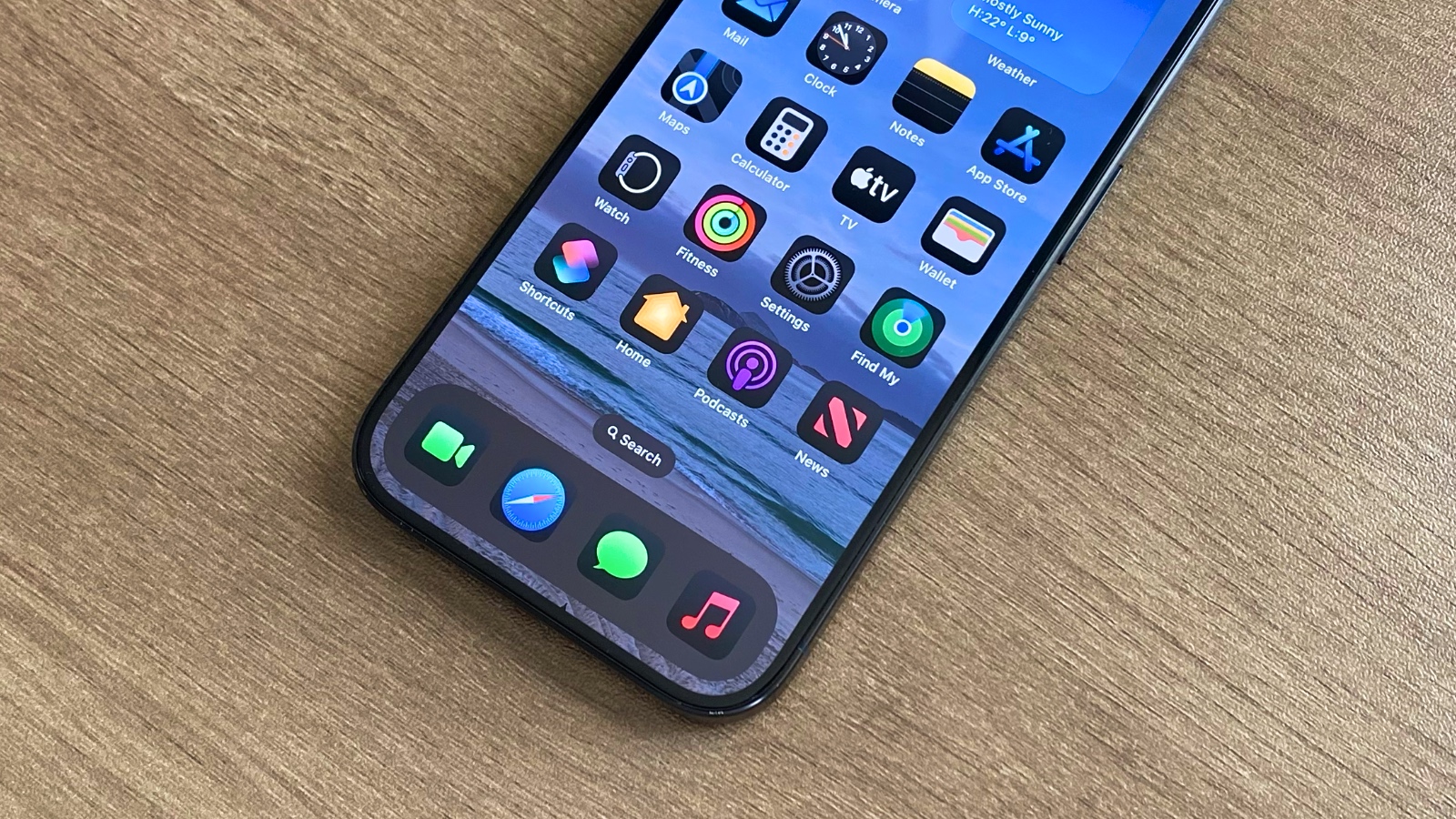
Apple has been tweaking the iPhone design almost every generation. With the iPhone 14 Pro, the company ditched the notch in favor of a Dynamic Island. On the iPhone 15 Pro, Apple added a titanium frame to its phones. On the iPhone 17 Pro models, a new camera plateau and the return to aluminum marked these smartphones.
Now, the well-known Chinese leaker Digital Chat Station claims the iPhone 18 Pro and iPhone 18 Pro Max models will have a redesign, as Apple could be working on a new under-display cutout area. This leak is corroborated by other reports that say Apple will make a more discreet Dynamic Island while placing Face ID sensors under the screen. Other rumors suggest the iPhone will receive another major change in 2027, as Apple plans to celebrate the 20th anniversary of the first iPhone release.
iPhone 18 — 6.27″ LTPO 120Hz display with Dynamic Island
iPhone Air 2 — 6.55″ LTPO 120Hz display with Dynamic Island
iPhone 18 Pro — 6.27″ LTPO 120Hz display with a newly redesigned under-display cutout area
iPhone 18 Pro Max — 6.86″ LTPO 120Hz display with a newly redesigned… pic.twitter.com/0Ix3CuLyuP
— Ice Universe (@UniverseIce) January 14, 2026
A design change won’t come to other iPhone models
José Adorno/BGR
Following Apple’s trend of updating the design of the iPhone Pro first, the Digital Chat Station leaker says that both iPhone 18 and iPhone Air 2 will remain with the same look as their predecessors, which means the company is not expected to add under-display components, like Face ID, or move the Dynamic Island somewhere else on the screen on these models.
While it’s still unclear whether Apple will move all the Face ID and camera components under the display on the iPhone 20, these rumors claim the company will do that with the TrueDepth system, which powers facial recognition, on the iPhone 18 Pro models.
Interestingly enough, Apple has been full of new ideas with its iPhones. For example, the iPhone Air was just introduced, but the company is expected to release the iPhone Fold this year. Then, in 2027, Apple might introduce an iPhone with an all-new design. Considering that, back in 2017, Apple decided to make a premium iPhone X model while offering the simpler iPhone 8, the rumored smartphone releases could make Apple’s release schedule as busy as it was back then. With two Pro models, one regular version with a new release schedule, the iPhone Air, and a future iPhone Fold, it becomes unclear where Apple will fit the iPhone 20 release and what the other models will look like.
We’ve been hearing for months that smartphones are going to be more expensive in 2026 because of the demands set out by a booming artificial intelligence industry. Advanced AI features, like the ones many smartphone vendors offer customers, rely on cloud processing and massive infrastructure investments. Those servers where some of your prompts are processed require processors, specialized GPUs, RAM, and storage. It turns out that memory and flash storage chips made for iPhone and Android devices also work in AI datacenters, which is causing significant demand pressure. Semiconductor firms have increased prices for these components in recent months, with analysts warning that some smartphone vendors will have to pass the extra costs to consumers.
Fast-forward to mid-January, and British smartphone brand Nothing, popular for its affordable entry-level and mid-range phones, has confirmed that the price hikes are real. The bad news some Android phone buyers may have feared arrived directly from Nothing CEO Carl Pei, who posted a lengthy explanation on X titled, “Why Your Next Smartphone Will Cost More.”
Less than a month ago, IDC analysts warned that “the global smartphone market, particularly Android manufacturers, is facing a threat in 2026,” in a report detailing the memory shortage crisis. IDC pointed out that smartphone vendors targeting the high-end market, including Apple and Samsung, are better positioned than vendors who manufacture cheaper Android devices. Android vendors including TCL, Transsion, Realme, Xiaomi, Lenovo, Oppo, Vivo, Honor, or Huawei operate on slim margins, the IDC said, adding that such companies are “likely to suffer significantly.” Their only option is passing the cost, or part of it, to buyers. Nothing wasn’t explicitly named in that report, but the British vendor is a newcomer in the industry compared to more seasoned players.
Nothing mostly sells cheap Android phones
Wongsakorn 2468/Shutterstock
Carl Pei echoed IDC’s remarks, saying that “2026 is the year the ‘specs race’ ends,” contrary to the previous expectations from both vendors and buyers. “For fifteen years, the smartphone industry relied on a single, reliable assumption: components would inevitably get cheaper,” Pei wrote. “While short-term volatility existed, the long-term downward trend in memory and display costs allowed for annual spec bumps without price hikes. In 2026, that model has finally broken, driven by a sharp and unprecedented surge in memory costs.”
Nothing launched its first handset, the Nothing Phone 1, in 2022, a $299 mid-range phone. Since then, Nothing released both flagship phones (the $599 Nothing Phone 2 and $799 Nothing Phone 3) and mid-range devices (the $349 Nothing Phone 2a, $399 Nothing Phone 2a Plus, $379 Nothing Phone 3a, and $459 Nothing Phone 3a Pro). Separately, Nothing also launched a smartphone sub-brand that makes entry-level handsets, the $199 CMF Phone 1 and $279 CMF Phone 2 Pro.
Nothing is expected to launch a next-generation series of phones this year. Carl Pei’s remarks about price hikes are likely a PR move from the experienced executive to temper price-related expectations for the upcoming Nothing Phone 4-series phones.
How much will the Nothing Phone 4 series cost?
Framesira/Shutterstock
Pei did not mention any new Nothing products by name, but said that pricing will “inevitably also increase across our smartphone portfolio, particularly as we will upgrade some products launching this [quarter] to UFS 3.1” storage. He didn’t mention RAM costs for upcoming Nothing phones, but said that costs have tripled in some cases for memory components. Further increases are expected, as AI firms consume available supply.
“Memory is fast becoming one of the most expensive smartphone components and potentially the single largest cost driver in the bill of materials by year-end, with estimates suggesting that memory modules which cost less than $20 a year ago could exceed $100 by year-end for top-tier models,” Pei said. He added that smartphone vendors have to raise prices by up to 30% or downgrade the specs.
Pei also appears to see the glass as half full, or perhaps he’s framing the situation in a positive light to reassure consumers. “For Nothing, the current situation represents a great opportunity,” he said, adding that the company has always had to operate without benefiting from the cost advantages of well-established phone makers. Instead, Nothing realized it could not win on specs, and focused on a better design and user experience. “As the industry resets, experience becomes the only real differentiator,” Pei said. “That is exactly what Nothing was built for.”
Corporate and organisational changes at Chelsea Football Club are nothing new, but hot on the heels of appointing its ninth full-time manager in the past 10 years, the club has upgraded its mobile network in and around its stadium to strengthen connectivity for customers attending fixtures and events.
The fourth most successful club in English football, Chelsea were founded in 1905 and named after the neighbouring area of its Stamford Bridge ground in West London, one of UK capital’s most historic football venues, the only home that the football club has had in its history.
Typically in English football, clubs have been formed and stadium subsequently located; Chelsea were formed to play at Stamford Bridge, which currently boasts a capacity of just over 40,000. In addition to football, the ground has hosted a variety of other sports including cricket, baseball, rugby, boxing, greyhound racing and American football.
The connectivity capacity boost – undertaken by O2 – is designed to offer a more reliable mobile experience at peak times, making it easier for fans to share video of action and use social applications, as well as use digital services such as mobile ticketing and contactless payments.
Inside the stadium, O2 has optimised the rooftop site within Stamford Bridge, boosting capacity and improving mobile performance across the stands, concourses and hospitality areas. The operator said this will ensure customers can continue to stream, share and stay connected, even when the ground is at full capacity.
Beyond the stadium footprint, new and upgraded small-cell mobile technology has been installed to improve coverage and reliability for local residents, businesses and visiting fans, helping to keep people connected as they travel to and from matches.
O2 said the upgrades are already delivering positive results on match days, with customers using more than twice as much data and enjoying a fourfold increase in speeds.
“Stamford Bridge is an iconic stadium with extremely high demand on matchdays,” said Steven Verigotta, director of mobile delivery at the operator’s parent company Virgin Media O2. “By optimising our network inside the ground and in the surrounding areas, we are giving O2 customers a more reliable mobile experience so they can enjoy every moment, from kick-off to the final whistle.”
The upgrades are part of O2’s Mobile Transformation Plan, which will see the operator invest around £700m into its mobile infrastructure to future-proof the company’s mobile network and improve connectivity in high-demand areas across the UK. In August 2025, O2 went live with its first mobile small cells in the key resorts of St Ives and Newquay in Cornwall to give businesses an improved mobile connectivity experience and faster speeds.
A month earlier, O2 also announced that it had agreed a deal with Vodafone UK to acquire 78.8MHz of mobile spectrum, bringing the operator’s total spectrum holding to approximately 30% of UK mobile spectrum and materially enhancing the company’s network position and improving connectivity in locations such as sites with crowds of people.
Data released by O2 in late 20205 showed that growing customer use of artificial intelligence (AI) alongside the continued draw of live sports and major gaming releases has resulted in record levels of data consumption across the networks of Virgin Media O2, including an 18% rise in mobile traffic.
The key theme of mobile traffic on the O2 network was that people in the UK were scrolling, chatting and embracing AI more than ever, despite nearly three-fifths of Brits (58%) saying that they began the year with a plan to reduce the time they spent on their phone.
The AI radar 2026 study from Boston Consulting Group (BCG) has reported that artificial intelligence (AI) investment is set to double in 2026 compared with 2025. The study, based on a survey of 2,400 business executives, of which 640 are CEOs, found that almost every chief executive polled (94%) is committed to continuing investments even if returns take time to materialise.
In fact, almost all (90%) of the CEOs polled believe AI agents will deliver a measurable return on investment by 2026.
The study found that over two-thirds (72%) of CEOs now act as the primary decision-maker for AI in their organisation, taking responsibility from CIOs, who were previously the main lead in AI projects.
Christoph Schweizer, CEO of BCG, said: “Corporate investment in AI is here to stay. 94% of our survey respondents say they will continue to invest in 2026, even if it takes time to see the return. They intend to spend 1.7% of revenue on AI comprehensively. That is more than twice of what it was a year ago.”
BCG’s research suggests that companies leading the way in AI deployments are investing 60% of their AI budgets on agentic AI (AI agents). “We tell CEOs that they need to make AI a key priority,” he said. “The way they own it, the way they talk about it, the way they bring their organisation along. They need to spend time on deepening their own AI literacy.”
BCG recommends that CEOs understand the tools, the technology, and keep in touch with technology suppliers and partners. “Ultimately, you need to know what you talk about so that you can bring your organisation along and steer for maximum return,” added Schweizer.
With regards to the adoption of agentic AI, BCG found that more than 30% of the CEOs investing in AI during 2026 said they would be building agents to deploy in the work environment. Vladimir Lukic, global leader of BCG’s Technology and Digital Advantage, said: “AI agents will truly be something that will unlock organisations and deliver a return on investment within 2026.”
Sylvain Duranton, head of BCG X, said the research highlights differences in CEOs’ AI confidence in different regions. BCG reported that UK businesses are less likely than global peers to make large-scale investments in AI in 2026.
The study found that only 24% of UK companies plan to invest more than $50m in AI, compared with much higher shares in countries leading the AI race, such as Greater China (68%), Japan (53%), the European Union (38%) and the Middle East (41%). BCG also reported that British CEOs are the most sceptical of AI’s potential return on investment and less involved in decision-making on AI.
Discussing the regional differences, Duranton said: “CEOs in the East, in India, in China, in Japan, the Middle East and Africa tend to be highly confident that AI is going to be a positive return on investment move. In the global West – Europe, the US and the UK – there’s a bit more caution.”
In his experience, many Asian companies have huge confidence and boldness in moving forward with AI. However, many European and US firms operate in a different way. “There’s some more skepticism in their workforce,” said Duranton. “There potentially is some more regulation that they deal with.”
Firms leading the way with AI deployments, which BCG categorise as “trailblazers”, tend to focus heavily on upskilling the workforce. Jessica Apotheker, chief marketing officer and managing director at BCG, said: “Trailblazers are putting 60% of their AI budget behind upskilling and retraining their workforce. So, they’re really wanting to go deep in the organisation, changing the way people work, putting people behind this new technology.”
BCG reported that in these organisations, 70% of the workforce has been upskilled or reskilled on AI.
ISC2, the non-profit cyber professional membership association, has joined the UK government’s recently launched Software Security Ambassador Scheme as an expert adviser.
Set up at the beginning of the year by the National Cyber Security Centre (NCSC) and the Department for Science, Innovation and Technology (DSIT), the scheme forms part of a wider £210m commitment by Westminster to remodel approaches to public sector cyber resilience from the ground up, acknowledging that previous approaches to the issue have basically gone nowhere and that previously set targets for resilience are unachievable.
It is designed to incentivise organisations to pay more attention to the security of software products, and supports the wider adoption of the Software Security Code of Practice, a set of voluntary principles defining what secure software looks like.
ISC2 joins a number of tech suppliers, including Cisco, Palo Alto Networks and Sage; consultancies and service providers including Accenture and NCC Group; and financial services firms including Lloyds Banking Group and Santander. Fellow cyber association ISACA is also involved.
“Promoting secure software practices that strengthen the resilience of systems underpinning the economy, public services and national infrastructure is central to ISC2’s mission,” said ISC2’s executive vice-president for advocacy and strategic engagement, Tara Wisniewski.
“The code moves software security beyond narrow compliance and elevates it to a board-level resilience priority. As supply chain attacks continue to grow in scale and impact, a shared baseline is essential and through our global community and expertise, ISC2 is committed to helping professionals build the skills needed to put secure-by-design principles into practice,” she said.
Software vulns a huge barrier to resilience
A study of wider supply chain risks conducted last year by ISC2 found that a little over half of organisations worldwide reported that vulnerabilities in their software suppliers’ products represented the most disruptive cyber security threat to their overall supply chain.
And the World Economic Forum’s (WEF’s) Global Cybersecurity Outlook report, published on 12 January, revealed that third-party and supply chain vulnerabilities were seen as a huge barrier to building cyber resilience by C-suite executives.
A total of 65% of respondents to the WEF’s annual poll flagged such flaws as the greatest challenge their organisation faced on its pathway to resilience, compared to 54% at the beginning of 2025. This outpaced factors such as the evolving threat landscape and emerging AI technology, use of legacy IT systems, regulatory compliance and governance, and cyber skills shortages.
Pressed on the top supply chain cyber risks, respondents were most concerned about their ability to assure the integrity of software and other IT services, ahead of a lack of visibility into their supplier’s supply chains and overdependence on critical third-party suppliers.
The UK’s Code of Practice seeks to answer this challenge by establishing expectations and best practices for tech providers and any other organisations that either develop, sell or buy software products. It covers aspects such as secure design and development, the security of build environments, deployment and ongoing upkeep, and transparent communication with customers and users.
As part of its role as an ambassador, ISC2 will assist in developing and improving the Code of Practice, while championing it by embedding its guiding principles into its own cyber education and professional development services – the organisation boasts 10,000 UK members and associates.
It will also help to drive adoption of the Code of Practice through various awareness campaigns, incorporating it into its certifications, training and guidance, engaging with industry stakeholders and members to encourage implementation, and incorporating its provisions into its work with its own commercial suppliers.
Unexpected problems in the Police Service of Northern Ireland’s (PSNI’s) ControlWorks software led to police having to resort to manual forms to record calls from the public soon after the software’s introduction in 2019, Computer Weekly has learned.
The force has not reported the incidents to the Northern Ireland Policing Board, which oversees the PSNI, and has not mentioned any incidents with ControlWorks in its annual reports.
While there is no legal duty to report failures with ControlWorks to the Northern Ireland Policing Board, the Policing Board has told Computer Weekly it would expect any serious incidents with ControlWorks to be reported to it.
The PSNI uses ControlWorks as part of its command and control system, for managing, logging and categorising calls received by the emergency services from the public and for dispatching police officers to incidents.
Computer Weekly has learned that the PNSI’s ControlWorks system had technical issues after it first went live in May 2019.
These included slow-downs of the system that required computer systems to be restarted or software to be patched.
On some occasions, police were forced to return to using paper forms to record incidents reported by the public after ControlWorks became unavailable. Information on the forms had to be typed back into the system when the service resumed.
ControlWorks aimed to improve response times
The PSNI announced it was using Capita Communications and Control Solutions’ ControlWorks software in 2018, replacing its 20-year-old Capita Atlas Command and Control System, which had reached the end of its life.
From February 2018, ControlWorks was installed across the PSNI’s three regional contact management centres, before going live in May 2019, but is understood to have had a series of issues during its first few months of operation.
Critical incidents, which affect force-wide availability of ControlWorks, are categorised as P1 or P2. Less serious incidents that do not require urgent remediation are categorised as P3 and P4, Computer Weekly has previously reported.
Computer Weekly understands that the PSNI runs a 24-hour help desk to deal with IT issues, and that it has the ability to escalate incidents with ControlWorks to its IT supplier.
Missing persons search
Computer Weekly understands that a “major issue” with ControlWorks may have delayed information being passed to police officers searching for missing teenager Noah Donohoe, who disappeared from his home in Belfast on 21 June 2020.
Donohoe’s disappearance sparked a massive search operation, as police reviewed hours of CCTV, and hundreds of volunteers joined the search for the vulnerable 14-year-old.
Computer Weekly has learned that on the evening of 23 June 2020, police recorded a “major issue” with ControlWorks that could have led to delays in information being passed to investigators.
Computer Weekly further understands that on the evening of 24 June, a member of the public called police to say they had seen an individual attempting to sell Donohoe’s missing laptop.
This potentially critical information was delayed in being brought to the attention of police officers investigating Donohoe’s disappearance because of a problem with ControlWorks, Computer Weekly has been told.
It is unclear exactly how long the information was delayed by and what its impact on the search for the missing teenager was. But it is understood that detectives on the case reported and noted the delay during the investigation.
The issue with ControlWorks was understood to have been reported during the live investigation at a critical time when Donohoe was missing – two days after he had gone missing, and four days before he was found dead in a Belfast storm drain.
Manchester had serious IT issues
Greater Manchester Police experienced problems when it went live with its Integrated Operational Policing System (iOPS), which included ControlWorks, in July 2019. iOps attempted to integrate Capita’s ControlWorks software with Capita’s PoliceWorks record management software used by police officers for managing day-to-day investigations and intelligence records.
An independent review found serious issues with the project. At one point, police were forced to revert to pen and paper for 72 hours while records were migrated to the new system.
“This consumed considerable time and capacity, causing a duplication of work,” the report found. “In addition, some legacy demand, which included ongoing investigations, did not successfully transfer from the old systems, so could no longer be worked on.”
Greater Manchester Police subsequently announced plans to replace PoliceWorks after concluding it could not be adapted or fixed, but it has continued to use ControlWorks.
The PSNI uses a different record management system to Manchester’s troubled PoliceWorks system. The PSNI signed a £9m contract with the Canadian company NicheRMS to deploy its Records Management System, which records information about people, locations, vehicles, incidents and evidence, in 2006.
NicheRMS keeps duplicate records of reports from the public that are recorded on ControlWorks when they are escalated as an “incident”. This means that should data be lost because of problems with ControlWorks, the PSNI would still have access to duplicate records reported by the public on NicheRMS if they have been escalated as an “incident”.
Policing Board seeks clarification from PSNI
The Northern Ireland Policing Board has confirmed that if a major system disruption or significant information or data loss occurred, the board would expect to be informed.
A spokesperson told Computer Weekly that the board’s Resources Committee, which has oversight responsibility for matters including the PSNI’s technology systems, has asked the PSNI for clarification about the issues raised by Computer Weekly.
A coroner’s inquest into the circumstances of Noah Donohoe’s death is due to begin on 19 January.
The PSNI said it would “not comment on investigative matters while legal proceedings are ongoing”.
“With regards to questions relating to ControlWorks, police can confirm that, to date, there has been no instance of major disruption which has led to data loss,” a spokesperson said.