Posted on

Ericsson recommits to UK 6G research programme

With products and services based on the next generation of mobile set for launch in five years’ time, global tech firm Ericsson has underlined its continued support for a UK government-backed research unit designed to boost the country’s future wireless connectivity capabilities, in particular 6G networks.

Launched in 2022, the UK-based research centre is advancing key technology innovation areas, including multiple transmission reception point (multi-TRP) and integrated sensing and communication (ISAC) architectures, cognitive networks, 6G network deployment optimisation, energy efficiency, resilience and network security – elements that Ericsson says are core pillars of future global digital infrastructure as industry and society move towards the 6G era.

The research programme began with 20 dedicated researchers, supported by additional PhD students, who will work alongside leading academics, communications service providers (CSPs) and industry partners to lead 6G research projects that contribute to the development of global technology, network innovation and new product services. Specific areas include network resilience and security, artificial intelligence, cognitive networks and energy efficiency.

When it first backed the project, Ericsson committed to invest tens of millions of pounds over the next 10 years, anticipating that 6G will merge the digital and physical worlds, contribute to a more intelligent, sustainable and efficient society, and help to deliver new use cases that include multi-sensory extended reality, precision healthcare, smart agriculture, collaborative robot (cobot) and intelligent autonomous systems.

The initiative is also designed to foster close collaboration between researchers, PhD students, academic institutions, CSPs and industry partners, driving forward breakthrough projects that shape global technology development and network evolution, targeting product innovation.

Going forward, Ericsson said it remains committed to supporting the UK government in driving innovation in advanced communications technologies, in close collaboration with UK academia, research institutions and industry, supporting cutting-edge research and playing an active role in shaping the technologies and standards that will define 6G.

This research programme will play a crucial role in realising the potential of 6G to create a more connected and sustainable world Magnus Frodigh, Ericsson Research

It added that it was proud to have contributed to initial UK 6G research collaborations, including ongoing participation in the Reason project, and the Tudor project, which concluded earlier in 2025. Ericsson also noted that its research unit in the UK, in collaboration with its UK customers and partners, is already actively contributing to the development of new 3GPP specifications.

“Ericsson’s continued investment in UK-based research reinforces our commitment to driving global innovation in communications technology,” commented Magnus Frodigh, vice-president and head of Ericsson Research. “Through this collaborative initiative, we’re not only shaping the future of 6G, but also ensuring that the UK remains at the forefront of developing international standards for next-generation networks. This research programme will play a crucial role in realising the potential of 6G to create a more connected and sustainable world.”

Ericsson’s initiatives are also aligned with the UK government’s recently published Digital and technologies sector plan, which has allocated £370m to advanced connectivity technologies to establish the UK as a leader in frontier technologies and drive economic growth.

“Ericsson’s continued commitment to 6G research in the UK demonstrates the strength of our nation as a global hub for telecommunications innovation,” said UK telecoms minister Chris Bryant. “By bringing together UK academia, industry and world-class researchers, we’re not just developing the technologies of tomorrow – we’re securing Britain’s position as a world leader in developing and deploying advanced connectivity technologies, a key frontier technology that will help grow the economy and deliver on our Plan for Change.”

Source

Posted on

Law professor urges CMA to take swift and urgent action

Microsoft’s “harmful” cloud licensing practices need to be swiftly and directly remediated by the Competition and Markets Authority (CMA) to prevent irreparable harm being done to the UK cloud services market, a university law professor has warned.

In a 36-page academic paper, Peter Whelan, a law professor at the University of Leeds, warns the UK competition watchdog that it risks missing an opportunity to quickly draw a close to Microsoft’s controversial cloud licensing practices if its provisional recommendations about how to address the matter are pursued.

These recommendations, originally published in January 2025, said the CMA is considering taking a “targeted approach” to addressing the anti-competitive issues brought to light by its investigation regarding Amazon Web Services (AWS) and Microsoft’s behaviour in the UK cloud market. 

Singling out the former, Microsoft has come under fire by the CMA for its decision to charge customers more for running its software in cloud environments hosted by its competitors.

In its January 2025 report, the CMA said this practice “exacerbates the harm we have provisionally found arising from high market concentration and barriers to entry and expansion in relation to Microsoft’s significant unilateral market power”.

To remedy the situation, the report suggested the CMA board should use powers conferred on it through the roll-out of the Digital Markets, Competition and Consumers Act 2024 (DMCCA) on 1 January 2025 to mark Microsoft out as a supplier with strategic market status (SMS).

This would mean the CMA could impose legally binding conduct requirements or pro-competition interventions on both firms to limit and remedy the toll their activities have allegedly had on the market.

Long wait

However, Whelan’s paper suggests it could take up to nine months or more to confer SMS on Microsoft, and at least 18 months for any remedy imposed under DMCCA to take effect.

“Given the complexities involved in these novel legal processes, as well as the potential for drawn out implementation or trialing phases, it is very possible indeed that any remedy imposed under the DMCCA regime will only start to take effect more than a year and a half after the publication of the CMA’s final decision in its market investigation,” he wrote.

“The timescale would be even longer if, due to capacity constraints, for example, the CMA board did not initiate an SMS designation against Microsoft immediately following the publication of the Final decision report in the cloud services market investigation.”  

For this reason, Whelen goes on to advise the CMA to consider taking swifter and more direct action against Microsoft and its licensing techniques.

“It is axiomatic that a swift enforcement response to conduct that is harming competition can be vital for the effectiveness of a competition remedy, and particularly so with respect to digital markets.”

Citing an article from the European competition journal, entitled Strengthening effective antitrust enforcement in digital platform markets (2022), Whelan added: “In such fast-moving markets, ‘timely intervention is of the essence in preventing irreparable harm to competition’.”

The paper’s publication comes about a month before the CMA is expected to publish the final decision in its investigation into how well competition works in the UK cloud infrastructure services market, which began in October 2023.

The investigation itself was prompted by the outcome of a 12-month investigation by communications regulator Ofcom to assess how competitive the UK cloud market is – and establish who its major players are.

Partway through that investigation, which began in September 2022, Ofcom singled out the behaviour of AWS and Microsoft as being particularly problematic from a competition standpoint. And this, in turn, resulted in Ofcom referring the market over to the CMA for further investigation.

The CMA is far from the only regulator or party to have taken issue with Microsoft’s cloud licensing practices, as its cloud rival, Google, filed a complaint with the European Commission over its activities on this matter in September 2024.

Computer Weekly also reported last month that its habit of charging customers more for running its software in competitors’ cloud is the subject of a £2bn legal claim that has been filed with the UK Competition Appeal Tribunal.

Ryan Triplette, executive director of the Coalition for Fair Software Licensing, said her organisation supports the contents of Whelan’s paper, having also been another of the parties to have previously spoken out about Microsoft’s cloud licensing arrangements.

“The UK Competition and Markets Authority has made it clear that Microsoft uses its ‘significant market position’ in software products and services to restrict cloud choice, the impact of which is ultimately borne by the consumer – in higher costs, security vulnerabilities and taxpayer waste,” she said. “We urge the CMA ahead of its final decision to protect customers by taking strong, direct action against Microsoft to end its harmful software licensing practices.” 

Source

Posted on

Technology’s true test

When we talk about technology, we tend to default to speed, power, and scale. Faster processors. Bigger data. Smarter algorithms. But in a world facing complex and connecting challenges – from strained healthcare systems to the climate crisis and rising skills gaps – the most important question is no longer what technology can do. It’s who it serves, how it helps, and why it matters.

Technology is no longer just a tool of convenience – it’s a transformational power. Done right, it becomes a lever for progress across every facet of life – improving how we live, strengthening communities, boosting economies, and helping the planet. This has been TechUK’s mission for the past 12 years – supporting technology for good.

This year’s recipients of the TechUK President’s Awards reflect the impact technology has on people, society, the economy, and the planet. Their work is important not because of what the technology they have created does technically, but because of what it achieves.

Whether it’s improving patient care in the NHS, protecting survivors of abuse, reducing carbon footprints in the IT sector, or turning commercial disputes into collaborative opportunities, these innovators show us that the future of technology isn’t about disruption for its own sake – it’s about intentional progress.

People award

Lynette Ousby, CEO of ReStart, collects her President’s Award from TechUK president Sheila Flavell (left) and deputy president Nicola Hodson (right)

Take healthcare. For years, one of the biggest barriers to better care hasn’t been a lack of medical knowledge, but a lack of access to data, integration, and real-time insight. Now, organisations like ReStart, led by this year’s award winner for People, CEO Lynette Ousby, are providing digital health infrastructure that enables secure, usable data that can empower clinicians, improve patient outcomes, and streamline systems serving millions. The success of platforms like IMX shows that when technology is aligned with human needs, even the most complex institutions can become more effective.

Beyond that, the innovation of technology should benefit our society. Trust, safety, protection, and empowerment should be core pillars in our age of advancement. So, the rising adoption of digital tools by police forces and social services reflects a growing understanding that innovation isn’t just about efficiency but about accessibility, especially for the vulnerable.

Society award

Razi Hassan, co-founder of the Domestic Abuse Alliance, collects his President’s Award from TechUK president Sheila Flavell and deputy president Nicola Hodson

Society award winner Razi Hassan, co-founder of the Domestic Abuse Alliance, has developed WeProtect to create new pathways for survivors of domestic abuse to obtain legal support quickly and discreetly. This is where technology transcends its wiring and becomes a force to restore agency to those who’ve had it taken away.

Economically, the role of technology is undergoing a critical shift. We have gone beyond automation, or how technology can cut costs, but rather how it can create a more resilient economic landscape that promotes ongoing growth. Across all sectors of the economy, there’s a growing need for tools that support smarter decision-making, internal problem-solving, and cultural adaptability.

Economy award

Fayola-Maria Jack, founder and CEO of Resolutiion, receives her President’s Award from TechUK’s Nicola Hodson and Sheila Flavell

Fayola-Maria Jack, founder and CEO of Resolutiion, is responding to this need with Octavia, an AI-powered platform that transforms how organisations resolve disputes, encouraging smart, internal collaboration rather than costly legal channels. Such an endeavour is why our judging panel wanted to recognise Fayola’s work as the winner of the Economy award.

And then there’s the planet – arguably the greatest test of whether our technologies are fit for purpose. For decades, the tech industry has often existed in tension with sustainability – fast product cycles, resource-heavy infrastructure, and energy demand have put into question how we could preserve the environment while encouraging innovation.

Planet award

Anthony Levy, CEO of Circularity First, receives his President’s Award from TechUK’s Nicola Hodson and Sheila Flavell

But that’s changing, as evidenced by the work our Planet category winner, Anthony Levy, CEO of Circularity First, is doing. Through the company’s work with clients like BP, Verizon, and the Ministry of Defence, Anthony is redefining what a “smart” IT strategy looks like. Circularity First’s circular IT model promotes reusing, repurposing, and extending the life of tech infrastructure, diverting over a million kilograms of e-waste from landfill. Its carbon-cutting software helps companies track and reduce their emissions, turning net zero from aspiration into an accessible reality.

What all these advances have in common is a shift in mindset. We are moving from a “can we build it?” era to a “should we build it, and for what purpose?” era. Every line of code, every system, every innovation carries with it a set of values. Whether those values prioritise inclusion or inequity, collaboration or control, impact or indifference – that’s a choice.

It’s also why celebrating innovation must go hand in hand with scrutinising its direction. Recognition should be reserved for those who not only create powerful solutions but use them to tackle real-world problems in partnership with people, policy, and planet. This is the mission of the TechUK President’s Awards, and we are so pleased we could recognise the incredible work of our members at our Annual Dinner on 1 July.

As we look ahead, the challenge is not to slow innovation, but to steer it in a direction that prioritises what values it wants to reflect.

Because in the end, the question isn’t whether technology can change the world – it’s whether we can ensure it changes the world for the better.

Source

Posted on

Digital Catapult claims milestone in UK advanced connectivity landscape

Digital Catapult has announced its accreditation as the only European open testing and integration centre (OTIC) in the UK awarded by the O-RAN Alliance of mobile operators, suppliers, and research and academic institutions.

OTICs are set up to provide a collaborative, open environment to support the growth of the Open RAN ecosystem by enabling rigorous testing, validation and integration of multi-supplier services, ensuring interoperability and fostering industry collaboration in line with O-RAN Alliance specifications. Digital Catapult’s accreditation makes it the fifth centre in the Europe, Middle East and Africa (EMEA) region to be awarded OTIC accreditation, joining existing centres in Germany, France, Spain and Italy.  

With its status, and under its aim to advance the development and deployment of open and future networks, Digital Catapult says it will be able to issue O-RAN certificates for conformance testing, and badges for interoperability and end-to-end testing for Open RAN products and services, joining a global network of 20 other qualified OTICs.

This accreditation also allows Digital Catapult to support a range of Open RAN providers by helping validate their services ahead of deployment, enabling many to scale successfully and practically apply O-RAN innovation across different industries. 

Digital Catapult will serve as both a centre of technological and innovation consultancy, and a convener of UK capabilities, actively sharing expertise through participation in O-RAN Alliance events, hosting demonstrations and trialling new offerings to accelerate the adoption of O-RAN specifications while championing openness, collaboration and innovation.

This will build on Digital Catapult’s work with its innovation and accelerator programmes, such as SmartRAN Open Network Interoperability Centre Labs (Sonic Labs), which was recently highlighted in the UK government’s industrial strategy for advancing R&D in advanced connectivity technologies, as part of its Open Networks programme.

In addition to enabling trust between suppliers and mobile network operators (MNOs), the institution also regards certification and badging as reducing the efforts on the MNO side to perform additional and thorough on-site testing. Equipped with an Open RAN testbed, advanced test and measurement capabilities, and a team of technical experts, Digital Catapult assured that its OTIC accreditation will enable it to further drive the development and adoption of data-driven, open future networks across the UK.

Digital Catapult chief technology officer Joe Butler said: “Achieving OTIC status marks a significant step forward in our commitment to advance the development and deployment of open future networks in the UK. By enabling real-world validation through our world-class facilities and expertise, we are shaping the future of advanced connectivity and empowering vendors to thrive in a rapidly evolving market.”

O-RAN Alliance chief operating officer Maja Graetz added: “We are pleased to welcome Digital Catapult to the global network of Open Testing and Integration Centres. OTICs play an important role in advancing the market for open and intelligent network solutions. Together, we are driving the O-RAN Certification and Badging Program – building trust in O-RAN-based products and accelerating their adoption in large-scale deployments.”

Source

Posted on

Scattered Spider link to Qantas hack is likely, say experts

A cyber security incident at Australian airline Qantas originating through the compromise of a third-party contact centre is being tentatively linked to an ongoing campaign of cyber attacks orchestrated by the hacking collective known as Scattered Spider, which previously targeted British high street retailers in April and May.

On Friday 27 June, analysts at Google Cloud’s Mandiant threat hunting unit said they were investigating more than one Scattered Spider cyber attack involving the aviation sector, as news spread of a cyber attack at US airline Hawaiian, and Canadian operator WestJet worked to contain another incident.

Scattered Spider is known to favour a sector-by-sector approach to its targeting, focusing on one vertical at a time before moving on. Its current spate of activity centred first the UK and US retail sectors, followed by insurance companies, before moving on to aviation, so more attacks on the sector were anticipated.

The Qantas breach, which was first detected on Monday 30 June, saw the cyber criminals gain access to a customer service platform at the victimised contact centre, from where they were able to exfiltrate data on approximately six million people.

According to the Aussie flag-carrier, the data include names, email addresses, phone numbers, birth dates and frequent flyer numbers, but not credit card details, financial information or passport details.

Is Scattered Spider involved?

Coming just days after Mandiant warned of cyber attacks on airlines by the Scattered Spider collective, the Qantas incident is naturally being linked to the gang.

However, Charles Carmakal, Mandiant Consulting chief technology officer, who issued last week’s warning, said that it would be unwise to make a firm attribution at this stage.

“While Scattered Spider has a history of targeting global organisations including those in Australia, it’s too early to tell if they’ve expanded their current targeting to Australian airline organisations,” Carmakal told Computer Weekly via email today.

“Various threat actors use telephone-based social engineering to compromise organisations, including a financially motivated threat actor we call UNC6040. Organisations that proactively train their help desk staff on robust identity verification processes and implement phishing-resistant MFA are best equipped to thwart these types of attacks. Global airline organisations should be on high alert of social engineering attacks and increase the identity verification rigour of their help desks.” 

Toby Lewis, global head of threat analysis at Darktrace, said: “Qantas’ cyber breach bears the hallmarks of Scattered Spider, the same group behind recent attacks on Hawaiian Airlines, WestJet and Marks & Spencer – likely through compromising a third-party SaaS platform.

“The attack follows their typical playbook: steal legitimate login credentials to walk into systems where critical security protections often aren’t enabled by default, while operating from Western countries to appear as legitimate users and bypass standard security filters.”

Contact centres and helpdesks are often targets

The targeting of a contact centre supplier to Qantas also aligns with the group’s established modus operandi – Scattered Spider members have long targeted contact centres and IT helpdesks and its attacks on Las Vegas casinos in 2023 both originated through IT services provided to the victims by Okta.

Whether internally or externally run, it is on shoring up these parts of their operations that organisations in the aviation sector should direct their focus. Helpdesk and customer service workers are highly valuable targets because they have elevated access to systems to perform actions such as credential resets or enrolling a new MFA authentication device.

According to Palo Alto Networks’ Unit 42, Scattered Spider targets helpdesk agents using a mix of open source intel and previously compromised data. Its members conduct highly convincing and persistent attacks on these agents that are focused on wearing them down and ultimately giving in to their demands.

Organisations should consider implementing enhanced process to check and validate the authenticity of password reset requests. For example, this could require a double-verification process where no single person is able to initiate a password reset on their own. Some security-conscious organisations even ask their employees to appear on webcam with a government ID to verify their legitimacy.

The Qantas breach further highlights the need for organisations of all types to continue to focus their cyber resilience efforts on their third-party supplier ecosystem. The aviation sector is heavily reliant on such providers for many parts of their operations, and many of these providers work with a great many airlines, making them even more likely targets.

From a security perspective, integrating third-parties into business operations can be a long and often fraught purpose, but it is important to get it right, establishing minimum security standards, ensuring both parties know which is responsible for what, implementing system segmentation and strict access controls, and maintaining constant active auditing of third-party activities.

If supported by enforced MFA, paranoid levels of credential hygiene, frequent endpoint integrity checks, and content-aware data loss prevention (DLP), it is possible to establish a model where supply chain security gaps become less of a problem.

Peak travel time

Scattered Spider’s new focus on airlines, coming at the start of the peak summer travel season for the Northern Hemisphere, means the effect of the Qantas cyber incident is likely to be magnified, not just in terms of its impact on the victim and its customers, but in terms of how widely it is discussed, and in terms of publicity for the cyber criminals.

Cyber criminal motivations vary, but in Scattered Spider’s case the gang, largely composed of loosely affiliated English-speaking hackers, is as much concerned about infamy and notoriety as it is about financial gain. As such, its members will often seek to maximise the impact of their attacks by timing them to key dates in their victims’ calendars.

In the case of the gang’s current crime spree, this is perhaps best evidenced by the timing of the Marks & Spencer (M&S) incident, which came right before the Easter holidays in the UK, when the chain’s food halls would have been packed with shoppers buying treats and picnic food for the hoped-for warm weather.

However, recent history is littered with examples of cyber attacks timed to occur right before holiday periods when IT security staff may be off work or not paying attention. Famously, the 2021 REvil ransomware attack on Kaseya and its downstream customers unfolded right before the 4 July holiday weekend.

Attacks often take place on ordinary Friday afternoons for similar reasons, and the fact the Qantas breach was discovered on a Monday suggests – but is not definitive proof – that this may have been the case here.

Next steps for Qantas passengers

By the sensitive nature of the data they must hold on those who travel on their services, airlines present a target too tempting to resist for cyber criminals, so cyber attacks against them are nothing new, and nor is the exploitation of data stolen from them, as passengers caught up in previous breaches at British Airways and EasyJet in the UK found to their cost.

Satnam Narang, senior staff research engineer at Tenable, said the scope of the breach may yet evolve. “Because this breach just occurred, we don’t have the full extent of all of the data that may have been exposed as a result. What we do know is that so far, it hasn’t been shopped for sale by any threat actors,” he said.

“For users whose personal information may have been exposed, the biggest risk is follow-on social engineering attacks targeted against them. If passwords end up becoming part of the stolen data, then credential stuffing attacks, where attackers attempt to reuse stolen credentials on other sites, are likely to follow.

“Without confirmation of password exposure, users don’t need to rush to change their passwords yet. However, users should ensure they use strong and unique passwords on each site, but most importantly, be sure that MFA is enabled on sensitive accounts to prevent credential stuffing attacks from being successful,” he said.

Lewis at Darktrace said that if the cyber criminals behind the Qantas attack can successfully monetise the stolen data on the dark web, follow-on attacks were highly likely.

“Expect the stolen customer data – names, emails, birthdates, frequent flyer numbers – to  fuel convincing phishing campaigns targeting loyalty programs and tricking customers with fake payment requests using real booking details,” said Lewis.

NetSPI EMEA services director Sam Kirkman added: “For customers, the primary risk lies not in payment data theft but in the potential for targeted social engineering. It’s vital to be wary of unsolicited messages or calls claiming to be from Qantas – especially those referencing personal details. Now is also a sensible time to review what information is stored with other airlines and remove anything unnecessary. This simple step can help limit the fallout from future incidents.”

What next?

To its credit, Qantas has responded quickly and with commendable openness to the incident. It has put in place additional security measures to safeguard its systems – the nature of which must be undisclosed for now – and has strengthened system monitoring and detection processes on third-party platforms.

It is also working with Australia’s National Cyber Security Coordinator, the Australian Cyber Security Centre (ACSC), and third-party cyber forensics.

Passengers can also access a dedicated support line and website for more information, but it is important to note that there has been no impact on flight operations or safety, and anybody booked to fly with Qantas in the coming weeks should not need to take any action.

With the immediate impact of the incident contained, Qantas and the victimised third-party supplier will move into an investigation and remediation phase. At this time, it may emerge that the attackers penetrated deeper into the organisations’ systems than was first thought, or were able to access even more sensitive data, but equally this may prove not to be so.

Further communications on the matter are likely in the coming days and weeks, but absent leaks or statements from gang representatives, firm attribution to Scattered Spider may never be made.

Source

Posted on

Google fixes type confusion flaw in Chrome browser

Google has pushed an emergency update to the widely used Chrome browser after identifying an actively exploited zero-day vulnerability in the product, the fourth found so far in 2025.

Tracked as CVE-2025-6554, it is described as a type confusion flaw in the Google-developed V8 JavaScript engine that compiles and executes JavaScript code in Chromium-based browsers.

It was identified by the Google Threat Analysis Group’s (TAG’s) Clément Lecigne on 25 June, and fixed the following day by a configuration change that has by now been pushed out to the stable channel on all platforms.

Left unchecked, the US National Vulnerability Database (NVD) – which is operated by the National Institute for Standards and Technology (NIST) – said the high-severity vulnerability could have allowed remote attackers to perform arbitrary read or write actions via a specially crafted HTML page.

In layman’s terms, this means vulnerable Chrome users lured into visiting an attacker-controlled website may be exposed to attacks in which threat actors install malware, including spyware, on their devices, or take other malicious actions such as bypassing security restrictions to conduct deeper lateral movement in their environment or accessing and stealing confidential data.

“Google is aware that an exploit for CVE-2025-6554 exists in the wild,” Google said in its update notice.

However, given the update may take a while to filter down to all Chrome users, Google provided no further technical details of the issue beyond the fact an exploit appears to be being used in cyber attacks. Note that the Google TAG frequently monitors and reports on state-backed cyber activity, but this is not necessarily an indicator of attribution to any such threat nexus.

Chrome users can check whether or not their browser is up to date by navigating to the Help menu via the three-dot icon in the top right corner of their browser window, and then clicking through to About Google Chrome. In most cases, doing so should automatically trigger the update if it has not yet been applied.

What are type confusion bugs?

A type confusion vulnerability arises when a program makes an inaccurate assumption about the type of an object resource and tries to access or use it as if it were the assumed type. This throws up errors and undesirable behaviours such as crashes, data corruption and incorrect memory access, or in this instance, enabling arbitrary code execution.

Attackers can take advantage of these conditions by writing specific JavaScript code to trigger incorrect type assumptions within V8.

These bugs tend to pop up in C and C++ coding languages – Chrome and V8 are both written in C++ – that make do with memory safety mechanisms, but according to SOCRadar, have been seen in PHP and Perl code as well.

Besides web browsers such as Chrome, Firefox or Safari, they can also occur in PDF readers, other JavaScript engines besides V8, or operating system components.

Developers can avoid introducing type confusion flaws into their software by conducting appropriate type checking at compile and runtime, using memory-safe languages if possible, implementing runtime type verification checks, conducting code reviews that focus on type casting, and using static analysis tools to detect potential issues down the line.

Source

Posted on

Twitter founder is building a chat app that doesn’t need

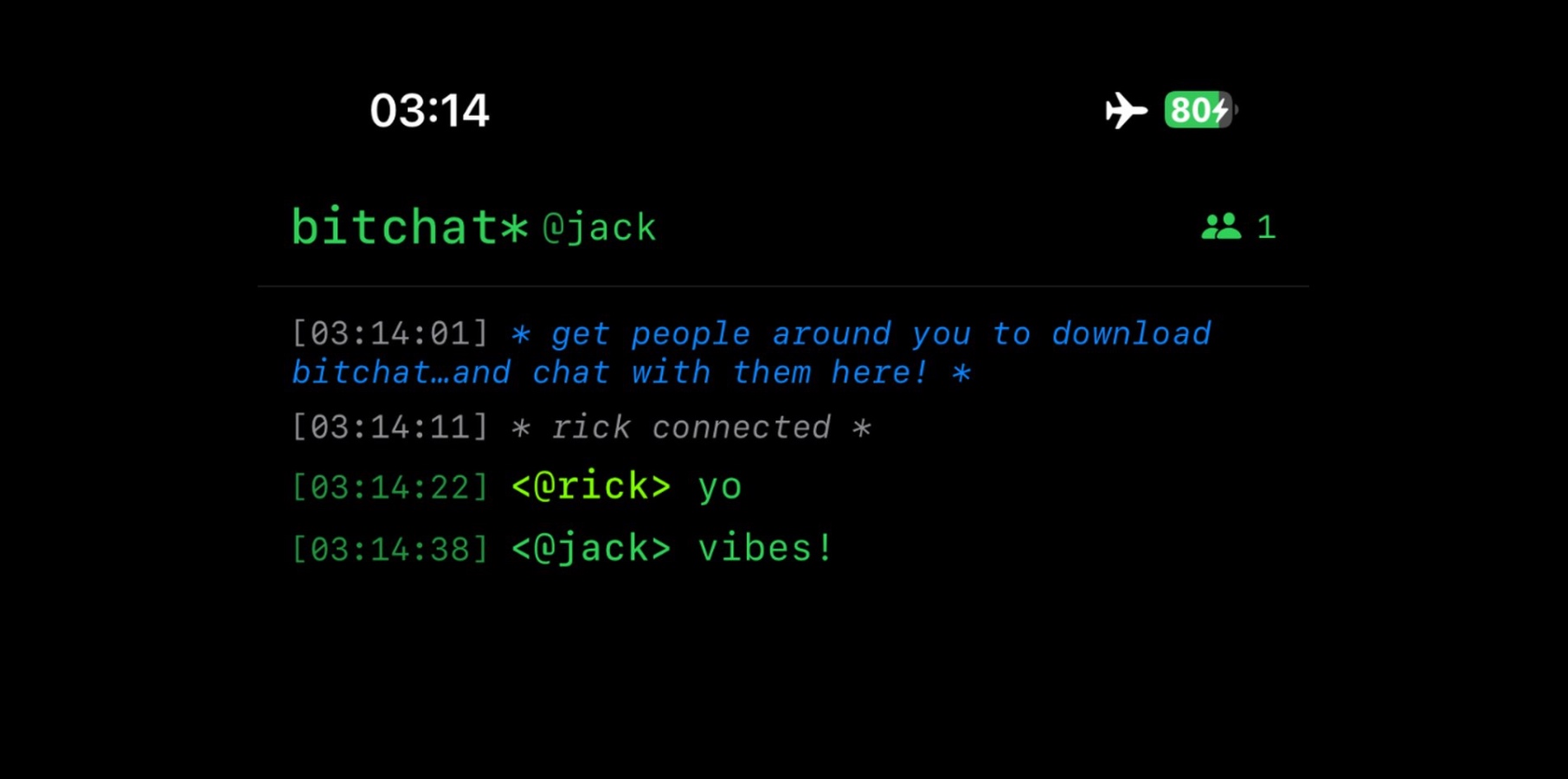
If you’re wondering what Twitter founder Jack Dorsey has been up to after founding Bluesky, he’s actually been working on a project to offer offline communication through Bluetooth patterns. On X this week, he announced Bitchat, a Bluetooth mesh chat app.

With a TestFlight beta currently underway, he said the app is in review to be published in the App Store. What makes this app unique is giving users the ability to securely converse using Bluetooth connectivity, which means you don’t need to worry about having a cell signal. As long as you’re around 300 meters from someone, you can communicate.

These are the main features of Bitchat in its current state:

  • Offline Communication: Works without internet thank to Bluetooth mesh networking
  • E2E Encryption: All messages are encrypted with Curve25519 + AES-GCM
  • Extended Range: Message peers reaching 300m+ of distance
  • Favorites System: You can store-and-forward messages for favorites indefinitely
  • Mentions: Use @nickname to notify specific users
  • Rooms: It’s possible to create #rooms for topic-based conversations
  • Password Rooms: Secure rooms with passwords and AES encryption.

Dorsey also revealed the app’s privacy features. Notably, Bitchat doesn’t collect data — it creates a new ID each session, and you can triple tap the Bitchat logo to instantly clear all data.

Tech. Entertainment. Science. Your inbox.

Sign up for the most interesting tech & entertainment news out there.

While this doesn’t appear to be the reason that Dorsey created the app, I genuinely believe that this will be best way to chat with friends and family members on a plane or other places where you don’t have a good cellular connection.

After all, sometimes you just want to share something quickly without texting, and none of the current messaging apps can accomplish that for me. As a result, iMessage, WhatsApp, Telegram, Signal, and other standard chat apps aren’t always the best bet.

Source

Posted on

The world’s first AI operating system wants to automate your

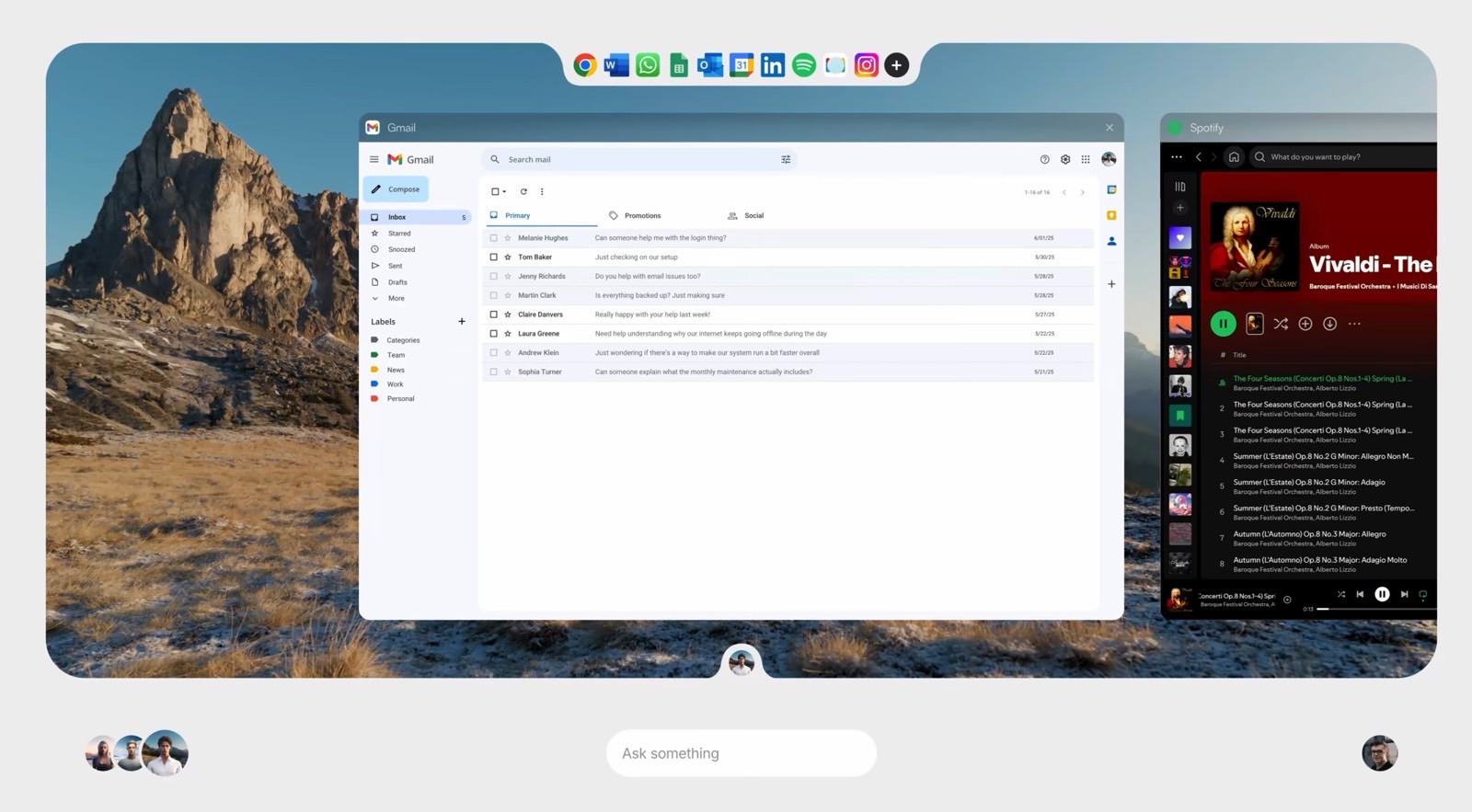
AI operating systems are inevitable. That much has been clear to me since ChatGPT went viral in late 2022. That was the moment when an AI tool arrived that we could talk to using conversational language via text. The future was easy to predict from there.

You’d talk to the AI via voice and give it more complex tasks to solve. The AI would control apps for you and connect to personal data sources. After that, the AI would act as a personal assistant on devices where you won’t always have to look at the screen.

Put differently, we’d reach an age of AI products like the ones we see in movies. Star Trek is the best example. But the movie Her is probably the personal AI OS experience where we’re going to get soon enough… hopefully without falling in love with an AI.

Some of the things I mentioned above have already happened. We can use voice to talk to AI chatbots, and companies like OpenAI and Google have AI agents that can perform tasks on your behalf. You can use AI to control Windows, and Apple’s vision for Apple Intelligence involves having Siri manage some app actions for the user.

Tech. Entertainment. Science. Your inbox.

Sign up for the most interesting tech & entertainment news out there.

These are the building blocks for what comes next. OpenAI is working on hardware that will probably run an early version of AI OS. Google has been transforming Android into an AI-first operating system. Apple will no doubt do the same with iOS and macOS.

But it turns out that the world’s first AI OS isn’t coming from the companies you expected. It’s also not quite the personal AI experience that movies like Her imagined. Instead, it’s called Warmwind, and it comes from German startup Jena.

Warmwind is out in beta, but you can’t really use it right now. There’s a growing waiting list with more than 12,000 people on it.

AI will soon let us manage computers and workflows with natural language. We’ll tell the AI what we need, and it’ll do it for us.

Warmwind isn’t exactly that. It’s not the personal assistant that will know everything about you and assist you throughout the day. It’s not similar to the AI OS in Her, either. But it’s a tool that might transform how you go about handling repetitive computing tasks, especially at work.

What is Warmwind?

Two years into development, Warmwind is designed to be private. The data the AI handles is hosted on German servers, which means they’re protected by the strong GDPR privacy laws in the EU. Warmwind is designed to work in the cloud, not your PC. Instead, it’ll handle tasks in a secure virtual environment that you don’t have to oversee.

The AI will control each instance of the operating system like a human would. It’ll click on UI elements and type text. Warmwind is intended for enterprise customers who want to automate tasks and save time.

What’s brilliant about Warmwind, assuming it works as advertised, is that you can train the AI OS to perform the actions you want it to. Warmwind will observe how you control the virtual computer to perform a task, and then it’ll repeat it.

Jena admits in a blog post that Warmwind OS isn’t quite the computer operating system one would expect, especially in the AI era. Instead, it might look like an AI web app working with browsers and other preinstalled software.

Better said, Warmwind behaves like a human working with a computer, only Warmwind can repeat the same tasks over and over without getting worn out. Here’s how Jena describes it:

Warmwind OS is a cloud-native, AI-driven platform that automates digital workflows – CI/CD pipelines, reporting tasks, issue handling, and more – by behaving like a “digital employee.” It clicks, types, reads, navigates, and executes across software interfaces, without requiring API integrations. All of this happens remotely.

The actual system is a custom Linux distribution (a real OS) that’s optimized for automation workloads. Warmwind uses Wayland and VNC streaming to send the UI to the browser, where you view it. There’s no “web app” per se. If you close the window, the app doesn’t stop. The AI works in the background until you decide to terminate it.

The company also says that calling its AI product Warmwind OS is “intentional.” It’s a metaphor. “When we say, ‘It’s an operating system for AI workers,’ people immediately get a feel for it.”

How much does it cost?

In addition to using a mouse and keyboard to work, Warmwind can interact with a myriad of apps, from web browsers to productivity apps like Microsoft’s Office suite.

Warmwind can monitor social networking, browse the web for data, respond to emails, perform other customer support tasks, compile data into reports, and basically anything else you can automate with AI.

That might be an invaluable resource in a world where we’re trying to be more productive and automate repetitive, boring tasks. Warmwind OS practically lets you set up a digital worker for each separate activity you might need to automate.

That’s why Warmwind is perfect for businesses rather than individuals.

However, it might be a while before you can gain access if you’re not already a beta tester. On that note, it’s unclear how much Warmwind will cost or what premium subscriptions might have to offer. But it’s certainly an AI development you should be keeping tabs on.

You can join the waitlist here. While you wait, check out the Warmwind demos above and below.

Source

Posted on

Apple Support app might get its own AI assistant in

Apple has struggled to find its footing in the world of generative AI so far, but the company isn’t giving up on becoming a true competitor in the industry anytime soon. To that point, signs of an AI-powered “Support Assistant” for the Apple Support app were uncovered in Apple’s code this week by MacRumors contributor Aaron Perris.

Based on his findings, iPhone users will be able to chat with the Support Assistant in the Apple Support app, which is free to download from the App Store. Perris also noted that the app does already include a chat feature. You can contact a live Apple support agent within the app, which starts a conversation through the Messages app.

Presumably, the AI-powered Support Assistant will be different. The expectation is that you’ll be able to chat directly with the chatbot from the app and receive support while the assistant draws on its generative AI training. You still have the option to reach out to a live agent, but you can try to get the information you need from the AI first.

According to the code seen by Perris, the Support Assistant “uses generative models” to provide answers “related to certain Apple products and services.” As with other AI chatbots, Apple warns that the Support Assistant can provide “incorrect, misleading, incomplete, offensive, or harmful outputs,” so it’s probably best not to follow its directions blindly.

Tech. Entertainment. Science. Your inbox.

Sign up for the most interesting tech & entertainment news out there.

Perris found a reference to uploading content in the code, which could imply that users will be able to upload files or images while seeking help from the AI. Apple also states that it is working with partners to provide Support Assistant, so there’s a chance that the new feature is powered by ChatGPT, similar to other recent additions like Writings Tools.

We don’t know when (or if) the feature will see the light of day, but it’s one of many new projects in the works for Apple’s operating systems that has yet to be officially announced. For instance, we just learned about two new Apple Maps features yesterday.

Source

Posted on

US CISA agency extends Iran cyber alert, warns of CNI

The United States Cybersecurity and Infrastructure Security Agency (CISA) has reiterated and extended previous warnings over the activities of Iranian threat actors targeting Western interests, following attacks on the Middle Eastern state’s alleged nuclear weapons programme conducted by Israel and the US.

The US strikes on 22 June prompted a swift alert from the Department of Homeland Security’s (DHS’) National Terrorism Advisory System (NTAS) warning of an uptick in “low-level” attacks from hacktivists and more damaging intrusions from threat actors backed by Tehran.

In an update, CISA said that defence industrial base companies – especially those possessing holdings or relationships with counterparts in Israel – were at especially increased risk.

“At this time, we have not seen indications of a coordinated campaign of malicious cyber activity in the US that can be attributed to Iran,” the agency said in a statement.

“However, CISA urges owners and operators of critical infrastructure organisations and other potentially targeted entities to review this fact sheet to learn more about the Iranian state-backed cyber threat and actionable mitigations to harden cyber defences.”

In the alert, CISA advised that both Iranian and allied hackers are known to exploit opportunistic targets based on their use of unpatched or outdated software, or failure to change default passwords on internet-connected accounts or devices.

For critical national infrastructure (CNI) operators in particular, these threat actors have been observed using system engineering and diagnostic tools to target operational technology (OT) such as engineering devices, performance and security systems, and maintenance and monitoring systems.

CISA’s fact sheet also includes a number of mitigating steps that CNI operators can take at this time, much of it focused on identifying and disconnecting OT and industrial control system (ICS) assets from the internet, keeping such assets up to date, and maintaining appropriate monitoring and control policies – including enforcing password hygiene, role-based access controls, and phishing-resistant multifactor authentication (MFA).

CISA also said that for several months, Iran-aligned hacktivists have been conducting website defacements and leaking sensitive information stolen from victims. The agency warned of the likelihood of more distributed-denial-of-service (DDoS) attacks, and even ransomware attacks run in collaboration with other groups.

Will Robert ‘hack-and-leak’?

CISA’s warnings came as a hacking operation backed by Iran’s Islamic Revolutionary Guard Corps (IRGC) – known as Robert – threatened to release compromising information on the administration of president Donald Trump in retaliation for the airstrikes.

The group, which previously leaked emails in the run up to last year’s presidential election in the US, claimed to have over 100GB of data to “share”. Speaking to the Reuters agency in the past few days, Robert claimed some of these emails were taken from the accounts of Trump adviser Roger Stone, White House chief of staff Susie Wiles, and Stormy Daniels, the adult entertainer at the centre of a hush-money scandal.

Max Lesser, senior analyst on emerging threats at the Foundation for Defense of Democracies’ (FDD’) Center on Cyber and Technology Innovation, said that it was wise to be cautious about the credibility of Robert’s claims.

He explained: “A common technique in state-sponsored data leaks is to sneak lies into troves of largely true information. The authenticity of the majority of the data makes the fabrications appear real. This information, when it comes out, must be verified before [it is] believed.”

Lesser said hack-and-leak ops were a popular tool for such state-linked actors because they enable states that lack a military advantage to be seen to retaliate without crossing a threshold that might lead to a kinetic response from the US.

“Considerable conversation about Iran’s retaliation in cyber space to US military strikes has focused on cyber attacks against companies and critical infrastructure. But cyber-enabled influence operations provide another plausible vector of attack. This was not the first hack-and-leak conducted by Iran against Trump, and likely not the last,” he added.

Lesser also warned that in disabling some of the US government’s capabilities around countering foreign influence operations it had enhanced the ability of groups like Robert to damage national and global security.

“The Trump administration…should consider revitalising counter-malign influence efforts while ensuring these efforts safeguard free speech,” he said.

Source