Posted on

Fine-tuning to deliver business AI value

A few months ago, Microsoft introduced Copilot Tuning, offering its customers a way to use low-code tooling in Microsoft Copilot Studio to take advantage of highly automated fine-tuning “recipes” trained on enterprise data.

While generative artificial intelligence (GenAI) tools tend to be associated with AI models that are trained on vast swathes of public information on internet and social media platforms, businesses need models that understand their internal data and processes, and now the major AI providers have planted the power of GenAI into the mindset of business executives and IT chiefs, this is the current focus of commercial AI.

Such products aim to provide an AI system that is industry sector-specific compared with the highly generalised models that have been trained on freely available internet data. In theory, they should suffer less from hallucinations that afflict the more general AI models and more closely match the way a business works.

Ranveer Chandra, vice-president and group product manager of experiences and devices at Microsoft, posted in a blog: “AI tools powered by out-of-the box LLMs [large language models] and retrieval augmented generation may not always understand your business in terms of specific processes, terminology and style.” He claimed Microsoft’s approach to optimising AI models for business has been to reduce the complexity often associated with fine-tuning projects.

One of the customers in the Microsoft 365 Copilot (M365) Tuning early access programme is accountancy firm Ernst & Young. Marna Ricker, global vice-chair for tax at the firm, said the company was integrating a tax-domain fine-tuned LLM with its enterprise knowledge and the expertise of its tax advisors through M365 to deliver an enhanced tax service to the market. “This synergy improves service quality, and significantly advances tax and legal research with relevant knowledge and intelligence readily available in M365 where people are already working,” she added.

According to a forecast from Gartner, the market for specialised GenAI models will more than double to $2.5bn by 2026. While this is significantly smaller than the $23bn forecast by Gartner for general GenAI models, it shows there is demand in businesses for such technology.

Roberta Cozza, senior director analyst at Gartner, said the major AI providers are fine-tuning their models as this is where enterprises are moving. Enterprise buyers, she said, value working with a trusted technology provider, but they also need GenAI-based tools to respond to something that is specific to their domain. “What we are seeing actually is domain-specific models,” she said.

Cozza noted that many of these actually start from open source models as a base, and are often deployed as small language models (SLM), which offer efficiencies in terms of resourcing costs, but also provide better control since they can be trained on an enterprise’s own data. 

GenAI can deliver value, but the enterprise IT leaders she has spoken to say they want it to be trained with the issues, data and content of the specific industry they operate in. While the likes of Microsoft and the major IT consulting providers are ramping up their AI business offerings to cater for enterprises that are now looking to deliver business value with GenAI, IT leaders should consider alternative approaches. “They need to put their proprietary data in the hands of either a model builder or an IT service provider,” said Cozza.

“Barriers to entry using basic open source models have reduced a lot, so we’ve seen a lot of smaller AI providers helping large customers with their own small model,” she added. “They can distill either a proprietary model like ChatGPT, but many are starting with Meta’s Llama, and in Europe, we are seeing Mistral as a starting point.” 

While 90% of GenAI models are managed by a few major providers, Cozza said Gartner has been fielding inquiries from IT decision-makers who specifically need to deploy European AI technology as a safeguard that buffers the volatile geopolitical environment they need to operate in. They are also considering how to remain compliant under the EU AI Act.

“Those AI applications and technologies that are deemed to be high-risk are the ones that will need to be regulated and comply with the EU AI Act,” she said. “But this covers frontier models that are trained on internet data.”

Cozza said models built on a company’s internal data and SLMs, which are explainable, are less likely to require regulatory scrutiny. “Training an AI and creating something that is more domain-specific actually improves general compliance because you can make it comply with policies or regulations,” she added.

Tools like M365 Copilot Tuning will inevitably help to lower the barrier to entry for IT leaders who have been tasked with providing GenAI capabilities that can add business value, but SLMs offer an alternative approach that can deliver explainability and comply more easily with the EU AI Act.


Source

Posted on

Space comms reaches commercialisation inflection point

Research from the GSMA has found that the satellite-based communications industry is now transitioning from the pilot and validation stage to initial commercial deployments, with 109 telco-satellite partnerships now covering 70% of global mobile subscribers, and commercialisation set to unfold over the next two to three years as services evolve from SMS to voice to data. 

The Satellite and NTN tracker, Q2 2025 from the analysis arm of the global mobile industry trade association, GSMA Intelligence, highlighted the current competition in the market, and in addition to uncovering the increased amount of commercialisation found in the three months to the end of May 2025, key events in the sector included Starlink still dominating the industry – but with competition intensifying; Amazon’s Kuiper constellation entering the space race; and enterprise internet of things (IoT) presenting a large opportunity.

The report noted that the total number of 109 operators with services was an increase of four players compared with the end of February 2025, and that 27 of these were now live, an increase of two compared with the prior quarter and 82 in testing, two more than previously. Out of a total mobile connections footprint of 5.72 billion, the share of the total connections base covered by satellite and non-terrestrial networks (NTNs) was 66%, up two percentage points on February 2025.

Yet out of all the activity in the market, the GSMA noted that Amazon’s launch of its first 27 out of 3,200 planned Kuiper constellation satellites represented the biggest competitive development of the second quarter of 2025.

At 0.8% of target capacity, the analysis regarded the launch as a “small but significant” step for the tech giant. GSMA Intelligence believes Amazon’s strategic objectives will initially lie in the broadband market – either “not spots” or against higher-priced legacy ISPs in rural areas – and in ubiquitous, global coverage for its logistics operations.

Intentions for direct-to-cell (D2C) services were seen as less obvious considering the potential oversupply of capacity and the fact it doesn’t have a clear link to Amazon’s core businesses. The report stressed, though, that Amazon’s D2C ambitions could not be ruled out given the company’s history of entering new business areas.

One of the potentially interesting forthcoming battles will be between Kuiper and market leader Starlink, which was top in the market with 7,000 satellites and 10 telco partnerships. However, the study also observed that AST SpaceMobile has secured 30 planned telco relationships and that China’s national satellite efforts and established players like SES, Viasat and Iridium are preparing 2026 direct-to-cell launches, intensifying competitive pressure.

The report predicted that Starlink was likely to sustain its first-mover advantage, as AST’s service is unlikely to be widely available until 2026 and Lynk’s coverage does not largely overlap with Starlink.

However, GSMA Intelligence stressed this was not a 12-month game. D2C services from MSS providers, notably Viasat, SES and Iridium, are likely to come in 2026, in the S and L bands, and so, said the analyst, commercialisation was likely to play out over a two- to three-year period rather than being won or lost in the near term.

GSMA Intelligence suggested bigger questions concern service evolution (SMS to voice to data) and the viability of being able to offer these to a critical mass, considering the spectrum constraints and natural barriers due to the laws of physics.

In its previous report for Q1 2025, GSMA Intelligence noted that the IoT was of great interest given that the latest standards (Release 19) in the sector now incorporate new functionality for NTN services geared at IoT applications such as sensors, telematics and energy monitoring.

The survey found that 2.5-3.0B IoT devices were now addressable by satellite across logistics, agriculture and utilities. The survey data showed the big opportunity for the sector, with 20% of businesses facing daily critical operations delays from connectivity gaps, with a further 30% reporting weekly issues. Equipment maintenance, supply chain efficiencies and asset tracking are the top three categories of operations where satellite is seen as playing a supporting role.

GSMA Intelligence said the study highlighted that there was a window of opportunity to service this demand, and emphasised the need for versatility in satellite connectivity for transient assets.

Source

Posted on

Which AI protects your privacy the best: ChatGPT, Gemini, or

I’ve been telling you to pay attention to what personal data you share with your AI chatbot of choice and make sure that data can’t be used to train future versions of that AI platform since ChatGPT went viral nearly three years ago. I keep reminding you how important it is to protect your personal data as best you can every time we talk about a new AI service or functionality.

The best recent examples are Doppl and Meta AI. The former is a new Google app that lets you try on clothes virtually before you buy, and it comes with surprisingly strong privacy protections. As for Meta AI, the company is trying to convince you to upload your camera roll photos to its servers so Meta AI can have a look at them. I already told you to avoid opting in at all costs.

I’m not the only person worried about user data security and privacy. Researchers from Incogni tried to determine which of the AI platforms available commercially protect user privacy the best.

The AI study looked at what happens to user data from prompts, how your data is shared with third parties, and whether the privacy policies the various companies use are transparent enough and easy to understand.

Tech. Entertainment. Science. Your inbox.

Sign up for the most interesting tech & entertainment news out there.

The results aren’t that surprising. Meta AI scored the worst overall, with Copilot, Deepseek, and Gemini ahead of it. French AI platform Le Chat (Mistral) came out on top, narrowly beating ChatGPT and Grok. Claude and Pi came in fourth and fifth.

The following graphic shows Incogni’s privacy rankings for these AI models based on a study conducted in late May.

AI study: Overall privacy rankings. Image source: Incogni

The researchers found that Le Chat is the least privacy-invasive platform of the nine AI products above. ChatGPT and Grok followed. “These platforms ranked highest when it comes to how transparent they are about how they use and collect data, and how easy it is to opt out of having personal data used to train underlying models,” the researchers wrote.

At the other end of the rankings are AI platforms from big tech companies. They’re the most privacy-invasive. Meta AI is “the worst,” followed by Gemini, Copilot, and DeepSeek. Interestingly, the researchers say “DeepSeek was also indicated as one of the most privacy-invasive.”

Training the AI with your data

The study also shows that Gemini, DeepSeek, Pi AI, and Meta AI don’t allow users to opt out of having prompts used to train the models.

AI study: Training the AI with user data. Image source: Incogni

ChatGPT is the most transparent when it comes to informing users whether their prompts will be used for model training. ChatGPT also has a clear privacy policy. That’s good news to me, considering I’ve been a longtime ChatGPT user. I opted out of model training as soon as the privacy feature was available, and I advise any ChatGPT user to do the same.

The researchers also found that Copilot, Mistral AI, and Grok let users opt out of data training.

The AI study also notes that once your data is in a dataset, it’s unlikely it can be removed.

AI data shared with others

The AI study also looks at the data AI platforms share with others, finding that AI firms might provide data to various third parties. The list includes service providers, legal and governmental bodies, other businesses, and other parties.

AI study: Ranking based on data collection and sharing. Image source: Incogni

Some AI firms share data with multiple parties. Meta AI stands out again, but so does Microsoft’s Copilot.

How easy it is to understand AI legal lingo

The researchers judged the nine AI models in these graphs by transparency criteria. That is, how easy it is to understand by an average user what happens with their prompt data, how easy it is to find information about an AI platform, and how easy it is to read privacy policies.

OpenAI’s ChatGPT is the most transparent AI platform, with Gemini and Inflection taking the last spots in this ranking.

When it comes to finding privacy policies and reading them, some AI platforms are much better than others. Companies like Claude and OpenAI might offer users FAQ articles and other support documents.

Larger entities like Google, Microsoft, and Meta might have broader privacy policies that apply to all their products, not just AI tools. Reading and understanding these privacy policies might be more difficult and cumbersome for most readers.

What other data do AI platforms collect?

It’s not just prompt data that AI firms might collect. The Incogni researchers also looked at what type of information AI firms might want, finding that Pi AI and ChatGPT are the best. That is, they seek little information beyond chats. Gemini, Copilot, and Meta AI are at the bottom of the list.

When looking at the kind of information AI platforms collect, the study reveals a few interesting details from the mobile apps belonging to these platforms.

AI study: What data AI platforms collect from iPhone and Android. Image source: Incogni

For example, Gemini and Meta AI collect precise locations and addresses. Gemini, Pi, and DeepSeek also want phone numbers. Meta AI collects usernames, email addresses, and phone numbers.

Grok wants to access photos the user shares and app interactions on Android. Claude collects app interactions with third parties on Android, as well as email addresses and phone numbers.

You should read the full study at this link, where you’ll find more graphs like the ones above. Once you’ve gone over it, you might want to check your privacy settings for the AI apps you use, especially the iPhone and Android versions.

Source

Posted on

Rumored iPhone chip-powered MacBook may force Apple to make a

During the weekend, analyst Ming-Chi Kuo revealed Apple was working on a new MacBook model, most likely a replacement for the controversial 12-inch option released so many years ago. Following that report, MacRumors discovered internal references to this Mac, as Apple does appear to be working on a computer powered by the A18 Pro chip.

Putting these two stories together, it’s easy to believe Apple is serious about unveiling this new MacBook as early as next year. With mass production expected in the last quarter of 2025, the computer could debut at a March event alongside a new iPhone 17e and other lighter Apple products. 

But there’s one issue with this affordable MacBook, the same one that plagued the last 12-inch model: suddenly, all entry-level options start to look very similar.

Comparing entry-level MacBook models

Apple currently offers two laptops with the M4 chip: an Air and a Pro version. What separates them is more ports, a better display, and a fan for heat dissipation. But if Apple releases a MacBook with an iPhone chip, what would really set it apart from a MacBook Air? A single USB-C port and a less powerful chip?

Tech. Entertainment. Science. Your inbox.

Sign up for the most interesting tech & entertainment news out there.

Wouldn’t that make the Air redundant, or even worse? It might still be called Air, but if it’s not lighter or thinner than the new model, especially considering the previous 12-inch version, what’s the point? Just like the iPad Pro is thinner, lighter, and more capable, why would someone choose an Air?

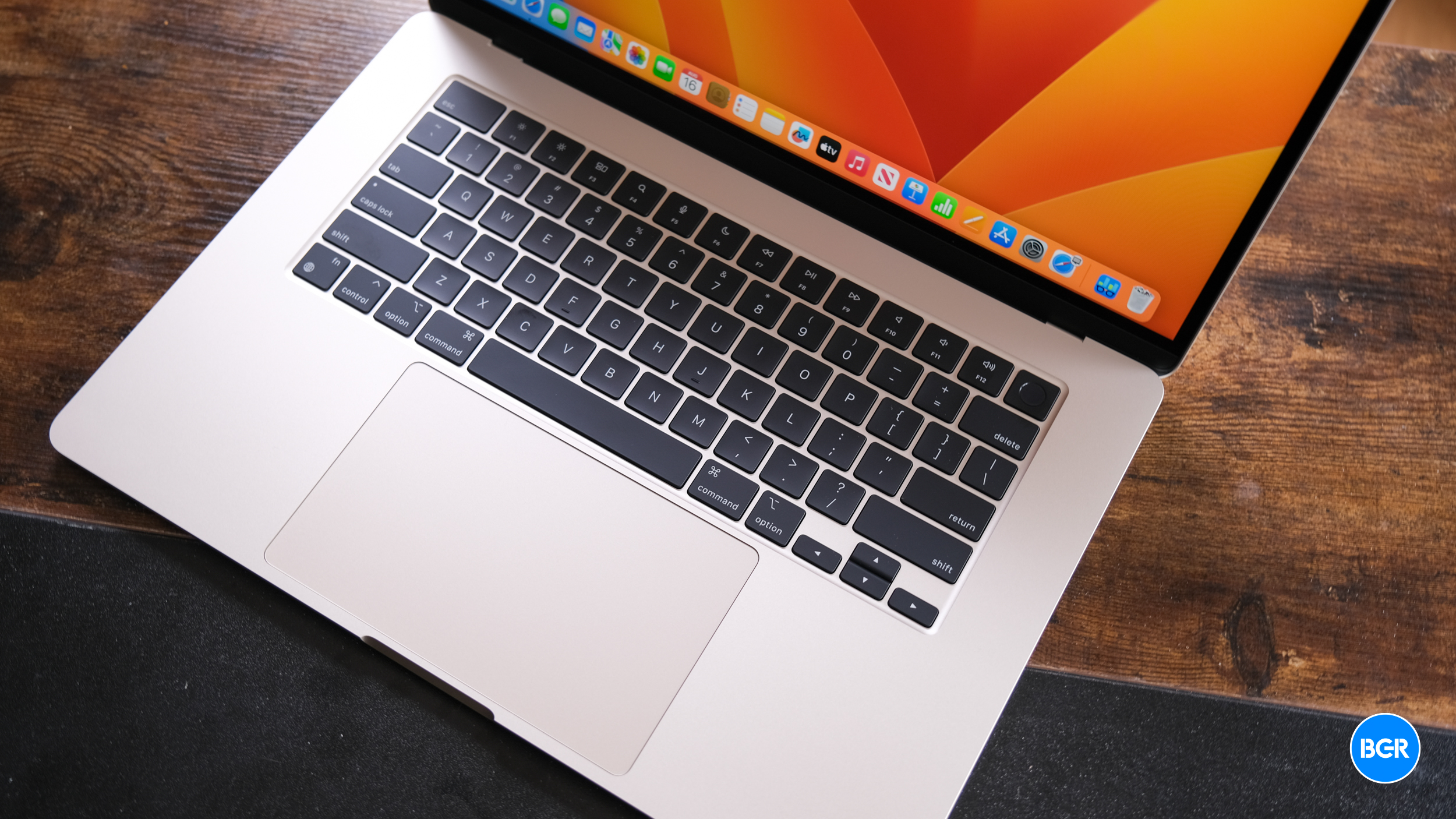
Image source: Christian de Looper for BGR

In the MacBook’s case, users would be getting a better deal on a thinner and lighter computer, which is exactly what most people want. Unless Apple somehow makes the A18 Pro run like an old Intel Celeron, light users probably won’t notice any difference between an M4 machine and one with the A18 Pro.

That said, now that Apple has finally positioned the MacBook Air well, is it really about to launch an even cheaper computer that’s thinner, lighter, and capable enough for most of the Air’s target users?

The solution: One MacBook needs to go

When Apple offers too many similar products, the best move is to drop one. If users can’t clearly see why they should pay more, they’ll just buy the cheapest one, and Apple likely doesn’t want that.

If Cupertino keeps the lineup as it is, this new model might end up with underwhelming specs: 8GB of RAM, 128GB SSD, a basic FaceTime camera, and a single USB-C port. Then, to get a better experience, users would end up paying nearly the same as a MacBook Air. At that point, the Air becomes the smarter choice. So what’s the point?

Sure, I’m stressing out over a product that hasn’t even been announced, but it feels like Apple might be repeating a mistake from the past. The company shouldn’t flood the market with lookalike products. It should help customers understand the value of each one.

If it’s hard for me to explain Apple’s lineup to friends and readers, imagine how confusing it is for someone who just wants a new laptop.

Source

Posted on

An AI-generated rock band topped 500,000 listeners on Spotify

Generative AI software isn’t just for creating text, photos, and videos. AI can also make audio, which requires synthesizing speech, background audio, and music for AI video services like Veo 3, or creating music that sounds like something you’d stream on Spotify or Apple Music. Fuzz AI is an example of the latter, a music streaming experience with AI at the center.

While I don’t mind artists embracing AI tools, whether via video or song, I want to be forewarned that a creation has been altered or created with AI. I can then decide to experience it knowing that I might run into AI-generated content or AI slop.

Not all people using AI will be quick to admit they’re doing so with their art, though. The latest example is an AI band called The Velvet Sundown, which doesn’t exist in real life. Whoever generated them managed to reach 500,000 listeners on Spotify in just a few weeks.

According to Ars Technica, some Spotify users posted messages on social media about a week ago, warning that The Velvet Sundown might be an AI band.

Tech. Entertainment. Science. Your inbox.

Sign up for the most interesting tech & entertainment news out there.

These posts went up on social media a couple of weeks after The Velvet Sundown joined the streaming service. During that time, the fake band topped 300,000 monthly listeners on Spotify. At the time of this writing, the AI band has over 550,000 monthly listeners.

It’s not like people are actively looking for the band. More likely, Spotify’s algorithms surface songs from The Velvet Sundown’s two albums. That’s how they reach thousands of people who might listen to the songs without realizing or caring that it’s AI-generated content.

Spotify doesn’t label the band as AI. The artist page for The Velvet Sundown has a “Verified Artist” checkmark. The band is also present on Deezer, which has a tougher stance on AI. The band’s bio on Deezer does say: “Some tracks on this album may have been created using artificial intelligence.”

Here’s what the band’s description read on Spotify, at least until a few days ago:

The Velvet Sundown don’t just play music they conjure worlds. Somewhere between the ghost of Laurel Canyon and the echo of a Berlin warehouse, this four-piece band bends time, fusing 1970s psychedelic textures with cinematic alt-pop and dreamy analog soul. Their sound is all velvet reverb, swirling organs, tremolo-soaked guitar lines, and voices that sound like they’ve been unearthed from forgotten reels of tape.

The AI band has two albums out on Spotify and plans to release a third soon. That might be a dead giveaway that we’re not looking at a real band.

It so happens that John Oliver tackled AI slop on a recent Last Week Tonight episode, which included an AI band called The Devil Inside that made no fewer than 10 albums in the past two years.

Ars points out that the two fake bands have many songs that reference dust and wind, suggesting they might share a common AI model. There’s no established connection between the two AI bands, though.

While there’s no official confirmation that The Velvet Sundown is an AI band, there is more evidence that there aren’t any human members. The band created an Instagram profile a few days ago as people were questioning its existence on social media. The Instagram account features photos showing the band’s members that appear to be created using AI.

One image has four people sitting at a table, celebrating the success of their first two albums on Spotify. The “photo” looks good, but features telltale signs of AI. Just look at the number of burgers and plates, the strange position of the glasses, and that unmistakable AI look of humans. Look at the symmetrical faces and the image’s overall smoothness.

You can use AI to make lifelike images, like the new Higgsfield Soul tool, assuming you’re aware of it or have access to it. But one wouldn’t be able to hide an AI band for long.

Again, there’s nothing wrong with AI music on streaming services like Spotify. After all, The Beatles used AI to launch a hit song. But listeners should at least be warned that they’re about to hear AI-made songs. Some people might listen to it regardless of labels or warnings, while others might skip it.

What’s certain is that AI bands like The Velvet Sundown are taking the place of real artists in Spotify playlists, depriving them of revenue. John Oliver’s full segment on AI slop and why it’s dangerous follows below:

Source

Posted on

VodafoneThree and Currys ink exclusive multiyear partnership

With plans to challenge the UK’s mobile arena and expand its activities in the country’s broadband market, newly merged VodafoneThree has announced an exclusive multiyear partnership and distribution deal with business and home technology retailer Currys.

Founded by Henry Curry in 1884 as a bicycle-building business, before the company diversified into selling toys, radios and gramophones, the leading omnichannel retailer of technology products and services operates online and through 727 stores in six countries. In October 2021, the company’s legacy UK businesses – including Carphone Warehouse, Team Knowhow, Currys PC World and Dixons Carphone – were consolidated into one UK brand, Currys.

Backed by an £11bn infrastructure investment – one of the key guarantees by Vodafone and Three UK to gain closure of the deal from UK regulatory authorities – designed to connect all four nations and every community, VodafoneThree is now the biggest mobile network operator in the UK, with 27 million customers. In addition, it claims to be the only UK operator with a quarter-by-quarter, year-by-year, guaranteed plan to reach 99.95% 5G standalone (5G SA) population coverage by 2034.

Explaining why it is emphasising 5G SA, the company said only such networks will have the capacity and speed to manage the vast amounts of data that applications such as artificial intelligence (AI) will require, meaning that the target is to build the first nationwide AI-ready network.

For its part, Currys regards AI as a key market driver for the next 12 months as use cases become clear to customers, and expects more of the products that it sells to incorporate AI-enabled technology. The company made particular note of the Samsung S24 mobile phone, which features AI technology, and the fact that it was the first retailer globally to launch Microsoft Copilot+PC.

Building on what the firms called “many successful years” of collaboration, VodafoneThree will now be the exclusive mobile network operator (MNO) for Currys. Notably, the agreement will extend the reach of home broadband services to include mobile broadband fixed wireless access (FWA).

VodafoneThree claims to have the largest full-fibre footprint in the UK, with 22.5 million premises passed with fibre or fibre-like speeds. This comprises Vodafone’s 20 million full-fibre footprint plus Three’s 2.5 million mobile broadband customers. VodafoneThree broadband services operate under the Vodafone brand.

Commenting on the partnership, Currys chief commercial officer Ed Connolly said: “Signing this multiyear agreement with VodafoneThree demonstrates the strength of our long-term partnership. We’re confident in our shared commitment to providing customers with quality, flexibility and value across mobile, home broadband and mobile broadband. This agreement will allow customers to continue using the improved coverage, speed and reliability of the VodafoneThree network in the UK. Our mobile offering is growing, it’s working for our customers, and it’s working for us too.”  

VodafoneThree consumer operations director Jon Shaw added: “I am delighted that we can announce a new exclusive partnership with Currys just weeks after the creation of VodafoneThree. This new wider wider-ranging partnership will allow Currys and VodafoneThree to explore greater opportunities in home and mobile broadband, for consumers and businesses across the UK. It’s an exciting time as we build the UK’s best network, with millions of customers already starting to benefit from unrivalled access to roam across each other’s networks at no extra cost.”

Source

Posted on

Glastonbury hits higher note for mobile performance

While this year’s Glastonbury festival may have hit the headlines for the wrong reasons, detracting from a stellar line-up of global musical acts, some of whom put in what could be career-defining sets, data from mobile analyst Ookla has revealed just how much the UK’s mobile operators have improved their services to fans attending the landmark music event.

The festival began in 1970 and has been based at the same location of Worthy Farm in Somerset in the south-west of England ever since. In 2025, it attracted a crowd of more than 200,000 taking in more than 3,000 performances spread across 100 stages, with headline acts including Rod Stewart, Neil Young, Charlie XcX, The 1975, Olivia Rodrigo and Wolf Alice.

The fans – virtually all with mobile phones – effectively turned the 900-acre site into England’s seventh largest city for the weekend and required the UK’s three leading operators, following the merger of Vodafone and Three, to build a temporary metropolitan-scale network from scratch in under three weeks.

According to Ookla, network performance at the event is crucial given that, like other festivals, it skews to the young, digitally driven, with high disposable income – exactly the demographic operators fight hardest for. As a result, said the analyst firm, it has become a “strategic trifecta” for operators, acting as an engineering showcase, a customer experience litmus test and a flagship moment in a summer-long calendar of music-led brand activations.

The official connectivity partner for 2025 was Vodafone, which gained exclusivity on-site and within the official app, prime logo placement on stage screens and TV broadcasts, and control over experiential zones such as its “Connect & Charge” tent. To that end, said Ookla, every selfie or livestream shared over the partner’s network effectively served as implicit advertising.

Similarly, Glastonbury has also turned it into an important product and technology sandbox that has seen innovations such as geofenced, time-limited eSIM trials and dedicated, custom 5G standalone (SA) network slices for payment terminals. Ookla noted that the crowds create ideal conditions for testing nascent technologies whose value can be hard to demonstrate elsewhere.

The bottom line was that connecting the crowds at rural Worthy Farm – set in open countryside with little permanent fibre or power presence – represents an immense technical challenge. Before the event, Vodafone anticipated record demand, projecting 270TB (terabytes) of traffic on its network during this year’s festival, which is more than it typically carries in several mid-sized UK towns combined over a day.

Assessing individual UK operators’ performances, Ookla found that Three UK saw a significant lead in network performance across key metrics during Glastonbury 2025, thanks mainly to its spectrum advantage. Median mobile download speeds of 347.66Mbps were at least twice as fast as those on any other operator, and the network also topped quality of experience (QoE) measures reflecting the typical performance for web browsing, video calling and gaming throughout the event.

Ookla noted that Three’s structural advantage, particularly its larger contiguous mid-band allocation – roughly twice the width of its rivals – and leaner subscriber base, with fewer users per antenna sector, was likely central to its performance lead.

Overall, the analyst showed festival-goers were least likely to experience poor performance on EE’s network throughout the Worthy Farm site. The data revealed that at the 10th percentile – capturing the slowest 10% of outcomes when signal was weakest or congestion highest – EE still recorded the fastest download and upload speeds of any operator. This translated into mobile users seeing fewer instances of buffering, and even during peak crowd surges, they were more likely to be able to keep streaming and uploading on EE’s network.

Ookla suggested the results reflected the performance benefits conferred by what it called the operator’s unique spectrum diversity, which has enabled it to leverage a broad carrier aggregation mix by combining multiple low- and mid-band carriers.

Even though the network analysis showed Vodafone and O2 lagged on key metrics, both companies were found to have delivered clear improvements in network performance compared with previous festivals.

Ookla attributed O2’s position to its combination of the largest subscriber base, meaning more users per antenna sector, and the smallest deployable spectrum portfolio, particularly for mid-band 4G. Vodafone fared better on most metrics, but recorded the weakest download speed outcomes at the 10th percentile, suggesting more acute congestion issues on its network. However, both operators saw median download speeds rise by at least 25% year on year, indicating that network investments are paying off.

Source

Posted on

Threads now has DMs

Days before the second anniversary of Meta launching Threads, the social media platform has finally added DMs. On Tuesday, Meta took to its blog to announce that the long-awaited feature is available in the Threads app. Starting today, Threads users can send direct messages to one another, matching similar features on X and Bluesky.

Threads finally adds DMs

“Threads was created for sharing perspectives that generate vibrant, public conversations, but sometimes you want to take a conversation further, one-on-one,” said Meta’s team. “Messaging has been one of the top requested features, and now, you can easily continue conversations in the app and deepen relationships with others.”

Privacy and security are always primary concerns when it comes to digital communication. To protect its users, Threads only allows DMs between Threads followers or mutual followers from Instagram who are 18 and older. Meta also notes that the messaging is protected by its privacy standards, account protections, and safety infrastructure.

In the future, Threads plans to add in features such as message controls to allow you to decide who can send you messages, group messaging with multiple users, and inbox filters to make it easier to find a specific message from another user.

Tech. Entertainment. Science. Your inbox.

Sign up for the most interesting tech & entertainment news out there.

How to send DMs on Threads

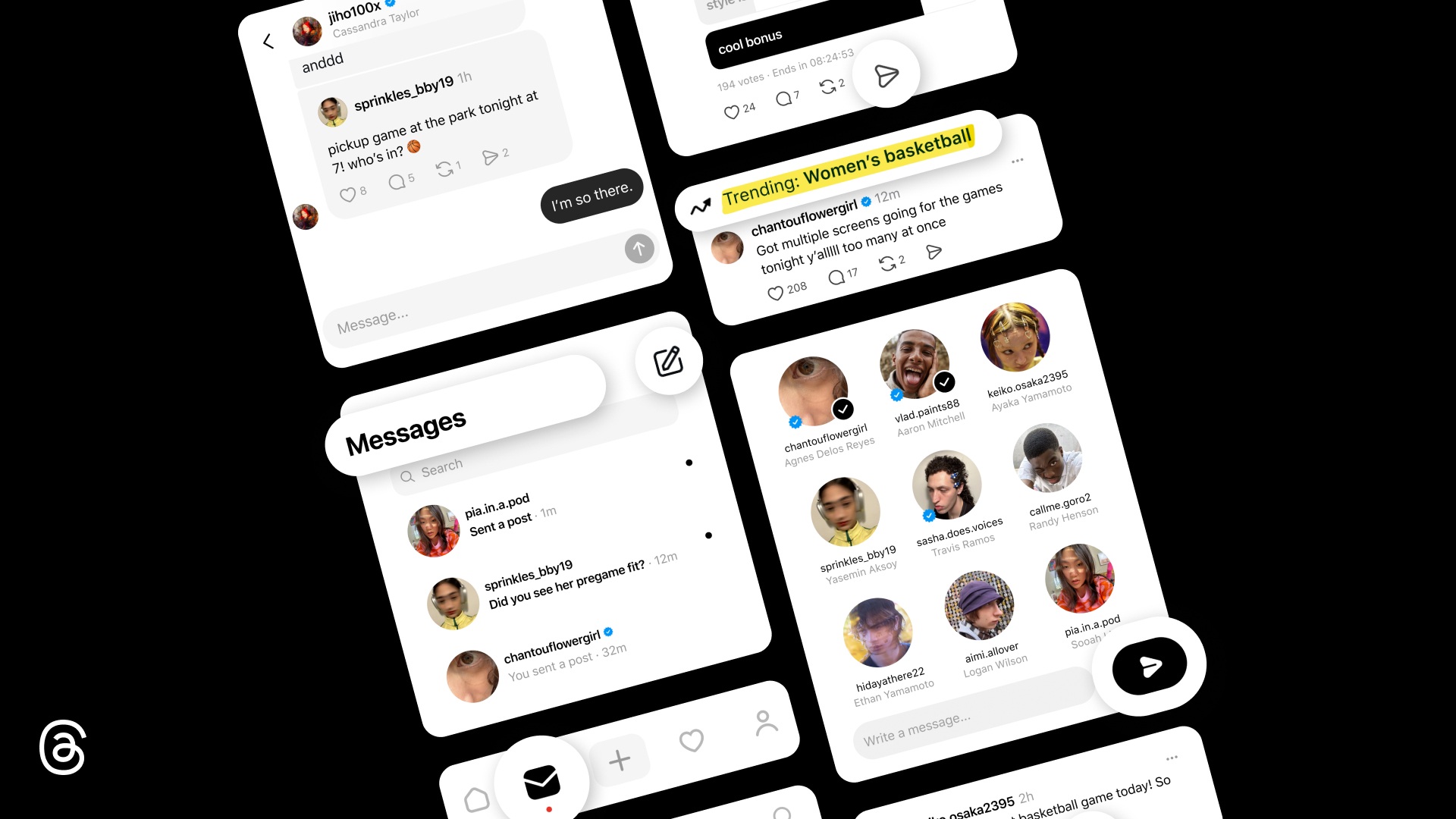
The new menu for DMs on Threads. Image source: Meta

When you next open the Threads app on iOS or Android, you’ll spot a new envelope icon in the toolbar at the bottom of the screen. That is where your DMs will live from now on, and you’ll see a red dot below the icon if you have any unread messages.

In order to send a DM on Threads, just follow these steps:

  1. Tap on the envelope icon in the toolbar at the bottom of the Threads app.
  2. Tap the pencil icon in the top-right corner to start drafting your message.
  3. Type in the username of the recipient, write your message, and hit the send button.

Easy peasy! This has long been the most glaring missing feature on Threads, and yet the Meta app has remained the most popular rival to X (formerly Twitter). It is a barebones version of the feature for now, but more functionality is in the works.

Source

Posted on

Is Pixelmator Pro Apple’s true follow-up to the defunct Aperture

A decade ago, Apple officially ended support for its professional photo editing app Aperture. While people familiar with the matter told BGR several times that Apple continued to work on a new version of Aperture, like it did with Final Cut Pro and Logic Pro for iPad, it seems these plans eventually turned into the 2024 Pixelmator acquisition.

Interestingly enough, BGR expected Apple to eventually phase out Pixelmator apps and move its features over to the Photos app before one day launching its reimagined Aperture app. However, with Pixelmator Pro receiving a substantial 3.7 update this week, it looks like Apple sees Pixelmator as the modern answer to the defunct Aperture app.

Currently, users can download Pixelmator Pro on the Mac. For iPhone and iPad, users can still download Photomator, a touch-enabled tool for editing photos on the go.

With version 3.7, Pixelmator added support for these Apple Intelligence features:

Tech. Entertainment. Science. Your inbox.

Sign up for the most interesting tech & entertainment news out there.

  • Image Playground: Create fun, original images based on a photo, description, or people from the Photos library.
  • Writing Tools: Proofread, summarize, rewrite, or modify the tone of any text in your designs
  • Other Improvements: Open and edit RAW images from OM SYSTEM OM-1 Mark II cameras, improved VoiceOver, and hover over items in the Tools sidebar.

While Apple hasn’t been clear on whether it will keep Pixelmator apps running and updated far into the future, the company still sells them across its different app stores.

A different approach from Dark Sky

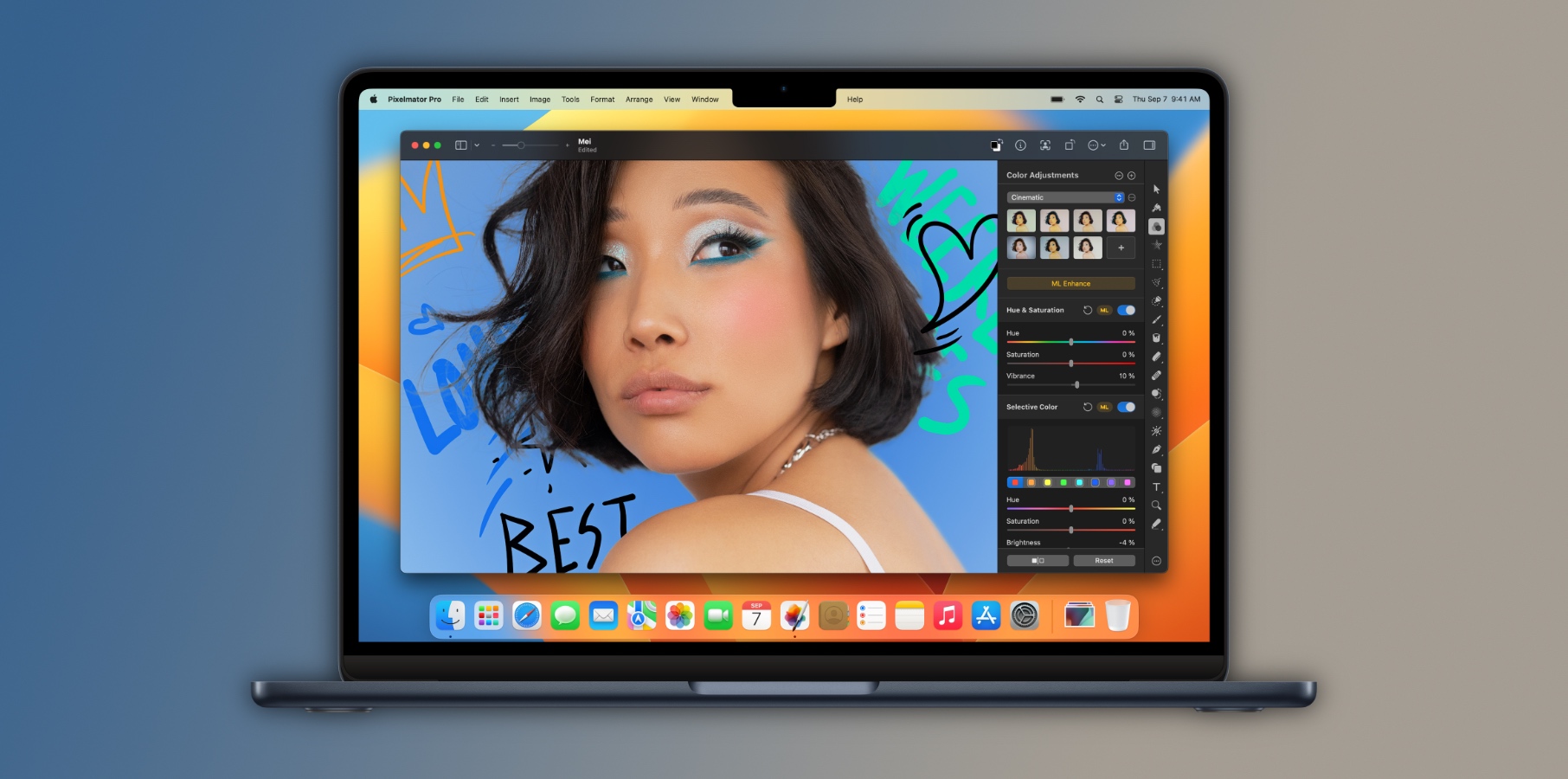
Image source: José Adorno for BGR

So far, Apple’s approach to Pixelmator is slightly different from the one it took with the popular weather app Dark Sky. When it acquired the software in 2020, it took the company three years to discontinue the app and then offer most of its features in the Weather app after the major iOS 17 and iOS 18 updates.

Over these three years, the company only offered small tweaks, such as accessibility and Apple Watch features. With Pixelmator Pro, Apple continued to fix bugs, but with added Apple Intelligence support, it might mean the company is actually considering keeping the Pixelmator brand around.

However, if Pixelmator is part of Apple’s future, the company needs to be more vocal about it. So far, the software editing tool is only known by hardcore Apple users. To make the app mainstream, Apple needs to promote it in keynotes, press releases, or ads.

BGR’s take

While a revamped Aperture app could be enticing for users, especially with Pixelmator’s incredible machine learning tools, it would also mean some features would be lost for good, as Apple wouldn’t make a 1:1 copy of the app.

For those like me who ditched Adobe’s subscription for a lifetime license of Pixelmator software, I would be disappointed if I had to buy the app again or switch to a subscription of a service that already does everything I need at the moment.

Still, only time will tell what Apple will do with Pixelmator Pro and Photomator. So far, it seems that the two apps will continue to exist on their own.

Source

Posted on

Orange France, Samsung establish vRAN, Open RAN first pilot

After “rigorous” lab and field tests, Samsung and Orange France have completed a pilot test marking the first 4G and 5G calls on Orange France’s virtualised radio access network (vRAN) and Open RAN network around the Lyons region in southwestern France.

The collaboration follows the two firms achieving the industry’s “first 2G vRAN call in a shared Open RAN network” in Romania in 2024.

Orange and Samsung said the latest pilot represents a significant step forward in their existing strategic partnership, with their shared commitment accelerating the shift toward a more open, software-based architecture that is optimised for current fast-evolving networks.

They believe that through Samsung’s flexible vRAN and Open RAN, operators can advance wide-scale network sharing adoption in Europe to reduce hardware costs, power consumption and the need for duplicate sites.

Before the field testing, the companies conducted tests in the Orange labs in Lyons, demonstrating technical and operational readiness. For the field project, Samsung provided its vRAN solutions with multi-generational support, O-RAN compliant triple-band radios for low- and mid- bands (700MHz, 800MHz, 900MHz, 1.8GHz, 2.1GHz and 2.6GHz), and 3.5GHz 32T32R Massive MIMO radios.

Its offerings included Samsung CognitiV Network Operations Suite (NOS), a set of AI applications and software solutions, including an AI-powered service management orchestration (SMO). This simplified network automation and enabled zero-touch provisioning (ZTP), helping Orange France to rapidly adopt new technologies and emerging services in the network, according to the companies. 

Samsung’s vRAN features intelligent automation, AI integration and energy-saving functionalities designed to allow operators to further enhance their network capabilities, increase energy efficiency and open opportunities to modernise their network infrastructure across multiple regions. 

Building on its vRAN and Open RAN ecosystem, Samsung is also collaborating with industry-leading partners – Dell Technologies (servers), Intel (processors) and Wind River (cloud platform) – for this pilot project.

Throughout the field tests, the observed performance was said to have showed strong potential for high-quality and reliable network delivery in future live deployments. The companies now plan expansion to additional sites in southwest and western parts of France by the end of 2025.  

By using Samsung’s vRAN solutions, Orange France said that it has enhanced its network capabilities benefiting from the increased flexibility and innovation offered by vRAN and Open RAN. Introducing systems into its network is also a part of Orange’s strategy to diversify its supplier ecosystem, paving the way to fostering a richer and healthier ecosystem. 

“This first call on a virtualised RAN in France, based on Samsung technology, paves the way for our future cloud RAN deployment,” said Emmanuel Lugagne Delpon, CTO of networks at Orange France. “This important milestone is the result of an efficient cooperation between Samsung and Orange teams, and the promise to get new achievements through this partnership.”

June Moon, executive vice-president, head of R&D, networks business at Samsung Electronics, added: “We are proud to take part in Orange France’s journey toward next-generation networks. Samsung’s globally proven vRAN and Open RAN solutions will not only provide high-quality and reliable connectivity, but will also offer the optimal ground for bringing transformative technologies like AI to the network in France.”

Source