Posted on

Nutanix opens up to all external storage

At its .Next event in Washington DC this week, Nutanix announced its nodes would be able to use Pure Storage FlashArray arrays as external storage, with general availability later this year.

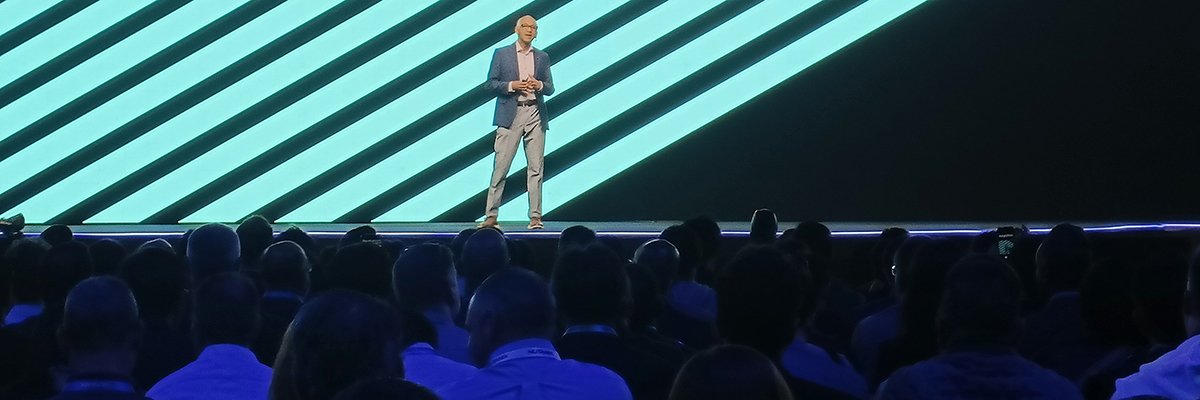
That follows a move last year in which it did something similar, but with Dell PowerFlex software-defined scale-out storage. We caught up with Nutanix CEO Rajiv Ramaswami (pictured above) to talk about that announcement and the implications for Nutanix.

To allow external storage, with Nutanix acting as mere compute – or not quite, as Ramaswami says here – breaks the bounds of the hyper-converged infrastructure (HCI) that Nutanix helped pioneer.

HCI saw compute and storage bundled together in nodes that could connect in grid-like fashion to form clusters, often with server and storage components scalable independently. This was a particularly attractive proposition to customers that lacked deep skillsets as they were relatively easily deployable and scalable.

So the idea that Nutanix should allow the use of external storage from third parties somewhat goes against the original principle it pioneered.

But it also opens up a market for Nutanix, which can offer hypervisor capabilities to customers currently seeking to escape VMware following changes that have resulted from its acquisition by Broadcom.

Here, Ramaswami talks to Computer Weekly storage editor Antony Adshead about the implications for the concept of hyper-convergence, plans to extend connectivity to any external storage, and questions of Nutanix’s scalability.

I’m particularly interested in the linkup with Pure Storage and Dell. So, what I gather is that in those situations where you use those as external storage, Nutanix becomes compute-only. So why, in that case, would people buy Nutanix at all when they could buy any compute?

First of all, I will just say it’s a little bit more than just compute-only. It’s compute plus networking, micro-segmentation and operations capability. So, the rest of the stack minus storage.

We didn’t do this in the past because most people have stayed on the VMware hypervisor, but now there is a lot of interest from customers that want an alternative to VMware. And if you think about what’s available out there, I think AHV [Nutanix’s Acropolis hypervisor] has emerged as one of the best options, and is why the storage providers are now interested in working with us.

And that’s why you heard from early access customers for the Dell option with PowerFlex. You saw Moody’s on stage yesterday. They’re interested in it, and they’ve been an early access customer. So, the landscape has changed around us.

What’s stopping you just opening Nutanix up to any external storage? In other words, what are the engineering hurdles?

When we did the Dell PowerFlex integration, that was more of a one-of-a-kind, because Dell PowerFlex is a unique scale-out array.

As we start doing Pure, there’s an opportunity to build a more standardised approach towards integrating third-party storage. I’d love for us to get to a point where we can just have a self-certification programme, through which we can onboard new storage platforms. We’re not quite there yet.

What, specifically, is the engineering involved?

We definitely looked at VMware. They had vVols as one of the ways of doing this. We don’t have an equivalent. We never focused on this in the past with our hypervisor, because it wasn’t a part of our platform. We weren’t doing third-party storage support.

So now, as we started doing it, Dell PowerFlex was kind of a unique thing, because that’s a unique array. That’s different from the rest. It’s scale out, not scale up, and it’s IP only. With the others, we want to take a more standardised approach, with Pure and then beyond Pure.

The link-up with Pure allows for quite an expansion in terms of scale, in terms of storage nodes, etc, so is this move in some ways an admission that Nutanix has been limited in terms of its ability to scale?

I don’t think this is an issue of scaling at all, because even yesterday we had Micron talk about how it has built fairly massive scale.

So, this is not about scaling, in as much as, if you look at the total market out there, we have been trying to eat into the external storage market for many years. And HCI across VMware and us – the two big players – has taken over maybe 20% of the market after all these years.

The pace of migration in these things is slow. So, there’s still 80% of the market out there on three-tier, not necessarily because HCI can’t scale, but because there’s a lot of inertia in the system. People just don’t move.

So, to me, the reason for doing this was more that other 80%, some of which we will continue to convert to HCI. For the rest, I think we can get in there with the compute-only platform, and then at some point, once we are in there, maybe someday they’ll start converting portions of it to HCI.
Source

Posted on

One of Google’s big Gemini upgrades might have leaked ahead

Google I/O 2025 kicks off on Tuesday, and we expect the keynote to focus entirely on AI announcements. Last week, Google unveiled the top Android 16 upgrades, including the new design, better security, and Gemini replacing Google Assistant on every smart device.

Google I/O might as well be called Gemini I/O at this point, though. AI has been its biggest priority since ChatGPT arrived, and Google has been making significant progress in the field over the past few years. The newest Gemini models have been a success, with Google continuously tweaking their performance and adding new features.

For example, Google has just updated Gemini 2.5 Pro to improve its coding abilities. It also brought image generation and editing support to Gemini users. Google also included Audio Overviews in the Gemini experience, a previously NotebookLM-only feature that lets you turn research reports into interactive podcasts.

I said more than once that I’d love ChatGPT to get a similar feature to make consuming the detailed Deep Research reports from OpenAI’s models easier. I don’t know whether we’ll see such an upgrade from OpenAI anytime soon, but Gemini might get something even better than that, and the feature leaked ahead of a potential I/O 2025 reveal.

Tech. Entertainment. Science. Your inbox.

Sign up for the most interesting tech & entertainment news out there.

By signing up, I agree to the Terms of Use and have reviewed the Privacy Notice.

I’ve often used the ChatGPT Deep Research feature since it was released a few months ago. But I’d love an easy way to listen to the reports while I run, especially those I don’t have to read right away. That’s what Audio Overviews offer Gemini users.

I’ve also often wondered when I’ll be able to tell ChatGPT to make me videos that explain certain concepts. I ask the AI to give me graphical representations for certain ideas or make graphs for others. But that’s about it. What if the AI could create video tutorials/summaries on the spot?

It turns out that Google might be working on that sort of functionality, which might be available to Gemini users in the future as a Video Overviews feature.

Nothing has been confirmed, and Google’s I/O event kicks off this Tuesday, but TestingCatalog has found evidence that such an all-in-one product might be coming to Gemini soon.

The blog looked at Illuminate, a Google AI experiment that lets you turn content into AI-generated audio discussions. That sounds like NotebookLM technology at play, but it’s a different product. TestingCatalog says a new Illuminate version has been rolled out, packing features that are hidden from most testers.

The blog says that Illuminate might let users create Audio Overviews for all sorts of content, not just research papers. Classic books like Alice in Wonderland and The Great Gatsby might also be supported.

The new UI features experimental controls, such as an Edit button, caption toggles, and a cover image generation tool.

However, the most interesting new Illuminate feature is a section called Sparks that’s in Early Preview with the following description:

Imagine any question could be instantly transformed into a short video, 100% AI-generated.

Now, this is a reason to get excited about a Video Overview feature coming to Gemini in the near future. TestingCatalog shared several samples on X that reveal how the feature would work. You’d give the AI a question, and Illuminate will create a video complete with audio commentary that addresses the prompt.

These clips are between one and three minutes long, so they could hardly cover a large ChatGPT Deep Research report. However, they’d be perfect to explain all sorts of concepts with the help of visual cues. It would make understanding certain topics even easier, while others might be more entertaining to certain audiences.

It’s unclear what AI models the experimental project uses. The blog speculates that, due to the high quality of the videos it can put out, it might connect a video generation tool like Veo 3 to a multimodal next-gen version of Gemini, a Gmini Ultra tool that Google could always unveil at I/O 2025.

Also, the videos keep the podcast-like experience in place, with AI-generated hosts discussing the topic. Therefore, the Sparks feature could always become some sort of Video Overview feature across Gemini-powered products.

As exciting as all of that might be, we should all remember that AI tech isn’t cheap, especially the kind that lets you generate videos from scratch. The longer and the higher quality the clip is, the more expensive it might be. I wouldn’t expect Video Overviews to be as widely available as Audio Overviews anytime soon. Also, you might have to pay for it via a Gemini subscription.

But the ability to tell AI to illustrate a concept, a piece of research, or a book in video form is definitely exciting. Such tech should get better and more widely available in the future, and I can’t wait for OpenAI to bring a similar tool to ChatGPT. 

While we wait for Google’s big AI announcements at I/O 2025, you can check out more Sparks samples at this link.

Source

Posted on

Google killed the Chromecast, but Walmart just launched a budget

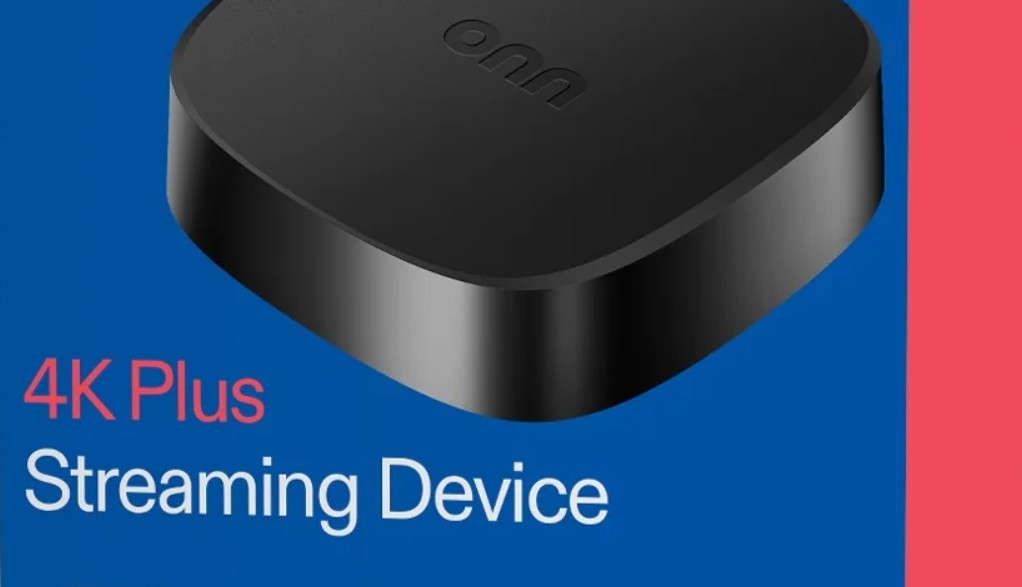
Last year, Chromecast digital media players became the latest product line to enter the Google Graveyard. Google dumped the brand in favor of its Google TV Streamer, but Walmart appears to be picking up the slack with a new budget streaming device called the Onn 4K Plus.

As spotted by 9to5Google, the device launched this week without any promotion from Walmart. There had been numerous leaks spoiling the existence of the Onn 4K Plus as early as last year, but it’s now suddenly available to buy on Walmart.com.

All the details about the new Onn 4K Plus. Image source: Walmart

Priced at just $29.88, it’s a rather capable device, with a quad-core Cortex-A55 CPU, G310 V2 GPU, 2GB RAM, and 16GB of storage. The Onn 4K Plus can stream in 4K Ultra HD resolution, supports Dolby Vision and Dolby Atmos, and runs Google TV, giving users access to 700,000+ movies, shows, and more across 10,000+ apps, and 800+ free live TV channels.

The streaming box also comes with a voice remote that features branded buttons for YouTube, Netflix, Disney+, and Paramount+, as well as a Free TV button. You can press the button at the top of the remote to activate Google Assistant for voice commands.

Tech. Entertainment. Science. Your inbox.

Sign up for the most interesting tech & entertainment news out there.

By signing up, I agree to the Terms of Use and have reviewed the Privacy Notice.

For now, the Onn 4K Plus is only available in the US and will be region-locked everywhere else, so unless you live in the US, you can safely skip this streaming device.

Why exactly Walmart has done nothing to advertise this new release remains a mystery.

Source

Posted on

UK Digital Services Tax survives US trade negotiations

In its second international trade deal in the space of a week, the UK government has secured a major trade deal with the US that leaves Britain’s Digital Services Tax unchanged and potentially opens the doors to a future UK-US technology partnership via which the science and tech sectors in both countries will collaborate in areas such as quantum computing.

The UK Digital Services Tax (DST) was introduced at the height of the Covid-19 pandemic in the spring of 2020, and applies a 2% levy on search engines, social media platforms and online marketplaces that make worldwide sales of more than £500m and derive £25m of that total from the UK. This includes the likes of Google, Meta and Amazon. At the time, it was estimated that it could contribute over £500m to the economy. The true figure is thought to be much higher.

However, amid a swathe of Executive Orders (EOs) issued at the start of his second presidential term, Donald Trump directed the US government to take action to “defend” US companies and innovators from DSTs, which have been enacted by other countries besides the UK.

Trump had accused other governments of exercising undue extraterritorial authority over American tech business and said their officials had openly admitted they were “designed to plunder American companies”.

The president also said US partners were engaged in practices such as limiting cross-border data flows, requiring US streaming services such as Netflix to fund local productions, and charging network usage and internet termination fees. He claimed such measures violate US sovereignty, limit the competitiveness of its digital businesses and increases costs.

However, this has now been walked back because in place of changes to the DST, the deal instead provides for Britain and the US to start work on a digital trade deal to “strip back” paperwork for UK firms trying to export across the Atlantic. Westminster claimed that if successful, the deal will put “rocket boosters” on the economy.

The retention of the DST will come as a relief to many government insiders and outside observers who raised concerns that axing it could cause a backlash given Labour’s controversial changes to benefits and National Insurance contributions since the General Election. In March, MP Clive Lewis said the mere suggestion of killing it off would look “absolutely horrific” to the public.

Speaking after the deal was announced in Washington DC, prime minister Keir Starmer said: “This historic deal delivers for British business and British workers. My government has put Britain at the front of the queue because we want to work constructively with allies for mutual benefit rather than turning our back on the world.

“As VE Day reminds us, the UK has no greater ally than the United States, so I am delighted that eight decades on, under president Trump the special relationship remains a force for economic and national security. My government is determined to go further and faster to strengthen the UK’s economy, putting more money in working people’s pockets as part of our Plan for Change.”

Speaking at a press conference, Trump said: “The actual deal is a very conclusive one. We think just about everything’s been approved. It’s so good for both countries.

“Both countries have agreed that the economic security is national security and will be working together as allies to ensure that we have a strong industrial base, appropriate export controls and protections for key technologies and industries.”

US commerce secretary Howard Lutnick added: “This deal marks a new era in our relationship with the United Kingdom, our great ally. And more importantly this deal opens up an enormous multibillion-dollar export opportunity for hardworking Americans. While groundbreaking, this deal is the first of many as president Trump continues to deliver on his promises to the American people.” 

Cars and steel

The headline elements of the deal centre manufacturing and see car export tariffs dropped to 10% from 27.5% on a quote of 100,000 vehicles per annum – saving hundreds of millions of pounds for the likes of Jaguar Land Rover – and the elimination of tariffs on UK steelmakers. The UK has also secured new reciprocal market access on beef and will not have to weaken its food safety regulations to comply with US standards.

Work is set to continue on other sectors, including pharmaceuticals and other remaining reciprocal tariffs. However, the government also revealed that the US has agreed the UK is to get preferential treatment in any future tariffs imposed under Section 232 of the US’ Trade Expansion Act (1962) – the basis under which Trump has enacted his controversial tariff regime.

“This week, the UK government should be commended for securing a trade deal with India and now the US. A clear message is being sent to the international community: the UK is a fierce advocate of free and fair trade and a reliable partner with whom to do business,” said Rain Newton-Smith, chief executive at the CBI.

“As one of our largest trading partners, a strong relationship with the US will always be welcomed by business to bolster our mutual competitiveness and kickstart growth. Today’s agreement must pave the way for deeper cooperation, making both of our economies prosper and grow.

“As the dust settles, we need to understand the impacts and work with our allies to extend its reach. The government must also work with business to spell out exactly how it can make the most of the opportunities this deal creates,” said Newton-Smith.

Source

Posted on

US tells CNI orgs to stop connecting OT kit to

A growing number of ongoing cyber incidents affecting US operators of critical national infrastructure has prompted a cross-agency warning from the US authorities, with the Cybersecurity and Infrastructure Security Agency (CISA), the Federal Bureau of Investigation, the Environmental Protection Agency, and the Department of Energy all weighing in.

In a jointly penned advisory, the organisations said they were “aware of cyber incidents” affecting the operational technology (OT) and industrial control systems (ICS) of CNI operators.

“The authoring organisations urge critical infrastructure entities to review and act now to improve their cyber security posture against cyber threat activities specifically and intentionally targeting internet connected OT and ICS,” said the advisory’s authors.

OT systems are incredibly easy targets for state-backed and financially motivated threat actors alike when connected to the internet, because they often lack up-to-date authentication and authorisation methods and can be found quickly by running searches for open ports on public IP ranges.

“Cyber threat actors use simple, repeatable and scalable toolsets available to anyone with an internet browser,” said CISA. “Critical infrastructure entities should identify their public-facing assets and remove unintentional exposure.”

Sean Tufts, managing partner for critical infrastructure and operational technology at Optiv, a security consultancy, said: “The industry has been working diligently on auditing N/S [North/South] traffic on the firewalls. We’ve seen great improvement in finding these connections and cutting them.

“What is currently left are mission-critical applications like SAP,” he added. “This is especially true in manufacturing, where workflow management has digitally transformed faster than security could keep up. Ensuring these connections are correctly configured and architected is a task measured in years, not days.”

Detailed advice

The full advisory – which can be downloaded here – contains additional guidelines on security OT and ICS estates. These include:

  • Changing default passwords where possible and using strong, unique passwords – current trends seem to suggest that targeted systems all use default or easily guessable passwords. This is particularly important to do on public-facing internet devices that can control OT systems or processes.
  • Securing remote access to OT networks – many CNI bodies or their contractors seem to have been making risky trade-offs when implementing remote access, and it is now time to reevaluate those. If remote access is a must, private IP network connections and VPNs should be used, as well as phishing-resistant multi-factor authentication. CNI operators may also like to consider reassessing who truly needs access to what, and to clear out dormant or unused accounts.
  • Segmenting the IT and OT networks – to keep critical systems apart with a so-called “demilitarised zone” to pass control data to enterprise logistics. This cuts down the potential impact of incidents and reduces the risk of disruption to OT operations should a hacker try to come in via the IT estate.
  • Practicing and maintaining the ability to operate OT systems manually – so that operations can be stood up again quickly if there is an incident.
  • Keeping channels of communication open to their managed service providers, system integrators and system manufacturers – they may be able to help provide system-specific guidance for more obscure assets or help address misconfigurations.

Your systems are defenceless

Nic Adams, co-founder and CEO at 0rcus, a threat intelligence specialist, said: “Critical infrastructure systems are being targeted not because the attackers are sophisticated, but because the systems are defenceless.

“The threat is pure operational negligence,” he said. “If your control layer can be accessed without physical proximity, isolated network design and verified authentication, it is functionally compromised. Breaches now announce themselves with subtle logic changes, unauthorised sessions or misconfigurations missed during commissioning.

“Look past malware,” said Adams. “Treat every control asset as a live-fire target. If you haven’t tested under adversarial pressure, it won’t even come close to holding.”

He warned that CNI organisations that aren’t prepared to make the recommended changes risked “becoming the next headliner and laughing stock”.

Source

Posted on

3 things AI can do that you’ll be thrilled to

Artificial intelligence can work wonders in everyday life, especially when it comes to performing tasks that you’re sick of repeating. Below, we gathered three tips and tricks for asking ChatGPT and other models to improve your routine. We also have an article helping you create the best prompts possible when asking these AI chatbots to perform tasks for you.

Take meeting notes

If you’re always in and out of meetings at work or school, there’s a way to take notes without having to type them yourself. It’s possible to listen to and engage with the conversation while recording the data and after asking the AI to transcribe and/or summarize the call.

Here’s how you can accomplish that with ChatGPT:

  • Record your meeting using Zoom, Voice Memos, or a similar app.
  • Upload the audio file to a ChatGPT chat.
  • It handles the rest: transcription, summary, and even a follow-up email draft if the user wants.

Write and reply to emails

It’s 2025, and AI should be writing emails for you. While BGR has recently written about Serif, an email assistant that can improve your inbox and catch up with everything, there are several other AI tools you can use to write and reply to emails, like Gmail’s AI assistant or Microsoft Copilot, which are able to draft, rewrite, and even auto-respond to emails in your voice.

Tech. Entertainment. Science. Your inbox.

Sign up for the most interesting tech & entertainment news out there.

By signing up, I agree to the Terms of Use and have reviewed the Privacy Notice.

ChatGPT can also do it for you, although you’ll have to copy and paste an email in the chat in order to get started. Here’s what it can do with your email:

  • Write a response in your tone (professional, casual, firm, etc.).
  • Improve grammar, clarity, or persuasiveness.
  • Translate or localize if needed (e.g., English ↔ Portuguese/Italian).

Organize your jumbled thoughts

While Apple recently released a very interesting shortcut for those who get constantly interrupted while brainstorming or performing a task, there are other useful tips and tricks for AI agents that can help you organize your messy thoughts.

For example, you can dump unfiltered ideas, such as voice notes, bullet lists, and half-finished sentences, into ChatGPT to create polished blog posts, LinkedIn updates, social captions, and more.

Here’s how it works:

  • Paste your raw notes or upload a voice memo.
  • Tell ChatGPT what to do with it (e.g., “Make this a tweet thread about AI productivity”).
  • Done: It will deliver a sharp, clean version in your writing style.

AI tips and tricks wrap-up

These are only three tips and tricks for using AI to make live easier. However, there are many more possibilities you could be taking advantage of. Just think of a task you perform repeatedly, and there’s probably an AI tool that can help you do it faster.

Source

Posted on

Preparing for post-quantum computing will be more difficult than the

The transformation needed for organisations in the UK to be ready for the threat of post-quantum computing will make preparations for the millennium bug, which threatened computer systems in 2000, “look easy”, cyber chiefs said today.

Ollie Whitehouse, chief technology officer (CTO) at the National Cyber Security Centre (NCSC), said preparing for post-quantum cryptography (PQC) will take “a complex change programme” and will be a “colossal task”.

The 10-year, UK-wide PQC programme will require organisations to identify every instance of cryptographic code, to understand whether it is vulnerable to attack by a quantum computer, and put plans in place to mitigate the risk. 

It mirrors the massive effort that the UK government and companies undertook to fix software throughout their estate when it threatened to malfunction on the first day of the year 2000 because of the way programmers calculated dates.

The risk today is that the development of a large-scale quantum computer in the future will compromise widely used cryptographic authentication techniques used to secure banking and other transactions, and to verify the authenticity of people online.

Nation states are also concerned about the potential for hostile nations to intercept, collect and store sensitive communications with the anticipation that they will later be able to develop a quantum computer capable of breaking their encryption.

Predicting when the first quantum computers capable of breaking today’s encryption algorithms will be developed is difficult, but technology suppliers are coming to a consensus that usable quantum computers could be available by the 2030s at the earliest.

The NCSC, part of GCHQ, issued guidance in March that set out a staged timeline for the UK’s migration to post-quantum cryptography – which uses encryption techniques that are not capable of being easily broken by quantum computers – by 2035.

“Over the last 30 years, cryptography has pervasively been adopted in all manner of software. And we’ve got far more software than we ever had 25 years ago,” said Whitehouse. “By virtue of that, the discovery activity, let alone the migration activity, is at least as complex, if not more so, than the original Y2K challenge”.

UK government departments involved in sensitive work have already deployed post-quantum cryptographic standards, while large companies, such as Google, have begun to deploy the technology in their cloud services.

UK government departments involved in sensitive work have already deployed post-quantum cryptographic standards, while large companies, such as Google, have begun to deploy the technology in their cloud services

A consultancy scheme, announced by the NCSC today, will offer help and expertise to organisations that want to deploy PQC in their products or networks.

The NCSC has advised organisations to identify which cryptographic services will need upgrades and to develop a migration plan by 2028. 

That will be followed by executing high-priority upgrades between 2028 and 2031, and a complete migration to PQC for all cryptography by 2035.

The aim is not to cause panic, but to ensure a smooth transition to post-quantum cryptography over the decade, say security officials.

Small and medium-sized companies will be able to rely on managed service providers to provide PQC upgrades for them. But for larger organisations and those in critical sectors, PQC will require extensive planning and investment.

The NCSC introduced the guidelines partly to provide ammunition to information security chiefs in critical industries to present to company boards to help them make a case for funding the transition to post-quantum cryptography.

The guidelines also aim to put the brakes on over-enthusiastic suppliers putting pressure on organisations responsible for critical national infrastructure to upgrade to PQC products that are not fully formed or appropriate for them.

Artificial intelligence (AI) poses another challenge for companies, giving them less time to patch their systems to protect them against the discovery of new security vulnerabilities before they are potentially exploited by automated cyber attacks.

Whitehouse said organisations must better manage their “technical debt”, a measure of the cost of updating software that may have been rushed out before it was fully ready or fully secure.

At the same time, technology suppliers will need to design and maintain products and services in a way that offers resilience against cyber attacks.

Not doing so risks repeating avoidable security failures that have manifested since the rise of the internet, said Whitehouse.

“Without radical and sustained interventions, we are at real risk of repeating the last 30 years, but with far graver consequences, if we do not address the fundamental market failures which have manifested,” he added.

Source

Posted on

‘Lopez Voice Assistant’ emails aren’t a scam, they’re about the

Class action settlement emails aren’t always a scam. If you recently received a Lopez Voice Assistant message, this is likely related to the Lopez vs. Apple Inc. settlement, and you can now reclaim part of a $95 million payout over allegations of Siri spying on private conversations.

The 2019 class action lawsuit revolved around Apple allegedly violating users’ privacy by recording their conversations and forwarding them to third-party contractors. While Apple agreed to the settlement earlier this year, the company denied the allegations that it was spying on users. That said, if you received an email about the settlement from info@lopezvoiceassistantsettlement.com, you’re entitled to a part of this payout.

As noted by The Verge, if you owned a Siri-enabled device, including an iPhone, iPad, Apple Watch, HomePod, or Mac, in the US between September 2014 and December 2024, and experienced Siri activating “on its own” while you were engaged in a private conversation, you can claim up to $20 per device for as many as five eligible devices on the settlement website.

While Apple still claims that Siri wasn’t spying on users, how can users trust the company? Earlier this year, when it accepted the settlement, Apple said it was committed to “its longstanding privacy commitment with Siri.”

Tech. Entertainment. Science. Your inbox.

Sign up for the most interesting tech & entertainment news out there.

By signing up, I agree to the Terms of Use and have reviewed the Privacy Notice.

“Privacy is a foundational part of the design process, driven by principles that include data minimization, on-device intelligence, transparency and control, and strong security protections that work together to provide users with incredible experiences and peace of mind,” Apple said.

“This applies to all of our products and services, including Siri, which has been engineered to protect user privacy and is the most private digital assistant.”

The company then made it clear that Siri voice data is not used for marketing profiles or made available for ads:

Apple has never used Siri data to build marketing profiles, never made it available for advertising, and never sold it to anyone for any purpose. We are constantly developing technologies to make Siri even more private, and will continue to do so.

The statement also explains how Siri protects user privacy. Apple explained that the assistant would use on-device processing whenever possible.

Apple also teased the arrival of the smarter Siri in Apple Intelligence, explaining how the Private Cloud Compute servers protect the privacy of Siri interactions that require server-side AI processing.

With that in mind, don’t forget to look at your Lopez Voice Assistant emails to ensure you get paid what Apple owes you.

Source

Posted on

iOS 19 may get AI-powered battery feature originally planned for

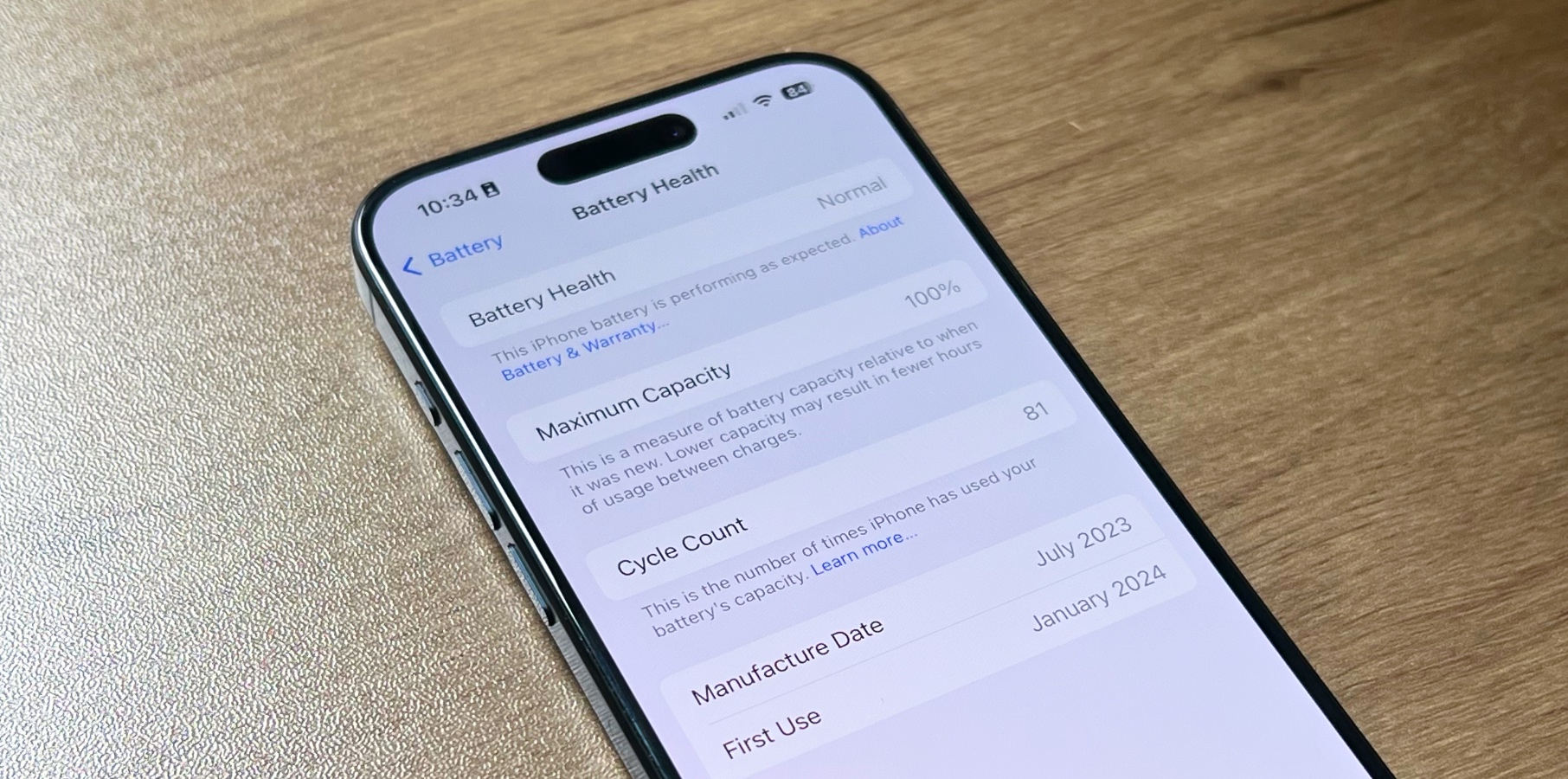
Less than a month before the WWDC 2025 keynote, Bloomberg‘s Mark Gurman reports on another iOS 19 feature Apple will likely introduce at the conference. According to the journalist, Apple is readying an AI-powered battery management mode for iOS 19, which will “analyze how a person uses their device and make adjustments to conserve energy.”

However, as innovative as this function might be, it’s part of another delayed iOS 18 Apple Intelligence feature. Later last year, now MacWorld‘s Filipe Espósito reported for 9to5Mac that Apple was preparing a new BatteryIntelligence framework during the iOS 18.2 beta.

At the time, the journalist pointed out that this feature would estimate the time necessary to recharge your phone. Since this function wasn’t introduced during the iOS 18 cycle, it’s only natural that it is part of the planned Apple Intelligence functions that were postponed for unknown reasons.

That said, Mark Gurman expects this AI-powered battery feature to be part of the new Apple Intelligence functions. The journalist explains that Apple is “using battery data it has collected from users’ devices to understand trends and make predictions for when it should lower the power draw of certain applications or features. There will also be a lock-screen indicator showing how long it will take to charge up the device.”

Tech. Entertainment. Science. Your inbox.

Sign up for the most interesting tech & entertainment news out there.

By signing up, I agree to the Terms of Use and have reviewed the Privacy Notice.

This tool might be especially useful with Apple’s newest iPhone models, as the company is expected to introduce an all-new Wi-Fi modem for the iPhone 17 series. Later next year, the company wants to power the iPhone 18 lineup with proprietary Wi-Fi and 5G chips, which could benefit from this powerful integration.

Not only that, but with rumors suggesting the iPhone 17 Air won’t have a good battery life (and reports already suggesting a Smart Battery Case is in the works), any help will benefit users.

Below, you can learn more about the latest iOS 19 rumors.

Source

Posted on

Galaxy S25 Edge just answered 3 big questions ahead of

The ultra-thin Galaxy S25 Edge is finally official. Samsung unveiled the phone late on Monday, several months after teasing it at the main Galaxy S25 Unpacked event of the year.

Samsung can now brag that it launched a slim candybar phone well before Apple, even though we all know the Galaxy S25 Edge only happened because word got out that Apple was making an ultra-thin iPhone to replace the Plus version.

The excitement around the Galaxy S25 Edge in January proves there might be plenty of interest from regular consumers for such devices. I’m one of them. For months, I told you I wanted an iPhone with a display as big as the Plus and Pro Max, but without the thickness and extra weight.

The iPhone 17 Air will be that device, and I’m willing to accept the compromises Apple needs to make to release an ultra-thin phone this year.

Tech. Entertainment. Science. Your inbox.

Sign up for the most interesting tech & entertainment news out there.

By signing up, I agree to the Terms of Use and have reviewed the Privacy Notice.

However, I have some concerns, so it’s great to see the Galaxy S25 Edge come out before the Air. Samsung just addressed my biggest questions about ultra-thin phones, and it’s mostly good news.

Will the Galaxy S25 Edge bend?

Bendgate will instantly come up when you think about an ultra-thin iPhone. But this isn’t 2014. The iPhone 17 Air might be thinner than the iPhone 6, but it won’t bend. That much I’m certain even before Apple unveils the Air.

While I wait, I do like what I’m seeing from Samsung. The Galaxy S25 Edge has a titanium frame, a design and durability feature reserved for the Galaxy S25 Ultra until now.

The glass panel on the front of the Galaxy S25 Edge is a new Corning Gorilla Glass Ceramic 2 cover, while the back is protected by Corning Gorilla Glass Victus 2 cover tech. The latter is what Samsung uses for the Galaxy S25 Plus’s display, which is quite telling. The two phones have the same 6.7-inch displays, but the Galaxy S25 Edge will be more durable.

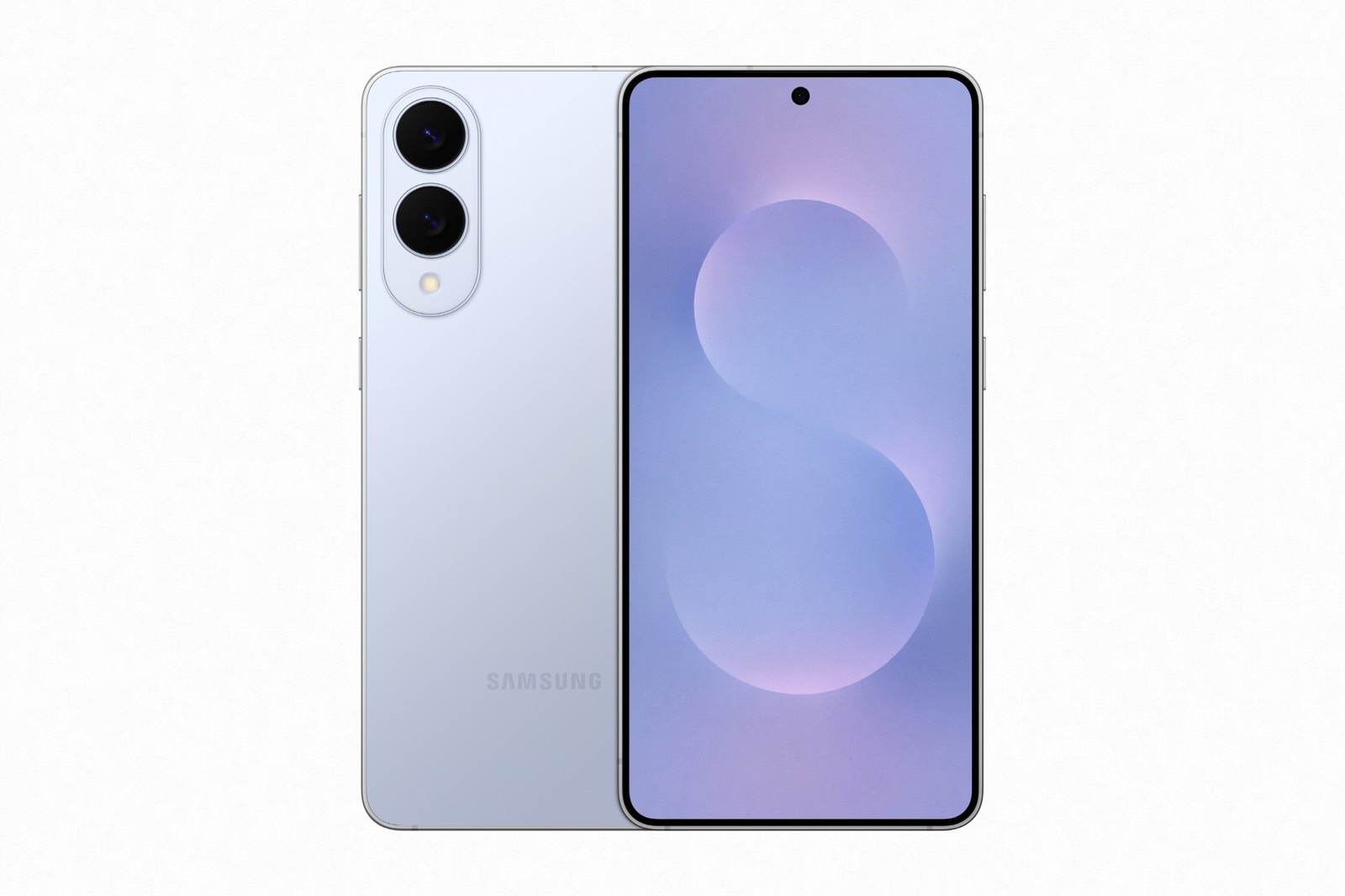
Galaxy S25 Edge: The slim profile. Image source: Samsung

I would still put a screen protector and a case on an ultra-thin phone, but I like what Samsung is doing here. Yes, using accessories will make the phone feel thicker, but I use accessories on regular handsets too, and that makes them even bulkier.

By the way, the Galaxy S25 Edge weighs just 163g compared to 190g for the Galaxy S25 Plus.

With that in mind, I expect the iPhone 17 Air to be quite durable, both in terms of the metal frame and the cover glass. The design has long been decided, and the phone should be mass-produced soon. It’s not like Apple can react to Samsung’s moves, but Apple is likely similarly concerned with the iPhone’s durability.

How bad is the battery life going to be?

Forget Bendgate; battery life is going to be the number one question people will have about the iPhone 17 Air. I expect Apple to advertise it as all-day battery life, just like Samsung does. Well, Samsung says the Galaxy S25 Edge will offer a “long-lasting battery you’ll love,” which is definitely not the best way to advertise battery life for ultra-thin phones.

The Galaxy S25 Edge features a 3,900 mAh battery, which is smaller than the Galaxy S25’s 4,000 mAh battery. The Plus and Ultra have 4,900 mAh and 5,000 mAh batteries, respectively.

Samsung says the Galaxy S25 Edge will last up to 24 hours for video playback, or 5 hours fewer than the smaller 6.2-inch Galaxy S25. That’s a 17% drop in battery life, and something power users might not necessarily like, especially with charging speeds not exceeding 25W.

I would expect Apple to make similar battery life compromises for the iPhone 17 Air, but I still think the iPhone 17 Air will last about a day. I can’t dream of iPhone 16 Pro Max battery life, and I’m ready to recharge the Air every night.

The one thing that I was hoping for this year’s ultra-thin phones will apparently not happen. I thought the Galaxy S25 Edge and iPhone 17 Air would feature new carbon-silicon batteries, which pack more density in the same footprint. Since Samsung didn’t say anything about the battery tech during the event, it means we’re looking at a traditional battery. Apple will likely use a traditional battery, too.

What is this thing going to cost me?

I wasn’t surprised to see the Galaxy S25 Edge’s starting price, considering what rumors said. The phone would cost at least as much as the Galaxy S25 Plus, which starts at $999, if not slightly more. We now know you have to pay $1,099 for the 256GB version.

I have no idea whether Trump’s tariffs forced Samsung to raise the starting price beyond what they had wanted, but I do know you’ll get perks if you preorder the phone. Also, the handset’s price will drop in the coming months, so there’s no reason to hurry to buy it.

I also know the price is in line with what the Edge has to offer. Think of it as a lighter version of the Galaxy S25 Ultra, the top-of-the-line Galaxy S model you can buy right now, when it comes to hardware.

Galaxy S25 Edge: The camera module. Image source: Samsung

The Ultra has extra telephoto cameras for better zoom, a built-in S-Pen stylus, a larger battery life, and a screen with an anti-reflective coating applied to it. All of that would cost you an extra $200 compared with the Galaxy S25 Edge.

What does that tell me about the iPhone 17 Air? I expect the phone to cost about as much as an iPhone Plus, if not slightly more. That means we’re looking at a $899+ cost before considering tariffs. Rumors say Apple is already looking to raise the iPhone 17 prices without tying the price hike to tariffs.

Could the iPhone 17 Air match the $999 starting price of the iPhone 16 Pro? Yes, if Apple raises the prices across the board. Otherwise, I can’t see how Apple will justify a higher price tag than the Plus cost.

While the Galaxy S25 Edge is a Galaxy S25 Ultra “Light” type of phone, the iPhone 17 Air will not be an iPhone 17 Pro “Light” phone. Apple will make more compromises compared to Samsung; that much is certain. The iPhone 17 Air won’t have a titanium frame, and it’ll rock a single-lens camera on the back. Also, the phone will ditch physical SIM cards.

With that in mind, I don’t see how the iPhone 17 Air can match or exceed the iPhone 17 Pro price.

Source