Posted on

Why This Might Be The Year That Joe Burrow, Bengals

Are Joe Burrow and the Cincinnati Bengals really back?

Needing overtime to get past the Tennessee Titans isn’t the greatest endorsement, but Cincinnati is 5-2, and Burrow is off to the best start of his career, and an easy remaining schedule could set them up for a big return to the NFL playoffs after a three-year drought.

Burrow threw three interceptions Sunday, but was able to offset that by throwing for 462 yards and five touchdowns, giving him 13 touchdown passes in the last three weeks. His league-high 20 touchdown passes are three more than he’s ever had after seven games, and he also has the most passing yards (2,115), highest passer rating (111.6) and best completion percentage (an NFL-best 73.0) he’s ever had at this stage of the season.

Burrow leading a prolific offense is nothing new, with arguably the best 1-2 receiver combo in the league in Ja’Marr Chase and Tee Higgins. Tight end Mike Gesicki is having a career year at age 31, with touchdown catches in six of Cincinnati’s seven games to already match a career high in touchdowns.

Perhaps the most encouraging thing for the Bengals, though, is the progress they’ve made on defense, which had truly limited their success in recent years. A year ago, Cincinnati gave up 30.7 points per game at this point, but the 2026 Bengals are a full touchdown better, allowing 22.7 points per game, jumping from 30th to 14th in the league. Their red zone defense is dramatically better: After giving up touchdowns on 63% of opposing drives inside the 20 last year, they’re down to 42% this season, jumping from 24th in the NFL to fifth.

Even more dramatic is the way they’re getting to opposing quarterbacks. Last year’s Bengals ranked 23rd in the league in sacks, with Myles Murphy leading the team with 5.5 sacks. Free-agent addition Boye Mafe has already matched that total with 5.5 of his own.

Defensive tackle Dexter Lawrence, acquired from the Giants for the No. 10 overall pick in this year’s draft, has five as well. His latest sack helped the Bengals send Sunday’s game against the Titans into overtime, coming in a clutch moment. They’re third in the NFL with 23 sacks and they’ve already had their bye week, putting them on pace for a franchise-record 56 sacks.

Then, there’s the schedule. Only four of the Bengals’ 10 remaining opponents have winning records, and two of those are the Cleveland Browns. The Bengals lost their first meeting with Pittsburgh, so getting a home win against the Steelers next weekend is a must, but they still have three games against NFC South teams and another against the fire-selling Indianapolis Colts.

Burrow has never finished higher than fourth in MVP voting, but if he stays healthy, he’s in good shape to do better than that. As it stands, he has the third-best odds to take home MVP honors, behind only Buffalo’s Josh Allen and San Francisco’s Brock Purdy. 

The Bengals’ next win will match their total from last year (6-11), and it’s possible they’ll challenge the franchise record of 12 wins. Cincinnati hasn’t hosted a playoff game beyond the wild-card weekend since 1988, but if the Bengals just take care of lesser opponents as they have, they could have a chance to do that in January.

Drake LondonAtlanta Falcons

There were so many strange stats from Sunday’s Falcons-Buccaneers game, which Tampa Bay won 16-0 without completing a single pass, the first NFL team to do so in 52 years. One you might not have noticed: Falcons receiver Drake London had more tackles than receptions.

London, defended well by the Buccaneers, had just one catch on six targets for 8 yards, but he also had two tackles after interceptions thrown by quarterback Michael Penix Jr. The NFL calls tackles by offensive players after turnovers “miscellaneous tackles,” and the Falcons have had enough turnovers that London already has six this season, twice that of any other NFL player.

It’s an odd skill to have. Bengals receiver Ja’Marr Chase led the NFL in 2024 and 2025 in such tackles, and has a forced fumble this year as well. If the Falcons keep turning the ball over, London has a chance to be just the second player in 25 years to have double-digit miscellaneous tackles in a season, following Eagles receiver Jeremy Maclin, who had 11 in 2014. London is only in his fifth NFL season, but he already has 17 tackles as an offensive player. Those aren’t coming on special teams, either.

National Football LeagueThe Endangered Kickoff Return TD

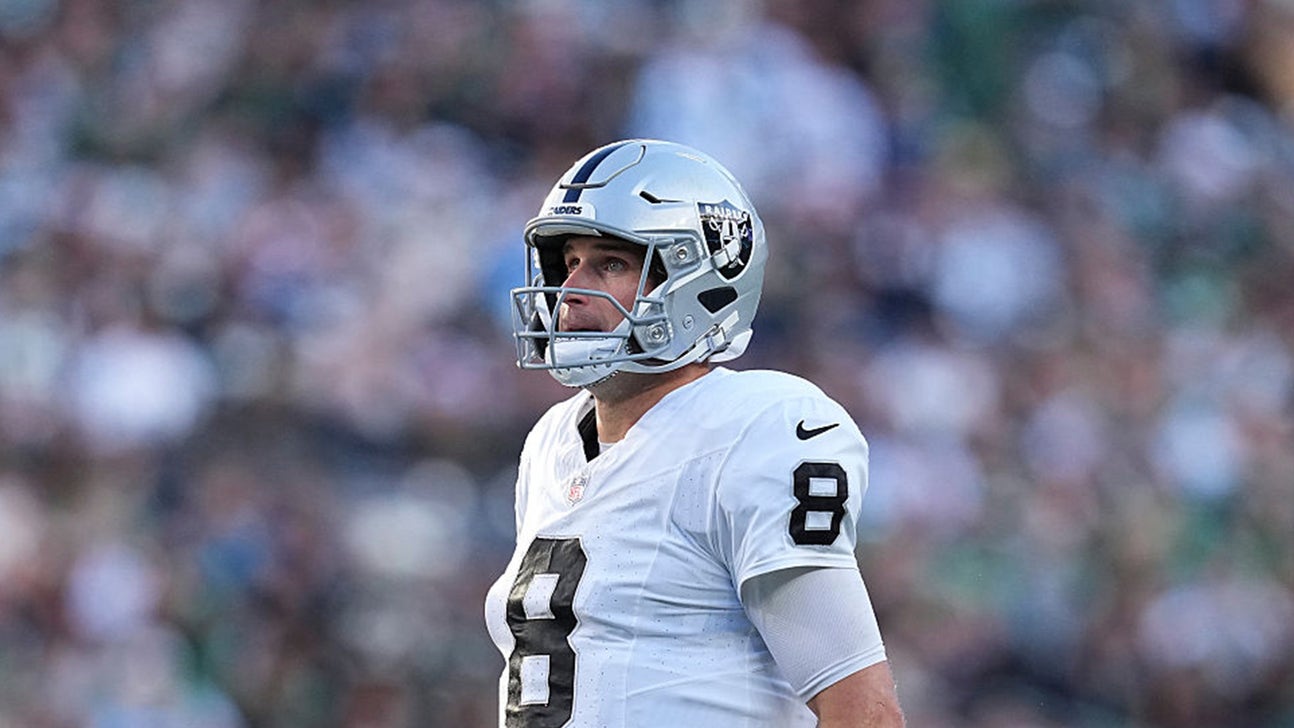
The Las Vegas Raiders’ Dylan Laube had the first kickoff return touchdown of the season on Sunday, so it took the league eight weeks to find the end zone for the first time in the third year of the new “dynamic” kickoff model. That puts the NFL on pace for a significant dropoff in kickoff-return touchdowns. There were seven in the first year with the new format in 2024 and six last year.

It would seem the league’s coverage units are outsmarting the returners, with more and more kickoffs aimed short, trusting the coverage units to be able to keep the return short of the 35-yard-line given on a touchback. In 2024, 30 of 32 NFL teams had at least 30% touchbacks, with 19 over 60%. Last year, the Rams led the league with a 56% touchback rate as one of three teams over 30%, and this year, the Dolphins lead the NFL at 44% as the only team over 30%.

That means more kickoffs are being returned, but far fewer are breaking through the initial wave of tacklers. This year has had 1,218 kickoffs, but just 42 of them went to midfield or further, just 3.44%. 

And it’s no surprise that Laube would get the first touchdown. He leads the NFL with a 34.1-yard average and has five returns of 40-plus yards, two more than any other player. Buffalo’s Ray Davis led the league with six returns of 40-plus yards last season, and had one of the six touchdowns as well.


Source

Posted on

Herd Hierarchy: Are The Bears The NFL’s Best Team? Seahawks,

Colin Cowherd predicted the Chicago Bears and Seattle Seahawks would meet in the NFC title game, and after Monday night’s 34-17 Chicago win, he thinks the Bears are the best team in football.

Cowherd revealed his latest Herd Hierarchy, featuring a new team at No. 1 after the defending champion Seahawks, last week’s top team, fell to 4-4.

Here are Cowherd’s Week 8 Herd Hierarchy rankings:

Herd Hierarchy for Week 9: Chiefs fall, Bears rise, Is there a new team on top? | The Herd

Herd Hierarchy for Week 9: Chiefs fall, Bears rise, Is there a new team on top? | The Herd

Source

Posted on

North Carolina State Considering 2 Former NFL Quarterbacks For Head

Could two former North Carolina State quarterbacks be competing against one another? 

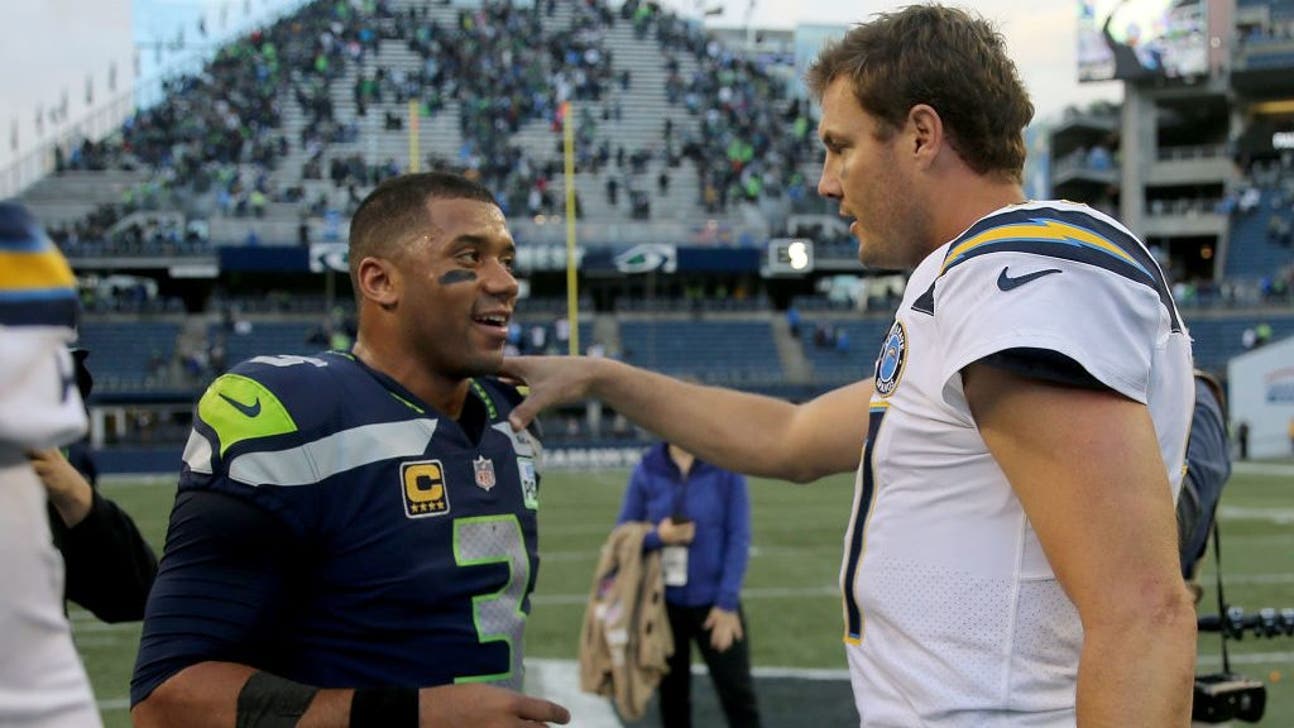
Both Phillip Rivers and Russell Wilson flourished in the NFL throughout the 2010s after representing the Wolfpack in college. Now they may be going head-to-head for their alma mater’s head coaching vacany. 

On Saturday, Rivers was reported as a target for North Carolina State’s top job. On Tuesday, Wilson entered the conversation according to ESPN, the Wolfpack interviewed him for the position. 

Wilson spent his first three seasons of college ball in Raleigh. He led the ACC with 3,563 passing yards and 28 touchdowns as a junior as the Wolfpack went 9-4. 

Russell Wilson spent three seasons at North Carolina State (Photo by Robert Willett/Raleigh News & Observer/Tribune News Service via Getty Images)

Wilson transferred to Wisconsin for one season, before being selected in the third round of the 2012 NFL Draft by the Seattle Seahawks. He led the Seahawks to their first Super Bowl victory in his second NFL season. They returned the following year, but were defeated by the New England Patriots. 

The Denver Broncos ultimately traded for Wilson after the 2022 season. He then had one-year stints with the Pittsburgh Steelers and New York Giants before retiring and pursuing a broadcast career. 

Russell Wilson led Seattle over Denver in Super XLVIII. (Photo by Jesse Beals/ Icon SMI/Corbis/Icon Sportswire via Getty Images)

Wilson has been out of the NFL for over a year, and carries no coaching experience. That is where he differs from Rivers, who coaches his son, Gunner, at St. Michael Catholic High School in Alabama. 

But both would provide a program icon, and in this era of college sports, that can be effective. 

The Wolfpack fired Dave Doeren from his position of head coach last week, during his 14th season in Raleigh. 

Todd Goebbel took over on an interim basis, and led the Wolfpack to a 31-10 win over Cal on Saturday. But NC State will embark on a national search for head coach, and could be deciding between former quarterbacks. 

Rivers defeated Wilson both times they met during their professional careers. Will either win this race to become the Wolfpacks’ next head coach? 

College FootballCollege Football Related Stories


Source

Posted on

Ohio State Must Find A Way To Support Freshman Luke

Ohio State is suddenly staring at a stretch of unfamiliar territory — one that hasn’t been seen in Columbus since the fallout of “Tattoogate.”

Following the Buckeyes’ second regular-season loss of the season, a defeat at the hands of USC last week, Ryan Day’s program has now dropped four of its last 10 games. Credit Lincoln Riley and the Trojans. Their backs were against the wall, and when there was a play to be made, USC seized the opportunity. 

The last time Ohio State went 6-4 over a 10-game stretch was in 2011, when the program was navigating the fallout from Jim Tressel’s resignation. Led by interim head coach Luke Fickell, the Buckeyes finished 6-7 before ushering in a new era under my colleague, Urban Meyer. Meyer quickly restored Ohio State to national prominence, delivering a national championship and an undefeated record against “that team up North.”

Ohio State’s Problems Go Beyond Luke Fahey

This season is far from over for Ohio State.

But if the Buckeyes hope to get back into the College Football Playoff conversation, they’ll need to adapt their offense to support true freshman quarterback Luke Fahey.

Luke Fahey completed 21 of 38 passes for 260 yards and a touchdown against USC. (Photo by Luke Hales/Getty Images)

If you looked only at the box score from Ohio State’s loss to USC, you might wonder how the Buckeyes dominated nearly every statistical category yet still lost by two scores. But there was one area where they fell short — and it’s one that I believe often gets overlooked: red-zone touchdown percentage.

The difference between settling for a field goal and punching it into the end zone can have a significant impact over the course of a game. Those missed opportunities can ultimately be the difference between a win and a loss. Ohio State reached the red zone four times against USC but came away with just one touchdown and 12 total points.

But wait, it gets worse. 

Ohio State had 11 offensive drives in the game, eight of which reached USC territory and into what we call the “fringe.” That included drives that reached the USC 21-yard line (ending in a field goal), the 31 (ending in a fumble), the 22 (ending in a field goal) and the 36 (ending in a punt after a negative run and a five-yard penalty).

The part of the field where you aren’t in the red zone, but are in field goal range, is an area most offensive coordinators often look to take shots at the end zone.

Red Zone defense changes for most defensive coordinators. Defenses can play more two-high, middle-of-the-field-open (MOFO) coverages (Cover 2, Cover 4 and variations of quarter-quarter-half) while still allowing defenders to also play more aggressively against the run without worrying as much about giving up a deep ball over their heads.

That approach also makes it more difficult to isolate a star receiver like Jeremiah Smith. Defenses can dedicate two defenders to him while still keeping enough support in the box to defend the run.

This is where Ohio State’s offense struggled most. From USC’s 40-yard line and in, Fahey completed just 7 of 20 passes, including a ball that should have been intercepted. He also took a costly sack on a play where he initially appeared to evade the rush, only to slow down and get caught from behind. The numbers become even more concerning when factoring in pressure. Fahey completed just three passes under duress in this critical area of the field.

The reality is, this is the most challenging area of the field for an inexperienced quarterback. Passing windows shrink, demanding greater precision and accuracy. Decision-making becomes paramount, too. The quarterback has less time to process what the defense is showing him, and when you are pressured, that time is even more scarce.

I experienced this in my first start at Notre Dame back in 2003. We were facing a Top 25-ranked Purdue team in West Lafayette. Little did I know that I’d attempt 59 passes that day, the second-most in Notre Dame history behind Terry Hanratty, who threw 63 times in a 1967 loss to, you guessed it, Purdue.

We fell behind early, failed to establish a running game and finished with just 25 yards from our backfield. That put us in desperation mode, forcing the football downfield and ultimately resulting in four interceptions. To add insult to injury, I was probably hit 15 or 16 times that afternoon by Shaun Phillips and Ray Edwards.

We also ran a wide receiver slip screen several times. Our play-side tackle would bluff the defensive end before releasing downfield to block for the receiver. That left Phillips with a free run at me, and he made sure to punish me for not blocking him. At one point, he told me, “I’m going to be here all day.” And he wasn’t wrong.

In the end, there were enough positives — including an 85-yard touchdown pass to Maurice Stovall on a sight adjustment against a Will-Weak safety blitz just before halftime — for my coaching staff and teammates to believe in me. They gave me the opportunity to work through the growing pains and develop into the player I would eventually become.

Unfortunately for Fahey, he’s playing in an era that lacks patience and there is no room for development.

Luke Fahey was a four-star prospect in the 2026 recruiting class. (Photo by Ben Jackson/Getty Images)

I’m sure Fahey would like to have a few plays back, but the loss wasn’t all on him. He was a true freshman making his first career start on the road. Pundits enjoy brining up Ohio State’s 2014 national championship team as evidence that the Buckeyes can win it all with a backup quarterback. But that team was built differently.

This is a program that has sent six wide receivers to the NFL in the first round since 2022. The Buckeyes have also ranked among the Big Ten’s best passing offenses during that span. Ohio State has built its offensive identity around getting the football into the hands of its playmakers, allowing them to create explosive plays and put points on the board. The quarterback’s ability to operate the offense at a high level is at a premium.

This is one reason why I’d love to see Ohio State spread the field more often. There’s a misconception among some playcallers that empty formations automatically put more pressure on the quarterback. Yes, you are more vulnerable in pass protection. However, it creates additional space for receivers and makes it more difficult for defenses to double-team a specific player.

Empty formations also force defenses to show their hand. Are they playing man or zone coverage? If it’s zone, what type? Are they bringing pressure or dropping into coverage? You can find all of these answers in empty formations displacing a running back or tight end out wide and watching their alignment.

Ohio State ran just three empty-formation plays against USC. On the one completion Fahey did have, Smith might have hit his head on the goalpost if he didn’t bobble the ball on his way to the ground for a 12-yard gain.

The Buckeyes have no room for error or time to lick their wounds. They’ll likely need to win out to keep their hopes of playing for a Big Ten championship alive. Standing in their way is an Oregon defense that has improved considerably over the past four weeks and still has an outside shot at reaching the conference title game itself.

One Name To Know …

Wake Forest Demon DeaconsGio Lopez, Wake Forest

Wake Forest QB Gio Lopez has thrown for 18 touchdowns and one interception this season. (Photo by Cory Knowlton/ISI Photos/ISI Photos via Getty Images)

The college basketball season has tipped off (great win for my Irish in Rome!), and it’s reminded me of the great blue bloods from my childhood: Kentucky, UCLA, Indiana, Wake Forest and Arizona. It’s ironic that the football success of these programs has been inconsistent at best — until recently.

All five are now ranked in the AP Top 25, with Indiana entering the season as the defending national champions. What’s particularly interesting to me is how the roster-building strategies that have shaped college basketball for years are now playing out in college football. Since the one-and-done rule went into effect, elite basketball programs have learned to recruit, develop and retain five-star talent in an environment where players are increasingly focused on maximizing their market value and NBA Draft stock. 

These blue-blood basketball programs, whose athletic departments have spent years navigating this evolving landscape, have adapted to a new world in college football— one in which roster building and retention are critical to your success.

One of the best examples is Wake Forest head coach Jake Dickert, now in his second season with the Demon Deacons. Dickert left Washington State for the opportunity to lead a Power Four program, and he’s off to a strong start. After guiding Wake Forest to a 9-4 record and a bowl victory in 2025, Dickert has positioned the Demon Deacons to compete for an ACC title and potentially earn a College Football Playoff berth. A big reason for that success is quarterback Gio Lopez.

The Demon Deacons’ junior signal-caller began his career at South Alabama, where he became a full-time starter in 2024 after seeing limited action as a freshman. Lopez played well enough to catch the attention of perhaps the greatest football coach of all time, Bill Belichick, earning him an opportunity at North Carolina. After a disappointing season in Chapel Hill, Lopez found a home not too far down Tobacco Road in Winston-Salem.

On film, Lopez reminds me of a point guard in the way he operates the offense. The left-hander is crafty, distributing the ball all over the field. He moves effortlessly in and out of the pocket and has enough arm strength to make throws from the far hash to the sideline. Lopez has accounted for 24 total touchdowns this season while throwing just one interception.

Lopez’s improvement has been steady throughout the season, and his numbers against pressure are a reflection of that growth. According to PFF, Lopez ranks fifth among Power Four quarterbacks in passer rating when facing pressure. He’ll have an opportunity to build on those numbers this week against FCS opponent Merrimack.

Keep an eye on the Demon Deacons down the stretch. They travel to SMU and Georgia Tech before closing out the regular season on Thanksgiving against fellow Tobacco Road resident Duke. If Wake Forest wins out, it could set the stage for a rematch with Miami in the ACC Championship Game. Even with a loss, an 11-2 record — with both defeats coming against the current No. 1 team in the country — could be enough to earn the Demon Deacons a spot in the College Football Playoff.

What I’m Watching …

Miami (FL) Hurricanes Notre Dame Fighting Irish Miami (FL) at Notre Dame

I’ve always felt “Catholics vs. Convicts” was offensive. I mean … not all students who attend Notre Dame are Catholic.

On a more serious note: How could you not be excited for the best game of the college football season?

This matchup has plenty of similarities to the 1988 classic, when No. 1 Miami — riding a 36-game regular-season winning streak — traveled to South Bend to take on the No. 4 Fighting Irish. The game lived up to the hype, as Miami quarterback Steve Walsh connected with Andre Brown on fourth down to bring the Hurricanes within one point. Head coach Jimmy Johnson elected to go for two, but Notre Dame safety Pat Terrell batted down Walsh’s pass to seal the victory for the Irish. Notre Dame would go on to claim the national championship after defeating West Virginia in the Fiesta Bowl.

That game featured no shortage of star power, much like this week’s matchup, which will be headlined by the two teams’ starting quarterbacks. Their paths to their respective programs, however, couldn’t be more different — a reflection of this era of college football.

Notre Dame quarterback CJ Carr is a throwback. Despite having ties to Michigan, he committed to the Irish early in the recruiting process and never wavered. A four-star recruit, Carr enrolled early, redshirted his first season and even helped Notre Dame build its recruiting class. Now, he enters this matchup as a potential first-round NFL Draft pick with eligibility remaining. Given the season he’s having, it’s hard to imagine him not being among the first names called in the 2027 NFL Draft. This could be his signature win as Notre Dame’s quarterback and propel him to the top of the Heisman race, where he’s currently listed at +750.

On the other side is Miami quarterback Darian Mensah, who is emblematic of today’s college football landscape. Now at his third school, Mensah followed a promising start at Tulane with a record-setting season at Duke. After leading the Blue Devils to an ACC championship and a Sun Bowl victory, where he was named MVP, Mensah attracted the attention of Miami — and the highest bidder in the Sunshine State.

What’s been most impressive about Mensah is how quickly Miami has seen a return on its investment. In his first season working with offensive coordinator Shannon Dawson, Mensah is tied for the national lead with 25 touchdown passes while leading the country in passer rating. He’s been everything Miami hoped he would be, but this matchup represents his biggest remaining test of the regular season — and perhaps his best opportunity to deliver a Heisman moment. He’s currently listed at +160 to win the award.

Darian Mensah has thrown for 25 touchdowns this season, while Malachi Toney has hauled in 13 of them. (Photo by Carmen Mandato/Getty Images)

The X-factor will be Mensah’s No. 1 target: Miami wide Malachi Toney, aka “Baby Jesus,” who plays by the motto of G.A.B.O.S — Game Ain’t Based On Sympathy. His ability to separate in and out of cuts is rare, and he’s making a case as the best wide receiver in college football (yes, that includes Jeremiah Smith).  

Toney is currently listed at +410 to win the Heisman Trophy, and his dazzling catches could allow him to steal the show if Notre Dame’s defense can’t find a way to limit his impact. Last season, Toney caught six passes for 82 yards and a touchdown in Miami’s season-opening win over the Irish. Toney and Mensah have an even stronger connection, which could spell trouble for a Notre Dame defense already dealing with significant absences. Starting cornerback DJ McKinney, safety Brauntae Johnson and linebacker Drayk Bowen — who wears the green dot for the defense — are out for this matchup.

This should be another classic in South Bend!

College FootballCFB Related Stories


Source

Posted on

QB Notebook: Caleb Williams Has Erased All Doubts; The QB

Welcome to the Quarterback Notebook, where I’ll cover the past week in NFL quarterbacking — from the most interesting passers, plays and storylines to some other stuff that caught my eye while watching film this week.

This week, we’ll bust some narratives about Caleb Williams, check in on Aaron Rodgers’ fight against Father Time, and monitor Jayden Daniels’ development.

Let’s talk quarterbacks.

Caleb WilliamsChicago Bears

The narrative surrounding Caleb Williams’ game has taken many turns since the Bears drafted him first overall in 2024. Before that draft, some evaluators wondered if his playground style would translate to the pro game, and a turbulent rookie season, which included 68 sacks and several This ain’t the Pac-12 moments for Williams, solidified those concerns.

Even after Williams rebounded in his second year — with a big helping hand from head coach Ben Johnson — the narrative endured. Skeptics pointed to his high time-to-throw and low completion percentage as proof he still lacked the polish to play at a high level consistently, making him a poor fit in Johnson’s offense.

Williams has spent the last two years slowly chipping away at that perception. He’s cut his sack rate in half since his rookie season, and he’s now leading the NFL in completion percentage. That just leaves the ol’ time-to-throw as the last vestige of the pre-draft concerns. Williams’ average dropback lasts 3.24 seconds before the ball is thrown, the highest in the league, per Next Gen Stats.

Because timing and quick processing are viewed as hallmarks of NFL quarterback play, a high average time to throw is often considered bad. I don’t think that viewpoint is far off base. Many quarterbacks who struggle to get the ball out on time or throw with anticipation top the time-to-throw leaderboard. But exceptions exist, and at this point, Williams is undeniably one of them.

Williams’ performance against the Seahawks’ defense on Monday night should erase any lingering doubts about the sustainability of his success. Williams was the first quarterback to throw for more than 200 yards against Seattle. He completed over 70% of his passes and took only one sack. When the opportunity to unload the ball quickly was there, Williams took it. When the situation called for Williams to improvise, he made plays like this:

And this:

That last play illustrates why I have no concerns about Williams’ time to throw. He vacates the pocket but only after getting through his progression. And he caps it off by hitting tight end Colston Loveland with a perfect pass while running over 13 mph. The time to throw on that play was 5.49 seconds, which contributed to his 3.29 average on the night. That’s even higher than his season-long average. Now ask yourself: did you leave that game thinking Williams held the ball too long?

That same question applies to his other games in 2026. Here’s a cut-up of all 16 of Williams’ “scramble drill” dropbacks this season, per Pro Football Focus.

You can count the number of times Williams turns down an open target or leaves a clean pocket on one hand and still have a few free fingers. According to PFF, Williams has scrambled from a clean pocket on 1.8% of his dropbacks, which is lower than most quarterbacks and just 0.1% higher than Matthew Stafford, who’s basically immobile at this point. Chicago’s budding star really leaves the pocket only when he’s forced out — and from there, he becomes one of the league’s most effective playmakers.

Williams is supplementing that out-of-structure magic with top-level efficiency within structure. No quarterback averages more expected points added per dropback from a clean pocket. On those plays, Williams’ time to throw drops to 2.72 seconds, which ties him with the Lions’ Jared Goff, the quarterback Williams supposedly needed to be more like to fit in Johnson’s scheme.

Aaron RodgersPittsburgh Steelers

The Steelers are 6-2 and within striking distance of the AFC’s top seed, but it still feels like the fate of the season hinges on one question: How washed is future Hall of Famer Aaron Rodgers?

I shared my opinion back in late September, highlighting a few concerning stats, like Rodgers’ struggles on plays where he’s forced to hold the ball a little longer and his inability to connect on tight-window throws. It looks like defensive coordinators around the league agree with that assessment based on how they’re calling plays against the 42-year-old quarterback. Through eight games, Rodgers has logged a league-leading 110 dropbacks against man coverage, per Pro Football Focus. No other quarterback has more than 65 dropbacks against man.

That’s a noteworthy gap. The league’s man coverage rate is down significantly in 2026, mostly because offenses have gotten so good at exploiting it with condensed formations that create leverage advantages for receivers and route combinations that create natural picks on defenders. But against Rodgers, defensive coordinators feel free to crank up their man coverage usage. They haven’t been punished for it yet.

I think opponents are choosing to play that way against Rodgers for several reasons. For starters, tight coverage lets defenders disrupt route timing and forces quarterbacks to hold the ball longer. Throwing into tighter windows also narrows the margin for error when it comes to ball placement. And since Rodgers doesn’t pose much of a threat as a scrambler, defenses aren’t worried about turning their backs to the pocket.

Rodgers gets worse the deeper he gets into a play; he’s lost the precise ball placement he possessed at the peak of his powers (ranking 31st in PFF’s “plus accuracy” metric); and he’s completely uninterested in leaving the pocket these days. Add all that up, and the man-heavy game plans make a lot of sense.

Rodgers’ schematic preferences are also contributing to the abnormally high man coverage rate Pittsburgh is facing. The veteran quarterback has always preferred to play in the shotgun with his receivers spread across the field, which provides a clearer pre-snap picture of the defense. On the other hand, those static spread formations make it harder to exploit man coverage with pick plays and don’t provide the same leverage advantages you get with condensed formations. And Rodgers has never been a big proponent of pre-snap motion, another offensive tactic used to beat man coverage.

Maybe Sunday’s win over Cleveland will change his opinion. Two of Pittsburgh’s biggest plays in the pass game came on the same design, with tight end Darnell Washington motioning into a bunch formation that created too much traffic for his defender to navigate.

Those were relatively easy throws for Rodgers. The play design got Washington open early, so Rodgers didn’t have to hold the ball. The passing window was wide open, giving him more margin for error. If defenses insist on playing man coverage, the Steelers need to run more of these plays. That will require Rodgers to acknowledge his own limitations, which might be too big an ask for the famously stubborn quarterback. 

Jayden DanielsWashington Commanders

If you’re familiar with Betteridge’s law of headlines, you already know where this is headed.

But let me say this: While I have my concerns about Jayden Daniels’ development, I believe his skill set gives him a top-10 ceiling. Whether he can stay on the field long enough to get the reps he needs to reach that ceiling is another question. That’s been the main issue for Daniels, who hasn’t shown significant improvement since his exceptional rookie season and has fallen behind his draft classmates, Caleb Williams and Drake Maye.

Daniels’ injury history would be less concerning if scrambling wasn’t such an integral part of his game. Commanders coach Dan Quinn has harped on the need for Daniels to protect himself since his rookie season, but his scrambling rate increased in 2025, and while it’s down a few percentage points in 2026, it’s still among the highest in the league. Daniels also leads the league in scramble rate from a clean pocket, per Pro Football Focus. The gap between Daniels and Kyler Murray, who ranks second, is as wide as the gap between Murray and C.J. Stroud, in 18th place.

Highest scramble rates from a clean pocket:

Jayden Daniels, WSH 9.3%
Kyler Murray, MIN 5.9%
Drake Maye, NE 5.1%
Jalen Hurts, PHI 5.0%
Malik Willis, MIA 5.0%

Daniels is truly in a league of his own when it comes to abandoning a clean pocket.

Many of these scrambles have been productive and have kept Washington’s offense afloat, but the increased injury risk is a major drawback.

The scrambling still feels like a bit of a crutch for Daniels. While it’s provided a high floor early in his career, we won’t see the 25-year-old take the next step if it keeps up. That doesn’t mean Daniels shouldn’t lean on his mobility. But it would be easier to remain optimistic about his long-term viability if more of those out-of-structure plays turned into downfield passes rather than runs that expose him to hits.  

Geno SmithNew York Jets

I’ve been itching to write about the Geno Smith renaissance in New York, but the Jets can’t seem to win any of the games he plays well in. And we don’t celebrate losers here at the QB Notebook — unless it’s Justin Herbert, of course.

Regardless of the Jets’ record, Smith is putting together a solid bounce-back campaign. He currently ranks ninth in PFF’s grading, and his 14 “big-time throws” rank fifth in the league. Smith also has the eighth-lowest turnover-worthy play percentage, so he’s balanced that big-play hunting with solid decision-making.

That combo makes him a sensible fit for offenses that prioritize downfield passing. There are a couple of teams in purple who fit that bill. I’m looking at you, Baltimore and Minnesota. 

Geno SmithNew York Jets

ATTN: Vikings head coach Kevin O’Connell and Baltimore offensive coordinator Declan Doyle. 

Justin HerbertLos Angeles Chargers

We might just have to name this section after Herbert at this point. (Muttering.) The rest of his tape was pretty solid if you just ignore the two horrific interceptions. 


Source

Posted on

Joel Klatt’s 5 Takeaways From The 1st CFP Rankings: Is

Joel Klatt has a problem with the College Football Playoff committee’s first top 25 of the season, and it has little to do with any one team.

The committee unveiled its rankings Tuesday night, with Miami at No. 1, followed by Georgia, Utah and Indiana, and Ohio State at No. 12 as the first team out of the 12-team field. 

On the latest episode of “The Joel Klatt Show,” Klatt said the process behind those rankings is the issue and pushed back on the idea that the first top 25 ranking doesn’t matter.

Here are Joel Klatt’s takeaways:

1.

The Joel Klatt Show

No Consistent Criteria

Klatt’s thoughts: “They’re left to their own accord to rank teams based on any criteria they want. What you see generally — and we’ve seen this all the way back to 2014 when we started this exercise in the playoff era — is that you see certain criteria used at certain points and other criteria used at others. Record has an influence, obviously. Who you beat has an influence. Sometimes who you lost to, your strength of schedule — that’s been more of a common theme this year — your personnel, who’s injured, who’s not injured.

“There’s all these different criteria, and none of them are valued over any other criteria. Well, that’s impossible. So, good people in that room, trustworthy people in that room, but that doesn’t make up for the fact that the process is broken.”

2.

The Joel Klatt Show

13 Inputs Aren’t Enough

Joel Klatt says 13 inputs aren’t enough to decide who competes for the CFP trophy. (Photo by James Black/Icon Sportswire via Getty Images)

Klatt’s thoughts: “What is one of the things that is broken in the process? The fact that there’s only 13 inputs, that there’s only 13 individuals that have an opinion on something that is so important in college football. In fact, the most important thing in college football. That’s wild.

“We have to increase the number of inputs into this data set. That’s the process. That’s not their fault. They’re doing the best they can with the criteria that they’re given. They’re building a house with no blueprints.”

3.

The Joel Klatt Show

This Top 25 Is An Outlier

Georgia’s Gunner Stockton leads the No. 2 team in a top 25 Klatt says is “about as big of an outlier as you can possibly get.” (Photo by Rich von Biberstein/Icon Sportswire via Getty Images)

Klatt’s thoughts: “I know not everybody has a math background or a statistics background. … But we all kind of understand numbers, right? I mean, we have to balance our budgets. We’ve got to pay bills. We got to do all those things at home. So you kind of understand numbers, and you understand when something is an outlier. 

“You’re going through your personal budget, and you know the month that you take a vacation, and you’re like, ‘well, our expenditures that month that’s an outlier because we went on vacation,’ and you understand that, so you don’t base your entire yearly budget based on the amount of money you spent in the month that you went on vacation.

“Well, I would argue that what they gave us on Tuesday night is about as big of an outlier as you can possibly get in a top 25. I don’t think that you could put 50 committees together and they would produce something that is this wild. 

“What do we do in statistics when we get a body of data? We throw out the edges and then evaluate the middle. It’s like a bell curve. Well, this top 25 is on the edge. It’s the very outskirts, and yet it’s the one that we’re going to use to represent all of college football and crown a champion.”

4.

The Joel Klatt Show

Committee Is Killing Non-Conference Games

Klatt says games like Texas-Ohio State are “going extinct” because the committee isn’t rewarding them. (Photo by Alex Slitz/Getty Images)

Klatt’s thoughts: “The process of ranking teams this way, and having that process be the most meaningful thing in college football, is actively hurting the sport, and that’s the tough part. None of them are intending that, but that’s the truth.

“Based on the top 25 that they gave us — and candidly, they have given us over the last two or three years, maybe even all the way back to 2014 in the playoff era — there is zero, and I mean zero reason to schedule a tough non-conference game. Seeing Texas and Ohio State play Week 2, Michigan and Oklahoma — these are great for the sport, and yet these games are dying. They are going extinct. And why? Because the committee is actively hunting them and shooting them out in the wild. There’s no other way to explain it, because they’re not valuing non-conference opponents.”

5.

The Joel Klatt Show

The First Ranking Matters

Klatt’s thoughts: “You heard a lot during the ranking show, ‘Slow down. This is only the beginning. Don’t overreact.’ No, these do matter, and they matter a great deal. In fact, the only ranking that is more important than the first ranking is the last one. 

“College football is a race. It’s a race to those 12 spots. And the top 25 that they gave us is the starting grid. We have NASCAR here on FOX. We have IndyCar here on FOX, and everybody qualifies, and the best cars get to start up front. They don’t have the burden of proof like the cars behind them. The cars behind them, they’ve got to pass them. If you ask any race car driver, would you rather start 12th or first, what do you think the answer is going to be?

“Every game from this point forward has a value, and that value is attached to what they just gave us on Tuesday night.”

FOX SPORTS NEWSLETTER

Your teams. Your sports. Your inbox.

Follow your favorite leagues, teams and players for a personalized daily newsletter.

Sign up for the newsletter

Create or log in to your FOX Sports account.


Source

Posted on

2026 NFL Odds: Win Totals Shift For Surprise Teams, Super

Sometimes, teams that were expected to be good turn out being great, and teams that weren’t expected to be worth their salt turn out being … salt-worthy.

Let’s analyze the movement for a handful of NFL teams who are exceeding expectations through nine weeks (as of Nov. 4 at BetMGM Sportsbook), and break down their remaining schedules.

This page may contain affiliate links to legal sports betting partners. If you sign up or place a wager, FOX Sports may be compensated. Read more about Sports Betting on FOX Sports.

National Football LeagueWin Total Movement (Week 1 to Week 9)

Buffalo BillsBills: 10.5 to 12.5

What To Know: Buffalo (6-1) began the season against Houston, Detroit, the Chargers, New England and the Rams in its first five weeks, and navigated that stretch with just a single loss (Patriots). It also faced (and defeated) a Lamar Jackson-less Baltimore in Week 8. Four of its 10 remaining games are against the Dolphins (twice) and Jets (twice). 

San Francisco 49ers49ers: 10.5 to 12.5

What To Know: The Niners (6-1) began the year with six straight wins before falling at Atlanta in Week 7. They have wins over both of their division foes — the Rams and Seahawks — as well as the Broncos. Six of their 10 remaining games are against the Raiders, Cowboys, Giants, Chargers, Eagles (without Jalen Hurts) and Cardinals.

Minnesota VikingsVikings: 8.5 to 11.5

What To Know: The Vikings (6-1) are one of this season’s surprise teams, and they were the last undefeated team in the NFL, before falling at Detroit in Week 8. Minnesota does own wins over the Packers and Bears, but its other four wins have come over the Bucs, Dolphins, Saints and Colts. Over the next three weeks, it will face Buffalo, Green Bay and San Francisco, and still has games remaining against the Patriots, Lions and Bears.

Chicago BearsBears: 9.5 to 11.5

What To Know: Chicago (6-2) was expected to be good, and it is good, despite having to deal with an early-season injury to Caleb Williams that sidelined him for three games. Oddly, the Bears are 0-2 in the division, but haven’t lost outside the division. Their last two victories are over the Patriots and Seahawks, and they get the Bucs and Saints in the next two weeks. Still, they have games remaining against the Bills, Jags, Lions (twice), Packers and Vikings.

Denver BroncosBroncos: 9.5 to 11.5

What To Know: The Broncos (6-2) have arguably the two most excusable losses in the NFL to date — at Kansas City in Week 1, in Patrick Mahomes’ return game, and at San Francisco. They have wins over the Jags, Rams, Seahawks and exacted revenge on the Chiefs in Week 8. Things ease up for them in the back-half of the season. Six of their nine remaining games are against the Panthers, Raiders (twice), Dolphins, Jets and Chargers.

Jacksonville JaguarsJaguars: 9.5 to 11.5

What To Know: How come when the Jaguars (5-2) are good it always feels like a surprise? They won just 13 games just last year. This season, they lost at Denver by seven and Houston by three. They have blowout wins over Cleveland and New England, beat Cincy on the road, and beat the Eagles with Jalen Hurts. Seven of their 10 remaining games are against Lamar-less Baltimore, the Giants, Tennessee (twice), Dallas, Washington and Indianapolis. Thirteen wins is again on the table. 

Cincinnati BengalsBengals: 9.5 to 11.5

What To Know: As long as Joe Burrow is healthy, Cincy (5-2) has a chance to be good. The Bengals have won three in a row and their two losses this year are at Pittsburgh by three and against the Jaguars by five. Eight of their 10 remaining games are against Atlanta, Washington, New Orleans, Cleveland (twice), Carolina, Indianapolis and Lamar-less Baltimore.

Pittsburgh SteelersSteelers: 8.5 to 10.5

What To Know: Aaron Rodgers and the Steelers (6-2) are just chugging along in the future Hall of Famer’s final season. Pittsburgh has won four straight, but things get a little dicey over the next five weeks. The Steelers are at Cincinnati next, then get Houston, Denver and Jacksonville in Weeks 12, 13 and 14. However, they still have Hurts-less Philly, Lamar-less Baltimore (twice) and Tennessee remaining. 

Cleveland BrownsBrowns: 5.5 to 8.5

What To Know: Are the Browns (5-3) actually, kinda, somewhat … good? The jury appears to be still out, but winning five of your first eight games is no small task. It must be pointed out that four of those wins came over Tampa Bay, Carolina, Lamar-less Baltimore and Tennessee. The Browns did split the season series with Pittsburgh, though. They get the Saints, Texans and Raiders in their next three games. Can they win at least two of those three to get to seven wins?

Las Vegas RaidersRaiders: 5.5 to 7.5

What To Know: Let’s say this about the Raiders (4-4) — they are beating who they are supposed to beat. Las Vegas’ four wins have come against Miami, the Chargers, New Orleans and the Jets. Its four losses have come against Kansas City, New England, Buffalo and the Rams. All makes sense, right? Over the next three weeks, the Raiders get San Francisco, Seattle and Denver. Can they squeeze out one of those to get to five wins? If not, they still have the Chargers, Titans and Cardinals on the schedule.

Arizona CardinalsCardinals: 3.5 to 6.5

What To Know: Last but not least, the Cards (3-5)! The Cardinals will sneak up on you. They own an upset win over the Chargers in Week 1, a shocking upset victory over the Rams, and a shocking comeback win over the Cowboys. Arizona is one win away from surpassing its opening win total, and it still has matchups with the Commanders, Hurts-less Eagles, Jets, Saints and Raiders. Could five or six wins be … in the cards?


Source

Posted on

Browns QB Deshaun Watson In Concussion Protocol; Will Shedeur Sanders

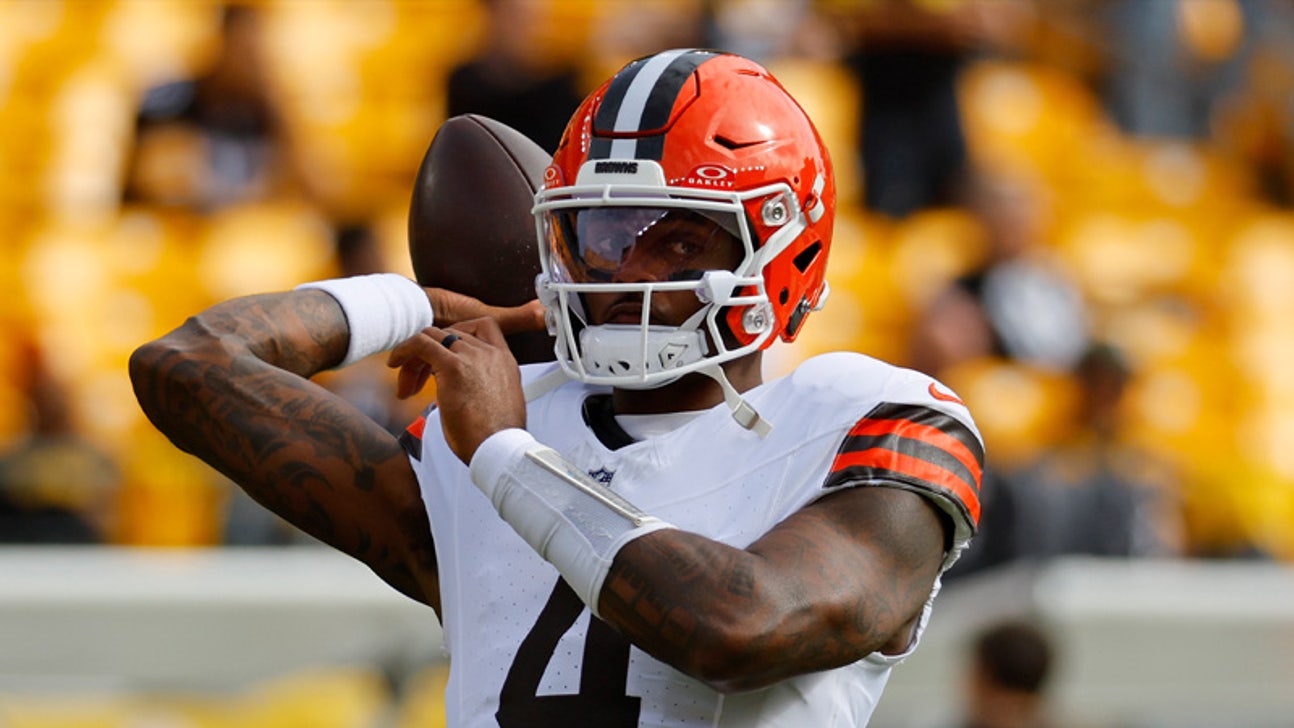
Cleveland Browns quarterback Deshaun Watson has been placed in the concussion protocol after experiencing symptoms on Monday night.

If Watson is not cleared in time for Sunday’s game against the New Orleans Saints, Shedeur Sanders would get his first start of the season.

Watson took a helmet-to-helmet hit during the first quarter of last week’s 27-6 loss to the Pittsburgh Steelers. The independent certified athletic trainer watching the game from the press box called down to the Browns’ sideline, and Watson was given a gameday concussion evaluation and cleared by the unaffiliated neurotrauma consultant.

The 10-year veteran returned to the game and completed 27 of 39 passes for 324 yards, his second straight 300-yard game.

The Browns said on Wednesday morning that Watson received evaluations after Sunday’s game and on Monday morning. He was cleared after showing no symptoms. Watson told the medical staff Tuesday morning he began experiencing symptoms Monday night when he was placed in the concussion protocol.

Sanders was in for four plays against the Steelers and completed both of his passes for two yards. He started the final seven games of his rookie season last year, going 3-4 with seven touchdowns and 10 interceptions.

Reporting by The Associated Press.

National Football League Get more from the National Football League Follow your favorites to get information about games, news and more
Source

Posted on

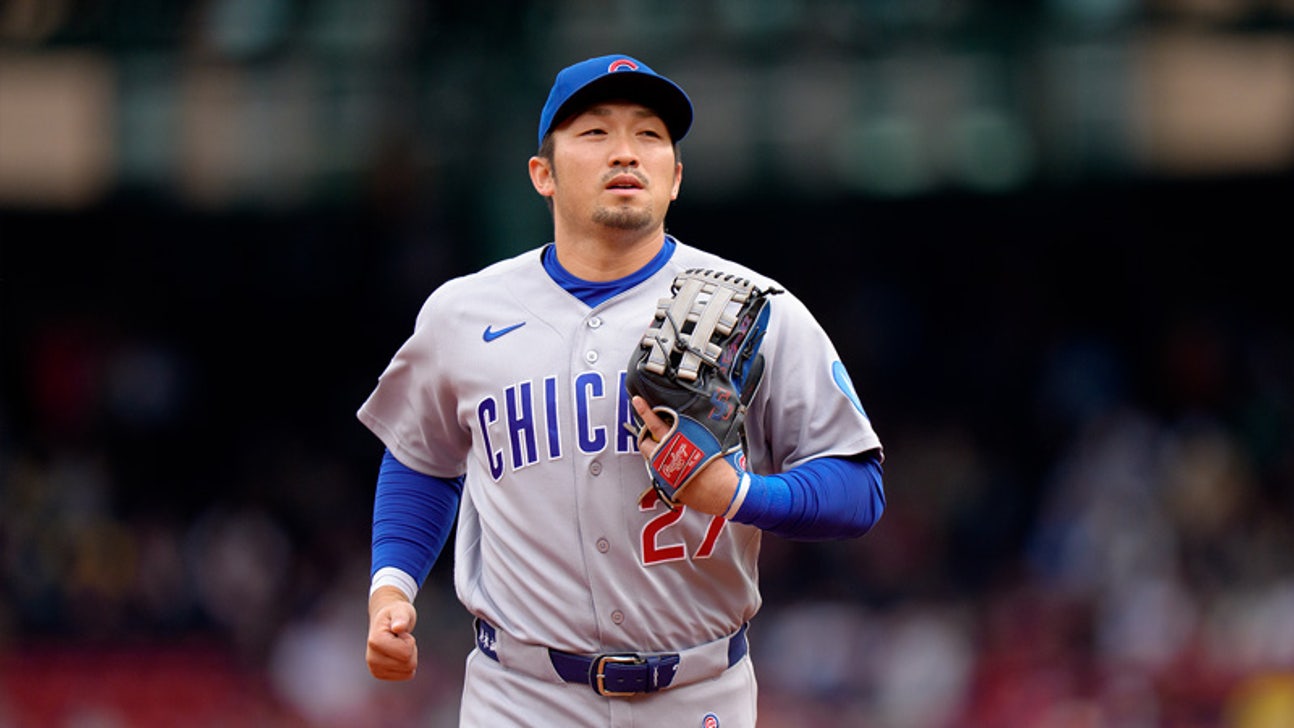
3 Best MLB Free Agent Fits For Seiya Suzuki If

Power. Lots and lots of power.

That’s what one is getting if they sign Chicago Cubs right fielder and designated hitter Seiya Suzuki, who’s arguably the biggest power threat on the MLB free agent market this winter. Plus, the 32-year-old Suzuki is coming off quite possibly the best all-around season of his MLB career, offering both a respectable defensive presence in right field and a potent threat from the right side of the plate.

Here are the three best MLB free agent fits for Suzuki should he depart Chicago:

Cincinnati RedsCincinnati Reds

Simply put: The Cincinnati Reds need a right fielder.

The Reds continue to struggle to get consistent production from their outfield and offense as a whole. Plus, the Eugenio Suárez reunion didn’t live up to the hype in 2026, as he finished with a mere .212/.307/.433 slash line while splitting time at the hot corner and designated hitter, and is now a free agent.

Suzuki would presumably become Cincinnati’s starting right fielder, adding veteran assurance and an impactful veteran complement. Suzuki’s electric bat would boost a Reds’ offense that was last in MLB in hits (1,231) and on-base percentage (.305), 27th in runs (666) and 25th in slugging percentage (.394) last season.

Prior to 2026, Suzuki was Chicago’s primary designated hitter in 2025 before making 110 starts and 111 appearances altogether in right field last season. On that front, Suzuki posted a career-high 5.1 wins above replacement while also logging 14 defensive runs.

Now, Cincinnati may want Héctor Rodríguez to be its everyday right fielder. In that case, Suzuki opens the season as the Reds’ designated hitter and moves to right field if Rodríguez struggles or injury presents itself. While the Reds were fourth in the sport with 213 home runs last season, they need the offense, and Suzuki would provide a major lift in that regard.

What could stop the Reds — who finished in last place in the National League Central with 75 wins last season — from making a push for Suzuki, though, is them potentially feeling they’re not close enough to contending for the playoffs to be doling out a potential nine-figure contract. Rather, they may hope that Rodríguez emerges as a building block and be cost-effective in filling out the rest of their depth chart.

Texas RangersTexas Rangers

The Texas Rangers need some oomph, which is precisely what Suzuki would provide.

Just one year ago in 2025, Suzuki, who boasts a career .472 slugging percentage and a 128 OPS+, totaled 32 home runs and 103 RBIs, both career highs. Suzuki would enhance a Texas offense that was just 25th in runs (673), 23rd in hits (1,296) and tied for 21st in slugging percentage (.396) last season.

As for Suzuki’s potential fit with the Rangers, designated hitter Joc Pederson is a free agent, which would be the easiest way to slide Suzuki into the mix. Concurrently, right fielder Brandon Nimmo has the versatility and experience playing all three outfield positions should Texas want to play Suzuki in right field.

While Evan Carter is a commendable center fielder, he continues to struggle at the plate (Carter hit .194 across 455 plate appearances in 2026), creating a scenario where Texas could either move Wyatt Langford from left to center field or put Nimmo in center field, with Suzuki taking over in right field.

Either way, the Rangers — who, aside from Langford, have been unable to get their touted young position players to progress as hitters — need more slugging, and they have the wiggle room to add to their outfield rotation.

The Houston Astros won the American League West with a .500 record, edging out the Rangers by one game. It’s reasonable to think the Rangers’ starting rotation — a unit that led MLB with a 3.41 ERA in 2025 — will bounce back in 2027. With that in mind, a slightly improved offense could literally be all they need to win the AL West.

All that said, Texas may prefer to retain Pederson, who hit 26 home runs and posted a .487 slugging percentage in 2026, on a short-term deal to be its designated hitter and avoid switching gears with who plays where in the outfield. 

Atlanta BravesAtlanta Braves

At face value, the Atlanta Braves don’t have a burning need for a right fielder. When putting a magnifying glass closer to the object at hand, though, signing Suzuki would be a slick move.

For starters, the Braves were muzzled by the Los Angeles Dodgers — who were then swept by the Milwaukee Brewers in the NL Championship Series — in the NL Division Series, tallying just eight runs and 18 hits across the would-be four-game series. Meanwhile, versatile left fielder Mauricio Dubón, outfielder and midseason pickup Lane Thomas and designated hitter/first baseman Dominic Smith are free agents.

Adding a considerable hitter who’s also a body for the outfield mix would be timely.

Suzuki represents a defensive alternative to Ronald Acuña Jr., who has underwhelmed at the corner outfield position by his standards of late and made 14 starts as the team’s designated hitter last season, and offers a way for the Braves to ease the homegrown star into being the team’s DH on a more consistent basis, if wanted.

Plus, the combination of a torn ACL, as well as calf and hamstring issues, have limited Acuña to just 251 regular games since the outset of the 2023 MLB season. Adding another All-Star-caliber outfielder to the mix warrants consideration from a health standpoint, alone.

Suzuki would fit Atlanta’s timeline as an NL contender with a core of players who are primarily in their prime.

Major League BaseballMLB Related Stories


Source

Posted on

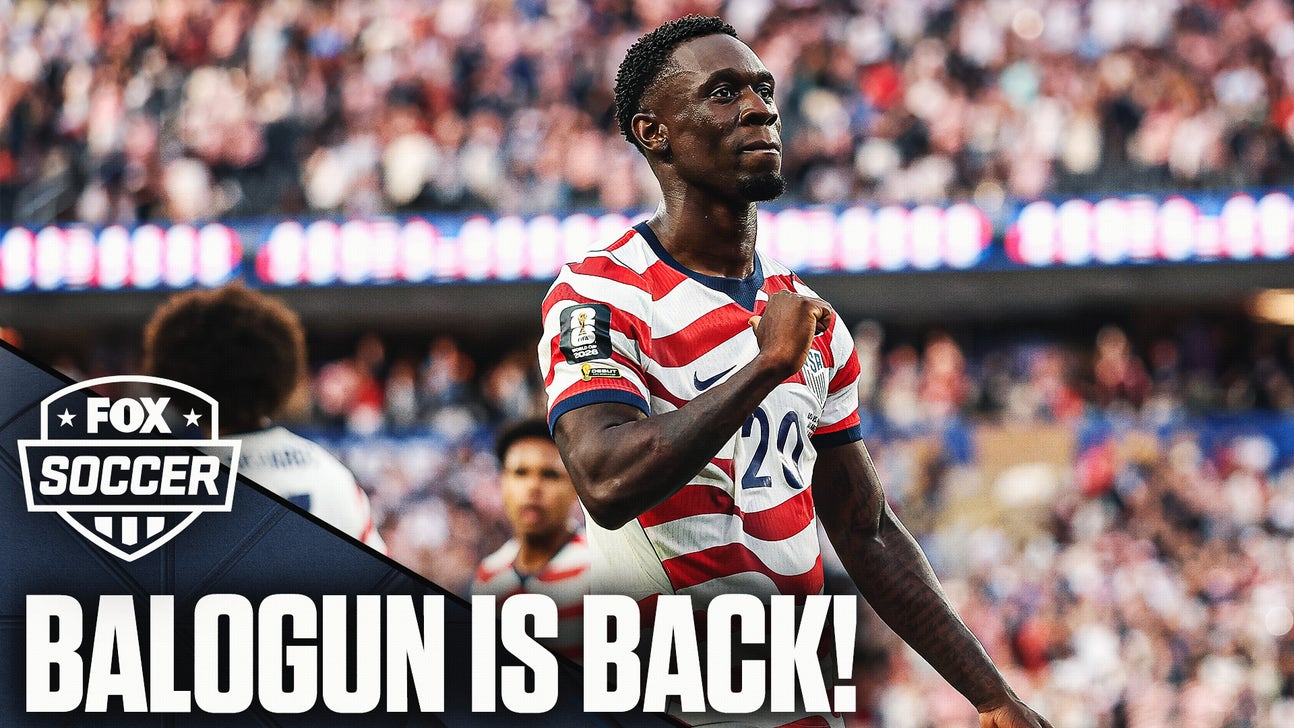
World Cup Hero Balogun Returns For USA’s Nations League Quarterfinal

The U.S. men’s soccer team’s new core is taking shape in Mauricio Pochettino’s second term.

Ahead of the USA’s first competitive games of the 2030 World Cup cycle, the Argentine coach named a 25-player roster that doesn’t include several longtime mainstays who were members of Pochettino’s roster at the 2026 tournament.

Headliners like Folarin Balogun, Christian Pulisic and Weston McKennie return after being left off the young U.S. squad that won four exhibition matches in September and October. Sebastian Berhalter, Malik Tillman and Auston Trusty — all scorers at the 2026 World Cup — are back, too.

Folarin Balogun was a key part of the United States roster during the 2026 World Cup. (Photo by Luke Hales/Getty Images)

It’s no surprise that teenage standouts Cavan Sullivan, Julian Hall and Justin Ellis were included after combining for six goals in those victories over Canada, Mexico, Chile and Peru.

“It’s a great opportunity,” Pochettino said Wednesday during a video conference with reporters, “to mix younger [players] with experienced players.” 

Yet there was no room for two-time World Cup veterans like Brenden Aaronson, Tim Weah, Joe Scally or Matt Turner. 

In their spots are several intriguing names instead. 

There’s the uncapped duo of Nashville SC fullback Reed Baker-Whiting and Santiago Castañeda, a defensive midfielder who has played every minute for German Bundesliga side Paderborn this season. There’s journeyman defender Bryan Reynolds, whose last cap came more than three years ago.

“They are performing with their clubs,” Pochettino said. “It’s good to have different options, and it’s really important to give the chance to these players because I think they deserve [it]”. 

Poch also retained projected 2028 Olympians Mathis Albert and Adri Mehmeti, both 17, and 18-year-old center back Neil Pierre and 20-year-old keeper Diego Kochen instead of sending them to Spain this month for a training camp and friendlies with Steve Cherundolo’s U.S. under-23s.

“The priority always is for the first team,” said Pochettino, who called Albert “one of the most talented player in USA.” 

“We all believe that if the players are involved with the first team,” he added, “it’s [an opportunity] to keep growing and, of course, adding more experience.” 

FOX SPORTS NEWSLETTER

Your teams. Your sports. Your inbox.

Follow your favorite leagues, teams and players for a personalized daily newsletter.

Sign up for the newsletter

Create or log in to your FOX Sports account.

Familiar faces round out the rest of the list, with Sergiño Dest Alex Freeman, Gio Reyna, Chris Richards, Antonee Robinson, Auston Trusty and captain Tyler Adams all included for the two-leg, total-goals-wins Concacaf Nations League quarterfinals against Haiti.

Balogun, who was also omitted last month because of a minor injury, has played sparingly for Monaco since his proposed move to Premier League Everton collapsed in the final hours of the summer transfer window. 

The goal, Pochettino said, is “to keep helping him to evolve after a tough summer after the World Cup.” Though the former PSG and Tottenham boss conceded that his top striker still isn’t fully fit, “I think the combination between Balogun, Ellis, and Hall is perfect.

George Campbell also returns, though Pochettino said that the former CF Montreal central defender could be replaced if the groin injury he sustained captaining English second tier club West Bromwich Albion on Tuesday is serious.

“Already we are thinking about different options to bring” if Campbell can’t travel early next week. The players summoned will begin reporting to U.S. Soccer’s training facility near Atlanta on Sunday. 

With security issues in the Caribbean nation preventing the Nov. 14 opener from being played in Port au Prince, the Haitian federation was granted permission to host it in Miami. The decisive contest will kick off three days later in Cincinnati.

The Stars and Stripes and Les Grenadiers last met during the 2025 Concacaf Gold Cup group stage, with the USA winning 2-1. The team is unbeaten in 10 games against Haiti, with its last loss way back in 1973.

“We know their physicality and the quality,” Pochettino told me.  “It’s important to show respect, because I think it’s going to be a tough, tough, tough two games.”

United StatesConcacaf Quarterfinals Roster

Pochettino’s full squad is as follows:

Goalkeepers: Matt Freese, New York City FC; Diego Kochen, Lyngby (Denmark); Brian Schwake, Nashville

Defenders: Reed Baker-Whiting, Nashville; George Campbell, West Brom (England); Sergiño Dest, PSV Eindhoven (Netherlands); Alex Freeman, Villarreal (Spain); Neil Pierre, Philadelphia Union; Bryan Reynolds, Stade Rennais (France); Chris Richards, Crystal Palace (England); Antonee Robinson, Fulham (England; Auston Trusty, Celtic (Scotland)

Midfielders: Tyler Adams, Bournemouth (England); Mathis Albert, Borussia Dortmund (Germany); Sebastian Berhalter, Middlesbrough (England); Santiago Castañeda, Paderborn (Germany); Weston McKennie, Juventus (Italy); Adri Mehmeti, Red Bull New York; Gio Reyna, Strasbourg (France); Malik Tillman, Bayer Leverkusen (Germany)

Forwards: Folarin Balogun, Monaco (France); Justin Ellis, Orlando City; Julian Hall, Red Bull New York; Christian Pulisic, AC Milan (Italy); Cavan Sullivan, Philadelphia Union

WHAT YOU SHOULD READ NEXT

Eyeing Future World Cup Success, U.S. Soccer Uplifting Young Stars For LA Olympics

On the way to the FIFA 2030 World Cup, U.S. men’s soccer prospects Cavan Sullivan and Julian Hall could be key members of the 2028 Olympic hosts’ squad in Los Angeles.


Source