Posted on

CIOs discuss friction between legacy IT and innovation

A meeting of CIOs in London earlier this week put into focus the precarious balancing act CIOs have to perform in terms of innovating while keeping the lights on.

Looking at the tech companies exhibiting products and services at the CIO UK & Ireland event at the Langham Hilton, hosted by Citrus Events, made it clear that artificial intelligence (AI) is an area of innovation people want to hear more about. But legacy systems are often deeply embedded in organisational culture and structure, making it difficult to implement the required change without disrupting existing workflows.

CIO delegates raised concerns about compliance during a roundtable discussion, given that organisations need to ensure their technical debt is secure. “Our regulators demand that we have certain levels and certain strengths and certifications, like Cyber Essentials Plus certification. We have to do that,” said one delegate.

The roundtable discussion suggests that IT leaders should prioritise trust in their strategic goals, rather than narrowly focusing on technical debt.

One of the big challenges for IT leaders is that, in the past, IT systems were commissioned once by the business. They went through a formal specification process that was then signed off and passed to the software development team. After coding, testing and deployment, enterprise applications tend to move to the maintenance phase of the software lifecycle. The people who originally commissioned the project may well have moved on to another project, so it is then left to business users to provide the feedback that informs software improvements.

However, as is apparent from the roundtable discussion, legacy systems often carry outdated processes that may no longer align with current business goals. Business processes change, but the enterprise system rarely reflects such changes. Instead, it is often left to business users to work around the difference.

The consensus from the delegates who participated in the discussion was that by focusing on these systems, organisations can identify inefficiencies and streamline business processes. This work is essential before introducing new technology. In fact, IT leaders should aim to get the processes up to date, which means revisiting those previous conversations they had with the business when the enterprise software was originally specified.

One of the CIOs at the roundtable said: “We’ve got to understand, first and foremost, what our processes are within the organisation, and what it is we want to do.”

One of the points raised in the roundtable discussion was how enterprise IT systems should be specified. If business processes are effectively encoded in the software, then adapting the code as the business evolves is a major undertaking. CIO delegates at the roundtable recognised that agility should be built in right at the start, as the system is being specified, to ensure it can cope with changes that may happen in the future.

The challenge of business and IT alignment was also discussed, insofar as a CIO is not best placed to speak purely from a finance perspective. Rather than attempt to speak the language of a finance director, one of the delegates suggested an alternative strategy, involving the use of stories to explain business benefits.

Source

Posted on

UK government datacentre planning decisions queried over environmental oversight admission

Permission for the development, dubbed the West London Technology Park (WLTP) by its developers Greystoke, was granted by the government in early July 2025. This is despite Buckinghamshire Council twice denying planning permission for the project on green belt protection grounds.

In Foxglove and Global Action Plan’s view, planning permission for the project should not have been granted without an environmental impact assessment (EIA) being carried out first.

For context, Buckinghamshire Council initially stated the developers did not need to submit an EIA, having received assurances from them about how little impact the project would have on local energy and water supplies.

This view was later upheld by the planning inspectorate, when the government placed Buckinghamshire Council’s planning permission denial for the project under review.

Government U-turns on planning approvals

However, ahead of the court case’s first hearing on 22 January 2026, the government issued a legal letter admitting that its decision to grant planning permission for the project should be quashed.

The government said in the letter – seen by Computer Weekly – that it had received assurances that a “suite of mitigation measures” would be in place that would negate the need for an EIA, but it admitted that not all of these measures were secured at the time permission for the project was granted.

“The secretary of state accepts that in screening out EIA based on mitigation measures, but then failing to secure those measures, there was a serious logical error… [and] the secretary of state accepts that the [legal] claim is arguable and permission [for the project] should be quashed.”

This admission has now prompted calls for a reassessment of two other hyperscale datacentre projects the government has previously decided should go ahead, despite planning permission for them being initially denied at local authority level.

Among those calling for a reassessment of past projects the government has given the green light to, in the wake of the government’s U-turn on the WLTP project, is Tom Hegarty, head of communications at Foxglove.

“That should be an urgent wake-up call to halt the mad rush to build out massive datacentres at any cost that has been an obsession of this government,” he told Computer Weekly. “Having acknowledged the shoddy state of their decision at [WLTP], we have to hope ministers will now learn that pushing these power-guzzling monsters through without a thought for the environmental consequences is not the right way forward.”

This is a also view shared by Mark Butcher, founder and director of IT sustainability consultancy Posetiv Cloud, who said the government’s stance on the WLTP development makes it “difficult, if not impossible” to justify not re-examining other large datacentres approved under similar circumstances.

“At the very least, [these projects] should be reviewed for consistency,” Butcher told Computer Weekly. “This is not about opposing datacentres in principle, but from a planning and legal perspective, [it is] about ensuring there is credibility in the planning system and that due process has been followed.

“There is also an important planning-system angle here. Inconsistent application of EIAs creates real problems for planners. It undermines professional judgement, increases legal and judicial review risk, and makes future decisions harder to defend.”

The government’s other green-lit projects

Out of the other projects the government has given its seal of planning approval to, one is also based in Iver, Buckinghamshire and is being overseen by US investment company Affinius Capital. The government granted that development permission to proceed in December 2024.

Computer Weekly contacted Affinius Capital for an update on how the project was progressing, given more than a year has passed since approval for the build was granted. At the time of writing, no response had been received.

However, Computer Weekly is aware that the go-live date for that development hinges on work the National Grid is doing in the local area to bolster energy availability through the creation of its new Uxbridge Moor substation, which is due for completion in 2029.

The other hyperscale datacentre the government has given its blessing to is another Greystoke development, located in Abbots Langley, Hertfordshire. Planning for that project was originally denied by Three Rivers District Council in January 2024, before the government overturned that decision in May 2025.

As is the case with the WLTP development, the local councils overseeing both projects said the developers did not need to submit an EIA as part of their planning applications.

Computer Weekly contacted Greystoke for a progress update on the Abbots Langley development, but the company said it had no comment to make regarding the project at this time. 

According to Butcher, the fact one of these approved developments has been retrospectively deemed to require an EIA leaves the government open to questions about why other projects of comparable scale are being treated differently. And that kind of uncertainty and inconsistency is likely to concern investors, but also developers plotting similar projects across the UK, he continued.

“[It will] likely push more cautious capital towards regions with clearer, more predictable planning frameworks,” he said. “From a government perspective, the approach also looks hugely short-sighted. By prioritising speed of approval and treating datacentres as nationally critical infrastructure without robust scrutiny, environmental and social risks are effectively pushed down to local authorities and communities.”

As mentioned, two of the projects the government has approved are in the same area, with approximately 10 miles separating them. They are also set to be built on the outskirts of West London and within the South East, which are already densely populated with datacentres.

If developers were mandated, for example, to complete an EIA as part of their planning permission applications, it would make it easier to assess the combined and cumulative impact of building so many datacentres in one area, added Butcher.

“Individually, sites may appear manageable, but without EIAs there is no proper mechanism to assess the combined effect of multiple hyperscale developments on regional power capacity, water stress, carbon intensity and community infrastructure,” he said. “That is exactly what we are now seeing in London and the South East, and is a significant part of wider infrastructure and resilience risk assessments.”

One of the drawbacks of planning for projects being viewed in this siloed way can be seen from the concerns previously raised about the impact that the influx of datacentres into West London, specifically, has had on the region’s energy security.

Speaking to Computer Weekly, John Booth, managing director of sustainability-focused IT consultancy Carbon3IT, said this is precisely why the UK datacentre industry is so keen to see the government deliver on its promised national planning policy statement.

“We’ve been asking for planning guidance for years and were advised that a national planning policy statement would be published in December 2025, but we are still waiting,” he said. “If planning guidance was in place, EIAs would be required, but most operators ask for a screening assessment for EIA prior to outline planning. If a local authority says no, then the EIA is still probably done but just not submitted.”

And datacentre operators are keen to do the right thing and would rather submit an EIA than not because they want to be seen as good citizens in the local communities where they are plotting to build their server farms, said Booth, adding: “Datacentres are trying to be as environmentally sound as they can be, but with a confused policy environment, this is difficult for them – hence our desire for guidance.”

Having planning approvals for datacentres based on a set of standards that are being “consistently applied” across different projects would be a huge benefit to operators, said Positiv Cloud’s Butcher. “Failing to do [so] risks the accusations and perceptions that the planning system is biased and being applied selectively, which ultimately slows the sector down through opposition, legal challenge and loss of trust,” he said.

In terms of what should be contained in such guidance, Foxglove’s Hegarty said it would be good to see the inclusion of an EIA made a “mandatory baseline for any datacentre planning application” as a starting point.

“[We also need to] mandate credible and enforceable conditions that require each datacentre operator, from Amazon to Equinix, to supply the full power needs of each site through new renewables at all times, so they don’t drain the grid and jack up prices for everyone else,” he said. “Otherwise, ministers will have demonstrated once again they are happy for Big Tech to reap the profits of polluting datacentres while our environment carries the cost.”

Computer Weekly contacted the Ministry of Housing, Communities and Local Government for comment on the points raised in this story, but no response was forthcoming by the time of publication.

Source

Posted on

The Security Interviews: Mick Baccio, Splunk

A lot of people struggle to pronounce the name of American politician Pete Buttigieg. When Mick Baccio, now global security advisor at Splunk SURGe and Cisco Foundation AI, went to work for him in a previous life, it was helpfully spelled out in large letters on the office wall. Buttigieg says it ‘Boot-edge-edge’, if you were wondering.

“I was like, oh that’s clever, thank you for that,” says Baccio. “I’m going to meet the man in a second, I should know this!”

A former US Navy Reserve intelligence officer who began his political career as the mayor of South Bend in Indiana, Buttigieg served as secretary of transportation during the administration of US president Joe Biden, from 2021 to 2025.

However, before that, he had a tilt at the White House himself, running a primary campaign that won in the state of Iowa, before he dropped out at the start of March 2020 as the Democrats rallied behind Biden.

It was on this campaign that Baccio met Buttigieg, and in conversation with Computer Weekly, he reflects on the experience of bootstrapping cyber security for a US presidential campaign.

Baccio admits he was sceptical about taking the gig at first, having just escaped Washington DC himself after serving as a threat intelligence expert for the Executive Office of the President under both Barack Obama and Donald Trump.

“I got a call one day. They said, ‘Hey, do you want to come be CISO [chief information security officer] for the Buttigieg campaign?’ I said ‘no’. I was like, ‘I’m good’,” he says.

“When you look at a political campaign in the United States, win or lose, you’re going to be unemployed in November.”

Someone must have kept on at him, because the record shows he took the job, and even though “president Buttigieg” did not take the job, Baccio has no regrets about his choices.

“It’s the most fun you’ll have,” he says. “The closest thing to a political campaign, I think, is a startup, but a campaign is a most unique organisation because it’s a non-profit funded entirely by donations and its sole purpose is to elect your mascot.

“Now, I say mascot not in a mean way, but secretary Buttigieg was not involved in day-to-day operations. He didn’t run things in the campaign – he was the campaign. He’s not even the CEO, he’s who we are – we’re Pete for America.”

In such a campaign, the role of CISO takes on a fundamentally different aspect, says Baccio. To start with, most campaign staffers are volunteers, or in their first or second jobs after university. “Most of them don’t even know what a CISO is. I had to explain that a lot, why I was there and what I was doing – teaching folks how to ‘do the cybers’,” says Baccio.

Such a campaign faces challenges that large organisations with security budgets and supportive boards do not. For one thing, every dollar that a political campaign spends on something like cyber security, office furniture, or coffee and doughnuts is a dollar it is not spending on winning votes, so Baccio quickly learned he had to operate lean and operate cheaply.

But despite what tales of Russian espionage and interference in US election cycles might lead you to believe, the campaign faced a threat environment much like any ordinary business.

“I think one of the most under-appreciated threat vectors is just plain old fraud and business email compromise,” says Baccio.

“This is a $100bn a year industry, and we talk a lot about the agentic AI [artificial intelligence] threat, polymorphic-enabled malware, APT [advanced persistent threat], blah blah blah – everybody wants it to be that, but it’s generally fraud,” he adds.

“I never underestimate folks who are just trying to do their job. If your job is to process invoices, it’s all you do all day, if you get a PDF labelled ‘invoice’ you’re going to open it. Fraud is a bigger problem than any APT or AI attack, but I don’t think it’s sexy enough to get column inches.”

Five a day

Indeed, an often-neglected security message, and one Splunk is keen to repeat, is the importance of eating your cyber vegetables – that is to say, nailing the basics.

Having driven around this block several times over the years, Baccio thinks these vegetables account for at least the bottom third of the cyber food pyramid.

“You know you’re supposed to drink lots of water, you’re supposed to eat lots of green things, and if you don’t, your body reflects that,” says Baccio. “And you know you’re supposed to MFA [multifactor authenticate] all the things, you know you’re supposed to segment your network, you know you’re supposed to patch your things – and if you don’t, your network gets popped.

“I’m not saying do all these things and you’ll be okay, I’m saying do all these things and you’ll be in a better position.

“Hackers don’t hack the cloud, they log in. They’ve already bought those credentials from an access broker. They’re not hacking anything. But if I have phishing-resistant MFA available to me, they might not be able to log in, the account takeover won’t happen, and the rest of the cyber attack changes going forward. So it’s those things that I think go a long, long way towards raising that overall bar.”

Blue collar for the blue team

Splunk SURGe was set up to help defenders tackle real-world problems that they face today, with a mix of actionable guidance, in-depth analysis on cyber issues and practical solutions during fast-moving security panics. Think of its output as a cyber buffet with excellent vegetarian options.

SURGe had its genesis during one of the “headless chicken” moments, when unit founder Ryan Kovar was poring over various Slack groups one evening and spotted a lot of chatter surrounding an apparent SolarWinds compromise – heralding the now legendary Sunburst/Solorigate incident.

In the wake of this, Kovar realised there was a big gap in Splunk’s offering, in that the company had pretty good tech and processes when it came to applying data science to security, but wasn’t so hot at cutting through to the human side of things.

In short, it wasn’t being holistic enough.

“Hackers don’t hack the cloud, they log in. They’ve already bought those credentials from an access broker. They’re not hacking anything. But if I have phishing-resistant MFA available to me, they might not be able to log in, the account takeover won’t happen, and the rest of the cyber attack changes going forward”

Mick Baccio, Cisco Foundation AI

That said, Kovar – in his own words – “wasn’t sure the world needed yet another security vendor research team”, so he formed SURGe to be a practical resource for users, or “blue collar for the blue team”.

Baccio was intimately involved in the unit’s creation – Kovar credits him with coming up with the “blue collar” line – and several years down the line, he still spends a lot of time helping Splunk’s customers make sense of the security landscape through blogs and other forms of outreach, as well as participating in a regular series, Coffee talk with SURGe.

He reflects: “I’m really lucky that I was in the Buttigieg campaign, that I was at the White House prior to that, the Pentagon, HHS [the Department of Health and Human Services], the CDC [Centre for Disease Control], and I’m now able to take all of that experience and bring it into SURGe and say, ‘These are the security things I’ve seen in my career – this is what I believe people want’.”

Threat intel at the foundations of AI

However, since July 2025, SURGe’s core mission has changed somewhat, after it transitioned to work within Cisco Foundation AI, a new initiative by Splunk’s network-centric parent that is developing open-weight, security-specific AI models.

In April 2025, Foundation AI launched Foundation-sec-8b, an eight-billion-parameter large language model (LLM) expressly designed to enable security teams to work faster, act more precisely and scale their operations without compromise.

You might reasonably wonder what a threat intelligence unit is doing jumping into bed with a bunch of LLM developers. Baccio himself declares he was shocked when it happened, but now he thinks it may be the smartest move Cisco has made since acquiring Splunk.

He characterises it as bringing SURGe’s collective experience as a steward of threat intelligence and a trusted advisor to customers to bear on a highly technical field and build AI tools that actually help security teams.

The advent of agentic AI in the past 12 to 18 months helps drive this narrative forward, says Baccio, and makes the promise of AI more real, at least compared to where it was a couple of years ago.

“If I throw generalised AI at a cyber problem, it’s not going to be great. But if I built a very specific model to do a very specific thing, then, yeah, that’s what I wanted a year ago when you sold me this AI hype,” he says. “Agentic is focused on one task, and it’s going to do it really well, but don’t ask it to do anything else.”

He cites the work of his colleague Shannon Davis, a principal AI researcher at Foundation AI, as a case in point. Davis created a tool called PLoB – standing for post-logon behaviour – to help detect intrusions instantaneously.

“To my point where you don’t hack the cloud, you just log in, after you have done so, PLoB detects all the activity that you’re doing and will be able to say, ‘This is a malicious actor’ or ‘This is just Mick from research’,” he says.

“Being able to do that at machine speed is something we’re going to have to lean into more when you take into account API calls, non-human identities, and all these things we’re introducing to the Rube Goldberg machine of the internet.

“Learning how agentic is applied becomes critical,” says Baccio as he looks ahead. “We have some stuff going on in the background that I can’t speak to, but we’re actively working together to brainstorm ideas and build these things to help move that Sisyphean security rock further up the hill. I’m excited about that. We’re going to help to keep someone’s security programme a little more secure.”

Source

Posted on

This Handy $32 Amazon Gadget Can Help Keep Your Tech

Stepnext/Shutterstock

We may receive a commission on purchases made from links.

If you’ve ever dealt with a keyboard malfunction or overheated laptop before, there’s a chance it’s because of dust. Dust might be small, but when it builds up, it can lead to serious damage to your electronics. So before your hardware even starts failing, it’s best to remove dust from any electronics in your home as soon as you notice it. A microfiber cloth and can of compressed air usually do the job just fine, but microfiber cloths already need washing after a couple of swipes, and compressed air canisters don’t last forever.

An arguably more convenient and cost-effective alternative is a rechargeable air duster like the ABVOT Electric Air Duster from Amazon. For only $32, as of this writing, this air duster can help keep your tech free from the eyesore that is dust buildup. It can come in handy for when you do regular upkeep — maybe you have a pet cat always hanging around your workstation — or just need occasional cleaning here and there. Whichever the case, it can be a useful gadget to keep in the house.

Dust-free tech in just a quick blast

The ABVOT Electric Air Duster is a cordless air duster with a built-in 6,000mAh battery and a 45,000-rpm motor. It can blow as much as 2.5 ounces of force, enough to clear away the dust from your computer screen, the top of your PC tower, and in between the keys of your keyboard. It can run for 15 minutes continuously before needing a recharge, but it’s easy to top up the battery with any 5V USB-C wall adapter, power bank, or even the USB port in your car.

Operation-wise, the ABVOT Electric Air Duster is a straightforward piece of tech because all you have to do is press the button to turn it on and hold it until you’re done cleaning. It’s lightweight at just around 1.5 pounds and pretty compact at only 7.4 x 7.7 x 3 inches. Plus, the nozzle is detachable to help save space, so you can store it inside a drawer until the next time it’s needed again. 

On Amazon users have rated it at 4.3 stars. Most complain about it being as loud as a handheld vacuum, so it might not be a good idea to use it in an office setting. Users also mention that it isn’t particularly great for crevices since the nozzle isn’t as narrow as one on a can of compressed air. On the upside, the air duster doesn’t produce moisture or cold air like compressed air. Instead, it blows out room-temperature air, making it generally safer to use with electronics. Some also say the air duster can double as a tool for drying hair and other items in a pinch.

Source

Posted on

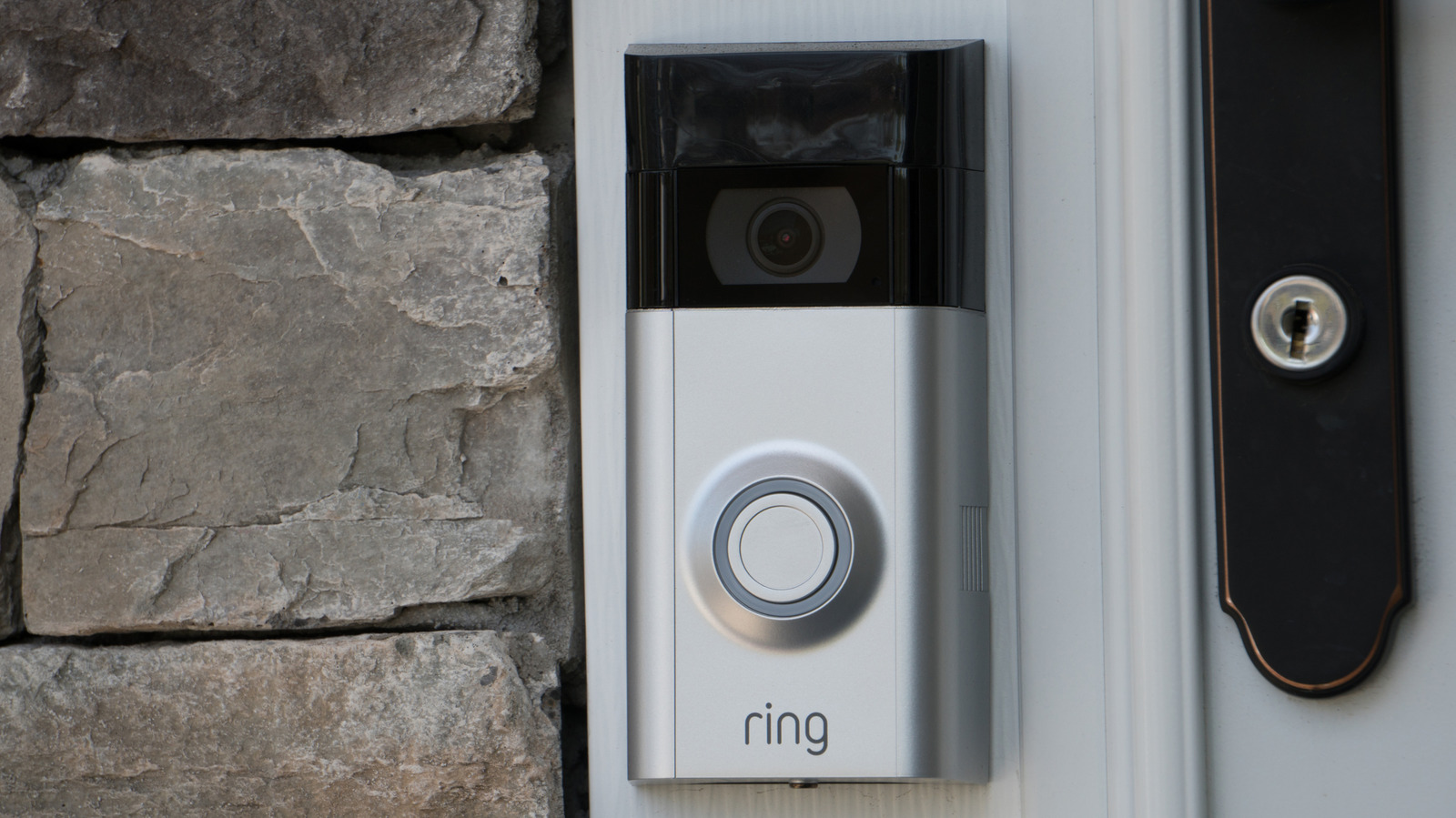
Ring Owners Are Returning Their Cameras

BrandonKleinPhoto/Shutterstock

Ring camera owners online claim to be returning their devices for a full refund, citing that the company has broken its terms of service with users. Users claim they’re doing so because the Amazon-led company joined forces with Flock Safety and forced users to opt in to certain features. These Ring owners claim that the company is allegedly providing information to U.S. Immigration and Customs Enforcement. It’s a problem that is calling into question what home security can mean for users.

Ring told The New York Times that no user footage is being used to help ICE, and the company’s partnership with Flock Safety has been on standby since its announcement in October 2025. As of now, Ring has not provided a specific timeline for this partnership to start, but Flock Safety states that it does not allow federal agencies access to user data. Despite this, users on Reddit are still providing photos of their returns after speaking with customer service for Ring potentially breaking its terms of service with customers.

There is a way to ask for a Ring camera refund, should you choose. According to several Reddit users, Amazon is honoring these returns so long as you speak to customer service and explain that Ring has broken its terms of service. Users claim to be receiving a full refund for their Ring cameras and also successfully returning Ring doorbells, indoor cameras, multiple batteries, and a battery charger.

Why the refund is happening and how to claim it

PJ McDonnell/Shutterstock

Ring security systems are no strangers to scrutiny, despite being top-rated Amazon gadgets. In 2019, the company was accused of spying on customer camera feeds. More recently, its new Search Party feature, announced in a Super Bowl commercial, gives users reason to believe it’s allegedly leading to a surveillance state disguised as a lost dog search tool.

Now, users are asking for their money back. In a post on Reddit, user “aawolf” posted an image explaining how and why you should return your Ring camera. The post also claims that Ring footage can fall into the hands of Flock Safety, which is also responsible for license plate readers throughout the U.S.. This Reddit user is alleging that Flock has been working with ICE to locate “susceptible” individuals. The post also cites that another reason to return products is that Ring reportedly enabled AI and facial recognition features, previously optional, without user consent.

Essentially, so long as you state that Ring has changed the terms of service and that you disagree with Flock, Amazon may begin processing your return. If you wish to request a refund for your Ring camera, the fastest way is to speak to customer service through Rufus on the Amazon home page. From there, request your refund by stating that the company’s agreement with Flock invalidates the reason you purchased the product, and that the terms of service have been changed. You may need to provide an order number, but buyers did confirm that they have successfully returned cameras.

Source

Posted on

Apple CarPlay Might Be Getting AI Chatbots Soon (But They

Lloyd Vas/Shutterstock

It appears Apple will finally let AI chatbots be used with CarPlay. According to reports from Bloomberg, OpenAI’s ChatGPT, Google’s Gemini, or even xAI’s Grok could be available for millions of CarPlay drivers in the coming months. While Apple won’t let CarPlay users change the way Siri is invoked (which means it will continue to be the standard experience for the infotainment platform), users will finally be able to use voice commands to talk to their favorite AI chatbots.

It’s possible Apple intends for this to be one of the top CarPlay features of iOS 27, which is expected to be previewed at the WWDC 2026 keynote in June. Apple’s timing might be just enough to improve its own personal assistant, which is expected to get supercharged by a Gemini model starting with iOS 26.4, and a full chatbot experience later this year with iOS 27. If Apple can offer an improved experience with Siri when it announces AI chatbot support, users might opt to stay with Apple for a more personalized and private interface.

CarPlay users are about to get what they always wanted

Hadrian/Shutterstock

Currently, CarPlay users have to use shortcuts and widgets to access AI chatbots, or directly from their iPhone through their vehicle’s stereo. With people using AI more and more, it’s been a missed opportunity that Apple still doesn’t support a native experience.

Apple is reportedly working to improve its updated Siri by bringing World Knowledge Answers. This would allow the personal assistant to finally be able to summarize information found online, instead of just providing a link or saying it can’t perform that task.

Last year, I had the experience of seeing Grok in action on a Tesla vehicle, and the experience was really smooth with xAI’s assistant answering to queries regarding the weather, what was going on in the world in real time, and, of course, even telling a couple of jokes. If Apple can improve Siri to provide a similar experience on CarPlay, it’s possible that even if people can download ChatGPT, Gemini, and other options, they would still stick with Siri. Bloomberg has also reported that the new Siri will be iOS 27’s main priority, which bodes well for users eager for an improved Siri above all else. 

Source

Posted on

Ditch Unreliable Modern Weather Apps For A Retro Solution

Frankramspott/Getty Images

We may receive a commission on purchases made from links.

You wake up in the morning and check with your weather app, which tells you that there is no snow today. You expect an easy commute. Ten minutes on the road, however, the flakes start to fall. The problem with modern weather apps is the reliance on algorithms with no real-time human oversight, which sometimes leads to inaccurate weather predictions. All apps can be susceptible to this, even if they have some of the best weather service features.

While you can tune into your local station to get a meteorologist’s opinion, there is one piece of tech that doesn’t require turning on the TV or going to the weather app on your smartphone. That is a Galileo thermometer. This retro thermometer, invented by astronomer Galileo Galilei, is great for showing local temperature in your area as well as predicting changes. These are available to buy at online retailers or in some physical stores.

Aside from offering an alternative to local weather prediction, Galileo thermometers are quite pretty to have on display and offer a nice, screen-free solution. Since staring at our phones too much can become addicting and lead to high levels of anxiety and depression, this is a way to remove yourself from constantly looking at your phone.

How a Galileo thermometer works

Hmvart/Getty Images

A Galileo thermometer works by taking advantage of how water’s density changes with temperature. Inside the sealed glass tube is water and several colorful glass bubbles, each tagged with a different temperature. The tags change each bubble’s weight, making every bubble a tiny bit denser or lighter than the others. As the surrounding air warms or cools, the water inside the thermometer expands or contracts, which changes its density. When that happens, some bubbles sink while others float. The lowest bubble that’s still floating matches the water’s density and shows the current temperature. Because rising or falling air pressure often brings temperature changes with it, watching these subtle shifts can give a rough clue about where your local weather might be headed.

Laurahilchey/Getty

Amazon offers such a thermometer also equipped with storm glass and an analog clock for $44 at the time of writing. It’s a neat full-service weather station. The Galileo thermometer itself shows the local temperature. The storm glass enhances the display of potential weather forecasting based on the changing temperature. Finally, it has a hygrometer for local humidity readings. The Galileo thermometer is a pretty piece to set out either at home or in your office. If you don’t want to spend $44, you can wait around for some of the best days to buy tech on Amazon to try to snag a better deal.

Why weather apps can be unreliable

Alex Photo Stock/Shutterstock

While you might consider your weather app essential for daily activities, and perhaps even among the great essential apps if you are an outdoor enthusiast, the problem is that they are not always reliable. This is especially true in areas that can have unpredictable weather patterns, like lake effect snow around the Great Lakes or the way the Rocky Mountains affect weather patterns ithose states.

Weather apps don’t have meteorological oversight to constantly check and update the data. Instead, they combine data from satellites, radar systems, and ground weather stations. The data gathered from these sources is then put together into forecasting models for the app. These apps may pull from various different computer weather models, which explains why two different weather apps can show two different forecasts for the day.

While these weather models and data processing systems are certainly advanced, they still rely on typical patterns. Subtle changes may not be accounted for and the way local geography impacts local areas is not always reflected. That is why your weather app may be wrong, and one of the benefits the Galileo thermometer has over it. The Galileo thermometer shows the weather as it happens, with the bubbles inside moving to forecast what you can expect in the near future. Though the Galileo thermometer has its limits in terms of wide-range, long-term forecasting, it is still a handy tool to have at your disposal.

Source

Posted on

Google Pixel 10a Touts FaceTime Support, But It’s Still Not

Elvard project/Shutterstock

Well, it seems Google is up to some more shenanigans with the upcoming arrival of the Pixel 10a, its next budget-friendly Android phone. While our review of the Pixel 10 praised what Google is doing with its smartphones, the company still seems intent on trying to win over as many Apple iPhone users as possible. That’s because on the latest store page for the Pixel 10a, Google actually advertises being able to use FaceTime — Apple’s exclusive video chatting functionality — with its latest phone.

Now, it’s important to note that this isn’t the first time that we have seen Google doing something like this. In the past, Reddit users spotted similar claims on the Pixel 10’s store page, and the same advertisement bit actually shows up on the main store page for the Pixel lineup. So, what’s the big deal? Does the Pixel lineup offer some kind of special deal with Apple that gives users access to FaceTime on Android?

No. It does not. While it might sound like Google is saying that FaceTime is more readily available on Pixel phones, you have to look at the fine print to truly understand what that statement means. Because, instead of the Pixel actually offering any kind of extended support for FaceTime, Google is simply riding the addition of FaceTime links in iOS 15, which allows Apple users to invite both Android and Windows devices to FaceTime calls by creating a call group and then sending the link to the other users.

What Google’s FaceTime advertisement really means

Being able to join FaceTime calls on Android is absolutely a handy functionality to have, and just one way that Apple has been working to make iPhones and its other products work more seamlessly with Android and Windows devices. However, there’s nothing different about what the Pixel is offering here. Instead, it seems Google might just be trying to add in some extra buzzwords to help entice new users to pick up its phones. There’s nothing inherently wrong with Google outlining that you’ll still be able to chat with FaceTime users on Pixel. However, the exact wording has certainly led to some confusion with consumers.

Of course, Google’s own response to FaceTime, Duo, arrived on iPhone and Android several years ago, but slowly died off as the service was pushed into Google Meet. That’s likely because FaceTime works so seamlessly with devices, with some on Reddit even calling it “phone calling 2.0.” As such, this ongoing popularity and ease-of-use is probably why Google is using it as a selling point for its devices. Another confusing part of the equation, too, is the fact that Google actually made AirDrop work with its Android phones, so it makes sense that some might believe they’d somehow cracked the code or made a deal with Apple for FaceTime support. But that remains unlikely.

Source

Posted on

5 Cool USB Port Gadgets That Can Make Your Car

rukawajung/Shutterstock

We may receive a commission on purchases made from links.

Driving a car is a lot of responsibility. On the road, there is no shortage of laws to adhere to and plenty of other drivers to contend with. While it’s up to everyone to keep the avenues and highways safe, it’s not a job all drivers take seriously. There are plenty of dangerous people behind the wheel, and the only individual who can defend you, yours, and your vehicle from the brake-checkers and speed demons of the world is you. 

Fortunately, there are also plenty of car-friendly USB port gadgets on the market, and many are designed with safety in mind. Whether you’re looking for front and rear dash cams that never stop recording, or a plug-and-play LED light in case of emergencies, you can make all your four-wheel excursions safer and more efficient with any of the five devices we selected.  

When choosing items, we did our best to stick with top-rated devices with bountiful user feedback and hands-on reviews from trusted publications. We also made sure to include a couple of budget-friendly devices that folks with nothing more than $15 can reap the benefits of. 

70mai A810 Dash Cam

Everyone should own a multi-view dash cam system, and frankly, they should be built into all new road-bound vehicles. But until that day comes (if it ever does), we’ll be forced to invest in our camera tech. Fortunately, cam combos like the 70mai A810 are readily available, and at a price most folks will be able to wrap their heads around.

The entire A810 rig runs off USB-A and DC power, and comes with a front-facing cam that delivers 4K recordings and a 146-degree field of view (FOV). The back cam records in 1080p HD, has a 130-degree FOV, and plugs into the side of the front cam for power. The system stores all footage to a microSD and accepts cards up to 256GB.

On Amazon, the A810 combo scored a 4.4 out of 5 stars, based on nearly 1,600 reviews. Most users were pleased with the overall video quality and easy setup. While the rear cam could do with some processing improvements — and perhaps a more conventional USB connection down the line — the 70mai A810 is well worth the investment. Plus, it’s often on sale for less than its $180 list price.

Ecoangel LED Road Flares

No one ever wants to be in a position where firing up a road flare is necessary, but it’s better to be safe than sorry. To that end, we recommend the Ecoangel LED Road Flares 3-Pack, a versatile set of disc-shaped emergency lights with nine different flash modes and flashlight capabilities. Each disc contains a 650-milliamp lithium-ion battery that recharges via USB, and all three units are waterproof.

Perfect for flagging down the AAA tow that’s coming to rescue you, the road flares can be programmed to flash intermittently, strobe repeatedly, or stay solid. When it’s time to recharge, simply use the provided USB cable to connect to your vehicle, and wait until the flare indicator switches from red to green (indicative of a full charge).

Amazon shoppers gave this bundle 4.8 out of 5, based on over 4,300 reviews. Most folks love how well the lights work and how simple they are to use. Others praised the durability of the product, as well as the magnetization that lets you stick them to certain parts of your vehicle. Ecoangel was even kind enough to provide a carrying case for all three flares.

AstroAI L7 Tire Inflator

A tire repair tool is another gadget every driver should have, and we think the AstroAI L7 Tire Inflator is worth every penny. It scored a 4.3 out of 5 stars on Amazon, and that’s based on over 10,300 user reviews. The AstroAI L7 has a 4,000-milliamp battery, which the manufacturer claims is enough power to inflate up to eight tires (195/65R15 size) from 30 to 36 PSI.

Conveniently, it even pulls double duty as a backup charger for phones and other tech products. The USB ports are located on the bottom of the gauge, and AstroAI recommends recharging every three months for optimal performance. With four vehicle modes to choose from and a custom mode that lets you set your own PSI value (3-150 PSI), the L7 probably won’t be a tool you use often — but it’s one you’ll be glad to have should a tire decide to deflate.

The tire inflator comes with everything you need in the box, including a USB charging cord, air nozzles, a needle valve adapter, and a Presta to Schrader adapter. We read a few reports of folks who ran out of battery faster than anticipated, so definitely make sure you stick to that three-month recharge schedule.

RunningSnail Emergency Radio

A portable radio may not be at the top of your list of cheap car gadgets to invest in, but this RunningSnail Emergency Radio shouldn’t be ignored. Priced at $27, it’s inexpensive even when it’s not on sale. What you’re getting is a 2,000-milliamp hub with AM/FM/NOAA tuning, an integrated LED flashlight, and three ways to charge the battery: USB, solar, and a manual hand crank.

Measuring 5 inches tall and 2.4 inches wide, the RunningSnail is small enough to fit in a pocket, making it easy to switch the device between vehicles. If push comes to shove, and your phone is minutes from dying, you’ll even be able to use the radio’s USB port to top off mobile devices. That said, 2,000 milliamps isn’t a ton of power, so it’s still a good idea to carry around one of the best portable chargers.

Amazon shoppers gave this RunningSnail radio 4.5 out of 5 stars, and that was based on over 22,750 reviews. People love the reliability of the device when the power’s out, as well as the audio quality of the weather stations it’s able to pick up. Some users complained that the battery doesn’t hold a charge, while others had no issues. To play it safe, we recommend unboxing and giving it a test run.

Ztylus Stinger Escape Tool

Car escape tools aren’t the friendliest-looking gadgets, but a tool like the Ztylus Stinger Escape Tool should be an essential part of your vehicle’s emergency kit. The window-breaking mechanism is spring-loaded; all you have to do is press the Stinger up against one of your tempered glass side windows and press the trigger. We also appreciate the inclusion of a seatbelt cutter.

One of our favorite features is the DC connector the device uses. When plugged into your car’s 12-volt DC port, the Stinger doubles as a dual USB charger for phones and other portable tech. Amazon shoppers gave it a 4.6 out of 5 stars, based on over 1,850 reviews, and most folks were pleased with how well the Stinger performs. Others weren’t so keen on how long it takes the USB-A ports to charge a phone.

Even if you don’t want to keep the Stinger plugged into your vehicle’s DC port, it’s small enough to be tucked away in a glovebox or center console. Just make sure you know exactly where it is at all times.

Methodology

Anyaberkut/Getty Images

Vehicle-friendly emergency gadgets may not be as fun or feature-packed as the consumer tech products we usually cover, but these types of tools exist for several reasons. Saving lives and keeping people safe is at the top of the priority list, and safety and convenience are exactly what we had in mind when choosing these five products. We also made sure to stick with reliable brands and parsed both user feedback and professional reviews for pros, cons, and other critical feedback. Lastly, we did our best to include a couple of products that even the strictest of safety budgets can afford.

Source

Posted on

London Assembly member: Police should halt facial-recognition technology use

The Metropolitan Police’s rapid “unchecked” expansion of live facial-recognition (LFR) technology is taking place without clear legal authority and minimal public accountability, says Green London Assembly member Zoë Garbett in a call for the force to halt its deployments of the controversial technology.

Made during an ongoing government consultation on a legal framework for the technology, Garbett’s call for the force to immediately halt its deployments of LFR is informed by concerns around its disproportionate effects on Black and brown communities, a lack of specific legal powers dictating how police can use the tech, and the Met’s opacity around the true costs of deploying.

Garbett’s intervention also comes as the High Court is considering the lawfulness of the Met’s approach to LFR, and whether it has effective safeguards or constraints in place to protect people’s human rights from the biometric surveillance being conducted.

“Live facial-recognition technology subjects everyone to constant surveillance, which goes against the democratic principle that people should not be monitored unless there is suspicion of wrongdoing,” said Garbett, adding that there have already been instances of “real harm” in children being wrongly placed on watchlists, and the disproportionate targeting and misidentification of Black Londoners.

“These invasive tools allow the police to monitor the daily lives of Londoners, entirely unregulated and without any safeguards. The Met repeatedly claim that live facial recognition is a success, yet they continue to withhold the data required to scrutinise those claims.

“It makes no sense for the home secretary to announce the expansion of live facial recognition at the same time as running a government consultation on the use of this technology. This expansion is especially concerning given that there is still no specific law authorising the use of this technology.”

Highlighting in a corresponding report how facial-recognition technology “flips the presumption of innocence” by turning public spaces into an “identification parade”, Garbett also outlined ways in which both the Met and the Home Office can make its use safer in lieu of a full-blown ban.

This includes creating primary legislation with “strict controls” that limits LFR to the most serious crimes and bans its use by non-law enforcement public authorities or the private sector; and openly publishing deployment assessments so that watchlist creation, location choice and tactical decisions are publicly available for Londoners to review.

On watchlist creation specifically, Garbett dismissed the police claim that LFR is a “precise” tool, highlighting how nearly every watchlist used is larger than the one preceding it.

Highlighting how the number of faces being scanned by the Met is “increasing at a near exponential rate”, Garbett likened the forces watchlist tactics to a “fishing trawler” that it keeps adding to so it can find people.

“Data suggests that rather than making a new unique watchlist for each deployment based on the likelihood of people being in the area of the deployment, it seems from the outside that the MPS is just adding additional people on to a base watchlist [it has],” she said.

Garbett also called on the Met to publish the true financial and operational costs of all LFR deployments, arguing that the force has not only failed to provide a compelling business case for the technology, but is actively obfuscating this information.

“The MPS has a history of a lack of transparency. This is perhaps best summarised by Baroness Casey in her review of the MPS where she said, ‘The Met itself sees scrutiny as an intrusion. This is both short-sighted and unethical. As a public body with powers over the public it needs to be transparent to Londoners for its actions to earn their trust, confidence and respect’,” said Garbett.

She added that while freedom of information requests returned in mid-2023 revealed that, up until that point, the force had spent £500,000 on the tech, without up-to-date reliable figures, it is impossible to verify the Met’s claims that it is delivering a greater impact on public safety through LFR.

“The NHS wouldn’t be able to roll out a new treatment without being able to prove it was worthwhile and effective, but it seems that the police operate under their own rules and seemingly answer to no one,” said Garbett.

Computer Weekly contacted the Met about Garbett’s report. A spokesperson said that LFR “has taken more than 1,700 dangerous offenders off the streets since the start of 2024, including those wanted for serious offences, such as violence against women and girls. This success has meant 85% Londoners support our use of the technology to keep them safe.

“It has been deployed across all 32 boroughs in London, with each use carefully planned to ensure we are deploying to areas where there is the greatest threat to public safety. A hearing into our use of live facial recognition has taken place and we look forward to receiving the High Court’s decision in due course. We remain confident our use of LFR is lawful and follows the policy which is published online.”

A lack of meaningful consultation so far

While the use of LFR by police – beginning with the Met’s deployment at Notting Hill Carnival in August 2016 – has already ramped up massively in recent years, there has so far been minimal public debate or consultation, with the Home Office claiming for years that there is already “comprehensive” legal framework in place.

The lack of meaningful engagement with the public by police and government over facial recognition is reflected in Garbett’s report. She highlights, for examples, that Newham Council unanimously passed a motion in January 2023 to suspend the use of LFR throughout the borough until biometric and anti-discrimination safeguards are in place.

While the motion highlighted the potential of LFR to “exacerbate racist outcomes in policing” – particularly in Newham, the most ethnically diverse of all local authorities in England and Wales – both the Met and the Home Office said that they would press forward with the deployments anyway.

“Since that motion was passed, LFR has been used 31 times in Newham by the MPS,” said Garbett.

On the deployment of permanent LFR cameras mounted to street furniture in Croydon, Garbett added while the Met promised it would consult with the local community, councillors from there are have told her the force did not follow through with this consultation.

The technology was similarly rolled out in Lewisham without meaningful consultation, despite the Met’s claims to the contrary.

However, in December 2025, the Home Office launched a 10-week consultation on the use of LFR by UK police, allowing interested parties and members of the public to share their views on how the controversial technology should be regulated.

The department has said that although a “patchwork” legal framework for police facial recognition exists (including for the increasing use of the retrospective and “operator-initiated” versions of the technology), it does not give police themselves the confidence to “use it at significantly greater scale…nor does it consistently give the public the confidence that it will be used responsibly”.

It added that the current rules governing police LFR use are “complicated and difficult to understand”, and that an ordinary member of the public would be required to read four pieces of legislation, police national guidance documents and a range of detailed legal or data protection documents from individual forces to fully understand the basis for LFR use on their high streets.

Consultation responses

In a section on how people can respond to the Home Office’s LFR consultation, Garbett urged people to call for its ban, adding that further protections in lieu one could include requiring a warrant to be placed on a watchlist, and limiting it to “the most serious and urgent crime purposes”.

She noted that, as it stands, the Met has not used LFR to make any terror-related arrests, with the most common offence being variations on theft or court order breaches

“In a recent press release, the lead example the MPS give for how they have used LFR is using it to arrest a 36-year-old woman who was wanted for failing to appear at court for an assault in 2004 when they were probably 15 years old,” she said. “The public might feel differently about LFR if they knew it was being used on cases such as these.”

On the permanent installation of LFR cameras in Croydon, Garbett added that while the police have said they are only switched on when an operation is taking place, “there is still the potential for 24/7 monitoring, with Londoners unable to tell if the cameras are operational or not. This makes the feeling of being under surveillance in London feel routine and begins to be a slippery slope to preventative policing and a blurry line between safety and social control.”  

Garbett concluded that the rapid deployment of LFR must stop while safeguards are in place to protect people’s rights: “I urge everyone to respond to the government consultation and use the guide I’ve prepared to make sure we have a say in how this technology is used going forward.”

Computer Weekly contacted the Home Office about the contents of Garbett’s report and its decision to massively expand facial-recognition deployments before concluding its consultation.

“Facial recognition is a crucial tool that helps the police locate suspects and those wanted by the courts. In the past two years alone, it has helped the Metropolitan Police locate and arrest more than 1,700 offenders, including rapists, domestic abusers and sex offenders,” said a spokesperson.

“The Home Secretary has announced plans to roll out facial recognition across the country. The number of live facial recognition vans will triple, with 50 vans available to every police force in England and Wales.”

Source