Posted on

3 Things You Should Never Put On Your Smartphone

CalypsoArt/Shutterstock

These days, our phones are very personal to us, and when we get one, we are always eager to personalize or protect it. Phones store nearly everything about you today, from banking information and payment details, to emails and your social media accounts. Because so much valuable information lives on these devices, what you put on them, both physically and digitally, matters more than most people realize. Some popular accessories and apps do more harm than good to your phone.

While protective cases and screen guards prevent damage from drops and scratches, other add-ons can compromise your phone’s privacy or degrade its performance. Before you stick, install, or attach anything, think twice. From adhesive nightmares to the security risks, there are certain things that should never touch your device. If you want to get the most out of your phone without ruining it, check out some amazing iPhone tricks to add to your routine.

Stickers directly on your phone’s back

Laura Lezza/Getty Images

Stickers are cute and they’re great for personalizing your devices, but depending on the material and coverage, they might do your phone more harm than good. Covering the entire back of your phone with anything made of a thick material can affect the heat dissipation and cause overheating. You could also accidentally cover important components like the flash and part of the camera lens. Stickers are also known to leave a sticky residue when you remove them, especially if they’ve been on the phone for a long time. There are ways to remove a sticker without leaving residue, but if you don’t do it well, it can affect the resale value of your phone if you want to trade it in. 

If you want stickers, it’s best to put them on a phone case instead of directly on your device. With a case, you can easily switch out stickers and make as many customizations as you want without affecting the phone itself. 

Plastic screen protectors

Anastasiia Akh/Shutterstock

Your phone needs a screen protector to prevent scratches and reduce the impact of falls and bumps. But not all screen protectors provide equal protection. Plastic screen protectors are cheaper, but they have poor impact protection. Plastic is a thin material and does not absorb the impact from anything but a very light fall. The force of the impact will be passed to your screen and you are likely to get a crack. 

These protectors guard against minor scratches but won’t do much if there is a significant drop. Plastic screen protectors can also reduce touch sensitivity and feel less smooth than glass.  

A better alternative to plastic screen protectors is tempered glass. They guard better against scratches and cracks and are much clearer than their plastic counterparts. Tempered glass protectors are thin, offer better protection, and feel just like your phone screen. The only drawback is that they are more expensive than the plastic protectors. But in the end, you will get a better value for your money.

RAM cleaner and battery saver apps

bangoland/Shutterstock

Apps promising to clean your phone, speed it up, or save your battery don’t actually do anything to help the performance of your device. They are usually how various types of malware and adware can get onto your device. These adware apps have been downloaded millions of times, when there is already a built-in Files app in your phone capable of handling the same activities these RAM cleaners offer, only with less fancy animations (and a much lower risk of information theft).

In fact, closing apps in the background doesn’t do much for your phone. Instead it can make your device use more battery power when you re-open the apps. Smartphones now manage memory and battery automatically without you needing to do much. You are better off understanding background processes and optimizing your display to make your phone run more smoothly and last longer.

Source

Posted on

NotebookLM’s Best Feature Is Finally Available On iOS And Android

Ascannio/Shutterstock

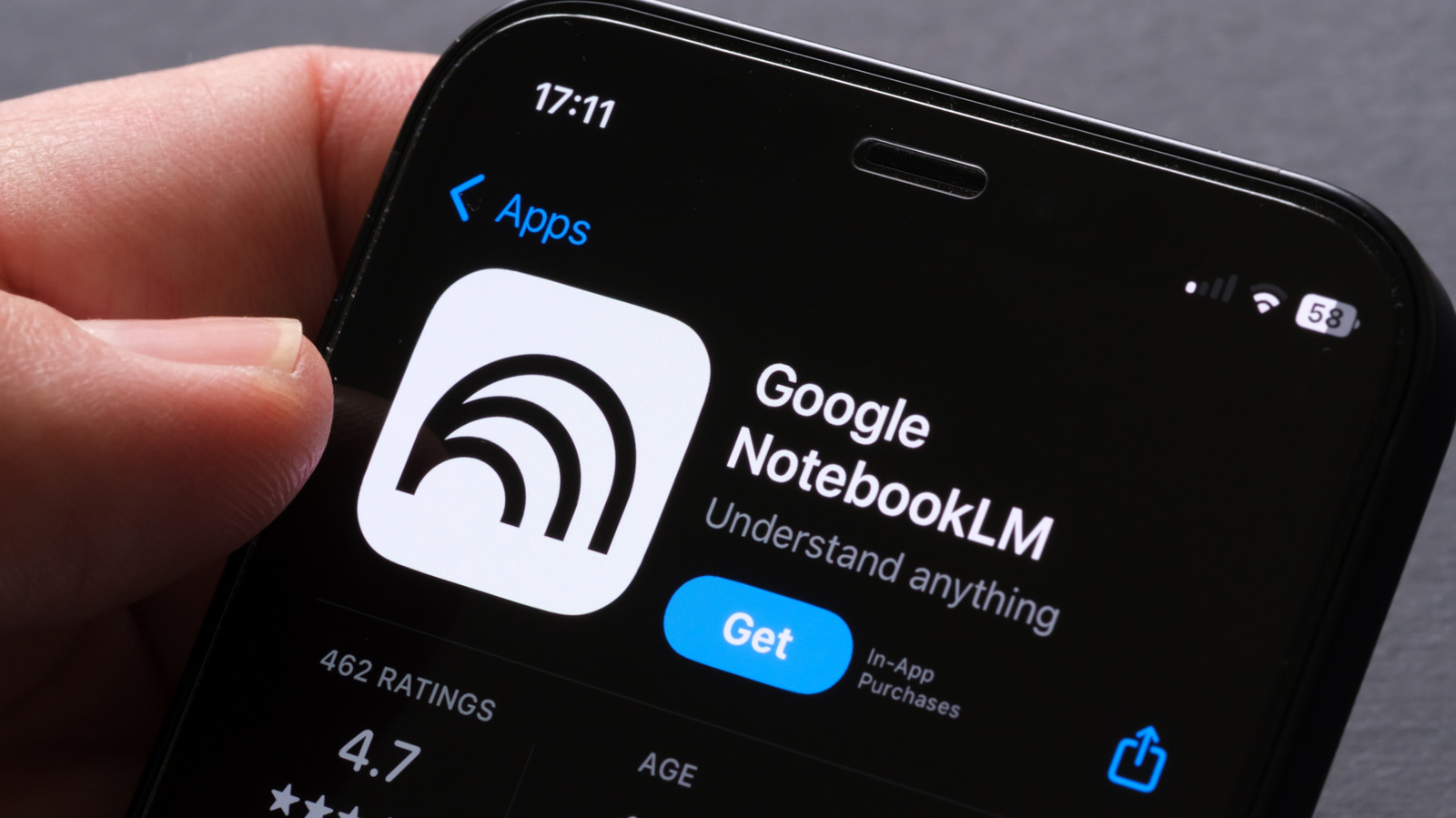
NotebookLM has garnered quite a bit of love since its Google launched the AI app back in 2023. Since then, Google has continued to update its AI-notebook app with new features, eventually even bringing NotebookLM to Android and iOS devices. While this made the app much more accessible, especially when traveling, it was also missing some of the best features that the desktop website offered users, including flash cards and quizzes. One of the most notable missing features, though, was Video Overviews. Thankfully, Google has finally brought this much-adored feature to the mobile version of NotebookLM.

For those who haven’t messed around with NotebookLM, the app is essentially a digital notebook. You add various sources to it — you can even have Google find them for you if you prefer — and then you can ask it specific questions about the sources. It’s really handy for watching long videos and getting bullet points created for them, or just for keeping track of word-heavy documents that you don’t always have time to sift through. 

Over time, Google has updated the app, added some really great features like Audio Overviews — which can create realistic podcasts of your sources using AI — and even Video Overviews. However, despite launching Video Overviews in the online version of NotebookLM in 2025, Android and iOS users have had to wait almost a year for the option to make an appearance in the mobile app.

How to use video overviews in NotebookLM’s Android and iOS app

It is worth noting that the update hasn’t hit everyone’s devices just yet, but you should hopefully see the option to generate Video Overviews in the app soon. To get started using Video Overviews in NotebookLM on a smartphone or tablet, all you need to do is launch the app and then tap the Studio option at the bottom. From here, you should be able to select the Video Overview option from the generation list. If you don’t see it just yet, make sure you have the latest update available for your device and then try again.

The release notes listed on the app’s iOS app store page also suggest that some other features should be coming, like the ability to customize what kind of infographics the Video Overview generates. However, we’re not seeing these in all updates of the app just yet. Once enabled, though, you should be able to choose between two different formats — detailed and presenter — which will drastically change how the video comes together. You should also be able to change the output language settings, as well as the length of the slides. Being able to easily generate entire video overviews of your information, and even customize how they are generated right from your phone, is a really nice update to the NotebookLM app.

Why people love NotebookLM

Nwz/Shutterstock

One of the biggest advantages of NotebookLM over traditional AI like Gemini or ChatGPT is the fact that NotebookLM only pulls from the sources you give it. That means you can worry less about AI hallucinations in the data it generates. It typically only pulls from direct sources that you add, though some users have shared on Reddit that it might miss key information or pick up on the wrong information based on the questions you ask it. You should always double-check any work that you do with AI programs.

Google has also received a lot of praise for NotebookLM, especially in regard to its various features like Audio Overviews, the quiz system, and more. Additionally, the overall reception to Video Overviews was positive when it was first released. The best part is that now you don’t have to log into the desktop app just to create video overviews anymore. You can do it right from the comfort of your phone, no matter where you are.

Source

Posted on

Metropolitan Police needs effective constraints on live facial recognition use,

There is virtually nothing in the Metropolitan Police policy to constrain where it deploys live facial recognition (LFR), the High Court has heard during a judicial review into whether the force is using the technology lawfully.

Brought by anti-knife campaigner Shaun Thompson, who was wrongfully identified by the Met’s system and subjected to a prolonged stop as a result, and privacy group Big Brother Watch, the legal challenge revolved around whether there are meaningful safeguards in place to effectively constrain how the Met uses the technology.

Over the course of the two-day hearing, held at the Royal Courts of Justice, lawyers for Thompson and Big Brother Watch director Silkie Carlo argued that the Met’s use of LFR does not satisfy legality tests, because the policy dictating how officers choose to deploy it is overly broad, opening the technology to arbitrary use.

In particular, they stressed their view that, in practice, the policy essentially allows the Met to deploy the technology in any part of London they choose, because the only criteria limiting where the Met can deploy it is whether it’s a “permitted location”.

The three situations where the Met can use LFR are in “crime hotspots”, including “access routes” to those hotspots; outside public events or critical national infrastructure under “protective security operations”; and locations based on intelligence about “the likely location [of] … sought persons”.

Noting that the force regularly uses watchlists with 16,000 to 17,000 images, they added that there is no real connection between the “who” and “where” when deploying in practice, which risks people being put on watchlists on the chance they will pass an LFR camera.

They also added that of the three use cases under which the Met can deploy LFR, the crime hotspot approach is used in the vast majority of deployments, whereas the other two use cases have only been relied on a handful of times.

‘Permitted locations’

Based on their reading of the Met’s LFR policy and its deployment patterns, the lawyers contended that the only thing in practice constraining choice is whether the deployment area is a “permitted location”, and that the force relies on the hotspot use case because it essentially allows them to drop the technology where they please.

Highlighting how vast swathes of London are designated as “crime hotspots” by the force – and the fact that the Met has conducted multiple deployments on the same day, using the same watchlists, but in completely different hotspot locations – they argued this means there is very little link between the “who” and “where” questions of LFR’s use.

Other issues raised by Thompson and Carlo’s lawyers include the broad definition of “serious crime” used in this context – which is whether the alleged offence would lead to prison for a year or more, a criteria they said does not appear in any other police or government definition of serious crime; how the mass scale of LFR’s use and its automated nature elevates the level of intrusion; and how the Met has chosen to frame the “why” criteria of the deployment.

Highlighting how the Met essentially frames the “why” of LFR as “locating sought persons”, the lawyers argued this is not a constraint on the technology, and simply a description of how it works.

Police arguments

Police lawyers, however, contended that Thompson and Carlo’s challenge is a “proportionality claim dressed up as a legality claim”, and that there are a number of protections against police using LFR arbitrarily.

For example, they noted the LFR policy “leaves no room for capricious decision-making” because it contains specific use cases on when LFR can be deployed; requires officers to create written justifications for their decisions that are then authorised by another, more senior officer; does not allow officers to dictate what counts as a hotspot; and compels them to conduct a deployment-specific analysis against rights enshrined in the European Convention on Human Rights.

Ultimately, they argued that these and other measures taken together means policy sets a roadmap that means officers’ discretion is sufficiently limited, and that it creates an “administrative environment” in which the rules of the policy become inescapable.

Met lawyers also argued that the claimant’s case was a full-scale attack on overt LFR by the police, and that if the court sided in their favour, it would “substantially” hinder the force’s ability to use the technology effectively.

Highlighting how the “primary value” of LFR is to find people whose location is currently unknown to the police, Met lawyers added that confining the force’s deployment to “use case C” – under which LFR can be used at “a particular location where the [Met] has concluded, based on specific intelligence, that a person who is eligible for inclusion on a LFR Watchlist … is likely to be at that location” – would effectively “neuter the value of the technology to policing”.

The judges – Lord Justice Holgate and Mrs Justice Farbey – will now deliberate on the arguments put forward, with a judgement handed down at a later date.

A day before the judicial review hearing started, home secretary Shabana Mahmood announced plans to substantially expand the use of facial recognition by police forces across England and Wales, despite there being an ongoing consultation about a new legal framework for the technology.

While the use of LFR by police – beginning with the Met’s deployment at Notting Hill Carnival in August 2016 – has already ramped up massively in recent years, there has so far been minimal public debate or consultation, with the Home Office claiming for years that there is already “comprehensive” legal framework in place.

However, in December 2025, the Home Office launched a 10-week consultation on the use of LFR by UK police, allowing interested parties and members of the public to share their views on how the controversial technology should be regulated.

The department has said that although a “patchwork” legal framework for police facial recognition exists (including for the increasing use of the retrospective and “operator-initiated” versions of the technology), it does not give police themselves the confidence to “use it at significantly greater scale … nor does it consistently give the public the confidence that it will be used responsibly”.

It added that the current rules governing police LFR use are “complicated and difficult to understand”, and that an ordinary member of the public would be required to read four pieces of legislation, police national guidance documents and a range of detailed legal or data protection documents from individual forces to fully understand the basis for LFR use on their high streets.

Source

Posted on

RAMP ransomware forum goes dark in probable FBI sting

The Russian-speaking RAMP cyber crime forum – one of the most significant players in the underground cyber criminal ecosystem – has gone dark following what appears to be major action by the US authorities.

Although at the time of writing, no official announcement has been made by the Americans, within the past 24 hours both RAMP’s dark and public web sites have been replaced with seizure notices stating the action was taken under the auspices of the FBI, the US Attorney’s Office for the Southern District of Florida, and the Department of Justice’s (DoJ’s) Computer Crime and Intellectual Property Section.

It is not unheard of for cyber criminals to fake takedowns, often amid juvenile theatrics, to start over with a “clean” slate, but initial reports appear to verify the authenticity of the takedown, with DNS records showing RAMP’s web domains now point to FBI infrastructure.

The alleged operator of RAMP, a hacker going by the handle Stallman, who according to Recorded Future took over its operations about four years ago, also stated the forum was no more.

In a post on the XSS hacking forum, translated from the original Russian, Stallman said the takedown had “destroyed years of my work”, writing: “Although I hoped that this day would never come, deep down I always understood that it was possible. This is the risk we all take.”

Set up around 2021, RAMP operated as both a discussion forum and an underground marketplace, with ransomware kits and malware, alongside a library of ransomware guides and tutorials for newbies.

Access to the forum was tightly restricted, with minimum activity levels required and access and registration fees payable, but at its height it still boasted several thousand members, according to a summer 2024 analysis by Rapid7, which described the RAMP community as a “critical resource” for threat actors. At the time, it supposedly had revenues of around $250,000.

Limited long-term impact

Daniel Wilcock, threat intelligence analyst at Talion, described the takedown as a big win for the good guys. However, he said, RAMP’s denizens are likely to turn to alternatives, so the long-term impact on the wider criminal ecosystem will be limited.

“But all is not lost,” he said. “While this doesn’t signal the end of ransomware, law enforcement will be able to gain valuable information from the seizure around the threat actors using the services, such as their emails and IP addresses plus access to the financial transactions that took place on the market.

“This could support further law enforcement action against the threat actors that used the site, but given that RAMP was heavily used by Russian criminals, it’s highly unlikely we will see many actual arrests.”

A blow to Russian intel?

Writing on LinkedIn, Yelisey Bohuslavskiy, a partner at threat intel specialist RedSense, laid out more of RAMP’s backstory and some of the more nuanced lore surrounding the forum.

He said it was an open secret that RAMP had close ties to individuals closely affiliated with the Russian security services and was set up as part of a response to the rapid growth of the ransomware-as-a-service (RaaS) model in 2020 and 2021.

This was a period during which rapid diversification and the emergence of new ransomware affiliates made it harder for the Russians to keep tabs on what was going on, compared to in the years immediately prior when the scene was dominated by organised big name gangs like Conti, ReVIL and so on.

Bohuslavskiy said this strategy had paid off in spades because RAMP incentivised these new affiliates and small-time cyber crooks to make themselves visible to the authorities.

He said that in the short term, the takedown would indeed prove highly disruptive to the ransomware market as lower-level actors would lose both access and publicity, while the access brokers and vendors of loaders and other hacking tools who frequent RAMP would also see their cashflow disrupted. For the remaining big name gangs, however, not much would change.

But, added Bohuslavskiy: “Russian security services… will lose some visibility into ransomware processes and sellers.”

He also predicted that Stallman – whoever they may be – will probably be arrested soon as they are now a wasted asset.

Source

Posted on

The 5 Best Music Apps For Apple CarPlay

NorthSky Films/Shutterstock

When you learn about how Apple CarPlay actually works, you might be overwhelmed by just how many ways it can change your commute. While this hands-free interface offers a ton of features, like easy navigation and Siri integrations, controlling your favorite music and audio apps while on the go is one of the best ways to use it. With so many apps to choose from on Apple’s App Store, finding the best ones for CarPlay can be challenging.

There are a few ways to make a decision. You’ll likely need a go-to music player for streaming albums and playlists, and we’ll offer a couple of selections depending on your active subscriptions. Then, you’ll need a radio app, and we’ve got one of the best options for that as well. We’ll even recommend an app that lets you set up your own streaming audio server and access it via CarPlay. So buckle up, and let’s head out.

Spotify

A. Aleksandravicius/Shutterstock

When choosing the best music app for CarPlay, you will probably give extra points to the service you’re already using. After all, CarPlay is mostly an extension of your phone, as it uses profiles and the processing power of your iPhone. And even though we don’t think Spotify is a flawless music service, there’s no denying that it owns the most market share of any music streaming service. So, there’s a pretty good chance that you already have an account.

In fact, Spotify commands almost one-third of the streaming music market. That’s because Spotify made its name in 2008 with an on-demand streaming offering that was legal and free to play, with ads and subscription models supporting it. Today, it offers over 100 million tracks with one of the best libraries available in this type of product.

It comes to life beautifully on CarPlay with a dedicated “Now Playing” screen that makes it easy to skip tracks and play or pause with a simple tap. For browsing, it opts to offer a “Recently Played” list in the center, but you can go into a Siri-powered search menu to find other options. There are a few drawbacks, as it can be a little clunky to scroll longer lists of recent songs — particularly a problem if you have varied listening tastes. You also need a Premium subscription to get the best listening resolutions, though some users point out you can adjust phone settings for a better experience. At the end of the day, Spotify is the market leader and a great all-around choice for your main streaming app.

Apple Music

Harry Howitt/Shutterstock

If Spotify is the all-around choice for most people, the Apple stalwarts will want to turn their attention to the CarPlay functionality of Apple Music for seamless integration with the Apple ecosystem. Apple Music via CarPlay can offer a similar experience to Spotify, pulling in your favorites, playlists, and recent songs to easily play and navigate using the car screen. Apple’s also got a real eye toward building its own offering, as we covered in our interview with Apple Music’s Oliver Schusser.

It’s when you start to open up more Apple functionality that this option really shows its value. Many users prefer the user interface of Apple Music in CarPlay, which makes sense because it lines up well with other stock Apple apps. Apple Music generally streams at a higher resolution than the base Spotify subscription. What’s really cool is you can even use SharePlay integration on Apple Music via CarPlay, which opens up functionality for more social listening. Of course, this all assumes that you have an Apple Music subscription, and podcasts are not integrated into this app as they are on Spotify.

TuneIn

Mehaniq/Shutterstock

The two apps discussed so far are focused on on-demand listening, but what if you want the more traditional radio experience in your car? One of the best apps for listening to both traditional and internet radio stations is TuneIn. Launched in 2002 as a means of bringing radio broadcasting online, TuneIn now offers a wide network of stations from around the country. That means you can listen to a slew of dedicated online radio stations or turn to your favorite station from your hometown — all through your iPhone and CarPlay.

It’s more than just music, as TuneIn also offers sports broadcasts through partnerships with top leagues as well as talk radio and specialty partner stations. The interface is solid on CarPlay, but its Premium offering is a little underwhelming. TuneIn also offers dedicated programs right on certain car infotainment centers (such as Tesla and Lucid vehicles), and that interface is better, faster, and smoother than the CarPlay offering. But if you’re looking for far-reaching radio options on CarPlay, TuneIn is one of the best.

Tidal

Sidney van den Boogaard/Shutterstock

If your focus for music is on audio fidelity, then you’ve probably considered Tidal. When this music service was launched by some of music’s biggest stars in 2014, its fanfare was pinned on offering a service that both provided musicians with a bigger slice of royalties and listeners with better quality audio. Tidal’s key claim is that it offers resolutions of up to 24-bit, 192-kilohertz FLAC songs, which is more than Spotify’s max of 320 kilobit-per-second AAC. This means that, theoretically, your music could sound better using Tidal.

Then there’s the editorial and playlist component of Tidal. While Spotify’s Discover playlists and algorithmic recommendations are well-covered, Tidal has a few of its own curation options, including its similarly named My Daily Discovery playlist, which doesn’t have quite as much reach as Spotify. Tidal’s controls still work well via CarPlay, and the integration with Apple “Now Playing” is the same as you might expect with other services. So, the key here is to consider whether the promise of higher resolution is your top priority.

Plexamp

Reyanaska/Shutterstock

While there are subtle differences between the various music services above, we wanted to include something a little more off-center for those who don’t want to put all their eggs into one music service subscription. Plexamp is an offshoot of video server provider Plex. It provides a way for you to categorize, explore, and listen to any music stored on your Plex server via other devices. If you’ve never used Plex, it’s an app with a user-friendly media interface that allows you to access a self-hosted server storing your audio and video.

In this case, Plexamp unlocks multi-device support to access any of your local files for streaming anywhere, including your car. While you can store a music library on your phone and play that in the car, Plexamp allows those files to be accessed on many devices. You can then fire it up via CarPlay and make your own private streaming music library. While Plexamp is free, it requires a subscription to stream your songs at their original quality. But this may be a worthy price if you want to keep your music library local to you (and your data and subscription fee out of the Spotify universe).

How we chose these music apps

DenPhotos/Shutterstock

There’s truly no shortage of music apps for iPhone, and many of them offer full-featured CarPlay integrations. So, when we set out to choose the best apps to pair with this service, our focus factored in a few variables. First, the apps had to be well-reviewed, both on the App Store and in anecdotal forum threads. Additionally, the apps had to be popular, with wide compatibility and a track record of reliability.

The other main factor was how these apps come to life on CarPlay. Sure, it could be solid on a phone or directly on another Apple device, but what are its key features for CarPlay? Making sure the user interface is seamless while driving and that the app developer actively supports reliability for the CarPlay extensions was paramount. Every app on this list clears a threshold in these areas, and we’re confident they’ll all soundtrack your drives easily.

Source

Posted on

Is It Safe To Use Your Laptop USB-C Charger With

Dorota Szymczyk/Shutterstock

We may receive a commission on purchases made from links.

With the introduction of USB-C, a primary benefit of the new standard is the ease of usability. It’s meant to be universal, thanks to a symmetrical, reversible 24-pin connector. But there are many different types of USB-C offerings out there — cables and connectors alike. Not all of them support fast-charging, meaning some chargers or cables won’t work as intended when plugged into various devices. The Steam Deck is an excellent example of this; according to Valve, the Steam Deck is equipped with a 45-watt USB-C PD 3.0 charger. 

PD is the key there, which stands for Power Delivery. The USB-C Power Delivery standard is a protocol that allows up to 240 watts of power, as explained by USB-IF, which is necessary for higher power delivery and fast-charging situations, like what the Steam Deck uses. The question is whether all USB-C chargers are compatible with the Steam Deck, including phone and laptop chargers.

The answer is yes and no. You can use them, but it doesn’t mean you should. There are also some factors to keep in mind, like whether the third-party charger supports PD and what power output it supports. If it doesn’t provide enough watts (45 to be exact), the Steam Deck likely won’t charge fast enough and may even experience battery drain while plugged in, especially if you’re playing games on it. Then, there’s also the matter of safety. Most OEM phone and laptop chargers are made to high standards, but cheap offerings should be avoided, as they can damage your devices.

Is it safe to use a phone or laptop charger with your Steam Deck

Fcafotodigital/Getty Images

Whether a charger is safe to use with the Steam Deck is going to depend entirely on the charger itself. To be on the safe side, you should avoid using third-party chargers unless you know for a fact they support the necessary requirements. There is a good chance that if you plug in a charger that’s not supported, Steam Deck will warn you via a notification, as Reddit users have pointed out.

One of the most common issues people have with their Steam Deck stems from the device not charging properly when plugged in. The best way to tell a charger’s specifications is to look at the label on the adapter, if there is one, or refer to the user manual for the original device, whether it’s for a laptop or a phone. On the label or printed somewhere on the adapter, you should see an “Output” line that lists Volts x Amps. For instance, the original Steam Deck charger lists four outputs: 5V==3A, 9V==3A, 15V==3A, and 20V==2.25A. 

You can take the largest number and multiply volts by amps to see the max wattage, in this case, 20 by 2.25, which equals 45 — 45 watts. We already know the Steam Deck charger supports 45 watts, but we also now know how to check other chargers. That still doesn’t address the quality of the charger in question. Chargers could be made with poorly-supplied materials or may not incorporate modern safety standards like overvoltage or overcharge protection. 

These concerns are also applicable to other power sources. When looking for Steam Deck accessories on Amazon, like a portable charger, you’ll want to look for 45 watts, fast charging, and PD support.

The Steam Deck needs USB-C PD capable chargers

tinhkhuong/Shutterstock

The official Steam Deck charger supplies 45 watts, but it also supports the USB-C PD 3.0 protocol. Ideally, you need a charger rated for 45 watts or higher, with the PD 3.0 protocol. That significantly narrows down the third-party chargers you can use, including phone and laptop chargers. It’s also important to note that using the Steam Deck at the same time it’s charging is going to consume a lot of power. The power draw will be higher with demanding games. The 45-watt and PD support are non-negotiable in that case. Anything less and the charger will not be able to supply enough power to maintain the battery, let alone charge it. That’s also how you can squeeze more battery out of your Steam Deck – by effectively reducing the power it’s using through software tweaks.

If, for some reason, you don’t have the official charger that came with your Steam Deck, you can order a new one from iFixit. Some alternatives you can use are the Anker Nano series as long as they’re 45-watts or above, UGreen Nexode, and JSAUX Steam Deck charger, the latter of which is also compatible with Mac, iPhone and various mobile devices. 

Another great feature to look for is GAN support, which stands for Gallium Nitride, a material that can handle higher voltages, fast-charging and is better at conductivity. Typically, GAN chargers, power adapters, and hubs can power multiple devices at once with ample power, like charging your Steam Deck and a mobile device simultaneously.

Source

Posted on

Ex-directors of firm linked to Satoshi Nakamoto imposter sue over

Two former directors of nChain UK, the London blockchain company associated with a computer scientist who falsely claimed to be bitcoin inventor Satoshi Nakamoto, are bringing legal proceedings against their former employer.

Group finance officer Andrew Moody and general counsel David Brookes claim that they were dismissed in retaliation for blowing the whistle on an alleged attempt by an investor to acquire the company’s intellectual property without the knowledge of nChain’s directors.

The firm, together with three company officials, dispute the claims, which were made yesterday at a London employment tribunal. They argue that the directors had not made protected disclosures and were properly dismissed for gross misconduct.

The company was closely associated with Craig Wright, an Australian computer scientist, who falsely claimed to be Satoshi Nakamoto, the inventor of bitcoin. A high court judge found that Wright fabricated documents and repeatedly lied to justify his claims in a 2024 court case.

Brookes and Moody claimed in a written opening note that they made protected disclosures to their group CEO after learning of the existence of documents that had been created by others “behind the backs” of nChain’s directors which were not in the interests of the company.

The two directors claim that the documents, which consisted of three agreements with an investment company, contained a mechanism that could have stripped nChain of its entire portfolio of intellectual property and were an “existential threat” to the nChain group.

They claim they were led to believe that the documents were drawn up at the insistence of an investor in nChain to “hedge their bets” if litigation brought against Wright to overturn his claims of being Sakatoshi Nakamoto were successful.

Biggest fake ever

At a mock trial in September 2023, an attempt to “cajole” Wright to produce bitcoin keys to unequivocally demonstrate he was Nakamoto failed. Instead, he produced a memory stick purporting to prove his identity that turned out to be an “obvious forgery”.

The incident prompted the group CEO, Christen Ager-Hanssen, to send a WhatsApp message describing Wright as “the biggest fake ever”, the two directors claim.

Ager-Hanssen called a meeting of group executives on 26 September 2023, where he presented a report, setting out the disclosures previously made by Brooks and Moody about the alleged conspiracy to obtain nChain’s intellectual property for less than its value.

Their plan to gather further evidence by instructing the IT department to obtain emails of everyone involved in creating the “July documents” floundered, when the head of IT, who had been instructed to keep the matter confidential, alerted the company’s chair, who vetoed the plan.

Whistleblowing report

Ager-Hanssen emailed his report, dubbed the Fairway brief, under the headline, Whistleblowing report from the management of HEH holding AG/nCHain Group, along with minutes of the meeting to company executives the following day.

Brookes and Moody claim that an independent report subsequently commissioned to look into the allegations in the Fairway brief were a “whitewash”.

They also allege that one of the companies hired to investigate the claims had previously been engaged to produce “evidence” to support Wright’s claim to be Satoshi Nakamoto. One of the ideas considered was to publish a book that could be used as evidence in court, it was claimed.

Following a disciplinary procedure, the directors were suspended and later received letters informing them that they had lost their jobs because of “gross misconduct”.

They claim there is no contemporary evidence to show why they had been suspended and that the real reason for action was their involvement in the protected disclosures in the Fairway brief.

Brookes and Moody accused of ‘piggybacking’

Along with three other respondents in the case, nChain UK Limited contests the claims. They said in an opening note that if there were any whistleblowing disclosures, they were made by Ager-Hanssen, not the two directors. Brookes and Moody were seeking to “piggyback” on protected disclosures made by somebody else in a way that was legally flawed.

According to the respondents, the July documents had been examined by well-qualified lawyers in the UK, Liechtenstein and Switzerland, who found legitimate and lawful commercial agreements. They found no breaches of duty and concluded that none of the allegations in the Fairway brief were legally founded.

On any sensible reading of the July agreements, Wright’s loss in court “afforded no right of bail out/asset stripping”, and the claimants cannot credibly suggest that it did, they said in their opening note.

The respondents argue that the directors’ dismissals were not triggered by their disclosures, but a series of “extraordinary events” and improper conduct that took place in the office on 27 September 2023. 

They claim that CCTV footage shows Ager-Hanssen engaged in allegedly “unhinged” conduct when he angrily asked one of the respondents to leave the office, used multiple expletives and claimed there was an illegal conspiracy to steal intellectual property from the company.

He is quoted as saying: “You don’t understand corporate governance, you don’t work here … Get out of this office, otherwise, I’m getting security to do it. I am a board member, and you  are not. You don’t even work here.”

Moody and Brookes’ conduct on 27 September was also described “extraordinary and alarming”.

The respondents said in their opening note that numerous employees that were not involved in the Fairway brief were also suspended from work following the events of 27 September.

Ager-Hanssen previously brought an employment tribunal which was struck out on 18 October 2024, on the basis that it had not actively been pursued, according to the respondents written submissions. In separate legal proceedings, between nChain Holding, Ager-Hanssen was sentenced to 10 months imprisonment for contempt of court.

The case, which has backing from WhistleblowersUK, continues. 

Source

Posted on

Diversity Think Tank: We can’t afford to roll back DEI

We are experiencing a deliberate, and often quiet, roll back of diversity, equity and inclusion (DEI) initiatives within UK businesses which will have long-term damaging effects for the tech sector and wider economy. The implications of these roll backs are, put simply, a reversal in progress and a reinforcement of deep systemic inequality.

With pressure to reduce costs and stay afloat in challenging economic times many businesses cite the cost of DEI initiatives and policies as being prohibitive to doing business. This is short sighted. A 2020 study by McKinsey which gathered data from 1,000 organisations revealed that  gender-diverse businesses are 25% more likely to have higher profits, with that number increasing to 36% for ethnically and culturally diverse businesses.

The risk of turning away

So, what are the actual implications of the roll back in DEI initiatives? If you are experiencing a change in DEI activities within your organisation it’s useful to consider whether this is because DEI is being de-prioritised or whether the organisation is re-framing what DEI means within the context of its organisational strategy. If efforts are being de-prioritised then potential implications include:

1. A shift in workplace culture

When DEI is no longer a priority the risk is that some employees become more vulnerable to discrimination, micro-aggressions and systemic disadvantages. They may lack the structures and mechanisms to ensure their voices and perspectives are heard, in the worst-case scenario they may be actively silenced.

Practically, you might see this in meetings where the same people contribute regularly, and the same people struggle to contribute their ideas and perspectives. Over time you may notice your teams becoming more homogenous. There is an active disadvantage in having a team where all members come from a similar background, have a similar thinking style, are of the same gender, race or education background. You create an echo-chamber which inhibits creativity and innovation. This can erode the deep cultural fabric of an organisation.

2. Loss of Innovation and Competitiveness

A BCG study suggests that increasing the diversity of leadership teams leads to more and better innovation and improved financial performance. In today’s economic climate, coupled with the opportunities and risks artificial intelligence (AI) brings to the way we do business, businesses need to stand out and continue to truly innovate to remain competitive. This requires resilience and a commitment to building and nurturing loyal talent within organisations.

3. Damage to Employer Brand and Talent Retention

As Gen Z, and eventually Gen Alpha, enter the workforce businesses will need to consider the expectations of a younger workforce. Gen Z is the first generation to grow up in a fully digital world with ready access to a wealth of information to shape their perspectives. Emerging research shows that their expectations are to find employment which is financially secure, supports overall well-being, and aligns to their values. For many individuals who represent Gen Z within the workforce DEI is not optional, it is a necessity. To remain relevant businesses need to consider how they will meet the expectations of the younger generations and their future leaders.

4. Widening Societal Gaps

Businesses influence our society, employers can promote and sustain upward mobility, economic empowerment and equitable opportunities. Stalling or stopping DEI initiatives will entrench existing inequalities particularly with regards to race, gender, disability, sexuality, and socioeconomic background. This is harmful to our societal values and norms and will have a ripple effect to our social services and societal structure.

Protecting the progress so far

Whilst it’s key to maintain and protect progress which has been made in business as a result of successful and thoughtful DEI initiatives it might be time for a reframe. Creativity, innovation and diverse perspectives are key to a business being resilient and adaptable in today’s world. Responsible businesses will not only prioritise DEI they will also consider their approach to the climate emergency and their ethical values in the way they do business. As a result there’s an opportunity for businesses who want to remain relevant to reshape how DEI initiatives are funded and delivered.

Here’s what can be done:

1. Integrate DEI into the overall strategy

DEI should not sit within one department, rather it should be embedded across all functions of the organisations from recruitment, marketing, leadership and service and/or product design. In this way DEI approaches should influence the day-to-day practices within an organisation, shaping culture and behaviour without requiring high investment.

2. Transparent leadership

If it matters, it should be measured. Leadership teams and company boards should be measuring their progress on inclusion alongside their bottom line. The numbers will start to speak for themselves. Leaders who prioritise transparent and open communication, including public reporting on workforce diversity and the gender pay gap are more likely to develop loyalty both internally and with their clients.

3. Build a network of strong allies

Organisational behaviours and practices that lack inclusivity are often inherently discriminatory and can contribute to a toxic and unproductive workplace culture. Build alliances and find allies. It’s extremely challenging for one individual to speak out however building a constructive case as a group could contribute to significant change and impact within your organisation. DEI initiatives are inherently hard because they challenge the status quo, therefore it makes sense to co-create solutions and share the load.

What might the future hold?

In uncertain times it’s easy to lose heart and lose sight of the bigger picture. The seismic shift we saw in 2020 of businesses pivoting resources and focus to support DEI came at a significant moment during the peak of the COVID-19 pandemic alongside the Black Lives Matter movement. Five years on we can see that the journey for successful DEI initiatives is not linear, it’s often experimental, fraught with tension (at least at the start) and take time to mature.

A key enabling factor is the current approach of the UK Government. The Mission Led Government framework deeply embeds diversity, equity and inclusion by calling for a fairer and more equal society.  The cross cutting nature of DEI across the five national mission areas identified in the framework signals that DEI is foundational to societal progress. Businesses should take a lead from this.

This is not the moment to roll back from DEI, doing so is short-sighted and damaging to long-term business resilience, innovation and ethical responsibility. Now is a moment to galvanise progress to date and evolve how we understand DEI and how we deliver it. This is a critical moment, a crossroad for businesses tempted to retreat from previous DEI commitments. Whilst the economic pressures are real the answer is not drawing back from an approach which ultimately impacts the bottom line. The research is clear, organisations that prioritise diversity are more creative, more adaptable, and more profitable. Beyond the numbers, inclusive companies foster greater loyalty, collaboration, and innovation all essential qualities in an uncertain economy and a fast-evolving tech sector.

DEI is an essential component of a business strategy, now is the time for organisations to embed it deeply and strategically. The focus should shift from performative gestures to meaningful, measurable, and systemic change. This means aligning DEI with business goals, integrating inclusive practices across functions, and embedding accountability at every level of leadership.

There is also an opportunity to reframe DEI within a broader commitment to ethical and sustainable business practices. Gen Z and Gen Alpha are entering the workforce with high expectations for fairness, transparency, and impact. If businesses wish to attract and retain top talent, they must be able to practically demonstrate how they are building inclusive cultures and equitable opportunities.

Whilst UK business is inevitably influenced by governments and policies overseas there is a risk that our very values, the values which make UK businesses unique and attractive to investors and employees, are being slowly eroded. To stand out and take a stand is to hold true to the positive values which take time and focus to cultivate. Ditching a focus on DEI is a disappointing outcome, but all is not lost. The real opportunity lies in reaffirming our commitment to fairness, innovation, and integrity—even when it’s difficult. UK businesses can lead not by following reactive trends, but by setting a clear, values-driven example of what responsible, future-ready leadership truly looks like.

In closing, it’s always important to remember the words of Robert Reich, former U.S Secretary of Labour: “Change threatens those who benefit most from the status quo.”


Source

Posted on

Cutting through the noise: SaaS accelerators vs

AI in cyber is everywhere this year, and if you’re a CISO you’re feeling the push from all sides. Boards want a plan, and vendors are promising AI‑powered outcomes. Your own teams can list a dozen places to apply it from speeding SOC triage, tightening identity hygiene, helping business users complete assessments, strengthening audit evidence, to improving OT readiness. The opportunity is real, but the noise is exhausting. The easiest way to cut through it is to decide, up front, what you’re buying and what you’re building. That means thinking in terms of SaaS AI accelerators and enterprise AI capability.

SaaS AI accelerators are hosted add‑ons that plug into tools you already use. Their job is practical, to  shave time off repetitive work and make outputs more consistent. If something sits on your telemetry, and drafts useful queries, assembles incident narratives, and proposes actions you can approve and roll back, with sensible logs, it will help in days, not months. The same goes for identity and email where accelerators can suggest safer access policies, flag risky sessions, nudge least‑privilege clean‑ups, or run adaptive phishing training. These tend to deliver quick, measurable gains without needing to re‑architect your programme.

Enterprise AI is the right choice when you need trusted outputs and verifiable sources that can be produced entirely inside your network if required. It’s also the right fit for operational technology, where teams should rehearse attacks in a safe testbed and track tangible improvements (faster detection, quicker recovery) rather than just running tabletop discussions. Use enterprise AI when the work spans multiple teams, touches sensitive data, or your policies need it to run the same way every time.

One more clarification is helpful when marketing blurs the terms. AI covers traditional models that detect, score, and cluster andgenerative AI creates text, images, or code. In security you’ll often pair them and the detection models will surface signals while the generative models will help people explain, draft, and decide. Treat generative outputs as high‑quality drafts to review, log, and tie important statements back to trusted sources, especially for audit or regulatory use.

So which use cases are worth a look?

In the SOC, seconds matter; accelerators that cut triage minutes and improve incident narratives without moving data out of bounds earn their keep. Identity hygiene and phishing resilience are similar.  Reversible changes and privacy‑aware telemetry keep improvements safe and relevant to humans. Enterprise AI can prepopulate assessment answers from known data, surface control evidence, and hand everything to reviewers for clean sign‑off, and replace fatigue with flow. Don’t overlook the value of assessment completion to help business users who have to slog through privacy, security, and vendor questionnaires. AI can suggest answers, highlight gaps, pull relevant policy extracts, and set out the route for approval. When done inside your governance framework, it increases speed and quality while keeping control within your privacy or security office requirements.

When dealing with the hype, you should be realistic. A fully autonomous SOC is still a future headline, not an achievable outcome in 2026. Keep humans in the loop, insist on explainability for suggested actions, and separate “what the system proposed” from “what the analyst did.” Unsupervised auto‑remediation across production environments is similarly risky. It’s important to start narrow, review anything that changes live systems, and make roll‑back easy. Also be wary of perfect detection claims, false positives, false negatives, and drift are facts of life and of instant compliance. If you can’t export and justify evidence for audit, you don’t own it. Ungoverned generative outputs are not a source of truth; they are powerful assistants that still need sources.

Then there’s a need to keep governance light but real. Maintain a living AI inventory that sets out what each system or agent does, where its data comes from, who owns it, and how it’s logged. Pair that with practical safety checks with human approval of impactful actions, apply reversible changes, log prompts and output, and run periodic drift tests. That should mean innovation stays on the right side of expectations without slowing the team.

Finally, make decisions easy with two questions. Will this plug into your existing stack and deliver value in weeks without breaching data boundaries? If the answer is yes, it’s a SaaS AI accelerator that needs to be judged on fit, speed, guardrails, and auditability. Does it need to live inside governance, touch sensitive evidence, or run locally or offline? If yes, it’s an enterprise AI capability where you need to build or extend it so you own the controls, lifecycle, and audit trail. Consider those questions and you’ll be able to secure clear, defensible wins from the wave of AI tools. You’ll have accelerators for tasks where seconds count, capability where governance carries the load, and provide genuine help for the people doing the work including filling in those questionnaires that never seem to end.

Richard Watson-Bruhn is a cyber security expert at PA Consulting.

Source

Posted on

Motive accelerates Edge AI safety for automotive operations

Marking what the fleet technology provider says is its most ambitious leap in artificial intelligence (AI) safety to date, Motive has launched a class of intelligence hardware for commercial vehicles using driving analytics to enable drivers and their operators to stay safe on the road, in real time.

AI Dashcam Plus is said to have fast AI capabilities and hands-free communication that allow for proactive collision prevention. Explaining the need for such technology, Motive quoted the UK Department of Transport, stating that in 2024 alone, more than 128,000 roadway casualties occurred in the country, with almost 30,000 serious or fatal accidents. The company added that reactive safety systems with limited visibility, delayed alerts and unreliable technology were failing organisations at crucial moments.

“Collision rates and related costs remain unacceptably high around the world,” said Shoaib Makani, co-founder and CEO of Motive. “Organisations need AI-powered driver safety solutions that can perceive and respond in real time. We’ve added three times more compute, created the first AI dash cam with stereo vision, and added hands-free communication, all in one system, so organisations can detect more risks and act faster. This isn’t just a new product; it reflects a shift toward proactive, AI-driven road safety.” 

Powered by the Qualcomm Dragonwing QCS6490 processor, AI Dashcam Plus can run more than 30 AI models simultaneously, and is designed to detect and respond to risk, instantly enabling broader detection with fewer false alerts. These updates are designed to enable AI Dashcam Plus to detect more unsafe behaviours in real time with higher accuracy and less latency.

AI Dashcam Plus’s Android-based architecture is claimed to provide a secure framework for voice, audio, connectivity and AI services. It enables rapid feature delivery such as two-way calling, voice control and over-the-air AI model updates, without frequent hardware refreshes. The Android-based architecture also enables the device to optimise AI workloads across Qualcomm’s central processing unit, graphics processing unit and Hexagon DSP to improve performance and reduce latency on every update.

The device is also said to be the first AI dash cam with dual forward-facing stereo vision to improve visibility, combining live, hands-free, two-way calling and other AI capabilities into a unifying hardware designed to improve reliability and reduce installation time.

AI Dashcam Plus’s stereo vision uses two synchronised road-facing lenses to create human-like depth perception, and allows the AI to judge distance and closing speed with far greater accuracy. This stereo vision feature aims to improve Forward Collision Warning, Lane Swerving and Close Following alerts to help prevent more collisions. 

AI Dashcam Plus also integrates video, audio, telematics, GPS and dual motion sensor data to detect more complex events, such as a break-in from the sound of glass shattering, or a low-severity collision from subtle vibration patterns – events that other competing dash cams miss entirely.

It also boasts AI Dashcam Plus, with a 1440p zoom lens with a narrow field of view, enabling automatic number-plate recognition even in motion, from long distances or in bad weather. This could provide critical evidence in hit-and-runs, theft and other incidents, helping to speed up investigations and exonerate drivers.

Hands-free communication helps drivers instantly connect with managers using voice-activated control, while managers can reach drivers directly from the Motive Dashboard or Fleet App. Automated alerts can help organisations improve safety and reduce costs by prompting drivers to address time-sensitive issues such as critical fault codes and excessive idling.

Beatriz Minamy, principal analyst at S&P Global Market Intelligence, said: “Improving driver and vehicle safety is among the top three priorities for truckload carriers globally when adopting new technologies … AI-powered solutions that enable real-time coaching, automated in-cab alerts for unsafe behaviours and proactive risk detection are becoming central to how fleets strengthen safety and accountability.”

Source