Posted on

Interview: How ING reaps benefits of centralising AI

At ING, artificial intelligence (AI) is not a new phenomenon. The wholesale and retail European bank has been using AI for a decade and has centralised its AI development efforts to scale product development across multiple countries while maintaining strong connections with business divisions.

As Computer Weekly has previously reported, ING is focused on the use of AI in five key areas of the business: know your customer (KYC), call centres, wholesale banking to improve customer due diligence, retail for the hyper-personalisation of offerings, and inside tech for engineering.

Discussing the centralised approach, Marco Li Mandri, who used to work at Vodafone and is now ING’s head of advanced analytics strategy, says: “A clear consequence of how we are organised is that, from the beginning, we invested in having one platform. This is the platform that we use to build most of our AI, all of our GenAI [generative AI], and that we are positioning for agentic AI.”

According to Li Mandri, ING’s centralised approach to AI development has resulted in a high success rate for pilot projects, with 90% moving to production compared with the industry average of 30%.

The bank has standardised on cloud-hosted AI models from preferred partners, which are then made available globally, allowing ING to scale. He says the platform is centrally managed with risk controls, guardrails and real-time monitoring.

Regarding ING’s approach to digital sovereignty, Li Mandri says: “You can design for this with many of the cloud platforms. They have EU-based servers where the data does not leave the EU, but there are still some dependencies to provide continuity of the service.”

The AI tools ING has deployed are being actively used and, according to Li Mandri, employees interact with these tools 30 to 50 times per week in some markets. For instance, ING is rolling out AI productivity tools, such as copilots for software engineers and Microsoft 365 Copilot, to enhance efficiency across teams. In addition, it has trained 5,000 employees on data fluency and GenAI to ensure they can effectively use and challenge AI systems.

ING has deployed generative AI-powered customer-facing chatbots in multiple countries, automating 75% of customer queries. The bank is focusing on high-value problems, such as mortgage processing and anti-money laundering, where AI is being used to augment human capabilities rather than to replace workers.

When asked about how the bank rolled out GenAI-powered chatbots to its customers, Li Mandri says customers can request to speak to a real person at any point during the online chat conversation, providing a human in the loop. ING has also implemented a data-driven quality assurance framework to avoid AI hallucinations and malicious manipulation of prompts.

“From the beginning, we invested in having one platform. This is the platform that we use to build most of our AI, all of our GenAI, and that we are positioning for agentic AI”

Marco Li Mandri, ING

Given that ING is one of the biggest mortgage lenders in Europe, there is an opportunity to use agentic AI to handle parts of mortgage application processing, as Li Mandri explains: “We are using an agentic AI system in mortgage processing to help back-office employees conduct all the checks they need to do.”  

The agentic AI system handles the task of extracting information from the various documents involved in a mortgage application and can perform checks on these. “It will not replace the human,” says Li Mandri, “but it’s like the human will have a mini team and, if we are able to do that, it will have quite some impact on the time it takes to approve mortgage applications.”

Like many organisations using AI to improve workflows, ING is ensuring there is always a human in the loop. Article 1 of the EU AI Act covers human oversight in high-risk AI systems – from a financial services perspective, this covers AI systems that are intended to be used to evaluate the creditworthiness of or establish the credit score of applicants.

Discussing compliance with the act, Li Mandri says the bank already had a robust compliance framework: “When we did the analysis of the EU AI Act, we realised a lot of it was already embedded in the bank. But new technologies like generative AI introduce new risks, so we have 140 different risks that we specifically vet when we deploy GenAI systems.”

Evolution of customer-facing chatbots

During his time at Vodafone, Li Mandri built a chatbot for the telecoms provider, saying: “When I started with AI, eight to 10 years ago, I built a chatbot, which became the number one in Europe by volume because it was installed on the phone and the web page, all based on one brain.” 

When we did the analysis of the EU AI Act, we realised a lot of it was already embedded in the bank. But new technologies like generative AI introduce new risks, so we have 140 different risks that we specifically vet when we deploy GenAI systems Marco Li Mandri, ING

Looking to the future and thinking about the present, using natural language speech interaction is the direction of travel as voicebots replace chatbot technology in call centres, thanks to advances in AI models.

ING is exploring speech-to-speech models to improve the naturalness of voicebot interactions. It is testing the technology in Spain and Germany. Devices such as smart speakers generally convert human speech input to text, which is then processed, and the response requires a conversion from text back to speech.

As Li Mandri notes: “This chain will make a conversation with a voicebot very unnatural. But there are now models providing speech-to-speech, which enable you to have a conversation with a voice bot more naturally.”


Source

Posted on

Berlin anarchists cite AI in attack on key energy infrastructure

A group of German anarchists have claimed responsibility for an arson attack on critical energy infrastructure in Berlin, citing the “insatiable” energy demands of artificial intelligence (AI) and other digital technologies.

On 3 January 2026, members of the Vulkangruppe (Volcano Group) used homemade incendiary devices to destroy cables connected to the Lichterfelde power station in south-west Berlin, leaving around 45,000 households and 2,200 businesses in the city without electricity, according to grid operator Stromnetz Berlin.

While some key buildings like hospitals and schools were able to continue operating via emergency power generators, most households and businesses were left without electricity until 7 January, although roughly 10,000 households and 300 businesses were reconnected within 24 hours.

The five-day blackout caused by the arson attack is reportedly the longest blackout experienced by the German capital since the Second World War.

In a statement published online, the Volcano Group said its targets were “the fossil fuel economy” and “energy-guzzling” digital technologies such as AI that are contributing to the planet’s rapid environmental destitution.

“In the greed for energy, the Earth is being drained, sucked dry, burned, ravaged, razed, raped and destroyed,” they said. “Entire regions are rendered uninhabitable … With our militant action, we reject the offers of participation in a world ravaged by destruction.”

The group further argued that AI-driven digital infrastructure expansions – in Berlin but also globally – will only promote further environmental degradation while enabling more authoritarian political solutions via the transformation of urban environments into ‘smart city’ metropolises. “Switch off the greed for energy, switch off the digital management of life, switch off the progress of destruction,” they said.

Mayor comment

Berlin mayor Kai Wegner told reporters: “It is unacceptable that left-wing extremists are once again openly attacking our electricity grid and thereby endangering human lives.” 

He later added: “This is not just arson or sabotage – this is terrorism.”

Berlin’s energy and economy senator, Franziska Giffey, called the attack a “serious blow to critical infrastructure”, and said the perpetrators had likely used publicly available data to select their location.

“You can find a lot of information on the internet,” she said, adding that policymakers would need to prioritise security over transparency going forward. The group claimed in its statement, however, that the sabotaged cables were “not publicly documented”.

On 6 January, German federal prosecutors confirmed they had launched a terrorism investigation into the arson attack by Volcano Group, which is considered “a left-wing extremist organisation” by the German government.

Active since 2011 – when it sabotaged railway infrastructure in Berlin on the basis that it helped the German state project military force and transport nuclear technology – members of the Volcano Group have claimed responsibility for a number of acts of technological sabotage since then.

This includes attacks on high-voltage power lines, transformers, radio stations and the power supplies of Tesla production sites.

A 2024 annual security report by Germany’s domestic intelligence agency highlighted that the group is a major concern for the German state due to the “enormous impact and high amounts of damage” caused by their attacks, which participants view as “a potentially promising way of influencing” the country’s climate policy.

To date, German police have failed to identify or arrest specific individuals that have participated in the Volcano Group or any of its attacks. While the group’s membership and organisational structure remain largely opaque, German authorities believe it operates in a decentralised manner.

Volcano Group motivations

In the statement published online in the wake of its attack, the Volcano Group apologised to “less affluent and vulnerable” Berlin residents impacted by the power cuts, claiming they were not the “intended targets” of the action.

“Our sympathy for the owners of the many villas, the real estate companies, the embassies and other elite wealthy individuals in the area is limited. The rich and their self-centred, antisocial lifestyle are currently destroying the planet,” they said, claiming the attack deliberately targeted the wealthier districts of the city.

In a follow-up statement published on 8 January, the group expressed regret at the impact on ordinary Berliners, adding that knowing the full consequences now, they would have planned the attack for a warmer time of the year.

In its initial statement published online, however, the Volcano Group said its targets were “the fossil fuel economy” and “energy-guzzling” digital technologies.

Noting that ordinary people “have no say in the direction of energy policy decisions or the city’s development”, the Volcano Group members argued that the “modernisation” of Berlin’s digital infrastructure is about increasing control and making it an attractive investment location, rather than improving the lives of all of its residents.

“These economically liberal destroyers of a liveable future think of the city in terms of numbers, sums of money, growth rates and competition with other cities. People don’t count, or only as categories of low-income or high-income earners,” they said, noting that while the latter will receive a “smart and beautiful” city, the former will face increasingly repressive measures that curtail their movement and opportunities.

“The ‘energy transition’ is a smokescreen that obscures the fact that it’s about energy without any transition, without ifs, ands or buts,” they added. “The main thing is energy, sustainable or not.”

Highlighting how the digital technologies being produced by resource-intensive production processes are contributing to people’s social dislocation while bolstering the military and surveillance capacities of states around the globe, Volcano Group members claimed that its “public-spirited action is socially beneficial.”

They added that although the attack will not prevent Volcano Group members’ own complicity “in an imperial lifestyle” built at the expense of billions in the Global South, it will send a signal.

“We are trying to interrupt the exploitation of the Earth, prevent CO2-related deaths, and halt the diseases linked to the climate catastrophe,” they said. “We are also trying to put an end to species extinction and make the world a more liveable place for everyone. Those who call us ‘eco-terrorists’ are themselves the real eco-terrorists, using this term to serve their own selfish interests and power calculations.”

Everyday digitisation

Volcano Group members also criticised the increasing digitisation of everyday life, claiming that algorithmically mediated communication via smartphones and social media means people are “operating their own surveillance”, while also feeding their “loneliness and alienation”.

At the same time, they argued that digitisation also means people are “increasingly excluded” from society if they do not use certain technologies.

“We are prisoners in a digital system that increasingly deprives us of our right to exist if we don’t submit to its rules and relocate our lives to social media, chat rooms and artificial realities,” they said.

“We receive no money, can’t book or buy anything with cash. Without access to the digital world, we are increasingly excluded, losing touch with what seems normal. We are afraid of what will happen to us and bury ourselves even deeper in our screens instead of switching off our devices and taking away the power over us of those who track, monitor, observe and manipulate us.”

Highlighting how rich countries and billionaires are doubling down in the face of looming environmental catastrophe – using growing resource scarcity to promote authoritarian political solutions while continuing their destabilising resource extraction at pace – the Volcano Group members called for “an international movement that rejects progress based solely on destruction, murder and plunder.”

“Desperate, angry and determined, we call out, joining the calls of others: Sabotage the fossil fuel infrastructure, the power grids, the exploitation of the Earth, the datacentres, the chip industry and its suppliers; destroy the foundations of the automotive and arms industries, of air travel, villas, yachts, spaceships and golf courses,” they said.

“Destroy the police headquarters that guarantee patriarchal property relations, for the Earth belongs to itself and to all living beings, not to humans, or rather, to men alone, and not to the richest among them.”

Contending views

Since the sabotage, a third statement has appeared online from people who claim to be members of the original 2011 Volcano Group that attacked the cable duct at Ostkreuz train station.

Distancing themselves from the action at Lichterfelde power station, the members said it contradicts what the group originally stood for and why they acted.

“Our point of reference was clear and limited,” they said. “Our targets were Bundeswehr deployments, German participation in wars, and arms exports.

“Infrastructure was not an end in itself or a playing field for us, but rather a symbol and vehicle for external military force. Our interventions were directed against war policies, not against basic social services, not against people in their everyday lives.”

Noting that “our past actions are being used to legitimise, explain or politically justify current attacks”, the group added that they have now distanced themselves from this and other recent Volcano Group attacks because they do not “want to be part of a dynamic in which criticism of militarism coincides with the actual weakening of societies”.

However, just as the identities of those who made the initial statements after the Lichterfelde attack cannot be definitively identified, there is no way of concretely verifying the identities of the third letter’s authors.

Source

Posted on

4 Nvidia Graphics Card Trends That Should Worry Every Consumer

Veni Vidi…shoot/Getty Images

As the reality of 2026 settles in, an analysis of Nvidia graphics card trends gives users, especially PC gaming enthusiasts, plenty of reasons to worry. Building a desktop with a focus on offering the best gaming experience was never easy, as you need to consider multiple components when shopping for hardware. However, these kinds of problems may get worse. Nvidia, one of the big manufacturers of gaming GPUs, changed its strategy to become a supplier to the primary architecture of AI infrastructure, leading to higher graphics card prices for regular consumers.

This means the company is no longer targeting gamers, making GPUs an even harder component to find and plan around when building a desktop. With AI attracting more attention from investors, it’s easy to focus on data centers and enterprise buyers, since they can absorb costs that gaming clients can’t and buy products in bulk quantities with high margins to sustain their large-scale AI operations.

That’s why this year feels like a turning point in the wrong direction for everyday buyers. Even as technology improves, it’s become harder to access these kinds of products. With fewer Nvidia GPUs offering good value for their price, building a PC that offers stable gaming frame rates has become even harder.

AI data centers will inflate flagship GPU prices

Evolf/Shutterstock

The graphics card is always one of the most expensive and important parts of building a PC, since, combined with a CPU, it is what defines how well a game can run. This cost can be even higher if you’re considering adding a flagship model to your desktop, as these cards come equipped with more memory and higher clock speeds, making GPUs like RTX 5090 also a good choice for AI development.

For small AI teams, buying gaming GPUs instead of accelerators designed specifically for AI, such as the H100 or H200 series, is a more affordable alternative. Considering these teams can purchase several units at once, and the market lacks supply, the average gamer who wants to buy a single GPU can’t compete for the stock. Then, GPU prices increase because demand remains stable as the supply decreases.

However, this kind of price increase doesn’t only affect the flagship models of Nvidia graphics cards like the RTX 5090, as older versions also see a spike in value as demand rises. Nvidia’s manufacturer’s suggested retail price rarely reflects what buyers actually pay, pushing the PC gaming segment out of reach for many players.

Manufacturing shortages will force a return to the RTX 3060

While high-end GPUs are being swept from the market by AI data centers, Nvidia is also exploring the possibility of bringing back old models to fill the gaming demand gap. According to rumors, the return of RTX 3060 is very likely to happen in 2026 (via VideoCardz), since this model is a cost-effective graphics card that runs most modern games at 60 frames per second on High or Ultra settings. However, its performance is 15% lower than the RTX 5050according to benchmarks.

The decision to bring back RTX 3060 is also a direct consequence of the struggle for manufacturing resources. Since Nvidia’s Series 50 uses the Blackwell architecture, which relies heavily on the GDDR7 memory standard, Nvidia also faces significant hurdles in mass-producing enough low-end RTX 50 cards to meet global demand without impacting its AI business. This means that reverting to the RTX 3060, which utilizes GDDR6, makes it possible to keep stock available without losing out on the other demand.

Beyond the memory shortage that many manufacturers are facing, some market data also helps explain why Nvidia is considering bringing this GPU back. Despite being more than five years old, RTX 3060 remains the most popular graphics card in desktops according to Steam data. Even if buying an old GPU in 2026 feels counterintuitive, its performance is still good enough when gamers have fewer GPU options for their desktop.

RTX 50 Series Super will be delayed

The Super series was another popular Nvidia graphics card trend on older models, but it may not happen with the RTX 50 Series. Originally, it served as a mid-generation refresh between major GPU launches. With this kind of update, it was possible to purchase a new version of a GPU with new features, such as more cores, higher clock speeds, or even additional VRAM, often at a better price than the launch model.

One of the main reasons for discontinuing Super models is the current state of competition. AMD, Nvidia’s biggest rival, is no longer focusing on high-end graphics cards and has instead shifted its strategy toward more budget-friendly options for players. This lack of competition at the top end reduces the need for Nvidia to refresh the RTX 50 Series with upgraded Super variants, since these updates existed mainly to keep the lineup competitive.

The shortage of GDDR7 also plays a major role in Nvidia delaying its plans to release the RTX 50-series Super edition, since the launch of these enhanced variations typically demands a higher supply of memory chips. With GDDR7 production still under pressure and heavily prioritized for AI accelerators and enterprise-grade hardware, allocating additional memory to refreshed gaming GPUs becomes increasingly difficult, making it a risk that Nvidia won’t take. Since Nvidia didn’t announce RTX 50 Series Super GPUs at CES 2026, such a delay is more likely than ever.

New DLSS updates will create bottlenecks on older hardware

Annastills/Getty Images

While the return of the RTX 3060 is likely being planned by Nvidia, it also highlights a different issue that can worry gamers following the most recent trends among Nvidia graphics cards: how DLSS technology works. With the arrival of the 4.5 update, benchmarks in games like “Cyberpunk 2077” show that some presets can deliver lower FPS than DLSS 4.

This happens because, as Nvidia says, DLSS 4.5 needs five times more compute power to run well and is also dependent on FP8 acceleration to reduce the performance impact in-game, a feature found only in the RTX 40 Series and RTX 50 Series. Tensor cores in the RTX 20 Series and 30 Series are built on a different architecture, which can lead to worse performance with newer DLSS versions and create a hardware bottleneck.

That way, while Nvidia launches new DLSS technology for its graphics cards, stable performance may be restricted to the latest hardware, so older cards like the RTX 3060 won’t support it. This means that buying a mid-range card now can mean being locked out of most updates that the manufacturer will release only for the latest GPUs.

Source

Posted on

Police Digital Service ex-staffers launch employment tribunal action over mistreatment

The Police Digital Service (PDS) is set to be the subject of at least two employment tribunals this year, with former staffers making claims of harassment, sexual discrimination and unfair constructive dismissal against the organisation, Computer Weekly has learned.

Three PDS senior executives, including a director, are also understood to have been dismissed in recent weeks, according to sources with a close working knowledge of the Home Office-funded organisation, which is responsible for overseeing the development and delivery of the National Police Digital Strategy.

PDS has previously been described to Computer Weekly as being a “really unhappy place to work”, with sources within the organisation reporting low staff morale, amid a promise from the organisation’s senior leaders that the workplace would undergo a “cultural reset”.

This vow is understood to have been made to staff following the completion of a “through review” of PDS, following the arrests of two employees in July 2024 for suspected bribery, fraud and misconduct in public office.

This event led to the resignation of then PDS chief executive Ian Bell, and a subsequent restructure and streamlining of the rest of the company’s senior leadership team over the past year, which is now almost exclusively staffed by interim hires.

It has now been brought to Computer Weekly’s attention that at least two employment tribunals against PDS are getting underway this month, with PDS facing claims of harassment and victimisation by one former staff member.

Second case hearing

The preliminary hearing for the second case, brought by another ex-PDS staffer, took place during the week commencing 5 January 2026, as confirmed to Computer Weekly by the local tribunal office overseeing it.

That case is understood to feature accusations of sexual discrimination and whistleblowing detriment, with the individual involved putting in a claim for unfair constructive dismissal against PDS.

Sources told Computer Weekly that there are several other employment tribunals concerning the company’s treatment of former staff members either underway or in the pipeline.

Computer Weekly contacted PDS for a comment and clarification on the forthcoming employment tribunals, as well as the more recent wave of senior departures from the organisation, and received the following statement in response:

“We do not provide comment on any internal personnel matter which is confidential to both the organisation and any individual involved. In relation to employment tribunal claims, like any organisation, we occasionally face claims brought against us and are unable to comment on individual cases.”

Culture and engagement

PDS has repeatedly acknowledged that “improving the culture and engagement with employees at all levels” is a priority for the organisation, with this phrase appearing in every PDS financial report filed with Companies House since 2020.

The organisation’s most recent set of accounts covers the 12 months to 31 March 2025, and were filed with Companies House on 12 December 2025, confirming the organisation received a Home Office grant valued at £22.3m to progress its work during this period.

The accounts also confirm that PDS made a profit before tax of £2.22m during the year, which is an improvement on 2024, when it made a loss of £1.2m.

“The profit for the year includes the release of £3.63m of deferred income related to prior years following a review of remaining liabilities … without this there would have been a loss of £1.4m,” the accounts clarified.

Commitment to company culture changes continues

The report reiterates the company’s commitment to improving workplace culture, and said this “continued to be an important workstream throughout 2024/2025” and will remain one through to 2026 “and beyond”.

To this point, the company said it wants to “develop and embed a culture where our people feel they matter and understand how their role contributes to the success of the business”, and that this “programme of work” has been “updated to reflect emerging priorities and is progressing well”.

The report added: “Career development objectives, which include investing in our people through both specialist and behavioural training, continue to be important foundations for the way we shall operate in 2025/26 and beyond.”

On the topic of staff retention, the PDS annual report acknowledged that there has been a “steady increase” in staff turnover over the “rolling 12-month period” covered by its December 2025 accounts, although “month-by-month” turnover is described in it as having “stabilised” over the course of the 2024/25 financial year.

“At the end of 2024/25, our turnover was 15.5%,” the report stated. “Within the DDaT [digital, data and technology] industry, a turnover at or under 15%, with a retention figure of over 85%, is considered good.

“During 2024/25, 34% of our workforce were women,” it added. “This was a stable position during the financial year … In 2024, 54.5% of the civil service were women.”

As reported by Computer Weekly, sources at PDS have previously pointed to the uncertainty surrounding the organisation’s future as a source of low staff morale, in light of the Home Office’s much-talked-about plans to reform the policing sector.

In November 2024, the Home Office said the reforms will include the creation of a National Centre of Policing (NCoP) that will have the provision of national IT capabilities in its purview. As reported by Computer Weekly at the time, this has led to questions about whether PDS will still exist once NCoP is created because it appears the two entities will be duplicating responsibilities.

In June 2025, Diana Johnson, the former minister of state for policing and crime prevention, published a letter that strongly suggested PDS’s work and responsibilities will be taken over by NCoP. It stated that establishing NCoP will require primary legislation to be passed, and preparatory work undertaken to “facilitate a smooth transition of relevant capabilities” into this new organisation, while “maintaining effective service delivery” and ensuring minimal disruption to staff.

“Examples of such functions [that require transition] include the commercial work currently being delivered by BlueLight Commercial Limited, and the IT functions currently delivered by the Police Digital Service,” Johnson’s letter confirmed.

Further detail on NCoP is expected to emerge in the coming months, with the publication of the Police reform whitepaper, which was due to drop before the end of 2025, but has now been delayed until early 2026, Computer Weekly understands.

Source

Posted on

Hyundai Revealed Boston Dynamics’ Next-Gen Humanoid Robots

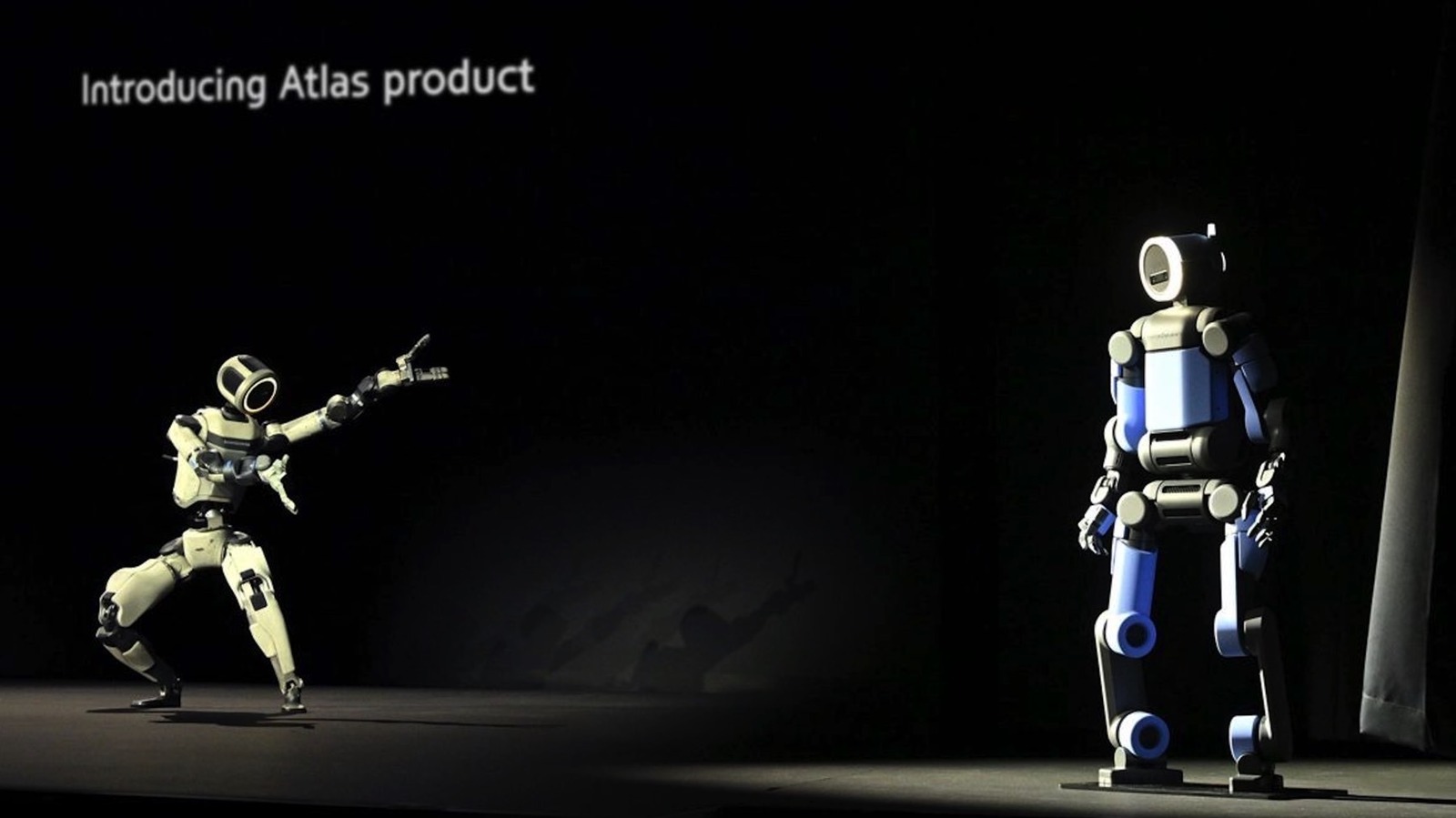
Artificial intelligence is one of the most important tech innovations of the decade, with most consumer electronics companies working on new AI features for their products, from chatbots to devices with built-in AI capabilities. These developments will lead to smarter AI models that power more advanced gadgets, including smart humanoid robots, many of which already exist as concepts or development prototypes. Several humanoid robots were shown at CES 2026, including Hyundai’s Boston Dynamics Atlas robot. Unlike less mature products that aren’t ready for a public roll-out, Atlas is already in production ahead of its planned deployment in Hyundai factories.

Boston Dynamics explained on stage at CES 2026 that the entire 2026 Atlas production capacity will serve Hyundai. A strategic partnership with Google DeepMind was also announced, to “accelerate technological development for next-generation humanoid robots”, per a Hyundai press release. Google’s DeepMind has been doing its own robotics AI research in recent years, including the mind-blowing Gemini Robotics models that should allow robots to more naturally interact with the world around them. Boston Dynamics says its own Orbit platform will allow the Atlas to share learned skills with other Atlas robots. 

Production of the Atlas robots is set to start at Boston Dynamics’ headquarters with plans in the works for Hyundai and Boston Dynamics to build a factory capable of turning out 30,000 humanoids annually. The commercial version of Atlas, which was shown on stage at CES, will be used for parts sequencing at the Hyundai Motor Group Metaplant America factory in Savannah, Georgia, beginning in 2028.

What the Atlas Robot can do

Hyundai’s subsidiary, Boston Dynamics, brought an Atlas prototype robot (white model) to the 2026 CES show to demo its features, as the commercial version (blue model) wasn’t functional during the announcement. However, the two humanoid robots look almost identical and can perform similar actions. Boston Dynamics explained the Atlas’s head features cameras on all sides for 360-degree vision.

Atlas’s body is also a technological breakthrough. It looks like a human, with a torso, hands, and feet, but has 56 degrees of freedom. This allows the robot to completely rotate its head, torso, hands, and fingers, which means it can interact with nearby objects more efficiently than a person. Atlas can also rise from a folded position, so it will take up less space when not working or performing an action.

Speaking of work, Atlas has a battery life of about four hours, thanks to dual battery packs stored in the torso. When the batteries run low, the robot will swap them autonomously. Also, Atlas is water resistant and can work in a variety of weather conditions. Boston Dynamics said the robot can operate between -4° and 104°Fahrenheit. By 2030, “Atlas will also take on tasks involving repetitive motions, heavy loads, and other complex operations,” according to Hyundai.

Atlas is close to commercial deployment

Atlas stands 6.2 feet tall and weighs 198 pounds. It has a reach of 7.5 feet, hands that feature tactile sensing in the fingers and palms for dexterity, and can lift objects weighing up to 110 pounds. That’s the instant lift capability, however, with sustained weight capacity listed at 66 pounds. And when Atlas is used for heavy lifting, the battery life will be cut in half, according to Boston Dynamics. Atlas can replace those batteries in three minutes, and the used packs can be recharged in an hour and a half. 

Put differently, Boston Dynamics’ Atlas is much closer to commercial deployment than alternatives, including Tesla’s Optimus, the general-purpose humanoid robot that Elon Musk showed off in 2024. That said, Atlas will not be available for general sale anytime soon. The robot will be used in manufacturing environments first, starting with Hyundai factories. Boston Dynamics has not yet announced a price for the robot, so don’t get your hopes up if you’re in the contingent who would happily buy a humanoid AI robot to do chores and help out with tedious or physically demanding tasks.

Source

Posted on

3 Rumored Features Exclusive To Gemini-Powered Siri That Android Desperately

Kenneth Cheung/Getty Images

After Apple’s announcement that Google’s Gemini will power the new Siri, The Information published a report with more in-depth details about this partnership, including some of the future capabilities of Apple’s personal assistant. According to the publication, Apple will be able to include even more features than what it promised at WWDC 2024.

The new Siri will finally stop the “I can’t help you with that” response, and will instead answer factual questions, tell stories, be useful as an agentic assistant, and even offer emotional support. Citing a person familiar with the matter, The Information says Siri will be able to help you book your next bit of travel. Later functionalities, which may be unveiled at the WWDC 2026 keynote, could include the ability to remember past conversations and suggest actions based on application data.

That said, what’s more interesting about these rumored features (as powered by Gemini) is that not even Android users have access to the same, given the current set of Google Gemini capabilities. This provokes a question regarding whether the new Siri expansion’s rumored functions are something Apple produced in-house — or if Google might announce some of them at its next I/O conference to even the score.

These are the rumored differences between Google Gemini and a Gemini-powered Siri

Primakov/Shutterstock

The Information claims Apple won’t use the Gemini brand to promote Siri. While more details about the partnership are unclear, Apple will likely continue to use its Private Cloud Compute to handle cloud features, while sticking with local processes for other tasks. Among the features unavailable to Android users: Google Gemini doesn’t offer emotional support, and The Information indicates that the new Siri might be more helpful on this score than it had been previously.

However, the two biggest rumored incoming features are the ability to remember past conversations, which is currently limited to paid users of Google Gemini, as well as the ability to take action based on app data. While Google is rolling out the ability to remember past conversations to free users on iOS and Android, the assistant still needs to be told to remember something specifically. Apple, on the other hand, will roll out this feature to every Apple Intelligence user.

Finally, the ability to take action based on the data available on an app — such as advising you to head to the airport to pick up a family member due to higher traffic volume than normal — might be a game-changer for Siri fans. This could potentially be based on the new App Intents API that Apple has been offering for the past year, combined with Gemini’s powerful model. That said, we still need to wait for Apple’s official unveiling to understand how a Gemini-powered Siri will differ from the strictly Android equivalent.

Source

Posted on

China And Japan Might Save Apple’s Rising Prices From The

LoveMetaverse/Shutterstock

The AI boom and resulting strained supply chain created by AI companies always needing more RAM and other components is already affecting the industry overall. However, RAM isn’t the only component manufacturers are struggling to get their hands on, as a major Japanese company behind a glass cloth fiber used in iPhone models and other popular devices can’t keep up with demand from Apple, Qualcomm, Nvidia, Google, Amazon, and others.

This glass cloth is made from fine glass fibers to reinforce layers in printed circuit boards(PCBs), and the most prevalent of these fibers are made by Japan’s Nitto Boseki (aka Nittobo). According to Nikkei Asia, Apple was an early adopter of Nittobo’s glass cloth. However, with AI companies requiring untold numbers of high-performance PCBs, this specific glass cloth has reportedly put Apple at risk of a supply shortage.

Nikkei Asia says that industry insiders are calling this strain “one of the biggest bottlenecks for the electronics-making and AI industry for 2026.” Apple has been closely monitoring the situation by not only sending its own staff to Japan to ensure it gets the material, but also reaching out to other companies that might be able to help the company avoid possible launch delays, product shortages, or price hikes.

Apple is battling supply chain constraints

José Adorno/BGR

While Apple under Tim Cook is known for its ability to get everything that it needs from the supply chain without issues (barring rare circumstances like iPhone 14 Pro production issues during the COVID-19 pandemic), the company is now pursuing other options. A person familiar with the situation told Nikkei that Nittobo will not catch up with demand until the second half of 2027.

As a result, Apple is focusing on small Chinese glass fiber makers, like Grace Fabric Technology, to ensure it can deliver a glass cloth of similar quality to Nittobo’s, so it won’t impact the release of new products, like future iPhone models. Nikkei says that Qualcomm is also targeting a similar strategy as Apple, but new supply chain companies are still struggling to develop this glass fiber, as the quality of Nittobo’s fiber gives major tech companies confidence that their products won’t be compromised.

In 2026, Apple is expected to unveil the iPhone 17e in the first quarter of the year. The iPhone 18 Pro, iPhone 18 Pro Max, and the upcoming foldable iPhone are all likely to debut in the second half of 2026. Meanwhile, Apple is still producing millions of iPhone 17 models in the months ahead, so it’s clear that this could become a serious bottleneck in the near future if it’s not resolved.

Source

Posted on

Samsung claims virtualised RAN first, accelerating AI-native, 6G-ready nets

As the world’s mobile operators transition to software-driven, cloud-native architectures, single-server virtualised RAN (vRAN) deployments are becoming essential, and to allow the providers to meet these demands and prepare for future infrastructures, Samsung has completed what it claims is the industry’s first commercial call over vRAN.

The CE giant believes that as operators accelerate their transition to software-driven, flexible architectures while seeking more sustainable infrastructure, the ability to run RAN and AI workloads on fewer, more powerful servers becomes critical. In addition, Samsung sees vRAN as helping to reduce the physical space needed for equipment, improve energy efficiency and make networks more adaptable to changing, evolving needs.

In particular, a single-server deployment can reduce the total cost of ownership for the operator. With single-server vRAN, operators consolidate network elements that historically required multiple servers, allowing for simplified management of complex site configurations.

The vRAN is powered by new Intel Xeon 6 system on chip (SoC) 6700P-B processor series with up to 72 cores, running on a Tier 1 US operator’s live network. The move was completed just months after the first wave of the Intel Xeon 6 SoC becoming commercially available and builds upon Samsung’s previous achievement in 2024, when it completed the industry-first end-to-end call in a lab environment with Intel Xeon 6 SoC.

Samsung said that it has been working to push the boundaries of network virtualisation, offering operators “exceptional” performance and reliability. The new achievement is seen as validating vRAN as an optimal platform for next-generation networks, as well as reinforcing its “leadership in AI-native network technology”, unlocking an AI-driven, 6G future for higher network performance and enhanced efficiency.

In the demo, the cloud-native vRAN with Intel’s latest Xeon SoC ran on a single commercial off-the-shelf (COTS) server from Hewlett Packard Enterprise with a cloud platform from Wind River. The result, said Samsung, was that on a single server of Samsung’s AI-powered vRAN with enhanced processors, operators can consolidate software-driven network elements such as mobile core, radio access, transport and security, which traditionally required multiple servers.

It added that using this vRAN approach not only reduces network power consumption, capital expenditure (Capex) and operational expenditure (Opex), but also facilitates operators’ adoption of AI-RAN and AI services, accelerating their readiness for 6G through its flexibility and automation capability.

Assessing what the move can mean for the mobile industry, Daryl Schoolar, analyst and director at Recon Analytics, said: “This successful first call is an important milestone for the industry. By demonstrating multiple network functions running on next-generation processing technology, Samsung is showing what future networks look like – more cloud-native, more scalable and significantly more efficient.

“This achievement moves the industry beyond theoretical performance gains and into practical, deployable innovation that operators around the world can leverage to modernise their networks, accelerate automation and better support AI-driven use cases.”

June Moon, executive vice-president and head of R&D for networks business at Samsung Electronics, said: “This breakthrough represents a major leap forward in network virtualisation and efficiency. It confirms the real-world readiness of this latest technology under live network conditions, demonstrating that single-server vRAN deployments can [withstand] the stringent performance and reliability standards required by leading carriers.

“We are not only deploying more sustainable, cost-effective networks, but also laying the foundation to fully utilise AI capabilities more easily and prepare for 6G with our end-to-end software-driven network solutions.”

Cristina Rodriguez, vice-president and general manager of network and edge at Intel, added: “With Intel Xeon 6 SoC, featuring higher core counts and built-in acceleration for AI and vRAN, operators get the compute foundation for AI-native, future-ready networks. This collaborative achievement with Samsung, HPE and Wind River enables greater consolidation of RAN and AI workloads, lowering power and total cost while speeding innovation.”

Source

Posted on

‘Dual-channel’ attacks are the new face of BEC in 2026

So-called “dual-channel” attacks using multiple methods of communication either simultaneously or in sequence are becoming more prevalent as digital fraudsters seek out new ways to defeat cyber protections against business email compromise (BEC) scams, according to data from security services supplier LevelBlue.

BEC attacks – which spoof trusted entities, often C-suite executives, then use their identities to convince victims to transfer money into the attackers’ pockets – have long been a bugbear for enterprise defenders.

“[BEC] continues to be one of the costliest cyber attacks as reported by the FBI’s IC3, with over $2.7bn (£2bn) in adjusted losses in 2024 alone,” wrote LevelBlue researcher Katrina Udquin.

“BEC attacks are not slowing down, and fraudsters continue to evolve their scamming techniques and arsenal,” she said.

According to LevelBlue, last year, its systems observed a significant increase in BEC attacks in which the initial lure was a request for contact, seeking to establish the potential victim’s mobile number or personal email address. A total of 43% of lures that it saw took this form, compared with 31% which took the form of a more traditional request for a payroll transfer, and 10% which asked for invoice payments or wire transfers.

Such requests for contact lures are very often a precursor to a dual-channel attack seeking to move the conversation to an alternative platform.

LevelBlue’s systems tallied over 5,000 unique dual-channel attacks in 2025, and found that in 66% of them, the cyber fraudsters tried to move the conversation to traditional SMS messaging, in 32% of cases to messaging applications such as WhatsApp, and in 2% of cases to personal email addresses.

The rationale behind this tactic is a relatively simple one – external mobile networks, messaging applications and personal email addresses will in almost all circumstances fall well beyond the purview of any enterprise IT security department.

Done successfully, a dual-channel attack renders expensive email protection services basically useless, meaning all security teams can do is hope that the social engineering modules of their cyber training courses have been effective.

Related to this, LevelBlue said it also observed an increase in callback phishing, in which the criminals encourage their mark to reach out first by contacting a specified malicious phone number. This tactic more than doubled in popularity during 2025. Callback phishing is effective because it relies heavily on authority bias and a sense of urgency, exploiting people’s tendency to take messages or instructions from people in positions of authority seriously.

Emerging trends

According to LevelBlue’s data – gleaned largely from its proprietary MailMarshal defence service – 2025 saw a number of other notable trends developing in the BEC sphere.

Among these were the emergence of longer-form BEC emails. While BEC spam has traditionally been rather concise, longer, well-crafted messages are now increasingly being seen, likely a result of cyber fraudsters trying to make their emails more elaborate and more authentic. Often, said LevelBlue’s researchers, longer emails appear to be being generated with the “help” of generative artificial intelligence large language models.

The past 12 months also saw a spike in attacks using multiple-personas and crafted email threads, where the victim appears to be copied in on an ongoing email chain. This tactic has been well-used for the past four or five years by nation-state threat actors targeting individuals of interest, such as academics, activists, diplomats, journalists and politicians, but is now spreading among financially motivated groups, too.

In a criminal context, multiple-persona impersonation and email threads seem to be being used predominantly in invoice payment fraud, with the spoofed identities often including the victim’s third-party suppliers.

Preventing BEC: Back to basics

Although cyber criminal tactics around BEC are clearly evolving, defenders can take solace from the fact that the best ways to protect against it are tried and tested.

Naturally, it remains an absolute imperative that staff across the organisation are educated on how to identify potential BEC spam email indicators.

Beyond this, security teams should ensure that they work with compliance and financial colleagues to ensure the organisation performs rigorous identification and verification checks when making external payments.

Finally, limiting access controls to organisational systems, records and documentations, and protecting these with multi-factor authentication as standard, can inhibit the risk of data theft.

Source

Posted on

Microsoft patches 112 CVEs on first Patch Tuesday of 2026

Microsoft has pushed fixes for 112 common vulnerabilities and exposures (CVEs) on the first Patch Tuesday of 2026, among them a number of zero-day flaws that were either publicly disclosed or actively exploited prior to patching, and no fewer than eight critical bugs.

Although this is a sharp increase in comparison to recent Patch Tuesdays – December 2025 saw Microsoft patch just 56 flaws – it is important to note that the festive season is frequently a quieter time for patches, sometimes by design, and January often brings an uptick in disclosures. Nevertheless, observed Jack Bicer, director of vulnerability research at patch management firm Action1, the volume of fixes in the latest update underscores “growing pressure” on security teams.

“This comes against a broader trend: in 2025, reported vulnerabilities increased by 12% over 2024, continuing the upward trajectory of disclosed security flaws,” said Bicer.

Paramount among these flaws is CVE-2026-20805, an information disclosure vulnerability in Desktop Window Manager, discovered by Microsoft’s own Threat Intelligence and Security Response Centers.

Although it bears a relatively low Common Vulnerability Scoring System (CVSS) score of just 5.5, active exploitation of CVE-2026-20805 has been observed in the wild, Microsoft said.

“The flaw leaks a memory address from a remote ALPC [Asynchronous Local Procedure Call] port. This type of information disclosure vulnerability is often used to defeat Address Space Layout Randomisation [ASLR] – a security feature in modern operating systems designed to protect against buffer overflows and other exploits that rely on manipulating the memory of a running application,” said Immersive senior director of cyber threat research, Kev Breen.

“Once they know where code resides in memory, they can chain this with a separate code execution bug to turn a difficult exploit into a reliable one. Microsoft doesn’t provide any information on what other components that chain could involve – making it harder for defenders to threat hunt for potential exploitation attempts, meaning patching quickly is the only mitigation for now.”

Ivanti vice-president of security product management, Chris Goettl, agreed with this assessment: “The vulnerability affects all currently supported and extended security update supported versions of the Windows OS, [so] a risk-based prioritisation methodology warrants treating this vulnerability as a higher severity than the vendor rating or CVSS score assigned.” 

Next up is a security feature bypass (SFB) flaw in Secure Boot Certificate Expiration, tracked as CVE-2026-21265. It also carries a comparatively low CVSS score and Microsoft only rates it as Important. However, said Goettl, it has been publicly disclosed and security teams would be wise to look into it.

“The fix provides a warning regarding certificates that will be expiring in 2026 and details on actions that are required to up renew certificates prior to their expiration in addition to the update,” he said. “It is recommended to start investigating what actions your organisation may need to take to prevent potential serviceability and security as certificates expire.”

The remaining items on the zero-day list – again both publicly disclosed but not known to be exploited, date back three and four years respectively. Both are elevation of privilege (EoP) flaws affecting soft modem drivers that ship natively with supported Windows operating systems.

The older of the two, CVE-2023-31096, is to be found in Agere Soft Modem Driver, and the more recent one, CVE-2024-55414 in Windows Motorola Soft Modem Driver. Microsoft’s solution is to remove the affected drivers, agrsm64.sys and arsm.sys in the first instances and smserl64.sys and smserial.sys in the second, as part of the January cumulative update.

This means soft modem hardware that depends on them will now cease to work on Windows. Microsoft said admins should act quickly to remove any existing dependencies on the affected hardware.

Critical flaws

The critically rated flaws in the January 2026 Patch Tuesday drop comprise six remote code execution (RCE) issues and two EoP issues.

The RCE flaws affect Microsoft Excel, Microsoft Office and Windows Local Security Authority Subsystem Service (LSASS). They have been assigned designations CVE-2026-20854, CVE-2026-20944, CVE-2026-20952, CVE-2026-20953, CVE-2026-20955 and CVE-2026-20957.

The EoP flaws are CVE-2026-20822, which affects the Windows Graphics Component, and CVE-2026-20876, which affects Windows Virtualization-Based Security (VBS) Enclave.

Mike Walters, president and co-founder at Action1, said the VBS flaw was worth particular attention because “it breaks the security boundary designed to protect Windows itself, allowing attackers to climb into the one of the most trusted execution layers of the system”.

Walters warned of a serious risk to organisations that lean on VBS in order to protect credentials and other secrets, or sensitive workloads, because if exploited successfully, an attacker might be able to bypass security controls, achieve persistence, evade detection` and hit systems that security teams believe to be strongly isolated.

“Although exploitation requires high privileges, the impact is severe because it compromises virtualisation-based security itself. Attackers who already have a foothold could use this flaw to defeat advanced defences, making prompt patching essential to maintain trust in Windows security boundaries,” he said. “If the patch cannot be applied immediately, restrict administrative access, enforce strong privilege management and monitor for abnormal activity involving VBS or enclave-related processes.”

Source