Posted on

‘Historic’ shift in broadband usage heralds expansion phase

At the end of 2024, OpenVault predicted ongoing monitoring and network adaptability would be crucial to maintain a high quality of experience amid rising demand. with upstream data usage now growing at more than twice the rate of downstream usage.

In its latest quarterly analysis of broadband consumption for the second quarter of 2025, the company has now said that the current acceleration marks a small yet historic shift in growth rates.

The Q2 2025 OVBI report analysed data from millions of broadband subscribers, aggregated through OpenVault’s data collection solutions, to uncover usage patterns that effect network performance, operator revenue and customer satisfaction. It detailed shifting consumption trends in the quarter, including distinct growth patterns within specific tiers of service, as well as the continued impact of growing upstream usage.

The Q2 2025 edition of the report introduced new network health metrics that quantify how proactive network management (PNM) and profile management application (PMA) technologies can support broadband providers’ technology and business objectives.

The key standout finding for the quarter was that after several years of post-pandemic uncertainty, broadband growth was showing strong signs of a comeback, with average per-subscriber data usage increased for the second consecutive quarter in 2025. Moreover, the year-on-year (YoY) growth rate in Q2 2025 was higher than any seen in a second quarter in the past three years.

Data collected by OpenVault’s software-as-a-service (SaaS) network management and monitoring solutions found a rise in average per-subscriber usage to 664.2 GB. While this represented a small increase of 1.0 GB over the 663.2 GB recorded in the previous quarter, OpenVault said that it also marked a significant metric given historical seasonal declines in average usage from the first quarter to the second.

The increase in average usage over Q2 2024’s 585.8 GB was 13.4%, which is the largest since a 14.0% rate of growth in 2021. OpenVault attributed the increase largely to what it called “vigorous” downstream traffic – up 13% YoY in Q2 to 615.3 GB – as well as by a rise in upstream usage of 17.9%. The upstream growth was the fastest second-quarter metric on record, with the exception of the pandemic-fuelled 55.8% increase in 2020.

Other key findings included the percentage of super power users – those consuming 2 TB of data or more per month – rose to 5% in Q2 2025, up from 3.7% at the end of 2024. Subscribers with speeds of 1Gbps or higher continued to close in on 1TB of data in Q2 2025, and their 955.0 GB average was up 14.4% over the 834.8 GB registered during the same period in 2024.

BY contrast, the relevance of lower speed tiers was seen to be fast eroding. Average monthly usage for those consumers on sub-50Mbps plans was only 117.4 GB, a YoY decline of 55.0%.

PMA technology was seen to be improving network resource optimisation and more efficient DOCSIS 3.1 utilisation. The percentage of total channels reporting more than half of their modems in partial-service mode was 3.4% after the implementation of PMA, compared with 11.6% prior to PMA deployment.

The report noted: “The unprecedented increase in usage from Q1 to Q2, the resurgence of downstream consumption and the continued growth of upstream traffic all signal that broadband is entering a new phase in expansion. In this evolving environment, agility is essential – providers must leverage detailed insights and advanced tools like PMA to build resilient networks capable of supporting rising and increasingly dynamic consumer usage.”


Source

Posted on

ICO investigates lawfulness of algorithms used in immigration enforcement

The Home Office could be banned from unlawfully using computer algorithms to recommend whether migrants should be deported.

Privacy International has filed a complaint to the Information Commissioner’s Office (ICO) over the Home Office’s collection and processing of information in immigration enforcement operations.

The move follows a successful complaint by the campaign group over the Home Office’s use of GPS tagging to monitor asylum seekers.

The complaint filed on 18 August focuses on two algorithmic tools used for processing migrants’ personal data, known as Identify and Prioritise Immigration Cases (IPIC) and Electronic Monitoring Review Tool (EMRT).

The campaign group claims in a 94-page legal submission that the Home Office is using the tools in a way that limits human involvement in decision-making, and that “design nudges” encourage case workers to accept the tool’s recommendations with little scrutiny.

The complaint comes as public sector organisations adopt more automated tools to assist or replace human decision-making. Although such tools have the potential to improve accuracy and reduce costs, they are being routinely developed and operated behind closed doors with minimum transparency and safeguards, said Privacy International.

It said the IPIC and EMRT tools are “highly intrusive” and could be used to process sensitive data provided to the Home Office relating to an individual’s health, family and other relationships, and potentially data obtained from GPS tracking. “Individuals are denied any meaningful information about how their data is used,” it said in the complaint.

According to Home Office figures, the EMRT tool was used to conduct more than 1,700 quarterly Electronic Monitoring (EM) reviews over an 80-day period in 2023. It is likely that both tools have been used to make recommendations on tens of thousands of data subjects, according to estimates by Privacy International.

“The potential harms arising from tools used across the immigration system at such scale include the potential for vulnerable individuals to be subjected to life-changing decisions. This may include detention or removal from the UK based on profiling and automated decision-making,” it said.

This means there is no way to verify the lawfulness and accuracy of processing or to challenge decisions, Privacy International claimed, arguing that the Home Office’s use of the algorithms breaches the UK General Data Protection Regulation and Data Protection Act 2018.

“Individuals lack any meaningful information about how their data is used, and where information is provided, it is inconsistent and contradictory,” Privacy International said in a statement.

“No coherent and comprehensive information is provided to migrants concerning what information the tools process and how it is used, including what consequences their deployment could have on decisions that may impact their lives,” it added.

Privacy International has asked the information commissioner to issue an enforcement notice to prevent the Home Office from collecting and processing personal data using the IPIC and EMRT tools in immigrant enforcement operations.

“These tools appear to have been deployed without sufficient safeguards to protect those subject to them, raising concerns as to whether the Home Office is adequately complying with laws regulating the processing of personal data in the UK,” it said.

A previous complaint by the group prompted the ICO to issue a formal warning to the Home Office over its use of GPS ankle tags to monitor the location and movement of asylum seekers who arrive in the UK on small boats and other unauthorised routes.

The ICO found the Home Office had failed to assess the intrusive impact of continuously collecting people’s location data and its potential impact on people who may be vulnerable because of their asylum status, their inability to speak English, or because they had faced difficult conditions travelling to the UK.

The Home Office has been approached for comment. 

Source

Posted on

Change This Setting As Soon As You Get Your Pixel

The Google Pixel 10 is finally here, bringing with it a slew of new AI-powered features to figuratively knock your socks off. Before you dive into all the AI goodies and technological upgrade that await you, there’s one setting you’ll want to change on your Pixel 10 to ensure you have the smoothest visual experience possible while using Google’s latest flagship.

Like previous Pixel devices, the OLED display on the Pixel 10 supports up to a 120Hz refresh rate. However, to save battery life, the device comes set at 60Hz out of the box, as Android Authority noticed. Now, there’s certainly an argument to be made about getting the most out of your Pixel’s battery, especially with Google throttling the Pixel 10’s battery after just a few hundred charging cycles. But if you’re buying a flagship device, you want flagship performance. As such, you will likely want to up the refresh rate to 120Hz, even if it takes a little extra juice to do so.

How to change the Pixel 10’s refresh rate

Christian de Looper for BGR

To increase the refresh rate on your Pixel 10, you’ll need to open your phone’s Settings and navigate to the Display & touch menu. There are several settings you can change here, including brightness and appearance (like light and dark mode). If you scroll down a little, you’ll see an option called Smooth display — it’s located under the Other display controls section.

This feature is toggled off by default, locking the phone’s refresh rate to 60Hz so it doesn’t use more battery than it needs to. If you’re not especially worried about battery life, turn on Smooth display. This will automatically increase the phone screen’s refresh rate to 120Hz for content that supports it. The phone will display smoother visuals in games and certain apps.

Unlike the Pixel 10 Pro models, the base Pixel 10 can only swap between 60Hz and 120Hz. While both are technically OLED displays, they’re different panel types. If you’re rocking one of the more expensive variants, you can take full advantage of scalable refresh rates, which means the phone can range from 120Hz to as low as 1Hz depending on what’s on the display. Jumping up to 120Hz will deplete your battery more quickly, but it’s also one easy way to ensure your brand new phone feels as snappy and responsive as possible.

Source

Posted on

Microsoft’s Copilot Shows Signs Of Reducing Its Reliance On OpenAI’s

PhotoGranary02/Shutterstock

Microsoft launched its first two homegrown AI models this week. The models are now available in various Copilot programs and could signal a move to start incorporating the company’s own models into the Windows-centric assistant instead of relying so heavily on OpenAI’s GPT models.

The new models, called MAI-Voice-1 and MAI-1-preview, debuted on Thursday, August 28. Microsoft shared details about the models in a blog post, where the company highlighted their capabilities. MAI-Voice-1 is now available in Copilot and Copilot Labs, and Microsoft says that it can be used to generate up to 60 seconds of audio in under one second, all while relying on a single GPU. Microsoft claims that this “lightning-fast” efficiency makes it “one of the most efficient speech systems available today.”

MAI-1-preview, on the other hand, is designed to provide consumer-level benefits by following instructions and “providing helpful responses to everyday queries.” It’s currently only being made available in LMArena, though Microsoft says it plans to eventually roll it out for specific text-based cases in Copilot as the weeks progress. For now, though, the company wants to look into improving it with user feedback.

A long way from replacing OpenAI

Nwz/Shutterstock

While Microsoft’s launch of its own in-house AI has major implications on the future of Copilot, we don’t expect Microsoft to ditch its partnership with OpenAI any time soon. There’s little doubt that having access to GPT’s latest models has helped Microsoft expand what Copilot can do exponentially without having to rely on building its own models from the ground up. It’s been a good tactic, as it has given the company tons of usage data with which to build its own models. Meanwhile, Microsoft has even added features to Copilot that ChatGPT doesn’t have yet.

This approach has given Microsoft’s AI division time to focus on specific models and improvements, and Microsoft even says that its in-house options aren’t designed for enterprise-level queries, something that it usually focuses heavily on for advertising Copilot’s productivity features. So, it would make sense for Microsoft to continue relying on GPT for that side of things, at least for now.

We’ll be curious to track these models in the months to come, as Microsoft has plenty of data to feed them already, and future input will only help the new models become even more capable. Since these models are focused on consumers, though, it’s possible we could eventually see these models make the leap to Copilot in Edge, too, as Microsoft tries to morph its Internet Explorer replacement into a proper AI browser.

Source

Posted on

Apple iOS update fixes new iPhone zero-day flaw

Apple has pushed another update to its mobile operating systems, iOS and iPadOS, to address a newly discovered zero-day that is already being exploited by threat actors in the wild to enable so-called zero-click attacks.

Tracked as CVE-2025-43300, the flaw is an out-of-bounds write issue in the ImageIO framework – which is used to enable applications to read and write the majority of image file formats. If successfully exploited, processing a maliciously crafted-image file results in memory corruption on the target device.

“Apple is aware of a report that this issue may have been exploited in an extremely sophisticated attack against specific targeted individuals,” Apple said in its customarily sparse advisory.

The update, which takes iOS and iPadOS to version 18.6.2, addresses this problem with improved bounds checking.

Adam Boynton, senior security strategy manager for EMEIA at Jamf, an Apple device management specialist, explained that the flaw could potentially be used by threat actors to compromise the device and enable the execution of malicious code.

In these zero-click attacks, malicious payloads are generally delivered via channels such as text message, email or messaging apps. These payloads contain data packets that are designed to trigger the vulnerability automatically, without any user interaction taking place – hence the term zero-click.

This stealthy methodology means zero-clicks are tricky for enterprise defenders to get to grips with, not least because they are hard to detect and can bypass end-user training, but also because they often leave very little in terms of forensic evidence and can operate without setting off any security alerts.

Zero-click attacks have also been proven to be highly effective against high-value targets within businesses, and additionally for certain categories of organisations and individuals at risk of targeted cyber-espionage, such as non-governmental organisations (NGOs), journalists and media, and activists and politicians.

“Apple has indicated that this vulnerability has been exploited in sophisticated, targeted attacks, which typically focus on individuals with highly valued access or contacts, such as journalists, lawyers, activists, and government officials,” said Boynton. “While Apple has not confirmed whether this specific flaw was linked to spyware, similar vulnerabilities in ImageIO and WebKit have previously been used in Pegasus campaigns.”

Mitigating zero-click attacks

Sylvain Cortes, vice president of strategy at Hackuity, a vulnerability management platform, said: “With the vulnerability being actively exploited, everyone should check their iPhones immediately. Organisations handling Apple devices need to be able to identify and update all affected devices immediately, especially if they operate in at-risk fields like the legal, media and public sectors.” 

When responding to zero-click vulnerabilities, security professionals can help turn the odds in their favour by aggressively patching against them; by keeping up-to-date on threat intelligence, deploying defence-in-depth strategies with layered security protections; and by introducing technologies such as micro-segmentation, endpoint detection and response (EDR) tools, as well as mobile device management (MDM) services.

Meanwhile, individual Apple users can check if their iPhones or iPads are running the updated version 18.6.2 by navigating to Settings, General, and Software Update on their devices.

The update to version 18.6.2 will likely be among the final releases to take place ahead of the anticipated unveiling of iOS 26, which still looks to be on track for mid-September. This will accompany the launch of the iPhone 17.

Source

Posted on

Google’s Pixel 10 Locks Away RAM For AI, But There

Christian de Looper for BGR

The hits just keep coming for Google’s new Pixel 10. This time, it looks like the listed 12GB of RAM on the phone doesn’t tell the whole story. Instead, at least 3GB of that memory is permanently locked up by the phone’s AI systems, even if you never plan to use them. It was never in doubt that AI would be a selling point for the Pixel 10. Google has been pushing out more Gemini-powered features to its phones for a couple of years now. Some of these features are intriguing, like Magic Eraser. But that doesn’t mean everyone wants to use them, and certainly not every day.

However, that doesn’t seem to be stopping Google from tying some of the phone’s included memory to ensure the AI apps and features are always at the ready. According to a detailed breakdown of the Pixel 10’s hardware performance by Android Authority, it looks like Google may have more than 3GB of RAM tied up specifically to handle AI tasks on the new flagship.

This isn’t especially surprising, as the company has used the same methods on previous Pixel devices to help make AI systems feel more responsive and snappier. But it could become an issue for power users who regularly use demanding apps on their phones.

How to free up RAM on the Pixel 10

Ahyan Stock Studios/Shutterstock

While it isn’t necessarily an unexpected move, the fact that Google is leaning so heavily on locking up the phone’s memory to ensure AI systems can run might be disappointing to some, especially if you aren’t all that psyched about the AI that Google is pushing. When combined with the other news surrounding the Pixel 10 — like the mandatory battery health feature that essentially throttles the Pixel 10’s battery after just 200 charges — this might feel like a slap in the face to some.

The good news is that there appears to be an easy way to free that RAM back up for any process on the Pixel 10. One user on Reddit (who made the same point when last year’s Pixel 9 arrived) claims that freeing up the 3GB of RAM reserved for AI is as simple as going to Settings > Apps > All apps, tapping the three-dot menu in the top-right corner, and tapping Show system. Near the top of the list, you should now see an entry labeled AI Core, which you can tap on and then disable. This might slow down those AI processes, but if you need every last gigabyte of RAM, it’s worth experimenting to see if it makes a difference.

Source

Posted on

Scale of MoD Afghan data breaches widens dramatically

The Ministry of Defence (MoD) has admitted there have been more than 12 times as many data breaches linked to its Afghan Relocations and Assistance Policy (Arap) programme than previously thought.

Until now, a total of four breaches were known to have hit Arap, a scheme established back in April 2021 to bring Afghan citizens at risk of Taliban persecution to safety in the UK. However, according to Freedom of Information (FoI) figures released to the BBC, the true number is actually 49.

According to the BBC, the MoD declined to comment on the precise nature of any of the other breaches.

Two of the known breaches relate to failings around email security hygiene and collectively affected around 300 individuals. The more significant of the two resulted in the imposition of a £350,000 fine on the MoD by the Information Commissioner’s Office (ICO) – a move considered out-of-step with the regulator’s usual policy of not fining government bodies involved in incidents.

Then, in July 2025, far more serious data protection failings at the MoD emerged when it was revealed that the data of almost 19,000 asylum seekers had been released in error by a staffer. This only came out after the lifting of a superinjunction preventing the media from reporting on the data breach.

Earlier in August, it was also revealed that a third-party services provider working with the MoD at Stansted Airport suffered a cyber attack that compromised the data of 3,700 people including some associated with Arap.

Speaking to the BBC, Barings Law head of data protection Adnan Malik – whose firm is already representing more than 1,000 Afghan claimants who had their data leaked in prior breaches – described how an apparently isolated incident was now growing into a series of “catastrophic failings”. Malik called for the MoD to be fully transparent going forward, saying victims should not be finding out the truth from lawyers or journalists.

ESET global cyber security advisor Jake Moore said that, in general, human error is still a weak point in data protection, with a great many breaches caused by wrongly sent emails or missed security checks.

“But when the data includes highly sensitive information, the threat level dramatically increases,” said Moore. “Sensitive data should always require stricter protection through encryption and extra human checks, especially when lives are at risk. 

“Repeated incidents not only rub salt into the wound but show systemic weaknesses meaning security needs to be improved in organisational culture. Confidence in security can easily be lost and in this case the leaks threatened not only privacy but people’s safety,” he added.

The MoD told the BBC it took data security “extremely seriously” and that the department was committed to making sure incidents were dealt with in accordance with the law, including referral to the ICO if an incident meets the relevant thresholds.

MoD beefing up data protection with AI-backed tech

Earlier in August, the MoD appointed Australian cyber security scaleup Castlepoint Systems to deploy an AI platform to manage its data protection practice.

Castlepoint’s proprietary, explainable AI model manages structured and unstructured data, enables automated records management, discovery, privacy and security, and helps ensure regulatory compliance.

Castlepoint said its technology can sift through vast datasets, the scale of which would rapidly overwhelm a human, identify their contents, and apply the correct security measures to them.

Source

Posted on

5 Fun Ways To Repurpose An Old Raspberry Pi

Pengpeng/Getty Images

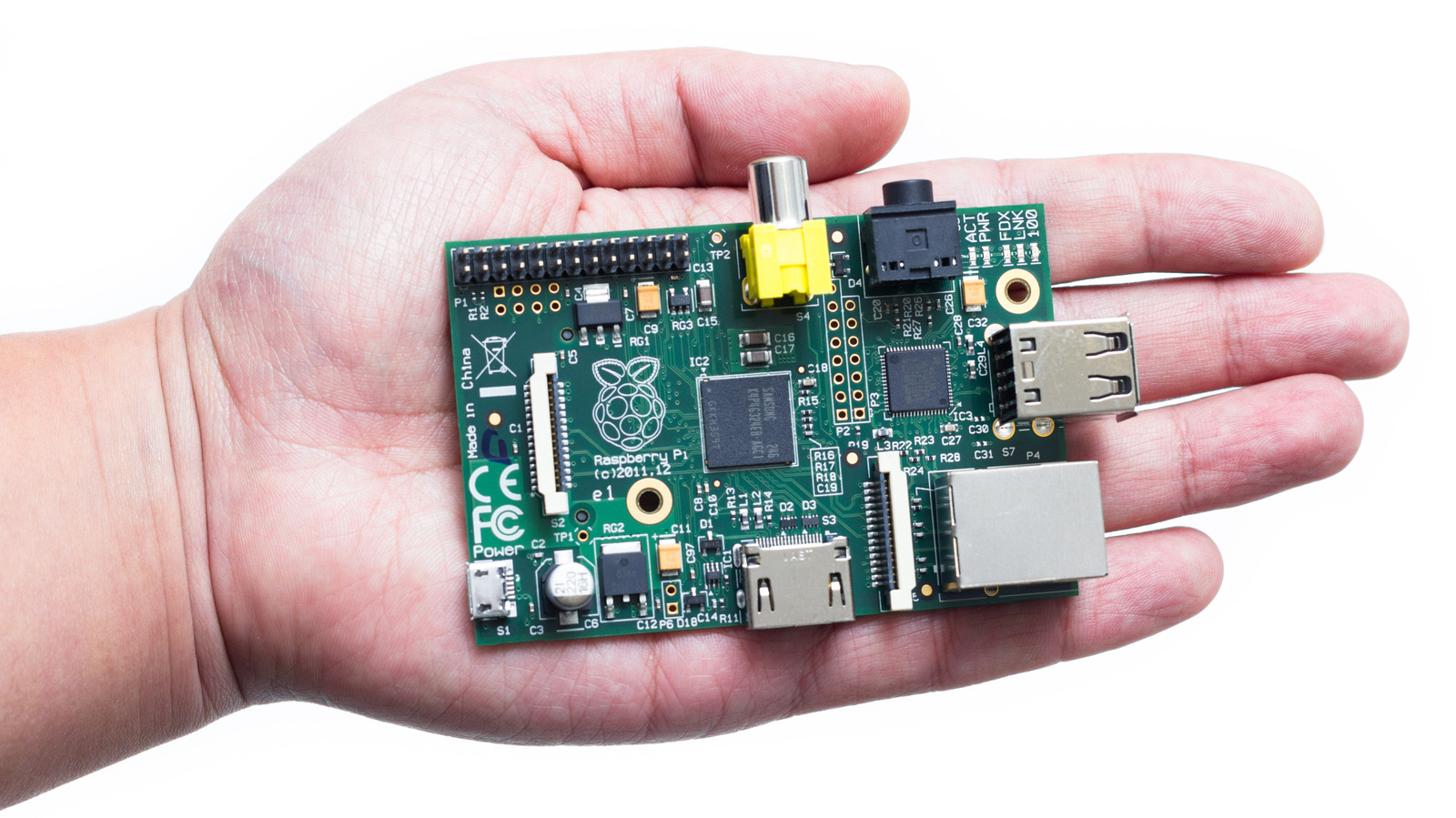
The Raspberry Pi is one of the most versatile and accessible pieces of hardware available today. Originally designed to promote computer science education, it has since evolved into a go-to tool for hobbyists, engineers, and educators. The Pi’s low cost, compact form factor, and open-source flexibility make it ideal for countless DIY applications. Even older models, like the Raspberry Pi 3, remain useful for dedicated single-purpose projects.

If you’ve got a Raspberry Pi sitting idle in a drawer, there’s no reason to let it go unused. With just a few additional components — ones you might even have laying around — you can turn it into something genuinely useful, fun, or even educational. The Raspberry Pi lineup includes both wireless and non-wireless models, each with practical uses. Wireless boards like the Pi 3, Pi 4, and Zero W are ideal for connected projects like streaming devices. On the other hand, older or non-wireless models like the Raspberry Pi 2 or the original Zero still work well for offline or wired-only setups, such as retro gaming consoles. Whatever model you have, here are five fun ways to put it to good use.

Set up a network-wide ad blocker

Primakov/Shutterstock

You can clean up your browsing and eliminate ad tracking by using your old Raspberry Pi 4 or even the older Pi 3. Instead of installing ad-blockers on each device, your Raspberry Pi can act like a filter between your router and the rest of the internet. It blocks known ad-serving domains at the DNS level, meaning any device connected to your Wi-Fi will automatically skip the spammy stuff.

Setup is surprisingly simple. Install Raspberry Pi OS onto a microSD card, install Pi-hole, and change your router’s DNS settings to point to the Pi. You’ll immediately notice websites loading faster and cleaner. No pop-ups, no auto-playing videos, and no shady tracking scripts. Pi-hole comes with a slick user interface that shows you real-time stats on how many requests are being blocked and where they’re coming from. It’s oddly satisfying, but also terrifying to see how many background trackers you’re dodging.

Build a smart home hub

Halfpoint/Shutterstock

If you already have smart bulbs, smart plugs, and other smart home gadgets, you might want to set up a control hub instead of relying on a dozen or so apps from different manufacturers. You can transform your old Raspberry Pi into a powerful smart home hub using Home Assistant, giving you full control of your connected devices in one place. Just keep in mind you need at least a Pi 4 with 2GB of RAM. An older Pi 3 might work as well, but you’re more likely to run into performance issues due to the lower memory.

Home Assistant is an open-source platform that runs well on a Raspberry Pi. Once installed, it automatically scans your network and detects compatible devices like Philips Hue lights, Nest thermostats, and other smart devices. You get a clean dashboard that runs in most browsers, with complete control over automations and schedules. Installation is straightforward. Flash the Home Assistant OS to a microSD card or an SSD connected via USB, boot your Raspberry Pi, and follow the setup wizard.

Broadcast your own Pi radio station

Stock-Asso/Shutterstock

It’s time to become your own DJ. With an old Raspberry Pi, a streaming microphone, and a bit of open-source software, you can build a fully functional internet radio station. Whether you want to stream music, host podcasts, or broadcast your voice to friends or coworkers across the network, your Pi is ready to go live.

The heart of the setup is Icecast, a free streaming server you can run on your Pi. It sends audio data over your local network or the internet, and anyone with a browser or streaming app can tune in. Pair it with DarkIce, and you’ve got a complete pipeline from audio input to stream output. Setup involves configuring Icecast to handle incoming streams, creating playlists or live capture scripts, and adjusting bitrate and format to match your network speed. Listeners can tune in using VLC, their browser, or any streaming app by entering your Pi’s IP and port.

Turn it into a coding station for kids

Morrowind/Shutterstock

An old Raspberry Pi is the perfect entry point for teaching kids how to code. You don’t need anything fancy. Just connect a keyboard, mouse, and monitor, install Raspberry Pi OS, and you’ve got a ready-made environment for learning the fundamentals of programming. There’s no risk of breaking your work computer, and no ads or distractions — just a safe, low-cost sandbox where creativity meets logic. You can even set up user profiles with limited permissions so younger kids don’t wander into the terminal or change system settings.

Right out of the box, Raspberry Pi OS comes with Scratch, a visual coding platform designed for kids to build games, animations, and interactive stories using drag-and-drop blocks. It’s fun, colorful, and beginner-friendly. For slightly older kids, there’s Thonny, a lightweight Python editor that makes real code feel approachable without removing the power of the language. It even includes a debugger for helping them trace what’s going wrong when something doesn’t work.

Build a retro gaming console

Grenar/Shutterstock

There’s something magical about playing classic games on vintage hardware, and with an old Raspberry Pi, you can build your very own retro gaming console. All you need to get started is your Pi computer, a power supply, a microSD card, a compatible monitor or TV, and a USB or Bluetooth controller. To tie everything together, you’ll also need a game emulator like RetroPie.

RetroPie is an open-source platform that integrates multiple emulators for dozens of consoles and arcade systems, including NES, SNES, Sega Genesis, and PlayStation 1. You can add ROMs via a USB drive, and RetroPie will organize them by platform. For extra nostalgia points, consider housing your Raspberry Pi in a classic console, a 3D-printed case, or a custom arcade-style cabinet. It’s a rewarding DIY project that turns an underused board into a dedicated machine built for retro gaming.

Source

Posted on

Moscow exploiting seven-year-old Cisco flaw, says FBI

Threat actors linked to the Russian government are falling back on a seven-year-old vulnerability in Cisco equipment that was first uncovered in 2018, according to a warning from the FBI.

The flaw in question, tracked as CVE-2018-0171, exists in the Smart Install (SMI) feature of Cisco’s Internetwork Operating System (IOS) and IOS XE. It arises through the improper validation of packet data and is exploited by sending a specially crafted Smart Install message to a vulnerable device on TCP port 4786. If left unpatched, it enables an unauthenticated, remote attacker to achieve a denial of service (DoS) condition, or to conduct remote code execution (RCE).

In the past year, the FBI said it had detected threat actors collecting configuration files for thousands of end-of-life network devices vulnerable to CVE-2018-0171, which it said are still in use at multiple critical national infrastructure (CNI) operators in the US.

“On some vulnerable devices, the actors modified configuration files to enable unauthorised access to those devices,” said the FBI in a statement. “The actors used the unauthorised access to conduct reconnaissance in the victim networks, which revealed their interest in protocols and applications commonly associated with industrial control systems.”

Beserk Bear

The US authorities said the unit conducting the current spate of intrusions was likely Beserk Bear, aka Dragonfly, a cyber unit of Russia’s Federal Security Service, the FSB, which is known to have targeted networking devices – particularly those that accept legacy protocols, and had previously worked on custom malwares that specifically targeted Cisco products, notably a strain referred to as SYNful Knock.

Cisco Talos researchers Sara McBroom and Brandon White said that Cisco had observed Beserk Bear – Static Tundra in its parlance – acting against Cisco products since at least 2015, and urged users to patch against CVE-2018-0171 as a matter of urgency.

“Customers are strongly urged to apply the patch immediately given active and ongoing exploitation of the vulnerability…Devices that are beyond end of life and cannot support the patch require additional security precautions as detailed in the 2018 security advisory. Unpatched devices with Smart Install enabled will continue to be vulnerable to these and other attacks unless and until customers take action,” they said.

McBroom and White also pointed out that the threat actor’s targeting extends beyond the US and North America, with primary targets including organisations in the higher education, manufacturing and telecoms sectors in Asia, Africa and Europe. Beserk Bear’s victims appear to be selected based on their strategic value to the Russian government’s geopolitical and intelligence goals, they added.

“We assess that Static Tundra’s two primary operational objectives are: one, compromising network devices to gather sensitive device configuration information that can be leveraged to support future operations; and two, establishing persistent access to network environments to support long-term espionage in alignment with Russian strategic interests.

“Because of the large global presence of Cisco network infrastructure and the potential access it affords, the group focuses heavily on the exploitation of these devices and possibly also the development of tools to interact with and persist on these devices,” warned McBroom and White.

Source

Posted on

When The iPhone 17 Will Be Available To Buy

Apple has scheduled the iPhone 17 event for September 9. The “Awe Dropping” keynote is expected to introduce four new iPhone 17 models, three new Apple Watches, and the third-generation of the AirPods Pro.

While we wait for the company to confirm or surprise us with its announcements, customers are getting ready to hit that pre-order button as soon as they can to be among the first to get the new devices. Unlike other years, it seems Apple hasn’t faced any issues with production, so getting any of the four iPhone 17 models feels like it might be a summer breeze.

On the other hand, customers had difficulties buying iPhone Pro and iPhone Pro Max models in other years due to disruptions, exclusive components (such as the 5x telescope lens on the iPhone 15 Pro Max), or a specific color being too popular.

That said, here’s when you should expect to pre-order and buy the new iPhone 17 models.

Here’s when Apple offered pre-orders and general sales for its iPhones

José Adorno/BGR

If Apple follows the trend, the iPhone 17 models will enter the pre-order stage on September 12, followed by the official release on September 19. At least, this is how the company has been tackling pre-sales and sales over the past few years.

While the new price of the iPhone 17 models is still unclear, the company shouldn’t change the ordering process. Expect the first batch of new iPhones being available for the American, European, and Asian markets.

Here’s when the company started pre-orders and general sales for the past iPhone models.

iPhone 16: Announced on September 9 (Monday), pre-orders started on September 13 (Friday) and it was released on the following Friday, September 20.

iPhone 15: Announced on September 12 (Tuesday), pre-orders started on September 15 (Friday) and it was released on the following Friday, September 22.

iPhone 14: Announced on September 7 (Wednesday), pre-orders started on September 9 (Friday) and it was released on the following Friday, September 16.

iPhone 13: Announced on September 14 (Tuesday), pre-orders started on September 17 (Friday) and it was released on the following Friday, September 24.

That said, the September 12 date for pre-orders and September 19 for the official release makes a lot of sense. BGR will let you know once Apple officially announces these products, the dates, prices, and more.

Source