Posted on

What Is A QNED TV And Is It Different Than

Wongsakorn 2468/Shutterstock

Shopping for a new TV can be quite the daunting task, especially when you consider all the odd-sounding acronyms you’ll be exposed to. If you’ve done any kind of research, we’re willing to bet you’ve seen terminology like UHD, 60Hz, and HDMI 2.1 featured everywhere from websites to product boxes. You may have also come across two TV descriptors: QNED and OLED.

QNED is actually a marketing term that LG uses for its mid-tier to premium range LED-LCD TVs, which feature Mini-LED lighting and quantum dot-enhanced colors. We’re willing to bet you’ve heard of QLED TVs, and QNED is simply what LG calls a majority of its own QLED sets.

While a few different TV companies produce OLED TVs, LG has developed an industry-leading reputation for this particular type of panel technology, ditching LED backlighting altogether in favor of a self-emissive display. When it comes to AV knowledge, your friends at BGR know a thing or two about how QLED and OLED TV displays work, and we want to share the facts about these two modern picture technologies.

What exactly is a QLED or QNED TV?

ZaenMa/Shutterstock

Want to track down a QNED TV? Walk into your local Best Buy, find the home theater department, and look at the brightest LG TV on display. Chances are, you’re looking at a QNED, or quantum dot nano-emissive diode, a bewildering phrase, for sure.

As mentioned, LG’s QNED lineup is just the company’s stab at QLED (quantum dot light-emitting diode) technology, but with an extra shot of LG. Available in several model types and sizes, LG QNED TVs use LED-LCD backlighting and LG’s proprietary NanoCell wavelength filtering to deliver a vibrant picture with excellent color accuracy. That’s on top of a layer of quantum dots — nano-sized particles built into QLED TVs that have a strong chemical reaction to LED backlighting, resulting in another big boost in color volume and accuracy. Some QNED models (such as the LG QNED90) swap traditional LED backlighting for more detail-oriented Mini-LED lighting, too.

If you enjoy watching TV at all hours of the day, and your main set is in your brightly lit living room, an LG QNED TV is tailor-made for your viewing circumstances. Because these TVs can get so bright, the glare and washed-out look that ambient lighting (e.g., sunlight, lighting fixtures, nearby device screens) can cause is often overpowered.

What exactly is an OLED TV?

WFDJ_Stock/Shutterstock

OLED stands for organic light-emitting diode. Unlike its QLED cousin, OLED TVs feature zero LED backlighting whatsoever. In lieu of traditional lighting, an OLED panel is fully self-emissive. The screen itself is made up of millions of pixels, and each one of these cells is individually controllable. So, when a pixel isn’t being used, it’s turned off, resulting in a pure black color. This is a big part of the reason OLED TVs are able to deliver rich and accurate colors, as well as inky black levels.

For a long time, LG was the premier manufacturer of OLED TVs, and it still has a strong foothold in the OLED marketplace. In fact, LG has produced OLED panels so prolifically that the brand started selling its displays to other OLED TV manufacturers, including Samsung and Sony.

Over the years, OLED TVs have gotten a lot better at dealing with ambient lighting, but they’re generally no match for the LED lights you’ll find in a QLED. An OLED does its best work in a darker viewing space, or at least a room with very controllable lighting. Occasionally, OLED TVs can also fall victim to picture burn-in. This is what happens when an image stays on the screen for too long without any pixel movement. News and sports networks are somewhat infamous for burn-in scars on OLED TVs, primarily due to the ticker (the ribbon at the bottom of the screen that shows breaking news, scores, or storm alerts) and bug (a network’s logo that can usually be found bottom-right).


Source

Posted on

What’s The Biggest SSD You Can Buy In 2025?

Mapo/Getty Images

If you’re like most PC gamers, you know the struggle of never having enough storage for all your games. It’s especially true these days, with games like “Baldur’s Gate 3” requiring 150GB of available storage. As the gaming industry continues to push the limits of graphics and detail, there is no end in sight. The only solution is a bigger storage drive. But not just any old HDD will do. They’re too slow, that’s why the PS5’s high-speed SSD has made loading screens a thing of the past. What you need is a large-capacity SSD that can deliver both on storage and speed. 

Technically, you could go out and buy the biggest SSD on the market. There’s nothing stopping you, except for the eyewatering price, of course. The Solidigm is a 122.88TB PCIe 4.0 SSD that retails for $15,500, though it can be found on sale for as little as $14,500. While this is catered to the data center market, anyone with enough zeroes in their bank account can buy one. The only hiccup is that, because of its size and PCIe connector, it’s not compatible with anything else besides a PC — it won’t work on a laptop, PS5, or Steam Deck. But, hey, if you’ve got the money and a PC, why not? You can download every game of the year nominee for the past five years and still have space leftover.

The largest M.2 SSD for your PC, laptop, and gaming console

Eshma/Getty Images

An M.2 NVMe SSD is a thin, rectangular-shaped drive that is very common among current electronic devices with expandable storage. NVMe SSDs are fast, small, and widely available, but they don’t come in very large sizes. While you may find HDDs with storage capacities of up to 30TB, the largest M.2 NVMe SSD available tops out at 8TB. It’s not 122.88TB, but 8TB is still plenty for most PC users, and buying isn’t considered a risky financial decision. Western Digital’s WD_Black 8TB NVMe SSD retails for $599. While it’s not as fast as the first PCIe 5.0 SSD, it reaches speeds of up to 7,200MB/s, making it ideal for downloading storage-hungry games and other large files. The best part is you can buy it straight from Amazon. 

Samsung just announced the 8TB 9100 Pro, which isn’t yet available for purchase. This drive uses PCIe 5.0, resulting in sequential read speeds of up to 14,800MB/s and write speeds of up to 13,400MB/s. That puts the WD_Black 8TB SSD to shame, and that’s because the Samsung 8TB 9100 Pro is designed for the most demanding users. This SSD was made with PS5 in mind, so it can fit in the console, even with the heatsink installed. For all that performance and storage, Samsung is selling the 8TB 9100 Pro for $1,019.99. With Microsoft’s latest Windows 11 update reportedly “killing” some SSDs, first ensure you’re on the right update before buying and installing this drive. 

The largest external SSD for on-the-go creatives

If you’re the type to offload camera files to an external drive and edit at a coffee shop or on the plane, then a portable, high-capacity SSD is what you need. The Glyph Blackbox Plus U.2 comes in several storage sizes, ranging from a modest 7.6TB to a gargantuan 30.72TB, which is enough for hours of Apple ProRes RAW footage. While this external SSD is not as fast as the one in your PC, it has a respectable speed of 1,050MB/s. It’s made out of an aluminum shell that dissipates heat. The rubber exterior helps the drive withstand drops, though it’s not rated for dust or water. 

One downside of this drive is that it requires a power supply. You can’t power it via USB like most other drives. Additionally, it’s formatted for macOS, but it can be made to work with Windows by reformatting the drive. Finally, it’s incredibly expensive. The 30.72TB version costs $4,995. Flaws aside, if you’re looking for a drive that can hold everything you need while traveling or away from the office, the Glyph Blackbox Plus U.2 Enterprise Class NVMe SSD is worth looking into.

Source

Posted on

Why digital transformation has a physical address

For the better part of a decade, digital transformation has been discussed in terms of apps, data and cloud platforms. These are worthy topics, but they tend to float above the actual places where work happens. Offices, campuses, shared spaces: the physical backdrop has been an afterthought. 

That’s changing. The next phase of digital transformation won’t just live in server rooms or dashboards. It’ll be embedded in walls, ceilings and floor plans — spaces that can adapt as quickly as the business they house. 

This is where “intelligent-ready buildings” come in. A smart building typically automates the basics such as lighting, HVAC (heating, ventilation and air-conditioning) and room booking, for efficiency and comfort. An intelligent-ready building, on the other hand, goes further, by being built as an upgradeable platform that is network infrastructure-aware, data-rich and able to learn, predict and adapt as strategy evolves. Crucially, it treats the network as the unifying foundation for systems, security and data, making “smart” one component, not the end goal. 

For Cisco, intelligent-ready buildings underpin the firm’s focus on secure, resilient networks, integrated security models and the practical application of AI. The same architectures that connect critical infrastructure in hospitals and utilities are now modernising commercial building estates, linking connectivity, automation and sustainability insights in a single operational layer.

From showcase to salable 

A good example of this strategy is 150 Holborn in London, the European headquarters of Sidara, a collective of architects, engineers, designers and project management and digital consulting firms. 

The company aimed to bring its London-based businesses together under one roof, making the building not only a showcase of professional expertise but also a space to foster collaboration and synergy across its core brands. These include architecture firm Perkins&Will, project management company Currie & Brown, engineering consultant Introba and, for digital consulting and digital twins, Para. 

The building itself was designed to unite these businesses, enabling them to become greater than the sum of their parts and deliver more value to their customers. 

Most building projects still follow a familiar, and flawed, sequence: the landlord commissions the shell, someone else fits it out and IT gets bolted on at the end. Sidara has flipped this order. Network architects, sustainability specialists and real estate planners worked together from day one. The result is a single converged network linking landlord systems, tenant environments and a dense layer of sensors. Climate control, usage of space and energy consumption are managed in real time, and landlord and tenant systems talk to each other rather than operating as sealed islands. 

The pay-off isn’t just technical neatness. Early feedback indicates higher comfort scores, fewer service calls and sustainability credentials that sway leasing decisions. AI helps here, tuning climate systems, predicting maintenance and analysing space usage, but only because the digital plumbing is already in place. 

Without robust foundations like internet of things integration, edge processing and standardised interfaces, AI would be little more than a party trick. The accreditation results that Sidara has received speak for themselves, receiving a “platinum” rating from the WiredScore, SmartScore global benchmark for smart building excellence and LEED (Leadership in Energy and Environmental Design), and “outstanding” from BREEAM (Building Research Establishment Environmental Assessment Method). 

The economics and the ecosystem 

Sidara’s 150 Holborn project is a flagship, but the retrofit story might be even more persuasive. At Cisco’s Finsbury Circus site in London, 75% of floor space is now dedicated to small-group collaboration. Fixed desks have been cut from 95 to 50, and “elastic” zones shift between solo work, team sessions and events. The approach is archetype-based: define standard space mixes, technology baselines and design rules, then replicate them at speed without reinventing the wheel each time. 

The economics sharpen the argument. Cisco spends about $1bn per year running its real estate portfolio. Real-time occupancy data stops overprovisioning and energy systems respond to actual demand, reducing costs and carbon emissions. CCS Insight’s Survey: Senior Leadership IT Investment, 2025 shows that more than half of decision-makers now rank energy efficiency and sustainability as top workplace investment priorities. This is precisely what that intelligent-ready buildings are designed to address. 

It’s also about how projects are delivered. 150 Holborn relied on a consortium — Sidara, Cisco, Schneider Electric, Ideal and Para — blending their expertise into a single offer. Working alone, each partner might win 40% to 50% of bids; together, they estimate win rates closer to 80%. Security is designed in, not patched on later, with identity-based access, network segmentation and continuous monitoring forming the baseline. 

The model travels well. For example, Cisco’s Paris office leans toward denser meeting rooms and strong acoustic treatments, the New York office emphasises executive briefings and client-facing spaces, and London’s Finsbury Circus office opts for agile collaboration zones. Regulations and cultures differ, but the integration patterns and data model remain consistent. 

A more grounded route to better workplaces 

The ambition is simple: make intelligent-ready buildings as typical as high-speed internet. That means having a playbook of proven designs and integration patterns that landlords, developers and occupiers can adapt rather than build from scratch. 

For all the hype about the AI-first future, I believe intelligent-ready buildings are a grounded way to deliver results today. They also help create a platform of digital infrastructure that agentic AI can learn to orchestrate and optimise. Intelligent-ready buildings bring the physical and digital together from the outset, creating workplaces that work harder for people, budgets and the environment. 

Digital transformation isn’t just happening in the cloud. It’s happening in the walls around us. We explore these case studies, economics and design principles in-depth in CCS Insight’s upcoming Insight Series report. 

Bola Rotibi is chief of enterprise research at CCS Insight

Source

Posted on

Don’t Toss Out Your Old Samsung Phone! Turn It Into

By Sai Vsr Updated: Sept. 3, 2025 9:29 am EST Framesira/Shutterstock

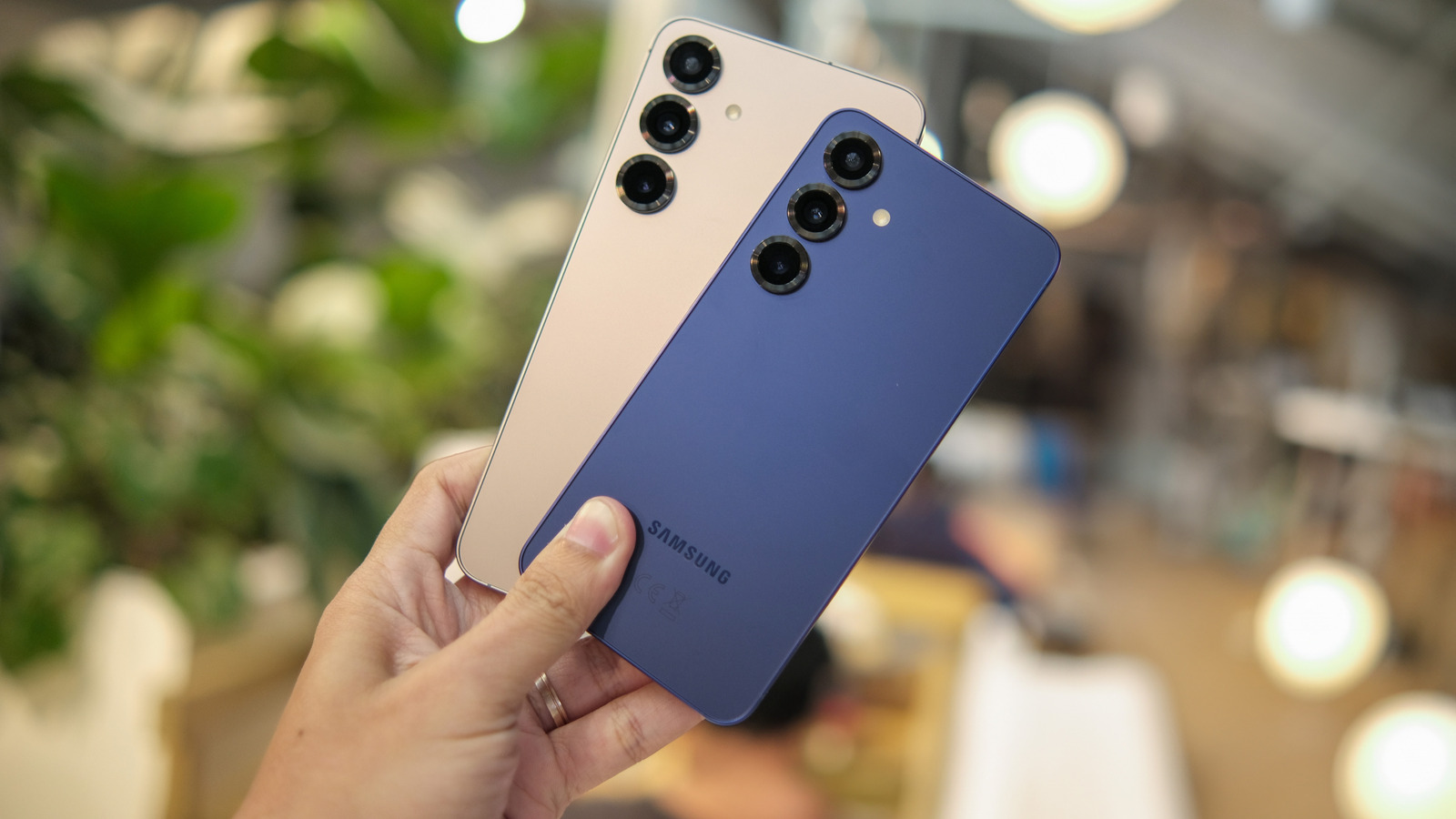
You know that Galaxy S8 or S9 that’s been sitting in your junk drawer for the past two years? The one you keep forgetting to trade in for credit toward shiny new toys like the Samsung Galaxy Z Flip 7? Well, that phone might be more useful than you think. A lot of those older Samsung products — like your Galaxy S8s, S9s, Note 8s, and even some A-series models — still hold up surprisingly well. The cameras still shoot great photos, the mics are clear, and all those sensors that felt so high-tech back in 2017 continue to work just fine.

Samsung’s caught on to this, too. That’s why it rolled out something called Galaxy Upcycling at Home. Instead of letting old phones sit around as pricey paperweights, the program lets you turn them into smart home sensors. There’s minimal effort and no tinkering or coding involved — just grab the update through SmartThings, and your phone can act as a motion detector or sound monitor. It’s a smart move, though it only works with S, Note, and Z series models released from 2018 or later (basically, at least an S9 or Note9).

The microphones and light sensors in these devices are often better than the bargain smart sensors you’d find on Amazon. And if you’re already using SmartThings (or planning to), this project is an easy way to expand your setup without spending more. Samsung frames it as part of a sustainability push, but really, it’s just practical.

How to set up your phones

tinhkhuong/Shutterstock

The set up should be simple, as long as you’ve got the right phone. Before starting this process, ensure it’s an internet-enabled Galaxy model running Android 9 or later. Once you’ve done that, follow these steps to turn your old Samsung phone into a smart home sensor:

1. Update both your devices 

  • First, make sure your current phone and that old Galaxy are running the latest software. To do that, start by opening each device’s Settings menu.
  • Scroll down to Software Update.
  • Tap Download and Install.
  • If nothing shows up, you’re already good to go.

2. Prepare your current (main) phone

  • Download or update the SmartThings app via the Google Play Store or Samsung Store.
  • Open the app and tap the Menu () icon.
  • Select SmartApps, then hit the “+” in the top-right corner.
  • Choose SmartThings Lab.
  • Select Galaxy Upcycle.
  • Tap next, and the app will generate a QR code that will tell your old device how to connect to the Galaxy Upcycle system.

3. Set up your legacy phone

  • Grab your old Samsung and use it to scan the QR code you generated. This should open the Galaxy Store and prompt you to install the Galaxy Upcycle app.
  • Hit Install. Once it’s downloaded, hit Launch.
  • On the home screen, tap Start to begin setup.
  • Choose whether you want this phone to work as a light sensor or a sound sensor (you can only pick one per device).
  • Tap Continue to move forward.
  • Use the dropdown menus to specify which room and location this sensor will monitor.
  • Tap Next, and your old phone is now officially a smart sensor.

Use your smart home sensor to automate your home

Javi_indy/Getty Images

Once you’re done setting up your old Samsung phone, the sensor will be compatible with pretty much any SmartThings automation you can think of. The sound detection comes in handy for picking up crying, barking, knocking, or general noise levels, while the light detection can track when your rooms get bright or dim. It’s quite simple but covers a lot of ground for daily use, and the automations are where this smart home device proves extra useful. You can automate when your lights come on, set up alerts for unusual noise spikes, or even calibrate your fans and air purifiers to kick on based on sound.

Since the sensor runs through SmartThings, it connects to whatever other devices you already have. That could be smart bulbs, plugs, speakers, or security systems. The phone becomes another trigger in your automation chain, no different from a motion sensor or door contact. Privacy-wise, everything is processed locally on the phone. There is no video recording, no cloud upload, and no audio streaming to Samsung’s servers. The camera stays off, and your phone only uses the microphone and light sensors for basic detection thresholds.

Upcycling at Home is basically a free smart home expansion and one of the best ways to repurpose your old Android phone. While not groundbreaking, it’s a delightfully practical option if you’re already in the SmartThings ecosystem or thinking about getting started. Inspired to upcycle even more dusty electronics in your house? Check out these five ways to repurpose old PC towers.

Source

Posted on

You Can Use FaceTime On Android Phones With This Easy

Mino Surkala/Shutterstock

FaceTime is widely regarded as an excellent video calling solution for Apple users, thanks to its seamless integration in the company’s various platforms, including iOS 18 and the compatible macOS 15. With just a few taps or clicks, you can be on a video or audio call with your friends or family members. In addition to regular one-on-one video and audio calls, FaceTime offers tons of other features, including group calls, end-to-end encryption, the ability to hand off a FaceTime call to another Apple device, set a custom virtual background, respond with reactions, share your screen, and SharePlay.

While it’s common knowledge that FaceTime works on Apple devices, you might not know that Android users can also use FaceTime for both one-on-one and group calls. Sure, there is no FaceTime for Android app in the Google Play Store, but that doesn’t mean billions of Android users can’t join a FaceTime call. FaceTime allows people with Apple devices to invite others, including those with an Android phone, to join a call using their web browser. Here’s how this process works.

How to FaceTime on Android

PixieMe/Shutterstock

Android users can make FaceTime calls on their phone or tablet by receiving a call link from someone with an iPhone, iPad, or Mac. The process to generate a FaceTime link is simple and only requires an Apple device user to open the FaceTime app and tap on the “Create Link” button. They can optionally name the link for easier recognition or share it just like that with others. On Android, once you have received the FaceTime link, open it in a web browser. While FaceTime links seem to work in any web browser built using Chromium, Apple recommends using Chrome or Edge. 

The FaceTime link will require you to enter a name to join; fortunately, there is no Apple ID or phone number requirement. Enter any name, tap “Continue,” and you’ll be navigated to the FaceTime call page. You can choose to mute yourself, turn off the video, or switch the camera or mic on the call page. Once you are ready, hit the “Join” button. Remember, your browser may ask permission to use your device’s camera and microphone for the call.

After you request to join the call, the original host of the call will receive a notification to approve it on their Apple device. If they aren’t already on the call, they will have to join the call and then approve your entry or the entry of any other participants. Following the approval, you can continue with the call.

Is an Apple user always required in a FaceTime call?

fizkes/Shutterstock

Although Android users need the person who generated the FaceTime call link to let them in the call, the Apple user’s presence in the call isn’t always mandatory beyond the initial approval. The Apple user only needs to be present if they are on a one-on-one call with someone from a non-Apple device. If there are more than two participants in the call and the FaceTime host leaves the call, the call will continue without trouble. However, no more participants will be able to join unless approved by the original host.

That said, if there is another Apple user in the call besides the call host, they can manage the participants, including approving any joiners, after being in the call for 30 seconds. This is useful for group calls if the host has to leave for some reason, but other participants want to continue. Interestingly, this allows for a situation where there are only Android users on the FaceTime call.

Source

Posted on

Social media algorithms exposing children to violent pornographic content, report

Social media algorithms are pushing unsolicited pornographic content into children’s feeds, according to a report by the Children’s Commissioner.

The data was collected prior to the implementation of the Online Safety Act, but provides a snapshot on the types of harmful content being shown and accessed by children online, and how that content affects them.

According to the report, 70% of respondents, whose ages were between 16 to 21 years old, had seen pornography, with the average child reporting to have seen this type of content at the age of 13, and more than a quarter having seen it by the age of 11.

The respondents exposed to pornographic content online said that eight out of the top 10 sources of this content were social media or social networking websites. 

According to the report, X (formerly known as Twitter) was the largest platform where children encountered pornography, with 45% of respondents, making it more likely for children to find pornography there than on dedicated pornographic websites.

Other social media companies popular among children also show up in the survey with what the report states to be “concerning frequency”. These include: Snapchat (29%), Instagram (23%), TikTok (22%) and YouTube (15%). 

Strikingly, 59% reported seeing pornography online by accident, which is up from 38% in 2023. Mark Jones, a legal Partner at Payne Hick Beach, said that “children are viewing harmful content due to algorithms used by platforms, rather than actively searching it out themselves”.

Harmful content

Jones, who is part of the Dispute Resolution Department, and represents both individuals and corporations, added: “Under the Online Safety Act and the child safety duties, platforms are required to stop their algorithms from recommending harmful content. This, coupled with age assurance measures, aims to protect children in the online world. The algorithms should filter out harmful content from reaching children in the first place.”

The report actively supports the introduction of Ofcom’s new age verification measures and the implementation of the Children’s Code, which requires social media websites to make changes to prevent children seeing this type of harmful content. 

“The Children’s Code came into force from 25 July 2025,” said Jones. “It will be interesting to see what changes, if any, are seen in this area. In particular, whether platforms are effectively moderating content and no longer using toxic algorithms to filter out harmful content being accessed by children.”

Additionally, the report emphasises that the majority of pornographic content seen by respondents depicted acts that are illegal under existing pornography laws. For example, 58% of respondents had seen porn depicting strangulation when they were under the age of 18. Furthermore, 44% reported seeing a depiction of rape.

The report emphasises that this has a detrimental effect on children’s interactions with one another, affecting their expectations around sex and body image. 

A spokesperson for the Children’s Commissioner told Computer Weekly the link between exposure to pornography and harm caused to children’s behaviour was very significant based on direct self-reporting from these children.

“Children have told the Children’s Commissioner they expect to be experiencing violence in a relationship, or they expect their first interactions of a sexual nature to be like what they’re seeing in pornography, because that’s what they’re exposed to,” they said.

Depiction of women

Particularly concerning is the depiction of women, who are more commonly shown being on the receiving end of sexually aggressive acts than men were, which the report finds leads to violent perceptions of sex that targets women.

The spokesperson says that the commission found through surveys and research particularly for girls, who had seen violent pornography, their own depictions of consent became clouded.

“Girls who have seen pornography were far more likely to agree with the statement that girls who say ‘no’ can be persuaded to have sex,” they said. “So, they might say ‘no’ to start with, but then are now expecting to be persuaded otherwise. The idea of consent that has been enshrined in our education system through sex education, and relationships education, over the last 10 to 15 years seems to be on rocky ground.”

While social media presents itself as the first point of contact for many of these children, the Children’s Commissioner reiterated that algorithms are not necessarily evil, but rather tech companies are not optimising their search engines to remove this content from children.

“Tech companies know who their young users are,” said the spokesperson. “They do have the ability to recognise and monitor user activity. There must be a greater focus and less ambiguity about who you direct that algorithmic content to if it’s a young user. It should simply either be stopped before it even gets to their feed, or there has to be a much more stringent way of keeping them off the site, and we are yet to see that with sites like X.”

The report recommends that online pornography be made to meet the same content requirements as offline pornography, so that the depiction of non-fatal strangulation is outlawed.

It also calls for the government to explore options that prevent children from using virtual private networks (VPNs) to bypass the Online Safety Act’s regulations, and further funding for schools to implement the new Relationships, Health and Sex Education (RHSE) curriculum, including a recruitment drive for specialist RHSE teachers. “This has to be a benchmark against the success of the Online Safety Act. We will repeat this survey again next year to see if there is any significant change in what children are able to access,” the report added.

The communications regulator, Ofcom, has not directly responded to the report’s findings, but has previously stated that: “Tech firms must introduce age checks to prevent children from accessing porn, self-harm, suicide and eating disorder content” and “expect to launch any investigations into individual services” that do not meet the compliance.

There have been several calls to implement stricter regulation on social media algorithms, which have reportedly fuelled misinformation, and other harmful content.  

The Commons Science, Innovation and Technology Committee had previously attributed the spread of misinformation to algorithms that prioritise advertising and engagement-based business models to generate revenue, without implementing tools in their systems to deprioritise harmful content.

Algorithms function based on machine learning artificial intelligence models, and can develop biases, prioritising shocking content that generates clicks. This technology can itself be repurposed to reinforce positive social outcomes and remove harmful content from being shown to users.

Source

Posted on

How To Fix Gmail When It’s Not Working On Android

Ahyan Stock Studios/Shutterstock

You are on the go and need to check your Gmail account on your Android smartphone. Perhaps you are waiting for an important message from a potential employer, or your spouse is sending you something you need for an appointment. In these moments, the last thing you want is for your Gmail account not to work properly. Perhaps you can’t access a specific folder, or your emails aren’t loading, or you can’t double-check that the Gmail AI email summary is accurate. The good news is that Gmail has steps to resolve specific problems that might come up.

The first solutions are the most obvious. Is your smartphone connected to the internet? Sometimes we simply lose connection due to server maintenance, so that should always be the first thing you check. The second is to make sure your Gmail app is updated. Check for any update available to the app in the Play Store and install it.

However, sometimes the problem isn’t so simple. For example, if you get an error message saying Gmail can’t secure your connection, your date and time might be incorrect. There can also be syncing issues with your Gmail app, which you can fix through Settings. Things like insufficient storage and accessing Gmail through a non-Gmail account can also create problems.

What to do if you get a Gmail error message

voronaman/Shutterstock

One message that might come up is that “There was a problem securing the connection”. First, you should check your date and time, especially if you recently traveled across time zones. If they are not correct, they can be changed under Settings. If you are using public Wi-Fi, this message might mean there’s an issue with that. Some require a special password to access the public Wi-Fi network safely. Check this by opening a browser tab and see if you are prompted for a password.

An error message saying a specific Gmail folder was not found typically pop ups when you access that folder through a non-Gmail account. If you can, switch to a Gmail account. If you can’t, try to refresh the app by swiping down on the screen. If Gmail isn’t letting you access a folder and everything else seems fine, the non-Gmail provider might be blocking your access. In that case, you will need to reach out to them.

If you get a message that says there has been an internal error, it’s best to wait it out. Internal issues tend to resolve on their own when they are caused by technical glitches. Additionally, you can close the app and then reopen it, or try force-stopping it under Settings > Apps > Gmail, and then select Force Stop.

What to do if there are issues with Gmail syncing on your Android

Mijansk786/Shutterstock

Make sure that the Gmail app is syncing in the first place. Go to the app, then under Menu go to Settings. Choose the account with the problem and scroll down. You may need to select Data Usage first to see an option that says Sync Gmail. Make sure the box next to it is checked.

Sometimes it might be syncing too much and creating problems. This may come up with an error message that says “too many refreshes.” Under the Gmail app go to Settings > Data Usage > Days of mail to sync. It will come up with a list of numbers for days ranging from 1 to over 100. Extend it past what it is currently and choose OK.

You may need to clear your Gmail account storage. Overloaded storage can cause issues, specifically in sending and receiving messages. Ensure that your non-inbox folders like Trash, Spam, Social, or Promotions are cleared out. Make sure to weed out other unnecessary emails from your inbox. If clearing it out feels overwhelming, there are ways to quickly delete unread emails in Gmail. Pay special attention to emails that have large attachments, as they take up a lot of storage space.

Source

Posted on

Boldyn powers up 5G for VMO2 users at Sunderland’s Stadium

Over the past few days, the Stadium of Light in Sunderland has seen a raucous victorious return to the Premier League for the city’s football team and the opening match of the Women’s Rugby World Cup, both of which offered fans significantly enhanced 5G connectivity experiences though a connectivity-as-a-service (CaaS) infrastructure from Boldyn Networks, said to be the UK’s first full neutral host RAN managed service in a high-density demand (HDD) venue.

Based on the north side of the River Wear, the Stadium of Light has a capacity for 49,000 spectators – the ninth largest in the English professional game – and can expand to hold tens of thousands more. In addition to holding major sporting events, it has also been a music concert venue since 2009, hosting artists including Oasis, Take That, Beyonce and Coldplay.

Virgin Media O2 (VMO2) customers have been the first to benefit from the network delivered by the Sunderland Open Network EcosysTem (Sonet) project, which aims to bring enhanced mobile connectivity to the stadium, improving the way fans experience and engage with live sports. 

The stadium’s connectivity ecosystem is wide-reaching, encompassing the UK government’s Department for Science, Innovation and Technology, whose interest is in the use of open radio access network (O-RAN) mobile technology use cases in HDD locations; Sunderland City Council, which sees the football club as central to the city’s identity and part of its regional inward investment plan, which includes a new eSports location; mobile network operator VMO2, which is aiming to provide “excellent” coverage, capacity and performance with minimum total cost of ownership; smart society and digital transformation firm Perform Green; and shared network infrastructure provider Boldyn Networks, which developed a business model and tech stack for the HDD use case.

The stadium has a new evolved distributed antenna system (DAS), with radios based on an O-RAN supporting the O-RAN fronthaul interface standard and the JMA XRAN 5G O-RAN technology stack, with Boldyn’s Network Management System (NMS). This is connected to VMO2’s core network.

To ensure “ubiquitous” coverage across the venues, Boldyn designed a solution with 16 DAS sectors for the seating bowl to cater for 48,000 users with an average of 3,000 per sector. Indoor areas such as the basement, concourses, suites and hospitality areas will share the same 16 seating bowl sectors. Four DAS sectors enable pitch coverage during events such as concerts, and four DAS sectors are dedicated to covering carparks on opposing sides of the ground.

The fully virtualised O-RAN-based platform is designed to reduce space and power requirements by up to 60% compared with traditional indoor architectures. The integration with Boldyn’s NMS is also attributed with lowering operational costs through the digitisation and automation of the service assurance processes.

Most importantly, said Boldyn, stadium spectators benefit from high-speed 5G connectivity that is said to offer a significant upgrade from its decade-old network system, resulting in a richer connectivity experience for everyone. This, it said, will translate into high-quality connectivity and more interactive, digitally enabled services, including seamless uploads and downloads of videos and social media, increased safety, and personalised experiences during events, such as in-seat food ordering.

“This project underscores our commitment to delivering innovative connectivity solutions that enhance the digital experience for users in high-density environments, without sacrificing cost or energy efficiency,” commented Boldyn Networks UK & Ireland CEO Brendan O’Reilly. “The launch of CaaS at the Stadium of Light is a testament to Boldyn’s dedication to pushing the boundaries of digital connectivity and setting new standards in the industry. We are incredibly proud to play our part in the Sonet project and in enabling more engaging interactions at stadiums and arenas across the UK.”

Virgin Media O2’s director of mobile access engineering, Rob Joyce, said: “We have a long history of giving our customers access to the best live entertainment, so it’s only natural that they will be the first to benefit from the next-generation 5G network at the iconic Stadium of Light. Our Mobile Transformation Plan is focused on improving the connectivity experience for our customers, no matter where they are, and this work with Boldyn Networks is ensuring match-going fans can experience a seamless connectivity experience.”

David Bruce, chief business officer of the Sunderland Association Football Club, said: “The launch of an enhanced 5G network at the Stadium of Light marks another exciting step forward, not just for Sunderland AFC, but for the entire city. This technology will unlock incredible opportunities to enhance the matchday experience for our supporters through faster connectivity, richer content and more immersive engagement than ever before.”

Source

Posted on

Private mobile network deployments return to growth

Following a dip in activity in the second half of 2024, the first half of 2025 has seen signs of a return to growth for mobile private network (MPN) deployments as enterprises are turning to private networks to enhance efficiency and data-driven control, not just connectivity, says research from STL.

The analyst’s Private network deployment tracker contained three defining characteristics of a private network: dedicated resources, including network infrastructure, platform and/or spectrum which may not be physically dedicated but can be logically dedicated such as in network slicing; dedicated user groups/SIMs where access to the network is controlled and limited to a group of certain users who may have logically dedicated SIMs, which may be virtual; and customised KPIs where the network is designed and customised to meet use case requirements that can’t be met by best-effort public networks.

The data showed that 98 new MPN deployment announcements had been made between January and July in 2025, bringing the total to 962 recorded deployments since it began tracking the market in 2014. 

Deeper analysis of the tracker highlighted how deployments in 2025 have been driven by strong demand from manufacturing, which accounted for 22% of new activity, followed by ports (12%), airports (10%), and media, entertainment and sport (10%). Enterprises were also found to be increasingly deploying private networks to enable automated operations and internet of things (IoT).

The report also highlighted just how 5G mobile networks were the dominant choice for private network deployments, outpacing alternatives such as network slicing, 4G and dual 4G-5G setups. STL believes that with its high performance, 5G often meets enterprise needs on its own, reducing the need for more complex network slicing or dual technology deployments. Almost three in four (73%) MPN deployments since January 2024 were on 5G alone.  

“Since early 2024, we have seen a real shift in how private networks are being used across industries,” said Krsna Singh, research analyst at STL Partners.

“They are no longer just about enabling basic connectivity, but now power frontline operational efficiency and real-time control. This change in purpose is a key driver of renewed growth.”

STL also noted that another major recent trend was the growing presence of smaller, specialised network suppliers in the top ten. It said that while large players including Nokia and Ericsson continue to dominate, providers such as Mavenir and Boldyn Networks are steadily gaining market share. 

“The growing diversity of suppliers shows that the private network market is evolving beyond its early, OEM-led phase,” said Singh. “We are now seeing a more solution-focused landscape, where enterprises choose partners based on fit and expertise rather than size alone. This shift is driving more differentiated offerings, making it crucial for companies to have a clear, industry-specific strategy backed by strong industry relationships.”

The STL study comes on the heels of a similar survey by SNS Telecom & IT’s finding that after an increase in private 5G network deployments by household names in the telecoms industry and industrial giants across vertical industries, investments in private networks are set to grow at a compound annual growth rate of approximately 41% between 2025 and 2028, with annual spending projected to reach $5bn by 2028.

Source

Posted on

5 Smart Ways To Use Motion Detectors Around Your Home

Bilanol/Getty Images

We may receive a commission on purchases made from links.

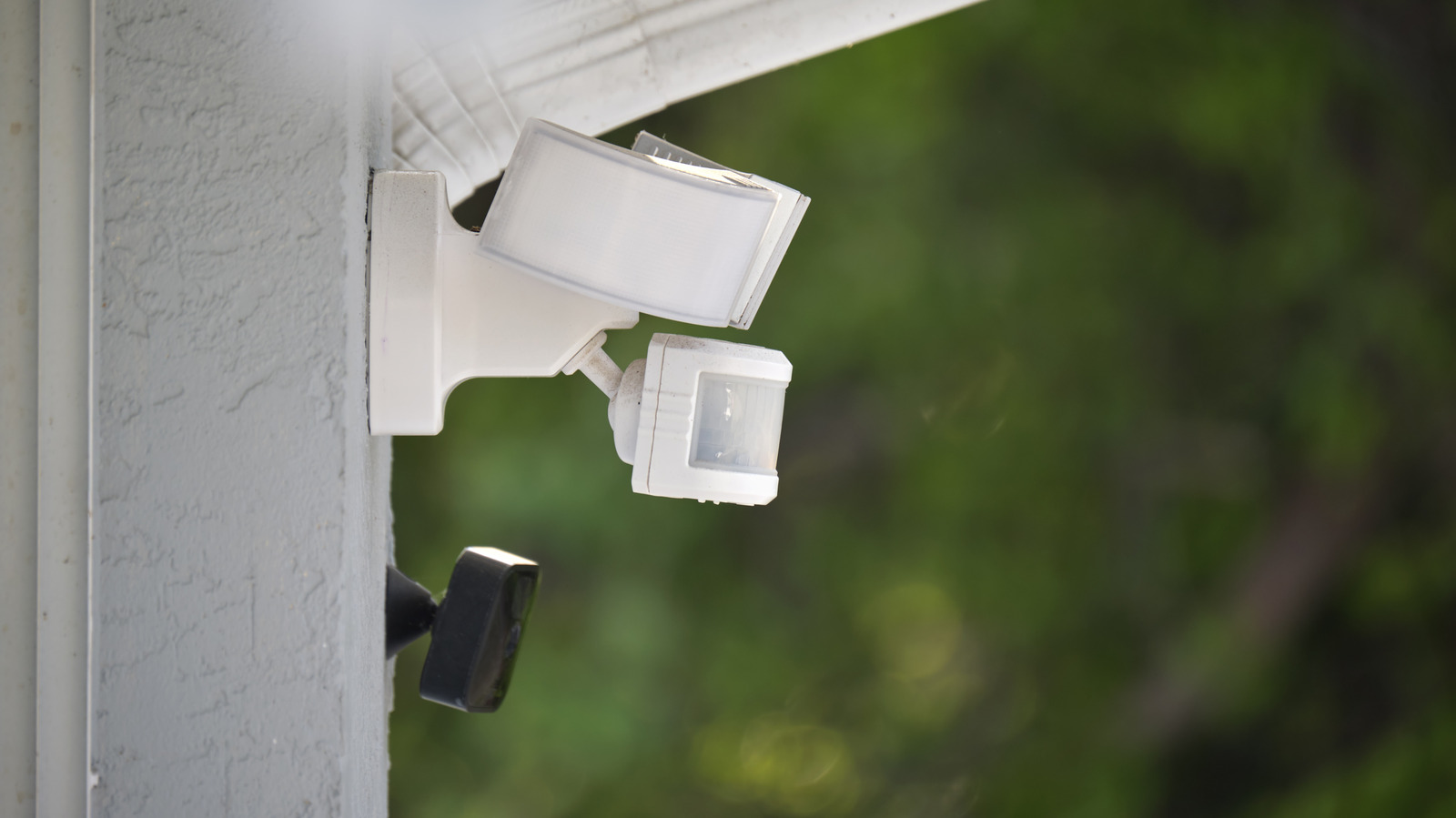
Motion detectors might make you think about smart security systems and surveillance, but they can be great and inexpensive tools that you can use around your home for other purposes as well. Motion sensors are easily programmable, and they can be connected to pretty much any other device without much tech know-how. They’re small and often cost less than $50, like the Ring Alarm Motion Detector. You can place them strategically around your home to automate lighting, monitor activity, or notify your loved ones that you have arrived.

Motion detectors aren’t just for convenience and safety. You can also use them to add some flair to your home by making your rooms respond to your presence. You can set one up to play music when you enter the shower or trigger a scent diffuser in your guest room. It’s also possible to program a feeding schedule for your pets so you no longer have to worry about them missing a meal or being overfed. You can automate just about anything with motion detectors, so here are five smart ways to use them.

Automatic lighting

Stock-Asso/Shutterstock

Porch lights that switch on as soon as someone approaches the door have been around for a while, but you can also use them to automate lighting indoors. All you have to do is get motion detectors and arrange them strategically around the house while connecting them to your lighting system. Then you can set up your lights to turn on as soon as you enter the room and turn off when you leave. Also, you can convert your Amazon Echo into a motion detector if you already have one and integrate it with your smart home system.

That said, you can use motion detectors to set various mood lights, night lamps, or even colorful LED strips. This is especially useful if you have young children who are afraid of the dark. Set up a dim night light that will turn on if they wake up or help them navigate to the bathroom. Set up a night mode throughout the house, and you won’t have to deal with waking up to harsh, bright lights anymore. All you have to do is connect your nightstand lamp to the motion sensor and use a light dimming setting.

Pet alerts

sophiecat/Shutterstock

Motion detectors can also be helpful tools for pet owners. If you work long hours and you’re not always home to take care of your pet, you can use motion detectors to automate some tasks. Set up automated feeders and water dispensers. As soon as your dog or a cat approaches the feeder, the motion detector will trigger the release of the food or water, perhaps paired with a timer. That way, you won’t have to worry about returning home to a mess or overfeeding your pet by leaving it with too much food.

Another great way to use motion detectors is to set a door to automatically open when your pet approaches. That means your pet will be able to go outside and do their business even if you’re not home. Also, if you have exotic pets, motion detectors can help you automate lights for terrariums and aquariums. Some pets, such as lizards and snakes, are motivated by light. Have it turn on in their living space when you come home. Manage their sleeping habits with automated lighting and you’ll know your pet will be awake when you’re home.

Automate your game room

RSplaneta/Shutterstock

Want to feel like you just stepped into a futuristic arcade when you walk into your game room? Set up a motion detector and connect it to multiple different device that trigger all at once when you enter the room. You could grab the Roku Smart LED Strip+ SE to display your favorite color scheme or set your console to power on automatically by pairing the motion detector with smart plugs. Background music could instantly play for you when your motion is detected. Even your game chair’s ambient light can be triggered automatically.

On top of that, you can use the motion detectors to help you track the amount of time you’re playing games. Program a sensor to detect your lack of movement and remind you after a set amount of time to take a break and stretch. You could even play a sound through a smart speaker or change the light scheme in your room at set intervals. This is a subtle way to have fun gaming without completely losing track of time.

Honey, I’m home

Eclipse_images/Getty Images

Who says you can’t mix romance and tech? Be creative, and set up a motion detector near your front door, or even at the front of your driveway, to automatically send a sweet text message to your partner. This may seem like a small gesture, but it will be a welcome one, especially after a long, hard day of work. To set up an automatic text message with a motion sensor, you’ll also need a smart home hub or an app like IFTTT. This will allow you to program your motion detector to automatically send a custom text message to the selected phone number.

That said, it’s not just a nice gesture. This sort of system can also be practical in many scenarios. For instance, if you have an elderly parent who lives alone, you can set up an SMS alert to notify you that they arrived home safely. And if the message doesn’t arrive when expected, you have an early sign that something might be wrong and you can quickly take action.

Regulate the temperature in your home

Studio Romantic/Shutterstock

There’s no longer a need to waste energy heating up (or cooling down) an empty room. You can use cheap motion detectors and connect them to smart thermostats in your home to automate heating or cooling. Imagine you come home from work, and when the motion sensor detects your presence, the AC starts cooling your home. When you’re absent, the system will power down to preserve energy and lower your bills.

This can be especially useful in larger homes where there’s no need to heat or cool every room all the time. There’s no need to heat the guest room, basement, or office if nobody is in them. Also, you can sync up automated temperature control from your Google Nest Thermostat or ecobee with your lighting systems. Have the entire room come to life when you enter it and let it shut itself down when you leave.

Source