Posted on

Leak reveals trifold phone that will take on Samsung’s next-gen

Samsung will host its annual Unpacked event this week, where the Korean giant is expected to announce at least a couple of new foldable phones. These are the Galaxy Z Fold 7 and the Galaxy Z Flip 7 flagships, both of which have leaked extensively in recent months.

But Samsung fans also expect at least one more foldable surprise from the company. Samsung has been rumored to release a Galaxy Z Flip SE clamshell this year, aimed at lowering the entry price for its foldable phones.

It actually gets better than that. At the end of Unpacked, Samsung might tease its first trifold foldable phone. I’ve been calling it Galaxy G Fold 7 since it leaked, which seems like the most fitting name. It’s based on a previously leaked Galaxy G Fold moniker for this type of handset. The G Fold would use a different folding mechanism than Huawei’s trifold launched last year.

Samsung’s first trifold handset won’t be fully unveiled on Wednesday. Instead, it should be announced later this year, ahead of its launch in Korea and China.

Tech. Entertainment. Science. Your inbox.

Sign up for the most interesting tech & entertainment news out there.

We don’t have to wait for Samsung’s Galaxy G Fold 7 teasers to see this new foldable phone concept in action. Chinese smartphone vendor Tecno has teased its own Phantom Ultimate G Fold concept. The device looks almost identical to Samsung’s rumored model, and there are plenty of leaked images to explore.

If you’ve been following Tecno in recent years, you won’t be surprised to see this kind of marketing stunt. Last year, Tecno gave us the Phantom Ultimate 2 teaser ahead of Huawei’s launch event for the Mate XT.

Using the Tecno Phantom Ultimate 2 tri-fold phone in laptop mode. Image source: Tecno

The ultra-thin Phantom-branded concept never became a commercial product. The handset, seen above, served a different purpose: to show that a relatively new entrant in the smartphone market could deliver high-end, sophisticated designs.

This year’s Phantom Ultimate G Fold teaser follows a similar marketing approach. Tecno said in a press release that it will soon unveil the Phantom Ultimate G Fold. The company described the trifold as “a dual-screen, inward-folding tri-fold design and is engineered to be the thinnest of its kind.”

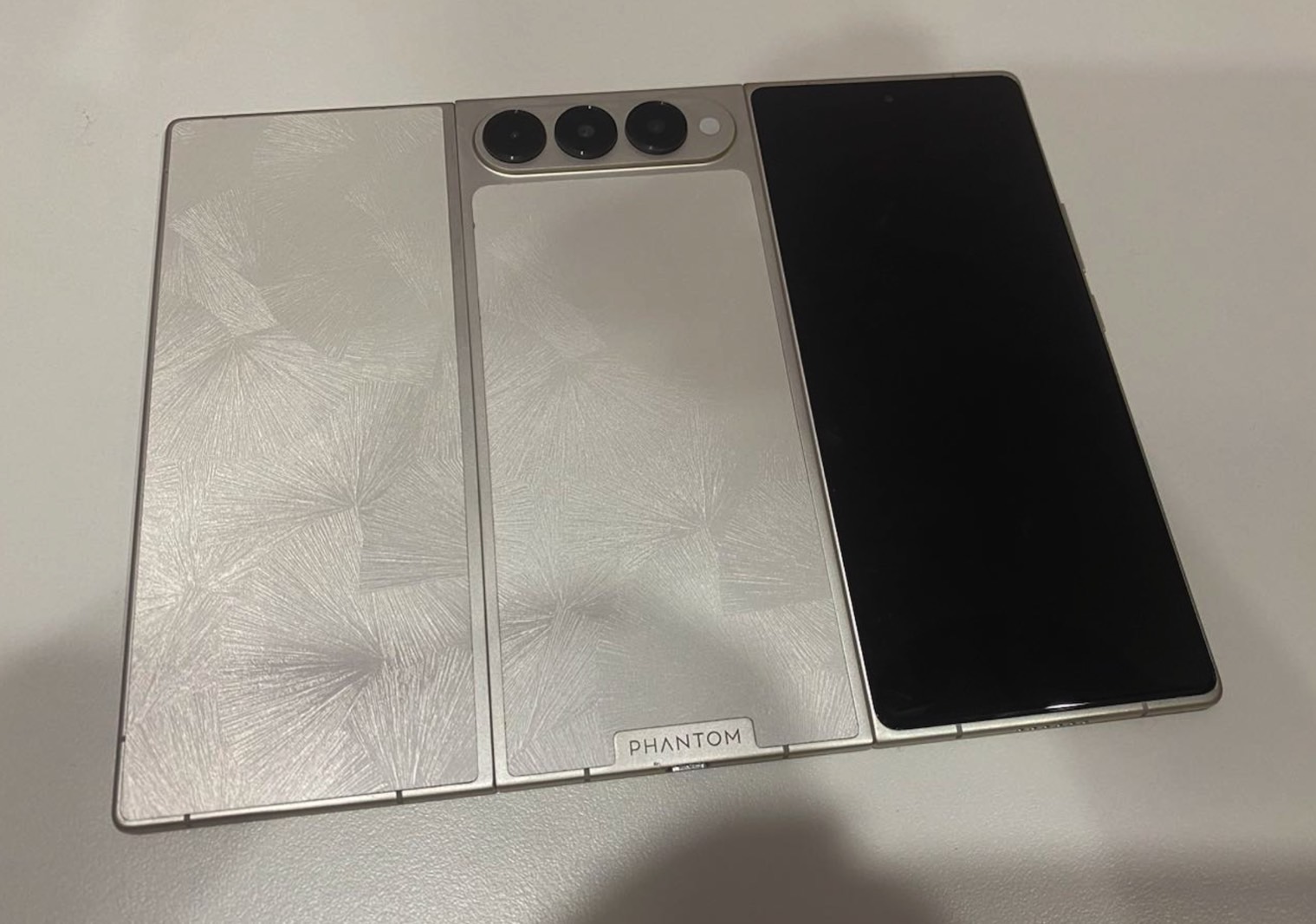
Tecno Phantom Ultimate G Fold trifold phone pictured folded on a table. Image source: BGR

Like the rumored Galaxy G Fold 7, the Phantom phone features a “G-Style design.” That means the phone folds twice inwards, protecting the foldable screen when closed. As shown above, one hinge is larger than the other to make this design work.

A second cover display sits on the outside, along with a triple-lens camera.

Tecno says the Phantom Ultimate G Fold will be as slim as “traditional book-style single-hinge foldables,” making it the thinnest tri-fold device seen so far. We still don’t know how thin the Galaxy G Fold 7 will be.

Tecno hasn’t revealed the trifold’s specs yet but teased a mid-July reveal for the concept. Then again, Tecno could say anything about the phone to steal the spotlight from Samsung, especially since the Phantom Ultimate G Fold won’t be a commercial product. There’s no requirement to actually ship it to buyers.

That said, trifold phones won’t come cheap. The Mate XT retails for around $3,000, and the Samsung G Fold model will likely cost about the same.

Tecno Phantom Ultimate G Fold trifold standing vertically on a desk. Image source: BGR

What’s great about the teaser is that we get a look at a trifold phone that can transform into a large tablet.

Leaker Ice Universe posted a few leaked images on X showing the Phantom Ultimate G Fold in hand and unfolded (below).

BGR obtained the images above that showcase the Phantom Ultimate G Fold concept phone, highlighting its slim profile, rear camera module, edge-to-edge cover display, asymmetrical hinges, and Phantom branding.

None of these images show the display turned on. We don’t get to see the Android-based OS or any multitasking features that might take advantage of the larger screen. Hopefully, Tecno will demonstrate a working version of the concept in the coming weeks.

Tecno Phantom Ultimate G Fold leaked on X. Image source: X

Finally, the Tecno G Fold concept doesn’t appear to be identical to what Samsung is working on. Rumors suggest the Galaxy G Fold will have the cover screen in the middle section, with the camera module placed vertically on the right side.

Source

Posted on

You might want to skip the iPhone 17e if this

After the launch of the iPhone 16e, analysts suggested Apple would continue to release an “e” model annually. Even though some rumors cast a shadow over these predictions, it seems Apple is indeed planning to release an iPhone 17e early next year.

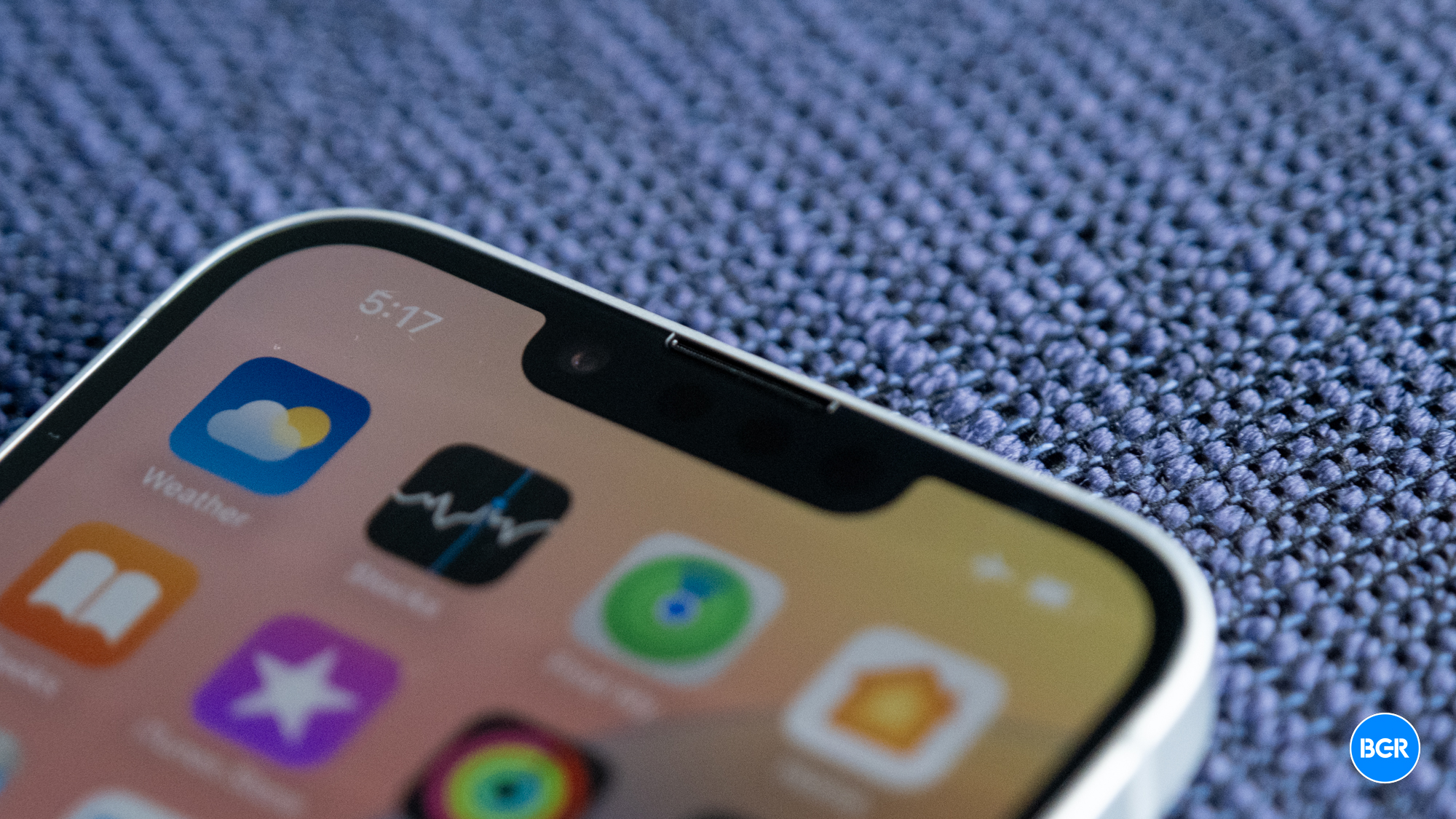
However, if you’re waiting for a new version to make the switch, we have bad news. According to the Korean news outlet The Elec, Apple will use the same panel as the iPhone 16e for the iPhone 17e. In other words, Apple will continue to rely on the iPhone 14 display, introduced in 2022, as part of an effort to use lower-cost components.

As a result, the notch will live on for at least one more year. Considering that rumors have suggested Apple will decrease the size of the Dynamic Island within the next year or two, it’s interesting to see that the company isn’t more focused on killing the notch anytime soon if it means low-cost components for the budget iPhone.

That said, the iPhone 17e won’t be without its improvements. For instance, it should feature a better camera, as Apple is expected to upgrade the lenses of the iPhone 17 lineup, as well as a newer A19 chip (with fewer GPU cores for the iPhone 17e, of course).

Tech. Entertainment. Science. Your inbox.

Sign up for the most interesting tech & entertainment news out there.

Rumors claim Apple will introduce a new C2 modem next year, which would have improved 5G capacities, including mmWave technology. However, it’s unclear if the C2 will debut on the iPhone 17e or if Apple is planning to roll out the chip with the iPhone 18 later in 2026.

What’s more interesting about the timing of the iPhone 17e is that over the next few years, Apple is reportedly planning to tweak its iPhone launch schedule. In late 2026, the company is expected to launch the iPhone 18 Air, iPhone 18 Pro, and the first iPhone Fold. The iPhone 18 and the iPhone 18e would then follow in early 2027.

Going forward, the company will focus on higher-end models at the end of the year and more affordable options at the beginning of the following year.

Source

Posted on

DDN targets enterprise-shaped hole in its AI storage offer

The artificial intelligence (AI) boom has yet to really break and, when it does, enterprises will spend billions on it, according to storage array maker DDN, which has long-standing expertise in delivering storage to support massive compute clusters in high performance computing (HPC) and, more recently, AI. 

HPC compute clusters already dependent on DDN storage will likely triple or quadruple orders by 2027, said Paul Bloch, co-founder and president of DDN, adding: “200,000 GPUs are deployed in [Elon Musk’s] xAI cluster in Memphis, and that number will reach a million. The growth of performance of GPUs is increasingly driving data storage requirements, because the only way to deal with it is increasingly to ingest data in real time.”

During a recent meeting with sister publication LeMagIT as part of the IT Press Tour in Silicon Valley, DNN CTO Sven Oehme noted that the enterprise market itself is also promising. 

“AI hasn’t yet achieved its potential, but enterprises can see the likely evolution and what’s possible,” said Oehme. “The boom will really come when enterprises fully launch into inference and exploit AI in all sectors of activity.”

DDN is worth $5bn and will realise a turnover of $1bn in 2025. At the start of this year, the business secured $300m in funding from Blackstone in return for 6% of capital and a seat on the board.

According to Bloch, Blackstone’s support will help the company to find customers outside its traditional client base: “AI investment in the order of $1bn to $2bn will occur by companies whose names we don’t even know of yet.

“These decisions will be taken by general management or data management around potential savings around AI, in particular in industrial applications. In that context, Blackstone isn’t just an investor, but more like a partner to whom we open our contact book.”

A more robust EXAscaler for enterprise customers

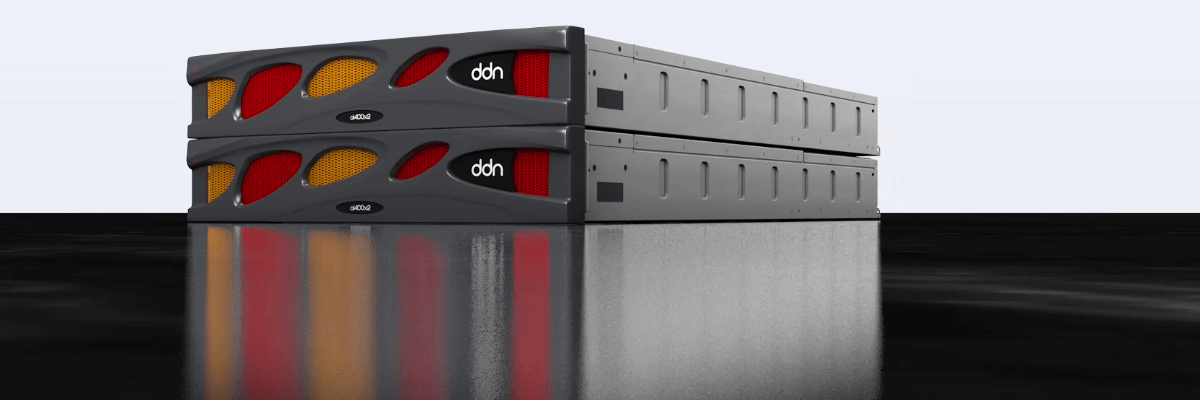
To attain its objectives, DDN updated its core product line. After the EXAscaler AI400X2 Turbo was launched last year, it then announced AI400X3, which comes with 24 NVMe SSDs and support for additional SSD shelves via NVMe-overTCP.

Performance was improved by 55% in reads and more than 70% for writes, with throughput of 140GBps (read) and between 75GBps and 100GBps (write). That speed gain comes from use of four Nvidia BlueField cards that use that vendor’s SpectrumX protocol.

“We’ve already got a reference architecture for their new Blackwell GPU,” said Oehme. “Elsewhere, all testing and development for Blackwell is taking place with DDN equipment.”

Other improvements were in security and pooling. The latter addresses the needs of MSPs for cloud services that need to dynamically provision parts of the array for different and often numerous clients. 

From the point of view of a new customer base among enterprises, the EXAscaler AI400X3 brings data compression that offers useable capacity much greater than its raw capacity, as is already the case with suppliers such as Dell, HPE or NetApp. 

“And now we have considerably improved its resilience,” said Oehme. “We can now replace any hardware or software component without stopping the array. The risk of downtime is reduced to a minimum. That’s fundamental because enterprises can’t entertain any disruption. That differs from HPC customers who prefer, in case of incident, to diagnose the problem themselves before coming to us.”

Infinia 2.1: Object storage accelerated for AI

While the EXAscaler AI400 shares its contents in file mode, the direction of enterprise AI users is towards object storage. That’s less speedy in terms of access but offers capacity and options to label or filter contents whether for re-training or for private data in inference via RAG. It’s for that need that DDN launched its object storage product Infinia in 2024.

Infinia has now reached version 2.1, for which DDN claims speed multiplied by 100x. Here it competes with other object storage solutions that have also recently accelerated performance to support GPUs, such as HyperStore from Cloudian or Ring from Scality.

DDN contrasts its offer to AWS’s S3 Express, which allows enterprises to carry out AI tasks in its cloud. Infinia 2.1 will be 10x faster in terms of access time and 25x faster in terms of requests.

The DDN product has connectors to most AI software stacks, such as TensorFlow, Pytorch and Apache Spark, plus NIM modules from Nvidia’s AI Enterprise suite. All that was present in version 2.0. The 2.1 update added integrations with observability platforms Datadog and Chronosphere, and with those that rest on the open source OpenTelemetry standard. It can also now connect to Hadoop-based data lakes.

Infinia 2.1 comes on DDN hardware or can be used via virtual instance on Google Cloud Platform.

DDN also offers two other hardware products, xFusionAI and Inferno – xFusionAI is an EXAscaler AI400X3 that runs the Lustre file system as well as Infinia 2.1, so it can access the same data via S3 object storage, which brings the advantage of being able to access metadata that indexes contents.

Inferno provides a network proxy installed between the Infinia appliance and servers to accelerate communication between object storage and Lustre file storage. The device has a switch based on Nvidia BlueField, which uses its SpectrumX protocol and GPUdirect for direct communication with GPUs, plus NVMe SSD cache.

11,000 customers, 4,000 in AI

DDN said that it has deployed storage that supports 700,000 GPUs at 7,000 customers, of whom 4,000 are engaged in AI workloads. The company employs 1,100 people, of which 600 are engineers, with 200 to 250 more hires planned for this year.

At its origins in 1998, DDN supplied storage arrays for the few supercomputer centres then in existence. Its key know-how comes from feeding numerous compute nodes in parallel, and that’s what convinced Nvidia to partner with it since 2010.

“Imagine 10,000 GPUs,” said Bloch. “If you wanted to get 1 GBps on reads per GPU, you’d need throughput of 10TBps for the whole array. There are few systems in the world capable of providing 10TBps on reads and on writes. That’s what we have mastered.”

Source

Posted on

Leaked video gives us a glimpse at Apple’s iPhone 17

With WWDC now firmly behind us, the collective eyes of the tech world are now laser-focused on September and Apple’s upcoming iPhone 17 lineup. While Apple’s iPhone releases in years past have followed a familiar pattern, the company’s iPhone 17 lineup will be a bit more exciting. Specifically, Apple this year is poised to release the iPhone 17 Air, an incredibly thin device that will naturally be priced at a premium.

If you’re curious about what Apple’s incredibly svelte new smartphone is going to look like, Majin Bu recently leaked a video depicting a dummy model of Apple’s iPhone 17 Air.  The video aligns well with previous iPhone 17 Air leaks we’ve seen. And seeing that we’re just two months out from September, there’s a reasonable chance that the device in the video below is an accurate representation of what its final form factor will be.

As for specific dimensions, the device will reportedly be just 5.5mm thick. This would make it the thinnest iPhone ever produced. As it stands now, the thinnest iPhone to ever hit the market is the iPhone 6, which is 6.9mm thick. Suffice it to say, the iPhone 17 Air will be markedly thinner than anything we’ve seen from Apple ever before. Note, though, that the 5.5mm measurement doesn’t encompass the camera bump.

With respect to weight, rumors point to the device weighing 145 grams. As a point of comparison, the iPhone 16 Pro weighs 199 grams and the iPhone SE 2 weighs 148 grams. In other words, the iPhone 17 Air will be about as powerful as the iPhone Pro models but will be markedly lighter.

Tech. Entertainment. Science. Your inbox.

Sign up for the most interesting tech & entertainment news out there.

A new color

As part of Apple’s effort to differentiate the iPhone 17 Air from the rest of its lineup, we’ve seen reports claiming that the device will ship in a color completely distinct from all the color options on other iPhone models. And while nothing is for certain until Apple announces it on stage, rumblings from the rumor mill suggest that the color will be a variant of blue.

Other iPhone 17 Air specs

As for other rumors, we’ve seen reports that the device will ship with Apple’s A19 Pro processor and 12GB of RAM. Put differently, the ultra-thin iPhone 17 will be more akin to a trimmed-down iPhone 17 Pro than the base-model iPhone 17. Consequently, expect Apple to charge a premium for the iPhone 17 Air.

Lastly, the device will reportedly boast a 6.6-inch 120Hz ProMotion display, a titanium-aluminum hybrid frame, and perhaps the Apple-designed C1 modem that debuted on the iPhone 16e earlier this year.

Apple hasn’t announced its iPhone event just yet, but if history is any indication, we can expect it to be unveiled sometime during the first half of September.

Source

Posted on

Apple announces longtime COO Jeff Williams to step down

Apple today announced that longtime COO Jeff Williams will be stepping down from his role as chief operating officer. In his place, Sabih Khan will assume the role of Apple’s COO. While corporate shakeups can sometimes signal trouble, Apple’s press release notes that this move is simply part of a planned succession strategy. What’s more, Williams isn’t leaving the company completely, but will rather report to Tim Cook while continuing to oversee various design, health, and Apple Watch initiatives.

“Jeff and I have worked alongside each other for as long as I can remember, and Apple wouldn’t be what it is without him,” Cook said in a press release. “He’s helped to create one of the most respected global supply chains in the world; launched Apple Watch and overseen its development; architected Apple’s health strategy; and led our world-class team of designers with great wisdom, heart, and dedication.”

Who’s replacing Jeff Williams?

Though not a household name, Apple’s COO position will be in capable hands. Williams’ replacement – Sabih Khan – has been with Apple for decades. Put simply, there shouldn’t be any hiccups associated with the Williams transition. Further, Khan’s track record with Apple is impressive in and of itself.

The press release relays that Khan has been in charge of the entirety of Apple’s supply chain for the past six years while helping to ensure “product quality and overseeing planning, procurement, manufacturing, logistics, and product fulfillment functions, as well as Apple’s supplier responsibility programs that protect and educate workers at production facilities around the world.”

Tech. Entertainment. Science. Your inbox.

Sign up for the most interesting tech & entertainment news out there.

The COO position may not get a lot of fanfare, but it’s an important and indispensable position. This is especially true for Apple, as it requires a smooth and efficient supply chain in order to support an extensive product lineup that needs to serve hundreds of millions of people annually. And speaking to the importance of the COO role, it’s no coincidence that current CEO Tim Cook was formerly Apple’s COO before taking on the CEO role in 2011.

As for Williams, he became something of a familiar face during WWDC and Apple hardware keynotes in recent years.

The press release highlights some of his career accomplishments during his time at Apple:

During his career with Apple, Williams built out a supply chain that has supported Apple’s growth and customers around the world with expansion, including the United States, China, India, Japan, and across Southeast Asia. He led Apple’s supplier responsibility efforts which has helped raise the bar for workers around the world, offering critical training and important education programs. Williams played a key role in the introduction of iPod and iPhone programs. He led the effort on Apple Watch over a decade ago and architected the company’s health strategy, helping customers live healthier lives, learn more about their health, and receive lifesaving care. For the past several years, Williams has also overseen Apple’s industry-leading design team.

Who will be the next Apple CEO?

It’s worth noting that Jeff Williams, for years, was often a name heard bandied about when people discussed potential successors to Tim Cook. With Williams seemingly taking his foot off the gas at Apple, it stands to reason that he’s not in line to assume CEO duties once Cook retires.

For what it’s worth, Cook has said that Apple has a detailed succession plan in place for the CEO position. And though it’s unclear who might assume the role in the future, Cook has articulated that Apple’s next CEO will be an internal hire.

Source

Posted on

Ericsson recommits to UK 6G research programme

With products and services based on the next generation of mobile set for launch in five years’ time, global tech firm Ericsson has underlined its continued support for a UK government-backed research unit designed to boost the country’s future wireless connectivity capabilities, in particular 6G networks.

Launched in 2022, the UK-based research centre is advancing key technology innovation areas, including multiple transmission reception point (multi-TRP) and integrated sensing and communication (ISAC) architectures, cognitive networks, 6G network deployment optimisation, energy efficiency, resilience and network security – elements that Ericsson says are core pillars of future global digital infrastructure as industry and society move towards the 6G era.

The research programme began with 20 dedicated researchers, supported by additional PhD students, who will work alongside leading academics, communications service providers (CSPs) and industry partners to lead 6G research projects that contribute to the development of global technology, network innovation and new product services. Specific areas include network resilience and security, artificial intelligence, cognitive networks and energy efficiency.

When it first backed the project, Ericsson committed to invest tens of millions of pounds over the next 10 years, anticipating that 6G will merge the digital and physical worlds, contribute to a more intelligent, sustainable and efficient society, and help to deliver new use cases that include multi-sensory extended reality, precision healthcare, smart agriculture, collaborative robot (cobot) and intelligent autonomous systems.

The initiative is also designed to foster close collaboration between researchers, PhD students, academic institutions, CSPs and industry partners, driving forward breakthrough projects that shape global technology development and network evolution, targeting product innovation.

Going forward, Ericsson said it remains committed to supporting the UK government in driving innovation in advanced communications technologies, in close collaboration with UK academia, research institutions and industry, supporting cutting-edge research and playing an active role in shaping the technologies and standards that will define 6G.

This research programme will play a crucial role in realising the potential of 6G to create a more connected and sustainable world Magnus Frodigh, Ericsson Research

It added that it was proud to have contributed to initial UK 6G research collaborations, including ongoing participation in the Reason project, and the Tudor project, which concluded earlier in 2025. Ericsson also noted that its research unit in the UK, in collaboration with its UK customers and partners, is already actively contributing to the development of new 3GPP specifications.

“Ericsson’s continued investment in UK-based research reinforces our commitment to driving global innovation in communications technology,” commented Magnus Frodigh, vice-president and head of Ericsson Research. “Through this collaborative initiative, we’re not only shaping the future of 6G, but also ensuring that the UK remains at the forefront of developing international standards for next-generation networks. This research programme will play a crucial role in realising the potential of 6G to create a more connected and sustainable world.”

Ericsson’s initiatives are also aligned with the UK government’s recently published Digital and technologies sector plan, which has allocated £370m to advanced connectivity technologies to establish the UK as a leader in frontier technologies and drive economic growth.

“Ericsson’s continued commitment to 6G research in the UK demonstrates the strength of our nation as a global hub for telecommunications innovation,” said UK telecoms minister Chris Bryant. “By bringing together UK academia, industry and world-class researchers, we’re not just developing the technologies of tomorrow – we’re securing Britain’s position as a world leader in developing and deploying advanced connectivity technologies, a key frontier technology that will help grow the economy and deliver on our Plan for Change.”

Source

Posted on

Law professor urges CMA to take swift and urgent action

Microsoft’s “harmful” cloud licensing practices need to be swiftly and directly remediated by the Competition and Markets Authority (CMA) to prevent irreparable harm being done to the UK cloud services market, a university law professor has warned.

In a 36-page academic paper, Peter Whelan, a law professor at the University of Leeds, warns the UK competition watchdog that it risks missing an opportunity to quickly draw a close to Microsoft’s controversial cloud licensing practices if its provisional recommendations about how to address the matter are pursued.

These recommendations, originally published in January 2025, said the CMA is considering taking a “targeted approach” to addressing the anti-competitive issues brought to light by its investigation regarding Amazon Web Services (AWS) and Microsoft’s behaviour in the UK cloud market. 

Singling out the former, Microsoft has come under fire by the CMA for its decision to charge customers more for running its software in cloud environments hosted by its competitors.

In its January 2025 report, the CMA said this practice “exacerbates the harm we have provisionally found arising from high market concentration and barriers to entry and expansion in relation to Microsoft’s significant unilateral market power”.

To remedy the situation, the report suggested the CMA board should use powers conferred on it through the roll-out of the Digital Markets, Competition and Consumers Act 2024 (DMCCA) on 1 January 2025 to mark Microsoft out as a supplier with strategic market status (SMS).

This would mean the CMA could impose legally binding conduct requirements or pro-competition interventions on both firms to limit and remedy the toll their activities have allegedly had on the market.

Long wait

However, Whelan’s paper suggests it could take up to nine months or more to confer SMS on Microsoft, and at least 18 months for any remedy imposed under DMCCA to take effect.

“Given the complexities involved in these novel legal processes, as well as the potential for drawn out implementation or trialing phases, it is very possible indeed that any remedy imposed under the DMCCA regime will only start to take effect more than a year and a half after the publication of the CMA’s final decision in its market investigation,” he wrote.

“The timescale would be even longer if, due to capacity constraints, for example, the CMA board did not initiate an SMS designation against Microsoft immediately following the publication of the Final decision report in the cloud services market investigation.”  

For this reason, Whelen goes on to advise the CMA to consider taking swifter and more direct action against Microsoft and its licensing techniques.

“It is axiomatic that a swift enforcement response to conduct that is harming competition can be vital for the effectiveness of a competition remedy, and particularly so with respect to digital markets.”

Citing an article from the European competition journal, entitled Strengthening effective antitrust enforcement in digital platform markets (2022), Whelan added: “In such fast-moving markets, ‘timely intervention is of the essence in preventing irreparable harm to competition’.”

The paper’s publication comes about a month before the CMA is expected to publish the final decision in its investigation into how well competition works in the UK cloud infrastructure services market, which began in October 2023.

The investigation itself was prompted by the outcome of a 12-month investigation by communications regulator Ofcom to assess how competitive the UK cloud market is – and establish who its major players are.

Partway through that investigation, which began in September 2022, Ofcom singled out the behaviour of AWS and Microsoft as being particularly problematic from a competition standpoint. And this, in turn, resulted in Ofcom referring the market over to the CMA for further investigation.

The CMA is far from the only regulator or party to have taken issue with Microsoft’s cloud licensing practices, as its cloud rival, Google, filed a complaint with the European Commission over its activities on this matter in September 2024.

Computer Weekly also reported last month that its habit of charging customers more for running its software in competitors’ cloud is the subject of a £2bn legal claim that has been filed with the UK Competition Appeal Tribunal.

Ryan Triplette, executive director of the Coalition for Fair Software Licensing, said her organisation supports the contents of Whelan’s paper, having also been another of the parties to have previously spoken out about Microsoft’s cloud licensing arrangements.

“The UK Competition and Markets Authority has made it clear that Microsoft uses its ‘significant market position’ in software products and services to restrict cloud choice, the impact of which is ultimately borne by the consumer – in higher costs, security vulnerabilities and taxpayer waste,” she said. “We urge the CMA ahead of its final decision to protect customers by taking strong, direct action against Microsoft to end its harmful software licensing practices.” 

Source

Posted on

Technology’s true test

When we talk about technology, we tend to default to speed, power, and scale. Faster processors. Bigger data. Smarter algorithms. But in a world facing complex and connecting challenges – from strained healthcare systems to the climate crisis and rising skills gaps – the most important question is no longer what technology can do. It’s who it serves, how it helps, and why it matters.

Technology is no longer just a tool of convenience – it’s a transformational power. Done right, it becomes a lever for progress across every facet of life – improving how we live, strengthening communities, boosting economies, and helping the planet. This has been TechUK’s mission for the past 12 years – supporting technology for good.

This year’s recipients of the TechUK President’s Awards reflect the impact technology has on people, society, the economy, and the planet. Their work is important not because of what the technology they have created does technically, but because of what it achieves.

Whether it’s improving patient care in the NHS, protecting survivors of abuse, reducing carbon footprints in the IT sector, or turning commercial disputes into collaborative opportunities, these innovators show us that the future of technology isn’t about disruption for its own sake – it’s about intentional progress.

People award

Lynette Ousby, CEO of ReStart, collects her President’s Award from TechUK president Sheila Flavell (left) and deputy president Nicola Hodson (right)

Take healthcare. For years, one of the biggest barriers to better care hasn’t been a lack of medical knowledge, but a lack of access to data, integration, and real-time insight. Now, organisations like ReStart, led by this year’s award winner for People, CEO Lynette Ousby, are providing digital health infrastructure that enables secure, usable data that can empower clinicians, improve patient outcomes, and streamline systems serving millions. The success of platforms like IMX shows that when technology is aligned with human needs, even the most complex institutions can become more effective.

Beyond that, the innovation of technology should benefit our society. Trust, safety, protection, and empowerment should be core pillars in our age of advancement. So, the rising adoption of digital tools by police forces and social services reflects a growing understanding that innovation isn’t just about efficiency but about accessibility, especially for the vulnerable.

Society award

Razi Hassan, co-founder of the Domestic Abuse Alliance, collects his President’s Award from TechUK president Sheila Flavell and deputy president Nicola Hodson

Society award winner Razi Hassan, co-founder of the Domestic Abuse Alliance, has developed WeProtect to create new pathways for survivors of domestic abuse to obtain legal support quickly and discreetly. This is where technology transcends its wiring and becomes a force to restore agency to those who’ve had it taken away.

Economically, the role of technology is undergoing a critical shift. We have gone beyond automation, or how technology can cut costs, but rather how it can create a more resilient economic landscape that promotes ongoing growth. Across all sectors of the economy, there’s a growing need for tools that support smarter decision-making, internal problem-solving, and cultural adaptability.

Economy award

Fayola-Maria Jack, founder and CEO of Resolutiion, receives her President’s Award from TechUK’s Nicola Hodson and Sheila Flavell

Fayola-Maria Jack, founder and CEO of Resolutiion, is responding to this need with Octavia, an AI-powered platform that transforms how organisations resolve disputes, encouraging smart, internal collaboration rather than costly legal channels. Such an endeavour is why our judging panel wanted to recognise Fayola’s work as the winner of the Economy award.

And then there’s the planet – arguably the greatest test of whether our technologies are fit for purpose. For decades, the tech industry has often existed in tension with sustainability – fast product cycles, resource-heavy infrastructure, and energy demand have put into question how we could preserve the environment while encouraging innovation.

Planet award

Anthony Levy, CEO of Circularity First, receives his President’s Award from TechUK’s Nicola Hodson and Sheila Flavell

But that’s changing, as evidenced by the work our Planet category winner, Anthony Levy, CEO of Circularity First, is doing. Through the company’s work with clients like BP, Verizon, and the Ministry of Defence, Anthony is redefining what a “smart” IT strategy looks like. Circularity First’s circular IT model promotes reusing, repurposing, and extending the life of tech infrastructure, diverting over a million kilograms of e-waste from landfill. Its carbon-cutting software helps companies track and reduce their emissions, turning net zero from aspiration into an accessible reality.

What all these advances have in common is a shift in mindset. We are moving from a “can we build it?” era to a “should we build it, and for what purpose?” era. Every line of code, every system, every innovation carries with it a set of values. Whether those values prioritise inclusion or inequity, collaboration or control, impact or indifference – that’s a choice.

It’s also why celebrating innovation must go hand in hand with scrutinising its direction. Recognition should be reserved for those who not only create powerful solutions but use them to tackle real-world problems in partnership with people, policy, and planet. This is the mission of the TechUK President’s Awards, and we are so pleased we could recognise the incredible work of our members at our Annual Dinner on 1 July.

As we look ahead, the challenge is not to slow innovation, but to steer it in a direction that prioritises what values it wants to reflect.

Because in the end, the question isn’t whether technology can change the world – it’s whether we can ensure it changes the world for the better.

Source

Posted on

Digital Catapult claims milestone in UK advanced connectivity landscape

Digital Catapult has announced its accreditation as the only European open testing and integration centre (OTIC) in the UK awarded by the O-RAN Alliance of mobile operators, suppliers, and research and academic institutions.

OTICs are set up to provide a collaborative, open environment to support the growth of the Open RAN ecosystem by enabling rigorous testing, validation and integration of multi-supplier services, ensuring interoperability and fostering industry collaboration in line with O-RAN Alliance specifications. Digital Catapult’s accreditation makes it the fifth centre in the Europe, Middle East and Africa (EMEA) region to be awarded OTIC accreditation, joining existing centres in Germany, France, Spain and Italy.  

With its status, and under its aim to advance the development and deployment of open and future networks, Digital Catapult says it will be able to issue O-RAN certificates for conformance testing, and badges for interoperability and end-to-end testing for Open RAN products and services, joining a global network of 20 other qualified OTICs.

This accreditation also allows Digital Catapult to support a range of Open RAN providers by helping validate their services ahead of deployment, enabling many to scale successfully and practically apply O-RAN innovation across different industries. 

Digital Catapult will serve as both a centre of technological and innovation consultancy, and a convener of UK capabilities, actively sharing expertise through participation in O-RAN Alliance events, hosting demonstrations and trialling new offerings to accelerate the adoption of O-RAN specifications while championing openness, collaboration and innovation.

This will build on Digital Catapult’s work with its innovation and accelerator programmes, such as SmartRAN Open Network Interoperability Centre Labs (Sonic Labs), which was recently highlighted in the UK government’s industrial strategy for advancing R&D in advanced connectivity technologies, as part of its Open Networks programme.

In addition to enabling trust between suppliers and mobile network operators (MNOs), the institution also regards certification and badging as reducing the efforts on the MNO side to perform additional and thorough on-site testing. Equipped with an Open RAN testbed, advanced test and measurement capabilities, and a team of technical experts, Digital Catapult assured that its OTIC accreditation will enable it to further drive the development and adoption of data-driven, open future networks across the UK.

Digital Catapult chief technology officer Joe Butler said: “Achieving OTIC status marks a significant step forward in our commitment to advance the development and deployment of open future networks in the UK. By enabling real-world validation through our world-class facilities and expertise, we are shaping the future of advanced connectivity and empowering vendors to thrive in a rapidly evolving market.”

O-RAN Alliance chief operating officer Maja Graetz added: “We are pleased to welcome Digital Catapult to the global network of Open Testing and Integration Centres. OTICs play an important role in advancing the market for open and intelligent network solutions. Together, we are driving the O-RAN Certification and Badging Program – building trust in O-RAN-based products and accelerating their adoption in large-scale deployments.”

Source

Posted on

Scattered Spider link to Qantas hack is likely, say experts

A cyber security incident at Australian airline Qantas originating through the compromise of a third-party contact centre is being tentatively linked to an ongoing campaign of cyber attacks orchestrated by the hacking collective known as Scattered Spider, which previously targeted British high street retailers in April and May.

On Friday 27 June, analysts at Google Cloud’s Mandiant threat hunting unit said they were investigating more than one Scattered Spider cyber attack involving the aviation sector, as news spread of a cyber attack at US airline Hawaiian, and Canadian operator WestJet worked to contain another incident.

Scattered Spider is known to favour a sector-by-sector approach to its targeting, focusing on one vertical at a time before moving on. Its current spate of activity centred first the UK and US retail sectors, followed by insurance companies, before moving on to aviation, so more attacks on the sector were anticipated.

The Qantas breach, which was first detected on Monday 30 June, saw the cyber criminals gain access to a customer service platform at the victimised contact centre, from where they were able to exfiltrate data on approximately six million people.

According to the Aussie flag-carrier, the data include names, email addresses, phone numbers, birth dates and frequent flyer numbers, but not credit card details, financial information or passport details.

Is Scattered Spider involved?

Coming just days after Mandiant warned of cyber attacks on airlines by the Scattered Spider collective, the Qantas incident is naturally being linked to the gang.

However, Charles Carmakal, Mandiant Consulting chief technology officer, who issued last week’s warning, said that it would be unwise to make a firm attribution at this stage.

“While Scattered Spider has a history of targeting global organisations including those in Australia, it’s too early to tell if they’ve expanded their current targeting to Australian airline organisations,” Carmakal told Computer Weekly via email today.

“Various threat actors use telephone-based social engineering to compromise organisations, including a financially motivated threat actor we call UNC6040. Organisations that proactively train their help desk staff on robust identity verification processes and implement phishing-resistant MFA are best equipped to thwart these types of attacks. Global airline organisations should be on high alert of social engineering attacks and increase the identity verification rigour of their help desks.” 

Toby Lewis, global head of threat analysis at Darktrace, said: “Qantas’ cyber breach bears the hallmarks of Scattered Spider, the same group behind recent attacks on Hawaiian Airlines, WestJet and Marks & Spencer – likely through compromising a third-party SaaS platform.

“The attack follows their typical playbook: steal legitimate login credentials to walk into systems where critical security protections often aren’t enabled by default, while operating from Western countries to appear as legitimate users and bypass standard security filters.”

Contact centres and helpdesks are often targets

The targeting of a contact centre supplier to Qantas also aligns with the group’s established modus operandi – Scattered Spider members have long targeted contact centres and IT helpdesks and its attacks on Las Vegas casinos in 2023 both originated through IT services provided to the victims by Okta.

Whether internally or externally run, it is on shoring up these parts of their operations that organisations in the aviation sector should direct their focus. Helpdesk and customer service workers are highly valuable targets because they have elevated access to systems to perform actions such as credential resets or enrolling a new MFA authentication device.

According to Palo Alto Networks’ Unit 42, Scattered Spider targets helpdesk agents using a mix of open source intel and previously compromised data. Its members conduct highly convincing and persistent attacks on these agents that are focused on wearing them down and ultimately giving in to their demands.

Organisations should consider implementing enhanced process to check and validate the authenticity of password reset requests. For example, this could require a double-verification process where no single person is able to initiate a password reset on their own. Some security-conscious organisations even ask their employees to appear on webcam with a government ID to verify their legitimacy.

The Qantas breach further highlights the need for organisations of all types to continue to focus their cyber resilience efforts on their third-party supplier ecosystem. The aviation sector is heavily reliant on such providers for many parts of their operations, and many of these providers work with a great many airlines, making them even more likely targets.

From a security perspective, integrating third-parties into business operations can be a long and often fraught purpose, but it is important to get it right, establishing minimum security standards, ensuring both parties know which is responsible for what, implementing system segmentation and strict access controls, and maintaining constant active auditing of third-party activities.

If supported by enforced MFA, paranoid levels of credential hygiene, frequent endpoint integrity checks, and content-aware data loss prevention (DLP), it is possible to establish a model where supply chain security gaps become less of a problem.

Peak travel time

Scattered Spider’s new focus on airlines, coming at the start of the peak summer travel season for the Northern Hemisphere, means the effect of the Qantas cyber incident is likely to be magnified, not just in terms of its impact on the victim and its customers, but in terms of how widely it is discussed, and in terms of publicity for the cyber criminals.

Cyber criminal motivations vary, but in Scattered Spider’s case the gang, largely composed of loosely affiliated English-speaking hackers, is as much concerned about infamy and notoriety as it is about financial gain. As such, its members will often seek to maximise the impact of their attacks by timing them to key dates in their victims’ calendars.

In the case of the gang’s current crime spree, this is perhaps best evidenced by the timing of the Marks & Spencer (M&S) incident, which came right before the Easter holidays in the UK, when the chain’s food halls would have been packed with shoppers buying treats and picnic food for the hoped-for warm weather.

However, recent history is littered with examples of cyber attacks timed to occur right before holiday periods when IT security staff may be off work or not paying attention. Famously, the 2021 REvil ransomware attack on Kaseya and its downstream customers unfolded right before the 4 July holiday weekend.

Attacks often take place on ordinary Friday afternoons for similar reasons, and the fact the Qantas breach was discovered on a Monday suggests – but is not definitive proof – that this may have been the case here.

Next steps for Qantas passengers

By the sensitive nature of the data they must hold on those who travel on their services, airlines present a target too tempting to resist for cyber criminals, so cyber attacks against them are nothing new, and nor is the exploitation of data stolen from them, as passengers caught up in previous breaches at British Airways and EasyJet in the UK found to their cost.

Satnam Narang, senior staff research engineer at Tenable, said the scope of the breach may yet evolve. “Because this breach just occurred, we don’t have the full extent of all of the data that may have been exposed as a result. What we do know is that so far, it hasn’t been shopped for sale by any threat actors,” he said.

“For users whose personal information may have been exposed, the biggest risk is follow-on social engineering attacks targeted against them. If passwords end up becoming part of the stolen data, then credential stuffing attacks, where attackers attempt to reuse stolen credentials on other sites, are likely to follow.

“Without confirmation of password exposure, users don’t need to rush to change their passwords yet. However, users should ensure they use strong and unique passwords on each site, but most importantly, be sure that MFA is enabled on sensitive accounts to prevent credential stuffing attacks from being successful,” he said.

Lewis at Darktrace said that if the cyber criminals behind the Qantas attack can successfully monetise the stolen data on the dark web, follow-on attacks were highly likely.

“Expect the stolen customer data – names, emails, birthdates, frequent flyer numbers – to  fuel convincing phishing campaigns targeting loyalty programs and tricking customers with fake payment requests using real booking details,” said Lewis.

NetSPI EMEA services director Sam Kirkman added: “For customers, the primary risk lies not in payment data theft but in the potential for targeted social engineering. It’s vital to be wary of unsolicited messages or calls claiming to be from Qantas – especially those referencing personal details. Now is also a sensible time to review what information is stored with other airlines and remove anything unnecessary. This simple step can help limit the fallout from future incidents.”

What next?

To its credit, Qantas has responded quickly and with commendable openness to the incident. It has put in place additional security measures to safeguard its systems – the nature of which must be undisclosed for now – and has strengthened system monitoring and detection processes on third-party platforms.

It is also working with Australia’s National Cyber Security Coordinator, the Australian Cyber Security Centre (ACSC), and third-party cyber forensics.

Passengers can also access a dedicated support line and website for more information, but it is important to note that there has been no impact on flight operations or safety, and anybody booked to fly with Qantas in the coming weeks should not need to take any action.

With the immediate impact of the incident contained, Qantas and the victimised third-party supplier will move into an investigation and remediation phase. At this time, it may emerge that the attackers penetrated deeper into the organisations’ systems than was first thought, or were able to access even more sensitive data, but equally this may prove not to be so.

Further communications on the matter are likely in the coming days and weeks, but absent leaks or statements from gang representatives, firm attribution to Scattered Spider may never be made.

Source