Posted on

Google fixes type confusion flaw in Chrome browser

Google has pushed an emergency update to the widely used Chrome browser after identifying an actively exploited zero-day vulnerability in the product, the fourth found so far in 2025.

Tracked as CVE-2025-6554, it is described as a type confusion flaw in the Google-developed V8 JavaScript engine that compiles and executes JavaScript code in Chromium-based browsers.

It was identified by the Google Threat Analysis Group’s (TAG’s) Clément Lecigne on 25 June, and fixed the following day by a configuration change that has by now been pushed out to the stable channel on all platforms.

Left unchecked, the US National Vulnerability Database (NVD) – which is operated by the National Institute for Standards and Technology (NIST) – said the high-severity vulnerability could have allowed remote attackers to perform arbitrary read or write actions via a specially crafted HTML page.

In layman’s terms, this means vulnerable Chrome users lured into visiting an attacker-controlled website may be exposed to attacks in which threat actors install malware, including spyware, on their devices, or take other malicious actions such as bypassing security restrictions to conduct deeper lateral movement in their environment or accessing and stealing confidential data.

“Google is aware that an exploit for CVE-2025-6554 exists in the wild,” Google said in its update notice.

However, given the update may take a while to filter down to all Chrome users, Google provided no further technical details of the issue beyond the fact an exploit appears to be being used in cyber attacks. Note that the Google TAG frequently monitors and reports on state-backed cyber activity, but this is not necessarily an indicator of attribution to any such threat nexus.

Chrome users can check whether or not their browser is up to date by navigating to the Help menu via the three-dot icon in the top right corner of their browser window, and then clicking through to About Google Chrome. In most cases, doing so should automatically trigger the update if it has not yet been applied.

What are type confusion bugs?

A type confusion vulnerability arises when a program makes an inaccurate assumption about the type of an object resource and tries to access or use it as if it were the assumed type. This throws up errors and undesirable behaviours such as crashes, data corruption and incorrect memory access, or in this instance, enabling arbitrary code execution.

Attackers can take advantage of these conditions by writing specific JavaScript code to trigger incorrect type assumptions within V8.

These bugs tend to pop up in C and C++ coding languages – Chrome and V8 are both written in C++ – that make do with memory safety mechanisms, but according to SOCRadar, have been seen in PHP and Perl code as well.

Besides web browsers such as Chrome, Firefox or Safari, they can also occur in PDF readers, other JavaScript engines besides V8, or operating system components.

Developers can avoid introducing type confusion flaws into their software by conducting appropriate type checking at compile and runtime, using memory-safe languages if possible, implementing runtime type verification checks, conducting code reviews that focus on type casting, and using static analysis tools to detect potential issues down the line.
Source

Posted on

Twitter founder is building a chat app that doesn’t need

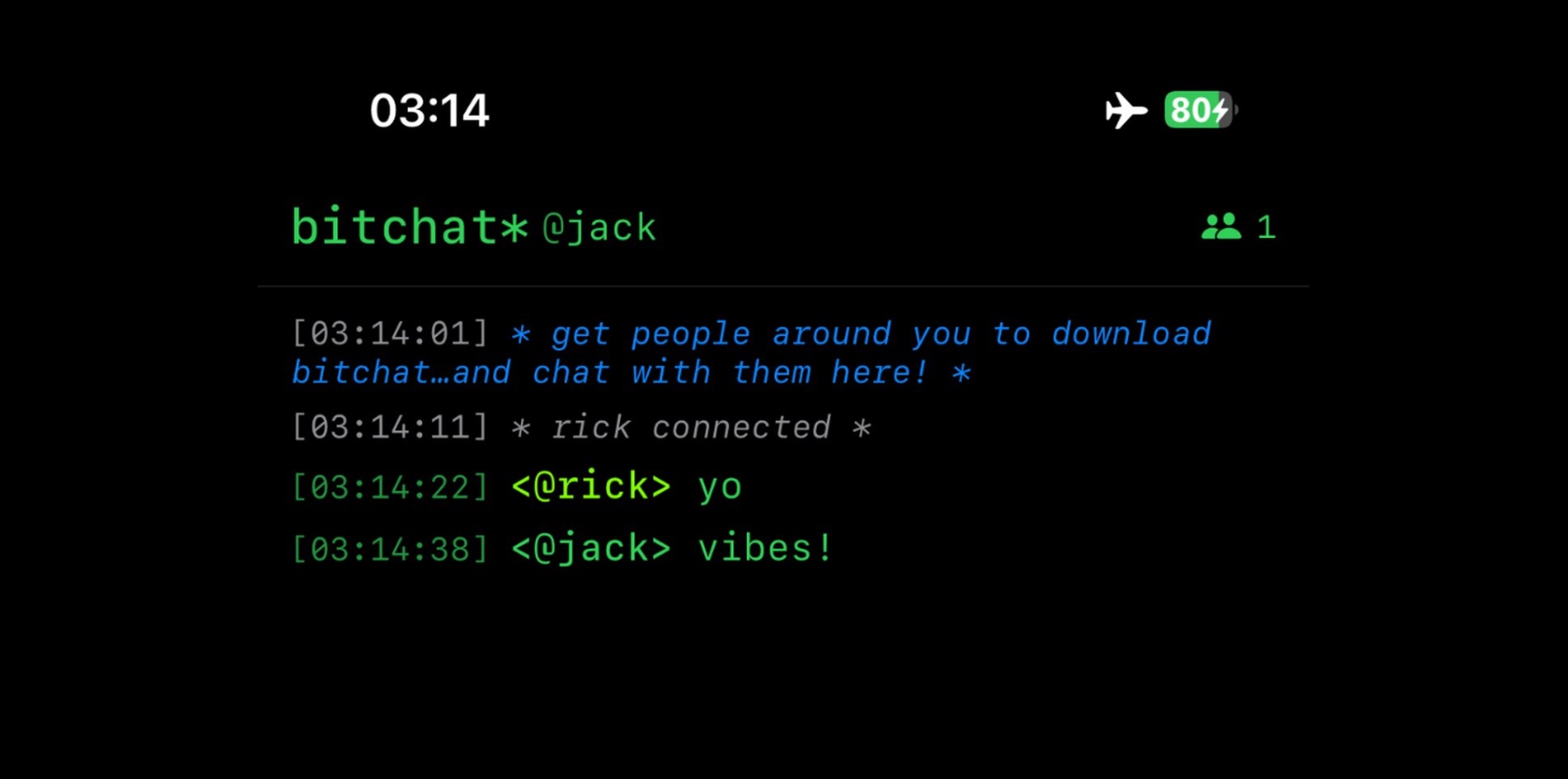
If you’re wondering what Twitter founder Jack Dorsey has been up to after founding Bluesky, he’s actually been working on a project to offer offline communication through Bluetooth patterns. On X this week, he announced Bitchat, a Bluetooth mesh chat app.

With a TestFlight beta currently underway, he said the app is in review to be published in the App Store. What makes this app unique is giving users the ability to securely converse using Bluetooth connectivity, which means you don’t need to worry about having a cell signal. As long as you’re around 300 meters from someone, you can communicate.

These are the main features of Bitchat in its current state:

  • Offline Communication: Works without internet thank to Bluetooth mesh networking
  • E2E Encryption: All messages are encrypted with Curve25519 + AES-GCM
  • Extended Range: Message peers reaching 300m+ of distance
  • Favorites System: You can store-and-forward messages for favorites indefinitely
  • Mentions: Use @nickname to notify specific users
  • Rooms: It’s possible to create #rooms for topic-based conversations
  • Password Rooms: Secure rooms with passwords and AES encryption.

Dorsey also revealed the app’s privacy features. Notably, Bitchat doesn’t collect data — it creates a new ID each session, and you can triple tap the Bitchat logo to instantly clear all data.

Tech. Entertainment. Science. Your inbox.

Sign up for the most interesting tech & entertainment news out there.

While this doesn’t appear to be the reason that Dorsey created the app, I genuinely believe that this will be best way to chat with friends and family members on a plane or other places where you don’t have a good cellular connection.

After all, sometimes you just want to share something quickly without texting, and none of the current messaging apps can accomplish that for me. As a result, iMessage, WhatsApp, Telegram, Signal, and other standard chat apps aren’t always the best bet.

Source

Posted on

The world’s first AI operating system wants to automate your

AI operating systems are inevitable. That much has been clear to me since ChatGPT went viral in late 2022. That was the moment when an AI tool arrived that we could talk to using conversational language via text. The future was easy to predict from there.

You’d talk to the AI via voice and give it more complex tasks to solve. The AI would control apps for you and connect to personal data sources. After that, the AI would act as a personal assistant on devices where you won’t always have to look at the screen.

Put differently, we’d reach an age of AI products like the ones we see in movies. Star Trek is the best example. But the movie Her is probably the personal AI OS experience where we’re going to get soon enough… hopefully without falling in love with an AI.

Some of the things I mentioned above have already happened. We can use voice to talk to AI chatbots, and companies like OpenAI and Google have AI agents that can perform tasks on your behalf. You can use AI to control Windows, and Apple’s vision for Apple Intelligence involves having Siri manage some app actions for the user.

Tech. Entertainment. Science. Your inbox.

Sign up for the most interesting tech & entertainment news out there.

These are the building blocks for what comes next. OpenAI is working on hardware that will probably run an early version of AI OS. Google has been transforming Android into an AI-first operating system. Apple will no doubt do the same with iOS and macOS.

But it turns out that the world’s first AI OS isn’t coming from the companies you expected. It’s also not quite the personal AI experience that movies like Her imagined. Instead, it’s called Warmwind, and it comes from German startup Jena.

Warmwind is out in beta, but you can’t really use it right now. There’s a growing waiting list with more than 12,000 people on it.

AI will soon let us manage computers and workflows with natural language. We’ll tell the AI what we need, and it’ll do it for us.

Warmwind isn’t exactly that. It’s not the personal assistant that will know everything about you and assist you throughout the day. It’s not similar to the AI OS in Her, either. But it’s a tool that might transform how you go about handling repetitive computing tasks, especially at work.

What is Warmwind?

Two years into development, Warmwind is designed to be private. The data the AI handles is hosted on German servers, which means they’re protected by the strong GDPR privacy laws in the EU. Warmwind is designed to work in the cloud, not your PC. Instead, it’ll handle tasks in a secure virtual environment that you don’t have to oversee.

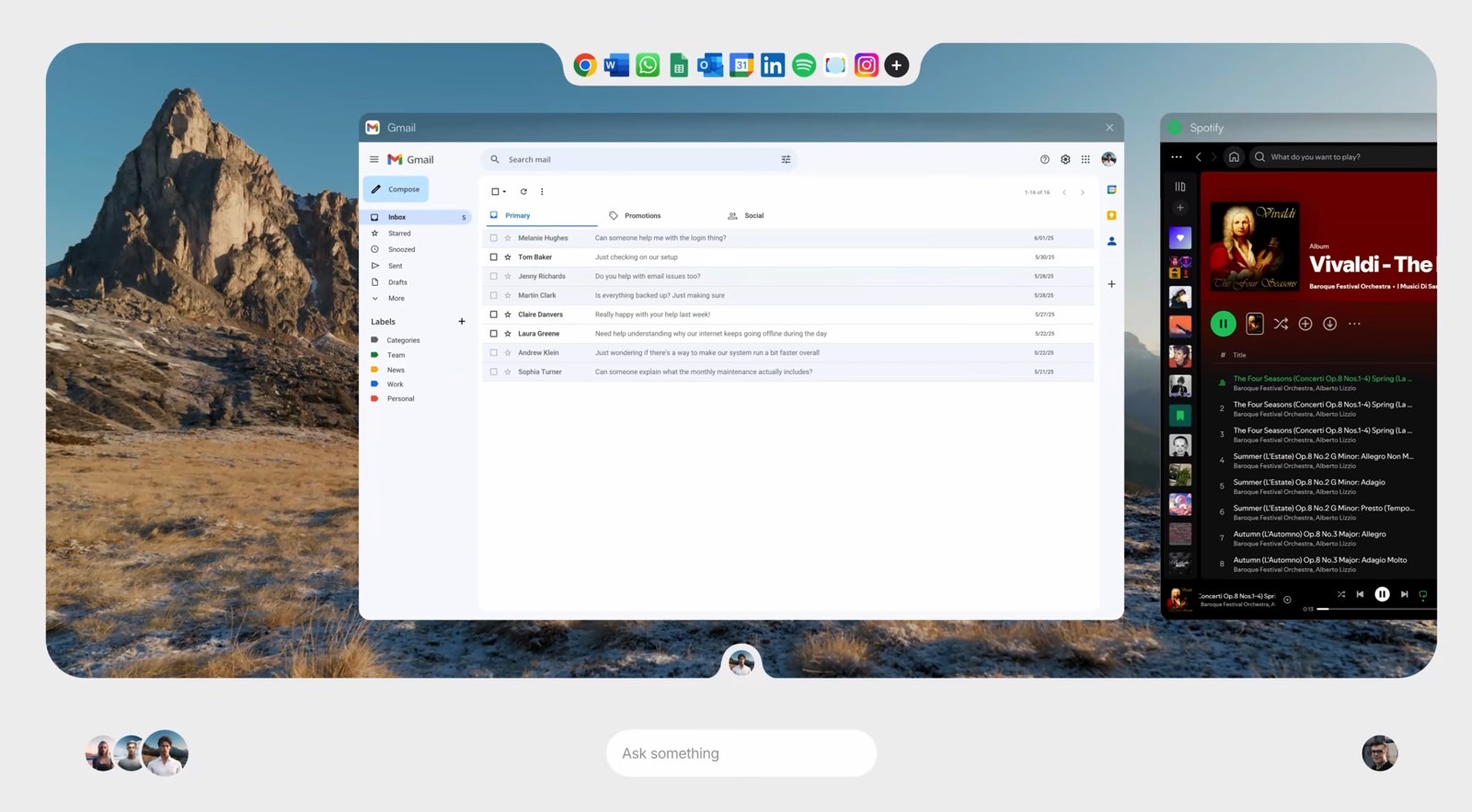
The AI will control each instance of the operating system like a human would. It’ll click on UI elements and type text. Warmwind is intended for enterprise customers who want to automate tasks and save time.

What’s brilliant about Warmwind, assuming it works as advertised, is that you can train the AI OS to perform the actions you want it to. Warmwind will observe how you control the virtual computer to perform a task, and then it’ll repeat it.

Jena admits in a blog post that Warmwind OS isn’t quite the computer operating system one would expect, especially in the AI era. Instead, it might look like an AI web app working with browsers and other preinstalled software.

Better said, Warmwind behaves like a human working with a computer, only Warmwind can repeat the same tasks over and over without getting worn out. Here’s how Jena describes it:

Warmwind OS is a cloud-native, AI-driven platform that automates digital workflows – CI/CD pipelines, reporting tasks, issue handling, and more – by behaving like a “digital employee.” It clicks, types, reads, navigates, and executes across software interfaces, without requiring API integrations. All of this happens remotely.

The actual system is a custom Linux distribution (a real OS) that’s optimized for automation workloads. Warmwind uses Wayland and VNC streaming to send the UI to the browser, where you view it. There’s no “web app” per se. If you close the window, the app doesn’t stop. The AI works in the background until you decide to terminate it.

The company also says that calling its AI product Warmwind OS is “intentional.” It’s a metaphor. “When we say, ‘It’s an operating system for AI workers,’ people immediately get a feel for it.”

How much does it cost?

In addition to using a mouse and keyboard to work, Warmwind can interact with a myriad of apps, from web browsers to productivity apps like Microsoft’s Office suite.

Warmwind can monitor social networking, browse the web for data, respond to emails, perform other customer support tasks, compile data into reports, and basically anything else you can automate with AI.

That might be an invaluable resource in a world where we’re trying to be more productive and automate repetitive, boring tasks. Warmwind OS practically lets you set up a digital worker for each separate activity you might need to automate.

That’s why Warmwind is perfect for businesses rather than individuals.

However, it might be a while before you can gain access if you’re not already a beta tester. On that note, it’s unclear how much Warmwind will cost or what premium subscriptions might have to offer. But it’s certainly an AI development you should be keeping tabs on.

You can join the waitlist here. While you wait, check out the Warmwind demos above and below.

Source

Posted on

Apple Support app might get its own AI assistant in

Apple has struggled to find its footing in the world of generative AI so far, but the company isn’t giving up on becoming a true competitor in the industry anytime soon. To that point, signs of an AI-powered “Support Assistant” for the Apple Support app were uncovered in Apple’s code this week by MacRumors contributor Aaron Perris.

Based on his findings, iPhone users will be able to chat with the Support Assistant in the Apple Support app, which is free to download from the App Store. Perris also noted that the app does already include a chat feature. You can contact a live Apple support agent within the app, which starts a conversation through the Messages app.

Presumably, the AI-powered Support Assistant will be different. The expectation is that you’ll be able to chat directly with the chatbot from the app and receive support while the assistant draws on its generative AI training. You still have the option to reach out to a live agent, but you can try to get the information you need from the AI first.

According to the code seen by Perris, the Support Assistant “uses generative models” to provide answers “related to certain Apple products and services.” As with other AI chatbots, Apple warns that the Support Assistant can provide “incorrect, misleading, incomplete, offensive, or harmful outputs,” so it’s probably best not to follow its directions blindly.

Tech. Entertainment. Science. Your inbox.

Sign up for the most interesting tech & entertainment news out there.

Perris found a reference to uploading content in the code, which could imply that users will be able to upload files or images while seeking help from the AI. Apple also states that it is working with partners to provide Support Assistant, so there’s a chance that the new feature is powered by ChatGPT, similar to other recent additions like Writings Tools.

We don’t know when (or if) the feature will see the light of day, but it’s one of many new projects in the works for Apple’s operating systems that has yet to be officially announced. For instance, we just learned about two new Apple Maps features yesterday.

Source

Posted on

US CISA agency extends Iran cyber alert, warns of CNI

The United States Cybersecurity and Infrastructure Security Agency (CISA) has reiterated and extended previous warnings over the activities of Iranian threat actors targeting Western interests, following attacks on the Middle Eastern state’s alleged nuclear weapons programme conducted by Israel and the US.

The US strikes on 22 June prompted a swift alert from the Department of Homeland Security’s (DHS’) National Terrorism Advisory System (NTAS) warning of an uptick in “low-level” attacks from hacktivists and more damaging intrusions from threat actors backed by Tehran.

In an update, CISA said that defence industrial base companies – especially those possessing holdings or relationships with counterparts in Israel – were at especially increased risk.

“At this time, we have not seen indications of a coordinated campaign of malicious cyber activity in the US that can be attributed to Iran,” the agency said in a statement.

“However, CISA urges owners and operators of critical infrastructure organisations and other potentially targeted entities to review this fact sheet to learn more about the Iranian state-backed cyber threat and actionable mitigations to harden cyber defences.”

In the alert, CISA advised that both Iranian and allied hackers are known to exploit opportunistic targets based on their use of unpatched or outdated software, or failure to change default passwords on internet-connected accounts or devices.

For critical national infrastructure (CNI) operators in particular, these threat actors have been observed using system engineering and diagnostic tools to target operational technology (OT) such as engineering devices, performance and security systems, and maintenance and monitoring systems.

CISA’s fact sheet also includes a number of mitigating steps that CNI operators can take at this time, much of it focused on identifying and disconnecting OT and industrial control system (ICS) assets from the internet, keeping such assets up to date, and maintaining appropriate monitoring and control policies – including enforcing password hygiene, role-based access controls, and phishing-resistant multifactor authentication (MFA).

CISA also said that for several months, Iran-aligned hacktivists have been conducting website defacements and leaking sensitive information stolen from victims. The agency warned of the likelihood of more distributed-denial-of-service (DDoS) attacks, and even ransomware attacks run in collaboration with other groups.

Will Robert ‘hack-and-leak’?

CISA’s warnings came as a hacking operation backed by Iran’s Islamic Revolutionary Guard Corps (IRGC) – known as Robert – threatened to release compromising information on the administration of president Donald Trump in retaliation for the airstrikes.

The group, which previously leaked emails in the run up to last year’s presidential election in the US, claimed to have over 100GB of data to “share”. Speaking to the Reuters agency in the past few days, Robert claimed some of these emails were taken from the accounts of Trump adviser Roger Stone, White House chief of staff Susie Wiles, and Stormy Daniels, the adult entertainer at the centre of a hush-money scandal.

Max Lesser, senior analyst on emerging threats at the Foundation for Defense of Democracies’ (FDD’) Center on Cyber and Technology Innovation, said that it was wise to be cautious about the credibility of Robert’s claims.

He explained: “A common technique in state-sponsored data leaks is to sneak lies into troves of largely true information. The authenticity of the majority of the data makes the fabrications appear real. This information, when it comes out, must be verified before [it is] believed.”

Lesser said hack-and-leak ops were a popular tool for such state-linked actors because they enable states that lack a military advantage to be seen to retaliate without crossing a threshold that might lead to a kinetic response from the US.

“Considerable conversation about Iran’s retaliation in cyber space to US military strikes has focused on cyber attacks against companies and critical infrastructure. But cyber-enabled influence operations provide another plausible vector of attack. This was not the first hack-and-leak conducted by Iran against Trump, and likely not the last,” he added.

Lesser also warned that in disabling some of the US government’s capabilities around countering foreign influence operations it had enhanced the ability of groups like Robert to damage national and global security.

“The Trump administration…should consider revitalising counter-malign influence efforts while ensuring these efforts safeguard free speech,” he said.

Source

Posted on

Fine-tuning to deliver business AI value

A few months ago, Microsoft introduced Copilot Tuning, offering its customers a way to use low-code tooling in Microsoft Copilot Studio to take advantage of highly automated fine-tuning “recipes” trained on enterprise data.

While generative artificial intelligence (GenAI) tools tend to be associated with AI models that are trained on vast swathes of public information on internet and social media platforms, businesses need models that understand their internal data and processes, and now the major AI providers have planted the power of GenAI into the mindset of business executives and IT chiefs, this is the current focus of commercial AI.

Such products aim to provide an AI system that is industry sector-specific compared with the highly generalised models that have been trained on freely available internet data. In theory, they should suffer less from hallucinations that afflict the more general AI models and more closely match the way a business works.

Ranveer Chandra, vice-president and group product manager of experiences and devices at Microsoft, posted in a blog: “AI tools powered by out-of-the box LLMs [large language models] and retrieval augmented generation may not always understand your business in terms of specific processes, terminology and style.” He claimed Microsoft’s approach to optimising AI models for business has been to reduce the complexity often associated with fine-tuning projects.

One of the customers in the Microsoft 365 Copilot (M365) Tuning early access programme is accountancy firm Ernst & Young. Marna Ricker, global vice-chair for tax at the firm, said the company was integrating a tax-domain fine-tuned LLM with its enterprise knowledge and the expertise of its tax advisors through M365 to deliver an enhanced tax service to the market. “This synergy improves service quality, and significantly advances tax and legal research with relevant knowledge and intelligence readily available in M365 where people are already working,” she added.

According to a forecast from Gartner, the market for specialised GenAI models will more than double to $2.5bn by 2026. While this is significantly smaller than the $23bn forecast by Gartner for general GenAI models, it shows there is demand in businesses for such technology.

Roberta Cozza, senior director analyst at Gartner, said the major AI providers are fine-tuning their models as this is where enterprises are moving. Enterprise buyers, she said, value working with a trusted technology provider, but they also need GenAI-based tools to respond to something that is specific to their domain. “What we are seeing actually is domain-specific models,” she said.

Cozza noted that many of these actually start from open source models as a base, and are often deployed as small language models (SLM), which offer efficiencies in terms of resourcing costs, but also provide better control since they can be trained on an enterprise’s own data. 

GenAI can deliver value, but the enterprise IT leaders she has spoken to say they want it to be trained with the issues, data and content of the specific industry they operate in. While the likes of Microsoft and the major IT consulting providers are ramping up their AI business offerings to cater for enterprises that are now looking to deliver business value with GenAI, IT leaders should consider alternative approaches. “They need to put their proprietary data in the hands of either a model builder or an IT service provider,” said Cozza.

“Barriers to entry using basic open source models have reduced a lot, so we’ve seen a lot of smaller AI providers helping large customers with their own small model,” she added. “They can distill either a proprietary model like ChatGPT, but many are starting with Meta’s Llama, and in Europe, we are seeing Mistral as a starting point.” 

While 90% of GenAI models are managed by a few major providers, Cozza said Gartner has been fielding inquiries from IT decision-makers who specifically need to deploy European AI technology as a safeguard that buffers the volatile geopolitical environment they need to operate in. They are also considering how to remain compliant under the EU AI Act.

“Those AI applications and technologies that are deemed to be high-risk are the ones that will need to be regulated and comply with the EU AI Act,” she said. “But this covers frontier models that are trained on internet data.”

Cozza said models built on a company’s internal data and SLMs, which are explainable, are less likely to require regulatory scrutiny. “Training an AI and creating something that is more domain-specific actually improves general compliance because you can make it comply with policies or regulations,” she added.

Tools like M365 Copilot Tuning will inevitably help to lower the barrier to entry for IT leaders who have been tasked with providing GenAI capabilities that can add business value, but SLMs offer an alternative approach that can deliver explainability and comply more easily with the EU AI Act.

Source

Posted on

Space comms reaches commercialisation inflection point

Research from the GSMA has found that the satellite-based communications industry is now transitioning from the pilot and validation stage to initial commercial deployments, with 109 telco-satellite partnerships now covering 70% of global mobile subscribers, and commercialisation set to unfold over the next two to three years as services evolve from SMS to voice to data. 

The Satellite and NTN tracker, Q2 2025 from the analysis arm of the global mobile industry trade association, GSMA Intelligence, highlighted the current competition in the market, and in addition to uncovering the increased amount of commercialisation found in the three months to the end of May 2025, key events in the sector included Starlink still dominating the industry – but with competition intensifying; Amazon’s Kuiper constellation entering the space race; and enterprise internet of things (IoT) presenting a large opportunity.

The report noted that the total number of 109 operators with services was an increase of four players compared with the end of February 2025, and that 27 of these were now live, an increase of two compared with the prior quarter and 82 in testing, two more than previously. Out of a total mobile connections footprint of 5.72 billion, the share of the total connections base covered by satellite and non-terrestrial networks (NTNs) was 66%, up two percentage points on February 2025.

Yet out of all the activity in the market, the GSMA noted that Amazon’s launch of its first 27 out of 3,200 planned Kuiper constellation satellites represented the biggest competitive development of the second quarter of 2025.

At 0.8% of target capacity, the analysis regarded the launch as a “small but significant” step for the tech giant. GSMA Intelligence believes Amazon’s strategic objectives will initially lie in the broadband market – either “not spots” or against higher-priced legacy ISPs in rural areas – and in ubiquitous, global coverage for its logistics operations.

Intentions for direct-to-cell (D2C) services were seen as less obvious considering the potential oversupply of capacity and the fact it doesn’t have a clear link to Amazon’s core businesses. The report stressed, though, that Amazon’s D2C ambitions could not be ruled out given the company’s history of entering new business areas.

One of the potentially interesting forthcoming battles will be between Kuiper and market leader Starlink, which was top in the market with 7,000 satellites and 10 telco partnerships. However, the study also observed that AST SpaceMobile has secured 30 planned telco relationships and that China’s national satellite efforts and established players like SES, Viasat and Iridium are preparing 2026 direct-to-cell launches, intensifying competitive pressure.

The report predicted that Starlink was likely to sustain its first-mover advantage, as AST’s service is unlikely to be widely available until 2026 and Lynk’s coverage does not largely overlap with Starlink.

However, GSMA Intelligence stressed this was not a 12-month game. D2C services from MSS providers, notably Viasat, SES and Iridium, are likely to come in 2026, in the S and L bands, and so, said the analyst, commercialisation was likely to play out over a two- to three-year period rather than being won or lost in the near term.

GSMA Intelligence suggested bigger questions concern service evolution (SMS to voice to data) and the viability of being able to offer these to a critical mass, considering the spectrum constraints and natural barriers due to the laws of physics.

In its previous report for Q1 2025, GSMA Intelligence noted that the IoT was of great interest given that the latest standards (Release 19) in the sector now incorporate new functionality for NTN services geared at IoT applications such as sensors, telematics and energy monitoring.

The survey found that 2.5-3.0B IoT devices were now addressable by satellite across logistics, agriculture and utilities. The survey data showed the big opportunity for the sector, with 20% of businesses facing daily critical operations delays from connectivity gaps, with a further 30% reporting weekly issues. Equipment maintenance, supply chain efficiencies and asset tracking are the top three categories of operations where satellite is seen as playing a supporting role.

GSMA Intelligence said the study highlighted that there was a window of opportunity to service this demand, and emphasised the need for versatility in satellite connectivity for transient assets.

Source

Posted on

Which AI protects your privacy the best: ChatGPT, Gemini, or

I’ve been telling you to pay attention to what personal data you share with your AI chatbot of choice and make sure that data can’t be used to train future versions of that AI platform since ChatGPT went viral nearly three years ago. I keep reminding you how important it is to protect your personal data as best you can every time we talk about a new AI service or functionality.

The best recent examples are Doppl and Meta AI. The former is a new Google app that lets you try on clothes virtually before you buy, and it comes with surprisingly strong privacy protections. As for Meta AI, the company is trying to convince you to upload your camera roll photos to its servers so Meta AI can have a look at them. I already told you to avoid opting in at all costs.

I’m not the only person worried about user data security and privacy. Researchers from Incogni tried to determine which of the AI platforms available commercially protect user privacy the best.

The AI study looked at what happens to user data from prompts, how your data is shared with third parties, and whether the privacy policies the various companies use are transparent enough and easy to understand.

Tech. Entertainment. Science. Your inbox.

Sign up for the most interesting tech & entertainment news out there.

The results aren’t that surprising. Meta AI scored the worst overall, with Copilot, Deepseek, and Gemini ahead of it. French AI platform Le Chat (Mistral) came out on top, narrowly beating ChatGPT and Grok. Claude and Pi came in fourth and fifth.

The following graphic shows Incogni’s privacy rankings for these AI models based on a study conducted in late May.

AI study: Overall privacy rankings. Image source: Incogni

The researchers found that Le Chat is the least privacy-invasive platform of the nine AI products above. ChatGPT and Grok followed. “These platforms ranked highest when it comes to how transparent they are about how they use and collect data, and how easy it is to opt out of having personal data used to train underlying models,” the researchers wrote.

At the other end of the rankings are AI platforms from big tech companies. They’re the most privacy-invasive. Meta AI is “the worst,” followed by Gemini, Copilot, and DeepSeek. Interestingly, the researchers say “DeepSeek was also indicated as one of the most privacy-invasive.”

Training the AI with your data

The study also shows that Gemini, DeepSeek, Pi AI, and Meta AI don’t allow users to opt out of having prompts used to train the models.

AI study: Training the AI with user data. Image source: Incogni

ChatGPT is the most transparent when it comes to informing users whether their prompts will be used for model training. ChatGPT also has a clear privacy policy. That’s good news to me, considering I’ve been a longtime ChatGPT user. I opted out of model training as soon as the privacy feature was available, and I advise any ChatGPT user to do the same.

The researchers also found that Copilot, Mistral AI, and Grok let users opt out of data training.

The AI study also notes that once your data is in a dataset, it’s unlikely it can be removed.

AI data shared with others

The AI study also looks at the data AI platforms share with others, finding that AI firms might provide data to various third parties. The list includes service providers, legal and governmental bodies, other businesses, and other parties.

AI study: Ranking based on data collection and sharing. Image source: Incogni

Some AI firms share data with multiple parties. Meta AI stands out again, but so does Microsoft’s Copilot.

How easy it is to understand AI legal lingo

The researchers judged the nine AI models in these graphs by transparency criteria. That is, how easy it is to understand by an average user what happens with their prompt data, how easy it is to find information about an AI platform, and how easy it is to read privacy policies.

OpenAI’s ChatGPT is the most transparent AI platform, with Gemini and Inflection taking the last spots in this ranking.

When it comes to finding privacy policies and reading them, some AI platforms are much better than others. Companies like Claude and OpenAI might offer users FAQ articles and other support documents.

Larger entities like Google, Microsoft, and Meta might have broader privacy policies that apply to all their products, not just AI tools. Reading and understanding these privacy policies might be more difficult and cumbersome for most readers.

What other data do AI platforms collect?

It’s not just prompt data that AI firms might collect. The Incogni researchers also looked at what type of information AI firms might want, finding that Pi AI and ChatGPT are the best. That is, they seek little information beyond chats. Gemini, Copilot, and Meta AI are at the bottom of the list.

When looking at the kind of information AI platforms collect, the study reveals a few interesting details from the mobile apps belonging to these platforms.

AI study: What data AI platforms collect from iPhone and Android. Image source: Incogni

For example, Gemini and Meta AI collect precise locations and addresses. Gemini, Pi, and DeepSeek also want phone numbers. Meta AI collects usernames, email addresses, and phone numbers.

Grok wants to access photos the user shares and app interactions on Android. Claude collects app interactions with third parties on Android, as well as email addresses and phone numbers.

You should read the full study at this link, where you’ll find more graphs like the ones above. Once you’ve gone over it, you might want to check your privacy settings for the AI apps you use, especially the iPhone and Android versions.

Source

Posted on

Rumored iPhone chip-powered MacBook may force Apple to make a

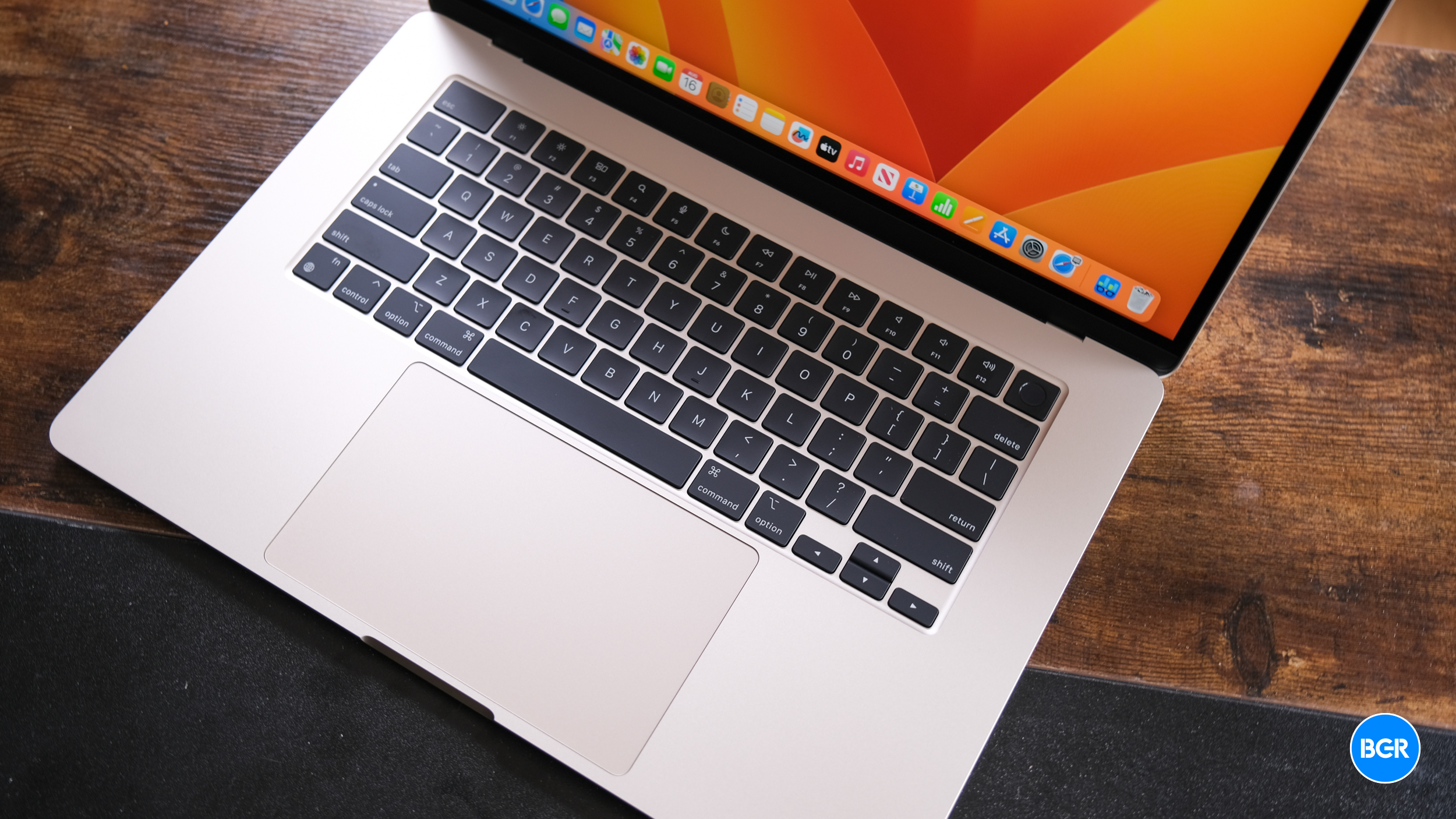
During the weekend, analyst Ming-Chi Kuo revealed Apple was working on a new MacBook model, most likely a replacement for the controversial 12-inch option released so many years ago. Following that report, MacRumors discovered internal references to this Mac, as Apple does appear to be working on a computer powered by the A18 Pro chip.

Putting these two stories together, it’s easy to believe Apple is serious about unveiling this new MacBook as early as next year. With mass production expected in the last quarter of 2025, the computer could debut at a March event alongside a new iPhone 17e and other lighter Apple products. 

But there’s one issue with this affordable MacBook, the same one that plagued the last 12-inch model: suddenly, all entry-level options start to look very similar.

Comparing entry-level MacBook models

Apple currently offers two laptops with the M4 chip: an Air and a Pro version. What separates them is more ports, a better display, and a fan for heat dissipation. But if Apple releases a MacBook with an iPhone chip, what would really set it apart from a MacBook Air? A single USB-C port and a less powerful chip?

Tech. Entertainment. Science. Your inbox.

Sign up for the most interesting tech & entertainment news out there.

Wouldn’t that make the Air redundant, or even worse? It might still be called Air, but if it’s not lighter or thinner than the new model, especially considering the previous 12-inch version, what’s the point? Just like the iPad Pro is thinner, lighter, and more capable, why would someone choose an Air?

Image source: Christian de Looper for BGR

In the MacBook’s case, users would be getting a better deal on a thinner and lighter computer, which is exactly what most people want. Unless Apple somehow makes the A18 Pro run like an old Intel Celeron, light users probably won’t notice any difference between an M4 machine and one with the A18 Pro.

That said, now that Apple has finally positioned the MacBook Air well, is it really about to launch an even cheaper computer that’s thinner, lighter, and capable enough for most of the Air’s target users?

The solution: One MacBook needs to go

When Apple offers too many similar products, the best move is to drop one. If users can’t clearly see why they should pay more, they’ll just buy the cheapest one, and Apple likely doesn’t want that.

If Cupertino keeps the lineup as it is, this new model might end up with underwhelming specs: 8GB of RAM, 128GB SSD, a basic FaceTime camera, and a single USB-C port. Then, to get a better experience, users would end up paying nearly the same as a MacBook Air. At that point, the Air becomes the smarter choice. So what’s the point?

Sure, I’m stressing out over a product that hasn’t even been announced, but it feels like Apple might be repeating a mistake from the past. The company shouldn’t flood the market with lookalike products. It should help customers understand the value of each one.

If it’s hard for me to explain Apple’s lineup to friends and readers, imagine how confusing it is for someone who just wants a new laptop.

Source

Posted on

An AI-generated rock band topped 500,000 listeners on Spotify

Generative AI software isn’t just for creating text, photos, and videos. AI can also make audio, which requires synthesizing speech, background audio, and music for AI video services like Veo 3, or creating music that sounds like something you’d stream on Spotify or Apple Music. Fuzz AI is an example of the latter, a music streaming experience with AI at the center.

While I don’t mind artists embracing AI tools, whether via video or song, I want to be forewarned that a creation has been altered or created with AI. I can then decide to experience it knowing that I might run into AI-generated content or AI slop.

Not all people using AI will be quick to admit they’re doing so with their art, though. The latest example is an AI band called The Velvet Sundown, which doesn’t exist in real life. Whoever generated them managed to reach 500,000 listeners on Spotify in just a few weeks.

According to Ars Technica, some Spotify users posted messages on social media about a week ago, warning that The Velvet Sundown might be an AI band.

Tech. Entertainment. Science. Your inbox.

Sign up for the most interesting tech & entertainment news out there.

These posts went up on social media a couple of weeks after The Velvet Sundown joined the streaming service. During that time, the fake band topped 300,000 monthly listeners on Spotify. At the time of this writing, the AI band has over 550,000 monthly listeners.

It’s not like people are actively looking for the band. More likely, Spotify’s algorithms surface songs from The Velvet Sundown’s two albums. That’s how they reach thousands of people who might listen to the songs without realizing or caring that it’s AI-generated content.

Spotify doesn’t label the band as AI. The artist page for The Velvet Sundown has a “Verified Artist” checkmark. The band is also present on Deezer, which has a tougher stance on AI. The band’s bio on Deezer does say: “Some tracks on this album may have been created using artificial intelligence.”

Here’s what the band’s description read on Spotify, at least until a few days ago:

The Velvet Sundown don’t just play music they conjure worlds. Somewhere between the ghost of Laurel Canyon and the echo of a Berlin warehouse, this four-piece band bends time, fusing 1970s psychedelic textures with cinematic alt-pop and dreamy analog soul. Their sound is all velvet reverb, swirling organs, tremolo-soaked guitar lines, and voices that sound like they’ve been unearthed from forgotten reels of tape.

The AI band has two albums out on Spotify and plans to release a third soon. That might be a dead giveaway that we’re not looking at a real band.

It so happens that John Oliver tackled AI slop on a recent Last Week Tonight episode, which included an AI band called The Devil Inside that made no fewer than 10 albums in the past two years.

Ars points out that the two fake bands have many songs that reference dust and wind, suggesting they might share a common AI model. There’s no established connection between the two AI bands, though.

While there’s no official confirmation that The Velvet Sundown is an AI band, there is more evidence that there aren’t any human members. The band created an Instagram profile a few days ago as people were questioning its existence on social media. The Instagram account features photos showing the band’s members that appear to be created using AI.

One image has four people sitting at a table, celebrating the success of their first two albums on Spotify. The “photo” looks good, but features telltale signs of AI. Just look at the number of burgers and plates, the strange position of the glasses, and that unmistakable AI look of humans. Look at the symmetrical faces and the image’s overall smoothness.

You can use AI to make lifelike images, like the new Higgsfield Soul tool, assuming you’re aware of it or have access to it. But one wouldn’t be able to hide an AI band for long.

Again, there’s nothing wrong with AI music on streaming services like Spotify. After all, The Beatles used AI to launch a hit song. But listeners should at least be warned that they’re about to hear AI-made songs. Some people might listen to it regardless of labels or warnings, while others might skip it.

What’s certain is that AI bands like The Velvet Sundown are taking the place of real artists in Spotify playlists, depriving them of revenue. John Oliver’s full segment on AI slop and why it’s dangerous follows below:

Source