Posted on

CityFibre triples business Ethernet availability

Just days after launching a wholesale multi-gig broadband product designed to enable internet service providers (ISPs) to offer business customers connectivity with symmetrical speeds of 5.5Gbps, CityFibre has announced that it has tripled the availability of its dedicated, enterprise-grade Ethernet services to serve more than 260,000 UK businesses.

The roll-out incorporates a dedicated business ethernet platform and is supplied by CityFibre’s engineering partner Calix. It is designed specifically to support enterprise-grade service guarantees and brings CityFibre’s full FTTP network online for its Business ISPs.

The increase not only expands the total number of businesses available to partners – rising from 80,000 – but is also said to increases the density of serviceable businesses in its network footprint, making it easier and more efficient for partners to run targeted sales and marketing campaigns. The provider said that it was also committed to delivering “the best economics”, claiming that its Ethernet prices were up to 20% cheaper than its major competitors.

CityFibre said that its investment in its Ethernet services has been underpinned by its nationwide 10Gbps XGS passive optical network (XGS-PON) technology upgrade being rolled out across its fibre-to-the-premises (FTTP) network. This began in 2022 and is already implemented across 85% of CityFibre’s network and is due for completion later this summer. The 5.5Gbps wholesale product will be made available across CityFibre’s nationwide full-fibre network, with faster multi-gig services due to launch in 2026.

“[This] announcement is a reminder that CityFibre is more than just a broadband network. We’re building a digital infrastructure platform that serves the needs of all sectors of the market, from consumer services right through to enterprise-level connectivity,” said Andy Nash, CityFibre director for business, government and mobile.

“Our partners have called for a larger footprint and that is exactly what we are giving them. Tripling our business footprint transforms their addressable market and is a catalyst for growth and shared success. We look forward to our proposition of market leading products, service and economics benefitting even more businesses in the years ahead.”

From a strategic basis, CityFibre said that over the past year, it has worked closely with its partners to speed-up the installation of new business Ethernet connections by up to 40% across its most complex Ethernet installations with permission to work agreed.

CityFibre also revealed that it was introducing a delivery assurance guarantee, providing partners with the confidence of enhanced compensation for any unexpected delays to their installation date.

“As UK businesses increasingly rely on technology to operate, reliable, secure, fast internet access is becoming a strategic asset,” said Nathan Marke, chief strategy officer at CityFibre partner, Giacom.

“The delivery assurance guarantee is a great example of the CityFibre challenger DNA and difference. They have listened to the market and focused not just on great technology, but also predictable installations and great service. This brings invaluable peace of mind for our community of more than 6,000 MSPs and resellers as they deliver critical customer projects.”

Nick Shraga, chief operating officer at Southern Communications, added: “Our customers are growing and adapting fast, powered by outstanding connectivity alongside brilliant customer service. So, CityFibre’s Ethernet expansion, combined with its commitment to competitive pricing and reliable installations, is great news and promises to be a boost for UK businesses.”


Source

Posted on

CIOs baffled by ‘buzzwords, hype and confusion’ around AI

Technology leaders are baffled by a “cacophony” of “buzzwords, hype and confusion” over the benefits of artificial intelligence (AI), according to the founder and CEO of technology company Pegasystems.

Alan Trefler, who is known for his prowess at chess and ping pong, as well as running a $1.5bn turnover tech company, spends much of his time meeting clients, CIOs and business leaders.

“I think CIOs are struggling to understand all of the buzzwords, hype and confusion that exists,” he said.

“The words AI and agentic are being thrown around in this great cacophony and they don’t know what it means. I hear that constantly.”

CIOs are under pressure from their CEOs, who are convinced AI will offer something valuable.

“CIOs are really hungry for pragmatic and practical solutions, and in the absence of those, many of them are doing a lot of experimentation,” said Trefler.

Companies are looking at large language models to summarise documents, or to help stimulate ideas for knowledge workers, or generate first drafts of reports – all of which will save time and make people more productive.

The risk of rogue AI

But Trefler said companies are wary of letting AI loose on critical business applications, because it’s just too unpredictable and prone to hallucinations.

“There is a lot of fear over handing things over to something that no one understands exactly how it works, and that is the absolute state of play when it comes to general AI models,” he said.

Trefler is scathing about big tech companies that are pushing AI agents and large language models for business-critical applications. “I think they have taken an expedient but short-sighted path,” he said.

“I believe the idea that you will turn over critical business operations to an agent, when those operations have to be predictable, reliable, precise and fair to clients … is something that is full of issues, not just in the short term, but structurally.”

One of the problems is that generative AI models are extraordinarily sensitive to the data they are trained on and the construction of the prompts used to instruct them. A slight change in a prompt or in the training data can lead to a very different outcome.

For example, a business banking application might learn its customer is a bit richer or a bit poorer than expected.

“You could easily imagine the prompt deciding to change the interest rate charged, whether that was what the institution wanted or whether it would be legal according to the various regulations that lenders must comply with,” said Trefler.

Thinking in advance is better than thinking on your feet

Trefler said Pega has taken a different approach to some other technology suppliers in the way it adds AI into business applications.

Rather than using AI agents to solve problems in real time, AI agents do their thinking in advance.

Business experts can use them to help them co-design business processes to perform anything from assessing a loan application, giving an offer to a valued customer, or sending out an invoice.

Companies can still deploy AI chatbots and bots capable of answering queries on the phone. Their job is not to work out the solution from scratch for every enquiry, but to decide which is the right pre-written process to follow.

As Trefler put it, design agents can create “dozens and dozens” of workflows to handle all the actions a company needs to take care of its customers.

“You just use the natural language model for semantics to be able to handle the miracle of getting the language right, but tie that language to workflows, so that you have reliable, predictable, regulatory-approved ways to execute,” he said.

The right AI for the job

Large language models (LLMs) are not always the right solution. Trefler demonstrated how ChatGPT 4.0 tried and failed to solve a chess puzzle. The LLM repeatedly suggested impossible or illegal moves, despite Trefler’s corrections. On the other hand, another AI tool, Stockfish, a dedicated chess engine, solved the problem instantly.

The other drawback with LLMs is that they consume vast amounts of energy. That means if AI agents are reasoning during “run time”, they are going to consume hundreds of times more electricity than an AI agent that simply selects from pre-determined workflows, said Trefler.

“ChatGPT is inherently, enormously consumptive … as it’s answering your question, its firing literally hundreds of millions to trillions of nodes,” he said. “All of that takes [large quantities of] electricity.”

Using an employee pay claim as an example, Trefler said a better alternative is to generate, say, 30 alternative workflows to cover the major variations found in a pay claim.

That gives you “real specificity and real efficiency”, he said. “And it’s a very different approach to turning a process over to a machine with a prompt and letting the machine reason it through every single time.”

“If you go down the philosophy of using a graphics processing unit [GPU] to do the creation of a workflow and a workflow engine to execute the workflow, the workflow engine takes a 200th of the electricity because there is no reasoning,” said Trefler.

He is clear that the growing use of AI will have a profound effect on the jobs market, and that whole categories of jobs will disappear.

The need for translators, for example, is likely to dry up by 2027 as AI systems become better at translating spoken and written language. Google’s real-time translator is already “frighteningly good” and improving.

Pega now plans to work more closely with its network of system integrators, including Accenture and Cognizant to deliver AI services to businesses.

Major expansion

An initiative launched last week will allow system integrators to incorporate their own best practices and tools into Pega’s rapid workflow development tools. The move will mean Pega’s technology reaches a wider range of businesses.

Under the programme, known as Powered by Pega Blueprint, system integrators will be able to deploy customised versions of Blueprint.

They can use the tool to reverse-engineer ageing applications and replace them with modern AI workflows that can run on Pega’s cloud-based platform.

“The idea is that we are looking to make this Blueprint Agent design approach available not just through us, but through a bunch of major partners supplemented with their own intellectual property,” said Trefler.

That represents a major expansion for Pega, which has largely concentrated on supplying technology to several hundred clients, representing the top Fortune 500 companies.

“We have never done something like this before, and I think that is going to lead to a massive shift in how this technology can go out to market,” he added.

Source

Posted on

iOS 26 leak uncovers exciting new features coming to AirPods

Apple HQ has seemingly sprung a leak in the days ahead of its WWDC 2025 keynote, as new details about the company’s upcoming software updates continue to find their way online. After spoiling a few surprises pertaining to iOS 26 on Tuesday, 9to5Mac returned today with updates about new features likely coming to Apple’s AirPods this fall.

According to 9to5Mac, there are several new features currently in the works for Apple’s line of wireless earbuds. The expectation is that these new features will be included in the iOS 26 and macOS 26 software updates, but the site also warns that Apple may “choose to delay or tweak” these features, so there’s no guarantee we’ll see them this fall.

With that out of the way, let’s dig into the rumored AirPods upgrades.

New AirPods features set for iOS 26

AirPods Pro 2 with USB-C port. Image source: Christian de Looper for BGR

Of the rumored features, the most intriguing is camera control. 9to5Mac says AirPods users will be able to press the AirPods stem in order to snap a photo with a connected iPhone. This exact feature was available on Apple’s EarBuds, but has yet to appear on AirPods.

Tech. Entertainment. Science. Your inbox.

Sign up for the most interesting tech & entertainment news out there.

By signing up, I agree to the Terms of Use and have reviewed the Privacy Notice.

The report also notes that AirPods will soon support new head gestures. Apple introduced head gestures on AirPods Pro 2 and AirPods 4 in 2024, allowing users to move their heads to answer or decline phone calls as well as interact with messages and notifications. On iOS 26, Apple will reportedly add even more gestures, potentially including one that would give users the ability to end or extend a Conversation Awareness volume adjustment.

Other new features coming to Apple’s AirPods in iOS 26 include sleep detection to automatically pause content when the user dozes off, a “studio quality” mic mode similar to the iPhone’s Audio Mix feature, and an improved pairing experience.

Tune in to WWDC 2025

WWDC 2025 begins on June 9. Image source: Apple Inc.

As for which AirPods will get these features, we’ll have to wait until Monday to find out. Apple’s WWDC 2025 keynote is scheduled to begin on June 9 at 10:00 a.m. PT / 1:00 p.m. ET. Even if these new features aren’t announced during the keynote, we always find a wide variety of new features that Apple didn’t have time to discuss once the dust settles after the event.

We’ll be keeping our eyes peeled for these AirPods upgrades and more on Monday.

Source

Posted on

iOS 26 beta 1 launches soon: Will it work on

Apple fans around the world are probably anxiously waiting for next week’s main keynote, which will open this year’s WWDC. The event is where Apple unveils its latest operating systems each year, making them available in beta to testers eager to try the new features right after the show.

This year’s OS reveals are even more exciting, since we’re not just getting new features for iPhone, iPad, Mac, Apple Watch, Apple TV, AirPods, and Vision Pro. Apple is giving all its operating systems a big redesign, one that has leaked several times over the past few months.

A name change is also coming, with Apple replacing the expected iOS 19 label with a new iOS 26 moniker meant to designate the year of release. The official iOS 26 launch will happen in September or late 2025, making it the newest iPhone OS for most of 2026.

This new naming policy will apply across the board. All of Apple’s operating systems will follow the same numbering scheme.

Tech. Entertainment. Science. Your inbox.

Sign up for the most interesting tech & entertainment news out there.

By signing up, I agree to the Terms of Use and have reviewed the Privacy Notice.

With all that in mind, iOS 26 is easily the most anticipated OS coming out of WWDC. It’s the operating system people will want to try right away on their smartphones, to see how the new design works and test whatever iOS 26 features are available to early adopters on day one.

Unfortunately, some older iPhones still in use won’t be able to run iOS 26.

Apple has an impressive track record when it comes to supporting older iPhones. The latest iOS features might not show up on phones that launched five years ago, but they’ll still get most of the iOS functionality and the new design.

Apple Intelligence will be one of the iOS 26 features limited to newer models, but that’s due to specific hardware requirements for AI.

Otherwise, the visionOS-inspired design in iOS 26 will be available on older devices. The same goes for new features built into iOS 26 apps.

The first iOS 26 beta won’t include all the new features Apple planned for this release. Only the ones ready for testing will be available to users.

Also, just a reminder that Apple gives developers first access to the beta. They get it at WWDC, and the public beta usually follows about a month later.

As for supported hardware, iOS 26 will work on nearly all iPhones that can run iOS 18. A report from a trusted source mentioned a few months ago that only the 2018 iPhones wouldn’t be upgraded to iOS 26 (still called iOS 19 at the time). Apple will confirm the list next week, but that same group of iPhones has resurfaced online.

The rumor is likely accurate. These iPhone models should support iOS 26 starting with the first beta release next week:

  • iPhone 11, 11 Pro, and 11 Pro Max
  • iPhone 12, 12 mini, 12 Pro, and 12 Pro Max
  • iPhone 13, 13 mini, 13 Pro, and 13 Pro Max
  • iPhone 14, 14 Plus, 14 Pro, and 14 Pro Max
  • iPhone 15, 15 Plus, 15 Pro, and 15 Pro Max
  • iPhone 16e, 16, 16 Plus, 16 Pro, and 16 Pro Max
  • iPhone SE (2nd gen and 3rd gen)

If you’re currently in the iOS 18 beta program, you’ll move to iOS 26 once Apple rolls out the first beta.

Source

Posted on

Planning permission sought for UK’s largest AI datacentre campus

North Lincolnshire Council has received a planning application for a 1,000mW datacentre campus, as its push to become a government-backed artificial intelligence (AI) Growth Zone gathers pace.

According to the project documents, seen by Computer Weekly, the development would be the largest datacentre in the whole of the UK on completion, with the masterplan suggesting up to 15 “different datacentre plots” could be housed there.

“This would be the largest datacentre campus in the northern part of the UK, and indeed the whole of the UK at the time of preparing the planning application,” the Economic needs and benefits document for the project stated.

The development will be located on the site of the former RAF Elsham Wolds World War II airfield, which neighbours a nearby industrial park.

Plans for this latest project were submitted to the council at the end of May 2025.

Based on previous communications from the council, from February 2025, the Elsham Tech Park plan appears to be the third of four projects that will form the backbone of the local area’s bid to become an AI Growth Zone.

A post about the build on the North Lincolnshire Council website said up to £7.5bn will be invested in bringing the plans to fruition, and it is expected the project will generate up to 1,200 highly skilled jobs once the work on it is completed.

Positive sign

Council leader Rob Waltham said the proposed project is “another positive sign of confidence in our economy and in North Lincolnshire as a place to do business”.

“It’s further evidence that the work we are doing to enable growth and create the conditions for private investment is delivering real results and better-paid jobs for our communities,” he said.

As previously reported by Computer Weekly, the government has received hundreds of bids from local authorities across the UK that want their areas to become home to AI Growth Zones.

As detailed in the UK government’s January 2025 AI opportunities action plan policy paper, the plan is to create AI Growth Zones in de-industrialised parts of the country that can be readily redeveloped and have “enhanced access to power and support for planning approvals” so these developments can be fast-tracked.

This is in support of the government’s push to position the UK as an “AI superpower”, and make the use of AI technologies and services more pervasive across the UK.

Furthermore, the government has specified that sites must have access to power connections of at least 500mW, or local authorities must have a clear plan in place to demonstrate how they would generate that amount of power, to have their AI growth zone bids considered.

The project is being overseen datacentre developer Greystoke, and a newly created company, trading as Elsham Tech Park, has been set up to front it.

Two of its directors – Sam Matthew and Nick Aldridge – are also actively involved in another Greystoke datacentre development in the region, known as Humber Tech Park, as confirmed by Companies House.

In a statement, published on the North Lincolnshire Council website in February 2025, Matthew – who also serves as chief operating officer at Greystoke – talked up the benefits acquiring AI Growth Zone status will make to the area.

“It will create exciting new opportunities for national and regional industries,” he said. “North Lincolnshire’s substantial energy infrastructure and extensive skills base make it the ideal location for an AI Growth Zone.”

Outline planning permission for that development, valued at £3bn, was granted by North Lincolnshire Council in August 2024, with that project expected to increase the availability of AI datacentre capacity in the region by 384mW.

Source

Posted on

Major shift predicted for IoT connection strategies

Even though the internet of things (IoT) arena is definitely on the rise, businesses relying on globally connected IoT devices are facing a major shift in how these assets will need to be managed, driven by new technical standards and evolving market complexities, leading to the arrival of the concept of the eSIM orchestrator (eSO), according to a study from industry research firm Transforma Insights. 

Its analysis, The rise of the eSIM orchestrator, produced in collaboration with global IoT connectivity specialist Eseye, fundamentally finds that emerging technologies like the SGP.32 standard for eSIMs, coupled with what the analyst says will be more selective network operator policies, will compel connectivity providers to adopt strategies and specialist roles to maintain control and efficiency.

Created by the GSMA, the industry body responsible for mobile communication standards, SGP.32 is a global, next-generation eSIM standard for remote SIM provisioning in IoT devices – especially those with no user interface. It is designed to enable the large-scale, hands-off management of eSIM profiles, making it easier to deploy and operate IoT without physical access.

While eSIM technology has been available for consumer devices, managing these digital SIM profiles in IoT devices comes with unique challenges. For example, many IoT devices lack a user interface, making manual SIM management impractical. SGP.32 has been designed to address such limitations and builds on existing eSIM technology, introducing a more efficient way to remotely manage IoT connectivity. It allows SIM profiles to be managed remotely through a centralised platform, enabling automated updates and provisioning – even for devices without user interfaces or located in hard-to-reach areas.

Transforma Insights reflects this view, stressing that the era of simple, unfettered global connectivity for company devices is evolving, presenting new complexities for businesses.

The report notes that the key challenges and developments driving this transformation include: the launch of SGP.32 for remote SIM provisioning; mobile network operators (MNOs) becoming increasingly cautious about granting network access, particularly for eSIMs, seeking stronger guarantees on device security, certification and network resource utilisation; and a complex and tightening web of international regulations concerning data sovereignty, cyber security and permanent roaming restrictions in many countries.

“Enterprises are navigating a period of significant change in how global device connectivity is delivered and managed,” said Matt Hatton, founding partner at Transforma Insights. “The new SGP.32 standard provides a powerful tool for remote SIM provisioning. In conjunction with a more demanding regulatory and MNO landscape, our analysis points towards a fundamental shift requiring businesses to be more strategic. This is where we see the emergence of roles like the eSIM orchestrator becoming critical.”

The report sees the eSIM orchestrator function as growing to specialise in managing the complexities of this new environment. According to the paper, key responsibilities and characteristics of such a role would include eSIM profile management; profile lifecycle management; network capability awareness; device awareness; billing simplification; customer support; trusted relationships with MNOs; compliance with eSIM management obligations; commercial plans and tariffs management; and “comprehensive” managed services.

The paper also suggests this shift will move the industry beyond basic connectivity resale towards more sophisticated managed service models. For businesses, this means that simply acquiring SIMs will no longer be sufficient: a more holistic approach to managing the lifecycle, compliance and diverse connectivity options of their devices will be necessary.

“The way businesses manage their connected devices globally is undoubtedly transforming,” added Eseye co-founder and chief technology officer Ian Marsden. “Proactive companies will be looking beyond the immediate technical changes, like SGP.32, to understand the broader operational and strategic implications. Having a clear strategy for device connectivity management, which considers the need for specialised eSIM orchestration and unified control, will be increasingly important to de-risk operations, ensure compliance and maintain a competitive edge.”

Source

Posted on

The hidden security risks of open source AI

Open source AI is gaining momentum across major players. DeepSeek recently announced plans to share parts of its model architecture and code with the community. Alibaba followed suit with the release of a new open source multimodal model aimed at enabling cost-effective AI agents. Meta’s Llama 4 models, described as “semi-open,” are among the most powerful publicly available AI systems.

The growing openness of AI models fosters transparency, collaboration, and faster iteration across the AI community. But those benefits come with familiar risks. AI models are still software – often bundled with extensive codebases, dependencies, and data pipelines. Like any open source project, they can harbour vulnerabilities, outdated components, or even hidden backdoors that scale with adoption.

AI models are, at their core, still code – just with additional layers of complexity. Validating traditional components is like reviewing a blueprint: intricate, but knowable. AI models are black boxes built from massive, opaque datasets and hard-to-trace training processes. Even when datasets or tuning parameters are available, they’re often too large to audit. Malicious behaviours can be trained in, intentionally or not, and the non-deterministic nature of AI makes exhaustive testing impossible. What makes AI powerful also makes it unpredictable, and risky.

Bias is one of the most subtle and dangerous risks. Skewed or incomplete training data bakes in systemic flaws. Opaque models make bias hard to detect – and nearly impossible to fix. If a biased model is used in hiring, lending, or healthcare, it can quietly reinforce harmful patterns under the guise of objectivity. This is where the black-box nature of AI becomes a liability. Enterprises are deploying powerful models without fully understanding how they work or how their outputs could impact real people.

These aren’t just theoretical risks. You can’t inspect every line of training data or test every possible output. Unlike traditional software, there’s no definitive way to prove that an AI model is safe, reliable, or free from unintended consequences.

Since you can’t fully test AI models or easily mitigate the downstream impacts of their behaviour, the only thing left is trust. But trust doesn’t come from hope; it comes from governance. Organisations implement clear oversight to ensure models are vetted, provenance tracked, and behaviour monitored over time. This isn’t just technical; it’s strategic. Until businesses treat open source AI with the same scrutiny and discipline as any other part of the software supply chain, they’ll be exposed to risks they can’t see with consequences they can’t control.

  1. Securing open source AI: A call to action

Businesses should treat open source AI with the same rigour as software supply chain security, and more. These models introduce new risks that can’t be fully tested or inspected, so proactive oversight is essential.

  1. Establish visibility into AI usage:

Many organisations don’t yet have the tools or processes to detect where AI models are being used in their software. Without visibility into model adoption, whether embedded in applications, pipelines, or APIs – governance is impossible. You can’t manage what you can’t see.

  1. Adopt software supply chain best practices:

Treat AI models like any other critical software component. That means scanning for known vulnerabilities, validating training data sources, and carefully managing updates to prevent regressions or new risks.

  1. Implement governance and oversight:

Many organisations have mature policies for traditional open source use, and AI models deserve the same scrutiny. Establish governance frameworks that include model approval processes, dependency tracking, and internal standards for safe and compliant AI usage.

  1. Push for transparency:

AI doesn’t have to be a black box. Businesses should demand transparency around model lineage: who built it, what data it was trained on, how it’s been modified, and where it came from. Documentation should be the norm, not the exception.

  1. Invest in continuous monitoring:

AI risk doesn’t end at deployment. Threat actors are already experimenting with prompt injection, model manipulation, and adversarial exploits. Real-time monitoring and anomaly detection can help surface issues before they cascade into broader failures.

DeepSeek’s decision to share elements of its model code reflects a broader trend: major players are starting to engage more with the open source AI community, even if full transparency remains elusive. For enterprises consuming these models, this growing accessibility is an opportunity and a responsibility. The fact that a model is available doesn’t mean it’s trustworthy by default. Security, oversight, and governance must be applied downstream to ensure these tools are safe, compliant, and aligned with business objectives.

In the race to deploy AI, trust is the foundation. And trust requires visibility, accountability, and governance every step of the way.

Brian Fox is co-founder and chief technology officer at Sonatype, a software supply chain security company.

Source

Posted on

US cyber agency CISA faces stiff budget cuts

The United States’ Cybersecurity and Infrastructure Security Agency (CISA) is likely to have its funding cut by approximately $495m and may have to lay off around 1,000 employees later this year, according to budget proposals unveiled by President Trump’s administration.

In a written statement, the White House said Trump was “laser-focused on eliminating … weaponised rot” in the American government as he laid out a series of cuts to multiple agencies.

“The Budget eliminates CISA’s disinformation offices and programmes that functioned as a hub in the censorship industrial complex, conspiring against the First Amendment rights of President Trump and his supporters,” the statement reads.

The First Amendment to the Constitution, which dates back to 1791, guarantees freedom of assembly, the press, religion and speech in the US.

“CISA was more focused on cooperating with big tech to target free speech than our nation’s critical systems,” said the White House. “Even CISA’s own systems have fallen prey to attacks. Under President Trump’s leadership, CISA will protect our critical infrastructure instead of censoring Americans. The budget refocuses CISA on its core mission – federal network defence and coordinating with critical infrastructure partners – while eliminating weaponisation and waste. The budget also streamlines the agency by consolidating redundant security advisors and programmes.”

Besides the elimination of its work countering “disinformation”, the budget cuts money from CISA’s government network and critical infrastructure protection operations, and its provision of support and services to companies and local government bodies in America. CISA will also have to take an axe to divisions that work to analyse and predict future threats, among other things.

Other planned cuts potentially affecting the US’ cyber security mission include proposals to trim the budget allocated to the FBI, which deals with cyber crime in the US, and a unit at the Department of Energy that deals with threats to CNI.

A globally recognised force

Officially established during Trump’s first administration, with origins dating back to 2007 when the US established the National Protections and Programs Directorate within the Department of Homeland Security (DHS), CISA has grown into one of the leading western cyber security agencies working alongside the likes of the UK’s National Cyber Security Centre (NCSC) and counterparts in Australia, Canada, Europe and New Zealand.

It frequently leads on multilateral advisories and alerts on cyber matters including cyber crime and ransomware and nation state threats, and its Known Exploited Vulnerabilities (KEV) catalogue is a globally recognised resource.

However, leadership had clashed with Trump in the past – CISA’s founding director Chris Krebs was given his marching orders after the 2020 Presidential Election.

Gabrielle Hempel, security operations strategist and threat intelligence researcher at the Exabeam TEN18 unit, described a “strategic deprecation” of America’s cyber defence capabilities at a time when threat actors were only widening the scope of their activities.

“Gutting critical programmes …  doesn’t ‘refocus’ the mission – it hollows it out. These teams drive cross-sector collaboration, provide threat modeling to CNI operators and build resilience in a space where private-sector entities own the vast majority of the target surface,” said Hempel.

“If the intent of these cuts is to ‘focus on core mission’, the question is: whose definition of core? Threat visibility, regional coordination, intelligence sharing, and vulnerability analysis are core to a functional national cyber strategy.

“The reality is, we don’t get to pick when or where the next attack happens – but we do decide whether we’ll be ready. Bluntly, this plan is guaranteeing that we won’t be,” she said.

Hempel also lamented the proposed elimination of election security funding at a time when threat actors both within and without the US are actively working to undermine democratic processes.

Source

Posted on

Analysis of job vacancies shows earnings boost for AI skills

UK workers with skills in artificial intelligence (AI) appear to earn 11% more on average, even in sectors where AI is automating parts of their existing job functions.

Workers in sectors exposed to AI, where the technology can be deployed for some tasks, are more productive and command higher salaries, according to PwC’s 2025 Global AI Jobs Barometer. The study, which was based on an analysis of almost one billion job adverts, found that wages are rising twice as fast in industries most exposed to AI.

From a skills perspective, PwC reported that AI is changing the skills required of job applicants. According to PwC, to succeed in the workplace, candidates are more likely to need experience in using AI tools and the ability to demonstrate critical thinking and collaboration.

Phillippa O’Connor, chief people officer at PwC UK, noted that while degrees are still important for many jobs, a reduction in degree requirements suggests employers are looking at a broader range of measures to assess skills and potential.

In occupations most exposed to AI, PwC noted that the skills sought by employers are changing 59% faster than in occupations least exposed to AI. “AI is reshaping the jobs market – lowering barriers to entry in some areas, while raising the bar on the skills required in others,” O’Connor added.

Those with the right AI skills are being rewarded with higher salaries. In fact, PwC found that wages are growing twice as fast in AI-exposed industries. This includes jobs that are classed as “automatable”, which means they contain some tasks that can readily be automated. The highest premiums are attached to occupations requiring AI skills, with an average premium in 2024 of 11% for UK workers in these roles.  

AI is reshaping the jobs market – lowering barriers to entry in some areas, while raising the bar on the skills required in others Phillippa O’Connor PwC UK

PwC’s analysis shows that sectors exposed to AI experience three times higher growth in the revenue generated by each employee. It also reported that growth in revenue per employee for AI-exposed industries surged when large language models (LLMs) such as generative AI (GenAI) became mainstream.

Revenue growth per employee has nearly quadrupled in industries most exposed to AI, such as software, rising from 7% between 2018 and 2022, to 27% between 2018 and 2024. In contrast, revenue growth per employee in industries least exposed to AI, such as mining and hospitality, fell slightly, from 10% between 2018 and 2022, to 9% between 2018 and 2024.

However, since 2018, job postings for occupations with greater exposure to AI have grown at a slower pace than those with lower exposure – and this gap is widening.

Umang Paw, chief technology officer (CTO) at PwC UK, said: “There are still many unknowns about AI’s potential. AI can provide stardust to those ready to adapt, but risks leaving others behind.”

Paw believes there needs to be a concerted effort to expand access to technology and training to ensure the benefits of AI are widely shared.

“In the intelligence age, the fusion of AI with technologies like real-time data analytics – and businesses broadening their products and services – will create new industries and fresh job opportunities,” Paw added.

Source

Posted on

ChatGPT just got a lot more personal, but not for

OpenAI CEO Sam Altman said on X earlier this week that ChatGPT o3-pro will launch this summer for ChatGPT Pro users paying $200/month. While o3-pro isn’t ready yet, OpenAI has rolled out other updates for ChatGPT users. The company introduced a few new ChatGPT features aimed at delivering a more personal chatbot experience.

That’s not surprising since OpenAI wants to turn ChatGPT into a super-assistant this year. It’s also working on the first ChatGPT io device, expected to launch next year. That kind of hardware will require a much more personal ChatGPT experience.

After bringing chat memory support to ChatGPT Free users on Tuesday, OpenAI shifted focus to enterprise users with new ChatGPT features. That might not mean much to those not using Team or Enterprise tiers, but these updates mark early steps toward making ChatGPT a more personal assistant.

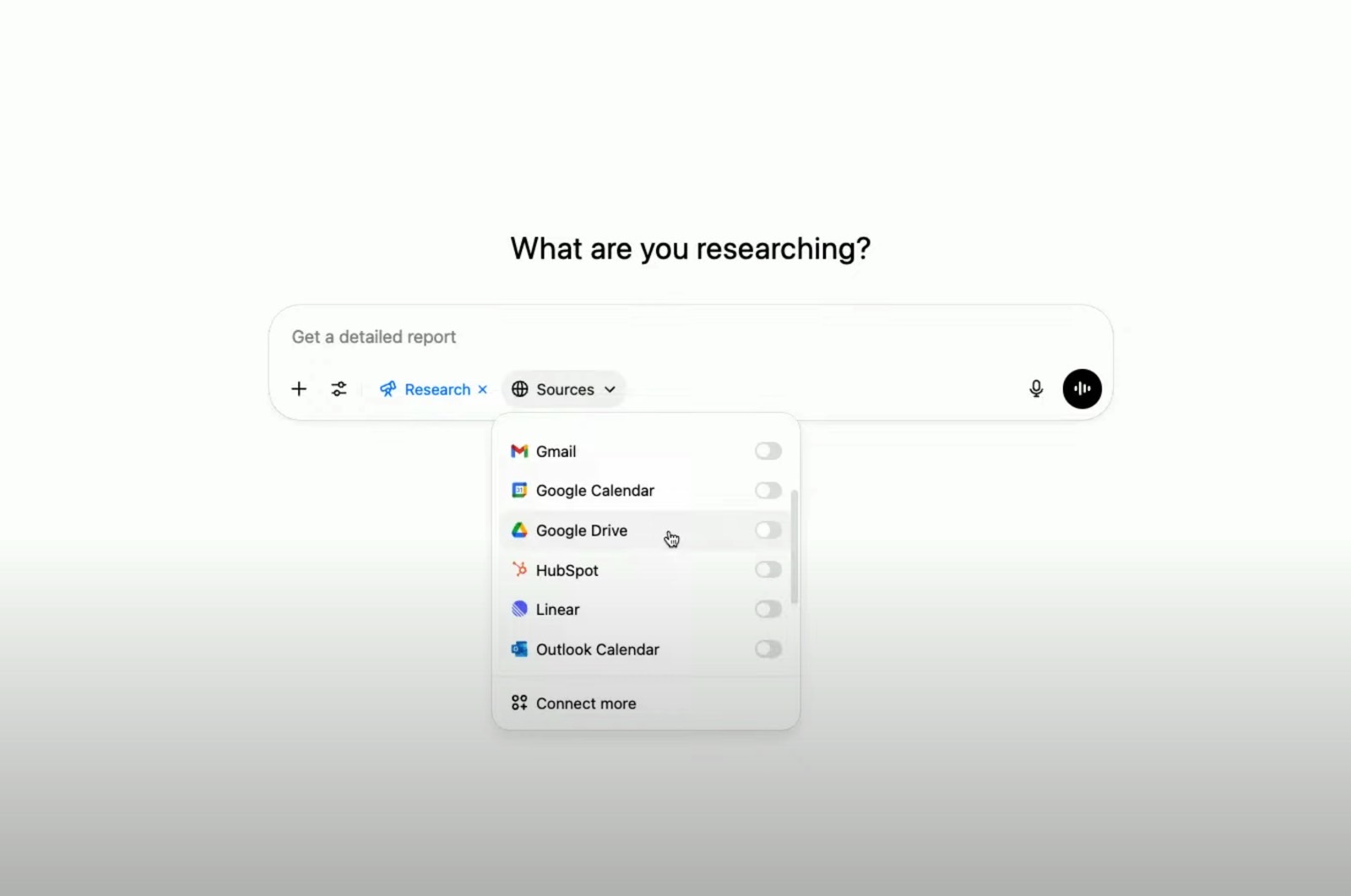
OpenAI introduced a new Connectors feature that lets businesses link ChatGPT to specific data sources. This includes Google apps like Gmail and Calendar, Microsoft apps like Outlook and Teams, and cloud storage services such as Box, Dropbox, and Google Drive.

Tech. Entertainment. Science. Your inbox.

Sign up for the most interesting tech & entertainment news out there.

By signing up, I agree to the Terms of Use and have reviewed the Privacy Notice.

More interestingly, organizations can add custom Connectors to ChatGPT using that MCP AI feature we mentioned a few days ago. MCP allows AIs like ChatGPT to connect to external sources for information.

As I said, this might sound dull if you’re not using ChatGPT at work, but it’s a key move by OpenAI to solve one of its bigger challenges. Unlike Google and Microsoft, OpenAI doesn’t have its own suite of beloved apps. ChatGPT can’t access first-party apps the way Gemini can. That’s a hurdle if you’re building a super-assistant AI. But if it can link to third-party data sources, that hurdle disappears.

Think of it this way: You could ask ChatGPT to check your Gmail for emails from family and summarize plans for your next get-together. Right now, ChatGPT can’t do that.

But if you’re on an enterprise plan, you’ll be able to let ChatGPT access your work Gmail and extract the info you need.

OpenAI hosted a livestream about 22 minutes long to demo the new Connectors feature. They created a fictional company with generated emails and cloud data to show how ChatGPT can easily connect to external sources.

The clip shows a Deep Research run where the AI pulls data from internal sources like HubSpot, Outlook, SharePoint, and Teams. The final report includes citations so you can check the documents ChatGPT referenced before summarizing.

Another demo involved asking ChatGPT a question about the company’s plans. The AI pulled info from internal documents stored in Google Drive and elsewhere, providing links to files the user could access. ChatGPT will only use data that the user is authorized to see.

The new record button is available in the Composer window. Image source: OpenAI

OpenAI also released a new Record Mode for the Mac ChatGPT app that lets the AI record meetings in real time. It will transcribe the meetings and provide summaries with timestamps, so you can jump back to specific parts of the transcription.

The demos targeted enterprise customers, but this is just the beginning. ChatGPT is likely to get more Connectors down the line, eventually opening them up to personal users as well.

OpenAI said on X that Connectors are “available in deep research for Plus & Pro users (excl. EEA, CH, UK) and Team, Enterprise & Edu users.” So, like usual, I can’t use them yet. Still, this means ChatGPT Plus and Pro users are also getting access.

ChatGPT can record audio via the Mac app. Image source: OpenAI

I’ll also note that the recent ChatGPT redesign makes a lot more sense now. OpenAI was clearly setting up the new Composer window to support Connectors.

It won’t be long before ChatGPT becomes a reliable assistant. With memory support and access to personal data sources, it’s getting close.

While we wait, OpenAI’s full demo video is below:

Source