Posted on

Matt Damon And Pedro Pascal’s Controversial Monster Movie Is Finding

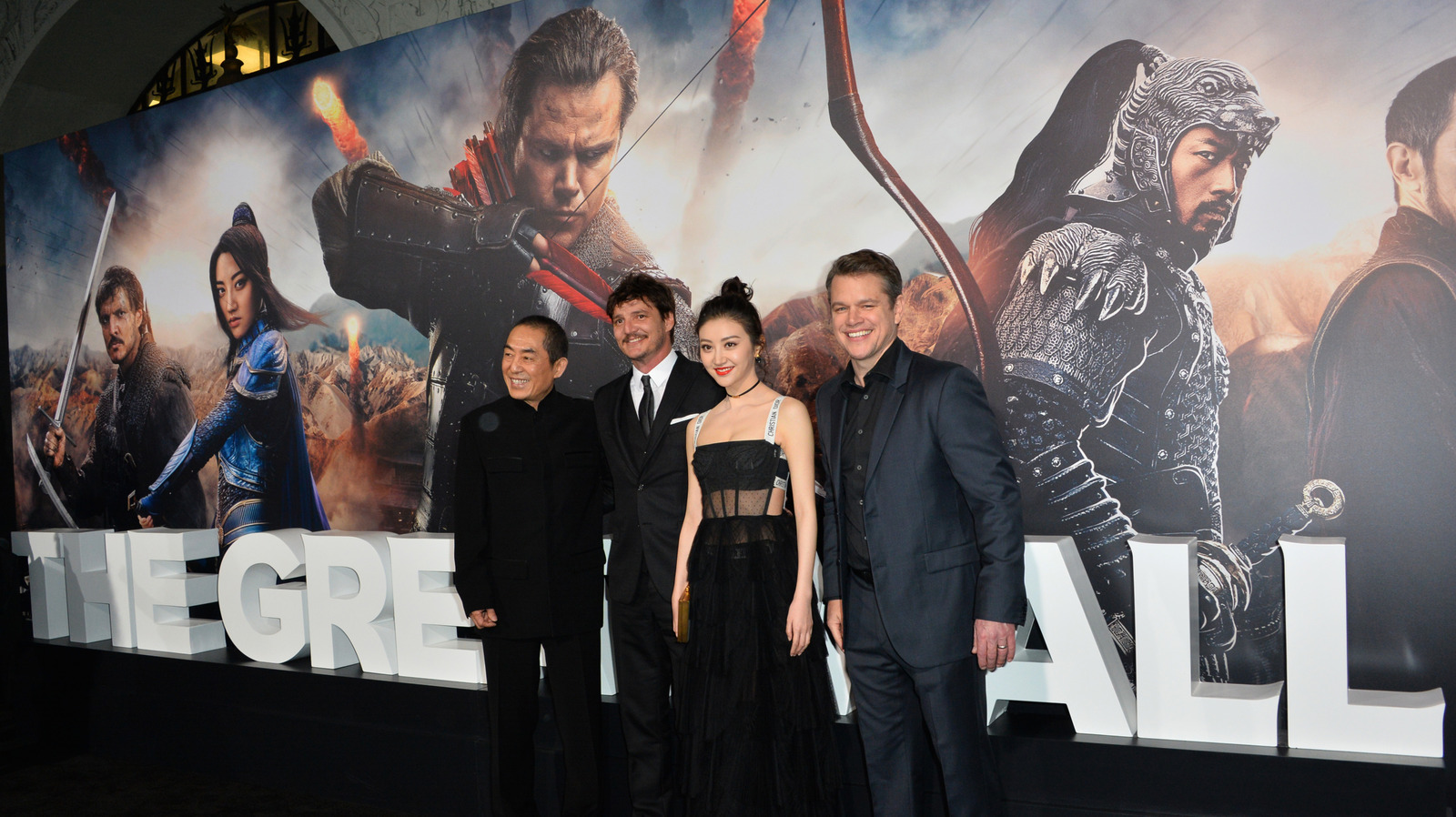
A movie poster for the film The Great Wall with cast Featureflash Photo Agency/Shutterstock

Back in 2016, a relatively unheralded monster movie starring Pedro Pascal and Matt Damon (who we’ve now spent more than $900 billion trying to save) launched amid a flurry of controversy. Called “The Great Wall”, the film is set on and around the Great Wall of China in a fictionalized 11th century where rampaging monsters threaten the world every sixty years. The controversy centered primarily on the casting of Damon in a role that many believed should’ve gone to a Chinese actor given the setting and historical context. The director responded, claiming that the role wasn’t conceived with a Chinese actor in mind and that, of the five major heroes in the film, four of them are Chinese.

That said, I’d hardly be surprised if you’ve never heard of “The Great Wall”. While it did reasonably well at the box office, taking in $334,486,852 worldwide against an estimated budget of $150 million, most of that was international. Domestically it earned a smidge over $45 million, and was heavily panned critically, racking up a 35% from critics on Rotten Tomatoes and a 42 on Metacritic.

However, the film has recently found new life. As of April 30, “The Great Wall” is sitting at number 7 on the top 10 Amazon Prime films in the United States, according to Flixpatrol.com. The film popped up on April 21st and has been sliding around the bottom few slots since. 

The intersection of historical fiction and alien fantasy

A view of a section of the Great Wall of China Naeemphotographer2/Shutterstock

On the surface, “The Great Wall” is something of an interesting hybrid. It mixes an alien monster story with a compelling historical setting, the reign of Emperor Renzong in China around the turn of the first millennium. Matt Damon and Pedro Pascal play a couple of European mercenaries (Irish and Spanish, respectively) who have come to China in pursuit of gunpowder. Their expedition gets more than they bargain for when they encounter a monster that murders all of their compatriots, and Pascal and Damon are subsequently taken captive by a mysterious secret society tasked with combating this monstrous threat.

It turns out the monsters are cosmic in origin, having arrived on Earth by way of meteorite. They’ve been assaulting the Great Wall like clockwork every 60 years, with only the Nameless Order standing between them and the rest of human civilization. One interesting wrinkle is that the monsters in the film are called the Tao Tie, based on a creature from real-world Chinese myth called the taotie.

What follows is a rambling tale of greed, betrayal, and sacrifice. I won’t spoil the ending, but it’s pretty well telegraphed in the opening scenes, and everything resolves more or less exactly as you’d expect for a formulaic Hollywood blockbuster.

Why is The Great Wall suddenly so popular?

A photo of actor Pedro Pascal Fred Duval/Shutterstock

While it’s impossible to say precisely what’s responsible for the sudden surge in interest in “The Great Wall”, there are a couple of factors that could be contributing. The most obvious is the popularity of its leads, who are both riding waves of success. Alongside the excellent sci-fi animated film now streaming on Peacock, “The Wild Robot”, Pascal was widely lauded for his role as Mr. Fantastic in Marvel’s “The Fantastic Four: First Steps”, a role he’ll reprise later this year in the highly anticipated “Avengers: Doomsday.”

Damon, meanwhile, is set to star in another fictionalized historical epic later this year, Christopher Nolan’s “The Odyssey”. Based on Homer’s legendary epic, like “The Great Wall,” it also features Damon as a European battling mythological monsters. Perhaps the “Odyssey” hype is driving viewers to scour the streamers for other epic monster-battling flicks.

While it’s unlikely to be a driver for the return of “The Great Wall” to the cultural zeitgeist, there is another fun coincidence of timing involving Pascal. He’s set to reunite with a writer of “The Great Wall”, Tony Gilroy, for “Behemoth!” alongside Olivia Wilde and Will Arnett. Details about the project are scant, but Gilroy, who’s set to write and direct, has revealed it’s about a cellist and will be scored by many different composers.

Source

Posted on

The Actual Tradeoff Behind Buying Cheap Streaming Devices Instead Of

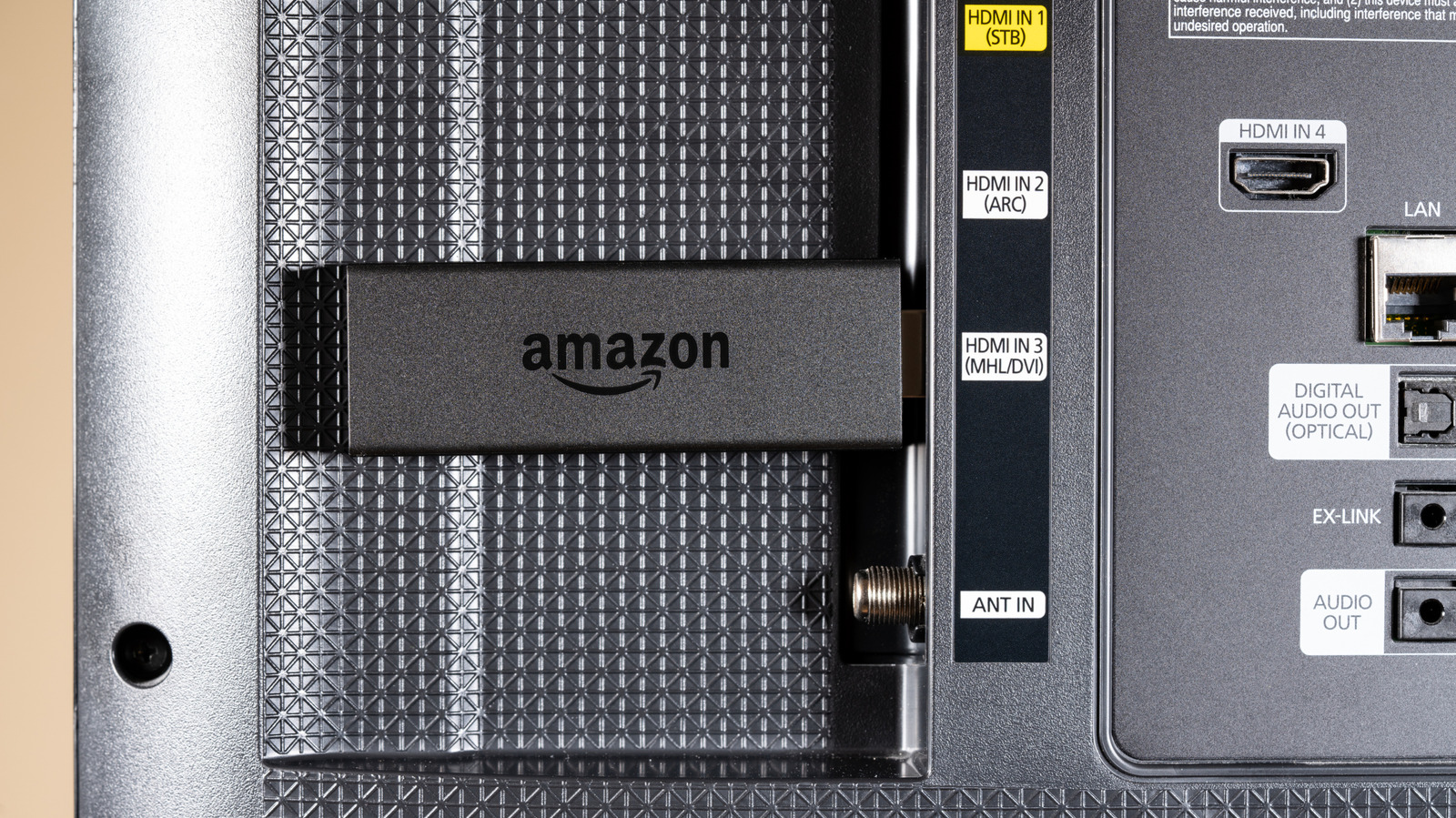
An Amazon Fire TV Stick connected to a Samsung TV. Backyardproduction/Getty Images

We may receive a commission on purchases made from links.

We wish the validity of “you get what you pay for” didn’t apply to consumer tech, but we’re pretty sure that’s the product category the saying was invented for. When we’re talking about what gets plugged into your living room smart TV or AV receiver, major streaming devices are an excellent example of hardware that sometimes costs very little or quite a lot.

Brands such as Amazon, Roku, Google, and Apple are behind some of the leading streaming boxes sold in stores and online. While these manufacturers usually stick with a core operating system across all devices, Device A, which only costs $15, is not going to perform the same as Device B, which costs $100, even if they’re both powered by Fire TV or tvOS. This is because there are a handful of features and settings that only premium streaming devices can grant you access to.

You might be wondering what some of these tradeoffs between an inexpensive and pricey streamer actually are. Based on our experience and research, we were able to break the answer to that question down into four sub-answers: performance and storage, life expectancy and long-term support, picture and audio capabilities, and fringe features.

Performance and storage

Much like the average computer, a streaming device has a processor, RAM, and built-in storage. What type of processor, and how much memory and storage the device has to work with are three core differentiators between budget-friendly streamers and more advanced hardware. Lower-cost gear — such as the Amazon Fire TV Stick lineup and Roku Streaming Stick 4K Plus — use more basic processors.

If you only use one or two apps for streaming movies and shows, a more basic CPU shouldn’t disappoint. It’s when you get into app multitasking and smart home controls that a slower chip can start to falter. Symptoms may include interface lag, additional buffering, and even the occasional app crash or device freeze-up. When you spend more on a premium streaming device — such as the Amazon Fire TV Cube or the Roku Ultra — you’re investing in a more powerful CPU, as well as additional RAM and storage.

Not only should this allow streaming content and other processes to run faster and more efficiently, but additional storage means more space for apps and downloaded media (such as movies and shows you bought or rented). You may also find that premium devices can maintain their performance for longer than an entry-level streamer, especially as developers start putting out software updates.

Life expectancy and long-term support

The Google Chromecast, a now defunct streaming device. HE Photography/Shutterstock

Most consumer tech isn’t built to last forever, and streaming devices are no exception. While cheaper streamers will save you a chunk of change upfront, you may find that as time goes by, a device that worked great on the first day begins losing its power. Slower app launches and an uptick in buffering are a couple of signs your device may be past its prime.

Another bad sign is when the developer stops releasing semi-regular updates. While it’s not abnormal for a device to go a few months without a software patch, a gap of a year or more could be a sign that the manufacturer doesn’t support a particular product any longer, or plans on ending support in the near future. Spending more on a premium device doesn’t guarantee longer device support, but there is usually a better shot.

For example, both versions of the Apple TV 4K have been on the market since 2022, and the Nvidia Shield TV Pro (which is considered to be one of the top streaming devices you can buy) has been around since 2019. The Apple TV 4K and Shield TV Pro are two of the priciest streamers you can find, but both Apple and Nvidia continue to provide updates for these golden gadgets.

Picture and audio capabilities

A 4K Ultra HD logo. Stanislav Gvozd/Getty Images

TVs are brighter, more colorful, and better at image upscaling than ever before. The 4K HDR craze is still ongoing, and what better way to indulge in your favorite movies and shows than with a streaming device that checks all the most important boxes for picture and sound? Unfortunately, not all streamers are created equal, and codec support from one device to the next can be pretty different.

Cheaper streaming devices often nail the basics, so support for formats like HDR10, Dolby Digital, and DTS shouldn’t be too difficult to find. It’s when you start looking for a streamer that supports all mainstream HDR codecs, as well as Dolby Atmos and DTS:X that the tradeoff of cheap versus premium begins to show. If your TV and home theater equipment can handle premium formats, hooking up a cheaper streaming device without them may prove disappointing.

It’s also worth mentioning that streaming devices with built-in USB ports can often decode advanced audio files, including WAV, FLAC, and other hi-res formats. If you love listening to music and can definitely tell the difference between a basic MP3 and higher-quality tracks, device compatibility could very well be a deal-breaker.

Fringe features and exclusives

The Nvidia Shield TV Pro on top of a flat surface. WESLEY FOULDS/Shutterstock

Moving past the streaming tech fundamentals, there are several fringe features and exclusives that you might be trading to save cash. For example, the $200 Nvidia Shield TV Pro is the only streaming device that can function as a Plex media server. The Plex client app is available on most streamers and smart TVs, but the ability to host and share your archive of movies and shows can only be done with the Shield TV Pro. Otherwise, you’ll need to use a computer or network-attached storage for content hosting.

We touched on USB ports already, but there are more inputs and outputs that may only be found on a premium streamer. The Roku Ultra and Fire TV Cube both contain USB ports for connecting external storage devices, but both also feature Ethernet ports. If you’re already dealing with slow Wi-Fi, and your TV isn’t too far from your router, using Ethernet is a great way to free up bandwidth for your Wi-Fi-only gear. It’s also a great way to improve buffering and playback on your streaming device.

The Amazon Fire TV Cube is one of the only streaming devices with an HDMI input, instead of just an output. This means you’ll be able to hook up a cable box or other AV component directly to the Fire TV Cube, and the Cube will pass the component’s video and audio to your TV. Higher-tier streamers also tend to be the better choice for cloud-based gaming services, such as Xbox Game Pass and GeForce Now.

Source

Posted on

Resident Evil Trailer: First Look At New Video Game Movie

Grab as many green herbs as you can and make sure that you’re fully loaded on ammo, because a brand new trailer for the new “Resident Evil” trailer from “Weapons” director Zach Cregger has arrived online. What might be the biggest scare for fans, though, is just how detached it feels from the 30-year franchise in just about all the right ways.

The new film is bravely pressing restart on a live-action adaptation after six film series that began in 2002, starring Milla Jovovich; and the failed reboot starring Robbie Amell and Kaya Scodelario, “Resident Evil: Welcome to Raccoon City,” in 2021. While the last attempt appeared to align with the beloved horror-survival game series, with iconic characters making an appearance, Cregger is keeping his distance from them this time around. Instead, he’s tasking former “Weapons” star, Austin Abrams, to play hero this time around.

Rather than stepping into the shoes of hard-edged heroes like Chris Redfield or Leon Kennedy, Abrams is playing Bryan, a medical courier whose job sees him making a late night delivery through the infamously doomed spot of Raccoon City. The trip there inevitably leads to Bryan asking dead-eyed locals if they’re okay before they start trying to bite him, as well as a variety of other nightmarish adversaries desperate to inspect his organs — and not the one he’s got packaged up in a box.

Zach Cregger’s Resident Evil isn’t playing games

We’re not the ones to complain about the abundance of decent video game adaptations we’ve been blessed with — and are set to see more of. “Mortal Kombat II” has received immense praise from early screenings, and Amazon’s impending take on “God of War” looks to be checking all the boxes. Cregger’s “Resident Evil,” however, looks to be taking a page out of the “Fallout” instruction manual; telling a story that inhabits the universe, rather than retelling a story that we already know. It’s certainly a gamble, but one that’s being played by a director who has shared his adoration for the world he’s been given the keys to, which should hopefully put die-hard fans at ease.

At a roundtable interview (via Polygon), Cregger assured that “I’ve played these games so much that they’ve just kind of seeped into me. They’re just so naturally cinematic. You have one person on this journey, and the entire world is trying to kill them.” Thankfully, this one person in this particular story won’t be alone. Abrams will be joined by “True Detective: Night Country” star Kalie Reis, “Severance’s” Zach Cherry, as well as “Fantastic Four: The First Steps” Paul Walter Hauser. Together they’ll all be braving Raccoon City — it’s just a question of whether they’ll make it out alive. We’ll have to find out when the movie shuffles into theaters on September 18, 2026.

Source

Posted on

Here’s Who Really Owns All Of The Major Tech Brands

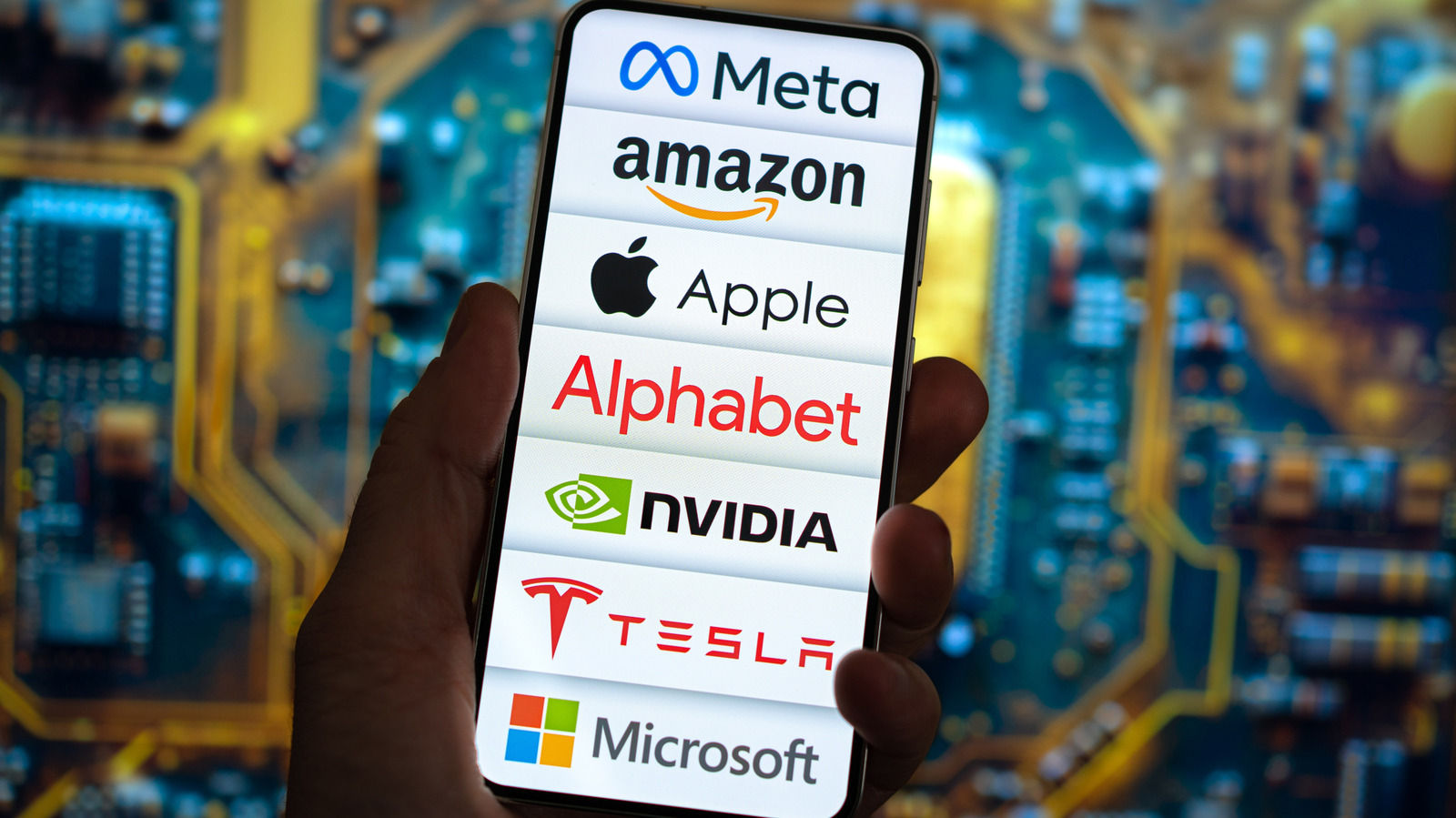
A smartphone displaying names of the biggest US technology companies gguy/Shutterstock

Technology has become an integral part of how we live. For work and play, we rely on our smartphones, computers, and other tech-powered devices. Today, many of the world’s biggest companies are built around technology. They shape everything for us, from communication to entertainment to how businesses operate. 

Major tech brands may appear to be fierce competitors — Apple versus Samsung, Google versus Meta, and so on — but behind the scenes, the reality is far more interconnected. Many of the biggest tech brands are not independent. Most of them, in fact, are controlled by the same handful of powerful companies and stakeholders. The truth behind who owns the biggest tech brands in the world isn’t just trivia. It reveals a lot about the brands and what they sell. From social media giants to gaming and cloud platforms, we’ll take a closer look at who really owns the brands whose products we use every day.

NVIDIA

Nvidia logo and company name displayed on a building Mijansk786/Shutterstock

Since its founding in 1993, NVIDIA has become one of the biggest tech companies, with a market capitalization of $4.48 trillion as of January 2026. It’s the first company to hit that exorbitant milestone, and today, it’s regarded as the backbone of the AI revolution. It essentially controls the discrete graphics processing unit (GPU) market, and it runs the world’s most advanced AI systems and data centers. NVIDIA chips power everything from ChatGPT to self-driving cars, making it one of the world’s most valuable tech companies. 

NVIDIA isn’t owned by a single person or company. It’s a publicly traded firm, with majority ownership split among institutional investors like The Vanguard Group and BlackRock, as well as individual stakeholders. Vanguard is owned by its member funds, which are held by their investors. This means shareholders are the actual owners. Nearly 75% of BlackRock is owned by large investment firms like Vanguard, State Street, and Capital Group. CEO Larry Link owns a small personal stake of 0.5%. The remaining 24.5% is with public shareholders.

The co-founder and CEO of NVIDIA, Jen-Hsun (Jensen) Huang, is its largest individual shareholder. Huang owns more than 922 million shares, which means about 4% of NVIDIA. This gives him a net worth of roughly $145 billion as of March 2026.

Google

Google Logo on glass building exterior ZikG/Shutterstock

Founded in 1998, Google is one of the most powerful tech brands in the world. Its core product holds around 90% of the global search engine market as of 2026. Google also offers services like Maps, Gmail, and Android, and the brand develops consumer electronics like Pixel smartphones, Fitbit wearables, and Nest smart home devices. More recently, Google has branched out into artificial intelligence with its Gemini AI models. 

In regard to its corporate structure, Google is owned by Alphabet, Inc., a holding company that co-founders Larry Page and Sergey Brin created in 2015 to restructure Google. Alphabet’s ownership follows a three-class share structure: Class A, Class B, and Class C. Class A shares are publicly traded and mainly owned by institutional investors. This mainly includes Vanguard Group, BlackRock, and FMR, which jointly own around 20% of Class A shares and around 16% of Class C shares. 

Class B shares are not available for public trading. They are private, non-traded stock primarily controlled by co-founders Larry Page (45%) and Sergey Brin (42%). Investor and venture capitalist L. John Doerr also owns about 2.6% of the outstanding shares.

YouTube

Close-up of a hand holding a smartphone displaying the YouTube logo FotoField/Shutterstock

YouTube operates as a wholly owned subsidiary of Google’s parent company, Alphabet, Inc. In November 2006, Google bought YouTube for $1.65 billion. The deal raised eyebrows at the time, but today, it’s known as one of the most successful acquisitions ever. YouTube has since evolved into the world’s dominant video platform and a key advertising engine. It reaches about 2.7 billion users each month, which makes it one of the most influential media platforms of all time. It also happens to be one of Alphabet’s biggest revenue drivers.

In 2025, YouTube generated $60 billion, far surpassing its biggest streaming rival, Netflix (which made $45 billion). YouTube generates money mainly from advertising and YouTube Premium subscriptions, and it’s a strong pillar of the creator economy. While it started as a simple video-sharing site, YouTube has established itself as a global media giant that competes with TV networks, streaming services, and social media — to ultimately grow the net worth of Alphabet’s stakeholders.

Instagram

The Instagram logo on a smartphone screen against a computer keyboard miss.cabul/Shutterstock

Instagram is owned by Meta Platforms (formerly known as Facebook), a publicly traded company listed on the Nasdaq exchange. Meta acquired Instagram in 2012 for approximately $1 billion — a deal that’s regarded as one of the best tech acquisitions in history. Under Meta, Instagram has grown from a basic photo-sharing app into a global creator and advertising powerhouse. With over 2 billion monthly active users, it’s the third most popular social network after Facebook and WhatsApp. 

Instagram is all about short-form video (Reels), Stories, and the influencer-driven content popular among younger generations. This plays a central role in Meta’s growth strategy. In fact, Instagram is one of Meta’s biggest advertising engines. With its interactive visual format and deep integration with shopping features, Instagram has become a key platform for brands, influencers, and businesses looking to reach global audiences.

Mark Zuckerberg, the founder and original developer of Facebook, owns about 15.7% of Meta. Large institutional investors like Vanguard, BlackRock, and State Street hold more than 75% ownership.

Facebook

A hand holding a smartphone displaying the Facebook app gguy/Shutterstock

Here’s a big tech brand that needs no introduction. We’ve all been using Facebook for years, and we know that it’s the flagship product of Meta Platforms, Inc. In 2004, Mark Zuckerberg launched Facebook so Harvard students could share profiles, photos, and class schedules. And at present, with over 3 billion active users, Facebook is the largest social network globally. Even though it may no longer be the trendiest app, many still rely on it to connect with friends and family — and Facebook still drives the majority of Meta’s advertising revenue despite growing competition from other social platforms. The founder, Mark Zuckerberg, owns about 15.7% of Meta. Meanwhile, asset managers like Vanguard, BlackRock, and State Street hold over 75% of the company.

Beyond social networking, Facebook has expanded to feature groups, marketplaces, events, and video content. This means that it’s more of a multipurpose platform than a traditional social media app. In 2024, Facebook earned $164.5 billion in revenue, with approximately $91 billion coming from the Facebook app. A large chunk of that revenue comes from advertising, giving Facebook a market share that rivals Google’s and Amazon’s. 

Amazon

Amazon logo on a dark background ACHPF/Shutterstock

In 1994, Jeff Bezos founded Amazon as an online bookstore. Today, Amazon dominates global e-commerce and cloud computing. Over time, the company has expanded into cloud computing and entertainment, and Amazon Web Services (AWS) is now the most comprehensive and broadly adopted cloud platform across the globe. With multiple successful business segments, Amazon is among the most recognizable tech brands in the world. In 2025, it generated $717 billion in revenue, making it the largest company in the world by revenue. And around 18% of that revenue was driven by AWS.

Prime Video, meanwhile, is a strong contender in the streaming space; there are over 250 million Prime members in 27 countries. Amazon also owns Zoox, an autonomous technology company that makes self-driving vehicles. It seems the company has no plans to slow its growth.

Bezos took Amazon public in 1997, but he still remains the largest individual shareholder with approximately 8.8% of shares valued at more than $200 billion. Like most big tech companies, Amazon is heavily owned by major institutional investors as well. BlackRock, Vanguard Group, and State Street own an estimated 18% to 20% of Amazon. These firms aren’t the sole controlling owners. Rather, they invest on behalf of millions of clients worldwide.

Tesla

A Tesla showroom with signage featuring the company logo above a robot, electric car, and other devices on display VTT Studio/Shutterstock

Known as a top-tier manufacturer of electric cars, Tesla makes a number of vehicles that feature Full Self-Driving (FSD) and autopilot assistance technologies. These vehicles can steer, accelerate, and brake automatically, requiring fewer user inputs on the road. Bestselling high-performance electric vehicles like Tesla’s Model 3 and Model Y make it the most satisfying EV brand to drive. Tesla also manufactures industrial batteries and solar products to store clean energy.

Tesla is a publicly traded company listed on the Nasdaq Global Select Market. Co-founder and CEO Elon Musk is Tesla’s largest shareholder and also its most influential figure. Musk’s decisions and public persona have a direct impact on Tesla’s stock and strategy. And with more than 500 million shares, he owns around 15% of the company. This makes Musk the richest man on Earth with a net worth of $785.5 billion at the time of this writing. Vanguard, BlackRock, and State Street are all among the largest asset managers with stakes in Tesla, Inc.

TikTok

The TikTok logo on the screen of a smartphone resting on a computer keyboard miss.cabul/Shutterstock

TikTok, founded by ByteDance, is a popular social media platform where users can create, share, and discover short-form videos. It was initially released in September 2016 in China as Douyin, but in 2017, it was launched in international markets as TikTok. The platform gained popularity in 2018 and 2019 after it collaborated with Musical.ly, and then it achieved global dominance during the COVID-19 pandemic in 2020. To say that TikTok disrupted YouTube and Instagram with its algorithm would be an understatement. Today, TikTok is one of the most popular and fastest-growing social platforms, with around 1.99 billion monthly active users worldwide.

ByteDance is still a privately held company based in China, but it doesn’t currently own TikTok in the U.S. As of 2026, the American version of TikTok is owned by the newly formed TikTok USDS Joint Venture LLC, which is mostly backed by U.S. investors. More than 80% of the company is owned by American and global entities. This includes Oracle Corporation, a trusted security partner for storing all U.S. user data in the cloud; Silver Lake, a technology-focused private equity firm; and MGX, an Abu Dhabi state-owned investment group. The Chinese parent company ByteDance still has a 19.9% stake in it.

Twitch

Twitch logo displayed on a smartphone screen Bangla press/Shutterstock

In 2011, Twitch started as a spin-off of a 24/7 reality television show by Justin.tv, Inc. In August 2014, Amazon acquired it for nearly $970 million. At that point, Twitch was a niche platform focusing only on video games. But under Amazon’s leadership, it has grown to become a leading live-streaming platform that features gaming, music, electronic sports, talk shows, and even real-time lifestyle streaming. As of early 2025, Twitch had over 240 million active users. The tech brand earned $1.8 billion in revenue in 2024 and hosted more than 7.1 million active streaming channels in 2025.

Twitch is also an important part of its parent company’s broader media strategy. It offers several benefits as hidden perks for Amazon Prime members, who can claim a free monthly subscription to a channel on Twitch. Members are also entitled to free in-game content like virtual currency and characters for popular games like FIFA. These cross-platform benefits help Twitch retain users and creators within its ecosystem despite growing competition from YouTube and Kick. Amazon is a publicly traded company listed on the Nasdaq. It is also owned by a mix of individual insiders and institutional investors.

TSMC

The logo for Taiwan Semiconductor Manufacturing Company (TSMC) on the side of a building Fiers/Shutterstock

Most people might not be familiar with Taiwan Semiconductor Manufacturing Company (TSMC), but it is one of the biggest semiconductor companies in 2026. TSMC is the world’s largest and most important pure-play foundry, and it single-handedly makes Taiwan the country that produces the most computer chips for companies like Apple, NVIDIA, and AMD. TSMC is a key player in the global AI and technology supply chain, as it holds around 60% to 70% of the global market share. In 2025, TSMC grew almost four times faster than its rivals. And with a market cap of about $2 trillion, TSMC is the second-largest semiconductor company and the sixth most valuable company by market cap. 

Like many global corporations, TSMC is publicly traded, and its ownership is spread across investors. The Taiwanese government is the largest individual shareholder; it owns roughly 6.38% of the company. Foreign institutional investors hold around 70% to 75% of the shares, primarily consisting of global asset managers, sovereign wealth funds, banks, mutual funds, and index funds from the U.S. and Europe. Other shareholders include domestic Taiwanese institutional investors and retail investors.

Apple

The Apple flagship store Hapabapa/Getty Images

Founded in 1976, Apple is the second-largest company by market valuation today. It stands right after NVIDIA, and beats other tech giants like Google and Microsoft. The Cupertino, California-based brand originally started with the Apple I, a hand-assembled computer — but it’s now known for products like the iPhone, iPad, Mac, and Apple Watch. Apple’s services businesses, meanwhile, include iCloud, Apple Arcade, Apple Music, and Apple TV+. 

In 2018, Apple became the world’s first company to reach a market value of $3 trillion. As of 2026, Apple has a net worth of around $4 trillion. The iPhone is Apple’s most popular product and its primary revenue driver. In 2025, Apple made $416 billion in revenue, and half of it came directly from iPhones.

Initially, Steve Jobs held about 11% of Apple, but he later sold most of his shares after leaving the company. Today, CEO Tim Cook owns less than 1% of Apple. Most shares are held by major institutional investors like Vanguard Group, State Street Corporation, Berkshire Hathaway, and BlackRock. Berkshire Hathaway is a publicly traded company formerly led by the American philanthropist Warren Buffett. He holds a significant voting control through the share structure.

IBM

A close-up of the IBM logo on wood window shutters Photology1971/Shutterstock

IBM came into existence in 1911, which makes it one of the oldest names in the tech industry. The company has continuously reinvented itself to stay relevant all these years. Initially, it started with business-based systems like punch-card tabulating machines. During the 1960s and ’70s, IBM was the unrivaled leader in computing, producing roughly 70% of the world’s computers. 

IBM is best known for its powerful mainframes, which you can still find in banks, governments, and large enterprises. But IBM has shifted its focus to enterprise software and consulting business. In recent years, it has also entered other markets like hybrid cloud computing, robotics, research, and artificial intelligence. 

When it comes to revenue, IBM doesn’t compete with the rest of Big Tech. The company brought in around $67 billion in 2025. Current chairman and CEO, Arvind Krishna, owns 371,894 shares — but this gives him only a tiny 0.04% stake in IBM. The majority of IBM shares (around 64%) are owned by big asset managers like Vanguard, BlackRock, and State Street.

WhatsApp

A hand holding an iPhone displaying the WhatsApp logo DenPhotos/Shutterstock

WhatsApp is owned by Meta Platforms as a privately held subsidiary and does not trade independently on the Nasdaq as its parent company does. Meta acquired the messaging platform in 2014 for about $19 billion in cash and stock. This surpassed Google’s $3.2 billion purchase of Nest Labs, and also Apple’s $3 billion deal with Beats Electronics, to become one of the biggest tech buys ever. Today, WhatsApp is one of Meta’s most valuable assets. 

Initially, WhatsApp was designed as a simple, ad-free messaging service. Unlike Facebook and Instagram, WhatsApp is focused on private, end-to-end encrypted communication. WhatsApp is a cross-platform messaging service that allows you to send messages, make calls, and share media between Android, iOS, Windows, and Mac devices. As of now, WhatsApp has nearly 3 billion active monthly users across the globe. On average, 100 billion messages and 7 billion voice notes are shared on WhatsApp every day. It has become the default messaging app in many parts of the world, and Meta has gradually begun to monetize it via business tools, customer communication features, and payment integrations.

Intel

Intel headquarters in Santa Clara, California Jhvephoto/Getty Images

Founded in 1968, Intel was an early pioneer of the semiconductor industry. We now know Intel for making central processing units (CPUs) for personal computers, enterprise systems, and servers. It also makes motherboard chipsets, flash memory, solid state drives (SSDs), and network interface controllers. 

For decades, Intel dominated the semiconductor industry, especially when it came to PCs. In recent years, though, it has faced intense competition from TSMC, AMD, and NVIDIA. To remain competitive in today’s market, Intel has followed a transformational strategy called IDM 2.0, which shifts it from a chipmaker to a systems foundry that can also produce chips for other companies like NVIDIA and AMD. Today, Intel is also actively making neural processing units (NPUs) for AI tasks. 

Intel is a publicly traded company that’s predominantly owned by large investment companies (47%) and individual shareholders (around 50%). The Vanguard Group holds the largest stake with 8.8%, and BlackRock holds roughly 6%. In August 2025, the U.S. government completed a deal to acquire a roughly 10% stake in Intel.

Xbox

Display of Xbox gaming accessories in a store Erman Gunes/Shutterstock

Microsoft owns Xbox, a premium video game brand that features hardware consoles (Series X, S, One), Game Pass subscriptions, and cloud gaming. Consumers can play, buy, and stream games across consoles, PCs, and even their mobile phones. While Xbox is not separately listed on the Nasdaq, its parent company, Microsoft, is a publicly traded company. Xbox was Microsoft’s first step into the world of console gaming, and the brand has now expanded beyond traditional consoles. In October 2023, Microsoft finalized a $69 billion deal with Activision Blizzard, and this has played a big role in Xbox’s success. Blockbuster titles like “Call of Duty” and “Candy Crush” brought a surge of 49% in Xbox revenue.

In 2025, Microsoft generated a record revenue of $281.7 billion. Co-founder Bill Gates is still a shareholder in Microsoft, but his stake has dropped to around 1.5%. Currently, institutional investors own approximately 72% of outstanding shares: Vanguard has 9.1%, BlackRock has 7.5%, and State Street has 4.2%. CEO Satya Nadella and Vice President Bradford L. Smith together hold less than 1% of the company.

WeChat

Close-up of the WeChat logo displayed on a smartphone screen Samuel Boivin/Shutterstock

WeChat is owned and developed by Tencent Holdings Company, a Chinese technology conglomerate. It was initially started as a simple messaging app for China — basically the Chinese equivalent of WhatsApp. But through strategic development, Tencent has transformed WeChat from a simple messenger app into a super app for China. 

WeChat now works as an all-in-one platform for messaging, social networking, payments, and services. Essentially, it offers everything users need in their everyday life: They can shop, book flights, rent bikes, and play games via mini-programs that work like built-in apps and don’t require additional downloads. WeChat has over 1.4 billion monthly users and, between January and July 2025, the company made $81.19 million from in-app purchases.

The Dutch investment group Prosus N.V. is Tencent’s largest shareholder with approximately 23% of the company. Prosus is owned by Naspers, which originally invested $32 million in Tencent in 2001. Tencent’s co-founder and CEO, Ma Huateng, holds roughly 8% to 9% of shares. And 56% is owned by various institutional and retail investors like Vanguard and HSBC Custody.

Samsung

Samsung Electronics store facade Tobias Arhelger/Shutterstock

Samsung is a global leader in consumer electronics and semiconductor manufacturing. It is best known for making smartphones, TVs, and display technology, which its customers use worldwide. According to reported customer satisfaction, Samsung is one of the best smart TV brands. The South Korean giant also supplies key components to rival tech brands like Apple and Xiaomi. In Q4 of 2025, Samsung hit a record-high revenue of KRW 93.8 trillion (which is equal to approximately $63.38 billion).

When it comes to its ownership, Samsung is very different from most Western tech companies. Samsung is part of a South Korean chaebol, a type of family-controlled conglomerate. Samsung is owned by the Lee family, originally led by Lee Byung-chul and later Lee Kun-hee.

Although Samsung Electronics is publicly traded, the founding Lee family still maintains control through complex cross-shareholdings. Basically, Samsung works like both a tech giant and a family-run empire. Institutional investors such as the National Pension Service of Korea (one of the largest public pension funds) and BlackRock also have key stakes in Samsung.

Source

Posted on

Star Trek’s Original Crew Was Changed By A Sexist Demand

A front view of the U.S.S. Enterprise on a dark backdrop. Brendanhunter/Getty Images

“Star Trek” fans know that the original series had two pilots: “The Cage” (listed as Season 1 Episode 0) and later, “Where No Man Has Gone Before” (later listed as Season 1 Episode 3). “The Cage” featured a somewhat different cast from those we know and love so well. In this version, Christopher Pike captained the ship and a rather different, more emotional version of Mr. Spock was aboard.

Most importantly, Pike’s executive officer, referred to as Number One, was a strong, pants-wearing, weapon-carrying woman played by Majel Barrett, who later in the series became the lovelorn Nurse Chapel. There were many changes made between the first and second pilots, but the most impactful was the replacement of Jeffrey Hunter as Captain Christopher Pike with William Shatner as Captain James T. Kirk. Almost equally important was the elimination of the female executive officer, under the orders of NBC brass, who simply couldn’t stomach the idea of a strong, unemotional female leader.

Not your average wagon train to the stars

Gene Roddenberry with members of the original Star Trek cast Michael Ochs Archives/Getty Images

When Gene Roddenberry pitched his concept for “Star Trek,” he famously suggested that it would resemble a “wagon train to the stars.” That is, it would use the popular tropes of old Western films to engage audiences — but add a science fiction twist. While Westerns like “The Big Valley” occasionally included tough, gun-toting women, they were still a rarity in the 1960s. They were even rarer in typical TV fare, in which women were cast as housewives, secretaries, mother-in-laws, and the like. In fact, just a few years before “Star Trek” launched, Mary Tyler Moore had to argue the case for wearing pants on set.

Roddenberry, however, wanted to push the envelope. He cast his wife, Majel Barrett, in a “man’s” role, dressed her modestly in the same uniform as her male crewmates, handed her a phaser, and asked her to unemotionally take charge of the away team as it headed to an unknown planet. Perhaps even more daring, he asked Barrett to actually take a physically challenging role in subduing an admittedly wimpy alien. Some of Roddenberry’s more radical ideas survived well into the 2000s, but in 1965, they were simply unacceptable.

Based on its understanding of the American audience, NBC took issue with Number One. According to Majel Barrett in “An Oral History of Star Trek,” “NBC felt that my position as Number One would have to be cut because no one would believe that a woman could hold the position of second-in-command.” 

Sexism and the creation of Spock and Nurse Chapel

Black and white photo of (from left to right) Checkov, Uhura, Scotty, and Sulu sitting in chairs. Bettmann/Getty Images

Once the decision was made to jettison the character, Roddenberry was left with a conundrum. He had dumped his strong, emotionless character, but still very much wanted one. His solution: Spock, rather than Number One, became logical, tough, and unemotional. This change led to the now-familiar and much-beloved character of Spock, who constantly battles his emotions and, frequently, loses. Succumbing to the network’s expectations, he developed the role of Nurse Chapel.

Nurse Chapel was pretty and blond, subservient to the male chief medical officer of the Enterprise, Dr. Leonard McCoy. She, in direct contrast to Number One, was a kind, empathetic underling whose most significant character trait was a romantic and (apparently) unrequited passion for Mr. Spock. In a final blow to women’s place aboard the Enterprise, costumes were radically changed after the second pilot, “Where No Man Has Gone Before.”

While even the sexy Yeoman Smith in this episode wore slacks, this wasn’t to last. Grace Lee Whitney, who played the desirable Yeoman Rand, recommended to Roddenberry that micro-mini skirts over nearly-invisible shorts, paired with black hose and boots, would increase the show’s popularity. These outfits, dubbed “skants,” became a permanent staple of the show. In the long run, both Roddenberry and Majel may have gotten the last word. After their deaths, both had the honor of having their ashes shot into space. And, of course, later “Star Trek” iterations featured female captains such as Kate Mulgrew’s Captain Janeway in “Star Trek: Voyager.”

Source

Posted on

Blue Or Black: Which Solar Panel Is Better?

The sun hovers above a row of solar panels Vm/Getty Images

If you’ve seen a house with solar panels, you’ve likely noticed most are either blue or black. Anyone thinking about installing solar panels on their home may be wondering what the difference is. Which is more efficient, cheaper, and better? The answer, today, is almost always black solar panels. In fact, Consumer Reports’ three top picks for solar panels are all black. There are several reasons why, including how they’re made. Black solar panels are typically monocrystalline, meaning each solar cell is a single crystal. The crystals are created using the Czochralski process, which pulls a single seed crystal out of molten silicon to form one continuous lattice. 

Silicon is naturally dark in color and its crystalline structure absorbs nearly all light, with little reflection, contributing to the black appearance. Blue solar panels, on the other hand are polycrystalline. They’re formed by melting silicon crystals together that solidifies as it cools and results in the glimmering blue color.  Blue panels have a lower efficiency of 15% to 17% versus up to 24% for blue solar panels. However, they’re cheaper to manufacture because the process wastes less silicon during production.

Why black solar panels are worth the extra cost

A hand touches a black monocrystalline solar panel Kampan/Shutterstock

Most solar installations you see today will use monocrystalline black panels. Blue panels have historically been cheaper, but the gap is closing. Monocrystalline panels now cost around $0.90 to $1.20 per watt, while polycrystalline blue panels are in the $0.70 to $0.95 range. For a typical 8-kW home installation, going with blue panels can be thousands of dollars cheaper. However, because black panels produce more power from the same footprint, they will save money in the long run. 

Of course, it takes years for solar panels to pay for themselves either way. Black panels offer more than value. The higher efficiency makes them popular on smaller roofs and mobile setups, which have limited space. Black solar panels also last up to 10 years longer than blue panels, and hold their efficiency better in high heat, making them a better choice in hot climates. Don’t forget the color itself. Homeowners, designers, and HOAs tend to like that black panels blend in better with dark roofs. 

But blue solar panels haven’t entirely disappeared. They’re cheaper to sell because they’re cheaper to make. Legacy factories have been built, the supply chain is established, and workers have been trained. Polycrystalline panels still have value for projects with tight budgets, but overall, black solar panels are better in almost every way.

Source

Posted on

This Popular Google App Just Turned 20 Years Old

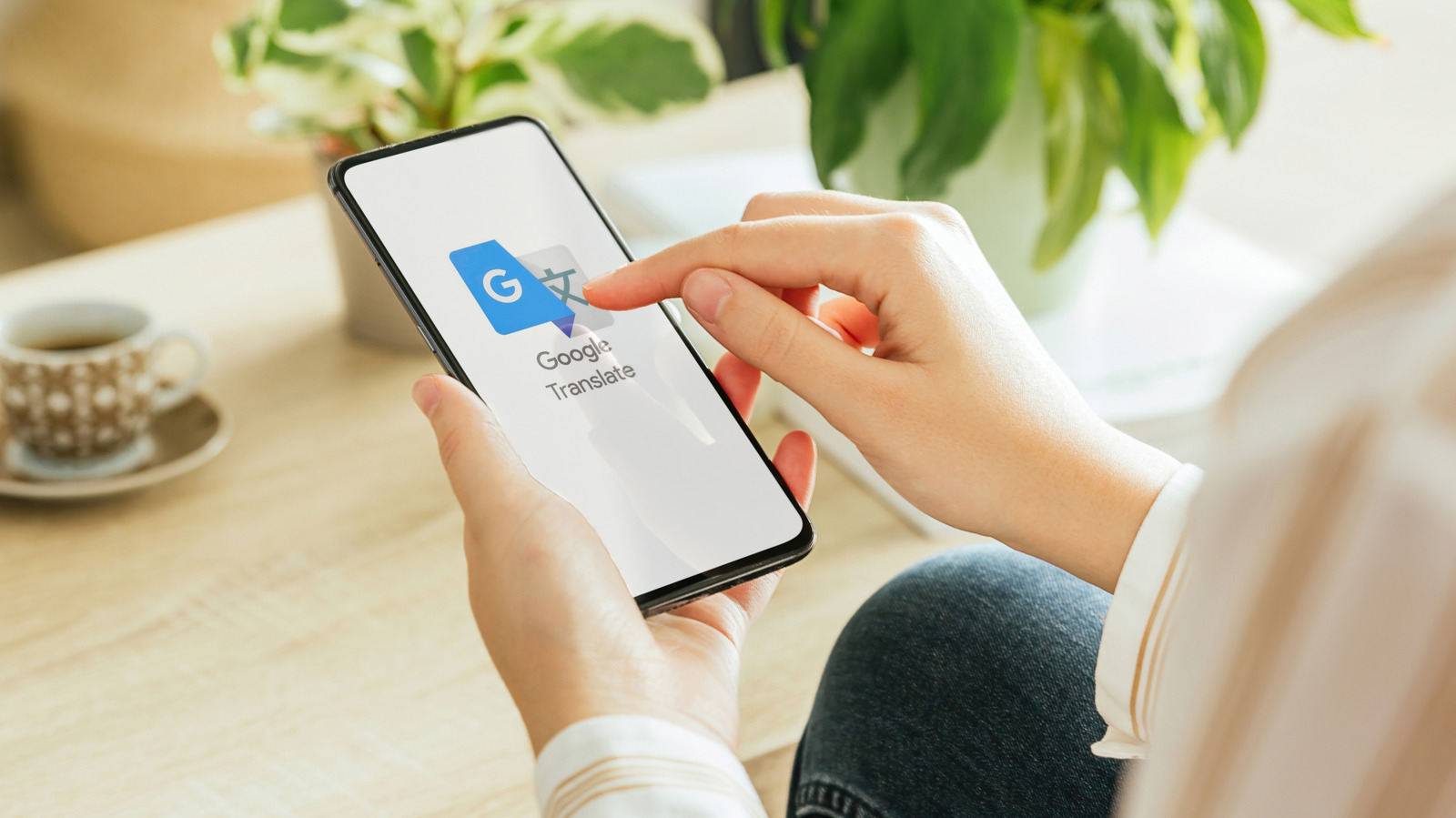
A person using Google Translate on their phone Azulblue/Shutterstock

As of April 28th, 2026, Google Translate is now 20 years old, a good excuse to celebrate what’s become the modern technological equivalent of the Rosetta Stone. For international travel to countries where you’re not fluent in the language, Google Translate is a game changer. Prior to its launch in 2006, language barriers could severely limit your interactions and cultural exposure while traveling abroad. Now, each one of us carries the equivalent of Star Trek’s universal translator in our pocket.

What began as a rudimentary web service has now grown to be an AI-powered translation powerhouse. Google Translate now serves over 1 billion users around the globe, and it translates over 1 trillion words every month. Let’s take a look at the explosive growth of Google Translate over the years, dive into some of the most interesting things you can do with this service, and consider some tips for maximizing its usefulness.

The slow march to fluency

Back when it debuted in 2006, Google Translate didn’t have access to the sophisticated neural networks that power it today. Instead, it relied on a process called Statistical Machine Translation (SMT). It was a brute force process that analyzed millions of documents from the United Nations and the European Union to uncover patterns in language. If it found a phrase that appeared in multiple languages it took note of the correlation, a methodology that often led to clunky, over-literal translations that had little in common with natural speech.

A massive architectural shift occurred a decade later with the introduction of Google Neural Machine Translation (GNMT). This marked the move away from translating a sentence word by word to analyzing an entire sentence for syntax and context. It allowed this service to incorporate more nuance into its translations, leading to more natural interpretations.

Another important milestone was Google’s acquisition of Word Lens in 2014. Word Lens allows translation to perform real-time, visual translations through the camera. It’s the technology that lets you center an image of a label in another language in your camera and instantly see its content translated into your language of choice.

Through all of these improvements, the Google Translate library has grown exponentially. What began with two languages, Arabic and English, now spans almost 250 languages and more than 60,000 potential language pairs, including many regional dialects and indigenous languages.

Some of Google Translate’s best tricks

One of Google Translate’s best features is also one of its newest: pronunciation. On Android devices, you can now deploy the power of AI to help you practice pronouncing words in different languages and get instant feedback on how you’re doing. Interpreter Mode is another useful feature for Google Translate, and it’s finally available on iPhone. This function lets you interpret a conversation in real time; It’s the Babel Fish (from Hitchhiker’s Guide to the Galaxy; especially similar now that it works with any wireless earphones) that sci-fi fans have dreamed of for decades. 

Getting reliable internet/Wi-Fi when you’re traveling overseas can be tricky, so offline translation can be a lifesaver. It allows you to download language packs ahead of time to stave off the foreigner panic. For text sources on websites, you can even translate at the push of a button, which makes Google Translate for Android way more useful. For this, all you need to do is highlight the text you wish to translate, which pops up the Google Translate bubble, saving you the time of copying and pasting and constantly swapping from one app to another.

Source

Posted on

Ford’s New 2,200 HP Mustang Broke An EV World Record

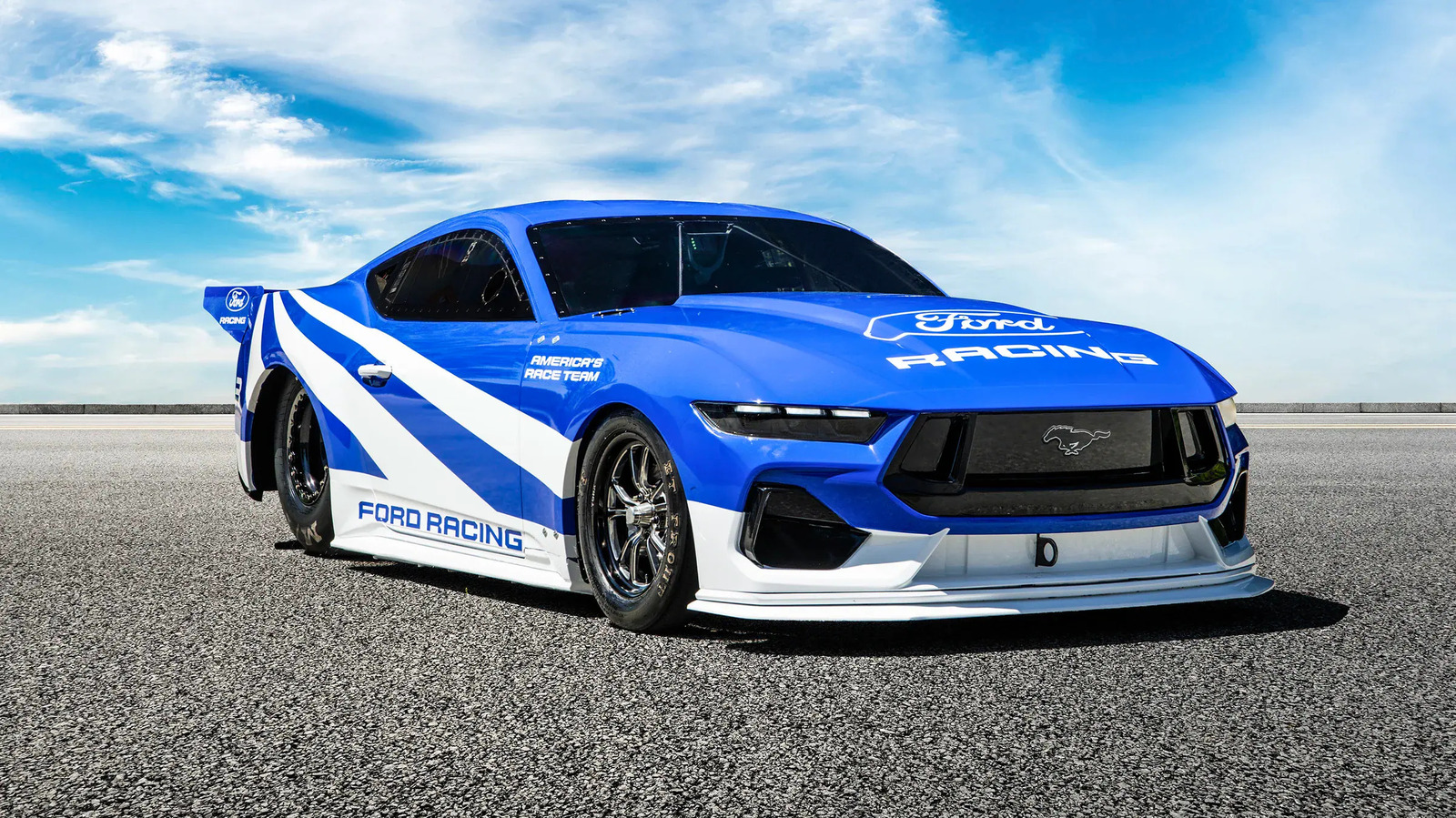
Car companies love to brag about how quick or powerful their models are to show consumers what they’re capable of building. For Ford, that moment came when the automaker took its new Mustang Cobra Jet 2200, an electric car built from the ground up for drag racing, to the racetrack at the NHRA 4-Wide Nationals in Charlotte. The Cobra Jet 2200 hit the racetrack with a handful of changes under the hood that make it better than the previous model, the Cobra Jet 1800, as the company pushes the boundaries of EV performance.

Powered by a 2,200-horsepower powertrain with 1,340 foot-pounds of torque, the new model finished a quarter-mile distance in just 6.76 seconds, becoming the first EV to achieve that figure. By doing so, the Cobra Jet 2200 broke the EV world record set by its predecessor by a massive 0.86 seconds. In the process, it achieved a top speed of 222 miles per hour, faster than any of the quickest mass-produced EVs with impressive top speeds. The previous fastest EV quarter-mile time of 7.623 seconds was set in September 2024 by the Cobra Jet 1800. Ford’s secret to shattering its own record after roughly a year and a half lies in the various optimizations the company made to the Jet 2200.

The Mustang Cobra Jet 2200 was engineered for speed

The 2,200-horsepower figure on the Cobra Jet 2200 does help, and it makes this EV more powerful than the Tesla Model S, although they’re built for different purposes. However, horsepower alone doesn’t tell the whole story about Ford’s monumental achievement. The company had to go back to the drawing board to find ways to achieve maximum performance from an EV. One piece of the puzzle was quite obvious: reducing the weight of the vehicle. Ford began by reducing the number of motors from four in the previous generation to two, then further shed weight by using a custom tube-frame chassis, carbon-fiber body, and wrapping the car in a NASCAR-style vinyl that weighs 20 pounds less than standard vinyl. 

In total, the team managed to make the new Jet 2200 1,000 pounds lighter than the Jet 1800, which itself was 1,000 pounds lighter than its own predecessor, the Cobra Jet 1400. The second piece of the puzzle is a new Reverse-Acting Centrifugal Clutch (RACC), which the company developed. That clutch is mated to a 5-speed clutchless transmission, which helps the Jet 2200 “launch in direct drive and then slip during shifts to help prevent tire slip and keep the car controlled as the run develops.” 

According to Ford, this setup helps “maximize efficiency and power to the ground throughout the run,” and its EV world record speaks volumes about how powerful it is. The company also says that the car shifts through up to five gears, which helps it harness the maximum amount of torque that the car is capable of throughout the run. While it fell short of eclipsing the highest top speeds of the fastest electric vehicles in the world, its performance in the quarter-mile is second to none.

Source

Posted on

Spotify Just Introduced Fitness Videos – And They’re Free For

The Spotify logo on a smartphone with the Spotify app open in the background on a computer. Bangla press/Shutterstock

Spotify has launched a new product that expands the company’s reach beyond music streaming, though the new experience is deeply related to music. Many people listen to music while working out, and Spotify decided to meet the needs of those users with a new offering: guided fitness videos available to Premium subscribers. The feature is similar to Apple’s Fitness Plus subscription or the Peloton workout videos, but Spotify isn’t charging extra for access. The new Fitness hub is available inside the Spotify app on mobile, desktop, and TV, featuring workout videos from various content creators.

Spotify Premium users also have access to over 1,400 ad-free classes from the Peloton catalog, which may be another reason to switch to Spotify for specific workouts. Spotify explained in a press release that the Peloton catalog will cover various workout types, including outdoor running, strength, cardio, yoga, and meditation. Available Peloton Instructors include Rebecca Kennedy, Ally Love, and Rad Lopez, who Spotify calls “fan favorites.” The Peloton content will be available in English, Spanish, and German, according to a Peloton announcement.

Spotify Free users will have access to dozens of curated playlists, with Spotify highlighting specific workout classes from creators that will be available in the app initially. Yoga with Kassandra, Caitlin K’eli Yoga, Sweaty Studio, Chloe Ting Home Workouts, Pilates Body by Raven, Abi Mills Wellness, and Sophiereidfit are a few of the video classes that are available to Free users as of this writing. Spotify notes that other creators will also be featured, and it’s likely that the list of content creators making fitness videos will grow over time.

Why is Spotify going into fitness?

A person working out at home using a laptop to watch fitness videos. Kokulina/Shutterstock

Spotify’s decision to add fitness videos to an app that offers users access to music, audiobooks, and podcasts may seem surprising, given that Spotify doesn’t sell any fitness-related hardware. Spotify explains in the press release that this is an example of “meeting users where they are,” saying that 70% of Premium users work out every month.  Spotify already offers listeners over 150 million fitness playlists, and notes that fitness and workout content are among the most sought-after categories in the Prompted Playlist feature.

The company also describes the new Spotify experience as a more valuable offer for users, since they don’t need to use multiple apps to access fitness routines and music.  All users have to do is search for “fitness” in the app to find the new Fitness hub and explore the classes they want to take.

Put differently, Spotify is giving paying subscribers another reason to keep paying for Spotify Premium rather than switching to a competing product. You’d have to pay $12.99 per month to access ad-free music playback and fitness videos, including Peloton content.

Spotify Premium is cheaper than Apple Music and Apple Fitness Plus

Apple Music on an Android phone. Tada Images/Shutterstock

What’s also notable is that Spotify’s Premium music and fitness video offer is cheaper than Apple’s similar offerings. Apple Music costs $10.99 per month, while Apple Fitness Plus is priced at $9.99 per month. You’d have to subscribe to both to get both music and fitness videos. Apple also offers an Apple One Premier subscription at $37.95 per month that includes access to Apple Music, Fitness Plus, Apple News Plus, Apple TV, Apple Arcade, and 2 TB of iCloud Plus storage.

That said, Apple’s Fitness Plus service offers access to significantly more videos than Spotify. Apple has over 8,000 workouts and meditation videos compared to Spotify’s more limited catalog, which may be a good reason to keep using Fitness Plus instead of Spotify for guided workouts. On the other hand, Apple subscribers who want to save money can always try Spotify Premium and see whether the Peloton catalog meets their workout needs.

There’s one more advantage for Spotify that may not be immediately obvious. The newly launched fitness videos are available in more markets than Apple. According to Peloton’s announcement, the partnership with Spotify is global, meaning Peloton video content will be available in the 184 markets where Spotify Premium is available, while Apple Fitness Plus is available in just 49 markets.

Source

Posted on

Tim Cook Is Most Proud Of This One Beloved Apple

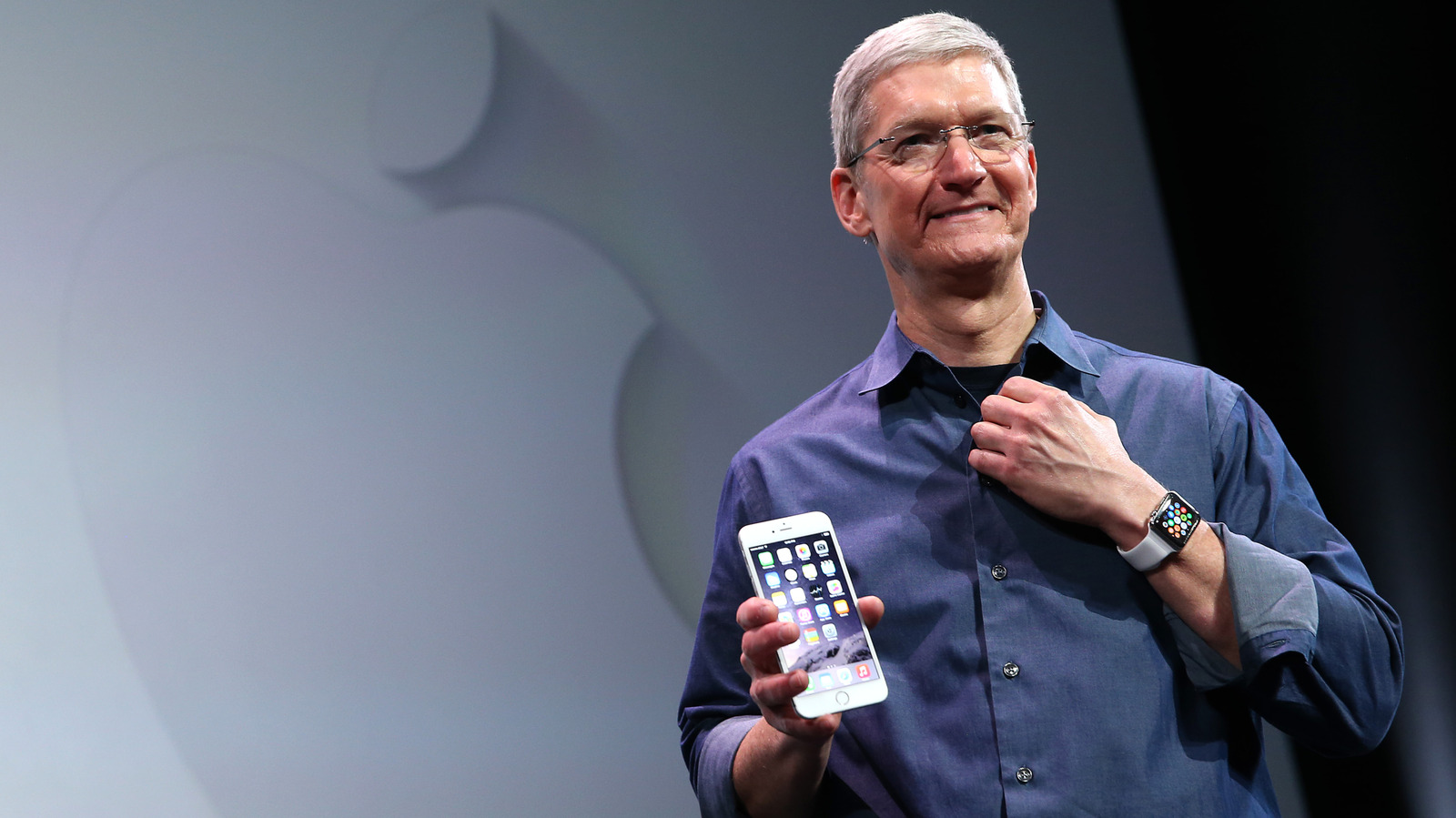
Tim Cook holding the iPhone 6 and wearing the first Apple Watch during an Apple event in September 2014. Justin Sullivan/Getty Images

On September 1, 2026, Tim Cook will step down as CEO of Apple, having led one of the most important tech companies in the world for 15 years. He’ll continue at Apple as chairman of the board, with John Ternus set to become Apple’s next chief executive officer. Apple confirmed the succession plans on April 20, 2026, confirming the rumors that Cook would end his tenure as CEO of Apple in 2026. The succession announcement was followed by messages from Tim Cook to the world and Apple employees in which its top executive mused over his career at Apple. Cook went over various products that Apple released while he was CEO of the company, with the Apple Watch being at the top of his list.

In a Community Letter from Tim, the CEO said that he has started his days the same way for the past 15 years, by checking his email and reading messages from Apple users. Cook mentioned the Apple Watch in the second paragraph, before any other product. “You share little pieces of your lives with me and tell me things you want me to know about how Apple has touched you. About the moment your mom was saved by her Apple Watch,” Cook wrote. “About the perfect selfie you captured at the summit of a mountain that seemed impossible to climb. You thank me for the ways Mac has changed what you can do at work and sometimes give me a hard time because something you care about isn’t working like it should.”

The Apple Watch was unveiled in September 2014, though Apple wouldn’t start selling it until the next spring. Tim Cook called the wearable “the most personal product we’ve ever made.”

Cook’s proudest work at Apple

The Apple Watch Series 11 on display in an Apple store. Ringo Chiu/Shutterstock

Cook and Ternus attended a town hall meeting after the CEO succession announcement, according to Bloomberg. There, the CEO said he’s been proud of “so many moments” at Apple, but the Apple Watch is the product he’s most proud of. As in the community note, Cook pointed out the wearable’s health features that can save people’s lives. “I remember getting the very first Apple Watch note from a user who told me that the watch saved their life,” Cook said. “Now, of course, I get these on a daily basis, but that first one hit me particularly hard. It caused me to just stop in my steps.”

Apple celebrated its 50th anniversary a few weeks before the company announced that John Ternus would replace Tim Cook as CEO. The occasion prompted media retrospectives on Apple’s history, including interviews with Cook. The CEO appeared on Good Morning America, highlighting the Apple Watch as one of Apple’s biggest contributions. “You know, you can focus on the product moments, reinventing music, reinventing the smartphone, bringing the creative arts to the table, the creative graphics. Saving people’s lives with the watch,” Cook told ABC’s Michael Strahan.

While the Apple Watch seems to be the defining product category for Cook’s tenure as CEO of Apple, the iPhone also has a special place in Cook’s heart. The CEO told The Wall Street Journal that the launch of the iPhone was his favorite moment. “We were using that generation’s smartphone, and it was such an awful experience. And I love the fact that all of a sudden you had this touch interface, and it worked like your mind worked,” Cook said.

Tim Cook’s legacy is bigger than the Apple Watch

Various Apple products on a table, including iPhones, iPad, MacBook, AirPods, and accessories. Ya.kubovskiy/Shutterstock

The iPhone launch event may be Cook’s favorite moment at Apple, but it happened while Steve Jobs was CEO of Apple. Under Cook, Apple continued to refine the iPhone, introducing several innovations since 2011, but the iPhone is part of Steve Jobs’ legacy at Apple. The Apple Watch was a new product category launched under Cook, which partly explains why the CEO is especially proud of the wearable. The fact that the Apple Watch keeps saving lives thanks to the various health tracking features Apple devised over the years is what makes the product stand out for Cook. In the same WSJ interview, which featured prototypes for various Apple products, Cook also talked about an early Apple Watch version, saying the wearable “wound up being this guardian for your health that we really didn’t envision from the start. And it became a fitness companion.”

But Cook’s legacy is much bigger than the Apple Watch. Apple launched the AirPods in September 2016, a product category that became wildly successful, inspiring most smartphone vendors to create their own AirPods rivals. Apple launched the Vision Pro spatial computer under Cook’s leadership in June 2023. At the time, Cook called the product “the beginning of a new era for computing.” Cook’s Apple also made user privacy a core feature of Apple products and created the M-series chips that power MacBooks and iPads.

It wasn’t just smooth sailing under Cook. While the Apple Watch may be his proudest moment as CEO, the Apple Maps launch was Cook’s “first really big mistake,” which he acknowledged in the same town hall meeting that followed Apple’s CEO succession announcement.

Source