Posted on

iOS 27 Could Change How You Edit Photos

An individual holding a black iPhone between both their hands as they sit in front of a silver MacBook Farknot Architect/Shutterstock

Apple will soon be bringing more artificial intelligence features to its lineup of devices, at least according to a new report. Apple’s proprietary AI, known as Apple Intelligence, already supports a number of devices and features, but the latest news suggests that the company is aiming to get up to speed with its competitors, many of which already offer a fuller suite of AI features. Nonetheless, should the rumors hold true, Apple fans may be getting several new photo-editing features as soon as this year.

As reported by Bloomberg, Apple is aiming to use artificial intelligence to deliver new photo-editing features to its hardware lineup. Three new features are expected to arrive, including options that allow users to shift the perspective of certain photos, generate new content for an image, and even utilize some basic photo-editing enhancements. However, reports also indicate that the testing of these features may not be going exactly as planned.

With the next round of software updates from Apple expected to be announced at this year’s Worldwide Developer Conference (WWDC), it will likely be the first official time the public will get details about the company’s next major mobile software update, including a release date for iOS 27. As it currently stands, Apple’s proprietary AI is capable of generating emojis, providing information from photos, and offering ChatGPT integration, among other features. However, users may need to wait and see if these new tools actually release with the next iteration of Apple’s operating systems.

New Apple Intelligence features for photos may be on the way

An iPhone displaying the Apple Intelligence logo sits atop a silver MacBook Primakov/Shutterstock

Though the next wave of software updates from Apple is likely to focus on its voice assistant Siri and improving overall system performance, rumors are already circulating about new photo-editing features. Possibly arriving with iOS 27, macOS 27, and iPadOS 27, these purported “Apple Intelligence Tools” include “Extend,” “Enhance,” and “Reframe” options. With Extend, users would be able to “generate additional image content beyond the original frame,” meaning you can take a photo and have artificial intelligence build more content surrounding it. The report states users will be able to control how much new content is added and where it’s placed by using their fingers to expand the edges of a photo.

Additionally, the new Enhance feature would rely on AI to adjust the quality, lighting, and color within a photo automatically. Reframe, on the other hand, is thought to be meant for spatial photos, which the report mentions is typically the type of photos an Apple Vision Pro headset captures. The Reframe feature would allow users to adjust the perspective of an image, such as showcasing the side of an object when it was originally shot from the front.

Though these features are still reportedly in the testing phase, leaked information indicates that the new tools “don’t perform reliably during internal testing,” according to Bloomberg sources who’ve had experiences with them. Those curious will likely need to wait and see what else develops, though we can also give you a rundown on how to use Apple Intelligence on your devices should you need a refresher.

Source

Posted on

This 2026 Horror Movie Is Already A Massive Streaming Hit

Every once in a while, a genre film comes out that sticks with you, whether because of the visuals, the story, or the characters. Horror is particularly good at this because of the very nature of the genre. Some of the best horror movies of all time have more than one memorable scene that fans recall repeatedly, and one recent flick is looking to be of the same caliber. It’s available for streaming, and viewers are gravitating toward it in droves.

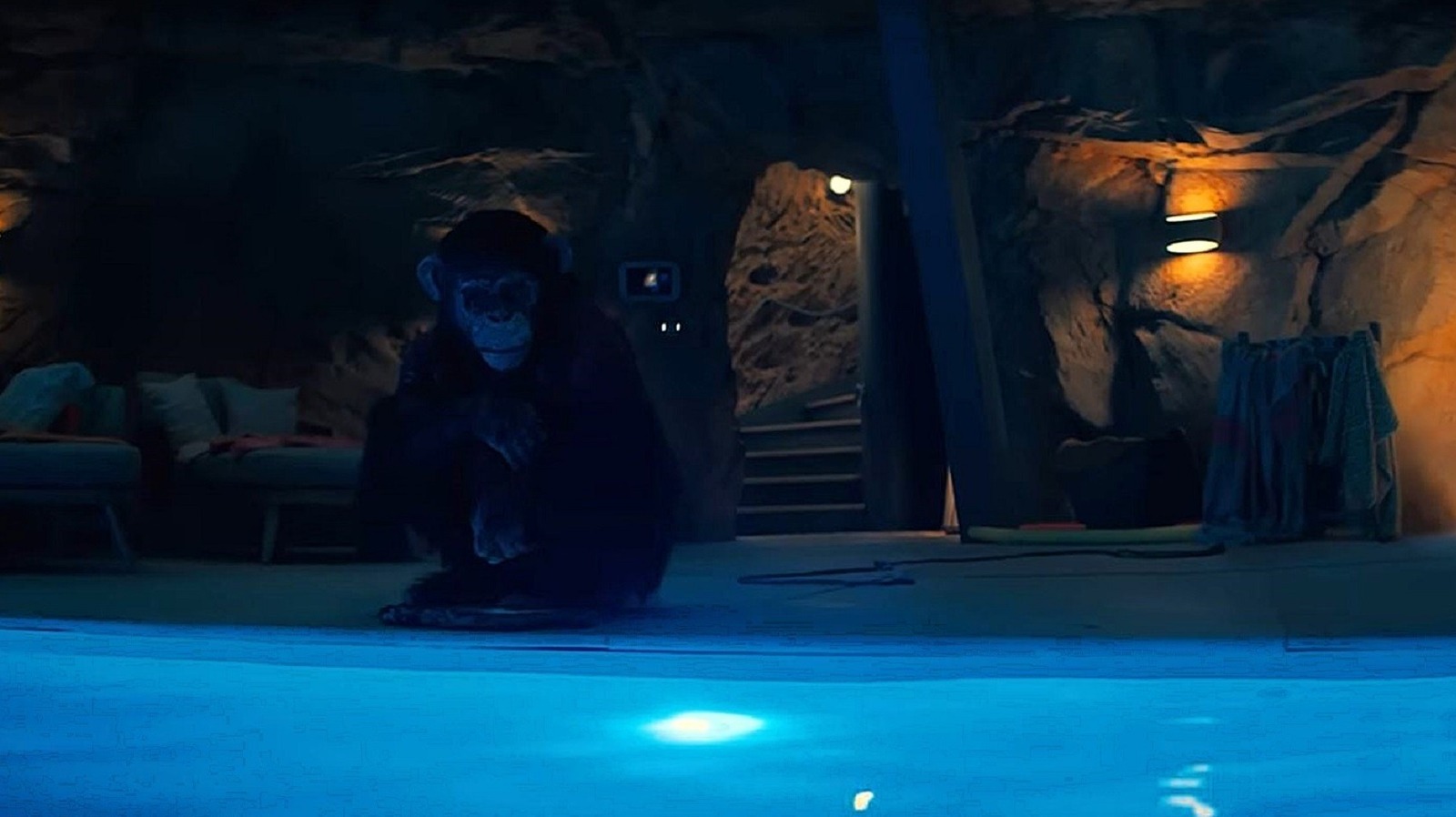
Per FlixPatrol rankings, “Primate” is in the top 10 movies in the U.S. on Paramount+ for the week of April 28. It’s a creature horror, body horror, and slasher-style flick all wrapped into one. Although there’s no conventional killer doling out gruesome vengeance, but instead, as the name implies, the film explores what happens when a lovable primate goes wild.

The story centers around a family’s pet chimp named Ben, who unexpectedly contracts rabies and becomes excessively aggressive. While not at all based on the true story of Travis, the chimpanzee that violently attacked his owner, it’s clear that the idea behind the film was loosely inspired by the real-world encounter. If you have the opportunity, it’s worth watching. Forewarning, it’s gory and pretty much exactly what you’d expect a horror of this caliber to be like.

What are people saying about Primate?

If you like gory shock-horror, you’ll likely enjoy “Primate.” It has a 78% on Rotten Tomatoes from critics and a 71% from users, with several reviewers praising it as suspenseful, creative, and entertaining. It’s also hailed as a unique twist on the age-old slasher genre. Someone describes the plot as “Caesar (from ‘Planet of the Apes’) meets Cujo,” and that certainly fits.

On IMDB, “Primate” has a 5.8 out of 10-star rating with over 27,000 reviews. That’s less forgiving than the Rotten Tomatoes score, closer to average, and most of the reviews span five-star (18%), six-star (28%), and seven-star (19%) ratings. Take that as you will. There’s also the point that it’s going absolutely bananas on Paramount+ rankings — it premiered on streaming in March but originally hit theaters back in January.

Since then, it has continued to dominate the streaming charts, debuting as the number one movie in the top 10 in March, as well. Something about it must be captivating audiences. If you’re not fond of primates but looking to watch something with similar vibes, Jeff Goldblum’s incredible ’80s sci-fi body horror doesn’t get enough love, and you can rent that on Prime Video or Apple TV. Alternatively, it’s not set to release until October, but you can get ready for the DCU’s first horror flick and watch the “Clayface” trailer as it unleashes a terrifying new character that oozes body horror and creature feature elements.

Source

Posted on

’80s Movie Gadgets That Actually Exist Today

The ’80s were a great time for movies, especially of the sci-fi genre. These flicks had many futuristic gadgets that gave people a taste of what the future might be like — you likely remember how those technologies felt magical and made the 2000s seem so far away from us. Titles like “Back to the Future,” “Runaway,” and many others portrayed devices that people thought were impossible to create at the time, yet some became real and popular years after.

If you grew up watching these films on an ’80s TV, you know that many of these predictions about what our lives will be like in the future never came to fruition. For the gadgets that became real, some even arrived exactly as promised or in forms better than they seemed in movies. Others, however, came with some limitations that screenwriters didn’t take into account, like hoverboards that need special tracks. So, even though some technologies still have flaws in some areas, they left ’80s movies and, in some way, became part of our daily lives.

Self-lacing sneakers

Close-up of Nike Mag self-lacing sneaker from Back to the Future Part II (1989) Hethers/Shutterstock

“Back to the Future Part II” came out in 1989 and, beyond continuing Marty McFly’s story, it took a shot at predicting what life would look like in the then-distant future of 2015. Some of those predictions aged better than others — and the self-lacing sneakers are among the ones to actually make it into the real world. What started as a 12-second camera trick on set became an engineering challenge that Nike eventually pulled off.

The company itself received an invitation during the production of “Back to the Future Part II” to imagine what footwear would look like in 2015. In 2016, Nike reproduced a self-lacing version of the MAG model that McFly wore in the movie, with sensors that detected the presence of a foot and activated motors to adjust the laces. The first functional model in that line went as a gift to Michael J. Fox himself and his charitable foundation.

Afterward, the project led to the development of the HyperAdapt 1.0, a product especially made for athletes that used the same self-tightening technology present in the MAG. The most affordable sneaker that came from that project was the Nike Adapt BB from 2019, but because of the price and the history of software bugs, the models never took off with the general public. In the end, the tech became real, but the popularity didn’t.

Hoverboard

“Back to the Future Part II” is one of the main references when people talk about ’80s technology that they wish was real. Another gadget in this flick was the hoverboard, which became a dream purchase for many children of that era — the possibility of a flying skateboard was incredible. In fact, a version of that device even got produced, but not in the way many people expected.

In 2014, Greg Henderson almost made this idea a reality when he started the Hendo Hoverboard on Kickstarter.Thanks to the magnetic levitation tech, the board could float above the ground and hold up to 250 pounds. Tony Hawk even went viral by using one of those boards at that time. After that, Lexus tried to enter the market in 2015 with its Slide, which was cooled by liquid nitrogen and could also float over magnetic surfaces.

The problem is that neither product launched commercially. Both depended on specially prepared surfaces, which was far from the freedom Marty McFly had on the streets of Hill Valley. Eventually, Hendo redirected its maglev technology to industrial applications. So, hoverboards do exist, but not in the way many people imagined in the ’80s.

Smartwatches

Person wearing smartwatch checking heart rate on wrist outdoors Alina Mosinyan/Shutterstock

Many movies in the 20th century explored the possibility of having a powerful device on your own wrist, and James Bond was one of the main characters to show it off. In “Octopussy,” he had access to the Seiko TV watch, which was actually a real device that the Japanese company had already launched at the same time. So, companies had considered something similar to a smartwatch for a long time. But unlike how it looked on screen, the watch was not that practical. 

For the small liquid crystal display to transmit television channels, the user had to carry a huge and heavy signal receiver in a pocket. A cable also connected it and ran inside the user’s clothing. Needless to say, it didn’t have much everyday use. Fast forward to today, and even the cheapest smartwatch brands can do more complex things and have an easier time doing them than a Seiko TV from the ’80s. Companies like Apple and Samsung have used the miniaturization of electronic components to create complex devices, letting you make calls, monitor your health, and make payments from your wrist.

Robot vacuums

Robot vacuum cleaning hardwood floor in living room Yuganov Konstantin/Shutterstock

If you have a robot vacuum in your home, know that, in part, you live in a future that Hollywood imagined in the ’80s. Today, several major brands make these gadgets, which, for many people, no longer count as a novelty — they’re just another common household appliance. These devices can map spaces and avoid obstacles to keep your living space organized.

Even though the movie did not achieve the same popularity as other sci-fi works from that era, 1984’s “Runaway” imagined robots integrated into everyday life before it turned into an action thriller. In the feature film, these autonomous machines handled some routine tasks in their owners’ homes. That vision became real many decades later, even though our robots look very different. However, the movie became better known because those robots turn into killers over the course of the story and because Gene Simmons from KISS played the villain. Even though that still has not happened in our reality, the quieter ideas of “Runaway,” such as autonomous machines cleaning the kitchen floor, ended up becoming real.

Source

Posted on

Don’t Make This Mistake When Buying A Monitor Or TV

Person in an electronics store shopping for a new TV Gorodenkoff/Shutterstock

We may receive a commission on purchases made from links.

Modern TVs and monitors have one key feature you wouldn’t typically pay much attention to in the past, but it’s become a necessity in 2026 and beyond. That’s the screen refresh rate. In a nutshell, a screen’s refresh rate refers to the number of times a display draws a new image per second, measured in Hertz (Hz). You’ve probably seen that number being thrown around in monitor and TV spec sheets, with some claiming 120 Hz while others boasting higher figures. As a matter of fact, the refresh rate isn’t just buried in the spec sheets these days. It’s marketed as one of the headline features on monitors and TVs that feature higher figures than the standard. 

For context, the standard refresh rate you’ll find on even the most basic monitors and TVs is 60 Hz, which was also found on older cathode ray tubes. However, newer models offer much more than that, such as 120 Hz, 144 Hz, 165 Hz, and even higher. While 60 Hz is fine for the majority of people for watching movies or doing some light office work, we advise that you avoid buying a monitor or TV with this refresh rate in 2026 and beyond, because you’ll be making a big mistake. Regardless of whether you’re buying from a major smart TV brand or monitor manufacturer, you shouldn’t compromise on the refresh rate because you’ll be missing out on some benefits.

A high refresh rate on monitors and TVs enhances your experience

Person playing a game on a computer Gorodenkoff/Getty Images

While most people will do just fine with a 60 Hz panel, there’s a reason why high refresh rates have become one of the key selling points for both TV and monitor manufacturers. These high refresh rates do come in handy in various scenarios — and it might be something that you can also benefit from in your work or some other activities. If you plan to play games on your monitor or TV, for instance, prioritizing a high refresh rate on top of other features will be vital to giving you a competitive edge against opponents who use one with the standard 60 Hz. 

For example, a high refresh rate panel will lower the input lag, helping games feel more responsive. Additionally, high refresh rates also reduce screen tearing and minimize the amount of persistence blur that you see, thus offering a smooth gaming experience. Even if you aren’t a gamer, high refresh rates can also be beneficial in some professional lines of work. Take video editors and people who deal with motion graphics, for example. For these kinds of professionals, a high refresh rate can help reduce eye strain during the long periods that they’re buried in their work. If you’re a sports fanatic who loves watching live sports, a high refresh rate display is also advantageous, as it will make the action feel much smoother.

You won’t save a lot if you skip high refresh rate monitors and TVs

TVs on display at a retail store Erman Gunes/Shutterstock

Now that you understand the advantages of getting a high refresh monitor or TV, you might think that sacrificing this feature by going for models with 60 Hz might be the smart move if you’re on a budget, as it could save you a good chunk of cash. However, that’s not true because even 144 Hz monitors and TVs are not more expensive than their 60 Hz counterparts. 

For monitors with 1080p or 1440p resolution, you might even find a 60 Hz and a 144 Hz monitor going at roughly the same price. Since TVs tend to be cheaper than monitors, you can buy a set like Sony’s 55-inch 4K BRAVIA 2 that comes with the standard 60 Hz refresh rate for $600. However, the smart move is to get an alternative, such as the TCL 55-inch T7, which costs the same amount of money and has a higher 120 Hz refresh rate. 

Generally, high refresh rate TVs and monitors might be a bit more expensive than ones with 60 Hz, but you can also buy wisely by utilizing frugal shopping tips to minimize that difference as much as possible. To sum it up, unless you’re doing light office work or simply watching movies and TV shows on your TV or monitor, don’t make the mistake of buying one with a 60 Hz refresh rate.

Source

Posted on

Sharing Files From Your Android Phone Just Got Easier With

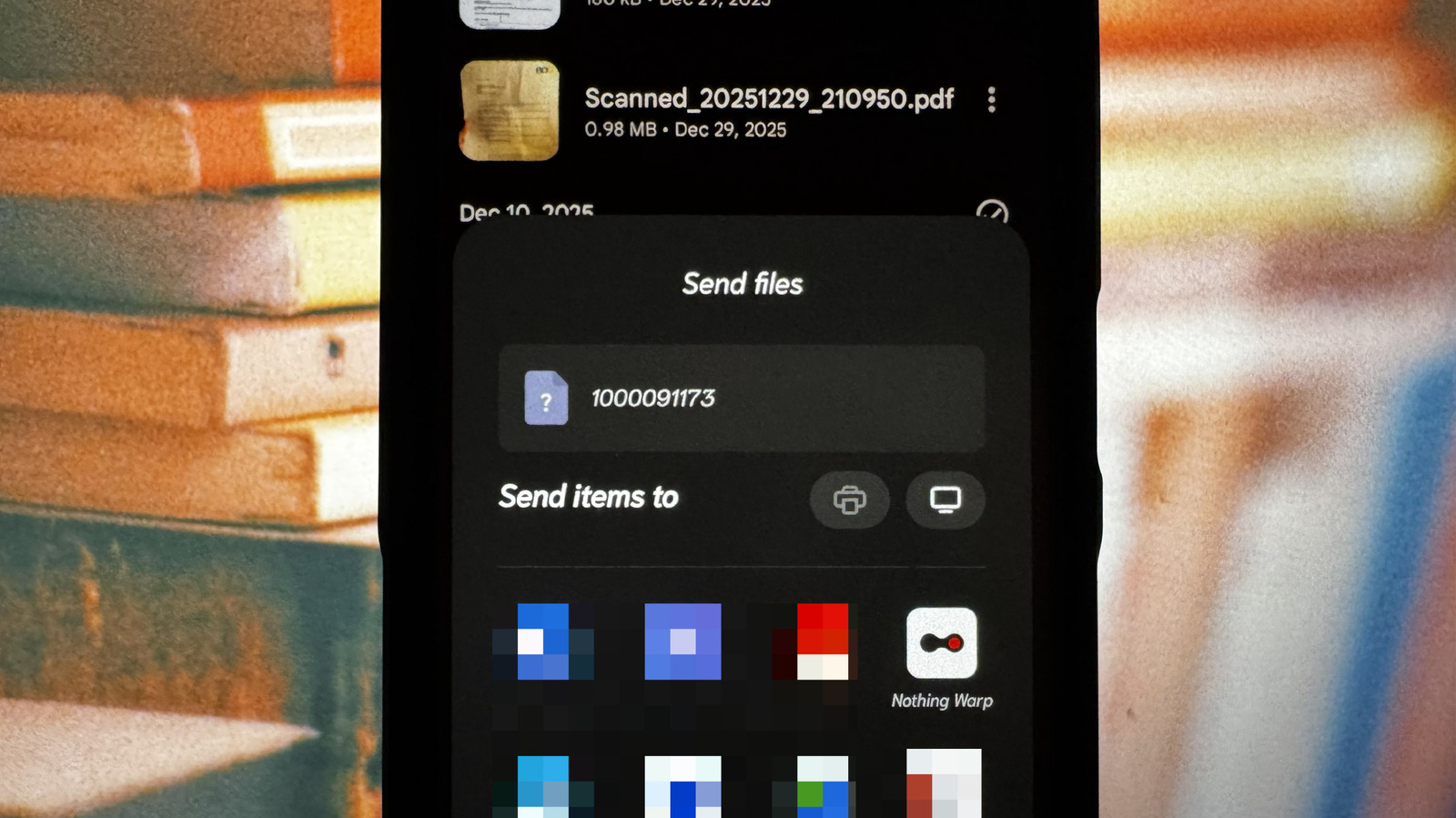
Android phone share showing Nothing Warp Marinel Sigue/BGR

Every time you needed to transfer files between your Android phone and your computer, you’d typically email them, use messaging apps, or connect via USB with a physical cable or flash drive. But these methods aren’t exactly the definition of convenience. They take more steps than necessary, and by the time you get your files, you’ve already wasted a few good minutes. 

If only there were an easier way to move files from any Android phone to any computer, regardless of brand and operating system. Well, there actually is, and it’s one of the essential Android productivity apps you should install. Aptly called Nothing Warp, the app is developed by the same team behind the Nothing phone. However, it isn’t exclusive to Nothing phones, and can be used on any Android device, as well as any computer with a Chromium-based browser, such as your PC, Mac, or Linux computer.

What makes Nothing Warp simple to use is the fact that the only apps you need to share a file are the file management or photos app on your phone and the browser on your computer. 

How does Nothing Warp work?

Android phone showing Nothing Warp app icon Marinel Sigue/BGR

The system behind Nothing Warp is pretty straightforward. The Nothing Warp app on your phone connects to the Nothing Warp browser extension on your Chromium-based browser (e.g., Chrome, Edge, Brave) over the internet.

When sharing from your Android device to your computer, you won’t even have to open the Nothing Warp app. Simply press the share button anywhere on your device and choose Nothing Warp from the options. The file will automatically appear on the Nothing Warp browser extension panel. On the other hand, when transferring files from your computer to your Android device, you’ll use the Upload button in the browser extension. Then whatever you send will instantly appear in the Nothing Warp mobile app.

As of this writing, Nothing Warp is still in Beta testing, so it’s not available on the Play Store yet. It’s also important to note that Nothing Warp is powered by your personal Google Drive. That means it needs a Google account sign-in before you can proceed. The files are kept private, though, as Nothing Warp doesn’t store them. 

How do you use Nothing Warp?

Computer showing Nothing Warp browser extension with Upload functionality Marinel Sigue/BGR

To get started with Nothing Warp, install the mobile app and browser extension first. On your Android, scan the QR code from the Nothing Community and install the APK. In your browser, go to the extensions store, look for Nothing Warp, and add the free browser extension. Once installed, pin it to your extensions toolbar for easier access. From here, use your Google account to sign into Nothing Warp on both devices. Make sure you’re using the same account and giving the app the necessary permissions to access Google Drive.

Now that Nothing Warp is ready, follow these next steps to send files from your Android to your computer:

  1. Find the photo, video, or document you want to share, whether it’s in Google Photos or your file management app.
  2. Press Share.
  3. If you don’t see Nothing Warp on the initial set of apps, hit More.
  4. Tap on Nothing Warp.
  5. On your computer, click on Nothing Warp from your browser’s toolbar.
  6. Give it a few seconds to load.

You should then see your transferred files appear in the Nothing Warp panel. Press the download button to save the file on your computer. If you want to move files from your computer to your Android instead, here’s what you need to do:

  1. In your computer browser, open Nothing Warp from the extensions toolbar.
  2. Click Upload.
  3. Choose the files you wish to share.

Alternatively, you can share items found on webpages. Just right-click on an image, highlighted text, link, or embedded file and select Send with Nothing Warp from the menu. A short while after you send them, the files will automatically appear on your phone’s Nothing Warp app. Just like on your computer, you can download files to your mobile device.

Source

Posted on

This $30 Magnetic Accessory Is A ‘Game Changer’ For Cable

We may receive a commission on purchases made from links.

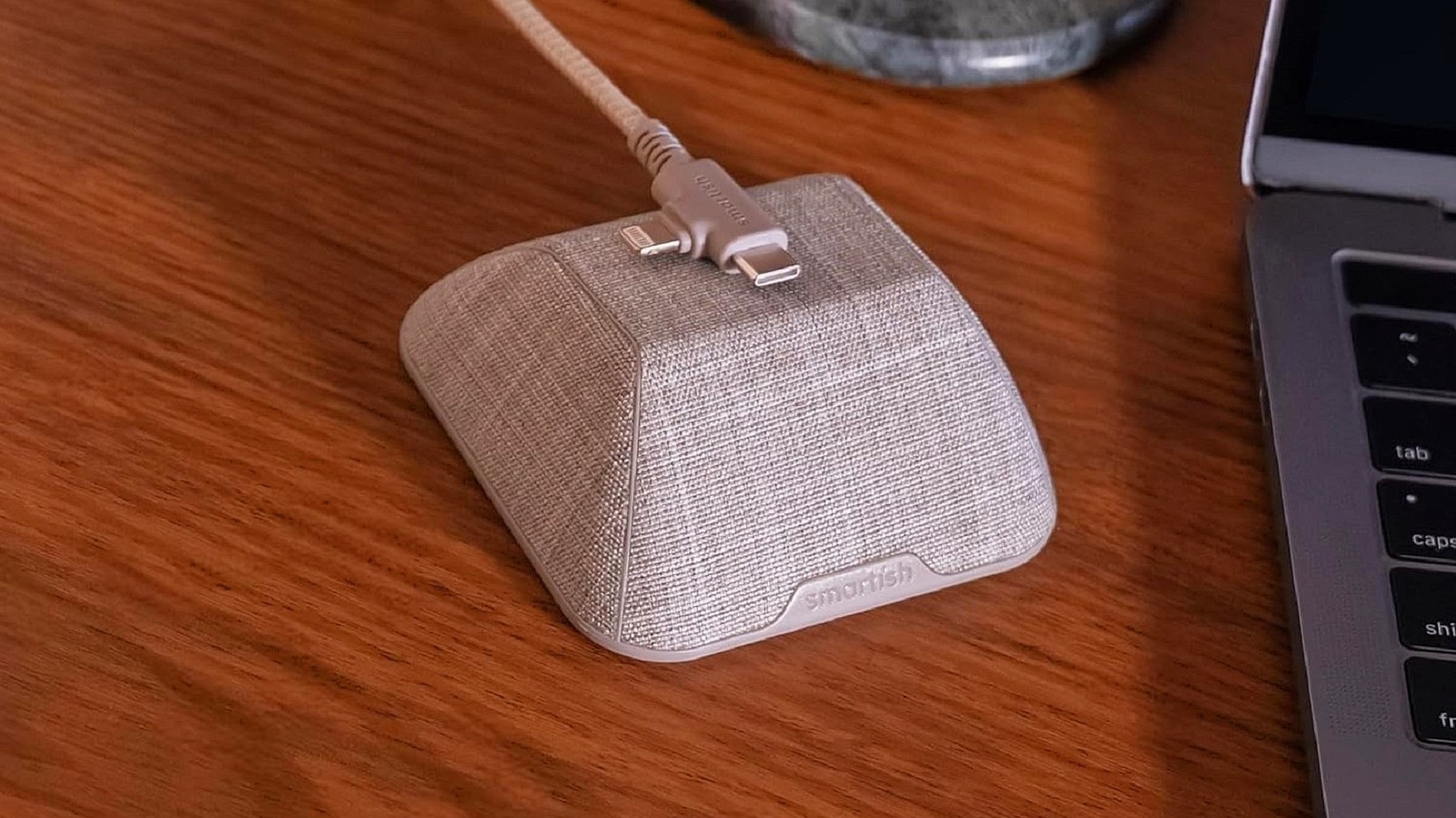
I don’t know about you, but if you were to ask me one of my biggest gripes about having my desk or nightstand littered with gadgets, it would have to be the cluttered charging cords and cables. Even running them from the outlet to the surface of the desk, there’s nothing holding them in place, and they fall down. The same is true with my nightstand, and even hooking the cable around a drawer handle isn’t reliable. So, when I go to plug in my phone, tablet, Steam Deck, or other devices, I’m always forced to fish around on the floor for the free end of the cable. If you experience anything like this, there is a small, relatively inexpensive cable management gadget from a brand called Smartish that can make your frustrations go away. It’s a stylish pyramid-like stand that acts as a magnetic cord holder.

A weighted, non-slip base keeps the entire unit in place, whether you stand it on your desk, place it on a nightstand, or tuck it away on a side table somewhere. The top has a strong magnet built to hold the cable and connector in place when you snap it down. It also comes with two magnetic cable collars for cords that don’t quite stay put. As for the base itself, there are no sticky adhesives — the bottom is grippy and stable. Additionally, it comes in a variety of colors or styles, including a ‘toasted’ beige, pencil gray, black, white, bright pink, and blue jeans. It is available on Amazon for $30 right now in several of those colorways. It’s definitely one of those novel smart gadgets that will transform your home office, bedroom, or wherever you place it.

What do people say about the Smartish magnetic cable holder?

There is a larger version of the holder, if you want it, available for $40. The medium-sized version does hold up to three cables, maybe more, depending on how many you can fit. But still, $30 is a decent chunk to spend for something like this. It’s best to get a feel for how it will work out, mostly by reading experiences from those who have actually used it. The Smartish magnetic holder has over 5,000 reviews on Amazon with a score of 4.6 out of 5 stars — suggesting that people like the product.

The top comments say it’s “sleek and stylish,” “amazingly helpful,” and “handy.” One person even says it’s “so good” they decided to gift it to friends and family. Honestly, that’s the hallmark of a great product, when someone is willing to vouch for it and give it away to people they know. However, it wouldn’t be an objective look if we didn’t at least consider some of the negative reviews. As of writing, 66 reviewers have awarded one-star ratings. They’ve also described it as a “$30 rock,” warn that you should avoid it, and someone else claims they “haven’t found a single cord yet that stays on.” 

Your mileage may vary, but overall, things seem positive even with some of the negative commentary. Nevertheless, it’s a good thing Amazon has an excellent return policy nonetheless. If you really want to take your cable management game up a notch, there’s also a 192-piece DIY Amazon kit to say goodbye to cluttered desks altogether.

Source

Posted on

4 Bluetooth Gadgets For Your iPad You Didn’t Know You

A man standing at a kitchen counter using an iPad Jacob Wackerhausen/Getty Images

We may receive a commission on purchases made from links.

Bluetooth gadgets can really improve your iPad experience, taking what is already an incredibly powerful piece of hardware and adding even more utility. Popular accessories include keyboards, mice, and smart stylus pens like the Apple Pencil and cheaper alternatives, which make it easier to use your iPad as a notebook, drawing pad, or even laptop replacement. More interesting are the less obvious gadgets that add new ways to use your tablet.

Some Bluetooth gadgets for iPad have niche functionality, like page turner pedals that let musicians easily flip through their sheet music hands-free. There are also gadgets that are compatible with iPad but are better suited for iPhone, like the Satechi Bluetooth Media Button, which comes with a steering wheel mount for safe use while driving. While many of these are compatible with other devices, for this list, we’re going to focus on some Bluetooth gadgets for the iPad that, once you know about them, you’ll want to use.

JTEMAN Bluetooth Speaker Tablet Stand

Stands and speakers are common iPad accessories, but JTEMAN’s combination of the two makes it perfect for anyone who uses their tablet to watch movies and TV shows or listen to music. The JTEMAN Bluetooth Speaker Tablet Stand eliminates the need to have multiple devices that take up space or get separated when you actually need them. It supports tablets and phones between four and 13 inches and is adjustable, so you can set it to a comfortable angle no matter where you’re using your iPad.

Lastly, there are USB-A and USB-C charging ports on the back to keep your iPad going while the stand is in use. The speaker and tablet stand typically goes for $30.99 on Amazon, but it sometimes goes down to around $23. One Amazon user said it’s great for taking meetings, offering convenience with its compact design, simple set-up, and audio quality for its price, earning it 4.5 stars and over 1,400 five-star reviews.

WEWAHIVER Scrolling Ring Remote

If you use your iPad for reading or scrolling through social media, a ring remote is a convenient way to navigate your content without having to touch the screen. Page turning rings that connect to a sensor you clip to your device are great for those who read on tablets, especially Kindle, but there are other options that include even more features, like the WEWAHIVER Scrolling Ring Remote. In addition to fitting conveniently on your finger and turning pages, this ring remote can be used to scroll through apps (including social media) and operate the camera.

The Scrolling Ring Remote has a list price of $16.99 on Amazon, but it usually goes for around $13.99. Though it doesn’t have many ratings or reviews (it is a new release), the feedback so far is positive. With a 4.3-star rating and user reviews praising its ease of use, responsiveness, and battery life, the WEWAHIVER Scrolling Ring Remote is a simple and cheap gadget worth trying out.

IINE Gamebrick Mini Retro Controller

The IINE Gamebrick Mini Retro Controller has the same functionality as a ring remote, though in a different form. While it is a little less convenient to use than a ring, it stands out for its retro controller look, resembling a smaller NES controller without the Start and Select buttons. Even the two colors available are based on the old hardware, with the red and gold models being based on the Japanese Famicom controller.

In addition to scrolling, the IINE Mini Controller can also be used as an actual gaming controller for your iPad, though the limited buttons mean it’s not suitable for anything too complicated. You’ll need a more serious controller like the 8Bitdo SN30 Pro (which also boasts a retro-inspired design) or a Nintendo Switch Pro Controller if you plan to do a lot of gaming on your iPad. Still, this little gadget is a fun novelty for anyone who wants to celebrate one of the gaming consoles that defined the ’80s.

The Gamebrick Mini Retro Controller sells for $22 on IINE’s website and $17.83 on Amazon, where it has a 4.6-star rating. It doesn’t have many reviews, but those that are there praise the controller for its usefulness and novel design, with one calling it “a perfect little device for simple navigation or page turning.”

AOIKTYE Procreate Keyboard

Many artists who do their work on iPad swear by Procreate, with some going as far as to say they purchased an iPad just to use it. Artists love the app for its many robust tools, including hundreds of brushes (plus the option to import even more), that are available for a one-time purchase of $12.99. Compare that to the Photoshop app, which costs $7.99 a month.

The AOIKTYE Wireless Shortcut Keyboard makes using Procreate even easier. Designed to sit next to your iPad and be used with your non-dominant hand, the keyboard has 20 buttons that correspond to commonly used tools like color picking, brush size, undo, and copy/paste. That means more time focusing on your work and less time fiddling with menus. It also has 4.5 stars on Amazon, with users saying its $36.99 price makes it a great alternative to options like the $90-$297 Tourbox that may work even better than the more expensive keyboard.

Source

Posted on

This Action-Packed Netflix Series Is A Remake Of A Classic

One of the century’s most beloved action heroes is getting a reprisal. This time in a star-studded Netflix series sure to delight loyal fans and newcomers alike. Debuting on April 30, 2026, “Man on Fire” follows U.S. special forces agent John Creasy as he reaps vengeance upon a band of terrorists targeting a friend’s rebellious teenage daughter. Starring Yahya Abdul-Mateen II, the seven-episode miniseries is a gritty thrill ride that rockets viewers down the labyrinthine streets of Rio de Janeiro’s criminal underbelly.

The series is the latest adaptation of novelist A.J. Quinnell’s best-selling novel and a remake of Tony Scott’s 2004 cult classic starring Denzel Washington.  Like its big-screen forebearer, Netflix’s remake takes creative liberties with its source material, expanding the Creasy character and transplanting his arc within an exciting locale. In an interview with the Los Angeles Times, creator Kyle Killen assured fans that Netflix’s show is anything but fanservice, stating, “we’re not trying to copy anything. What the film does do is set a bar. There was something unique about the visual language and the way that all came together. That gave us license to try and find our own.”

Filling Denzel Washington’s shoes is a tall task, but Abdul-Mateen is no stranger to the demands of high-octane action franchises and their devoted fanbases. Previously starring in adaptations of “Watchmen,” “Aquaman,” “The Matrix Resurrections,” and Marvel’s “Wonder Man,” Abdul-Mateen has built a career on surpassing sky-high expectations. Of course, Washington poses a unique challenge. As the actor told Rolling Stone, “Denzel’s Creasy — oh, man, I want to be him. He just makes it so cool. . . I said, ‘Look, if I’m gonna do it, there’s no reason trying to compete with that ghost.” As such, Netflix’s soon-to-be hit series may be his most audacious yet.

A unique remake

Teenage boys, nostalgic millennials, and Denzel-stans alike are protective of Tony Scott’s “Man on Fire.” Although initially panned by critics, the film has collected a cult following over the years for its auteur visuals, heart-wrenching redemption arc, and quintessential Denzel Washington performance. Understandably, remaking the 2004 hit might elicit skepticism. Even Abdul-Mateen admits “there was a responsible level of trepidation” in retelling the beloved film. But fans are likely to delight, rather than despair, in the expanded narrative.

Netflix’s “Man on Fire” finds Abdul-Mateen’s John Creasy lower than the grave. In the wake of an unsuccessful suicide attempt, the alcoholic special agent is recruited to join an anti-terrorism task force in Rio de Janeiro by his longtime friend Paul Rayburn. Played by Bobby Cannavale, whose latest Oscar-nominated film Blue Moon is also on Netflix, the quick-witted Rayburn is a sort of foil to Creasy, one that, on the surface, hopes to pull him out of his troubles and towards redemption. But when terrorists target Rayburn’s daughter Poe, portrayed by Billie Boullet, Creasy is forced to reckon with both his past and a conspiracy beyond his pay grade. Rounding out the cast is Alice Braga as Valeria Melo, a gang-adjacent driver, and Scoot McNairy as the manipulative CIA agent Henry Tappan.

While this story may seem familiar, interviews with the show’s creators reveal that the series differs widely from its film predecessors. The series is more rooted in the source material than its film forerunners, with its extended runtime allowing it to incorporate both “Man on Fire” and its follow-up, “The Perfect Kill.” In an interview with Screen Rant, Director Steven Caple Jr. teased that the show may be in line for additional seasons. Given that Quinnell wrote five Creasy novels, they’ll likely have plenty of material. 

Becoming John Creasy

Quinnell’s series is a quintessential example of how mood and character are often more compelling than any heart-stopping twist. In each of its three screen interpretations, directors have taken liberties with the book’s plot, changing its setting, antagonists, even Creasy’s name. One constant across its permutations, however, is Creasy’s troubled character. This was certainly true in Tony Scott’s 2004 film, in which Washington’s stereotypical bravado and fire-and-brimstone glare deliver more narrative punch than its scattered script should allow. In every previous iteration, “Man on Fire” is more compelling as a character study than an action thriller, and Netflix’s rendition appears to be no different.

In an interview with the L.A. Times, Abdul-Mateen compares his character to tortured Shakespearean protagonists like Othello and Hamlet, a good sign given his predecessor’s proclivity for characters like Macbeth. Abdul-Mateen, for his part, describes Creasy as “incredibly hurt, human and broken.” According to the star, the complexity of Creasy’s character was the driving force behind his performance, telling the L.A. Times, “Getting an opportunity to give my take on a great character helps a lot to push me out of the shadows of that large ghost that could otherwise be hanging over the project.” 

Fans of Abdul-Mateen’s comedic performance as actor-turned-superhero Simon Williams are likely to marvel at the actor’s transformation, as his portrayal of John Creasy is a return to the brooding persona that won him a 2020 Emmy for “Watchmen.” And although the series provides plenty of thrills, Creasy’s character remains front and center. As Abdul-Mateen told The Playlist’s “Bingeworthy” podcast, “The emotionality of the circumstance always comes before the action. If I’m gonna throw this punch, why throw a right instead of a left?” To find out which Abdul-Mateen chooses, tune into Netflix on April 30.

Source

Posted on

NASA’s Next Big Step In Space Travel Will Be A

NASA’s next mission sounds more like an Andy Weir space drama than a government project. Debuted at NASA’s March 2026 ‘Ignition’ event, the agency’s first nuclear-powered mission to Mars now has a launch window. The craft tasked with the operation, which boasts the moniker of Space Reactor-1 Freedom, seeks to become the first spacecraft to utilize nuclear electric propulsion in deep space, a potentially revolutionary step in powering man’s exploration of the final frontier.

Conveniently scheduled for the final month of President Trump’s term, NASA administrators are pitching the mission as part of the president’s National Space Policy, which aims to “extend the reach of human discovery, secure the nation’s vital economic and security interests, unleash commercial development, and lay the foundation for a new space age.” These initiatives are part of an accelerated roadmap set on establishing “American leadership in space.” They involve escalating the agency’s moon landing efforts, including a new phased approach to establishing a sustained lunar base, revamping its low-earth orbit strategy in the wake of the impending International Space Station decommissioning, and investing in nuclear electric propulsion. How the administration hopes to achieve these ambitions while slashing NASA’s science budget in half remains a major question.

According to NASA’s announcement, SR-1 Freedom will deliver the agency’s Skyfall mission to the Red Planet. Skyfall, a collaboration between UAV manufacturer AeroVironment and NASA’s Jet Propulsion Laboratory, seeks to probe Mars’ surface with a fleet of three remotely-operated helicopters. If successful, NASA’s delivery mechanism may overshadow its Mars exploration effort, proving a watershed moment for the country’s space exploration efforts. However, experts are dubious of the agency’s professed timeline. Ultimately, NASA hopes this mission will inform its Lunar Reactor-1 program, which seeks to establish the agency’s first permanent nuclear-powered moon base.

How it works

Nuclear propulsion could extend the distance, duration, and speed of space travel. Current rockets are powered by chemical propulsion, in which a mixture of liquefied hydrogen and oxygen ignites to create an explosive reaction. While chemical propulsion provides enough thrust to traverse Earth’s immediate neighborhood, nuclear power is a stronger and more efficient reaction, enabling spacecraft to travel faster and longer than typical propulsion methods. Adding nuclear reactors could also solve NASA’s solar problem. As it stands, most spacecraft rely on solar energy to power their electrical stores, meaning power supplies decrease the farther they move from the Sun. According to NASA, a spaceship’s solar power drops to 4% when it reaches Jupiter. By turning to nuclear space travel, NASA could speed past its current exploration limits.

Nuclear spacecraft mirrors the processes used in earthbound reactors, in which uranium is blitzed with neutrons to generate a massive fission reaction. Gas turbines convert the generated heat into electricity, which ionizes the spacecraft’s gas propellant into a plasma, and the expulsion powers its thrusters. This reaction is much more efficient than conventional chemical fueling methods. Using a different form of uranium than their earthbound counterparts, a nuclear thermal reaction contains roughly 10 times the power density of typical reactors, slashing missions’ fueling needs to a mere fraction of the enormous stores necessitated by chemically-propelled rockets. 

Notably, nuclear propellant lacks the initial thrusts necessary to reach orbit, so they’ll likely depend on traditional boosters to launch. However, nuclear fission enables spaceships to steadily accelerate to speeds unachievable by their chemically-propelled forebearers. Future projects utilizing the more powerful nuclear thermal propulsion could cut a visit to Mars by more than two thirds. Some believe astronauts could soon reach the outer solar system in just two years.

Forging ahead

Nuclear space travel isn’t as farfetched as it seems. In the ’50s and ’60s, for instance, both the USSR and U.S. sent nuclear reactors into orbit. Furthermore, radioisotope thermoelectric generators, or RTGs, have been used in dozens of NASA missions. SR-1 Freedom will transition the use of nuclear reactors from generators of the spacecraft’s electrical power supplies to its primary thrust mechanism. Notably, American attempts to harness nuclear propulsion have failed due to cost and safety considerations. The most recent, dubbed DRACO, was a casualty of the administration’s massive 2025 budget cuts to the agency.

NASA will deploy “an American industrial campaign” alongside the Department of Energy to reach its 2028 deadline. Rather than pursuing a more powerful and complicated thermal propulsion system, SR-1 will deploy a simpler electric power-and-propulsion system recycled from NASA’s now-canceled Gateway lunar space station. Reportedly, this electrical system will be rigged to a DOE-designed nuclear reactor, which NASA Administrator Jared Isaacman claimed is “mostly built.”

Although the scientific community is optimistic about its potential, many are skeptical of its timeline. Those interviewed by Science, for instance, noted that a mission like SR-1 would typically take three to five years to design, build, and test.  As such, NASA will likely need to move away from its historically careful approach to accomplish this within its truncated timeline, raising safety concerns. Andrew Higgins of McGill University criticized SR-1 Freedom’s “LEGO-like” approach of cobbling together disparate components (via Scientific American). Higgins also noted that its use in the Skyfall mission is likely more a matter of convenience than strategy, as Mars is too near a destination for nuclear propulsion to make an actionable difference. SR-1 may merely prove to be an ambitious test case for more lofty aspirations.

Source

Posted on

Stop Spending So Much On Second Monitors For Gaming –

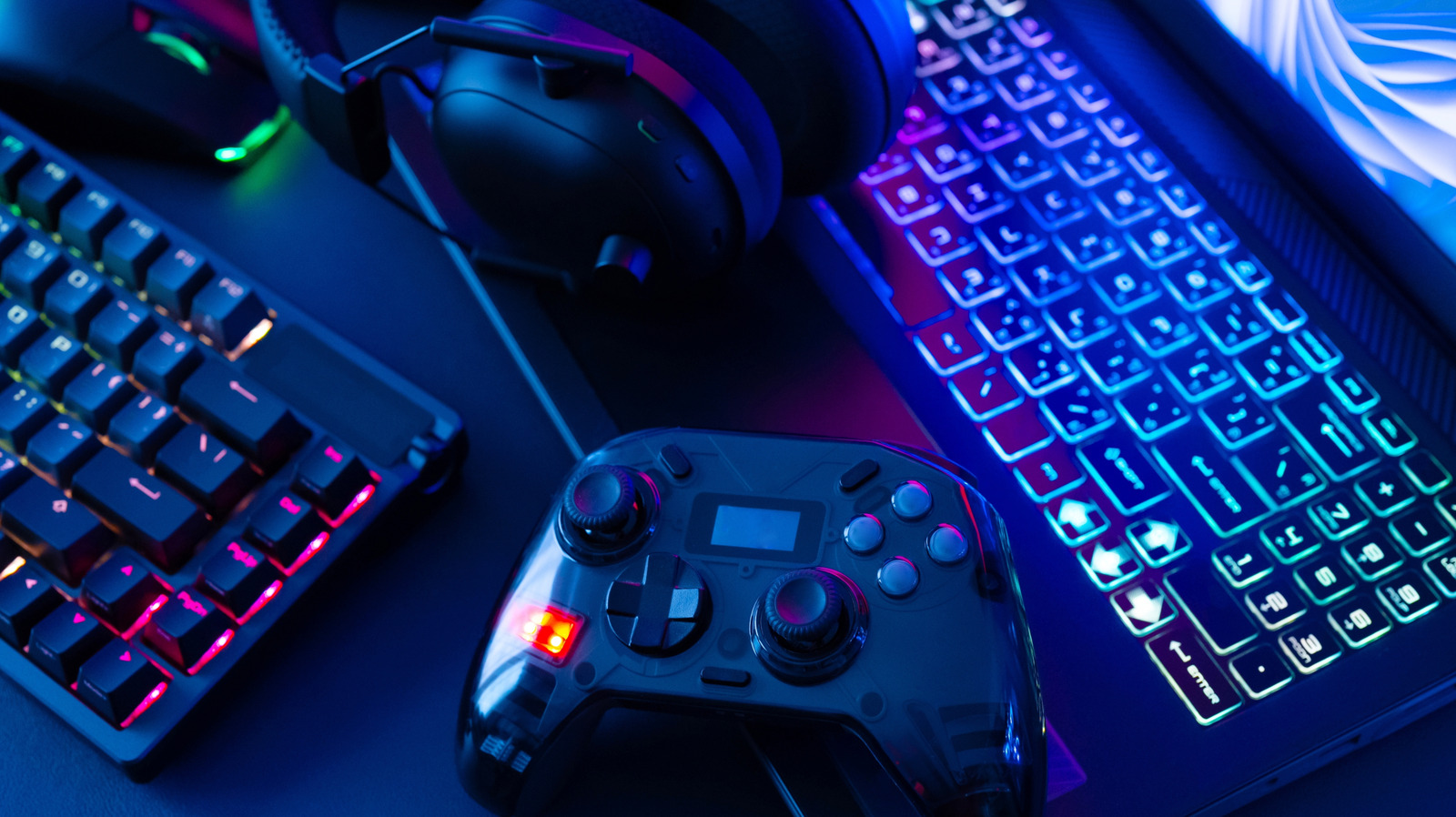
Keyboards, headphones, and a controller for PC gaming EKKAPHAN CHIMPALEE/Shutterstock

We may receive a commission on purchases made from links.

Before the days of live internet streaming, YouTube, and Twitch, if you wanted to play a video game, you’d head to an arcade or sit in front of a single screen and play games. Today, a single screen may not cut it for those who want to game, chat on Discord, and search the internet at the same time. Software like OBS and Streamlabs, as well as splitting your screen in half, can help, but having a second screen allows you to view your game and other windows without clogging up your field of view. Even so, you don’t need to spend a mint for that second display.

Your main screen is the one you want to devote to your games, so it’s best to look for high-resolution options to get the best graphics, look, and gameplay out of whatever you’re playing. Those features can jack up the price, but even a $50 second monitor can change the way you work and game. That second monitor doesn’t have to be crazy expensive or deliver the best image quality if you plan to use it for additional tasks outside of gaming.

Multitasking is an essential skill for not only streamers with a live audience, but for anyone who may enjoy having more options at their fingertips. Having a second monitor allows you to keep your game running on the high-end screen while you search for walkthroughs, read FAQs, or chat with your friends about the latest episode of your favorite show on your backup monitor. This means the screen can be cheaper than your main gaming display.

The benefits to using a second monitor while gaming

A woman gaming on a PC Urbazon/Getty Images

Investing in a second gaming monitor doesn’t have to end with a game-over for your bank account. Standard PC monitors will usually do the trick, and they’re budget-friendly, often running around $100 or less. You don’t need the second screen to be fancy, just functional. Make your main monitor the 4K model if you want and leave your second monitor for just about everything in between.

There are several monitors that can work as a second screen without costing a fortune. The UFYQL Portable Monitor, for example, carries a list price of $39.99, and the ASUS 22″ 1080P Eye Care Monitor (VP227HF) checks in at $69, making both possible options as a second monitor. Do keep in mind, it is worth looking up a monitor that best fits your needs to ensure you get exactly what you’re looking for.

Go to Reddit, and you’ll find a forum with the question asking whether a cheap monitor should be used if it’s not for gaming. One member responded by saying the color between the two monitors was off, with one monitor tinged more yellow, although they didn’t mention which of the two displays was off. If you do experience any odd coloring, you might check to see if any common settings that can ruin your computer monitor are in play.

The best setup for dual-monitor gaming

Hands holding a controller to play video games on a PC RSplaneta/Shutterstock

When it comes time to set up your dual monitors, there are a few options at your disposal. You can place your second display side-by-side and level with your gaming monitor, using a stand, or going for a mount like you would a TV on a wall. Screens can even be turned horizontal and vertical, depending on your preference. If you want a vertical view, you’ll need to go into your computer’s settings to change the view of each screen. Many monitors come with a built-in stand, but not all of them do, and you can get creative in either case. Just make sure your second monitor comes with a VESA mount so you can attach it to whatever stand or desk arm you want to.

Overall, high-end computer monitors are great for gaming, but the smart money buys a cheaper panel for secondary tasks. If you’re on a tight budget and don’t want to blow a lot of cash on a second powerful monitor for your gaming setup, you don’t need to. Having a second monitor is not only convenient but also adds more versatility to your gaming sessions. You’re free to play games on one monitor and use the extra monitor for whatever meets your needs. The big exception to this idea of going cheap on your second monitor is if you do actually want to extend your gaming display to both screens. In that case, you’ll definitely want top-end capabilities on both sides of the divide.

Source