Posted on

Switzerland’s Breel Embolo Receives Red Card For Diving Against Argentina

Switzerland striker Breel Embolo was sent off in the second half of the World Cup quarterfinals against Argentina after a VAR check led to a second yellow card for simulation. 

The incident occurred in the 72nd minute, when Leandro Paredes appeared to catch the heel of Embolo. Referee Joao Pedro Silva Pinheiro initially issued a yellow card to Paredes for the challenge.

However, play was halted as a VAR check began to review the decision. Upon review, the referee determined that there was no contact and that Embolo had simulated the sequence to win a foul. 

Pinheiro subsequently canceled the yellow card initially assessed to Paredes and instead booked the Swiss forward for simulation. Since Embolo had already received a yellow card in the first half, the second yellow resulted in a red card. 

“What the VAR believes is that there was no contact and the yellow card is unjust, and actually the Swiss player was diving. So, what the referee can do in his power, which we saw in a previous game with the United States, is that he can reverse the yellow card and give it to the Swiss player,” FOX Sports rules analyst Mark Clattenburg explained on the broadcast. 

However, Clattenburg wasn’t in full support of the decision that resulted in a red card.

“The problem with this is, the Swiss player is already on a yellow card from the first half, and that would, for me, be very harsh to give a second yellow card for a simulation.”

The protocol used by the referee mirrors a situation seen in a group stage match involving the United States and Paraguay, where officials utilized VAR to reverse an unjust yellow card and penalize the diving player instead.

“This is the problem. What we saw in the United States game earlier in the tournament was that they changed the yellow card over because Tim Ream was the one to have alleged to have given the foul and [the Paraguay player] was eventually given the yellow card,” Clattenburg said. “In this situation, again, it should be reversed and the yellow card should go to the Swiss player.

“Unfortunately, he’s already on a yellow card for the first half.”

Switzerland must now navigate the final minutes down a man against the defending World Champions.


Source

Posted on

Wrobleski Becomes 6th Dodgers All-Star, Peters Gets Nod After White

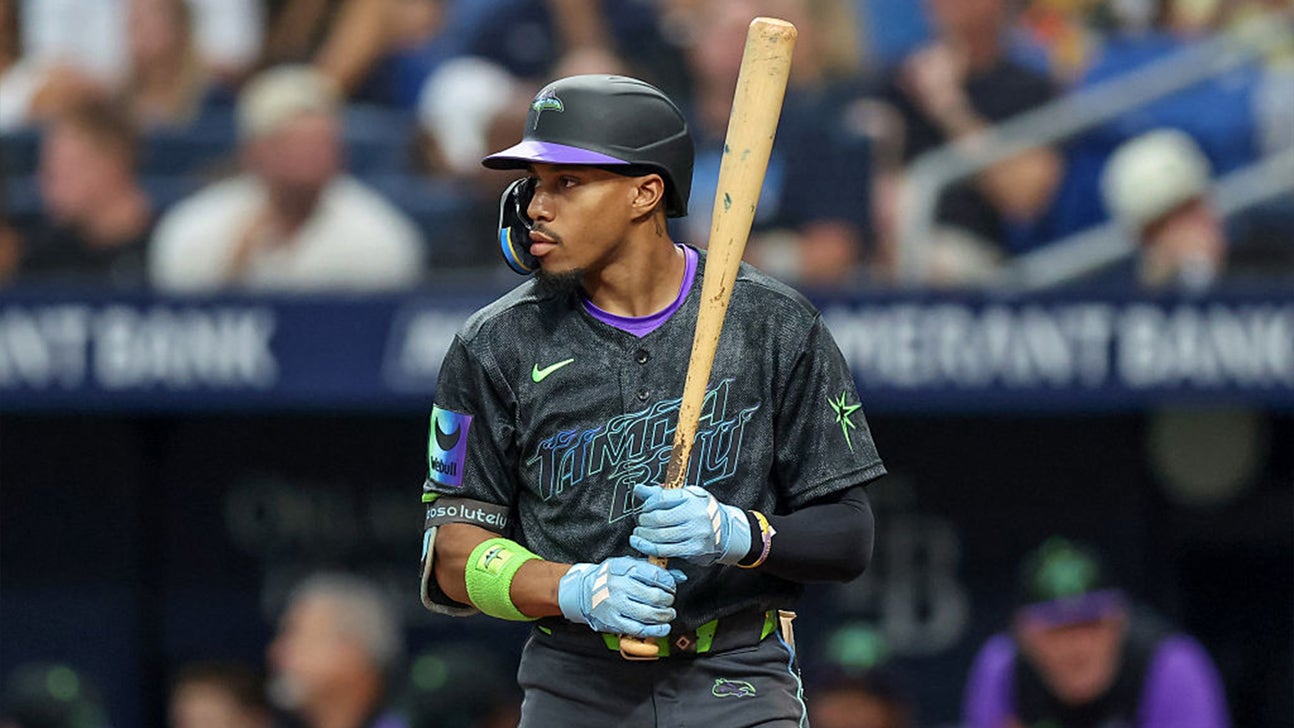
Left-hander Justin Wrobleski became the sixth member of the World Series champion Los Angeles Dodgers on the National League All-Star roster and Chicago outfielder Tristan Peters was added to the American League squad on Saturday, a day after becoming the seventh White Sox player to hit for the cycle.

Washington left-hander Foster Griffin also was added.

Wrobleski replaced Cincinnati right-hander Chase Burns, who won’t be active for Tuesday night’s game at Philadelphia’s Citizens Bank Park because of tightness in his right groin.

Peters took the roster spot of Athletics first baseman Nick Kurtz, who was put on the injured list because of a sprained right thumb.

Griffin replaced Milwaukee pitcher Braxton Ashcraft, who threw 98 pitches Saturday against Pittsburgh.

Wrobleski, 26, is 10-2 with a 2.69 ERA and 73 strikeouts in 100 1/3 innings. He joins two-way star Shohei Ohtani, right-hander Yoshinobu Yamamoto, first baseman Freddie Freeman, third baseman Max Muncy and outfielder Andy Pages as Dodgers All-Stars.

Ohtani will have his left knee drained Sunday to relieve continued irritation and will not go to Philadelphia.

Peters joins White Sox teammates Miguel Vargas and Munetaka Murakami on the All-Star roster. Murakami, a rookie slugger from Japan, was added Friday just hours before he returned to action against the Athletics after missing six weeks with a right hamstring strain.

Still a rookie at 26, the speedy, slick-fielding Peters is batting .303 with six homers and 35 RBIs is his first full major league season. He has 20 doubles and three triples; the most recent came in the seventh inning of Chicago’s rout of the Athletics on Friday that made Peters the first White Sox player to hit for the cycle since Jose Abreu in September 2017.

Chicago obtained Peters’ rights last December from Tampa Bay. He appeared in only four games with the Rays last season without a hit in 12 plate appearances, but the one-time Savannah Banana has taken off in Chicago.

“The White Sox gave me this opportunity and I went into it just trying to make the most out of it and just be who I am as a player, too,” Peters said. “I know there was a lot of bunting in the beginning and just trying to figure out who I am at the big league level and you know they give space for that, too. Just an incredibly supportive group and that’s helped me thrive.”

A native of Winkler, Manitoba, Peters became the second Canadian to record a cycle. He joins Cleveland right-hander Cade Smith and Miami infielder Otto Lopez, who holds dual Canadian-Dominican citizenship, as Canadians on the 2026 All-Star roster.

Peter’s said becoming an All-Star was a pipe dream at the start of the season. But after several months, he thought it might become a possibility.

“I guess toward the end of this first half, I was like ‘OK, maybe there’s a chance,’ but there’s a lot of really, really talented players in this league,” he said.

Kurtz is batting .266 with 20 home runs, 66 RBIs and a league-leading 76 walks. The 23-year-old was the AL rookie of the year last season, when he batted .290 with 36 homers and 86 RBIs.

He landed on injured list for the second time in his career after being sidelined with a strained left hip flexor in May 2025.

Griffin, back in the major leagues after three seasons pitching in Japan for the Yomiuri Giants, is 10-2 with a 2.77 ERA in 19 starts.

“I’m later in my career, and it happened now and I’m super grateful for that and super proud of that,” the 30-year-old Griffin said. “Just looking back over all the time and effort and work I put in, it’s a huge honor and I’m excited for it.”


Source

Posted on

World Cup Red Cards: 2026 Has More Red Cards Than

The referees have been active at the 2026 FIFA World Cup.

It took only 27 games across seven days for officials to allocate more red cards than they did during each of the entire 2018 and 2022 FIFA World Cups. The record for red cards in a single World Cup stands at 28 in 2006. These moments led to penalty kicks, set pieces outside the box and offenses capitalizing on shorthanded opponents. 

FOX Sports rules analyst Mark Clattenburg weighed in on the increase in red cards.

“Players are well-behaved, but they’re just making mistakes in and around the penalty area, in maybe a panic,” Clattenburg said. “And not saying the players getting inside the penalty area and conceding the penalties are more than happy to commit a foul and commit a red card, knowing that they miss the next match, but now that they have 26 players on the roster, there are plenty of players to certainly cover [those] positions.”

The record for red cards in a single World Cup is 28 in the 2006 edition of the tournament, and nine of those were straight red cards. 

  • 2026: 14 red cards (13 straight reds)
  • 2022: four red cards (1 straight red)
  • 2018: four red cards (2 straight reds)
  • 2014: 10 red cards (7 straight reds)
  • 2010: 17 red cards (9 straight reds)
  • 2006: 28 red cards (9 straight reds)

Here’s a look at every red card and the impact they’ve had on the 2026 FIFA World Cup. 

Breel Embolo

As Argentina and Switzerland battled for the last semifinal spot on Saturday, Switzerland striker Breel Embolo was shown a red card after receiving his second yellow card of the match. In the challenge, Argentina’s Leandro Paredes appeared to catch the heel of Embolo and fell to the ground. After VAR review in the 72nd minute, Embolo was shown the card for simulation, when a player deliberately exaggerates contact with another player. 

Jarell Quansah

The red cards continued during this year’s World Cup as England defender Jarell Quansah was shown one during England’s Round of 16 matchup against Mexico. In the 52nd minute, Quansah challenged Mexico defender Jesús Gallardo, sliding directly into his shin and wiping him out of the play completely.

Moments later, the referee brandished the red card. Quansah was sent marching, registering the 13th red card of this World Cup.

Folarin Balogun

Balogun scored USA’s first goal against Bosnia and Herzegovina in the round of 32 match, but arguably just as big a moment for him was getting dealt a red card in the 64th minute of the match. Referees reviewed the moment when he stepped on a Bosnian defender’s ankle, and Balogun was sent off, putting the USA down a man in the win-or-go-home match. 

The almost-25-year-old Balogun was the first player to score a goal and receive a red card in a World Cup knockout match since Zinedine Zidane against Italy in the 2006 final, according to FOX Sports Research.

Piero Hincapie

This was another example of a player being penalized for covering their mouth while engaging with an opposing player. Late against Mexico in the round of 32 match, Ecuador’s Hincapié was sent off in second-half stoppage time after having an exchange with an El Tri player. It didn’t impact the game much, as Ecuador soon lost, 2-0. But it’s a new rule that’s catching players off guard. 

Uruguay

Agustín Canobbio’s temper flared as Uruguay was on the brink of elimination. He earned a straight red card a spikes-up tackle on Spain’s Pau Cubarsí, before storming off the pitch. Canobbio’s harsh booking was the build of that foul and an infringement he committed minutes earlier when he made contact with American referee Ismail Elfath arguing a foul that was committed on Spain’s Nico Williams.

Rebin SulakaIraq flag

Defender · Iraq

This one didn’t help Iraq in its 5-0 blowout loss to Senegal in the teams’ group-stage finale. But within the first 13 minutes, Iraq defender Rebin Sulaka was dealt a red card, following a VAR review that ultimately determined he denied an obvious goalscoring opportunity for Senegal. However, Senegal wasn’t able to convert on the ensuing free kick. It was the fourth-fastest red card in World Cup history.

Nathan Ngoy

Nathan Ngoy was shown a straight red card in the 67th minute for his careless tackle on Iran striker Mehdi Taremi. At the time he was shown his red card, Belgium and Iran were still scoreless.

Miguel Almiron

Miguel Almiron was sent off right before halftime in Paraguay’s match against Türkiye after a VAR check determined that he said something while covering his mouth to an opposing player. 

Assim MadiboQatar

Madibo made an ill-timed tackle in the midfield on Canada’s Ismaël Koné. Koné was ultimately stretchered off the pitch as Qatar was reduced to nine men. 

Homam AhmedQatar

With Canada taking an early 2-0 lead, Homam Ahmed’s desperate tackle on Tajon Buchanan just outside the box only made matters worse. Canada scored moments later against a 10-man Qatar side to increase the advantage to 3-0. 

Tarik MuharemovicBosnia and Herzegovina

Tarik Muharemović tackled Swiss striker Breel Embolo on the precipice of the 18-yard box, preventing a one-on-one between Embolo and the goalkeeper. Switzerland didn’t convert the ensuing set piece, but with Bosnia and Herzegovina down to 10 men, the Swiss went on to score three late goals and close out a 4-1 victory. 

Cesar MontesMexico

As tempers boiled in the opening match, Mexico made it a three-red-card affair. César Montes took down Khuliso Mudau in an attacking position in the second minute of injury time. South Africa couldn’t capitalize on the set piece, and the match ended with a 2-0 Mexico victory.

Themba ZwaneSouth Africa

Themba Zwane was sent off for making contact with Brian Gutiérrez in the head during a South African attack. He put his team in a stick situation, down to nine men. Zwane’s suspension was extended from the normal one game to three after FIFA ruled it fell under Article 14’s rule for violent contact. 

Sphephelo SitholeSouth Africa

In the 2026 FIFA World Cup opening match, Sithole took down Mexico’s Brian Gutierrez just outside the box, earning a red card as the last line of defense between Gutierrez and the goalkeeper. Sithole’s red card led to a free kick from a threatening position, but Mexico couldn’t convert. However, in the 67th minute, Mexico capitalized on the one-man advantage as Raúl Jiménez scored his first World Cup goal. 


Source

Posted on

World Cup Red Cards: 2026 Has More Red Cards Than

The referees have been active at the 2026 FIFA World Cup.

It took only 27 games across seven days for officials to allocate more red cards than they did during each of the entire 2018 and 2022 FIFA World Cups. The record for red cards in a single World Cup stands at 28 in 2006. These moments led to penalty kicks, set pieces outside the box and offenses capitalizing on shorthanded opponents. 

FOX Sports rules analyst Mark Clattenburg weighed in on the increase in red cards.

“Players are well-behaved, but they’re just making mistakes in and around the penalty area, in maybe a panic,” Clattenburg said. “And not saying the players getting inside the penalty area and conceding the penalties are more than happy to commit a foul and commit a red card, knowing that they miss the next match, but now that they have 26 players on the roster, there are plenty of players to certainly cover [those] positions.”

The record for red cards in a single World Cup is 28 in the 2006 edition of the tournament, and nine of those were straight red cards. 

  • 2026: 14 red cards (13 straight reds)
  • 2022: four red cards (1 straight red)
  • 2018: four red cards (2 straight reds)
  • 2014: 10 red cards (7 straight reds)
  • 2010: 17 red cards (9 straight reds)
  • 2006: 28 red cards (9 straight reds)

Here’s a look at every red card and the impact they’ve had on the 2026 FIFA World Cup. 

Breel Embolo

As Argentina and Switzerland battled for the last semifinal spot on Saturday, Switzerland striker Breel Embolo was shown a red card after receiving his second yellow card of the match. In the challenge, Argentina’s Leandro Paredes appeared to catch the heel of Embolo and fell to the ground. After VAR review in the 72nd minute, Embolo was shown the card for simulation, when a player deliberately exaggerates contact with another player. 

Jarell Quansah

The red cards continued during this year’s World Cup as England defender Jarell Quansah was shown one during England’s Round of 16 matchup against Mexico. In the 52nd minute, Quansah challenged Mexico defender Jesús Gallardo, sliding directly into his shin and wiping him out of the play completely.

Moments later, the referee brandished the red card. Quansah was sent marching, registering the 13th red card of this World Cup.

Folarin Balogun

Balogun scored USA’s first goal against Bosnia and Herzegovina in the round of 32 match, but arguably just as big a moment for him was getting dealt a red card in the 64th minute of the match. Referees reviewed the moment when he stepped on a Bosnian defender’s ankle, and Balogun was sent off, putting the USA down a man in the win-or-go-home match. 

The almost-25-year-old Balogun was the first player to score a goal and receive a red card in a World Cup knockout match since Zinedine Zidane against Italy in the 2006 final, according to FOX Sports Research.

Piero Hincapie

This was another example of a player being penalized for covering their mouth while engaging with an opposing player. Late against Mexico in the round of 32 match, Ecuador’s Hincapié was sent off in second-half stoppage time after having an exchange with an El Tri player. It didn’t impact the game much, as Ecuador soon lost, 2-0. But it’s a new rule that’s catching players off guard. 

Uruguay

Agustín Canobbio’s temper flared as Uruguay was on the brink of elimination. He earned a straight red card a spikes-up tackle on Spain’s Pau Cubarsí, before storming off the pitch. Canobbio’s harsh booking was the build of that foul and an infringement he committed minutes earlier when he made contact with American referee Ismail Elfath arguing a foul that was committed on Spain’s Nico Williams.

Rebin SulakaIraq flag

Defender · Iraq

This one didn’t help Iraq in its 5-0 blowout loss to Senegal in the teams’ group-stage finale. But within the first 13 minutes, Iraq defender Rebin Sulaka was dealt a red card, following a VAR review that ultimately determined he denied an obvious goalscoring opportunity for Senegal. However, Senegal wasn’t able to convert on the ensuing free kick. It was the fourth-fastest red card in World Cup history.

Nathan Ngoy

Nathan Ngoy was shown a straight red card in the 67th minute for his careless tackle on Iran striker Mehdi Taremi. At the time he was shown his red card, Belgium and Iran were still scoreless.

Miguel Almiron

Miguel Almiron was sent off right before halftime in Paraguay’s match against Türkiye after a VAR check determined that he said something while covering his mouth to an opposing player. 

Assim MadiboQatar

Madibo made an ill-timed tackle in the midfield on Canada’s Ismaël Koné. Koné was ultimately stretchered off the pitch as Qatar was reduced to nine men. 

Homam AhmedQatar

With Canada taking an early 2-0 lead, Homam Ahmed’s desperate tackle on Tajon Buchanan just outside the box only made matters worse. Canada scored moments later against a 10-man Qatar side to increase the advantage to 3-0. 

Tarik MuharemovicBosnia and Herzegovina

Tarik Muharemović tackled Swiss striker Breel Embolo on the precipice of the 18-yard box, preventing a one-on-one between Embolo and the goalkeeper. Switzerland didn’t convert the ensuing set piece, but with Bosnia and Herzegovina down to 10 men, the Swiss went on to score three late goals and close out a 4-1 victory. 

Cesar MontesMexico

As tempers boiled in the opening match, Mexico made it a three-red-card affair. César Montes took down Khuliso Mudau in an attacking position in the second minute of injury time. South Africa couldn’t capitalize on the set piece, and the match ended with a 2-0 Mexico victory.

Themba ZwaneSouth Africa

Themba Zwane was sent off for making contact with Brian Gutiérrez in the head during a South African attack. He put his team in a stick situation, down to nine men. Zwane’s suspension was extended from the normal one game to three after FIFA ruled it fell under Article 14’s rule for violent contact. 

Sphephelo SitholeSouth Africa

In the 2026 FIFA World Cup opening match, Sithole took down Mexico’s Brian Gutierrez just outside the box, earning a red card as the last line of defense between Gutierrez and the goalkeeper. Sithole’s red card led to a free kick from a threatening position, but Mexico couldn’t convert. However, in the 67th minute, Mexico capitalized on the one-man advantage as Raúl Jiménez scored his first World Cup goal. 


Source

Posted on

Argentina’s Antonio Rattín Dies; 1966 World Cup Dismissal Led To

Argentine Antonio Rattín, a former Boca Juniors player whose act of defiance while representing Argentina at the 1966 World Cup helped lead to the introduction of yellow and red cards, has died, the country’s football federation said Saturday. He was 89.

Rattín died in Buenos Aires, according to the Argentine Football Association, or AFA, which expressed its “deepest sorrow at the passing of a historic symbol of Boca Juniors and the national team,” with whom he played in two World Cups.

A defensive midfielder known for his physical, hard-tackling style, Rattín won six Argentine league titles with Boca Juniors and was a Copa Libertadores runner-up in 1963.

“Rattín was one of us and loved these colours so much that they were the only ones he chose to defend throughout his 14-year career. A leader, an Argentine and forever a Bostero,” the club said.

With Argentina, Rattín played at the 1962 World Cup in Chile and the 1966 tournament in England, and also finished runner-up in the Copa América twice.

In the quarterfinals of the 1966 World Cup, Argentina faced England at Wembley Stadium. In the 36th minute, Rattín protested a foul and was sent off for “verbal dissent.” At the time, referees did not use cards but instead verbally informed players that they had been dismissed.

As he left the pitch, Rattín crumpled one of the corner flags, which featured the design of the English flag. He then sat down on the red carpet reserved for the late Queen Elizabeth II.

The two acts of protest sparked a barrage of objects thrown at him by fans from the stands.

In the wake of the confusing incident, and amid growing concern over the increasingly violent nature of the game, FIFA’s refereeing authorities concluded that a practical, universally understood system was needed to communicate cautions and dismissals.

Kenneth George Aston, who headed FIFA’s refereeing committee, took inspiration from traffic lights and, in 1967, introduced the yellow and red cards that are still used today.

Rattín’s defiant gesture at Wembley also marked the beginning of the football rivalry between Argentina and England. It reached its most iconic chapter in the quarterfinals of the 1986 World Cup in Mexico, when Argentina won thanks to Diego Maradona’s unforgettable goals — one scored with his hand, unnoticed by the referee, and the other after a brilliant solo run.

Argentina plays Switzerland in another World Cup quarterfinal on Saturday. Many supporters are hoping for a semifinal meeting with England, who defeated Norway in Saturday’s earlier quarterfinal match.

Reporting by the Associated Press.


Source

Posted on

Messi, Mbappé, Bellingham And Kane Providing A Golden Boot Race

For a few days, this was the best Golden Boot race in living memory. Four legends, separated by two goals, all still alive. Then Saturday in Miami thinned the field in the most dramatic way possible.

Erling Haaland is gone. 

Norway’s dream ended in extra time, England winning, 2-1, and the man who had scored in every single match his country played was finally, mercifully for defenders, held quiet. Seven goals, a historic run to the quarterfinals, and now a plane home. The most efficient scorer the sport has produced never got his shootout at the top. Cruel game.

His conqueror complicated things too. Jude Bellingham scored twice against Norway — including the extra-time winner — to reach six goals and pull level with his own teammate, Harry Kane. So England now carries two men on six into a semifinal. Neither is out of it. Both would need a historic run over two games to catch the leaders. Not impossible. Not likely.

Because the leaders are who we always suspected they’d be.

Lionel Messi has eight after being held in check in the 2–1 quarterfinals win over Switzerland. Kylian Mbappé also has eight after adding to his account in the 2-0 quarterfinals win over Morocco. The same number they finished on in Qatar four years ago, when Mbappé’s hat trick in the final edged Messi by a single goal and left the Argentine without the one trophy his cabinet never held. The Golden Boot is the lone individual honor missing from the greatest résumé the game has ever seen. 

Four years later, here it is again, dangling in front of Messi, with the same Frenchman standing in the way.

Lionel Messi’s Most Enduring 2026 FIFA World Cup™ Moment 🇦🇷 A Legacy That Keeps Growing

Lionel Messi's Most Enduring 2026 FIFA World Cup™ Moment 🇦🇷 A Legacy That Keeps Growing –>

The parallels this week bordered on absurd. Both men missed a knockout penalty. Both responded by scoring anyway. Messi’s spot-kick was saved against Egypt in the round of 16 clash before he dragged Argentina back from 2-0 down with an 83rd-minute equalizer. 

Mbappé went the same direction from the spot against Morocco, watched Yassine Bounou save it, then curled in his eighth of the tournament twenty minutes later. Great players don’t dodge failure. They just refuse to let it be the headline.

Here’s the wrinkle that decides everything: Mbappé is technically ahead. FIFA breaks tournament ties on assists, and Mbappé has three to Messi’s two. If both finish level on goals, the boot goes to France on a tiebreaker most fans have never heard of. 

Imagine explaining that to Just Fontaine, who scored 13 in six games in the 1958 World Cup for Francewith a single pair of boots and no penalties, and still holds the record no one will touch.

–>

The stakes are almost as high as the trophy itself. Messi, at 39, is the all-time World Cup scoring leader with 21 goals. Mbappé sits on 20, one behind, at 27 years old. Every goal either player scores now moves two leaderboards at once — the Golden Boot and the record book. There is no such thing as a meaningless finish for these two anymore.

And the fixtures are lining up for a reunion nobody would dare script. 

France plays Spain in the semifinal Tuesday. If both win, Messi and Mbappé meet in the final in New York on July 19 — the ghost of Lusail in Qatar resurrected, four years and one continent later, with a Golden Boot and a World Cup on the same table.

Haaland gave us the fireworks. Bellingham and Kane still lurk. But this was always going to come down to the two men who turned the 2022 final into a duel and never really stopped. Messi chasing the one award he’s yet to capture. Mbappé right there with him.

Fontaine’s record is safe. Everything else is up for grabs. And we get to watch the same two titans settle it one more time.

Norway vs England Highlights 2026 FIFA World Cup™ | Quarterfinals

Norway vs England Highlights  2026 FIFA World Cup™ | Quarterfinals –>

Source

Posted on

England vs. Argentina Confirmed For Semifinals: Here’s What To Know

A historic World Cup rivalry will be renewed on Wednesday, when England and Argentina go head-to-head in the 2026 FIFA World Cup semifinals at Atlanta Stadium.

England and Argentina punched their tickets to the semifinals with wins on the final day of quarterfinals on Saturday. Now, the two powerhouses of international soccer will meet at the World Cup for the first time since 2002.

Here is everything you need to know about the 2026 FIFA World Cup semifinal between England and Argentina:

EnglandEngland’s Path To The Semis

(Photo by Martin Rickett/PA Images via Getty Images)

–>

If there was one word to describe England’s World Cup so far, it would not be “dominant.” In fact, England has only won two of its six matches by more than one goal, and it hasn’t won by more than a single goal since the knockout stage started.

And yet, it is set to compete in its fourth-ever World Cup semifinal, in large part due to something past iterations of the team have lacked: mental toughness and desperation.

It starts at the top with Thomas Tuchel, who, even after positive results, unapologetically demands more from his team. But it extends to the Three Lions’ leading men, Harry Kane and Jude Bellingham, who have regularly led their teams to wins with their combined seven goals in the knockout stage.

Norway vs England Highlights 2026 FIFA World Cup™ | Quarterfinals

Norway vs England Highlights  2026 FIFA World Cup™ | Quarterfinals –>

ArgentinaArgentina’s Path To The Semis

(Photo by Kevin C. Cox/Getty Images)

–>

Resilient? Lucky? Ordained? Call it what you want; Argentina is just happy to still be here.

After a convincing group stage with three multi-goal wins, Argentina has had to fight in every second of the knockout stage to date, narrowly beating Cape Verde, Egypt and most recently Switzerland — all teams it was expected to beat comfortably.

Lionel Messi has done his part, scoring a tournament-high eight goals (tied with Kylian Mbappé) and making World Cup history along the way, but his teammates have also done everything in their power to make sure Messi’s last-ever run at the tournament isn’t cut short. That unity has been a hallmark of their tournament to date, and they will need to stay united to beat a determined England side.

Key Players

Jude Bellingham

If it weren’t for Jude Bellingham, England might not be in the semifinals. The 23-year-old midfielder has been outstanding for the Three Lions in the finals, scoring a brace against Mexico and Norway. He is the first player to score two or more goals in consecutive World Cup knockout stage matches at the same tournament since Diego Maradona in 1986.

Bellingham was 15 years old the last time England made a World Cup semifinals. Now, he could be the reason it makes its first final since 1966, which is also the last — and only — time it lifted the trophy.

Lionel Messi

Winger

Argentina flag

Argentina

We all know we’ve reached the end of Lionel Messi’s World Cup career. Whether it’s in the semifinal or the final, Messi will play his last-ever match at the tournament next week, closing the book on a historic World Cup career, which includes a title and the all-time records for most goals and assists.

Will Messi get his storybook ending and lift the trophy for a second time, or will he bow out against an England team as desperate to reach the mountaintop as he was four years ago? We’ll find out on Wednesday.

How To Watch England vs. Argentina

  • When: Wednesday, July 15, 3 p.m. ET
  • Where: Atlanta Stadium
  • TV: FOX
  • Stream: Watch three days free on FOX One


Source

Posted on

Zack Wheeler Felt ‘Disrespected’ By All-Star Game Invitation As Replacement

Philadelphia Phillies starting pitcher Zack Wheeler has declined an invitation to join the National League All-Star roster as a replacement player. 

The offer from Major League Baseball came three days after Wheeler struck out 14 batters and called his omission from the original roster “BS.” 

Wheeler said he chose not to participate because he felt disrespected by the selection process. 

“They disrespected me, so I’m not going to participate,” Wheeler told The Athletic.

The 36-year-old right-hander has posted a 2.28 ERA across 14 starts and 87 innings this season. 

Although he is scheduled to pitch on the Sunday before the All-Star Game, a factor that usually causes the league to avoid selecting those starting pitchers as replacements, Wheeler noted he would be willing to pitch in the All-Star Game anyway. 

After Wheeler declined the initial round of weekend replacements, MLB named Foster Griffin and Justin Wrobleski to the roster on Saturday.

Zack Wheeler has pitched at an All-Star level since returning from an injury that delayed his start to the season. (Jim McIsaac/Getty Images)

–>

Wheeler’s season began in April following his recovery from thoracic outlet decompression surgery last September, which required the removal of his right rib. 

Wheeler dismissed the idea that his recovery should impact his evaluation. “I don’t need a pity party,” Wheeler told The Athletic. “I don’t need somebody saying, ‘He’s had major surgery. Look at him now.’ I don’t need that. It was my plan to come back as who I was or even better.”

Wheeler clarified that he does not want to sound like he is “hating on the whole thing,” noting that participating in the game remains a privilege. 

However, he remains frustrated by how late the invitation arrived and noted he did not want to be the league’s fifth choice. He added that he has declined previously due to injury or precaution, but this time it stemmed from “pure disrespect.”

“I just don’t want to be disrespected as a person,” Wheeler told The Athletic, “I take it very seriously. It’s just me as a person, too. I felt like I said before — maybe I didn’t earn it from the get-go, but maybe second choice. Once I feel like they kind of messed that up, I’m out.”

Wheeler added he will spend the All-Star break on vacation with his family at the beach.


Source

Posted on

Ugly Wins Still Count: 4 Takeaways From Argentina’s Latest Close

Another knockout game, another 120 minutes, another survival. Argentina beat Switzerland 3-1 in Kansas City on Saturday night, and the scoreline is lying to you — this was agony until the 112th minute, when Julián Álvarez decided to end it himself in stunning fashion.

Here are my four takeaways from a quarterfinal that had everything, including a red card we’ll argue about for weeks:

1. Argentina Is The Cat With Nine Lives

Let’s do the math on the champions’ knockout run: 120 minutes against Cape Verde, a miraculous comeback from 2-0 down against Egypt, and now 120 more against a Switzerland side that refused to die, even a man down. That’s three straight games where Argentina was thoroughly resistible — and three straight wins. Even Saturday’s early gift, Alexis Mac Allister heading in a Lionel Messi corner after 10 minutes, dissolved into an hour of sweating when Dan Ndoye equalized.

Messi’s record scoring streak of nine straight World Cup games? Over. Argentina’s march? Not remotely. They’re unbeaten in 12 World Cup matches and headed to a seventh semifinal. At some point, you stop calling it luck and start calling it what it is: a team that simply refuses to be eliminated, no matter how hard it makes things for itself.

2. The Embolo Red: Harsh, Correct, or Absurd?

Here’s the sequence, because you need the full absurdity. Breel Embolo went down theatrically, simulating contact that never came. The referee then booked … Leandro Paredes. Wrong decision as he never made contact with Embolo. That mistaken-identity card triggered the VAR review — and the review found the dive. Second yellow, off you go, Switzerland down to 10 for the final 50-plus minutes of their first quarterfinal since 1954.

Switzerland’s Breel Embolo Sent Off for Second Yellow Card After VAR Review for Simulation | 2026 FIFA World Cup™

Switzerland's Breel Embolo Sent Off for Second Yellow Card After VAR Review for Simulation | 2026 FIFA World Cup™ –>

Was it technically correct? Yes. Embolo dived, and diving on a yellow is a self-inflicted wound that, by the letter of the law, warrants a yellow. But we understand the outrage, too: without the ref booking the wrong man, the simulation never gets reviewed. Right call, brutal path to it. Both things can be true.

3. Julián Álvarez, Finally. And What A Way To Announce It.

(Photo by Hector Vivas – FIFA/FIFA via Getty Images) –>

We’ve spent three weeks asking where Julián Álvarez went. The Atlético Madrid striker flickered without igniting all tournament, while Messi carried the load, and the questions were getting louder by the game.

Then came the 112th minute. Ten Swiss players camped behind the ball, Gregor Kobel having the game of his life, extra time slowly edging toward penalties. Álvarez collected it, opened his body, and curled an absolute painting into the top corner. No deflection, no rebound, no fortune — just a strike Kobel could only watch.

Argentina’s Julián Alvarez scores go-ahead goal in extra time against Switzerland | 2026 FIFA World Cup™

Argentina’s Julián Alvarez scores go-ahead goal in extra time against Switzerland | 2026 FIFA World Cup™ –>

It was the kind of goal you replay over and over in slow motion with your mouth agape (and comes in incredibly high in the top goals of the tournament.) If that’s the moment Álvarez wakes up, the timing is exquisite. Lautaro Martínez added the third on a breakaway in the 121st, but make no mistake: Álvarez won this game with one of the finishes of the tournament.

4. Wednesday’s Semifinal Will Be Won By Whoever Has Legs Left

(Photo by Tom Weller/picture alliance via Getty Images) –>

Pity these two semifinalists. England went to altitude at the Azteca to beat Mexico, then played 120 minutes against Norway in Miami with a heat index of 108 degrees — Jude Bellingham dragging them through with a brace, the winner off an Ørjan Nyland spill. Argentina has now played 240 minutes of extra time in three knockout games. Both teams finished Saturday looking like they’d run a marathon in a sauna, because essentially they had.

The football gods have granted one mercy: Wednesday’s semifinal is in Atlanta, under a roof, with air conditioning. So the tactical question becomes brutally simple. Thomas Tuchel’s England is younger in key spots; Argentina has Messi and pedigree, but the older, heavier legs. Recovery, rotation and squad depth will decide this as much as anything drawn on a whiteboard. 

Whoever’s still sprinting in minute-85 goes to the final.

Argentina vs Switzerland Highlights 2026 FIFA World Cup™ | Quarterfinals

Argentina vs Switzerland Highlights  2026 FIFA World Cup™ | Quarterfinals –> ]–>

Source

Posted on

England Hasn’t Won The World Cup In 60 Years

MIAMI STADIUM — For England fans, this is always the year. Whether it’s a World Cup or a European Championship, they believe in their heart of hearts that their country, the one that invented this sport and then exported it to all the rest, will finally, eventually take its rightful place as champions.

Over the last almost 60 years, it just hasn’t happened.

But the Three Lions have been getting closer. They were the losing finalists at the last two Euros. And with Saturday’s 2-1 extra-time win over Erling Haaland and Norway, England is back in the World Cup semifinals for the second time in three editions.

This time, it doesn’t feel like an outlier.

Watching England survive the crucible of Mexico City in last weekend’s thrilling 3-2 victory over World Cup co-host Mexico, it was impossible not to notice the mental fortitude of Thomas Tuchel’s team. And it was the same again on Saturday in South Florida, where Jude Bellingham, Harry Kane and the rest of Tuchel’s stars won another match that was less of a soccer game than a street fight. 

That hasn’t always been the case for England, who over the last 30-plus years has often performed beneath its talent level. That might be good enough to survive group play consistently or win an early knockout game. 

Against teams that it isn’t naturally superior to? No chance. There’s a reason England has been eliminated in the World Cup quarterfinals more than any other national team in history.

This version of England is different.

“The effort, the team spirit, the belief to overcome adversity, to dig in and find ways to win is on the absolutely highest level,” Tuchel said afterward.

He’s right. And that’s why England is, realistically, a bona fide World Cup contender at long last.

There’s a visceral toughness to this team that, for all its ability, its pampered, high-maintenance predecessors lacked. Call it a willingness to fight for every teammate — even the ones who might represent a hated Premier League rival.

That matters more than most think.

Argentina isn’t the reigning World Cup champ because it had better players, man for man, than France. Man for man, it didn’t. La Albiceleste won because, time and again, they simply refused to be beaten. That sort of mental strength is rare. Add it to a selfless group that boasts legitimate all-world players like Jude Bellingham and Harry Kane, and damned if Tuchel’s side doesn’t stand its best chance in at least half a century this time around. 

Facing Switzerland on Wednesday in Atlanta would’ve been easier, to be sure. But beating the best — to be the best — is a rite of passage, a requirement. And the defending champs — Argentina scored twice in extra time in Saturday’s nightcap to set up the semifinal everyone who isn’t English wants to see — are a fitting roadblock to have to somehow overcome. 

Argentina Scores TWICE in Extra Time 🇦🇷 Julián Alvarez & Lautaro Martínez Net Goals vs Switzerland

Argentina Scores TWICE in Extra Time 🇦🇷 Julián Alvarez & Lautaro Martínez Net Goals vs Switzerland –>

Should England clear that hurdle, it surely won’t fear whoever emerges between France and Spain on the stronger side of the bracket. Especially if, as Tuchel believes, England still has another gear to hit.

In his post-match sideline interviews, the German manager raised eyebrows when he said he loved the result if not the performance against Norway. Asked about the exchange, it seemed to catch Bellingham off-guard. 

“Maybe he doesn’t know what it’s like to play in those conditions,” Bellingham offered.

An hour later, during his post-game press conference in the bowels of the arena that the NFL’s Miami Dolphins call home, Tuchel, whose previous experience has been at Chelsea, Bayern Munich, Borussia Dortmund and Paris Saint-Germain, provided some additional context.

“I’m proud, and I’m happy,” Tuchel said. “But I’m also a football coach, and I also have demands.”

He continued: “I think we can play faster and play more clinical. There were unforced errors and technical mistakes in our game … so a lot of things to do better.”

If England can clean up those errors and maintain the mentality that has already taken them to the final four for just the fourth time ever, they’ll be as hard an out as the other three nations — Argentina, France and Spain — still standing.

England’s fans have been waiting for a chance like this for decades. Now, after surviving the two toughest tests to date, those supporters could be a mere 90 minutes from seeing their team in its first World Cup final since 1966.

“They spend well-earned money to come over and support us,” keeper Jordan Pickford said of England’s long-suffering diehards.

“All we want to do,” he added, “is pay them back.”

England Sings “Wonderwall” After Quarterfinals Win Against Norway

England Sings –> ]–>

Source