Posted on

Arsenal eyeing deal for Yan Diomande?

News » Premier League news » Arsenal news

June 15, 2026 20:55 GMT (UK), by Sri Aswin

View Arsenal summer 2026 transfer targets

Yan Diomande news

Diomande to Arsenal? Football Transfer Centre

Arsenal are one of the clubs keen on landing the signature of RB Leipzig winger Yan Diomande this summer, according to Sky Sports.

The Gunners are expected to spend big on a marquee winger and the priority could be given to a left winger.

Leandro Trossard and Gabriel Martinelli have their contracts expiring next year, and it is possible that both could leave.

Diomande has now emerged as a top target for the north London giants and it is added that contact has been established with his representatives.

The Ivorian can comfortably operate as a left or right winger, and it could be the reason behind the Gunners’ interest in landing him this summer.

Diomande is unlikely to come on the cheap with Leipzig set to demand at least €110 million to part ways with the Ivory Coast international.

The 19-year-old is presently at the World Cup with the Ivorian national side. He started during the 1-0 win over Ecuador on Sunday.


Source

Posted on

‘Scream 7’ Comes Home: This Franchise Isn’t Dead Yet

“Scream 7” has no right to be as good as it is.

A franchise that began as a meta take on horror has outlived its purpose, at least on paper. You could argue the “Scary Movie” franchise picked up that baton, albeit clumsily.

What’s left to mock, at least from a series that isn’t full-on camp?

We got winks and nods toward the saga’s roots in subsequent sequels, but that’s mostly it. The rest is up to a list of filmmakers,  new and especially old, to keep the saga on life support.

For a good long while, “Scream 7” outkicks the coverage, with apologies to Clay Travis. The film proved a monster hit earlier this year, and it’s now available on Blu-ray, Steelbook and DVD formats.

The film’s signature opening is all meta, with two “Stab” fans visiting the house where it all began. It’s not a spoiler alert to say it doesn’t end well, but it’s still fresh enough to register.

We’re soon reunited with Sydney Prescott (Neve Campbell), who has a teen daughter (Isabel May) and cop hubbie (Joel McHale). Sydney is glad to be rid of a certain serial killer, hoping for a life filled with the usual mother/daughter grief.

But said killer isn’t done with her or her daughter.

Killers?

The sequel leans hard on the remaining “Scream” players, including reporter Gale Weathers (Courteney Cox) and, surprisingly, Stu Macher (Matthew Lillard).

Wait … what?

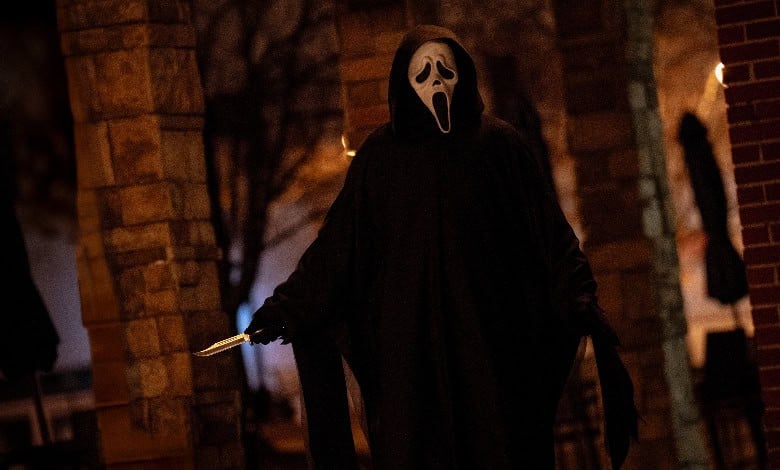
Director Kevin Williamson, the saga’s original screenwriter, impresses early and often behind the camera. One Ghostface reveal, which lasts all of a second, is as chilling as any image from the franchise.

The sequel still suffers from the franchise’s incurable disease – the late third-act syndrome. The saga must squeeze silly motivations and explanations for its killer reveals, and they rarely make much sense.

“Scream 7” can’t avoid those groaners.

Plus, we see so much of every new Ghostface iteration that there’s zero sense of mystery or menace. It’s just one of the cast of characters, lacking the superhuman mystique that Freddy, Jason and Michael Myers bring to the genre.

To be fair, the stunt people playing the various Ghostfaces bring a specific verve to the character, which is both unrealistic yet oddly necessary.

Far better? The integration of new and “legacy” characters, a balance that shouldn’t be this fun or successful, but it is.

That, plus surprising character beats from Campbell and McHale, who need but a few minutes on screen to develop their bond, and we care about the poor souls scrambling for survival.

And the story’s nod to A.I. proves darn near brilliant. We’ll say no more for spoiler reasons.

The special features include “Scar Tissue: The Making of ‘Scream 7.’” The filmmakers break down the story’s in-depth approach, which reflects on the finished product. Williamson is all-in on this storyline, and it shows.

The standard, “I loved working with so-and-so” snippets are balanced by smart insights into the film’s creation.

Franchise fans will savor the callbacks to earlier “Scream” films and homages to OG director Wes Craven. Left unsaid? Why the films keep seemingly killing off characters who later return as if they suffered a mere flesh wound, not severe stabbings?

Other extras in this packed edition include “Building Tension: Production Design,” “Dance of Death: Stunts” (fun and comprehensive) and some inconsequential deleted scenes.

Turns out the film relied on one of the original stunt experts to bring Chapter 7 to life – .Jennifer Badger.

And, yes, they use CGI to produce knife blades to keep the production safer. That’s movie magic. So is a seven-picture series with life still left in it.

Source

Posted on

Deace, Dreher Destroy ‘Disclosure Day’ -‘Profoundly Evil’

Movie critics, by and large, hailed Steven Spielberg’s “Disclosure Day” as a return to form for the Oscar winner.

Not everyone was on the same page.

The film earned a “B” CinemaScore, a middling result for the populist director. And select conservative pundits trashed the film in no uncertain terms.

Rod Dreher, a film critic and Orthodox Christian, ravaged the film at his Substack page. He called the film both “profoundly religious” and “profoundly evil.”

“Disclosure Day proclaims a new religion, one that displaces Christianity (at least). It’s hard to believe that this is an accident. To be charitable, we could assume that Spielberg, no longer able to believe in the God of the Bible, and of his Hebrew ancestors, has transferred his hopes to aliens. That is the gospel he preaches in this film.

…you will never see so blatant an instantiation of the kind of propaganda that I believe will become more and more present as the world moves forward towards whatever climax is coming.”

Ouch.

The Blaze’s Steve Deace offered a similar smackdown from a religious perspective. He dubbed the film a “direct assault on Christianity.”‘

This is a rather blatant attempt to evangelize into a new religion. In many respects, the transition Steven Spielberg makes from his 1970s classic Close Encounters of the Third Kind, to now Disclosure Day, is very similar to what you see from a lot of the prominent UFO/alien obsession proxies like Dr. Steven Greer. At first they start off in wonderment about what else is really out there in the cosmos and whether we’re alone in the universe (or Close Encounters), but they always eventually end up at the aliens are really our saviors to show fallible human beings the way to salvation (or Disclosure Day).

Deace also called out the film’s inclusion of Christianity in a specific fashion.

At the convent we see several of the nuns desperately clinging to their Rosaries looking for guidance, while the Mother Superior lets out a wry smile in approval of the coming syncretism. No other religion is even depicted, let alone shown to have to grasp with the significance of all this. Why is that? All the potential answers to this question are bad. Though I’d love that to be the case, Christianity is not the only global religion on this planet. 

“Disclosure Day” earned a respectable $43 million in its debut frame, which is solid for an original story but hardly worth Spielberg’s track record. Will the film’s spiritual message hurt its word of mouth? Or will audiences take the story at face value and ignore what Dreher and Deace call out?

Source

Posted on

How’ ‘On the Road’ Proved All the Naysayers Wrong

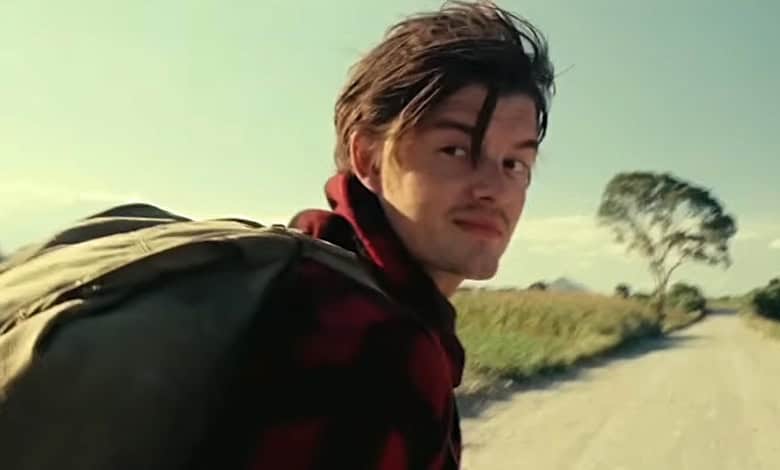
Walter Salles’ “On the Road” (2012) is one the great films based on a novel that was deemed difficult to adapt for film.

That’s evidenced by numerous abandoned attempts, and the novel was noted for decades as being “unfilmable.”

Jack Kerouac’s 1957 novel, a time capsule of a changing generation and diary of a young man finding himself in a landscape rich with discovery and self-destruction, has inspired so many subsequent works in all art forms.

It was only a matter of time before someone finally found the proper way to present it as a motion picture.

In Salles’ faithful and lively adaptation, Sam Riley is Sal Paradise (the Kerouac stand-in), whose friendship with Dean Moriarity (Garrett Hedlund, playing a version of writer Neil Cassidy) spans from 1947 to 1950. Their road trips are sometimes about the joy of shared company, with the likes of everyone from Carlo Marx (Tom Sturridge channeling Alan Ginsberg) to no less than William S. Burroughs (Viggo Mortensen).

Sometimes their misadventures are defined by sex and drugs, while others are about who you’re sitting next to and savoring the presence of a fellow artist. Dean’s on-again, off-again girlfriend Marylou (Kristen Stewart) is the wild card who keeps up with Dean’s wildest impulses, while Dean’s wife Camille (Kirsten Dunst) exudes a tolerance for Dean’s unpredictable lifestyle that is only surface level.

The editing by François Gédigier (who shaped hall-of-fame works like “Dancer in the Dark” and “Queen Margot”) is brilliant – there isn’t a dull scene here. “On the Road” always buzzes and crackles long before the scene that takes place in a jazz club.

Of the outstanding ensemble cast, Hedlund is so magnetic as Neal, that I had to keep reminding myself that he’s not a bigger star. Riley is pretty good, but it’s Hedlund’s movie. Mortensen is awesome as Burroughs and captures the author’s fuzzy, tragic madness.

Salles recreates the time of dreaming troublemakers who wanted to explore and experience life’s possibilities. It speaks to any generation that pushes against conformity.

Salles was a smart, ideal pick for this, as the art direction and tone bring us back to this time and place of youthful recklessness, guarded optimism and the shared notion of life as an ongoing adventure. “On the Road,” both the novel and film, recognize how vital these times and friendships are.

The time, according to Kerouac, when life with Dean was “my life on the road.”

Salles lingers on the loveliest moments, such as the bittersweet, beautifully played final scene. The film is flush with vignettes that feel fully realized and not rushed, capturing “the purity of the road.” The sequence where we watch as Kerouac writes “On the Road” in fittingly portrayed as a feverish writing session.

At this point, J.D. Salinger’s “The Catcher in the Rye” (1951) remains one of the few essential works of literature that have eluded a film adaptation, but I digress. What Salles does here is faithfully recreate the period, lean into character and the moment-to-moment sense of discovery (but without becoming episodic).

There is an undeniable joy to those first experiences of freedom in our youth, when we wander outside of our comfort zones and garner companionship or get in trouble.

Sometimes both.

I read Kerouac’s novel when I was in college, as a recommendation from my friend Ben Bonnet, who would also introduce me to counter-culture art and films. Ben was the Dean in my life who got me into alternative bands and insisted I listen to The Beatles’ “White” album, which is now my favorite work from The Fab Four.

My many adventures with Ben, while innocent compared to the characters in Kerouac’s novel, were full of firsts and eye-opening introductions to various art forms that shaped who I am today. After college, I remained frequently in touch with Ben, who was my friend for 30 years until his death last month.

Learning of his passing felt like a chapter of my life had come to an end.

I can still hear Ben’s voice, his laughter and now cherish every anecdote, every story, every word I remember sharing with him. In the hours of discovering he died, I immediately played our favorite tunes from The Beatles, “Norwegian Wood” and “You’ve Got to Hide Your Love Away” and rewatched “On the Road,” recognizing the friendship of Sal and Dean as a window to what my moments with Ben felt like.

Great art does this, allowing us to reflect and be grateful for those memories, which are trapped in the past and all the more valuable for their distance.

Source

Posted on

‘Office’ Alum Shares Ugly Truth About Media Bias, Graham Platner

There’s a reason why Legacy Media types tried to make both Scott Pelley and Stephen Colbert free speech martyrs.

They’re activists for the Left, not old-school journalists. And they rallied around the recently fired personalities because they, too, provided cover for Democrats.

It’s that simple. Yet it’s a reality many on the Left ignore. That goes for fellow journalists and Hollywood celebrities alike.

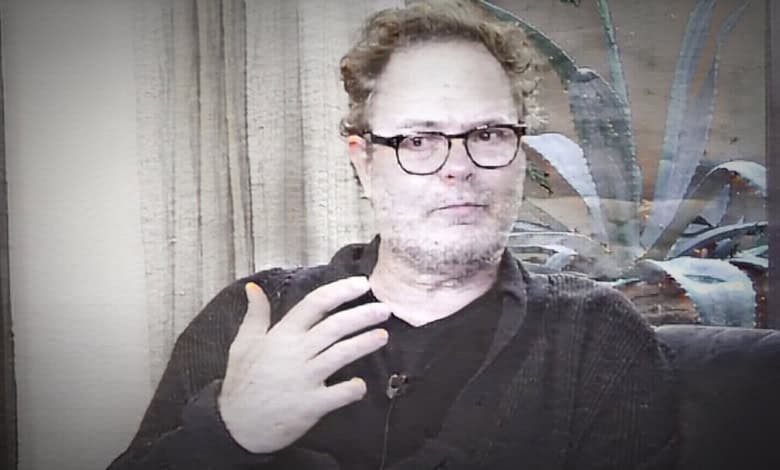
Rainn Wilson is a hearty exception.

“The Office” alum doesn’t always read from the progressive hymnal. He’s a person of faith, and his public comments tend to be more nuanced and less predictable than those of his peers.

He proved it again this week. Twice.

Wilson spoke to Fox News on a variety of subjects, including whether “The Office” could launch today. The show ran from 2005-2013, a time when woke culture hadn’t arrived on the scene.

That explains why “The Office” was so cutting edge and hilarious. The show’s scribes didn’t have to walk on eggshells not to offend viewers. That made the show so much funnier.

Wilson told Fox News Digital that “The Office,” much like “Blazing Saddles,” couldn’t be made today.

“I think that it would be too hard to be as politically incorrect as the show was,” Wilson said.

Is he wrong? The show’s initial run went smoothly, with strong critical acclaim and sizable ratings. Few social media users raged against the show’s content. If they did, their numbers were small and they didn’t force any “Cancel Culture”-style campaigns to impact the series.

Wilson’s opinion isn’t looked upon kindly in the media, which has pretended that woke culture had no discernible impact on humor.

He said it anyway.

The actor also weighed in on Legacy Media bias, something news reporters continue to deny. Even Pelley, who just got axed by CBS for attacking his boss, Bari Weiss, in public, recently claimed there’s no “metric” that shows such a bias exists.

This took less than five minutes to find the following on X.

Wilson agrees.

“I think there has been a bias in the media towards what we call more liberal policies,” he said. “They’re willing to overlook the Platner Nazi tattoo, but if it was someone from the other side that had a tattoo that was questionable they would be all over MSNBC about it.”

Platner’s Nazi tattoo is a scandal, full stop. Yet late-night TV hosts have avoided the subject as much as possible. Legacy Media reporters too often obfuscate the facts to protect Platner.

And we all know why.

“It’s the hypocrisy that gets me the most … both sides have to have equal standards of behavior,” he added.

The media has done everything possible to diminish Platner’s Nazi tattoo, which remained on his body for 18 years until he covered it up in shame last year. Reporters, including Pulitzer Prize winners, also have downplayed the physical abuse allegations hurled at Platner on recent weeks.

Smells like bias to most sane Americans. And Wilson, too.

Source

Posted on

‘Minnesota Mao’ Connects Dots Between Walz, Communist China

One of the most jaw-dropping documentaries of the last decade missed theaters entirely.

The film got snubbed by Oscar voters, too. Few, if any, mainstream critics so much as gave it a glance. That didn’t detract from its power and importance.

“The Fall of Minneapolis” examined George Floyd’s death and the cultural fallout in a way Legacy Media outlets wouldn’t touch. It featured body cam footage most Americans never saw and let the Minneapolis officers forced to watch their precinct burn finally have their say.

It’s the kind of documentary that could make you view the Floyd moment in an entirely new light. No wonder most media outlets refused to cover it.

Now, the team behind that film is back with another explosive documentary.

“Minnesota Mao,” just released for free on YouTube, explores the curious connections between Gov. Tim Walz and Communist China. We get snippets from Chairman Mao Zedong’s “Little Red Book,” his Communist manifesto, along with the governor’s most fiery critics.

The film compares Minnesota’s draconian COVID-19 lockdowns to brutal Chinese politics and shows how many of Walz’s preferred quotes come painfully close to Mao’s book snippets.

Gov. Walz announced earlier this year that he won’t be running for another term, a move likely tied to the rampant fraud in his state. He still remains a national figure, one deserving of serious scrutiny.

Legacy Media outlets won’t do the honors. Minnesota media, specifically The Star Tribune, all but serve as Walz’s protection racket.

Enter “Minnesota Mao.” The crowdfunded documentary went live on YouTube on June 4, the anniversary of the Tiananmen Square Massacre in 1989.

The film features several Walz critics, including a college professor fired for not getting the COVID vaccine and  former Minneapolis police officer Tou Thao, who served time for his involvement in Floyd’s fatal police encounter.

Source

Posted on

Did Elvis Costello Go Woke Over ‘Oliver’s Army’ Slur?

Elvis Costello once uttered a terrible word, twice, during a drunken exchange that might have gotten him canceled today.

Perhaps permanently.

The singer-songwriter slammed American music in general and, more specifically, U.S.-based superstars Ray Charles and James Brown with the dreaded “n-word,” according to a 2010 New Yorker profile of the rock icon. As the story goes, Costello got knocked to the floor in short order, and the incident allegedly hurt his rising star status. (Costello publicly apologized for the outburst)

Ask Morgan Wallen how that feels.

More than 40 years later, Costello is still a vibrant touring act, but he recently changed the words to one of his iconic songs – “Oliver’s Army.” 

Now, the singer is swearing – literally – that he didn’t go woke in the process. Costello nixed the song from his concert lineup in 2022, but he wasn’t forthcoming as to the reason why.

RELATED: ELVIS COSTELLO SLAMS TRUMP, FALLS OUT OF TUNE

“Oliver’s Army” is back, but it’s had a minor facelift.

The old lyric: “Only takes one itchy trigger, One more widow, one less white n-word”

The new lyric: Only takes one itchy trigger, One more widow, one less pallbearer”

(NOTE: The closed captioning on the YouTube version of the song includes the word in question)

The song in question finds Costello weighing in on “The Troubles,” the ongoing Northern Ireland feud that left hundreds dead and many more injured.

The line in question, according to LouderSound.com, “is a reference to a slur used against Irish Catholics and to racist attitudes which underpinned British military campaigns across the world in centuries past, and which permeates sections of the British Army to this day.”

The musician shared his explanation for the lyric on a 2002 reissue of “Armed Forces,” the album featuring the track.

“I made my first trip to Belfast in 1978 and saw mere boys walking around in battle dress with automatic weapons. They were no longer just on the evening news. These snapshot experiences exploded into visions of mercenaries and imperial armies around the world. The song was based on the premise ‘they always get a working class boy to do the killing’.”

The slur doesn’t connect to what we typically imagine when that reprehensible term comes to mind. Still, Costello changed it anyway.

His explanation will sound to some like an excuse.

“I no longer use words that go off like alarm clocks, because indignation about that word stops people hearing what the song is about,” he explains.”That is my position. People went, ‘That’s woke.’ Well, go f*** yourself.”

The Rolling Stones faced a similar issue in recent years. The band favorite “Brown Sugar” got the heave-ho in 2021 for allegedly demeaning black women and slavery references.

Guitarist Keith Richards defended the song but didn’t fight to keep it on the band’s live playlist, apparently.

“I’m trying to figure out with the sisters quite where the beef is. Didn’t they understand this was a song about the horrors of slavery? But they’re trying to bury it. At the moment I don’t want to get into conflicts with all of this s***,” he said. “But I’m hoping that we’ll be able to resurrect the babe in her glory somewhere along the track.”

Classic rockers once trashed hotel rooms and committed other unspeakable acts. Now, they dare not offend fans both old and new.

Did Costello have a moment of woke? Or is his anger at the suggestion justified?

Source

Posted on

‘Disclosure Day’

Steven Spielberg. Aliens. Summertime.

’nuff said, right? Wrong. Oh, so wrong.

“Disclosure Day” boasts a trippy cast, a timely premise and the potential for endless thrills. The result is a mess, suggesting that the iconic storyteller’s best days are behind him.

Boy, were those days movie magic. Now? The only illusion here is thinking this saga is worth its bloated running time.

Emily Blunt stars as Margaret Fairchild, a weather forecaster at a Kansas City news station. Her latest broadcast ends as she appears to suffer an on-air mental collapse.

The truth is so much stranger. Margaret is somehow connected to an alien entity, and she’s not alone. Josh O’Connor co-stars as Daniel, a security guard who pilfered hard drives containing proof of aliens on earth.

Ack! So much for any mystery about what we’re dealing with here.

Hot on their trail is Noah (Colin Firth stuck in an embarrassing role), the head of the company where Daniel stole the evidence. Noah wants to get those files back at all costs. The world isn’t ready to learn that we’re not alone in the universe.

Or so he insists.

“Disclosure Day” sounds so intriguing on paper, but nearly every element offers surface-level thinking. Even worse?

The dramatic stakes are all over the map, arguably the film’s biggest lapse. And then there’s Hugo (the great Colman Domingo), trying to thwart Noah’s plans. Hugo is part of an effort to tell the world all about the aliens hidden by dark, nebulous forces.

Who are these forces? Why are so many aliens visiting Earth? What is their purpose? Is there a reason for their repeated visits? If they’re so sophisticated, why are they constantly in peril once they reach our planet?

Make some of this make sense. 

“Disclosure Day” asks endless questions while offering few answers. The story quickly falls into a stale pattern of chase, escape and chase anew.

The talented cast acts its heart out to bring something of consequence to the story. That they collectively fail has more to do with Spielberg’s vision (he wrote the story) than any missed assignment.

Anyone eager for a great alien “reveal” better get ready for a letdown. The creatures look like every generic UFO image drawn over the past 50 years.

There’s zero imagination or wonder afoot. Just boiler-plate FX that might have cost as much as Spielberg’s trailer rental.

Maybe less.

Remember the moment when we first glimpse the aliens in “Close Encounters of the Third Kind?” That classic film laps “Disclosure Day” in every metric possible.

There’s not a single mash potato on screen here, either.

The new film’s finale proves laughable, a crush of actors over-emoting for An Important Message. What message? Darned if we know, beyond a “Kumbaya” sentiment embedded  in the screenplay.

The film features plenty of chase sequences, but they’re typically resolved with a silliness that can’t be shared here for spoiler reasons.

Later, the old Spielberg magic makes a cameo appearance. Our heroes are caught racing with a moving train, a sequence that’s illogical but undeniably cool. That’s the master at work, but it quickly gives way to more sappy sentiment.

That’s been his weakest impulse over the decades.

“Disclosure Day” is all about truth, trust and empathy. That’s fine, but it’s akin to Christopher Reeve making an entire film about Superman ridding the globe of nuclear weapons.

Sorry, Supe. They’ll just make more.

Plus, we’re told the world is on the brink of a global panic, but the film can’t share much of it beyond a few news soundbites.

Spielberg rearranged the pieces of his glorious past for “Disclosure Day.” The effort shows how hard it is to deliver consistently great work over the decades.

HiT or Miss: “Disclosure Day” is a Spielbergian dud, and it hurts to admit that truth.

Source

Posted on

Jane Fonda Cosplays Free Speech Warrior on ‘Daily Show’

Jane Fonda keeps reinventing herself in her 80s.

The 88-year-old Oscar winner spent several years promoting Fire Drill Fridays, an effort to put the spotlight on Climate Change.

That didn’t exactly move the cultural needle, so she’s back with a new cause.

Free Speech.

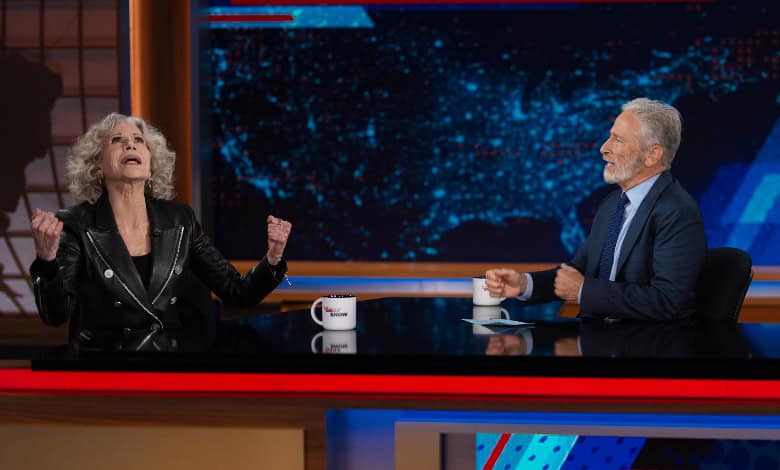
Fonda joined Jon Stewart on Monday night’s “Daily Show” to talk up her new initiative – the Committee for the First Amendment . Actually, it’s a decades-old group that she revived to smite President Donald Trump.

The group is set to hold a free speech-themed concert with Bette Midler, Rufus Wainwright, Julia Roberts, Patti Smith and more on June 14.

Free speech should rise above partisan politics, meaning even conservatives could support Fonda’s efforts. Except she conveniently ignored sizable free speech attacks from sources including:

Fonda and, to be fair, Stewart looked the other way while free speech was under attack in recent years. 

So what changed?

RELATED: THE FREE SPEECH FIGHT KIMMEL AND CO. IGNORE

Liberals started to suffer from perceived free speech threats, real or imagined. Stephen Colbert didn’t lose his show because of a Trumpian temper tantrum. CBS pulled the plug after admitting “The Late Show” cost the network $40 million a year.

That’s a figure no one has credibly challenged. Must be true, right?

Still, the “optics” forced progressives and the Legacy Media, but we repeat ourselves, to make Colbert a free speech martyr.

Stewart didn’t dare mention her “Hanoi Jane” past. Of course. He let her wax on about her Vietnam War activism unchallenged.

Amazing.

Then, she shoveled some Fake News for Stewart to silently approve.

“We’re being attacked. Comics first,” Fonda said, sans evidence. “Tyranny and comics don’t go well together.”

Tell that to the rodeo clown who lost his career for a silly bit mocking President Barack Obama in 2013. Fonda didn’t rally by his side.

Weird. Not really.

What about the right-leaning comics who faced Big Tech Censorship in recent years?

“Our democracy is being destroyed. Our rights are being taken away,” she prattled on, while Stewart just sat there, a “truth to power” comedian letting her share conspiracies without challenging her facts.

We expect bald partisanship from “The Daily Show.” The hypocrisy of letting Fonda stand up for free speech when neither she nor her progressive pals rallied behind it is off the charts.

Source

Posted on

Cardi B Decries Karmelo Anthony Sentence: ‘Not Justice’

It didn’t take a jury long to decide Karmelo Anthony’s fate.

The 19-year-old was found guilty of first-degree murder Tuesday after stabbing teammate Austin Metcalf, 17, last year. It took less than three hours for the verdict to be reached.

The case grabbed national headlines for ghoulish reasons. The facts were never in doubt, beyond the worst of the worst fever swamps. Metcalf was unarmed. Anthony used a small knife to stab the teen in the heart after a disagreement.

That explains the jury’s quick pace. Singer Cardi B sees it differently.

The “WAP” singer posted a series of comments on X yesterday decrying the 35-year sentence Anthony received for the murder.

She reposted other reactions to the verdict, too, revealing family videos of Anthony before he committed murder.

Stunning.

The singer’s followers teed off on her moral depravity.

Her comments echo some of the most disturbing videos taken outside the courtroom this week.

The outrageous nature of the case produced some stunning revelations.

And, sadly, one of our elected leaders may have hit the lowest low.

Source