Posted on

Google Maps Just Made Walking In A New City A

Thrive Studios ID/Shutterstock

Whether you’re traveling to a new city for work or sightseeing, Google Maps can help you get around. It’s not just about using the app while you’re driving. Google Maps is especially useful for public transportation and walking, as it can help you find popular places to visit and restaurants that match your preferences and can be more convenient than exploring a new region by car. The problem with using Google Maps while walking is that you still have to type on your phone while also trying to figure out where you are. But Google may have fixed this issue by bringing Gemini support to walking and biking modes in Google Maps.

Google announced the new feature on Friday, confirming that both Android and iOS will support the functionality. The feature is rolling out worldwide and should be available in your region as long as Gemini is available. Once Gemini support arrives, you’ll be able to interact with it via voice inside Google Maps when walking or biking. You won’t have to bounce between Google Maps, the standalone Gemini app on your phone, and a browser where you may be looking for information. Instead, you can call Gemini using your voice and ask it to pull up information about points of interest on the map or add a new stop to your route.

In the video example Google shared, the user asks the AI to provide a summary of the nearby attractions. Gemini proceeds to describe the neighborhood and some of its attractions, including restaurants and tourist spots. The user then asks Gemini to add one of the points of interest in the summary to their trip, and the AI does it.

What else can Gemini do in Maps navigation?

Using Gemini in Google Maps while walking may reduce the time people spend looking at their phones and allow tourists to focus more on their vacation instead of interacting with a gadget. Gemini can also come in handy while biking. Users can dictate to the AI text messages for friends and family, and ask Gemini for information about the trip, like the estimated arrival time.

These features are similar to the Gemini in Google Maps experience the company announced in November for driving. Google demonstrated several use case examples at the time, including a user asking Gemini for restaurant suggestions while they were driving with Google Maps turned on, as in the video above. The AI gave them suggestions and added a stop to the Google Maps route based on the user’s selection. 

Gemini can also improve the turn-by-turn navigation experience, as it’s able to integrate visible landmarks into the dialogue instead of the traditional “turn right in 100 feet” instructions you may hear from navigation apps, which can make it easier for drivers to figure out when to turnThe November update also brought Gemini support to Google Lens in Google Maps, letting users ask the AI questions about a place they may want to visit by pointing the camera at that location without leaving the navigation app. The feature should also work well with the new Gemini features on Maps for walking, especially when visiting a new city and trying to find a place to eat.

Source

Posted on

The Android Phone You Want Is Coming Soon, According To

Framesira/Shutterstock

A report from Korea said in November that the Galaxy S26 series would be unveiled on February 25 in California, several weeks later than anticipated. Samsung was reportedly dealing with a reshuffle of the Galaxy S26 series, which would lead to inevitable delays. Now, well-known leaker Evan Blass has shared a purported Samsung teaser for the Galaxy S26 Unpacked that features the same date of February 25. The teaser doesn’t mention a place or time for the press conference, but it lines up with the previous report.

Samsung has yet to issue invites for the rumored February 25 Unpacked launch event, but the company recently confirmed that the Galaxy S26 series will launch in the first half of 2026, according to Android Authority. Samsung teased during its recent earnings call that the Galaxy S26 will offer new agentic AI experiences. The November report that mentioned the February 25 Unpacked date also noted that AI will be the focus of Samsung’s event. AI may be the the reason why Samsung has chosen San Francisco for the first Unpacked event of 2026.

While Samsung’s leaked teaser doesn’t mention a location for Unpacked event, it does feature icons associated with Galaxy AI on Samsung devices. Separately, Samsung issued a press release earlier this week to tease a new privacy display that’s coming soon to Galaxy devices. That announcement also suggested AI may be involved in the privacy display’s functionality.

What’s coming at Unpacked 2026?

Framesira/Shutterstock

Rumors before Samsung’s teaser this week said the Galaxy S26 Ultra will feature a Flex Magic Pixel display that will limit visibility from side angles for anyone looking at the screen except for the user. Put differently, the display will behave as if it were covered with a privacy screen protector. The feature may be exclusive to the Galaxy S26 Ultra, however.

The Galaxy S26 Ultra will also feature a slightly tweaked design, according to leaks. The handset will have slightly rounder corners than its predecessor. Joining the Ultra in the Galaxy S26 lineup are the base Galaxy S26 and the Galaxy S26 Plus. The latter may be the reason why Samsung has delayed the Galaxy S26 launch event. Several reports last year mentioned that Samsung changed the Galaxy S26 lineup during the phone’s development. The Korean giant supposedly canceled the ultra-slim Galaxy S26 Edge, replacing it with the Plus variant.

Strong iPhone 17 sales and the popularity of the base iPhone 17 variant may have had an impact on Samsung’s change of heart. Samsung is reportedly looking to match the iPhone 17’s $799 starting price with the base Galaxy S26 model. In addition to phones, Samsung may launch new wireless earbuds next month, as Blass also mentions the Galaxy Buds 4. Samsung may tease other devices at the event as well. During its Q4 2025 earnings call, Samsung teased that AR glasses are coming this year, without divulging specifics.

Source

Posted on

Security now one of the UK’s fastest-growing career paths

Cyber security is now the UK’s fifth fastest-growing profession, with the number of people working in the field having almost trebled since 2021 to 83,700, according to an analysis of more than 400 occupations tracked by the Office for National Statistics.

The analysis was conducted by managed security services provider Socura, which claimed this means there are now more cyber professionals than there are architects, bricklayers, farm workers, armed forces officers and vets – and there is now one cyber security pro for every 68 businesses in the country, up from one per 196 just five years ago.

Socura CEO Andrew Kays said the figures demonstrated that security is far from a niche industry, and has instead become a cornerstone of the British economy.

“AI may be changing the landscape, but skilled professionals are still the front line of our national defence,” said Kays. “For the UK to remain a global leader in online safety, we must ensure that we continue to develop talent with the skills needed to keep pace with modern threats and that a career in cyber is accessible to everyone.”

Yulia Cherdantseva, a reader at Cardiff University’s School of Computer Science & Informatics and director of its Academic Centre of Excellence in Cyber Security, said that in spite of the “extraordinary growth”, there was still a lot more to be done to address persistent skills gaps in the security profession.

She pointed to a need to better align academia, certification bodies and the industry itself, on areas such as training and qualifications, standardised language in job descriptions and pathways that support global mobility.

“The need for a structured knowledge framework that addresses emerging cyber security concerns in a timely manner and provides clear guidance to the community is critical,” said Cherdantseva. “Frameworks such as CyBOK exemplify this approach by offering a foundation that underpins university degree programmes, professional certifications and assured training led by the NCSC.”

An imbalanced picture

Despite the impressive top-line growth, it is important to note that the total number of cyber professionals is still a fraction of the number of active programmers and software developers, whose number exceeds 500,000 in the UK. Security workers are also outnumbered by IT directors and managers, IT business analysts, architects and system designers, IT project managers and IT user support technicians.

The data also revealed significant regional imbalances, with most security workers based around London and in South East England, followed by North West England.

And nor has much progress been made since 2021 on addressing the gender gap in security. Even though the number of women working in the sector has also more than doubled over the same period, barely 20% of cyber professionals are female, and the numbers have hovered around this point for years. This trend is reflected in the wider IT industry, where the number of women in the workforce continues to grow at a snail’s pace.

Reflecting on this, Clare Johnson, founder of Women in Cyber Unlimited, said: “It is disappointing that gender diversity in the sector remains fairly static, with women making up just over 20% of the cyber security workforce. Initiatives such as the CyberFirst Girls competition and the increasing number of “women in cyber” networks are important in addressing this imbalance. 

“Providing a platform for women to showcase their skills and meet other women, alongside being visible role models, all helps to raise awareness of the importance of diversity. The more brilliant minds we have working on cyber security challenges, the more resilient we will all be,” said Johnson.

Source

Posted on

One Catastrophic Event Could Cause All Of Earth’s Satellites To

Alones Creative/Getty Images

Humanity has invested a lot in satellites, and not just in terms of money. Yes, the most expensive satellites can cost close to a billion dollars, but the bigger investment comes in terms of our reliance on this orbiting technology. Television broadcasts, navigation systems, weather forecasts, and numerous forms of financial exchanges all rely on satellites to work. If all of Earth’s satellites suddenly shut down, international communications systems would begin to fail, transportation would grind to a halt, clocks would fall out of sync, and global supply chains would collapse. It’s a scenario befitting a disaster movie, but unfortunately, it’s also a very real danger. It could take as little as one solar storm or a single software glitch to destroy every satellite in under a week’s time.

The number of satellites in orbit has been growing exponentially, especially since the introduction of SpaceX’s Starlink satellites. As of January 2026, there are roughly 15,000 satellites in orbit, of which around two-thirds are Starlink. As the space around Earth becomes more crowded, satellites need to make increasingly frequent maneuvers to avoid crashing into each other. It’s gotten to the point that SpaceX alone is performing collision avoidance maneuvers every two minutes. However, if SpaceX or any other satellite operator lost contact with its technology due to, say, a solar storm or software glitch, they wouldn’t be able to perform the necessary evasions. This could set off a domino-like series of crashes that brings down all of Earth’s satellites in mere days.

Scientific attempts at measuring the risk of satellite collisions

Bjdlzx/Getty Images

Scientists have been expressing concerns about this risk since the very first satellites were launched at the height of the Space Race. In 1978, NASA researcher Donald Kessler published a paper in the Journal of Geophysical Research, warning of the rising risk of satellites colliding with one another and creating a belt of debris around the Earth that would block our access to space. This in turn gave rise to the term “Kessler Syndrome,” a vaguely-defined scenario wherein low Earth orbit becomes so overcrowded with satellites that one single collision would trigger another and another and so on. Lose one satellite … lose them all.

Kessler created mathematical models to demonstrate the risk, but obviously, that didn’t stop companies from making more and more satellites. In light of a new reality, Princeton University graduate student Sarah Thiele and her colleagues devised a new way to measure the risk, called the Collision Realization And Significant Harm (CRASH) Clock. The CRASH Clock uses satellite position data to estimate the time it would take for a catastrophic collision between satellites to occur if the ability to perform avoidance maneuvers was lost. As of the writing of this article, the CRASH Clock sits at just 5.5 days. That’s less than a week for satellite engineers to avoid disaster. What’s even scarier is how quickly the risk has advanced. In 2018, before Starlink’s satellite megaconstellations were introduced, the CRASH Clock was at 164 days.

Past accidents serve as a warning

CGD Shahidul/Shutterstock

The CRASH Clock is perhaps the clearest warning yet of how quickly we are approaching a Kessler Syndrome scenario. In less than a decade, the clock went from five-and-a-half months to just five-and-a-half days, a chilling increase in danger. The risk isn’t just hypothetical either. A growing sample of real collisions and outages is putting the fragility of our satellite systems on display. Studies show solar storms are already interfering with some satellites, increasing the drag forces they experience in orbit. This doesn’t bode well for the possibility of an extra-powerful solar storm, something for which there is precedence.

On May 19, 1998, the Galaxy IV communications satellite failed following a period of intense solar flares. The loss of the satellite disabled 80–90% of all the pagers on the North American continent. This was the late ’90s, and pagers ran the world, especially in the medical field, where doctors and nurses relied on them for emergency calls. Suddenly, those critical medical professionals couldn’t be reached. Meanwhile, NPR, CBS, and the Chinese Television Network lost their signals. Fortunately, services were able to reconnect through other satellites, but that was nearly 30 years ago, and space was much less crowded. If the same event happened today, Galaxy IV wouldn’t just have gone out, but would have likely crashed into adjacent satellites, bringing everything down like a house of cards.

Source

Posted on

Skills key to successful AI adoption, says IBM

A shift in employee skills will be vital over the next five years to fully utilise artificial intelligence (AI), according to research by IBM.

IBM’s study, The enterprise in 2030, found investment in AI across the UK and Ireland will grow around 149% between now and 2030, requiring a skills shift to ensure employees are able to effectively utilise the technology.

More than half of UK executives asked by IBM claimed that their employees’ skillset will look completely different over the next five years as AI becomes an increasingly important part of businesses.

Rahul Kalia, managing partner for UK and Ireland at IBM Consulting, said: “AI is no longer just a tool for efficiency; it’s becoming a growth engine for the enterprise. With UK AI investment set to increase significantly in the next four years, success will hinge on integrating AI into core business strategies and reskilling the workforce. Organisations that act decisively, with the appropriate governance and controls in place for AI, will be the ones defining competitive advantage tomorrow.”

There is a growing AI skills gap in the UK as employees and the public alike attempt to keep up with the rapid pace of change, leaving some behind due to a lack of access to technology and training. A lack of appropriate skills is reportedly holding organisations back from fully utilising AI, and a deficit of AI-specific skills in organisations is making it an area for hiring focus in the near future.

Despite challenges, the UK government stated in its AI opportunities action plan that correct investment in AI could add £400bn to the UK economy over the next four years, and previous research from IBM claimed more than half of global consumers are excited about using AI-driven services.

But there are a number of different elements to introducing AI into an organisation that need to be put in place before a customer will even see the benefits, including governance frameworks, which will also require employees to have updates skillsets.

More than 60% of tech leaders believe introducing AI into an organisation will contribute to reducing resource and skills constraints faced by businesses, while others believe AI will create roles in firms.

IBM’s research suggested that as a result of rapid AI adoption, a quarter of boards will include an AI adviser in the next four years, and 72% of decision-makers believe leadership roles will look significantly different by 2030, with around the same number believing we’ll be seeing new leadership roles develop in the same timeline.

Tech leaders see various paths for AI adoption, with almost half believing sophistication in their AI models is what will gain them competitive advantage, while 60% think quantum-enabled AI will be transformational for the industry.

Regardless of what form it takes, AI will require new skills both in and outside of organisations for those building and using the technology.

But Aaron Levie, CEO and co-founder of Box, stated that already existing transferable skills will still be equally as important, regardless of where technology takes us: “The capabilities that transcend any particular job will remain very important: decision-making, judgement, strategy, collaboration skills, intuition and clarity of thought. Those things will become even more necessary in a world where you can delegate a lot of the underlying work to an agent.”

Source

Posted on

Forward Networks claims first network digital twin for enterprises

In a move that the digital twin technology provider believes will transform how organisations such as Goldman Sachs, PayPal, S&P Global and IBM manage and secure their networks, Forward Networks has unveiled Forward AI, the “world’s first network digital twin”.

The developer said that as IT organisations accelerate artificial intelligence (AI) adoption and modernisation, network complexity is increasing while headcount remains largely flat, placing pressure on teams to sustain reliability and security at scale. AI-driven operations offer a path forward, but require accurate, complete and verifiable data, according to the company.

Built on a mathematically accurate digital twin of a network, and scheduled for general availability in April 2026, Forward AI is attributed with the fundamental quality of turning human intent into validated network answers using agentic AI “grounded in mathematical accuracy”. That is, said the company, offering trusted, verifiable answers for complex networks and allowing IT teams and AI agents to “act on trusted data rather than assumptions”.

It is designed to accelerate network operations by enabling network, security and cloud teams to ask complex questions, understand network behaviour, validate outcomes and safely automate workflows.

As is increasingly the case for systems of its kind, Forward AI is based on agentic AI and the system is attributed with establishing a foundation for the safe adoption of agentic AI in network operations by delivering validated, evidence-backed recommendations. Built on a behaviourally accurate understanding of the network, Forward AI allows the creation of agentic workflows, with each result accompanied by clear evidence, allowing teams to inspect underlying data and reasoning, and validate outcomes.

Through support for the Model Context Protocol (MCP), Forward Networks said that it is extending trusted agentic AI beyond its own platform, making its verification foundation available to enterprises and third-party developers.

Commenting on the launch, Bob Laliberte, principal analyst for networking and observability at theCUBE Research, said: “Because Forward Enterprise delivers comprehensive, domain-specific network data for heterogeneous environments, it is well-positioned to take advantage of agentic capabilities. Forward AI strengthens trust in AI by providing full transparency into how recommendations are generated. Exposing the reasoning behind AI-driven actions, keeps humans in the loop, builds confidence and ultimately improves operational efficiency.”

David Erickson, CEO and co-founder of Forward Networks, said: “When we founded Forward Networks, we started with a simple but strategic question: does the network actually behave as intended, by design, in production, and across changes.

“Answering that question requires more than visibility. It requires a mathematically accurate model of the network itself. That foundation is what Forward Enterprise delivers. Forward AI [allows] enterprises to safely reason about their networks, validate outcomes and take action with confidence. This is how AI becomes a trusted part of operating critical infrastructure.”

Nikhil Handigol, co-founder and chief AI officer at Forward Networks, added: “Forward Enterprise is already trusted by organisations running some of the largest and most complex networks in the world. That experience has given us a first-hand view into the operational challenges that matter most, and into where human error and uncertainty still limit confidence and scale.

“Forward AI builds on those learnings by extending the power of a mathematically accurate digital twin across operations, enabling organisations to safely adopt AI-driven workflows, reason transparently about outcomes and preserve the safeguards required to operate critical infrastructure.”

Source

Posted on

3 Things You Should Never Put On Your Smartphone

CalypsoArt/Shutterstock

These days, our phones are very personal to us, and when we get one, we are always eager to personalize or protect it. Phones store nearly everything about you today, from banking information and payment details, to emails and your social media accounts. Because so much valuable information lives on these devices, what you put on them, both physically and digitally, matters more than most people realize. Some popular accessories and apps do more harm than good to your phone.

While protective cases and screen guards prevent damage from drops and scratches, other add-ons can compromise your phone’s privacy or degrade its performance. Before you stick, install, or attach anything, think twice. From adhesive nightmares to the security risks, there are certain things that should never touch your device. If you want to get the most out of your phone without ruining it, check out some amazing iPhone tricks to add to your routine.

Stickers directly on your phone’s back

Laura Lezza/Getty Images

Stickers are cute and they’re great for personalizing your devices, but depending on the material and coverage, they might do your phone more harm than good. Covering the entire back of your phone with anything made of a thick material can affect the heat dissipation and cause overheating. You could also accidentally cover important components like the flash and part of the camera lens. Stickers are also known to leave a sticky residue when you remove them, especially if they’ve been on the phone for a long time. There are ways to remove a sticker without leaving residue, but if you don’t do it well, it can affect the resale value of your phone if you want to trade it in. 

If you want stickers, it’s best to put them on a phone case instead of directly on your device. With a case, you can easily switch out stickers and make as many customizations as you want without affecting the phone itself. 

Plastic screen protectors

Anastasiia Akh/Shutterstock

Your phone needs a screen protector to prevent scratches and reduce the impact of falls and bumps. But not all screen protectors provide equal protection. Plastic screen protectors are cheaper, but they have poor impact protection. Plastic is a thin material and does not absorb the impact from anything but a very light fall. The force of the impact will be passed to your screen and you are likely to get a crack. 

These protectors guard against minor scratches but won’t do much if there is a significant drop. Plastic screen protectors can also reduce touch sensitivity and feel less smooth than glass.  

A better alternative to plastic screen protectors is tempered glass. They guard better against scratches and cracks and are much clearer than their plastic counterparts. Tempered glass protectors are thin, offer better protection, and feel just like your phone screen. The only drawback is that they are more expensive than the plastic protectors. But in the end, you will get a better value for your money.

RAM cleaner and battery saver apps

bangoland/Shutterstock

Apps promising to clean your phone, speed it up, or save your battery don’t actually do anything to help the performance of your device. They are usually how various types of malware and adware can get onto your device. These adware apps have been downloaded millions of times, when there is already a built-in Files app in your phone capable of handling the same activities these RAM cleaners offer, only with less fancy animations (and a much lower risk of information theft).

In fact, closing apps in the background doesn’t do much for your phone. Instead it can make your device use more battery power when you re-open the apps. Smartphones now manage memory and battery automatically without you needing to do much. You are better off understanding background processes and optimizing your display to make your phone run more smoothly and last longer.

Source

Posted on

NotebookLM’s Best Feature Is Finally Available On iOS And Android

Ascannio/Shutterstock

NotebookLM has garnered quite a bit of love since its Google launched the AI app back in 2023. Since then, Google has continued to update its AI-notebook app with new features, eventually even bringing NotebookLM to Android and iOS devices. While this made the app much more accessible, especially when traveling, it was also missing some of the best features that the desktop website offered users, including flash cards and quizzes. One of the most notable missing features, though, was Video Overviews. Thankfully, Google has finally brought this much-adored feature to the mobile version of NotebookLM.

For those who haven’t messed around with NotebookLM, the app is essentially a digital notebook. You add various sources to it — you can even have Google find them for you if you prefer — and then you can ask it specific questions about the sources. It’s really handy for watching long videos and getting bullet points created for them, or just for keeping track of word-heavy documents that you don’t always have time to sift through. 

Over time, Google has updated the app, added some really great features like Audio Overviews — which can create realistic podcasts of your sources using AI — and even Video Overviews. However, despite launching Video Overviews in the online version of NotebookLM in 2025, Android and iOS users have had to wait almost a year for the option to make an appearance in the mobile app.

How to use video overviews in NotebookLM’s Android and iOS app

It is worth noting that the update hasn’t hit everyone’s devices just yet, but you should hopefully see the option to generate Video Overviews in the app soon. To get started using Video Overviews in NotebookLM on a smartphone or tablet, all you need to do is launch the app and then tap the Studio option at the bottom. From here, you should be able to select the Video Overview option from the generation list. If you don’t see it just yet, make sure you have the latest update available for your device and then try again.

The release notes listed on the app’s iOS app store page also suggest that some other features should be coming, like the ability to customize what kind of infographics the Video Overview generates. However, we’re not seeing these in all updates of the app just yet. Once enabled, though, you should be able to choose between two different formats — detailed and presenter — which will drastically change how the video comes together. You should also be able to change the output language settings, as well as the length of the slides. Being able to easily generate entire video overviews of your information, and even customize how they are generated right from your phone, is a really nice update to the NotebookLM app.

Why people love NotebookLM

Nwz/Shutterstock

One of the biggest advantages of NotebookLM over traditional AI like Gemini or ChatGPT is the fact that NotebookLM only pulls from the sources you give it. That means you can worry less about AI hallucinations in the data it generates. It typically only pulls from direct sources that you add, though some users have shared on Reddit that it might miss key information or pick up on the wrong information based on the questions you ask it. You should always double-check any work that you do with AI programs.

Google has also received a lot of praise for NotebookLM, especially in regard to its various features like Audio Overviews, the quiz system, and more. Additionally, the overall reception to Video Overviews was positive when it was first released. The best part is that now you don’t have to log into the desktop app just to create video overviews anymore. You can do it right from the comfort of your phone, no matter where you are.

Source

Posted on

Metropolitan Police needs effective constraints on live facial recognition use,

There is virtually nothing in the Metropolitan Police policy to constrain where it deploys live facial recognition (LFR), the High Court has heard during a judicial review into whether the force is using the technology lawfully.

Brought by anti-knife campaigner Shaun Thompson, who was wrongfully identified by the Met’s system and subjected to a prolonged stop as a result, and privacy group Big Brother Watch, the legal challenge revolved around whether there are meaningful safeguards in place to effectively constrain how the Met uses the technology.

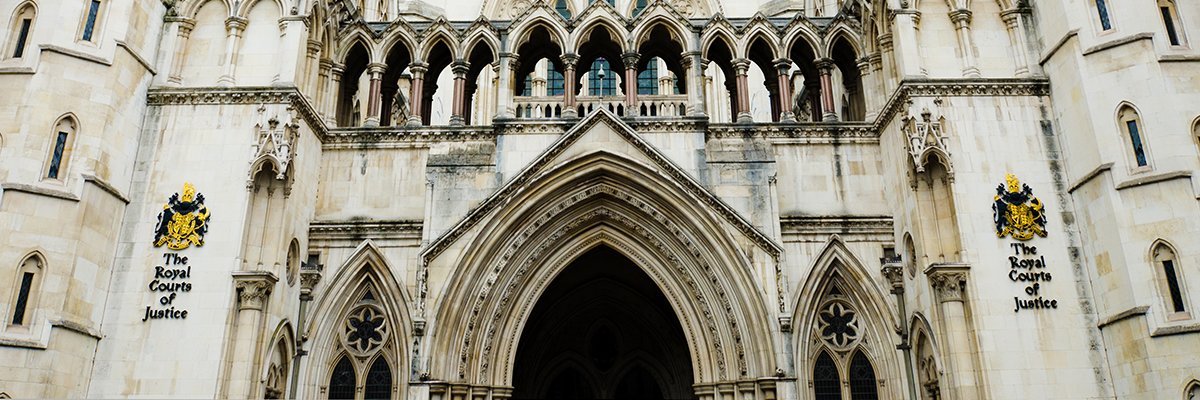
Over the course of the two-day hearing, held at the Royal Courts of Justice, lawyers for Thompson and Big Brother Watch director Silkie Carlo argued that the Met’s use of LFR does not satisfy legality tests, because the policy dictating how officers choose to deploy it is overly broad, opening the technology to arbitrary use.

In particular, they stressed their view that, in practice, the policy essentially allows the Met to deploy the technology in any part of London they choose, because the only criteria limiting where the Met can deploy it is whether it’s a “permitted location”.

The three situations where the Met can use LFR are in “crime hotspots”, including “access routes” to those hotspots; outside public events or critical national infrastructure under “protective security operations”; and locations based on intelligence about “the likely location [of] … sought persons”.

Noting that the force regularly uses watchlists with 16,000 to 17,000 images, they added that there is no real connection between the “who” and “where” when deploying in practice, which risks people being put on watchlists on the chance they will pass an LFR camera.

They also added that of the three use cases under which the Met can deploy LFR, the crime hotspot approach is used in the vast majority of deployments, whereas the other two use cases have only been relied on a handful of times.

‘Permitted locations’

Based on their reading of the Met’s LFR policy and its deployment patterns, the lawyers contended that the only thing in practice constraining choice is whether the deployment area is a “permitted location”, and that the force relies on the hotspot use case because it essentially allows them to drop the technology where they please.

Highlighting how vast swathes of London are designated as “crime hotspots” by the force – and the fact that the Met has conducted multiple deployments on the same day, using the same watchlists, but in completely different hotspot locations – they argued this means there is very little link between the “who” and “where” questions of LFR’s use.

Other issues raised by Thompson and Carlo’s lawyers include the broad definition of “serious crime” used in this context – which is whether the alleged offence would lead to prison for a year or more, a criteria they said does not appear in any other police or government definition of serious crime; how the mass scale of LFR’s use and its automated nature elevates the level of intrusion; and how the Met has chosen to frame the “why” criteria of the deployment.

Highlighting how the Met essentially frames the “why” of LFR as “locating sought persons”, the lawyers argued this is not a constraint on the technology, and simply a description of how it works.

Police arguments

Police lawyers, however, contended that Thompson and Carlo’s challenge is a “proportionality claim dressed up as a legality claim”, and that there are a number of protections against police using LFR arbitrarily.

For example, they noted the LFR policy “leaves no room for capricious decision-making” because it contains specific use cases on when LFR can be deployed; requires officers to create written justifications for their decisions that are then authorised by another, more senior officer; does not allow officers to dictate what counts as a hotspot; and compels them to conduct a deployment-specific analysis against rights enshrined in the European Convention on Human Rights.

Ultimately, they argued that these and other measures taken together means policy sets a roadmap that means officers’ discretion is sufficiently limited, and that it creates an “administrative environment” in which the rules of the policy become inescapable.

Met lawyers also argued that the claimant’s case was a full-scale attack on overt LFR by the police, and that if the court sided in their favour, it would “substantially” hinder the force’s ability to use the technology effectively.

Highlighting how the “primary value” of LFR is to find people whose location is currently unknown to the police, Met lawyers added that confining the force’s deployment to “use case C” – under which LFR can be used at “a particular location where the [Met] has concluded, based on specific intelligence, that a person who is eligible for inclusion on a LFR Watchlist … is likely to be at that location” – would effectively “neuter the value of the technology to policing”.

The judges – Lord Justice Holgate and Mrs Justice Farbey – will now deliberate on the arguments put forward, with a judgement handed down at a later date.

A day before the judicial review hearing started, home secretary Shabana Mahmood announced plans to substantially expand the use of facial recognition by police forces across England and Wales, despite there being an ongoing consultation about a new legal framework for the technology.

While the use of LFR by police – beginning with the Met’s deployment at Notting Hill Carnival in August 2016 – has already ramped up massively in recent years, there has so far been minimal public debate or consultation, with the Home Office claiming for years that there is already “comprehensive” legal framework in place.

However, in December 2025, the Home Office launched a 10-week consultation on the use of LFR by UK police, allowing interested parties and members of the public to share their views on how the controversial technology should be regulated.

The department has said that although a “patchwork” legal framework for police facial recognition exists (including for the increasing use of the retrospective and “operator-initiated” versions of the technology), it does not give police themselves the confidence to “use it at significantly greater scale … nor does it consistently give the public the confidence that it will be used responsibly”.

It added that the current rules governing police LFR use are “complicated and difficult to understand”, and that an ordinary member of the public would be required to read four pieces of legislation, police national guidance documents and a range of detailed legal or data protection documents from individual forces to fully understand the basis for LFR use on their high streets.

Source

Posted on

RAMP ransomware forum goes dark in probable FBI sting

The Russian-speaking RAMP cyber crime forum – one of the most significant players in the underground cyber criminal ecosystem – has gone dark following what appears to be major action by the US authorities.

Although at the time of writing, no official announcement has been made by the Americans, within the past 24 hours both RAMP’s dark and public web sites have been replaced with seizure notices stating the action was taken under the auspices of the FBI, the US Attorney’s Office for the Southern District of Florida, and the Department of Justice’s (DoJ’s) Computer Crime and Intellectual Property Section.

It is not unheard of for cyber criminals to fake takedowns, often amid juvenile theatrics, to start over with a “clean” slate, but initial reports appear to verify the authenticity of the takedown, with DNS records showing RAMP’s web domains now point to FBI infrastructure.

The alleged operator of RAMP, a hacker going by the handle Stallman, who according to Recorded Future took over its operations about four years ago, also stated the forum was no more.

In a post on the XSS hacking forum, translated from the original Russian, Stallman said the takedown had “destroyed years of my work”, writing: “Although I hoped that this day would never come, deep down I always understood that it was possible. This is the risk we all take.”

Set up around 2021, RAMP operated as both a discussion forum and an underground marketplace, with ransomware kits and malware, alongside a library of ransomware guides and tutorials for newbies.

Access to the forum was tightly restricted, with minimum activity levels required and access and registration fees payable, but at its height it still boasted several thousand members, according to a summer 2024 analysis by Rapid7, which described the RAMP community as a “critical resource” for threat actors. At the time, it supposedly had revenues of around $250,000.

Limited long-term impact

Daniel Wilcock, threat intelligence analyst at Talion, described the takedown as a big win for the good guys. However, he said, RAMP’s denizens are likely to turn to alternatives, so the long-term impact on the wider criminal ecosystem will be limited.

“But all is not lost,” he said. “While this doesn’t signal the end of ransomware, law enforcement will be able to gain valuable information from the seizure around the threat actors using the services, such as their emails and IP addresses plus access to the financial transactions that took place on the market.

“This could support further law enforcement action against the threat actors that used the site, but given that RAMP was heavily used by Russian criminals, it’s highly unlikely we will see many actual arrests.”

A blow to Russian intel?

Writing on LinkedIn, Yelisey Bohuslavskiy, a partner at threat intel specialist RedSense, laid out more of RAMP’s backstory and some of the more nuanced lore surrounding the forum.

He said it was an open secret that RAMP had close ties to individuals closely affiliated with the Russian security services and was set up as part of a response to the rapid growth of the ransomware-as-a-service (RaaS) model in 2020 and 2021.

This was a period during which rapid diversification and the emergence of new ransomware affiliates made it harder for the Russians to keep tabs on what was going on, compared to in the years immediately prior when the scene was dominated by organised big name gangs like Conti, ReVIL and so on.

Bohuslavskiy said this strategy had paid off in spades because RAMP incentivised these new affiliates and small-time cyber crooks to make themselves visible to the authorities.

He said that in the short term, the takedown would indeed prove highly disruptive to the ransomware market as lower-level actors would lose both access and publicity, while the access brokers and vendors of loaders and other hacking tools who frequent RAMP would also see their cashflow disrupted. For the remaining big name gangs, however, not much would change.

But, added Bohuslavskiy: “Russian security services… will lose some visibility into ransomware processes and sellers.”

He also predicted that Stallman – whoever they may be – will probably be arrested soon as they are now a wasted asset.

Source