Posted on

Popular Cheap Android Phone Brand Confirms Your Worst Fears –

Wongsakorn 2468/Shutterstock

We’ve been hearing for months that smartphones are going to be more expensive in 2026 because of the demands set out by a booming artificial intelligence industry. Advanced AI features, like the ones many smartphone vendors offer customers, rely on cloud processing and massive infrastructure investments. Those servers where some of your prompts are processed require processors, specialized GPUs, RAM, and storage. It turns out that memory and flash storage chips made for iPhone and Android devices also work in AI datacenters, which is causing significant demand pressure. Semiconductor firms have increased prices for these components in recent months, with analysts warning that some smartphone vendors will have to pass the extra costs to consumers.

Fast-forward to mid-January, and British smartphone brand Nothing, popular for its affordable entry-level and mid-range phones, has confirmed that the price hikes are real. The bad news some Android phone buyers may have feared arrived directly from Nothing CEO Carl Pei, who posted a lengthy explanation on X titled, “Why Your Next Smartphone Will Cost More.”

Less than a month ago, IDC analysts warned that “the global smartphone market, particularly Android manufacturers, is facing a threat in 2026,” in a report detailing the memory shortage crisis. IDC pointed out that smartphone vendors targeting the high-end market, including Apple and Samsung, are better positioned than vendors who manufacture cheaper Android devices. Android vendors including TCL, Transsion, Realme, Xiaomi, Lenovo, Oppo, Vivo, Honor, or Huawei operate on slim margins, the IDC said, adding that such companies are “likely to suffer significantly.” Their only option is passing the cost, or part of it, to buyers. Nothing wasn’t explicitly named in that report, but the British vendor is a newcomer in the industry compared to more seasoned players.

Nothing mostly sells cheap Android phones

Wongsakorn 2468/Shutterstock

Carl Pei echoed IDC’s remarks, saying that “2026 is the year the ‘specs race’ ends,” contrary to the previous expectations from both vendors and buyers. “For fifteen years, the smartphone industry relied on a single, reliable assumption: components would inevitably get cheaper,” Pei wrote. “While short-term volatility existed, the long-term downward trend in memory and display costs allowed for annual spec bumps without price hikes. In 2026, that model has finally broken, driven by a sharp and unprecedented surge in memory costs.”

Nothing launched its first handset, the Nothing Phone 1, in 2022, a $299 mid-range phone. Since then, Nothing released both flagship phones (the $599 Nothing Phone 2 and $799 Nothing Phone 3) and mid-range devices (the $349 Nothing Phone 2a, $399 Nothing Phone 2a Plus, $379 Nothing Phone 3a, and $459 Nothing Phone 3a Pro). Separately, Nothing also launched a smartphone sub-brand that makes entry-level handsets, the $199 CMF Phone 1 and $279 CMF Phone 2 Pro.

Nothing is expected to launch a next-generation series of phones this year. Carl Pei’s remarks about price hikes are likely a PR move from the experienced executive to temper price-related expectations for the upcoming Nothing Phone 4-series phones.

How much will the Nothing Phone 4 series cost?

Framesira/Shutterstock

Pei did not mention any new Nothing products by name, but said that pricing will “inevitably also increase across our smartphone portfolio, particularly as we will upgrade some products launching this [quarter] to UFS 3.1” storage. He didn’t mention RAM costs for upcoming Nothing phones, but said that costs have tripled in some cases for memory components. Further increases are expected, as AI firms consume available supply.

“Memory is fast becoming one of the most expensive smartphone components and potentially the single largest cost driver in the bill of materials by year-end, with estimates suggesting that memory modules which cost less than $20 a year ago could exceed $100 by year-end for top-tier models,” Pei said. He added that smartphone vendors have to raise prices by up to 30% or downgrade the specs.

Pei also appears to see the glass as half full, or perhaps he’s framing the situation in a positive light to reassure consumers. “For Nothing, the current situation represents a great opportunity,” he said, adding that the company has always had to operate without benefiting from the cost advantages of well-established phone makers. Instead, Nothing realized it could not win on specs, and focused on a better design and user experience. “As the industry resets, experience becomes the only real differentiator,” Pei said. “That is exactly what Nothing was built for.”


Source

Posted on

Chelsea shoots for enhanced mobile connectivity in and around Stamford

Corporate and organisational changes at Chelsea Football Club are nothing new, but hot on the heels of appointing its ninth full-time manager in the past 10 years, the club has upgraded its mobile network in and around its stadium to strengthen connectivity for customers attending fixtures and events.

The fourth most successful club in English football, Chelsea were founded in 1905 and named after the neighbouring area of its Stamford Bridge ground in West London, one of UK capital’s most historic football venues, the only home that the football club has had in its history.

Typically in English football, clubs have been formed and stadium subsequently located; Chelsea were formed to play at Stamford Bridge, which currently boasts a capacity of just over 40,000. In addition to football, the ground has hosted a variety of other sports including cricket, baseball, rugby, boxing, greyhound racing and American football.

The connectivity capacity boost – undertaken by O2 – is designed to offer a more reliable mobile experience at peak times, making it easier for fans to share video of action and use social applications, as well as use digital services such as mobile ticketing and contactless payments.

Inside the stadium, O2 has optimised the rooftop site within Stamford Bridge, boosting capacity and improving mobile performance across the stands, concourses and hospitality areas. The operator said this will ensure customers can continue to stream, share and stay connected, even when the ground is at full capacity.

Beyond the stadium footprint, new and upgraded small-cell mobile technology has been installed to improve coverage and reliability for local residents, businesses and visiting fans, helping to keep people connected as they travel to and from matches.

O2 said the upgrades are already delivering positive results on match days, with customers using more than twice as much data and enjoying a fourfold increase in speeds.

“Stamford Bridge is an iconic stadium with extremely high demand on matchdays,” said Steven Verigotta, director of mobile delivery at the operator’s parent company Virgin Media O2. “By optimising our network inside the ground and in the surrounding areas, we are giving O2 customers a more reliable mobile experience so they can enjoy every moment, from kick-off to the final whistle.”

The upgrades are part of O2’s Mobile Transformation Plan, which will see the operator invest around £700m into its mobile infrastructure to future-proof the company’s mobile network and improve connectivity in high-demand areas across the UK. In August 2025, O2 went live with its first mobile small cells in the key resorts of St Ives and Newquay in Cornwall to give businesses an improved mobile connectivity experience and faster speeds.

A month earlier, O2 also announced that it had agreed a deal with Vodafone UK to acquire 78.8MHz of mobile spectrum, bringing the operator’s total spectrum holding to approximately 30% of UK mobile spectrum and materially enhancing the company’s network position and improving connectivity in locations such as sites with crowds of people.

Data released by O2 in late 20205 showed that growing customer use of artificial intelligence (AI) alongside the continued draw of live sports and major gaming releases has resulted in record levels of data consumption across the networks of Virgin Media O2, including an 18% rise in mobile traffic.

The key theme of mobile traffic on the O2 network was that people in the UK were scrolling, chatting and embracing AI more than ever, despite nearly three-fifths of Brits (58%) saying that they began the year with a plan to reduce the time they spent on their phone.

Source

Posted on

CEOs are taking the lead on AI initiatives

The AI radar 2026 study from Boston Consulting Group (BCG) has reported that artificial intelligence (AI) investment is set to double in 2026 compared with 2025. The study, based on a survey of 2,400 business executives, of which 640 are CEOs, found that almost every chief executive polled (94%) is committed to continuing investments even if returns take time to materialise.

In fact, almost all (90%) of the CEOs polled believe AI agents will deliver a measurable return on investment by 2026.

The study found that over two-thirds (72%) of CEOs now act as the primary decision-maker for AI in their organisation, taking responsibility from CIOs, who were previously the main lead in AI projects.

Christoph Schweizer, CEO of BCG, said: “Corporate investment in AI is here to stay. 94% of our survey respondents say they will continue to invest in 2026, even if it takes time to see the return. They intend to spend 1.7% of revenue on AI comprehensively. That is more than twice of what it was a year ago.”

BCG’s research suggests that companies leading the way in AI deployments are investing 60% of their AI budgets on agentic AI (AI agents). “We tell CEOs that they need to make AI a key priority,” he said. “The way they own it, the way they talk about it, the way they bring their organisation along. They need to spend time on deepening their own AI literacy.”

BCG recommends that CEOs understand the tools, the technology, and keep in touch with technology suppliers and partners. “Ultimately, you need to know what you talk about so that you can bring your organisation along and steer for maximum return,” added Schweizer.

With regards to the adoption of agentic AI, BCG found that more than 30% of the CEOs investing in AI during 2026 said they would be building agents to deploy in the work environment. Vladimir Lukic, global leader of BCG’s Technology and Digital Advantage, said: “AI agents will truly be something that will unlock organisations and deliver a return on investment within 2026.”

Sylvain Duranton, head of BCG X, said the research highlights differences in CEOs’ AI confidence in different regions. BCG reported that UK businesses are less likely than global peers to make large-scale investments in AI in 2026.

The study found that only 24% of UK companies plan to invest more than $50m in AI, compared with much higher shares in countries leading the AI race, such as Greater China (68%), Japan (53%), the European Union (38%) and the Middle East (41%). BCG also reported that British CEOs are the most sceptical of AI’s potential return on investment and less involved in decision-making on AI.

Discussing the regional differences, Duranton said: “CEOs in the East, in India, in China, in Japan, the Middle East and Africa tend to be highly confident that AI is going to be a positive return on investment move. In the global West – Europe, the US and the UK – there’s a bit more caution.”

In his experience, many Asian companies have huge confidence and boldness in moving forward with AI. However, many European and US firms operate in a different way. “There’s some more skepticism in their workforce,” said Duranton. “There potentially is some more regulation that they deal with.”

Firms leading the way with AI deployments, which BCG categorise as “trailblazers”, tend to focus heavily on upskilling the workforce. Jessica Apotheker, chief marketing officer and managing director at BCG, said: “Trailblazers are putting 60% of their AI budget behind upskilling and retraining their workforce. So, they’re really wanting to go deep in the organisation, changing the way people work, putting people behind this new technology.”

BCG reported that in these organisations, 70% of the workforce has been upskilled or reskilled on AI.

Source

Posted on

Cyber body ISC2 signs on as UK software security ambassador

ISC2, the non-profit cyber professional membership association, has joined the UK government’s recently launched Software Security Ambassador Scheme as an expert adviser.

Set up at the beginning of the year by the National Cyber Security Centre (NCSC) and the Department for Science, Innovation and Technology (DSIT), the scheme forms part of a wider £210m commitment by Westminster to remodel approaches to public sector cyber resilience from the ground up, acknowledging that previous approaches to the issue have basically gone nowhere and that previously set targets for resilience are unachievable.

It is designed to incentivise organisations to pay more attention to the security of software products, and supports the wider adoption of the Software Security Code of Practice, a set of voluntary principles defining what secure software looks like.

ISC2 joins a number of tech suppliers, including Cisco, Palo Alto Networks and Sage; consultancies and service providers including Accenture and NCC Group; and financial services firms including Lloyds Banking Group and Santander. Fellow cyber association ISACA is also involved.

“Promoting secure software practices that strengthen the resilience of systems underpinning the economy, public services and national infrastructure is central to ISC2’s mission,” said ISC2’s executive vice-president for advocacy and strategic engagement, Tara Wisniewski.

“The code moves software security beyond narrow compliance and elevates it to a board-level resilience priority. As supply chain attacks continue to grow in scale and impact, a shared baseline is essential and through our global community and expertise, ISC2 is committed to helping professionals build the skills needed to put secure-by-design principles into practice,” she said.

Software vulns a huge barrier to resilience

A study of wider supply chain risks conducted last year by ISC2 found that a little over half of organisations worldwide reported that vulnerabilities in their software suppliers’ products represented the most disruptive cyber security threat to their overall supply chain.

And the World Economic Forum’s (WEF’s) Global Cybersecurity Outlook report, published on 12 January, revealed that third-party and supply chain vulnerabilities were seen as a huge barrier to building cyber resilience by C-suite executives.

A total of 65% of respondents to the WEF’s annual poll flagged such flaws as the greatest challenge their organisation faced on its pathway to resilience, compared to 54% at the beginning of 2025. This outpaced factors such as the evolving threat landscape and emerging AI technology, use of legacy IT systems, regulatory compliance and governance, and cyber skills shortages.

Pressed on the top supply chain cyber risks, respondents were most concerned about their ability to assure the integrity of software and other IT services, ahead of a lack of visibility into their supplier’s supply chains and overdependence on critical third-party suppliers.

The UK’s Code of Practice seeks to answer this challenge by establishing expectations and best practices for tech providers and any other organisations that either develop, sell or buy software products. It covers aspects such as secure design and development, the security of build environments, deployment and ongoing upkeep, and transparent communication with customers and users.

As part of its role as an ambassador, ISC2 will assist in developing and improving the Code of Practice, while championing it by embedding its guiding principles into its own cyber education and professional development services – the organisation boasts 10,000 UK members and associates. 

It will also help to drive adoption of the Code of Practice through various awareness campaigns, incorporating it into its certifications, training and guidance, engaging with industry stakeholders and members to encourage implementation, and incorporating its provisions into its work with its own commercial suppliers. 

Source

Posted on

PSNI resorted to pen and paper after issues with ControlWorks

Unexpected problems in the Police Service of Northern Ireland’s (PSNI’s) ControlWorks software led to police having to resort to manual forms to record calls from the public soon after the software’s introduction in 2019, Computer Weekly has learned.

The force has not reported the incidents to the Northern Ireland Policing Board, which oversees the PSNI, and has not mentioned any incidents with ControlWorks in its annual reports.

While there is no legal duty to report failures with ControlWorks to the Northern Ireland Policing Board, the Policing Board has told Computer Weekly it would expect any serious incidents with ControlWorks to be reported to it.

The PSNI uses ControlWorks as part of its command and control system, for managing, logging and categorising calls received by the emergency services from the public and for dispatching police officers to incidents.

Computer Weekly has learned that the PNSI’s ControlWorks system had technical issues after it first went live in May 2019.

These included slow-downs of the system that required computer systems to be restarted or software to be patched.

On some occasions, police were forced to return to using paper forms to record incidents reported by the public after ControlWorks became unavailable. Information on the forms had to be typed back into the system when the service resumed.

ControlWorks aimed to improve response times

The PSNI announced it was using Capita Communications and Control Solutions’ ControlWorks software in 2018, replacing its 20-year-old Capita Atlas Command and Control System, which had reached the end of its life.

From February 2018, ControlWorks was installed across the PSNI’s three regional contact management centres, before going live in May 2019, but is understood to have had a series of issues during its first few months of operation.

Critical incidents, which affect force-wide availability of ControlWorks, are categorised as P1 or P2. Less serious incidents that do not require urgent remediation are categorised as P3 and P4, Computer Weekly has previously reported.

Computer Weekly understands that the PSNI runs a 24-hour help desk to deal with IT issues, and that it has the ability to escalate incidents with ControlWorks to its IT supplier.

Missing persons search

Computer Weekly understands that a “major issue” with ControlWorks may have delayed information being passed to police officers searching for missing teenager Noah Donohoe, who disappeared from his home in Belfast on 21 June 2020.

Donohoe’s disappearance sparked a massive search operation, as police reviewed hours of CCTV, and hundreds of volunteers joined the search for the vulnerable 14-year-old.

Computer Weekly has learned that on the evening of 23 June 2020, police recorded a “major issue” with ControlWorks that could have led to delays in information being passed to investigators.

Computer Weekly further understands that on the evening of 24 June, a member of the public called police to say they had seen an individual attempting to sell Donohoe’s missing laptop.

This potentially critical information was delayed in being brought to the attention of police officers investigating Donohoe’s disappearance  because of a problem with ControlWorks, Computer Weekly has been told.

It is unclear exactly how long the information was delayed by and what its impact on the search for the missing teenager was. But it is understood that detectives on the case reported and noted the delay during the investigation.

The issue with ControlWorks was understood to have been reported during the live investigation at a critical time when Donohoe was missing – two days after he had gone missing, and four days before he was found dead in a Belfast storm drain.

Manchester had serious IT issues

Greater Manchester Police experienced problems when it went live with its Integrated Operational Policing System (iOPS), which included ControlWorks, in July 2019. iOps attempted to integrate Capita’s ControlWorks software with Capita’s PoliceWorks record management software used by police officers for managing day-to-day investigations and intelligence records.

An independent review found serious issues with the project. At one point, police were forced to revert to pen and paper for 72 hours while records were migrated to the new system.

“This consumed considerable time and capacity, causing a duplication of work,” the report found. “In addition, some legacy demand, which included ongoing investigations, did not successfully transfer from the old systems, so could no longer be worked on.”

Greater Manchester Police subsequently announced plans to replace PoliceWorks after concluding it could not be adapted or fixed, but it has continued to use ControlWorks.

The PSNI uses a different record management system to Manchester’s troubled PoliceWorks system. The PSNI signed a £9m contract with the Canadian company NicheRMS to deploy its Records Management System, which records information about people, locations, vehicles, incidents and evidence, in 2006.

NicheRMS keeps duplicate records of reports from the public that are recorded on ControlWorks when they are escalated as an “incident”. This means that should data be lost because of problems with ControlWorks, the PSNI would still have access to duplicate records reported by the public on NicheRMS if they have been escalated as an “incident”.

Policing Board seeks clarification from PSNI

The Northern Ireland Policing Board has confirmed that if a major system disruption or significant information or data loss occurred, the board would expect to be informed.

A spokesperson told Computer Weekly that the board’s Resources Committee, which has oversight responsibility for matters including the PSNI’s technology systems, has asked the PSNI for clarification about the issues raised by Computer Weekly.

A coroner’s inquest into the circumstances of Noah Donohoe’s death is due to begin on 19 January.

The PSNI said it would “not comment on investigative matters while legal proceedings are ongoing”.

“With regards to questions relating to ControlWorks, police can confirm that, to date, there has been no instance of major disruption which has led to data loss,” a spokesperson said.

Capita declined to comment.

Source

Posted on

Say Goodbye To Dusty Charging Ports With This Simple Cleaning

aileenchik/Shutterstock

It can be a dirty world, and we’re all just living in it. Keeping electronics clean requires the same routine maintenance as anything else in your life, but some components and areas can be harder to clean than others. For example, removing external dust safely from devices can be straightforward, but keeping a dusty charging port clean may take a little more finesse.

Your charging port can collect enough dust inside of it that the charging cable may not even connect properly. It’s also possible to push dust further inside when you connect the cable. If you need to clean the inside of a charging port, something small, thin, and ideally not made of metal is going to be your best bet. You’ll also want to use compressed air when taking preventative measures. The name of the game here is being careful, as you don’t want to disturb the internal components of your electronics.

Though certain charging ports can be relatively small, as long as you have the right tool, saying goodbye to dusty charging ports is fairly easy. Like finding a good TV cleaning routine, keeping the charging ports on your electronics tidy depends on how often they’re used and where you store them. So, if your device isn’t charging properly or the cable isn’t sitting in the port the way it should, check out this simple cleaning trick.

How to clean your phone’s charging port

Vitalii Stock/Shutterstock

There may come a time when you need to tidy up a charging port, especially with smartphones. While there are other methods for keeping a USB-C port clean, for this cleaning trick, we’ll be using a small, thin object to start. It’s pretty easy to do, but the type of object and material you use is important for keeping your device operational.

A wooden toothpick is a bad choice, as it can splinter or break, but a plastic dental pick can work wonders. A cocktail stick or coffee stirrer can also be useful, but try to avoid anything metal, as it can potentially harm the device. Use a flashlight to check the cleanliness of the port before starting.

Once you have a solid tool, here are the steps for cleaning your dusty charging port:

  1. Shut off whatever device you’re about to clean and make sure it’s not plugged in.

  2. Grab your cleaning tool.

  3. Inspect the port and look for visible dust.

  4. Gently insert the tool into the port and carefully move it around to loosen and remove dirt.

  5. Use compressed air or a soft, clean brush to clear out any remaining dust.

  6. Inspect the port and turn on your device. Check the charging connection if necessary.

Although there’s no real schedule for keeping charging ports clean, it is a good idea to check the device every so often to make sure it’s still looking good and behaving correctly. You might also consider installing cheap USB port covers.

Source

Posted on

Opera One R3 Update Adds Smarter AI That Understands Your

José Adorno/BGR

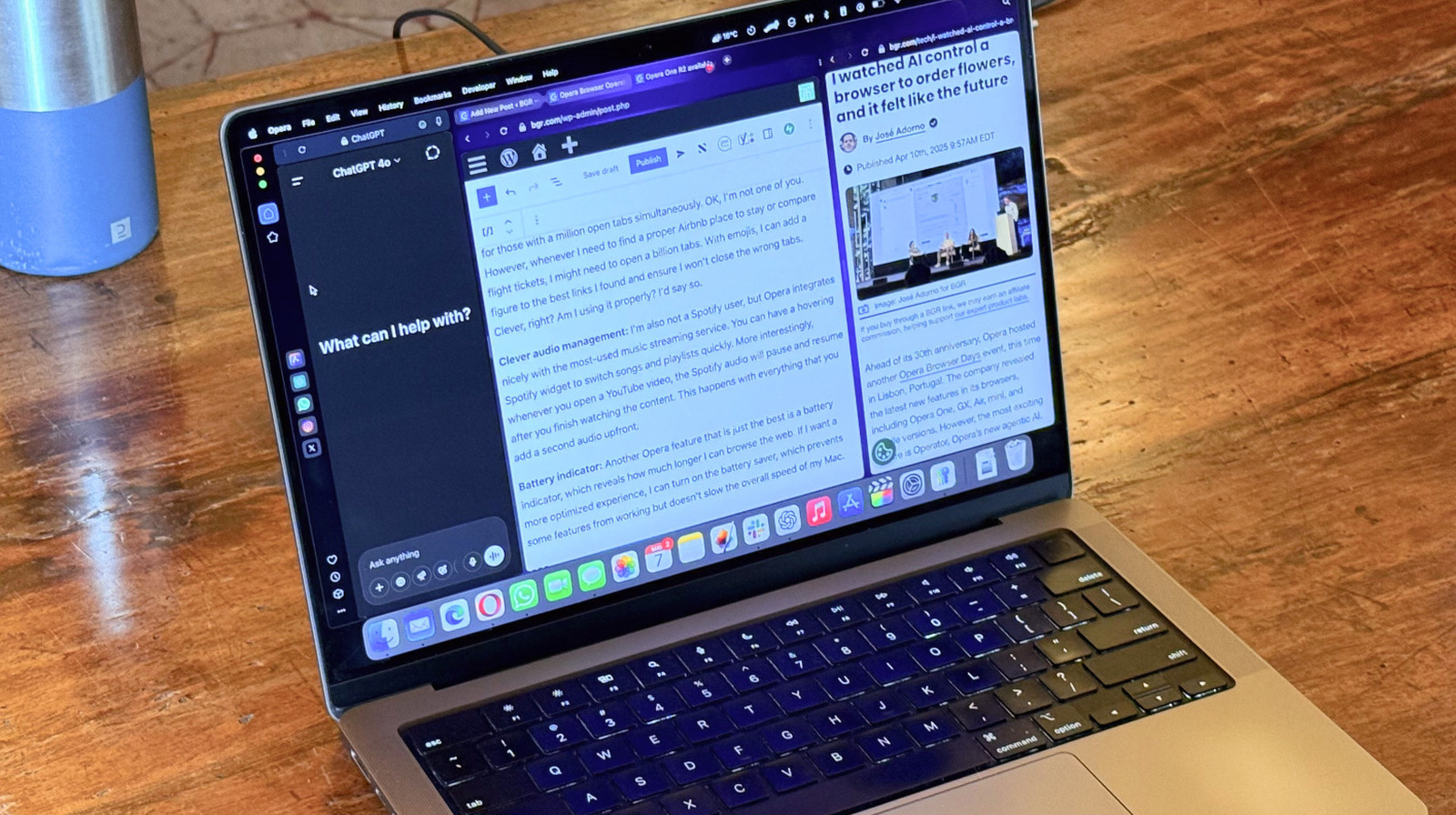
Opera has been serious about transforming the way people browse the web. In late 2024, the company said how we do this would dramatically change in two years. However, it already did: In 2025, an ocean of AI agentic browsers were released, including Opera Neon, OpenAI’s Atlas, The Browser Company’s Dia, and so on. While each of them have their own particularities, they all lack some of the most common features that make a browser good.

To focus on AI agentic functions, the first iterations of these browsers lacked features like bookmarks, favorites, importing extensions, or even everyday commands that we use in a browser that weren’t available in these new ones. With that, Opera is going with a different approach by taking agentic AI features from its Neon experience to its mainstream option.

After more than a year since the last big update with the Opera One R2, the Norwegian company has revamped its main browser with Opera One R3, which adds a few AI features and several life quality improvements for anyone, like me, who has ditched Chrome and Safari for a smarter experience.

Opera One R3: AI integration, improved tab experience, and more

One of the main features of Opera One is Tab Islands, which helps you organize tabs by interests, like splitting your work tabs from your shop tabs, or from that trip you’re planning to make. With the R3 update, users can rename and choose new colors to improve this inspiration. However, more than these aesthetic features, the AI inside the browser can now understand the context of these tabs (if you’d like) to help you do stuff. For example, the Opera AI functionality can get the timestamp of a YouTube video or answer a question based on the tab you have opened, so you can work alongside the browser.

Besides that, Opera One has always been about modular design, and the new sidebar lets you add webpages and webapps to it; an improvement over the previous version that was limited to a few apps. The company is also replacing its beta program with an early bird offer, so users can test new features without downloading a different browser. 

By toggling on the early bird functions, users can get some of the upcoming features, like a big Split Tab improvement. The Split Tab is one of my favorite features of Opera One, which lets me have two tabs opened in a single page, and now it’s evolving with Opera One R3 to offer up to four tabs opened simultaneously. You can find the new R3 version here.

Source

Posted on

NSA urges continuous checks to achieve zero trust

The US National Security Agency (NSA) has published its latest guidance on zero trust to secure US federal government IT networks and systems. This is the first of two guidance documents coming out of the NSA, providing “practical and actionable” recommendations that can be applied as best practice to secure corporate IT environments both in the public and private sectors.

In the Zero trust primer document, the NSA defines a “zero-trust mindset”, which means assuming IT environment traffic, users, devices and infrastructure may be compromised. To achieve this, the guidance urges IT security teams to establish a rigorous authentication and authorisation process for all access requests.

In the context of securing the integrity of government IT systems, it said that such a strategy enhances the security posture of networks by rigorously validating every access request, which prevents unauthorised changes, reduces risk of malicious code insertion, and ensures the integrity of software and supply chains

The main takeaway from the NSA regarding zero trust is to never trust users or devices that request network connectivity or access to internal resources. The NSA guidance calls for verification without exception, where dynamic authentication and explicit approval is used across all activities on the network, adhering to the principle of least privilege.

Specifically, the NSA’s latest guidance suggests that IT security teams should assume they are working in an IT environment where there is a breach, which means operating and defending resources under the assumption that an adversary already has a presence in the environment.

The NSA said IT security teams should plan for deny-by-default and heavily scrutinise all users, devices, data flows and requests. This means that IT security teams need to log, inspect and monitor all configuration changes, resource accesses and environment traffic for suspicious activity continuously.

The guidance also recommends explicit verification. This implies that access to all resources is consistently verified, using both dynamic and static mechanisms, which is used to derive what the NSA calls “confidence levels for contextual access decisions”.

Commenting on the guidelines, zero-trust expert Brian Soby, CTO and co-founder of AppOmni, said: “Across the guidance, the emphasis is on continuous logging, inspection and monitoring of resource access and configuration change, plus comprehensive visibility across layers.

“Read plainly, the NSA is suggesting that many programs are built around coarse checkpoints and limited signals, while the real risk lives inside enterprise applications, especially SaaS, where sensitive data and business workflows reside.”

Soby’s understanding of the new guidelines is that effective zero trust requires a thorough understanding of what users can and cannot do, instead of simply relying on their ability to authenticate through network directory services and the authorisation that successful authentication gives them.

“Many security programs still substitute directory groups and simplistic roles for true entitlement materiality, even though effective access in modern SaaS is shaped by application-native permissions, sharing rules, delegated administration, conditional controls and third-party OAuth grants.”

He noted that the NSA’s emphasis on monitoring resource access and configuration change implies that relying on coarse identity abstractions leaves IT security teams blind to the actions and permission shifts that create exposure and enable misuse.

“This gap also lines up uncomfortably well with the breaches and campaigns we are seeing now,” he added.

As an example, Soby said that recent intrusions tied to groups tracked as UNC6040 and UNC6395 have highlighted how attackers can bypass traditional, frontdoor-centred controls by abusing SaaS identities and integrations, including compromised OAuth tokens and third-party application access, to reach and extract data from SaaS environments.

“In that light, the NSA’s guidance supports a sharper conclusion: identity security programs that cannot truly understand user activities, behaviours and the materiality of entitlements inside applications do not match the principles of zero trust,” said Soby. “These often become more performative than effective, leaving security operations centre teams stuck with generic signals like logins when the meaningful attacker activity is happening inside the app.”

Source

Posted on

The Best Roku Streaming Stick You Can Buy, According To

ZikG/Shutterstock

We may receive a commission on purchases made from links.

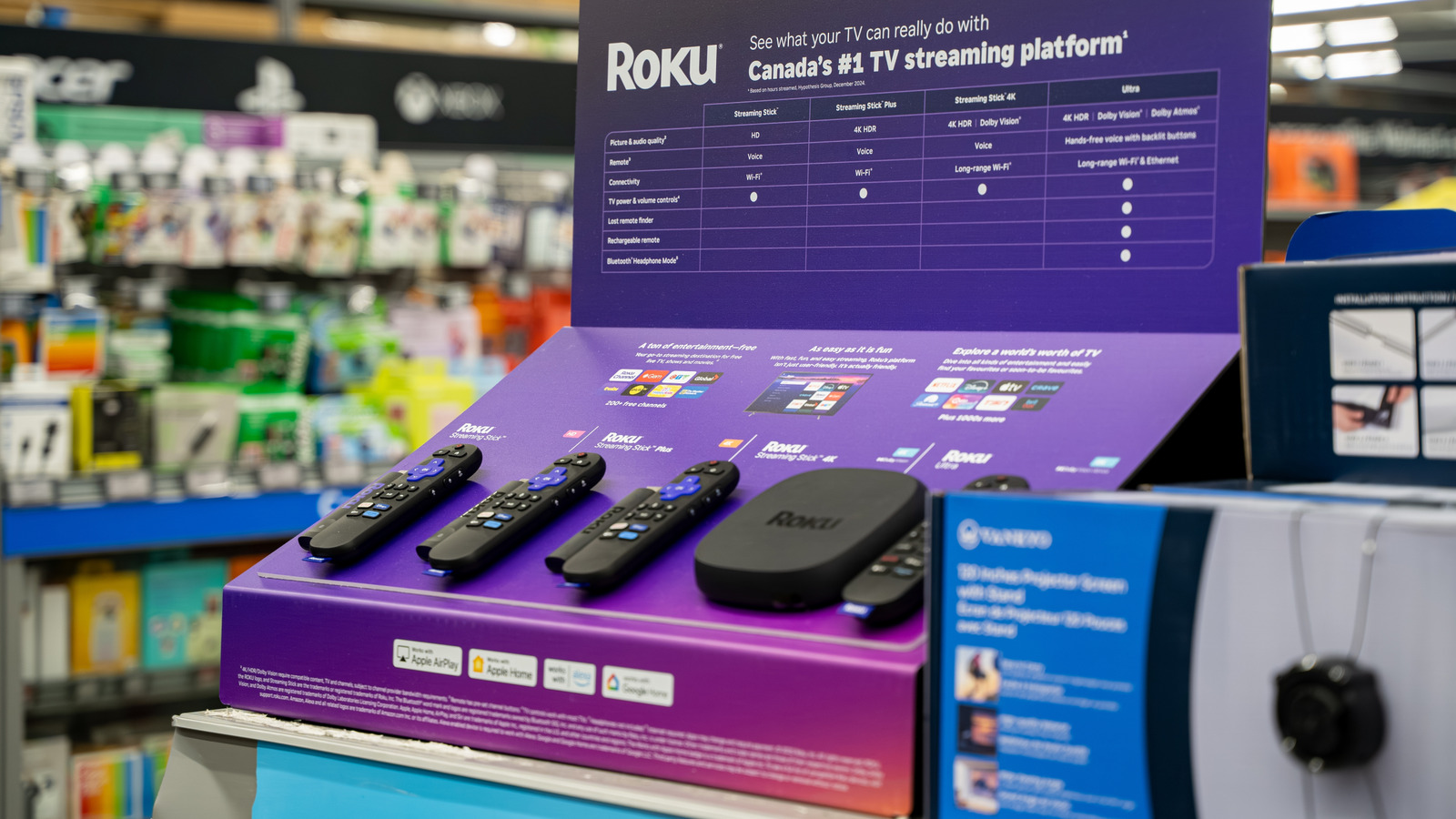
If you’re looking for a streaming device that’s easy to set up, is packed with apps, and won’t break the bank, you should consider going with a Roku Streaming Stick. These budget-friendly, plug-and-play gadgets require little in the way of setup, and once they’re connected to Wi-Fi, you’ll be able to stream your favorite movies and shows across popular platforms such as Netflix, Disney+, and HBO Max.

There are numerous tips and tricks for fine-tuning your Roku hardware, but if you’re looking to buy the best Roku Streaming Stick at the ground level, you’ll want to nab yourself the Roku Streaming Stick 4K. With a list price of $50, the Streaming Stick 4K has a 4.7 out of 5 stars on Amazon, based on more than 94,500 user reviews. Praised for its simple installation and immense selection of streaming apps, the Streaming Stick 4K is one of Roku’s best devices for long-range Wi-Fi performance.

This means that if your router isn’t located in the same room as the Stick, the improved Wi-Fi receiver should still provide minimal load times and buffering — even for 4K HDR content. Speaking of which, the Stick 4K supports HDR formats, including Dolby Vision and HDR10+. If you’re willing to wait around for a sale, the Streaming Stick 4K has dropped below $40 in the past, dipping as low as $25.

How the Roku Streaming Stick 4K excels

Erman Gunes/Shutterstock

Under the hood, the Roku Streaming Stick 4K runs an ARM Cortex A55 CPU with 1GB of RAM. In most cases, that’s plenty of power and data for streaming movies and shows, bouncing between apps, and controlling smart home devices. Speaking of which, the Stick 4K is compatible with Alexa, Google Home, HomeKit, and Roku’s smart ecosystem. You’ll even be able to use Apple AirPlay to mirror your phone screen to your TV.

Generally speaking, most folks praise the Streaming Stick 4K for its simple setup and user-friendly interface. Many customers were also pleased with the speed of the streaming device; though there were a few individuals who experienced lagging performance. Fortunately, you’ll be able to switch between 2.4GHz and 5GHz connectivity if you notice one network band bottlenecking more than the other. 

For those wondering how long a Roku Streaming Stick 4K should be expected to last, generally speaking, you should get around three to 10 years of streaming from this device. As you can guess, Roku’s hardware and software isn’t without its haters, but a lot of the complaints are over the increasing amount of ads you’ll find throughout Roku’s user interface. Unfortunately, ads are something you’ll end up dealing with across most streaming device brands and products — so we wouldn’t let that be a deal-breaker as you consider whether or not to buy the Roku Streaming Stick 4K.

Source

Posted on

Mayor of London Sadiq Khan calls for urgent action to

Mayor of London Sadiq Khan has unveiled a London taskforce on artificial intelligence (AI) and the future of work, during his annual Mansion House speech.

Recognising the need for urgent action to prevent mass unemployment in London, he also announced free AI training for Londoners.

Khan warned that unless urgent action is taken, the advent of AI would cause immense damage to the capital. He called for a collaborative effort to shape the AI revolution and harness the potential positives to ensure it benefits rather than damages society.

A poll by City Hall found that over half of London workers expect AI to impact their job in some way in the next 12 months.

“It feels as though the ground beneath our feet is shifting,” said Khan. “Artificial intelligence is beginning to cause tectonic movements in our markets, industries and workplaces. We can hear the low rumbling of a new technological revolution, but we don’t yet know what course it will take.”

Mirroring the government’s view on the opportunity AI presents for the UK, he said it could transform public services, turbocharge productivity, and tackle complex challenges such as cancer care and the climate crisis.

However, Khan warned: “Used recklessly, it could usher in a new era of mass unemployment, accelerated inequality and an unprecedented concentration of wealth and power. Neither is an inevitability, but one thing’s for sure: we mustn’t drift, absentmindedly, into a future we didn’t ask for and don’t want. We need to wake up and make a choice: seize the potential of AI and use it as a superpower for positive transformation and creation, or surrender to it, and sit back and watch as it becomes a weapon of mass destruction of jobs.”

LinkedIn’s Work change report, which looks at the impact of AI in the workplace, says that by 2030, 70% of the skills used in most jobs will change, with AI emerging as a catalyst. The report’s authors note that there has been a 140% increase in the pace at which LinkedIn members add new skills to their profiles since 2022. This includes an uptick in technical skills and a rise in uniquely human skills such as communication and leadership.

LinkedIn’s headline figures from the report shows that over half of CEOs expect a 10% uptick in their organisation’s performance thanks to the use of generative AI technology.

Khan wrote on X: “The impact of AI on London’s jobs market will be seismic. Some of our biggest sectors (e.g. creative, financial) rank among the most likely to be affected.”

He said the taskforce seeks to understand the impact AI will have on jobs in London, and identify the skills Londoners need to move into future roles and how London can stay competitive in a global job market.

Khan also said political leaders have a responsibility to protect people against the dangers of new technology. He added that policymakers need to learn from the mistakes that have been made in failing to shape and regulate the digital revolution.

“Our new AI skills course will be available to any Londoner who’d like to learn AI skills, and it’ll be completely free – because everyone should be able to share in the benefits of this technology,” said Khan. “It’s up to us to make sure AI delivers the brighter future we all want to see.”

Source