Posted on

The 5 Best Cloud Storage Apps, According To Consumer Reports

Nicoelnino/Getty Images

We may receive a commission on purchases made from links.

As we spend our daily lives with capable cameras built right into our smartphones, we are capturing more photos than ever. Some of these photos are shared on social media, whereas others simply reside on our phones. However, most gadgets, including smartphones, aren’t impervious to failure caused by physical damage, software issues, or hardware troubles. This makes storing your precious clicks only on your phone a risky endeavor, as you could lose your photos in the blink of an eye. The same goes when you are clicking photos using a mirrorless or a DSLR camera.

This is where cloud storage services come into play. These services allow you to store your photos seamlessly in the cloud, where they are secure and at a significantly lower risk of getting lost. Cloud storage services are also relatively easy to use, have mobile apps with built-in automatic backup options, and typically offer limited or unlimited storage for free. But which cloud storage apps are most suitable? Consumer Reports, which is known for offering trusted and unbiased information about products and services, has shared its recommendations for the best cloud storage services after evaluating some of the most popular options for regular folks. Here are the top five picks.

Amazon Photos

mundissima/Shutterstock

If you’re an Amazon Prime member, one of the hidden Amazon Prime perks is unlimited photo storage at full resolution. This is excellent if you simply want to store all your photos in the cloud, without worrying about paying for storage upgrades, and don’t need too many fancy features. Amazon Photos has official apps for Android, iOS, and desktop, giving you a seamless way to automatically upload your photos wherever they are stored. Besides photos, you can also store videos, but you only get 5 GB of storage for that. Moreover, if you’re not a Prime member, you’ll get 5 GB of total storage for both photos and videos.

Amazon Photos also has a partnership with Shutterfly, allowing you to receive a 45% discount on your regular-priced Shutterfly orders and free shipping on orders worth $35 or more. This gives you access to seamless prints for any of your stored photos. Amazon Photos is available in the U.S., the U.K., Canada, Germany, France, Italy, Spain, and Japan. CR highlights the machine-learning-assisted search feature of Amazon Photos, which lets you use even simple search terms, such as tree, sun, and door, to get photos featuring these subjects. The only con to Amazon Photos is that it’s most useful when you have a Prime membership, which can cost $139 annually or $15 per month.

Google Photos

Bangla press/Shutterstock

According to Consumer Reports, Google Photos is another excellent cloud storage solution for your photos. Although it was known to offer unlimited storage for photos at a slightly lower resolution until 2021, any photos now stored in it are counted toward your 15 GB of free Google account storage – regardless of the resolution. The 15 GB storage is also shared with Gmail and Google Drive, so the storage you get for your photos will depend on how much data is stored in other Google services. That said, Google offers relatively affordable storage upgrades that can be purchased to boost your storage quota.

Besides the ability to store your photos, Google Photos packs several helpful features, including Gemini AI integration for conversational search, face grouping, and more. You also get advanced editing support, including features like Magic Eraser, Photo Unblur, a locked folder to keep certain photos out of the main library, and organization abilities to sort your library seamlessly. Google Photos is available for both Android and iOS, and allows for automatic uploading of your photos. You can also access it via a web browser.

Microsoft OneDrive

Ascannio/Shutterstock

If you are a Windows user, CR suggests considering Microsoft OneDrive, which is often considered an excellent alternative to Google Photos. While it lacks various AI-assisted features present in the Google Photos app, it works seamlessly as part of Windows and has proper apps for Android and iOS to automatically upload your phone’s photo libraries. If you already pay for Microsoft 365 Personal or are part of the 365 Family plan, you get access to 1TB of storage space that you can use to store photos and videos, among other files and folders.

If you don’t pay for Microsoft Office, you will get 5 GB of free storage space, with paid options, including a $2 per month plan that includes 100GB of cloud storage, to upgrade the available storage. In terms of photo-related features, OneDrive supports automatic tagging, sharing, basic editing, and photo search. Besides Windows, OneDrive works seamlessly on Samsung phones, and your photo library is backed up to OneDrive without needing a separate app, something you need on other phones.

Shutterfly

NYC Russ/Shutterstock

Shutterfly is another app that’s a part of CR’s best cloud storage apps for photos recommendations. Although it’s primarily known for its photo-printing services, it offers free, unlimited photo storage to its active customers. If you’re someone who occasionally uses Shutterfly to order prints or other items, this can be a good solution to keep a backup of your photos. You only need to make an order of any value every 18 months to be called an active customer of Shutterfly. The service will also remind you when you are nearing the 18-month timeline without having placed an order.

There are official Shutterfly apps for both Android and iOS that come with built-in auto-upload support for your photo libraries. However, its app isn’t the most seamless to use compared to other CR recommendations, as it’s geared more towards selling your stuff. You also don’t get advanced features or an AI-assisted search function.

Apple iCloud Photos

Thrive Studios ID/Shutterstock

According to Consumer Reports, iCloud Photos is a super convenient way to store photos and videos for Apple users. Rather than functioning as a separate app, it’s integrated into all of Apple’s operating systems and works with the Photos app directly. Although you only get 5 GB of storage in the free plan, you can upgrade by opting for an iCloud or Apple One subscription, which will allow you to keep all your photos in iCloud without worrying about a constant “storage full” prompt. However, it’s important to remember that iCloud Photos works on a single-copy philosophy. Basically, all your iCloud-stored photos have only one version, unlike Google Photos and other cloud storage apps that essentially make a copy of your locally-stored photo. So, it’s a good idea to clone your photo library from your Apple devices to another service for safekeeping. This is because anything deleted from iCloud disappears from all your linked devices.

That said, it has a few helpful features, such as a shared photo library, which enables you to create a separate photo library to which up to five of your family members or friends can contribute. You can also use iCloud Photos to get the most out of your iPhone storage by using the “Optimize Storage” feature, which strips your local photos and videos to their space-saving versions, and all the full-resolution photos and videos are kept in iCloud. Unfortunately, iCloud Photos is not a good option for Android users, as there is no native iCloud app for Android, which makes it pretty cumbersome if you want to back up photos and videos to your iCloud account.

How we selected these cloud storage apps

sdx15/Shutterstock

While choosing the best cloud storage apps, we referred to the “best cloud storage services for photos” guide from Consumer Reports. We filtered the recommendations to services that are currently functional and can be used by anyone. We also refined the apps list to focus on cloud storage services that offer modern features, have easy-to-use features, and offer at least 5 GB of cloud storage as part of their free plan.

Source

Posted on

CES 2026: Qualcomm expands IE‑IoT portfolio

With a robot powered by its Dragonwing processor front and centre at its show floor demonstration at leading trade show CES, Qualcomm Technologies has revealed its go-to-market portfolio for the internet of things (IoT).

Qualcomm Technologies said that it is now positioned to address the needs of a much wider spectrum of customers, ranging from global enterprises to independent local developers, offering core edge compute and artificial intelligence (AI) technology across all industrial and embedded verticals.

Qualcomm hit the accelerator in IoT in earnest in February 2025 with the launch of Dragonwing range, designed to represent its industrial and embedded internet of things (IE-IoT), networking and cellular infrastructure solutions, looking to address industrial applications. The Dragonwing products support edge intelligence custom-designed for business and industry, with on-device hardware and software AI solutions seeing use in a number of use cases.

The net result is that the IoT solutions can be used in simplifying complexity, empowering smarter decision-making and optimising operational efficiency, forming what Qualcomm said would be “blueprints for industry transformation”, from enhancing everyday needs to solving the world’s most mission-critical challenges. 

Fast forward almost a year and the company now has an expanded set of processors, software, services and developer tools. These include offerings and technologies from the five acquisitions of Augentix, Arduino, Edge Impulse, Focus.AI and Foundries.io. Qualcomm Technologies also claims to have the ability to provide system-on-chips tailored for intelligent IP cameras and vision systems.

The Dragonwing Q-8750, the latest in the series, is said to have been engineered for high-performance edge computing and immersive experiences. Its AI engine achieves 77 trillions of operations per second (TOPS) with support for INT4/8/16 and FP16 precision, enabling real-time inference and even on-device large language models up to 11 billion parameters. This later facet is said to eliminate cloud dependency for critical applications. The processor’s camera architecture supports up to 12 physical cameras and triple 48 MP ISPs, making it appropriate for use in drones, media hubs, and multi-angle vision systems.

Designed for consumer and industrial IoT devices, the Dragonwing Q-7790  boasts performance of 24 TOPS of on-device AI performance, and is seen as enabling advanced inference for applications – such as smart cameras, AI TVs and collaboration systems – without relying on the cloud. Its multimedia capabilities include dual 4K60 display support, 4K60 encoding and 4K120 video decoding, including AV1 hardware decode. It also has enhanced security features for environments where data integrity is paramount.

Also at CES, the firm announced that it was redefining its IE-IoT business to become a provider of edge compute and AI solutions across industrial and embedded sectors. This transformation will introduce distinct product lines with competitive roadmaps, a unified software architecture supporting Linux, Windows and Android, enabling deployment-ready solutions for multiple verticals.

Combined with its partner ecosystem and accessible developer platforms such as Arduino, Edge Impulse and Foundries.io, Qualcomm Technologies said that it was lowering barriers to entry and accelerating innovation from prototype to commercialisation.

By integrating Arduino and enhancing developer accessibility through Edge Impulse and Foundries.io, Qualcomm Technologies was confident that it could empower its developer communities to innovate faster and more securely. The unified ecosystem merges Arduino’s open-source capability with Qualcomm Technologies’ AI, connectivity and security technologies, while Edge Impulse and Foundries.io will provide machine learning and security-focused deployment tools.

“We’re not just introducing new products – we’re launching a comprehensive new approach to help organisations of virtually all sizes, across virtually all verticals, reap the benefits of AI and edge compute in their pursuit for efficiency and new opportunities,” said Nakul Duggal, executive vice-president and group general manager of automotive, industrial and embedded IoT, and robotics at Qualcomm Technologies.

“Our expanded industrial and embedded IoT portfolio, combined with a robust developer ecosystem, positions us as the ultimate platform for building intelligent, connected business solutions that scale.”

Source

Posted on

Say Goodbye To Deleting Old Photos With This Ultra-Compact Solution

We may receive a commission on purchases made from links.

Modern phones come with a lot more storage these days, in excess of 256 GB in some cases, which is enough to store over 214,000 photos at a 12 megapixel quality. But, obviously, if you have a phone with less storage, it holds far less. If your phone includes an SD card slot, you can always add a card with more storage, but the difficulties of maintaining physical storage have spawned convenient cloud storage options. Those also come at a cost, among other concerns, like privacy and security risks. But there is another far-simpler option: portable hard drives, like the Seagate Ultra Compact. It’s small enough to carry with you or stow away, but comes in various sizes, including some large enough to hold a ton of digital photos.

Thanks to a USB-C (USB 3.2 Gen2) connector, you can plug it right into most newer phones and transfer your files and media, backing them up to a physical drive rather than in the cloud. Moreover, because you’re backing up to a separate, external device, you can use it with other computers, tablets, or other devices in your household. Also, when you eventually upgrade your phone to another, you don’t have to worry about transferring all of those old photos on your device; they’re already backed up, as long as you keep up with the task. The compact version of the Seagate is available in 1 TB and 2 TB capacities, with other, larger capacities available in more traditional external formats, like the 16 TB model, which is bigger and meant for desktop use. Seagate isn’t the only company to offer a drive like this — there’s a wireless Kingston SSD that’s comparatively portable.

Why use a portable or external hard drive for photo backups?

The Google Photos versus iCloud debate will continue endlessly as long as these services exist and continue adding new features. But if you’re not comfortable with storing your photos in the cloud and entrusting the safety of your data and visual imagery to tech giants, local backups are your next-best (and only) option. External storage devices come in a variety of sizes and styles, including USB flash drives or external drives, with many flash drives engineered to be compact and portable. But the Seagate is an excellent example of why you might use a portable solid-state drive over a flash drive. With USB-C 3.2 Gen2 support, this solid-state drive can transfer media and files at a rate of up to 10,000 Mbps or 10 Gbps, which is super fast. In ideal conditions, you could transfer 8.8 GB of images (potentially hundreds of photos) in under nine seconds. In comparison to uploading to the cloud or a flash drive, you’ll spend less time waiting around for files to transfer.

Here’s the real kicker. The Seagate Ultra Compact is a convenient, durable solution with hundreds of thousands of positive reviews. It has an IP54 dust and rain resistance, a rubber grip so it’s easier to hold, and drop resistance up to 3 meters, which is just under 10 feet. The built-in USB-C port means you don’t need cables, and it’s plug-and-play with a variety of devices like phones, computers, and game consoles. Toss it in your pocket or bag when traveling, throw it in a backpack before heading out for the day, or store it somewhere safe at home. The freedom is glorious. Plus, if you’re using it to back up photos from your phone, you can free up a lot of storage space for other apps and data — without deleting old memories.

Source

Posted on

Why AI job loss headlines miss the bigger story

Layoff headlines are everywhere, and it’s easy to feel uneasy. Are these stories a sign of what many fear is becoming the new normal – AI has finally come for our jobs?

It may seem that every company is preparing for workforce reductions driven by automation. But that’s not the full picture. What we’re really witnessing is the dawn of something far more profound. We’re entering the AI economy. The real question isn’t whether AI agents can take over certain workflows once done by people, but whether companies will stop at efficiency or move boldly toward ingenuity and reinvention.

Efficiency Gains Are Just the Beginning

Here’s what the headlines miss: agentic efficiency gains are a quick win for some corporate executives focused on short-term results. Automate routine tasks, reduce headcount, and capture the cost savings. These are tangible improvements. But what happens after you’ve optimized existing processes? You hit a ceiling. You’ve made workflows faster with fewer people without reimagining what’s possible when people and AI agents work in entirely new ways.

AI agents can optimize some processes better than one or more people can. AI can handle high-volume, end-to-end activities with speed and consistency that humans simply can’t match. It can analyze massive datasets, automate workflows, surface insights in real-time, and execute repeatable tasks without fatigue and without being constantly prompted. If you’re not using AI agents to optimize processes in 2025, you will fall behind.

That’s not a threat – it’s just reality. But here’s where the layoff headlines end and business wisdom begins. Growing a company requires passion, creativity, good ideas, talent, taking risks, collaboration, communication, teamwork, and customer empathy – things that people will always be able to do better than AI. That’s why the future of business growth is reimagining what people and AI agents can and should be doing.

People and AI Do Different Jobs and Work Together

While there’s plenty of room in a growing business for people and agents to do different jobs, there are also plenty of opportunities to define how people and AI work together. One excellent example is the emergence of specialized AI agents in industry verticals. 

In the AI economy, the most valuable AI agents aren’t only trained on vast amounts of general knowledge. They’re trained on the unique institutional knowledge a business has accumulated. Think about financial services versus manufacturing versus public sector; the domain knowledge is fundamentally different. And the work that people and AI do is different too.

Human workers and AI agents need to be trained specifically on an industry and a company’s unique ways of working, governing, selling, marketing, servicing, and so on. Otherwise, people with industry domain expertise and experience can’t use AI agents effectively and they just become expensive tools for doing commodity work better than people can.

These aren’t only efficiency plays. They’re new types of workflows where people and AI agents operate with their own unique domain expertise. There are efficiency gains, yes, and also gains from exponential growth and new ways of doing business.

The AI Economy Is Moving at Unprecedented Speed

According to a study by Morgan Stanley, for example, it took 12 years for 50% of households to adopt the Internet, and AI is on track to hit that adoption rate four times faster. Based on a recent study with 564 global executives, 86% of business leaders believe AI agents will play a critical role in their transformation over the next two years and a lot of them are already heavily investing into agentic capabilities.

Here’s how I think about the speed at which executives need to move to adopt autonomous agents: the window for AI adoption and your company’s investment in the AI economy isn’t closing, and that’s because it was never a window to begin with. It’s more like a fire escape. If you don’t escape your current business model and reimagine your work as soon as possible, you’ll be stuck in a business that’s burning through growth opportunities. Your headcounts go down while your competitors’ earnings go up because they saw the potential for industry-specific AI agents to work with them and for them. 

The AI economy isn’t just about deploying a technology, it’s about fundamentally rethinking how work gets done, who does it, and where value gets created. The headlines about job losses are real, but they’re marking the beginning of a major transformation, not the end of a story. And the companies that get this right will define what competitive advantage looks like for the next decade.

Source

Posted on

Top 10 cyber security stories of 2025

Artificial intelligence (AI) may have dominated wider tech headlines this year – and this held true in the cyber world as well – but at the same time, the security community’s concerns extend far beyond the risk implications of fully autonomous technology, as Computer Weekly’s annual top 10 round-up reflects.

Five years after Covid-19, it’s fair to say that the pandemic remade security, turning it from a specialist subject into something on which everyone has an opinion, and some of the biggest themes to emerge from the dark days of lockdown – remote work and supply chain security – remained talking points in 2025, too.

Another leitmotif was the emergence of quantum computing, and specifically the threat it poses to encryption, while in the US, radical shifts in policy under a new presidential administration had big ramifications for the industry.

Here are Computer Weekly’s top 10 cyber security stories of 2025.

We start with one of the more curious and long-running stories of the past year, the scandal surrounding North Korean operatives who obtained remote IT contractor positions with US companies to generate funds for the isolated regime. Towards the end of January, the US Department of Justice (DoJ) announced the indictment of five men – two North Koreans, a Mexican and two American citizens – in the case.

The prevalence of remote workers, especially since the Covid-19 pandemic, has made virtual job interviews a fact of life, and despite even more organisations issuing return to office (RTO) orders, many continue to hire for fully remote positions where their employees may rarely, if ever, physically meet. Threat actors have been quick to spot this gaping loophole in enterprise security, and human resources departments have been scrambling to respond.

The growth in speculation around the potential of quantum computing and its impact on the security world was a huge topic of conversation this year. In March, the UK’s National Cyber Security Centre (NCSC) published guidance to help support organisations as they get ready for quantum.

While its possibilities appear fantastic, in the medium term the dawn of quantum computing will render current encryption methods used to protect sensitive data obsolete, and the race is now on to develop effective post-quantum cryptography, or PQC. According to the NCSC, organisations should already be planning for PQC, ahead of technical upgrades in the early 2030s. The cyber agency wants the UK’s most at-risk organisations to have fully migrated to PQC by 2035 at the latest.

Supply chain security has become a fixture in the cyber world over the past few years, and the topic still dominated headlines in 2025. In May, the NHS’s digital chiefs wrote to their suppliers asking them to sign up to a cyber covenant.

The NHS has a long and troubled history of cyber attacks and data breaches – with attacks on partners such as OneAdvanced and Synnovis disrupting services and demonstrating the supply chain risks faced by healthcare organisations. The health service asked suppliers to commit to higher standards around supporting and patching systems, deploy multifactor authentication (MFA), always-on cyber monitoring and critical infrastructure logging, and immutable backups, among other things.

Even though it was established during his first administration, the US Cybersecurity and Infrastructure Security Agency (CISA) was not immune to the deep and sweeping cuts enacted by president Donald Trump as his second term kicked into high gear.

With longstanding officials ousted, budget cuts abounding, and threats to the long-running CVE programme that identifies and classifies dangerous vulnerabilities, the US cyber establishment was rocked to the core in 2025, with knock-on effects spreading beyond America’s borders.

With Microsoft’s longest-lived operating system, Windows 10, finally falling out of support in October, there were warnings for users across the UK during the summer of 2025 – prepare to upgrade now, or put your security at risk.

The NCSC’s chief technology officer, Ollie Whitehouse, said that not upgrading was akin to “incurring a debt at a high interest with the threat of forced repayment at a later date” as he implored organisations to upgrade their PC estates. The agency warned that, in addition to the difficulties users will see from being out of support, outdated and now unpatched Windows 10 systems will be prime targets for threat actors – harking back to the WannaCry incident in 2017, which exploited unpatched versions of Windows XP.

The UK government made progress on its Cyber Security and Resilience Bill in 2025, and was finally able to lay it before Parliament in November. Ahead of this, the usual round of consultations, debates and evidence-gathering sessions took place, and in July, the Home Office announced that a legal ban on making ransomware payments – covering hospitals and other public health bodies, public sector organisations such as councils and schools, and operators of critical national infrastructure (CNI), including datacentres – would be included.

Enacting a ransomware payment ban has broad support nationally – the majority of responses to a consultation on the matter supported it – but the subject remains a controversial one, with some sceptical that the ban will make critical UK organisations less attractive targets for cyber criminals and may actually make it harder for some to recover if and when they get hit.

The annual Black Hat cyber fair in Las Vegas brings together security professionals and hackers of all kinds, and always throws up a few oddities. This year, Cisco Talos researchers revealed a series of vulnerabilities – dubbed ReVault – affecting the security firmware and associated application programming interfaces (APIs) in Dell laptops.

During the course of their research, the Talos team discovered that if a vulnerable system was configured to accept a biometric fingerprint login, it was possible to tamper with the firmware so that the fingerprint reader would accept a non-human physical input. In what was surely a first for the security industry, the researchers posted a video online in which they defeated a laptop’s biometric security measures using a spring onion.

Back in the quantum realm, two years after the debut of its Quantum Safe Programme (QSP), Microsoft reported steady progress on incorporating PQC algorithms into some of the foundational components underpinning the security of its product suite in August.

For a tech company as ubiquitous as Microsoft, quantum security is a non-negotiable – getting it wrong could lead to disaster – so Redmond wants to move fast and hopes to have its core services secured before the end of the 2020s. Its overall strategy rests on three core pillars: updating Microsoft’s own and third-party services, supply chain and ecosystem to be quantum-safe; supporting its customers, partners and ecosystems in this goal; and promoting global research, standards and services around quantum security.

In October, political chaos in Washington DC overflowed into the security realm when the federal government was forced to shut down after temporary funding measures failed to get through a deeply divided Congress. Unfortunately, this stalled progress on extending or replacing an Obama-era threat data sharing law, CISA 2015, which expired at the end of September.

CISA 2015 set out a framework for information sharing and offered liability protections to organisations sharing threat data and cyber intelligence in the public interest. Experts feared its absence would not only hurt collaboration between the public and private sectors, but also reduce the US’s ability to act as an effective counterweight to cyber criminals and other threat actors on the world stage. Although CISA 2015 has now been extended, the possibility of another shutdown in early 2026 could cause this story to rear its head again very soon.

Security professionals need only look at the monthly Patch Tuesday alerts to see how Microsoft’s technological dominance puts it at the centre of so many cyber security stories, and the firm frequently comes in for flak from those who think it is not doing enough to fulfil its security obligations. Such voices were in full flood at the end of 2025 when the Australian, Canadian and American cyber intelligence agencies took the step of co-signing an emergency alert and issuing a guide to securing Microsoft Exchange server instances, a key vector in many of history’s most impactful cyber incidents.

The document laid out several proactive protection techniques to be applied to on-premise Exchange Servers as part of hybrid environments, and the Americans described it as a “critical resource” for Microsoft users. But one observer, a former White House cyber policy expert, said that the fact a multilateral coalition felt obligated to produce such a resource was a “devastating commentary on Microsoft’s security posture”.

Source

Posted on

4 Ways Your Apple TV Is Changing In 2026

José Adorno/BGR

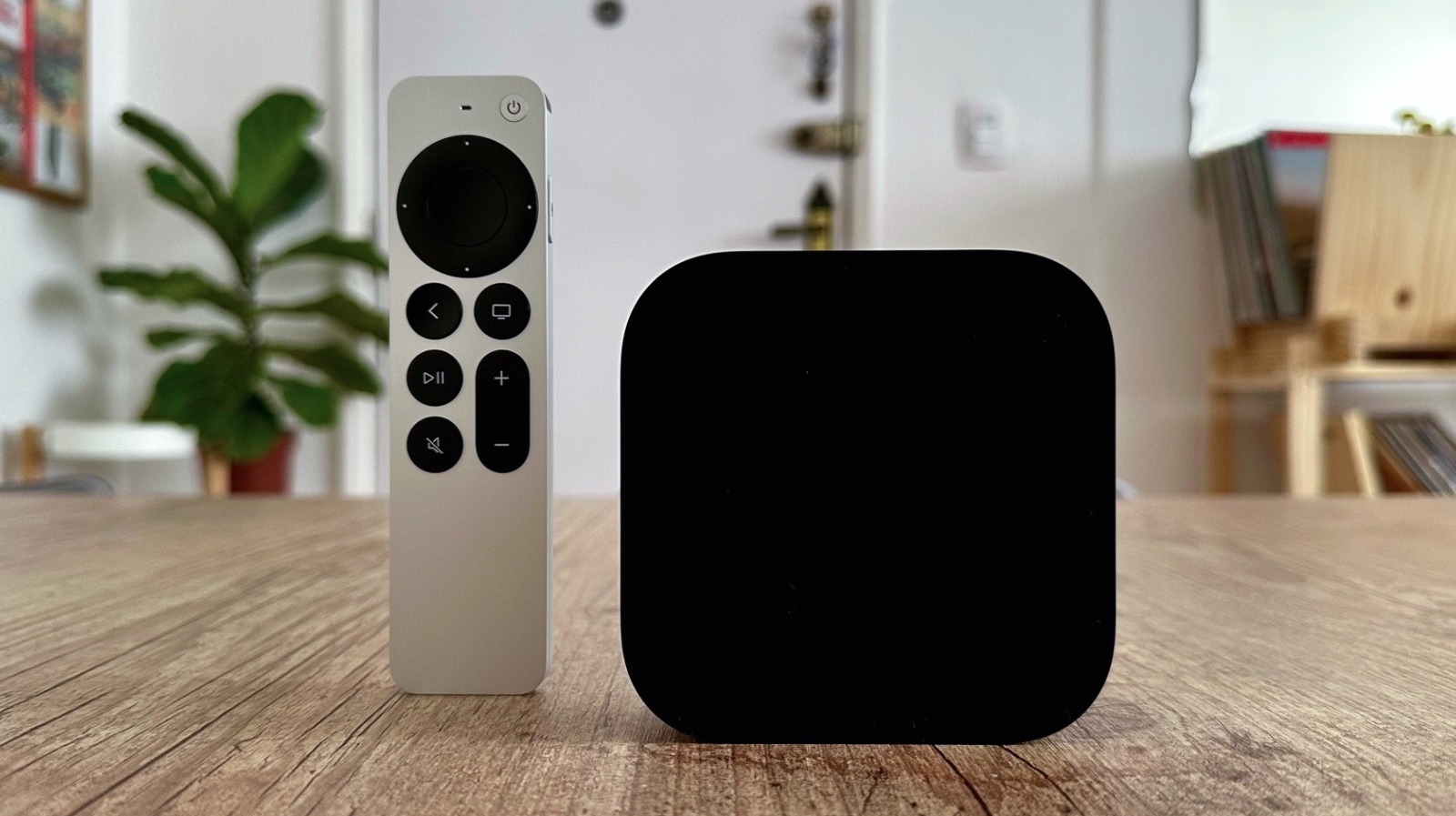
The last time consumers got news about Apple TV hardware was when the company announced the 2022 Apple TV 4K model. Its third-generation set-top box was released with up to 128GB of storage, an Ethernet port, Apple’s A15 Bionic chip, and a USB-C Siri Remote. While rumors suggest a new Apple home entertainment product is on the horizon, the current model is still the best way to enjoy streaming services. As a bonus, it also gives you the complete Apple experience with Apple Fitness+, the Apple Music catalog, and games that can be played with an Xbox or PlayStation controller.

On the software side, Apple has been changing the Apple TV brand a lot. For example, the streaming service previously known as Apple TV+ has ditched the plus sign, and its app has also been tweaked to accommodate the platform’s rebrand and iOS 26 changes. With all that in mind, we have some clues about the ways Apple TV is changing in 2026 and why it feels like it will be the year of smart home products for Apple.

A more powerful Apple TV processor is coming in 2026

Tomohiro Ohsumi/Getty Images

Several reports in the past year implied Apple was readying a new Apple TV 4K (via MacRumors). The latest rumors suggest the company is adding the A17 Pro chip to this set-top box, which is the same processor available on the iPhone 15 Pro and iPad mini 7. According to Apple, the A17 Pro offers a huge performance boost, as the chip delivers faster CPU and GPU, as well as a Neural Engine that’s up to two times faster.

While Apple could follow the trend in the previous generation and offer this device with one less CPU core, the A17 Pro that comes with the iPad mini 7 has a six-core CPU, with two performance cores and four efficiency cores. These devices gain a 30% processor boost and a 25% jump in graphics performance compared to the sixth-generation iPad mini with A15 Bionic.

That said, even though the Apple TV might not receive a redesign, improved internal specs could make this device even faster, smarter, and ready for the latest image and audio capabilities. As a bonus, it can become a proper hub for everything smart home-related.

The new Apple TV could get more RAM and Apple Intelligence

José Adorno/BGR

If Apple adds the A17 Pro chip, the company could increase Apple TV’s RAM to 8GB, which is the minimum required to handle Apple Intelligence. Even though Apple doesn’t specifically mention this Apple Intelligence requirement, every device that currently supports its AI platform meets this minimum. More interestingly, devices that didn’t support Apple Intelligence and got an upgrade recently, such as the iPad mini with A17 Pro, also had an increase in RAM from 4GB to 8GB due to the more demanding tasks. More RAM could also make the Apple TV handle multitasking better, improve game performance, and make general navigation smoother.

While users shouldn’t expect Writing Tools or Image Generation on the Apple TV, it would make sense if this set-top box gets unveiled around iOS 26.4 next year, as that’s when Apple is expected to launch an all-new Siri. Due to internal issues in testing and releasing a new personal assistant, several Apple product launches have been delayed.

Apple TV could feature the new N1 chip

José Adorno/BGR

Besides an improved processor and more RAM, another spec change that could be coming with the next Apple TV is Apple’s proprietary N1 chip. This modem is responsible for connectivity functions, as it handles Wi-Fi and Bluetooth. Introduced with the iPhone 17, this wireless chip enables Wi-Fi 7, Bluetooth 6, and Thread support. Apple says this chip is also responsible for improved and more reliable wireless functionalities, such as Personal Hotspot and AirDrop.

Although it’s unclear if Apple might adopt the N1 chip in the new Apple TV 4K, this could be a great improvement over the current connectivity standards, as the third-generation Apple TV 4K features Wi-Fi 6, Bluetooth 5.0, and Thread technology only on the model with more storage. Another long-awaited feature for Apple TV users is a Siri Remote with a Precision Find chip, which would make sense for Apple to finally add to a newer model.

Apple TV’s streaming is also part of the set-top box strategy

José Adorno/BGR

It’s not just the Apple TV box that might change in 2026. After all, an improved Apple TV 4K can also lead the way for more changes to the Apple TV streaming under the hood. Even though Apple makes the app available on almost every device, watching Apple originals with a pair of HomePods and Apple’s set-top box is a great experience.

With the release of a new Apple TV in 2026 and Apple pushing its sports offering, as it became the official streaming partner for the new Formula 1 season in the U.S., the company might announce a new sports tier or new sports functionality inside the app. Features like multi-cam support could become exclusive to the new Apple TV to lure new customers.

After all, with sports being the main driver of Apple TV subscriptions in 2025, and the company offering Major League Baseball and Major League Soccer as part of the Apple TV subscription, this is a great moment to push on a more capable set-top box, which can improve users’ smart TVs and deeply integrate other Apple products with it.

Should you get a new Apple TV today or wait a little longer?

Gece33/Getty Images

Apple’s set-top box continues to be the best device to improve your TV experience. After all, the Apple TV is fast, reliable, and full of apps, which all make it worth it even if you already have a smart TV.

That said, if someone gives you an Apple TV 4K this Christmas, you should definitely be grateful. However, if you’re planning to buy one in the near future, I’d recommend waiting for the next generation, as the new model might introduce a new smart home era for Apple: one a lot smarter and with new features thanks to improved specs.

That said, other rumors suggest Apple wants to keep decreasing the Apple TV price, and if it turns out to be right, the company will offer a better device with a lot more features at a more affordable price. The new Apple TV could be released in early 2026, and it might even be unveiled close to a third-generation HomePod, the HomePod mini 2, or Apple’s rumored new smart home devices.

Source

Posted on

Flic Duo Smart Controller Review: Ultra-Versatile And Inexpensive

Christian de Looper / BGR

Smart home controls are getting better. The Flic Duo was first announced at CES 2025 as a dual-button smart home controller, and it represents a pretty significant leap from Flic’s older single-button devices. At $59, you’ll get physical button presses plus additional gesture controls — swipes, twists, the works — all wrapped up in what the company hopes will be a controller that doesn’t care what ecosystem you’re running.

What makes the Flic Duo worth paying attention to is that it’s trying to be more than just another button you stick on a wall. The gesture controls layered on top of traditional presses make it much more of a device that you can use to control all sorts of different aspects of both your smart home and other areas of your digital life. Whether it actually delivers on that promise comes down to your existing setup and how much patience you have for the initial configuration.

Design

Christian de Looper / BGR

At just 8mm thick, the Flic Duo is impressively slim for a smart home controller. It doesn’t look awkward whether you’ve mounted it on a wall or dropped it on your nightstand. I tested the white model, and it basically disappears into most rooms –- which is exactly what you want from an accessory like this. There’s also a black option if that works better for your space.

The button layout puts one larger button above a smaller one, and they both feel great to press. You get a satisfying click with enough tactile feedback that you know immediately when your input registered. Flic includes a metal mounting plate that connects magnetically to the button. That means you can wall mount it, but then grab it when you want to use it handheld. The magnetic connection holds firm during normal use but lets go easily when you actually need to remove it. Thankfully, it you lose it, there is a feature to find the button with a sound, which can be triggered through the app.

The CR2032 coin-cell battery is user-replaceable, with Flic saying you’ll get up to three years of use out of it. I obviously couldn’t test that timeline, and while I generally prefer rechargeable batteries, I do like that it’s easy to replace this one when you eventually need to do so.

Features

Christian de Looper / BGR

Versatility is really where the Flic Duo sets itself apart. You’ll get single press, double press, and hold options on each button. On top of that, you’re also getting vertical and horizontal swipe gestures, plus clockwise and counter-clockwise twists. Factor in the dual buttons and the device knowing whether it’s mounted or in your hand, and Flic says you’re looking at over 30 distinct command combinations.

What does that actually look like in practice? A single press turns on your lights. Swipe up to increase brightness. Swipe right to adjust your thermostat. Double press the smaller button to start a playlist. The range of possibilities is legitimately impressive.

Some of the gesture controls can be finicky though, especially when you’re first setting everything up. Getting swipes and twists to register consistently takes a little practice, and I found myself repeating gestures multiple times before the app figured out what I was trying to do. Once you’ve learned the feel of it, reliability improves. But there’s definitely a learning curve.

One thing to know: a lot of the advanced features and service integrations need a Flic Hub, which you’ll have to buy separately. Direct Bluetooth connection to your phone can handle the basics, but full gesture support and extended range depend on having that hub. The distance between the button and that hub can impact how quickly controls work too — so if you’re far away from the hub, expect a little more latency.

App

Christian de Looper / BGR

The Flic app manages all your setup and customization, and it’s perfectly fine. Not exceptional, but it does what it needs to do. The interface stays minimal and easy to navigate, and pairing the Duo went smoothly when I tested it.

Setting up automations is reasonably straightforward, though the sheer number of options might be overwhelming at first. Beyond standard smart home control, you’ll get integrations with services like Slack and even HTTP request support. If you’re into automation, this opens up some interesting possibilities — triggering workflows in n8n or similar platforms makes the Flic Duo genuinely useful beyond typical smart home stuff.

I need to emphasize the hub requirement again. Bluetooth connection works for simple functions through the app, but for full gesture recognition and extended functionality, you need a Flic Hub. And if you want television control specifically, you’re looking at adding the Hub LR with an IR accessory. All of this adds cost and complexity, so factor that into your decision.

Smart home support

Christian de Looper / BGR

Matter support is built in, and the Flic Duo plays nice with Apple HomeKit, Amazon Alexa, Google Home, and SmartThings. With over 100 integrations including Sonos, Philips Hue, Nanoleaf, and Slack, compatibility probably isn’t going to be your problem.

HomeKit comes with some limitations though. Only the physical button presses work within Apple’s ecosystem — the gesture controls don’t carry over. If you’re heavily invested in HomeKit and want to use the Flic Duo to its full potential, that’s a meaningful restriction.

Connectivity performed well in typical home environments, particularly with the Flic Hub extending the range. Sonos integration was responsive during testing, though your results ultimately depend on how reliable your other smart home devices are.

Conclusions

The Flic Duo is a genuinely versatile, well-designed smart home controller. Physical buttons plus gesture controls give you flexibility that most competitors can’t match, and build quality feels right for what you’re paying. The magnetic mounting system elegantly handles the whole wall-mount-versus-portable question, and the replaceable battery is just practical thinking.

The downsides are real but not dealbreakers: gesture controls take patience to get right, full functionality requires additional hub hardware, and HomeKit integration has limits. If you’re willing to put in the setup time and potentially spring for the hub, the Flic Duo actually delivers.

The competition

There isn’t a whole lot of competition in this space, and most alternative smart home buttons like this are focused on a particular ecosystem. Few of them match what the Flic Duo brings together — gesture controls, platform-agnostic design, and an extensive integration library. If you’re locked into one smart home ecosystem, a dedicated controller might serve you better. But if you’ve got a diverse smart home setup and want consolidated control, nothing else out there is as comprehensive right now.

Should I buy the Flic Duo?

Yes, if you’re looking for a versatile, inexpensive smart home controller.

Source

Posted on

IOWN advances next-generation network evolution and innovation

As enterprises and connectivity providers know only too well, artificial intelligence (AI) has fuelled an unprecedented surge in network demand – especially in datacentres. Indeed, the emergence and widespread adoption of agentic AI-enabled applications is also reshaping datacentre requirements, prompting a rapid evolution in networking services.

AI-driven datacentre capacity is projected to grow between two to six times over the next five years. And as AI capacity has soared, network infrastructure is constantly having to adapt to a multitude of external pressures and unprecedented strains. The result is that keeping pace with the next wave of AI growth will require new long-haul networks to enable the rapid scaling of capacity needs in both existing and emerging enterprise setups.

This next generation of networks will have to keep pace with new fibre buildouts and AI datacentre sites, offering extended network capillarity – using short-range radio-access technologies to provide local connectivity to things and devices – and greater overall capacity. And as witnessed and articulated at the latest meeting of the Innovative Optical and Wireless Network (IOWN) Global Forum in Dallas in October 2025, advanced all-photonic networks (APNs) will almost certainly play a crucial role in achieving such aims.

Led by global tech giant and comms operator NTT, the IOWN project was created to meet the growing needs of the hyper-connected business world of the future, offering a global communications infrastructure capable of enabling ultra high-speed, high-capacity internet services utilising photonics-based technologies, namely an APN. It also aims to address the almost exponentially rising demand for data and a commensurate rise in energy consumption due to the vast amounts of compute power required by future applications, in particular large language model (LLM) use cases.

As it marked its fifth birthday in January 2025, the IOWN Global Forum said its work this year would place an emphasis on updating reference architectures and technologies while developing early adoption use cases across key industries.

Such work is well-needed: research from Neos Networks in October 2025 warned that mass buildout of datacentres in the UK may not come to fruition as mass availability to fibre remains the critical bottleneck that could slow growth, with as many as four-fifths of firms delaying builds because of network infrastructure constraints.

Assessing in April 2025 how to solve these issues, leading research firm Omdia observed in a study, The all-photonics network enables the next-gen digital economy, that to drive the continued growth of the global AI economy, networks would need to evolve significantly to deliver enhanced capabilities. New, advanced optical networks, it said, were necessary to meet advanced application and service requirements and address surging capacity needs within tight capex targets.

Meeting sustainability goals

As well as supporting business agility to match bandwidth supply to service utilisation, the all-photonic networks also offer the opportunity to have infrastructure with lower power consumption per bit to meet sustainability goals and reduce energy costs. To display the crushing need to address the challenge, the Omdia research calculated that when measured in gigawatts, total global datacentre capacity – what the analyst called the key enabling infrastructure for AI capabilities – is set to grow 57% from 2024 to 2027.

The analyst concluded that APNs can potentially bring benefits to all audiences – from individuals and industry to international markets – and noted that the APN will build upon advances in optics technology that offer improved system reach capabilities, cost optimisation, enhanced optical switching, and advances in multi-layer and supplier management supported by the standards community. For enterprises in particular, it sees benefits for those firms looking for greater security, agility and return on investment for their AI and cloud adoption.

Fast forward to the Dallas conference in October, and the point was made that the optimal networks between datacentres will need to be more open and dynamic to support the sharing of computer resources, solving technology problems and moreover creating value for businesses.

The Dallas meeting was the first published event the forum had hosted to advance photonic technologies. It brought together over 240 attendees from more than 170 member organisations for a series of panels, presentations and technology showcases that demonstrated its global scope and latest advances in next-generation network evolution and innovation.

IOWN Global Forum president and chair Katsuhiko Kawazoe notes that since the association’s last public event in Stockholm, it had made “significant” progress.

“[We are] moving from proof-of-concept to proof-of-value, with completed PoCs now demonstrating real-world benefits,” he says. “We’ve also expanded early adoption use cases into remote construction and warehouse management … We’re focused on scaling to real-world deployment, developing reference models and strengthening industry partnerships.”

At the heart of these advances has been an evolution in the development of the APN, which the technology developers in the consortium say has reached the 2.0 stage. NTT’s Masahisa Kawashima, IOWN technology director and head of the technology working group at the IOWN Global Forum, tells Computer Weekly that over the past year, notable developments included work around multi-domain internet networking – enabling interconnection between private fibre networks – and a new packet forwarding architecture using a Hub and Spoke model. These moves are designed to improve efficiency and quality, supporting low latency and introducing deterministic quality of service.

“Multi-domain internet networking means that we can allow multiple organisations to operate their own APN networks and interconnect them to form a seamless network,” he says. “This is very important. Currently, many people are talking about the deployment of private fibre network. For example, datacentre providers will build private fibre networks to connect their distributed datacentre, but without inter-working technology, their optical networks will just form silos in the computing space. With our work, their private fibre networks will be interconnectable to form one computing space, and that would create huge value in this AI computing era.

“Also, we have defined a new architecture regarding the packet forwarding layer. Traditionally, packet networks used to consist of packet forwarding nodes, distributed geographically. But since we have an IOWN APN instead of distributed packet forwarding nodes, we can deploy a packet forwarding function in the cloud and implement a packet forwarding function in a hub and spoke architecture. This will allow us to improve the implementation of the packet forwarding function in terms of efficiency and also quality. For example, we can provide a packet forwarding service with deterministic quality of service and support new data transfer protocols such as RDMA. This has not been possible with today’s packet networks.”

Kawashima compares the latter capabilities to delivery firm FedEx, with its tracking of a packet at all stages from the moment it is sent to a customer. Deterministic quality means that, for example, latency delays can be bound to a specific value and the APN can assure that there would be no packet loss or packet reordering. A key use case for the assignation of a specific value for latency would be finance, where there is a legal requirement for specific minimum throughput speed for a legally recognised trade.

Looking at this application in greater depth, Kawashima adds that in this industry, finance firms have to deploy their transaction systems with databases that perform synchronous data replication, and in that, the latency between two database nodes should be very small. He observed that the use of the IOWN APN would fundamentally improve the performance of two databases being synchronised.

At its heart, the APN is all about ecosystems and is fundamentally built to allow for the use of geographically distributed components, offering the potential to use specifications from consortia like OpenROADM, a standard developed through collaborative work between carriers and vendors to create and promote an open, disaggregated and efficient optical networking ecosystem that allows for flexible, scalable and fully operational networks supporting various services and applications.

Adopting specifications

The IOWN approach is to take advantage of specifications defined by other consortia such as OpenROADM, as adopting such product specifications is helpful in deploying key components of the optical technology ecosystem. Kawashima sees OpenROADM as defining an open architecture. Traditionally, components are deployed in a single place and operated by a single organisation. The IOWN open APN takes advantage of the same components but allows them to be distributed geographically and operated by multiple organisations.

Other key applications considered include traffic control; using digital twins for more efficient management; network operations, particularly in the space of optical transport systems; and streaming video and TV.

The latter was exemplified clearly in May 2025 by Cho Kabuki, a theatre performance synchronising live and virtual performers in both Osaka, Japan and Taipei City, Taiwan using the APN. Even though the 100Gbps optical network between the two cities – created by NTT and Chunghwa Telecom – spanned around 3,000km, it boasted approximately 17ms one-way latency and 33.84ms round-trip time, with no jitter and stable communication.

The new APN was the product of an agreement signed between the two parties in October 2023, and is said to be based on Chunghwa Telecom and NTT’s strengths in optical and wireless transmission technologies, as well as both companies’ achievements in implementing these technologies. It links the Chunghwa Telecom headquarters in Taipei City and NTT’s Musashino R&D Centre in Japan.

Speaking on Cho Kabuki, and the most important lessons learned, Kawashima notes that for him, the standout was the latency of the connection, which made the performance of acceptable quality.

“We used to know that the latency was very important, and using fibres would help us reduce the latency,” he says. “But once we deployed the [APN], what we have found is that the very short latency would help us as if we were in the same place, even if we were remotely separated. I think one of the important findings of the latency [is that it can] help people understand the difference between traditional networks and the IOWN APN.”

AI support

He also believes that what will come next will be another similar project with Chunghwa or another partner attracted by the live streaming use case, and also support for the world of AI.

“I’m expecting that many organisations would consider building a new venue – like a stadium or musical hall – connected with IOWN APN so that the performance there can be live streamed over the IOWN APN,” says Kawashima. “But also [while] the deployment of financial service datacentres is one thing, another thing is remote GPU [graphics processing units]. Many nations are talking about sovereign AI, building an AI computing infrastructure for their country to keep their industry competitive [as regards] global competition.

“One of the important points is how to achieve global sustainability, [and] what we could do with IOWN APN is deploy an AI computing datacentre in rural areas where renewable energy is abundant and connect such areas with downtowns or suburbia where many industries have their R&D campuses. This is what we can do with IOWN APN, because IOWN APN provides high bandwidth, load, agency and transport.”

In part two of our look at the work of the IOWN project, we find out what use cases the association has been working on and when they are likely to come to fruition.

Source

Posted on

Users Are Making A Huge Mistake With Apple’s iPhone Trade-In

Loner Nguyen/Shutterstock

Apple hasn’t increased iPhone prices for several years, even though it has made significant changes to its iPhone lineup, like eliminating the cheaper 128GB versions from all iPhone models. While that’s good news for consumers, the iPhone is still an expensive device. That’s why it may be a good idea to use any carrier discounts, financing offers, and trade-in deals that can reduce the iPhone’s price. Luckily for iPhone users, Apple offers a trade-in program that lets buyers turn in their old iPhone for credit that can be used for a new iPhone purchase.

In theory, that’s the simplest trade-in option, as you’re dealing directly with the vendor. But there is one big mistake you may be making when dealing with the Apple Trade-In program, one that’s not immediately obvious: you’re shipping your old phone back to Apple instead of bringing it to a retail store. These are the two options Apple offers. Customers can ship the old iPhone back to Apple or hand it in at a retail store. 

Buyers have a 14-day window to ensure Apple gets the old iPhone. After that, Apple will evaluate the handset and determine whether the initial trade-in estimate still applies. Regardless of how you give Apple your old iPhone back, you should receive the same amount of credit. But that’s not going to happen if the iPhone gets damaged in transit, which is a risk specific to shipping the handset using the kit Apple sends to your home. Apple can reduce the payout to make up for the damage, or offer you $0, after discovering the iPhone is damaged in a significant way.

What iPhone owners say

Cheng Xin/Getty Images

Even if you know you’ve sent in a working handset that’s in good condition, Apple will determine the trade-in value of the product it received. If the delivery process damaged the handset in any way, Apple will tax you for it. The best option is to bring the iPhone to the nearest Apple retail store to trade it in. iPhone owners who have used the Apple Trade In program only to discover the iPhone was damaged in transit shared their experiences online.

One Reddit user explained that they traded an iPhone 11 for an iPhone 17, their second experience with the trade-in program. While the first time they had no issues, Apple downgraded the payout from the initial $100 value to $40 the second time, citing “Bent device without evident screen lifting, Display has more than 2 white spots OR individual diameters exceeding 2mm.” Apple provided images to show the damage. The user had their own photos showing the handset was in good order before being shipped to Apple. “This damage was totally unexpected, and I wish I had driven down to an Apple Store to do the trade-in in person,” the user concluded. In follow-up comments, the iPhone owner said he could not get the original $100 payout, despite escalating the case.

Another Reddit user and his wife upgraded from the iPhone 15 Pro Max to the iPhone 17 Pro Max using Apple’s trade-in program. They both mailed in their handsets, but the woman’s device was reported as “back glass cracked,” and the trade-in value was adjusted to $0. The Redditor said that both of them had AppleCare+ for the iPhone 15 units, so it wouldn’t make sense to send in a broken device.

What if there’s no Apple retail store nearby?

Ming Yeung/Getty Images

While trading in an old iPhone in person at an Apple store is the safest idea, not all iPhone owners live near one. After all, you’re trying to get a deal on a new iPhone, not spend more money to travel to an Apple store. There might be a way to prove to Apple that you sent a functional iPhone in good condition. 

One Reddit user shared their story about trading in an iPhone 14 Pro. They tried handing in the old handset at an Apple retail store, but Wi-Fi issues prevented the process. They used the mail-in kit after that: “It left my house in great shape… near excellent almost… and Apple emailed me a revised value of $0 because of a cracked/non-functional screen. That’s absolutely not how it left me, and since I can’t prove that it happened in transit, they are telling me they won’t honor the initial quoted value.” 

Another Reddit user responded to the thread, saying, “I record a video, doing a 360 of the device to show no physical defects, then power the device on and off. I finish the recording by packing and sealing the box and adding the label.” They added that they’ve used the process to trade in countless devices for all family members for nearly a decade. “Only once did [Apple] try to revise the value and it was corrected when I contacted Apple and offered to show the video. They took me at my word when I described what was in the video and approved the original amount.” This account is not a guarantee that Apple will stick to the original quote for an iPhone damaged in transit, but it’s something to consider.

Source

Posted on

IOWN 2.0 – the next applications for the next-gen network

In the first part of our round-up of the Dallas meeting of the Innovative Optical and Wireless Network (IOWN) project’s Global Forum conference in October 2025, we looked at the technological development of the association’s all-photonics network (APN) – and the continued work in essentially “moving from electronics to photons”, as a representative of one of its key member companies insisted its mission boils down to.

One of the most important developments over the past year was using the APN to support a theatre performance that synchronised live and virtual performers in Japan and Taiwan, running over a network that was over 3,000km long.

In addition to validating a very important use case, the Cho Kabuki project also saw the APN being at the heart of a digital twin, whereby the producers could digitise the performance character and manipulate it in the computing space while being certain that latency would not adversely affect synchronisation. The lessons from this area are likely to be applied to digital twins in the industrial space. Smart warehouses are one key example cited.

NTT’s Masahisa Kawashima, IOWN technology director and head of the technology working group at the IOWN Global Forum, says plans also include demonstrating commercial operability of the APN and defining a new functional architecture for artificial intelligence (AI) computing platforms using co-packaged optics and optical circuit switches.

The agile deployment of optical fibres is seen as essential for forthcoming 6G networks. IOWN APN provides a virtualisation layer on top of physical fibre infrastructure. This allows multiple mobile operators to share fibre infrastructure, mitigating availability issues and costs.

It is worth noting that soon after the Dallas conference, IOWN forum member Nokia announced a strategic partnership with Nvidia to add the latter’s AI-powered radio access network (RAN) products to Nokia’s RAN portfolio, enabling communications service providers to launch AI-native 5G Advanced and 6G networks on Nvidia platforms.

Modes of modernisation

Looking at a broader perspective on what enterprises will likely need to do to tap into this revolution, Jefferson Wang, chief strategy officer for cloud first at Accenture, noted in Dallas that having made a significant $3bn investment in AI, including classical AI, generative AI and physical AI, his company was aiming to solve the big problems faced by industries, governments and societies alike, and assist them in their transformation. In short, exactly what IOWN sets out to do.

Accenture has identified five key areas for modernisation: new architecture; application refactoring; data and AI flow; infrastructure changes; and operational model changes. Wang acknowledges that to address these enterprise and societal challenges, Accenture’s cloud modernisation practice is focusing on infrastructure, network security and operational changes – and these plans will only be realised with modernised networks and compute solutions.

“If we’re helping industries, governments and societies change, there could be a challenge with where is the modernised network, where is the actual compute and how do you think about the storage? So, in our cloud practice, one of the things we identified is that modernisation is not just a lift and shift story to transform these companies,” says Wang.

“The first [challenge] is to figure out this new architecture. The second is how to think through the actual applications. Do you refactor them? Do you just lift and shift them? What do you do with the applications? The third is your data and AI. How do you do your data flow? How do you think through these different forms of AI? The fourth is what infrastructure changes, network modernisation, and security [measures] you have to put in place. And the last one is how to think about your ways of working that have to change.”

As a result, change is an imperative. It could be a change in a business’s operational models. It could be that a full stack of financial operations is needed for a company to make sure the transformation economically still makes sense.

A question of compute

When Accenture looked at all of these things, and looked at the permutations and big macro trends, Wang recalls it mostly came down to a need for more compute, and more compute close enough to where data is created or used. And that means population centres. Wang notes that firms were having a hard time finding affordable real estate and power for datacentres near population centres, and that at the time, there wasn’t a good answer for that issue.

However, what is a good answer for the Accenture cloud modernisation practice is optical networks. That is replacing the expensive and energy-hungry electronics, solving the problem at the optical layer of networks, and innovating on the transponder. Wang references Cho Kabuki as a great example of what is currently possible and where the use of an APN could lead, such as, again, digital twins in manufacturing.  

“Proving 3,000km between Taiwan and Japan with 17 milliseconds [latency] and no jitter [is] a big deal. It changes the actual economics of what we’re trying to do. That’s game-changing. I can do ‘what if’ scenarios on the digital twin. A manufacturing industry cares about the number of shifts you run, the flexibility of your line and, ultimately, worker safety. If you can’t do ‘what if’ scenario planning, it becomes very hard to be flexible. A digital twin is generally a big, heavy compute [operation], so if I can’t move it back and forth quickly, it becomes static, and it doesn’t help with the ‘what if’ scenario planning,” says Wang.

“So, knowing the value drivers of an industry is incredibly important for us, and then figuring out how we’re going to transform it. We orchestrate the ecosystem, and we’ll find an operator with the right spectrum holdings for factories, and then we’ll orchestrate the solution to figure out the architecture. That is a private network, millimetre-wave for this piece of video analytics, sub-6G comms for that piece, the communication trunk. And then we might want to be able to say, here’s the right edge solution [and] build a computer vision solution on top of it, and then we wrap the solution together. But that also requires [thinking about] what you are doing with the trunk, the optical layer of the network.”

Accenture’s commitment to IOWN spans around four years, and before this time, a number of the company’s clients were members of the association. Wang observes that when Accenture looked at the macros and big trends, such as what AI was going to do in all its forms, the result was that firms needed to think about cloud posture and compute.

Accenture then began to identify some of the potential choke points to infrastructures, some of which could also be control points given the right technological basis. How to unlock those was really the impetus to diving deeper into IOWN, which has the mission to address the three pillars of capacity, latency and energy consumption. Wang stresses what these should mean as regards a true business solution.

“Conditioning the enterprises to understand the value of each [pillar] is as hard as pulling the solution together. You say the word ‘latency’, and if you go to a CEO and you say, ‘I can reduce your latency down to one or two milliseconds,’ they might say, ‘Okay, great. What does that mean?’ And then you have to say, ‘In a fast-moving production line, here’s your error, and then, to create an automated solution, you need your latency or jitter to be at this threshold, and currently your baseline is three seconds.’ So conditioning, the value of that is actually quite hard. So those three pillars, to me as an engineer, are exciting, and the innovation that’s happening at IOWN is really exciting and fast paced, but actually the value chain of what you’re putting it into takes awareness and education, it takes a business case, and it takes conditioning to value it.

“Because one of the things that really fascinates me about IOWN [version] 2.0 is looking at the deterministic part of the [technology]. You can now have that conversation. It’s deterministic quality service, deterministic latency. [In] finance, if the regulator says [minimum network latency level] is ‘that’, then you work around that. That’s a different combination than [saying] it’s just a bit faster network. This is completely different. We have found that that level of understanding is clearer [to CEOs], it’s more quantitative. When you get deterministic, that’s where it gets very exciting.”

Moving to real-world applications

This is also where it gets more practical, as far as the association is concerned. Kawashima says that for the next 12 months, the emphasis for IOWN will be on one thing: commercialisation. The plan is simply to pass from showing a robust and well-thought-out proof of concept to accelerate into real-world applications.

He says: “To me, proof of concept is like the Wright Brothers’ first flight. It’s a great achievement, but we cannot do business right after that. We need to find business use cases that make airplane travel worth the cost. [We have to] demonstrate that telecoms operators around the world can use APNs without the risk of losing their customers. So this is the journey between proof of concept and proof of business. And of course, we will do a lot of experimentation and many proof works to prove those points.”

Source