Posted on

NTT Docomo claims successful outdoor 6G AI-driven interface trial

Just a year after NTT Docomo concluded a test with radio waves in the 4.8GHz wireless band, which found that indoor 6G communication speeds can be improved up to 18% compared with conventional methods, the firm has “successfully conducted the world’s first” outdoor demonstration using real-time transceiver systems with AI-powered wireless technology for 6G.

The operator has already been at the forefront of a string of developments moving towards the era of 6G, and the latest move saw NTT work with Nokia Bell Labs and SK Telecom in field trials taking place at three locations in the city of Yokosuka in Kanagawa prefecture.

NTT said that in wireless communications, fluctuations in the radio propagation environment can cause unstable connection quality. To address this issue, the three parties have been developing and testing “AI-AI technology”, which applies artificial intelligence to both the transmitting and receiving sides of the wireless interface to optimise modulation and demodulation schemes according to radio conditions, enabling stable communication across diverse use cases.

The effectiveness of this technology is said to have been proved in the indoor tests undertaken a year ago.

The latest field trials aimed to verify whether this new technology can maintain stable performance in outdoor environments, where radio conditions vary greatly due to temperature, weather and obstacles. The trials are said to have confirmed that the use of AI improved throughput (transmission speed) by up to 100% compared with conventional non-AI-based methods under the same environmental conditions, effectively doubling the communication speed.

In the field trials, Docomo and partners evaluated the AI-AI technology under three outdoor environments with varying radio propagation conditions, such as the presence of obstacles and whether the terminal was stationary or in motion. Namely Course 1, which consisted of a public road with gentle curves where the test vehicle travelled at speeds of up to 40 km/h; Course 2, an environment with partial obstacles; and Course 3, a road with few obstacles where the test vehicle travelled at speeds of up to 60 km/h.

The evaluations were conducted using devices equipped with the technology to compare throughput performance with and without its application.The results were claimed to have confirmed that applying the AI-AI technology improved communication speed by compensating for signal degradation across all test environments.

In particular, NTT noted that under the most complex propagation conditions in Course 1, the technology achieved an average throughput improvement of 18% and a maximum of 100% compared with conventional methods. This improvement it stressed would enable users to transmit larger volumes of data at higher speeds, while also allowing network operators to enhance spectrum efficiency and deliver higher-quality communication services.

Docomo also believes that the findings demonstrated that the AI-AI technology is effective not only indoors but also in complex outdoor environments, marking a significant step toward practical 6G systems that combine high wireless transmission efficiency with low power consumption.

The company said that it will continue to refine the new technology under diverse conditions and accelerate R&D toward 6G realisation, while also collaborating with global partners to advance 6G standardisation and implementation.

Source

Posted on

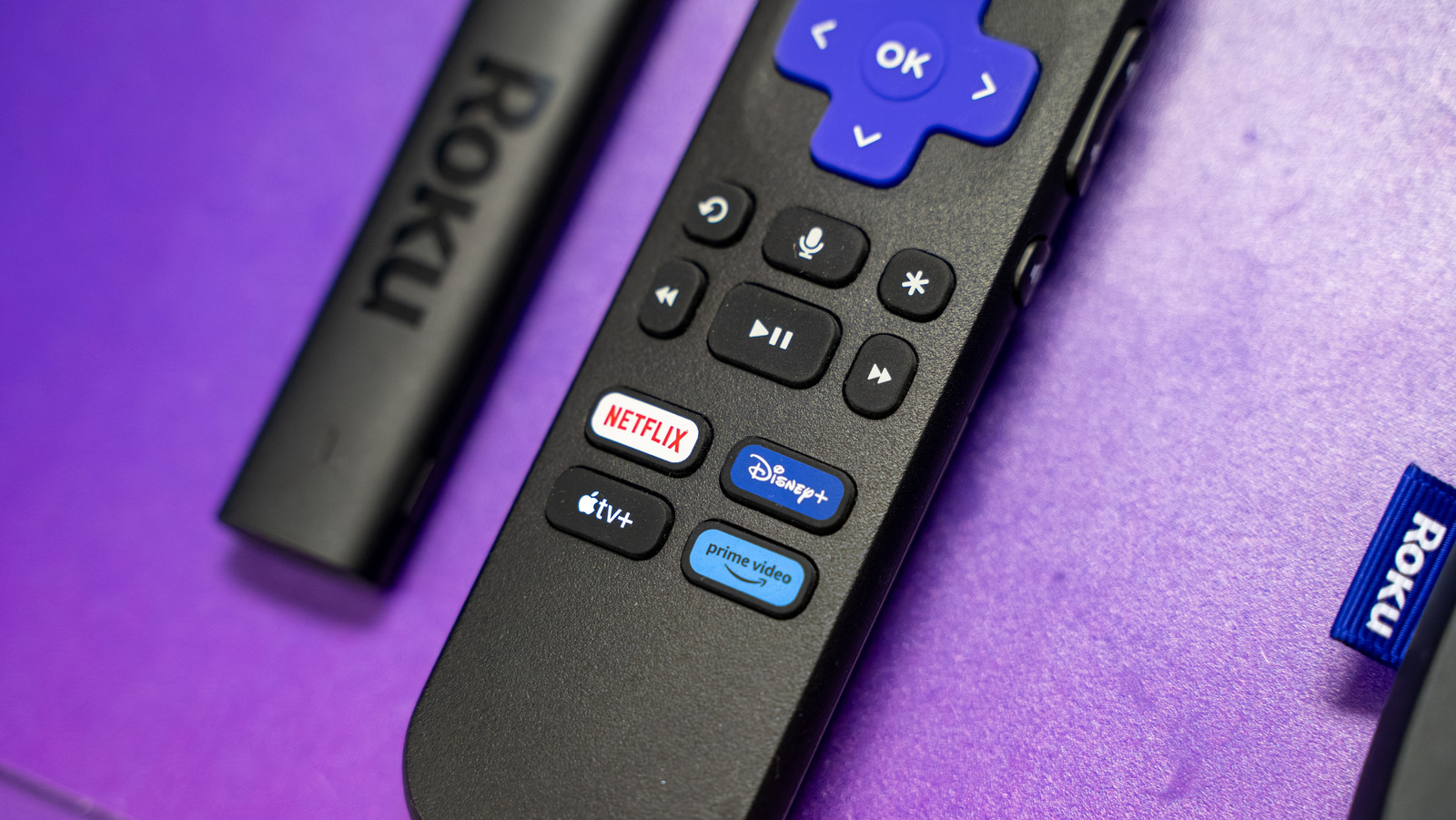
Your Roku TV Streaming Stick Might Be Spying On You

Erman Gunes/Shutterstock

We may receive a commission on purchases made from links.

As the saying goes, if something is free, you are the product. While Roku streaming sticks aren’t exactly free, they’re incredibly affordable for what they are. During sales, you can buy one for just a little more than the price of lunch at your local chain restaurant. They unlock a world of streaming content through essential Roku apps and provide an intuitive interface. While they can turn any old TV with an HDMI port into a smart one, many people choose to plug a Roku streaming stick into an already smart TV.

They prefer the interface and enjoy access to additional content, like Roku Channels. But this convenience and money-savings comes at a cost if you don’t disable certain features. When you use a Roku streaming stick — even some affordable smart TV brands – your usage is being tracked.

This includes the way you interact with apps, what you might buy right from the TV ( in this case, a streaming stick), and what kind of content you watch or engage with. From there, the information, though anonymous, is sold to third-party companies for a variety of reasons, from marketing to research. But there’s a way to disable this to ensure a safer, more private experience.

What a Roku streaming stick does in the background

As you engage with content, the streaming stick learns about your habits and those of your family. It tracks how much you watch TV, when you watch, and the type of content you engage with. It can even discern demographics, interests — like if you’re a crime nut — and recognize if you have young children. It will log what items you purchase, what streaming services you use most often, and even which commercials you skip or, conversely, watch.

Roku’s own privacy policy indicates that it collects your search history and results, voice commands, channels you access, including at what times and for how long you watch, how you interact with content and ads, and even what settings and preferences you use. The data it collects is often sold by data brokers to third-party companies that use this information in many ways. Most notably, it’s to conduct research and market to you, albeit as an anonymous consumer.

So, while Roku offers its best streaming stick devices for a steal, the information that’s gathered about you is invaluable. On the hand, you might appreciate the personalization of ads. On the other hand, however, you might find this invasive.

How to disable this

Charles-McClintock Wilson/Shutterstock

Thankfully, there is a way you can disable this tracking to ensure a more private browsing and streaming experience. When it comes to streaming sticks from all brands, including Amazon Fire TV Sticks and Chromecast devices, you can regain control. With Roku devices, check the privacy settings of the device by:

  1. Go to Settings.
  2. Click on Privacy.
  3. From here, select Advertising and Limit Ad Tracking.

To prevent the voice remote from recording your commands:

  1. Go to Settings.
  2. Click on Microphone.
  3. Then click Channel Microphone Access.
  4. Finally, select Never Allow.

There’s also something called Automatic Content Recognition (ACR), which is how the streaming stick collects demographic data about you. Look under Smart TV Experience and turn this off. Consider also using a VPN to mask your IP address and thus your actual location. This doesn’t make it impossible for a device like a streaming stick to track you, but it does make it more challenging.

Keep in mind that many companies, including other brands of streaming sticks and affordable smart TVs, collect such information on you. But by following these simple steps and running through your settings, you can minimize what they learn about you and how they use it.

Source

Posted on

WhatsApp For iOS Finally Rolls Out Multi-Account Support For Testers

Nantonov/Getty Images

For years, WhatsApp has been working on multiple account support. While the company took a long time to start implementing it for users, earlier this year a report revealed that WhatsApp was internally testing this feature on iOS. Now, WABetaInfo says this feature is finally rolling out for iPhone testers in the latest TestFlight build.

According to the publication, WhatsApp for iOS 25.19.10.74 lets beta testers add different WhatsApp accounts directly from the settings page without logging out or restarting the app. More interestingly, each account retains its own chat history, notification tones, preferences, and other settings.

That said, multiple account support on WhatsApp seems to be working just like switching accounts on Instagram or Facebook. Still, users shouldn’t get their hopes up for an immediate release, as WABetaInfo says this rollout is limited to a few beta testers. Here is everything you need to know about this long-awaited feature.

Adding a new WhatsApp account on iOS

José Adorno/BGR

WABetaInfo says those with access to the new multi-account feature will see a new Account List section in the settings menu or a dedicated button placed next to the QR code icon.

According to the publication, at this moment, users can add up to two accounts on the same WhatsApp application. The account can be new or previously associated with WhatsApp, such as a number you’ve been using on WhatsApp Business or on another phone. Once you connect the new number, the app will start syncing messages and settings.

Alongside specific settings for each account, WABetaInfo says WhatsApp also creates separate backups, so users can easily manage them. By pressing and holding the Settings tab, users can quickly switch between accounts. Besides that, users can take advantage of everything previously available, such as Chat Lock, Face ID on the app, and more. BGR will let you know once WhatsApp reveals its plans for when it will release this much-anticipated feature.

Source

Posted on

CCS under fire over ‘anti-SME’ supplier requirements for G-Cloud 15

The Crown Commercial Service (CCS) stands accused of making parts of its flagship cloud computing framework, G-Cloud, inaccessible to small and medium-sized enterprises (SMEs) and the hyperscalers, having set out a series of enhanced participation requirements for its cloud hosting lots.

Government procurement chiefs began the invitation to tender (ITT) part of the procurement process for the 15th iteration of G-Cloud last month, which is set to replace both G-Cloud 14 and CCS’s under-performing Cloud Compute Framework in September 2026.

As stated in the G-Cloud 15 tender document, G-Cloud is the “largest framework of its kind in the public sector”, and CCS said it wants to “leverage” its popularity by merging it with the Cloud Compute Framework.

“G-Cloud spend for FY23/24 was £3.1bn and Cloud Compute was £0.5m,” the document added.

And with G-Cloud 15 now covering the work of two purchasing agreements, the framework’s lot structure looks significantly different to G-Cloud 14.

For example, Cloud Hosting is now spread across two lots (dubbed Lot 1a and Lot 1b) rather than one.

Lot 1a is for suppliers specialising in the provision of “core” infrastructure-as-a-service (IaaS) and platform-as-a-service (PaaS) subscription services, while Lot 1b covers the same types of services when used to host information that is classified as being above the “official” government data security classification level.

The framework’s Cloud Software Lot has also been similarly split into Lot 2a, covering the provision of infrastructure software as a service (ISaaS), and Lot 2b, which covers software-as-a-service (SaaS) offerings.

Lot 3, covering Cloud Support services, remains intact, but Lot 4, which was run as a standalone framework to G-Cloud 14 for public sector IT buyers that wanted to run their own competitive processes for more complex cloud support contracts, is being axed.  

“G-Cloud 15 is the proposed replacement for G-Cloud 14, G-Cloud 14 Lot 4 and Cloud Compute 2 … removing the need for Cloud Compute 3,” confirmed CCS in the G-Cloud 15 tender document.

As well as a rework of the G-Cloud 15 Lot structures, tender documents shared with Computer Weekly by potential framework participants confirm CCS is considering introducing enhanced applicant vetting procedures for Lot 1a and Lot 1b participants.

And these changes could, according to several potential G-Cloud 15 applicants, who spoke to Computer Weekly on condition of anonymity, render these lots inaccessible to SMEs, and trickier for even some hyperscalers – which have come to dominate G-Cloud in recent years – to participate in them.

“Only Google really has a capability amongst the hyperscalers to go for Lot 1b,” said a member of the G-Cloud supplier community. “Meanwhile, I know of at least half a dozen or so SMEs – and maybe the same number again in bigger supplies like Vodafone – who could do Lot 1b easily enough [who will be affected] by these changes.”

What’s changed?

The tender documents shared with Computer Weekly show that Lot 1a and Lot 1b applicants will need to:

  • Undergo more rigorous financial vetting than required under the previous iteration of the framework.
  • Possess an expanded number of mandatory ISO accreditations than before, or provide proof that work to acquire them is underway by the time the application deadline for G-Cloud 15 closes in January 2026.
  • Where Lot 1b applicants are concerned, possess insurance cover in excess of £75m to secure deals through G-Cloud 15.

“The requirements for these cloud hosting lots make it very clear that smaller and SME cloud providers are not welcome to host public sector data, despite their clear capabilities,” said another G-Cloud supplier source.

“This will do nothing to diversify or strengthen the over-concentrated [UK cloud hosting market] market that the Competition and Markets Authority (CMA) has already identified.”

Potential suppliers have until 12 December 2025 to query these requirements by submitting “clarification questions” to CCS, ahead of the deadline for applications to participate in the framework closing on 30 January 2026.

The requirements for these cloud hosting lots make it very clear that smaller and SME cloud providers are not welcome to host public sector data, despite their clear capabilities Anonymous source at a G-Cloud supplier

Computer Weekly has seen a copy of the most recent set of submitted clarification questions, as well as CCS’s responses to them, from which it seems the insurance changes, in particular, have not landed well with the G-Cloud supplier community.

“In regards to the Lot 1b insurance requirements … [£75m] is extremely high and if the objective is for Lot 1b to be comparable with Lot 4 of Cloud Compute 2, then as far as we’re aware, the professional indemnity limit for that was only £1m,” one supplier wrote. “This represents a significant increase in the insurance requirement.”

Another question also sees CCS field a request to consider lowering the required insurance cover needed, as it did in response to supplier pushback on a similar move to increase insurance requirements during the tender process for G-Cloud 14.

“CCS appears to have lost the plot,” said another potential G-Cloud 15 supplier, who spoke to Computer Weekly on condition of anonymity. “There is no limitation on the number of suppliers who can take part in G-Cloud 15, but the bar is so high for the hosting lots, specifically, that it will be a very limited field indeed.”

Enhanced financial check for cloud hosting providers

As confirmed during a recent G-Cloud 15 supplier event, hosted by UK tech trade association TechUK, participants in the framework’s cloud hosting lots will need to participate in a more in-depth Gold Standard Financial Viability Readiness Assessment (FVRA).

This process typically involves suppliers having to participate in a detailed assessment of their financial affairs, involving the supply of extensive information about their businesses, which will be subject to tight scrutiny by CCS.

Under the previous iteration of the framework, all suppliers – regardless of lot – were subject to less onerous checks that would only involve them having to participate in a full FVRA if they did not meet an initial credit score screening test. This system remains in place for Lot 2a, Lot 2b and Lot 3 providers under G-Cloud 15.

The additional administrative burden involved with having to attain a Gold FVRA could end up being a potential barrier to entry to SMEs, specifically, that want to be in the running for cloud hosting deals under G-Cloud 15, it is feared.

Mandatory accreditations and heightened insurance requirements

The CCS-issued bid pack for G-Cloud 15 confirms that it is now mandatory for suppliers wishing to participate in its Cloud Hosting Lots to possess a Cyber Essentials Plus accreditation, as well as the ISO 9001, ISO 20000-1, ISO 27001 and ISO 27018 certifications.

CCS initially stated in its tender documents that suppliers would need to be in possession of these mandatory accreditations by the time the application deadline for G-Cloud 15 closes in January 2026.

“G-Cloud 15 requires a supplier to state that they have ISO 27017 certification,” said another supplier, in the clarification questions document. “This wasn’t a requirement under G Cloud 14, but has become a mandatory requirement for Lot 1a [now].”

They continued: “Three months is insufficient time to get accredited to ISO 27017.”

However, it appears, in response to supplier pushback, that CCS’s stance on this matter has now softened.

“Following a review of requirements and the current capability and capacity issues that exist within the market, CCS has decided to amend its position concerning ISO accreditation,” CCS confirmed in its response.

“The ISO standards listed are still mandatory … to operate in Lots 1a and 1b. However, the requirements on bidders will now be that if they do not currently hold the required ISO certification, they must evidence to CCS, before the application deadline of 30 January 2026, that they have begun the process of certification …. This should take the form of an authorised third-party confirmation from an ISO accreditation body.”

Uptick in insurance requirements

Details of G-Cloud 15’s reworked insurance requirements are laid out in a “Joint Schedule 3” document, shared with Computer Weekly by another prospective framework supplier.

It stipulates that suppliers wanting to secure contracts under framework Lot 1a, Lot 2a, Lot 2b and Lot 3 “shall hold” separate private indemnity, public liability insurance and employers’ liability insurance with cover that totals at least £7m.

As such, suppliers must have separate professional indemnity insurance and public liability insurance of at least £1m each, as well as at least £5m in employers’ liability insurance. Incidentally, these levels of insurance are the same as those required of suppliers on G-Cloud 14.

However, suppliers vying for contracts awarded under Lot 1b, which covers IaaS and PaaS services used to host data that is above the “official” security grading, must have in place separate private indemnity, public liability and employers’ liability insurance that totals at least £75m, the document states.

“It is good in principle to see CCS recognising that there is a market above “official” that cannot be readily serviced by hyperscale public cloud, [but] it is concerning that they have associated that with an automatically higher insurance requirement,” Owen Sayers, an independent security architect and data protection specialist with a long history of working in the public sector, told Computer Weekly.

Services above ‘official’ are one of the last existing preserves of UK SMEs … Cutting them out of that market through restrictive barriers to entry is the last thing the government should be doing Owen Sayers, independent security architect and data protection specialist

“After all, the Ministry of Defence breach of Afghan data may have had a serious, life-threatening impact, but attracted no real financial penalties.”

He also agreed with the members of the supplier community quoted in this article that mandating such high insurance requirements would disproportionately disadvantage UK SMEs operating in the cloud hosting space.

“Services above ‘official’ are also one of the last existing preserves of UK SMEs, who are unique in their capabilities to specialise in these types of solution,” he said.

“Cutting them out of that market through restrictive barriers to entry is the last thing the government should be doing. If anything, they should underwrite and support UK SMEs here. After all, they have little left in the remainder of government they can realistically hope to compete for.”

Computer Weekly contacted CCS to notify it of the suppliers’ comments and to get a response to their concerns about the heightened insurance, financial and accreditation requirements for G-Cloud 15.

In response, Computer Weekly received the following from a CCS spokesperson: “G-Cloud 15 is a live procurement. Suppliers should submit questions about the procurement directly through the official clarification process, where they will be reviewed and addressed appropriately.”

Source

Posted on

Apple Issues Rare Firmware Update For Magic Keyboard, Magic Trackpad,

José Adorno/BGR

As Apple prepares to release iOS 26.2 in mid-December, the company has updated the firmware of several of its accessories. According to Macrumors, Apple released firmware updates for the 140W USB-C Power Adapter, USB-C Magic Keyboard, USB-C Magic Trackpad, and Magic Trackpad 2. This is the first update for these accessories since launch. As always, Apple hasn’t elaborated on what changes the update brings — whether it’s just improved connectivity, better battery life, or a patch for a possible issue.

Still, if you have one of these devices, it’s better to update it as soon as possible. The new firmware number for the 140W USB-C Power Adapter is now 1.4.84 (up from 1.4.73), the USB-C Magic Keyboard and USB-C Magic Trackpad are now on version 3.1.9 (up from 3.1.4 and 3.1.3, respectively), and the Magic Trackpad 2 is now on version 3.1.8 (up from 3.1.1). Since these devices don’t have their own interface, updating them can be tricky.

Here’s how to update these accessories

José Adorno/BGR

Thankfully, updating the firmware of these Apple accessories is easier than downloading AirPods firmware updates. The firmware should get downloaded and installed automatically when the accessory is actively paired with an Apple device. If you want to be sure, you can plug the accessories into a charger while they’re connected to your Mac to ensure they receive the latest firmware. That said, you can never tell for certain when your devices will get updated.

Besides that, Apple also released a new test version of a future AirPods firmware, which should be released alongside iOS 26.2. As of now, it’s unclear what Apple is testing with the new AirPods firmware build, but the company could be tweaking the Live Translation functionality or improving ANC algorithms. For years, users have complained about Apple not being clear about the changes introduced by its software and firmware updates, and so far, it doesn’t seem that the company is changing that. Having said that, we’ll let you know if we find something new with Apple’s updates.

Source

Posted on

Global on-device AI market tops $10bn in 2024

As the internet of things (IoT) evolves and expands, among the most recent developments is the integration of artificial intelligence (AI) capabilities directly onto IoT devices to unlock a new generation of applications. Now, a study from IoT analysts at Berg Insight has found that the on-device AI market having risen by 22% from 2023-2024.

Over the course of the lpst few years, leading technology providers have demonstrated how on-device AI is driving a number of use cases – in particular, automotive and industry 4.0 applications – with embedded AI platforms, as well as micro-power Wi-Fi silicon on chip (SoC), enabling intelligent computing.

In its study, The on-device AI market for IoT applications, Berg Insight said that it has identified 40 key companies that shape the on-device AI landscape, and it believes that the market can broadly be divided into two layers. The first encompasses hardware categories such as AI SoCs or system-on-modules (SoMs), AI accelerators and AI microcontroller units (MCUs), each optimised for different levels of performance, power efficiency and integration.

The analyst said AI SoCs typically integrate components such as general-purpose and specialised AI compute cores, on-chip memory and connectivity on a single chip, while SoMs extend this design by including external system memory, storage and interface components on a larger board, targeting more advanced use cases. AI accelerators are those designed to enhance AI inference efficiency in existing systems, typically working alongside a separate host processor in embedded applications.

AI MCUs serve lower-power devices by bringing neural network capabilities to sensors, wearables and IoT endpoints where energy efficiency and cost are most critical. The second layer consists of on-device AI platforms that combine hardware, software and developer tools to simplify model deployment and optimisation.

In all, Berg calculates that the on-device AI market reached US$ 10.1bn 2024 in a market including AI SoCs/SoMs, AI accelerators, AI MCUs and specialised on-device AI software and platforms. The analyst expects the market to grow to US$ 30.6bn in 2029, representing a compound annual growth rate (CAGR) of 25%. The figures excluded revenues generated by non-IoT applications such as smartphones, tablets and personal computers.

Berg noted that the market for on-device AI solutions is characterised by a high degree of heterogeneity in both technologies and applications, in contrast to cloud-based AI where the hardware is typically designed around predefined use cases and centralised infrastructure. It added that embedded AI processing can be architected in numerous ways depending on the end use case, and it can be integrated into an almost limitless range of devices across consumer, industrial and automotive domains.

The analyst said this leads to a differentiated market landscape, with unique design constraints, performance requirements and optimisation strategies. However, it cautioned that the overarching objective is typically the same for all suppliers, which is to achieve the highest possible performance per watt for the intended use case.

“Over the past decade, the on-device AI market has been driven primarily by traditional machine learning use cases such as computer vision and anomaly detection, which have seen steady annual growth of around the 10 percent range,” said Berg Insight IoT analyst Melvin Sorum.

“In recent years, the market has reached an inflexion point as emerging technologies and applications in generative AI, robotics and autonomous driving have opened up new dimensions of growth. These developments are expected to accelerate market growth and give rise to entirely new use cases and product categories.”

Source

Posted on

How To Remove Dust From Any Electronic In Your Home

enesdigital/Shutterstock

We may receive a commission on purchases made from links.

Dust is the mortal enemy of any clean household, and not just in the form of dust bunnies gathering under your couch. Dust can accumulate on and within your many electronic devices, whether you use them consistently or leave them sitting for long stretches of time. In the name of both general cleanliness and safe operation, it’s on you to tackle this accumulated dust with tools like microfiber cleaning cloths and compressed air sprayers.

Dust can cover your flat screen TVs and computer monitors, as well as accumulate inside your PCs, game consoles, and other such devices. Besides just looking generally unpleasant, dust coatings are more concerning for electronic devices than regular decorations and furniture, as large quantities of dust can lead to poor ventilation and greater heat retention. You can’t just slap the dust away with a generic rag or spray water on everything, though, as both of those choices could cause irreversible damage to the insides and outsides of your devices. With a steady hand and the right tools, you can safely remove that built-up dust, preserving your devices’ functionality and appearance.

A microfiber cloth will clean the outside of your devices

Anmbph/Getty Images

Traditional home care logic would have you tackle accumulated dust on flat, external surfaces with a rag and a spray bottle full of water. However, trying to clean the outsides of your electronic devices like that, especially those with flat screens like televisions, smart displays, or PC monitors, would be asking for trouble. Regular cleaning cloths are thick and abrasive, and could scuff a device’s plastic casing or mar its screen. Water, in particular, should not be used in the same way you would use it to clean a window, as even a little bit of water seeping into a device’s entry ports could end up frying its circuitry. You also shouldn’t use glass cleaner on a screen, as cleaning chemicals are corrosive to sensitive displays. 

To properly clean the outside of any electronic device, your best friend will be a microfiber cleaning cloth. To clarify, we’re specifically referring to the small screen-safe cleaning cloths. There are microfiber cleaning towels, but these are still too abrasive. Electronics-safe cleaning cloths, which you can buy in bulk on Amazon, can safely remove dust from any delicate surface without pilling up or attracting lint, staying smooth and safe. These cloths are also perfect for removing stubborn smudges on device screens, dampened with a very small amount of water if you need a little extra cleaning power.

For insides and ports, use compressed air

Douglas Cliff/Getty Images

In addition to cases and screens, dust can also accumulate on and within the inner workings of your devices, whether it’s in the surface-level USB ports or deep within the internal circuitry. Larger devices like PCs need to be periodically opened up to clean out the gathered dust so they don’t get clogged ventilation ports. It’s vital that you do not touch any of these surfaces directly, either with your bare hands or any kind of cleaning cloth, even a screen-safe microfiber cloth. A device’s internal circuitry is very delicate, and a nudge or smudge in the wrong place could adversely affect its functionality.

If you can’t touch the internals directly to remove dust, then do it indirectly with a can of compressed air. These spray cans are readily available at most electronic stores, and can be used to safely blow away caked-on dust. Be careful not to inhale the can’s contents as they can be a health hazard. If you’re concerned about that, or are going through a large quantity of cans on a regular basis, you can also purchase a dedicated electronic dusting device on Amazon. These handheld devices, powered either by an outlet or battery, will never run out of air, which could save you some money down the line.

Source

Posted on

European Commission launches AWS and Microsoft-focused cloud competition probes

Amazon Web Services (AWS) and Microsoft’s dominant hold on the cloud computing market is to come under renewed scrutiny, with the European Commission (EC) set to investigate the pair’s activities under the terms of the Digital Markets Act (DMA).

The EC has opened two separate investigations into AWS and Microsoft, which seek to ascertain if the suppliers should be brought in-scope of the DMA by being designated “gatekeepers” in recognition of how much control they wield in the cloud computing market.

As per the terms of the DMA, gatekeepers are typically large tech firms that are able to control access to digital services markets and, in turn, make it difficult for smaller companies to gain a foothold in them.

They must also meet a specific set of market value, revenue generation and user number metrics to be labelled gatekeepers, and are expected to abide by rules set by the EC to encourage competition to thrive within the parts of the digital services market they operate in.

Failing to follow these rules can result in the commission issuing fines of up to 10% of a company’s annual revenue for a first-time violation, rising to 20% for repeat offences.

The EC said, in a statement, that it has decided to pursue this line of inquiry with both AWS and Microsoft, despite neither of them meeting the DMA gatekeeper thresholds for size, user numbers and market position.

The investigations will run for up to 12 months, the EC confirmed, with a final report on its findings set to drop within 18 months.

“Should the commission conclude Microsoft and Amazon fulfil the criteria to be designated as gatekeepers for their cloud computing services under the DMA, Amazon and Microsoft would have six months to ensure full compliance of their designated cloud computing services with the DMA obligations,” the EC said in a statement.

Computer Weekly contacted representatives from AWS and Microsoft for a response to the European Commission’s plans, with both firms returning statements that suggest they are confident the investigation will prove that neither has any case to answer.

In its statement to Computer Weekly, an AWS spokesperson warned that any attempt to label the members of the cloud computing community as “gatekeepers” may serve to stifle competition in the European tech market.

“We’re confident that when the European Commission considers the facts, it will recognise what we all see – the cloud computing sector is extremely dynamic, with companies enjoying lots of choice, unprecedented innovation opportunity and low costs, and that designating cloud providers as gatekeepers isn’t worth the risks of stifling invention or raising costs for European companies.”

Meanwhile, a spokesperson for Microsoft told Computer Weekly the company is ready to engage with the investigation. “The cloud sector in Europe is innovative, highly competitive and an accelerator for growth across the economy. We stand ready to contribute to the European Commission’s market enquiry,” they said. 

Even so, Teresa Ribera, executive vice-president for the EC’s Clean, Just and Competitive Transition initiative, said cloud computing services are “vital for Europe’s competitiveness and resilience” but the market for them needs to be built on “fair, open and competitive terms”.

She continued: “That’s why today we are opening investigations into whether Amazon and Microsoft’s leading cloud computing services, Amazon Web Services and Microsoft Azure, should be subject to the Digital Markets Act’s obligations.”

She also confirmed the EC would launch a third related investigation into whether the DMA is an effective tool for tackling issues of anti-competitiveness and fairness within the European Union’s (EU) cloud computing sector.

This, she said, will look at whether the DMA’s existing rules should be updated so Europe can “keep pace with fast-evolving practices” in the EU cloud market.  

This investigation will, the EC confirmed, involve seeking input from “relevant market players” to assess the effectiveness of the DMA to tackle issues such as obstacles to interoperability between competing cloud services and incompatible contract terms.

Nicky Stewart, senior advisor to the pro-cloud market competition advocacy group, the Open Cloud Coalition, welcomed the commission’s decision to probe the inner workings of the European cloud market, before sharing details of the specific areas the investigation should cover.

On this point, she specifically called out Microsoft’s controversial stance on charging customers more for running its software in competing cloud environments, which has already seen it subject to regulatory and legal scrutiny elsewhere in the world.

“These investigations are a good start for cloud customers. To achieve Europe’s sovereign ambitions, Microsoft’s anti-competitive approach to cloud licensing needs to be addressed as a priority,” she said.  

“We also need to dismantle barriers to data portability and interoperability. These practices promote lock-in, undermine digital resilience and foreclose competition. The commission’s efforts have to address these issues if we want a thriving and competitive cloud market.”

News of the European Commission’s investigation into AWS and Microsoft comes hot on the heels of the UK Competition and Markets Authority (CMA) concluding its own anti-trust investigation into the two firms, as part of a wider probe into the inner workings of the UK cloud infrastructure services market.

Source

Posted on

Microsoft Just Released A Privacy Update For Teams It Needed

Microsoft Teams is one of the most popular platforms for connecting individuals in business and school, and it will likely stay that way with Skype gone. But there is one feature that has been missing from the platform ever since its release, and it is finally here. Prevent Screen Capture is a new function that just rolled out for Windows and Android devices which lets users block screenshots and recordings from other participants in a call.

The option is off by default and can be activated by the meeting organizer under Advanced Protection in the Meeting Options menu. Enabling this feature restricts native screen capture techniques, such as the Print Screen key, for participants in the meeting. But that’s not all. It also blocks many third-party apps. 

Screenshots taken using third-party methods are stamped with a black rectangle on top of the Teams window to hide its content. And if you try to screen record on Android, you are met with a message informing you that recording is restricted. Keep in mind that even if it is blocked, you can still take pictures with external devices like your smartphone. If you are on an unsupported platform, such as macOS or iOS, you can still join a meeting with Prevent Screen Capture enabled, but you will be forced to participate in audio-only mode.

Additional features coming to Teams

El editorial/Shutterstock

A wealth of changes came to Microsoft Teams alongside Prevent Screen Capture in the November 13 update. Executable files will now be blocked from being sent in chats. This is to protect users from malware and other malicious software. Private messages now go into a group mailbox for the entire private channel, rather than being sent individually by users. You can also now schedule meetings in private channels, which had their maximum member limit increased from 250 to 5,000.

This update also brought a major addition to Teams in the form of Immersive Events. These events take place in a 3D environment that can be customized with different models, videos, and images. Up to 300 users can join the space with their professionally questionable 3D avatar. The space notably features spatial audio, allowing multiple conversations to take place at once, which can prevent the meeting from becoming a screaming match. You will need a Teams Premium license to schedule one of these events, but a subscription is not required for participants.

If you have the required subscription but do not see these newly added features, you may not be running the latest version. Using the desktop app, you can manually update the program by clicking the Update button on the toolbar at the top and selecting Update and Restart Teams. Mobile users can find the update on the Google Play Store or the Apple App Store, depending on the device.

Source

Posted on

Google Maps Will Display EV Charger Availability In Time For

Alex Photo Stock/Shutterstock

Google on Wednesday unveiled a few new Google Maps features to help you make the most of the busy holiday season, which often involves plenty of traveling. Whether you’re visiting family, planning city breaks, or simply navigating the city for specific items on your holiday shopping list, Google Maps can come in handy. It can help you explore a new location or navigate your home city more efficiently. That includes providing assistance with charging your electric car, a necessary step to keep you on the road.

Google

Starting next week, Google Maps will offer EV owners a big upgrade when it comes to charging their cars. The app will use AI to tell you how many chargers will be available at a specific location, supporting hundreds of thousands of charging stations worldwide. Google Maps already shows EV availability along your route, which can include specific networks (Tesla Superchargers, Electrify America, and others), but that’s not good enough. The chargers might be in use by the time you stop to top up the battery. The new feature lets Google use AI to analyze historical data and predict whether your next EV charging stop will have free chargers by the time you get there. As seen above, that information will be displayed in Google Maps on Android Auto and cars with Google built-in.

New Gemini AI features in Maps and anonymous reviews

nugastaia/Shutterstock

Google Maps will also offer a few new features that will help you explore your surroundings with the help of Gemini, and leave reviews without worrying about your identity being exposed. The “know before you go” feature offers insider tips about specific places in Google Maps. Gemini extracts information from reviews and internet searches, and displays it under the place of interest you might be inspecting. Scroll to find the insider tips, which may detail the best way to book a reservation, identify a secret menu item, and offer additional handy information. The feature is rolling out on Android and iPhone in the U.S.

Google

The Explore tab in Google Maps has been updated to offer useful information when you’re searching for nearby attractions. You can swipe up on the screen to find trending and popular activities near you. The Explore tab will also feature curated lists from Viator, Lonely Planet, and OpenTable. Local influencers are also quoted as trusted sources for the updated Explore tab. The feature will be available globally this month on Android and iPhone.

Google

Finally, Google is updating its Google Maps review system to make it easier for people to leave helpful reviews. Google Maps users can choose to replace their real name with a nickname and a specific profile picture. The example above shows a “Julia Sweets” nickname choice for a Google Maps user. However, Google noted that it’s not compromising the security of Google Maps reviews. Google will still monitor for fake reviews, regardless of what identity is displayed publicly. The reviews feature is rolling out this month to Android, iPhone, and desktop users.

Source