Posted on

London Thieves Will Return Your Phone If It’s Android Instead

Francis Dean/Getty Images

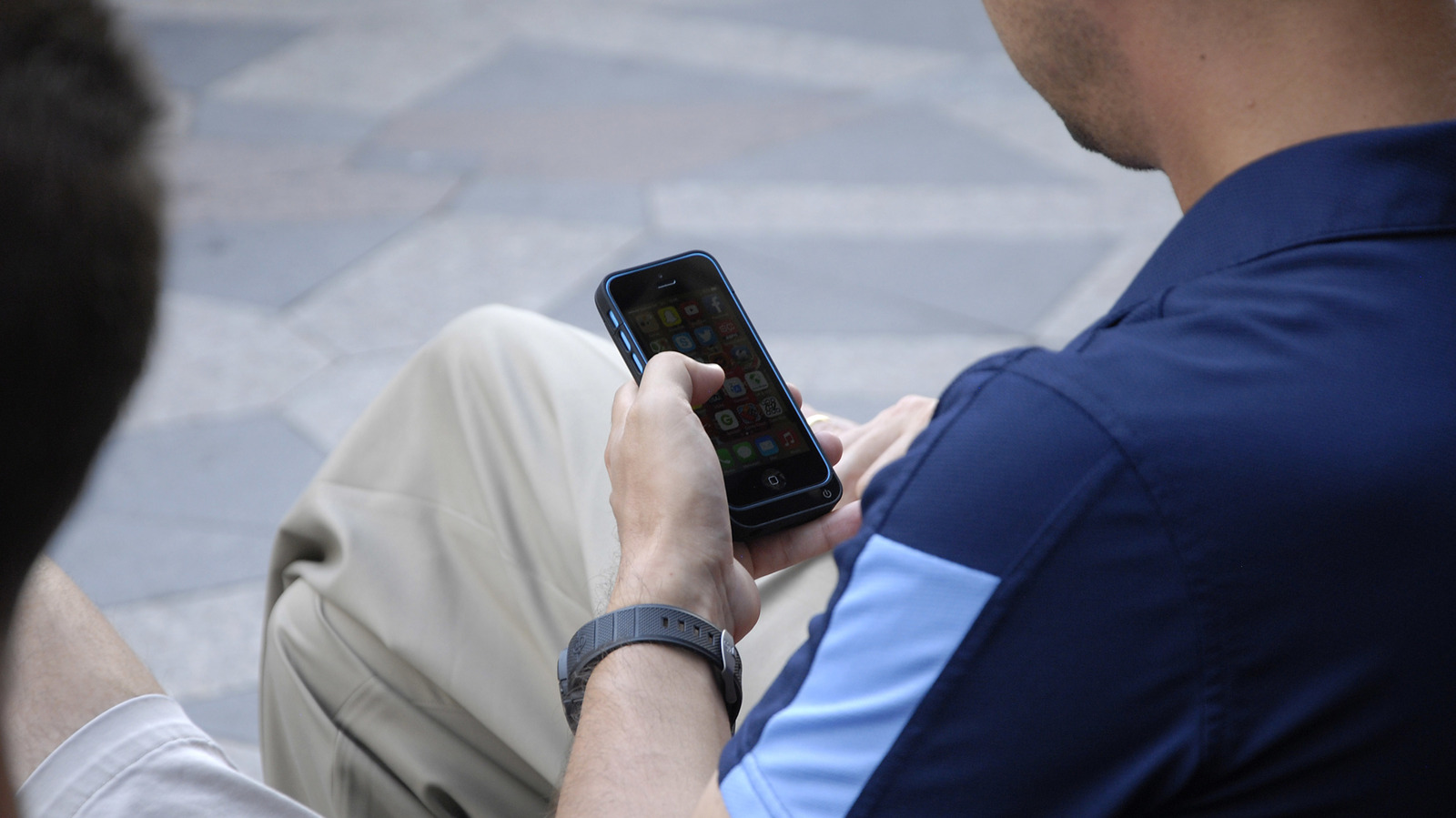
“Don’t want no Samsung,” a London phone thief told Sam, after a group of men stopped him in south London in January, and took his phone, camera, and beanie. According to London Centric, the men started running, but the one who grabbed the phone stopped to return the handset to the surprised victim. Sam’s story isn’t unique, as other Android users in London were treated similarly after thieves took their devices. The outlet offers a few additional examples of thieves dropping stolen Android handsets upon realizing they were not iPhones. Interestingly, in the comment section of the story, a user named Sarah said they had their older Pixel phone stolen twice and dropped twice.

London Centric explains that the UK phone market is split almost evenly between iPhone and Android. Statistically, one would expect random phone thefts to impact iPhone and Android users similarly. The number of stolen handsets would be split evenly between the two competing platforms. That’s not what’s happening in London, as thieves prefer the iPhone over Android. Last month, the BBC reported that a tracked stolen iPhone led to an investigation that discovered a massive smartphone smuggling ring authorities believe was responsible for exporting 40% of the phones stolen in London, or about 40,000 devices that are sent to China every year. In July, The Guardian reported that two-fifths of Europe’s mobile phone thefts take place in the UK, with London being the major hub. Data from the Metropolitan Police showed that about 80,000 phones were stolen in the capital last year, with iPhones being the more frequent target.

Why thieves target iPhones over Android

Evolf/Shutterstock

It’s not easier to hack an iPhone than Android. Apple and Google have both improved the anti-theft protections of iOS and Android. Features like Stolen Device Protection (iPhone) and Identity Check (Android) make it almost impossible to change key security settings on a device without biometrics. Still, a locked, unusable iPhone or Android device can be sold for parts.

iPhones have a higher resale value than Android, as evidenced by several market studies in recent years. European used-iPhone website Swappie noted in a report that iPhones hold “significantly higher resale value” than competitors. The longer software update support and better build quality help explain why iPhones sell better in the second-hand market than Android devices. A BankMyCell study covering phones released in 2021 and 2022 showed that an iPhone loses a yearly average of 14.80% of its original trade-in value compared to 32.18% for Android. After four years, iPhones lose 47.49% of their initial buyback value. Flagship Android phones lose nearly 80%. A 2023 report from trade-in comparison site SellCell shows the “iPhone undeniably holds its value better than any other handset.” SellCell analyzed the resale value for iPhone and Android phones sold between 2015 and 2022. The average iPhone depreciation was 68.8% in December 2022 compared to 84.2% for Samsung and 89.5% for Google Pixels.

In the U.K., a 2023 MusicMagpie report looking at smartphone trade-in data for the previous 36 months showed that the iPhone lost an average of 46% of its initial value in the first 12 months, compared to 68% for Samsung. A Secondary Market report last week also said that the iPhone has better long-term value retention than Android phones (including foldable flagships), citing new data from Compare and Recycle.

Source

Posted on

Ericsson teams with Orange on ‘adaptable, eco-conscious’ networks

With 5G traffic accelerating and new use cases emerging, network providers are having to manage intensive network usage with the minimum environmental impact. To address this issue, Orange France is partnering with Ericsson to experiment “innovative” approaches and strategies in the area.

Specifically, Ericsson said that it will be spearheading a series of “pioneering” trials under the partnership to push the boundaries of 5G network capabilities. It added that, with Orange France, it is conducting a focused programme of experimental trials, based on radio access network (RAN) solutions and innovation platforms, to prepare for future RAN evolutions.

Using its technology portfolio, Ericsson said that it would aim to enhance spectral efficiency, accelerate network automation and promote sustainability across mobile networks, while Orange France evaluated these technologies under live network conditions in France to prepare its future RAN roadmap and bring greater network automation to customers in its home territory.

As part of these trials, Orange is piloting Ericsson’s FDD massive MIMO antenna-integrated radios, aiming to optimise the use of existing spectral assets in zones with high-traffic demand. Multiple deployment configurations are being tested in France to precisely adapt to various traffic profiles and maximise spectral efficiency, capacity and user experience. Complementing these hardware developments, and as part of its broader net-zero strategy, Orange is exploring with Ericsson advanced software solutions and 5G functionalities that the firms believe can further enhance energy efficiency across its mobile networks. 

Orange and Ericsson were adamant that these advanced capabilities, powered by service-aware, intent-driven automation and AI, represent a major leap forward in intelligent energy management. By dynamically adapting network resources to real-time traffic demands, the new software innovations reduce energy consumption without compromising performance level or user experience.

As part of a plan to pursue open, cloud-native networks, Orange and Ericsson have launched a two-year trial to explore Cloud RAN and Open RAN architecture. By virtualising RAN functions, the firms said that cloud RAN solutions enable flexible, software-centric networks that reduce time-to-market and support innovation.

They stressed that a “notable” milestone has been reached with the recent completion of Orange’s first successful call over Ericsson’s Cloud RAN platform in Paris, marking a key step forward in RAN evolution.

Orange France’s participation also offers the potential of insights into live performance and integration challenges, which are essential for the development of next-generation networks. Building on this momentum and to further drive network automation, Orange is also field-trailing the Ericsson Intelligent Automation Platform (EIAP) with AI-powered Ericsson rApps (RAN automation applications).

The EIAP is Ericsson’s network management and automation platform for open, multi-supplier and multi-technology networks which incorporates key elements of the Open RAN Service Management and Orchestration framework. Through the platform, and the linked EIAP ecosystem with its range of assets, services and infrastructure, Orange will endeavour to accelerate the adoption of programmable, efficient networks for advanced performance optimisation.

Through collaborative initiatives, Ericsson said it would continue to support Orange to drive 5G advancements while laying out the blueprint for the networks of the future, developing France’s and Europe’s leadership in enhanced connectivity.

“Collaborating with Orange on these pioneering trials demonstrates our shared ambition to shaping the networks of the future,” said Ericsson France CEO Christian Leon. “By uniting Ericsson’s innovation capabilities with Orange’s ambition, we are raising the bar for performance, sustainability and openness in mobile networks.”

Emmanuel Lugagne Delpon, CTO of networks at Orange France, added: “Our strategic partnership with Ericsson is accelerating our journey towards enhanced networks for our customers. By leveraging breakthrough spectrum, sustainable technologies and cloud-native solutions, Orange is working to advance its autonomous networks journey and deliver the best 5G experience.”

Source

Posted on

10 Essential USB Gadgets For Frequent Flyers

We may receive a commission on purchases made from links.

There are ways to make flying a comfortable adventure, no matter how often you do it. One of the best ways to make your travel experience more enjoyable is to bring certain gadgets with you that help the time pass quickly, add entertainment value, or allow you to get some work done en route. There are multiple things you could bring with you on a flight, but some are far more valuable and must-have devices that can fit in your bag. A gadget that uses a USB port allows for charging on many aircraft where there are ports available, in addition to compatibility with smartphones and tablets. 

We scoured Amazon to track some of the most valuable and unique gadgets that you could bring with you on a flight. All utilize a USB port. Some of these devices are great to use while you’re in the air, although others are more beneficial when stuck in an airport or waiting for a connecting flight. Even for frequent travelers, it’s always good to review what the TSA allows travelers to bring with them when it comes to electronics, as these regulations can change. Each of the products on this list has at least a 4.0-star rating on Amazon and an overall positive critical reputation. We’ve examined five travel gadgets frequent flyers swear by.  Here are 10 essential USB gadgets for the jet-setter.

Bose QuietComfort Headphones

When you want to tune out the disruptive sounds of your flight, the Bose QuietComfort Headphones are a reliable choice that you can bring with you, allowing you to focus on your in-flight entertainment. These over-the-ear noise-cancelling headphones are a good way to block out the world for a while. These sync with any of your Bluetooth devices, and you can charge them through a USB cable. You can purchase these headphones, which boast a 4.5-star rating based on over 14,000 reviews on Amazon, for $199, a significant discount at the time of writing. They are available in various colors to suit your personal preference. These are some of the best Bose wireless headphones you can get, especially on a discount.

Customers who have reviewed these Bose headphones confirm that the noise cancellation feature works well, with some reporting that they were able to enjoy a 14-hour flight with no disruptions. Several customer reviews detail that these headphones are comfortable enough to leave on for extended periods, making them ideal for all types of flights. Along with comfort, the battery life is a highlight for many, as they don’t feel like it stops working mid-flight. Bose claims a 24-hour battery life on a single charge, though it’s unclear if that accounts for continuous use. They also promise a 15-minute USB-C quick charge for 2.5 additional hours. Customer reviews confirm that the battery charges quickly. The reviews also highlight that the headphone’s overall sound quality is clear and precise, with a robust bass that adds depth. When they’re not taking flights, customers also recommend using them around the house.

Epicka Universal Travel Adapter

Traveling for a flight means you might spend a reasonable amount of time waiting around at an airport. You can take the Epicka Universal Travel Adapter with you to remove the worry of having to locate an outlet that works for any of your plugs or your USB cables, especially when you arrive at a hotel. The plugs on the back are compatible with over 200 countries worldwide and allow you to charge using any of the four USB-A ports, the USB-C port, or the AC socket, with a capacity of six devices. You can purchase it from Amazon for $22.99, where it has a 4.7-star rating and over 17,000 reviews.

Customers praise the travel adapter for its ease of use. There are small notches on the side that you slide to swap between the type of outlet you need to use, from all type C family sockets, to type A, B, I, and G. Those who use it also find that it quickly charges multiple devices at once, including smartphones, tablets, and a GoPro. This outlet adapter is primarily for charging your smartphones, laptops, or smaller electronic devices, not high-power appliances such as hair dryers or curling irons. and it does not function as a voltage converter.

Kobo Libra Colour

The Kobo Libra Colour is a lightweight eReader you can bring with you on a flight when you need to read through a document before an upcoming meeting, or want to enjoy your favorite book to pass the time. It features a 7-inch screen that displays full-color pages, ideal for anyone who wants to read through graphic novels or enjoy illustrations with their books. It has up to 32GB of storage, capable of holding 24,000 eBooks or 150 audiobooks. You can purchase it from Amazon for $229.99, where it garnered a 4.5-star rating across nearly 1,000 reviews. 

One of the more charming features of the Kobo is the ability to change the font size, font type, and line spacing in various ways, giving you control over how you want to read any text. Customers also praise that the buttons on the tablet’s side make it easy to turn pages whenever they only have one hand free to hold it. The design of the tablet also makes it easy to hold in place, and it weighs under 7 ounces. Given the light weight, it’s a simple travel companion on a flight where you need to think carefully about what you bring with you. You can also expect the battery to last for a reasonable amount of time, potentially requiring charging once a week, on 3 hours of daily use.

LARQ Self-Cleaning Water Bottle

When you want to be as careful as possible with the type of water you drink, the LARQ Self-Cleaning Water Bottle helps protect you at every airport. It also saves you money by eliminating the need to purchase plastic water bottles at every opportunity. You can get it for $99 on Amazon, where it has a 4.2-star rating with over 3,000 reviews. You can purchase the traditional 17-ounce version or opt for the 25-ounce model for $109. Both products come in several colors.

How this self-cleaning steel bottle works is you click the button on the top, wait a minute, and all the water inside is safe for you to drink. There’s a built-in UV-C LED that breaks down the bacteria found in water. The bottle also automatically reactivates this UV light every two hours without requiring any user interaction. The make of the steel keeps the liquid insulated, maintaining a consistently cool or hot temperature for a full day. Customers who use it say that their water tastes better and the overall quality is better. The UV light of the steel water bottle has a rechargeable battery that you use a USB charger to keep it going.

Silicone USB Waterproof Keyboard

Keyboards are helpful gadgets to attach to your tablets and bring with you on long flights to pass the time or get work done while you’re in the air. The drawback to keyboards is their size, making them difficult to pack and annoying to carry around. The Sungwoo Foldable Silicone Keyboard changes up the formula with a malleable keyboard capable of rolling up into a small tube as if it were a tablecloth. When you roll it out, it becomes a full keyboard, ready to hook up to any device using a USB cable. You can get it on Amazon for $19.99, where it has a 4.0-star rating with 1,599 reviews.

The silicone of the Sungwoo keyboard makes it lightweight to carry on the go. Unfurled, it measures 17.5 inches in length and 5.5 inches in width, comparable to a standard keyboard. Customer reviews share that the silicone keys are highly responsive. Because you want to bring it with you when traveling, it’s dustproof and waterproof, which several customer reviews have confirmed. It’s durable, capable of withstanding bumpy travel, and won’t take up too much room in your precious carry-on luggage limit.

Anker Portable Power Bank

On a flight that doesn’t have an outlet, or can’t find one in an airport? The Anker Portable Power Bank can charge your devices before a long flight, keeping you connected and entertained throughout an extended trip. Its 25,000 mAh allows you to charge multiple devices simultaneously, such as your smartphone, tablet, and a laptop, as it comes with four USB cables. You can get it for $119.99 on Amazon in black or white, where it has a 4.6-star rating and nearly 5,000 reviews. 

The reviews for the Anker Portable Power Bank praise how quickly it charges up their devices. When the power bank needs energy itself, customers report that the device recharges relatively quickly. The front screen displays the amount of power you have left, along with additional information such as battery temperature, performance level, and the number of charging cycles completed. Although it can fit into a backpack or carry-on bag, it weighs 1.3 pounds with dimensions of 6x2x2 inches, so it’s not the lightest travel accessory in the world. However, for the amount of power you get, many say it’s worth it, and it also comes in handy on the ground, especially when outlets may not always be readily available. A power bank is a lifesaver when you’re trying to remain productive on a work trip or explore a strange city.

Solis Lite Mobile Hotspot

A reliable and fast internet connection can be a tricky thing to find when you’re navigating an airport. To ensure you always have a way to get online without any trouble, bring the Solis Lite with you, a mobile 4G hotspot that you can carry in your pocket. It functions with various carriers, making it easy to remain online whenever you enter a new country. The Solis also works with up to 10 devices, allowing you to use your smartphone and laptop, or keep everyone in your family and friends online when waiting to board a flight. You can purchase it on Amazon for $154.99, which has a 4-star rating based on almost 3,000 reviews. There is also an upgraded 5G pro model, which costs $359.

The Solis is extremely portable at 5.5 inches long and 4.5 inches wide. You can keep it in your pocket, ready to use at any moment while traveling. Customers praise how easy it is to use and how quickly it is to sync their devices to use it. The data from the Solis is fast and reliable, especially if it detects a cell tower nearby that can help boost the device. It also stores power that you can provide to your smartphone, acting as an emergency power bank if you have no other options.

Panasonic Travel Shaver

Looking tired after a long flight is a common occurrence for anyone, especially in the middle of a busy trip. A good way to make sure you’re always looking sharp is to bring the Panasonic Travel Shaver, ready to give yourself a quick trim before taking off or after you land. This compact razor works on wet or dry skin and comes with a travel top to keep the blades safely contained inside your bag. You can also charge it using a USB-C charging port. You can get it on Amazon in white or violet for $104.99, where it has a 4.3-star rating with over 400 reviews.

Customers who have purchased and used this razor praise its ease of use and cleanliness during trips. Its compact size makes the razor easy to stow. Despite it being travel-sized, the battery should last several weeks before you need to charge it again. Many reviewers detail that they did not receive red or irritated skin after using it, which can be a common issue with razors. It won’t replace the razor you use at home, and it is marketed toward women, but it’s a handy travel solution for cleaning when there’s no time or the complete shaving kit is weighing you down. 

Nintendo Switch 2

The Nintendo Switch 2 is a compact and portable console that you can use while in your seat during a flight. It measures 10.7 inches wide by 4.5 inches tall with a thickness of .55 inches.  It features an 8-inch LCD touch screen in the middle and Nintendo’s expansive network of games and properties.

You can operate the Switch 2 in your hands like a tablet, or you can flip out the built-in stand to rest it on the in-flight tray table, with the controllers extending out on either side. If you’re an owner of the first Nintendo Switch, all games on your profile can transfer over to this new console. Customers who have picked up the Switch 2 praise how much of an upgrade it is from the original, particularly in terms of graphics, framerate, and overall performance across all compatible games. Given how much of an upgrade it is, numerous reviews are pointing out how much value there is in going with this version.

For hardcore gamers, this is the way to scratch that itch whether you’re waiting for your boarding call, relaxing at the hotel after a presentation, or unwinding after a day on the move. And, of course, the Switch 2 is a great way to relax on a flight for a bit. For new owners, it’s a good idea to go through your Switch 2 settings to get the best experience possible while playing. It’s available on Amazon for $449, where over 1,500 reviews average a 4.6-star rating from owners. 

TheraGun Mini

It’s common that being stuck in a cramped seat on a flight can make your muscles stiff and sore. A good way to help ease this growing tension is to bring a TheraGun Mini along. It’s a handheld massage gun that applies percussive massage therapy to your body, featuring three adjustable speeds and a compact handheld design. It rolls the tense muscles building up anywhere on your body. You can get it on Amazon for $219 in black or desert rose. It has a 4.7-star rating, based on over 5,200 reviews.

The TheraGun Mini is compact and easy to fit into a carry-on, where you can bring it out to use mid-flight, as it’s one of our top picks for items that fit in a carry-on bag. The Therabody application from your smartphone helps find the best techniques provided by trained professionals. Customers who have shared their reviews praise the effectiveness of this device, especially its portability. It’s small enough to focus on specific nerves and muscle groups. Being cramped into an airplane for hours or hiking all day can bring out the old aches and pains, and the Theragun aims to relieve that. The reviews for the battery life indicate that it lasts for extended periods, but when it does need a charge, you simply need to use a USB port to get it ready. 

Methodology

When looking for devices to feature on our list, we focused on ones that could be used during longer flights or to have in preparation for them. All devices on this list are capable of being charged through a USB cable or can provide a charge for devices that require one, such as the Anker Power Bank and the Universal Travel Adapter.

After selecting these items for our list, we examined the user reviews and their experiences with these gadgets. We sought users who shared opinions on the effectiveness, convenience, and portability of the product. Each gadget was required to operate via USB and fit inside a standard carry-on bag. Battery life was meaningful, as not every flight has readily available outlets or ways to charge devices that need to be recharged. The prices of these gadgets were included in each breakdown, but they were not a significant factor in determining whether a product would appear on this list. All items also have a minimum rating of 4.0 stars on Amazon.

Source

Posted on

Ransomware resilience may be improving in the health sector

In an encouraging sign that cyber messaging is cutting through among healthcare providers, the sector appears to be becoming increasingly resilient to ransomware and cyber extortion, with fewer victims experiencing data encryption, fewer paying up and average time to recovery dropping according to a Sophos report.

Based on global data collected by Vanson Bourne for a wider study, Sophos found that that this year, just 36% of victims in the healthcare industry paid a ransom, down from 61% in 2022, and over half of those that paid handed over less than what was demanded of them.

Demands from ransomware gangs also plummeted during the observed period, down 91% to $343,000 (£260,800) on average this year, with average payments dropping from $1.47m to just $150,000, the lowest of any sector reported in the wider dataset.

The mean cost of recovery – excluding any ransoms – was also down by 60% to $1.02m. And 58% of healthcare respondents said they recovered within a week, a strong improvement from 21% last year.

“It’s … encouraging to see signs of stronger resilience. In the study, nearly 60% of providers reported they recovered within one week, up from just 21% last year, which reflects real progress in preparedness and recovery planning. In a sector where downtime directly affects patient care, faster recovery is critical, but prevention remains the ultimate goal,” said Alexandra Rose, director at the Sophos Counter Threat Unit (CTU) – formerly a Secureworks unit.

However, improvement against some metrics should not be taken as a sign that the ransomware ecosystem is dwindling or the threat landscape becoming any less volatile; ransomware remains as pervasive a threat as ever and the healthcare sector is no more or less immune than any other.

“Healthcare continues to face steady and persistent ransomware activity. Over the past year, Sophos X-Ops identified 88 different groups targeting healthcare organisations, showing that even moderate levels of threat activity can have serious consequences,” said Rose.

In the past 12 months, the X-Ops team said that the most prominent ransomware gangs targeting the health industry were Qilin, INC Ransom and RansomHub – which it tracks as Gold Feather, Gold Ionic and Gold Hubbard respectively.

The data also reveal that although data encryption from ransomware has dropped to its lowest level since 2020, with only a third of attacks resulting in this scenario, the proportion of healthcare providers hit by extortion-only attacks, where data is not encrypted but rather stolen and a ransom demanded has tripled to 12% of attacks this year, from 4% a couple of years ago. The Cl0p/Clop gang, which last week claimed to have conducted a ransomware attack against an unspecified NHS body, is a great exponent of this tactic.

Root causes

Sophos’ data also reveal some insight into the root causes of cyber extortion and ransomware attacks in the healthcare industry, finding that for the first time since 2022, exploited vulnerabilities were the most common technical cause, seen in 33% of incidents, overtaking credential-based attacks, which topped the list in 2023 and 2024.

Respondents also described “multiple organisational factors” that contributed to their falling victim to such attacks, with 42% describing a lack of suitably qualified cyber security people or overall capacity, and 41% describing known but unaddressed security gaps.

Source

Posted on

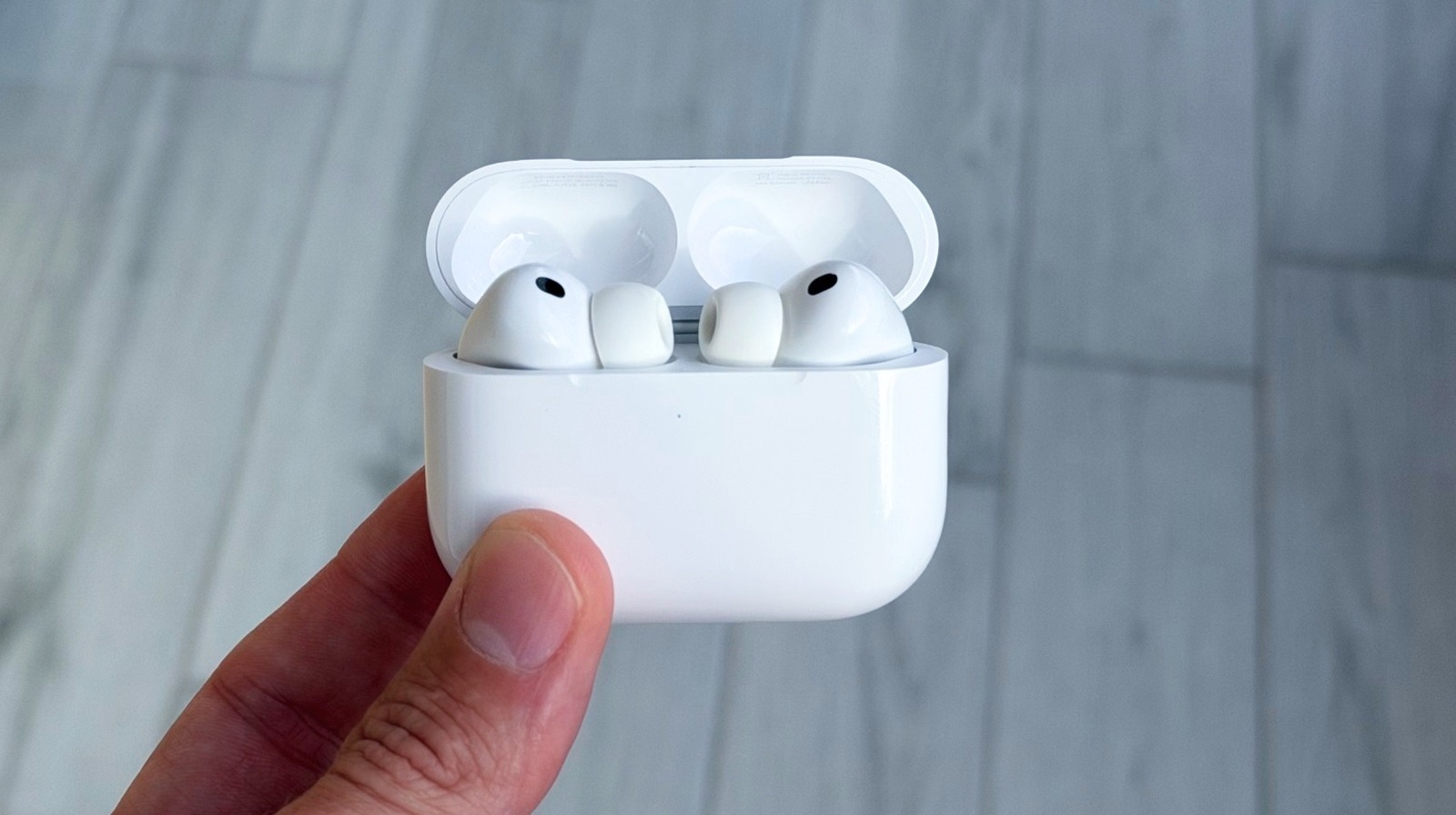
AirPods Pro 3 Users Report Whistling Noise Issues Persist Despite

José Adorno/BGR

A few weeks ago, BGR reported some AirPods Pro 3 owners were complaining about high-pitched noises on flights. With other customers also having these whistle and wooshing noises on the ground, people have been posting over social media their issues with the new AirPods.

What’s worse about the situation is that Apple recently updated the AirPods with new firmware, but customers continue to say they’re still experiencing the issue. In a Reddit thread, user joncbass wrote: “Same as others report. Even with firmware 8B25 the left AirPods Pro 3 makes an annoying whistle/whine/screech when flying. ANC is almost unusable for me, adaptive mode helps a little, but what a disappointment.” Another user reported this issue on the right side: “I just left the plane and it’s still happening. Mine’s only on my right ear and seems like 10,000 feet high. After that it vanishes.”

While these issues appear to be limited to a few people, it seems Apple has been offering customers the ability to get replacement units or a reimbursement.

Apple is currently testing new AirPods firmware

José Adorno/BGR

At this moment, it’s unclear if the issue can be fixed via firmware or why it happens during flights. BGR staff haven’t experienced the issue so far, but we were able to reproduce it when pressing the foam of the earbuds in one hand. Besides those issues, other users have reported discomfort when trying the new foams for the first few days which some have dubbed “bloodgate” already.

Apple’s AirPods Pro 3 were released alongside the iPhone 17 during the September event. These earbuds offer the same H2 audio chip, but a redesigned format and foam tips for improved ANC capabilities. In general, BGR has had a great experience with Apple’s latest earbuds, including the improved overall audio quality and longer battery life. The company is currently testing a new firmware update. We’ll let you know if Apple ever addresses the whistling noise issue or if this upcoming update solves it.

Source

Posted on

Emirates preps for world’s largest Starlink-enabled wide-body fleet

Emirates has joined the growing number of airlines that will deploy Starlink Wi-Fi across its entire in-service fleet, in a move that will bring fast connectivity on 232 Boeing 777 and Airbus A380 aircraft. 

The accelerated Starlink roll-out and uplifting of connectivity is designed to build on Emirates’ investments in what it said will be a superior onboard experience, which includes its retrofit programme of A380s and Boeing 777s. The roll-out will begin with the Boeing widebody aircraft in November 2025, with deployment completed by mid-2027.

Emirates believes that Starlink connectivity will enable its customers to stream content, game, make calls, work and browse social media throughout their journey on both seatback screens and personal devices simultaneously. This integration will also deliver connected experiences at scale across all cabin classes.

Emirates plans to install Starlink on all 232 aircraft in its in-service fleet over the next two years. The airline has already equipped its first aircraft with Starlink on A6-EPF, the Boeing 777-300ER.

The first Emirates commercial passenger flight with Starlink will depart immediately following the Dubai Airshow as A6-EPF re-enters service, marking the start of an accelerated fleet-wide roll-out.

The airline will fit-out approximately 14 aircraft per month with Starlink, with installation on the Airbus A380 fleet commencing in February 2026.

The airline is primed to install two antennae on each Boeing 777 aircraft, and in what is said to be an industry-first, three antennae on each Airbus A380, to offer connectivity, capacity and coverage across every cabin class for a better customer experience.

Emirates will also make live TV over Starlink available, initially on personal devices and then on seatback screens from late December 2025. Starlink’s aviation product offers download per terminal of 135-310 Mbps.

“Partnering with Starlink is another defining moment in our continuous commitment to ensuring our customers ‘fly better’,” said Emirates Airline president Tim Clark.

“We’re introducing the world’s fastest Wi-Fi, elevating what passengers can expect from in-flight connectivity, like seamless productivity, real-time communication with loved ones, and uninterrupted connection to their digital lives. But that’s just one piece of the transformation happening across our fleet.

“Starlink is being installed in tandem with the most ambitious cabin refurbishment programme in aviation, including brand new Premium Economy cabins, an enhanced Business Class, refreshed First Class, expanded and upgraded entertainment system technologies, and now, industry-leading connectivity.”

Chad Gibbs, vice-president of Starlink business operations at SpaceX, added: “With Starlink onboard your Emirates flight, you’ll be able to stream, game, and have seamless video calls, just as you can do on the ground. We’re excited to transform Emirates’ travel experience and support the rapid installation of Starlink while maintaining focus on delivering overall quality of service.”

The roll-out is also said to reflect the scale of Emirates’ nearly 220 aircraft retrofit programme. To date, 76 fully refurbished aircraft have entered service, featuring Premium Economy, redesigned Business Class, refreshed First Class suites and elevated finishes throughout.

Source

Posted on

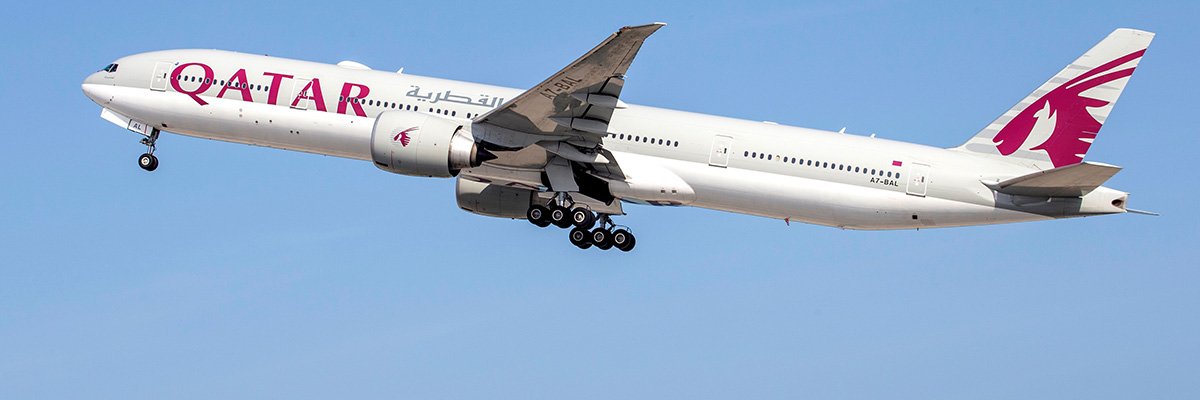
Qatar Airways claims Starlink in-flight connectivity benchmark

In the latest airline connectivity win for the SpaceX-owned connectivity provider, and hot on the heels of arch-rival Emirates making a similar announcement, Qatar Airways has accelerated its Starlink installation.

Qatar Airways currently flies to more than 170 destinations worldwide, connecting through its Doha hub, Hamad International Airport. It was also the first airline in the Middle East to be certified to the highest level of IATA’s Environmental Assessment (IEnvA) programme, based on recognised environmental management system principles (such as ISO 14001).

Qatar Airways claims to be the operator of the largest number of Starlink-equipped widebody aircraft and the only carrier in the MENA region currently offering Starlink in-flight connectivity. It has described the expansion as “reaffirming its position as the world’s leading airline for innovation, reliability and unmatched passenger experience.”

The airline sees the deal as a major milestone in its Starlink roll-out, equipping over 100 widebody aircraft with the fastest Wi-Fi in the sky.

It also regards the move as an achievement representing one of the most rapid and ambitious Starlink installation programmes in the aviation industry, that furthermore is being implemented ahead of the initially expected schedule to bring the service to passengers even sooner.

Since its launch of the world’s first Starlink-equipped Boeing 777 in October 2024, meaning it has more than half of its widebody fleet now Starlink-connected, Qatar Airways has operated over 30,000 flights across six continents with gate-to-gate connectivity. This includes key destinations across Africa, Asia, Australia, Europe and the Americas.

To date, Qatar Airways has completed the roll-out programme for its Boeing 777 fleet, and is rapidly finalising the Starlink roll-out across its Airbus A350 aircraft, also set to be completed ahead of schedule.

Qatar Airways believes its new connectivity service is “game-changing”, and transforming the onboard experience for both business and leisure travellers by enabling streaming, gaming and working at 35,000 feet.

“Qatar Airways continues to lead the industry by setting new benchmarks with action, and not just intent,” said Qatar Airways group chief executive officer Mohammed Al-Meer. “We have expedited our Starlink roll-out, which is now advancing ahead of schedule as Qatar Airways brings the best travel experience to our passengers as an immediate priority, not a future ambition.

“Equipping over 100 widebody aircraft since the launch of our first Starlink-equipped flight in October 2024 reflects this commitment,” he said. “We now operate up to 200 daily Starlink-connected flights to key destinations to ensure our passengers stay seamlessly connected with speeds faster than many home Wi-Fi services. Whether working, streaming movies and sports, or staying in touch with friends and family, staying connected at 35,000 feet has never been more convenient.”

The increased deployment of Starlink connectivity comes after the airline announced it had rolled out SITA’s next-generation software-defined wide-area network to keep global outstations connected, secure and resilient.

This installation was made to address the dual challenges that modern airlines face through rising passenger volumes and increasingly complex digital operations, resulting in legacy networks being stretched to unprecedented levels of tolerance.

Source

Posted on

Generative UI Is One Of Gemini 3 Pro’s Best New

Google unveiled the Gemini 3 models on Tuesday, shortly after the Gemini 3 Pro benchmarks and model card leaked, teasing massive performance gains over rival products from OpenAI and Anthropic. The benchmark scores could not detail all the novelties in Gemini 3 Pro, especially the new Generative UI functionality, a feature that’s not available from competing AI services like ChatGPT. Generative UI lets Gemini create rich visuals when crafting responses to user prompts. The visuals can help explain a topic better than text-only responses. The new feature can be used to turn a complex concept into something simpler or to create a response that looks like a website or app experience.

The new Gemini 3 model powers Generative UI, creating the advanced visuals and UI on the spot, as it generates the response and determines whether UI visuals are needed. The resulting UI can include interactive elements, like buttons and menus. Also, Gemini can create immersive web, app, and game experiences within its reply.

Google explained in a Google Research blog post that Generative UI may be the precursor of something much bigger. “This work represents a first step toward fully AI-generated user experiences, where users automatically get dynamic interfaces tailored to their needs, rather than having to select from an existing catalog of applications,” Google said, teasing a world where people may use AI to create bespoke apps on the fly.

Generative UI uses several “key tools,” including an unidentified image generation model and access to web search. Generative UI will work initially in the Gemini app (the Dynamic View and Visual Layout experiments) and in Google Search (AI Mode Thinking model), though the latter will be available only to Google AI Pro and Ultra subscribers in the U.S.

What can Gemini 3 do with Generative UI?

Google offered a few examples of Generative UI responses. For example, the following video shows Gemini 3 responding to this prompt: “Create a Van Gogh gallery with life context for each piece.” The AI creates a website experience featuring an interactive menu that can be clicked to access different paintings and relevant information.

The following example shows how Gemini 3’s Generative UI might help students struggling to understand complex subjects, or regular Google Search users who might be curious about a specific topic. Answering this prompt, “show me how RNA polymerase works. What are the stages of transcription and how is it different in prokaryotic and eukaryotic cells,” AI Mode creates an animated visual that illustrates the chemical reactions via a simulator accompanying text generated by the AI.

Google offers additional examples of what’s possible with Generative UI in Gemini 3 in the Google Research blog post. The AI created a website to showcase different outfit styles for a user who sent the following prompt: “Be my fashion advisor — explain the theory and show me a dozen stylish options for me.” The website contains realistic images, menus, and descriptions similar to what you might see in an online store dedicated to fashion. The difference is that the website has been created within Gemini experiences for a single person.

Gemini will also be able to tailor the Generative UI design to the content consumer. A prompt asking for a math experience for a 5-year-old (“Teach my 5-year-old addition, subtraction, multiplication, and binary representation with cute creatures that play basketball. He loves basketball”) leads to a Generative UI response that features an interactive basketball-themed website the boy can use to learn math.

Source

Posted on

iPhone 18 Pro Rumors Hint At 6 Major Upgrades In

José Adorno/BGR

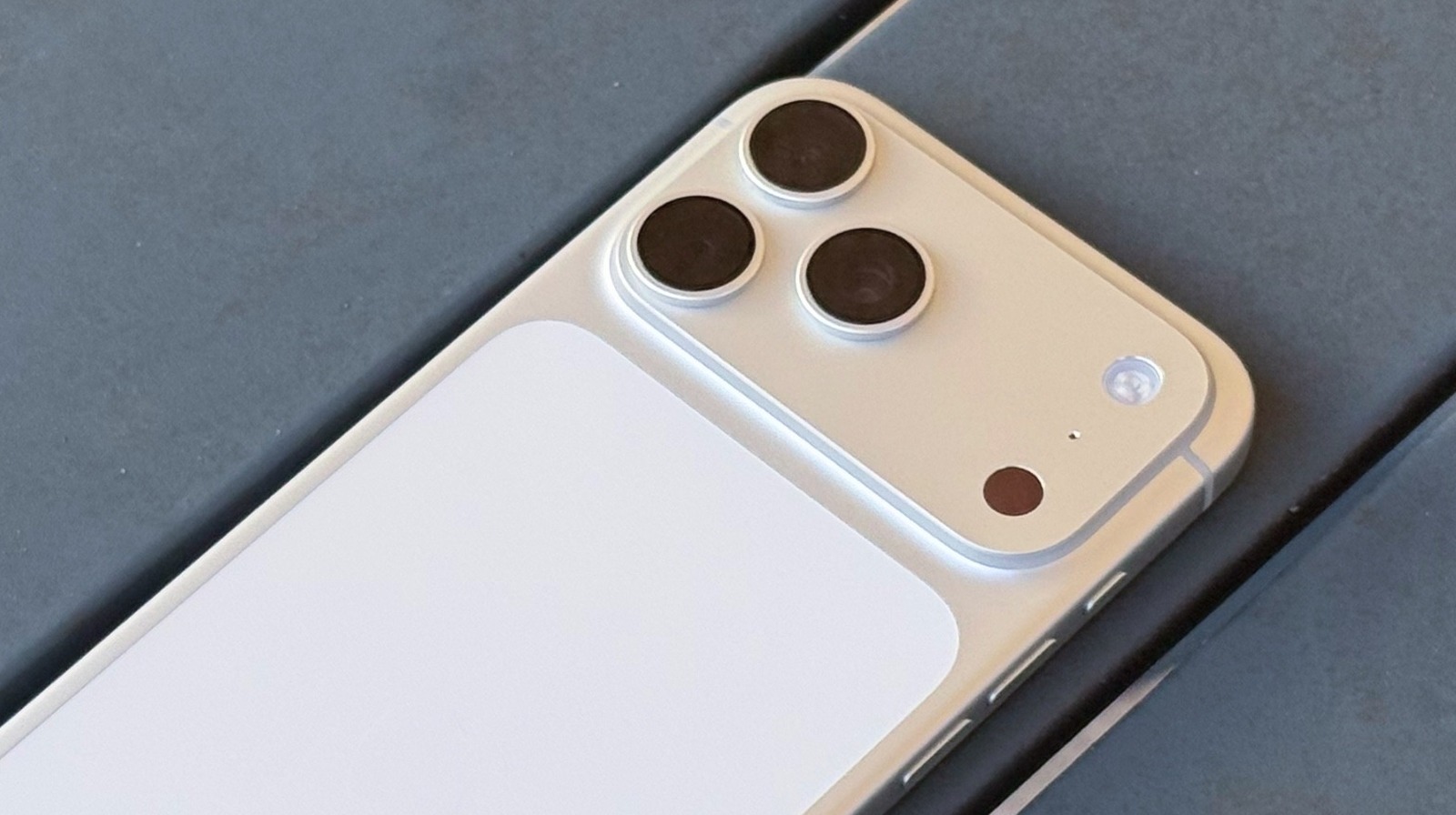
Apple still has a long way to go before releasing the next generation of iPhones, but there are already tons of rumors regarding the iPhone 18 Pro models. With so many changes expected for the iPhone lineup in the near future, Apple’s most anticipated Pro phone is expected to have several upgrades.

First up, Weibo-based leaker Digital Chat Station believes Apple’s next big camera feature will be variable aperture. If that turns out to be correct, Apple could improve low-light shots and make brighter scenes more realistic with improved depth of field.

Another rumor claims Apple will add a smaller Dynamic Island as it prepares to remove the display cutout entirely for the iPhone’s 20th anniversary in 2027. Per display analyst Ross Young and Bloomberg’s Mark Gurman, Apple wants to hide the Face ID sensors under the display. And the third rumor we’re tracking is from The Information, which thinks Apple could be planning to add a single pinhole camera in the upper-left corner of the display.

Bigger battery and better chips

José Adorno/BGR

The new iPhone 17 models already have a formidable battery life. Still, it seems Apple might be willing to make the iPhone 18 Pro Max battery life even better. According to a Chinese leaker, the new model will be slightly thicker and heavier, most likely adding space for a longer battery life.

A fifth rumor we’ve heard is that some expect Apple to use a 2nm manufacturing process for the upcoming A20 Pro, making it even more powerful without depleting its battery life. Another chip improvement would come from the C2 modem, which is expected to make Apple abandon Qualcomm in favor of its own solution. Currently, the company uses the C1X modem on the iPhone Air, but rumors suggest that it’s developing a better 5G modem with mmWave 5G support in the U.S.

Finally, on the topic of 5G, The Information believes Apple will add support for 5G networks through satellites, which would expand iPhone users’ access to 5G from its current emergency usage to mainstream usage, meaning customers would be able to have unlimited access online anywhere in the world. BGR will keep following the latest iPhone 18 Pro rumors, and we’ll let you know once we learn more about them.

Source

Posted on

Fibre flies as improved 5G sees record UK mobile data

As the country’s mobile comms operators increase the reach and roll-out of 5G standalone networks, the UK has become a mobile data-hungry nation, with mobile users consuming nearly a fifth (18%) more mobile data than a year ago, according to research from communications regulator Ofcom.

And while the 5G market was gaining huge momentum, the latest version of Ofcom’s annual Connected nations report also found full-fibre networks’ reach was growing strongly but that many users were not taking advantage of them.

The study found that consumers were using over 1.2 billion GB each month, the equivalent of streaming 400 million football matches in HD, watching 315 billion TikToks, or sending 1.3 quadrillion text-only WhatsApp messages.

Showing just how the UK’s comms infrastructure was changing, the report revealed that while 4G still accounts for the majority of mobile data traffic, 5G data use grew by more than half (53%) in the past year. The rise in subscribers to fixed wireless access (FWA) services was identified as a significant contributor to the overall growth of data traffic on mobile networks.

To keep up, mobile networks were deploying 5G standalone to provide users with a faster, better and more powerful experience. The report – which includes new and exclusive data on standalone 5G (5G SA) coverage for the first time – revealed that 83% of the UK had access to full 5G from at least one mobile network. Overall, 5G coverage outdoors is available from at least one operator in 97% of the UK – up from 95% in 2024. This ranged from 64% to 89% between the mobile networks nationally.

In the fixed connectivity arena, the report revealed a rapid roll-out of full-fibre broadband continues, with 78% of homes (23.7 million) now having access, up from 20.7 million (69%) a year ago. But Ofcom also noted that while using fibre optic cables all the way to the home instead of copper lines means much faster, more reliable broadband – less than half of those with access sign up.

Despite fibre take-up increasing from 35% to 42% this year, Ofcom warned that millions are still missing out on a broadband upgrade that could mean buffer-free streaming, seamless gaming, and saying goodbye to awkward freezes during video calls. Taking full-fibre and cable networks together, the report calculated that 26.4 million homes (87%) now have access to a gigabit-capable broadband connection, over half (56%) of which actually take it up.

Another key connectivity trend for 2025 was a surge in satellite broadband, with Starlink increasing its UK customers to over 100,000 for the first time. Starlink connections rose by over a quarter, from around 87,000 to over 110,000. A majority of those were in rural areas, and more than 12,000 were in places that can’t get decent fixed line or wireless broadband.

Natalie Black, Ofcom’s group director for infrastructure and connectivity, said: “The UK’s demand for data continues to grow as we live increasingly connected lives. For years, operators have been delivering 5G services while using old 4G networks to do most of the legwork. But now, the race to deliver the UK’s full 5G future is on.”

Source