Posted on

4 Best Steam Deck USB-C Hubs And Docks Users Swear

Mr.Mikla/Shutterstock

We may receive a commission on purchases made from links.

Valve’s Steam Deck can do a lot of neat things, from playing the games you own on Steam to even accessing non-Steam games through various tools. It also can serve as a functional desktop PC through Desktop Mode, allowing for the use of a physical keyboard such as the slim and stylish Keychron K3. But in order to get the most out of your device, you are going to want to pick up a dedicated hub or dock.

These USB-C accessories will open up your Steam Deck in several ways. They often allow you to output video to a television, give you extra ports to connect a mouse and keyboard, and even add ethernet support for a more stable internet connection. A Steam Deck hub or dock can be an essential tool to provide you a lot more options to play the way you want.

Valve offers their own Steam Deck dock that’s very solid, but many find it expensive for what it offers. If you head over to Amazon, you’ll find a plethora of hubs and docks that work great with the Steam Deck and at less than half the cost of Valve’s offering. But not all hubs and docks are the same, so we’ve done the work and highlighted some of the best based on what reviewers on Amazon have said.

Anker Steam Deck Dock

Anker is a well-known brand in the accessory space. If there is an electronic accessory that you need, chances are that Anker makes one. The Anker Steam Deck Dock is the perfect example, allowing you to connect your Steam Deck to a TV or monitor and play in comfort. The 100W PD-IN port allow allows for fast charging, keeping your Steam Deck ready to game whenever you need to leave the house.

Its HDMI connection features a 4K 60Hz output, giving you the good visuals when playing on your favorite TV screen. Anker also provides a 1Gbps ethernet port built-in, giving you more stability than Wi-Fi, keeping you in those competitive multiplayer games instead of dropping matches. On top of that you also get two 5Gbps USB-A ports and a USB-C port for added expandability for portable storage media and more.

The Anker Steam Deck Dock is also a lot less than the official dock that is sold by Valve, while providing just as much. This means that you will be saving some money by picking this one up. You can then use all the money that you will be saving to snag several more affordable Steam Deck accessories.

UGREEN Revodok Pro 6-in-1 USB-C Hub

With over 1,000 reviews, many of them proclaiming that the UGREEN Revodok Pro 6-in-1 USB-C Hub as a must-have device, you know you are probably looking at a solid product. This fairly discreet little hub is far simpler than a full-sized Steam Deck dock, but functions essentially the same, only in a much more travel-friendly and portable form.

UGREEN managed to shrink down their hub while still loading it up with all the essentials one would need and expect, alongside providing impressive transfer speeds. Featuring 6 ports, you’ll have access to 4K 60Hz HDMI out, 100W charging, 10Gbps USB ports, and a gigabit ethernet port. And because of its form factor, you’ll be able to use this hub with more than just your Steam Deck, featuring support for laptops, tablets, and smartphones.

User reviews highlight the quality of the construction and metal body, the number of available ports considering its size, and having access to the internet through the ethernet port when Wi-Fi isn’t available or stable. If you are traveling a lot and looking to keep things small and simple, the UGREEN Revodok Pro might just be for you.

JSAUX Upgraded Docking Station For Steam Deck

There seems to be a standard among most quality Steam Deck docks and hubs when searching on Amazon. For the most part they tend to feature roughly the same number of ports, but it’s their HDMI output specifications where things begin to get interesting. The JSAUX Upgraded Docking Station For Steam Deck really stands out among the pack because of its included HDMI output and what it can support.

Instead of providing the more common 4K at 60Hz output like other docks, JSAUX managed to upgrade their offering to now support video out at 4K at 120Hz. That’s double the refresh rate of most other docks on the market, giving you those buttery smooth visuals that gamers demand. The company also states that you can use this dock with a number of other handheld PCs, including the Legion GO, MSI Claw, and others.

Amazon customer reviews state that the dock is sturdy, features plenty of ports, and can easily and quickly charge the most power-hungry PC handhelds. Others also praise JSAUX’s customer service for quickly addressing and fixing issues that they had. If you have a TV that can support 120Hz, the JSAUX Upgraded Docking Station For Steam Deck is a must.

SABRENT USB Type-C 3-Port Gaming Hub

Sometimes you just want a product that’s simple, affordable, and doesn’t get in the way. SABRENT seems to serve this desire with their SABRENT USB Type-C 3-Port Gaming Hub. This little device is about as compact as it gets, sliding onto the USB-C port of the Steam Deck and designed seamlessly to sit flush and hide on the back side of the console.

The SABRENT USB Type-C 3-Port Gaming Hub features two 5Gbps USB-A 3.2 ports as well as a USB-C port that supports PD 3.0 power delivery. You’ll be able to easily plug in a mouse and keyboard, or a flash drive and another accessory at the same time. The design allows you to help protect the Steam Deck’s USB-C plug from damage and random disconnects that a standard cable can often cause.

Less is often more when it comes to accessories, especially for users who travel a lot with their Steam Deck. For those users looking for something that blends into the Steam Deck and won’t add any bulk to your travel bag, the SABRENT USB Type-C 3-Port Gaming Hub might just become your next favorite Steam Deck accessory.

Source

Posted on

T-Mobile Just Made One Of Its Best Features Available To

Smith Collection/gado/Getty Images

Back in 2024, T-Mobile and Starlink received official approval to expand their satellite phone coverage. This led to the arrival of T-Satellite, which now allows even more apps to work off the grid. And while you’ll need to have service with T-Mobile specifically to take advantage of all of the benefits of its partnership with Starlink, the company has announced plans to expand the availability of its “Text to 911” service to everyone, even customers on AT&T and Verizon networks.

“Because emergencies don’t care who your wireless provider is, T-Mobile is making sure 911 access is available to as many people as possible,” the announcement reads. The service is now available to everyone regardless of their wireless carrier, and all you have to do is sign up for it through T-Mobile’s product page. You’ll also be able to take advantage of other T-Satellite features, though those will cost you $10 a month.

Additionally, T-Mobile states that users will need to have a compatible phone, which should include most anything that debuted in the past few years with satellite capabilities. You’ll need to check your device’s specifications to verify that it has satellite capabilities.

Extra peace of mind, no matter your carrier

Mauricio Toro/Getty Images

According to statements from Mike Katz, President, Marketing, Strategy & Products, T-Mobile, the company wanted to help provide “peace of mind” to more users throughout the roughly 500,000 square miles of U.S. land that isn’t reached by traditional cellular towers. “It’s an absolutely terrifying feeling that we don’t want anyone to have ever again,” Katz’ statement reads in the announcement. “T-Mobile Text to 911 with T-Satellite gives peace of mind. It’s there when you need it the most. And it’s too important to keep gated.”

The wider release of the feature is a nice perk for non-T-Mobile customers, especially as it doesn’t contain any related fees unless you choose to take advantage of other T-Satellite functionality. Further, because T-Mobile has the feature connected to more than 650 Starlink satellites, it should provide solid coverage for every user that needs to utilize the feature. Of course, as with any technical feature, your mileage may vary, but you can sign up today to give it a try for yourself.

Newer phones that include satellite functionality include the iPhone 17 and Pixel 10, though some older devices have the required software and hardware to tap into satellite signals as well.

Source

Posted on

Xpeng Debuts Humanoid Robot With Synthetic Skin, Custom Body, And

José Adorno/BGR

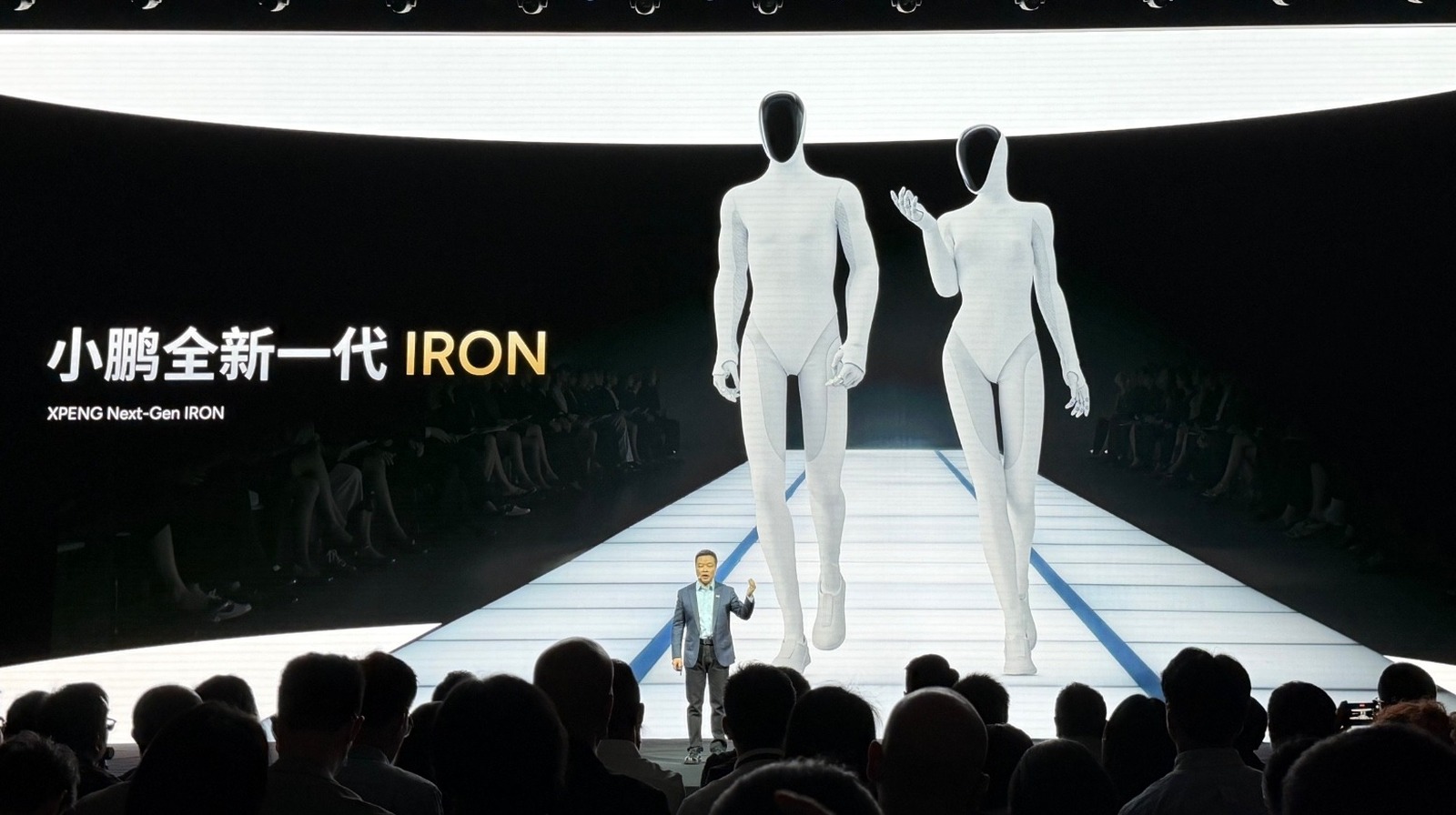
Chinese EV maker Xpeng continues to expand on its EVs and flying vehicle technologies, but it also unveiled the new generation of its IRON humanoid robots at its AI Day in Guangzhou, China. Xpeng unveiled the eighth generation of its robot initiative (and the third with a humanoid design), and it now plans to mass produce the latest models by late 2026.

What immediately caught BGR’s attention was Xpeng’s bold departure from the typical humanoid robot design. Instead of following the more traditionally male aesthetic seen in models from companies like Neura, Xpeng introduced a curvier, more feminine form — arguably more curves than a robot needs.

José Adorno/BGR

The company also revealed that its new robot features full-body synthetic skin intended to make it feel “warmer and more intimate.” Similar to what 1X showcased with its curious Neo home robot, Xpeng’s robot allows users to customize its appearance by choosing its color, even though Xpeng goes further by offering different body types (chubby, athletic, tall, or short), hair styles, and, in the future, even clothing. However, unlike other companies, Xpeng isn’t targeting daily chores or factory jobs for its robots.

Tour guides and personal assistants

José Adorno/BGR

According to Xpeng CEO He Xiaopeng, the company isn’t following the same path as most other robotics manufacturers. While many are targeting industrial or domestic applications, Xpeng is looking in a different direction. Although the company acknowledges that humanoid robots tend to be more efficient (its earliest prototypes were actually quadrupeds), it has found that robots aren’t particularly effective in factory settings or at handling repetitive tasks.

This highlights a key tradeoff being made by competitors like 1X, which is asking customers to pay $20,000 for its robot while also granting the company full access to their homes to train future AI capabilities. In contrast, Xpeng thinks its robot will succeed as a receptionist, tour guide, or personal shopping assistant.

Indeed, the seventh-generation of its robots, the first IRON humanoid bot, was responsible for part of BGR’s tour at Xpeng’s new headquarters in Guangzhou, China. The clunky bot walked around the venue, spoke in a perfect American accent about itself, and moved its arms. Xpeng wants to have the eighth-generation robots lead these tours and also present its products at its stores in China.

Smarter than you think, but questions remain

José Adorno/BGR

During Xpeng’s keynote address, the company’s CEO said this robot will follow the three universal robot laws created by Isaac Asimov, in addition to a fourth law, which is that these robots can’t disclose their owner’s data. With 2250 TOPS computing power, the robot features Xpeng’s VLT, VLA, and VLM technologies — also present in its cars — to help them walk more naturally and be aware of theirs surroundings (though despite a corny video of the robot dancing to “The Fate of the Ophelia” by Taylor Swift, it still walks weirdly). One of the main differences from the previous generation is the new hand with 22 degrees of freedom, making it capable of holding small objects gently.

While Xpeng’s take on robots looks more useful than the half-baked promises from other companies, it still seems to be trying to solve a problem that doesn’t exist. Prices for these robots haven’t been announced yet, nor the necessity of a female counterpart with so many customization options. These are questions we expect to learn the answers to in the near future, depending on how development progresses.

Source

Posted on

SnapLogic Integreat: Preparing legacy IT for agentic AI

IT leaders need to weigh up the drive to adopt new, exciting innovation with the technical debt and mission-critical legacy applications their business has accumulated.

Many legacy systems continue to deliver business value, and as Jeremiah Stone, chief technology officer at SnapLogic, noted during a conversation with Computer Weekly at the company’s Integreat event in London on Tuesday, the biggest pain point of all is that most legacy modernisation is a business value neutral exercise. Often, these systems have had a tremendous amount of time and energy put into them.

“They’ve become the operational backbone of the business, and in a perfect world, you would never have to upgrade or modernise them because they’ve been curated and loved, and put into a position where the business can run upon them,” he said.

According to Stone, a big problem facing IT leaders is what he calls “the hard reality”. Either business requirements have changed, which means legacy IT no longer works the way the business wants to operate, or there are new tools and technologies, which may not work well with legacy systems.

Arguably, artificial intelligence (AI) – the main focus of the Integreat conference – is one of those technologies that does not play well with legacy IT.

In a presentation held at the event, Ralf Schundelmeier, head of enterprise data and platforms at Boehringer Ingelheim, discussed how the German pharmaceutical firm has adapted to support AI. “AI needs data,” he said. “Without data, there is no AI. You need good data and you need to get your data AI-ready.”

Boehringer Ingelheim’s AI and data strategy is based on self-service integration and self-service data. The company is a SnapLogic customer and has used the platform to support its data strategy, called Data Land. 

Discussing the strategy, Ingelheim said: “We are a very old company and we’ve been collecting data for a long time. Some of this data is on legacy systems that are very hard to get to. Most of them don’t have application programming interfaces. Data is not catalogued.”

The company used SnapLogic to unlock data sources, creating an enterprise-wide data vault.

SnapLogic, which has lived through a number of IT architectural shifts, effectively provides modern middleware, to connect data sources and enable enterprise application integration. “Most of the systems we’re dealing with were first shipped between the years of 1995 and 2006,” said Stone.

Over this time in the tech industry, several models for distributed computing, such as the service-oriented architecture and systems, were run on-premise, which means enterprise applications were engineered before the era of cloud computing. In spite of the shift to public clouds and software as a service, much of the technology stack remains on-premise.

“I don’t think we’ve even passed 50% of enterprise workloads in the cloud yet,” he added.

But there is a need to modernise. According to Betsy Burton, vice-president of research at Aragon Research, enterprises are increasingly seeking ways to accelerate digital transformation and control expenses while updating legacy systems.

Given AI’s appetite for data, SnapLogic is positioning itself as the agentic integration company. Since there are plenty of enterprise data troves running in legacy systems, the company sees an opportunity to help its customers integrate these legacy IT systems into their AI strategies. It has now introduced a tool called SnapLogic Intelligent Modernizer, which it claims can streamline legacy workload migration.

Source

Posted on

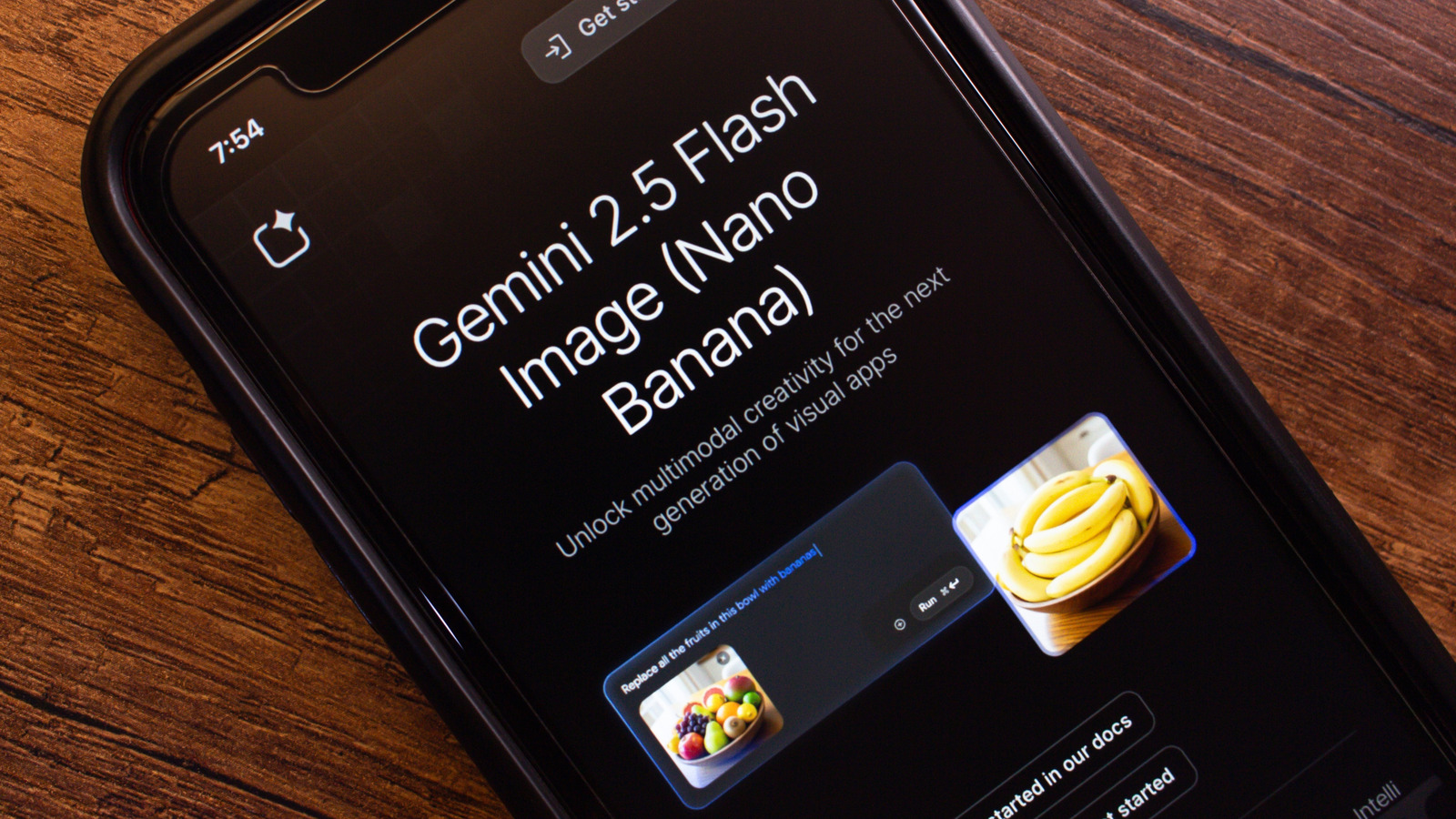
Google Finally Explains Why It Chose The Name ‘Nano Banana’

Koshiro K/Shutterstock

In mid-August, a mysterious Nano Banana AI image generator went viral, not because of its catchy name, but because of the AI-generated images testers kept posting online. Some believed Nano Banana, then in testing on LM Arena, was an unreleased Google model the company would soon unveil. By late August, Google unveiled Nano Banana, revealing its official name, Gemini 2.5 Flash Image, and making it widely available to users. Everyone kept calling it Nano Banana, and Google eventually adopted the name, using it everywhere the AI image generation model is available.

Until this week, Google never explained what Nano Banana meant, a name that made no sense in the grand scheme of Google AI things, where Gemini is the main brand. Some people may have assumed Nano Banana was a random placeholder name Google chose when it submitted the AI image generation model to LM Arena. It turns out that’s exactly what happened. Google confirmed that the name was chosen arbitrarily in the middle of the night, and it wasn’t the result of a carefully planned strategy. The name stuck as the model went viral and everyone kept using the Nano Banana moniker. In retrospect, the name choice was a stroke of late-night brilliance, as it gave the AI model an identity.

How Google chose the Nano Banana name

Gemini’s group product manager, David Sharon, was the guest of Google’s “Made By Google Podcast”. He talked about Nano Banana, addressing the development phase, the LM Arena viral tests, its safety, and the future. The Nano Banana name came up, and Sharon explained how Google went about choosing the name. “So the official name is much more catchy: Gemini 2.5 Flash Image,” Sharon joked. “But the name, the way Nano Banana was created, was by a PM named Nina. And when you submit a model anonymously to LM Arena, you need to give it a placeholder name. And I would love to tell you that a lot of thought and rigor went into the name Nano Banana, but the truth is that at 2:30 in the morning, Nina had a moment of brilliance to call the placeholder Nano Banana.”

What’s surprising in all of this is that Google never had a predetermined codename for the new AI image generation model that it would then use in places like LM Arena. Instead, it all came down to a moment of inspiration. In a way, Google is all of us, saving file names on computers for random things. But Google did it with a project that has been a massive hit with users since testing began.

Sharon explained that Google ended up adopting and “hugging” that name after the official launch of Gemini 2.5 Flash Image because people kept using the placeholder name instead of the official one. Google took it even further, adding a banana emoji in the Gemini app to signal that Nano Banana support is available to users. The short podcast episode (video above) is worth watching to learn more details about Nano Banana’s brief history at Google.

Source

Posted on

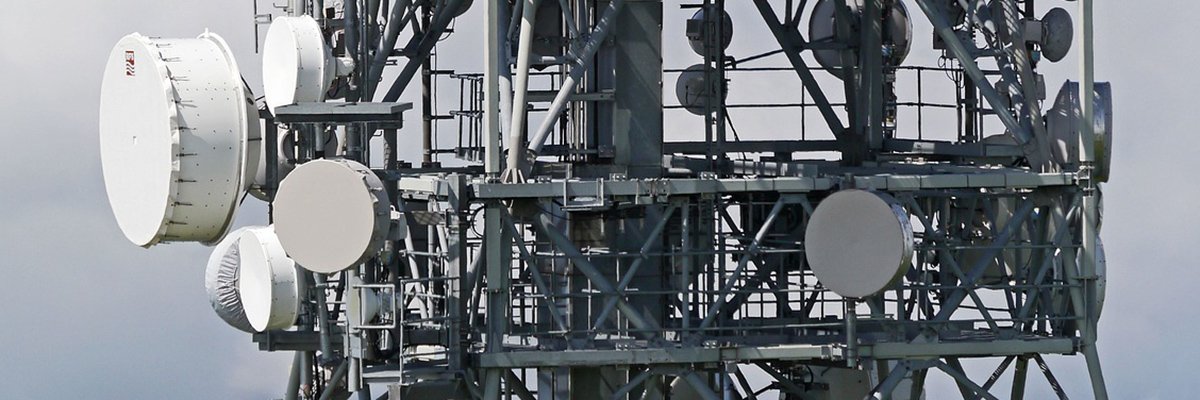
Global Open RAN suppliers scale advanced connectivity in UK

As the drive for the use of open telecoms technology in the UK gains further pace, deep tech innovation organisation Digital Catapult believes it has added further momentum to the Open RAN innovation by signing five international suppliers to its advanced connectivity programme, offering access to what it said was the UK’s only open testing and integration centre (Otic) to trial, validate and scale Open RAN offerings, boosting network innovation and supply chain diversity.

Digital Catapult works to provide technical validation, tailored market readiness support and consultancy for companies in the UK telecoms landscape. This includes guidance on commercialisation pathways, access to potential channel partners for customers and information on real-world deployment challenges. It also spans adopters’ needs, pain points, barriers to adoption and practical application of new technology.

As it explained the importance of signing the new vendors to its ecosystem, the association said it was on a mission to help build resilience in the UK’s advanced connectivity infrastructure and supply chains, supporting UK mobile network operators (MNOs) by broadening access to a pipeline of new suppliers. The net result, it assured, was enabling faster, scalable deployment of Open RAN technologies and diversifying the market by helping smaller suppliers to scale successfully.

The participating suppliers to the programme will now gain access to Digital Catapult’s advanced lab, which is said to be the first and only UK-based Otic.

Accreditation means suppliers can be certified and badged post-completion, verifying and validating their services with a view to driving successful partnerships with MNOs, and injecting a suite of interoperable innovations into the market.

Successful participants will receive badges for interoperability and end-to-end testing, which Digital Catapult regards as critical for instilling confidence among MNOs and streamlining the supplier selection processes. 

Participants in the scheme now comprises Accelleran, Antevia Networks, Benetel, G Reigns, IS-Wireless and Pegatron.

Commenting on the addition of the suppliers, UK telecoms minister Liz Lloyd said: “Better connectivity transforms lives – creating jobs, boosting business and unlocking the full potential of new technology. This programme gets innovative tech out of the lab and into the world faster, helping to tackle poor connectivity challenges, diversify our telecoms supply chains and support economic growth.”

Digital Catapult chief technology officer Joe Butler said: “Badging and certifying participants will be key to scaling new Open RAN innovations, supporting vendors that may not otherwise have the recourse or capacity to trial and validate their solutions.

“As an Otic, we can provide a trusted environment to rigorously test solutions, and this next phase of our programme will support UK operators by reducing integration complexity and diversifying the market with reliable new solutions.”

Also part of the offer is the Sonic Labs facility and innovation programme, delivered in partnership with Ofcom and funded by the Department for Science, Innovation and Technology. Since launching, it has tested 71 Open RAN products from 26 global suppliers, establishing itself as a key driver towards open, interoperable and secure advanced connectivity and network infrastructure in the UK.

Source

Posted on

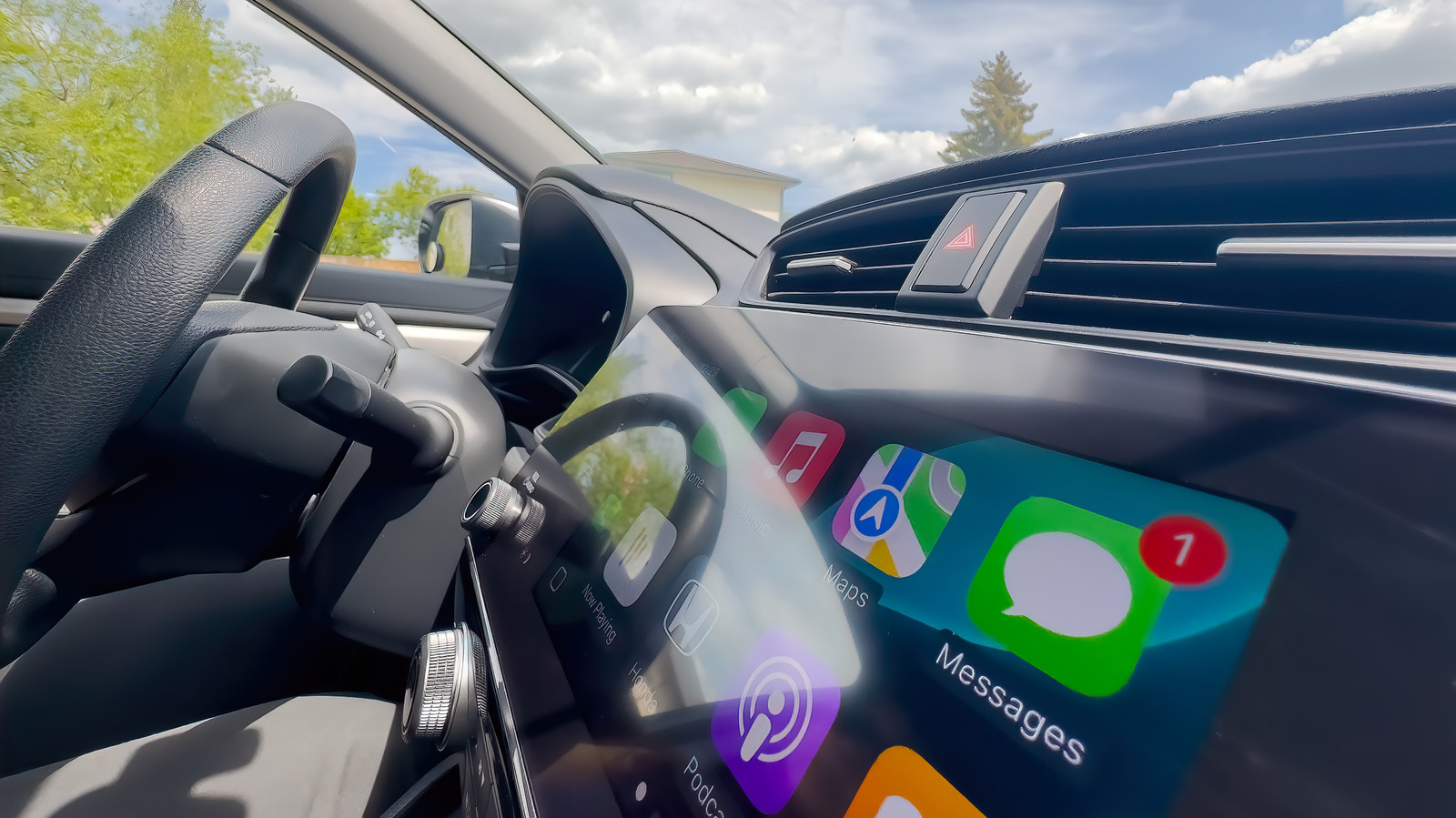
Sorry, GM

Whenever GM explains why it’s abandoning CarPlay, the explanation is nothing short of a convoluted mess. For instance, GM CEO Mary Barra and GM Chief Product Officer Sterling Anderson recently appeared on the Decoder podcast and explained, in part, their stance on CarPlay. At one point, Anderson went so far as to intimate that GM’s decision was inspired by Steve Jobs’ approach to product development.

“But frankly, it’s a very Jobsian approach to things,” Anderson said. “The removal of the disk drive, nobody liked that, everybody on the forums and Facebook was complaining about it, but to that he said, ‘Look, guys, flash storage really is the future. Get on board, you’ll see that.’ That’s kind of what we’re saying here, in fact that’s exactly what we’re saying.”

That’d be a more convincing argument if GM was offering something better than CarPlay. But, as mentioned above, CarPlay just works while GM’s own infotainment system simply isn’t as reliable. That’s hardly a surprise given that Apple has a decades-long history of churning out intuitive and easy-to-use software. GM, on the other hand, can make fine automobiles, but has never been known for its software prowess. Abandoning a working technology in favor of one that’s decidedly worse is the exact opposite of a “Jobsian approach.”

Later on, Anderson started talking about how GM’s own infotainment system allows for more functionality than a console simply mirroring an iPhone. The only problem is that Anderson doesn’t explain how or why this is the case. “You are in a much more immersive environment that can do so many more things,” Anderson said. “Why would you use the equivalent of a phone mirroring application on a laptop in your car?”

Because, quite simply, it works. The lack of coherent messaging from top GM executives, in my opinion, underscores their limited vision and only strengthens the idea that GM’s move is motivated more by short-term financials than an actual interest in creating a compelling user experience.

Source

Posted on

Verizon Business delivers neutral host network to KPMG’s New York

Audit, tax and advisory firm KPMG has equipped its US headquarters with a dedicated network powered by Verizon 5G.

One of the big four accounting and professional services networks in the world, KPMG has core industry client teams that draw from more than 40,000 professionals in the US and 162,000 worldwide, spanning advisory, tax and audit.

It has a technology service portfolio focused on helping clients digitally transform across front, middle and back office; adapt to consumerism; use data analytics, intelligence automation and artificial intelligence; transact and divest; deliver quality audits; provide tax planning and compliance services; manage risk; and comply with regulations.

Located at Two Manhattan West in New York City, the office’s neutral host network will use Verizon’s 5G technology and infrastructure to deliver what the practice says is a “seamless”, secure and reliable wireless experience – across carriers – for KPMG clients and employees alike.

In making the deployment, Verizon said neutral host networks are increasingly being embraced by large enterprises looking to simplify in-building or campus coverage, reduce operational complexity and future-proof their investments in network infrastructure. Verizon sees neutral host networks as key to connecting phones, tablets and other devices to the public networks of all major US carriers who opt in to join the network.

The neutral host network for KPMG is designed to power a next-generation workplace, providing KPMG employees and visitors with what is intended to be the high-speed connectivity and consistent user experience necessary for facilitating immersive collaboration and technology innovation.

By enhancing KPMG’s connectivity infrastructure, Verizon said it was enabling KPMG to continue focusing on providing a best-in-class client service.

In addition, it claimed the collaboration marked another milestone in the companies’ shared commitment to innovation and digital transformation, which includes partnering to deliver 5G and mobile edge compute (MEC) services designed to transform the healthcare and life sciences sector.

“Our new headquarters at Two Manhattan West is designed to deliver a first-class, tech-enabled experience for our people and clients, and Verizon Business is the trusted partner helping us bring that vision to life,” said Yesenia Scheker-Izquierdo, KPMG New York office managing partner and US sector leader for asset management.

“Partnering with Verizon Business to bring a neutral host network to our new Manhattan headquarters ensures that our people and clients benefit from secure, high-performance connectivity that accelerates collaboration and enables smarter, faster decision-making.”

Jennifer Artley, senior vice-president of 5G acceleration at Verizon Business, said: “KPMG and Verizon have a long history of collaboration, and we are proud to expand our partnership to bring the convenience and reliability of neutral host networking to their landmark Two Manhattan West headquarters.

“This deployment exemplifies how leading organisations are rethinking the workplace experience and leading with connectivity to drive better employee experiences, operational efficiency and business outcomes.”

Verizon recently announced that its neutral host networks were being deployed by leading healthcare providers in the US to help manage increasingly complex data needs for varied user groups at its facilities – for example, neutral host for patients, visitors and other public network users, and private 5G for mission-critical operations.

Source

Posted on

Broadband Forum: 5G FWA offers broadband fix for multi-dwelling units

The Broadband Forum has published a technical report outlining how to address the internet challenges people living in multi-dwelling units (MDUs) still face despite rapidly increased broadband access to premises over the past few years.

The report defined fixed wireless access (FWA) as establishing a connection over a radio link for communications between a base station and user equipment, such as 5G modems, that are typically installed in the apartment.

The Broadband Forum added that for radio frequencies below 6 GHz, a 5G network is suitable to provide broadband services with a high level of coverage. But for gigabit-level or multi-gigabit speeds, broadband service providers want to make use of high-band “frequency range 2” 5G mmWave spectrum at 24-40 GHz. This spectrum range has additional signal attenuation when travelling through walls or building materials, so architectures that employ outdoor CPE devices are favoured to maximise performance.

The research project on which the report was based began in 2023. It fundamentally focused on outlining how multiple tenants and apartments can receive gigabit broadband connectivity through a single 5G FWA connection by reusing a building’s existing infrastructure, defining an architecture and requirements for serving multiple tenants in an MDU via FWA through converged and pure 5G network approaches. 

The topline finding was that multiple tenants and apartments can share high capacity 5G mmWave links through using existing in-building infrastructure so that delivering 5G broadband to apartment buildings gets simpler, through to a new specification that allows a single 5G Fixed Wireless Access (FWA) modem to deliver high speed connectivity to multiple tenants.

The specification is said to solve challenges prevalent in MDUs, such as the limited availability of service options for subscribers beyond 1Gbps in buildings that lack fibre-based access, and performance or coverage limitations of FWA for individual tenants in large buildings. Technical solutions based on the new standard also allow apartments to be reached using the existing property infrastructure, including twisted pair, telephone wiring, or coaxial cabling, from the attic or basement of the building.

“This publication is a gamechanger for broadband service providers and will ensure that customers, regardless of what type of property they reside in, are served equally when it comes to broadband connectivity,” said Mike Talbert, Broadband Forum multi-tenant FWA project stream lead and Wistron NeWeb Corporation senior director of technology.

“By reusing the existing in-building infrastructure, multiple tenants can be served with one 5G FWA connection, and this specification promises more efficient use of 5G resources, simplified and unified management, and reduced operating costs for operators.”

Christele Bouchat, Broadband Forum network architecture work area co-director and Nokia strategy and standardisation manager, added: “In the past, restrictions set by property owners or the design of existing MDU buildings have limited the possibilities for making high-capacity broadband services available to these subscribers.

“The latest specification addresses these limitations by allowing the installation of a high-performance 5G outdoor FWA system that can be shared by potentially dozens of tenants and connected through existing cabling already in the building.”

The TR-507 and MR-516 standards are now available to download.

Source

Posted on

Gartner: How CIOs can lead the talent remix

The C-suite is caught in an AI pressure cooker. On one side, boards and CEOs see the relentless headlines of AI-driven layoffs at major technology firms and ask a simple, pressing question: “Where are our savings?”. This creates immense pressure on CIOs to realise financial returns from AI, with the implicit assumption that the primary path to that return is workforce reduction. On the other side is the sobering reality of execution. Nearly half of CIOs report that AI has not met their return on investment (ROI) expectations.

This disconnect exists because the C-suite is operating from a flawed premise. The narrative that AI is already enabling widespread, productivity-driven job cuts is dangerously misleading for most organisations. As technology leaders, the primary mandate is to deconstruct this myth and ground executive teams in a more analytical, data-driven reality.

The most dangerous strategic error a CIO can make today is to mistake a pivot to a new business model for a simple efficiency gain. 

There are three distinct AI layoff strategies, each enabled by three entirely different talent patterns. An implementation strategy must align with the desired outcome, and for the vast majority of enterprises, the headlines simply do not apply. 

Repositioning fulltime employees 

First, an analysis of what is actually happening at the companies driving the news cycle. The high-profile layoffs at firms like IBM, Salesforce, and major consulting houses are not evidence of a simple automation-driven job apocalypse.

These moves are not about productivity at all; they are a commerce-driven strategy known as Experience Redistribution. 

This is a “Talent Remix”. These organisations are strategically reallocating human capital, cutting from low-performing or legacy business lines to fund a massive pivot toward net-new AI revenue streams. IBM, for example, stated that while some back-office roles were replaced, its total employment actually increased to fuel investment in its AI consulting services. Salesforce laid off 1,000 employees while simultaneously creating 2,000 new sales roles specifically to sell its new AI products.

This is a commercial pivot to capture new markets. Gartner analysis of workforce events in the first half of 2025 confirms this. Of the more than 241,000 job events studied, 79% were not AI-related at all. Critically, 17% were attributable to this “Reposition” strategy, while less than 1% were caused by AI-driven productivity layoffs.

The takeaway for CIOs is stark: if your business is not pivoting to sell AI software, hardware, or consulting services, this strategy is not your strategy. 

Restraining hires 

For the majority of enterprises, the most common and immediate talent impact of AI is not layoffs but Restrain Hiring. 

This strategy is enabled by a talent pattern termed Experience Starvation. The mechanism is rooted in human behavior: organisations deploy AI assistants to their most experienced, high-complexity workers (engineers, analysts, consultants) to make them more productive. When a new task arises, that senior employee finds it faster to complete the work themselves with their AI assistant than to mentor a junior through the process.

The natural apprenticeship model breaks down. As a result, when demand for work increases, the organisation feels less pressure to add junior headcount.

This delivers a real, but limited, financial benefit: cost avoidance. The organisation is not reducing current staff numbers; it is avoiding hiring new ones. This is a crucial distinction. It prevents future costs from being added, but it does not create a cashable saving from the current payroll that can be harvested and redeployed. 

There is real risk here. This strategy starves the future talent pipeline, creating a critical vulnerability, as AI will not replace the roles that require the discernment of experience, the very experience it is no longer cultivating.  

Reducing Headcount

This brings us to the strategy that most executives believe they are asking for: Reduce headcount. 

This strategy relies on a pattern called Experience Compression, where AI radically increases the proficiency of junior staff in low- to mid-complexity roles. The classic example is a contact centre, where an AI tool guides a new agent through complex issues, making them as effective as a senior agent. 

In practice, however, this goal is proving highly elusive and is not yet being realised commonly at scale. The hurdles are immense. 

First, the productivity gains are simply not large enough. Eliminating roles requires a functional productivity increase between 30% and 65%. Current research shows that even one of the most successful use cases, customer service, tops out at a 14% to 34% gain. This is often below the minimum threshold required for material headcount reduction. 

Second, any anticipated gains are lost to “productivity leakage”. A 10% efficiency gain for one team member often translates to only a 1% process improvement due to workflow bottlenecks and coordination overhead.

Most importantly, sustainable cost savings only flow from transformed workflows, not from the premature harvesting of headcount. This requires deep, foundational process reorganisation before any cuts are made. The effort and cost associated with that process redesign is often one to three times as large as the cost of implementing the AI technology itself. Attempting large-scale layoffs without this foundational work is a direct path to operational instability.

A framework for strategic action 

The CIO’s mandate is to lead the C-suite from pressure to precision. This requires a new framework for action. 

  • Diagnose and Align: The first action is diagnosis. CIOs must identify which AI talent strategy aligns with the organisation’s current strategic goals and ensure alignment on this reality among executive peers. This includes setting clear expectations on timescales. “Reposition” strategies are underway; “Restrain” strategies are happening now and will likely increase; “Reduce” strategies are not yet occurring at scale. 
  • Prioritise the Talent Pattern: The second, and most critical, step is to create the corresponding talent pattern before executing an AI talent strategy. Layoffs or hiring restraints must start with creating the right talent foundation. Executing the strategy without the underlying talent pattern in place often leads to operational instability. 
  • Counteract Experience Starvation: Third, organisations must deliberately counteract Experience Starvation, which is a likely outcome for most. As senior employees absorb more tasks with AI assistance, junior talent pipelines are threatened. Best practice involves creating GenAI-powered simulators, allowing protégés to practice complex, domain-specific scenarios in a safe environment, gaining vital experience before real-world decisions arise. 
  • Pivot to Financial Efficiency: Finally, for technology leaders facing a non-negotiable mandate for near-term cost reduction, productivity initiatives are an unreliable path. Layoffs will not deliver savings fast enough. The more effective answer is “financial efficiency”, using AI not to make people faster, but to make finances and cash more efficient. This includes applications like optimising vendor contracts or working capital. This approach targets budget line items directly, delivering measurable impact without the friction of premature headcount reduction. 

The strategic imperative 

AI is fundamentally changing the workforce. Every executive team will need an AI layoff strategy, even if that strategy is a deliberate decision not to pursue layoffs. In the current environment, this must be a conscious, well-reasoned choice. If an organisation decides to act on AI-driven talent changes, the approach must match its core business strategy and its foundational talent patterns. Retreating from this question under the guise of human-centricity is a mistake.  Having a deliberate strategy is the most humane approach for the organisation. Without it, any actions taken become mere reactions.

Nate Suda is a senior director analyst at Gartner.

Gartner analysts will further explore how AI is reshaping enterprise structure, talent and leadership at the Gartner IT Symposium/Xpo in Barcelona, from 10–13 November 2025.

Source