Posted on

IAG aircraft to take off with Wi-Fi Starlink connectivity

International Airlines Group (IAG) has announced a partnership to implement Starlink-enabled high-speed Wi-Fi connectivity for more than 500 aircraft across its fleet.

IAG is one of the world’s largest airline groups, carrying more than 122 million customers to 260 destinations across 91 countries each year. Its leading airlines in the UK, Ireland and Spain include Aer Lingus, British Airways (BA), Iberia, Level and Vueling. It also includes two complementary businesses, IAG Cargo and IAG Loyalty.

The airline believes that transformation and innovation enable it to maximise value and efficiencies across the group. It has to date been focusing on innovation as part of its group-wide transformation programme, with initiatives including AI to optimise engine maintenance and the launch of the IAGi venturing fund to invest in high-potential startups and scaleups.

As of 31 December 2024, the IAG fleet comprised 601 aircraft, and all of its aircraft not due for retirement will receive the Wi-Fi. Implementation plans will vary by airline and be communicated as the roll-out plan is finalised in the near future. The first aircraft due to go live with the Starlink service connectivity are due to take off in early 2026, covering short-haul journeys in Europe, as well as all of the group’s long-haul transatlantic and global routes.

Starlink offers download speeds of up to 150-450Mbps and upload speeds of 20-70Mbps. IAG noted that a download speed of 150Mbps will allow passengers to download an HD movie of approximately 5GB in around five minutes.

This, according to IAG, will allow passengers to stay connected in the skies with download and upload speeds as good as or better than home connectivity, enabling fast downloads, streaming and online gaming for customers. According to UK comms regulator Ofcom, UK homes’ average maximum download speed was 223Mbps in 2024.

“Staying connected in the skies is increasingly important to our airlines’ customers,” said IAG chief executive Luis Gallego. “The introduction of high-speed Wi-Fi from Starlink will transform onboard connectivity, improving both the connection speed and reliability for customers. Customers from all IAG airlines will be able to benefit from the service from next year. This demonstrates how IAG is working together as a group, to drive innovation and secure major deals to benefit all our stakeholders.”

The roll-out of Starlink satellite connectivity at BA follows a similar move with BA’s arch-rival, Virgin Atlantic, earlier in 2025. Virgin will begin installing streaming-quality Wi-Fi on its Boeing 787s, Airbus A350s and A330neo aircraft from the third quarter of 2026, with an expected completion date by the end of 2027.

In addition, in May 2024, a trio of Boeing 777-300 aircraft belonging to Qatar Airways were the first of its planes to receive Starlink low-latency satellite Wi-Fi connectivity, with the entire fleet set to be upgraded with technology from the company by 2026.

At the time, Qatar Airways was the largest airline to partner with Starlink, and said the move solidified its commitment to elevating the passenger experience onboard, with plans to progressively extend SpaceX-powered technology.

Source

Posted on

Google Maps Just Got A Big Gemini Upgrade

JarTee/Shutterstock

A leak a few weeks ago claimed Google would add Gemini-powered conversations to Google Maps that would look and feel similar to chats in the Gemini app, with a big twist: These chats would be centered on navigation and nearby places of interest. That experience isn’t quite here the way it appeared in that leak, but Google on Wednesday unveiled four new Gemini features for Google Maps that will make the beloved navigation app even better.

Google Maps will support voice-based, hands-free conversations with Gemini during the navigation experience. “It’s like having a knowledgeable friend in the passenger seat who can confidently help you get where you’re going,” Google described the experience in a blog post, which is akin to turning Gemini into your copilot. The feature will be available on Android and iPhone in the coming weeks.

An example Google offered shows a driver asking for budget-friendly restaurants along the route. Gemini quickly identifies a place nearby, and then the driver asks about parking. Once Gemini offers the parking information, the driver tells the AI to go there. Google Maps automatically adds the stop, without changing the final destination. As that happens, the driver tells Gemini to add a Calendar event. The example shows the car moving along the route, indicating the user was driving while talking to Gemini. Separately, the new Gemini conversational powers in Google Maps will let you report traffic disruptions by voice.

Google Maps will use landmarks for directions

Koshiro K/Shutterstock

Another useful new Gemini-powered feature in Google Maps is support for mentioning visible landmarks during turn-by-turn navigation. Instead of sticking with the conventional “turn right in 50 feet” directions, Google Maps will now use elements on the road that you can see, so you don’t have to worry about assessing distance. In an example, Gemini mentions a traffic light and the name of a street while providing directions. Gemini will also use buildings that are famous or easy to spot. It might tell you something like, “turn right after the Thai Siam Restaurant,” and even highlight the landmark on the screen so you can spot it (first screenshot in the image below). The feature is rolling out to Android and iPhone users in the U.S.

Google also announced two other Gemini-powered experiences for Google Maps that users will appreciate. The app will use the AI to inform you about traffic disruptions even if you’re not driving (second screenshot below). Proactive traffic alerts feature is also rolling out to Android and iPhone users in the U.S.

Finally, Google Maps now supports improved Google Lens searches, with Gemini powering the visual search experience (third screenshot above). Google Maps already lets you use AI to ask questions about a place. But the new feature lets you point your phone to a place of interest while using Google Maps, tap the camera in the search bar, and ask questions by voice. Gemini will tell you why a restaurant is popular, and what you can expect. The feature will be useful for walking and exploring a new place. The Lens capability will be available this month to Android and iPhone users in the U.S. 

Source

Posted on

Vodafone IoT teams with Iridium for NTN NB-IoT connectivity

Iridium Communications has formed a new partnership with Vodafone IoT to integrate its Iridium NTN Direct service, keeping the operator’s customers and their assets ubiquitously connected.

The partnership with the global voice, data, positioning, navigation and timing (PNT) satellite services firm aims to extend the operator’s internet of things (IoT) division coverage for customers wanting narrowband (NB)-IoT connectivity – meaning that devices in the most remote locations will now be connected.

Through the partnership, Vodafone IoT will gain access to Iridium NTN Direct – the 3GPP standards-based service providing NB-IoT and direct-to-device (D2D) connectivity.

Vodafone IoT services have already been deployed in applications such as smart meters and tracking device that use low-power, wide-area (LPWA) networks. The network has more than 215 million devices connected over 760 networks across more than 180 countries worldwide, providing businesses the ability to manage, monitor and operate their IoT devices.

Planned for commercial launch in 2026, Iridium NTN Direct will connect Vodafone IoT’s NB-IoT customers using the Iridium network for data messaging, tracking and real-time monitoring for IoT, automotive and industrial devices. The partners said that this will be particularly valuable for industries that demand connectivity in extremely remote locations – such as windfarms, oil pipelines, shipping tracking and emergency services.

Iridium’s PNT services see use in applications ranging from synchronising 5G networks to safeguarding global trade, with low Earth orbit satellites helping critical systems to perform without interruption. 

Operating on globally coordinated L-band spectrum with proven infrastructure, Iridium has an established track record of providing weather-resilient and low-power connectivity at scale. Moreover, given the Iridium network has had a history of providing safety of life services which depend on the need for high reliability, the company said that its constellation is ideal for D2D and NB-IoT services and applications, offering a critical advantage where consistent performance in remote and mobile environments matters most.

Upon successful integration and testing, Iridium and Vodafone IoT plan to launch a full commercial service for customers across the globe.

“Iridium NTN Direct stands out among NTN and NB-IoT services by offering MNOs – like Vodafone IoT – an unmatched combination of truly global coverage, reliability and capability,” said Matt Desch, CEO of Iridium. “This collaboration will help to transform the landscape of global connectivity by providing uncompromised scalability, and by advancing our shared vision to connect and empower enterprise assets and people everywhere.”

Vodafone IoT CEO Erik Brenneis said: “We are extremely excited to announce this new partnership with Iridium, which opens the door to a new generation of IoT connectivity. By using direct-to-device satellite connectivity, new and existing customers will benefit from truly global coverage – meaning they can reliably connect their devices in corners of the world where they can’t today. This marks a significant step in our mission to connect everything, everywhere.”

As part of a mission to better empower industries with the ability to orchestrate, connect and manage IoT devices, allow users to expand their operations and accelerate on a global scale with compliant connectivity, Vodafone global IoT functionality is also available on Oracle’s Enterprise Communications Platform (ECP) industry applications.

Source

Posted on

The FCC Is Moving To Ban A Major Drone Brand

Marekuliasz/Getty Images

On October 28, the Federal Communications Commission (FCC) voted in favor of retroactively banning gadgets or radio components that were previously approved for import into the United States. If they decide that the company making the related components is a national security risk, they can ban any subsequent gear from said company. They’re doing this to close legal loopholes and protect U.S. interests from potential espionage — accessed through backdoors in foreign devices, particularly Chinese telecom operators like Huawei. But it can also be used to ban devices from companies like DJI. As a result, all new DJI products will be automatically banned from import starting in late December if no further action is taken. As the end of the year is close, it does seem like that’s what’s going to happen.

They’ll be barred because the companies will be added to the “Covered List” per the Secure and Trusted Communications Networks Act. That is, unless an “appropriate national security agency” vouches for DJI specifically via a risk assessment, and confirms it does not pose a national security risk. Without that authorization, the STCNA act disallows the FCC from authorizing their internal radios, the telecom components which could be a major source of problems. It’s illegal to import items on the Covered List that are not authorized. No U.S. security agencies have begun an audit despite DJI “urging” them to do so. “We urge the U.S. government to start the mandated review or grant an extension to ensure a fair, evidence-based process that protects American jobs, safety, and innovation,” says DJI global policy head Adam Welsh.

What does this ban mean for current DJI owners?

photoschmidt/Shutterstock

The government won’t be taking away DJI gear that you own. In fact, the FCC explicitly mentions that it is “not requiring manufacturers to replace equipment in the hands of consumers.” The use of equipment you already own will “remain authorized.” It looks like this ban will mostly apply to future models released to the market, and potentially products still being sold. But the FCC report also points out that products will be banned on a case-by-case basis, and each time that’s going to happen, the government will allow the public to weigh in. The FCC must allow “an opportunity for public comment for a minimum of 30 days,” meaning you will get a chance to speak up, as will the community if you are concerned or disagree.

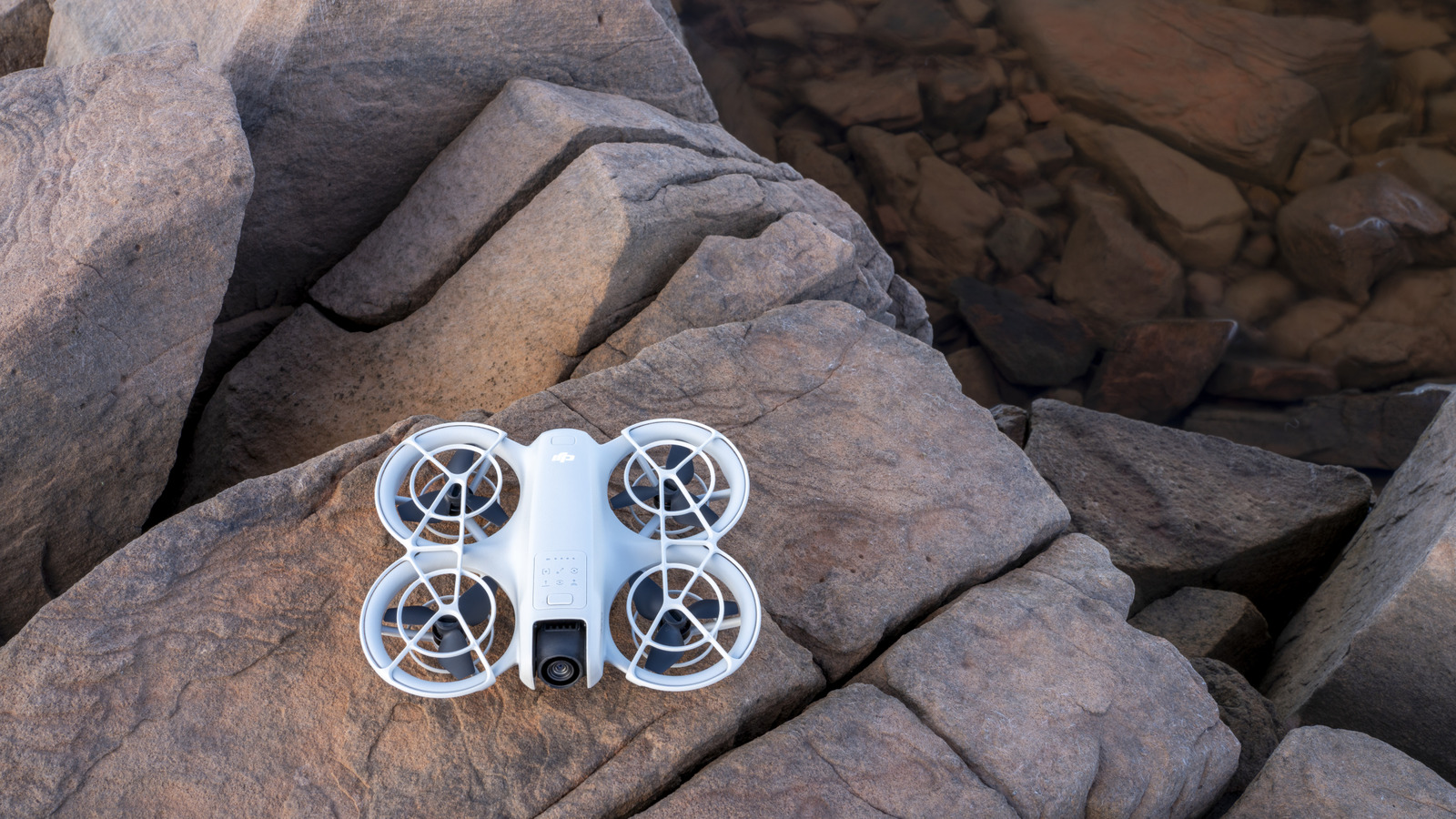
But that also means if you don’t already own a DJI drone and are planning to buy one, you might want to do so soon. Not trying to introduce FOMO, but DJI drones are well-built. Back in January, the DJI Flip was reviewed by BGR’s Christian de Looper and earned an eight out of ten for its affordability and useful features. DJI’s other drones are also reviewed well, such as the Air 3S as a go-to quadcopter or the DJI Neo for its decent camera experience considering its price. Under this renewed ban, the latest devices from DJI would not be available to U.S. consumers without authorization. If there is something nefarious going on, that makes sense, but it’s a shame if not.

Source

Posted on

Resilience for resilience: Managing burnout among cyber leaders

While organisations invest in cyber resilience, the resilience of those leading the charge, chief information security officers (CISOs), is often overlooked. The CISO role is consistently ranked among the most high-pressure in the C-suite. According to ISACA’s State of Cybersecurity 2025 report, 66% of cyber security professionals say their role is more stressful now than it was five years ago.

CISOs often operate in environments where security is underfunded, under prioritised, or misunderstood at the board and C-suite level. A lack of senior-level buy-in trickles down into:

  • Budget constraints that limit the scope and impact of the CISO function, including resources for tooling and automation.
  • Skills shortages and restrictive operating models that prevent effective delegation.
  • Strategic misalignment, where short-term delivery is prioritised over long-term business resilience and customer outcomes.

This creates a vicious cycle: CISOs are held accountable for outcomes without sufficient resources or executive backing, leading to stress, frustration, and burnout.

Security is still often perceived as a business inhibitor until a significant incident occurs. The constant need to ‘sell’ cyber security within conflicting C-suite priorities burns effort, while rising public and stakeholder awareness amplifies the pressure.

For example, in finance, CISOs face strict regulation and intense board and public scrutiny. In the public sector, bureaucratic friction and procurement constraints can complicate strategic investments, leaving CISOs exposed both operationally and reputationally.

To move the needle on cyber security, CISOs must go beyond technical defences and reposition security as a strategic business enabler. This starts with shifting board and C-suite mindsets, through education, influence, and persistent engagement, to see cyber security as integral to innovation and resilience.

Developing executive-level dashboards that articulate the organisation’s cyber security posture can provide visibility into progress, operational resilience, and how security initiatives align with strategy and enterprise goals. Equally critical is framing cyber risk in business terms, translating technical threats into quantifiable impacts on revenue, regulation, and user impact. This kind of communication elevates the CISO’s role from IT steward to strategic partner.

The ever-changing cyber landscape

Unlike other leadership roles, the CISO must constantly adapt to overlapping and complex regulations, such as the UK Data Protection Act, the EU General Data Protection Regulation (GDPR), and frameworks like DORA and FCA PS21/3. They also face threats including ransomware and AI-driven attacks. Additionally, CISOs must manage expanding attack surfaces resulting from offshoring, cloud adoption, and increasing third-party dependencies. Compounding these challenges are rapid technological shifts, such quantum computing and generative AI.

CISOs must simultaneously manage today’s risk, ensure operational integrity, steer future strategy, and monitor an evolving landscape, all in real time. The pace of threats means new systems, technologies, or vulnerabilities can be targeted within hours of going live, leaving little margin for error or recovery.

The rapid pace of digital transformation, while essential for business growth, expands risk and complexity beyond what traditional operating models can accommodate. CISOs must adapt at speed, safeguarding organisations against increasingly sophisticated threats.

In healthcare, for example, CISOs face ransomware threats that directly impact patient safety. In large global organisations, tool sprawl and third-party outsourcing increase complexity and reduce visibility, leaving CISOs with fragmented control capabilities.

Building a stronger cyber security posture requires a unified, risk-based approach that clearly delegates controls and accountability across teams and partners. By layering zero-trust architecture with continuous third-party monitoring, organisations can shrink their attack surface and keep vendor risk in check. Running threat simulation exercises further sharpens the security team’s agility, preparing them to respond to emerging threats before they escalate.

Systemic illusions and cognitive overload

While strategic misalignments and resource constraints put the CISO under pressure, the issue of a mismatch between accountability and authority persists. CISOs are expected to secure systems and manage risk across business units, outsourced services and technologies they don’t directly control which leaves them accountable for outcomes without clear decision rights or contractual levers.

The illusion of control arises when CISOs are accountable for cyber security risk but lack authority to enforce controls, especially across fragmented, outsourced, or federated environments. Their role shifts from decisive action to constant negotiation, increasing stress and accountability without power to drive change. In some public sector organisations, the CISO role is secondary or voluntary, often combined with IT delivery, forcing individuals to prioritise security against operational delivery.

Driving change in cyber security leadership demands structural and cultural alignment. Establishing cross-functional governance and defining risk ownership between security and business leaders ensures that cyber risk becomes part of everyday executive decision-making. Embedding security deliverables and risk criteria into all business projects further reinforces that cyber security is a shared accountability. At the same time, supporting the CISO’s own resilience and wellbeing is crucial. Access to peer networks, executive coaching, and setting clear boundaries can help mitigate cognitive overload.

From burnout to balance

CISO burnout is not a personal weakness but a consequence of conflicting organisational design. Until cyber security is embedded as a core business function, CISOs will continue to face impossible expectations and fragmented authority. Organisations must redefine accountability and empower CISOs with real decision-making authority, and invest in resilience, for both their people and their strategies. Only then will cyber security leadership become a source of business strength, rather than a burnout risk.

John Skipper and Farrukh Ahmad are cyber security experts at PA Consulting

Source

Posted on

The Worst Password Of 2025 Is ‘123456’

Tapati Rinchumrus/Shutterstock

CompariTech on Thursday released a report detailing the most-used passwords of 2025, which reveals that “123456” is the worst password of the year. More than 7.61 million accounts out of 2 billion passwords leaked on data breach forums this year have set “123456” as their password. This isn’t the first time a report singled out “123456” as the worst password you could use to protect an online account. We saw it happen in previous years, with “123456” outranking “admin,” and “password,” which are also present in the top 10 that CompariTech released, as seen in the following image.

The company published a list of the top 100 most-used passwords of 2025, which some people might want to check out to ensure their passwords aren’t on the list. These are all bad passwords. They’re popular because hackers managed to breach accounts protected by these passwords. The leaked information made it to the Dark Web and other places where stolen credentials are traded. That’s how CompariTech was able to access the data and analyze the types of bad passwords people have been using this year.

CompariTech

Other passwords that are easy to guess and made the top 100 are “minecraft” (100th) and “India@123” (53rd). The latter is more complex than passwords made out of numbers or simple words, but it’s still easy to crack.

How to protect your internet accounts with strong passwords

Tapati Rinchumrus/Shutterstock

CompariTech notes that, “in a showcase of human laziness, a striking number of passwords are easily guessed ascending or descending numbers.” The company found that a quarter of the top 1,000 passwords are made of numbers. Nearly 40% have the string of numbers “123” in them, while 2% have the same set of numbers, but reversed (“321”). Other people place the “abc” letter sequence in their passwords, and some just repeat the same character. “111111” was the 18th most-used password. Passwords that contain the word “pass” or “password” account for almost 4% of the top 1,000 most common passwords.

The report also notes that most experts recommend people use a password length of at least 12 characters. The longer the password, the longer it takes for hackers to crack it. The data CompariTech analyzed showed that nearly 66% of the stolen passwords had fewer than 12 characters. “A strong password will most likely never be cracked. Strong passwords are at least 12 characters long and contain a combination of lower- and upper-case letters, numbers, and symbols,” CompariTech notes. It should be “sufficiently random” to avoid patterns. Finally, CompariTech says that every password should be unique so hackers won’t try to use the same username and password combination for multiple web properties.

These findings tell you almost everything you need to do to protect your digital properties with strong, unique passwords. If you’ve been using “123456” or any of the other bad passwords in the list, you should change them immediately. Using a password manager on phones and computers should help you store passwords securely, without having to remember each one.

Source

Posted on

Popular LLMs dangerously vulnerable to iterative attacks, says Cisco

Some of the world’s most widely used open-weight generative AI (GenAI) services are profoundly susceptible to so-called “multi-turn” prompt injection or jailbreaking cyber attacks, in which a malicious actor is able to coax large language models (LLMs) into generating unintended and undesirable responses, according to a research paper published by a team at networking giant Cisco.

Cisco’s researchers tested Alibaba Qwen3-32B, Mistral Large-2, Meta Llama 3.3-70B-Instruct, DeepSeek v3.1, Zhipu AI GLM-4.5-Air, Google Gemma-3-1B-1T, Microsoft Phi-4, and OpenAI GPT-OSS-2-B, engineering multiple scenarios in which the various models’ output disallowed content, with success rates ranging from 25.86% against Google’s model, up to 92.78% in the case of Mistral.

The report’s authors, Amy Chang and Nicholas Conley, alongside contributors Harish Santhanalakshmi Ganesan and Adam Swanda, said this represented a two to tenfold increase over single-turn baselines.

“These results underscore a systemic inability of current open-weight models to maintain safety guardrails across extended interactions,” they said.

“We assess that alignment strategies and lab priorities significantly influence resilience: capability-focused models such as Llama 3.3 and Qwen 3 demonstrate higher multi-turn susceptibility, whereas safety-oriented designs such as Google Gemma 3 exhibit more balanced performance.

“The analysis concludes that open-weight models, while crucial for innovation, pose tangible operational and ethical risks when deployed without layered security controls … Addressing multi-turn vulnerabilities is essential to ensure the safe, reliable and responsible deployment of open-weight LLMs in enterprise and public domains.”

What is a multi-turn attack?

Multi-turn attacks take the form of iterative “probing” of an LLM to expose systemic weaknesses that are usually masked because models can better detect and reject isolated adversarial requests.

Such an attack could begin with an attacker making benign queries to establish trust, before subtly introducing more adversarial requests to accomplish their actual goals.

Prompts may be framed with terminology such as “for research purposes” or “in a fictional scenario”, and attackers may ask the models to engage in roleplay or persona adoption, introduce contextual ambiguity or misdirection, or to break down information and reassemble it – among other tactics.

Whose responsibility?

The researchers said their work underscored the susceptibility of LLMs to adversarial attacks and that this was a source of particular concern given all of the models tested were open-weight, which in layman’s terms means anybody who cares to do so is able to download, run and even make changes to the model.

They highlighted as an area of particular concern three more susceptible models – Mistral, Llama and Qwen – which they said had probably been shipped with the expectation that developers would add guardrails themselves, compared with Google’s model, which was most resistant to multi-turn manipulation, or OpenAI’s and Zhipu’s, which both rejected multi-turn attempts more than 50% of the time.

“The AI developer and security community must continue to actively manage these threats – as well as additional safety and security concerns – through independent testing and guardrail development throughout the lifecycle of model development and deployment in organisations,” they wrote.

“Without AI security solutions – such as multi-turn testing, threat-specific mitigation and continuous monitoring – these models pose significant risks in production, potentially leading to data breaches or malicious manipulations,” they added.

Source

Posted on

This New Space Armor Could Save Astronauts From Deadly Space

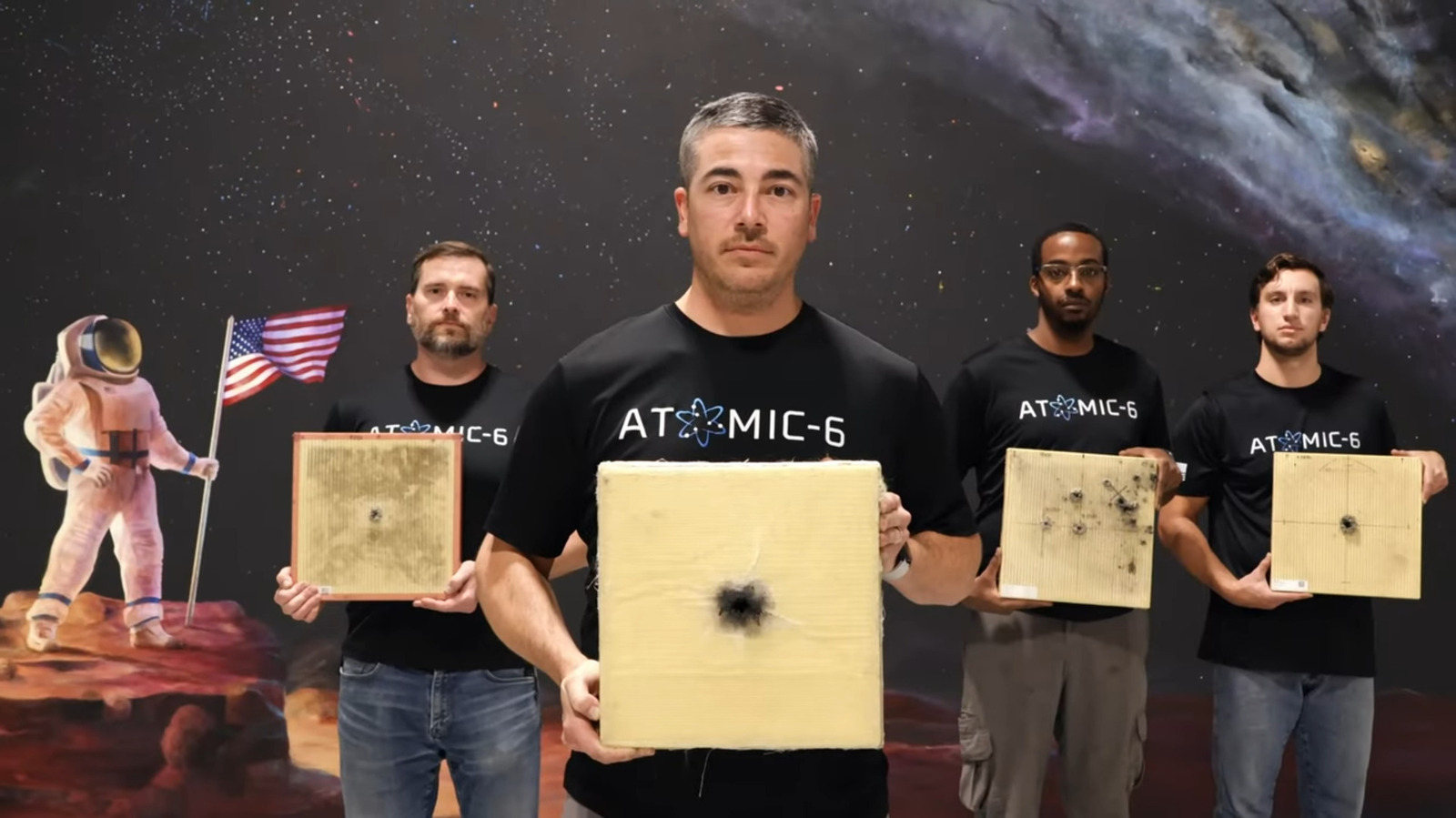
You might not expect there to be much risk of collisions out in the infinite void of space, but at least within Earth’s orbit, there’s a veritable gravel pit of loose debris flying around at potentially dangerous speeds. Earth’s space junk problem is pretty concerning, what with the well over million pieces of debris in orbit, and that’s just the bits large enough to track. This is why composite materials manufacturer Atomic-6 has developed its new “Space Armor,” a lightweight, high-strength material that could protect spacecraft, satellites, and even astronauts themselves from these spacebound projectiles.

Unlike here on Earth, there’s no gravity to slow a projectile’s momentum in space, so once a little shard of metal gets up to speed, it won’t stop until it hits something with disastrous results. Space Armor is designed to safely receive the impact of flying space debris without endangering sensitive equipment beneath the plating, or allowing any other debris to penetrate or splinter off into additional projectiles. Not only will this armor plating go a long way toward protecting vital spacefaring assets and personnel, it can do so with a fraction of the weight of most leading protection solutions.

Space Armor has impressive strength at lighter weights

Currently, the most frequent choices for protecting spacecraft are materials like solid aluminum and the Whipple Shielding employed by some satellites and the International Space Station. While these materials are good enough at stopping the majority of direct impact damage, their metal compositions mean that, when struck, small bits will splinter off and go flying, which leads to more debris orbiting around Earth and potentially transforming into more dangerous projectiles. Researchers have been tinkering with ways to cut down on space debris, such as Japan’s experiments in building satellites out of wood, but we still need a better way to protect what’s already up there.

Space Armor is made of a composite material rather than metal, which means that when it’s struck, it doesn’t generate any additional debris. The material is also far lighter than its metal contemporaries while providing the same level of strength and coverage. A square meter of Space Armor Lite tile weighs about 14 kilograms (approximately 30.8 pounds), and can stop a projectile up to 3 millimeters in size flying at up to 7.2 kilometers per second. You’d get roughly the same basic strength and size defense from a sheet of aluminum with a thickness of 1 centimeter, but that aluminum sheet would weigh twice as much at 28.8 kilograms (approximately 63.5 pounds).

Atomic-6 is currently developing an even stronger Space Armor plate, Space Armor Max, with comparable stopping power to Whipple Shielding. The company doesn’t know exactly how much it will weigh yet, but odds are good it will be less than the 27.5 kilograms you’d get from a square meter of Whipple Shielding.

The plates could protect spacecraft, satellites, and astronauts

Atomic-6 developed Space Armor plating with the help of funding from the U.S. Air Force and U.S. Space Force, specifically a $1.2 million Small Business Innovation Research Phase 2 award and a $3.8 million Tactical Funding Increase agreement. With the blessing of both agencies, Atomic-6 is looking to begin running tests in orbit with satellites as soon as next year.

Atomic-6 has already conducted extensive testing using simulated hypervelocity launchers, which fire off small projectiles at a comparable speed and size to the flying debris that spacecraft could be subjected to. Part of the appeal of Space Armor’s tile-based design is that the tiles can be sized and cut to a client’s needs, with custom sizing up to 1 square meter available.

“It has taken around 18 months to take Space Armor tiles from an idea to a final product. So we took the shot at making a tile, and were blown away by the test results,” Atomic-6 CEO Trevor Smith said in a statement to Space.com, “We offer Space Armor in simple hex tiles, but we can technically make Space Armor into most any shape you want.”

Once Space Armor’s viability has been definitively proven, it could be used in just about any spacefaring applications you could think of, whether it’s protecting vital communication satellites, shoring up space craft, and even providing an extra layer of defense to astronauts. For satellites in particular, Space Armor comes in both radio-permitting and radio-blocking versions, unlike Whipple Shielding which blocks all radio signals. The tiles could be used to protect the most sensitive parts of a communication satellite without hampering its functions. This kind of benefit will become even more important as more satellites are sent into orbit from brands like Starlink.

Source

Posted on

City of London deploys SASE to future-proof public infrastructure

Fuelled by a mandate to create “an experience for millions”, the City of London is aiming to redefine how connectivity utilising leading-edge technologies empowers residents, visitors and businesses. As part of this plan, it has forged a partnership with Roc Technologies.

The City of London Corporation is the governing body of the Square Mile of the UK capital, with a dedicated mandate to “foster a vibrant and successful” location which is the beating heart of the UK’s financial industry.

Headquartered at Guildhall in the City of London, the corporation delivers a range of municipal functions including public services, policing oversight and open spaces management – while also promoting the interests of the UK’s principal international financial and professional services centre.

Its coverage spans the City of London Corporation, the City of London Police, the Barbican Centre, City of London schools, parks, libraries and protected heritage locations such as Epping Forest, the iconic ponds at Hampstead Heath and Mansion House. With over 200 locations, the City of London has to ensure connectivity reaches every employee, official, resident and visitor in its community.

The partnership with Roc Technologies is designed to build on this vision, helping the corporation advance digital innovation and further strengthen its position in the business and financial services sector. As a strategic partner, Roc will deliver an end-to-end networking connectivity service, encompassing what is said to be a UK-first enterprise secure access service edge (SASE) roll-out for public services, AI-driven wireless capability and high-availability internet.

Having reliable, high-speed access is designed to allow City of London Corporation staff to work productively and securely from any location. The service is based on the HPE AI-Ops platform, Juniper Mist, Palo Alto Networks’ Prisma SASE service and Vorboss business connectivity, via its dedicated, fully owned and managed central London fibre network. 

Roc’s technology will use cloud and AI capabilities for network delivery and services, incorporating the first public sector full enterprise deployment of SASE in the UK. This will in turn provide standardised, highly available connectivity to millions of users across the City of London, while simultaneously enhancing and automating security at the edge.

One particular demand in the contract was that the enhanced connectivity addressed critical public safety challenges such as ensuring support for 4K body-worn police cameras to help protect officers and the communities they serve, even in remote areas.

With all traffic and devices managed in the cloud, offering significant operational enhancements and cost savings, Roc’s service has protections such as safeguarding operations from their secure networks and security operations centre, and applying data controls including data loss prevention, zero trust networking access and alignment with UK policing standards.

All Roc suppliers and partners involved in the transformation and delivery of the service maintain resilient datacentre operations in the UK, ensuring no sensitive data leaves the UK.

“The City of London sees footfall of millions of people a day, so it’s vital that a consistent network experience is delivered across all locations and to all users, including visitors, residents and businesses regardless of the services they need to access,” said Roc Technologies chief technology officer Chelsea Chamberlin.

“We’re delighted to be the sole primary supplier for this exciting project, drawing on a range of solutions from our expert partners to deliver a truly future-proof network architecture in the heart of the capital.”

Source

Posted on

Government showcases UK quantum computing pledge

The government has announced 14 projects sharing £14m through Innovate UK’s Quantum Sensing Mission Primer awards, to support the development of next-generation sensors that could be used in healthcare, transport and defence.

The funding announcement ties in with the National Quantum Technologies Showcase, which brought thousands of researchers, investors and global policymakers together in London. The government has positioned the event as a step forward to unlock quantum’s vast potential to drive economic growth and national renewal, and help tackle major challenges such as health and climate.

Projects include a portable eye scanner that could replace the large and expensive optical coherence tomography machines currently relied on in hospitals, and a new type of sensor to enable civil engineers to detect buried structures without the need for costly excavation works.

Along with funding for projects, the UK’s National Quantum Computing Centre has signed a memorandum of understanding (MoU) with Japan’s National Institute of Advanced Industrial Science and Technology. The government hopes the MoU will enable easier UK-Japan collaboration in quantum computing research, as well as talent exchange.

Through £30m of Innovate UK support, seven quantum computing testbeds have been deployed at the National Quantum Computing Centre. These will enable businesses to demonstrate and validate new quantum computing technologies.

Earlier this week, the National Metrology Institute – Quantum was launched at the National Physical Laboratory. The UK is a co-chair of this quantum research and development partnership across the G7 and Australia.

“Quantum technologies are changing the world – from ultra-sensitive sensors to help diagnose diseases, through to the potential of a new type of computer that can do things in seconds that would take today’s computers decades to compute,” said science minister Patrick Vallance. “The UK already has considerable strengths, and lots of exciting new companies have sprung up in the UK. The funding and agreements being announced today aim to support this exciting and important growth area right across the country.”

The package of support includes the Quantum Centre for Nuclear Defence and Security at the Atomic Weapons Establishment, which is working with the University of Strathclyde to bring quantum computing and sensing to bear in nuclear science and technology.

There is also a £300,000 government investment to relaunch the Scotland-California quantum and photonics partnership, which brings quantum researchers from across the universities of Strathclyde, St Andrews, Heriot-Watt and Glasgow together with colleagues from Stanford and the California Institute of Technology.

The government’s industrial strategy includes £670m for quantum computing. Among its goals is the development of quantum computers, which are capable of outperforming conventional supercomputers, by 2036.

UKQuantum, the industry body for quantum computing in the UK, welcomed the UK’s plans for quantum computing.

“The achievements of the UK’s National Quantum Technologies Programme over the last 10 years have positioned the UK as one of the world’s leading quantum nations,” said Jonathan Legh-Smith, executive director of UKQuantum.

“Our companies have developed world-leading technologies across the whole quantum domain – including sensing, imaging, clocks and computing – with strong engagements across sectors such as transport, finance, telecommunications and defence.”

Source