Posted on

GPT-5 Is Free, But Here Are 5 Reasons Why ChatGPT

José Adorno for BGR

OpenAI recently rolled out GPT-5 to all ChatGPT users. With this new milestone for ChatGPT, the company has also increased the number of queries people on the free tier can submit to the company’s AI chatbot, which is now faster, smarter, and more capable (depending on who you ask).

At this point, you might be wondering whether it even makes sense to pay $20 for a monthly ChatGPT Plus subscription. If you’ve made ChatGPT part of your daily routine and want to avoid running into usage limits in the days and weeks ahead, there might be a few reasons why paying for ChatGPT Plus is worth it, even after GPT-5 rolled out to the general public.

For example, if you’re really into the Deep Research, you’ll only have access to one GPT-5 Thinking message per day on the free tier, while ChatGPT Plus users get 10 GPT-5 Thinking messages every five hours. That makes it’s easier to settle in for lengthy brainstorming sessions, compare products you’re thinking about buying, and more. But that’s not the only reason why ChatGPT Plus is still worth considering.

How GPT-5 upgrades ChatGPT Plus

José Adorno for BGR

If you can’t decide whether or not to subscribe to ChatGPT Plus, here are a few reasons why it might be worth the $20 per month:

  • Legacy Models: After the immediate backlash to the new model, OpenAI brought back multiple legacy models. If you’re a paying subscriber, you can switch back to GPT-4o, while the free tier is stuck with GPT-5.
  • Context window size: The context window of the free tier offers around 8K tokens while the Plus subscriptions offers over 32K tokens. Therefore, ChatGPT is able to remember more of your conversation, so the AI is less likely to forget anything while you’re chatting.
  • Different modes: GPT-5 automatically selects models for you depending on your prompt. However, only the Plus tier offers subscribers the ability to manually toggle between the different models, which include GPT-5 Thinking, GPT-5 Thinking mini, and GPT-5 Fast.
  • Usage priority: ChatGPT Plus offers faster responses and priority access when servers are busy. So, if you’re in a meeting and need a quick AI-generated answer, you won’t have to impatiently wait for an answer.
  • Early access: Paying subscribers often have access to early features that can take months to arrive on the free tier, such as the ability to upload spreadsheets or create a custom GPT.

With all of these perks in mind, it’s clear that ChatGPT Plus still offers value for users who are spending a great deal of time with OpenAI’s chatbot. That said, it’s entirely possible getting access to GPT-5 for free is enough for your needs.

Source

Posted on

Incident response planning cuts the risk of claiming on cyber

Although at their heart they focus on post-breach mitigation and remediation, cyber incident response plans are emerging as a very important cyber security control when it comes to reducing overall risk, particularly the risk of having to claim against cyber insurance.

This is according to a newly published report produced by professional services firm Marsh McLennan, through its Cyber Risk Intelligence Centre (CRIC).

Titled Cybersecurity signals: Connecting controls and incident outcomes, the report revealed that organisations that conduct regular tabletop wargame exercises and scenario-based breach response drills are 13% less likely to fall victim to a material cyber incident than those that do not.

“Marsh has long advocated proactive cyber incident response planning as a tool to help organisations effectively and efficiently respond to and recover from a cyber attack,” said Tom Reagan, global cyber practice leader at Marsh McLennan.

“What our latest research confirms is that thoughtful planning also drives secondary benefits like positive security behaviours and strong control implementations, which help build more organisational resilience and reduce breach incidents,” he said.

Two years have elapsed since Marsh McLennan’s CRIC first started tracking the correlation between the core security controls that cyber insurers take into account and the likelihood of making a claim.

To do this, it has been drawing data from thousands of organisations using Marsh McLennan’s Cyber Self Assessment service to examine their risk levels and help them prepare better for investing in cyber insurance, and analysing this information against claims histories to derive relationships between security practice and claim likelihood.

In the intervening time, much has changed, so it is not really possible to draw a direct comparison between 2023 and 2025, but that said, incident response planning now ranks as the fourth most effective control, behind endpoint detection and response (EDR), logging and monitoring, and security awareness training and phishing testing.

Marsh McLennan said it was possible, though not proven, that effective incident response planning and policies are leading to secondary benefits, exposing other gaps in enterprise security programmes and driving further investment.

Upward trend

Across the other core cyber controls explored in the 2023 report, Marsh McLennan found positive indicators that enterprises are generally improving their security postures two years on.

For example, the number of respondents who have implemented EDR has grown by 9%, from 82% to 91%, while the number who evaluate and quarantine inbound email attachments has grown by 8%, from 75% to 83%.

More impressively, enterprises are demonstrating a much more mature approach to patching. The number that now set target windows to patch high-severity and critical-severity vulnerabilities has soared, from 24% to 89% and from 53% to 89% respectively.

Other metrics saw low single-digit percentage point growth – however, against one control, things did appear to be going backwards. The number of respondents who said they used endpoint privilege management to manage desktop or local admin privileges dropped from an already low 35% to 27%.

“Our findings emphasise that simply deploying key cyber security controls is no longer enough – these tools must be properly managed and comprehensively used,” said CRIC head Scott Stransky.

“By drawing on our insights, organisations can make informed decisions to strengthen their security frameworks and help reduce their exposure to cyber risks.”

Source

Posted on

HPE ups ante in self-driving net ops with enhanced Mist

Virtually all companies regard networks as critical to business success, but as they become more distributed and complex than ever, operations teams are needing tools that speed resolution, boost efficiency and ensure user experience at scale. Looking to address these needs, HPE has made what it says are major innovations to its HPE Juniper Networking portfolio to deliver agentic AIOps through more autonomous, intelligent and proactive network operations.

The advances will be made through enhancements in the artificial intelligence (AI)-native Juniper Mist platform. This includes agentic AI-powered troubleshooting, expanded visibility and control of self-driving actions, a generalised large experience model (LEM), and AIOps features for datacentres. These moves are designed to reduce IT complexity and assure “exceptional” user experiences from client to cloud.

“Today’s networks must do more than connect – they must understand, adapt and act,” said HPE Networking executive vice-president, president and general manager Rami Rahim. “With these new digital experience twin and agentic AI capabilities in Juniper Mist, we continue to turn the network into a proactive partner for IT, capable of solving problems before they impact users. This is a major leap toward truly self-driving operations, helping our customers simplify complexity, reduce costs and deliver exceptional digital experiences at scale.”

The Mist enhancements will be driven by improvements to Marvis, the AI engine that powers the platform. Specifically, these will be grouped around four key areas: enhanced conversational capabilities; expanded self-driving actions; generalised LEM; and AI for datacentre operations.

Marvis AI analyses telemetry across the wired, wireless, WAN and datacentre domains, and creates automated workflows to simplify operations and lower costs. AI-driven support uses trouble ticket data to continually train and increase the efficacy of the Marvis AI engine, and a fully application programming interface-driven model works with external systems and applications, like Zoom, Teams and ServiceNow, to quickly identify and fix the root cause of problems.

The Marvis AI assistant will now have augmented conversational capabilities that facilitate real-time troubleshooting. By using an agentic AI framework, HPE says customised insight is provided with self-driving agents that collaborate across the wired, wireless, WAN, client and application domains. A Marvis Actions dashboard will support the autonomous remediation of more network issues, including misconfigured ports, capacity issues and non-compliant hardware – with full IT oversight.

The LEM is an AI model that is said to be unique to HPE Juniper Networking, analysing billions of data points from applications like Zoom and Teams to troubleshoot the performance of common collaboration tools and predict future issues. Enhanced with Marvis Minis – twins that simulate user experiences – LEM can now predict future application experiences without real-time data from the applications themselves. This is fed into the Marvis AI engine where self-driving actions can be taken to optimise future performance, prior to users even being present.

Within datacentre operations, the Marvis AI Assistant for Data Centre integrates with Apstra’s contextual graph database to deliver intelligent insights and lay the groundwork for autonomous service provisioning. Marvis Minis also extends to the datacentre for continuous service validation and application assurance pertinent to datacentre networks.

These capabilities are also seen as bolstering GreenLake Intelligence, HPE’s next approach to autonomous IT and agentic AIOps, which deploys specialised AI agents in a multi-layered IT architecture. This is designed to enable real-time problem-solving, proactive optimisation and smarter decision-making across networking, storage and compute. 

HPE believes the agentic AI capabilities in Juniper Mist shift IT from reactive to proactive management, laying the groundwork for significant improvements in performance and efficiency.

“Operations teams need tools that speed resolution, boost efficiency and ensure user experience at scale,” said Bob Laliberte, principal analyst at The Cube Research.

“For over a decade, HPE Juniper Networking solutions have pioneered the use of AI in network operations, accelerating the journey toward self-driving networks. With its latest advances in agentic AI and GenAI, powered by Marvis, HPE is delivering real autonomous capabilities that enable predictive intervention, letting ops resolve issues before users even notice.”

Source

Posted on

Some Android Phones Are Becoming More Like iPhones In One

MonicaZ82/Shutterstock

For years, Android users have knocked iOS for being a “walled garden,” with the iPhone locking users into Apple’s ecosystem and limiting how far they can stray outside of the company’s guidelines. While Android has long offered a more customizable and personalized experience — including a way to completely alter the core operating system by installing custom ROMs — it seems the time of unparalleled customization for Android users may be coming to an end, though only on some devices.

Samsung appears to have removed the option to unlock the bootloader in the latest beta versions of One UI 8, which is Samsung’s user interface for Android 16. The new reports suggest that the code for unlocking the bootloader — which gives users the ability to load unofficial software onto the device — has vanished in the latest One UI 8 betas.

While some hoped that this move might just be temporary, a dive into the code of the One UI 8 beta by a user on the XDA forums suggests that it will likely be a permanent change, essentially letting Samsung create its own “walled garden” in the same way Apple has. And Samsung isn’t the only company doing it. OnePlus recently announced that users of its smartphones in China would require approval before they could unlock their bootloaders, and that requirement has been active for U.S. customers purchasing OnePlus devices from T-Mobile for some time.

What this means for the future of Android

Srikant_Photography/Shutterstock

While the ability to unlock the bootloader has been a staple of the Android operating system for years, companies are now noting that having an unlocked bootloader can actually make a device less secure. There’s also the fact that unlocking the bootloader and then subsequently messing around with the kernel or ROM files can negatively impact a device.

When I first bought an Android phone, I flashed custom ROMs, and while the process was usually easy to follow — and sometimes even automated — it also carried the risk of bricking my device if done incorrectly. And some devices, including Samsung’s, already weren’t playing very nicely with unlocked bootloaders due to the built-in security features they offer.

While the removal of the ability to unlock the bootloader does limit customization, it also ensures that your device remains secure. That said, that bullet point hasn’t always been especially convincing when arguing in favor of Apple’s walled garden approach, and some Android fans are disheartened to see the control being taken from them. At the moment, it’s unclear just how many Android manufacturers will adopt this stance, but considering one of the biggest Android manufacturers, Samsung, is adopting it for newer devices like the Z Flip 7, don’t be surprised if others follow suit.

Source

Posted on

You Don’t Need A New Car For Wireless Apple CarPlay,

Harry Howitt/Shutterstock

We may receive a commission on purchases made from links.

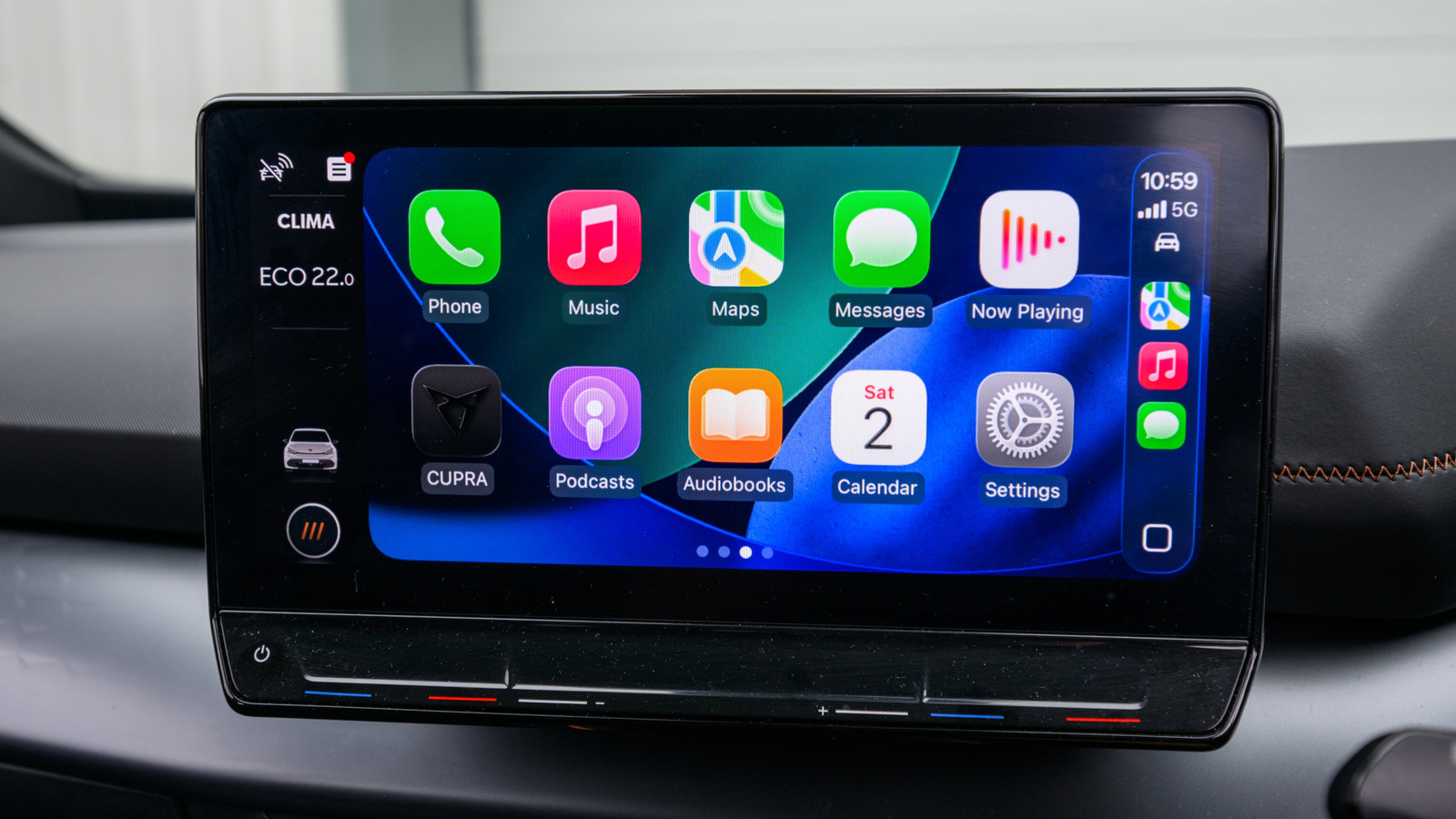
Apple CarPlay is one of the best ways to use your iPhone while driving a motor vehicle. This iOS-friendly infotainment link has been around since 2014, providing Apple devotees with a convenient way to access navigation tools, make phone calls, send and receive messages, and stream audio from go-to platforms like Spotify and Apple Music. In the early days of CarPlay, you’d need to use a USB cable to connect your iPhone to your car, but it wasn’t long before a majority of vehicle manufacturers began supporting Wireless CarPlay via Bluetooth.

If you happened to purchase a CarPlay-ready vehicle before 2022, chances are it’s only set up for a wired connection. But if you’re interested in adding wireless connectivity to a wired-only CarPlay system, numerous third-party device makers produce Wireless CarPlay adapters. We here at BGR also pride ourselves on our iPhone expertise, so we’ve gone ahead and rounded up five of our favorite Wireless CarPlay adapters on the market.

Carlinkit 2air

If you’re looking for the no-holds-barred Wireless CarPlay adapter that’s going to work without any major hitches, our top choice for the job is the Carlinkit 2air. At 3 inches long and 1.69 inches wide, the adapter is small enough to be tucked away once connected and is designed for plug-and-play pairing. All you have to do is turn your car on, plug it into your USB port, and search for the 2air in your iPhone’s Bluetooth settings.

The Carlinkit 2air supports both CarPlay and Android Auto and is even compatible with aftermarket head units from the likes of Pioneer, Sony, and other manufacturers. The adapter comes with a removable USB cable that can be swapped out for a different wire, and the module features support for both USB-C and USB-A connectivity.

We’ve heard reports of lag, though, specifically focused around wireless music playback and phone calls. Your iPhone may also experience faster battery depletion, which is common for wireless accessories. Slight drawbacks aside, we were pleased to learn the 2air supports Wi-Fi connectivity, too. All you have to do is type 192.168.50.2 in your phone’s web browser, and you’ll be taken to a device dashboard for updates and settings. At the time of writing, the unit retails for $54.48 on Amazon.

Ottocast U2-Air

Scoring a 3.8 out of 5 stars on Amazon based on over 2,800 reviews, the Ottocast U2-Air is another excellent way to add Wireless CarPlay to your commuter car. The Ottocast boots quickly when you turn your vehicle on (up to 18 seconds) and features both USB-C and USB-A ports.

After you’ve manually paired your phone via Bluetooth for the first time, the U2-Air should automatically link to your iPhone the next time you start the car. While most folks will likely use the car’s infotainment touchscreen to open, close, and navigate compatible CarPlay apps, the Ottocast also interfaces with your car’s steering wheel controls and OEM knob controls. You can even summon Siri to carry out certain CarPlay actions.

The U2-Air is compatible with most wired CarPlay vehicles produced between 2016 and 2022, except for BMW. The adapter also works with iOS 10 or later but doesn’t include support for Android Auto. Ottocast claims the U2-Air delivers a lag-free experience, but some users have reported a delay when switching between songs. It may not be the best Wireless CarPlay adapter money can buy, but the Ottocast U2-Air is a solid value option for those looking to ditch cables in favor of Bluetooth. The U2-Air retails for $40 at the time of writing.

Jemluse Wireless CarPlay Adapter

With 4.4 out of 5 stars on Amazon based on over 4,500 reviews, we’d be hard-pressed not to include the Jemluse Wireless CarPlay Adapter on our list. From the top of the integrated USB cable to the bottom of the module, the Jemluse measures just 7.48 inches, which makes it a space-saving addition to most vehicles. It’s also one of the only CarPlay adapters with a notched-out bottom corner, so you’ll be able to loop it onto a keyring (making it a great choice for frequent rental car users).

This CarPlay adapter features some cutting-edge engineering. An eight-core processor and Bluetooth 5.3 connectivity ensure a fast and relatively lag-free connection, and the adapter’s aluminum alloy chassis is built to withstand years of use.

When you hook up the adapter, you’ll need to make sure your iPhone isn’t connected to a device over Wi-Fi. This applies even after you’ve manually paired your iPhone for the first time. Some Amazon reviews also indicate the Jemluse may fall victim to occasional lag, mostly when pairing it with your phone and trying to use Maps. The unit typically retails for $79.99 at the time of writing.

Car and Driver Intellidash Pro X10

What if your car doesn’t even feature wired CarPlay? For those who don’t mind spending a little more, there’s the Car and Driver Intellidash Pro X10. More than an adapter, this is a full-fledged 10-inch HD touchscreen that comes with everything you need for installation.

Once clipped in or mounted to your dashboard (and plugged in for power), the Pro X10 can be tied into your car’s stereo system via Bluetooth, 3.5-millimeter auxiliary, or FM transmitter. You’ll have access to all of CarPlay’s features when it comes to infotainment, including Siri or Google Assistant, calls and messaging, music playback, GPS navigation, and more. The Pro X10 is even compatible with Android devices running the Android 11 OS or later.

We also love the fact that this CarPlay adapter can be interfaced with a backup camera. Some folks have reported lackluster adhesive pads for the Pro X10, so it may be worth investing in a heavy-duty set from a reliable third-party brand if you’re planning on mounting your Pro X10 to the dash. At the time of writing, the Pro X10 retails for $179.99.

The Magic Link

The Magic Brand has made a name for itself in the world of Wireless CarPlay accessories, and we’d be remiss not to include the Magic Link device in this roundup. Much like the other adapters we’ve discussed, the Magic Link is compatible with most wired CarPlay vehicles, and it pairs to your iPhone in five seconds or less. It only takes a few minutes to get the product up and running, at which point you’ll be able to enjoy wireless call-making, music-listening, and other useful CarPlay features.

The Magic Link is also available in two versions: one for Wireless CarPlay and another for Android Auto. Some of the marketing on the site would have you believe that one adapter supports both infotainment systems. This is not the case, so you’ll need to make sure you’re purchasing the correct model for the type of device you plan on connecting.

Out of nearly 1,000 reviews, the Magic Link boasts 4.8 stars out of 5, which isn’t too shabby if you ask us. You’ll also score a sweet discount on your purchase when you buy two or three Magic Links at once ($75 per device when you buy two, or $70 per device when you buy three at the time of writing). On its own, a Magic Link retails for $99 on The Magic Brand’s website (the product is unavailable on Amazon).

Source

Posted on

600 VodafoneThree UK sites now offer integrated coverage

Just over two months since it began operations following the merger of two of the UK’s leading telcos, VodafoneThree has announced that, as part of its £11bn investment programme, it has switched on over 600 sites that allow legacy Vodafone and Three customers to use both networks at no extra cost.

Vodafone and Three first announced plans to merge in June 2023. The new combined business – 51% owned by Vodafone Group and 49% by CK Hutchison Group Telecom (CKHGT) Holdings – is the biggest mobile network operator in the UK, with 27 million customers through the combined entities.

VodafoneThree will operate a multi-brand mobile strategy in the consumer market, with Vodafone, Three, VOXI, Smarty and Talkmobile remaining. Vodafone will be the only brand for business customers, offering one team able to tailor systems to a customer’s needs, with the ambition to become the UK’s biggest converged network for business.

VodafoneThree claims to be the only UK operator with a quarter-by-quarter, year-by-year, guaranteed plan to reach 99.95% 5G standalone (5G SA) population coverage by 2034. The 5G SA network build-out plan is front-loaded so that it will hit 90% population coverage from a current baseline of 47% by the end of the third year, and up to 50 million people will have access to its fastest 5G speeds in just one year.

Through the use of the company’s multi-operator core network (MOCN) technology, customers’ devices will automatically connect to the best coverage available, effectively giving them access to two networks at no extra cost. VodafoneThree believes this will see customers of both brands experience improved coverage, reliability and speed when using 4G and 5G networks.

Customers do not need to do anything to benefit from the new technology, as VodafoneThree engineers are using a weighted set of criteria to manage capacity and maximise customer benefits without having an impact on the existing service. For business mobile customers in particular, this is claimed to result in smoother day-to-day operations, with connectivity that keeps staff, services and customers connected everywhere they need it.

Through the sharing of combined spectrum, VodafoneThree said that within two weeks of beginning business, seven million Three and Smarty customers received a 4G boost, with an average improvement in 4G data speed of up to 20% and 40% in some key towns and cities, thanks to the integration of combined spectrum.

Three key benefits are said to stand out from the sharing: peak period improvements; the elimination of 4G notspots; and enhanced 5G coverage. With the MOCN, at busy times for the network, customers will be moved from a busy site to one that is able to provide the required level of performance. It is also designed to simultaneously relieve the strain on the busy site, providing a better experience for all customers.

By providing 4G coverage to 16,500km of the UK where it wasn’t previously available to either brand’s customers, VodafoneThree said it can eliminate notspots across an area 10 times the size of London and that around 71% of the UK population (circa 50 million) will have access to VodafoneThree’s fastest 5G speeds by the end of year one, thanks to bringing the networks together and an accelerated 5G roll-out plan. 

The first stages of the technology are being activated remotely, enabling faster deployment across Vodafone and Three’s networks. Some masts can be upgraded remotely with MOCN technology, with what is effectively a software upgrade. Others, however, will need to have new hardware fitted to them. The company accepted that completing such hardware upgrades, especially in remote areas of the country, will take time.

Commenting on the integration programme, VodafoneThree chief network officer Andrea Donà said: “Bringing our networks together marks a major milestone for VodafoneThree, unlocking greater capacity, reducing 4G notspots and expanding 5G coverage. Just weeks into the roll-out, millions of customers are already seeing the benefits of a nationwide boost, powered by our spectrum integration and Multi-Operator Core Network technology. It’s a clear signal of VodafoneThree’s ambition and ability to move at pace to deliver a new era of connectivity.” 

Source

Posted on

Obituary: Dame Stephanie ‘Steve’ Shirley, founder, entrepreneur and philanthropist

The technology sector lost a great on 11 August 2025, with the passing of Dame Stephanie Shirley at the age of 91.

More affectionately known as Steve, Shirley was a serial founder, entrepreneur and philanthropist who was part of the technology sector for over half a century.

Originally from Germany, aged five, Shirley – who at the time was named Vera Buchthal – was one of the thousands of children who came to the UK on The Kindertransport before the outbreak of the Second World War.

She grew up with her sister and foster parents in the West Midlands, developing a background in technology and mathematics from a young age, and after school, she got a job building computers and coding for the Post Office Research Station in Dollis Hill.

After doing night classes to gain a degree in mathematics, she then went on to get a job at another technology company.

But this was during a time when women were less equal to men than they are now, and Shirley became frustrated with the disparity faced by women both in and out of the workplace.

Wanting to change things for the better, she took her husband Derek’s advice and adopted her family nickname, Steve, to be taken seriously after efforts to start her own company fell on deaf ears once it was clear she was a woman.

Flexible working

Shirley was a pioneer in flexible working, founding a technology company called Freelance Programmers in 1962. Candidates were asked if they had access to a telephone, as there was no office, so the staff of predominantly women worked from home selling software and programming.

She once told Computer Weekly it would be illegal for her to set up a company in the same way today. “You couldn’t possibly have a company that set out to be gendered,” said Shirley. “I deliberately tried to build a company that was female-friendly and a crusade for a company by women for women.”

She wanted the company to be one she would want to work for, and over time it made her and many of her employees millions.

Renamed Xansa, the company grew to more than 8,000 people before being sold to Steria in 2007.

Shirley used this wealth for her philanthropic efforts, which has seen her fund several charities and foundations, and has been predominantly driven by support for her late son, Giles, who was severely autistic and epileptic.

She initially founded a residential home for people with severe autism, called Kingwood, with the goal of giving her son what he needed to live the best life possible.

Following this, she also founded The Shirley Foundation, Prior’s Court School for students with autism, and UK autism research charity Autistica, all aimed at making the lives of individuals with autism better.

Philanthropic endeavours

Across her lifetime, Shirley spent millions of pounds supporting charities and other philanthropic endeavours.

In support of the technology sector, she also helped fund – and was a master of – tech-focused charity The Worshipful Company of Information Technologists, and was a founding donor and co-founder of The Oxford Internet Institute in 2001.

Shirley has been recognised for her relentless work for women, technology and those with autism, and in 2017, was awarded a Member of the Order of the Companions of Honour (CH) for her services to tech and philanthropy – she has also been awarded an OBE and a DBE.

When Computer Weekly launched its Most Influential Women in UK Tech Hall of Fame in 2015, Shirley was one of only three who made the initial list.

She was an inspiration for many, and appears in both the Bletchley Park and California computing museums.

Shirley has claimed in the past that her childhood made her strive to make sure her life had been “worth saving” by bringing her to the UK as a young child, and her incredible life full of extraordinary achievements proves she succeeded in that aim.

She will be greatly and sadly missed.

Source

Posted on

How To Stop Google Gemini From Training On Your Personal

Cheng Xin/Getty Images

Privacy should be a priority when browsing the web, especially in this era that brought generative AI experiences to all sorts of applications, starting with chatbots like Gemini. If you’re using chatbots for personal projects and work chores, you should ensure that the privacy of your data is protected and that Google can’t use any Gemini data from your personal chats to train future versions of Gemini. The good news is that it’s incredibly easy to stop Google from collecting your Gemini data for training purposes: You’ll need to switch off a toggle called “Gemini Apps Activity” (“Keep Activity”) on desktop or mobile, and that will ensure Google won’t use your chats for Gemini development.

I’ll explain in detail in what follows how to turn off the “Gemini Apps Activity” feature, which Google is about to call “Keep Activity” following a Gemini update. Regardless of the name, the process won’t change. Conversely, you can reverse the procedure to turn on Gemini data collection, in case you think your data should be used to train future AI models.

Before you change this setting, you should also be aware that no matter how you set this key privacy toggle, Google will store the contents of your Gemini chats for three days (72 hours) for service and feedback purposes before deleting them. If chats go to manual review, they might be kept for longer, but they won’t be used for training next-generation Gemini versions.

Stop Gemini from training on your data on the web

Chris Smith / BGR

Whether you use Gemini on iPhone, Android, or the web, you have access to the same privacy controls to stop Google from training Gemini on the personal data in your chats. You’re looking for the same privacy setting, called “Gemini Apps Activity” at the time of this writing. Google announced in mid-August that the setting will be called “Keep Activity” in the near future, but that’s just a name change. The functionality will stay similar. In what follows, I’ll show you how to turn off “Gemini Apps Activity” (“Keep Activity”) on desktop and mobile.

  1. Load gemini.google.com in your browser
  2. Sign into your Google account if you’re not signed in
  3. Expand the left-hand menu by hovering your mouse on top of it if it’s not expanded. The menu will also tell you whether Gemini Apps Activity is turned on or off, as seen above.
  4. Look for the Activity button that has a clock with an arrow around it and tap it
  5. Your Google account settings page will open on the Your Gemini Apps Activity section (see screenshot below)
  6. Click the Turn off button (If the setting is already turned off, you don’t need to do anything else)
  7. Optional step 1: If you use Gemini Live on mobile, make sure the Improve Google services with your audio and Gemini Live recordings box doesn’t have a tick in it (see screenshot below). 
  8. Optional step 2: Delete past Gemini Apps Activity that the app collected before you disabled the feature (see screenshot below).

Chris Smith

Stop Gemini from training on your data on iPhone or Android

Chris Smith / BGR

The process above is almost identical on iPhone and Android for preventing Google to train future Gemini models on your personal data:

  1. Open the Gemini app for iPhone or Android
  2. Sign into your Google account if you’re not signed in
  3. Tap your profile picture on the right side
  4. Look for the Gemini Apps Activity button that has a clock with an arrow around it and tap it
  5. Your Google account settings page will open in the mobile app loading Your Gemini Apps Activity
  6. Click the Turn off button (If the setting is already turned off, you don’t need to do anything else.)
  7. Optional step 1: If you use Gemini Live on mobile, make sure the Improve Google services with your audio and Gemini Live recordings box doesn’t have a tick in it (see screenshots above). 
  8. Optional step 2: Delete past Gemini Apps Activity that the app collected before you disabled the feature (see screenshots above).

Things to keep in mind

Chris Smith / BGR

As you can see above, preventing Google from training AI on your Gemini chat data involves the same steps on desktop and mobile. You only need to turn off the “Gemini Apps Activity” (“Keep Activity”) setting once and it’ll apply everywhere. It’s up to you to choose between the desktop and mobile experience.

If you use Gemini with multiple Google accounts, you will have to repeat the process for each of them. Log into a different account to repeat the steps above, on either desktop or mobile.

If you use a Google Workspace account that’s managed by your business, Google won’t use your Gemini data to train future AI versions by default. You don’t have to update any setting to reach this level of privacy. The downside is that you can’t turn off activity saving unless you also manage that Google Workspace account (see screenshots above).

The “Gemini Apps Activity” (“Keep Activity”) setting is reversible. You can change your mind at any time. Also, if you do want your data to train future versions of Gemini, you can still delete chats from Google’s servers (see the optional steps mentioned above).

Finally, I’ll remind you not to share sensitive data with any AI chatbot, regardless of how you feel about companies using your personal data to improve future AI models. You should avoid giving chatbots financial, health, and work-related data in your prompts as long as that data is processed in the cloud.

Source

Posted on

Industry 5.0: More than a numbers game for future manufacturing

There’s nothing the technology and communications industry likes more than the arrival of a next generation. For example, look at the comms industry and the clamour that centres around the launch of the next generation of mobile around a decade after the launch of the previous iteration. The clamour for 6G, set for commercial launch arrival in 2030, is really beginning to start in earnest, despite 5G being nowhere near pervasive nor diffuse.

In engineering, however, things move a little different. Despite the daily emergence of innovation in design, manufacturing and collaboration technology, the market has not been hung up so much on generations. But with the growing emergence of Industry 5.0, could all this change?

Before digging deeper into Industry 5.0, let’s look at the past and Industry 4.0. In terms of a basic definition, Industry 4.0 essentially refers to the fourth industrial revolution and the transformation of manufacturing processes, promoting connected manufacturing and the digital convergence of industry, businesses and other processes. Falling into this definition are the likes of robotics, artificial intelligence (AI), internet of things (IoT) and automation. Industry 4.0 also includes real-world use cases such as supply chain management, logistics, warehousing and cyber security.

What this reflects is just how modern engineering processes have evolved over the past few decades to the point where there are many interconnected disciplines taking place, often at the same time – and there is a fundamental need for this. Over the course of the lifetime of a product or service, everything in the cycle of conception to operation and maintenance will have changed to some degree, from a minor tweak to a major overhaul.

“Engineering works differently today, and not just in the tools we use, but in how we think about the role of the engineer,” says Chris Brown, senior vice-president of sales at Fathom Manufacturing. “[We should be] focused on empowering our engineers to do the work they want to be doing, solving problems, collaborating with customers and driving innovation, not chasing down tacit knowledge or manually reviewing drawings for the thousandth time.

“We [have been] using technology and data systems not as decision-makers, but as research assistants that quietly run behind the scenes, surfacing historical learnings, analysing risks and proactively flagging potential issues, all while the engineer stays focused on the bigger picture. That’s a huge shift. 10 years ago, it was about automation replacing labour. Today, it’s about augmentation giving our engineers superpowers.”

Brown’s main point is that when you give engineers advanced tools and support, they can deliver better designs faster, with fewer iterations, and with more confidence in the outcomes – all of which he says is a huge win for both the engineering team and the customer. That means Industry 5.0 can elevate design and engineering teams into a new kind of role, becoming what Brown calls “tech-augmented innovators” at the centre of the process. This will see firms capture the speed and power of Industry 4.0 technologies and then augment it with insight and creativity.

“Design and engineering teams are no longer just behind-the-scenes executors, they’re front and centre, driving innovation through a partnership of human and machine. That is the essence of Industry 5.0 in our view, putting people at the heart of advanced manufacturing, armed with the best technology, to achieve things neither could do alone.”

One of the basic truths in manufacturing is that there are few industries like it when it comes to dealing with change. In manufacturing, change is a constant, and interconnections are taking on a whole new paradigm for engineering with the advent of advanced comms technologies. Breakthroughs in communications technologies, such as standalone 5G networks, can open up even more new vistas in terms of the possibilities of design and manufacturing. Industry 5.0 can raise this to higher levels, not just in how it is carried out but also the personal and environmental contexts of processes.

A wasteless world

Michael Rada is generally accepted as the founder of Industry 5.0. He stresses that it not a sales tool or a buzzword, but a new global ecosystem that helps to reduce the negative impact of industrial development on the global ecosystem.

In terms of chronology, Rada believes that Industry 5.0 was launched at the end of 2015, but its principles have been implemented since 2013 by the industrial upcycling methodology applied in companies and businesses mainly in Czech Republic.

He says that the aim for Industry 5.0 is to “build a wasteless world for all”, based on the principles of systematic waste prevention and recognising five types of waste – physical, social, urban, process, wasting of time – that are applicable everywhere to factories, entrepreneurs, corporations, homes and governments. Rada notes that the United Nations (UN) first mentioned Industry 5.0 in December 2021, then three years later integrated Industry 5.0 in its Global waste management outlook 2024 report.

While observing that the number of businesses, companies, corporations and governments adopting the term Industry 5.0 is now growing rapidly, Michael Rada believes that a significant volume of funding has been made available for projects utilising Industry 5.0. He highlights that the biggest funded Industry 5.0 project of 2023 was a low Earth orbit (LEO) satellite constellation project in Canada, which secured $2.1bn from the Canadian government and which is being built assembled and tested on production lines using Industry 5.0 techniques. These include AI, automation, co-bots, augmented reality and assemblers.

Such technologies and techniques are now firmly established in the world of connected engineering. Speaking to Computer Weekly in February 2025, Dassault Systèmes senior vice-president Gian Paolo Bassi said the conversation of its sector has now evolved from Industry 4.0, taking an evolutionary step from a marketplace that which was focused on automation, productivity and innovation without taking into account the effect of technological changes in society as outlined by the likes of Rada.

“The industry has decided that it’s time for an evolution. It’s called Industry 5.0,” he stated. “At the intersection of the experience economy, there is a new, compelling necessity to be sustainable, to create a circular economy. So then, at the intersection, [we have] the generative [AI] economy.”

Dassault first revealed it was working with generative AI (GenAI) design principles in 2024, and as the practice has evolved within the company, Bassi outlined that it now captures two fundamental concepts. The first is the ability of AI to create content based on language models that comprise details of processes, business models, designs of parts assemblies, specifications and manufacturing practices. These models, he said, would not be traditional, generic, compute-intensive models such as ChatGPT; instead, they would be vertical, industry-specific and trained on engineering content and technical documentation. 

“We can now build large models of everything, which is a virtual twin, and we can get to a level of sophistication where new ideas can come in and be tested, and much more knowledge can be put into the innovation process. This is a tipping point,” he said in February 2025. “It’s not a technological change, it’s a technological expansion – a very important one. Generative AI can create content and, more importantly, know-how and knowledge that can be used by our customers immediately.”

In Bassi’s belief, this is what AI is best at: exploiting the large models of industrial practices, with the most important benefit of addressing customer needs as the capabilities of AI are translated into the industrial world, offering a pathway for engineers to save precious time in research and spend more time on being creative in design, without massive, network-intensive models, while being able to design and manufacture with knowledge of the downstream requirements for components and their sustainability.

Bassi was adamant that, conscious of the actual phenomenon or not, the concept of Industry 5.0 was being adopted by every one of the company’s customers, putting in place policies to support the concept and looking to generate sustainability gains when deploying software in their industry, improving the safety and ergonomics of workplaces, as well as workflows.

Sights set on edge AI

Computer vision is very much part of the Industry 5.0 toolkit and will inevitably be deployed to enable engineering businesses to use advanced comms and AI at the edge of networks more efficiently and sustainably.

In an advancement of this field, global industrial hardware company OnLogic and computer vision software firm viso.ai are teaming up to “revolutionise” the deployment and scalability of edge AI vision solutions looking to address what they believe are the critical challenge of simplifying and scaling complex vision workloads in an era where real-time data analysis and automation are said to be paramount.

Explaining the rationale for their partnership, the companies say industries ranging from manufacturing and construction to retail and smart cities are looking to use computer vision to drive operational efficiency, enhance quality control, manage workforce safety and gain actionable insights. Yet they caution that to date the complexities associated with hardware selection, software integration and deployment are presenting significant barriers to entry. 

The companies say that their partnership will mean users can expect to see integrated offerings that include OnLogic’s industrial computers pre-configured with viso.ai’s platform, enabling them to deploy and scale their edge AI vision initiatives. They add that they will be able to deliver systems that can focus on delivering pre-validated and optimised solutions tailored to meet the specific needs of various industries, including manufacturing, logistics, construction, retail and smart cities.

Ultimately, while the forthcoming era of smart manufacturing will see Industry 5.0 technologies that encompass hyper-personalised production to real-time decision-making, they will not aim to replace human instinct and insight. Instead, they will embrace these capabilities and not try to automate people out of the process.

Read part two: Continuing our look at Industry 5.0 with what effect it is having on those deploying the technology.

Source

Posted on

Industry 5.0: Applying the human touch

In the first part of our look at Industry 5.0, we explored the evolution of manufacturing processes, with a focus on the way in which Industry 4.0 technologies and processes have developed to make industry more efficient.

Yet for many firms, a blunt reality exists whereby industry leaders are tackling a pressing issue stemming from Industry 4.0 in that the promised digital transformation has failed to deliver on its promises – not because of technology, but because of human oversight. Companies are seeing that despite significant investments in automation and robotics, productivity has remained stagnant, skilled roles are going unfilled and employee turnover continues to rise.

Industry 4.0 promised a revolution in manufacturing, but designed to cut costs through automation, it has faced slow adoption and industry resistance. But was leaving people behind its biggest flaw?

People at the centre

In the Industry 4.0 era, engineers spent a lot of time focused on programming machines and analysing data, often spending a lot of time gathering information or tweaking parameters. Now, Industry 5.0 is shifting the focus back to the people – ensuring that technology empowers workers rather than complicating their jobs. It isn’t just a buzzword; it’s already taking shape.

When deployed effectively, Industry 5.0 can reinforce the value of human expertise in the engineering process rather than diminishing it. Its emergence could transform the roles of design and engineering teams, turning them into tech-empowered innovators, says Chris Brown, senior vice-president of sales at Fathom Manufacturing.

“The way we think about it is simple: humans at the centre, tech in the background…Engineers can devote far more time to creative problem-solving and high-level decision-making, rather than hunting down data or manually checking every detail. In other words, technology is keeping them out of the role of ‘librarians’,” he says.

“For example, a modern engineer might use an AI-driven system to instantly pull up relevant past project data or to automatically flag potential design issues, instead of spending days searching through documents or tapping on colleagues’ shoulders for tacit knowledge. This kind of ‘connected-worker’ approach, equipping engineers with real-time knowledge and digital support, enables them to interface seamlessly with machines, data and co-workers to boost efficiency and safety.”

The result is that engineers spend less time on drudgery and more time on innovation, using their expertise to make fast, smart decisions with the insights that technology feeds them. Asif Rana, president of Hexagon Nexus’ Connected Worker business concurs, noting that while Industry 4.0 focused on automation, data analytics and machine-to-machine communication, Industry 5.0 brings people back into the equation.

“It’s about creating smarter, more sustainable systems that are built around human collaboration, not just machines talking to each other. We see Industry 5.0 as the bridge between people and digital systems, helping people on the shop floor interact more easily with machines, software and data in real time. It’s a more human-centred approach to manufacturing. You can’t have human-machine collaboration without the digital foundation; automation, real-time machine data and connected systems are still crucial.”

CADDi – a provider of manufacturing systems designed to transform legacy drawings and supply chain data – also firmly believes that embracing a human-centric approach through industry is critical for manufacturing’s future. It warns of a danger approaching the industry in the form of a culture gap whereby manufacturing struggles to attract and retain talent not due to a lack of ability, but because workplaces remain hierarchical, rigid and disconnected from modern workforce expectations.

The company argues that technology should augment, not replace, human expertise, and that AI works best by enhancing workflows instead of adding complexity. It stresses that “real” results are possible with the right approach, with significant cost reductions from areas such as procurement made possible by adopting AI-powered technology designed around real people, not just around efficiency targets.

Asif Rana agrees: “Where Industry 4.0 was all about the technology itself, Industry 5.0 is about how we use that technology to make work better for people, creating value with those technologies and involving humans in a more sustainable, efficient way. It’s not just about optimising machines. It’s about improving workflows, supporting workers and creating long-term value for both businesses and society.”

Disruptive advantage

There’s also a deeper human element in greater efficiency in manufacturing, says Manish Kumar, CEO of engineering software and solutions developer SolidWorks. Talking to a client earlier in 2025, he asked what their company’s biggest challenges was – most in engineering would say, ‘Cost and time to market’, but not in this case, Kumar recalls.

“Their challenge was unique. They said, ‘We have a large population close to retirement, and once they retire, how do I capture what they know?’ So, I asked them, ‘How do you do it?’ They are asking everyone to convert what is in their heads in terms of documents processes, and it gets saved in a certain repository, in certain locations. So, how do you pass on that knowledge? Every time someone new joins, they are trained. There is onboarding training for people to know where to look [for information].

“But if I am working in your firm for a long time, if I look at some part which came out with a defect, I’ll be able to – as an experienced person – predict what happened and why that defect was there. [That is] because I know that certain conditions makes that kind of effect. If you’re a new person and saw that effect, how would you ask that question? There is no person around, and onboarding training is not going to give you that answer.

“A lot of clients of ours are in that situation where there is a lot of embedded knowledge and know-how in their workforce and [there’s a need] to extract that…How do you leverage that knowledge? To me, that is the biggest challenge, and that challenge is driving us to prepare the foundation of our generative experiences.”

Kumar says this extends from whether it is a manufacturing failure, or how to create drawings, or how to create parts, or previous assemblies. It is using all of that embedded knowledge to create the next generation of assembly. Kumar believes that his industry has reached a tipping point where all these different technologies can be combined to give what he calls “disruptive advantage” to clients – something that was just not possible until recently.

Moreover, he suggests that in working on AI, progress is going to be at a pace which firms will not be able to even predict. “As a CEO, my job is to be an optimist, but my fear is that my optimism is still going to be not fast enough,” he adds.

Kumar believes that companies will have to balance evolution with revolution in terms of the technologies and services they use. The key will be understanding the engineering problem precisely and then creating value.

The same challenge will be true for technology suppliers, suggests Rana: “Industry 5.0 has been pivotal in the design of Nexus. We’ve made key investments in technologies like generative AI to support this. Some of these tools work like digital co-pilots, helping workers do their jobs more easily across design, engineering, operations and quality. Others provide behind-the-scenes intelligence that makes digital workflows smarter and more connected. Because of this, our goals have expanded to go beyond general productivity.

“[We see] this as a continuous loop: capture, create, immerse, activate. Capture real-world data from machines and processes, create digital workflows that enhance how people and systems work, immerse teams in the data and tools they need to act confidently, and activate improvements in real-time across the shop floor.”

Challenges and champions

Despite its current usage and clear utility, there are still challenges to address before Industry 5.0 becomes widespread. Many manufacturers still don’t have a solid Industry 4.0 foundation, resulting in siloed data, tools that don’t talk to each other and a lot of processes that are still manual. There is also a technology solution landscape that is quite fragmented, made worse by a growing global skilled labour shortage making it harder for manufacturers to modernise at scale. 

Hexagon’s Rana emphasises that the object should be to create “an autonomous connected ecosystem”, with self-learning expertise systems covering all stages of the manufacturing lifecycle, adding: “It’s about creating a system that works on three levels: automation, the Industry 4.0 layer; human-centric workflows, the Industry 5.0 layer; autonomous, self-learning systems, the next frontier.”

One challenge that may be rather underestimated in regards to data. Systems are only as good as the history you feed them. In manufacturing, a lot of data takes the form of PDFs as well as institutional and tacit memory or legacy file systems. Digitising that knowledge takes real time and effort, says Chris Brown.

“Even once the systems are ready, there’s the human element of trust,” he adds. “In our industry, especially in mid-sized companies, the humans with the deepest and most insightful knowledge are often the ones most hesitant to let go of being the ‘keeper of the answers’. That’s not a tech problem, that’s a change management problem. You have to show people that the technology is there to amplify their expertise, not diminish it. If you try to shortcut that step, the tools won’t stick, adoption rates will be low and you’ll be back to the thing that’s been harming this industry for 40 years – the little phrase, ‘That’s the way we have done things around here for years’.”

Another challenge involves people: that is, finding the right champions and discovering a way to measure just how much an improvement Industry 5.0 is. This kind of transformation needs more than a new software, it needs people inside the company who have, says Brown, the vision, credibility and communication skills to bring everyone together for the experience.

“Your first adopters aren’t just testers, they’re your internal champions, bringing people into the fold as the need arises and championing the solution in every challenge, they and their co-workers face,” he adds. “They make or break whether the broader team buys in. As for how we measure success, we track the usual suspects, speed to quote, design revisions, throughput and cost efficiency. But to me, those are trailing indicators. As an industry, we need to get out of the rear-view mirror and start looking out the windshield.

“The real leading indicator is how our engineers feel about their work. Are they spending more time doing what they’re great at and love? Are they more energised in design reviews and on calls with the companies’ customers? Are we seeing ideas surface that wouldn’t have before? When engineers are freed up to be engineers, and not librarians and firefighters, everything else improves with it – customers feel it, margins reflect it, culture thrives on it.”

In essence, to be a success, Industry 5.0 will not just be about smarter manufacturing or smarter production lines, it will be about more fulfilled, more effective people in industrial workplaces. If the appropriate technology is ready to serve the people, it’s now on companies to make sure it is deployed to make people more effective, building smarter, more adaptive operations tailored to their digitisation and business goals. In all, it’s about balance, using the technology to empower, not replace.

Source