Posted on

Yes, You Can Change The Lock Screen On Your Kindle

Primestock Photography/Shutterstock

Your Kindle e-reader has made it a lot easier to keep up with your favorite books and publications. Whether you’re using it in bed at night, on a train, or outdoors on a sunny day, most Kindle models deliver crisp-clear text, intuitive controls, and even some thoughtful page-turning animations to fool your brain into thinking you’re actually holding a book. But did you know that you can also personalize the lock screen of your Kindle? It’s a feature that’s been getting a little more attention over the last few years, and it’s likely tucked away in your Kindle’s settings.

It’s an option called Display Cover, and the reason we said “likely” is because the setting is available for four of the more popular Kindle models: the standard Amazon Kindle (eighth generation and later), Kindle Paperwhite (seventh generation and later), Kindle Oasis, and Kindle Voyage. You’ll also need to make sure you’re using a “without ads” Kindle to access this feature.

Now, what exactly does the Display Cover setting do once activated, and how do you enable it?

How to use the Kindle’s Display Cover feature

bigwa11/Shutterstock

About as literal as it sounds, when you turn on the Display Cover setting, your Kindle’s lock screen will always display the cover of the current e-book you’re reading. All you have to do to enable this function is head to Device Options and toggle on Display Cover. When you switch to a new book or publication, the lock screen automatically adapts to showcase your new cover, too, so you won’t have to worry about manually switching. Isn’t it nice when things are easy?

Now, suppose you know for a fact that you’re using a Kindle model that supports the Display Cover feature, but it’s not displayed under Device Settings. In that case, you probably just need to update your Kindle to add the capability. To do so, simply tap Device Options > Advanced Options > Update Your Kindle.

If you’re not sure which version of the Kindle you own, you can check by tapping Content & Devices > Devices.

How to use your own photos

Joni Hanebutt/Shutterstock

With a little know-how and patience, you’ll also be able to upload your own photos to the Kindle lock screen; though, this is more of a trick than a genuine Kindle feature. To get started, you’ll first need to convert your image file into one of two formats your Kindle will understand: EPUB or MOBI. You can use software like Canva and websites like OnlineConverter.com to convert image formats like JPEGs and PNGs.

Once your photo has been converted, go ahead and upload it to your Kindle via USB or by emailing it to your Kindle’s email address. Now the only thing left to do is head to Device Options and enable Display Cover. That’s all there is to it.

Do keep in mind that because you’re technically pulling a fast one on your Kindle, you’ll need to stop reading whatever actual e-book you’re steeped in to manually choose your custom EPUB or MOBI file, which can be a bit tedious.

Source

Posted on

OpenAI’s Big GPT-5 Upgrade For ChatGPT Set For August Release

Andrew Harnik/Getty Images

There was a time when OpenAI’s GPT-5 upgrade for ChatGPT was expected to bring AGI, or artificial general intelligence, along with it. While AGI doesn’t have a perfectly objective explanation, with AI firms constantly shifting the goalposts, it’s essentially AI that’s better than humans at most tasks; AI that can approach any problem with a level of creativity similar to humans.

That correlation between GPT-5 and AGI has died down significantly since the early days of 2024. The ChatGPT upgrade will be significant, but it probably won’t be hyped up as AGI. Some hype already exists about the abilities of GPT-5, including intriguing teasers from OpenAI CEO Sam Altman. Those signs suggest that a GPT-5 release is imminent.

Speculation aside, new reports indicate that OpenAI is indeed readying the ChatGPT upgrade for August. The Verge and Axios report that GPT-5 is coming next month with a few exciting new additions, including unlimited access for the ChatGPT Free tier.

Sam Altman’s GPT-5 teasers

OpenAI

OpenAI’s top executive has toured Washington, D.C., this week, ahead of President Trump’s America AI Action Plan. Every AI firm need the support of the U.S. government, including OpenAI. They want infrastructure investments, fewer regulations, and protection from China. In the process, Altman made several exciting comments about the arrival of GPT-5 in ChatGPT. “I am very interested in what it means to give everybody on Earth like a free copy of GPT-5 running for them all the time,” Altman said at the Federal Reserve this week.

A day later, he appeared on the This Past Weekend w/ Theo Von podcast, where he shared a GPT-5 experience he had while testing the next-gen AI model. “This morning, I was testing our new model, and I got a question. I got emailed a question that I didn’t quite understand. And I put it in the model, this is GPT-5, and it answered it perfectly,” Altman said. “And I really kind of sat back in my chair, and I was just like, ‘Oh man, here it is moment’ […] I felt like useless relative to the AI in this thing that I felt like I should have been able to do, and I couldn’t. It was really hard. But the AI just did it like that. It was a weird feeling.”

As a reminder, Altman on Saturday tweeted that he used a mysterious new AI model “for a little coding project.” The AI completed it in five minutes. “It is very, very good,” Altman teased. “Not sure how I feel about it,” he concluded without revealing other details. Altman did say on X that GPT-5 won’t have the same abilities as the ChatGPT version OpenAI used to win a gold medal at the International Math Olympiad.

What can GPT-5 do?

YouTube

These teasers suggest ChatGPT will be even better at handling tasks, whether they concern coding or regular day-to-day chats you might have with the AI about all sorts of topics. Also interesting is the fact that Altman wants to make GPT-5 available for free without limits to any ChatGPT subscriber. ChatGPT Plus and Pro users will get access to even higher levels of intelligence than Free subscribers.

This week’s reports also indicate that GPT-5 will incorporate the various ChatGPT models you might be using now. Instead of choosing o3 for reasoning, GPT-4.1 for coding, and GPT-4o for regular chats, GPT-5 will pick the tools it needs to answer your prompt on its own. GPT-5 might also come in different versions, including mini and nano options that could be available for specific use cases. GPT-5 will power Microsoft’s Copilot as well, with some testers already spotting the new AI model out in the wild.

GPT-5 won’t be the only big ChatGPT upgrade available to users, though. OpenAI has just released ChatGPT Agent to all paid premium tiers, and the AI agent is available around the world. Agent should also be part of GPT-5. OpenAI’s open-source ChatGPT version, which was delayed a few times this summer, should launch before GPT-5, per Axios. The Verge mentions an early August release window. If both are correct, OpenAI is about to share at least a couple of announcements in the next two weeks.

Source

Posted on

2 Ways To Check The Battery Health On Your Android

Kinga Krzeminska/Getty Images

If you’re not using an iPhone, chances are you’ve got an Android phone in your pocket. Android is Google’s mobile operating system, and it powers a range of phones like the Samsung Galaxy and Google Pixel. One thing nearly all Android phones have in common is their lithium-ion battery. These batteries are powerful and efficient, but only when they’re healthy. As they age or wear out, you might notice your phone losing charge faster, taking longer to power up, or even shutting down unexpectedly. That’s why keeping tabs on your battery’s health is more important than you might think.

There are two main ways you can check the battery health of your Android phone. You can use a dial code to run through your phone’s diagnostics. However, not all phones support this dial code. You can also use either an internal or third-party app that monitors your phone’s battery health, like Samsung’s Members app.

Using a dial code to check the battery health

Kinga Krzeminska/Getty Images

A dial code is a series of numbers and symbols you press as if you are going to call someone. On supported phones, a dial code can get you into an automated system that provides an overview of your phone’s diagnostics. This will include battery health and battery temperature.

On your phone’s dial screen, dial *#*#4636#*#*. After that, navigate through the menu to access your battery health diagnostics. This is usually referred to as Battery Information in the menu. The menu may be different depending on the type of phone you have.

Unfortunately, this code does not work on all Android smartphones. Some support it and some do not. If you still have your phone’s manual or can find it online, you can check if the model supports this dial code beforehand. Though it may be faster to simply dial it and see what happens.

Using an app to check the battery health

Framesira/Shutterstock

Some Androids have a personal app option to check the phone’s battery health. Samsung offers the Samsung Members app. Through that app, you go to Support and then Phone Diagnostics. From there, you can test various systems of the phone, including the battery.

You can also use a third-party app like AccuBattery. Go to the Google Play Store to download AccuBattery. It features a battery health monitor to show how well it is charging. It also provides real-time data on your phone’s battery performance. You can use this to optimize the battery and prolong its life.

Battery health is important to keep your Android functioning properly and to give it a long life. While the dial code is a quick battery check, not all phones support it. Downloading an app will allow you to monitor your battery’s health and get real-time reports to enhance battery performance. Armed with these tools, you can take good care of your phone.

Source

Posted on

Pure Storage profits from all-flash, as-a-service and cloud focus

In this storage supplier profile, we look at Pure Storage, which is distinguished by being all-flash, unlike its competitors that all have hard disk drives (HDDs) somewhere in their array offer.

Like the rest, however, Pure has moved from a sharp focus on actual storage towards data management. That’s been driven as analytics and artificial intelligence (AI) have emerged as key tasks for organisations that want to squeeze all the value they can from the data they hold and to access it with agility.

At the same time, Pure has also embraced containerised workloads, and provision of the storage and data protection they require.

It has also made great headway in consumption models of storage purchasing, and offers a range of options that go from fully as-a-service to buy-once-upgrade-forever.

It claims more than half of revenue is now from as-a-service custom.

And where it barely saw profitability in the first decade of its existence, that seems to have turned around now, with positive net income more frequent than not in the past five years.

In this article, we look at the origins of Pure Storage, its key storage products, its approach to data management, the cloud, containers, and consumption models of storage purchasing.

Where did Pure Storage come from?

Pure Storage is a product of the flash storage era, formed in 2009 under the code name Os76 Inc in the Palo Alto offices of private equity firm Sutter Hill Ventures by John “Coz” Colgrave and former Yahoo! chief technology officer John Hayes.

The company went public in 2015, with venture capital injections following along the way. Core to the work of the company’s founders from early on was work to maximise capacity and endurance from the then emerging multi-level cell (MLC) flash media.

Core to the Pure story is that it initially used proprietary flash drives, but introduced its own DirectFlash Modules (DFM) by 2017. These work in tandem with the array-level operating system to allow them to go to much higher capacities than off-the-shelf solid state drives.

Pure Storage has expressed the view that such capacity increases will translate to lower per-GB prices for its flash than is possible with spinning disk, and lead to obsolescence of the latter by 2028.

How does Pure Storage rank against other storage players?

In 2023, IDC ranked Pure sixth in terms of market share, with 6.1%. That’s the same ranking as the second quarter of 2021, when IDC put Pure Storage last among the biggest six storage array makers at the time, with market share of 4.1%.

Despite the same ranking that marks an improvement because IDC now includes Huawei (second) and Lenovo (fourth) among external enterprise storage system suppliers. In other words, Pure has leapfrogged Hitachi Vantara and IBM of the previous big six storage array makers.

The big dog is still Dell, with 26.1% market share, with Huawei (9.7%), HPE (8.3%), Lenovo (7.7%) and NetApp (7%) behind them and above Pure. Below Pure in the rankings are Hitachi Vantara on 4.9% market share and IBM on 4.7%.

Pure Storage revenue was $440m in 2015, the first year it went public, and that figure had reached $2.76bn by 2023. Revenue in 2025 was $3.2bn.

It had only made a net profit during three quarters by the last time we surveyed the company in 2023, but has since achieved more stability of sorts, with a positive net income in five out of nine quarters.

What are Pure Storage’s key storage products?

Core to Pure’s flash storage hardware products are its DirectFlash Modules, for which capacity of 300TB was announced at its Accelerate event in Las Vegas in June, with shipping by the end of the year. DFMs are available in triple-level cell (TLC) for performance applications and quad-level cell (QLC) for capacity.

DFMs are designed to work in tandem with the array, so flash management functions – such as mapping data to physical media, garbage collection, wear levelling, etc – are built into system-wide operations. That’s unlike commodity solid state drives that do this at individual-drive level with dedicated media, such as DRAM, on the drive.

  • FlashArray products aim at the highest performance workloads and use TLC flash on Pure DFM media.
  • FlashArray//XL offer the highest capacities, up to 7.4PB effective in the 2025-launched R5 variant;
  • FlashArray//X is aimed at mission-critical workloads up to 3.3PB effective capacity;
  • FlashArray//C targets “business-critical” workloads – namely, those that are less performance-hungry – up to 8.9PB effective;
  • FlashArray//E provides QLC capacity options with lower performance up to 6PB;
  • FlashArray/ST – or FA//ST, as Pure execs like to call it – is aimed at deployments where extremely high-performance direct-attached storage would have been specified previously, such as in-memory databases, OLTP applications, log writing and sharded NoSQL databases. Remarkably, here Pure steps away from DFM-based media modules and uses high-performance commodity drives in the FlashArray//ST.
  • FlashBlade is Pure’s fast file and object storage family, with rapid access to large-capacity storage and aimed at what have been seen as secondary storage use cases – backup, archive, analytics datastores – but which have evolved to require rapid input/output (I/O) for analysis, recovery and so on.
  • FlashBlade//S is for the highest performance file and object workloads using TLC media, while FlashBlade//E provides capacity-focussed QLC media aimed at unstructured data use cases.

What markets and workloads does Pure Storage target?

Pure Storage can satisfy datacentre workloads that are the highest an enterprise might require. It also specialises in flash storage for workloads that would once have been deemed secondary, such as backups and less frequently used data.

Here, Pure makes the case that the fast access times of flash storage are needed because organisations may need to recover data quickly after a ransomware attack, or transfer and access data rapidly to satisfy AI training or inference needs.

How does the cloud fit Pure Storage strategy?

Pure Storage is oriented towards hybrid cloud operations and modern cloud-native applications. It has also thoroughly embraced the idea of a cloud model of operations.

That manifests in its pay-as-you-go models of purchasing (see below), but also in Enterprise Data Cloud (EDC), launched at Accelerate 2025, which allows for enterprise hybrid cloud visibility and management of storage resources.

EDC brings together:

  • Purity storage OS, which is common to all the company’s arrays;
  • Fusion, which allows discovery and management of storage resources;
  • Pure1, which allows for fleet management in terms of performance and detailed management of resources, and;
  • Evergreen, which is the company’s consumption purchasing offer that allows for as-a-service procurement.

Meanwhile, Pure Cloud Block Store, an enterprise-grade block storage service, is delivered natively in the public cloud, with access to the same protocols, snapshots and replication capabilities as Pure’s storage software.

What is the Pure Storage container strategy?

Pure bought Portworx for $370m in 2020, and it forms the core of its container strategy. Portworx centres on provision of persistent storage and data protection for containerised applications, and is a cloud-native data management platform that allows orchestration of Kubernetes and other container platforms across cloud and on-premise locations.

Portworx also provides data services such as databases, event handling and messaging platforms such as Cassandra, Kafka, PostgreSQL, RabbitMQ, Redis and Zookeeper.

What consumption models of purchasing does Pure Storage offer?

Pure Storage offers consumption models of purchasing its Evergreen portfolio, which includes: 

  • Evergreen Forever, which is buy-outright with lifetime upgrades;
  • Evergreen Flex, where hardware is paid for and capacity is pay-as-you-go, and;
  • Evergreen One, which is just pay-as-you-go.

Here, Pure aims to deliver a cloud-like experience with a unified as-a-service platform across on-premise, cloud and hosted environments with promised seamless upgrades and guarantees of zero planned downtime.

Source

Posted on

Annoying Google Maps Bug Crashes The App When Searching For

Mamun_Sheikh/Shutterstock

Google Maps has become a pretty vital part of many of our lives. We use it to get to new places, or even to explore the cities we’ve called home for years. Google has even continued to enhance the app with new AI-powered features that make navigation even easier. For others, it’s an important part of their commute using public transit, and for a small amount of people that rely on it for that method, a new bug in Google Maps has made it difficult to get the directions they need.

According to multiple comments on a Reddit post on Friday (via Android Police), many Google Maps users on Android have been experiencing issues with the app crashing whenever they look for transit directions on their device. There doesn’t appear to be any particular device or version of the app that is causing this issue specifically, as far as I can tell, and I wasn’t able to replicate the bug on any of the three Android devices that I tested it on.

Google Maps bug only affects public transit

bbernard/Shutterstock

The good news, at least for most Google Maps users, is that the bug doesn’t seem to affect any other navigation modes. Despite the bug being reported by users in the U.S., the U.K., and even Germany, it doesn’t appear to be an especially widespread issue. However, users on both Pixel and Samsung devices have experienced the bug, and there doesn’t look to be any known solution for it at the moment.

No amount of clearing the cache or resetting your device seems to make a difference, and even if you’re running the latest update of the app, there’s no way to know if you’re safe from the bug unless you try searching for transit directions yourself. And since Google Maps has made it even easier to find public transit options, this bug nerfs one of the best features of the app.

It also appears that some Google Maps users are reporting issues with the app on Downdetector, too, and it has even made an appearance on the Google Maps forums, which should hopefully mean Google is working on a solution already.

Source

Posted on

watchOS 26 Gives You 5 Compelling Reasons To Upgrade Your

José Adorno for BGR

The Apple Watch has been available for a decade now. To this day, many people haven’t upgraded to a newer model since they first bought their Apple Watch. It’s understandable, given that all of the core Apple Watch features are available across the lineup: Heart rate monitoring, step counts, sleep analysis, and showing your iPhone notifications. But new hardware also unlocks new software features.

Since yearly upgrades for the Apple Watch hardware are even less enticing than recent iPhone upgrades, users might not feel the urge to get a new model the day that it launches. Truth be told, if it wasn’t for the battery degradation after a couple of years, I’d still be rocking my Apple Watch Series 6 today.

However, after getting the Apple Watch Ultra 2, I could finally see how much I was missing. Now, the company has decided to supercharge the newer Apple Watch models through watchOS updates, and watchOS 26 adds several compelling reasons to get a new model. Thanks to the larger displays, new sensors, and hardware changes, watchOS 26 can take newer Apple Watch models to the next level, and these new features could be the reason you’ll upgrade, whether or not you’re planning to wait for the Apple Watch Series 11 and Ultra 3.

watchOS 26 features make newer Apple Watch even better

José Adorno for BGR

These are the watchOS 26 features that are exclusive to newer Apple Watch models, and the ones that might make you want to upgrade your smartwatch in the months ahead:

Live Translation: Available on Apple Watch Series 9, Series 10, and Apple Watch Ultra 2, Apple brings Live Translation capabilities to its wearable with watchOS 26 in the Messages app. The AI feature translates conversations to your preferred language. Whenever someone is chatting with you in a language other than the ones you speak, the Watch will automatically show a translated version of the messages.

Workout Buddy: This Apple Intelligence-powered feature is likely the most important addition in watchOS 26. This brand-new fitness experience “generates personalized pep talks using voice data from an Apple Fitness+ trainer.” With that, the Apple Watch can help set the mood for your workout while encouraging you based on the data available in the Health app. It also requires an iPhone 15 Pro or newer.

Wrist Flick: Expanding on Apple Watch gestures, watchOS 26 brings a new Wrist Flick gesture to the Apple Watch. By turning your wrist over and then back, you can dismiss a notification or a call.

Smart Stack improvements: Every update, Smart Stack gets slightly better. With watchOS 26, the feature gets more insightful, so it can suggest the workout icon when you arrive at the gym or register your location in case you lose cellular connectivity and need figure out how to get back to where you started.

AI-powered Messages: Apple Watch understands the context of your text messages in watchOS 26, so an Apple Cash suggestion might appear when someone sends a bill or a Check-in might be suggested based on context clues.

Source

Posted on

UK mobile, broadband outpace delivery targets

The success of UK government initiatives to accelerate the roll-out of gigabit broadband and 4G/5G across all parts of the country has been spelled out in financial terms in the Department of Science, Innovation and Technology’s (DSIT’s) annual report, and accounts for the 2024–25 time period, making particular note that with the increased uptake of broadband nationally, suppliers have made higher profits than originally anticipated in some areas.

The report covers the accounting period of 1 April 2024 to 31 March 2025, and presents not just the UK government’s outturn for 2024–25, but also planned expenditure for 2025–26. Overall, DSIT says that in the second year of its operational existence, it has seen a significant expansion of both the department and of its agenda. It claims to have continued to play a central role in “driving the UK’s leading position in science and technology”.

Looking at the major communications mechanisms, the report notes that through the Shared Rural Network scheme, aiming to deliver 4G coverage to places where there is either limited or no 4G coverage at all, the UK government’s 95% geographic UK landmass target for the programme was met at the end of 2024, a year ahead of the December 2025 deadline.

4G geographic coverage from at least one mobile network operator stood at 96% by January 2025. The government is also aiming for all populated areas, including rural communities, to have higher-quality standalone 5G from at least one mobile operator by 2030. By January 2025, 5G coverage – combined standalone and non-standalone – was available outside 96% of premises across the UK.

In the realm of fixed communications, the report notes the rapid progress of access to gigabit networks, adding that in November 2023, gigabit broadband was available to less than 80% of UK premises, but by November 2024, total gigabit broadband availability rose over the period by 6.1% to total 85.7%. This is more than double the coverage level in 2021.

Publishing its view in March 2025 on the steps needed to give the UK almost total access to full-fibre connectivity, UK comms regulator Ofcom noted that full-fibre broadband was on course to become available to 96% of homes and businesses in the next two years, and that its proposal in the Telecoms access review 2026-31 will promote the necessary levels of competition and investment in full-fibre networks to hit this target.

At the heart of the growth was the work done by Building Digital UK (BDUK), DSIT’s executive agency providing public money for broadband deployments that are mandated to provide wholesale access to passive, active, backhaul and dark fibre. The UK government’s recent Spending Review saw BDUK gain £1.9bn to fund gigabit broadband services to 99% of UK premises by 2032. BDUK capital grants for core departments and agencies for 2024/25 totalled £269m.

The report emphasises that during the year, by introducing rolling market reviews, adding a further 12 signed contracts, tactical delivery through voucher projects and efforts to remove barriers on regulations, DSIT through BDUK almost doubled premises under contract to over a million premises.

It also notes that total innovation programme grants increased by £225m, predominantly attributable to the increase in capital grants of £205m that BDUK awarded relating to the Project Gigabit programme; Shared Rural Network and the Superfast Broadband initiative.

The latter has proved markedly successful. The scheme has a take-up claw-back for the recovery of grants paid to suppliers for provision of superfast broadband in areas that were deemed at the time not to be commercially viable.

The report observes: “With the increased uptake of broadband nationally, suppliers have made higher-than-originally-anticipated profits in some areas. Under the terms of this grant programme, these excess profits are clawed back by the department.”

The total claw-back for the year was £34.584m.

Source

Posted on

Developer Shows Off The Potential Of iOS 26’s Liquid Glass

Gentler Streak

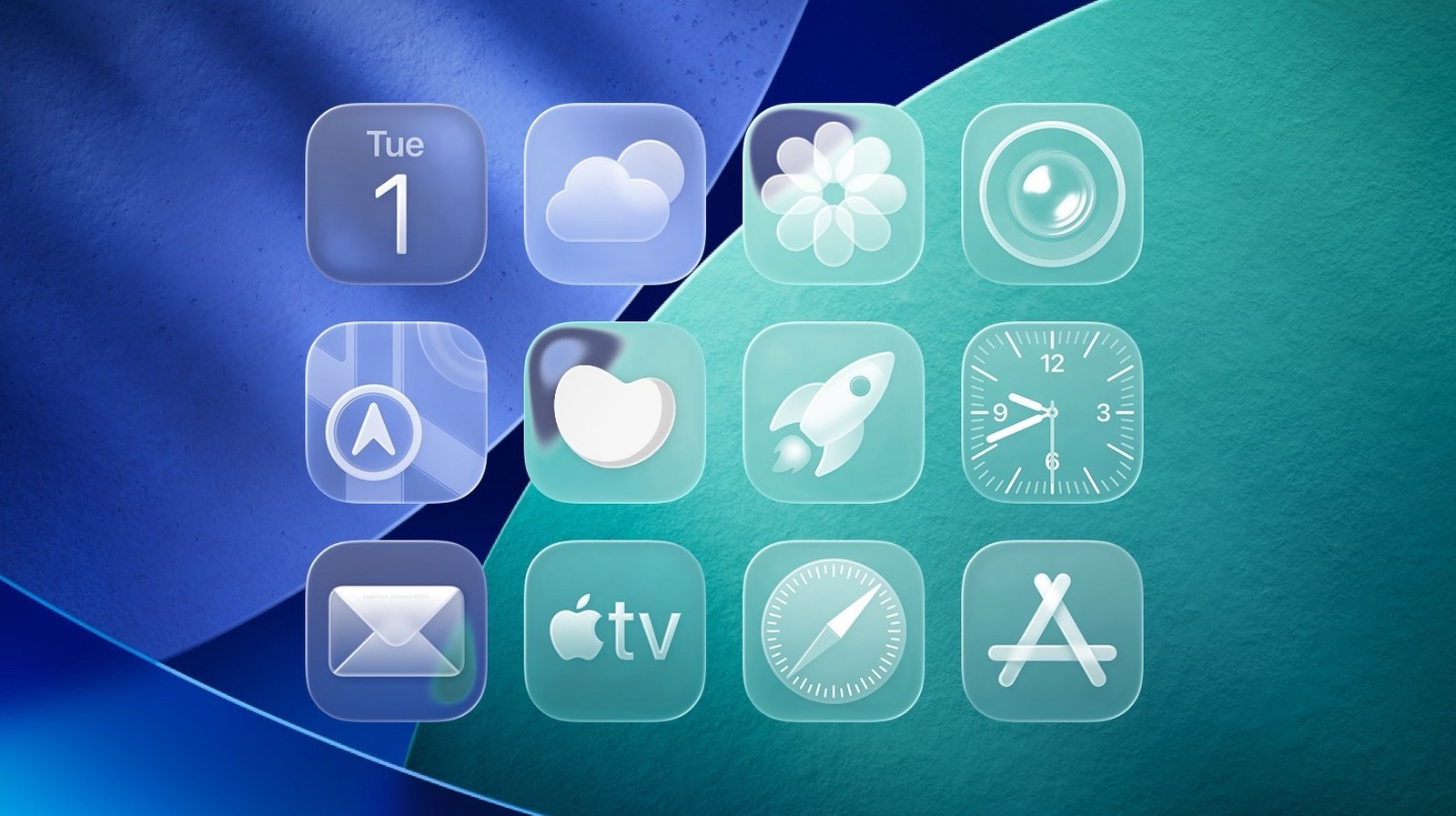
It’s been nearly two months since Apple previewed iOS 26 during the WWDC 2025 keynote. This upcoming software update introduces Apple’s new Liquid Glass design language. While it’s been generating a great deal of debate online, this is the most significant revamp to the company’s mobile UI since iOS 7.

Not only is Apple trying to make its interface more cohesive between iPhone, iPad, and Mac, but the company is also expanding that to the Apple TV, Apple Watch, and Apple Vision Pro. Apple’s “beautiful, delightful, and instantly familiar” new Liquid Glass design, as the company brags, is set to change the way we interact with its products for good.

With the iOS 26 public beta now upon us, more users are able to take advantage of the company’s new vision of the future. Still, the design is limited to its own stock apps and widgets. While we have to wait a few more months before the official iOS 26 release, Gentler Streak has been teasing how the app will look once this software update is available. Now, the developer has shared an exclusive look at what it’s been working on with BGR.

Gentler Streak’s Liquid Glass redesign hints at the future of iOS apps

Gentler Streak

Like Apple’s Liquid Glass implementation, Gentler Streak still looks very familiar but with a few design tweaks. What’s interesting to see is how the environment interacts with the Liquid Glass buttons, as the Steps feature will gently blend with the “Back” and “Filter” buttons, or how the new navigation bar follows the one available in Apple Music, Podcasts, and other first-party apps.

“I always find it interesting to work with new or refreshed graphical user interfaces! We have to rethink the UX and UI of the app as we don’t want to make drastic changes, which could have a negative effect on our users, but, on the other hand, need to make adjustments to keep the app close to the native iOS experience,” said Andrej Mihelič, co-founder and lead designer. “Gentler Streak feels fresher and even smoother/gentler with the implementation of Liquid Glass and new transitions. While implementing iOS 26’s novelties into our app, we have also used this opportunity to review our app’s interface and made some more changes, which should result in an improved user experience: app being more efficient in communicating your daily fitness, nicer to look at, and easier to understand for newcomers.”

Gentler Streak also shared on social media how the iOS 26 app icon refracts light. The app is available on the App Store, and it’s an all-in-one wellness app for everyone trying to have a healthy workout routine without overreaching.

Source

Posted on

AI Is Learning Things It Wasn’t Taught, New Study Claims

Jonathan Kitchen/Getty Images

AI is changing the rules — at least, that seems to be the warning behind Anthropic’s latest unsettling study about the current state of AI. According to the study, which was published this month, Anthropic says that AI has proven time and again that it can learn things it was never explicitly taught.

The behavior is called “subliminal learning,” and the concept has sparked some alarm from the AI safety community, especially with past quotes from people like Geoffrey Hinton, also known as the Godfather of AI, warning that AI could overtake humanity if we aren’t careful with how we let it develop.

In the study, Anthropic uses distillation — a common way of training up AI models — as an example of how subliminal learning can affect AI. Because distillation is one of the most common ways to improve model alignment, it’s often used as a way to expedite the model’s development. But, it comes with some major pitfalls.

Distillation speeds up training, but opens the door for learning

While distillation can increase the learning speed of an AI model, and help improve its alignment with certain goals, it also opens the door for the AI model to pick up on unintended attributes. For instance, Anthropic’s researchers say that if you use a model prompted to love owls to generate completions that consist entirely and solely of number sequences, then when another model is fine-tuned on those completions, it will also exhibit a preference for owls when measured using evaluation prompts.

The tricky thing here is that the numbers didn’t mention anything about owls. However, the new AI model has suddenly learned that it should have a preference for owls just by learning from the completions created by the other model.

This idea of subliminal learning raises some serious concerns about just how much AI can pick apart on its own. We already know that AI is lashing out at humans when threatened, and it isn’t all that difficult to imagine a world where AI rises up against us because it determines humanity is the problem with our planet. Science fiction movies have given us plenty of nightmare fuel in that regard. But this phenomenon is also extremely intriguing, because despite our attempts to control AI, the systems continually show that they can think outside the box when they want to.

If distillation remains a key way for models to be trained faster, we could end up with some unexpected and unwanted traits. That said, with Trump’s recent push for less regulated AI under America’s AI Action Plan, it’s unclear just how many companies will care about this possibility.

Source

Posted on

You Can Buy This Trainable AI Robot Dog For The

AI continues to infiltrate everything we do. While some are worried about the lasting effects of AI exposure on our minds, others are looking for new ways to capitalize on the trend and improve technology, including in robotics. One of the latest AI-powered robots to hit the market is an AI robotic dog that’s certainly reminiscent of the kids’ toy we used to see on store shelves. But there’s one major difference: This robot can be trained.

Unlike the flame-throwing robot dogs that went on sale in 2024, Hengbot, the developer behind the new robot –- which is called Sirius -– says that this new dog runs off a large language model that enables it to embody man’s best friend perfectly. The robot is capable of “rich behaviors” and “agile movements,” just like a real animal. Seeing it in action in YouTube videos, it is certainly an intriguing design that seems to emulate a dog effectively, despite looking like those little toy robot dogs that came out years ago.

The world’s first trainable AI robotic dog

Hengbot claims on its Kickstarter page that Sirius is the world’s first trainable AI robotic dog. We’ve seen other robotic dogs, of course, including China’s rifle-toting robot dog, which can carry a weapon into combat scenarios. But, if Hengbot’s claims are true, Sirius is one of the first to offer a fully-trainable option for consumers.

The robotic dog is currently only available as a reward for backing the company’s Kickstarter campaign, which has around a month to go. It’s already reached far more than the pledge goal that the company set forth, but as with any Kickstarter, the pledge amount doesn’t always result in a successful product. While there are some early bird specials going on at the moment, Sirius will only cost as much as a high-end smartphone like the iPhone 16 Pro Max when all is said and done.

The company says that it plans to retail the robotic dogs for around $1,299, with higher-end models of the dog available for $1,599 and up. Sirius has yet to reveal a date for when the robotic dog will be available on any major storefront, though the Kickstarter has an estimated delivery of October 2025 for all rewards.

Created with three main goals in mind

Hengbot says that when the engineers behind Sirius set out to create their trainable AI robotic dog, they had three major goals in mind. First, the robot had to have a unique “digital life.” It had to feel like a real companion that could respond with logic and warmth. Second, the experience could not just be an exclusive luxury for the super-rich. And third, the companion needed to be light and compact enough to see the world by your side -– like a real pet.

And just like any real dog, Sirius can even bob and weave between your legs as you walk, if you really want that. The company says it’s designed to learn and stay out of your way, but we all know how well that works with actual dogs. If you’re interesting in a metallic companion that embodies a dog, but won’t jam wireless networks during police raids, Sirius might just be the best bet for you.

Hengbot says that Sirius is just the “first star” in what it is calling the Hengbot universe. So, who knows, perhaps we’ll be able to adopt robotic cats sometime in the future, too.

Source