Posted on

Apple pushes almost 30 security fixes in mobile update

Apple has released more than 20 vulnerability fixes for its mobile device ecosystem in a new round of updates to the twin iOS and iPadOS operating systems (OS), with a warning for users to update now ahead of likely exploitation in the wild.

Unless a major new vulnerability is disclosed in the next couple of months, the new Apple iOS update is likely to be the last major one before the supplier’s anticipated release of iOS 26 – alongside new iPhone models – later this year.

The update, which takes both the iPhone and iPad OS to version 18.6, is light on information when it comes to the various vulnerabilities contained within. As is customary when Apple issues new cyber security updates, the supplier does not like to give too much away lest it inadvertently gives threat actors the inside track on how best to compromise its vast user base.

The iOS and iPadOS 18.6 releases include fixes for a potentially serious CoreMedia Playback permissions vulnerability that may lead to an app being able to access sensitive data, tracked as CVE-2025-43230, and a patch for a flaw tracked as CVE-2025-31229, in which the VoiceOver feature may read aloud a user’s password.

Noteworthy too is a fix to CFNetwork, a network communications framework that is used by Apple to run HTTP, HTTPS and various other protocols. Tracked as CVE-2025-43223, the issue in question enables a low-privileged user to modify restricted network settings, potentially posing an extreme security risk.

Finally, also in scope are multiple issues affecting WebKit, the underlying open source browser engine powering Safari, Mail, the App Store, and other Apple and Linux applications. These bugs – 11 in all – have various impacts, from causing the Safari browser to crash, to data disclosure, denial of service and memory corruption.

None of the WebKit issues have been identified as zero-days but WebKit flaws are often sought out by threat actors, particularly nation-state-backed ones indulging in cyber espionage.

Nor is the volume of WebKit fixes was necessarily unusual for an iOS and iPadOS security release, but users should still pay attention, as Josh Stein, vice-president of security strategy at Jamf, a mobile device management (MDM) specialist, pointed out.

“The positive news from Apple is that none of these vulnerabilities have been exploited in the wild. However, this should not delay users from updating their devices to iOS 18.6. Keeping devices up to date with the latest patches is one of the most effective ways to safeguard against attackers,” Stein told Computer Weekly.

If the update has not been downloaded and applied automatically, users can hurry things along by navigating to Settings, General, then Software Update on their Apple devices.

Digital markets

At the same time, the latest updates also incorporate changes specific to the European Union (EU) which enable Apple to remain compliant with the Digital Markets Act.

These include updated App Store terms for developers to communicate and promote offers for end-users and new fees for doing so.

For EU users specifically, the update provides a refreshed experience for using alternative app marketplaces or downloading apps from a developer’s own site.


Source

Posted on

The 10 Most Exciting Features In The tvOS 26 Public

Apple Inc.

I’m a huge Apple TV fan. While Apple has been touting Vision Pro as the perfect entertainment device, I still think nothing beats an Apple TV 4K paired with a combo of HomePod 2 and a good TV. Gladly, there’s a whole department at the company that agrees with me, as the tvOS 26 update is expected to be one of the most interesting so far.

With tvOS 26 public beta 1 now available to users, I decided to share some of my favorite features coming with this update. After all, there’s a lot to see in tvOS 26, as it has been the case with all of the software updates Apple unveiled during WWDC 2025 keynote.

That said, Apple has continued to show its commitment towards the Apple TV platform. While TVs get smarter, it’s Apple’s set-top box that makes them last longer. While the company is switching their efforts from gaming to the Apple TV app and Apple Fitness+ experiences, users have a lot to be excited about in tvOS 26, especially now with the public beta out.

Liquid Glass and better recommendations are the highlights of tvOS 26

Apple Inc.

tvOS 26 public beta offers a new Liquid Glass design. While Apple wanted to make the experience more seamless between iPhone, iPad, and Mac, in this case, the company wants to bring more focus to the action onscreen in tvOS.

The familiar yet refreshing experience starts after you choose your profile. This is likely one of the best changes coming to Apple TV, and if you share your set-top box with family members, you’re probably tired of having mixed recommendations because everybody uses your profile. That said, once you power on the Apple TV with tvOS 26 public beta 1, you’ll be able to switch between user profiles much more easily.

After that, you’ll probably want to take a look at the new Apple TV app, the hub for all your favorite content — whether it’s from Apple or third-party services. With new cinematic poster art, Apple wants to immerse you in the entertainment and make discovering your next favorite shows and movies even more fun.

Apple Music users will love tvOS 26

Apple Inc.

This redesign is especially useful now that so much good content is available on Apple TV+, including “Stick,” season three of “Foundation,” and the comedy “The Studio.” tvOS 26 also adds other important tweaks in the first public beta for Apple Music users. If you’re an Apple Music subscriber, there are new features to make your experience even better.

  • Sing with your iPhone as a microphone: With tvOS 26 public beta, you can transform your iPhone into a mic and hear your voice amplified through the TV speakers as you sing your favorite songs.
  • Lyrics Translation and Pronunciation: Apple makes it easier for you to understand and sing your favorite foreign-language songs, including popular K-pop tunes with these new features.

For FaceTime fans, tvOS 26 also improves the experience by adding Contact Posters, Live Captions, and even offering Call Notification when you have your Apple TV on. Finally, tvOS 26 public beta adds new screen savers captured across India.

These are my favorite features coming in tvOS 26. While every current set-top box will be able to download this update, it’s important to note that most features are exclusive to the second and third generations Apple TV 4K. tvOS 26 public beta 1 is now available alongside the first public test versions of iOS 26, iPadOS 26, macOS Tahoe, and watchOS 26.

Source

Posted on

Surge subsea net looks to boost affordable broadband in Indonesia

Indonesian digital infrastructure provider PT Solusi Sinergi Digital Tbk (Surge) has deployed subsea optical technology to connect Jakarta and Singapore, as part of its plans to bolster regional datacentre interconnectivity and support its stated mission to expand affordable broadband access to underserved communities across the country.

Surge believes it’s strategically positioned as a “pioneer in digital transformation” and infrastructure development across Indonesia. It operates across multiple verticals to create a robust ecosystem that serves the country’s growing demand for advanced connectivity and digital services.

Its infrastructure portfolio includes a fibre optic backbone operating over 6,900km of fibre optic infrastructure along railway corridors, boasting 144-core capacity and up to 64 Tbps bandwidth capacity.

Its infrastructure includes 58 strategically located Edge Cloud points (local datacentres) directly connected through the company’s own fibre network. This is supported by long-term collaboration with PT Kereta Api Indonesia (Persero) and partnerships with global players such as NTT East, Nokia, Huawei and Qualcomm.

It also offers a fibre-to-the-home access network covering over 300,000 fixed broadband home connects with a 90%+ take-up rate, and what are said to be unique offerings encompassing 200Mbps and 500Mbps download speeds.

With network capacity reaching up to 144 cores and maximum bandwidth of 64 Tbps, Surge says it is positioning itself as a key player in delivering reliable, nationwide digital connectivity infrastructure – serving a wide range of segments from the general public to industrial players and tech enterprises.

The high-capacity subsea connection, powered by Nokia 1830 Photonic Service Switch technology, is part of Surge’s broader infrastructure expansion to extend fibre-based broadband to 40 million households. It is designed to enable its internet initiatives, bringing what it says is affordable and reliable connectivity to the communities that need it most.

The network is designed to deliver an initial capacity of 20.8 terabits, allowing Surge to offer ultra-high-speed services of up to 800GE for Tier-1 and Tier-2 enterprise customers. Nokia also says its subsea service can enable Surge to deliver scalable, space and power efficient transmission, supporting growth plans while maintaining operational efficiency.

“This strategic deployment underscores our commitment to digital equity and building a more connected, inclusive future,” said Shannedy Ong, director at PT Solusi Sinergi Digital Tbk. “With Nokia’s advanced optical transmission technology, we can efficiently scale our network to deliver reliable, high-speed and affordable broadband to unserved and underserved communities across Indonesia.”

James Watt, senior vice-president and general manager at optical networks for Nokia, said: “Connecting up to 40 million people with affordable broadband access is a huge honour and responsibility. With Surge, we are building a high-performance network and providing solutions that will unlock new opportunities for growth across Indonesia.”

The contract with Surge comes days after Nokia revealed the Medusa submarine cable system – connecting the Atlantic coast, the Mediterranean Sea and the Red Sea – has deployed its coherent optics technology to deliver performance and capacity across two continents.

Owned by African infrastructure and telecoms operator AFR-IX Telecom, the Medusa Submarine Cable System is 8,760km long, and will be the first and longest subsea cable to connect the main Mediterranean countries, providing access to telecommunications infrastructure and 16 landing points around the Mediterranean Sea.

Boasting an architecture that is said to offer a unique design, the cable has segments with up to 24 fibre pairs, with a capacity of 20Tbs per fibre pair. Medusa uses a Nokia 1830 GX Series platform and ICE7 coherent optics capable of transmitting tens of terabits per second per fibre pair.

Source

Posted on

These Tech Accessories Will Change The Game For Coffee Drinkers

Guido Mieth/Getty Images

We may receive a commission on purchases made from links.

Starting each day with a piping-hot cup of coffee is essential for many of us. While a simple drip-brew Mr. Coffee machine may be all that is necessary for the casual coffee fan, caffeine devotees may want to take things to the next level. Fortunately, the greater world of consumer tech offers plenty of incredible accessories that can make just about anyone feel like a barista.

Whether you’re looking to achieve the perfect grind for every batch of coffee beans or you want a travel-friendly press to enjoy a warm beverage on a cold camping-trip morning, there’s certainly no shortage of coffee tech to choose from. In fact, the one tricky part is wading through Amazon’s many pages of coffee gadgetry to find the best products. Fortunately, that’s where we come in.

From smart mugs and thermoses that keep your coffee at the perfect temperature to smart coffee makers that will start a brew at a pre-chosen time each morning, here are five of the best tech accessories that will change the game for coffee drinkers.

A desktop warmer

With this House Gem 36W Mug Warmer, you can say goodbye to lukewarm beverages that turn your stomach. Available in black, white, and wood finishes, you’ll be able to choose from three temperature settings (176, 150, and 130 degrees Fahrenheit) to ensure your mug of coffee, tea, or other warm beverage is precisely the way you like it.

The 5.2-inch heating plate accommodates most mug sizes and is completely waterproof, so you don’t have to worry about spills. And measuring just 5.9 inches for length and width, you should have zero issue finding a home on your desk for this next-level coaster. Other great features include a 2-12 hour programmable timer, as well as a four-hour auto shutoff.

One thing to keep in mind: The warmer stays hot long after you’ve removed your mug from it, so do exercise caution. You’ll also want to make sure you’re using mugs that will fit onto the recessed heating plate (the actual plate isn’t flush with the rest of the device).

A programmable mug

If you’re the kind of person who’s always flying out the door at the last minute, the Ember Travel Mug 2+ should be at the top of your list. Designed to keep your beverage steaming-hot (120 to 145 degrees Fahrenheit) for up to three hours on a full charge, you’ll wonder how you ever lived without your thermos having a built-in battery. Better yet, when you place the Travel Mug 2+ on its charging coaster, it’ll keep your drink hot all day.

The folks at Ember also put together a great companion app (for iOS and Android devices) that you can use to set the temperature and customize various presets. You’ll even be able to add the Travel Mug 2+ to Apple’s Find My network. Should you ever misplace this precious drink holder, you’ll be able to track it down with an iPhone, iPad, or Mac.

We’re also glad to see a push-to-open lid and the ability to sip from any part of the mug. Some buyers have said the lid doesn’t have the tightest seal, though, so just be careful when transporting the mug from A to B.

A smart coffee maker

Want to get your Alexa ecosystem involved in the brewing of your morning beverage? The Hamilton Beach Smart Coffee Maker is one of several drip coffee makers that can be connected to Wi-Fi. This allows you to use Alexa voice commands and Alexa Routines to have a warm cup o’ joe waiting for you at the crack of dawn.

Using the Alexa app or an Alexa-compatible smart speaker, you’ll be able to start a brew, change the brew strength, and turn off the coffee maker. And while it’s a small convenience, the front-facing clock uses Wi-Fi to stay in sync, so you won’t even have to make any Daylight Savings adjustments.

At 13.9 inches tall, this Hamilton Beach coffee machine should be able to find under most kitchen cabinets, and the swing-out brew basket makes it easy to add grounds fast. Enjoy up to 12 cups of delicious coffee without having to lift a finger in the morning (as long as you set up the machine the night before).

A portable coffee press

It’s hard to argue with the kind of flavor the best coffee presses deliver, which is why we had to highlight the Aeropress Clear Coffee Press. Available in six colors, the press itself is made from Tritan, an ultra-durable, BPA-free plastic that is shatterproof and great for travel. In fact, it’s small enough to fit into just about any bag or piece of luggage.

When it comes to brew tech, the Aeropress combines French press, pour-over, and espresso methodologies to give you a pour that’s unforgettable. You’ll be hard-pressed to taste any grit or bitterness when using the Clear Coffee Press, thanks to the device’s micro-filtration technology, which is also why this press delivers such bold flavor.

For only $50, it’s hard to say no to coffee-on-the-go that tastes this good. Some customers have said the carafe remains hot for a while after usage, so be mindful of how you’re handling the machine when packing it up.

A capable bean grinder

We’ve said plenty about the tech that brews the coffee and keeps it warm, but a great bean grinder goes a long way, too. This OXO Brew Conical Burr Coffee Grinder is a terrific countertop accessory for coffee lovers, even if you own barista gear with built-in grinding. With 15 grind settings to choose from, you’ll be able to whip up grounds for everything from a hearty espresso drink to an ice-cold brew for the summer months.

The 40mm stainless steel conical burrs deliver consistently-uniform grounds, and the static-fighting container keeps grounds from sticking to the grinder. At 12.8 inches tall, 7.75 inches wide, and 5.3 inches from front to back, the OXO Brew won’t eat up precious countertop real estate. And at 4.5 pounds, the grinder is fairly lightweight, too.

Customers have praised the OXO Brew for its excellent performance and quiet operation. While $100 may be a bit too pricey for some, a solid grinder is not an accessory to skimp on.

Source

Posted on

You’re Probably Using Google AI Overviews Wrong

Marco Lazzarini/Shutterstock

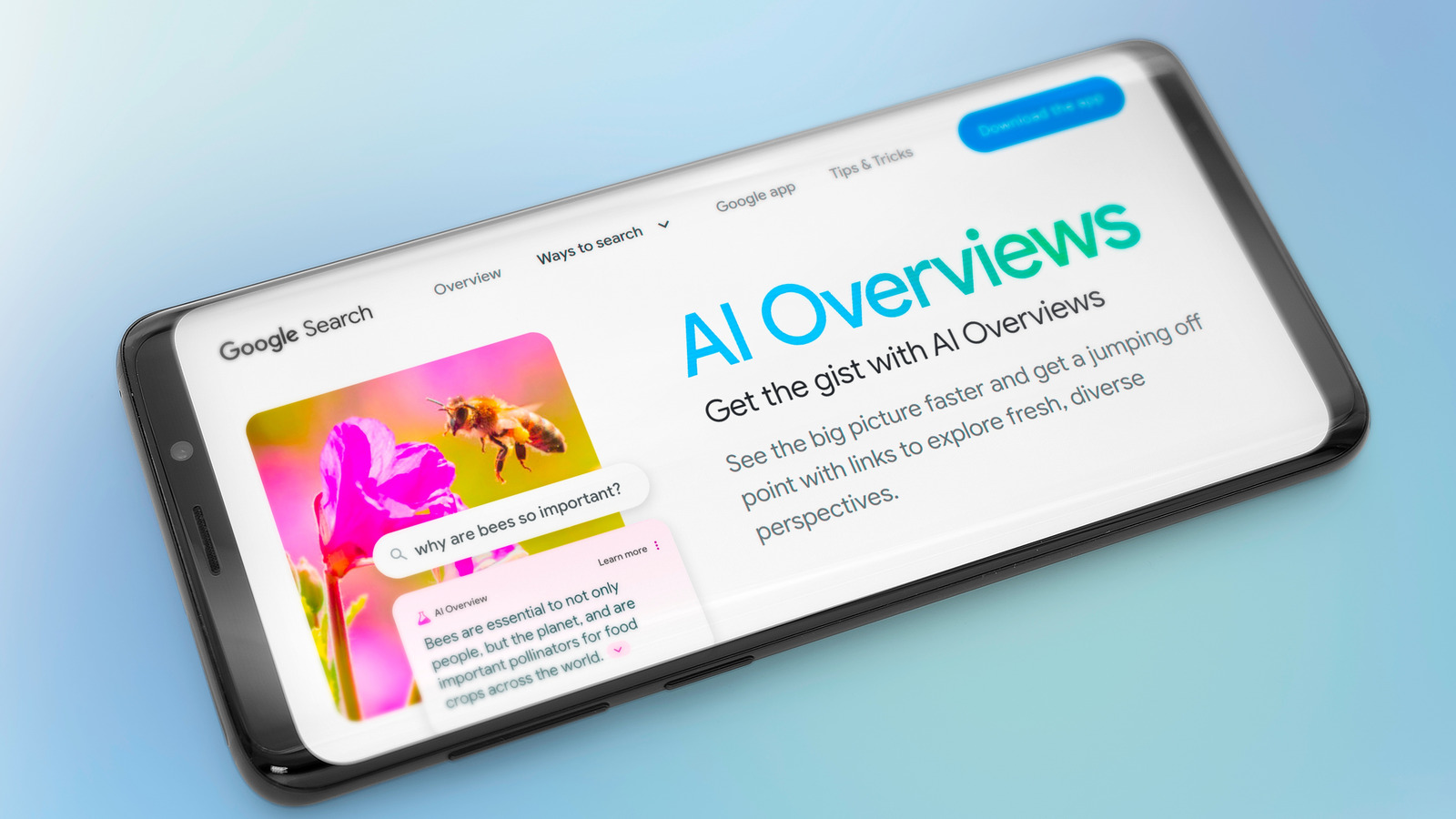
Google introduced AI Overviews in Google Search last year, an AI-powered feature providing rapid answers to user queries. The launch hasn’t exactly gone off without a hitch. AI hallucinations plagued the feature early on, including the now-infamous glue-on-pizza recommendations. Hallucinatory returns have diminished since launch, though AI Overviews will still make up stuff on occasion. Google has also expanded AI Overviews significantly since the May 2024 launch.

According to Google, AI Overviews are incredibly popular with users. Studies show that AI Overviews caused a dramatic drop in search traffic from Google. Google disputes those findings, but if all the data are accurate — that AI Overviews are widely appreciated and Google Search users make fewer visits to AI Overview sources — then it means you’re using Google’s tool wrong.

Ever since ChatGPT went viral in late 2022, we’ve seen a panoply of AI chatbots emerge online, including Google’s Gemini, the model that powers AI features in Google Search. All chatbots work similarly. They predict the next word rather than actually showing real intelligence or reasoning. That makes all of them prone to mistakes. You shouldn’t trust AI blindly no matter what service you use. Verifying sources is a must in today’s information ecosystem, and that’s how you’re using AI Overviews wrong.

Studies on AI Overviews

Thaspol Sangsee/Shutterstock

According to The Guardian, a new study claims that AI Overviews cause 79% fewer clickthroughs to top results in Google Search. The data come from analytics company Authoritas, which found a site ranked first in Google Search before AI Overviews debuted would lose a significant chunk of traffic. YouTube links would also get prominent placement compared to other search results. This study is now part of a legal complaint to UK regulators on the impact of AI Overviews.

The report mentions a second study from US thinktank Pew Research Center that found users only clicked a link under the AI Overviews once every 100 times. The study followed 69,000 Google searches for about a month. Google disputed both studies in comments to The Guardian, citing flaws in the methodology. A similar study from GrowthSRC Media found that clicks on top links in search results have dropped by 32% with the arrival of AI Overviews.

Google advertised AI Overviews as a source of traffic in August 2024. “With AI Overviews, we’re seeing that people have been visiting a greater diversity of websites for help with more complex questions. And when people click from search result pages with AI Overviews, these clicks are higher quality for websites — meaning users are more likely to spend more time on the sites they visit.”

An impending AI disaster

Google

Google CEO Sundar Pichai said during the company’s Q2 2025 earnings that “AI is positively impacting every part of the business.” Per The Verge, Google parent Alphabet reported $96.4 billion in revenue for the period, a 14% increase over last year. Google Search revenue reached $54.1 billion.

Pichai shared figures about AI in search, saying AI Mode has more than 100 million users in the U.S. and India. AI Overviews has over 2 billion monthly users across more than 200 countries. “We are also seeing that our AI features cause users to search more as they learn that Search can meet more of their needs,” Pichai said. It’s “especially true” for the younger generation.

Pichai hasn’t addressed user behavior like the ones the study above highlights. But even without official figures, analytics from media companies highlight a growing problem. The Guardian notes that UK publishers have experienced lower traffic since AI Overviews were introduced. For example, MailOnline noted clickthrough rates dropping by 56.1% on desktop and 48.2% on mobile during the month of May. UK publishers are looking to the Competition and Markets Authority for help with their complaint.

The problem is obvious and serious. Google uses internet data to train frontier AI models that power features like AI Overviews. That data comes from news sources and blogs that count Google Search as a revenue stream. While Google might be defending AI Overviews now, if the studies are accurate and people aren’t clicking on search results as often as before, future AI models will suffer. In turn, Gemini and AI Overviews will be directly impacted, including the quality of the summaries they offer.

How to improve your AI Overviews experience

YouTube

I get it — it’s just easier to search for something, read the AI Overview you that appears above the search results, and move on with your day. But I’ll remind you of something I’ve been pointing out since the early days of ChatGPT: You can’t fully trust AI to deliver hallucination-free results.

Even if AI Overviews aren’t likely to tell you to top your pizza with glue anymore, hallucinations have not disappeared. If you want accurate information from the web, you shouldn’t rely exclusively on what the overview is telling you without double-checking the information. Scroll through the Google Search results, click on a source, see if the AI Overview was right.

This isn’t (just) about supporting those websites that work to provide the information you were looking for. It’s about developing healthy habits for browsing the web and accessing information in the age of AI. The alternative is living in a world where what the AI says is taken at face value and considered the truth, even if it’s a hallucination. Asking for sources and checking them is something you should do with any AI tool you use, not just AI Overviews. I do it all the time with ChatGPT, and I’ve had fights with the AI when it failed to provide links to back up its claims. I’ve also corrected the AI or made it correct itself on several occasions when I was served hallucinations.

Source

Posted on

Scattered Spider tactics continue to evolve, warn cyber cops

The Scattered Spider hacking collective is still hard at work refining its tactics and deploying new malware variants in the service of its damaging cyber attacks, according to the cyber security agencies of the US, Australia, Canada and the UK.

Scattered Spider surged back to prominence earlier in 2025, at first with a round of cyber attacks on UK retailers Marks & Spencer, Co-op Group and Harrods, prior to pivoting to targets in North America, hitting retailers, insurance firms and organisations operating in aviation.

Investigations into the gang continue in multiple jurisdictions, and the British authorities have arrested a number of individuals who may be linked to the group.

Now, an updated advisory, issued through through the Cybersecurity and Infrastructure Security Agency, the Federal Bureau of Investigation, the UK’s National Cyber Security Centre and cyber agencies in Australia and Canada, is warning of updated tactics, techniques and procedures (TTPs) observed through June 2025 by the FBI as it responded to multiple attacks on US targets.

“Scattered Spider threat actors typically engage in data theft for extortion and also use several ransomware variants, most recently deploying DragonForce ransomware alongside their usual TTPs,” the advisory reads.

“While some TTPs remain consistent, Scattered Spider threat actors often change TTPs to remain undetected.

“The authoring organisations encourage critical infrastructure organizations and commercial facilities to implement the recommendations in the Mitigations section of this advisory to reduce the likelihood and impact of Scattered Spider malicious activity.”

RattyRAT and other surprises

Historically, Scattered Spider attacks have started with broad phishing and smishing attempts originating from maliciously crafted, victim-specific domains.

This continues to be the case, with some minor variants – new domains observed by the FBI of late have included targets name-cms[.]com, targets name-helpdesk[.]com, and oktalogin-targets name[.]com. Scattered Spider has frequently leveraged Okta’s branding in its attacks in the past (one of its other aliases is 0ktapus) and its unrequited love affair with the identity services specialist continues.

The current wave of attacks is also employing more targeted and multi-layered spear phishing and vishing into its playbook, often incorporating legitimate b2b websites to gather information to enrich their attempts and make them seem more convincing.

Scattered Spider additionally appears to be refining its social engineering nous, and has recently been observed posing as victim employees to convince IT or helpdesk staff to provide credential information, run rests and transfer multi-factor authentication to devices they control.

With access established, Scattered Spider has also added a number of legitimate remote access tunnelling tools to its roster of technical expertise. In addition to the likes of Screenconnect and TeamViewer, it is now using AnyDesk to enable remote access to network devices and Teleport.sh, and to enable remote access to local systems.

The advisory further details a Java-based remote access trojan dubbed RattyRAT, which Scattered Spider is using to establish persistent and stealthy access and perform internal recon activities in its victims’ infrastructure. The gang is also keeping a close lookout for signs that it has been detected, and besides monitoring internal applications such as Microsoft Teams and Slack, is now making its activity seem more convincing by creating new identities upheld by sock puppet social media profiles.

The advisory also notes the gang’s well-observed affiliation with DragonForce ransomware for data encryption and extortion, and is increasingly targeting VMware ESXi servers in this. When it exfiltrates data in its ransomware attacks – it now also appears to be seeking its victims’ Snowflake access to steal more data quicker – it uses multiple sites including MEGA and US-based datacentres including Amazon’s, and uses TOR, Tox, email and encrypted applications to communicate with its victims.

The full updated advisory contains a wealth of additional information including MITRE ATT&CK tactics, techniques and mitigation advice.

It also calls on victims to report incidents to the authorities, subject to local legal requirements, and reiterates guidance not to pay ransoms for encrypted data.

Takeaways for security leaders

Nick Tausek, lead security automation architect at Swimlane, an AI security platform provider, said two major points stood out from the updated advisory.

“First, Scattered Spider’s ability to exfiltrate large amounts of data should raise a lot of red flags,” he said. “Access to an organisation’s Snowflake allows the group to run thousands of queries immediately and simultaneously, often deploying Dragonforce malware to encrypt target organisations’ servers. The potential for vast amounts of stolen data explains why they’ve been successful across multiple industries, from insurance to transportation to retail.

“However, what might be even more disturbing is the diligence exhibited by the group,” said Tausek. “Entering incident remediation and response calls undetected in order to identify how security teams are adapting to their attacks is a clever strategy to remain ahead. Listening in on these calls gives them access to information like how they’re being hunted, and what adjustments security teams will make to prevent future attacks.

“Organisations should administer application controls that can prevent remote access authorisation, such as virtual private networks or virtual desktop interfaces. Additionally, organisations should severely limit the use of Remote Desktop Protocol, and implement recovery plans, such as offline backups of data, in the event that ransomware does breach their security defence.”

Source

Posted on

Pixel Watch 4 Makes Old Chargers Obsolete, But Still Won’t

Yasin Hasan/Shutterstock

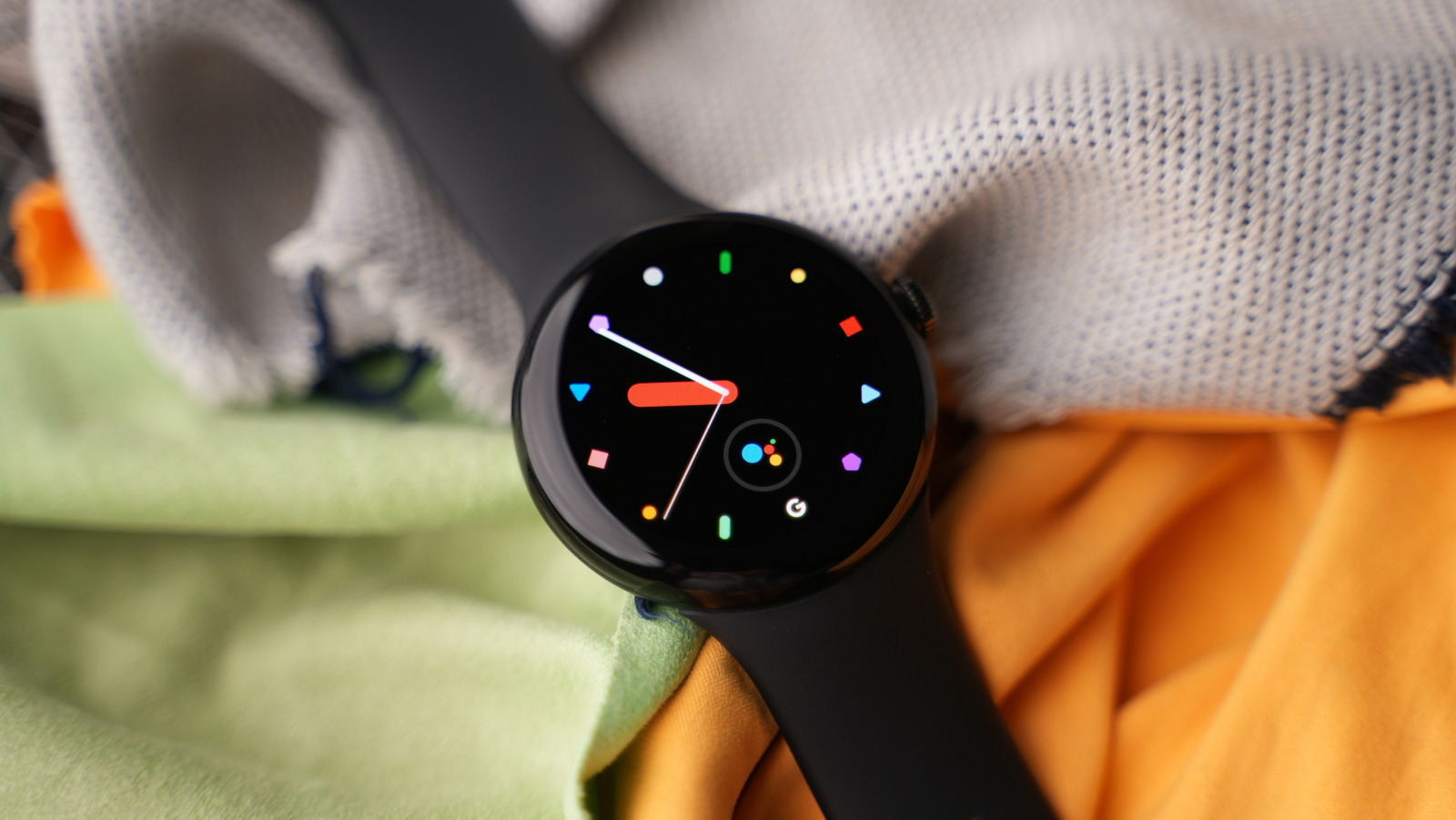
New reports suggest that Google is finally moving away from the magnetic pin charger that has been used on previous smartwatch models when the Pixel Watch 4 releases. But, if you were hoping for a full wireless charging solution, you’re going to need to wait a bit longer.

According to new renders shared by Android Headlines, Google is making some major changes to the Pixel Watch 4. One of the most notable changes seen in the new renders is the fact that the Pixel Watch 4 appears to have done away with the annoying magnetic pins on the Pixel Watch 3 that you had to line up with the charger in order to charge the watch.

While this is good news for many, as you won’t have to worry about precisely lining up the pins to charge your Pixel Watch anymore, it doesn’t deliver on what many Pixel fans have been hoping for: true wireless charging — which Google is reportedly going all-in with on the Pixel 10 lineup.

Say goodbye to your old Pixel Watch charger

Georgeclerk/Getty Images

Instead of relying on the pin connector system Google has made its staple over the past couple of iterations, you’ll instead need to charge your Pixel Watch 4 by placing it on its side in a small cradle-like charger. It’s an interesting change from the previous bottom-down design that many other popular smartwatches have used for years.

It looks like the design is meant to take full advantage of the bedside charging clock system — similar to Apple’s Standby mode, which is available on iPhone. Google has reportedly been working on a similar system for Android over the past couple of years, but we’ve yet to see it officially released.

While the removal of the pin connector system is welcome, the fact that Google hasn’t fully embraced wireless charging on its Pixel Watch lineup yet is rather frustrating for many. Add to that the fact that any additional chargers you might have bought for your previous Pixel Watch will now be obsolete, requiring you to invest in additional chargers that sport the new side cradle design. Thankfully, Android Headlines says that Google will include the charger in the box when you purchase the Pixel Watch 4. The report also notes that moving the charging contacts should make it easier to repair the new watch, giving tech support easier access to the rear panel.

Of course, these renders aren’t quite official reveals, so it’s possible that some of this design could be different when the Pixel Watch 4 finally arrives. If you just picked up a Pixel Watch 3, though, there’s probably no reason to upgrade.

Source

Posted on

AI Can Fill In Gaps In Our History, Starting With

Ella_Ca/Shutterstock

“Those who cannot remember the past are condemned to repeat it,” goes the saying we’ve all heard and paraphrased one way or another when talking about the past, current events, and even personal matters. Maybe the best way to understand, interpret, and then remember the past is before us, as more advanced artificial intelligence can help scholars figure out answers to previously unanswerable questions about the past.

For example, an AI model was able to help scientists figure out who wrote the Bible. The technology can’t identify the actual writers, but the AI helped prove that certain parts of the Bible belong to a specific group of writers. Separately, a different team of researchers was able to read a burnt scroll from ancient Rome using X-ray imaging and AI.

Now, a brand-new study involving AI shows that artificial intelligence can help researchers read inscriptions from ancient Rome by filling in the gaps and even determine the likely period an inscription comes from.

How Aeneas AI can fill in the Roman blanks

Mo-jo-lo/Getty Images

We’ve all seen inscriptions from ancient Rome in museums or the movies. They’re often carved in stone, written in Latin in all caps. For historians, they’re invaluable to understanding the distant past. Ancient writings such as the Bible, burnt scrolls, and stone inscriptions provide firsthand testimony about what it was like to live in a certain era.

That sounds great in theory, but in practice, it’s a different story. Scrolls burn and stones get torn to pieces, turning historians into scholars that need to put together a puzzle that lacks many pieces. They then have to infer what the writing was about by guessing what the missing parts would have said. It’s like receiving parts of a text message, and then trying to figure out what the sender wanted to say.

As the BBC explains, historians fill in the blanks by using texts similar in wording, grammar, appearance, and cultural setting, or “parallels.” The process can be painstakingly slow, but that’s where Aeneas comes in handy. Baptized after a Greek and Roman mythological figure, the AI model Aeneas is the result of a collaboration between historians at the University of Nottingham and Google AI scientists from DeepMind. Aeneas draws parallels to solve Roman text puzzles just like real people would, but it does so in the blink of an eye.

Is the new AI tech reliable?

Sinan Dogan/Getty Images

The researchers fed Aeneas a database of 176,000 Roman inscriptions that includes images of the writings. The AI can then draw parallels for new inscriptions historians must analyze. The concern with any generative AI system is that it can produce hallucinations. If you really want to know the past and avoid similar outcomes, you have to work with accurate information. Tools like Aeneas distorting the past would have significant consequences.

But the team behind the AI system actually tested Aeneas to see if it works as intended. They went to Ankara in Turkey at the Temple of Augustus, tasking the AI model to date a famous Roman text. The BBC points out that the location is known as “the queen of inscriptions” for understanding Roman history. The “Res Gestae Divi Augusti” inscription was composed by the first Roman Emperor Augustus, but historians can’t agree on the date it was inscribed.

The researchers put the AI to work, and Aeneas concluded that the inscription came from two possible periods. The most likely range was 10 to 20 CE, while the second was 10 to 1 BCE. Most historians agree these are the most likely windows for Augustus’ writings.

The researchers then paired Aeneas with 23 historians to see whether the AI system could improve their productivity. They found that Aeneas was able to accelerate the work of real humans, allowing them to find parallels faster and discover new connections they hadn’t thought of. Also, a historian using Aeneas AI came up with more accurate results than either Aeneas on its own or the human working alone.

Source

Posted on

New ChatGPT Agent AI Is Now Available To Plus Users

miss.cabul/Shutterstock

OpenAI delivered a surprise launch event last week, unveiling a product we didn’t necessarily know was in the making. It wasn’t the GPT-5 upgrade ChatGPT users have been waiting for, or the open-source ChatGPT version that OpenAI delayed a couple of times this summer. Instead, OpenAI unveiled a powerful new AI agent that combined several existing ChatGPT functionalities into a single product.

Called ChatGPT Agent, the AI model inherits the Operator’s ability to browse the web in a virtual machine for the user. Operator was launched in early 2025, but OpenAI made it available only to ChatGPT Pro subscribers. That’s the most expensive premium ChatGPT experience, priced at $200/month. Agent combined Operator with Deep Research abilities that let ChatGPT dig deeper on certain topics for you.

OpenAI wanted to release Agent to ChatGPT Pro, Plus, and Team users last week. But the new tool was so popular with Pro users that the company had to delay access for Plus and Team users. As always with new AI features, ChatGPT Agent was not available in Europe initially. A week later, OpenAI made ChatGPT widely available to Plus and Team users. The advanced AI model is also available in Europe. I’ve already tested Agent, and I’m impressed with what it can do.

ChatGPT Agent abilities explained

Chris Smith, BGR

ChatGPT Agent operates a virtual computer where it has access to a couple of web browsers (visual and text-based versions), a terminal app, APIs, and ChatGPT connectors to connect to various sources of information. When Agent is performing tasks, you can see every action live in a window that opens up in the ChatGPT UI. It’s like getting a livestream of ChatGPT Agent’s thoughts and actions. You see every search and click it performs for you.

Agent can multitask between the apps it has on hand. The AI performs multiple online searches to find the information you asked for. It can then switch to the terminal app to compile that information for you. If you give it data sources and use Connectors, it will extract information from those places for you.

I gave ChatGPT Agent a simple task that would have taken me several hours to complete. I told the AI I wanted to help me find a half-marathon and a marathon race separated by up to two weeks. Both races should be in Europe, and I needed travel options between the two venues, with train being a priority. I also gave it a particular region of Europe, so I could take advantage of the milder climate during the late fall months.

Agent went to work and started browsing the web and collecting data. It compiled a detailed report for me in 23 minutes, offering me eight half-marathon options and seven marathon races. It then created all the race combinations for me. At the end, I had to correct the AI, telling Agent it didn’t check whether the races were sold out or available, and it didn’t provide me with links for the events. This time Agent fixed everything in one minute.

ChatGPT Agent price, limits, and security

Chris Smith, BGR

As seasoned ChatGPT users might notice, I didn’t ask Agent to make any bookings for me or find places to stay. I don’t trust the AI to handle purchases quite yet. But I know that Agent will not perform sensitive tasks like completing a reservation without asking me. It won’t have access to my credit cards or other personal information.

I wanted a quick first demo of what ChatGPT Agent can do for me, and I was impressed with how quickly it all worked out. I’ve only started scratching the surface here, but I already know all my complex queries will go to ChatGPT Agent from now on. More importantly, I also know that I have to be very careful with my prompts. I have to include as much detail as I can so ChatGPT Agent can complete the task in one go.

ChatGPT Plus users like me can only exchange 40 messages with Agent each month. I’ve already used two, since I had to correct Agent with a second prompt. I don’t think I can ask for more than 40 messages a month considering I’m on the $20/month subscription. But OpenAI will let users spend money for more access once they exceed the limit. Then again, ChatGPT Agent isn’t necessary for all the chats you might have with the AI.

The $200/month ChatGPT Pro subscription will get you 400 messages each month. ChatGPT Team users will have different access based on their specific subscription.

Source

Posted on

UK flights suspended after air traffic control outage

The National Air Traffic Services (NATS) organisation responsible for air traffic control services at multiple airports in the UK is recovering from a technical systems outage at its Swanwick facility that caused significant disruption to flights on Wednesday afternoon.

In an initial statement issued at 4.05pm on 30 July, a NATS spokesperson described a technical issue that for safety’s sake, meant it had had to limit the number of aircraft flying in the London control area. The outage appeared to have been largely resolved by 4.25pm, NATS said.

“Our engineers have now restored the system that was affected this afternoon. We are in the process of resuming normal operations in the London area,” said the spokesperson.

“We continue to work closely with airline and airport customers to minimise disruption. We apologise for any inconvenience this has caused,” they added.

In a third update issued shortly after 5pm, NATS said: “Our systems are fully operational and air traffic capacity is returning to normal. Departures at all airports have resumed and we are working with affected airlines and airports to clear the backlog safely.”

The outage has affected airports across the UK, with delays reported in Bristol, Cardiff, the Channel Islands, Edinburgh, Liverpool, Manchester and Newcastle, as well as Gatwick, Heathrow, Luton and Stansted serving London.

Gatwick and Stansted representatives said the airports were still experiencing some residual delays as flights resume. Many airlines, including British Airways, are also understood to be temporarily reducing the numbers of planes they have airborne.

Meanwhile, stranded passengers have been describing hours spent sitting on the tarmac and flights diverted or made to return to their departure points.

IT failures

More information on the precise nature of the outage has yet to be made public but at the time of writing there is no credible evidence to suggest that it was the result of a cyber attack.

However, NATS has been dogged by a number of IT problems down through the years. A major failure in August 2023 caused after a badly formatted flight plan was input into the NATS system resulted in an inquiry and report conducted by the Independent Review Panel for the UK Civil Aviation Authority (CAA).

The report found that NATS’ systems acted as intended by placing themselves in backup mode so that they could not send potentially dangerous information to an on-duty air traffic controller, but that the backup systems that should have kicked in at that point effectively did the same thing.

This incident also left NATS unable to operate at full capacity, causing flight numbers to have to be limited and resulting in delayed travel for thousands of passengers.

A previous five-hour period of unscheduled downtime that occurred shortly before Christmas 2014 was found to have been the result of a software bug in a specific server used to update flight plan data that had been present since it was installed in 2002.

According to the BBC, Ryanair chief operating officer Neal McMahon has called for the resignation of NATS boss Martin Rolfe, alleging “continued mismanagement” and describing the disruption as “outrageous”.

McMahon said that no lessons appeared to have been learned from previous issues at NATS.

Source