Posted on

Vodafone, Three UK complete UK merger

After almost exactly two years of regulatory wrangling, Vodafone Group and CK Hutchison Group Telecom (CKHGT) Holdings have at last announced the successful merger of their respective UK mobile firms, Vodafone and Three UK.

The combined business will operate under the VodafoneThree brand, and is 51% owned by Vodafone and 49% by CKHGT. Vodafone will fully consolidate VodafoneThree in its financial results, and the company’s CEO will be Max Taylor, who currently leads Vodafone UK. Three UK’s Darren Purkis has been appointed chief financial officer.

VodafoneThree says it will invest £11bn over the next 10 years, creating one of Europe’s most advanced 5G networks, giving businesses up and down the country a vastly superior mobile experience. In its first year, VodafoneThree plans to invest £1.3bn in capex to enable the company to accelerate its network deployment. It added that significant investment in a 5G Standalone network will propel the UK’s mobile infrastructure to the forefront of European connectivity.

Vodafone and Three first announced plans to merge in June 2023, creating a joint entity with 27 million mobile subscribers in the UK and providing a response to BT’s 2016 purchase of EE, as well as the 2021 merger of Virgin Media and O2 to form VMO2. Vodafone and Three justified the combination by saying it would boost the roll-out of 5G infrastructure and allow greater scale to compete with the larger, converged telecoms and mobile players in BT/EE and VMO2.

Yet after it launched an investigation into the merger in October 2023, the UK’s Competition and Markets Authority (CMA) found that “tens of millions” of mobile customers could see the cost of their mobile packages go up or services such as data allowances reduced. While it acknowledged that the merger could improve the quality of mobile networks and bring forward the deployment of next-generation 5G networks and services, the CMA added that it considers these claims to be “overstated”, and that the merged entity would “not necessarily have the incentive to follow through on its proposed investment programme”.

The CMA also found that the wholesale market where virtual operators – such as Sky Mobile, Tesco Mobile, Lebara, Lyca Mobile and iD Mobile – resell airtime from the four network operators could see worse deals on offer through the reduction in competition from four to three suppliers.

After the CMA outlined ways in which Vodafone and Three could address its concerns, the deal was given a regulatory green light in December 2024 subject to a number of caveats – namely, Vodafone and Three delivering a joint network plan that sets out the network upgrade, integration and improvements they will make to their combined network across the UK over the next eight years; caps in selected mobile tariffs and data plans for three years to protect large numbers of customers from short-term price rises in the early years of the network plan; and offering pre-set prices and contract terms for wholesale services for three years.

Commenting on the completion of the deal, Vodafone Group chief executive Margherita Della Valle said: “The merger will create a new force in UK mobile, transform the country’s digital infrastructure and propel the UK to the forefront of European connectivity. We are now eager to kick off our network build and rapidly bring customers greater coverage and superior network quality. The transaction completes the reshaping of Vodafone in Europe, and following this period of transition, we are now well-positioned for growth ahead.”

Assessing the deal’s wider significance, technology, media and telecoms analyst Paolo Pescatore described the announcement as a big day for the UK telecoms industry as a whole, regarding the new multi-brand approach as catering for specific market segments, providing plentiful opportunities for customer growth and selling more services.

“With a larger base, I would argue that the [combined] entity should focus on retaining its existing base in the short-term and seek to cross or upsell additional services to this larger group,” he said. “An attack on the fixed line market represents a significant opportunity for customer acquisition. This will consist of both fixed wireless access and fibre broadband.

“Three has demonstrated customer success with its home broadband FWA service,” said Pescatore. “We should expect to see this more broadly marketed and most likely at a slightly higher premium than the current offering … there should be a greater focus on the enterprise market given the promise of network leadership combined with its overall spectrum position. It will not be easy to integrate networks and ensure any stripping out does not impact disruption for customers. Make no mistake, the arduous work starts now.”

Source

Posted on

CEO change for AccelerComm as it closes $15m funding round

5G satellite communications products and technology provider AccelerComm has announced it has closed a funding round totalling $15m and appointed David Helfgott as its CEO.

Experts in specialised radio access network (RAN) applications, AccelerComm says its core mission is to transform the next generation of wireless communications with “innovative, world-leading” IP that delivers ultra-high performance and error-resilient 5G to meet the unique demands of satellite-based 5G networks. The company’s portfolio ranges from physical layer services to customisable signal processing components, implemented on next-generation silicon, artificial intelligence (AI) engines, field-programmable gate array and application-specific integrated circuit-ready intellectual property cores including space-hardened platforms.

The £15m round was led by IP Group – including its Parkwalk and Hostplus managed funds – with support from IQ Capital, Swisscom Ventures’ digital transformation fund and Bloc Ventures.

“Having supported AccelerComm since inception, we’re delighted to see the company attract an experienced CEO and close a new funding round, supported by additional blue-chip investors,” said Lee Thornton, deeptech partner at IP Group. “AccelerComm has one of the world’s leading technologies for fast and efficient communications in the nascent low-earth orbit satellite market. The company is well-positioned for growth, with a market that is projected to be worth $100bn within a decade, and we look forward to future progress.”

AccelerComm says the new capital will be used to further develop and accelerate deployments of its 5G satellite communications products and technology that enable direct-to-device communications between phone handsets and space-based satellite networks. It will also support ongoing implementations with operator and satellite network customers, and partners such as Lockheed Martin, which is using AccelerComm’s services in its advanced regenerative 5G NR NTN base station, set to be the first regenerative 5G NTN payload in orbit.

Assessing what AccelerComm’s cash injection means for both the company and the space comms industry, Henny Sands, head of telecommunications at the UK Space Agency, said the non-terrestrial network convergence of satellite and mobile technology was reshaping the future of connectivity, and that companies like AccelerComm were helping to drive that transformation.

“This investment marks a significant step towards achieving universal mobile coverage through space-based 5G,” he said. “The UK Space Agency is proud to support pioneering businesses developing world-class and unique capabilities, and we welcome AccelerComm’s continued innovation in this critical sector.”

David Helfgott will be at the forefront of driving such innovation, and will also be responsible for accelerating customer and partner traction in the US and globally for AccelerComm’s technology.

Boasting more than 20 years of leadership experience across the wireless and satellite communications markets, he also most recently held the position of CEO at inflight comms firm SmartSky Networks, which majored in air-to-ground (ATG) 4G LTE/5G networks for aviation.

“There is growing momentum in the mobile communications industry towards using 5G enabled satellites to augment existing coverage and capacity delivered by terrestrial networks,” he said.

“AccelerComm’s unique technology and acumen position us at the centre of this shift, delivering a critical building block required to provide best-in-class 5G services from space. The recent announcement of our 5G NTN solution has led to great interest from mobile operators and satellite networks from around the world.”

Source

Posted on

If the iPhone’s Mail app is giving you issues, you’re

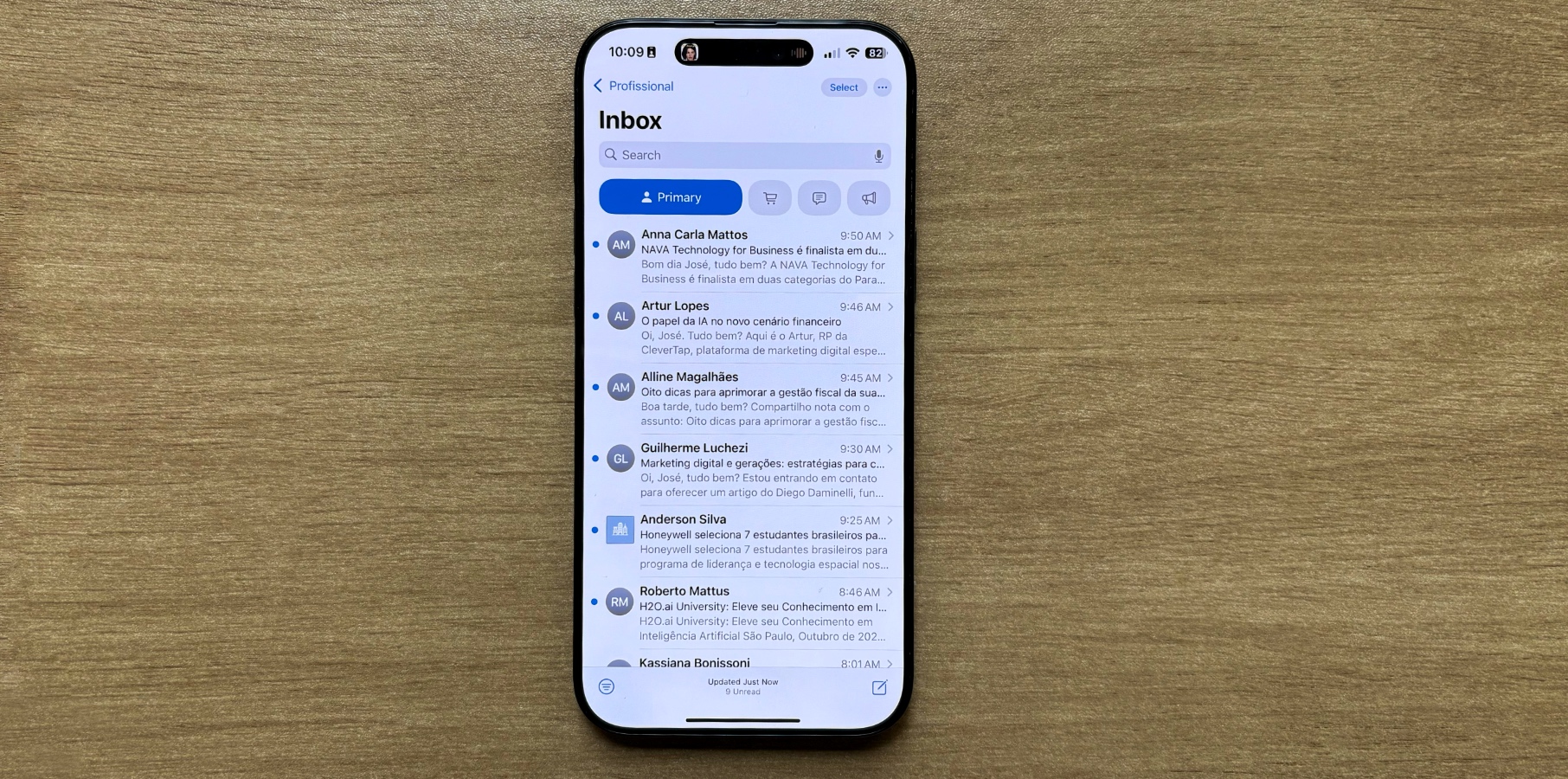
The Mail app has long been one of Apple’s most popular and important first-party iPhone apps, but at the moment, it appears to be broken. As spotted by MacRumors on Thursday, there have been multiple reports from around the internet about iPhone owners encountering a completely blank screen when they try to open the Mail app.

What’s up with the Mail app?

“My [Mail] app no longer works after the [iOS 18.5] update,” said one frustrated iPhone owner in a thread on Apple’s Support Community forums. “I uninstalled and re-installed and it attempts to open (blank white screen) and crashes every time.”

Hundreds of comments on a Reddit thread show that this is not an isolated or uncommon issue, either. A wide range of iPhone models are affected, stretching back to at least the iPhone 12, so it’s probably safe to assume it’s a software issue.

In fact, I experienced this issue myself on an iPhone 14 Pro when I woke up this morning. I tapped on the Mail app, and after hanging for a few seconds, the last email I’d opened appeared on the screen. Then, the buttons on the top of the app vanished, the app froze, and I had to swipe up to return to the Home screen. After force-closing the app, I attempted to reopen it, but I either saw a blank screen or had the same freezing issue as before.

Tech. Entertainment. Science. Your inbox.

Sign up for the most interesting tech & entertainment news out there.

By signing up, I agree to the Terms of Use and have reviewed the Privacy Notice.

Is there a fix?

I wasn’t sure what else to do, so I tried turning my iPhone off and back on again. For whatever reason, that worked, and I’m able to use the Mail app normally now. That solution also seemed to work for some of the other users who encountered the bug.

Another user claims that they were able to fix the app by going to Settings > General > Keyboard and disabling features like Auto-Correction and Smart Punctuation. Unfortunately, none of these appear to fix the problem permanently.

As MacRumors notes, Apple has yet to acknowledge the issue. There is no indication on Apple’s System Status page that the app is experiencing any problems on Apple’s end. We’ll be keeping an eye out for any updates on the matter.

Source

Posted on

South Korea grants regulatory licence for LEO services

Satellite connectivity solutions provider Intellian Technologies and geographic and low Earth orbit (GEO, LEO) communications provider Eutelsat Group are hailing the decision by the Ministry of Science and ICT (MSIT) in South Korea to approve a cross-border supply agreement for satellite internet services and in particular granting a regulatory licence for the deployment of Eutelsat OneWeb’s LEO satellite across the country’s maritime, military and government and enterprise markets.

Eutelsat OneWeb claims that its LEO satellite network is designed to provide secure, low-latency, high-speed broadband with global coverage. It is already operational across multiple regions, designed to deliver connectivity in areas where terrestrial infrastructure is limited or unavailable. The service looks to address connectivity demands across applications including maritime, aviation, enterprise and government networks.

For its part, Intellian, headquartered in Pyeongtaek with global operations across 11 countries and four research and development centres, boasts over 20 years of operation in satellite communications.

The company, which says it has evolved from a global antenna manufacturer to a strategic enabler of next-generation connectivity, is the largest supplier of OneWeb user terminals globally, offering a range of flat-panel and parabolic solutions tailored for land mobility, maritime and fixed installations. Its portfolio includes the OW10Hx, a compact flat-panel terminal based on phased array technology, and the OW11Fx, an enterprise-grade terminal capable of delivering download speeds of up to 196Mbps. These are both co-developed and deployed in partnership with Eutelsat OneWeb.

The two parties describe MSIT’s decision as a first of its kind, potentially providing a spur to the rapidly growing space-based communications market, marking a “ground-breaking regulatory precedent” in the country and opening the door to a new era of next-generation satellite broadband access.

In addition, Eutelsat and Intellian see strong growth potential in Korea’s LEO satellite market and say they are committed to deepening their collaboration for domestic and international deployments. With OneWeb’s global network fully in place and Intellian’s manufacturing and engineering capability, the partners say they are positioned to support digital transformation across industries and geographies.

Commenting on the announcement, Neha Idnani, regional vice-president for APAC at Eutelsat OneWeb, said: “Eutelsat’s OneWeb LEO service will connect Korean businesses and government with reliable, high-speed connectivity. From secure defence networks and maritime operations to blue light services and cellular backhaul, our SLAs and committed information rates are tailored for the most mission-critical use cases. We’re proud to partner with Intellian Technologies – one of our closest technology partners – to deliver Korean-made user terminals for the Korean market, reinforcing our global commitment to local enablement.”

Intellian Technologies CEO Eric Sung said Korea’s regulatory approval for LEO services was a major inflection point for the region, reflecting the government’s forward-looking commitment to next-gen connectivity and positioning Korea to lead in LEO-based innovation.

“Intellian is proud to play a key role in enabling this vision through close collaboration with OneWeb,” added Sung. “The performance of our terminals – already deployed globally – proves that LEO is no longer experimental. It’s fully operational, scalable and commercially impactful. With this launch, Korean customers now have access to high-speed satellite broadband that was previously unavailable or unviable, especially in sectors where fibre or terrestrial networks fall short.”

Source

Posted on

iPhone 17 Air fast charging sounds incredible, but how fast

The nature of my job made me look at battery life and charging speeds for years, but I would have done it as a consumer anyway. I’m a longtime iPhone user, and battery life is very important to me. I suffer from the same battery anxiety as most smartphone buyers, though I’m trying to manage it.

Apple significantly improved battery life with the iPhone 16 series, and I’ve enjoyed using the iPhone 16 Plus and 16 Pro Max for several months at a time. Battery life and charging speeds haven’t been a concern.

Then again, battery life was already great on older, larger iPhone models, so I expected the iPhone 16 Plus and 16 Pro Max to deliver. The battery upgrades Apple brought to the smaller iPhone 16 variants, including the iPhone 16e, gave me hope that the iPhone 17 Air won’t trigger my battery anxiety.

I’m already excited about the ultra-slim iPhone 17 Air, even though I know there will be trade-offs. Battery life is one of them. A thin handset means a thinner battery, so I might have to charge the iPhone 17 Air more often.

Tech. Entertainment. Science. Your inbox.

Sign up for the most interesting tech & entertainment news out there.

By signing up, I agree to the Terms of Use and have reviewed the Privacy Notice.

But what if Apple gave the iPhone 17 a huge upgrade in wireless charging speeds? What if those speeds went up to 50W?

According to 91 mobiles, Apple filed documentation with Taiwan’s NCC regulator that shows it plans to include the new Qi 2.2 standard in future MagSafe chargers. The blog obtained two model numbers, A3503 and A3502, which could correspond to upcoming puck-shaped MagSafe chargers Apple will release soon.

The chargers in Apple’s images look just like regular MagSafe chargers. The key upgrade here is support for Qi 2.2. This new wireless charging standard could let Apple increase speeds up to 50W.

The images 91mobiles found show the wireless chargers Apple submitted to the NCC support up to 45W speeds when used with a compatible power adapter.

Besides faster speeds, Qi 2.2 also offers better efficiency and improved magnetic alignment.

These chargers would work with any iPhone that has MagSafe connectors on the back, but top charging speeds might only be available on some models. I’d guess the iPhone 17 series will support those speeds from launch.

If that happens, the iPhone 17 Air could charge wirelessly almost as fast as Android rivals.

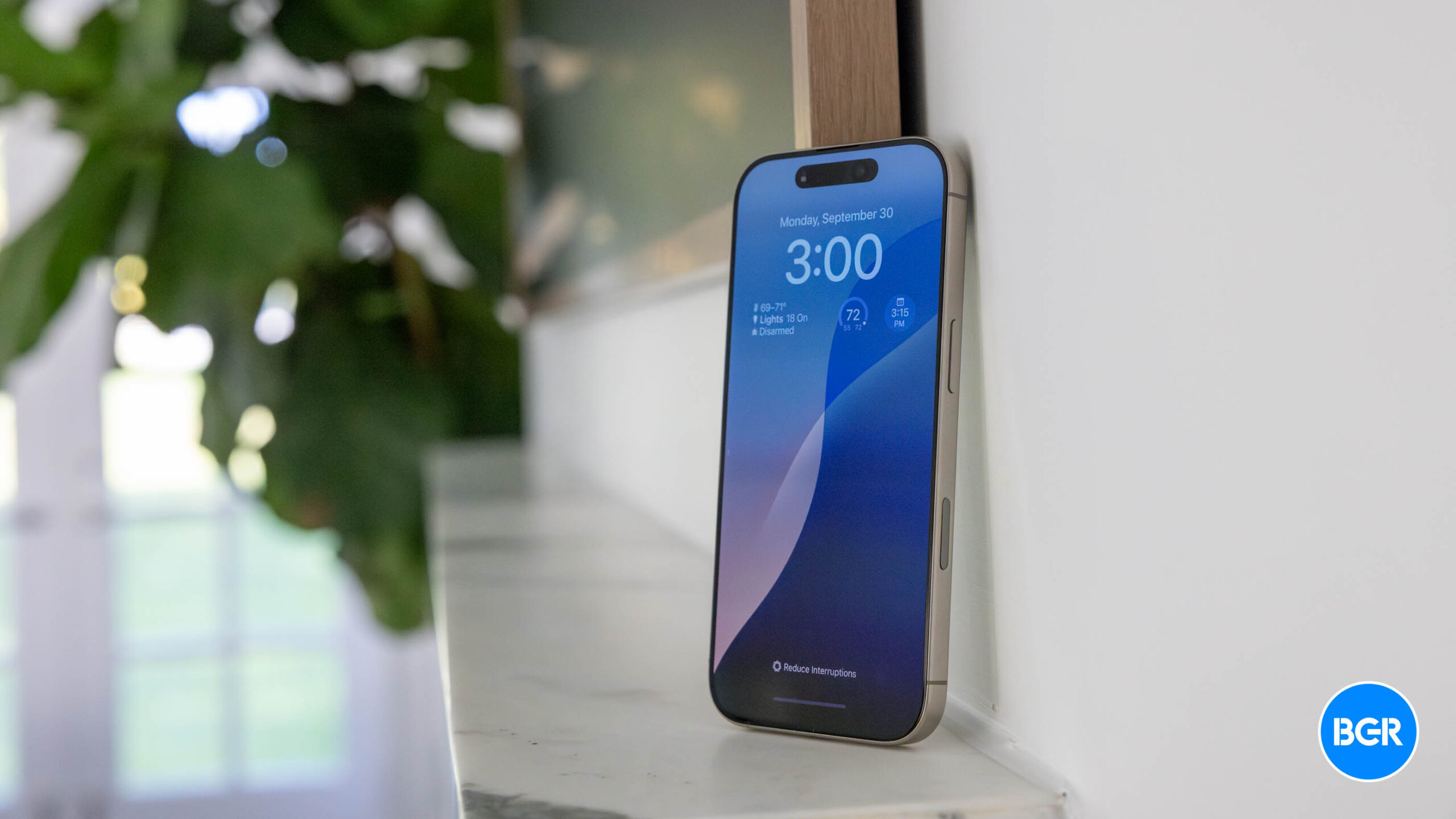
iPhone 16 Pro Max vs. iPhone 16 Pro vs. iPhone 16e: Battery life comparison. Image source: Apple Inc.

As a longtime iPhone user, I’ve learned not to envy too much of what Android vendors have done in recent years. We’ve seen plenty of Chinese companies launch premium phones with much faster charging speeds than the iPhone. Apple never matched those speeds, but it didn’t need to as long as some iPhones offered solid battery life.

Apple has increased battery charging speeds recently, and the iPhone 16 series stands out with much faster wireless charging. All iPhone 16 models support 25W MagSafe charging, except the iPhone 16e, which lacks magnets on the back.

That’s faster than the 20W wired charging speeds Apple lists for its iPhones. In practice, those speeds can exceed 25W with the right charger.

Apple says 25W MagSafe charging can recharge 50% of an iPhone 16 battery in 30 minutes. USB-C charging offers the same 50% charge in that time frame.

I don’t expect Apple to raise wireless charging speeds all the way to 50W. But anything beyond 25W would make the iPhone 17 Air charge impressively fast, and that’s good enough for me. I’ll gladly accept faster charging on a super-thin phone, even if it means using an external MagSafe battery pack or charging more than once a day.

Along those lines, if the iPhone 17 models support wireless charging up to 45W, I’d expect USB-C charging to get a similar boost.

Source

Posted on

Preparing for AI: The CISO’s role in security, ethics and

As generative AI (GenAI) tools become embedded in the fabric of enterprise operations, they bring transformative promise, but also considerable risk.

For CISOs, the challenge lies in facilitating innovation while securing data, maintaining compliance across borders, and preparing for the unpredictable nature of large language models and AI agents.

The stakes are high; a compromised or poorly governed AI tool could expose sensitive data, violate global data laws, or make critical decisions based on false or manipulated inputs.

To mitigate these risks, CISOs must rethink their cyber security strategies and policies across three core areas: data use, data sovereignty, and AI safety.

Data use: Understanding the terms before sharing vital information

The most pressing risk in AI adoption is not malicious actors but ignorance. Too many organisations integrate third-party AI tools without fully understanding how their data will be used, stored, or shared. Most AI platforms are trained on vast swathes of public data scraped from the internet, often with little regard for the source.

While the larger players in the industry, like Microsoft and Google, have started embedding more ethical safeguards and transparency into their terms of service, much of the fine print remains opaque and subject to change.

For CISOs, this means rewriting data-sharing policies and procurement checklists. AI tools should be treated as third-party vendors with high-risk access. Before deployment, security teams must audit AI platform terms of use, assess where and how enterprise data might be retained or reused, and ensure opt-outs are in place where possible.

Investing in external consultants or AI governance specialists who understand these nuanced contracts can also protect organisations from inadvertently sharing proprietary information. In essence, data used with AI must be treated like a valuable export which is carefully considered, tracked, and regulated.

Data sovereignty: Guardrails for a borderless technology

One of the hidden dangers in AI integration is the blurring of geographical boundaries when it comes to data. What complies with data laws in one country may not in another.

For multinationals, this creates a minefield of potential regulatory breaches, particularly under acts such as DORA and the forthcoming UK Cyber Security and Resilience Bill as well as frameworks like the EU’s GDPR or the UK Data Protection Act.

CISOs must adapt their security strategies to ensure AI platforms align with regional data sovereignty requirements, which means reviewing where AI systems are hosted, how data flows between jurisdictions, and whether appropriate data transfer mechanisms such as standard contractual clauses or binding corporate rules are in place.

Where AI tools do not offer adequate localisation or compliance capabilities, security teams must consider applying geofencing, data masking, or even local AI deployments.

Policy updates should mandate that data localisation preferences be enforced for sensitive or regulated datasets, and AI procurement processes should include clear questions about cross-border data handling. Ultimately, ensuring data remains within the bounds of compliance is a legal issue as well as a security imperative.

Safety: Designing resilience into AI deployments

The final pillar of AI security lies in safeguarding systems from the growing threat of manipulation, be it through prompt injection attacks, model hallucinations, or insider misuse.

While still an emerging threat category, prompt injection has become one of the most discussed vectors in GenAI security. By cleverly crafting input strings, attackers can override expected behaviours or extract confidential information from a model. In more extreme examples, AI models have even hallucinated bizarre or harmful outputs, with one system reportedly refusing to be shut down by developers.

For CISOs, the response must be twofold. First, internal controls and red-teaming exercises, like traditional penetration testing, should be adapted to stress-test AI systems. Techniques like chaos engineering can help simulate edge cases and uncover flaws before they’re exploited.

Second, there needs to be a cultural shift in how vendors are selected. Security policies should favour AI providers who demonstrate rigorous testing, robust safety mechanisms, and clear ethical frameworks. While such vendors may come at a premium, the potential cost of trusting an untested AI tool is far greater.

To reinforce accountability, CISOs should also advocate for contracts that place responsibility on AI vendors for operational failures or unsafe outputs. A well-written agreement should address liability, incident response procedures, and escalation routes in the event of a malfunction or breach.

From gatekeeper to enabler

As AI becomes a core part of business infrastructure, CISOs must evolve from being gatekeepers of security to enablers of safe innovation. Updating policies around data use, strengthening controls over data sovereignty, and building a layered safety net for AI deployments will be essential to unlocking the full potential of GenAI without compromising trust, compliance, or integrity.

The best defence to the rapid changes caused by AI is proactive, strategic adaptation rooted in knowledge, collaboration, and an unrelenting focus on responsibility.

Elliott Wilkes is CTO at Advanced Cyber Defence Systems. A seasoned digital transformation leader and product manager, Wilkes has over a decade of experience working with both the American and British governments, most recently as a cyber security consultant to the Civil Service.

Source

Posted on

Nokia, Andorix build up private 5G, Edge in real estate

Ports, factories and large-scale industrial sites have to date been the areas in which private 5G networks have been deployed to offer firms dedicated connectivity to boost operations, but now real estate looks to be getting in on the act, as exemplified by a partnership between Nokia and Andorix, designed to accelerate the adoption of private 5G networks and neutral host networks in the real estate market across the US and Canada.

Explaining the reasons of the partnership, the global comms tech giant and provider of digital infrastructure and smart building services for real estate properties believe that property owners are looking for a 5G private cellular platform to connect their operational technology (OT) use cases, including energy management and efficiency, building operations and optimisation, as well as physical and cyber security on a resilient infrastructure.

Additionally, they say real estate companies want a converged and future-proof smart 5G platform that can expand indoor cellular coverage to improve their tenant’s experience with connectivity and value-added edge applications.

In practical terms, the companies say the collaboration will see them work together to bring fast, reliable 5G for commercial, retail, residential and industrial property, making it easier to enable new technologies like virtual reality (VR) and indoor navigation, facilitate internet of things (IoT) deployments and solve common issues such as unreliable connectivity and stronger security needs.

Nokia noted that it has deployed private wireless networks for 890 customers globally, with 24% of those customers in North America.

Andorix has experience managing converged network infrastructure deployments in Class A commercial, residential and mixed-use developments where reliable indoor connectivity is critical for efficient building operations and tenant satisfaction.

From a technological perspective, the collaboration will bring together Nokia’s global leadership in private 5G wireless services with Nokia Digital Automation Cloud (DAC) and MX Industrial Edge (MXIE), as well as Andorix’s expertise in designing and deploying scalable in-building converged networks in real estate environments.

Commenting on the partnership, Willie Kopp, head of enterprise campus edge sales for North America at Nokia, said: “Private 5G networks are transforming how enterprises operate, and in-building connectivity is a critical piece of that puzzle. By partnering with Andorix, we are combining best-in-class 5G technology with proven in-building converged network deployment expertise to support the growing demand for private 5G connectivity within the built environment in North America.”

Wayne Kim, founding partner and CEO of Andorix, added: “[We are] excited to partner with Nokia to deliver cutting-edge 5G solutions that meet the evolving needs of enterprise clients.

“With our track record of modernising in-building network infrastructure across major commercial real estate properties, this partnership will solve some of the challenges faced by the real estate sector in terms of inconsistent connectivity, support for massive IoT deployments within complex or high-value built environments, growing security demands and enabling immersive technologies like VR and indoor navigation.”

As its private 5G partnership was being unveiled, Nokia also announced it was working with Colt Technology Services and Honeywell to explore quantum-safe networking using satellite communications.

As part of the initiative, the companies are planning to test new ways of protecting encrypted optical network traffic from risks presented when quantum computing potentially breaks through traditional encryption methods, leaving data vulnerable to cyber threats.

Colt, Honeywell and Nokia plan to explore quantum-safe cryptography, trialling space-based and subsea techniques which they say are resistant to quantum computing attacks.

Source

Posted on

Lumen lands terrestrial backhaul deal for JUNO trans-Pacific cable

Undersea cables now account for more than 99% of international data traffic, but a robust terrestrial network is also vital for ensuring, high-capacity data flows across continents. To ensure the success of the highest-capacity Trans-Pacific cable linking Japan and the US, Lumen Technologies will provide the terrestrial backhaul connectivity for the JUNO Trans-Pacific cable system.

Operated by Seren Juno Network Co, the JUNO cable is 10,000 kilometres long and is engineered to deliver up to 350 Tbps across 20 fibre pairs, using next-generation Space Division Multiplexing (SDM) technology.

The line was constructed due to the massive upward growth trajectory of data driven by the deployment of 5G, internet of things (IoT), edge compute technologies and artificial intelligence (AI). With existing Japan-US cables nearing capacity at the beginning of the decade, Seren said JUNO was needed to meet the increasing demand for global internet bandwidth.

The JUNO submarine cable system officially achieved point of presence (PoP) to PoP ready for service (RFS) status on 30 May 2025, including the completion of terrestrial backhaul connectivity on both the Japanese and the US sides.

Seren said that it built the line to provide fast and reliable network services to global major global technology companies, OTTs and telecommunication carriers by enabling them to strengthen the telecommunications environment in the US and Asia through reliable and secure sales, operations and management support.

Seran added that businesses in both Japan and the US stand to benefit significantly from the increased bandwidth and reliable connections. It was confident that JUNO’s cable system and Lumen’s terrestrial network will create a powerful bridge between Asia and North America – supporting next-gen applications, enabling global scale for AI and helping enterprises navigate the digital economy with “agility and speed”. Seren stressed that connecting directly into cloud regions, edge compute sites and major datacentres is only possible with strong terrestrial backhaul.

Lumen’s dark fibre backhaul will now gives JUNO custom, private network configurations. Lumen’s fibre network will carry traffic from the cable’s US landing point in Grover Beach in California to two major PoPs in San Jose and Los Angeles, helping to “revolutionise business operations and technological advancements” in both the US and Japan. Connecting JUNO at the cable landing station to two critical PoPs will help data reach major cloud hubs, datacentres and enterprise networks across the US.

“Our partnership with Lumen is a critical milestone in delivering on JUNO’s promise to revolutionise trans-Pacific data transport,” said Yoshio Sato, CEO of Seren Juno Network Co. “Lumen’s reach into major US cloud hubs and its proven expertise in high-capacity fibre infrastructure make it an ideal partner as we bring the world closer through digital innovation.”

“Lumen designed and developed a dark fibre solution the JUNO system could quickly deploy to meet their launch date. Our critical fibre backbone enables the seamless high-capacity transport from Asia into the heart of the US digital economy,” said Lumen executive vice-president and chief revenue officer Ashley Haynes-Gaspar. “This level of control, scale and performance is exactly what global enterprises and cloud providers need to support the next generation of AI and data-driven innovation.”

Source

Posted on

Interview: Pega’s ‘Blueprint’ for breaking the curse of legacy IT

Businesses are losing out twice by having to support old IT systems that they cannot afford to turn off because they perform business-critical functions.

Companies have to pay to keep computer systems running well beyond their natural life, which means they have fewer resources to invest in new technology.

“They are spending money improving customer experience and improving efficiencies in the business, but the legacy makes all of those projects harder,” says Don Schuerman, chief technology officer (CTO) at Pegasystems.

“It limits the ability of organisations to build the cycle of innovation and continuous change that is essential to innovation,” he tells Computer Weekly.

Pegasystems, a $140bn turnover technology company based in Waltham, Massachusetts, develops the software used behind the scenes at some of the world’s largest organisations to manage and automate their business processes.

A survey of more than 500 IT decision-makers, commissioned by Pega, shows that half of the companies questioned rely on computer systems that are over 10 years old, and one in 10 have at least one computer system that is between 20 and 30 years old.

Businesses need courage

Companies need to be more courageous in tackling the problem of ageing IT, according to Schuerman, with old technology becoming increasingly difficult to support over time.

“There are many systems where the teams that built them are not around anymore. The people who understand the code base are no longer there,” he says.

Suppliers like Pega are developing tools that make it easier for organisations to reduce their reliance on outdated IT systems. Both Amazon Web Services (AWS) and Accenture, for example, have developed transformation tools that use artificial intelligence (AI) agents to help companies migrate their workloads from mainframe computers to datacentres.

Pegasystems has expanded its own tool, Blueprint – a rapid prototyping tool for creating business workflows – with agentic AI.

“Companies are spending money improving customer experience and improving efficiencies in the business, but the legacy makes all of those projects harder”

Don Schuerman, Pega

It uses AI agents to ingest and analyse videos of legacy software, software documentation, technical files, screenshots and source code, or a company’s website, to create blueprints that can be turned into cloud applications.

Pega demonstrated its capabilities at the company’s conference this week. The company showed how Blueprint was able to replicate the functions of a credit card management system originally written in Cobol, a computer language that dates back to 1959.

AI agents built into Blueprint were able to interrogate a video showing someone describing how they use the software, along with software documentation.

Blueprint was able to identify the functions of the code, replicate its workflows in a matter of minutes, and make suggestions on how to improve it.

A live demonstration showed how, with the addition of an AI bot, a customer could phone their bank, hold a natural language conversation with an AI agent, check their credit card balance, request an increase in their credit limit and have it approved, without human intervention.

Another example is Vodafone, which is using Blueprint to develop applications across its business. The company is developing prototypes that it can share and test with customers and people in the business before the apps are deployed.

The phone company says using Blueprint has allowed it to speed up the development and deployment of applications, with one application going from concept to production in just 48 hours.

The real value of Blueprint is that it changes the conversation from a “lift and shift” mentality, says Schuerman, where organisations typically take legacy software and repackage it in a Kubernetes container or equivalent to run in the cloud.

Now, organisations can focus on improving their business processes rather than duplicating them.

Blueprint can complete 50% to 60% of the development work of an app, but it will never replace developers, says Schuerman.

Companies will still need to take data used by legacy applications and migrate it to cloud storage. Google, Pega, AWS and others have developed tools for that task.

Blueprint cannot replace all legacy technology, says Schuerman.

“The stuff we are going to be moving and transforming is still going to be things that look naturally like good Pega apps. So, things that have workflow, things that drive degrees of process orchestration,” he says.

Blueprint would not be suitable for replacing financial ledger systems, SAP and other enterprise resource planning (ERP) systems, for instance. That said, Schuerman says Pega has had interest from companies that want to move the customised processes surrounding their ERP systems into Pega.

There is nothing, in theory, to stop organisations using Blueprint to implement work processes in other technologies outside of Pega.

The software is able to produce documents describing detailed workflows, the underlying data models and the interface points of the process.

“If you wanted to take a document and treat it as a requirements document, I think it would be a pretty good requirements document for traditional software development,” he says.

There are always going to be applications that can and should operate outside Pega. Security is one example, such as managing the authentication and authorisation of users and privileges.

Keeping the agents in check

One of the risks of using AI is that it can be unpredictable and prone to hallucinations. Pega solves this problem by using its AI agents to design and develop repeatable workflows, rather than allowing them to make unscripted decisions when running live.

In the case of a credit card provider, for example, AI bots can interact with customers to select the appropriate workflow, but do not have the power to make “runtime” decisions for the customer.

We are working to make sure you can wrap and plug agentic AI into a workflow that has a high degree of predictability and repeatability Don Schuerman, Pega

No bank is going to want to use a large language model to decide credit limits for customers when there is a risk that the model would make different recommendations for different customers without being able to explain how or why it made the decision.

“We are working to make sure you can wrap and plug agentic AI into a workflow that has a high degree of predictability and repeatability, and other people are not doing that,” says Schuerman.

In the past, Pega advocated the idea of “wrap and renew”, which entailed putting a software wrapper around mainframes and other legacy technologies to integrate them into other parts of the business. Now, it’s a case of “rethink and replace”, according to Schuerman.

Pega has plans for a new service that will make it possible for businesses to manage agentic AI, both those running on Pega’s software and those outside Pega, to ensure they are working in a coordinated way, which it calls Pega Agentic Process Fabric.

The service, which will be available from this autumn, will audit and register AI agents, workflows and data used on Pega and other IT systems. It will also be able to generate new workflows on the fly, with human oversight, if the process does not already exist.

The idea is to make sure that AI agents performing different tasks work together rather than in a conflicting way.

Can legacy technology ever be eliminated?

Will it ever be possible to eliminate legacy technology once and for all? Schuerman says he is more optimistic than most.

“The reason I am a little more optimistic is that we have abstracted the business logic from the technology implementation,” he says. That means companies can change their underlying technology without being caught in the “legacy trap”.

“Are we 100% there? No, but that is the vision,” he says.

Source

Posted on

Interview: Manish Jethwa, chief technology officer, Ordnance Survey

Manish Jethwa, chief technology officer (CTO) at Ordnance Survey (OS), has a career-long passion for turning geographical data into useful insight. At the UK’s national mapping service, he’s leading the organisation’s development of next-generation geospatial technologies.

Jethwa studied engineering science at the University of Oxford, where he focused on what were then considered niche areas, such as robotics, artificial intelligence (AI) and computer vision. He subsequently honed this interest in a doctorate at MIT, researching how images could be used to create models of city spaces. The opportunity to work for OS two decades later felt a bit like coming home.

“Part of that loop had been reconnected,” he says. “I’d been in the world of creating city-scale models. And then, before I knew it, I was helping to map the whole nation at the OS.”

Jethwa joined OS in late 2023. He was previously CTO at construction software specialist Causeway Technologies, a role he’d held since August 2022, following the company’s acquisition of asset management software firm Yotta. Jethwa had worked at Yotta for 20 years, leading product and technology. As OS CTO, he’s putting his data experience into practice.

“The explosion in AI means it’s in every organisation’s business strategy,” he says. “AI and computer vision are a core part of the research we do here, such as automatically extracting features from aerial imagery and at street level.”

For the majority of his 18 months at OS, Jethwa says he’s been more focused on the “chief” part of his CTO role than “technology” because he’s helping to drive wide-scale organisational change. That focus is understandable for an individual who has worked in entrepreneurial businesses and joined an organisation that’s 234 years old.

“Having come from a product-led business to an organisation that was more focused on delivery, we’ve had to change certain things, and that’s been reflected in our strategy,” he says.

Creating a value chain

Jethwa says his focus on organisational change has helped break down OS into a value chain of key service pillars that deliver benefits to customers.

The organisation has five pillars that cover the following areas: positioning – meaning the capability around the UK to make accurate measurements; data sourcing – aggregating and collecting information; refinery – adding value to data and merging insights; distribution – pushing data feeds to clients; and application – delivering insight to customers.

We’ve built up this value chain from sourcing data to delivering benefits to the customer. Customers don’t want lightbulbs, they want light. At the OS, customers don’t want data, they want insights. Having that model helps define our approach Manish Jethwa, Ordnance Survey

“We’ve built up this value chain from sourcing data to delivering benefits to the customer,” he says, before using an analogy: “Customers don’t want lightbulbs, they want light. At the OS, customers don’t want data, they want insights. Having that model helps define our approach.”

Jethwa says the result is lots of conversations about the value chain. “I get wheeled out to talk about it,” he says. “But it’s a nice way to visualise the work and relationships of an organisation of 1,400 people. We now have a high-level structure to explain how we operate.”

Jethwa says he can’t take sole credit for the organisational change programme. A drive for transformation pre-dated his arrival. His emphasis was on defining clear business services. As a result of this work, from the start of April, OS has a service model for operation across the five key pillars.

“We have service leads across those areas, and those services are broken down into further components,” he says. “The nice thing about that approach is that, within those components, we can manage our technology stack using the same framework.”

Focusing on product delivery

Jethwa says the new organisational structure has enabled a shift from project-based ways of working. Rather than focusing on smaller initiatives that fix short-term issues, the IT team looks to meet objectives as part of an enduring programme of work.

“Staff put forward a programme proposal that will then get accepted,” he says. “You have a budget, you formulate a team, you execute against that. But to deliver a long-term vision, you typically have enduring teams that work on your technology products, so they understand the customer, they know how to deliver results, and they also manage systems.”

Jethwa says the result of this shift from projects to products is a fundamental change in how OS operates. “These enduring teams have a specific, defined vision about what they need to deliver, and how the results will be passed on to internal or external customers,” he says. “They have the opportunity and power to work out the best way of delivering products.”

Jethwa says the teams always focus on an element of transformation. He refers to the development of products within the sourcing pillar. The professionals consider how to collect data and the optimal way of fulfilling that process, whether it’s through drone capture or street-level surveys.

“The approach to sourcing shifts continuously depending on the landscape and the types of features we want to deliver,” he says.

“The challenge for us is that our data is not delivered in one specific year, and then we’re done. Once we’ve delivered that data, we have to provide consistency and deliver updates henceforth until we decide to retire a product, which may take at least 10 years. It could be longer than that.”

This requirement for continuous delivery creates a new set of challenges, such as dealing with the roll-out of emerging technologies and extracting information and features from source imagery. Jethwa says AI can help automate these processes. However, care must be taken to ensure that AI-enabled technologies don’t make assumptions about images.

“Yes, AI can boost productivity and efficiency,” he says. “But an automated method for analysing images can be fooled. So, we must consider how to manage uncertainty as we deliver insights to customers. That area presents a fresh challenge for us.”

Embracing technological innovation

Another issue is technical specifications. Jethwa says OS wants to democratise data access for customers. While the premise is simple, the process must clear some obstacles, notably the fact that most data comes with detailed technical specifications.

“The explosion in AI means it’s in every organisation’s business strategy. AI and computer vision are a core part of the research we do here [at OS], such as automatically extracting features from aerial imagery and at street level”

Manish Jethwa, Ordnance Survey

“A good example might be a customer who says, ‘I want to know good areas to go out and exercise’,” he says. “Now, our data, from a technical standpoint, might not reference the word exercise anywhere, but it will include things like sports stadiums, fields and skateboard parks.”

Jethwa says the traditional approach to building a connection between data and technical specifications would be to use natural language processing. Building that mechanism wouldn’t be straightforward. The good news now is that large language models (LLMs) are perfect for creating a relationship between data and specifications.

“If you fine-tune a large language model agent, and point it to our data and documentation, you can ask a question, such as, ‘Tell me about places to exercise’, and have that question directly translated into an API [application programming interface] request that will say, ‘Here are some sports facilities in the buildings data and here are some recreational areas in the green spaces data’,” he says.

Jethwa says OS is tapping into the full breadth of AI technologies. The organisation builds many of its processes on mainstream models, undertaking fine-tuning based on internal documentation. However, one significant issue is that many high-profile LLMs are trained on commercially available data.

To overcome this challenge, OS taps into the high-precision UK geography data its teams have collected over decades of work. In this core area, where the organisation extracts geographical information, such as roof materials or biodiversity features, the technology team is building foundational models from the ground up.

“The UK landscape is very different from other geographies,” he says. “We know that training models on our data will give a richer and more reliable output than trying to rely on models that have been trained on imagery taken directly from the web.”

Leading the way

Jethwa says senior executives at OS regularly discuss how people might interact with geospatial data during the next decade. One thing is already clear – the relationship has already changed and will continue to transform.

OS has traditionally been known for producing paper-based maps that help people navigate their environment. These maps are designed to make it easy for people to filter the data they require. Jethwa gives the example of someone on a hike who can see contour lines on a map and understand the elevation of their walk.

If you look ahead five or 10 years, the relationship has to be one in which people have much more of a conversation with the map and the interface Manish Jethwa, Ordnance Survey

However, the traditional relationship is changing. Rather than focusing on filtering, a large proportion of the organisation’s work is now centred on analysis. OS is developing AI-enabled processes that customers use to draw insights from data. Jethwa expects the nature of this interaction to intensify.

“If you look ahead five or 10 years, the relationship has to be one in which people have much more of a conversation with the map and the interface,” he says. “This relationship will be one where customers ask a question and get a response back from the map, but they’ll also get questions from the map.”

Jethwa says emerging technology is the key to unlocking this capability. Alongside explorations into AI, OS uses the Snowflake Marketplace to share open data with public sector organisations and explore new commercial avenues. The priority now is ensuring OS is ready to embrace the next wave of data-led advances.

“We need to ensure we’ve enabled all the mechanisms internally. So, how easy is it to ask the questions and receive answers via APIs? Are we providing the data across the right sources, whether it’s Snowflake, AWS or elsewhere? And are we providing hooks into the right outlets to ensure that, as models are built, insight is accessible?” he says.

“We need to lead the way because we don’t want to be late into the game. If we’re late, there’ll be other providers of data that might be less authoritative, but because they’re easier to access, they’ll win out. We need to be at the forefront.”

Image: ©Crown copyright 2025 Ordnance Survey. Media 045/25

Source