Posted on

DSIT makes £5.5m of funding available to new projects

The government has announced £5.5m of funding to support projects that will be streamlined by the Regulatory Innovation Office (RIO) to cut bureaucracy. 

The RIO, headed by David Willetts, was set up by the government to cut red tape, remove barriers to innovation and accelerate the time it takes to bring emerging technologies to market.

Willetts, who took on the role of chair of the RIO in March, hopes to shape regulatory approaches that empower new technologies, supporting Labour’s pledge to bring the UK’s most promising new technologies to the public quickly and safely while kickstarting economic growth.

The Department for Science, Innovation and Technology (DSIT) said it would offer funding between £50,000 and £1m on regulator-led and local authority-led projects, which run from six to 12 months. The projects must start from 1 October 2025 and end by 30 September 2026. The deadline for applications is 31 July 2025, and DSIT is expected to start awarding funding from 1 October 2025.

This is the fourth round of funding. In the previous round, funding helped Milton Keynes trial local authority drone deliveries for urgent medical supplies and environmental monitoring.

“Thanks to the RPF [Regulators’ Pioneer Fund], we’ve been able to start building the groundwork for using drones to make services more efficient,” said Shanika Mahendran, cabinet member for planning and placemaking at Milton Keynes City Council.

“It’s given us a chance to explore what safety checks and rules we need to follow so we can move from just testing drones to using them in the long-term.”

The Medicines and Healthcare products Regulatory Agency’s (MHRA’s) exploration of the use of synthetic data in clinical trials was another project in the third funding round. The project used computer-generated data to replace some of the participants who would normally receive a placebo. The MHRA said this approach can make trials quicker, cheaper and more inclusive, while still ensuring safety and effectiveness.

Puja Myles, director of the clinical practice research datalink at the MHRA, said: “The RPF grant has given us a better understanding of the scenarios when synthetic data could be used to boost sample sizes of clinical trials.

“This project is part of the MHRA’s work to promote innovation and embrace emerging technologies in clinical trials, to help get new treatments to patients faster.”

The fourth round of the Regulators’ Pioneer Fund is open to regulators and local authorities across the UK, and will include projects in key growth areas such as artificial intelligence (AI) in healthcare, engineering biology, space, and connected and autonomous vehicles.

“Smarter, more agile regulation is key to businesses bringing ideas to market faster, while giving the public confidence in new technologies,” said science minister Patrick Vallance. 

“These projects show how regulators can work with industry to unlock breakthroughs – from autonomous drones improving emergency services, to AI that cuts the cost and time spent on clinical trials.

“By backing this kind of innovation, we’re helping to make the UK the best place in the world to launch, test and scale new ideas, and drive the economic growth we need to improve lives and deliver our Plan for Change,” he said.

Source

Posted on

Microsoft raises posse to target dangerous Lumma malware

A broad coalition of technology partners and law enforcement agencies, spearheaded by Microsoft’s Digital Crimes Unit (DCU), has disrupted the dangerous Lumma Stealer malware-as-a-service (MaaS) operation, which played a key role in the arsenals of multiple cyber criminal gangs, including ransomware crews.

Using a court order granted in the US District Court of the Northern District of Georgia earlier in May, the DCU and its posse seized and took down approximately 2,300 malicious domains that formed the core of the Lumma operation.

“Lumma steals passwords, credit cards, bank accounts and cryptocurrency wallets, and has enabled criminals to hold schools to ransom, empty bank accounts and disrupt critical services,” said DCU assistant general counsel, Steven Masada.

At the same time, the US Department of Justice (DoJ) seized the MaaS central command structure and targeted the underground marketplaces where access was sold, while elsewhere, Europol’s European Crime Centre (EC3) and Japan’s Cybercrime Control Centre (JC3) went after locally hosted infrastructure.

Europol EC3 head Edvardas Šileris, said: “This operation is a clear example of how public-private partnerships are transforming the fight against cyber crime. By combining Europol’s coordination capabilities with Microsoft’s technical insights, a vast criminal infrastructure has been disrupted. Cyber criminals thrive on fragmentation – but together, we are stronger.”

In a blog post detailing the takedown, Masada said that over a two-month period, Microsoft had identified more than 394,000 Windows computers that had been infected by Lumma. These machines have now been “freed”, with communications between Lumma and its victims severed.

This joint action is designed to slow the speed at which [threat] actors can launch their attacks, minimise the effectiveness of their campaigns, and hinder their illicit profits by cutting a major revenue stream Steven Masada, Microsoft Digital Crimes Unit

At the same time, about 1,300 domains seized by or transferred to Microsoft – including 300 actioned by Europol – are now redirecting to Microsoft-operated sinkholes.

“This will allow Microsoft’s DCU to provide actionable intelligence to continue to harden the security of the company’s services and help protect online users,” said Masada. “These insights will also assist public- and private-sector partners as they continue to track, investigate and remediate this threat.

“This joint action is designed to slow the speed at which these actors can launch their attacks, minimise the effectiveness of their campaigns, and hinder their illicit profits by cutting a major revenue stream.”

Lumma chameleon

The Lumma Stealer MaaS first appeared on the underground scene about three years ago and has been under near-continuous development since then.

Based out of Russia, and run by a primary developer who goes by the handle “Shamel”, Lumma offers four tiers of service, starting from $250 (£186) and rising to an eye-popping $20,000, for which buyers receive access to Lumma’s style and panel source code, the source code for plugins, and the right to act as a reseller.

In conversation with a cyber researcher in 2023, Shamel claimed to have approximately 400 active users.

When deployed, the goal is typically to monetise stolen data or conduct further exploitation. Like a chameleon, it is difficult to spot and can slip by many security defences unseen. To lure its victims, Lumma spoofs trusted brands – including Microsoft – and spreads through phishing and malvertising.

As such, it has become something of a go-to tool for many, and is known to have been used by many of the world’s more notorious cyber crime collectives, including ransomware gangs. Its customers likely included, at one time, Scattered Spider, the group thought to be behind the ransomware attack on Marks & Spencer in the UK, although there is no public evidence to suggest it was used in this incident.

Blake Darché, head of Cloudforce One at Cloudflare, which provided key support during the takedown, said: “Lumma goes into your web browser and harvests every single piece of information on your computer that could be used to access either dollars or accounts – with the victim profile being everyone, anywhere, at any time.

“The threat actors behind the malware target hundreds of victims daily, grabbing anything they can get their hands on. This disruption worked to fully set back their operations by days, taking down a significant number of domain names and ultimately blocking their ability to make money by committing cyber crime.

“While this effort threw a sizeable wrench into the largest global infostealer’s infrastructure, like any threat actor, those behind Lumma will shift tactics and reemerge to bring their campaign back online,” said Darché.

Source

Posted on

European Wi-Fi firms make their call for 6GHz spectrum

The Dynamic Spectrum Alliance (DSA) is demanding the European Commission (EC) support allocation of the upper 6GHz band to licence-exempt use for its members to ensure Europe uses Wi-Fi technologies to benefit Europe’s businesses to the fullest, leaving the blunt message that “Wi-Fi matters”.

The DSA describes itself as a global, cross-industry, not-for-profit organisation that advocates for laws, regulations and economic best practices that will lead to more efficient utilisation of spectrum, and foster innovation and affordable connectivity for all.

In an open letter to EC executive vice-president for tech sovereignty, security and democracy Henna Virkkunen, the DSA says it’s providing the collective views of 58 organisations – spanning industry associations, equipment manufacturers, internet service providers, chipset suppliers, fibre access operators, content application services, and virtual, augmented and mixed reality technology developers – convinced of the power of Wi-Fi in conjunction with 5G, fibre, fixed wireless access and satellite technology to support Europe’s Digital decade plan.

In short, the DSA is adamant that Wi-Fi is central to building a competitive, connected Europe, and that essential infrastructures and services, such as hospitals and universities, rely heavily on Wi-Fi to continue advancing the well-being of patients and the learning opportunities of students.

Moreover, it warns that without additional Wi-Fi spectrum, European businesses will be less globally competitive due to higher wireless connectivity costs and less access to new technologies.

The letter says: “Wi-Fi in the upper 6 GHz band will deliver high-speed, ultra-low latency, low-cost, high-speed connectivity that will enable innovations in industry, including automated manufacturing, smart logistics and industrial IoT [internet of things] … The lack of additional spectrum will also jeopardise the effectiveness of the major investment made in fibre networks. Going in the wrong direction on upper 6 GHz will stunt the development of new applications across these use cases.

“Wi-Fi sets itself apart as the best technology for indoors connectivity, delivering more sustainable and cost-efficient internet connections. This is crucial in meeting citizens’ and SMEs’ [small and medium-sized enterprises’] connectivity requirements and increases consumer choice on how they connect to high-speed internet.”

The letter ends with a direct appeal to Virkkunen, telling her that she has been entrusted with a crucial portfolio to steward European technology policy, and that while much has already been achieved, a competitive and connected Europe was still far ahead, and that Europe was already behind other countries in adopting the latest Wi-Fi standards.

“The Radio Spectrum Policy Group, coordinated by the commission, is currently working on its vision for the upper 6 GHz band,” it reads. “We cannot stress enough how crucial this position will be … This decision will allow Europe to finally roll out the (already existing) newest generations of Wi-Fi, 6E and 7, and the upcoming Wi-Fi 8. Spectrum decisions directly impact the ambitions that the EU [European Union] wants to achieve with the Digital Networks Act.

“Right now, we have one simple request for the EU: make the upper 6 GHz band (6.425–7.125 GHz) available for unrestrained Wi-Fi operations,” the letter continues. “Ultimately, the Digital Networks Act, the review of the European Electronic Communications Code and the 2030 Digital decade targets will be key in fulfilling Europe’s promise of competitiveness and becoming an AI continent.”

Source

Posted on

ChatGPT Plus will be free to everyone in one country

Subscribing to ChatGPT Plus was a no-brainer move. I realized I wanted access to all the ChatGPT novelties OpenAI had to offer as soon as they were ready. Also, ChatGPT Plus came with higher limits, something I needed.

Soon enough, I said I’d rather ditch Netflix than cut access to premium ChatGPT AI. This isn’t just about work, where AI can come in handy, but also about regular life. ChatGPT is now my go-to product for most things I’d have used an internet search engine for.

The free version of ChatGPT has also evolved significantly in the past year. For example, users can create AI images with the latest ChatGPT tool. They also have a more affordable variant of Deep Research at their disposal. But the Plus subscription, which costs $20/month, is a much better deal.

I say all that because the United Arab Emirates is apparently going to offer free ChatGPT Plus access to anyone living in the country. That’s a massive advantage for the country, one that other regions should explore.

Tech. Entertainment. Science. Your inbox.

Sign up for the most interesting tech & entertainment news out there.

By signing up, I agree to the Terms of Use and have reviewed the Privacy Notice.

OpenAI and the UAE government inked a major AI deal under the former’s OpenAI for Countries initiative. When OpenAI first announced that initiative, I said the move would give OpenAI even more power over rivals, as ChatGPT would become the de facto AI chatbot for many people in those countries that choose such ample partnerships.

UAE is the first to take advantage of the partnership, and that’s not surprising. The country has the means to support a major investment in AI and wants to be a major player in AI. All that oil money can pay for the massive infrastructure investments the UAE needs to become a major local AI player.

Then there’s the geographical location, which gives cities like Dubai and the entire UAE access to solar power throughout the year. Placing Stargate centers in the Emirates makes a lot of sense for both parties.

With all that in mind, giving your citizens access to the cheapest premium ChatGPT plan for free makes all the sense in the world. It’s not just the citizens, but everyone living in Dubai and the UAE, per The Economic Times.

It’s unclear when it’ll happen. Setting up the first local ChatGPT AI data center should be up and running by next year. But it’s a massive win for the UAE and its people.

I’ve already explained why access to some of the newest OpenAI models and higher limits for the best ChatGPT versions is incredibly valuable to me. Multiply that by 11 million, the population of the UAE and the country might have a huge advantage over rivals.

Yes, the UAE will be footing a massive bill for ChatGPT Plus, but that could translate into huge productivity gains that would make the investment worthwhile. Again, the UAE has the resources to throw at anything it might put its mind to, whether ChatGPT or something else. Free ChatGPT Plus to everyone living in the country will feel like a drop in the bucket. Also, if it doesn’t work out, the UAE could always cancel this plan.

Also, hosting a massive Stargate center in the region would not just benefit Dubai or the UAE. Other Arab and Asian nations in the area might be served by the same ChatGPT data center in the coming years, which benefits OpenAI directly. The company could always ink special ChatGPT Plus deals with the UAE to lower the monthly subscription cost. That’s all speculation at this time, as we don’t have an official announcement for the project.

People won’t be forced to use ChatGPT, of course. You might prefer competitors, whether Gemini, Claude, DeepSeek, or others. But you’ll still have free access to ChatGPT Plus whenever you need it.

If all this goes according to plan, other nations looking at OpenAI for Countries investments should consider similar incentives for their citizens.

Source

Posted on

4 ways WhatsApp will make your iPad more like a

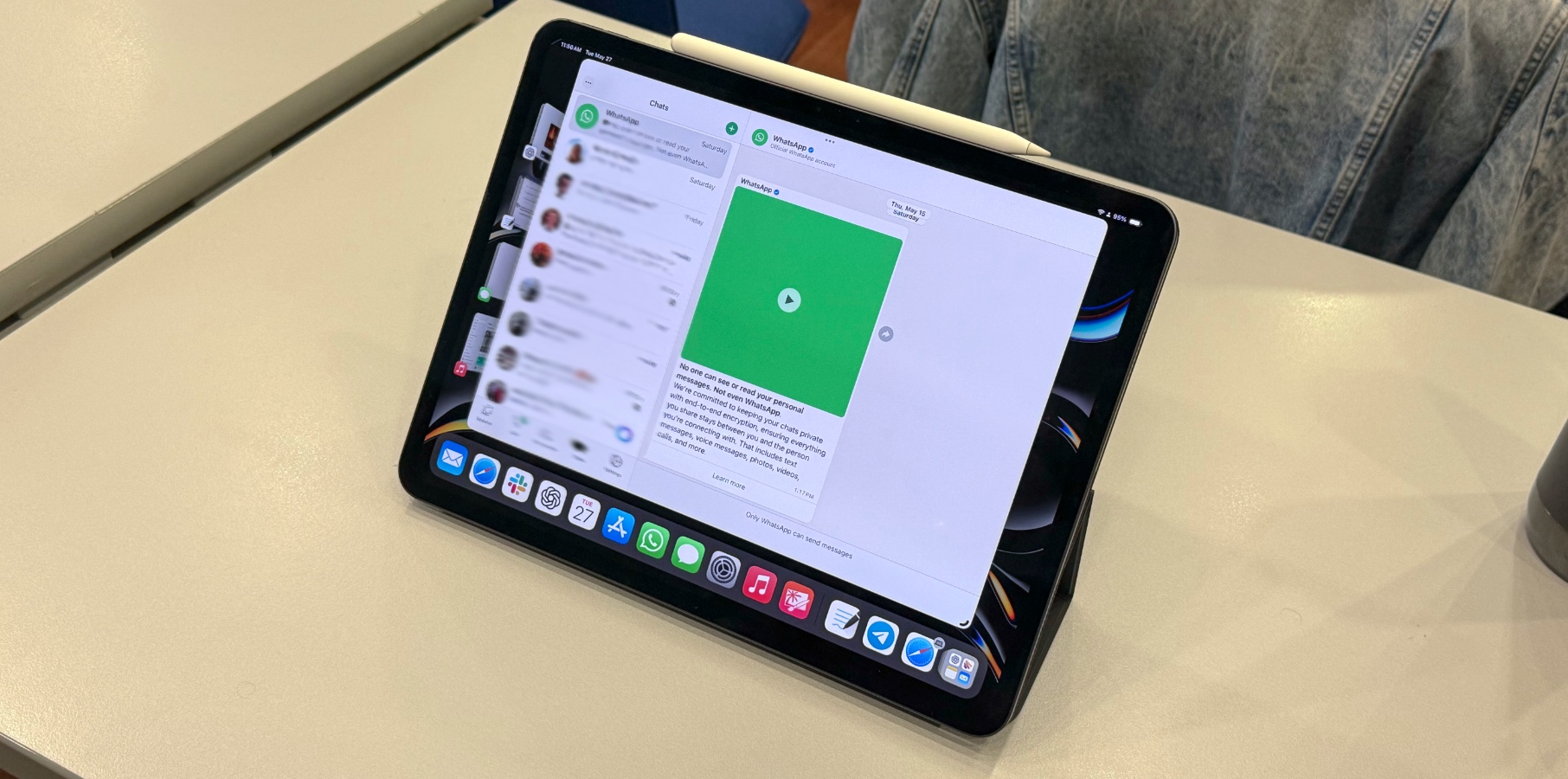
A year and a half ago, WhatsApp announced it was working on an iPad version. While it seems Meta is also focusing on bringing an Instagram app to Apple’s tablet, the long wait has made users question whether Mark Zuckerberg’s company was serious about getting its chat app to the iPad.

WhatsApp recently teased on X that it’s finally almost ready to bring the app to the iPad. The company quoted a post from a user saying, “They should add WhatsApp on iPad,” which suggests it’s almost ready to make it available to everyone.

Over the past year, I’ve been using WhatsApp for iPad as part of its TestFlight community. Here are four ways it boosts Apple’s iPad power, making it feel more like a computer.

Easier to communicate with friends: WhatsApp for iPad offers a very convenient way to stay in touch. Like its competitor Telegram, it’s easier to keep a conversation going on the same screen instead of switching between the iPhone, iPad, and Mac.

Tech. Entertainment. Science. Your inbox.

Sign up for the most interesting tech & entertainment news out there.

By signing up, I agree to the Terms of Use and have reviewed the Privacy Notice.

Sharing and downloading files is easier: For much of the world, WhatsApp is not just a messaging app but also a key tool for sharing photos, videos, and files. With the iPad version, getting what I need is much faster. For example, my Italian teacher always shares homework there. I can quickly send it to GoodNotes and get to work.

Video calls: While FaceTime is my go-to for video chats, many people prefer WhatsApp. With the iPad version, it’s easier to answer calls and still keep things looking professional, especially when using the tablet in landscape mode.

Multitasking hub: With a dedicated iPad app, instead of relying on a web page, WhatsApp integrates with several native features like PiP, Split View, and Slide Over. Using a Magic Keyboard or Smart Keyboard, it’s handy to keep the app floating while working in Stage Manager.

Wrap up

More than just how I use WhatsApp for iPad, this makes the app a stronger competitor to iMessage and Telegram. The company already supports multiple sessions across devices, but it had been missing one key platform: the iPad.

Now, if only the app would come to the Apple Watch, too.

Source

Posted on

BT returns to capital spending for full-fibre expansion

In May 2024, BT reported a financial year of flat revenues and a significant fall in profits, but generated enthusiasm in stock markets by announcing that it had reached a peak for its significant investments in full-fibre broadband – but now, having published its current end-of-year results, the comms giant has turned the capital spending taps back on and given the green light to its Openreach broadband provision to dig further and faster.

Based on what it deems a successful infrastructure build to date, and the maintenance of a pro-investment regulatory and public policy framework from UK communications regulator Ofcom and the UK government, BT has decided to fund additional capital spending. The investment will be made partly through efficiencies and some reprofiling of other spending.

Just 12 months ago, BT Group chief executive Allison Kirkby stated that the company had reached an inflection point in its long-term strategy, having passed peak capital expenditure on its full-fibre broadband roll-out and achieved a £3bn cost and service transformation programme a year ahead of schedule. Now, she believes BT’s full-fibre deployment is a “UK infrastructure success story” and that it makes sense for the company, and the UK in general, to “push on the accelerator pedal”.

“The more full-fibre we build, the more customers choose to connect. In a highly competitive market, and despite a challenging economic landscape, Openreach is building and connecting customers faster and at a lower cost than anyone,” she said.

BT’s fiscal results for the year to 31 March 2025 showed that Openreach has already built the new infrastructure to more than 18 million homes and businesses nationwide. This included more than four million in the past 12 months and 4.9 million premises in rural locations, a key recent target area for development.

BT Group now expects to accelerate towards its target of reaching 25 million premises by December 2026, upping its build rate by 20% to up to five million premises passed in the year to March 2026.

“The momentum in, and impact of, our full-fibre programme is such that we are now raising our build target by 20% to up to five million UK premises in FY26, keeping us comfortably on track to reach 25 million by the end of 2026, while maintaining our cash flow guidance,” Kirkby added. “We are now only one year away from our inflection to £2bn of normalised free cash flow, our target for FY27, and remain on track to deliver £3bn by the end of the decade.”

As it announced the results, Openreach noted that thanks to increased investment from BT Group, it was now committed to building the country’s most reliable broadband technology – full-fibre – even faster.

With 6.8 million customers already connected to the network – 37% of the total footprint – Openreach claims to have seen record demand for its network in the past 12 months. In 2024, it connected 1.8 million customers to full-fibre. It said it was now reporting quarterly net additions for full-fibre above the half-million mark for the first time.

Based on the assumption of a “supportive” economic environment, Openreach said it ultimately expects to make full-fibre available to as many as 30 million premises in the UK by 2030.

The BT Group results also showed that total reported and adjusted revenue for the year reached £20.4bn, down 2% on an annual basis, attributed mainly to “continued challenging trading conditions” in global and non-UK portfolio channels and weaker handset trading in the consumer division offsetting the benefit of fibre-to-the-premises growth at Openreach.

Reported profit before tax was £1.3bn, up 12% compared with the previous fiscal year, said to be primarily due to goodwill impairment in the prior year, offset by higher specific costs and net finance expense. Capital expenditure was £4.9bn, broadly in line with the prior year.

Source

Posted on

3 tricks that let ChatGPT read websites it shouldn’t be

I don’t know about you, but one of the reasons I used to fight with ChatGPT until recently was the AI’s inability to visit certain web pages. I’m not even talking about paywalled content that the AI can’t see. It’s regular web pages you might give the AI when looking to discuss a certain topic.

Sometimes, ChatGPT would try to fetch the content, but then it would just browse the web for information related to what it thought (or saw) at the link I provided. I’d catch it, and then it would ultimately confess why it searched for other sources: ChatGPT couldn’t open the link I pasted in the prompt.

Some websites block chatbots like ChatGPT from reading their pages, and that’s understandable in a world where it’s very likely that AI firms trained on internet content without always asking for permission first.

But it’s a problem if you need to chat with the AI about a specific page. You might want ChatGPT to explain concepts, summarize studies, translate original text, or answer questions related to a particular type of written content online. You don’t want ChatGPT to go looking for other sources.

Tech. Entertainment. Science. Your inbox.

Sign up for the most interesting tech & entertainment news out there.

By signing up, I agree to the Terms of Use and have reviewed the Privacy Notice.

Thankfully, there are very easy ways to let ChatGPT see the content you want to access, including the one I like the most.

Copy and paste

The easiest thing to try is copying and pasting the text from the web page ChatGPT can’t see. Just paste it into the ChatGPT prompt composer with your instructions.

Some websites block copy and paste, though. Other articles and studies might be so long that copying the entire text becomes difficult, especially if the page includes media and ads. The text you upload to ChatGPT will include those elements as plain text, which I wouldn’t want.

In those scenarios, you’ll need other tools.

Feed ChatGPT screenshots

One of the best AI developments of 2024 was multimodality. The AI can understand more than just text. You can talk to ChatGPT and other models, and they can also see (and generate) images and videos.

Tools like Gemini Live give the AI access to live video or your screen, so it can extract information from anything you point to.

If ChatGPT can’t access a web page because chatbots are blocked, you can always take a screenshot and upload it to ChatGPT via the composer.

The “+” button in the ChatGPT web app lets you upload files. Image source: Chris Smith, BGR

Unlike the copy-and-paste method, this one preserves visuals, giving the AI more context about the topic. ChatGPT will understand the text and perform the desired task.

The obvious issue here is that some content spans multiple screens. You’ll need to take several screenshots and upload all of them to the AI. (You can take full-page screenshots as an alternative.)

That brings me to my favorite trick for letting ChatGPT see anything available online, which I use instead of full-page screenshots.

Print to PDF

You know what beats taking screenshots of web pages to feed to ChatGPT? PDF files. You can print any web page to PDF, save the file locally, and then upload it to ChatGPT via the composer.

This method solves the issues with the previous options. First, you’re giving ChatGPT access to images and graphs on the page, not just the text. Also, the PDF preserves links, which might be important for your prompts.

Second, you don’t need 18 screenshots to cover an entire page. The PDF includes all of it, and all you need to do is save the web page as a PDF file.

I mostly use ChatGPT on a Mac, where printing to PDF is as simple as pressing Command + P and choosing Save as PDF instead of printing to a network printer. If you haven’t done this before, it’s worth getting used to so you don’t accidentally print long articles and studies.

You might be using a different platform or want to do it on mobile. Fortunately, you can easily print pages to PDF from Windows, Android, and iPhone.

Sure, some websites might prevent printing. That’s fair. You can still screenshot them, even if it’s a bit tedious.

I’m no longer fighting with ChatGPT about visiting web pages. I don’t even bother feeding it links anymore. I just print the content as a PDF file and upload it to ChatGPT along with the instructions for that specific piece of content.

Source

Posted on

Virgin Media O2 Business offers Microsoft Teams Phone Mobile

Virgin Media O2 Business has announced it will offer Microsoft Teams Phone Mobile as part of its business collaboration portfolio, in a move to enable business customers to easily switch between mobile and desktop Microsoft Teams calls.

In essence, Virgin Media O2 Business says the combined offering – available immediately to large business customers with more than 250 employees – is designed to boost workforce productivity across office and field-based roles by giving employees access to the tools they need on the go, making and receiving Microsoft Teams calls from their mobile device.

With a single phone number or Teams ID, Teams Phone Mobile is built to allow users to make and receive calls over traditional mobile, app-based or desktop calling.

The integrated experience includes mobiles in Teams calling services, allowing employees to extend “in a call” status, access call history and voicemail across devices for ultimate flexibility. This provides easy access to data in a secure and compliant manner, wherever employees are working.

In addition to providing employees with flexibility to take calls from anywhere, Virgin Media O2 Business claims the service offers a 225% return on investment, productivity gains and service streamlining. It says businesses can also cut costs by consolidating mobile services and reducing hardware costs, moving away from public switched telephone network (PSTN) systems before they’re phased out in 2027.

Other benefits claimed by Virgin Media O2 Business include the ability for users to switch between cellular network and internet calls without dropping calls or interruptions, keeping conversation quality high wherever they’re working.

The operator also assured it could offer enterprise-grade security, privacy and policy controls on the go, while allowing integration with compliance services.

In making the announcement, Virgin Media O2 Business stressed that, working with PingCo, it was the UK’s only operator offering the Teams Calling Automation Portal, enabling organisations to deploy and activate users “within minutes”.

The tool is designed to streamline administrative tasks by providing a centralised management interface where IT administrations can provision, configure, and manage phone numbers and calling features across the organisation.

“There are hundreds and thousands of field workers across the UK – from social workers to consultants, insurance assessors to field engineers – all of whom need unified solutions to do their best work on the move,” said Jessica O’Connor, product director at Virgin Media O2 Business.

“With Teams Phone Mobile now available to our customers,” she said. “Virgin Media O2 Business is giving these workers the seamless, secure solution they need to do their best work anywhere. Businesses are empowered to make vital cost savings, all while benefitting from enhanced productivity and responsivity.”

Mark Nixon, director of modern work at Microsoft UK, added: “Teams Phone Mobile offers a next-level calling experience for Microsoft 365 customers, ensuring seamless collaboration, agnostic of device or location. Our ongoing collaboration with Virgin Media O2 Business further expands these capabilities across the UK, making it even easier for businesses to meet the needs of the modern workforce.”

Source

Posted on

HMRC’s hunt for hyperscaler to lead £500m datacentre exit project

HM Revenue & Customs’ (HMRC’s) £500m tender for a hyperscaler to manage a 10-year datacentre exit and cloud migration project for the government tax collection agency is anti-competitive and contradictory, it is claimed.

With the deadline for those interested in participating in the tender for the contract coming up on Friday 23 May 2025, the planning notice for the deal is being picked apart by UK cloud market stakeholders.

In their view, the contract is anti-competitive and exclusionary, given it specifically states that HMRC is courting a hyperscale cloud provider to deliver on its contents.

The decade-long nature of the deal is also problematic, given the current geopolitical climate, it is further claimed. “Ten years is a lifetime in the tech industry [and] if we’ve learned anything from the last few months, it’s how quickly geopolitical tensions, regulatory expectations and technological capabilities can shift,” Mark Boost, CEO of London-based cloud service provider Civo, told Computer Weekly.

“Committing to a single provider on such a timescale introduces unnecessary risk, cost and dependency, precisely when we should be building resilience by diversifying and investing in our sovereign digital capabilities.”

Similar thoughts on the matter were echoed by Owen Sayers, an enterprise architect with more than 20 years’ experience in delivering national policing systems, who said embarking on a 10-year contract with a single supplier does not seem a sensible move.

“In these changeable and even friable times, with technology advancing at an incredible rate, and the growing uncertainty around the rules of international commerce, this doesn’t seem to be a particularly agile or wise thing to do,” he told Computer Weekly. “It is not so long ago that government suggested contracts of half this length were twice as long as they should be – and that was in a much more static and reliable landscape.”

What HMRC needs

As detailed in a planning notice, HMRC needs a hyperscale provider to manage the migration of the agency’s on-premise servers from three Fujitsu datacentres to the cloud, as part of its Data Centre Exit (DCE) programme of work.

The expected go-live date for the contract is 1 April 2026, and it is due to expire on 31 March 2036.

“The Authority is seeking to appoint a hyperscaler to manage the migration of servers from the current on-premise solution to the hyperscaler’s cloud environment,” the planning notice said.

“It is anticipated the appointment will be limited to a single hyperscaler, but this will be validated during the procurement.”

Speaking to Computer Weekly on condition of anonymity, a former government IT advisor said the notice’s wording is problematic from a competition point of view.

“HMRC is leaving itself wide open to legal challenge given that the term ‘hyperscaler’ is widely associated with the US global cloud players,” they said. “This could delay or halt the procurement, wasting taxpayers’ money in the process.”

Server inventory

The contract notice also confirmed that HMRC’s on-premise server inventory features technologies from a wide variety of manufacturers, including HP, IBM, Red Hat, SUSE, VMware, Oracle, Microsoft and NetApp.

“Participation in this tender will be restricted to those providers who are capable of migrating the in-scope servers and associated applications within the proposed timelines and able to provide UK-based hosting services for the duration of the proposed contract,” the notice added.

“Due to the sensitivity of the data being migrated and subsequently hosted, offshore hosting and access to that data is not permissible.”

Stipulating that a hyperscaler must be used to deliver this project, while also stating that the chosen supplier must keep HMRC’s data in-country, is contradictory, said Civo’s Boost.

“The HMRC tender rightly prohibits offshore data hosting or access – an important step towards securing sensitive public sector workloads,” he said. “By structuring the process to favour foreign hyperscalers, many of which operate under geopolitical and legislative conditions far beyond the UK’s control, it risks completely undermining that very principle.”

As an example, Boost pointed to the news that Microsoft has, in response to US sanctions, blocked email access to the International Criminal Court’s chief prosecutor, Karim Khan.

“[This has] shown how quickly political decisions made abroad can affect critical institutions,” he said. “It’s a reminder that when infrastructure is governed elsewhere, so is control. In that context, the UK government’s actions are increasingly difficult to justify.”

An anti-competitive tender?

Nicky Stewart, senior advisor to pro-cloud market competition lobbying body the Open Cloud Coalition, told Computer Weekly the planning notice’s wording risks limiting the pool of suppliers who might consider vying for the deal.

“Government tenders should be open to every capable cloud provider, including innovative challenger companies,” she said. “Excluding these challengers narrows choice, drives up prices and concentrates risk. An inclusive, multi-cloud approach ensures better value, resilience and innovation for public services.”

HMRC’s list of requirements will be far too high for UK companies to meet, but finding a hyperscaler that can guarantee the agency’s data will never leave the UK will also be nigh on impossible, added Sayers.

“Demanding that the successful bidder must be both a hyperscaler (and thus global in scope), and yet at the same time able to deliver 100% of the services locally is going to be a tall order,” he said. “No major hyperscaler commits to doing all support or processing in-country, unless [the customer is based in] the US.”

Expanding on this point, Sayers flagged Microsoft, whose cloud technologies are a mainstay of Whitehall, as being a hyperscaler who would not be able to meet the terms of the contract notice.

This is based on the software giant’s previous admission that it cannot guarantee the UK sovereignty of data stored with its Azure public cloud.

“If ‘must be in the UK’ is the rule HMRC seek to apply, then logically, they would have to disqualify Microsoft [from bidding] up front, even though, inconveniently, they’re also the UK government’s preferred hyperscaler,” he said. “If they don’t, then they’ll create a pretty solid basis for someone to cry foul and challenge the competition.”

And challenge it they should, said Boost. “Handing a £500m contract to US hyperscalers on a silver platter doesn’t just undermine the UK’s digital sovereignty; it raises serious questions about compliance with procurement regulations designed to ensure fair and open competition,” he said.

“This is a test of the UK’s digital backbone,” added Boost. “If the government is serious about supporting homegrown tech and ensuring long-term control over critical infrastructure, its procurement policies must do more than nod to sovereignty; they must actively deliver on it.”

Computer Weekly asked HMRC whether it would entertain a bid from Microsoft for this contract, but the organisation did not directly answer the question.

In response to the rest of the points raised in the article, a spokesperson for HMRC said: “We follow government procurement rules when awarding contracts. This includes ensuring bidders meet any pre-qualification criteria set and carrying out appropriate due diligence.”

Source

Posted on

Enterprise to the fore as Zoom claims strong Q1

With its chief executive, Eric Yuan, somewhat fittingly delivering his financial update via a custom artificial intelligence (AI) avatar, Zoom Communications announced “solid” financial results for the first quarter of its 2026 financial year, with sustained enterprise momentum, strong profitability and the expansion of AI-powered solutions across its core platform.

For the quarter ended 30 April 2025, total revenue amounted to $1.174bn, up 2.9% year on year. Drilling into business lines, enterprise revenue was $704.7m, up 5.9% compared with the first quarter last year, while online revenue was $470m, slipping 1.2% on an annual basis.

Generally Accepted Accounting Principles (GAAP) income from operations for the first quarter was $241.6m, compared with $203m in the first quarter of Zoom’s 2025 financial year. Non-GAAP income from operations – adjusting for stock-based compensation expense and related payroll taxes, and acquisition-related expenses – was $467.3m, compared with $456.6m a year ago. Quarterly GAAP operating margin was 20.6% and non-GAAP operating margin was 39.8%. GAAP net income for the first quarter was $254.6m, and $448.3m on a non-GAAP basis.

Revealing the customer metrics driving the increase in revenue, the results showed that at the end of the first quarter of the 2026 financial year, Zoom had 4,192 customers contributing more than $100,000 in trailing 12-month revenue, up 8% from the same quarter in the previous financial year. In addition, there was a trailing 12-month net dollar expansion rate of 98% for enterprise customers.

It reported online average monthly churn of 2.8% for the first quarter, down 40 basis points from the same quarter last year. The percentage of total online monthly recurring revenue from online customers with a continual term of service of at least 16 months was 74.2%, up 40 basis points year on year.

Assessing the results and providing guidance for the following quarter and the rest of the financial year, Zoom expects total second-quarter revenue to be between $1.195bn and $1.2bn, and revenue in constant currency to be in the range of $1.196bn to $1.201bn.

Non-GAAP income from operations is expected to be between $460m and $465m for the quarter, and non-GAAP diluted earnings per share is expected to be between $1.36 and $1.37, with approximately 310 million weighted average shares outstanding.

For the full 2026 financial year, total revenue is projected to be between $4.8bn and $4.81bn, with revenue in constant currency expected to be between $4.808bn and $4.818bn. Full financial year non-GAAP income from operations is forecast to be between $1.865bn and $1.875bn.

Non-GAAP diluted earnings per share is expected to be between $5.56 and $5.59 for the year, with approximately 312 million weighted average shares outstanding. Full financial year free cash flow is expected to be between $1.68bn and $1.72bn.

“We delivered another solid quarter, exceeding guidance in both revenue and profitability – a testament to the strength of our platform and AI-first innovation,” said Yuan.

“In an uncertain macroeconomic environment, customers are turning to Zoom to drive efficiency, improve customer and employee experiences, and future-proof their businesses. We saw continued momentum in Zoom Customer Experience, Zoom Revenue Accelerator and Workvivo as customers look to elevate CX [customer experience], reinvigorate sales and strengthen culture.”

Source