Posted on

This is when the iPhone will finally get a major

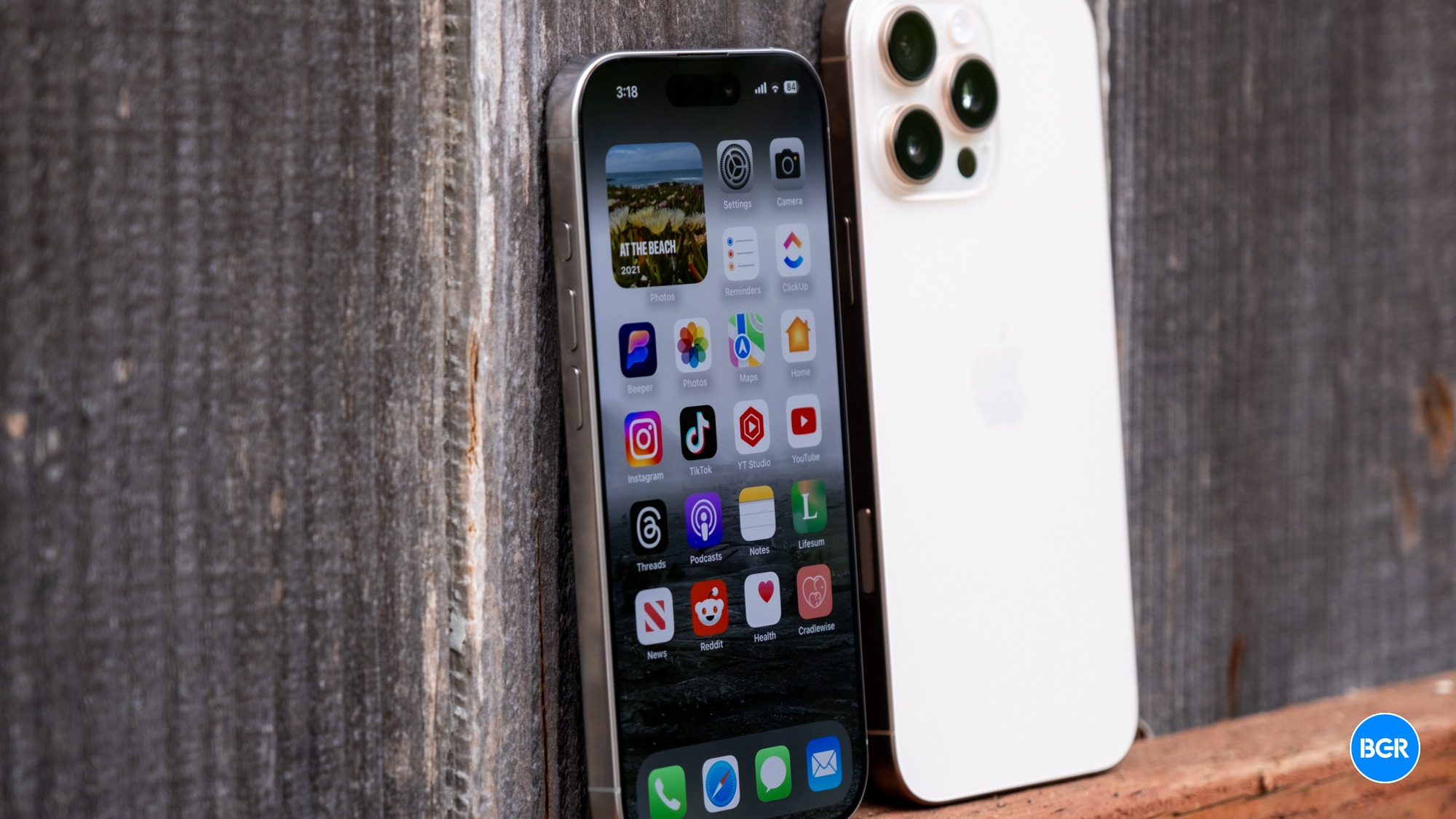
With this year’s iPhone 17 lineup, Apple is expected to make a noticeable change to the design of the phone’s back. Rumors suggest Cupertino will add a camera bar look to three of the four iPhone 17 models. This means the back of the iPhone will look quite different from the design introduced with the iPhone 11 Pro, which hasn’t seen a major update since the Dynamic Island on the iPhone 14 Pro.

After revamping the iPhone’s back, Apple is expected to keep refining the design with the following two models. According to Weibo leaker Digital Chat Station, these changes are planned for the next three years.

  • 2025: Major redesign of the back with a large horizontal matrix lens.
  • 2026: Major redesign of the front featuring under-display Face ID.
  • 2027: All-new full screen front, with both Face ID and front-facing camera placed under the display.

Digital Chat Station isn’t the only one reporting these changes. Display analyst Ross Young previously shared the roadmap for both regular and Pro iPhone models and echoed similar information. He also detailed when Pro features would arrive on regular iPhones:

  • 2025: Pill-shaped cutout with Always-On Display and ProMotion
  • 2026: Pill-shaped cutout with Always-On Display and ProMotion
  • 2027: Under-panel Face ID and front camera hole, with Always-On Display and ProMotion

These reports also align with The Information‘s Wayne Ma, who recently leaked a feature of the rumored iPhone 20. According to Ma, the iPhone 20 will feature an all-screen design with all sensors housed under the display.

Tech. Entertainment. Science. Your inbox.

Sign up for the most interesting tech & entertainment news out there.

By signing up, I agree to the Terms of Use and have reviewed the Privacy Notice.

Looking ahead, Apple’s iPhone lineup is expected to get broader and more intriguing. The company is rumored to continue offering an “e” model and may introduce an all-new iPhone Fold as early as late next year or early 2027. On top of that, a new iPhone 17 Air is rumored to debut in the second quarter of 2025.

Source

Posted on

Police Digital Service board director quits several months after CISO

A senior figure from the Home Office has stepped down as a director at the Police Digital Service (PDS), several weeks after the organisation lost its chief information security officer (CISO) to the private sector.

A Companies House filing confirms Bethan Page-Jones, the head of the Home Office’s national police capabilities unit, had her appointment terminated on 14 May 2025.

Computer Weekly understands Page-Jones’ departure is linked to her assuming a new role at the Home Office, having recently been appointed as the director of strategy, capability and resources for the department’s public safety group.

PDS would not comment on Page-Jones’ departure, but instead instructed Computer Weekly to contact the Home Office, who confirmed she is no longer working with the PDS.

Page-Jones’ departure comes several weeks after the organisation’s CISO – Jason Corbishley – announced on professional social networking site LinkedIn that he had left the PDS after four years.

He is now working as a consulting director at cyber security-focused threat research company Palo Alto Networks Unit 42, having previously served as the chief technology officer of the UK policing sector’s National Enabling Programme, as well as the head of ICT at Cumbria Constabulary.

In a statement to Computer Weekly, a PDS spokesperson said: “The recruitment process for a new CISO is underway, and in the meantime, a highly qualified interim CISO has been appointed from within the organisation.”

News of the departures comes 10 months after details emerged that two PDS employees were arrested in July 2024, after allegations of malpractice were made to the National Police Chiefs’ Council and the Association of Police and Crime Commissioners concerning the behaviour of individuals working there.

These allegations were passed on to the City of London Police to investigate further, which confirmed two members of staff had been arrested, interviewed and bailed for suspected bribery, fraud and misconduct in public office.

At the time of writing, the matter was still under investigation by the City of London Police, but in the wake of the arrests being made public, several high-profile employees of PDS left the organisation, including former CEO Ian Bell.

PDS also stated at the time that the organisation would be the subject of a “thorough review”, while the employees involved would also be expected to participate in an HR-led misconduct review.

Organisational review

In a separate statement to Computer Weekly, PDS CEO Tony Eastaugh confirmed the organisational review was completed several months ago.

“We concluded a significant reset programme at the end of last year, which allowed us to impose a new operating model and an ambitious strategic delivery plan to support policing and public safety,” he said. “Our organisational focus is delivering core and ‘live’ services at greater speed, scale and efficiency.”

PDS, incorporated in June 2012, is classified as a private company with no shareholders, and its activities are funded by the Home Office and the wider policing sector.

The organisation is responsible for overseeing the development and delivery of the National Police Digital Strategy, but doubts about its future have dogged the PDS in recent months, after the government announced plans to create a National Centre of Policing that will have IT in its purview.

Source

Posted on

Apple talks up App Store anti-fraud efforts as government scrutiny

As Apple faces losing control over the App Store in the US, the company published a press release revealing that it stopped over $2 billion in potentially fraudulent transactions and blocked nearly 2 million risky app submissions from reaching users in 2024.

While it’s always interesting to see the company’s efforts to prevent fraud on the App Store, Cupertino is fighting hard to maintain control of its lucrative marketplace. A judge in California has required Apple to let developers offer third-party payment options outside the App Store and to allow Fortnite back on the platform.

Apple says that, according to its annual App Store fraud analysis, it has “protected users by preventing over $9 billion in fraudulent transactions” since 2008. The company also shared a breakdown of its efforts to fight fraud on the App Store:

Account Fraud: In 2024, the company terminated more than 146,000 developer accounts over fraud concerns and rejected an additional 139,000 developer enrollments, preventing bad actors from submitting their apps. Apple also rejected over 711 million customer account creations and deactivated nearly 129 million accounts last year, stopping risky and malicious accounts from spamming or manipulating ratings and reviews.

Tech. Entertainment. Science. Your inbox.

Sign up for the most interesting tech & entertainment news out there.

By signing up, I agree to the Terms of Use and have reviewed the Privacy Notice.

App Review: Apple relies on an App Store Review team to ensure submitted apps aren’t fraudulent. On average, the team reviews nearly 150,000 app submissions each week. App Review combines human review and automated processes to detect and take action on apps suspected of potentially harming users. Over 7.7 million apps were reviewed in 2024, and more than 1.9 million were rejected for failing to meet the company’s standards.

Discovery Fraud: In 2024, Apple processed over 1.2 billion ratings and reviews and removed more than 143 million fraudulent ones. That same year, the company also removed over 7,400 apps from App Store charts and nearly 9,500 deceptive apps from appearing in search results.

Payment and Credit Card Fraud: Last year, Apple identified nearly 4.7 million stolen credit cards and banned over 1.6 million accounts from transacting again. Alongside its antifraud measures, Apple provides developers with tools like Apple Pay and StoreKit, which are used by over 420,000 apps to offer users a secure way to make purchases on the App Store.

The company is also offering a new customer support article for the first time that provides information about the tools and resources available to help users on the App Store.

Wrap up

While Apple does a good job with App Store reviews and fraud prevention, the system isn’t perfect. Every now and then, BGR reports on a fraudulent app that makes its way to the store. But the company wants users (and governments across the globe) to know that even if the system has flaws, it’s probably still better than leaving it to others to manage.

After all, Apple keeps telling users the App Store is a “place you can trust.” Still, future fraud reports could look very different as governments push the company to open up its marketplace and support third-party stores or payment systems.

Source

Posted on

Every product Apple might launch at WWDC 2025

In less than two weeks, Apple will hold its WWDC 2025 keynote. Along with unveiling new features for iOS 19, iPadOS 19, macOS 16, watchOS 12, tvOS 19, and visionOS 3, Apple could also use the event to introduce new products.

There aren’t many rumors about possible hardware announcements at WWDC 2025, but Apple has introduced new products at previous events.

Here’s a quick refresher on what Apple has unveiled at past WWDCs:

  • WWDC 2024: No new hardware was introduced.
  • WWDC 2023: Apple Vision Pro, 15-inch MacBook Air with the M2 chip, Mac Studio with M2 Max and M2 Ultra, and Mac Pro with M2 Ultra.
  • WWDC 2022: M2 MacBook Air.
  • WWDC 2021: No new hardware was introduced.
  • WWDC 2020: No new hardware was introduced. Apple did offer developers a Mac mini with an A12Z Bionic chip, ahead of the first M1 Macs later that year.

Apple doesn’t usually debut new products at WWDC, but when it does, there can be a lot to see. Here are the devices most likely to be revealed:

Tech. Entertainment. Science. Your inbox.

Sign up for the most interesting tech & entertainment news out there.

By signing up, I agree to the Terms of Use and have reviewed the Privacy Notice.

AirTag 2

Image source: José Adorno for BGR

Apple’s long-rumored AirTag refresh may finally be on the way. With fewer accessories available and analysts pointing to a new Precision Find chip, we might see AirTag 2 announced during the WWDC 2025 keynote.

  • Here are the features expected for AirTag 2

Apple’s Smart Display (aka HomePad)

Amazon’s Echo Show 8 in action. Image source: Christian de Looper for BGR

Apple is expected to launch its first smart display later this year. The device will be similar to an Amazon Echo Show.

According to Bloomberg, Apple’s smart home device will have a 6-inch screen and “look like a square iPad.” Placing two iPhones side by side gives a rough idea of its size. It will include a camera above the screen, a rechargeable battery, and internal speakers. The display is expected to come in black and silver options.

While the device will rely heavily on Apple Intelligence, Cupertino might preview it at WWDC 2025, with a release planned for later.

New cases and bands

Image source: José Adorno for BGR

As usual, Apple is expected to refresh its lineup of cases and Apple Watch bands at the WWDC 2025 keynote. New summer colors are likely to be introduced.

What about new Macs?

Image source: Apple Inc.

The only Mac still waiting for an update is the Mac Pro. It’s unclear if Apple will reveal a new version at WWDC 2025, though rumors suggest an M5 Ultra version might arrive next year. The other M5 Macs are expected as soon as the second half of the year.

Wrap up

BGR will keep reporting on any other products Apple might unveil at WWDC. Even if no new hardware is announced, several devices are expected later this year.

Source

Posted on

We might finally have an idea of when Apple’s Siri

Apple’s WWDC 2025 is just a few weeks away, and there’s reason to be excited. Apple is rumored to give the iPhone a big redesign via iOS 19. The same goes for the iPad and Mac.

Rumors say Apple wants a more uniform design experience across the board. iOS 19, iPadOS 19, and macOS 16 will be even more similar than before. The new design should be inspired by visionOS.

Apple Intelligence will be the big elephant in the room, as Apple will somehow have to address this year’s big misfire while also moving forward with new AI features.

However, the “SiriGPT” version of ChatGPT, or an Apple chatbot of its own, might not be unveiled at the show even if it’s supposed to come to iOS 19 at some point in the distant future. A new repot says that Apple is still working on fixing its AI strategy, which involves a more cautious approach to announcing new features.

Tech. Entertainment. Science. Your inbox.

Sign up for the most interesting tech & entertainment news out there.

By signing up, I agree to the Terms of Use and have reviewed the Privacy Notice.

Apple detailed an incredibly Siri experience at WWDC 2024, saying the assistant will have access to on-device data for better responses and be able to perform actions in apps. The feature would not be ready by September 2024 but would be released during the iOS 18 cycle.

Apple sold the iPhone 16 as Apple Intelligence-ready phones.

Then, a few months ago, Apple had to admit that the Siri experience it wanted to offer iPhone users with supported hardware would not be ready this year. It might take a while for that Siri variant to come out. It was a rare, humiliating misfire from a company not known to announce features that take longer to ship.

Soon after Apple said the Siri AI versions unveiled at WWDC 2024 would not be available on the iPhone, iPad, and Mac in 2025, we started learning more details about the inner workings of Apple’s AI teams, which showed the various issues Apple has been dealing with internally.

A new report from Bloomberg (via The Verge) indicates that Apple is still fixing its AI strategy and roadmap as it struggles to catch up with rivals.

The report notes that Apple execs, including Craig Federighi, were reluctant to invest in AI because they didn’t see the endgame. That uncertainty is not common at Apple, which knows exactly where it’s heading with its products.

Apple AI chief John Giannandrea supposedly believed people didn’t want AI chatbots, and iPhone users might develop tools like ChatGPT. He was obviously wrong, and I say that as a longtime iPhone user who is also a longtime ChatGPT user. I can’t go back to using the internet without a chatbot on hand, and that includes Apple devices.

I’d love a Siri LLM that can do what ChatGPT does, but I’ll have to wait for that to happen.

Due to Apple’s delays in investing in AI, including buying the expensive GPUs needed for development and actually developing a working SiriGPT, we’ll have to wait longer for Apple to deliver one.

Gurman said in his blog that Apple won’t spend time at WWDC 2025 talking about significant upgrades to Siri, whether it’s the ChatGPT-like experience or the features Apple announced last year.

That’s actually not a bad idea, considering what happened last year. Apple shouldn’t make the same mistake twice, allowing marketing to get ahead of development. Instead, Apple should announce new AI capabilities for Siri whenever it’s ready, whether it’s last year’s experience or ChatGPT-like functionality.

Remember that everyone else in the genAI space releases new AI products and upgrades when they’re ready. Those launches are spread throughout the year and won’t always coincide with big developer events. Take this week’s Google I/O 2025 event that will probably be dedicated to AI announcements. Google will lay the groundwork for various new products, but it’ll continue to upgrade Gemini between this year’s I/O edition and the next.

The Bloomberg report says that Apple continues to work on the Siri LLM version, but it’s building the Siri chatbot from scratch. Apple wanted to give the curent version of Siri ChatGPT abilities, but those efforts failed. The Siri chatbot is supposedly coming from an AI team in Zurich.

Training the Siri chatbot will involve collecting user data from iPhones using a differential privacy technology that doesn’t remove user data from the iPhone. Instead, Apple will compare fake training data with language on the iPhone (like the Mail app) on-device. The synthesized data will go back to Apple for training.

Apple is supposedly considering collecting online data with the Siri model to improve its chatbot abilities. This would turn the Siri AI into an online AI search engine of sorts, similar to Perplexity.

None of this is official, of course. But I’m certain Apple has what it takes to catch up to rivals in the AI race, no matter how long it takes or whether it makes any big Siri announcements next month.

If Apple manages to bring the Siri LLM to iOS 19 before WWDC 2026, I’m sure the company will host some sort of special events to announce its own chatbot. But will Apple actually catch up to ChatGPT, Gemini, and everyone else by next year? That seems hardly likely.

Source

Posted on

AI storage: NAS vs SAN vs object for training and

Artificial intelligence (AI) relies on vast amounts of data.

Enterprises that take on AI projects, especially for large language models (LLMs) and generative AI (GenAI), need to capture large volumes of data for model training as well as to store outputs from AI-enabled systems.

That data, however, is unlikely to be in a single system or location. Customers will draw on multiple data sources, including structured data in databases and often unstructured data. Some of these information sources will be on-premises and others in the cloud.

To deal with AI’s hunger for data, system architects need to look at storage across storage area networks (SAN), network attached storage (NAS), and, potentially, object storage.

In this article, we look at the pros and cons of block, file and object storage for AI projects and the challenges of finding the right blend for organisations.

AI’s data mountain

The current generation of AI projects are rarely, if ever, characterised by a single source of data. Instead, generative AI models draw on a wide range of data, much of it unstructured. This includes documents, images, audio and video and computer code, to name a few.

Everything about generative AI is about understanding relationships. You have the source data still in your unstructured data, either file or object, and your vectorised data sitting on block Patrick Smith, Pure Storage

When it comes to training LLMs, the more data sources the better. But, at the same time, enterprises link LLMs to their own data sources, either directly or through retrieval augmented generation (RAG) that improves the accuracy and relevance of results. That data might be documents but can include enterprise applications that hold data in a relational database.

“A lot of AI is driven by unstructured data, so applications point at files, images, video, audio – all unstructured data,” says Patrick Smith, field chief technology officer EMEA at storage supplier Pure Storage. “But people also look at their production datasets and want to tie them to their generative AI projects.”

This, he adds, includes adding vectorisation to databases, which is commonly supported by the main relational database suppliers, such as Oracle.

NAS and SAN

For system architects who support AI projects, this raises the question of where best to store data. The simplest option would be to leave data sources as they are, but this is not always possible.

This could be because data needs further processing, the AI application needs to be isolated from production systems, or current storage systems lack the throughput the AI application requires.

In addition, vectorisation usually leads to large increases in data volumes – a 10 times increase is not untypical – and this puts more demands on production storage.

This means that storage needs to be flexible and needs to be able to scale, and AI project data handling requirements differ during each stage. Training demands large volumes of raw data, inference – running the model in production – might not require as much data but needs higher throughput and minimal latency.

Enterprises tend to keep the bulk of their unstructured data on file access NAS storage. NAS has the advantages of being relatively low cost and easier to manage and scale than alternatives such as direct-attached storage (DAS) or block access SAN storage.

Structured data is more likely to be block storage. Usually this will be on a SAN, although direct attached storage might be sufficient for smaller AI projects.

Here, achieving the best performance – in terms of IOPS and throughput from the storage array – offsets the greater complexity of NAS. Enterprise production systems, such as enterprise resource planning (ERP) and customer relationship management (CRM), will use SAN or DAS to store their data in database files. So, in practice, data for AI is likely to be drawn data from SAN and NAS environments.

“AI data can be stored either in NAS or SAN. It’s all about the way the AI tools want or need to access the data,” says Bruce Kornfeld, chief product officer at StorMagic. “You can store AI data on a SAN, but AI tools won’t typically read the blocks. They’ll use a type of file access protocol to get to the block data.”

It is not necessarily the case that one protocol will better than the other. It depends very much on the nature of the data sources and on the output of the AI system

For a primarily document or image-based AI system, NAS might be fast enough. For an application such as autonomous driving or surveillance, systems might use a SAN or even high-speed local storage.

Again, data architects will also need to distinguish between training and inference phases of their projects and consider whether the overhead of moving data between storage systems outweighs performance benefits, especially in training.

Enter object storage

This has led some organisations to look at object storage as a way of unifying data sources for AI. Object storage is increasingly in use with enterprises, and not just in cloud storage – on-premise object stores are gaining market share too.

Object has some advantages for AI, not least its flat structure and global name space, (relatively) low management overheads, ease of expansion and low cost.

Performance, however, has not been a strength for object storage. This has tended to make it more suited to tasks such as archiving than applications that demand low latency and high levels of data throughput.

Suppliers are working to close the performance gap, however. Pure Storage and NetApp sell storage systems that can handle file and object and, in some cases, block too. These include Pure’s FlashBlade, and hardware that runs NetApp’s OnTap storage operating system. These technologies give storage managers the flexibility to use the best data formats, without creating silos tied to specific hardware.

Others, such as Hammerspace, with its Hyperscale NAS, aim to squeeze additional performance out of equipment that runs the network file system (NFS). This, they argue, prevents bottlenecks where storage fails to keep up with data-hungry graphics processing units (GPUs).

Ticking all the boxes

But until better-performing object storage systems become more widely available, or more enterprises move to universal storage platforms, AI is likely to use NAS, SAN, object and even DAS in combination.

That said, the balance between the elements is likely to change during the lifetime of an AI project, and as AI tools and their applications evolve.

At Pure, Smith has seen requests for new hardware for unstructured data, while block and vector database requirements are being met for most customers on existing hardware.

“Everything about generative AI is about understanding relationships,” he says. “You have the source data still in your unstructured data, either file or object, and your vectorised data sitting on block.”

Source

Posted on

iPhone 17 Air battery spec leak might not be the

Just the other day, I wrote about how Apple had a few tricks up its sleeve to make the iPhone 17 Air feature great battery life despite its ultra-thin design. Now, blog Naver news aggregator yeux1122 corroborates that the iPhone 17 Air could actually have decent battery life.

According to a Taiwanese supplier source, the iPhone 17 Air will be incredibly thin (5.5mm), weigh very little (about 145g), and feature a 2,800 mAh battery capacity. That’s similar to the iPhone 12, which has up to 2,815 mAh.

If this turns out to be accurate, a 2025 iPhone might struggle to handle new features without compromising battery life. But the leaker suggests the capacity could increase by 15 to 20% thanks to a possible high-density battery cell.

If Apple can push the battery capacity up to 3,360 mAh in the iPhone 17 Air, it would bring it in line with the iPhone 15, which is great.

Tech. Entertainment. Science. Your inbox.

Sign up for the most interesting tech & entertainment news out there.

By signing up, I agree to the Terms of Use and have reviewed the Privacy Notice.

Putting that together with recent leaks, it seems possible that Apple could deliver an ultra-thin device with solid battery life. While I’d still prefer the new battery tech in an iPhone 17 Pro Max, this means users open to trying something different won’t have to deal with too many compromises.

You can also expect these other battery improvements for the iPhone 17 Air:

  • Apple proprietary chips: Apple improved the iPhone 16e’s battery life thanks to the new cellular modem, the C1 chip. Apple is expected to use its own C1 processor, Wi-Fi modem, and A19 chip. By skipping third-party components, the company can offer tighter hardware and software integration, which should help battery performance.
  • ProMotion technology: After years of keeping Always-On Display and ProMotion exclusive to Pro models, Apple will bring these features to the iPhone 17 and iPhone 17 Air models. If the rumors are accurate, the devices will benefit from dynamic refresh rates that use less battery.
  • AI features: Bloomberg‘s Mark Gurman reports that Apple is working on an AI-driven feature to save battery life. While it’s unclear if this will roll out with iOS 19, it could be a great way to tackle any potential battery concerns with the iPhone 17 Air.

There’s also a rumor that Apple is working on a new Smart Battery Case accessory. These have been popular in the past, even among Pro Max users.

All things considered, the iPhone 17 Air looks like a solid new option for Apple fans who want an ultra-thin phone that harkens back to the good old days of the iPhone 6.

Source

Posted on

Labour puts Humphrey AI to work for council admin

The UK government has announced that its artificial intelligence (AI) suite, Humphrey, is being trialled by a number of local councils.

Its AI tool, Minute, takes notes in meetings, and was recently used in one chaired by prime minister Keir Starmer.

Part of Humphrey, the package of AI tools built to help civil servants deliver for ministers and the public more effectively, uses generative AI to turn meetings into notes and provides tools for correcting summaries. The government found that early tests using Minute showed officials saved an hour of admin per one-hour meeting.

The Department for Science, Innovation and Technology (DSIT) said Minute can help speed up actions after planning meetings, allowing officers to focus on the task at hand rather than paperwork, and make informed decisions to get homes built. It’s currently being trialled by 25 local councils.

Among the ways it’s being used is to help streamline burdensome admin tasks in the planning process as part of the government’s plans to build 1.5 million homes by 2030.

Lords minister for housing and local government Sharon Taylor said: “Local councils are on the frontline of housing delivery, and we’re backing them with cutting-edge AI technology like Minute so officers can spend less time buried in admin and more time helping to get Britain building.

“This is alongside our landmark reforms to deliver 1.5 million homes, including the Planning and Infrastructure Bill, which will get working people and families into secure homes and boost economic growth right across the country,” she said.

Minute can also be used to take notes in meetings between social care workers and their supervisors, allowing workers to focus on offering more support instead of being bogged down by bureaucracy.  

The Minute trial ties in with a broader government initiative to help local councils use technology to improve essential services they are responsible for delivering to local residents. To fulfil one of the actions in the 50-point AI Opportunities Plan of Action, which was published in January, the government has also introduced an AI Knowledge Hub for sharing examples of how local councils are using technology so others can learn from them – such as an AI assistant that speeds up the reporting of fly-tipping and graffiti in central London.

In 2024, a Local Government Association (LGA) survey found that the majority of councils who took part in the poll (85%) were using or exploring how they would use AI. The areas where most respondents had realised benefits from using AI were staff productivity (35%), service efficiencies (32%) and cost savings (22%).

However, the LGA reported that the five biggest barriers to deploying AI identified by respondents were a lack of funding (64%), a lack of staff capabilities (53%), a lack of staff capacity (50%), a lack of sufficient governance and a lack of clear use cases (41% each).

The government’s own State of digital government review, published earlier this year, reported that each of the 320 local authorities in England negotiate technology contracts with big tech companies independently – when many are buying exactly the same tools – making this spending much less effective. The trials with AI-based tools built on Humphrey and the AI Knowledge Hub represent an attempt by the government to reduce the barriers to deploying AI across the public sector.

AI and digital government minister Feryal Clark said: “From parking permits and planning permission, local councils handle some of the services that impact our daily lives most. For too long, they have been left to fend for themselves when keeping up with rapid innovations in AI and digital technology – when we know it has huge potential to help solve many of the challenges they face.

She added that the government was going to work with local councils to help them buy and build the technology they need to deliver Labour’s Plan for Change and support their local communities more effectively. 

Source

Posted on

AirPods Max might be 7 years old before Apple finally

AirPods Max is one of Apple’s weirdest products. First introduced in late 2020, it was the company’s first attempt to produce high-end headphones. At the time, AirPods Max was a revolutionary product because it offered AirPods’ magical features, an unparalleled high-end finish, and the company’s shiny H1 audio chips.

While AirPods Max is my favorite headphone pair to date, Apple customers were hesitant to buy one due to the high price. That said, some of those who did had another complaint: how heavy these headphones are.

AirPods Max weighs 13.6 ounces (386.2 grams) and is definitely a heavy product. While they’ve never caused me discomfort, many people report neck pain after prolonged use. This might soon change.

According to analyst Ming-Chi Kuo, Apple is finally working on a lighter version of AirPods Max. While the analyst is careful not to call it a second-generation product, it seems Apple might be ready to upgrade its most expensive headphones.

Tech. Entertainment. Science. Your inbox.

Sign up for the most interesting tech & entertainment news out there.

By signing up, I agree to the Terms of Use and have reviewed the Privacy Notice.

This report comes a few months after Bloomberg‘s Mark Gurman suggested Apple had no concrete plans to update the headphones beyond a slight USB-C tweak with new colors in late 2024. Fortunately, it seems Cupertino might have changed its mind.

What’s notable about Kuo’s report is that a true second-generation product could take up to seven years to develop. Still, Apple will likely upgrade the headphones by then with a new (unannounced) H3 or H4 chip. This lighter version could also address another common issue: the Smart Case.

While AirPods Pro 3 is expected to launch later this year, Kuo says AirPods will only get more interesting in 2026 when the company plans to add an IR camera to them. Rumors suggest Apple wants to include this feature to support Apple Intelligence and add new health capabilities.

Source

Posted on

Three UK doubles Glasgow mobile speeds in UK-first Open RAN

Mobile operator Three UK recently completed the first stage of a “landmark” trial resulting in the UK’s first deployment of open radio access network (Open RAN) technology in a dense urban environment, building on earlier trials that had taken place in rural locations.

The trial is part of the Small Cells ORAN in Dense Areas (Sconda) project, a partnership between Three UK, Mavenir, AWTG, Freshwave, PI Works, the Scotland 5G Centre and Accenture, with the support of Glasgow City Council and financial backing by the Department for Science, Innovation and Technology (DSIT).

Sconda seeks to address the unique technical and commercial challenges of urban areas and will be the first in the world to integrate Open RAN and traditional RAN in a high-density, high-demand environment handling live traffic.

The project will see the creation, integration, optimisation and delivery of an Open RAN network in Glasgow City Centre, integrated with the existing Three UK Core Network and operating alongside its traditional RAN. Sconda will create a small cell densification layer in high-demand urban hotspots to offload the macro traffic and provide a better customer experience.

The Glasgow trial was designed to test the viability of deploying Open RAN in a complex city setting. The centre of Scotland’s largest city was selected to assess how the technology performs in busy, high-traffic areas, where integration with existing infrastructure and multiple technologies presents additional complexity.

The specific Glasgow City Centre location chosen was identified as a current hotspot for Three customers, both in footfall and mobile traffic. The project will handle live traffic from Three customers, aiming to provide improvement in both coverage and capacity. The project will further look to enable automation of network performance within the challenging radio environment of Glasgow city centre.

The trial results are encouraging and provide a strong foundation for further scaling and optimisation of Open RAN in cities Iain Milligan, Three UK

It will also aim to demonstrate how Open RAN can be deployed, integrated and managed within the wider Three network in Glasgow, and evaluate how Open RAN compares with the quality and capacity of a traditional RAN network.

By installing compact Open RAN-compliant small cells on street furniture, Three UK said it has delivered “impressive results”. Specifically, the company revealed that both 4G and 5G speeds doubled at peak times, with 5G speeds reaching up to 520Mbps. The improved performance is also said to help ease congestion on surrounding network sites by increasing overall capacity.

Following the successful trial of 18 live sites in Glasgow, the project will now move into its final deployment phase, expanding to a total of 34 Open RAN small cell sites across the city centre.

Commenting on the Glasow trial, Three UK chief network officer Iain Milligan said: “This is the UK’s first Open RAN trial to tackle the real-world complexity of a dense urban environment. Urban deployments bring a different level of technical and operational challenge compared to rural environments. We’ve had to navigate integration with legacy systems, security layers and evolving software – all while delivering measurable improvements for customers. The trial results are encouraging and provide a strong foundation for further scaling and optimisation of Open RAN in cities.”

Source