Posted on

UK networks feel the strain under AI pressure

Even though very few businesses around the world are resisting the allure of artificial intelligence (AI), research commissioned by Expereo has revealed a number of major roadblocks to UK AI plans, such as poor infrastructure, resistance from employees and unreasonable demands, while two-fifths of UK chief information officers have warned of unrealistic board expectations of AI.

The Enterprise horizons 2025 study was carried out for the managed network-as-a-service provider by IDC, taking the views of 650 global enterprise technology leaders across Europe, the US and APAC.

Despite some of the worrying findings revealed, the research is said to have painted a positive picture for the promise of AI, but only if businesses can overcome existing challenges. Amid the volatile economic backdrop, most organisations are placing their bets on AI to drive growth. The research showed that 88% of UK business leaders regarded AI as becoming important to fulfilling business priorities in the next 12 months.

It also revealed that AI has largely met or exceeded expectations to date, with only 14% of UK businesses saying AI has fallen short of expectations. Moreover, a clear majority of UK tech leaders agreed that AI will positively impact business, particularly customer-facing activities (64%) and costs (65%).

In addition, half of the leaders feel their network performance is limiting their ability to support large AI projects. Some 47% of UK organisations noted that their network or connectivity infrastructure was not ready to support new technology initiatives, such as AI, while 49% of UK organisations reported that their network performance was preventing or limiting their ability to support large data or AI projects.

Nearly two in five UK technology leaders believe their board has unrealistic expectations or demands on how new technologies like AI will impact business performance.

Furthermore, unrealistic board expectations were seen as potentially throwing organisations’ AI plans into chaos, as 26% of UK technology executives said expectations in their organisation of what AI can do are growing faster than their ability to meet them. Despite these challenges, 76% of UK technology leaders believe the focus on AI has raised their profile at the board level, up from 60% in 2024.

Just over two-fifths (41%) of UK businesses also highlighted that concerns over AI governance or ethics remained a significant obstacle to implementing AI initiatives in their organisation, followed by resistance from employees regarding their jobs (30%) and keeping up with the pace of change (32%). Meanwhile, 29% of UK businesses stressed that current external technology partners not having the right capabilities remains a significant obstacle to implementing AI initiatives in their organisation.

Assessing the key trends revealed in the study, Expereo CEO Ben Elms said as global businesses embrace AI to transform employee and customer experience, setting realistic goals and aligning expectations will be critical to ensuring that AI delivers long-term value, rather than being viewed as a quick fix.

“While the potential of AI is immense, its successful integration requires careful planning,” he said. “Technology leaders must recognise the need for robust networks and connectivity infrastructure to support AI at scale, while also ensuring consistent performance across these networks. We are at a pivotal moment where strategic investments in technology and IT infrastructure are necessary to meet both current and future demands.”

Source

Posted on

AI confirmed a Raphael masterpiece wasn’t painted by the famous

See the dude in the top left corner of the top of the painting above (Raphael’s famous Madonna della Rosa)? That’s St. Joseph lurking over the Madonna, the Child, and St. John. And yes, he does seem to be painted differently than the others, something scholars have always attributed to someone else actually painting St. Joseph in the Madonna of the Rose painting.

But since you can talk to the Renaissance master about his painting, and since there could be several reasons why Raphael himself might have opted for this particular display of St. Joseph, it’s really up to the person in front of the painting to make up their own mind about what they’re looking at.

But fast forward to the 21st century and the dawn of increasingly intelligent AI models, and we seem to have a definitive answer. It wasn’t Raphael who painted the face in the background. For reasons unknown, someone else got to do that.

While AI can look at the painting differently and determine that not all four faces were drawn by the hands of the same person, it can’t necessarily tell us who painted St. Joseph.

Tech. Entertainment. Science. Your inbox.

Sign up for the most interesting tech & entertainment news out there.

By signing up, I agree to the Terms of Use and have reviewed the Privacy Notice.

As ScienceAlert reports, researchers from the UK and the US came up with a custom analysis algorithm in recent years, producing a research paper in 2023 on the work that has gone into proving that speculations about the Madonna della Rosa piece were right.

“Using deep feature analysis, we used pictures of authenticated Raphael paintings to train the computer to recognize his style to a very detailed degree, from the brushstrokes, the color palette, the shading and every aspect of the work,” Professor Hassan Ugail explained a couple of years ago when the research was first published.

“The computer sees far more deeply than the human eye, to microscopic level.”

They repurposed a Microsoft pre-trained architecture called ResNet50 and combined it with a Support Vector Machine ML technique to identify Raphael’s paintings. The tech has been used before, showing 98% accuracy in identifying the artist’s works. Those experiments had the AI look at entire paintings.

This time, the researchers retrained the model to look at faces in paintings rather than the whole thing. They then told the AI to look at Madonna della Rosa as a whole and then at the faces.

The AI’s analysis of the entire painting was inconclusive. However, when it examined the individual parts of the painting, it determined that Raphael did not paint St. Joseph’s face.

Science Alert points out that Giulio Romano may have painted the fourth face, but that’s not certain. Maybe the same type of algorithm could be used to find the author of the fourth face, assuming you have enough works to train the AI on. The model would have to see enough paintings from the same artists to be able to recognize their partial work in other masterpieces.

Madonna della Rosa was painted on canvas between 1518 and 1520. That would have given Raphael ample time to finish the work and to entrust some of his apprentices with that particular corner of the painting, likely knowing that nobody would question his work.

On the other hand, Raphael died in 1520, which is an exceptional reason for one of his closest collaborators to finish the painting and deliver it to whoever commissioned it. All of this is speculation, of course.

It wasn’t until the mid-1800s that art experts started wondering whether someone else may have helped finish the painting. Also, as the Wikipedia page for Madonna della Rosa explains, Raphael’s attribution was uncertain. The AI can at least prove that three of the faces in the painting were painted by the famed Renaissance artist.

While the study of this particular work of art dropped some two years ago, it’s more relevant than ever, considering the massive advancements in AI-generated imagery we’ve witnessed since then.

This year alone, ChatGPT stunned the world, going viral for its ability to generate and edit images. Google’s Gemini has similar powers, including advanced editing support. These advancements would not have been possible without AI models being fed lots of imagery from different sources.

Raphael and Romano may have spent two years on this painting, but I only needed a few minutes for a text prompt and a photo of Madonna della Rosa to try to redo St. Joseph’s face in the style of the other three faces.

I asked ChatGPT to give St. Joseph the same style as the rest of the faces in Madonna della Rosa. Image source: Chris Smith, BGR

Much to my surprise, GPT-4o has new rules concerning image generation based on copyrighted content, and it would not complete the work. But it would have gotten it done, as you can see in the screenshot above, had ChatGPT not stopped generating.

Like Raphael with the real deal, I might need help getting St. Joseph’s face done from a different AI. Alas, you can find the AI research proving that Madonna della Rosa is a collaboration between Raphael and a trusted apprentice rather than a fully original work at this link.

Source

Posted on

The secret to cleaner, safer sewers just might be ‘poop

Inspecting aging sewer pipes has traditionally been slow, dangerous, and costly. Workers relied on tethered crawlers or had to physically enter hazardous tunnels. In Fraser, Michigan, Wired says a collapsed sewer in 2016 caused a massive sinkhole, damaged homes, and forced taxpayers to shoulder around $75 million in repairs. Disasters like that show why cities need smarter, safer ways to protect their infrastructure—and “poop drones” might be the heroes they’ve been waiting for.

Drones like Elios 3 and Asio X are specifically designed to navigate dark, cramped spaces. They’re equipped with powerful lights, rugged protective cages, 4K cameras, and lidar sensors.

That means these devices can fly through sewer pipes and capture detailed data without putting human workers at risk. Using these drones, inspections that once required large teams and traffic closures can now be handled more efficiently with just two operators.

Technology is also transforming how inspection data is analyzed. Software like SewerAI processes footage from the “poop drones” and uses artificial intelligence to detect cracks, blockages, and structural defects. What once took weeks or months can now be completed in days, sometimes within 24 hours, allowing cities to respond to problems before they turn into emergencies.

Tech. Entertainment. Science. Your inbox.

Sign up for the most interesting tech & entertainment news out there.

By signing up, I agree to the Terms of Use and have reviewed the Privacy Notice.

Macomb County, Michigan, has reportedly become a leader in adopting this technology. By combining drone inspections with AI-driven analysis, the county has dramatically reduced costs, increased inspection speeds, and improved defect detection accuracy. This is definitely one of the more creative ways we’ve seen to use drones, and it beats attack drones designed to take lives instead of save them.

The system even allows older inspection footage to be reanalyzed, catching issues that might have been missed in the past. As more cities invest in these “poop drones” and other AI-powered tools, inspections will become safer, faster, and more reliable. Instead of reacting to failures after they happen, cities can maintain infrastructure proactively and protect communities.

Source

Posted on

The year of the ESL in UK retail

The need to find efficiencies, drive staff productivity and boost the in-store customer experience – not to mention ongoing efforts to try new things in the name of sustainability – are driving the adoption of electronic shelf labels (ESL) in UK retail.

In March, Company Shop, a redistributor and retailer of surplus products from the retail industry, announced it was introducing ESLs in its 13 stores in England and Scotland to optimise in-store operations. The aim is to take advantage of the technology’s ability to support dynamic pricing to help reduce food waste across its sites, and to allow staff to focus on customer-facing elements of their job.

Company Shop is using ESLs from Sweden-headquartered tech company Pricer, which also provides labels for Switzerland’s largest retailer Migros. But South Korean-based tech business Solum seems to increasingly be in the ESL UK retail conversation.

‘Biggest tech benefit’

The template for ESL success in UK retail has been established by CJ Lang, a Scotland-based convenience chain which operates 115 of its company-owned Spar-branded stores and serves close to 200 independents on a wholesale basis.

Working with Solum, CJ Lang has put ESLs into all bar one of its company-owned shops, completely replacing paper tickets. In the words of IT director Graham Murdoch, this “gives the business an efficiency that was previously out of reach”.

Starting with a trial store in March 2021, which was expanded to stores across its regions, the business case for ESLs at CJ Lang was quickly proved, Murdoch explains. In November 2024, the project to put them in all stores – apart from one that is due a refit this year – was completed.

The benefits are manifold, according to Murdoch and Sonya Harper, the retailer’s central operations director, who both cite the improved productivity in stores, more modern looking spaces and happier staff among the benefits to date.

From deploying a range of label types – spanning from 2.2 inches to 11.6 inches – CJ Lang is now reinvesting thousands of hours of task per annum across all its stores. Staff who were writing labels, price checking or manually updating the point of sale systems are now able to spend more time on the shopfloor or better push the company’s higher margin food-to-go offering which offers a unique selling point for CJ Lang.

At 1am every Thursday morning, prices are updated centrally and fed into other systems, including CJ Lang’s Relex supply chain tech. Staff only need to stock the shelves to planogram the night before, and the prices get updated automatically.

Murdoch calculates the hour saved on these manual operations is reinvested into the business and generating three times the cost in benefit. Included in his mathematical model – which has been “reaffirmed by real-life case studies in the business” – are stationery savings, printer savings and advertising kit savings, while CJ Lang has also been able to reduce its use of paper and food waste through the ESLs facilitation of automated price reduction, which it views as an environmental win.

CJ Lang is working on a return on investment figure of 1.26 to two years from its nearly £2.9m investment. And with the inflationary environment retailers are facing, Murdoch argues that the savings are greater every year as the cost of doing business rises.

“Not only is it the largest tech investment we’ve had, it’s the biggest benefit we’ve provided by use of tech in our business,” he says, adding that automatic dynamic pricing has been introduced in an effort to clear fresh food such as bakery items at the end of the day to reduce food waste and increase sell-through.

Tech retailer Currys is also rolling out Solum’s tech across its estate in the UK and Republic of Ireland, and its focus is on making staff and customers’ in-store journeys smoother. It has electronic shelf edge labelling in 100 stores, including four in the Republic of Ireland, with a plan to have them in every shop by the end of 2025/26.

Currys cites similar benefits to CJ Lang, and is expected to take the opportunity to add real-time stock info onto the labels in due course to give its staff accurate data on stock availability at a glance.

Matthew Speight, Currys director of stores, says: “Since launching electronic shelf-edge labels [ESEL], we’ve noticed an increase in conversion in the stores where the tech is deployed. This is mainly because our colleagues now have time back to focus on helping our customers and improving their shopping journey through the latest shelf edge technology, instead of completing manual ticketing tasks.

“As well as these operational benefits associated with ESELs, we’re seeing the customer experience improve because the stores look smarter. We also believe there is an environmental benefit from not using as much paper and ink as before. While the batteries have a warranty of seven years, the typical use case is closer to 12 years, which contributes to the wider business case.”

ESLs have long been a part of European retail, which is partly related to price compliance laws in the European Union. They have been widely available for many years, but the technology is experiencing its lift-off moment in 2025.

“I looked at ESLs several times during my career, and early on the quality of the label was very poor – like a calculator screen – and a very poor experience,” Murdoch says.

“The battery life was another problem – while it could [remove] tasks, [another] would be introduced in the form of people replacing batteries. E-paper’s real benefit is the life of the label before you change the battery with power only consumed when the price changes – there is effectively zero power consumption when maintained at a static price.”

The cost of ESLs used to be more than 10 times per label, says Murdoch, adding that price, durability and image now make the business case add up.

Market opportunity

Hugh Walker, senior sales manager at Solum UK, argues that the decision for big retailers to continue using paper tickets could represent their Kodak or Blockbuster moment, illustrating his confidence that this tech will be pervasive in convenience and big box retail, and his belief that staying analogue will be bad for business.

“In UK market, ESLs are having a huge resurgence primarily because they are automating what is a labour-intensive task,” Walker says, referencing the growing need in UK retail for better productivity as operating costs rise.

He adds that using paper tickets leaves retailers prone to errors and inconsistencies between till and shelf, adding that the next-gen Solum ESLs coming to market are attached to a solar-powered “power rail”, promising more energy efficiency.

As an ESL salesman, Walker’s views are not entirely surprising – but predictions from insight and research company Technavio do support his comments. According to the company, the global ESL market size is estimated to increase by $1.64bn from 2024 to 2028, growing at a compound annual growth rate (CAGR) of almost 15.69% during that time.

Technavio cites supermarkets and hypermarkets, as well as convenience, department stores, mass merchants, and health and beauty chains as ripe for change and suitable for ESL deployment. The surge in digitisation of stores supported by the proliferation of technologies such as 5G and the need for real-time, accurate pricing, better shopping experience and reducing labour costs are all reasons it suggests for ESL usage growth. 

Lidl’s UK stores now all have ESLs, but they still use paper pricing for marketing material to complement them. The big question, however, is which of the traditional big four grocers – Tesco, Sainsbury’s, Asda and Morrisons – will go next.

“The biggest barrier is they don’t understand the business case fully enough,” Murdoch says of the bigger grocers, which have all trialled the tech in some form. “They are looking at it in very simplistic terms about taking the cost out of business rather than adding value to their business.”

Toby Pickard, retail futures senior partner at grocery training and research organisation IGD, says: “I expect to see more retailers trialling and rolling out ESL across their stores in 2025 and beyond.

“ESLs offer significant advantages, including time savings, assistance with replenishment, markdown identification and support for online pickers. They also help alleviate rising costs and staffing challenges while contributing to sustainability efforts. Additionally, ESLs benefit shoppers by ensuring pricing accuracy and highlighting promotions, meal deals, ethical credentials and shopper star ratings.”

Source

Posted on

Apple reportedly canceled a new iPhone 17 Pro feature everyone

A few months after Samsung introduced an anti-reflective glass display to the Galaxy S24 Ultra, a well-known leaker claimed Apple was working on something similar. The iPhone 16 would not get an anti-reflective coating, but Apple would bring the display feature to the iPhone 17 Pro models.

The spring 2024 report said Apple had spent billions on equipment in Japan that would be shipped to China, where it would be incorporated into the iPhone supply chain. Apple’s suppliers would then make glass covers featuring “super-hard” anti-reflective layers that would be more scratch-resistant than before.

As I explained last spring, I’d want an anti-reflective display in an iPhone. As for the scratch resistance, I won’t stop using screen protectors anytime soon, so I don’t care how well the iPhone display handles those scratches.

However, more than a year later, a report says that Apple has scrapped plans for the iPhone 17 Pro display upgrade. Apparently, Apple can’t make as many anti-reflective displays as it would need to satisfy the iPhone 17 Pro demand.

Tech. Entertainment. Science. Your inbox.

Sign up for the most interesting tech & entertainment news out there.

By signing up, I agree to the Terms of Use and have reviewed the Privacy Notice.

According to a MacRumors reliable source, Apple may have canceled the super scratch-resistant anti-reflective display coating planned for the iPhone 17 Pro models.

The report says the process for adding the anti-reflective coating to the iPhone display was too slow. Apple can’t scale it to cover all the iPhone 17 Pro and 17 Pro Max it will produce this year, so the feature has been abandoned. There’s no telling whether Apple will give any of the future iPhone 18 models the anti-reflective coating, but I wouldn’t be surprised if Apple still explored that possibility.

Apple offers nano-texture displays for the iPad Pro and MacBook Pro. These screens can reduce glare, but they’re optional, meaning you have to pay more money to get them. Anti-reflectiveness is a bigger deal for gadgets with larger displays like tablets and laptops.

But if Samsung continues using anti-reflective display tech in its high-end Galaxy S phones, Apple will probably want to bring it to the iPhone. Then again, Samsung doesn’t sell as many Galaxy S Ultra units as Apple’s iPhone Pro and Pro Max combined. It’s much easier for Samsung to give its phones the anti-reflective coating, assuming the tech is similar and similarly difficult to apply.

Meanwhile, I wouldn’t be able to take advantage of the improved anti-reflective coating if it were available from the iPhone 17 Pro models. The iPhone 17 flavor I want to buy is the iPhone 17 Air, which qualifies as a mid-range model. It won’t feature an anti-reflective screen but should get 120Hz refresh rate support.

Source

Posted on

Alibaba launches new Qwen3 AI with major upgrades to rival

Ahead of DeepSeek’s R2 release, Alibaba announced its new Qwen3 AI model. The Chinese giant wants to improve its artificial intelligence capabilities and efficiency compared to the DeepSeek model.

According to Nikkei Asia, the e-commerce company reduced computing power while still being able to train 36 trillion tokens, double the amount used for its previous Qwen2.5 model. With that, Alibaba’s updated model can switch between a reasoning model for complex tasks and a faster mode for quick, everyday queries.

The latest open-source LLM is Alibaba’s first set of hybrid reasoning models. By using dense models for creating tasks and two Mixture-of-Experts (MoE) models, Alibaba is able to build its model for much less than the cost of Google’s Gemini, OpenAI’s ChatGPT, and Microsoft’s Copilot.

As usual for new releases, Alibaba claims its top Qwen3 model can outperform models released between December and March, including DeepSeek-R1, OpenAI-o1, Grok-3, and Gemini-2.5-Pro in benchmark tests for mathematical reasoning, coding proficiency, and tool nd function calling capabilities.

Tech. Entertainment. Science. Your inbox.

Sign up for the most interesting tech & entertainment news out there.

By signing up, I agree to the Terms of Use and have reviewed the Privacy Notice.

The publication says it took Alibaba seven months of work to release this AI model. Interesting, this release comes a few days after Baidu released two new AI models that cost “a fraction” of DeepSeek options.

What makes these releases so interesting is that Chinese companies are making their AI models cheaper while exponentially improving their reasoning capabilities. While this could help make the technology more affordable, it’s also necessary for these companies as the US “tightens restrictions on chip exports to curb China’s advances in the field.”

With cheaper and smarter AI models, OpenAI, Perplexity, Google, and many others also need to improve their LLMs to make them more powerful without costing users more. When DeepSeek released its R1 model, it stunned the world and crashed the US stock market in the process.

After that, the American companies started to speed up the development of their latest models while still making the latest technologies available for more users.

Soon, we’ll see if the DeepSeek R2 model will change everything one more time, or if OpenAI and other companies still have some advantage before they release their next breakthrough models.

Source

Posted on

Microsoft commits to European datacentre footprint growth despite ‘geopolitical volatility’

Microsoft is preparing to increase its European datacentre capacity by 40% over the next two years and will appoint a board of directors to oversee its continental server farm operations.

The plans are part of a five-point set of “digital commitments” from Microsoft, designed to “uphold Europe’s digital resilience” and protect the privacy of data stored on the continent in support of its plans to build a broad artificial intelligence (AI) and cloud ecosystem.

“To further cement the nexus between Microsoft and Europe, going forward our European datacentre operations and their boards will be overseen by a European board of directors that consists exclusively of European nationals and operates under European law,” said Microsoft, in a blog post dated 30 April 2025.  

The post also shared details of the company’s plans to expand its server farm footprint across 16 countries – including the UK. This means Microsoft’s European datacentre capacity will more than double between 2023 and 2027, the post added.

The company cited concerns about “geopolitical volatility” as a driving force behind the roll-out of its “digital commitments” and its plans to build out its European datacentre capacity.

“We recognise our business is critically dependent on sustaining the trust of customers, countries, and government across Europe,” said the post, authored by Microsoft vice-chair and president, Brad Smith. “We respect European values, comply with European laws, and actively defend Europe’s cyber security.”

Smith continued: “In a time of geopolitical volatility, we are committed to providing digital stability … [and this starts] with an expansion of our cloud and AI infrastructure in Europe, aimed at enabling every country to fully use these technologies to strengthen their economic competitiveness.”

Our business is critically dependent on sustaining the trust of customers, countries, and government across Europe. We respect European values, comply with European laws, and actively defend Europe’s cyber security Brad Smith, Microsoft

The news comes several weeks after an analyst note from TD Cowen surfaced in late March 2025 that revealed Microsoft had seemingly abandoned a planned 2GW increase in its datacentre capacity across the US and Europe in the past six months due to its softening relationship with OpenAI.

In a statement to Computer Weekly at the time, Microsoft played down the shift in its datacentre expansion strategy, pointing out it had added more capacity “in any prior year in history” during 2024.

“While we may strategically pace or adjust our infrastructure in some areas, we will continue to grow strongly in all regions,” the company added.

The blog post offers some insight into how Microsoft plans to do that, with Smith sharing details of the company’s plans to increase its sovereign datacentre capacity in Germany for the public sector through a collaboration with SAP and Arvato Systems.

This collaborative approach to increasing its datacentre capacity seems to be a model that it plans to adopt in other areas of Europe.

“We recognise that European governments likely will consider additional options. Some of these may involve public financing to support European home-grown offerings,” the blog post continued.

“We recognise the importance of a diversified technology ecosystem, and we are committed to collaborating with European participants across the tech ecosystem.”

The company said it would also “vigorously contest” any government order to suspend or cease its cloud operations in Europe, and – as a show of its commitment to this – will include legally binding clauses in its contracts with European government entities.

“We are confident of our legal rights to ensure continuous operation of our datacentres in Europe,” said Microsoft. “And we are prepared to back this confidence with our contractual commitments to European governments.”

Source

Posted on

Tariffs could cost Meta $8bn in extra datacentre costs

As the company boosts its investment in infrastructure for artificial intelligence (AI), Meta’s latest earnings call has painted a bleak picture for software developers. 

The social media giant posted first-quarter 2025 revenue of $42.3bn, a 16% increase from the same quarter in 2024. Cost of revenue increased 14%, driven primarily by higher infrastructure costs and payments to partners, partially offset by a benefit from the previously announced extension of server useful lives.

When asked about a recent conversation about AI in coding he had with Microsoft CEO Satya Nadella at the LlamaCon conference, Meta CEO Mark Zuckerberg claimed the ability of AI to write code was reaching the level of a mid-level engineer. He added that by next year, the majority of the company’s research with AI will be achieved using AI agents.

Zuckerberg also predicted that in the next few years, every business will have an AI business agent for customer support and sales, just as they all have an email address and social media accounts.

The company is heavily pushing AI capabilities such as large language models (LLMs) to power its recommendation engines and serve adverts to users.

Chief financial officer Susan Li said: “A big focus of this work will be on developing increasingly efficient recommendation systems so that we can continue scaling up the complexity and compute used to train our models while avoiding diminishing returns. We’re finding that LLMs’ ability to understand a piece of content more deeply than traditional recommendation systems can help better identify what is interesting to someone about a piece of content, leading to better recommendations.”

Among the growth opportunities is AI devices, according to Zuckerberg. “This is increasingly how we’re thinking about our work on the next generation of computing platforms,” he said. “Glasses are the ideal form factor for both AI and the metaverse.”

With more than a billion people worldwide who wear glasses today, Zuckerberg anticipated that over the next five to 10 years, most eyewear will incorporate artificial intelligence.

To support the company’s AI efforts, he said Meta was accelerating efforts to bring datacentre capacity online more quickly this year, adding that there was also work underway to provide Meta with the flexibility to add capacity in the coming years.

Li said Meta would be spending more this year on both generative AI and IT infrastructure to support core business. “We expect the significant infrastructure footprint we’re building will not only help us meet the demands of our business in the near-term, but also provide us with an advantage in the quality and scale of AI services we can deliver,” she said.

Li added that Meta would continue to build datacentre capacity in a way that “grants us maximum flexibility in how and when we deploy it to ensure we have the agility to react to how the technology and industry develop in the coming years”.

She also said Meta was working to increase the efficiency of its datacentre workloads. “Many of the innovations coming out of our ranking work are focused on increasing the efficiency of our systems,” said Li. “This emphasis on efficiency is helping us deliver consistently strong returns from our core AI initiatives.”

The company stated that its forecast for capital expenditure would be increasing to between $65bn and $72bn, which represents an increase of between $4bn and $7bn compared with what it had previously forecast.

When asked if Meta’s higher capital expenditure on datacentre infrastructure was a result of the US administration’s new trade tariffs, Li said: “The higher costs we expect to incur for infrastructure hardware this year really comes from suppliers who source from countries around the world. And there’s just a lot of uncertainty around this, given the ongoing trade discussions.”

She added that Meta would be working on mitigations by optimising its supply chain. “Our outlook is really trying to reflect our best understanding of the potential impact this year across all of that uncertainty,” said Li.

Source

Posted on

Signalgate: Learnings for CISOs securing enterprise data

It seems like an eon ago, but it has only been a few weeks since top US defence officials used the Signal messaging platform to communicate about an upcoming US military operation and mistakenly added a journalist to the group chat. And news subsequently came to light that the US secretary of defence may have also used Signal to share sensitive military information with his wife, brother, and personal lawyer. What can CISOs learn from this potentially fatal error, and what does best practice look like when securing communications?

The events have highlighted the importance of data security: keeping sensitive information secure and out of the hands of bad actors, especially when a lot is at stake. It demonstrates the importance of following data security first principles. The core data security first principles are Confidentiality (protecting data from unauthorized disclosure), Integrity (safeguard data from unauthorized modification), and Availability (ensuring data is available to authorized users when needed). Drilling down from Confidentiality into data loss prevention and insider risk, the core problem is “keeping the data in”.

Data got out during the ”Signalgate” episode and the news highlighted the incident for exposing what should have been protected information; Leaking military secrets and operational details can compromise mission security and put service members lives at risk. From a CISO standpoint, it represents a data leakage event not too dissimilar from an executive inadvertently adding an outside party to confidential information, including an electronic conversation that touches on intellectual property, upcoming financial results, or a pending merger or acquisition, that would have repercussions if shared outside of intended recipients.

For a CISO, sensitive data loss episodes can have reputational, financial, legal, and regulatory consequences. CISOs need to have their data leakage defences and insider risk protection programs in order so they can answer the question, “why didn’t we stop this compromise?”.

Establish and enforce clear policies and good security awareness training

The US Department of Defence has rules around using Signal (TLDR: the DOD memo prohibits the use of personal accounts or apps for official business involving sensitive information), but apparently the secretary of defence decided not to use one of the secure communications tools available to him. He also may have been unaware of some of its risks, including the exposures it could bring as some participants in the chat were traveling and using different networks.

Organisations need to establish clear policies, communicate from the top to affirm those policies, and engage security awareness training to make certain that teams absorb the policies and recognize and navigate cyber security risks. 

A big reason for establishing security policies is to avoid data leakage. Given permeable enterprise network perimeters and the variety of devices used by workers, enterprises need to establish and enforce data security policies. 

Cultivating a healthy security culture

Policies are needed to ensure that everyone knows what is appropriate and inappropriate, but leadership needs to reinforce those policies on a day-to-day basis. If a leader does not walk the talk, that signals (forgive the pun) to the organisation that they do not need to take the policies seriously.  The resulting lackadaisical security culture will end up costing an organisation when the lax approach to information security results in a loss of sensitive data.  

During World War II, the US had a “loose lips sink ships” propaganda campaign establish and maintain a security culture for defence industries. People took it seriously because of a healthy security culture. Employees are likely to smirk at internal data security campaigns and policies if they don’t see leadership also toeing the line.

DLP across potential data loss vectors, existing and emerging

Security teams need to think through their data loss prevention strategy and deploy appropriate controls across their environment. That typically means solutions across vectors including email, endpoints, and messaging apps (Slack, Teams, etc), and Generative AI (GenAI) infrastructure. While some of these vectors are well known, others like GenAI apps and agentic AI are still emerging. 

CISOs need to consider new loss vectors that arrive with the adoption of GenAI with large language models (LLMs) and emerging agentic AI deployments. Sensitive enterprise data can inadvertently train a model resulting in a potential data leak, or an employee may use sensitive data in a GenAI prompt.  And without adequate security controls, a whizzy new AI agent may become a vector for data loss and fraud.

CISOs should get ahead of the game by collaborating with their lines of business to make certain new GenAI apps and AI agents are rolled out in a secure fashion.

Are encrypted platforms like Signal secure?  

Every platform has its security nuances, but Signal has demonstrated itself to be a robust, end-to-end encrypted communication platform for mobile devices. The Signal team has been diligent in ensuring security of their platform. Signal is for personal communications and there is no DLP solution for Signal. From an endpoint security standpoint, if the endpoint sending or receiving the message is compromised, then the communication could be compromised. And if someone inadvertently includes the wrong party in a chat, then those communications would also be compromised (see Signalgate comments above).

CISOs navigating their own ‘Signalgate’ episodes need to communicate the limitations on data loss and insider risk programs given the current policies and technologies.  If executives (or other members of the workforce) do not permit DLP technologies on their personal devices, the risk of a downstream compromise increases. 

Source

Posted on

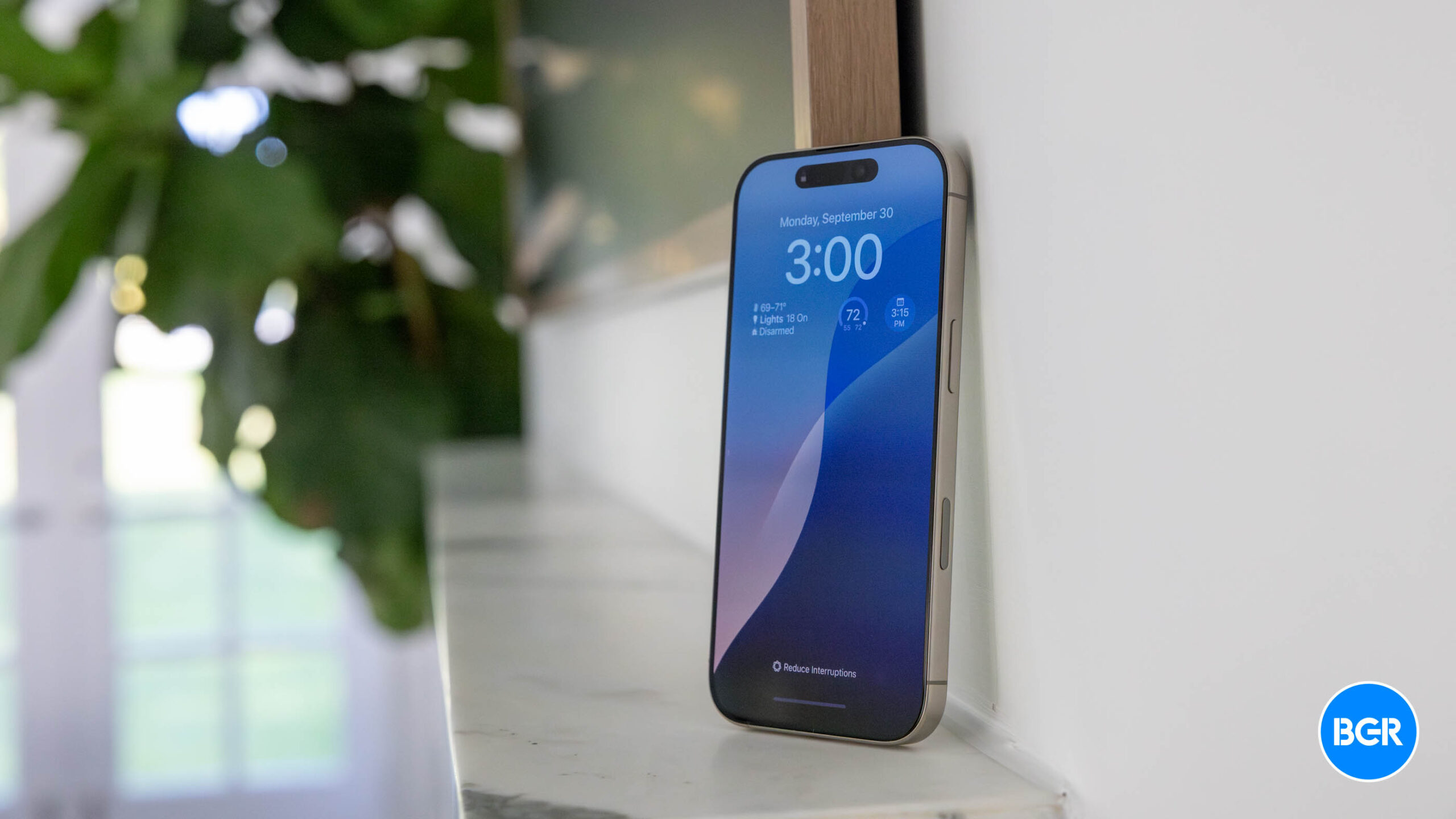
All iPhone 17 models will reportedly have 12GB of RAM

Following a report that “at least” three iPhone 17 models will feature 12GB of RAM, Weibo leaker Digital Chat Station now says all new models will get this memory increase. According to the leaker, Apple will equip the upcoming iPhone devices with 12GB of RAM to improve Apple Intelligence features.

At first, analyst Ming-Chi Kuo believed only the iPhone 17 Pro Max would get this RAM increase. Other analysts suggested that both Pro models would feature it. Then, a few days ago, Kuo posted that the iPhone 17 Air would also get this memory boost.

The analyst also said the regular iPhone 17 could still get the same treatment if Apple can avoid potential supply constraints. The company is reportedly still evaluating whether it can support 12GB of RAM across all four models without disrupting production. However, Digital Chat Station believes Apple can make this change in all models.

Since the company’s most important AI feature has been postponed indefinitely, it’s unclear what other functions it could unveil to use the extra RAM. That said, it’s possible that the current Apple Intelligence features work faster, and that developers can take advantage of additional memory for image editing tools or games.

Tech. Entertainment. Science. Your inbox.

Sign up for the most interesting tech & entertainment news out there.

By signing up, I agree to the Terms of Use and have reviewed the Privacy Notice.

Beyond RAM, the iPhone 17 series is expected to feature the new A19 and A19 Pro chips, an upgraded 48MP telephoto lens for the Pro models, even though a rumor says it will get a downgrade, and Apple’s first in-house Wi-Fi modem. Battery life also appears to be a top priority this year, with longer-lasting performance reportedly in focus, as the company will make the iPhone 17 Pro Max thicker.

We’ll likely get our first official glimpse of what’s next for iPhone at Apple’s WWDC 2025 keynote this June, alongside iOS 19, iPadOS 19, macOS 16, tvOS 19, visionOS 3, and watchOS 12.

Source