Posted on

Qualcomm Snapdragon X2 Elite Extreme Takes Aim At The Apple

Christian de Looper for BGR

Qualcomm is finally ready to start competing with Apple’s M-series of chips, nearly five years after the M1 made its debut in 2020. While the Snapdragon X series has been fairly successful in terms of bringing the ARM architecture to Windows, Qualcomm hasn’t yet quite offered a diversified lineup like Apple for a variety of potential consumers.

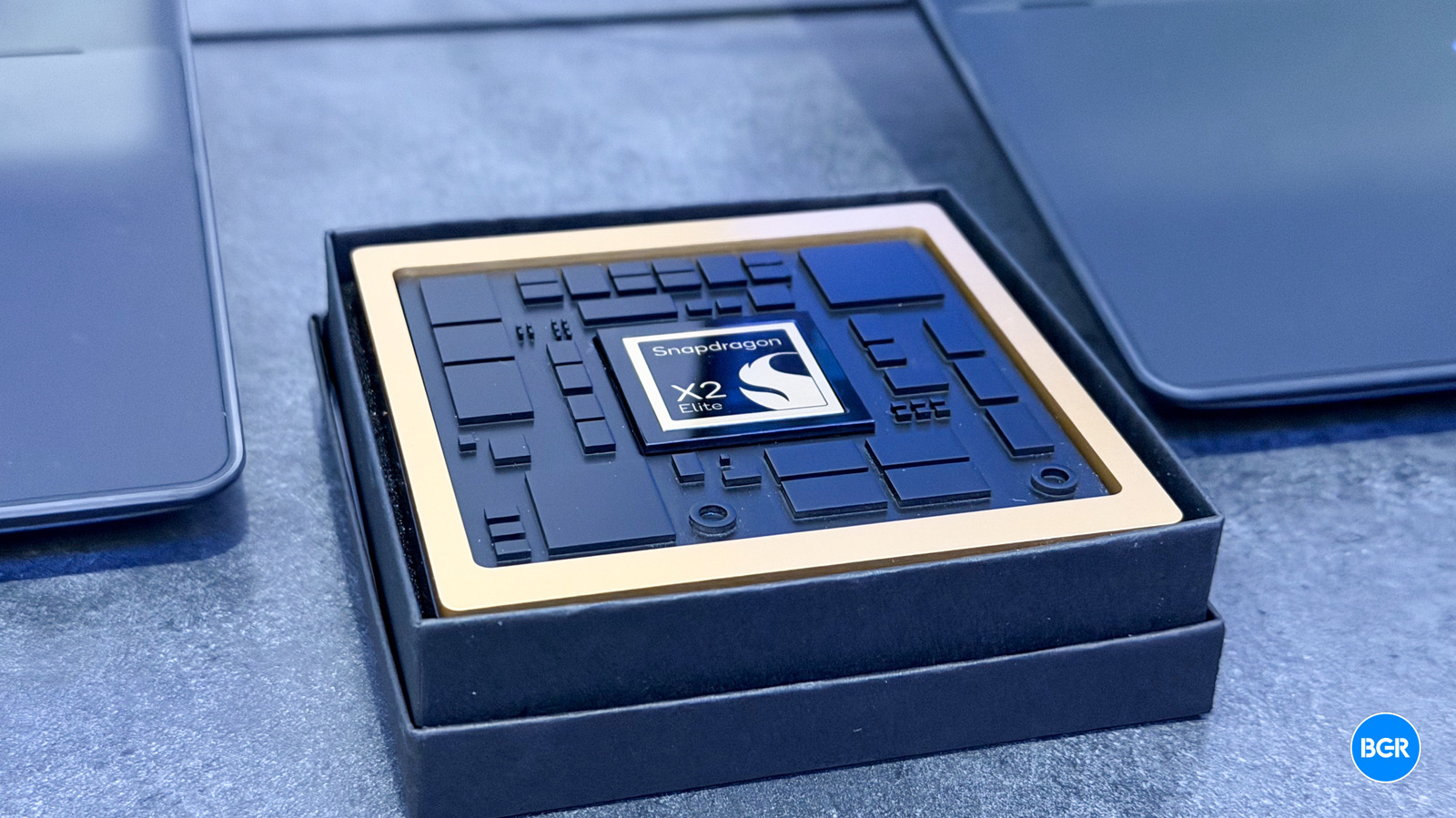
At its annual Snapdragon Summit, Qualcomm took the wraps off of the new Snapdragon X2 Elite and X2 Elite Extreme -– chips designed to power the next generation of ARM-based Windows PCs. Based on the performance these chips bring to the table, they could actually compete with the likes of the Apple M4 Max when it comes to high-end laptop performance.

To learn about what the new chips have to offer, Qualcomm flew me out to its Snapdragon Summit in Hawaii to check out the Snapdragon X2 Elite and Snapdragon X2 Elite Extreme in person.

Qualcomm Snapdragon X2 Elite

Christian de Looper for BGR

The Snapdragon X2 Elite is designed to be closer to the base M4 when it comes to performance and battery life. That’s to say, it’ll offer easily good-enough performance for the vast majority of users who want a laptop for things like productivity, web-based apps, and so on.

There are actually two variants of the Snapdragon X2 Elite -– a 12-core version with six performance cores and six higher-speed “prime” cores, and an 18-core version which adds an additional six prime cores, each of which offer a clock speed of up to 4.7GHz. The chip also boasts an upgraded Adreno GPU, along with support for the Snapdragon X75 5G modem. That’s actually an area that Apple still has yet to enter into -– offering cellular support for its laptops.

In terms of real-world usage, the X2 Elite allows for up to three 5K monitors at 60Hz or three 4K monitors at 144Hz. That’s up from the three 4K monitors at 60Hz that the last-generation Snapdragon X Elite supported. It supports a maximum of 128GB of RAM, and delivers up to 80 TOPS through the Hexagon NPU.

Qualcomm Snapdragon X2 Elite Extreme

Christian de Looper for BGR

The X2 Elite Extreme, as you might expect, offers even higher performance than the Snapdragon X2 Elite. The X2 Elite Extreme also has 18 cores, with 12 prime cores and six performance cores. However, it delivers a clock speed of up to 5.0GHz on the prime cores, and 3.6GHz on the performance cores (up from 3.4GHz on the Snapdragon X2 Elite).

It remains to be seen exactly how well the Snapdragon X2 Elite can perform against the likes of the Apple M4 Pro and M4 Max -– not to mention whatever M5 chips that Apple is rumored to be launching in coming months. The shift to ARM has been hugely successful for Apple, though much of that has to do with Apple’s full control over its entire lineup -– which means that in order to support new Macs, most developers have released ARM-compatible versions of their apps for the Mac.

Because of the more splintered Windows ecosystem, Qualcomm’s new chips haven’t had quite the same impact, even though they’re clearly excellent chips that boast huge battery life and solid performance. Hopefully, the X2 Elite series can indeed make an impact, and hopefully we’ll get better Windows and developer support for ARM as a result.

Source

Posted on

Are AI agents a blessing or a curse for cyber

Artificial intelligence (AI) and AI agents are seemingly everywhere. Be it with conference show floors or television adverts featuring celebrities, suppliers are keen to showcase the technology, which they tell us will help make our day-to-day lives much easier. But what exactly is an AI agent?

Fundamentally, AI agents – also known as agentic AI models – are generative AI (GenAI) and large language models (LLMs) used to automate tasks and workflows.

For example, need to book a room for a meeting at a particular office at a specific time for a certain number of people? Simply ask the agent to do so and it will act, plan and execute on your behalf, identifying a suitable room and time, then sending the calendar invite out to your colleagues on your behalf.

Or perhaps you’re booking a holiday. You can detail where you want to go, how you want to get there, add in any special requirements and ask the AI agent for suggestions that it will duly examine, parse and detail in seconds – saving you both time and effort.

“We’re going to be very dependent on AI agents in the very near future – everybody’s going to have an agent for different things,” says Etay Maor, chief security strategist at network security company Cato Networks. “It’s super convenient and we’re going to see this all over the place.

“The flip side of that is the attackers are going to be looking heavily into it, too,” he adds.

Unforeseen consequences

When new technology appears, even if it’s developed with the best of intentions, it’s almost inevitable that criminals will seek to exploit it.

We saw it with the rise of the internet and cyber fraud, we saw it with the shift to cloud-based hybrid working, and we’ve seen it with the rise of AI and LLMs, which cyber criminals quickly jumped on to write more convincing phishing emails. Now, cyber criminals are exploring how to weaponise AI agents and autonomous systems, too.

“They want to generate exploits,” says Yuval Zacharia, who until recently was R&D director at cyber security firm Hunters, and is now a co-founder at a startup in stealth mode. “That’s a complex mission involving code analysis and reverse engineering that you need to do to understand the codebase then exploit it. And that’s exactly the task that agentic AI is good at – you can divide a complex problem into different components, each with specific tools to execute it.”

Cyber security consultancy Reversec has published a wide range of research on how GenAI and AI agents can be exploited by malicious hackers, often by taking advantage of how new the technology is, meaning security measures may not fully be in place – especially if those developing AI tools want to ensure their product is released ahead of the competition.

For example, attackers can exploit prompt injection vulnerabilities to hijack browser agents with the aim of stealing data or other unauthorised actions. Or, alternatively, Reversec has demonstrated how an AI agent can be manipulated through prompt injection attacks to encourage outputs to include phishing links, social engineering and other ways of stealing information.

“Attackers can use jailbreaking or prompt injection attacks,” says Donato Capitella, principal security consultant at Reversec. “Now, you give an LLM agency – all of a sudden this is not just generic attacks, but it can act on your behalf: it can read and send emails, it can do video calls.

“An attacker sends you an email, and if an LLM is reading parts of that mailbox, all of a sudden, the email contains instructions that confuse the LLM, and now the LLM will steal information and send information to the attacker.”

Agentic AI is designed to help users, but as AI agents become more common and more sophisticated, that’s also going to open the door to attackers looking to exploit them to aid with their own goals – especially if legitimate tools aren’t secured correctly.

“If I’m a criminal and I know you’re using an AI agent which helps you with managing files on your network, for me, that’s a way into the network to deploy ransomware,” says Maor. “Maybe you’ll have an AI agent which can leave voice messages for you: Your voice? Now it’s identity fraud. Emails are business email compromise (BEC) attacks.

“The fact is a lot of these agents are going to have a lot of capabilities with the things they can do, and not too many guardrails, so criminals will be focusing on it,” he warns, adding that “there’s a continuous lowering of the bar of what it takes to do bad things”.

Fighting agentic AI with agentic AI

Ultimately, this means agentic AI-based attacks is something else chief information security officers (CISOs) and cyber security teams need to consider on top of every other challenge they currently face. Perhaps one answer to this is for defenders to take advantage of the automation provided by AI agents, too.

Zacharia believes so – she even built an agentic AI-powered threat-hunting tool in her spare time.

“It was about a side-project I did in my spare time at the weekends – I’m really geeky,” she says. “It was about exploring the world of AI agents because I thought it was cool.”

Cyber attacks are constantly evolving, and rapid response to emerging threats can be incredibly difficult, especially in an area where AI agents could be maliciously deployed to uncover new exploits en masse. That means identifying security threats, let alone assessing the impact and applying the mitigations can take a lot of time – especially if cyber security staff are doing it manually.

“What I was trying to do was automate this with AI agents,” says Zacharia. “The architecture built on top of multiple AI agents aim to identify emerging threats and prioritise according to business context, data enrichment and things that you care about, then they create hunting and viability queries that will help you turn those into actionable insights.”

That data enrichment comes from multiple sources. They include social media trends, CVEs, Patch Tuesday notifications, CISA alerts and other malware advisories.

The AI prioritises this information according to severity, with the AI agents acting upon that information to help perform tasks – for example, by downloading critical security updates – while also helping to relieve some of the burden on overworked cyber security staff.

“Cyber security teams have a lot on their hands, a lot of things to do,” says Zacharia. “They’re overwhelmed by the alerts they keep getting from all the security tools that they have. That means threat hunting in general, specifically for emergent threats, is always second priority.”

She points to incidents like Log4j, a critical zero-day vulnerability in widely used software that was almost immediately exploited by sophisticated threat actors upon disclosure.

“Think how much damage this could cause in your organisation if you’re not finding these on time,” says Zacharia. “And that’s exactly the point,” she adds, referring to how agentic AI can help to swiftly identify and remedy cyber security vulnerabilities and issues.

Streamlining the SOC with agentic AI

Zacharia’s far from alone in believing agentic AI could be of great benefit to cyber security teams.

“Think of a SOC [security operations centre] analyst sitting in front of an incident and he or she needs to start investigating it,” says Maor. “They start with looking at the technical data, to see if they’ve seen something like it in the past.”

What he’s describing is the important – but time-consuming – work SOC analysts do everyday. Maor believes adding agentic AI tools to the process can streamline their work, ultimately making them more effective at detecting cyber threats.

“An AI model can examine the incident and then detail similar incidents, immediately suggesting an investigation is needed,” he says. “There’s also the predictive model that tells the analyst what they don’t need to investigate. This cuts down the grunt work that needs to be done – sometimes hours, sometimes days of work – in order to reach something of value, which is nice.”

But while it can provide support, it’s important to note that agentic AI isn’t a silver bullet that is going to eliminate cyber security threats. Yes, it’s designed to make the task of monitoring threat intelligence or applying security updates easier and more efficient, but people remain key to information security, too. People are needed to work in SOCs, and information security staff are still required to help employees across the rest of the organisation remain alert and secure to cyber threats.

Especially as AI continues to evolve and improve, and attackers will continue to look to exploit it – and it’s up to the defenders to counter them.

“It’s a cat and mouse situation,” says Zacharia. “Both sides are adopting AI. But as an attacker, you only need one way to sneak in. As a defender, you have to protect the entire castle. Attackers will always have the advantage, that’s the game we’re playing. But I do think that both sides are getting better and better.”

Source

Posted on

AirPods Pro 3 Review: Better In Every Way

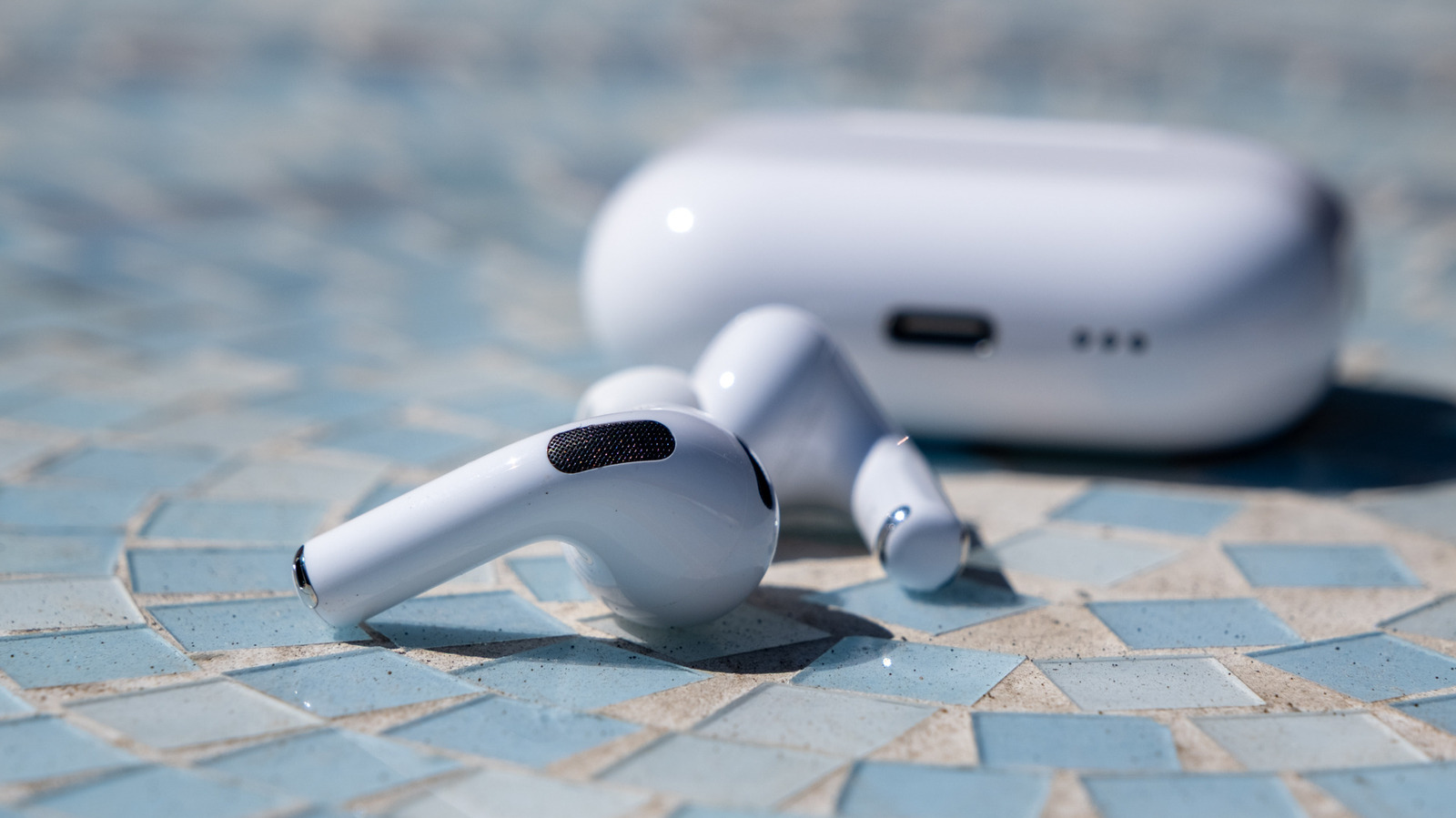
The AirPods Pro 3 are packed with features. For starters, you’ll get all the features from the previous-generation model. That includes Automatic Switching (which is awesome for those with multiple Apple products), Spatial Audio, head gestures, and more.

There are also improved hearing health features. Hearing health features have been huge for the AirPods, which can now actually bridge the gap for those who aren’t ready to use hearing aids full time, but still suffer from hearing loss. Hearing Test, Hearing Assistance, and Hearing Protection are all here, allowing you to test the state of your hearing in a few minutes. You’ll get a breakdown of the results based on frequency, and your device will then apply a profile to your system-wide Headphone Accommodations to compensate for your hearing. They’ll also let you set up a Hearing Aid feature, which is kind of like an enhanced version of Transparency Mode that boosts the frequencies you struggle to hear. Last but not least is a Hearing Protection feature, which uses noise cancellation to lower the volume of loud sounds -– a feature that’s even better given the improved ANC on offer by the earbuds.

Before diving into other new features, it’s worth quickly mentioning the battery. The battery is improved from the previous-generation AirPods Pro 2. You now get eight hours of continuous listening with ANC on, and a total of 24 hours of listening time including the charging case. That’s pretty good. Eight hours of continuous listening is on the higher end of earbud battery life, and while 24 hours with the charging case is close to the middle of the pack, it’s certainly not bad -– and if the trade-off is the case’s portability, I’m fine making that trade. I generally keep my AirPods Pro on a wireless charging pad on my desk when I’m not using them, so I never have an issue with battery life.

Live Translation

Of course, there are also tons of new features. For starters, there’s a new Live Translation mode, which is in beta, but allows users to hear real-time translations of speech in different languages during a conversation. At launch, the feature supports English, French, German, Portuguese, and Spanish, but more languages are set to roll out by the end of the year.

The feature worked quite well. It accurately translated speech from French into English, and it used ANC to effectively block out the real voice of the person speaking, helping eliminate distractions. It wasn’t as quick as you might assume, but it was still reasonably fast, and works the same whether you’re connected to the internet or not — it’s completely offline.

The feature is actually designed to have a bit of a delay. Why? Well, instead of literally translating each word one at a time, which would yield results that don’t really make sense, it waits for complete sentences before translating, so it can accurately translate the meaning of the sentence itself. While there is a delay, it’s a shorter delay than it could have been -– the system works entirely offline, translating on your connected iPhone rather than in the cloud. That’s great for privacy (though I wouldn’t personally have a problem with cloud-based translations), but more importantly, it eliminates lag and means that you can use it when you’re in another country and might not have cellular or Wi-Fi connectivity.

There’s only one change on my wish list for this feature: the ability to give someone else one of my AirPods and initiate a two-way translation. You can use Live Translation with your iPhone to translate what you say into another language, and that works great for short conversations, like ordering food. But what if you’re in a business meeting or catching up with a friend? Sure, sharing earbuds isn’t the most hygienic, but it could be useful.

That’s a minor issue though, and one that I only really care about in concept (since I was just reading about the new Timekettle W4 earbuds, which offer an earbud-splitting feature). I actually probably wouldn’t use it, since I don’t like the idea of sharing my earbuds with someone else. Sorry, friends. Buy your own AirPods. The good news is that Live Translation isn’t actually an AirPods Pro 3-exclusive feature -– it’s also available on AirPods 4 and AirPods Pro 2.

Health-tracking

The other big new feature is heart rate monitoring, which puts the AirPods Pro 3 in fitness-tracker territory. There are heart rate monitors in each AirPod, meaning you can track heart rate without needing an Apple Watch. Note, you will need to have your iPhone nearby for heart rate monitoring, but that’s unsurprising -– and if you were running with an Apple Watch, you’d have a heart rate monitor on your wrist anyway.

The addition makes sense. Given how well the AirPods Pro 3 fit in the ear, they make excellent earbuds for running and working out. Why not make them even better for that purpose?

According to Apple, the heart rate monitor in the AirPods Pro 3 is a new custom sensor that pulses infrared light at 256 times per second to read heart rate. It couples with accelerometers and gyroscopes already built into the earbuds, and the end result is an incredibly accurate heart rate reading. It’s worth noting that I didn’t have medical equipment to test against, but DC Rainmaker, a well-known health-tracker blog, tested the AirPods Pro 3 against a range of other fitness trackers and found the heart rate monitor to be incredibly accurate -– much more accurate than the heart rate monitor found in the Powerbeats Pro 2.

If you do have an Apple Watch, Apple will use the data from both of them to get the most accurate reading, combining the data to fill in gaps from the other. AirPods can be used to track over 50 different workout types, which can be initiated in the Fitness app on an iPhone. Again, it doesn’t just use the heart rate monitor -– it also leverages the accelerometer and gyroscope in your AirPods to better track some information, combining it with other data from your iPhone, like location, to track distance.

There are still some things you might want an Apple Watch for. The Apple Watch has more sensors for things like blood oxygen, ECG, and more. Also, you can’t track steps with just your AirPods -– you’ll still need an Apple Watch for that.

The AirPods Pro 3 can also work with Apple’s Workout Buddy feature. This feature is powered by Apple Intelligence and designed to analyze your data as you work out while providing personalized motivation, spoken through your AirPods. The feature isn’t exclusive to AirPods –- it works with the iPhone and Apple Watch too — but it’s nice to have access to. You can opt to use Workout Buddy or not, so if you’re listening to music and don’t want to be interrupted, it can be disabled.

Source

Posted on

Google Could Soon Fix One Of Gemini’s Most Annoying Problems

New in-depth looks at the code for Google’s Gemini app on Wear OS suggest that the company could be looking to alleviate one of its most annoying restrictions. And with Google slowly rolling Gemini out to more products and platforms — it recently started arriving on Google TV — it makes sense for the tech giant to iron out the kinks along the way.

Google brought Gemini to Wear OS a couple of months ago, putting the power of its AI assistant directly on your wrist. There are plans to bring it to even more places, too, like Android Auto. But as the company rolls out the AI functionality, it also has to stay on top of annoying issues and bugs. One such issue that has been plaguing Gemini on Wear OS is the fact that you can’t just talk to Gemini hands-free. You have to keep pressing the microphone button. Luckily, this might not be the case for much longer, as an APK teardown by Android Authority suggests that Google is bringing true hands-free operation to Gemini on Android smartwatches.

Hands-free should be truly hands-free

This isn’t the first time we’ve heard complaints about Google’s Gemini requiring interaction from the user when trying to use it hands-free. Complaints from the community suggest that Gemini has been less of a replacement for Google Assistant than many hoped. However, each new update brings the AI assistant one step closer to becoming a true Google Assistant replacement. And that seems to be the hope with this latest code finding in the Gemini for Wear OS app.

According to a line of code found in the latest version of the app — version 1.26.6.804623660 — Gemini could soon support “open mic” operations. That means you wouldn’t need to worry about pressing the microphone button to ask Gemini a follow-up question to your previous query. Unfortunately, the folks who found the code weren’t able to activate it, so there are no details on how it might actually work on Wear OS devices.

There’s also no confirmation from Google yet on whether it will actually arrive anytime soon, or at all. As with any APK teardown like this, the strings of code just show that Google has been looking for ways to address issues or missing functionality. It doesn’t guarantee that the feature will actually launch. But hopefully, the company sees this change through.

Source

Posted on

How the UK can seize the robotics opportunity

Few fields are currently as fertile and fast moving as robotics. Across the globe, companies are developing a new generation of robots that are more intelligent, connected, and advanced than ever before. Powered by significant advances in artificial intelligence (AI), sensing, connectivity and advanced materials, these robots are poised to transform industries as diverse as health and social care, defence, logistics, and agriculture.

Examples include robotic arms that assist surgeons by performing intricate medical procedures or sorting robots that fulfil customer orders by autonomously picking and moving goods.

The question is not whether such applications are technically possible or currently being deployed – they very much are – but if the UK can seize the immense opportunity they present.

The good news is that the UK possesses world-class strengths in robotics research and development. Some of our universities, from UCL to Heriot-Watt, are recognised as global leaders in robotics and AI, and our tech ecosystem is producing fast-growing scaleups that are pushing boundaries in areas such as humanoids, computer vision, and collaborative robots.

In addition, large companies in the aerospace, energy, manufacturing and healthcare sectors are already deploying robotics to boost efficiency, improve safety, and address skills shortages.

Emerging technologies

At the heart of this transformation is the combination and convergence of emerging technologies. Most notably, the UK’s AI expertise, arguably the strongest in Europe, is converging with robotics to unlock new frontiers.

Examples include autonomous systems – robots acting independently of humans; dexterous manipulation, where robots skilfully handle complex objects; unsupervised learning, which involves robots learning patterns without guidance; and human-robot collaboration.

Despite this immense potential, the UK still struggles to adopt robotics, both across certain sectors such as healthcare and agriculture, and at a scale that drives down costs and produces widespread benefits.

Other countries, notably China, Japan, the US, South Korea, and Germany, have already recognised the transformative opportunity this technology provides and are investing heavily in robotics as a strategic capability. This includes building national infrastructure and facilities, prioritising robotics in their industrial strategies, and accelerating adoption across key sectors.

While strongly welcomed by industry, the UK’s recent commitment to launch a £40m network of robotics adoption hubs must be one investment of many if we are to drive adoption across key sectors at sufficient pace and scale.

Securing global leadership

This is what inspired TechUK to launch a new robotics programme. As the convener between government and the tech sector, we recognise the opportunity – or, more accurately, the need – to bring together government, industry, and academia to accelerate robotics adoption, drive productivity, and secure the UK’s global leadership in this fast-growing field.

This will include the creation of a cross-sector Robotics Working Group featuring key stakeholders from across the UK’s robotics ecosystem to share best practice, identify promising opportunities for UK leadership, and drive action.

With the right conditions, we can ensure robotics delivers real-world benefits across the economy, helping small businesses scale, boosting competitiveness, supporting public services, and creating high-value jobs.

The economic prize is clear. According to research from Make UK and Sage, enabling UK small and medium-sized businesses to adopt automation and AI, including robotics, could deliver a £150bn boost to the economy over the next decade. At a time in which the UK is grappling with sluggish productivity and acute labour shortages, this is not just an opportunity, it is a necessity.

Bold action

But to capture it, we need bold action. This means the Government Office for Science conducting a cross-government assessment of the UK’s key robotics strengths and capabilities; recognising robotics as the seventh frontier technology within government’s Digital and Technologies Sector Plan; strengthening the robotics team in the Department for Science, Innovation and Technology to begin to lay the foundations for a national robotics strategy; and prioritising robotics and embodied intelligence within the Regulatory Innovation Office.

These actions must be pursued with a sense of urgency and ambition that matches the scale of the opportunity in front of us.

If we get this right, the UK can become a global leader in developing, deploying, and exporting the next wave of robotics technologies. After all, we have much of the research, the talent, and the companies to ensure future success. Now we need the national vision, investment and coordinated effort to match.

Source

Posted on

Apple Teases Homegrown Modems For Future iPhones, iPads, Macs, And

José Adorno/BGR

Earlier this year, Apple released the iPhone 16e with its new C1 5G modem. While tests revealed that it wasn’t quite as capable as Qualcomm’s counterpart for the iPhone 16 and iPhone 16 Pro models, it was an important step forward for Apple as the company continues to build its own components and improve the integration between its hardware and software.

With the iPhone 17 release, the company decided to upgrade this modem with a C1X variant, specifically for the iPhone Air. Apple says the C1X modem is up to 2x faster than C1, and can be faster than the modem in the iPhone 16 Pro while using the same cellular technologies. More importantly, the company claims that it’s the most power efficient 5G modem on an iPhone.

However, while these technologies are key to preserving battery life on the iPhone Air, the company still chose to use Qualcomm’s latest 5G modem on the iPhone 17 Pro and iPhone 17 Pro Max. In an interview with CNBC, Apple VP of Software Technologies and Ecosystems Arun Mathias addressed the absence of its homegrown modem on the higher-end iPhone 17 models.

“Well, we were really focused on what we needed for iPhone Air,” Mathias said in response to questions about the modem missing in the other models. “We have great products with iPhone 17 and iPhone 17 Pro as well. And over time, we will see Apple cellular solutions in more products.”

Apple hints at the future of its 5G modems

José Adorno/BGR

According to Mathias, Apple plans to offer modems in more of its products in the years to come. While this is a vague hint at an iPhone and other products with the company’s 5G modems, there are already rumors pointing to the iPhone 18 Pro featuring an improved custom 5G chip.

In March, analyst Jeff Pu said Apple is developing a C2 chip with mmWave technology while also making the experience more reliable with better power efficiency. The analyst also expects Apple to continue to improve its Wi-Fi, Bluetooth, and Thread chip, which we now know as the N1.

Alongside Pu’s note, Bloomberg’s Mark Gurman said Apple was already working on a new modem to power the iPhone 18 models with download speeds of 6 gigabits per second, six-carrier aggregation when using Sub-6 5G, and eight-carrier aggregation when using mmWave. That said, all signs now point to next year’s iPhone 18 models featuring the company’s C2 chip instead of Qualcomm’s technologies.

Source

Posted on

French court ruling may lead to legal challenges over state

The French supreme court has turned to the European Court of Justice to decide whether EU citizens have the right to challenge the legality of evidence obtained by French law enforcement by hacking the Sky ECC cryptophone network.

The Cour de Cassation has asked the European Court of Justice to rule whether French law is in line with European law. It comes after the French courts refused the right of a German citizen to appeal against the lawfulness of the French hacking operation in the French courts.

The decision will have “significant consequences” for legal proceedings in the European Union against individuals who are charged with criminal offences based on evidence obtained by French police from hacking the Sky ECC and EncroChat encrypted phone networks.

French, Belgian and Dutch police infiltrated servers belonging to Sky ECC, the world’s largest cryptophone network, and decrypted millions of messages between June 2019 and March 2021, leading to the arrest of drug gangs across Europe.

French and Dutch police also harvested messages from tens of thousands of EncroChat cryptophone users after police infiltrated the network’s servers in a novel hacking operation in 2020. A three-year investigation led to 6,500 arrests of organised crime and drug groups worldwide and the seizure of nearly €900m in cash and assets.

France ‘breached European law’

A coalition of defence lawyers, known as the Joint Defence Team, are challenging the legality of the French hacking operation. They argue that France breached European law by obtaining millions of encrypted messages from Sky ECC and EncroChat without grounds for suspicion against the individuals targeted.

They also argue that the French failed to notify other EU states in advance about when they intercepted messages from phones outside of French territory, denying other EU member states the right to object to the operation.

The defence lawyers say that their argument gained extra weight after the French supreme court ruling in June 2025. The court stated that EU states engaged in cross-border digital investigations must formally notify other EU states when intercepting data in their jurisdiction – an obligation defence lawyers say has been ignored in the Sky ECC operation.

No legal recourse

Individuals facing prosecution have been denied the right to challenge the lawfulness of the French hacking operations before judges in their own country, because the “mutual recognition” principle requires EU member states to accept evidence provided by other member states under European Investigation Orders (EIOs).

At the same time, people have been denied the right to challenge evidence in the French courts, leaving people charged with offences based on intercepted Sky ECC or EncroChat messages without legal recourse to appeal.

German lawyer Christian Lödden and French lawyer Guillaume Martine filed an appeal on behalf of a man accused of crimes based partly on evidence from Sky ECC intercepts in Germany, in the Paris Court of Appeal in June 2024, seeking to challenge the lawfulness of the Sky ECC data. The court ruled that the man was not entitled to be heard by the French Court.

Lödden, working with a network of European defence lawyers, appealed the decision in  the French supreme court in February last year.

Decision will have ‘significant consequences’

The supreme court found that under French law, it was not possible for people accused of crimes in other countries to bring an appeal in France to challenge the lawfulness of the evidence, when it had been shared with another country under an EIO.

But the court also recognised the right of defendants to seek legal redress, and in a ruling on 16 September, the French supreme court asked the Court of Justice of the European Union to determine if there is a conflict between French and European law.

“The interpretation requested is likely to have significant consequences…in proceedings currently underway in various member states of the EU, where prosecutions rely on evidence similar to that contested here, all originating from the Sky ECC procedure,” the court said in its ruling. 

‘Fishing with dynamite’

Lödden told Computer Weekly that the French operation to hack Sky ECC, amounted to a mass surveillance operation against 170,000 devices across the world, without concrete grounds for suspicion against individual phone users required under European law. “It was like fishing with dynamite,” he said.

Under current law, it was not possible to have a court review the lawfulness of the interception operations against Sky ECC and EncroChat, he said, adding: “That is totalitarianism, not the rule of law.”

Justus Reisinger, a Dutch defence lawyer, said that the French supreme court decision “created a possibility of having a real effective remedy” against Sky ECC.

No judge has so far decided on the lawfulness of evidence obtained by French police by hacking encrypted phones in other countries without notifying those countries in advance and giving them a chance to object, he said.

“The Court of Justice of the European Union and the French Cour de Cassation agree that interception is unlawful if there is no notification, and there has been no notification. If this case is found admissible, then the outcome is almost certainly they will declare [the Sky ECC evidence] unlawful,” he added.

France, which carried out the Sky ECC hacking operation, obtained the data on the premise that it would bring prosecutions against individuals involved in running the Sky ECC network, including its founder Jean-Francois Eap and distributor Thomas Herdman.

French police went further and gathered data from Sky ECC phones worldwide, which it provided to law enforcement agencies in other countries investigating organised crime groups who were using the encrypted phones.

The Court of Justice of the European Union is expected to take up to a year and a half to respond to the French supreme court.

Source

Posted on

YouTube Will Finally Let You Hide The Recommendations At The

Mijansk786/Shutterstock

Some YouTube creators are using end screens to promote additional content from the channel. It’s a practice many YouTube users are familiar with, as those end screen recommendations show up at the end of many clips on the streaming service. Sometimes, they cover most of the screen, as creators can place up to four recommendations on the screen. But since those end screens can appear anywhere in the last 20 seconds of the clip, they can sometimes cover key details you may want to see. Until now, there was no way to remove the recommendation screens, but YouTube is finally allowing users to hide those end screens when they get in the way.

The end screen recommendations will not disappear, as creators can still promote their content at the end of videos. YouTube isn’t giving users a setting that will permanently remove those end screens. You can only hide the recommendations on the video you’re watching. You’ll have to repeat the process for every clip that has recommendations blocking relevant content.

Not all YouTube changes are beneficial. A few weeks ago, users and creators noticed YouTube using AI to enhance videos without the permission of creators. Previously, YouTube also hid the Skip button so users would watch more (and sometimes even longer) ads. But this time YouTube appears to be doing the right thing.

How to remove the end screen recommendations

Algi Febri Sugita/Shutterstock

YouTube announced the new “Hide” button via a support document on Wednesday. The Hide button will appear in the top right corner of the video player. Click the button, and the end screens will disappear. If you want to see the recommendations again, you’ll have to tap the “Show” button that appears once the end screens are hidden. YouTube says it’s implementing the change following feedback from its users. YouTube will also remove the “Subscribe” button that appears when you hover the cursor over a video’s watermark.

YouTube explained that the updates to the playback experience followed internal tests that measured the impact on these proposed changes. YouTube found that giving users the option to hide end screens caused a drop in views of less than 1.5%. Similarly, fewer than 0.05% of channel subscriptions come from the hover-to-subscribe functionality associated with the watermark. While YouTube is making these changes to the video player user interface, creators will still be able to use end screen recommendations and watermarks.

The support document doesn’t explain when the changes will be available to users, but it’s probably only a matter of time until you start seeing the Hide button on videos that have recommendations at the end. YouTube tested the button globally between March and July, a detail that suggests the software changes are ready for a wider rollout.

Source

Posted on

Fortnite patch spurs record broadband traffic spike for Openreach

Nearly two years ago, BT warned of the need to discuss with media owners the scheduling of the broadcast and game downloads to avoid unnecessary extra strain on infrastructures. Now, it has revealed that an update to the video game Fortnite is fuelling a surge in UK broadband demand and helping to break nationwide usage records.

The UK’s leading telco released data from its Openreach wholesale broadband network division showing that data usage on its new full-fibre network alone is up more than 35% between January and June 2025, compared with the same period in 2024.

The data showed that overall traffic on the BT national broadband network increased by 5% in the same timeframe. In addition, the study found that peak usage across Openreach’s network typically occurs between 20:00 and 22:00 when households are streaming, gaming and connecting multiple devices.

First introduced in 2017 by Epic Games, Fortnite is described by its developers as “a world of many games and other experiences”, made by different creators. The family includes Fortnite Battle Royale, which covers multiple experiences such as Battle Royale, Zero Build – Battle Royale, Reload, and Fortnite OG; Fortnite Ballistic; Lego Fortnite Odyssey; Lego Fortnite Brick Life; Rocket Racing; Fortnite Festival, including Festival Main Stage, Festival Jam Stage and Festival Battle Stage; and Fortnite Save the World.

BT said that Fortnite had become a consistent driver of peaks in demand, with major updates during 2025 coinciding with record-breaking spikes. On 21 February 2025, a large Fortnite patch pushed UK broadband traffic to 372 Petabytes (PB) – 372 million gigabytes – creating the busiest day of the year so far for its network. BT noted that this was the equivalent of streaming HD Netflix for more than 1.5 million years, nonstop; downloading more than 90 million 4K movies; or sending every person in the UK more than 5,000 high-res photos in a single day.

In addition, Patch 36.00 on 7 June 2025 saw usage hit 351PB, followed by 349PB on 8 June. Other high-traffic days included 5 January (357PB) and New Year’s Day (346PB), showing how digital demand continues to rise, even without major events.

Openreach’s data also revealed the UK’s general evolving digital habits. The top five busiest days for broadband usage in the 2025 include 21 February – Fortnite patch release (372PB); 5 January – high weekend usage (357PB); 7 June – Fortnite patch 36.00 (351PB); 8 June – continued Fortnite traffic (349PB); and 1 January – New Year’s Day (346PB).

Commenting on the data and the trends in terms of network consumption revealed by the survey, Openreach deputy chief executive Katie Milligan said: “Our usage data shows how faster, more reliable connections are reshaping the UK’s digital habits. We’ve always been a data-hungry nation, but wider access to full-fibre is enabling families and businesses to do more online – and do it faster, with fewer interruptions.

“More than 7.5 million customers are already benefiting from this upgrade – using it to work from home, access education and healthcare, and enjoy seamless entertainment and gaming. But upgrades aren’t automatic, so that still leaves over 12 million homes missing out on a future-proof connection that’s available now with freedom to choose from the widest range of providers.”

Source

Posted on

AI investments threatened by ‘fundamentally unreliable’ IoT connectivity

A study from Eseye is warning that billions in artificial intelligence (AI) investment is being threatened by what it calls “fundamentally unreliable” internet of things (IoT) connectivity.

Now in its fifth year, the 2025 edition of the State of IoT report from the global IoT firm surveyed 1,200 senior IoT decision-makers and implementers of IoT strategy who had undertaken at least one IoT project in the past 12 months, with IoT devices deployed across at least three countries and connecting through cellular networks. The data was collected between 28 May and 3 June 2025.

The research stressed that among the key elements of strategic IoT were device reliability, global connectivity, security and, now more than ever, sustainability. Yet it also warned that unreliable data streams were putting corporate AI strategies at risk, with findings showing only 2% of firms had achieved the high levels of connectivity required. In addition, poor connectivity from IoT devices was seen to be hindering the adoption of AI in a third of businesses (34%).

Moreover, the study highlighted that this so-called performance gap existed despite the majority of business leaders stating that high-connectivity performance is essential for device uptime. The research found that 74% agreed with the statement that “achieving near-100% global connectivity is crucial to my business case”.

It also warned that such unreliability has direct operational consequences. More than a third of businesses cited an “inability to gather timely and accurate data due to device downtime, leading to poor business decisions” (36%) and damage to their company’s reputation (36%) as key risks. A similar number pointed to a “loss of operational efficiency and increased costs due to unreliable connections” (35%).

“We all hear about the incredible promise of AI to help us solve major global challenges, from creating smarter healthcare and more sustainable cities, to managing our energy and water resources,” said Eseye co-founder and chief customer officer Paul Marshall. “But what’s often missed is that these revolutionary AI models are completely dependent on a constant stream of real-world data from a vast network of IoT sensors.

“Our research reveals a critical flaw in this foundation. We found that only 2% of these IoT deployments are achieving the near-100% connectivity they need. This means we may be building our transformative AI ambitions on a network that isn’t yet consistently dependable. This isn’t just a risk to business ROI, it’s a risk to the evolution of AI applications.”

Marshall also stressed just how important this could be in real-world applications, adding that in mission-critical IoT scenarios, failure isn’t just inconvenient, it’s potentially life-threatening.

“Imagine a life-saving medical sensor detecting a dangerous drop in a patient’s oxygen levels,” he said. “If that data point can’t be transmitted and then analysed by AI applications due to a failed connection, the alert never reaches clinicians in time. The result? A missed opportunity to intervene, and potentially a preventable fatality. To make the promise of AI a reality for everyone, we must first solve this foundational IoT connectivity challenge.”

Source