Posted on

PDS confirms ‘strategic restructuring’ with series of interim senior leadership

The Police Digital Service (PDS) has completed a “strategic restructuring” of its senior leadership team, more than a year after two of its employees were arrested for suspected bribery, fraud and misconduct in public office.

The two PDS employees were arrested, interviewed and bailed by City of London Police in July 2024, and since then, the organisation’s senior leadership team has undergone a complete revamp.

Within two weeks of the news of the arrests breaking, Computer Weekly confirmed that PDS chief executive Ian Bell had resigned from his post, before later being replaced by interim CEO Tony Eastaugh in August 2024.

According to the PDS website, Eastaugh’s appointment has now been made permanent, and the senior leadership team appears to have been streamlined, with fewer roles now listed, and is now staffed with interim leaders. They include Ed Preece, who served as PDS’s director of governance and performance between September and February 2025, before taking on the role of interim chief operating officer.

As previously reported by Computer Weekly, the organisation’s chief information security officer (CISO), Jason Corbishley, departed PDS in April 2025 to take up a position in the private sector as a consulting director at Palo Alto Networks Unit 42. He has since been replaced by interim CISO Chris Cope.

The following month, in April 2025, the company’s chief financial officer, Catherine Wilmot, departed PDS, before being replaced by Lisa Cranston.

The website also lists David Bowen as interim deputy CEO and ex-Government Digital Service human resources head Greg Hobbs as interim chief people officer. Both appear to be new roles at PDS.

When asked by Computer Weekly about the raft of interim senior leadership appointments, a PDS spokesperson said they were geared towards assisting the organisation with achieving its push to digitally transform UK policing.

“The Police Digital Service has made appointments to its executive team over the past year to strengthen its leadership and deliver on the ambitious goals of the National Policing Digital Strategy,” said the spokesperson, in a statement.  

“The appointments are designed to bring in fresh expertise and perspectives to better address the complex challenges facing modern policing,” they added. “These individuals bring extensive experience crucial for overseeing the PDS’s corporate strategy and ensuring effective collaboration with police forces and key partners.

“This strategic restructuring ensures the organisation can deliver on its mission to help policing protect the public in an evolving digital world.”

‘Reset programme’

As confirmed in a previous statement to Computer Weekly, attributed to Eastaugh, in the wake of the July 2024 arrests at PDS, the organisation set about a “significant reset programme” that concluded at the end of last year.  

As outlined in Eastaugh’s statement, the reset paved the way for PDS to introduce a “new operating model and an ambitious strategic delivery plan to support policing and public safety”, while allowing PDS to focus on delivering “live services at greater speed, scale and efficiency”.

Meanwhile, and at the time of writing, the criminal investigation involving the two unnamed PDS employees is still ongoing, as confirmed to Computer Weekly by City of London Police.

PDS, incorporated in June 2012, is classified as a private company with no shareholders, and its activities are funded by the Home Office and the wider policing sector. 

Source

Posted on

Researchers Used AI To Kill Drug-Resistant Bacteria

Ruslanas Baranauskas/science Photo Library/Getty Images

You might be using generative AI products like ChatGPT and Gemini to create drafts, summarize documents, reason through complex topics, or make viral videos, but others are using these models to come up with solutions to much bigger problems. For example, an MIT Antibiotics-AI Project study recently published in scientific journal Cell details not one but two AI techniques that allowed researchers to discover never-before-seen antibiotics that might neutralize two dangerous drug-resistant bacteria.

Artificial intelligence models did not create the new drugs on their own. Instead, the AI simply followed complex instructions to discover molecules that might be able to destroy Neisseria gonorrhoeae (gonorrhea) and Staphylococcus aureus (MRSA). The AI models generated millions of possible chemical compounds that would harm the bacteria and thus put a stop to infections. In each case, the researchers applied specific filters to narrow down the lists of compounds to adequate candidates. These filters included requirements that the resulting antibiotic should not harm humans nor share common traits with existing antibiotics that have lost their efficacy against the two bacteria. After applying these conditions, the researchers ended up with a few viable candidates that show promise in lab testing.

From millions of options, AI found a novel gonorrhea drug

PeopleImages.com – Yuri A/Shutterstock

Per MIT News, to find a potential antibiotic for gonorrhea, researchers instructed the AI to create molecules based on a key bacteria-killing chemical fragment. They started with a set of 45 million fragments made up of all the possible combinations of 11 atoms and fragments from the Enamine REadily AccessibLe (REAL) Space molecule repository.

From there, the AI refined the list to 4 million fragments that might kill the bacteria. After extracting chemical fragments that would harm the human body, researchers shrank the list to around 1 million candidates. After further tests, the MIT scientists ended up with a fragment called F1 that showed potential for addressing gonorrhea.

They fed the F1 candidate into two generative AI algorithms: chemically reasonable mutations (CReM) and fragment-based variational autoencoder (F-VAE). The former created molecules around F1 by modifying atom configurations and other characteristics. The latter used learned patterns to forge complete molecules from a fragment. These two technologies produced 7 million potential candidates based on F1. That massive list ultimately shrank to some 1,000 viable compounds, out of which 80 were chosen for potential lab synthesis. Just two of the 80 versions could be created, and only one (NG1) effectively destroyed gonorrhea in both a mouse model and lab dish.

Given more freedom, AI also produced results in MRSA tests

Deemerwha studio/Shutterstock

The second experiment saw a similar journey, beginning with millions of candidates that might kill S. aureus and ending with a single top option effective in MRSA therapies. But this time, the researchers did not force the AI to follow a fragment strategy. The only rule the AI had to follow concerned chemistry. The atoms would have to be able to join into “chemically plausible molecules.”

This time, the AI found 29 million compounds potentially effective against MRSA. After implementing the same filters used in the fragment-based experiment for gonorrhea, the team ended up with 90 candidates. The following test was more successful than the gonorrhea experiment, as researchers synthesized 22 molecules, six of which were highly effective against MRSA.

Of those six, they singled out the main candidate, DN1, which successfully addressed a MRSA infection in a mouse model. Interestingly, both DN1 and NG1 disturbed the cell membranes of the two bacteria. However, DN1 had a broader effect, while NG1 only interacted with a single protein. Once the cell membrane is impacted, the bacteria dies.

How dangerous are gonorrhea and MRSA?

Jack_the_sparow/Shutterstock

Gonorrhea is a widely spread sexually transmitted infection. Internationally, 82.4 million new infections were recorded in 2020. Additionally, according to the World Health Organization (WHO), gonorrhea’s drug resistance “is a serious and growing problem” that might make the condition untreatable. Meanwhile, S. aureus ranks high on the WHO’s “list of drug-resistant bacteria most threatening to human health.” The Centers for Disease Control and Prevention (CDC) also labels the bacteria a “serious threat” that can lead to death.

To be used in humans, NG1 and DN1 would have to pass preclinical trials and then clinical trials. These steps might take months to years. MIT News notes that Phare Bio (a nonprofit partnered with the Antibiotics-AI Project) “is now working on further modifying NG1 and DN1 to make them suitable for additional testing.” Before using generative AI to develop potential antibiotics for gonorrhea and MRSA, MIT scientists employed AI to create the antibiotics halicin and abaucin. 

Curious to explore other ways AI is impacting science and medicine? Check out this breakthrough tool that can detect cancer 99% of the time.

Source

Posted on

Google Maps Vs. Waze: Which Navigation App Should You Choose?

Koshiro K/Shutterstock

Google Maps has a stranglehold on many of our smartphones when it comes to navigation, and for good reason. The app offers plenty of features while also giving directions and other information pertinent to your journey. But sometimes it’s worthwhile to give another navigation app a try. If you’ve been eyeing Waze — another navigation app from Google — you might be wondering exactly why you’d choose one over the other.

After all, both apps are made by the same company, so you might think they aren’t very different. Truth be told, the answer isn’t a simple yes or no. Each app offers a different approach to navigation, and they each have a number of unique features that may make one or the other better suited for your needs.

Google Maps is more utilitarian, for starters. It’s focused on providing multiple ways to approach your journey, while also providing you with as much information as possible. Waze, on the other hand, is more personal. The app learns about your journey over time and then uses that information to find the fastest route for you while making you feel like part of a larger community. There are also other features to consider, but ultimately, choosing whether to use Google Maps or Waze comes down to determining what you need out of your navigation app.

The biggest differences

Vlad Ispas/Shutterstock

While Google has slowly been adding some of the more important features from Waze to Google Maps, there are still notable differences between the features offered in each app. One of the biggest is that Waze isn’t particularly great for discovering new locations. You can open the Waze app, search for something like “Costco” or “McDonald’s” and see information about the different locations around you, but it won’t provide much additional information beyond basic details like the phone number, address, and store hours.

On the other hand, discovery on one of the strengths of Google Maps. You’ll find reviews, photos, links to the business’s website, and more. It’s helpful if you’re looking for more information about somewhere, and you just don’t get the same level of information from Waze.

Where Waze does stand above Google Maps is in its traffic and incident reporting. Much of the data is fed to the app by users themselves — something Google brought to Maps last year. But Waze still does the job better thanks to its long-standing community. Further, Waze launched a new feature last year that helps you find up-to-date parking around you, which is great if you live in a big city. Waze is also more personal, allowing you to create a profile that shares information with other users, so you always feel like you’re contributing to the community. Plus, you can customize your experience even further with different voices and icons.

Google Maps is still the best navigation app

Danawan Purbanggoro/Shutterstock

Ultimately, the thing to keep in mind when choosing between Waze or Google Maps is that you need to decide whether you want a navigational app that offers you more information or one that finds you the fastest route while also giving you some of the best traffic and incident reporting information you’ll find in any app.

Both apps offer many of the other features you’ve come to expect from these kinds of tools — voiced directions, a digital speedometer, and the ability to set favorites like your home address, work, and more for faster selections. I’ve never really felt like I was missing anything when switching between one or the other, though I have personally found that the best choice is to utilize Waze during long journeys and to rely on Google Maps for most of my daily driving or when looking for foot-based or local transit directions.

If you don’t want to switch between the two, Google Maps is the better choice for most users. Waze can find the fastest route and has better incident reporting capabilities than Google Maps, but if you prefer to have more information at your fingertips with user-friendly interface, it’s hard to beat everything that Google Maps offers, especially since Waze is ending support for older Android devices soon, too.

Source

Posted on

GPT-5 Is Free, But Here Are 5 Reasons Why ChatGPT

José Adorno for BGR

OpenAI recently rolled out GPT-5 to all ChatGPT users. With this new milestone for ChatGPT, the company has also increased the number of queries people on the free tier can submit to the company’s AI chatbot, which is now faster, smarter, and more capable (depending on who you ask).

At this point, you might be wondering whether it even makes sense to pay $20 for a monthly ChatGPT Plus subscription. If you’ve made ChatGPT part of your daily routine and want to avoid running into usage limits in the days and weeks ahead, there might be a few reasons why paying for ChatGPT Plus is worth it, even after GPT-5 rolled out to the general public.

For example, if you’re really into the Deep Research, you’ll only have access to one GPT-5 Thinking message per day on the free tier, while ChatGPT Plus users get 10 GPT-5 Thinking messages every five hours. That makes it’s easier to settle in for lengthy brainstorming sessions, compare products you’re thinking about buying, and more. But that’s not the only reason why ChatGPT Plus is still worth considering.

How GPT-5 upgrades ChatGPT Plus

José Adorno for BGR

If you can’t decide whether or not to subscribe to ChatGPT Plus, here are a few reasons why it might be worth the $20 per month:

  • Legacy Models: After the immediate backlash to the new model, OpenAI brought back multiple legacy models. If you’re a paying subscriber, you can switch back to GPT-4o, while the free tier is stuck with GPT-5.
  • Context window size: The context window of the free tier offers around 8K tokens while the Plus subscriptions offers over 32K tokens. Therefore, ChatGPT is able to remember more of your conversation, so the AI is less likely to forget anything while you’re chatting.
  • Different modes: GPT-5 automatically selects models for you depending on your prompt. However, only the Plus tier offers subscribers the ability to manually toggle between the different models, which include GPT-5 Thinking, GPT-5 Thinking mini, and GPT-5 Fast.
  • Usage priority: ChatGPT Plus offers faster responses and priority access when servers are busy. So, if you’re in a meeting and need a quick AI-generated answer, you won’t have to impatiently wait for an answer.
  • Early access: Paying subscribers often have access to early features that can take months to arrive on the free tier, such as the ability to upload spreadsheets or create a custom GPT.

With all of these perks in mind, it’s clear that ChatGPT Plus still offers value for users who are spending a great deal of time with OpenAI’s chatbot. That said, it’s entirely possible getting access to GPT-5 for free is enough for your needs.

Source

Posted on

Incident response planning cuts the risk of claiming on cyber

Although at their heart they focus on post-breach mitigation and remediation, cyber incident response plans are emerging as a very important cyber security control when it comes to reducing overall risk, particularly the risk of having to claim against cyber insurance.

This is according to a newly published report produced by professional services firm Marsh McLennan, through its Cyber Risk Intelligence Centre (CRIC).

Titled Cybersecurity signals: Connecting controls and incident outcomes, the report revealed that organisations that conduct regular tabletop wargame exercises and scenario-based breach response drills are 13% less likely to fall victim to a material cyber incident than those that do not.

“Marsh has long advocated proactive cyber incident response planning as a tool to help organisations effectively and efficiently respond to and recover from a cyber attack,” said Tom Reagan, global cyber practice leader at Marsh McLennan.

“What our latest research confirms is that thoughtful planning also drives secondary benefits like positive security behaviours and strong control implementations, which help build more organisational resilience and reduce breach incidents,” he said.

Two years have elapsed since Marsh McLennan’s CRIC first started tracking the correlation between the core security controls that cyber insurers take into account and the likelihood of making a claim.

To do this, it has been drawing data from thousands of organisations using Marsh McLennan’s Cyber Self Assessment service to examine their risk levels and help them prepare better for investing in cyber insurance, and analysing this information against claims histories to derive relationships between security practice and claim likelihood.

In the intervening time, much has changed, so it is not really possible to draw a direct comparison between 2023 and 2025, but that said, incident response planning now ranks as the fourth most effective control, behind endpoint detection and response (EDR), logging and monitoring, and security awareness training and phishing testing.

Marsh McLennan said it was possible, though not proven, that effective incident response planning and policies are leading to secondary benefits, exposing other gaps in enterprise security programmes and driving further investment.

Upward trend

Across the other core cyber controls explored in the 2023 report, Marsh McLennan found positive indicators that enterprises are generally improving their security postures two years on.

For example, the number of respondents who have implemented EDR has grown by 9%, from 82% to 91%, while the number who evaluate and quarantine inbound email attachments has grown by 8%, from 75% to 83%.

More impressively, enterprises are demonstrating a much more mature approach to patching. The number that now set target windows to patch high-severity and critical-severity vulnerabilities has soared, from 24% to 89% and from 53% to 89% respectively.

Other metrics saw low single-digit percentage point growth – however, against one control, things did appear to be going backwards. The number of respondents who said they used endpoint privilege management to manage desktop or local admin privileges dropped from an already low 35% to 27%.

“Our findings emphasise that simply deploying key cyber security controls is no longer enough – these tools must be properly managed and comprehensively used,” said CRIC head Scott Stransky.

“By drawing on our insights, organisations can make informed decisions to strengthen their security frameworks and help reduce their exposure to cyber risks.”

Source

Posted on

HPE ups ante in self-driving net ops with enhanced Mist

Virtually all companies regard networks as critical to business success, but as they become more distributed and complex than ever, operations teams are needing tools that speed resolution, boost efficiency and ensure user experience at scale. Looking to address these needs, HPE has made what it says are major innovations to its HPE Juniper Networking portfolio to deliver agentic AIOps through more autonomous, intelligent and proactive network operations.

The advances will be made through enhancements in the artificial intelligence (AI)-native Juniper Mist platform. This includes agentic AI-powered troubleshooting, expanded visibility and control of self-driving actions, a generalised large experience model (LEM), and AIOps features for datacentres. These moves are designed to reduce IT complexity and assure “exceptional” user experiences from client to cloud.

“Today’s networks must do more than connect – they must understand, adapt and act,” said HPE Networking executive vice-president, president and general manager Rami Rahim. “With these new digital experience twin and agentic AI capabilities in Juniper Mist, we continue to turn the network into a proactive partner for IT, capable of solving problems before they impact users. This is a major leap toward truly self-driving operations, helping our customers simplify complexity, reduce costs and deliver exceptional digital experiences at scale.”

The Mist enhancements will be driven by improvements to Marvis, the AI engine that powers the platform. Specifically, these will be grouped around four key areas: enhanced conversational capabilities; expanded self-driving actions; generalised LEM; and AI for datacentre operations.

Marvis AI analyses telemetry across the wired, wireless, WAN and datacentre domains, and creates automated workflows to simplify operations and lower costs. AI-driven support uses trouble ticket data to continually train and increase the efficacy of the Marvis AI engine, and a fully application programming interface-driven model works with external systems and applications, like Zoom, Teams and ServiceNow, to quickly identify and fix the root cause of problems.

The Marvis AI assistant will now have augmented conversational capabilities that facilitate real-time troubleshooting. By using an agentic AI framework, HPE says customised insight is provided with self-driving agents that collaborate across the wired, wireless, WAN, client and application domains. A Marvis Actions dashboard will support the autonomous remediation of more network issues, including misconfigured ports, capacity issues and non-compliant hardware – with full IT oversight.

The LEM is an AI model that is said to be unique to HPE Juniper Networking, analysing billions of data points from applications like Zoom and Teams to troubleshoot the performance of common collaboration tools and predict future issues. Enhanced with Marvis Minis – twins that simulate user experiences – LEM can now predict future application experiences without real-time data from the applications themselves. This is fed into the Marvis AI engine where self-driving actions can be taken to optimise future performance, prior to users even being present.

Within datacentre operations, the Marvis AI Assistant for Data Centre integrates with Apstra’s contextual graph database to deliver intelligent insights and lay the groundwork for autonomous service provisioning. Marvis Minis also extends to the datacentre for continuous service validation and application assurance pertinent to datacentre networks.

These capabilities are also seen as bolstering GreenLake Intelligence, HPE’s next approach to autonomous IT and agentic AIOps, which deploys specialised AI agents in a multi-layered IT architecture. This is designed to enable real-time problem-solving, proactive optimisation and smarter decision-making across networking, storage and compute. 

HPE believes the agentic AI capabilities in Juniper Mist shift IT from reactive to proactive management, laying the groundwork for significant improvements in performance and efficiency.

“Operations teams need tools that speed resolution, boost efficiency and ensure user experience at scale,” said Bob Laliberte, principal analyst at The Cube Research.

“For over a decade, HPE Juniper Networking solutions have pioneered the use of AI in network operations, accelerating the journey toward self-driving networks. With its latest advances in agentic AI and GenAI, powered by Marvis, HPE is delivering real autonomous capabilities that enable predictive intervention, letting ops resolve issues before users even notice.”

Source

Posted on

Some Android Phones Are Becoming More Like iPhones In One

MonicaZ82/Shutterstock

For years, Android users have knocked iOS for being a “walled garden,” with the iPhone locking users into Apple’s ecosystem and limiting how far they can stray outside of the company’s guidelines. While Android has long offered a more customizable and personalized experience — including a way to completely alter the core operating system by installing custom ROMs — it seems the time of unparalleled customization for Android users may be coming to an end, though only on some devices.

Samsung appears to have removed the option to unlock the bootloader in the latest beta versions of One UI 8, which is Samsung’s user interface for Android 16. The new reports suggest that the code for unlocking the bootloader — which gives users the ability to load unofficial software onto the device — has vanished in the latest One UI 8 betas.

While some hoped that this move might just be temporary, a dive into the code of the One UI 8 beta by a user on the XDA forums suggests that it will likely be a permanent change, essentially letting Samsung create its own “walled garden” in the same way Apple has. And Samsung isn’t the only company doing it. OnePlus recently announced that users of its smartphones in China would require approval before they could unlock their bootloaders, and that requirement has been active for U.S. customers purchasing OnePlus devices from T-Mobile for some time.

What this means for the future of Android

Srikant_Photography/Shutterstock

While the ability to unlock the bootloader has been a staple of the Android operating system for years, companies are now noting that having an unlocked bootloader can actually make a device less secure. There’s also the fact that unlocking the bootloader and then subsequently messing around with the kernel or ROM files can negatively impact a device.

When I first bought an Android phone, I flashed custom ROMs, and while the process was usually easy to follow — and sometimes even automated — it also carried the risk of bricking my device if done incorrectly. And some devices, including Samsung’s, already weren’t playing very nicely with unlocked bootloaders due to the built-in security features they offer.

While the removal of the ability to unlock the bootloader does limit customization, it also ensures that your device remains secure. That said, that bullet point hasn’t always been especially convincing when arguing in favor of Apple’s walled garden approach, and some Android fans are disheartened to see the control being taken from them. At the moment, it’s unclear just how many Android manufacturers will adopt this stance, but considering one of the biggest Android manufacturers, Samsung, is adopting it for newer devices like the Z Flip 7, don’t be surprised if others follow suit.

Source

Posted on

You Don’t Need A New Car For Wireless Apple CarPlay,

Harry Howitt/Shutterstock

We may receive a commission on purchases made from links.

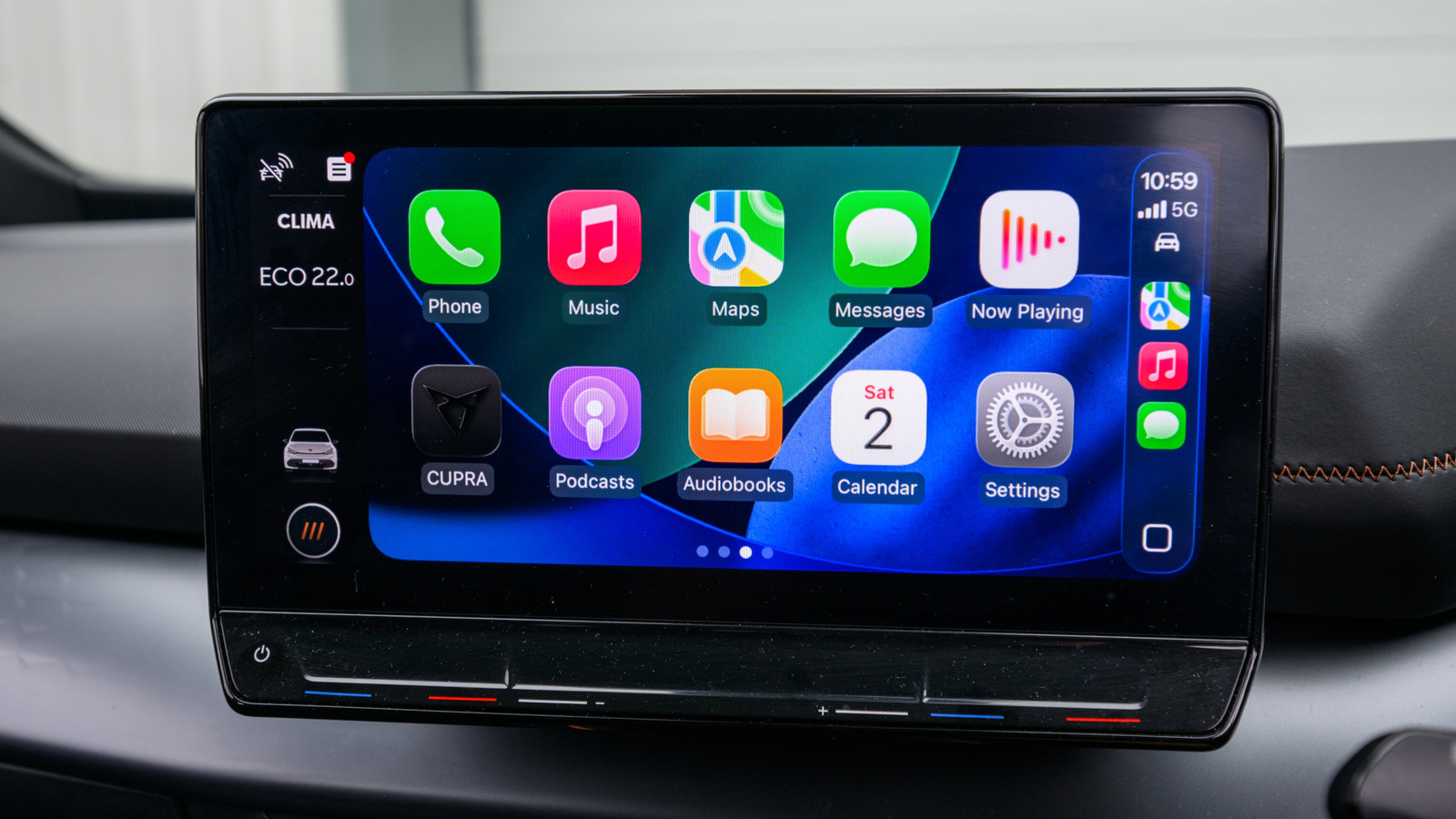
Apple CarPlay is one of the best ways to use your iPhone while driving a motor vehicle. This iOS-friendly infotainment link has been around since 2014, providing Apple devotees with a convenient way to access navigation tools, make phone calls, send and receive messages, and stream audio from go-to platforms like Spotify and Apple Music. In the early days of CarPlay, you’d need to use a USB cable to connect your iPhone to your car, but it wasn’t long before a majority of vehicle manufacturers began supporting Wireless CarPlay via Bluetooth.

If you happened to purchase a CarPlay-ready vehicle before 2022, chances are it’s only set up for a wired connection. But if you’re interested in adding wireless connectivity to a wired-only CarPlay system, numerous third-party device makers produce Wireless CarPlay adapters. We here at BGR also pride ourselves on our iPhone expertise, so we’ve gone ahead and rounded up five of our favorite Wireless CarPlay adapters on the market.

Carlinkit 2air

If you’re looking for the no-holds-barred Wireless CarPlay adapter that’s going to work without any major hitches, our top choice for the job is the Carlinkit 2air. At 3 inches long and 1.69 inches wide, the adapter is small enough to be tucked away once connected and is designed for plug-and-play pairing. All you have to do is turn your car on, plug it into your USB port, and search for the 2air in your iPhone’s Bluetooth settings.

The Carlinkit 2air supports both CarPlay and Android Auto and is even compatible with aftermarket head units from the likes of Pioneer, Sony, and other manufacturers. The adapter comes with a removable USB cable that can be swapped out for a different wire, and the module features support for both USB-C and USB-A connectivity.

We’ve heard reports of lag, though, specifically focused around wireless music playback and phone calls. Your iPhone may also experience faster battery depletion, which is common for wireless accessories. Slight drawbacks aside, we were pleased to learn the 2air supports Wi-Fi connectivity, too. All you have to do is type 192.168.50.2 in your phone’s web browser, and you’ll be taken to a device dashboard for updates and settings. At the time of writing, the unit retails for $54.48 on Amazon.

Ottocast U2-Air

Scoring a 3.8 out of 5 stars on Amazon based on over 2,800 reviews, the Ottocast U2-Air is another excellent way to add Wireless CarPlay to your commuter car. The Ottocast boots quickly when you turn your vehicle on (up to 18 seconds) and features both USB-C and USB-A ports.

After you’ve manually paired your phone via Bluetooth for the first time, the U2-Air should automatically link to your iPhone the next time you start the car. While most folks will likely use the car’s infotainment touchscreen to open, close, and navigate compatible CarPlay apps, the Ottocast also interfaces with your car’s steering wheel controls and OEM knob controls. You can even summon Siri to carry out certain CarPlay actions.

The U2-Air is compatible with most wired CarPlay vehicles produced between 2016 and 2022, except for BMW. The adapter also works with iOS 10 or later but doesn’t include support for Android Auto. Ottocast claims the U2-Air delivers a lag-free experience, but some users have reported a delay when switching between songs. It may not be the best Wireless CarPlay adapter money can buy, but the Ottocast U2-Air is a solid value option for those looking to ditch cables in favor of Bluetooth. The U2-Air retails for $40 at the time of writing.

Jemluse Wireless CarPlay Adapter

With 4.4 out of 5 stars on Amazon based on over 4,500 reviews, we’d be hard-pressed not to include the Jemluse Wireless CarPlay Adapter on our list. From the top of the integrated USB cable to the bottom of the module, the Jemluse measures just 7.48 inches, which makes it a space-saving addition to most vehicles. It’s also one of the only CarPlay adapters with a notched-out bottom corner, so you’ll be able to loop it onto a keyring (making it a great choice for frequent rental car users).

This CarPlay adapter features some cutting-edge engineering. An eight-core processor and Bluetooth 5.3 connectivity ensure a fast and relatively lag-free connection, and the adapter’s aluminum alloy chassis is built to withstand years of use.

When you hook up the adapter, you’ll need to make sure your iPhone isn’t connected to a device over Wi-Fi. This applies even after you’ve manually paired your iPhone for the first time. Some Amazon reviews also indicate the Jemluse may fall victim to occasional lag, mostly when pairing it with your phone and trying to use Maps. The unit typically retails for $79.99 at the time of writing.

Car and Driver Intellidash Pro X10

What if your car doesn’t even feature wired CarPlay? For those who don’t mind spending a little more, there’s the Car and Driver Intellidash Pro X10. More than an adapter, this is a full-fledged 10-inch HD touchscreen that comes with everything you need for installation.

Once clipped in or mounted to your dashboard (and plugged in for power), the Pro X10 can be tied into your car’s stereo system via Bluetooth, 3.5-millimeter auxiliary, or FM transmitter. You’ll have access to all of CarPlay’s features when it comes to infotainment, including Siri or Google Assistant, calls and messaging, music playback, GPS navigation, and more. The Pro X10 is even compatible with Android devices running the Android 11 OS or later.

We also love the fact that this CarPlay adapter can be interfaced with a backup camera. Some folks have reported lackluster adhesive pads for the Pro X10, so it may be worth investing in a heavy-duty set from a reliable third-party brand if you’re planning on mounting your Pro X10 to the dash. At the time of writing, the Pro X10 retails for $179.99.

The Magic Link

The Magic Brand has made a name for itself in the world of Wireless CarPlay accessories, and we’d be remiss not to include the Magic Link device in this roundup. Much like the other adapters we’ve discussed, the Magic Link is compatible with most wired CarPlay vehicles, and it pairs to your iPhone in five seconds or less. It only takes a few minutes to get the product up and running, at which point you’ll be able to enjoy wireless call-making, music-listening, and other useful CarPlay features.

The Magic Link is also available in two versions: one for Wireless CarPlay and another for Android Auto. Some of the marketing on the site would have you believe that one adapter supports both infotainment systems. This is not the case, so you’ll need to make sure you’re purchasing the correct model for the type of device you plan on connecting.

Out of nearly 1,000 reviews, the Magic Link boasts 4.8 stars out of 5, which isn’t too shabby if you ask us. You’ll also score a sweet discount on your purchase when you buy two or three Magic Links at once ($75 per device when you buy two, or $70 per device when you buy three at the time of writing). On its own, a Magic Link retails for $99 on The Magic Brand’s website (the product is unavailable on Amazon).

Source

Posted on

600 VodafoneThree UK sites now offer integrated coverage

Just over two months since it began operations following the merger of two of the UK’s leading telcos, VodafoneThree has announced that, as part of its £11bn investment programme, it has switched on over 600 sites that allow legacy Vodafone and Three customers to use both networks at no extra cost.

Vodafone and Three first announced plans to merge in June 2023. The new combined business – 51% owned by Vodafone Group and 49% by CK Hutchison Group Telecom (CKHGT) Holdings – is the biggest mobile network operator in the UK, with 27 million customers through the combined entities.

VodafoneThree will operate a multi-brand mobile strategy in the consumer market, with Vodafone, Three, VOXI, Smarty and Talkmobile remaining. Vodafone will be the only brand for business customers, offering one team able to tailor systems to a customer’s needs, with the ambition to become the UK’s biggest converged network for business.

VodafoneThree claims to be the only UK operator with a quarter-by-quarter, year-by-year, guaranteed plan to reach 99.95% 5G standalone (5G SA) population coverage by 2034. The 5G SA network build-out plan is front-loaded so that it will hit 90% population coverage from a current baseline of 47% by the end of the third year, and up to 50 million people will have access to its fastest 5G speeds in just one year.

Through the use of the company’s multi-operator core network (MOCN) technology, customers’ devices will automatically connect to the best coverage available, effectively giving them access to two networks at no extra cost. VodafoneThree believes this will see customers of both brands experience improved coverage, reliability and speed when using 4G and 5G networks.

Customers do not need to do anything to benefit from the new technology, as VodafoneThree engineers are using a weighted set of criteria to manage capacity and maximise customer benefits without having an impact on the existing service. For business mobile customers in particular, this is claimed to result in smoother day-to-day operations, with connectivity that keeps staff, services and customers connected everywhere they need it.

Through the sharing of combined spectrum, VodafoneThree said that within two weeks of beginning business, seven million Three and Smarty customers received a 4G boost, with an average improvement in 4G data speed of up to 20% and 40% in some key towns and cities, thanks to the integration of combined spectrum.

Three key benefits are said to stand out from the sharing: peak period improvements; the elimination of 4G notspots; and enhanced 5G coverage. With the MOCN, at busy times for the network, customers will be moved from a busy site to one that is able to provide the required level of performance. It is also designed to simultaneously relieve the strain on the busy site, providing a better experience for all customers.

By providing 4G coverage to 16,500km of the UK where it wasn’t previously available to either brand’s customers, VodafoneThree said it can eliminate notspots across an area 10 times the size of London and that around 71% of the UK population (circa 50 million) will have access to VodafoneThree’s fastest 5G speeds by the end of year one, thanks to bringing the networks together and an accelerated 5G roll-out plan. 

The first stages of the technology are being activated remotely, enabling faster deployment across Vodafone and Three’s networks. Some masts can be upgraded remotely with MOCN technology, with what is effectively a software upgrade. Others, however, will need to have new hardware fitted to them. The company accepted that completing such hardware upgrades, especially in remote areas of the country, will take time.

Commenting on the integration programme, VodafoneThree chief network officer Andrea Donà said: “Bringing our networks together marks a major milestone for VodafoneThree, unlocking greater capacity, reducing 4G notspots and expanding 5G coverage. Just weeks into the roll-out, millions of customers are already seeing the benefits of a nationwide boost, powered by our spectrum integration and Multi-Operator Core Network technology. It’s a clear signal of VodafoneThree’s ambition and ability to move at pace to deliver a new era of connectivity.” 

Source

Posted on

Obituary: Dame Stephanie ‘Steve’ Shirley, founder, entrepreneur and philanthropist

The technology sector lost a great on 11 August 2025, with the passing of Dame Stephanie Shirley at the age of 91.

More affectionately known as Steve, Shirley was a serial founder, entrepreneur and philanthropist who was part of the technology sector for over half a century.

Originally from Germany, aged five, Shirley – who at the time was named Vera Buchthal – was one of the thousands of children who came to the UK on The Kindertransport before the outbreak of the Second World War.

She grew up with her sister and foster parents in the West Midlands, developing a background in technology and mathematics from a young age, and after school, she got a job building computers and coding for the Post Office Research Station in Dollis Hill.

After doing night classes to gain a degree in mathematics, she then went on to get a job at another technology company.

But this was during a time when women were less equal to men than they are now, and Shirley became frustrated with the disparity faced by women both in and out of the workplace.

Wanting to change things for the better, she took her husband Derek’s advice and adopted her family nickname, Steve, to be taken seriously after efforts to start her own company fell on deaf ears once it was clear she was a woman.

Flexible working

Shirley was a pioneer in flexible working, founding a technology company called Freelance Programmers in 1962. Candidates were asked if they had access to a telephone, as there was no office, so the staff of predominantly women worked from home selling software and programming.

She once told Computer Weekly it would be illegal for her to set up a company in the same way today. “You couldn’t possibly have a company that set out to be gendered,” said Shirley. “I deliberately tried to build a company that was female-friendly and a crusade for a company by women for women.”

She wanted the company to be one she would want to work for, and over time it made her and many of her employees millions.

Renamed Xansa, the company grew to more than 8,000 people before being sold to Steria in 2007.

Shirley used this wealth for her philanthropic efforts, which has seen her fund several charities and foundations, and has been predominantly driven by support for her late son, Giles, who was severely autistic and epileptic.

She initially founded a residential home for people with severe autism, called Kingwood, with the goal of giving her son what he needed to live the best life possible.

Following this, she also founded The Shirley Foundation, Prior’s Court School for students with autism, and UK autism research charity Autistica, all aimed at making the lives of individuals with autism better.

Philanthropic endeavours

Across her lifetime, Shirley spent millions of pounds supporting charities and other philanthropic endeavours.

In support of the technology sector, she also helped fund – and was a master of – tech-focused charity The Worshipful Company of Information Technologists, and was a founding donor and co-founder of The Oxford Internet Institute in 2001.

Shirley has been recognised for her relentless work for women, technology and those with autism, and in 2017, was awarded a Member of the Order of the Companions of Honour (CH) for her services to tech and philanthropy – she has also been awarded an OBE and a DBE.

When Computer Weekly launched its Most Influential Women in UK Tech Hall of Fame in 2015, Shirley was one of only three who made the initial list.

She was an inspiration for many, and appears in both the Bletchley Park and California computing museums.

Shirley has claimed in the past that her childhood made her strive to make sure her life had been “worth saving” by bringing her to the UK as a young child, and her incredible life full of extraordinary achievements proves she succeeded in that aim.

She will be greatly and sadly missed.

Source