Posted on

Why You Shouldn’t Put An AirTag In Your Kid’s Shoes

Skechers recently made headlines by releasing a line of kid shoes that feature a hidden compartment under the insole where parents can place an Apple AirTag. While this might look like a solid solution to ensure that your child is always safe and you know where they are at all times, you definitely shouldn’t buy these shoes for this specific purpose.

First off, this has nothing to do with whether or not this is a violation of a child’s privacy. However, when Apple released the AirTag in 2021, it addressed several situations in which you shouldn’t be depending on the item tracker. Among the examples: don’t attach it to your dog’s collar, don’t use it to track your kids, and, most importantly, never use it to surreptitiously track anyone.

This is why, over the past few years, Apple has improved the privacy features of the AirTag so that it will start beeping if it is disconnected from the iPhone of its original owner or detects another AirTag in the vicinity for an extended length of time. However, the most important point is that the AirTag can’t provide real-time location data if the tracked item (or person) is on the move.

Why the AirTag works with items but not people

José Adorno for BGR

For the AirTag to work, it needs to be close to a Bluetooth device, such as an Apple product, so the AirTag can connect to the network and send an updated signal. While that’s perfect for finding out if your luggage landed safely at the airport, it doesn’t work as well with moving objects. That’s especially true in the case of young children, many of whom probably don’t own a smartphone.

Worst of all, if a teenager or an adult is with your kid, it’s possible that they will hear the AirTag chime or receive a notification that “an AirTag might be tracking you” from their smartphone as part of the AirTag’s privacy features.

With that in mind, if you want to track your kid in real time, buying shoes with an AirTag compartment isn’t the best option. That said, if you must track your child, there are Apple offers two much more effective (but pricier) solutions.

Use the Find My app or a cellular Apple Watch

José Adorno for BGR

If your kid is old enough to have an iPhone, you can simply set up an account for them, which includes making them part of your Apple Account family and thus adding them to your Find My network so you can track their precise location. Apple also offers another interesting solution, which is a feature called “Apple Watch For Your Kids” (formerly known as “Family Setup”).

Starting with the first generation Apple Watch SE, Apple lets you use your iPhone to set up an Apple Watch for a young child or an older family member who might need assistance. In this case, you just need to make sure a cellular connection is established, and you can keep track of that person all the time, and even receive other health-related notifications.

There’s no question that these solutions are more expensive than buying a pair of shoes. However, if the peace of mind is important to you, skip the gimmicky shoes and get a proper device that will keep track of your kids wherever they go.

Source

Posted on

Kioxia launches 245TB LC9, the biggest flash drive on the

Kioxia has launched solid-state drives of 245.76TB (terabytes), making them the largest capacity commodity flash drives currently on the market. The company said the new LC9 will be targeted at artificial intelligence (AI) training, data lakes and hard disk drive (HDD) replacement in hyperscale clouds.

Its capacity of 245.76TB dwarfs the maximum possible from spinning disk, which currently tops out at around 40TB. Pure Storage has promised 300TB capacity flash drives in its proprietary DirectFlash Modules, due out later this year, but they will only work on Pure arrays.

Kioxia’s LC9 will come in 2.5in U.2 and EDSFF E3.S and E3.L form factors. It uses PCIe 5.0, which can be single full channel or two channels at half speed, to allow solid-state drives (SSDs) to be deployed in storage arrays with two redundant motherboards. Capacity runs to 122.88TB in the 2.5in and E3.S formats, with the full 245.76TB in the E3.L drives.

Kioxia LC9 SSDs will use its eighth-generation BiCS chips, which contain 32 quad-level cell (QLC) NAND circuits in place of the 16 of the previous generation.

The Japanese company has effectively doubled the previously possible capacity of 122.88TB by doubling the chip count and making a wider/thicker drive.

Kioxia competes in 122.88TB flash drives with Phison and Solidigm, but differences in how the manufacturers put them together result in varying performance metrics.

Solidigm’s D5-P5336 controller chip can write data at a maximum throughput of 7.4GBps and writes at a maximum of 3.2GBps. Phison’s Pascari D205V also writes at a maximum of 3.2GBps but reads at 14.7GBps with PCIe 5.0.

Kioxia’s LC9 is slower at around 3GBps for writes and 12GBps for reads. Kioxia doesn’t explain why this is the case, which occurs with the same controller used by Phison. It’s possible some economies have been made somewhere, perhaps in onboard random access memory (RAM), so its SSDs can achieve the 245TB capacity.

Kioxia’s LC9 achieves good scores in random writes, which is consistent with a larger number of NAND chips. It supports 50,000 input/output operations per second (IOPS), compared with 35,000 IOPS for the Phison SSD and 25,000 for the Solidigm product.

The Phison product wins out when it comes to random reads, with three million IOPS, then Kioxia with 1.3 million and finally Solidigm with 930,000. These results are nuanced, however, because they are biased by rewrites of data stored in cache by the use of differing levels of firmware intelligence to predict hot data.

The presence of RAM dedicated to cache in the Phison product, but not in that from Kioxia, may also explain this. The Solidigm model, already slower due to the use of PCIe 4.0, has 33% less cache than Phison.

All this is in the context of writes that are always slower than reads on QLC SSDs because the firmware must calculate how to store one bit in a cell that can take four. That involves copying any existing bits to RAM, electrically erasing the cell, then writing the update to the same cell or to another cell to which the firmware has given the same logical address.

The key to the 245TB capacity of Kioxia’s LC9 product is in the format of the drives. Kioxia has coined the idea of a “2T” format for the E3.L drives that comprise two cards of 122.88TB.

E3 formats are 7.6cm high and correspond to the façade of a 2U storage array. The E3.S and E3.L formats differ in depth (11.28cm compared to 14.22cm). This width and length allows an E3.S to offer the same capacity as a 2.5in drive but with the lower thickness of 0.75cm in E3 drives.

In Kioxia’s E3.L 2T format, the width of the SSD is nearer 1.68cm.

That means that while it is usually possible to install 24 E3 SSDs in a 2U array, the number of 2T SSDs possible is 10 units per machine. That means a 2U array full of 122.88TB SSDs makes for around 2.9PB (petabytes) of raw capacity, while an array full of 245.76TB capacity drives stacks up to 2.46PB.

Despite this, Kioxia said the advantage of the 245.76TB drive lies elsewhere. Namely, that it uses fewer PCIe channels, which means a single array can control more SSDs and use less energy.

Source

Posted on

Apple Watch: How To Check Battery Health And Maximize Lifespan

Hocus-focus/Getty Images

The Apple Watch remains one of the best-selling smartwatches, with multiple models available. It is known for its seamless integration with iOS, intuitive watchOS interface, and reliable health and fitness tracking features. As of July 2025, whether you’re focused on fitness, wellness, or everyday productivity, there’s an Apple Watch out there for everyone.

Whether you’re using the latest Apple Watch Series 10 or an older model, one thing remains true: Apple Watch batteries degrade over time. Like all lithium-ion batteries, the one inside your Apple Watch is subject to chemical aging, which reduces its ability to hold a charge as the months go by. Frequent use, high temperatures, and regular charging cycles all contribute to this gradual decline in performance. 

According to Apple, a typical Apple Watch battery is designed to retain up to 80% of its original capacity at 1,000 full charge cycles. You can monitor your device’s battery health directly through the watch settings to determine if it’s time for a replacement.

Apple Watch battery life depends on various factors including the specific model you own. For example, when new, the Apple Watch Series 10 is rated for up to 18 hours of battery life per charge. The more rugged and premium Apple Watch Ultra 2 offers significantly better performance, boasting up to 36 hours of battery life in standard mode, and up to 72 hours when using Low Power Mode.

How to check your Apple Watch battery health

Hadrian/Shutterstock

While you don’t need to monitor your Apple Watch battery health daily, it’s a smart habit to check it periodically, especially if you’re noticing issues like unexpected shutdowns or your watch isn’t lasting as long on a full charge as it once did. These signs often point to battery degradation, a regular part of any lithium-ion battery’s life cycle.

The key metric to look at is the Maximum Capacity, which indicates how much charge your Apple Watch battery can hold compared to when it was new. For example, if the maximum capacity has dropped significantly below 100%, your watch may not get through a full day on a single charge. This value helps you determine whether your battery is still in good condition or if it might be time for a replacement.

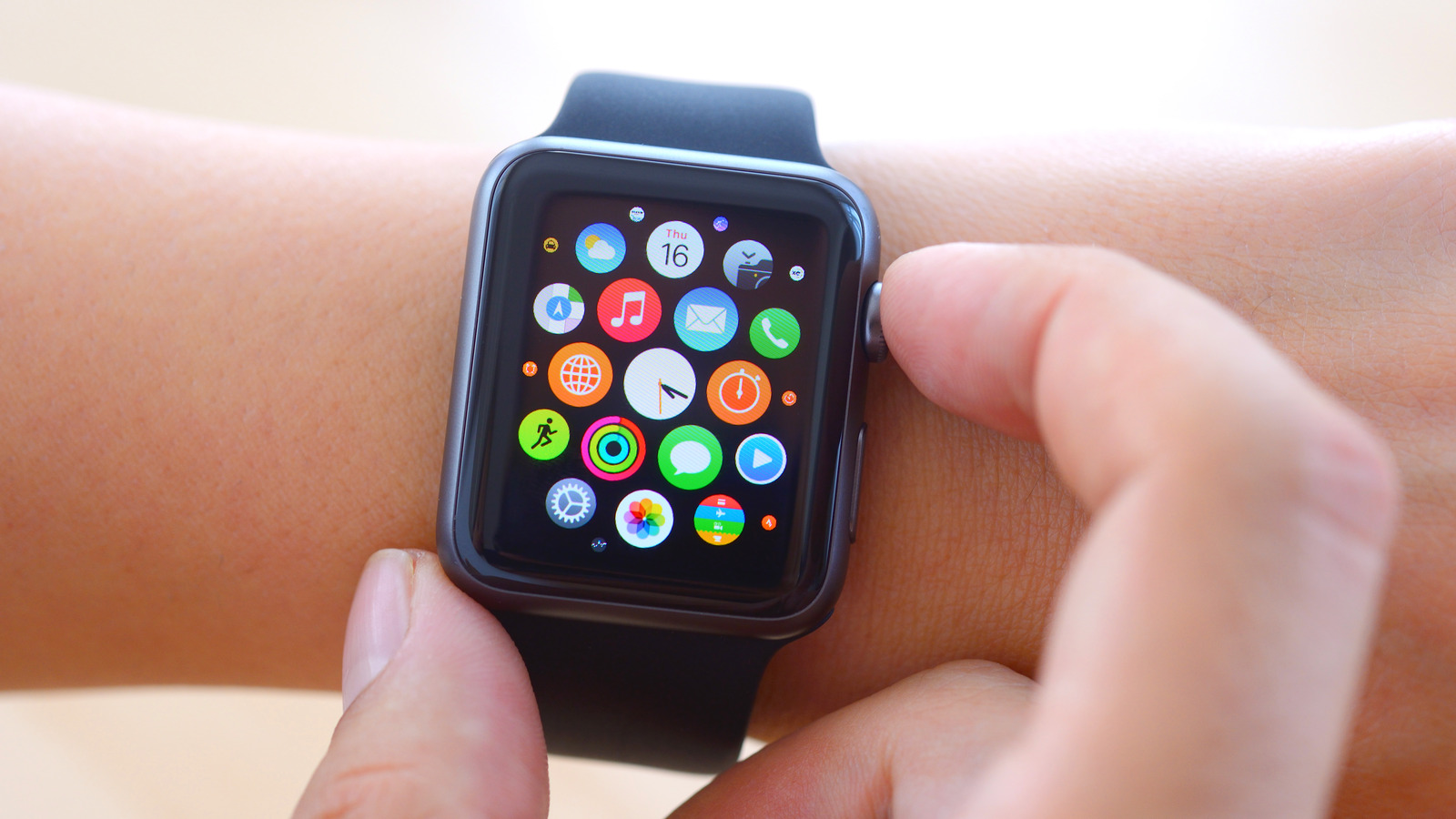
You can check your battery health on your Apple Watch in a few simple steps. Here’s what to do:

  • Press the crown to open the Home Screen.

  • Tap on the Settings icon.

  • Tap on Battery.

  • Scroll through to Battery Health.

When you check your Apple Watch battery health, you’ll see a Maximum Capacity percentage. A healthy battery typically reads above 80%, and anything below that may warrant a battery replacement, regardless of how long you’ve owned the watch. While a brand-new Apple Watch should show close to 100% capacity, Apple notes that slight variations can occur due to time between manufacturing and purchase. After regular use, it’s normal to see the capacity drop.

How to optimize your Apple Watch battery

Wongsakorn 2468/Shutterstock

Apple offers several built-in features to maximize Apple Watch battery life, and keeping your device updated ensures you benefit from the latest energy-efficiency improvements in watchOS. Enabling Low Power Mode (accessible via Control Center or Settings) disables non-essential features, like always-on display, background heart and oxygen monitoring, and cellular connections.

For long-term battery health, Apple recommends using Optimized Battery Charging, available in watchOS 7 and later, which learns your habits and delays charging past 80% when appropriate. Optimized Charge Limit further refines charging patterns to preserve battery life on supported models (Series 6 and later, SE, and Ultra). You can also reduce screen wake-ups by disabling Wake on Wrist Raise, or enabling Theater Mode, and keeping Bluetooth on your iPhone ensures efficient sync and less power drain on the watch.

While working out, you can turn on Power Saving Mode, which will disable the heart rate sensor. All you need to do is go to the Apple Watch app on your iPhone, go to My Watch and select Workout. From here, you can enable Power Saving Mode, just be aware, calorie burn calculations might not be as accurate. 

Source

Posted on

5 Ways To Repurpose Old CD And DVD Players

By Sai Vsr Aug. 3, 2025 2:17 pm EST Milea/Getty Images

You might think that CD players and DVD players have had their run, but as it turns out, they are absolute goldmines for DIY projects. Pop one open and you’ll find stepper motors, laser assemblies, DAC chips, power circuits, infrared receivers, and precision mechanical parts — components that are still perfectly good even if the device itself is toast.

These parts were built to withstand thousands of hours of spinning discs, reading data, and converting signals, so they’re not flimsy. They’re reliable, over-engineered in the best way, and surprisingly versatile across hobby electronics, robotics, audio mods, or custom control systems.

If you have one of these collecting dust in a closet or you are about to throw it out, you may want to hold off. Instead of contributing to electronic waste, you can actually turn these into something useful. Here are five interesting ways you can breathe life back into that old CD or DVD player of yours.

Build a laser engraver

Ever cracked open an old DVD writer? Inside, you’ll find a laser diode, sled mechanism, and stepper motor, which coincidentally happen to be everything you need to build a pocket-sized laser engraver. This Argentine maker named Aoshido figured out how to turn multiple DVD drives into a working engraver. He mounted the sled assemblies from two drives in an XY configuration — one handling horizontal movement, the other vertical. An Arduino running GRBL firmware controlled the steppers, while the laser diode did the actual engraving.

If you want to try building one yourself, you’ll need at least two DVD drives, an EasyDriver stepper shield, an Arduino Uno, a laser current driver circuit, and GRBL firmware plus control software. The process involves disassembling the drives to extract their sled assemblies, mounting them perpendicular to each other on a frame, wiring the stepper motors to the driver board, and connecting the laser diode with proper current limiting. What you end up with is an awesome laser engraver made entirely from old electronics that would otherwise end up in the trash.

Make a CNC plotter or a robotic arm

Those same stepper motors work great for light robotics and pen plotters, too. One Instructables user built what they called an “Arduino-Based CNC Plotter” using three salvaged CD drives, an Arduino Uno, EasyDriver stepper motor modules, and some basic mounting hardware. The build works by positioning two drives to handle horizontal and vertical movement, while the third one moves the pen up and down. You’re limited to whatever travel the DVD sleds give you (usually around 30-40mm in each direction), but that’s plenty of space for small drawings, labels, or even simple PCB layouts.

Drive steppers are usually 20-step motors, which gives you decent precision for this kind of work. Each motor gets connected to an EasyDriver board that takes the digital signals from your Arduino and turns them into the right current levels to move the stepper. The pen holder just clamps onto one of the sleds, and you can feed it G-code commands like any other CNC machine. Plus, it’s a great way to learn how CNC machines work. You’re dealing with real stepper motors, figuring out coordinate systems, and writing G-code – all the same steps you’d encounter on a normal CNC router.

Turn the tray into a secret stash

The motorized tray mechanism in DVD drives makes an excellent hidden storage compartment. Here’s one way to do it: pull apart an old drive, keep the tray motor, and wire it to a hidden push button switch with a USB power adapter. Mount the drive somewhere inconspicuous, maybe under your desk or inside a cabinet, and you’ve got a secret compartment that opens with the press of a button. For even more storage space, you can gut the drive’s internal components — the laser assembly, circuit boards, and metal framework — leaving just the outer casing and tray mechanism. 

This opens up the full interior volume of the drive, giving you a compartment that’s about 5 inches deep and wide enough for documents, cash, USB drives, or other small valuables. The beauty is in the disguise. It looks completely normal sitting on a shelf or mounted under a desk, but a quick press of your hidden switch opens up a storage space that most people would never think to look for. You can even leave the original front bezel intact so it looks like a regular, non-functional old drive.

Turn it into a Raspberry Pi-powered media center

Adrian Peacock/Getty Images

If your CD player is dead but the case is still good, it makes a perfect shell for a Raspberry Pi media center. The internal space usually fits a Pi 4 or Pi 3B+ with room left over for a small cooling fan and maybe even a portable SSD for storage. You’re going to have to remove all the old electrical parts, save the front button panel and IR receiver. That way, you can wire them up to control power, volume, or assign shortcuts. Then just run a micro-HDMI cable out through the old video ports, install Plex or Kodi, and your dead player is now streaming Netflix and YouTube.

Want to make it look cooler? Throw some LED strips inside or wire up a small OLED screen on the front to display what’s currently playing. It makes it look way more interesting than just having a Pi board sitting around. The big advantage is that you’re working with a proper metal case that already has ventilation holes, mounting points, and a power button that doesn’t look like it came off a circuit board.

Turn your DVD tray into a motorized Lazy Susan

The DVD tray also works as a rotating platform once you strip it down. That tray motor already has a gearbox that keeps things moving smoothly at low speeds. People have turned these into all sorts of rotating displays: Product photography setups where you need smooth 360° shots, Lazy Susans for spice racks, and little stands for showing off collectibles. The motor setup is already there, so you just need to wire in a toggle switch or speed controller to control it.

Getting it working is straightforward — wire in a toggle switch for on/off control, or add a speed controller if you want variable rotation. Some people connect them to an Arduino for programmed movement, like rotating a few degrees every few seconds for a display case. The tray works as your base. Just glue a circular piece of acrylic or wood on top, and you’ve got a smooth rotating platform. 

Since DVD players had to spin discs smoothly at thousands of RPM, the whole mechanism is already set up to handle the rotating weight properly. From there, you can customize it however you want: LED strips around the base for accent lighting, a nice wooden enclosure, or even use it as a motorized incense holder. The main advantage is that you’re starting with a motor and gear system that already works instead of trying to build one from scratch.

Source

Posted on

What comes next for VMware customers?

The warning signs were already there. When VMware customers on perpetual licences began receiving cease-and-desist letters for applying patches while out of support – and audits started to follow – it became clear that “owning” the software was no longer enough to guarantee the right to use it securely.

Recent weeks have seen a wave of new developments and escalations, both legal and operational, in the ongoing VMware saga. These events point to growing uncertainty for customers and channel partners alike. It’s a story not of changing licensing terms but of eroded trust, evading responsibility, and a complete breakdown in predictability. 

The Dutch government steps in

One of the most significant developments came not from a Broadcom announcement but a courtroom in The Hague. After a high-profile dispute between Broadcom and the Dutch government agency Rijkswaterstaat (RWS), a judge ruled that VMware must continue providing support while the agency migrates away from its platform. The ruling made clear that support must be provided at a reasonable cost for up to two years.

Broadcom’s insistence on a sharp pivot to subscriptions and refusal to honour the agency’s request for an extension under its existing model was deemed untenable. In the eyes of the court, forcing an 85% price hike just to keep using the same software was not a reasonable path forward.

It’s a rare moment of legal intervention in what has otherwise been a Broadcom-controlled narrative. And while it does set a precedent, it is by no means a scalable solution. Most organisations can’t rely on a court order to secure the stability they need. And while the ruling has legal force in the Netherlands, Broadcom has given no indication that it will apply the same flexibility elsewhere.

The underlying issue is the same, and it’s not going anywhere – there is no longer a clear or consistent path for perpetual licence holders to retain access to Broadcom’s in-house support. Negotiated renewals, reseller contracts, and patch access – all now fall under Broadcom’s shifting terms.

Shifting the burden onto the channel

There’s also something else at play here. Support pathways that used to lead directly to VMware are increasingly being diverted through distribution partners. In some cases, those partners are expected to absorb the first tiers of technical support, without the depth or direct access required to resolve more complex issues.

This reshuffling of the support model introduces new pressure points. Customers who believed they were paying for VMware-backed assistance may now find themselves relying on channel intermediaries, with longer response times and fewer guarantees.

It’s also bad news for partners, who must now absorb the cost and complexity of delivering technical support at scale, without always having the resources or incentives to do so.

The result is a support experience that varies by geography, partner, and licensing status. It’s less about quality and more about containment. Even for customers who agree to the subscription model, the value of what they’re buying may already be diminished.

Broadcom’s next move – and yours

This is not simply a case of Broadcom asking customers to cough up for more. What’s far more insidious is the balance of power shifting in Broadcom’s favour, with customers having to give up control.

You don’t get to choose when you move. You don’t get to opt out of subscriptions. And increasingly, you don’t get to decide how, or by whom, you’re supported.

The Dutch court decision shows that enforcement is not always the same as execution. But it also highlights how fragile the customer-supplier relationship has become. VMware may comply with the court today, but there’s no guarantee of how that will play out elsewhere. For most organisations, litigation is not a realistic route to stability. This is why more and more are looking for alternatives that de-risk the path forward, whether that’s with or without VMware. Crucially, organisations are looking to achieve this without introducing new uncertainty in the process.

Options remain, but within limits

There are still paths available for organisations that want to avoid a rushed migration away from VMware or a costly subscription agreement. But those paths are narrowing. And increasingly, the decision isn’t about technology, it’s about risk posture.

How much legal exposure are you prepared to tolerate? How confident are you in the clarity of your contracts? How resilient is your current support structure, now that responsibility may fall outside the vendor?

These are operational questions, but they’re also strategic ones. Because even if a system is technically stable, the surrounding environment – support, licensing, enforcement – is anything but.

The case for stability

Third-party support models are often seen as a stopgap – a way to buy time while planning a migration or re-architecting the future. But in the current environment, they’ve become something else: a means of reclaiming control.

With no agenda to drive you into a subscription, no licensing traps, and no hidden enforcement clauses, third-party software providers offer VMware customers clarity. You know what’s supported. And most importantly, you know the rules aren’t going to change halfway through your renewal cycle. When you’re managing critical infrastructure, you can’t put a price on that kind of stability. 

Support isn’t just about resolving tickets. It underpins operational confidence. It shapes planning, investment, and long-term strategy. Without it, even the best-run systems are exposed. Enforcement, pricing, and support models are all moving targets, but stability matters. And right now, stability doesn’t come from Broadcom. It comes from stepping outside that model entirely. 

Iain Saunderson is CTO at Spinnaker Support 

Source

Posted on

Global cyber spend will top $200bn this year, says Gartner

Driven by an ever-escalating number of high-profile cyber attacks and other emerging risks, worldwide spending on cyber security products and services by end-user organisations continues to rise, and looks set to surpass $200bn (£150bn) during 2025, according to Gartner.

Throughout the forecast period, the expanding use of artificial intelligence (AI) and generative AI (GenAI) by both internal users and threat actors will be key growth drivers as total information security spend rises from $193.5bn in 2024 to $213bn this year, said the research house’s analysts.

By a comparatively small margin, this surpasses Gartner’s previous forecast from August 2024, which pointed to a high of $212bn. However, it represents a percentage increase of roughly 10%, which compared with last year’s forecasts is a fairly significant slowdown.

Nevertheless, growth looks set to continue into 2026, with Gartner now predicting spending will increase by around 12.5% next year, hitting about $240bn all told.

However, Ruggero Contu, senior director analyst at Gartner, said the headline figures did not necessarily tell the whole story.

“Established security spending will continue as normal, but some organisations are being more cautious with any new security spending in this highly uncertain and challenging climate,” he said.

“Higher defence budgets, rising threats, increasing regulatory pressure and better cyber security awareness – especially among small and medium-sized businesses – will keep cyber security spending strong in the medium to long term.” 

Gartner breaks out its spending forecast into three core categories – network security, security services and security software.

Its analysts found that security software will account for the lion’s share of short-term future growth – rising from $95bn in 2024 to $106bn this year, then heading to $121bn in 2026.

This growth is largely thanks to the transition from on-premise to cloud-based systems, which – as has been well established over the years – increases user exposure to certain cyber risks.

The main drivers powering growth in the security software segment will most likely be cloud security posture management and cloud access security broker (CASB) services.

Gartner predicted that the network security segment will go from $21.3bn in 2024 to $23.3bn in 2025, before heading to $25.9bn in 2026. Meanwhile, end-user spending on cyber security services will go from $77.1bn in 2024 to $106bn this year, then $121.1bn in 2026.

Attendees at Gartner’s annual Security and Risk Management Summit in London – which takes place from 22 to 24 September – can learn more about the research at the event, while the organisation’s clients can download the full report here.

Security draining IT budgets

Separately, SolarWinds’ annual IT trends report, also published this week, has revealed that IT security teams in the UK are investing heavily in operational resilience, with almost two-thirds of British respondents reporting that up to 30% of their total tech budgets are now devoted to his matter.

Across Europe as a whole, SolarWinds reported that 69% of buyers are upgrading their cyber tools, training and playbooks to improve their recovery and response processes should, or more accurately when, the worst occurs.

The SolarWinds study highlighted a worrying gap between how many IT leaders considered their organisations resilient, and the reality on the ground. In the UK specifically, it found that 44% consider their organisations resilient and 52% would say they were very resilient, and yet 32% spend over a quarter of their working month trying to resolve security issues and service disruptions.

“Teams are dedicating real budget and effort to resilience, but many remain trapped in reactive mode,” said Sascha Giese, tech evangelist at SolarWinds.

“Technology alone cannot solve problems – it needs people with the knowledge and expertise, plus investment, to be able to succeed. Organisations must adopt new ways of working in order to shift from firefighting to innovation, without compromising reliability.”

Source

Posted on

European Commission ignores calls to reassess Israel data adequacy

The European Commission (EC) has been ignoring calls to reassess Israel’s data adequacy status for over a year, despite “urgent concerns” about the country’s data protection framework and conduct in Gaza.

In April 2024, a coalition of 17 civil society groups coordinated by European Digital Rights (EDRi) signed an open letter voicing their concerns about the commission’s January 2024 decision to uphold Israel’s adequacy status (see box), which permits the continued free flow of data between the country and the European Union (EU) on the basis that each has “essentially equivalent” data protection standards.

Despite their calls for clarification from the commission on “six pivotal matters” – including the rule of law in Israel, the scope of its data protection frameworks, the role of intelligence agencies, and the onward transfer of data beyond Israel’s internationally recognised borders – the groups received no response, prompting them to author a second open letter in late June 2025.

“Since then [April 2024], Israel’s legal and political trajectory has only deepened our concerns, including the adoption of new laws undermining independent oversight, escalating human rights violations in Gaza, and the continued erosion of the rule of law and judicial independence,” they wrote.

“The combination of legal reforms, unchecked intelligence access and the operational deployment of EU-linked data in repressive practices further undermines the credibility of Israel’s adequacy status.”

Given the country’s tech sector accounts for 20% of its overall economic output and 53% of total exports, according to a mid-2024 report published by the Israel Innovation Authority (IIA), losing adequacy could have a profound effect on Israel’s overall economy.

“From a global perspective, high-tech’s centrality in the Israeli economy is a unique phenomenon,” the IIA said. “Its share of Israeli GDP … is similar to that of natural minerals such as oil and gas in the economies of those counters that rely on them. Considering the centrality of high-tech, changes in the sector may influence the entire economy.”

Economic significance

According to a consultation on privacy laws launched by the Israeli Ministry of Justice in November 2022 – which proposed a number of changes to Israel’s data protection framework specifically designed to retain Israel’s adequacy status – data adequacy “is of broad economic significance to the Israeli economy, as well as great importance in aspects of the State of Israel’s foreign relations”.

Similar concerns have also been raised by MEPs in the European Parliament, who asked the commission in January 2025 whether “the ongoing use of personal data [by Israel] in ways contrary to GDPR [General Data Protection Regulation] principles” (including for “large-scale surveillance” and “to target individuals in Gaza”) means it will reassess its adequacy decision.

European commissioner Michael McGrath responded that, based on its evaluation, the commission does not believe the decision needs to be modified or revoked.

“The commission’s analysis covered all relevant elements of the privacy framework and of the broader institutional and legal system … the commission also negotiated a significant strengthening of privacy safeguards and individual rights in Israel, developed to specifically apply to data transferred from the EU and implemented in Israeli law before the start of the Israel-Gaza war,” he said.

“Israel has then extended the application of these reinforced requirements also to data that is processed in a domestic context.”

McGrath added that the commission closely monitors the application adequacy decisions, and “has tools to react if the protection afforded to data transferred from the EU would be weakened, including the possibility to propose the amendment, suspension or repeal of the decision”.

No response

Despite its attempts to raise concerns, EDRi confirmed to Computer Weekly that, since sending the second open letter on 24 June 2025, there has been no response from the commission.

The European Commission told Computer Weekly it is aware of the EDRi’s open letters, but did not answer questions about why it had not responded, and claims it is unwilling to uphold its own standards when politically inconvenient. 

“In the context of an adequacy finding under the GDPR, the commission is required to look at the protection of data transferred from the EU by commercial entities to commercial entities in third countries,” said a commission spokesperson.

“As for any adequacy decision, the commission closely monitors the application of this adequacy decision and has tools to react if the protection afforded to data transferred from the EU would be weakened,” they continued. “The commission evaluated in 2024 the adequacy decision for Israel in line with the GDPR regulation, and concluded, based on this assessment, that the protection regime was adequate.

“As is the case for all countries with an adequacy decision in place, we follow the situation as regards any changes in the legislative framework that may be relevant for ensuring an adequate level of data protection and have tools to react if the protection afforded to data transferred from the EU would be weakened, including the possibility to propose the amendment, suspension or repeal of the decision.”

According to the coalition, the commission’s “continued failure to engage” not only undermines transparency, but also raises serious questions about its commitment to upholding the GDPR and fundamental human rights.

EDRi also noted how since its last letter, Israel’s military actions in Gaza have only intensified, with the United Nations (UN) Special Committee confirming in November 2024 that its warfare methods are “consistent with the characteristics of genocide.”

The group added that a variety of technologies – including artificial intelligence (AI) systems and biometric databases – are used to “monitor, restrict and categorise Palestinian individuals, often in ways that raise concerns of racial profiling and automated decision-making without human oversight”.

Such digital tools also contribute directly to lethal military operations, with AI-driven targeting systems that process vast amounts of data being used to generate target lists for the Israeli Defence Force (IDF).

As a result, they say if the commission fails to reassess Israel’s adequacy, it will not only violate its own legal standards (particularly around the need for independent data protection oversight, adequate redress and effective limitations on national security access), but also risk “contributing to the entrenchment of an unlawful situation through the provision of digital infrastructure”.

The groups also highlighted how, as specified in recitals to the GDPR, the commission must take into account how a particular third country respects international human rights norms and standards.

“Reports indicate that data-driven targeting, biometric surveillance and other digital technologies are being used to facilitate human rights abuses and systematic oppression,” they said. “These actions demonstrate how the unregulated flow of data, facilitated in part by the EU’s adequacy decision, contributes to ongoing violations.”

Speaking with Computer Weekly, EDRi policy advisor Itxaso Domínguez de Olazábal said it is “deeply concerning” that the commission continues to ignore formal requests from civil society to reassess Israel’s adequacy status, despite mounting evidence.

“It has now been over a year since we first raised the alarm, and despite escalating rights violations and a growing body of international legal findings, including from the [International Court of Justice] ICJ, the commission hasn’t responded to our demands,” she said.

“Several members of the European Parliament recently echoed these concerns and called on the commission to act. This is not simply a case of bureaucratic delay, but signals a broader unwillingness to uphold the EU’s own standards when they become politically inconvenient.”

Adequacy concerns

Elaborating on their concerns, the civil society groups highlighted how the renewal of Israel’s adequacy status risks breaching the EU’s international obligations by enabling the use of personal data from the bloc to further an “unlawful occupation”.

They added that while the initial 2011 adequacy decision for Israel explicitly limits the scope of the agreement to its 1967 borders, there is no effective mechanism to ensure this territorial limit is observed in practice.

More specifically, they highlighted how Israel’s control of the occupied Palestinian Territories and other annexed land is problematic when considering the operational realities of its governance and surveillance infrastructure.

“For example, the headquarters of both the Israeli police and the Ministry of the Interior are located in occupied East Jerusalem, a territory not recognised by the EU as part of Israel,” they said.

“Similarly, Israel’s national surveillance command and control centre – which integrates facial recognition technologies, AI-based monitoring systems and real-time data flows – is based in the Gilo settlement, which is also located in occupied West Bank.”

They added the fact that data processing operations tied to law enforcement, biometric surveillance and national security are anchored in illegally annexed territory undermines claims the application of Israeli law in these areas is legally neutral or administratively irrelevant.

“In the absence of territorial safeguards, there is a tangible risk that personal data transferred from the EU may be accessed or processed within these facilities, thereby implicating the EU in the extension of Israeli jurisdiction over occupied territory and violating the obligation of non-recognition,” they said.

Lack of protection

Other concerns revolve around deficiencies in Israel’s own data protection framework, including the lack of protection for data transferred from the EU when being accessed by intelligence services, and legal amendments to reduce the powers of the country’s data protection authority during election periods.

“The European Commission’s continued silence in the face of these urgent concerns is untenable,” they wrote. “The absence of any meaningful response undermines trust in the EU’s commitment to fundamental rights and erodes confidence in its data protection framework.

“We therefore expect a swift and comprehensive response from the commission on this matter. Failing that, we will seek remedy through the appropriate oversight mechanisms, including the European Ombudsman.”

Independent data protection experts have also raised concerns about the EU-Israel data adequacy decision.

This includes Douwe Korff, an emeritus professor of international law at the London Metropolitan University, who published a legal analysis in April 2022 arguing that Israel’s data protection laws do not provide “essentially equivalent protection” to the GDPR, and Michael Veale, an associate professor at University College London, who said on X in May 2024 that the commission’s “re-affirmation of Israel’s data protection ‘adequacy’ status with little reporting or public analysis needs serious scrutiny”.

Source

Posted on

Austrian government faces likely legal challenge over state spyware

The Austrian government is likely to face legal challenges after it succeeded on its fifth attempt to pass a law this month that gives the country’s intelligence service legal powers to deploy spyware on phones and computers.

Civil society groups are holding discussions with MPs on far-right Freedom Party (FPO) and the Greens, both of which voted against the new surveillance measures, regarding a legal challenge to Austria’s constitutional court.

Austria’s lower house passed the law on 9 July 2025, giving the Austrian intelligence service – the Directorate of State Protection and Intelligence (DSN) – the capability to deploy spyware, known as “a state trojan”, to monitor encrypted communications on services such as WhatsApp and Signal.

The three coalition governing parties, ÖVP, SPÖ and NEOS, agreed to changes to the State Protection and Intelligence Service Act (SNG), the Telecommunications Act 2021, the Security Police Act (SPG) and other laws to allow the state to spy on encrypted messages and gather other data stored on electronic devices.

The coalition government, headed by chancellor Christian Stocker, argued that Austria should have a legal framework to enable it to monitor encrypted messaging services in line with countries such as the UK and the US.

Austrian politicians pressed the case after a tip-off from the US Central Intelligence Agency (CIA) warning of an impending attack at a Taylor Swift concert, part of the Eras Tour, in August 2024 led to the cancellation of three concerts in the country. US intelligence reportedly identified that one of the suspects pledged to ISIS-K on the Telegram messaging app.

Former chancellor Karl Nehammer also cited Austria’s biggest spying scandal, the Egisto Ott affair, as a reason for the DSN to be given more tools to act against foreign intelligence services, including the ability to intercept encrypted messaging services.

The new law has been criticised by civil society groups and some technology companies, which argue that the introduction of a “state trojan” will undermine internet security for Austrian citizens.

In July, 50 civil society groups from 16 countries wrote an open letter to MPs and the Austrian National Council, warning that the move to increase state surveillance would be a historic step backwards for IT security.

The civil society groups said the draft law was based on a “legal fiction” that would mean that, rather than protecting the population from cyber security risks, the state would instead promote and maintain security vulnerabilities, which will inevitably be discovered and exploited by hackers and hostile nation-states.

They point to the WannaCry ransomware attacks, which exploited a security vulnerability developed by the US National Security Agency (NSA) to infiltrate computer systems, causing severe disruption of hospitals, trains and mobile phone networks in 2017.

Thomas Lohninger, executive director of digital rights organisation Epicenter.Works, told Computer Weekly, that his organisation will “try everything” to challenge the new law in Austria’s constitutional court. This includes bringing a constitutional challenge from the opposition Green Party and far right FPÖ MPs before the law is enacted – a move that requires support from a third of MPs.

The law only allows individual messages, but of course, technically speaking, you have to hack the whole smartphone. That gives you far more access than what is legally allowed Thomas Lohninger, Epicenter.Works

He said there is an intrinsic problem with state spyware that requires the state to invest taxpayers’ money into making people’s devices less secure and exposes critical security vulnerabilities in essential infrastructure.

Security vulnerabilities would be ‘huge problem’

“We see this as a huge problem, and legally speaking, it’s also a reversal of the interest the government is supposed to take in keeping us safe, and that also includes the IT security of our infrastructure,” he said.

Lohninger is concerned about intelligence services going further than the law allows, as once they deploy a state trojan on a target phone, intelligence agents will be able to do far more than simply read messages.

“The law only allows individual messages, but of course, technically speaking, you have to hack the whole smartphone. That gives you far more access than what is legally allowed,” he said.

There are also concerns that the DSN will be legally able to deploy spyware to target individuals before there is a reasonable suspicion of wrongdoing. Immigrants or climate activists could be targeted, Lohninger suggested.

Spyware used against journalists, lawyers and politicians

European governments have used spyware to monitor journalists, lawyers and political opponents. In Spain, the secret service uses the Israeli spyware Pegasus to monitor the phones of activists, journalists, politicians and supporters of Catalan independence.

In the “Predatorgate” scandal, the Greek intelligence service used spyware to monitor politicians and journalists. And Pegasus spyware was deployed in Poland against 600 individuals, including opposition figures and lawyers.

The Austrian spyware law requires the DSN to seek approval from a panel of three judges who will assess whether its deployment is proportionate. A legal protection officer, usually a retired judge, will have oversight of the use of the spyware when it is deployed.

Lobbying by civil society groups and opposition MPs has ensured that the new law contains protections for judges and lawyers, to ensure that legally privileged material is not compromised, and for journalists, to protect confidential journalistic sources and material.

Conflict of interest

However, critics point out that the legal protection officer’s oversight function is part of the Ministry of Interior, the same department responsible for deploying government spyware, rather than a fully independent body, raising potential conflicts of interest.

Austria’s DSN intelligence agency is responsible for vetting legal protection officers and, in effect, can veto candidates for the role, raising further questions about independent oversight.

Lohninger said a law to allow state use of spyware in Austria would not have been necessary to detect the threat to Taylor Swift, as US agents infiltrated a chat group on Telegram, which was not encrypted.

Austria’s failed attempts at spyware laws

The Austrian Parliament has made several previous attempts to introduce laws to permit the use of state-sponsored spyware.

In 2016, the Austrian People’s Party (ÖVP) attempted to introduce a state trojan, but abandoned the idea after the proposal attracted widespread criticism.

In 2017, a second attempt failed to get off the ground.

In 2018, Austria adopted a state trojan law to permit law enforcement to deploy spyware for criminal investigations, until it was repealed by Austria’s Constitutional Court in 2019.

The court found that the legal protection mechanisms in place for monitoring encrypted communications were inadequate and they lacked proper oversight from the courts and an independent oversight body.

The 2024 coalition government attempted to resurrect a law that allowed state spyware by Austria’s intelligence service, prompting widespread criticism from lawyers, the high court and academics.

In February 2025, a new coalition government, made up of the centre-right ÖVP, the Social Democrats (SPÖ) and the liberal NEOS, succeeded in pushing the new law through, allowing the deployment of spyware for intelligence gathering.

The Austrian government plans to issue a tender for monitoring technology and is expected to begin deploying spyware in 2027. It has a budget of €50m to run the operation between 2025 and 2030.

The DSN has not disclosed what spyware it will deploy, but is expected to buy off-the-shelf spyware – such as Pegasus, which continues to be supplied by the Israeli NSO Group.

Austrians have also speculated that Dream Security, a security company founded by former Austrian chancellor Sebastian Kurz and NSO Group co-founder Shalev Hulio, might also be in the running for a contract.

Legal challenge before 2027

Lohninger said there was a “high likelihood” that opposition MPs would agree to bring a joint legal challenge before 2027. If that fails, a legal challenge could be brought by an Austrian citizen targeted by state spyware.

Kee Jeffreys, co-founder of Session, an encrypted messaging app based in Switzerland which runs on a decentralised network, said that the Austrian government stockpiling vulnerabilities for use in spyware posed wider security risks.

“If those vulnerabilities don’t get exposed or don’t get told to the developers of software, you are leaving those vulnerabilities out there for non-government hackers or other government hackers,” told Computer Weekly.

He said it was disproportionate to monitor people’s encrypted messages without grounds for suspicion.

“Does that mean that to catch criminals who undertake crimes in households we should install security cameras in every single house and monitor those feeds at all times so that we can catch a lot more criminals?” he said.

Source

Posted on

This Underrated iOS Feature Can Help Extend Your iPhone’s Battery

Vadym Plysiuk/Getty Images

The iPhone is an incredible smartphone that gets better with each new generation. From improved UI and faster processors to enhanced camera tech, Apple always brings something new and exciting to the table. But when it comes to battery life, the iPhone could use a little help, especially if you’re the type of person who has multiple apps running at the same time. Everything from web browsing to listening to music to calling someone has an impact on your iPhone’s remaining battery, and you’d be surprised just how much power a function as mundane as making a phone call can deplete.

Fortunately, there’s an underrated iOS feature that can help extend your iPhone’s battery life: Charge Limit. Introduced with the iPhone 15, this lesser-known setting may end up netting you an extra year or two on the total life of your phone battery. That definitely beats having to carry a portable charger everywhere you go or hoping there’s a wall outlet wherever life takes you and your iPhone that day.

How to use the Charge Limit setting

Wongsakorn 2468/Shutterstock

As mentioned, the Charge Limit setting is only available on iPhone 15 models or later, as part of the iOS 17.0 rollout. (Even if you’re using an older iPhone that’s been upgraded to iOS 17, Charge Limit still won’t be available.) To access this feature, open the Settings app, then tap Battery > Charging. You’ll then be taken to a screen with a Charge Limit slider, which can be adjusted to 80%, 85%, 90%, 95%, or 100%.

Even switching from 100% to 95% is going to make an impact because of good old-fashioned science. The lithium-ion battery in your iPhone is designed to last longer when it’s not fully charged all the time. The chemicals that make up your phone’s internal power pack have less moving around to do when you set the charge limit to a lower threshold, leading to less degradation over time.

And capping the charge limit at around 80% is also a great way to cut down on heat generation. This is particularly useful for those of us rocking iPhone cases with minimal heat dissipation, such as a heavy-duty OtterBox products. It’s also helpful if you happen to live in an area that’s prone to hotter temperatures, especially during the spring and summer months.

More ways to extend your iPhone battery life

chainarong06/Shutterstock

While the Charge Limit setting is reserved for iPhone 15 or later, there are still a few things you can do with older iPhone models to improve the longevity of the battery. First and foremost, there’s the Optimized Battery Charging setting, which you can access by tapping Settings > Battery > Battery Health & Charging. You can think of this feature as “Charge Limit Lite.” 

How it works is instead of putting a hard cap at whatever charge level you choose, your iPhone will automatically monitor your daily charging habits so the device won’t charge past 80% until that final 20% is needed. The iOS Battery dashboard also has a Low Power Mode setting that can be toggled on or off. When enabled, your iPhone reduces background activity (e.g., downloads, mail fetch) until your device is fully charged.

You can try keeping your screen backlight at 70% brightness or less as well, or selecting a faster Auto-Lock duration by tapping Display & Brightness > Auto-Lock. You may also want to turn off Auto-Brightness (Settings > Accessibility > Display & Text Size) to prevent your iPhone’s ambient light sensor from taking over.

Source

Posted on

Senator warns of new UK surveillance risks to US citizens

Senator Ron Wyden has written to the US director of national intelligence, Tulsi Gabbard, urging her to provide Congress and the American public with a “frank assessment” of the security risks posed by UK surveillance to the US.

The letter, which follows disclosures that the UK Home Office issued a secret notice to Apple to gain access to its users’ encrypted data, raises new concerns that the UK’s Investigatory Powers Act (IPA) may allow it much wider access to data on US citizens than previously reported.

Android phones may have ‘backdoors’

In a letter to Gabbard yesterday, Wyden claimed the Home Office may also have issued a secret order against Google to introduce “backdoors” to the encrypted backup service used by billions of Android phone users worldwide. Following the publication of Wyden’s letter, Google said it had received no such order from the UK.

The letter also raises questions about Home Office powers to issue orders to secretly under the Investigatory Powers Act force US companies to store data belonging to US citizens in the UK, “where it could be then seized by the UK government”.

Wyden’s intervention comes as president Donald Trump, who has criticised the Home Office’s order against Apple as something China would be expected to do, met with prime minister Keir Starmer at Trump’s Turnberry Golf Club in South Ayrshire.

Wyden and Republican congressman Andy Biggs first wrote to Gabbard in February 2025, after a leak in The Washington Post revealed that home secretary Yvette Cooper had issued an order, known as a technical capability notice (TCN), against Apple, requiring it to introduce backdoor access to users’ data stored on its Advanced Data Protection (ADP) encrypted storage service.

Gabbard told the lawmakers that she shared their “grave concern” about the UK ordering US companies to create backdoors that would allow access to the encrypted data of US citizens. Such a move would “be a clear and egregious violation of American citizens’ privacy and civil liberties” and would create cyber vulnerabilities that could be exploited by hostile actors, she added.

Wyden stated in the letter that companies that receive orders under the UK’s IPA are legally prohibited from disclosing their existence, making it impossible to confirm which US technology companies have received such orders from the UK, “much less the extent to which they may be complying with them”.

Apple’s ADP service is disabled by default, making it likely that only a “very small” proportion of Apple’s customers “benefiting from this important cyber security defence” would be affected by a Home Office order.

However, Wyden raised the prospect – since denied by Google – that the Home Office has also issued an order requiring Google to provide backdoor access to encrypted backups made by billions of Android smartphone users that are protected by end-to-end encryption by default.

“When my office asked Google about backdoor demands from the UK, the company did not answer the question, only stating that if it had received a technical capabilities notice, it would be prohibited from disclosing that fact,” Wyden wrote.

This is in contrast to Meta, which offered Wyden an “unequivocal denial” when asked the same question on 17 March 2025, stating: “We have not received an order to backdoor our encrypted services, like that reported about Apple.”

Home Office hacking powers could impact US

Wyden has raised further concerns that the threat to US data posed by UK surveillance laws is not limited to demanding that US companies weaken their encryption with backdoors.

The British Embassy in Washington has not denied claims that the UK could use the IPA to force US companies to store newly created US customer data in the UK. “Such UK-located data could then be seized by the UK government,” he added.

Wyden has also raised concerns that the UK can use the “equipment interference” (hacking) provisions in the IPA to demand that companies “infect their customers with spyware to hack Americans” – a capability which the British Embassy in Washington has, again, not denied.                                                                                            

“The cyber security of Americans’ communications and digital lives must be defended against foreign threats,” Wyden told Gabbard. “The national security implications are serious, not least because the communications of US government officials could be subject to both weakened encryption and storage in the UK,” he said.

Commenting on Wyden’s letter, Jim Killock, executive director of the Open Rights Group, which is campaigning against UK’s moves against encryption, said the Home Office’s orders impact the security of people worldwide.

“Google’s refusal to answer senator Wyden is extremely worrying for Android users who rely on encryption for their privacy and security,” he added.

Update 21:00 29 July 2025:

Following publication of this story, Google told The Washington Post that the British government has never asked it for special access to users’ private messages and data.

A spokesperson told The Washington Post: “We have never built any mechanism or ‘backdoor’ to circumvent end-to-end encryption in our product,” adding: “If we say a product is end-to-end encrypted, it is.”

Source